You are in: eMedicine Specialties >
Ophthalmology > HEMATOLOGIC AND CARDIOVASCULAR DISORDERS
Giant Cell Arteritis
Article Last Updated: Jan 10, 2006
AUTHOR AND EDITOR INFORMATION
Section 1 of 11
Author: Manolette R Roque, MD, MBA, DPBO, FPAO, President and CEO, Chief of Service, Ocular Immunology and Uveitis, Consulting Staff, Cornea and Refractive Surgery, Eye Republic Ophthalmology Clinic; General Manager, Ophthalmic Consultants Philippines Co; Consulting Staff, CME Liaison, Section Chief of Ocular Immunology and Uveitis, Department of Ophthalmology, Asian Hospital and Medical Center
Manolette R Roque, MD, MBA, DPBO, FPAO, is a member of the following medical societies: American Academy of Ophthalmic Executives, American Society of Cataract and Refractive Surgery, American Society of Ophthalmic Administrators, American Uveitis Society, International Ocular Inflammation Society, Philippine Medical Association, Philippine Ocular Inflammation Society, and Philippine Society of Cataract and Refractive Surgery
Coauthor(s):
Barbara L Roque, MD, Full Partner, Ophthalmic Consultants Philippines Co, Chief of Service, Pediatric Ophthalmology and Strabismus, Consulting Staff, Orbit and Eye Plastics, EYE REPUBLIC Ophthalmology Clinic;
Elisabetta Miserocchi, MD, Fellow in Immunology and Uveitis Service, Department of Ophthalmology, Harvard Medical School;
C Stephen Foster, MD, FACS, FACR, FAAO, Clinical Professor of Ophthalmology, Harvard Medical School; Consulting Staff, Department of Ophthalmology, Massachusetts Eye and Ear Infirmary; Founder and President, Ocular Immunology and Uveitis Foundation, Massachusetts Eye Research and Surgery Institution
Editors: Kilbourn Gordon III, MD, FACEP, Urgent Care Physician, Primary Medical, Huntington Walk-In and Greenwich Convenient Medical Center; Francisco Talavera, PharmD, PhD, Senior Pharmacy Editor, eMedicine; Steve Charles, MD, Director of Charles Retina Institute; Clinical Professor, Department of Ophthalmology, University of Tennessee College of Medicine; Lance L Brown, OD, MD, Ophthalmologist, Affiliated With Freeman Hospital and St John's Hospital, Regional Eye Center, Joplin, Missouri; Hampton Roy Sr, MD, Associate Clinical Professor, Department of Ophthalmology, University of Arkansas for Medical Sciences
Author and Editor Disclosure
Synonyms and related keywords:
GCA, temporal arteritis, cranial arteritis, Horton's disease, Horton disease, Horton's arteritis, granulomatous arteritis, polymyalgia rheumatica, vasculitis, migraine headache
Background
Giant cell arteritis (GCA) also is called temporal arteritis, cranial arteritis, and granulomatous arteritis. GCA is a systemic inflammatory vasculitis of unknown etiology that affects medium- and large-sized arteries. It is a disease of elderly persons and can result in a wide variety of systemic, neurologic, and ophthalmologic complications. Visual loss is one of the most significant causes of morbidity in GCA. Permanent visual impairment may occur in as many as 60% of patients. Newly recognized GCA should be considered a true neuro-ophthalmic emergency. Prompt treatment with steroids can prevent blindness and other vascular sequelae of GCA. Relationship with polymyalgia rheumatica A close relationship exists between GCA and polymyalgia rheumatica (PMR). Despite numerous reports associating these 2 disease entities, the precise nature for this association is poorly understood and currently unknown. However, it is evident that both conditions affect similar patient populations and frequently affect the same individual. Several authors have suggested that these 2 diseases are actually different stages of a single disease spectrum. See Special Concerns. Criteria for diagnosis The American College of Rheumatology criteria (1990) for the diagnosis of GCA are as follows:
- Age at onset of 50 years
- New headache
- Abnormalities of the temporal arteries
- Erythrocyte sedimentation rate (ESR) of 50 mm/h
- Positive results of a temporal artery biopsy (vasculitis characterized by a predominance of mononuclear infiltrates or granulomas, usually with multinucleated giant cells)
Pathophysiology
GCA typically involves inflammation of the aortic arch and its branches, but almost any artery of the body as well as some veins may be affected occasionally. The inflammation tends to involve the arteries in a segmental or patchy manner, although long portions of arteries may be involved. The likely determinant of arterial susceptibility to GCA is the presence and/or quantity of internal elastic lamina within the vessel wall. For example, intracranial cerebral vasculature is not affected in GCA because these vessels lack an internal elastic lamina. The extracranial vertebral arteries, superficial temporal arteries, posterior ciliary arteries, and ophthalmic arteries are the most commonly involved arteries. The internal carotid, external carotid, and central retinal arteries are affected somewhat less frequently. In some postmortem studies, lesions were found in the proximal and distal aorta, subclavian, brachial, and abdominal arteries. Intracranial arteries are involved infrequently. Histopathology (see Histologic Findings) in GCA reveals inflammatory infiltrate surrounding a fragmented internal elastic lamina within the media of an arterial wall. The infiltrate consists predominantly of mononuclear cells with giant cell formation. The mechanism is believed to be related to dysfunction of cellular immunity, but the etiology is unknown (see Causes for more information).
Frequency
United States
The reported incidence of GCA varies from approximately 0.5-27 cases per 100,000 people aged 50 years or older. The annual incidence is higher in northern areas of the United States.
In Olmstead County, Minnesota, 125 cases were identified over a 42-year review representing an average annual incidence rate of 17.8 cases per 100,000 population aged 50 years and older and a prevalence of persons with active or remitted GCA of 200 cases per 100,000 population aged 50 years or older. A regular cyclical pattern in incidence over 20 years has been noted.
International
The annual incidence in northern European countries has been reported to be more than 20 cases per 100,000 people. Scandinavian countries have reported the highest incidence.
The annual incidence in southern European countries has been reported to be less than 12 cases per 100,000 people. In Lugo, Spain, the average annual incidence for the population aged 50 and older was 10 cases per 100,000 people.
Ostberg reported that autopsy studies performed on 889 postmortem cases revealed arteritis (temporal artery, aorta) in 1.6% suggesting that GCA may be more common than is clinically apparent.
The incidence of GCA in Saudi Arabia is probably less than in the United States and Western Europe. In 1998, Bosley and Riley reported only 4 positive biopsy results from 72 temporal artery biopsies performed over a 15-year period.
Mortality/Morbidity
In the milder form of GCA, patients may complain only of generalized muscle aches and pains and unusual fatigue. These may be mistaken for symptoms of polymyalgia rheumatica. Intermittent claudication occurs in about 50% of patients. During chewing of firm foods such as meat, fatigue or discomfort of the jaw muscles is noted. In a small percentage of patients, claudication of the tongue or throat develops with eating and repeated swallowing. Nervous system alterations are found in as many as 30% of patients; 14% have either mononeuritis or polyneuropathy, and 7% have transient ischemic attacks or strokes.
- Visual symptoms are present in about 33% of patients; 40-50% are transient (amaurosis fugax and diplopia) and 50-60% are permanent. Regarded as one of the more serious complications of GCA is the onset of blindness from involvement of the ophthalmic artery. Permanent visual loss may be partial or complete and may occur without warning; about 50% are unilateral and 50% are bilateral. Varied visual symptoms including blurring of vision, diplopia, and loss of vision occur in 36-60% of patients.
- Rarely, the inflammatory process may weaken the aortic wall, leading to localized aneurysm formation, aortic annular dilatation, and aortic regurgitation. Narrowing or occlusion of the branch vessels of the thoracic aorta (clinically referred to as aortic arch syndrome) may be found in 9-14% of cases, producing symptoms similar to those of Takayasu arteritis (decreased upper extremity pulses and blood pressure, arm or leg claudication, Raynaud phenomenon, transient ischemic attacks, coronary ischemia, and abdominal angina).
- Aortic aneurysms, aortic regurgitation, and aortic dissection occur less commonly. Evans and colleagues reported aortic aneurysms occurring in 15% of patients at a median of 6 years after the GCA initially was diagnosed. Two thirds were thoracic aortic aneurysms, with the majority located in the ascending aorta. Almost 33% developed symptomatic aortic regurgitation.
- Involvement of major vessels (aorta) predisposes patients to higher risks for death. In Evans and colleagues' report, 50% of those with thoracic aortic aneurysms died suddenly from aortic dissection.
Race
Incidence rates appear to be higher in Caucasians of European descent. This condition is less common in African Americans and Asians.
Sex
Women are 2-4 times more likely to have GCA than men.
Age
Age is the most important risk factor for GCA.
- GCA occurs mostly in patients older than 50 years, with incidence increasing with age and peaking in the eighth decade. The disease is rare in patients younger than 50 years.
- Although the increasing incidence of GCA after age 50 years implies a relationship to aging, the meaning of this observation is not fully understood.
History
The onset of GCA may be either abrupt or insidious. Usually, the symptoms have been present for weeks or months before the diagnosis is established. Constitutional symptoms, including anorexia, fatigue, and weight loss, are present in most patients and may be an initial finding. It is important to be aware of characteristic ophthalmic and systemic histories to effectively diagnose GCA.
- Ophthalmic history
- Around 50% of patients with GCA eventually experience visual symptoms (eg, transient visual blurring, diplopia, eye pain, sudden loss of vision). Transient repeated episodes of blurred vision are usually reversible, but sudden loss of vision is an ominous sign and is almost always permanent. Vision loss incidence, either partial or complete, is variably reported to be 10-60%.
- The most common cause of vision loss is anterior ischemic optic neuropathy (AION). This results from ischemia of the optic nerve head, supplied mainly by the posterior ciliary arteries. Most AION is nonarteritic (87-91%) in nature. A history of sudden painless loss of vision frequently accompanies the patient with AION.
- Systemic history
- GCA may begin with symptoms of anorexia, fever, malaise, myalgia, night sweat, and weight loss. These prodromal symptoms may occur for a few days and may even stretch out to weeks.
- The hallmark symptom of GCA is its new-onset localized headache. It usually is localized to the temporal or occipital area. This headache occasionally may be diffuse or bilateral.
Physical
- Ophthalmic manifestations
- The most common cause of vision loss is AION. Examination of the fundus may reveal optic disc edema, with or without splinter hemorrhages along the disc margin. Arteritic AION, as in GCA, typically presents with a chalky white edematous optic disc. Automated visual field testing typically reveals an inferior altitudinal defect, inferior nasal sectorial defect, or central scotoma.
- Other important vascular ophthalmic presentations of GCA include posterior ischemic (retrobulbar) optic neuropathy, central retinal artery occlusion, branch retinal artery occlusion, and choroidal ischemia. Neuro-ophthalmic manifestations of GCA include diplopia, ptosis, nystagmus, internuclear ophthalmoplegia (INO), and pupillary abnormalities.
- Systemic manifestations
- The hallmark symptom of GCA is new-onset localized headache, which usually is localized to the temporal or occipital area. This headache occasionally may be diffuse or bilateral. Of interest is the scalp tenderness that accompanies this headache, especially over the temporal region. The tenderness often can be induced by only very gentle pressure. Hypersensitivity or hyperesthesia (unusual discomfort from a very mild stimulus) like gently stroking the patient's hair results in a characteristic complaint of pain commonly seen with migraine, whereas with GCA a more painful or tender sensation can be elicited by gentle pressure. Rizzo anecdotally describes this as the single most important clinical finding for GCA. Other cranial symptoms include temporal tenderness or pulselessness, jaw claudication, facial pain, earache, toothache, tongue and palate pain, and odynophagia. Dudenhoefer described scalp necrosis with GCA seen in 2 elderly patients.
- Other clinical features of GCA manifest as pulselessness and/or tenderness and inflammation along the course of the temporal artery and bruits in the cranial or neck area. In addition, typical symptoms include jaw claudication, and atrophy of temporal and tongue muscles. Temporal artery blood flow measurements may be reduced.
- Cerebrovascular disease occurs in 1-25% of patients and is believed to be the most common cause of death in patients with GCA. Neurologic problems associated with GCA include myopathy, neuro-otologic syndromes, neuropsychiatric syndromes, peripheral neuropathies, and seizures. Cardiovascular, pulmonary, gastrointestinal, renal, and dermatologic manifestations also may occur.
Causes
A variety of causes (ie, genetic, infectious, autoimmune) have been suggested for GCA, but the etiology remains unknown.
- Genetic: Several reports of familial aggregation, association with the HLA-DR4 haplotype, and an apparent increased frequency of these conditions in northern Europe and in persons in the United States with similar ethnic backgrounds suggest a genetic or hereditary predisposition.
- Infectious: Some epidemiological observations, reports, and studies using DNA detection techniques implicate Chlamydia pneumoniae, Mycoplasma pneumoniae, and parvovirus B19 as the impetus for the destructive inflammation.
- Autoimmune: The immune system (both cellular and humoral) has been implicated in the pathogenesis of GCA. The granulomatous histopathology of GCA has suggested the presence of an antigen-driven disease with local T-cell and macrophage activation in or near elastic tissue in the arterial walls with an important role of the proinflammatory cytokines. It may begin as a foreign body giant cell attack on calcified internal elastic membrane in the arteries and on calcified atrophic parts of the aortic media.
Optic Neuritis, Adult
Other Problems to be Considered
Polymyalgia rheumatica
Transient ischemic attack
Systemic infections
Amyloidosis with prominent vascular involvement
Neoplasms
Arteriosclerotic vascular disease
Arteriovenous fistulas
Other forms of vasculitis
Lab Studies
- ESR elevation (moderate to >100 mm/h) is common and is rarely (approximately 3%) normal. Highly elevated ESR results are characteristic of a GCA process rather than other vasculitic or rheumatologic entities. This acute phase reactant may be followed serially and may assist in monitoring for treatment dosing and response.
- C-reactive protein (CRP) is elevated and reflects the underlying inflammatory process. This acute phase reactant may be followed serially and may assist in monitoring for treatment dosing and response.
- Fibrinogen is increased along with other acute phase reactants.
- Most patients are mildly anemic (normochromic, normocytic) during the active phases. Leukocyte and differential counts are generally normal. Platelet counts often are increased.
- In GCA, hepatic enzymes, such as alkaline phosphatase and aspartate aminotransferase (formerly called serum glutamic oxaloacetic transaminase [SGOT]), are elevated in 20-30% and 15% of cases, respectively. Prolonged prothrombin time also may be found.
- Immunoglobulin levels are normal, and immune complexes are absent. Results of tests for antinuclear antibodies and rheumatoid factor are generally negative.
Imaging Studies
- Occasionally, imaging studies may be used to assist in the diagnosis of GCA. Aortic arch and cerebral angiography may show occlusion or alternating stenotic areas. Arteriography is sensitive but nonspecific and is deemed unreliable diagnostically. However, it is noted to be helpful when an area must be chosen to sample after the initial biopsy result has been negative.
- Computerized tomography and magnetic resonance imaging of the brain are not first-line diagnostic procedures for GCA; however, they may be useful in patients with multi-infarct state secondary to cervicocephalic arteritis.
- Color duplex ultrasonography of the temporal arteries has been used as a promising alternative or complement to superficial temporal artery biopsy.
- Its sensitivity for GCA is 73%, and its specificity is 100% when a dark halo is seen about the vessel. This key diagnostic feature is believed to represent vessel wall edema.
- Prospective study is necessary to validate the utility of the test, but a possible application includes confirming the diagnosis of GCA without performing a biopsy in persons with clinically evident disease.
Other Tests
- Automated visual field testing typically reveals an inferior altitudinal defect, inferior nasal sectorial defect, or central scotoma.
Procedures
- Superficial temporal artery biopsy (TAB) shows focal granulomatous arteritis, often with giant cells and skip areas of normal arterial wall. The technique for superficial TAB has been reported.
- Perform a biopsy on the most symptomatic side initially. In a patient with suggestive symptoms and a negative initial biopsy result on the symptomatic side, performing a superficial TAB on the other side may confirm the diagnosis.
- Perform the superficial TAB in the appropriate patient. Therapy should not be withheld pending the performance or results of the superficial TAB in patients with acute visual loss and high clinical suspicion for GCA.
Histologic Findings
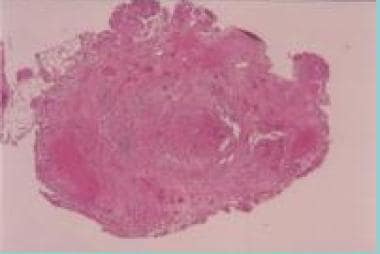
Early cases or regions with minimal involvement Collections of lymphocytes are confined to the region of the internal or external elastic lamina or adventitia in early cases or regions of arteries with minimal involvement. Intimal thickening, with prominent cellular infiltration, is typically present. Late cases or regions with marked involvement All layers are affected in late cases or regions of arteries with marked involvement. There are widespread areas of necrosis of portions of the arterial wall. The elastic laminae usually are involved, and granulomas containing multinucleated histiocytic and foreign body giant cells, histiocytes, predominantly helper T-cell lymphocytes, and some plasma cells and fibroblasts are usually present. See Media file 2. Weyand and colleagues have extensively described the distribution and function of inflammatory cells in the artery wall. Eosinophils may be seen in the specimen section, but polymorphonuclear (PMN) leukocytes are rare. Thrombosis may develop at the sites of active inflammation. These areas with thrombosis may recanalize later. It has been observed that the inflammatory process is usually most marked in the inner portion of the media adjacent to the internal elastic lamina. This has led to the belief that the internal elastic lamina plays a central role in the initiation of the inflammatory process. Fragmentation and disintegration of elastic fibers occur. This is closely associated with an accumulation of giant cells. Note that giant cells are not seen in all sections; therefore, it is not required for the establishment of the diagnosis if other features are present. Fibrinoid necrosis is seen less commonly in necrotizing arteritis. Note: The more sections that are examined in the area of arteritis, the more likely it is that giant cells will be found. What is needed is transmural acute and chronic inflammation for acute diagnosis or evidence of previous repair. Healed or subacute phase shows fibrosis, fragmented internal elastic lamina, chronic inflammatory cells in the intima or media, and ideally neovascularization. Skip lesions or steroids can lead to false-negative biopsy results. Long breaks in internal elastic lamina favor healed arteritis over atherosclerosis.
Medical Care
The universally accepted treatment for GCA is high-dose corticosteroid therapy. The major justification for the use of corticosteroids is the impending danger of blindness in untreated patients.
The goals of treatment are to reverse the disease and to prevent further progression. This is of utmost importance especially in the ophthalmic arteries to prevent blindness.
Using constitutional symptoms, vascular symptoms, and the ESR findings as guides, the physician usually is able to gradually taper off steroids to a maintenance dose for 2 years.
- A hallmark paper by Birkhead and colleagues showed that corticosteroids often were effective in preventing blindness in patients with GCA. High-dose glucocorticoid therapy is recommended in all patients with GCA.
- Initially, high doses of corticosteroids may be given at 1-2 mg/kg/d until the disease activity is suppressed adequately.
- Sequential ESR determination may assist in determining the success of the high-dose corticosteroid therapy. Once the signs of clinical inflammation are suppressed and the ESR is maintained at a low level, corticosteroids may be tapered slowly.
- No agreement exists as to the length of treatment with corticosteroids for GCA. It may be reasonable to maintain the patient on treatment for 2 years to lessen the chances for relapses. Even then, relapses have been reported.
- The authors' use a cyclosporine-azathioprine or cyclosporin-methotrexate combination as a steroid-sparing recipe for steroid-resistant cases. This alternative recipe may be beneficial in patients with steroid-resistant symptoms, and these immunosuppressives may be useful as glucocorticoid-sparing agents in patients requiring protracted treatment.
- The disastrous nature of the disease occasionally may require the administration of treatment prior to a definitive superficial TAB. It generally is believed that the results of a superficial TAB will not be altered if the procedure is performed within 7-10 days of initiating corticosteroid therapy.
Surgical Care
Aside from the performance of a superficial TAB, usually no further surgical intervention is necessary in the management of patients with GCA.
Surgery, ideally performed while the GCA is inactive and in the absence of steroid therapy, may be necessary in as many as 41% of those with thoracic aortic aneurysms.
Consultations
Patients with GCA are in need of an experienced team of physicians to ensure quality care.
- Rheumatologist
- Immediate consultation with a rheumatologist is suggested when initiating high-dose steroid therapy for presumed GCA prior to a superficial TAB. Therapy should not be delayed if consultation is not available immediately.
- Rheumatologic consultation also is indicated to consider the need for steroid therapy when cranial artery biopsy results are negative, but the clinical presentation strongly suggests GCA.
- The occasional patient with GCA who does not respond adequately to steroid therapy requires a referral for reconsideration of the diagnosis and for other forms of immunosuppressive therapy (eg, azathioprine, cyclophosphamide, dapsone).
- Neuro-ophthalmologist/ocular immunologist: Urgent ophthalmologic evaluation is needed if visual impairment is reported. If it is not available, one can proceed directly to hospitalization for immediate institution of high-dose parenteral corticosteroid therapy.
The goals of pharmacotherapy are to reduce morbidity and to prevent complications.
Drug Category: Corticosteroids
Have anti-inflammatory properties and cause profound and varied metabolic effects. Corticosteroids modify the body's immune response to diverse stimuli.
| Drug Name | Methylprednisolone (Adlone, Medrol, Solu-Medrol, Depo-Medrol, Depopred) |
| Description | Decreases inflammation by suppressing migration of polymorphonuclear leukocytes and reversing increased capillary permeability. |
| Adult Dose | 1-2 mg/kg/d PO qd or divided bid, followed by gradual reduction to lowest level that will maintain clinical response |
| Pediatric Dose | 0.5-1.7 mg/kg/d or 5-25 mg/m2/d PO/IV/IM qd or divided bid |
| Contraindications | Documented hypersensitivity; viral, fungal or tubercular skin infections |
| Interactions | Coadministration with digoxin may increase digitalis toxicity secondary to hypokalemia; estrogens may increase levels of methylprednisolone; phenobarbital, phenytoin, and rifampin may decrease levels of methylprednisolone (adjust dose); monitor patients for hypokalemia when taking medication concurrently with diuretics |
| Pregnancy | C - Safety for use during pregnancy has not been established.
|
| Precautions | Hyperglycemia, edema, osteonecrosis, peptic ulcer disease, hypokalemia, osteoporosis, euphoria, psychosis, growth suppression, myopathy, and infections are possible complications of glucocorticoid use |
Drug Category: Immunosuppressant agents
Inhibit key steps in the immune system responsible for inflammatory reactions.
| Drug Name | Cyclosporine (Sandimmune, Neoral) |
| Description | Cyclic polypeptide that suppresses some humoral immunity and, to a greater extent, cell-mediated immune reactions such as delayed hypersensitivity, allograft rejection, experimental allergic encephalomyelitis, and graft-vs-host disease for a variety of organs. For children and adults, base dosing on ideal body weight. Available dosage strengths include 25 mg, 50 mg, 100 mg/mL. |
| Adult Dose | 2-10 mg/kg/d PO qd or divided bid/tid |
| Pediatric Dose | Administer as in adults |
| Contraindications | Documented hypersensitivity; uncontrolled hypertension or malignancies; do not administer concomitantly with PUVA or UV-B radiation in psoriasis since it may increase risk of cancer |
| Interactions | Carbamazepine, phenytoin, isoniazid, rifampin, and phenobarbital may decrease cyclosporine concentrations; azithromycin, itraconazole, nicardipine, ketoconazole, fluconazole, erythromycin, verapamil, grapefruit juice, diltiazem, aminoglycosides, acyclovir, amphotericin B, and clarithromycin may increase cyclosporine toxicity; acute renal failure, rhabdomyolysis, myositis, and myalgias increase when taken concurrently with lovastatin |
| Pregnancy | C - Safety for use during pregnancy has not been established.
|
| Precautions | Evaluate renal and liver functions often by measuring BUN, serum creatinine, serum bilirubin, and liver enzymes; may increase risk of infection and lymphoma; reserve IV use only for those who cannot take PO |
| Drug Name | Methotrexate (Folex PFS, Rheumatrex) |
| Description | Unknown mechanism of action in treatment of inflammatory reactions; may affect immune function. Ameliorates symptoms of inflammation (eg, pain, swelling, stiffness). Adjust dose gradually to attain satisfactory response. |
| Adult Dose | 0.3 mg/kg/wk PO; not to exceed 25 mg/wk PO/IM/SC |
| Pediatric Dose | Not established |
| Contraindications | Documented hypersensitivity; alcoholism; hepatic insufficiency; documented immunodeficiency syndromes; preexisting blood dyscrasias (eg, bone marrow hypoplasia, leukopenia, thrombocytopenia, significant anemia); renal insufficiency |
| Interactions | Oral aminoglycosides may decrease absorption and blood levels of concurrent oral methotrexate (MTX); charcoal lowers MTX levels; coadministration with etretinate may increase hepatotoxicity of MTX; folic acid or its derivatives contained in some vitamins may decrease response to MTX Probenecid, NSAIDs, salicylates, procarbazine, and sulfonamides, including TMP-SMZ, can increase MTX plasma levels; may decrease phenytoin plasma levels; may increase plasma levels of thiopurines |
| Pregnancy | D - Unsafe in pregnancy
|
| Precautions | Monitor CBCs monthly, and liver and renal function q1-3mo during therapy (monitor more frequently during initial dosing, dose adjustments, or when risk of elevated MTX levels, eg, dehydration); MTX has toxic effects on hematologic, renal, GI, pulmonary, and neurologic systems; discontinue if significant drop in blood counts occur; fatal reactions reported when administered concurrently with NSAIDs |
| Drug Name | Azathioprine (Imuran) |
| Description | Antagonizes purine metabolism and inhibits synthesis of DNA, RNA, and proteins. May decrease proliferation of immune cells, which results in lower autoimmune activity. |
| Adult Dose | 1 mg/kg/d PO for 6-8 wk; increase by 0.5 mg/kg q4wk until response or dose reaches 4 mg/kg/d |
| Pediatric Dose | Initial dose: 2-5 mg/kg/d PO/IV Maintenance dose: 1-2 mg/kg/d PO/IV |
| Contraindications | Documented hypersensitivity; low levels of serum thiopurine methyl transferase (TPMT) |
| Interactions | Toxicity increases with allopurinol; concurrent use with ACE inhibitors may induce severe leukopenia; may increase levels of methotrexate metabolites and decrease effects of anticoagulants, neuromuscular blockers, and cyclosporine |
| Pregnancy | D - Unsafe in pregnancy
|
| Precautions | Increases risk of neoplasia; caution with liver disease and renal impairment; hematologic toxicities may occur; check TPMT level prior to therapy and follow liver, renal, and hematologic function; pancreatitis rarely associated |
Further Inpatient Care
- Monitor the patient's symptoms and the subjective and objective visual acuity on a daily basis.
Further Outpatient Care
- Since this is a potentially blinding and lethal disease, regular follow-up care after a successful initial management of an acute process is considered a standard of care.
In/Out Patient Meds
- Corticosteroids are the mainstay of therapy. In some steroid-resistant cases, a recipe of cyclosporin-azathioprine or cyclosporin-methotrexate may be used.
Complications
- Other reported vascular complications include stroke, aortic artery aneurysms, myocardial infarction, and visceral organ ischemia.
- See Morbidity/Mortality for more details.
- The complications associated with late disease are rare, but attempts to discontinue therapy often cause relapses.
Prognosis
- GCA is a chronic disease that may last for years. Although the overall course of the disease is one of progressive improvement and eventual complete resolution, the clinical course is highly variable, and, in some patients, it may be protracted for months to years.
Patient Education
- Instruct patients to immediately consult a physician when they experience symptoms of transient blurring of vision because of the possibility of impending attacks of GCA or transient ischemic attack.
- Discuss the adverse effects of corticosteroid therapy so that patients will use prednisone carefully and as instructed.
- Patients with GCA and their families must understand the need for daily prednisone therapy in addition to its adverse effects to ensure compliance and to provide an informed basis for long-term steroid use.
- Advise patients on the methods of minimizing steroid adverse effects. Patients can be reassured that the serious complications of GCA can be avoided with proper administration of therapy.
- For excellent patient education resources, visit eMedicine's Eye and Vision Center and Headache Center. Also, see eMedicine's patient education article Migraine Headaches, Vision Effects.
Medical/Legal Pitfalls
- Failure to consider GCA or transient ischemic attack in an elderly patient with amaurosis fugax may lead to a potentially catastrophic sequelae.
Special Concerns
- Polymyalgia rheumatica
- Polymyalgia rheumatica is a clinical syndrome characterized by aching in the proximal portions of the extremities and torso. This is described further as the presence of aching and morning stiffness lasting half an hour or more in 2-3 commonly affected areas (neck, shoulder girdle, and hip girdle) for at least a month in a person aged 50 years or older.
- Typically, ESR elevation (40-50 mm/h via Westergren method) with rapid response to small doses of corticosteroids (prednisone 10 mg qd) occurs.
- Polymyalgia rheumatica is a diagnosis of exclusion. The presence of other specific disease entities, such as GCA, rheumatoid arthritis, polymyositis, chronic infection, or malignant neoplasm, has to be ruled out.
| Media file 1:
Hematoxylin and eosin stain, low power. Temporal artery. Note the thrombosis in the lumen, intimal hyperplasia, and infiltration of the arterial wall muscular layers with inflammatory cells. A multinucleated giant cell is seen internal to the muscularis at the area of the internal elastic lamina (upper right). |
 | View Full Size Image | |
Media type: Image
|
| Media file 2:
Anterior ischemic optic neuropathy. Image courtesy of Richard Kho, MD, Q.C. Eye Center, Quezon City, Philippines. |
 | View Full Size Image | |
Media type: Image
|
| Media file 3:
Branch retinal vein occlusion in a patient with giant cell arteritis. Image courtesy of Manolette Roque, MD, Ophthalmic Consultants Philippines Co., EYE REPUBLIC Ophthalmology Clinic, Web Atlas of Ophthalmology. |
 | View Full Size Image | |
Media type: Photo
|
- Afshari NA, Afshari MA, Lessell S. Temporal arteritis. Int Ophthalmol Clin. 2001;41(1):151-8. [Medline].
- Ahmad I, Zaman M. Bilateral internuclear ophthalmoplegia: an initial presenting sign of giant cell arteritis. J Am Geriatr Soc. Jun 1999;47(6):734-6. [Medline].
- Al-Abdulla NA, Kelley JS, Green WR. Herpes zoster vasculitis presenting as giant cell arteritis with choroidal infarction. Retina. Aug 2003;23(4):567-9. [Medline].
- Albertini JG, Ramsey ML, Marks VJ. Temporal artery biopsy in a dermatologic surgery practice. Dermatol Surg. Jun 1999;25(6):501-8. [Medline].
- Ali MN, Figueiredo FC. Hoarse voice and visual loss. Br J Ophthalmol. Feb 2005;89(2):240. [Medline].
- Artal NM, Rodriguez M, Luna JD. Giant cell arteritis in a Hispanic population. Ophthalmology. Oct 2002;109(10):1757; discussion 1757. [Medline].
- Ball J, Malhotra R. Efficacy of unilateral versus bilateral temporal artery biopsies for the diagnosis of giant cell arteritis. Am J Ophthalmol. Apr 2000;129(4):559-60. [Medline].
- Bandini F, Benedetti L, Ceppa P. Uveitis as a presenting sign of giant cell arteritis. J Neuroophthalmol. Sep 2005;25(3):247-8. [Medline].
- Barbazan C, Gonzalez-Gay MA, Aspe B. Visual recovery after retinal stroke due to giant cell arteritis. Clin Exp Rheumatol. May-Jun 2000;18(3):425-6. [Medline].
- Bevis T, Ratnakaram R, Smith MF. Visual loss due to central serous chorioretinopathy during corticosteroid treatment for giant cell arteritis. Clin Experiment Ophthalmol. Aug 2005;33(4):437-9. [Medline].
- Bhatti MT, Tabandeh H. Giant cell arteritis: diagnosis and management. Curr Opin Ophthalmol. Dec 2001;12(6):393-9. [Medline].
- Bhatti MT. Scalp necrosis and visual loss due to giant cell arteritis. J Emerg Med. Jul 2001;21(1):67-8. [Medline].
- Biousse V, Trobe JD. Transient monocular visual loss. Am J Ophthalmol. Oct 2005;140(4):717-21. [Medline].
- Birkhead NC, Wagener HP, Shick RM. Treatment of temporal arteritis with adrenal corticosteroids: Results in 55 cases in which the lesion was proved at biopsy. JAMA. 1975;163:821.
- Blodi CF. Value of ophthalmologic examination in diagnosing temporal arteritis. JAMA. Mar 27 2002;287(12):1528-9. [Medline].
- Bosley TM, Riley FC. Giant cell arteritis in Saudi Arabia. Int Ophthalmol. 1998;22(1):59-60. [Medline].
- Boyev LR, Miller NR, Green WR. Efficacy of unilateral versus bilateral temporal artery biopsies for the diagnosis of giant cell arteritis. Am J Ophthalmol. Aug 1999;128(2):211-5. [Medline].
- Brannan SO, Cheung D, Murray PI. The use of magnetic resonance imaging in the diagnosis of suspected giant cell arteritis. Br J Ophthalmol. Dec 2004;88(12):1595-6. [Medline].
- Brigden M. The erythrocyte sedimentation rate. Still a helpful test when used judiciously. Postgrad Med. May 1998;103(5):257-62, 272-4. [Medline].
- Brilakis HS, Lee AG. Ophthalmoplegia in treated polymyalgia rheumatica and healed giant cell arteritis. Strabismus. Jun 1998;6(2):71-75. [Medline].
- Buono LM, Foroozan R, de Virgiliis M. Heparin therapy in giant cell arteritis. Br J Ophthalmol. Feb 2004;88(2):298-301. [Medline].
- Calguneri M, Cobankara V, Ozatli D. Is visual loss due to giant cell arteritis reversible?. Yonsei Med J. Feb 2003;44(1):155-8. [Medline].
- Caselli RJ, Hunder GG. Giant cell (temporal) arteritis. Neurol Clin. Nov 1997;15(4):893-902. [Medline].
- Casson RJ, Fleming FK, Shaikh A. Bilateral ocular ischemic syndrome secondary to giant cell arteritis. Arch Ophthalmol. Feb 2001;119(2):306-7. [Medline].
- Chan CC, Paine M, O'Day J. Predictors of recurrent ischemic optic neuropathy in giant cell arteritis. J Neuroophthalmol. Mar 2005;25(1):14-7. [Medline].
- Chan CC, O''Day J. Oral and intravenous steroids in giant cell arteritis. Clin Experiment Ophthalmol. Jun 2003;31(3):179-82. [Medline].
- Chan CC, Paine M, O''Day J. Steroid management in giant cell arteritis. Br J Ophthalmol. Sep 2001;85(9):1061-4. [Medline].
- Cockerham KP, Cockerham GC, Brown HG. Radiosensitive orbital inflammation associated with temporal arteritis. J Neuroophthalmol. Jun 2003;23(2):117-21. [Medline].
- Connolly BP, Krishnan A, Shah GK. Characteristics of patients presenting with central retinal artery occlusion with and without giant cell arteritis. Can J Ophthalmol. Dec 2000;35(7):379-84. [Medline].
- Cornblath WT, Eggenberger ER. Progressive visual loss from giant cell arteritis despite high-dose intravenous methylprednisolone. Ophthalmology. May 1997;104(5):854-8. [Medline].
- Cotch MF. The socioeconomic impact of vasculitis. Curr Opin Rheumatol. Jan 2000;12(1):20-3. [Medline].
- Currey J. Scalp necrosis in giant cell arteritis and review of the literature. Br J Rheumatol. Jul 1997;36(7):814-6. [Medline].
- Dababneh A, Gonzalez-Gay MA, Garcia-Porrua C. Giant cell arteritis and polymyalgia rheumatica can be differentiated by distinct patterns of HLA class II association. J Rheumatol. Nov 1998;25(11):2140-5. [Medline].
- Danesh-Meyer H, Savino PJ, Spaeth GL. Comparison of arteritis and nonarteritic anterior ischemic optic neuropathies with the Heidelberg Retina Tomograph. Ophthalmology. Jun 2005;112(6):1104-12. [Medline].
- Danesh-Meyer H, Savino PJ, Gamble GG. Poor prognosis of visual outcome after visual loss from giant cell arteritis. Ophthalmology. Jun 2005;112(6):1098-103. [Medline].
- Danesh-Meyer H. Giant cell arteritis: managing the ophthalmic medical emergency. Clin Experiment Ophthalmol. Jun 2003;31(3):173-5. [Medline].
- Danesh-Meyer HV, Savino PJ, Eagle RC. Low diagnostic yield with second biopsies in suspected giant cell arteritis. J Neuroophthalmol. Sep 2000;20(3):213-5. [Medline].
- Diamond ML. Emergency department management of the acute headache. Clin Cornerstone. 1999;1(6):45-54. [Medline].
- Diaz VA, DeBroff BM, Sinard J. Comparison of histopathologic features, clinical symptoms, and erythrocyte sedimentation rates in biopsy-positive temporal arteritis. Ophthalmology. Jul 2005;112(7):1293-8. [Medline].
- Dudenhoefer EJ, Cornblath WT, Schatz MP. Scalp necrosis with giant cell arteritis. Ophthalmology. Oct 1998;105(10):1875-8. [Medline].
- Elling P, Olsson AT, Elling H. Synchronous variations of the incidence of temporal arteritis and polymyalgia rheumatica in different regions of Denmark; association with epidemics of Mycoplasma pneumoniae infection. J Rheumatol. Jan 1996;23(1):112-9. [Medline].
- Epperly TD, Moore KE, Harrover JD. Polymyalgia rheumatica and temporal arthritis. Am Fam Physician. Aug 15 2000;62(4):789-96, 801. [Medline].
- Evans JM, Hunder GG. Polymyalgia rheumatica and giant cell arteritis. Clin Geriatr Med. Aug 1998;14(3):455-73. [Medline].
- Fong K, Ferguson V. Surgical performance for specialties undertaking temporal artery biopsies: who should perform them?. Br J Ophthalmol. Mar 2003;87(3):373-4. [Medline].
- Foroozan R, Buono LM, Savino PJ. Tonic pupils from giant cell arteritis. Br J Ophthalmol. Apr 2003;87(4):510-2. [Medline].
- Foroozan R, Deramo VA, Buono LM. Recovery of visual function in patients with biopsy-proven giant cell arteritis. Ophthalmology. Mar 2003;110(3):539-42. [Medline].
- Foroozan R, Danesh-Meyer H, Savino PJ. Thrombocytosis in patients with biopsy-proven giant cell arteritis. Ophthalmology. Jul 2002;109(7):1267-71. [Medline].
- Gabriel SE, Espy M, Erdman DD. The role of parvovirus B19 in the pathogenesis of giant cell arteritis: a preliminary evaluation. Arthritis Rheum. Jun 1999;42(6):1255-8. [Medline].
- Galasso JM, Jay WM. An occult case of giant cell arteritis presenting with combined anterior ischemic optic neuropathy and cilioretinal artery occlusion. Semin Ophthalmol. Sep-Dec 2004;19(3-4):75-7. [Medline].
- Galloway GD, Klebe B, Riordan-Eva P. Surgical performance for specialties undertaking temporal artery biopsies: who should perform them?. Br J Ophthalmol. Feb 2002;86(2):250. [Medline].
- Garcia-Porrua C, Santamarina R, Armesto V. Magnetic resonance imaging in optic neuritis due to giant cell arteritis. Arthritis Rheum. Apr 15 2005;53(2):313-4. [Medline].
- Gatenby PA. Vasculitis--diagnosis and treatment. Aust N Z J Med. Oct 1999;29(5):662-77. [Medline].
- Ghanchi FD, Dutton GN. Current concepts in giant cell (temporal) arteritis. Surv Ophthalmol. Sep-Oct 1997;42(2):99-123. [Medline].
- Ghosh C. Giant cell arteritis. Ophthalmology. Feb 2002;109(2):221-2. [Medline].
- Gonzalez-Gay MA, Garcia-Porrua C, Llorca J. Visual manifestations of giant cell arteritis. Trends and clinical spectrum in 161 patients. Medicine (Baltimore). Sep 2000;79(5):283-92. [Medline].
- Gravanis MB. Giant cell arteritis and Takayasu aortitis: morphologic, pathogenetic and etiologic factors. Int J Cardiol. Aug 31 2000;75 Suppl 1:S21-33; discussion S35-6. [Medline].
- Gros F, Maillefert JF, Behin A, et al. Giant cell arteritis with ocular complications discovered simultaneously in two sisters. Clin Rheumatol. 1998;17(1):58-61. [Medline].
- Hall JK, Volpe NJ, Galetta SL. The role of unilateral temporal artery biopsy. Ophthalmology. Mar 2003;110(3):543-8; discussion 548. [Medline].
- Hayreh SS. Posterior ischemic optic neuropathy: clinical features, pathogenesis, and management. Eye. Nov 2004;18(11):1188-206. [Medline].
- Hayreh SS, Zimmerman B. Visual deterioration in giant cell arteritis patients while on high doses of corticosteroid therapy. Ophthalmology. Jun 2003;110(6):1204-15. [Medline].
- Hayreh SS, Zimmerman B. Management of giant cell arteritis. Our 27-year clinical study: new light on old controversies. Ophthalmologica. Jul-Aug 2003;217(4):239-59. [Medline].
- Hayreh SS, Zimmerman B, Kardon RH. Visual improvement with corticosteroid therapy in giant cell arteritis. Report of a large study and review of literature. Acta Ophthalmol Scand. Aug 2002;80(4):355-67. [Medline].
- Hayreh SS. Steroid therapy for visual loss in patients with giant-cell arteritis. Lancet. May 6 2000;355(9215):1572-3. [Medline].
- Heathcote JG. Update in pathology: temporal arteritis and its ocular manifestations. Can J Ophthalmol. Apr 1999;34(2):63-8. [Medline].
- Hunder GG. Giant cell arteritis. Lupus. 1998;7(4):266-9. [Medline].
- Hunder GG, Bloch DA, Michel BA. The American College of Rheumatology 1990 criteria for the classification of giant cell arteritis. Arthritis Rheum. Aug 1990;33(8):1122-8. [Medline].
- Islam N, Asaria R, Plant GT. Giant cell arteritis mimicking idiopathic orbital inflammatory disease. Eur J Ophthalmol. May 2003;13(4):392-4. [Medline].
- Johnson H, Bouman W, Pinner G. Psychiatric aspects of temporal arteritis: a case report and review of the literature. J Geriatr Psychiatry Neurol. Oct 1997;10(4):142-5. [Medline].
- Keung YK, Yung C, Wong JW, et al. Association of temporal arteritis, retinal vasculitis, and xanthomatosis with multiple myeloma: case report and literature review. Mayo Clin Proc. Jul 1998;73(7):657-60. [Medline].
- Killer HE, Holtz DJ, Kaiser HJ. Diplopia, ptosis, and hepatitis as presenting signs and symptoms of giant cell arteritis. Br J Ophthalmol. Nov 2000;84(11):1319-20. [Medline].
- Kim N, Trobe JD, Flint A. Late ipsilateral recurrence of ischemic optic neuropathy in giant cell arteritis. J Neuroophthalmol. Jun 2003;23(2):122-6. [Medline].
- Kupersmith MJ, Speira R, Langer R. Visual function and quality of life among patients with giant cell (temporal) arteritis. J Neuroophthalmol. Dec 2001;21(4):266-73. [Medline].
- Labbe P, Hardouin P. Epidemiology and optimal management of polymyalgia rheumatica. Drugs Aging. Aug 1998;13(2):109-18. [Medline].
- Lee AG, Brazis PW. Temporal arteritis: a clinical approach. J Am Geriatr Soc. Nov 1999;47(11):1364-70. [Medline].
- Lee AG. Unilateral temporal artery biopsy. Ophthalmology. Nov 2003;110(11):2263; author reply 2263-4. [Medline].
- Lee AG, Tang RA, Feldon SE. Orbital presentations of giant cell arteritis. Graefes Arch Clin Exp Ophthalmol. Jul 2001;239(7):509-13. [Medline].
- Lessell S. Optic neuropathy in giant cell arteritis. J Neuroophthalmol. Sep 2005;25(3):247. [Medline].
- Lessell S. Bilateral temporal artery biopsies in giant cell arteritis. J Neuroophthalmol. Sep 2000;20(3):220-1. [Medline].
- Levin LA. Ophthalmic surgery. Part V Ophthalmic Plastic Surgery. Chapter 98. 1606-12.
- Lie JT. Temporal artery biopsy diagnosis of giant cell arteritis: lessons from 1109 biopsies. Anat Pathol. 1996;1:69-97. [Medline].
- Lincoff NS, Erlich PD, Brass LS. Thrombocytosis in temporal arteritis rising platelet counts: a red flag for giant cell arteritis. J Neuroophthalmol. Jun 2000;20(2):67-72. [Medline].
- McFadzean RM. Ischemic optic neuropathy and giant cell arteritis. Curr Opin Ophthalmol. Dec 1998;9(6):10-7. [Medline].
- Mehelas TJ. The painful eye: neuro-ophthalmic causes. Clin Geriatr Med. Feb 1999;15(1):113-30, vii. [Medline].
- Meskimen S, Cook TD, Blake RL Jr. Management of giant cell arteritis and polymyalgia rheumatica. Am Fam Physician. Apr 1 2000;61(7):2061-8, 2073. [Medline].
- Mikanowicz CK, Leslie M. Polymyalgia rheumatica and temporal arteritis: a case presentation. Nurs Clin North Am. Mar 2000;35(1):245-52. [Medline].
- Miller NR. Visual manifestations of temporal arteritis. Rheum Dis Clin North Am. Nov 2001;27(4):781-97, vi. [Medline].
- Miller NR. Giant cell arteritis. J Neuroophthalmol. Sep 2000;20(3):219-20. [Medline].
- Moltyaner Y, Tenenbaum J. Temporal arteritis: a review and case history. J Fam Pract. Sep 1996;43(3):294-300. [Medline].
- Murgatroyd H, Nimmo M, Evans A. The use of ultrasound as an aid in the diagnosis of giant cell arteritis: a pilot study comparing histological features with ultrasound findings. Eye. Apr 2003;17(3):415-9. [Medline].
- Murgatroyd H, Milne A. Positive temporal artery biopsy in a patient on therapeutic doses of steroids for six years. Eye. Apr 2001;15(Pt 2):250-1. [Medline].
- Nadeau SE. What is vasculitis?. J Neuroophthalmol. Jun 2003;23(2):113-6. [Medline].
- Neff AG, Greifenstein EM. Giant cell arteritis update. Semin Ophthalmol. Jun 1999;14(2):109-12. [Medline].
- Nesher G, Nesher R, Rozenman Y. Visual hallucinations in giant cell arteritis: association with visual loss. J Rheumatol. Sep 2001;28(9):2046-8. [Medline].
- Niederkohr RD, Levin LA. Management of the patient with suspected temporal arteritis a decision-analytic approach. Ophthalmology. May 2005;112(5):744-56. [Medline].
- O''Brien JP, Regan W. Actinically degenerate elastic tissue is the likely antigenic basis of actinic granuloma of the skin and of temporal arteritis. J Am Acad Dermatol. Feb 1999;40(2 Pt 1):214-22. [Medline].
- Olshaker JS, Jerrard DA. The erythrocyte sedimentation rate. J Emerg Med. Nov-Dec 1997;15(6):869-74. [Medline].
- Ostberg G. Temporal arteritis in a large necropsy series. Ann Rheum Dis. May 1971;30(3):224-35. [Medline].
- Pache M, Kaiser HJ, Haufschild T. Increased endothelin-1 plasma levels in giant cell arteritis: a report on four patients. Am J Ophthalmol. Jan 2002;133(1):160-2. [Medline].
- Patel SJ, Lundy DC. Ocular manifestations of autoimmune disease. Am Fam Physician. Sep 15 2002;66(6):991-8. [Medline].
- Pipitone N, Boiardi L, Salvarani C. Are steroids alone sufficient for the treatment of giant cell arteritis?. Best Pract Res Clin Rheumatol. Apr 2005;19(2):277-92. [Medline].
- Pless M, Rizzo JF, Lamkin JC. Concordance of bilateral temporal artery biopsy in giant cell arteritis. J Neuroophthalmol. Sep 2000;20(3):216-8. [Medline].
- Poole TR, Graham EM. Ocular manifestations of rheumatologic disorders. Curr Opin Ophthalmol. Dec 1999;10(6):458-63. [Medline].
- Poole TR, Graham EM, Lucas SB. Giant cell arteritis with a normal ESR and CRP. Eye. Jan 2003;17(1):92-3. [Medline].
- Rahman W, Rahman FZ. Giant cell (temporal) arteritis: an overview and update. Surv Ophthalmol. Sep-Oct 2005;50(5):415-28. [Medline].
- Rajesh CV, Cole M. Panuveitis as a presenting feature of giant cell arteritis. Br J Ophthalmol. Mar 2000;84(3):340. [Medline].
- Ray-Chaudhuri N, Kine DA, Tijani SO. Effect of prior steroid treatment on temporal artery biopsy findings in giant cell arteritis. Br J Ophthalmol. May 2002;86(5):530-2. [Medline].
- Riordan-Eva P, Landau K, O''Day J. Temporal artery biopsy in the management of giant cell arteritis with neuro-ophthalmic complications. Br J Ophthalmol. Oct 2001;85(10):1248-51. [Medline].
- Rizzo J. Giant cell arteritis. Lecture presented at: Massachusetts Eye and Ear Infirmary. Spring 2000;Boston, Mass.
- Roters S, Szurman P, Engels BF. The suitability of the ultrasound biomicroscope for establishing texture in giant cell arteritis. Br J Ophthalmol. Aug 2001;85(8):946-8. [Medline].
- Rucker JC, Biousse V, Newman NJ. Ischemic optic neuropathies. Curr Opin Neurol. Feb 2004;17(1):27-35. [Medline].
- Saadeh C. The erythrocyte sedimentation rate: old and new clinical applications. South Med J. Mar 1998;91(3):220-5. [Medline].
- Saha N, Rehman SU. Reversal of chronic ocular ischemia with good visual recovery in giant cell arteritis. Eye. 2005 Jul 1. [Medline].
- Savage CO, Harper L, Cockwell P, et al. ABC of arterial and vascular disease: vasculitis. BMJ. May 13 2000;320(7245):1325-8. [Medline].
- Savino PJ. Giant cell arteritis. J Neuroophthalmol. Sep 2000;20(3):221. [Medline].
- Schauble B, Wijman CA, Koleini B. Ophthalmic artery microembolism in giant cell arteritis. J Neuroophthalmol. Dec 2000;20(4):273-5. [Medline].
- Schmidt D. Ocular ischemia syndrome - a malignant course of giant cell arteritis. Eur J Med Res. Jun 22 2005;10(6):233-42. [Medline].
- Spiera RF, Kupersmith M, Paget S. Vision loss in giant cell arteritis patients treated with alternate-day corticosteroids: comment on the article by Hoffman et al. Arthritis Rheum. Apr 2003;48(4):1159-60; author reply 1160-1. [Medline].
- Staunton H, Stafford F, Leader M, O''Riordain D. Deterioration of giant cell arteritis with corticosteroid therapy. Arch Neurol. Apr 2000;57(4):581-4. [Medline].
- Su GW, Foroozan R. Update on giant cell arteritis. Curr Opin Ophthalmol. Dec 2003;14(6):332-8. [Medline].
- Swannell AJ. Polymyalgia rheumatica and temporal arteritis: diagnosis and management. BMJ. May 3 1997;314(7090):1329-32. [Medline].
- Taylor S, Lightman S. The eye in cardiac and cardiovascular disease. Hosp Med. May 2003;64(5):299-301. [Medline].
- Taylor-Gjevre R, Vo M, Shukla D. Temporal artery biopsy for giant cell arteritis. J Rheumatol. Jul 2005;32(7):1279-82. [Medline].
- Toh ML, Wicks IP. Visual loss as the presenting feature of giant cell arteritis. Aust N Z J Med. Dec 2000;30(6):734. [Medline].
- Tovilla-Canales JL. Ocular manifestations of giant cell arteritis. Curr Opin Ophthalmol. Dec 1998;9(6):73-9. [Medline].
- Velusami P, Doherty M, Gnanaraj L. A case of occult giant cell arteritis presenting with bilateral cotton wool spots. Eye. 2005 Aug 12. [Medline].
- Wein FB, Miller NR. Unilateral central retinal artery occlusion followed by contralateral anterior ischemic optic neuropathy in giant cell arteritis. Retina. 2000;20(3):301-3. [Medline].
- Weyand CM, Goronzy JJ. Pathogenic principles in giant cell arteritis. Int J Cardiol. Aug 31 2000;75 Suppl 1:S9-S15; discussion S17-9. [Medline].
- Weyand CM, Goronzy JJ. Arterial wall injury in giant cell art
|