| Patient Education |
|
Click here for patient education.
|
|
You are in: eMedicine Specialties >
Neurology > Movement and Neurodegenerative Diseases
Neuroacanthocytosis Syndromes
Article Last Updated: Mar 17, 2007
AUTHOR AND EDITOR INFORMATION
Section 1 of 9
Author: Kenneth B Gross, MD, Founder, Owner, Fusion Clinical Multimedia, Inc, Division of Neurology, Fusion Clinical Multimedia Educational Center
Kenneth B Gross is a member of the following medical societies: American Academy of Neurology
Coauthor(s):
Nicholas Y Lorenzo, MD, Chief Editor, eMedicine Neurology; Consulting Staff, Neurology Specialists and Consultants
Editors: Roberta J Seidman, MD, Director of Neuropathology, Clinical Associate Professor, Department of Pathology, Stony Brook University Medical Center; Francisco Talavera, PharmD, PhD, Senior Pharmacy Editor, eMedicine; Nestor Galvez-Jimenez, MD, Program Director of Movement Disorders, Department of Neurology, Division of Medicine, Director of Neurology Residency Training Program, Cleveland Clinic Florida; Matthew J Baker, MD, Consulting Staff, Collier Neurologic Specialists, Naples Community Hospital; Helmi L Lutsep, MD, Associate Professor, Department of Neurology, Oregon Health and Science University; Associate Director, Oregon Stroke Center
Author and Editor Disclosure
Synonyms and related keywords:
acanthocytosis, spiked red blood cells, chorea, orofacial tics, amyotrophy, hyper-CKemia, normobetalipoproteinemia, chorea-acanthocytosis, degeneration of the basal ganglia, classic adult neuroacanthocytosis disorder, neuroacanthocytosis variant, NA, Bassen-Kornzweig syndrome, neuroacanthocytosis syndromes
Background
Neuroacanthocytosis (NA) syndromes include combined features of acanthocytosis (ie, spiked red blood cells), chorea, orofacial tics, amyotrophy often with hyperCKemia, and normobetalipoproteinemia. NA has been described as inherited as an autosomal recessive disorder, as an autosomal dominant disorder, and as part of an X-linked disorder called McLeod syndrome (MLS). The autosomal recessive type, usually called chorea-acanthocytosis, is most common and was originally described by Levine and Critchley in the 1960s. In 2001, the gene for this recessive type was characterized on chromosome 9. Since that year, rarer autosomal dominant disease forms with variable penetrance with or without chromosome 9 abnormalities have also been described. In all types, the neurologic course is progressive. Degeneration of the basal ganglia is a consistent feature of this disorder.
All of the syndromes under the NA umbrella are distinguished from the Bassen-Kornzweig syndrome, an autosomal recessive disorder of childhood in which abetalipoproteinemia and acanthocytosis occur along with steatorrhea, retinitis pigmentosa, and cerebellar ataxia.
Acanthocytosis has also been associated with the rare hypobetalipoproteinemia, acanthocytosis, retinitis pigmentosa, and pallidal degeneration (HARP) syndrome, a disease of childhood akin to Hallervorden-Spatz disease and a defect in the gene for pantothenate kinase.
The array of clinical features in NA syndromes is complex. Not only are cases known in which neurologic features of classic adult and childhood acanthocytosis syndromes overlap, but adult forms have been well described in which lipid profiles more closely resemble those of Bassen-Kornzweig syndrome, as have adult forms that begin in childhood.
- An adult NA syndrome due to an X-linked gene defect is known that largely excludes females.
- NA syndromes that include parkinsonism, peripheral neuropathy, myopathy, and psychosis have been described.
- Adult-type variants of NA have been associated with general medical disorders involving the heart and immune system.
In a detailed pathophysiological study, the well-described choreiform movement disorder of NA has been described coexisting with an associated peripheral neuropathy in a patient without acanthocytosis.
Pathophysiology
The precise pathophysiology is not understood. Clues to the pathogenesis of the disorder arise from the observation that both the neurological and hematological systems are affected.
In the classic form of the disorder, central nervous system pathologic features include atrophy of the caudate and putamen and, to a lesser extent, the globus pallidus and substantia nigra. A cell loss of 90% in the striatum with astrocytic gliosis has been reported. In contrast to Huntington disease (HD), the major inherited choreiform disorder of adults, the cerebral cortex and corpus callosum is relatively spared. Additionally, the presence of acanthocytosis distinguishes NA from HD.
- Defects in such disparate systems (ie, basal ganglia and erythrocytes) have led to the suggestion that a common neurohematological membrane defect is involved.
- In 2001, a deletion mutation in the gene localized to chromosome band 9q21 was identified as the site for the defect generating the autosomal recessive form of NA. This leads to a chorein protein deficiency or absence. In 2005, based upon research involving several large French-Canadian families that presented with temporal lobe epilepsy, an expanded conceptualization of the molecular genetics of the autosomal recessive form NA was attained. Of family members in this research who presented with epilepsy, 70-80% had large deletions in the NA gene, now known as VPS13A, on chromosome 9. Some family members with no epilepsy but with milder features, such as tics and dysphagia for example, may be representative of heterozygous expression of the deletion, suggesting that variations in the VPS13A gene may lead to a dominant pattern of inheritance. Japanese researchers support this latter point by positing that the disorder in several families studied with the chorein defect and no seizures mayhaveadominantformof NA with incomplete penetrance. Further genetic variability is derived from the work of Walker who found an autosomal dominant NA family with a Huntington disease–like syndrome (HDL2) characterized by a defect in the junctophilin-3 gene and not the chorein gene (Walker, 2005).
- To further induce pathophysiological consternation, the McLeod syndrome seen overwhelmingly in males has many features akin to the autosomal forms and is due to a completely separate abnormality featuring the following: (1) absent expression of Kx erythrocyte antigen, (2) weak expression of Kell glycoprotein antigens, (3) universally present hyperCKemia, and (4) X-linked inheritance.
- Variation in other systems in patients with NA syndromes reflects the possibility of genetic heterogeneity that is more wide ranging than what may be noted in the affected components of the red blood cell (RBCs) and striatum alone.
Other common sites of pathophysiological dysfunction are the spinal cord, muscles, and nerves.
- Evidence of denervation with fasciculations has been noted intermittently on electromyography (EMG) and is consistent with motor neuron disease despite absence of anterior horn cell histopathology.
- Neurogenic muscle atrophy on muscle biopsy is consistent with a possible insult affecting the anterior horn cells of the spinal cord or their axons, although a primary myopathy and even myositis also have been described.
- The consistently noted increase in creatine phosphokinase (CPK) level may be due to a primary myopathy, neurogenic atrophy, or chorea.
- Nerve biopsy has revealed loss of large myelinated axons consistent with a distal axonopathy.
Both RBC membrane protein and lipid abnormalities have been described, notably in the critical band 3 protein layer (most recently in the Walker family) and in an abnormal composition of covalently bound fatty acids.
Antibodies to the GM1 ganglioside component of peripheral nerves have been described. This GM1 ganglioside is also present in RBC membranes and in the central nervous system. Decreases in GM3 and sialoparagloboside components of RBC membranes have been noted. These gangliosides are also present throughout the nervous system.
Many of the patients with McLeod syndrome have cardiomyopathy or hemolytic anemia, features not as commonly noted in the autosomal cases.
Recently, Redman and Reid have commented on the complexity of the Kell blood group proteins whereby the Kell protein expressed via a gene on chromosome 7 interacts with the XK protein, strikingly absent in patients with McLeod syndrome. These proteins are preferentially expressed in erythroid tissue but are also present in lesser amounts in brain and skeletal and cardiac muscle. The Kell protein is essential in the activation of the endothelin system and is important in cell membrane integrity. The XK protein bound to it in a 2-protein complex may have a complementary role as a membrane transporter. Experimental evidence cited by van den Buuse and Webber suggests endothelins may be basal ganglia neurotransmitters. Thus, the implication exists for a neurochemical tie to the NA syndromes, so often highlighted by basal ganglia dysfunction.
In two recent reviews, Bosman and De Franceschi and Corrocher have also summarized several studies of non-McLeod NA that have shown abnormalities in the aforementioned band 3 region. Changes in band 3 structure do not only lead to alterations in erythrocyte shape but also to altered anion transport characteristics and increased age-related autoimmunoreactivity, with anti-band 3 antibodies noted in patients with NA. Elaborating on this latter point, echinocytes are normally aging misshapen RBCs reported to have band 3 abnormalities as well.
Brain band 3 change is also tied to neuronal degeneration and has been linked generally to extrapyramidal movement disorders and axonal neuropathies.
These insights, though incompletely understood, suggest that the pathophysiology of all of the NA syndromes involves different gene abnormalities that can cause multisystem membrane defects. The common derangement is in the malformation of the RBC shape and the induction of various levels of central nervous system, neuromuscular, and cardiac dysfunction. Intriguingly is the prospect that some kind of accelerated senescence and autoimmune damage to both erythrocytes and nerve tissue holds a key in fully appreciating the triggering of acanthocytosis and neurodegeneration in NA syndromes.
Mindful that the neuroacanthocytotic McLeod syndrome and a recently described non-McLeod NA family with no typical autosomal recessive gene NA defect are not due to a specific chorein protein abnormalities, it is still extremely important to expand our knowledge of chorein, the protein specifically linked to most cases of NA. Dobson-Stone suggests the CHAC or chorein gene locus is abnormal in many ways to induce NA by either not producing gene product or yielding a truncated nonfunctional protein. However, beyond being involved in protein-protein trafficking, how this protein leads to malconfigured erythrocytes and the array of neuropathological and clinical signs of NA is not clear.
Many issues in NA and MLS are still unresolved, not the least of which is why these 2 disorders present syndromes that are so similar, despite showing distinct genetic defects. Why the genetic defects in NA and MLS induce hematologic, cardiac, and neurologic abnormalities is also not clear.
Frequency
United States
NA syndromes have been described in consanguineous and nonconsanguineous families of English and Puerto Rican descent.
International
NA syndromes have been described in Japanese, South-African black, Mexican, British, Spanish, Australian, Indian, Italian, German, Scandinavian, French-Canadian, and French populations.
Mortality/Morbidity
- NA syndromes are often fatal.
- A common cause of death is aspiration pneumonia due to movement disorder-induced impairment in swallowing.
- Other causes of death include complications of cardiomyopathy and suicide as a result of depression or psychosis.
- Morbidity is related specifically to the progressive movement disorder and muscle wasting.
- Malnutrition is very common in many of these neurological syndromes.
- Although the acanthocytosis often is noted spectacularly on peripheral blood smear (approaching 50% of patients) it usually is not associated with hemolytic anemia or other life-threatening hematological problems. However, hemolysis has been described, which can carry significant morbidity.
Race
NA syndromes have been described in all races.
Sex
- Overall, NA syndromes are more common in men (partly due to the McLeod syndrome types, which are X-linked and therefore almost exclusively found in men).
- Presumed autosomal recessive NA is more common in males, with a male-to-female ratio as high as 70:30.
Age
- The adult-type NA syndromes usually begin in mid life (ages 20-50 years). However, they also have been reported to occur in childhood.
History
- The typical presentation of neuroacanthocytosis (NA) syndromes involves tic-like orofacial movements and gait instability beginning in young adulthood. In its classic form, NA is associated with orofacial tics, lingual dyskinesias, and leg buckling with ambulation. Dystonia, self-mutilating lip and tongue biting, and difficulty swallowing are also commonly seen. Occasionally, Parkinsonian features, belching, and violent truncal spasms associated with head banging can be noted.
- As the disease progresses, increasing weakness and muscle wasting are often noted.
- In some patients with NA, personality changes, particularly depression, appear early in the course of the disease.
- Generalized tonic-clonic seizures and temporal lobe seizures can occur.
- In the variant syndromes, the patient may present with gait imbalance as a prominent neurological symptom due to involvement of spinocerebellar pathways.
- Some patients with variant syndromes may present with progressive dyspnea due to cardiomyopathy.
- Some patients exhibit Tourette-like tics, which are thought to be due to hypersensitivity of dopamine receptors. As the disease progresses, the dopamine receptors may become hyporesponsive or decrease in number sufficiently to result in a parkinsonian syndrome.
- Progressive cognitive disturbance is often a part of the symptomatic decline in NA syndromes.
- Diagnostic considerations include the following:
- Although chorea, reduced/absent reflexes, and acanthocytosis are extremely common in NA syndromes, all 3 of these signs may not be present in every patient with NA.
- Features including orofacial tics, seizures, neuropsychiatric abnormalities, dysphagia, dysarthria, elevated CPK levels, and proximal muscle weakness and wasting are noted in varying combinations in a majority of the patients.
- Occasional patients simply have acanthocytosis combined with one or more of the following:
- Chorea/dyskinesia
- Amyotrophy
- CPK elevation
- Parkinsonism or ataxia (rare)
- Gilles de la Tourette syndrome: Orofacial tics are noted in both disorders, but acanthocytosis, high CPK level, and amyotrophy are not present in Tourette syndrome.
- Huntington disease (HD): In HD, limb chorea is more prominent and tics usually are not present. Early dementia commonly is associated with HD and not NA. No acanthocytosis or amyotrophy is noted in HD. The autosomal dominant pattern of inheritance in HD is helpful in making this diagnosis. Currently, definitive genetic testing for HD is available.
- Hallervorden-Spatz disease (HS): The classic basal ganglia iron distribution in the globus pallidus seen in HS usually is not seen in NA syndromes. In a young patient with HS, a syndrome of acanthocytosis, retinitis pigmentosa, low betalipoproteins, and a movement disorder that is consistent with NA has been described.
- Wilson disease (WD): Copper abnormalities or Kayser-Fleisher rings noted in WD do not occur in NA. The movement disorder in WD usually presents at a younger age (children or adolescents).
- Polymyositis (PM): Although patients with PM can show a high CPK level, an extrapyramidal system movement disorder is not part of the spectrum of PM. Both PM and NA can have a hemolytic anemia, the latter due to acanthocytosis. Acanthocytosis is not present in PM.
- Bassen-Kornzweig syndrome (BK): Abetalipoproteinemia, ataxia, and retinitis pigmentosa typically are seen in a child with acanthocytosis. Occasional NA syndromes have been reported in children, although these do not have all the BK features other than the acanthocytosis and decreased betalipoproteins.
- McLeod syndrome: Acanthocytosis and high CPK level due to a benign skeletal myopathy can at times be complicated by a cardiomyopathy, involuntary movements, and/or dementia. This syndrome, found in children and adults with the Kell-null phenotype, is actually part of the NA variant syndrome family.
- Chorea-amyotrophy with chronic hemolytic anemia: This syndrome also has been described to include NA type dyskinesia. Lack of acanthocytosis and nonpallidal basal ganglia iron deposition distinguishes chorea-amyotrophy with chronic hemolytic anemia from HS.
- MELAS syndrome: Mitochondrial myopathy, encephalopathy, lactic acidosis, and strokelike episodes in children (MELAS) have been reported with acanthocytosis.
Physical
In patients with classic NA, multiple physical findings are observed.
- Tic-like facial movements are noted in the context of tongue mutilation and dysarthric speech.
- Truncal chorea can explain gait imbalance. However, gait ataxia can be explained on a cerebellar or spinocerebellar basis.
- Classically, distal muscle wasting often is noted in the context of hand atrophy and a pes cavus deformity.
- In variant syndromes, these features need not be present. In some variant cases, the patient eventually will be wheelchair bound because of both the chorea and the muscle wasting.
- Cogwheel rigidity, resting tremor, and bradykinesia are late physical findings in patients with NA who have a parkinsonian syndrome.
- Organic mental syndromes are common, including anxiety, depression, psychomotor agitation, cognitive dysfunction, and hallucinations.
- Retinitis pigmentosa has been described in the HS variant of NA.
- Generally, the acanthocytosis does not produce clinical symptoms or physical findings.
- In one NA variant syndrome, however, a child presented with acanthocytosis-related hemolytic anemia that included malaise and splenomegaly.
- Another variant case included attacks of jaundice that may have been related to the hemolysis.
Causes
- NA syndromes can be related to, if not caused by, specific gene defects.
- The gene defects may induce hypobetalipoproteinemia.
- Since most patients with NA do not have abnormalities in betalipoproteins, the role of hypobetalipoproteinemia in the pathophysiology of NA syndromes is still in question.
- Similarly, although membrane protein and ganglioside abnormalities have been noted in some patients with an NA syndrome, and others have serum antibodies against cell membrane components and evidence of sialic acid residues usually noted in active inflammation, none of these findings are known to be clearly causative of the disease in NA syndrome.
Alzheimer Disease
Amyotrophic Lateral Sclerosis
Chorea Gravidarum
Chorea in Adults
Chronic Inflammatory Demyelinating Polyradiculoneuropathy
Congenital Muscular Dystrophy
Congenital Myopathies
Cortical Basal Ganglionic Degeneration
Dementia in Motor Neuron Disease
Dermatomyositis/Polymyositis
Facioscapulohumeral Dystrophy
Frontal Lobe Syndromes
Hallervorden-Spatz Disease
HIV-1 Encephalopathy and AIDS Dementia Complex
Huntington Disease
Primary Torsion Dystonia
Wilson Disease
Other Problems to be Considered
Bassen-Kornzweig syndrome
McLeod syndrome
Chorea-amyotrophy with chronic hemolytic anemia
Becker muscular dystrophy
Dementia in Parkinson disease
Dementia in progressive supranuclear palsy
Mitochondrial cytopathies
Gilles De La Tourette syndrome
Idiopathic torsion dystonia
Hypoglycemia
Hyperglycemia
Hyponatremia
Hypernatremia
Hypomagnesemia
Hypermagnesemia
Hypocalcemia
Hypercalcemia
Hypothyroidism
Hyperthyroidism
Sydenham chorea
Chorea gravidarum
Systemic lupus erythematosus
Benign hereditary chorea
Neuroferritinopathy
Pantothenate kinase-associated neurodegeneration
Lipoprotein acanthocytotic disorders
Depression
Conversion disorder
Lab Studies
- Several lab tests are essential for the diagnosis of NA and its variant syndromes.
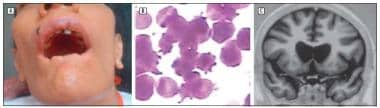
- Any adult with chorea and orofacial tics should have a complete blood count (CBC) and RBC morphology analysis for acanthocytes. Acanthocytes are usually present in fewer than 50% of the total RBC specimens in NA and its variants. At some point during the course of the disease, most patients with NA exhibit acanthocytosis on peripheral blood smear. This study may need to be repeated periodically to demonstrate this finding.
- CPK levels should be checked in any adult with a midlife onset of a movement disorder.
- CPK levels in the range of 300-1000 IU/L are found in NA and its variants in the absence of a clear clinical myopathy and beyond what typically is noted in other choreiform disorders. However, Dotti has noted higher CK levels in patients with McLeod syndrome (reaching 3000) typically in association with the attendant myopathy.
- Fractionation of CPK is reasonable if it is high, although usually the CPK is almost exclusively of the MM type.
- Kell blood typing is required to rule out the NA-linked McLeod syndrome. Suspicion is highest for the presence of the Kell null McLeod phenotype when only males in a given family have NA and cardiomyopathy is associated with the neurological syndrome. Such patients may have a less severe movement disorder and more acanthocytosis-related hemolysis than what is noted in the more common form of NA, presumably due to a chromosome 9 defect.
- Patients with a high CPK level and acanthocytes should also have Kell phenotyping done.
- A lipid profile that includes lipoprotein analysis is reasonable in all patients with NA, particularly in young patients who have Bassen-Kornzweig features (eg, retinitis pigmentosa) along with more characteristic adult-onset NA features (eg, chorea). Normal lipid profile is of course most consistent with NA, but hypolipoproteinemia is common in NA variant syndromes.
- Thyroid, prolactin, and growth hormone levels in adults with NA may be abnormal.
- Genetic studies to rule out a gene abnormality in chromosome 9, the presumptive site for the most common (autosomal recessive) type of NA, may be useful in defining subclinical or variant cases. Low or absent levels of chorein protein via a blood assay are noted in patients with recessive NA. Rarely, NA can occur as a spontaneous mutation. Even in this group ruling out a chromosome 9 genetic defect or a Kell X chromosome anomaly may be helpful.
Imaging Studies
- Brain MRI or CT scan is helpful in assessing caudate atrophy, which is characteristic of NA and its variants.
- Neuroimaging typically shows basal ganglia atrophy, which correlates with disease duration.
- MRI and CT scan are of greater value in looking for other causes of chorea in an adult, such as that due to cerebrovascular disease or a mass lesion.
- MRI can demonstrate iron in the basal ganglia, typically noted in HS but not in NA.
- Brain single-photon emission computed tomography (SPECT) or positron emission tomography (PET) can confirm basal ganglia hypometabolism. Striatal hypometabolism on FDG-PET correlates with disease duration.
Other Tests
- Needle EMG and nerve conduction studies: Denervation atrophy with a distal motor axonal neuropathy is the typical finding in NA. However, a sensory axonal neuropathy also has been described. Patients with McLeod syndrome show myopathic changes in addition to evidence of axonal neuropathy.
- Echocardiography is recommended in patients with clinical evidence of NA and cardiac dysfunction. In these patients, cardiomyopathy should be ruled out. Mitral valve prolapse, concentric left ventricular hypertrophy, increased septal thickness, and generalized hypokinesia all have been described.
Procedures
- Lumbar puncture can be of value to rule out an infectious etiology such as syphilis or AIDS or an autoimmune disease. Cerebrospinal fluid (CSF) in NA is typically normal.
- If a patient has acanthocytosis and a high CPK level, performing a muscle biopsy is reasonable to rule out a component of the myopathy that can occur in patients with NA, either as a late manifestation of neurogenic disturbances in the muscle or as linked to the more characteristic myopathic disorder in McLeod syndrome. The main indication for muscle biopsy is to exclude the presence of a myositis that requires therapy. In some patients with hemolysis and a high CPK level, a muscle biopsy may be necessary to rule out polymyositis.
- Sural nerve biopsy to rule out inflammatory changes may be valuable in any patient with NA and neurophysiological evidence of a neuropathy, particularly since anti-ganglioside antibody titers have been described in one NA variant with neuropathy.
Histologic Findings
- Muscle biopsy changes in NA indicate neurogenic atrophy. Although a high percentage of central nucleation and longitudinal splitting indicated some degree of myopathy in a McLeod variant case, these are nonspecific myopathic findings.
- Sural nerve biopsy shows varying degrees of myelinated fiber dropout, with selective reduction in the large-diameter myelinated fiber population. This is noted in most patients with NA, both classic and variant types. These findings are nonspecific.
- Neuropathy is a major distinguishing factor differentiating (where neuropathy is present) HD from NA. With autopsy, the disorders are further distinguished. Although both disorders show prominent caudate atrophy, HD (where neuropathy is absent) may be associated with prominent cortical atrophy and low caudate levels of glutamic acid decarboxylase and choline acetyltransferase. These biochemical determinations are not part of routine neuropathologic autopsy protocols.
Medical Care
- Medical care is symptomatic and supportive. No treatment is available for genetic defects per se.
- In unusual patients with substantial cardiomyopathy, congestive heart failure must be treated by the appropriate specialist. Sudden death due to ventricular arrhythmia is possible and if it occurs also must be treated by the appropriate specialist.
- Traditional drugs provide temporary relief of chorea and dyskinesia in some patients.
- Judicious use of antidepressants and/or sedatives may be beneficial in some patients.
- Splinting and botulinum toxin may be needed to help dystonia.
- Mechanical protective devices may be needed for those with repeated falls or self-injurious behavior.
Surgical Care
Results for deep brain stimulation (DBS) have been mixed. In one study by Volkmann, bilateral high-frequency stimulation of the globus pallidus (GPi) was not successful. Burbaud has tried GPi stimulation on one patient with the recessive form of NA and another with McLeod syndrome. In the first case, a marked decrease of belching, dyskinetic breathing, and tongue biting occurred. In both cases, a frequency-dependent response was noted with high-frequency stimulation (130 Hz), which worsened speech and distal chorea, but improved contralateral dystonia. Low-frequency stimulation (40 Hz) improved chorea but not dystonia. Burbaud also reported improvement in severe trunk spasms in a patient who received bilateral high-frequency stimulation of the motor thalamus.
Intrastriatal transplantation of fetal striatal neuroblasts has been reported to improve some motor and cognitive functions in patients with Huntington disease according to Beal. Despite obvious disease parallels, whether such an approach for patients with NA is valuable is totally speculative at this time.
- In later stages of the disease when dysphagia progresses, a feeding gastrostomy may be required for nutritionally compromised patients.
- Tracheostomy may be needed in this same group of patients to decrease the risk of aspiration.
Consultations
- A neurologist should lead the management team.
- A cardiologist should evaluate for the presence of a cardiomyopathy, particularly when dyspnea and/or ECG abnormalities are noted.
- A psychiatrist should be consulted when depression and/or behavioral disturbances are significant.
- A hematologist should be consulted for RBC morphology analysis and evaluation of a possible hemolytic anemia.
- A gastroenterologist should be consulted for the possible lipid abnormality or when nutritional disorders such as vitamin deficiency are noted. Malabsorption syndrome, particularly in young patients with hypobetalipoproteinemic NA, will need to be ruled out.
- A physiatrist should coordinate the team working on gait improvement, speech therapy, and physical therapy. Patients with NA may benefit from orthotic devices for foot deformities, walking aids for advancing motor deficits, and alternate communication modalities for severe dysarthria.
Diet
- As noted, nutritional support is an important issue, particularly later in the course of the disease.
- Even in patients with only mild swallowing difficulties or in patients with mild lipid disorders, a multivitamin and supplementary vitamin E may be required.
- Late in NA and its variant syndromes, the patient may be able to tolerate only a blended diet.
- Solid foods can result in aspiration in patients in whom orofacial dyskinesia is prominent.
Activity
- Truncal chorea impairs gait stability in many patients with NA. Gait activity should be limited and monitored in patients with severe truncal chorea, particularly those prone to the characteristic NA cataplexy such as leg buckling attacks.
- Advancing amyotrophy also limits gait in some patients, although the myopathy usually does not cause ambulation failure.
- In patients with severe chorea and/or amyotrophy, a wheelchair may be required.
- Medication for chorea and dyskinesia is usually inadequate but is worth trying.
- Haloperidol, tetrabenazine, and diazepam have been used in high doses in selected patients with NA. Only modest temporary benefit can be expected. Levetiracetam and topiramate have shown some benefit in secondary choreas and may be considered in treating NA.
- Rhabdomyolysis and the neuroleptic malignant syndrome are always concerns in patients with NA, particularly because compliance and swallowing problems may lead to undesired daily variations the dopamine blocking agent blood levels.
- Even when no dramatic haloperidol dosing changes could be documented, Robinson noted rhabdomyolysis in a patient with NA (Robinson, 2004). After treatment for the life-threatening condition, the patient was switched from haloperidol to a combination of molindone and divalproex to effectively reduce involuntary movements.
- Epilepsy management is very individualized. Phenytoin has been used successfully. Carbamazepine and lamotrigine have been reported to worsen the involuntary movements.
- Digitalis and diuretics have been used successfully for congestive heart failure in patients with NA and cardiomyopathy.
- Anticonvulsant therapy with phenytoin has been successful in patients with generalized tonic-clonic seizures.
- In view of potential anticholinergic problems in patients with cardiomyopathy, selective serotonin reuptake inhibitors (SSRIs) are probably a better choice than tricyclic antidepressants.
- Generally, if hemolytic anemia is noted owing to acanthocyte accumulation/degradation, it is mild and does not require treatment.
New protocols similar to those for Huntington disease are worth discussing with the medical treatment team. Agents such as the atypical antipsychotics for chorea and anti-Parkinson disease drugs for patients with NA and Parkinson disease features may be of value. Newer antidepressant drugs may also have a role, particularly SSRIs.
Neuroprotective agents and gene therapy may also have key future roles.
Drug Category: Antipsychotic agents
Chorea, tics, and other adventitious movements such as oral dyskinesia may respond to drugs that block dopamine receptors and facilitate GABA transmission.
| Drug Name | Haloperidol (Haldol) |
| Description | In general, can decrease chorea, tics, and dyskinesia through blockade of dopamine receptors of CNS. |
| Adult Dose | 0.5-5 mg PO bid/tid (up to 30 mg/d); some patients require up to 100 mg/d 2-5 mg IM q4-8h prn |
| Pediatric Dose | Not established |
| Contraindications | Documented hypersensitivity; narrow-angle glaucoma; bone marrow suppression; severe cardiac or liver disease; severe hypotension; Parkinson disease; subcortical brain damage |
| Interactions | May increase serum concentrations of TCAs and hypotensive action of antihypertensive agents; phenobarbital or carbamazepine may decrease effects; anticholinergics may increase intraocular pressure; lithium may cause encephalopathy-like syndrome |
| Pregnancy | C - Safety for use during pregnancy has not been established.
|
| Precautions | Severe neurotoxicity manifesting as rigidity, or inability to walk or talk, may occur in patients with thyrotoxicosis; if IV/IM, watch for hypotension; caution in patients with CNS depression or cardiac disease; if history of seizures, benefits must outweigh risks; significant increase in body temperature may indicate intolerance (discontinue it occurs) |
Drug Category: Anxiolytic
An agent that can decrease anxiety, such as a benzodiazepine, can also decrease movement disorders often made worse by associated stress.
| Drug Name | Diazepam (Valium) |
| Description | Long-acting benzodiazepine that can decrease anxiety in patients with NA throughout the day. |
| Adult Dose | 5 mg PO tid prn |
| Pediatric Dose | Not established |
| Contraindications | Documented hypersensitivity; narrow-angle glaucoma |
| Interactions | Phenothiazines, barbiturates, alcohols, MAOIs, and cisapride can increase toxicity significantly |
| Pregnancy | D - Unsafe in pregnancy
|
| Precautions | Caution with other CNS depressants, low albumin levels, or hepatic disease (may increase toxicity) |
Further Inpatient Care
- Irrespective of whether the patient is an outpatient or an inpatient in a general hospital, a rehabilitation center, or a nursing home, elevated CPK level may indicate fulminant neurological disease, particularly due to severe chorea, dyskinesia, or muscle dysfunction.
- In some patients, a decrease in the movement disorder secondary to advancing muscle wasting will correlate with a fall in CPK level as the chorea/dyskinesia "burns out."
Complications
- Sudden death due to cardiomyopathy-related arrhythmia
- Congestive heart failure due to cardiomyopathy
- Head trauma due to falls
- Aspiration related to dysphagia
- Muscle wasting partly due to poor nutrition
- Rare hemolysis-related splenomegaly/jaundice
Prognosis
- In the absence of an understanding of the cause of the disease and in view of the limited success in preventing disease progression, prognosis is, at best, guarded.
- In patients with severe neurological disease, particularly those with severe orofacial dyskinesia (with secondary dysphagia), prognosis is poor in view of the high risk of aspiration.
- A typical patient with severe NA syndrome that begins in adult life lives for an additional 5 to 10 years.
- In patients who have NA and a cardiomyopathy, the prognosis is guarded in view of the risk for sudden cardiac death and congestive heart failure.
- The prognosis for a normal life span is often good in some patients with no prominent neurological or cardiac sequelae, even in the presence of significant acanthocytosis.
Patient Education
- Families and patients are encouraged to join The Advocacy for Neuroacanthocytosis Patients.
- Family members of patients with NA syndrome should be screened for neurological disease, acanthocytosis, and CPK levels.
- In the families of patients with NA who have hypobetalipoproteinemia or in families of teenagers who develop NA, family members should be screened for lipid abnormalities and clinical features of NA.
- Kell blood group screening should be performed in family members in whom only males have evidence of NA.
- In some families the McLeod or Kell null phenotype is the characteristic NA blood group feature.
- Akamatsu K, Sakaue H, Tada K, et al. A case report of abetalipoproteinemia (Bassen-Kornzweig syndrome)--the first case in Japan. Jpn J Med. Aug 1983;22(3):231-6. [Medline].
- Al-Asmi A, Jansen AC, Badhwar A, et al. Familial temporal lobe epilepsy as a presenting feature of choreoacanthocytosis. Epilepsia. Aug 2005;46(8):1256-63. [Medline].
- Alonso ME, Teixeira F, Jimenez G, Escobar A. Chorea-acanthocytosis: report of a family and neuropathological study of two cases. Can J Neurol Sci. Nov 1989;16(4):426-31. [Medline].
- Andermann E, Jansen A, Andermann F. French-Canadian chorea-acanthocytosis. Mov Disord. 2005;20:1678.
- Arimura H, Kuriyama M, Higuchi I, et al. [Paroxysmal dystonic choreoathetosis with chronic hemolytic anemia and morphologically abnormal erythrocytes]. Rinsho Shinkeigaku. Jan 1995;35(1):29-33. [Medline].
- Beal MF. In: Danek A, ed. Neuroacanthocytosis Syndromes. Springer; 2005.
- Beal MF, Hantraye P. Novel therapies in the search for a cure for Huntington's disease. Proc Natl Acad Sci U S A. Jan 2 2001;98(1):3-4. [Medline].
- Bharucha EP, Bharucha NE. Choreo-acanthocytosis. J Neurol Sci. Feb 1989;89(2-3):135-9. [Medline].
- Bird TD, Cederbaum S, Valey RW, Stahl WL. Familial degeneration of the basal ganglia with acanthocytosis: a clinical, neuropathological, and neurochemical study. Ann Neurol. Mar 1978;3(3):253-8. [Medline].
- Bosman GM. Erythrocyte membrane abnormalities in neuroacanthocytosis: Evidence for a neuron-erythrocyte axis? In: Danek A, ed. Neuroacanthocytosis Syndromes. Springer;2005.
- Bramanti P, Ricci RM, Candela L, et al. Sleep spindles in amyotrophic chorea-acanthocytosis disease. Acta Neurol (Napoli). Jun 1987;9(3):191-8. [Medline].
- Burbaud P, Rougier A, Ferrer X, et al. Improvement of severe trunk spasms by bilateral high-frequency stimulation of the motor thalamus in a patient with chorea-acanthocytosis. Mov Disord. Jan 2002;17(1):204-7. [Medline].
- Burbaud P, Vital A, Rougier A, et al. Minimal tissue damage after stimulation of the motor thalamus in a case of chorea-acanthocytosis. Neurology. Dec 24 2002;59(12):1982-4. [Medline].
- Burbaud P. Deep brain stimulation in neuroacanthocytosis. Mov Disord. 2005;20:1681-1682.
- Cavalli G, de Gregorio C, Nicosia S, et al. [Cardiac involvement in familial amytrophic chorea with acantocytosis: description of two new clinical cases]. Ann Ital Med Int. Oct-Dec 1995;10(4):249-52. [Medline].
- Critchley EM, Clark DB, Wikler A. Acanthocytosis and neurological disorder without betalipoproteinemia. Arch Neurol. Feb 1968;18(2):134-40. [Medline].
- Danek A, Uttner I, Vogl T, et al. Cerebral involvement in McLeod syndrome. Neurology. Jan 1994;44(1):117-20. [Medline].
- Danek A, Jung HH, Melone MA, et al. Neuroacanthocytosis: new developments in a neglected group of dementing disorders. J Neurol Sci. Mar 15 2005;229-230:171-86. [Medline].
- Danek A, Dobson-Stone C, Velayos-Baeza A. The phenotype of chorea-acanthocytosis: a review of 106 patients with VPS13A mutations. Mov Disord. 2005;20:1678.
- De Franceschi L, Corrocher R. Erythrocyte membrane anion exchange abnormalities in chorea-acanthocytosis: The band 3 network. In: Danek A, ed. Neuroacanthocytosis Syndromes. Springer;2005.
- Dobson-Stone C. The spectrum of mutations and possible function of the CHAC gene In: Danek A, ed. Neuoracanthocytosis Syndromes. Springer;2005.
- Dobson-Stone C, Velayos-Baeza A, Filippone LA, et al. Chorein detection for the diagnosis of chorea-acanthocytosis. Ann Neurol. Aug 2004;56(2):299-302. [Medline].
- Dotti MT, Battisti C, Malandrini A, et al. McLeod syndrome and neuroacanthocytosis with a novel mutation in the XK gene. Mov Disord. Nov 2000;15(6):1282-4. [Medline].
- Faillace RT, Kingston WJ, Nanda NC, Griggs RC. Cardiomyopathy associated with the syndrome of amyotrophic chorea and acanthocytosis. Ann Intern Med. May 1982;96(5):616-7. [Medline].
- Ferrer X, Julien J, Vital C, et al. [Choreo-acanthocytosis]. Rev Neurol (Paris). 1990;146(12):739-45. [Medline].
- Gil-Nagel A, Morlan L, Balseiro J, et al. [Neuro-acanthocytosis with associated myopathy. A case report]. Neurologia. Apr 1994;9(4):165-8. [Medline].
- Gross KB, Skrivanek JA, Emeson EE. Ganglioside abnormality in amyotrophic chorea with acanthocytosis. Lancet. Oct 2 1982;2(8301):772. [Medline].
- Gross KB, Skrivanek JA, Carlson KC, Kaufman DM. Familial amyotrophic chorea with acanthocytosis. New clinical and laboratory investigations. Arch Neurol. Aug 1985;42(8):753-6. [Medline].
- Halliday W. The nosology of Hallervorden-spatz disease. J Neurol Sci. Dec 1995;134 Suppl:84-91. [Medline].
- Hardie RJ. Acanthocytosis and neurological impairment--a review. Q J Med. Apr 1989;71(264):291-306. [Medline].
- Hardie RJ, Pullon HW, Harding AE, et al. Neuroacanthocytosis. A clinical, haematological and pathological study of 19 cases. Brain. Feb 1991;114 ( Pt 1A):13-49. [Medline].
- Hashimoto T, Nakadai A, Fujimori N, Yanagisawa N. [A case of "chorea with acanthocytosis and neuropathy" (chorea-acanthocytosis) with parkinsonism without areflexia]. Rinsho Shinkeigaku. Jan 1987;27(1):88-93. [Medline].
- Higgins JJ, Patterson MC, Papadopoulos NM, et al. Hypoprebetalipoproteinemia, acanthocytosis, retinitis pigmentosa, and pallidal degeneration (HARP syndrome). Neurology. Jan 1992;42(1):194-8. [Medline].
- Hirayama M, Hamano T, Shiratori M, et al. Chorea-acanthocytosis with polyclonal antibodies to ganglioside GM1. J Neurol Sci. Oct 3 1997;151(1):23-4. [Medline].
- Iwata M, Fuse S, Sakuta M, Toyokura Y. Neuropathological study of chorea-acanthocytosis. Jpn J Med. May 1984;23(2):118-22. [Medline].
- Jung HH, Hergersberg M, Kneifel S, et al. McLeod syndrome: a novel mutation, predominant psychiatric manifestations, and distinct striatal imaging findings. Ann Neurol. Mar 2001;49(3):384-92. [Medline].
- Kohler B. [Hallervorden-Spatz syndrome with acanthocytosis]. Monatsschr Kinderheilkd. Sep 1989;137(9):616-9. [Medline].
- Kuroiwa Y, Ohnishi A, Sato Y, Kanazawa I. Chorea acanthocytosis: clinical pathological and biochemical aspects. Int J Neurol. 1984;18:64-74. [Medline].
- Kutcher JS, Kahn MJ, Andersson HC, Foundas AL. Neuroacanthocytosis masquerading as Huntington's disease: CT/MRI findings. J Neuroimaging. Jul 1999;9(3):187-9. [Medline].
- Larget-Piet L, Pouplard F. [Ataxia-areflexia-familial steatorrhea without abetalipoproteinemia or acanthocytosis]. J Genet Hum. Sep 1981;29(3):249-51. [Medline].
- Levine IM, Estes JW, Looney JM. Hereditary neurological disease with acanthocytosis. A new syndrome. Arch Neurol. Oct 1968;19(4):403-9. [Medline].
- Limos LC, Ohnishi A, Sakai T, et al. "Myopathic" changes in chorea-acanthocytosis. Clinical and histopathological studies. J Neurol Sci. Jul 1982;55(1):49-58. [Medline].
- Luckenbach MW, Green WR, Miller NR, et al. Ocular clinicopathologic correlation of Hallervorden-Spatz syndrome with acanthocytosis and pigmentary retinopathy. Am J Ophthalmol. Mar 1983;95(3):369-82. [Medline].
- Lupo I, Aragona F, Fierro B, et al. Choreo-acanthocytosis with myopathy. Report of a case. Acta Neurol (Napoli). Oct-Dec 1987;9(5-6):334-8. [Medline].
- Malandrini A, Fabrizi GM, Truschi F, et al. Atypical McLeod syndrome manifested as X-linked chorea-acanthocytosis, neuromyopathy and dilated cardiomyopathy: report of a family. J Neurol Sci. Jun 1994;124(1):89-94. [Medline].
- Miranda M, Campero M, Tenhamm E, Villagra R. [Neuroacanthocytosis: report of 3 cases]. Rev Med Chil. Feb 1993;121(2):176-9. [Medline].
- Mukoyama M, Kazui H, Sunohara N, et al. Mitochondrial myopathy, encephalopathy, lactic acidosis, and stroke-like episodes with acanthocytosis: a clinicopathological study of a unique case. J Neurol. Aug 1986;233(4):228-32. [Medline].
- Nielsen SM, Temlett JA. Neuro-acanthocytosis--a rare cause of chorea. S Afr Med J. Jul 1997;87(7):897-8. [Medline].
- Nihashi H, Yoshida M. [Cognitive function in patients with parkinsonism--in relationship with frontal lobe symptoms]. No To Shinkei. Mar 1988;40(3):261-6. [Medline].
- Ogawa T, Seki H, Okita N, et al. [A case of chorea-acanthocytosis associated with low glycohemoglobin A1c]. Rinsho Shinkeigaku. Mar 1993;33(3):344-6. [Medline].
- Ohnishi A, Sato Y, Nagara H, et al. Neurogenic muscular atrophy and low density of large myelinated fibres of sural nerve in chorea-acanthocytosis. J Neurol Neurosurg Psychiatry. Jul 1981;44(7):645-8. [Medline].
- Orrell RW, Amrolia PJ, Heald A, et al. Acanthocytosis, retinitis pigmentosa, and pallidal degeneration: a report of three patients, including the second reported case with hypoprebetalipoproteinemia (HARP syndrome). Neurology. Mar 1995;45(3 Pt 1):487-92. [Medline].
- Parhofer KG, Richter WO, Stiess W, Schwandt P. [Acanthocytosis, short stature and disordered deep sensation in a 26-year-old patient]. Internist (Berl). Jun 1989;30(6):382-5. [Medline].
- Redman CM, Reid ME. The McLeod syndrome: an example of the value of integrating clinical and molecular studies. Transfusion. Mar 2002;42(3):284-6. [Medline].
- Robinson D, Smith M, Reddy R. Neuroacanthocytosis. Am J Psychiatry. Sep 2004;161(9):1716. [Medline].
- Rubio JP, Danek A, Stone C, et al. Chorea-acanthocytosis: genetic linkage to chromosome 9q21. Am J Hum Genet. Oct 1997;61(4):899-908. [Medline].
- Saggese G, Baroncelli GI, Bertelloni S, et al. [Chronic granulomatous disease and McLeod phenotype. Description of a case]. Minerva Pediatr. Apr 1990;42(4):151-6. [Medline].
- Senda Y, Koike Y, Sugimura K, et al. [Chorea-acanthocytosis with catecholamine abnormality and orthostatic hypotension--a case report]. Rinsho Shinkeigaku. Jul 1987;27(7):898-903. [Medline].
- Serra S, Xerra A, Arena A. Amyotrophic choreo-acanthocytosis: a new observation in southern Europe. Acta Neurol Scand. May 1986;73(5):481-6. [Medline].
- Serra S, Arena A, Xerra A, et al. Amyotrophic choreoacanthocytosis: is it really a very rare disease?. Ital J Neurol Sci. Oct 1986;7(5):521-4. [Medline].
- Sobue G, Mukai E, Fujii K, et al. Peripheral nerve involvement in familial chorea-acanthocytosis. J Neurol Sci. Dec 1986;76(2-3):347-56. [Medline].
- Sotaniemi KA. Chorea-acanthocytosis. Neurological disease with acanthocytosis. Acta Neurol Scand. Jul 1983;68(1):53-6. [Medline].
- Spencer SE, Walker FO, Moore SA. Chorea-amyotrophy with chronic hemolytic anemia: a variant of chorea-amyotrophy with acanthocytosis. Neurology. Apr 1987;37(4):645-9. [Medline].
- Spitz MC, Jankovic J, Killian JM. Familial tic disorder, parkinsonism, motor neuron disease, and acanthocytosis: a new syndrome. Neurology. Mar 1985;35(3):366-70. [Medline].
- Sugihara R, Ueyama H, Fujimoto S, et al. [A case of McLeod syndrome]. Rinsho Shinkeigaku. Oct-Nov 1998;38(10-11):915-9. [Medline].
- Swash M, Schwartz MS, Carter ND, et al. Benign X-linked myopathy with acanthocytes (McLeod syndrome). Its relationship to X-linked muscular dystrophy. Brain. Sep 1983;106 (Pt 3):717-33. [Medline].
- Takahashi Y, Kojima T, Atsumi Y, et al. [Case of chorea-acanthocytosis with various psychotic symptoms]. Seishin Shinkeigaku Zasshi. 1983;85(8):457-72. [Medline].
- Takashima H, Sakai T, Iwashita H, et al. A family of McLeod syndrome, masquerading as chorea-acanthocytosis. J Neurol Sci. Jun 1994;124(1):56-60. [Medline].
- Terao S, Sobue G, Takahashi M, et al. [Disturbance of hypothalamic-pituitary hormone secretion in familial chorea-acanthocytosis]. No To Shinkei. Jan 1995;47(1):57-61. [Medline].
- Tsai CH, Chen RS, Chang HC, et al. Acanthocytosis and spinocerebellar degeneration: a new association?. Mov Disord. May 1997;12(3):456-9. [Medline].
- Villegas A, Moscat J, Vazquez A, et al. A new family with hereditary choreo-acanthocytosis. Acta Haematol. 1987;77(4):215-9. [Medline].
- Volkmann J. Is surgical treatment an option for chorea-acanthocytosis? In: Danek A, ed. Neuroacanthocytosis Syndromes. Springer;2005.
- Walker RH. Autosomal-dominant chorea-acanthocytosis: Report of a family and neuropathology In: Danek A, ed. Neuroacanthocytosis Syndromes. Springer;2005.
- Walker RH, Danek A, Dobson-Stone C, et al. Developments in neuroacanthocytosis: expanding the spectrum of choreatic syndromes. Mov Disord. Nov 2006;21(11):1794-805. [Medline].
- Witt TN, Danek A, Reiter M, et al. McLeod syndrome: a distinct form of neuroacanthocytosis. Report of two cases and literature review with emphasis on neuromuscular manifestations. J Neurol. Jul 1992;239(6):302-6. [Medline].
- Woodruff RK, Wiley JS, Bell WR, et al. Acanthocytosis and haemolytic anaemia due to the McLeod blood group. Aust N Z J Med. Apr 1981;11(2):184-7. [Medline].
- Zyskowski LP, Bunch TW, Hoagland HC, et al. Mcleod syndrome (hemolysis, acanthocytosis, and increased serum creatine kinase): potential confusion with polymyositis. Arthritis Rheum. Jun 1983;26(6):806-8. [Medline].
- van den Buuse M, Webber KM. Endothelin and dopamine release. Prog Neurobiol. Mar 2000;60(4):385-405. [Medline].
Neuroacanthocytosis Syndromes excerpt Article Last Updated: Mar 17, 2007
|