Continually Updated Clinical Reference
 
 
  All Sources     eMedicine     Medscape     Drug Reference     MEDLINE
 
eMedicine - Spinal Epidural Abscess : Article by

Quick Find
Authors & Editors
Introduction
Clinical
Differentials
Workup
Treatment
Medication
Follow-up
Miscellaneous
Multimedia
References

Related Articles
Alcohol (Ethanol) Related Neuropathy

Cervical Spondylosis: Diagnosis and Management

Epidural Hematoma

HIV-1 Associated Vacuolar Myelopathy

Leptomeningeal Carcinomatosis

Metastatic Disease to the Spine and Related Structures

Multiple Sclerosis

Spinal Cord Hemorrhage

Spinal Cord Infarction

Subdural Empyema

Subdural Hematoma

Tropical Myeloneuropathies

Vitamin B-12 Associated Neurological Diseases


Patient Education
Infections Center

Brain and Nervous System Center

Brain Infection Overview

Brain Infection Causes

Brain Infection Symptoms

Brain Infection Treatment

Antibiotics Introduction


Author: J Stephen Huff, MD, Associate Professor of Emergency Medicine and Neurology, Department of Emergency Medicine, University of Virginia Health Sciences Center

J Stephen Huff is a member of the following medical societies: American Academy of Emergency Medicine, American Academy of Neurology, American College of Emergency Physicians, and Society for Academic Emergency Medicine

Editors: Edward Hogan, MD, Professor, Department of Neurology, Medical College of Georgia; Emeritus Professor and Chair, Department of Neurology, Medical University of South Carolina; Francisco Talavera, PharmD, PhD, Senior Pharmacy Editor, eMedicine; Florian P Thomas, MD, MA, PhD, Drmed, Director, Spinal Cord Injury Unit, St Louis Veterans Affairs Medical Center; Director, National MS Society Multiple Sclerosis Center; Associate Program Director, Professor, Department of Neurology and Psychiatry, Associate Professor, Institute for Molecular Virology, and Department of Molecular Microbiology and Immunology, St Louis University; Matthew J Baker, MD, Consulting Staff, Collier Neurologic Specialists, Naples Community Hospital; Nicholas Y Lorenzo, MD, Chief Editor, eMedicine Neurology; Consulting Staff, Neurology Specialists and Consultants

Author and Editor Disclosure

Synonyms and related keywords: spinal cord compression, vascular compromise, vertebral osteomyelitis, epidural space infection, Staphylococcus aureus, Staphylococcus species, Pseudomonas species, Escherichia coli, Mycobacterium tuberculosis, spinal cord dysfunction, localized spinal pain, radicular pain and paresthesias, muscular weakness, sensory loss, sphincter dysfunction, paralysis

Background

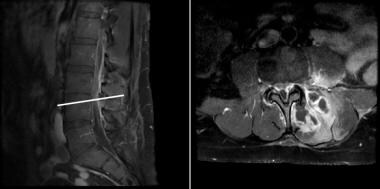
A spinal epidural abscess threatens the spinal cord by compression and also by vascular compromise (see Image 1). If untreated, an expanding suppurative infection in the spinal epidural space impinges on the spinal cord, producing sensory symptoms and signs, motor dysfunction, and, ultimately, paralysis and death. Intervention early in the course of the disease undoubtedly improves the outcome. Frequently, the diagnosis is delayed because the initial presentation may be back pain alone or radicular symptoms with a chief complaint of chest pain or abdominal pain.

Pathophysiology

The spinal epidural space is not a uniform space. Posteriorly, the epidural space contains fat, small arteries, and the venous plexus. Infections in this space can and do spread over several vertebral levels. Anteriorly, the epidural space is a potential space with the dura tightly adherent to the vertebral bodies and ligaments. Abscesses occur more frequently in the larger posterior epidural space. Most spinal epidural abscesses occur in the thoracic area, which is anatomically the longest of the spinal regions.

Hematogenous spread with seeding of the epidural space is the suspected source of infection in most children and is thought to occur in many adults as well. Reported sources of infection are numerous and include bacterial endocarditis, infected indwelling catheters, urinary tract infection, peritoneal and retroperitoneal infections, and others.

Direct extension of infection from vertebral osteomyelitis occurs in adults and rarely in children.

The source of infection is not identified in many patients.

The more clinically significant effects of the epidural abscess may be from involvement of the vascular supply to the spinal cord and subsequent infarction rather than direct compression. Staphylococcus aureus is the most commonly reported pathogen, though many other bacteria have been implicated, including Staphylococcus and Pseudomonas species, Escherichia coli, and Mycobacterium tuberculosis. Methicillin-resistant Staphylococcus aureus (MRSA) is increasingly reported particularly in patients with spinal surgery or implanted devices.

Frequency

United States

The frequency in large tertiary care centers is estimated to be about 2.8 cases per 10,000 admissions. The incidence is suspected to be increasing in relation to intravenous (IV) drug abuse.

International

Because these abscesses occur rarely, the frequency is unknown. It probably parallels the US experience of rarity, although limited diagnostic capabilities in medically underserved countries might increase its importance as a health risk.

Mortality/Morbidity

If untreated, spinal epidural abscess causes progressive weakness and death.

Sex

Older studies found an equal sex ratio; more recent data indicate a male predominance, likely reflecting the pattern of IV drug use.

Age

The average age is older than 50 years, but spinal epidural abscess can occur at any age.


History

Clinical presentation may be quite variable. The clinical triad of fever, back pain, and neurologic deficit is not present in most patients. Early presentations may be subtle, and atypical presentations are not unusual. A 4-phase sequential evolution has been described, with (1) localized spinal pain, (2) radicular pain and paresthesias, (3) muscular weakness, sensory loss, and sphincter dysfunction, and finally (4) paralysis.

  • The virulence of the infecting organism and the mode of infection contribute to the tempo of this progression. Abscesses from hematogenous spread tend to progress rapidly, while abscesses from osteomyelitis or discitis may evolve over weeks or months with slow progression of symptoms.
  • Frequently the patient gives a history of back strain or mild injury.
  • An evident source of infection in skin or soft tissue may be found.
  • IV drug users are a high-risk group. Occurrences have been cited even in patients with a remote history of IV drug abuse.
  • Cases are frequently reported in patients with diabetes mellitus, which is a risk factor in 50% of reported patients; alcoholism; and conditions involving chronic immunosuppression.
  • Hematogenous seeding of the epidural space with abscess formation may stem from intravenous lines, urinary catheters, or implantable devices. Direct inoculation of the epidural space may follow spinal surgery or epidural injections.
  • Symptoms include the following:
    • Fever, present in only about one third of patients
    • Localized back pain in most patients, often the first symptom
    • Radiculopathy with radiating or lancinating pain, including truncal girdle pain (This, at times, may simulate myocardial infarction or other causes of chest or abdominal pain.)
    • Spinal cord syndrome, typically involving paraparesis with prospective progression to paraplegia (Epidural abscesses at the level of the cauda equina cause symptoms consistent with cauda equina syndrome rather than a spinal cord syndrome.)
    • Sphincter dysfunction, including incontinence or increased residual urine volumes
    • Headache and neck pain may be present, especially with cervical epidural abscesses. (Of course, these symptoms might also suggest meningitis.)

Physical

  • Physical findings vary with the degree of spinal cord compression or dysfunction.
  • In the most advanced cases, a transverse cord syndrome is seen with motor and sensory levels found with neurologic examination.
  • Localized tenderness to percussion or palpation at the site of the abscess may be noted. Paraspinal muscle spasm may be present.
  • Signs of spinal cord dysfunction may be observed.
    • Complete transverse spinal cord syndrome with paraplegia and sphincter dysfunction
    • Incomplete spinal cord syndromes
  • Reflexes may vary from absent to hyperreflexia with clonus and extensor plantar (Babinski) responses. Areflexia may indicate spinal shock with transient inhibition of spinal reflexes.
  • Nuchal rigidity may be present, particularly with cervical epidural abscesses.

Causes

  • Most cases arise from hematogenous seeding of the epidural space from a distant source of infection.
  • A few cases are the result of direct extension of infection from the spine or paraspinal tissues.
  • Sources of hematogenous infection
    • Skin and soft tissue
    • Infected catheter
    • Bacterial endocarditis
    • Respiratory tract infection
    • Urinary tract infection
    • Dental abscess
    • Others
  • Sources of contiguous spread
    • Vertebral osteomyelitis
    • Retropharyngeal abscess
    • Dermal sinus tract
    • Psoas abscess
    • Penetrating injury
    • Epidural injections or catheters


Alcohol (Ethanol) Related Neuropathy
Cervical Spondylosis: Diagnosis and Management
Epidural Hematoma
HIV-1 Associated Vacuolar Myelopathy
Leptomeningeal Carcinomatosis
Metastatic Disease to the Spine and Related Structures
Multiple Sclerosis
Spinal Cord Hemorrhage
Spinal Cord Infarction
Subdural Empyema
Subdural Hematoma
Tropical Myeloneuropathies
Vitamin B-12 Associated Neurological Diseases

Other Problems to be Considered

Cervical disk syndromes
Lumbosacral disk syndromes
Lumbosacral spondylosis
Diabetes mellitus
Intravenous drug use
Psoas abscess
Retropharyngeal abscess
Transverse myelitis
Urinary tract infection
Vertebral osteomyelitis
Back pain


Lab Studies

  • CBC count, blood cultures, and preoperative lab studies
  • Elevated erythrocyte sedimentation rate (ESR): In one report, the mean ESR was 51 mm/h. Often ESR is highly elevated. ESR elevation of course is a nonspecific laboratory finding and is not invariably present.

Imaging Studies

  • Immediate imaging of the spinal canal and cord is imperative.
  • If available, spinal MRI is the procedure of choice. Recall that symptoms are often defined by spinal cord level, while MRI is ordered by regional or vertebral levels. Because abscesses frequently extend for several levels, be certain to order the anatomically correct region.
  • If MRI is unavailable, CT myelography or conventional myelography can reveal an intraspinal extramedullary mass—a "surgical" lesion.

Other Tests

  • Lumbar puncture (LP) is relatively contraindicated if spinal epidural abscess is suspected. However, LP may be essential to exclude meningitis from the differential diagnosis. Lumbar puncture runs the risk of introducing purulent material into the subarachnoid space. Some advocate slowly advancing the needle with gentle syringe aspiration if spinal epidural abscess is suspected; if purulent material is encountered, it should be aspirated gently to obtain laboratory specimens, and the needle should not be advanced further.
    • Cerebrospinal fluid (CSF) may show inflammatory cells, often a mixture of polymorphonuclear and mononuclear cells. Cell counts usually are increased, ranging from 10-1000 leukocytes/µL.
    • CSF protein usually is elevated above 100 mg/dL but may be higher, particularly if spinal block is present.
    • CSF glucose is usually normal; depression may indicate coexisting meningitis.


Medical Care

  • Treatment consists of both medical and surgical therapy.
  • Empiric antibiotic coverage should include antistaphylococcal antibiotics. With the increasing incidence of methicillin-resistant staphylococcal infections, coverage that includes medications effective against MRSA is recommended. If the infection follows a neurosurgical procedure, an antistaphylococcal penicillin, a third-generation cephalosporin, and an aminoglycoside are prescribed in combination. Culture results guide definitive therapy.
  • Resolution with antibiotics alone has been reported in patients who are not candidates for surgery because of spine instability or coexisting medical problems. Medical treatment with or without aspiration of the epidural space is increasingly used in patients without neurologic deficits.
  • Deterioration of clinical and functional status while undergoing antibiotic therapy alone has been observed and may dictate emergency surgical decompression.
  • Because of the rarity of the disorder, no randomized trial results are available to guide the clinician.

Surgical Care

  • Emergency surgical decompression of the spinal cord and drainage of the abscess is the usual surgical treatment.
  • Increasing neurologic deficit, persistent severe pain, or persistent fever and leukocytosis are all indications for surgery.
  • Successful treatment with a combination of abscess aspiration and antibiotic treatment has been reported.
  • Patients with spinal epidural abscess may be clinically unstable because of concomitant systemic infection, shock, complications of diabetes mellitus, or other complications. As a result, an increased surgical risk often must be weighed in the decision process.

Consultations

  • Consultation with a spine surgeon should be requested when spinal epidural abscess is detected or strongly suspected.
  • Consultation with an infectious disease specialist may be helpful in the selection of antibiotics and combinations.


Antibiotic treatment should be initiated as soon as possible and in conjunction with surgical therapy. The usual duration of the therapy is 3-4 weeks, but it may be prolonged in the presence of osteomyelitis.

Drug Category: Antibiotics

Because S aureus is a common pathogen, antistaphylococcal drugs should be included in the treatment regimen. An antistaphylococcal penicillin, a cephalosporin, or vancomycin may be used. If the patient has undergone a neurosurgical procedure recently, the penicillin should be combined with a third-generation cephalosporin and an aminoglycoside. Gram-stain and culture results are used to guide therapy.

Drug NameCeftriaxone (Rocephin)
DescriptionThird-generation cephalosporin that has broad gram-negative spectrum, lower efficacy against gram-positive organisms, and higher efficacy against resistant organisms. By binding to penicillin-binding proteins, arrests bacterial cell wall synthesis and inhibits bacterial growth.
Adult Dose2 g IV q12-24h
Pediatric DoseNot established
ContraindicationsDocumented hypersensitivity
InteractionsProbenecid may decrease clearance and increase serum levels; ethacrynic acid, furosemide, and aminoglycosides may increase nephrotoxicity
PregnancyB - Usually safe but benefits must outweigh the risks.
PrecautionsAdjust dose in patients with renal impairment and use with caution in breastfeeding women and patients allergic to penicillin

Drug NameNafcillin (Unipen)
DescriptionTreats infections caused by penicillinase-producing staphylococci. Used to initiate therapy in any patient in whom penicillin G-resistant staphylococcal infection suspected. Should not be used for treatment of penicillin G-susceptible staphylococci.
Parenteral therapy used initially in severe infections. Very severe infections may require very high doses. As condition improves, parenteral therapy should be changed to oral therapy.
Because of occasional occurrence of thrombophlebitis associated with parenteral route, particularly in the elderly, parenteral route should be used only for short term (24-48 h) and changed to oral route, if clinically possible.
Adult Dose2 g IV q4h
Pediatric Dose37.5 mg/kg IV q6h
ContraindicationsDocumented hypersensitivity
InteractionsAssociated with warfarin resistance; bacteriostatic action of tetracycline derivatives may impair bactericidal effects
PregnancyB - Usually safe but benefits must outweigh the risks.
PrecautionsBacteriologic studies should be performed to determine causative organisms and their susceptibility so that appropriate therapy administered; duration of therapy must be sufficient to eliminate organism (minimum of 10 d), otherwise sequelae (eg, endocarditis, rheumatic fever) may ensue
Cultures should be taken after treatment to confirm eradication of pathogens

Drug NameCefazolin (Ancef, Kefzol, Zolicef)
DescriptionFirst-generation semisynthetic cephalosporin, which by binding to penicillin-binding proteins arrests bacterial cell wall synthesis and inhibits bacterial growth. Active primarily against skin flora, including S aureus. Total daily dosage is same for both IV and IM routes.
Adult Dose2 g IV q8h
Pediatric Dose20 mg/kg IV/IM q8-12h
ContraindicationsDocumented hypersensitivity
InteractionsProbenecid decreases renal clearance and prolongs effect; aminoglycosides may increase renal toxicity; may yield false-positive urine dip for glucose
PregnancyB - Usually safe but benefits must outweigh the risks.
PrecautionsAdjust dose in patients with renal impairment; prolonged use of antibiotics associated with superinfections and promotion of nonsusceptible organisms—however, complications usually reversible

Drug NameMetronidazole (Flagyl)
DescriptionUsed in combination with other antibiotics in epidural abscess following neurosurgical procedures. Active against various anaerobic bacteria and protozoa. Appears to be absorbed into cells, and intermediate-metabolized compounds formed bind DNA and inhibit protein synthesis, causing cell death.
Adult Dose500 mg IV q6-12h
Pediatric Dose15 mg/kg IV q12h
ContraindicationsDocumented hypersensitivity
InteractionsPotentiates anticoagulant effect of warfarin; agents that alter hepatic P450 system also affect clearance—phenytoin and phenobarbital may decrease half-life; orally ingested ethanol may cause disulfiramlike reaction—although risk for most patients is slight, caution advised
PregnancyB - Usually safe but benefits must outweigh the risks.
PrecautionsAvoid in patients with hypersensitivity to parabens
Adjust dose in patients with severe hepatic disease since they may metabolize drug slowly; monitor patients for seizures and development of peripheral neuropathy

Drug NameGentamicin (Gentacidin, Garamycin)
DescriptionUsed in combination with other antibiotics for epidural abscess following neurosurgical procedures. Aminoglycoside antibiotic used for gram-negative bacterial coverage. Commonly used in combination with both an agent against gram-positive organisms and one that covers anaerobes. Dosing regimens are numerous and are adjusted based on CrCl and changes in volume of distribution. May be administered IV or IM.
Adult Dose1.5 mg/kg IV q8h
May adjust dosage in patients with renal impairment
Pediatric DoseNeonates and infants: 7.5 mg/kg/d IV
Children: 6-7.5 mg/kg/d IV
ContraindicationsDocumented hypersensitivity; non–dialysis-dependent renal insufficiency
InteractionsOther aminoglycosides, cephalosporins, penicillins, and amphotericin B may increase nephrotoxic potential; enhances effects of neuromuscular blocking agents, which may result in prolonged respiratory depression
Loop diuretics appear to increase auditory toxicity—hearing loss of varying degrees may occur and may be irreversible; important to monitor patients regularly
PregnancyC - Safety for use during pregnancy has not been established.
PrecautionsDue to narrow therapeutic index and toxicity associated with extended administration, not intended for long-term therapy
Adjust dose in patients with renal impairment; improper dosing (without regard to serum levels) may lead to ototoxicity or nephrotoxicity; use caution in patients with renal failure (not on dialysis), hypocalcemia, myasthenia gravis, and conditions that depress neuromuscular transmission

Drug NameVancomycin (Vancocin)
DescriptionOften used when MRSA or other resistant organisms are suspected. Potent antibiotic directed against gram-positive organisms and active against enterococci species. Useful in the treatment of septicemia and skin structure infections. Indicated for patients who cannot receive or whose conditions have failed to respond to penicillins and cephalosporins, or those who have infections with resistant staphylococci. For abdominal penetrating injuries, it is combined with an agent active against enteric flora and/or anaerobes.
To avoid toxicity, current recommendation is to assay vancomycin trough levels after third dose drawn 0.5 h prior to next dosing. Use creatinine clearance to adjust dose in patients with renal impairment.
Used in conjunction with gentamicin for prophylaxis in penicillin-allergic patients undergoing gastrointestinal or genitourinary procedures.
Adult Dose500 mg to 2 g/d IV divided tid/qid 7-10 d
Pediatric Dose40 mg/kg/d IV divided tid/qid 7-10 d
ContraindicationsDocumented hypersensitivity
InteractionsErythema, histaminelike flushing, and anaphylactic reactions may occur when administered with anesthetic agents; taken concurrently with aminoglycosides, risk of nephrotoxicity may increase above that with aminoglycoside monotherapy; effects in neuromuscular blockade may be enhanced when coadministered with nondepolarizing muscle relaxants
PregnancyC - Safety for use during pregnancy has not been established.
PrecautionsCaution in renal failure and neutropenia; red man syndrome is caused by too rapid IV infusion (dose given over a few min) but rarely happens when dose given IV over 2 h administration or as PO or IP administration; red man syndrome is not an allergic reaction


Further Inpatient Care

  • Frequent neurologic assessment to detect any progression of neurologic deficit, particularly weakness, is required.
  • Postsurgical patients require monitoring of neurologic status as well.
  • If the patient has a deficit from spinal cord damage, nursing attention for skin care, catheter care, and physical therapy may be necessary.

Further Outpatient Care

  • Rehabilitation for any residual neurologic deficit may be necessary. This would include restrengthening programs and ambulation retraining.
  • Home health care may help provide ongoing antibiotic and physical therapy.

Transfer

  • Transfer to a facility with spinal cord imaging and care facilities may be necessary.

Complications

  • The many complications of spinal cord injury include bladder dysfunction, decubiti, supine hypertension, recurrent sepsis, and other problems.

Prognosis

  • No studies have been done to assist in predicting prognosis.
  • Prognosis in general is related to the duration of spinal cord dysfunction and the degree of cord impairment at the time of diagnosis.

Patient Education


Medical/Legal Pitfalls

  • Failure to diagnose spinal epidural abscess promptly is the greatest pitfall.
  • Given the multitudes of patients presenting to emergency departments for treatment of back pain, recognizing this relatively rare, emergent, and potentially treatable condition is a challenge.
  • Neurologic findings or complaints such as weakness in the extremities, root pain, a sensory level, or increased reflexes (often with clonus, spasms, and spasticity) may prompt further evaluation.
  • Localized spinal tenderness or tenderness to percussion suggests local inflammation.
  • Fever, if present, may signal the presence of this deep-seated focal infection.
  • High-risk behavior, and especially IV drug abuse, should heighten suspicion.


Media file 1:  Cervical epidural abscess with spinal cord compression and spinal cord edema.
Click to see larger pictureClick to see detailView Full Size Image
Media type:  MRI


  • Bluman EM, Palumbo MA, Lucas PR. Spinal epidural abscess in adults. J Am Acad Orthop Surg. May-Jun 2004;12(3):155-63. [Medline].
  • Bremer AA, Darouiche RO. Spinal epidural abscess presenting as intra-abdominal pathology: a case report and literature review. J Emerg Med. Jan 2004;26(1):51-6. [Medline].
  • Butler KH. Spinal epidural abscess: Current diagnostic and management protocols. Emerg Med Rep. 2000;21:95-104.
  • Darouiche RO. Spinal epidural abscess. N Engl J Med. Nov 9 2006;355(19):2012-20. [Medline].
  • Davis DP, Wold RM, Patel RJ, et al. The clinical presentation and impact of diagnostic delays on emergency department patients with spinal epidural abscess. J Emerg Med. Apr 2004;26(3):285-91. [Medline].
  • Hooten WM, Kinney MO, Huntoon MA. Epidural abscess and meningitis after epidural corticosteroid injection. Mayo Clin Proc. May 2004;79(5):682-6. [Medline].
  • Joshi SM, Hatfield RH, Martin J, Taylor W. Spinal epidural abscess: a diagnostic challenge. Br J Neurosurg. Apr 2003;17(2):160-3. [Medline].
  • Khanna RK, Malik GM, Rock JP, Rosenblum ML. Spinal epidural abscess: evaluation of factors influencing outcome. Neurosurgery. Nov 1996;39(5):958-64. [Medline].
  • Mackenzie AR, Laing RB, Smith CC, et al. Spinal epidural abscess: the importance of early diagnosis and treatment. J Neurol Neurosurg Psychiatry. Aug 1998;65(2):209-12. [Medline].
  • Pereira CE, Lynch JC. Spinal epidural abscess: an analysis of 24 cases. Surg Neurol. 2005;63 Suppl 1:S26-9. [Medline].
  • Prendergast H, Jerrard D, O''Connell J. Atypical presentations of epidural abscess in intravenous drug abusers. Am J Emerg Med. Mar 1997;15(2):158-60. [Medline].
  • Rigamonti D, Liem L, Sampath P, et al. Spinal epidural abscess: contemporary trends in etiology, evaluation, and management. Surg Neurol. Aug 1999;52(2):189-96; discussion 197. [Medline].
  • Sampath P, Rigamonti D. Spinal epidural abscess: a review of epidemiology, diagnosis, and treatment. J Spinal Disord. Apr 1999;12(2):89-93. [Medline].
  • Siddiq F, Chowfin A, Tight R, et al. Medical vs surgical management of spinal epidural abscess. Arch Intern Med. Dec 13-27 2004;164(22):2409-12. [Medline].
  • Soehle M, Wallenfang T. Spinal epidural abscesses: clinical manifestations, prognostic factors, and outcomes. Neurosurgery. Jul 2002;51(1):79-85; discussion 86-7. [Medline].
  • Tessman PA, Preston DC, Shapiro BE. Spinal epidural abscess in an afebrile patient. Arch Neurol. Apr 2004;61(4):590-1. [Medline].
  • Yin KS, Wang C, Lucero Y. Myelopathy secondary to spinal epidural abscess: case reports and a review. J Spinal Cord Med. Oct 1998;21(4):348-54. [Medline].

Spinal Epidural Abscess excerpt

Article Last Updated: Jan 17, 2007