You are in: eMedicine Specialties >
Neurology > Movement and Neurodegenerative Diseases
Progressive Supranuclear Palsy
Article Last Updated: Feb 20, 2007
AUTHOR AND EDITOR INFORMATION
Section 1 of 10
Author: Eric R Eggenberger, DO, MS, Vice-Chairman, Professor, Department of Neurology and Ophthalmology, Michigan State University
Eric R Eggenberger is a member of the following medical societies: American Academy of Neurology, American Academy of Ophthalmology, American Osteopathic Association, and North American Neuro-Ophthalmology Society
Coauthor(s):
Zeba F Vanek, MD, MBBS, DCN, Associate Professor of Neurology, David Geffen School of Medicine at UCLA; Director, UCLA Spasticity Clinic
Editors: Joseph Quinn, MD, Assistant Professor, Department of Neurology, Portland VA Medical Center, Oregon Health Sciences University; Francisco Talavera, PharmD, PhD, Senior Pharmacy Editor, eMedicine; Nestor Galvez-Jimenez, MD, Program Director of Movement Disorders, Department of Neurology, Division of Medicine, Director of Neurology Residency Training Program, Cleveland Clinic Florida; Selim R Benbadis, MD, Professor, Director of Comprehensive Epilepsy Program, Departments of Neurology and Neurosurgery, University of South Florida School of Medicine, Tampa General Hospital; Nicholas Y Lorenzo, MD, Chief Editor, eMedicine Neurology; Consulting Staff, Neurology Specialists and Consultants
Author and Editor Disclosure
Synonyms and related keywords:
Steele-Richardson-Olszewski syndrome, PSP, parkinsonism, neurodegenerative disease, imbalance, immobility, dementia, visual symptoms, dysphagia, dysarthria, vertical gaze palsy
Background
Progressive supranuclear palsy (PSP), also known as Steele-Richardson-Olszewski syndrome, is a neurodegenerative disease that affects cognition, eye movements, and posture (Golbe, 2001). PSP was first described as a clinicopathologic entity in 1964. Characteristics include supranuclear, primarily vertical, gaze dysfunction accompanied by extrapyramidal symptoms and cognitive dysfunction. The disease usually develops after the sixth decade of life, and the diagnosis is purely clinical. Currently, no therapy is proven to be effective.
Pathophysiology
The cause of PSP remains unknown. Most cases appear to be sporadic. Both environmental and genetic influences have been postulated (see Causes).
Frequency
United States
A population-based study in New Jersey revealed 50 cases, an overall prevalence of 1.39 cases per 100,000 population. The male prevalence was 1.53 cases, while the female prevalence was 1.23 cases (both figures are per 100,000 population); this finding was in accordance with a previously noted slight male preponderance. The adjusted prevalence ratio among patients older than 55 years was 7 cases per 100,000 population (Golbe, 1988).
Prevalence data derived from tertiary centers suggest that PSP affects 4-6% of patients with parkinsonism (Jackson, 1983).
International
Incidence has been assessed in Perth, Australia; crude incidence rates are 3-4 per million cases per year, approximately 5% of the incidence of Parkinson disease (Mastaglia, 1973).
Mortality/Morbidity
- PSP is usually fatal within approximately 6 years of onset, with a range of 2-17 years, based on cohort patients dying under surveillance; life table analysis among Golbe's entire cohort revealed a median disease duration of 9.7 years. Conflicting reports exist regarding the influence of age at diagnosis on survival; Golbe found a tendency for younger patients to survive longer, although this is not a uniform finding among other studies (Golbe, 1988; Maher, 1986).
- The primary causes of death in patients with PSP are infections and pulmonary complications (eg, pneumonia) that are frequently related to immobility. Often, the primary morbidity relates to imbalance leading to immobility, although dementia, visual symptoms, and dysphagia are major concerns. Approximately 50% of patients with PSP require some aid to walk within 3 years of the initial symptoms. The interval from initial symptom occurrence to the need for a cane or a walker is 3.1 years, and the interval to confinement to a chair or bed is 8.2 years (Golbe, 1988).
Race
Most reported cases have been in white people. Golbe's 1988 study revealed an entirely white cohort; however, the survey population only included 5.7% black individuals, thus preventing any meaningful analysis regarding race.
Sex
PSP has a slight male predominance in most studies. According to Kristensen (1985), the male-to-female ratio is 1.5:1.
Age
The mean age at onset is approximately 63 years, with a range of 44-75 years (Golbe, 1988; Maher, 1986). The median interval between onset and diagnosis is 3 years, with a range of 6 months to 9 years.
History
The first clinicopathologic descriptions of PSP were published in 1963 and 1964 and proved to be remarkably accurate (Steele, 1964). Only in the past 15 years have neurologists and basic scientists again focused on this disorder.
- The onset of PSP is insidious, and usually a prolonged phase of vague fatigue, headaches, arthralgias, dizziness, and depression occurs. Patients also develop subtle personality changes, memory problems, and pseudobulbar symptoms, and family members are often a more accurate source of such information than the patient. The initial symptoms can often involve unexplained imbalance or falls. Over time, dysarthria, dysphagia, and visual symptoms ensue.
- In a neuropathologic study, the most common symptoms at disease onset were postural instability and falls (63%); dysarthria (35%); bradykinesia (13%); and visual disturbances such as diplopia, blurred vision, burning eyes, and light sensitivity (13%) (Litvan and Mangone, 1996).
- The cardinal manifestations of PSP are supranuclear ophthalmoplegia (see Physical); pseudobulbar palsy; prominent neck dystonia; parkinsonism; behavioral, cognitive, and gait disturbances that cause imbalance; and frequent falls.
- Although presentations vary and early predominance of a particular symptom is not unusual, a greater spectrum of symptoms inevitably ensues over time. Several other features have been reported, including sleep disturbance with insomnia, clumsiness, impaired handwriting, and oscillopsia. Although the full constellation of symptoms occurring in a progressive fashion over time is characteristic, the vertical gaze palsy is the most distinctive single clinical feature.
- Other features that can be prominent include focal or segmental dystonia in the form of limb dystonia or blepharospasm (Barclay, 1997).
- Patients can also have asymmetric apraxia resembling corticobasal degeneration (Gibb, 1989).
- Micturition disturbances, including urinary incontinence, are common in the later stages (Sakakibara, 1993; Tolosa, 1997).
Physical
The physical examination emphasizes the clinical features previously outlined. PSP is characterized primarily by motor, cognitive, and visual symptoms. Documentation of cognitive function with attention to executive function is important.
- The cranial nerve examination should include detailed analysis of ocular motility.
- Slow vertical saccades and square wave jerks are early signs in most patients. The classic gaze palsy in PSP is supranuclear ophthalmoplegia. Supranuclear in this context refers to a lesion above the ocular motor nuclei, thus sparing the ocular motor nuclei, nerve fascicles, and neuromuscular junctional and extraocular muscles. Examination features serve to establish that the infranuclear structures are intact and that the lesion lies within the supranuclear domain. A supranuclear vertical gaze limitation is improved following extravolitional pathway activation, such as the vestibular ocular reflex (VOR) or the Bell phenomenon.
- The Bell phenomenon consists of upward eye deviation behind closed lids. This can be assessed clinically by partially holding the eyelid open and instructing the patient to try forcefully closing the eye. The vertical VOR can be activated by manually flexing and extending the neck while the patient views a distant target. If the extent of the vertical eye movement limitation is improved with either of these maneuvers, then the lesion is supranuclear in origin.
- Measurement of ocular alignment in the cardinal positions of gaze at near and distance viewing often discloses the source of any diplopic symptoms.
- Examination of the eyelid position and movements may yield critical information.
- The characteristic facies, especially when associated with dysarthria, may provide a nearly pathognomonic clinical picture.
- Examination of pursuit movements and the extent of ocular rotations are important.
- Often, the earliest symptoms relate to imbalance and dysarthria. The imbalance is part of an extrapyramidal syndrome that is inclusive of poor postural reflexes, axial greater than appendicular rigidity, and dysarthria (monotone with slight hypophonic quality). Resting tremor is unusual.
- The early appearance of gait and balance dysfunction is in contrast to the course of idiopathic Parkinson disease, in which imbalance tends to occur late in the disease. The gait in individuals with PSP tends to be wider based and unstable; these individuals have a tendency to fall in any direction because of impaired postural reflexes.
- Bradykinesia with masked facies and a startled expression are frequent findings. Retrocollis may be present; with lid retraction, it enhances the astonished, worried appearance. Increased rigidity without cogwheeling or tremor completes the motor picture.
- Visual symptoms tend to be a relatively early finding, but they may not be present at onset; rarely, they are absent entirely. The earliest eye sign often is slowing of vertical saccades and fast phases. Later, the classic vertical supranuclear ophthalmoparesis occurs; this typically involves downgaze before upgaze. As a supranuclear process, vertical eye movements can still be generated by the VOR until late in the course of the disease, although the Bell phenomenon is usually absent (supraduction with eye closure). Later in the disease course, this ophthalmoparesis affects horizontal, in addition to vertical, eye movements. Complete ophthalmoparesis may ensue late in the course.
- Additionally, nearly continuous square wave jerks are commonly observed with fixation. Square wave jerks consist of small ( <5°) horizontal movements that take the eyes conjugately off target and then return the eye to the target after a brief 180- to 200-millisecond latency. Although occasional square wave jerks are a common finding in elderly individuals and may be normal if unaccompanied by other symptoms, more continuous square wave jerks are often associated with an underlying CNS disease.
- Convergence eye movements are often impaired, and convergence insufficiency may produce episodic diplopia at near distances. Impaired binocular fusional capacity may produce diplopia related to decompensated phorias. Impaired VOR suppression has also been noted.
- Several eyelid signs frequently occur in individuals with PSP, including lid retraction, eyelid opening or closing apraxia, blepharospasm, or lid lag.
- Loss of the fast component of the optokinetic nystagmus can precede gaze palsy.
- Cognitive dysfunction and personality change are common, but they are generally milder in degree compared to primary dementing illnesses such as Alzheimer disease. Slowed cognitive processing, sequencing and planning difficulties, mild memory difficulty, and apathy are typical. These are generally more prominent later in the disease course.
- Litvan and Mega et al (1996) discussed the neuropsychiatric aspects of PSP in greater detail. The investigators administered the Neuropsychiatric Inventory (NPI) to 22 patients with PSP, 50 patients with Alzheimer disease, and 40 controls.
- The NPI focuses on the presence of delusions, hallucinations, agitation, dysphoria, anxiety, euphoria, apathy, disinhibition, irritability, and abnormal motor behavior.
- The presence of high apathy scores coupled with low agitation and anxiety scale scores was used to correctly identify patients with PSP 85% of the time.
- Litvan and Agid et al (1996) tested the accuracy of 4 proposed clinical diagnostic criteria for PSP. These authors applied the proposed diagnostic criteria to autopsy-proven cases, including 24 cases of PSP, 29 cases of Lewy body disease, 10 cases of cortical-basal ganglionic degeneration, 7 cases of postencephalitic parkinsonism, 16 cases of multiple system atrophy, 7 cases of Pick disease, and 12 cases of other parkinsonian or dementing illnesses.
- None of the criteria demonstrated both high sensitivity and high predictive value. A regression analysis approach revealed that vertical supranuclear palsy with downgaze abnormalities and postural instability with unexplained falls were the most useful diagnostic features.
- A progressive disease course including these features constituted the mandatory inclusion criteria. Mandatory exclusion criteria included a history of encephalitis, hallucinations, cerebellar signs, noniatrogenic dysautonomia, unilateral dystonia, alien hand syndrome, early cortical dementia, or focal lesions on examination or imaging. These criteria performed better than previously published guidelines, with a mean sensitivity of 57% and positive predictive value of 85%. When applied to data from the patient's last visit to clinic, the criteria revealed a sensitivity of 66% and positive predictive value of 76%.
- The participants in a National Institute of Neurological Disorders and Stroke (NINDS)/Society for PSP conference formulated clinical research criteria for the diagnosis of PSP. They based these new criteria on literature review and then validated them using a clinical data set from autopsy-confirmed cases of PSP.
- Criteria for possible PSP are as follows:
- Gradually progressive disorder with onset when the individual is aged 40 years or older
- Either vertical supranuclear palsy or both slowing of vertical saccades and prominent postural instability with falls in the first year of onset
- No evidence of other diseases that can explain the clinical features
- Criteria for probable PSP are vertical supranuclear palsy with prominent postural instability, falls in the first year of onset, and other features of possible PSP, as follows:
- Symmetric proximal greater than distal akinesia or rigidity
- Abnormal neck posture, especially retrocollis
- Poor or absent response of parkinsonism to levodopa therapy
- Early dysphagia and dysarthria
- Early cognitive impairment with at least 2 of the following: apathy, abstract thought impairment, decreased verbal fluency, imitation behavior, or frontal release signs
- Criteria for definite PSP are as follows: History of probable or possible PSP and histopathologic evidence that is typical of the disease
- The proposed criteria for possible PSP are highly sensitive, while the criteria for probable PSP are highly specific, rendering each useful for different analyses and studies. These attempts at clinical diagnosis will hopefully be supplanted by a reliable and objective diagnostic test in the future.
- The presence of prominent cerebellar signs, hallucinations or dysautonomia in the absence of drug effect, early cortical dementia features, or unilateral dystonia casts doubt on the diagnosis of PSP and should prompt consideration of other neurodegenerative conditions.
Causes
Few epidemiologic studies are available to investigate PSP associations. Golbe and coworkers (1996) performed a questionnaire survey on a cohort of 75 patients with PSP and matched controls. Surveyed exposures included hydrocarbons, pesticides and herbicides, urban/rural living, occupation, trauma, education level, maternal age, and family history of neurologic diseases. Patients with PSP were less likely than controls to have completed 12 years of education. The authors speculate that education level may be a marker for more direct risk factors such as early life nutrition or occupational or residency exposure.
- The role of heredity in the pathophysiology of PSP remains elusive. Although anecdotal reports exist in the literature of apparent familial PSP, several larger series have not noted this association.
- In one case-control questionnaire, a trend toward relatives with parkinsonism was reported. Tetrud (1996) reported the occurrence of autopsy-proven PSP in a brother-sister pair. Both developed parkinsonism in the eighth decade of life and subsequently exhibited typical features of PSP over the next 5 years. Their mother and, possibly, their maternal grandfather experienced a parkinsonian syndrome, while essential tremor was noted in their father and 2 of the brother's 3 children. The probands exhibited typical pathologic features of PSP upon autopsy.
- Although the current absence of a large kindred with PSP precludes molecular linkage studies, the authors suggest that pairs such as in their report could be pooled for analysis; such occurrences are quite rare.
- Although most cases of PSP appear to be sporadic, rare genetically determined forms may exist.
- Garcia de Yebenes et al (1995) studied a 5-generation family in which PSP was transmitted as an autosomal dominant trait.
- Two instances of male-to-male transmission were found. The proband had the classic presentation of this disorder beginning with axial rigidity, slowness of movement, and gait difficulty. Over the course of 2 years, he progressed to complete vertical gaze palsy, axial dystonia, retrocollis, and generalized severe akinesia.
- Postmortem examination demonstrated neurofibrillary tangles (NFTs) and gliosis without prominent senile plaques, the same pathology that was observed in the sporadic cases of PSP described by Steele et al (1964).
- In addition, Garcia de Yebenes et al (1995) described 6 other families with multiple affected individuals. These included 2 in which a parent was affected, suggesting autosomal dominant inheritance, and 1 family in which parental consanguinity occurred, suggesting recessive inheritance.
- The t (tau) protein is important in maintaining neuronal morphology through microtubule binding. Abnormalities of the t protein have been noted in several neurodegenerative diseases. Under abnormal circumstances, the normally soluble t protein may collect in insoluble protease-resistant helical filaments. The exact triggers for the conversion from normal t to the aggregate form are not completely understood.
- This model shares some characteristics with prion disease (Creutzfeldt-Jakob disease), in which an abnormal insoluble prion protein (PrP) isoform accumulates.
- Work by Conrad and colleagues (1997) has demonstrated the overrepresentation of the homozygous t A0 allele in patients with PSP compared to controls.
- Accordingly, the t A0 allele may be a genetic marker of increased susceptibility to the PSP pathophysiology. The t A0 allele status was not required or sufficient to predict the occurrence of PSP.
- Although the e4 allele of apoprotein E gene (ApoE) is a significant risk factor for the development of Alzheimer disease and is overrepresented in individuals with Lewy body disease, it is not associated with PSP, Parkinson disease, or alcoholic dementia.
Absence Seizures
Alzheimer Disease
Amyotrophic Lateral Sclerosis
Apraxia and Related Syndromes
Catatonia
Cortical Basal Ganglionic Degeneration
Dementia in Motor Neuron Disease
Dementia With Lewy Bodies
Dizziness, Vertigo, and Imbalance
Hallervorden-Spatz Disease
Huntington Disease
Multi-infarct Dementia
Multiple System Atrophy
Myasthenia Gravis
Neuroacanthocytosis
Neuroacanthocytosis Syndromes
Normal Pressure Hydrocephalus
Olivopontocerebellar Atrophy
Parkinson Disease
Parkinson Disease in Young Adults
Parkinson-Plus Syndromes
Pelizaeus-Merzbacher Disease
Prion-Related Diseases
Syringomyelia
Whipple Disease
Wilson Disease
Other Problems to be Considered
The diagnosis of PSP is clinical. The key features typically develop over time; although the full-blown picture may be relatively easy to recognize, the early or restricted cases are much more challenging (see Physical).
Other diagnoses in the differential
Cortical-basal ganglionic degeneration (alien limb syndrome, cortical sensory deficits, limb apraxia, dystonia, asymmetric bradykinesia)
Parkinson disease (tremor-dominant disease, levodopa response)
Lewy body dementia (hallucinations, cortical dementia with aphasia, parkinsonism)
Multiple system atrophy (prominent cerebellar symptoms, autonomic dysfunction, parkinsonism)
Whipple disease (ocular-masticatory myorhythmia, polymerase chain reaction [PCR] confirmation)
Creutzfeldt-Jakob disease (duration <1 y with dementia, myoclonus, abnormal findings on EEG)
Multi-infarct dementia (focal features, imaging findings)
Hydrocephalus and normal pressure hydrocephalus (dementia, urinary dysfunction, gait abnormality, imaging findings)
Rigid form of Huntington disease (family history, findings on genetic test)
Machado-Joseph Azorean disease (family history, cerebellar signs, findings on genetic test)
Wilson disease (Kayser-Fleischer rings, earlier onset, copper metabolic abnormalities)
Motor neuron disease (lower motor neuron signs, abnormal electromyograph [EMG] findings)
Myasthenia gravis (episodic weakness, abnormal EMG findings)
Amblyopia
Lab Studies
- Workup is directed at eliminating other diagnoses. No specific laboratory or imaging findings are associated with PSP.
- Whipple PCR may be helpful in eliminating the possibility of Whipple disease, a treatable infectious disorder.
Imaging Studies
- Magnetic resonance imaging
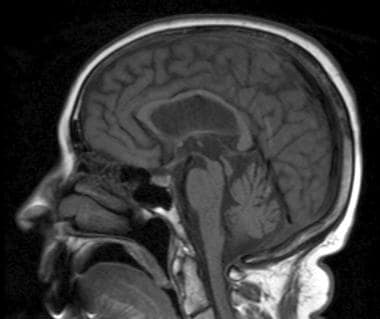
- Although in early stages an MRI of the brain offers little help, in some advanced cases, the following may be present: atrophy of the mid brain with cisternal and ventricular dilatation, thinning of the quadrigeminal plate, dilation of the third ventricle, and a nonspecific finding of increase in proton density images in the periaqueductal gray matter compatible with gliotic changes (Drayer, 1986; Schonfeld, 1987; Stern, 1989; Savoiardo, 1994; Paviour, 2005). Righini reported the usefulness of midsagittal T1-weighted MRI appearance of the superior profile of the midbrain; the appearance of a flat or concave profile (compared to the normal convex profile) was associated with a 68% sensitivity and an 89% specificity (Righini, 2004) for the diagnosis of PSP compared to patients with Parkinson disease.
- These findings are not pathognomonic of PSP and components of these imaging findings may be observed in several other diseases in the differential diagnosis.
- Neuroimaging: Neuroimaging is often performed to eliminate other features of the differential diagnosis. The presence of significant abnormalities (eg, large vessel ischemic disease, hydrocephalus) casts doubt on the diagnosis. Functional neuroimaging includes positron emission tomography (PET) and single-photon emission computed tomography (SPECT).
- PET: These studies may help reveal physiopathologic aspects of the disease. PET studies have shown a global cerebral hypometabolism with relative selectivity in the frontal cortex (Foster, 1988; Foster, 1992; Blin, 1990). Regional cerebral blood flow and oxygen metabolism are decreased in the caudate and putamen and impaired in the thalamus and the brain stem. PET studies have also documented significantly lowered glucose metabolism in the midbrain compared to controls (Mishina, 2004). Fluorodopa (F-dopa) PET has shown a reduction in the F-dopa influx in the caudate and putamen. In idiopathic Parkinson disease, the caudate is affected less severely; therefore, this finding can help in distinguishing these conditions (Brooks, 1990). The costs of PET studies and their limited availability restrict this technique to experimental studies.
- SPECT: Striatal dopamine receptor binding is reduced in some patients with PSP with I iodobenzamide SPECT. This can be used to distinguish vascular white matter lesions from PSP (Arnold, 1994).
Other Tests
- Sleep studies
- Sleep patterns are often abnormal in individuals with PSP. Polysomnograms show diminished total sleep time, increased awakenings, progressive loss of rapid eye movement (REM) sleep (Aldrich, 1989; Santamaria, 1997), and decreased REM–to–non-REM (NREM) quotient (Gross, 1978; Laffont, Rev Neurol (Paris), 1979).
- REM sleep behavior disorder, consisting of motor activity associated with vivid dreams during REM sleep, also occurs in individuals with PSP.
- These abnormalities are not specific for PSP.
Histologic Findings
The histopathology of PSP involves diffuse brainstem disease. Neuronal loss, NFTs, and gliosis affect the reticular formation and ocular motor nuclei. Early pathology is evident primarily in the mid brain, perhaps explaining the early vertical eye movement characteristics. The pontine nucleus raphe interpositus and pedunculopontine and deep pontine nuclei are also affected.
- The distribution and ultrastructure of NFTs in PSP is distinct from those found in Alzheimer disease. PSP is associated with more subcortical involvement, with 15- to 20-nm wide single tubules, compared to the cortically based paired helicoidal filaments of Alzheimer disease.
- In one series, examination of PSP cases revealed the uniform presence of t-positive cortical lesions. These were found in highest concentration in the precentral and angular gyrus, primarily affecting the deep cortical layers, and involved both small and large neurons. These characteristics are distinct from the NFT pattern observed in Alzheimer disease. NFT concentration analysis appeared to implicate the pedunculopontine nucleus in lesion spread.
Although NFTs are the histologic hallmarks of PSP, neuropil threads have also been found extensively.
Besides the brainstem structures, the striatum, medial pallidum, subthalamic nucleus, and the substantia nigra are also affected.
Many questions are unanswered about the pathologic features linking PSP, Alzheimer disease, idiopathic Parkinson disease, and, in particular, corticobasal degeneration. Further ultrastructural and genetic studies are needed to reveal the cause and the pathogenesis of the disease.
Medical Care
Treatment of PSP is challenging at best; only a few patients respond to dopaminergic or anticholinergic drugs, and responses often are short-lived and incomplete. No medication is effective in halting the progression of PSP. Several medications, including dopamine agonists, tricyclic antidepressants, and methysergide, may provide modest symptomatic improvement in some of the clinical features.
- Levodopa and carbidopa (Sinemet) generally produce no dramatic difference in symptoms, sharply contrasting with their effect in idiopathic Parkinson disease. Accordingly, administration of Sinemet may serve as a diagnostic test to help eliminate the possibility of Parkinson disease.
- Some clinicians think that bromocriptine may have somewhat greater effect in individuals with PSP, although the effect is modest and short-lived in most patients. Tricyclic antidepressants have also been used.
- Other medications that have been tried with limited success include amantadine and trazodone.
- Botulinum toxin A has been found to be useful in the treatment of rigidity, in particular nuchal rigidity, and dystonia, such as blepharospasm, bruxism, and focal limb dystonia (Polo, 1994). It may also be useful for sialorrhea.
- Electroconvulsive therapy (ECT) may ameliorate motor symptoms in some patients with PSP. However, long hospitalizations and significant adverse effects such as confusion limit the usefulness.
- Chronic conjunctivitis is common because of the reduced blink rate in individuals with PSP. This can be treated with applications of methylcellulose or methyl alcohol drops in the eyes.
Consultations
- Consultation with a neuro-ophthalmologist or ophthalmologist may help define the cause and outline the treatment of symptoms such as episodic diplopia.
- Consultation with a rehabilitation medicine specialist may assist in maximizing gait stability and safety.
- When swallowing starts to become affected, consultation with a speech therapist may help with modifying the diet.
Diet
Recommend a good well-balanced diet. The authors encourage patients to accept gastrostomy as a good option when feeding becomes impossible because of dysphagia and the high risk of bronchoaspiration.
Activity
Gait disturbances and falls are two of the major causes of disability in individuals with PSP. Physiotherapy after gait analysis, occupational therapy to find the best solutions to improve mobility, safe exercise programs, and appropriate mobility aids may decrease falls and related morbidity.
No effective therapy for PSP is known. A trial of a dopamine agonist is often undertaken to help eliminate Parkinson disease in diagnostically confusing cases or to provide modest symptomatic improvement.
Drug Category: Antiparkinson/dopamine agonists
Dopamine agonists directly stimulate postsynaptic dopamine receptors to provide benefit against symptoms of Parkinson disease. In order for a dopamine agonist to offer clinical benefit, it must stimulate D2 receptors. The role of other dopamine receptor subtypes is currently unclear.
| Drug Name | Levodopa and carbidopa (Sinemet) |
| Description | Generally produce no dramatic difference in symptoms, sharply contrasting with effect in idiopathic Parkinson disease. Accordingly, may serve as a diagnostic test to help eliminate the possibility of Parkinson disease. 10/100, 25/100, 25/250 formulations (carbidopa/levodopa) are available |
| Adult Dose | 0.5-1 tab (10/100) PO tid initial, with increases prn and as tolerated |
| Pediatric Dose | Not established |
| Contraindications | Documented hypersensitivity; acute angle-closure glaucoma; melanoma; MAOI use within 14 d; caution in psychosis, asthma, CAD, peptic ulcer disease, or impaired renal function |
| Interactions | Numerous possible interactions include amantadine, anesthetics, antacids, anticonvulsants, benzodiazepines, other dopamine agonists, anticholinergics, or sympathomimetics |
| Pregnancy | C - Safety for use during pregnancy has not been established.
|
| Precautions | Periodic evaluations of hepatic, hematopoietic, cardiovascular, and renal function are suggested during prolonged use; monitor patients with glaucoma for intraocular pressure changes; occasionally, a dark discoloration may involve saliva, sweat, or urine |
| Drug Name | Bromocriptine (Parlodel) |
| Description | Semisynthetic ergot alkaloid derivative that is strong D2 receptor agonist and weak D1 receptor antagonist. FDA approved as adjunct to levodopa/carbidopa; less effective than other dopamine agonists. May relieve akinesia, rigidity, and tremor in PD. Mechanism of therapeutic effect involves direct stimulation of dopamine receptors in the corpus striatum. Approximately 28% absorbed from GI tract and metabolized in liver. Elimination half-life is approximately 50 h, with 85% excreted in feces and 3-6% eliminated in urine. Initiate at low dosage and individualize. Increase daily dosage slowly until maximum therapeutic response achieved. If possible, maintain the dosage of levodopa during this introductory period. Assess dosage titrations q2wk to ensure that lowest dosage producing optimal therapeutic response is not exceeded. If adverse reactions mandate, reduce dose gradually in 2.5-mg increments. |
| Adult Dose | 1.25 mg (one half of a 2.5-mg tab) PO qd; increase by 1.25 mg/d per wk to 1.25 mg tid with meals; increase q2-4wk by 2.5 mg/d with meals; usual range 10-40 mg/d divided tid/qid; safety has not been demonstrated in dosages >100 mg/d |
| Pediatric Dose | Not established |
| Contraindications | Documented hypersensitivity; ischemic heart disease; peripheral vascular disorders |
| Interactions | Ergot alkaloids increase toxicity; amitriptyline, butyrophenone, imipramine, methyldopa, phenothiazine, and reserpine may decrease effects |
| Pregnancy | C - Safety for use during pregnancy has not been established.
|
| Precautions | Adverse effects include nausea, hypotension, hallucinations, and somnolence; use cautiously in patients with renal or hepatic disease |
Drug Category: Tricyclic antidepressants
A complex group of drugs that have central and peripheral anticholinergic effects, as well as sedative effects. They have central effects on pain transmission.
| Drug Name | Amitriptyline (Elavil) |
| Description | Inhibits reuptake of serotonin and/or norepinephrine at presynaptic neuronal membrane, which increases concentration in CNS. |
| Adult Dose | Begin with low dose (eg, 10 mg PO qhs) with increases prn and as tolerated |
| Pediatric Dose | Not established |
| Contraindications | Documented hypersensitivity; MAOI use within 14 d; acute MI recovery |
| Interactions | Phenobarbital may decrease effects; coadministration with CYP2D6 enzyme system inhibitors (eg, cimetidine, quinidine) may increase amitriptyline levels; amitriptyline inhibits hypotensive effects of guanethidine; may interact with thyroid medications, alcohol, CNS depressants, barbiturates, and disulfiram |
| Pregnancy | D - Unsafe in pregnancy
|
| Precautions | Both elevation and depression of blood sugar have been reported; patients with schizophrenia may develop increasing psychosis, while those with depression may shift to mania; write prescriptions for the smallest amount feasible |
Further Outpatient Care
- To help the patient and family adjust to the changing needs incurred by PSP, provide close follow-up care. Be vigilant for adverse effects related to any medication trials. Often, family-directed education is the most valuable component of clinical visits.
- Physical therapy and rehabilitation medicine involvement may help maximize ambulation safety and facilitate instruction in the use of a walker, wheelchair, or other aids.
- Patients and families often benefit from contact with a PSP support group (see Patient Education).
Complications
- The primary complications of PSP relate to impaired balance, decreased cognition, and immobility in late disease.
- Complications related to falls include orthopedic injury and other posttraumatic problems.
- Immobility in late disease leads to infectious complications such as pneumonia, urinary tract infection, and sepsis.
Prognosis
- The disease runs a progressive and fatal course over 6-10 years in most patients (see Mortality/Morbidity).
Patient Education
- The primary educational aspects of PSP are directed at the patient and family to foster an understanding of the disease, prognosis, potential complications, and coping mechanisms.
- Many patients and families benefit from contact with a support group.
- For excellent patient education resources, visit eMedicine's Dementia Center. Also, see eMedicine's patient education article Progressive Supranuclear Palsy.
Medical/Legal Pitfalls
- Misdiagnosis is always a potential medicolegal pitfall, especially in diseases without objective diagnostic tests. Consider treatable disorders such as idiopathic Parkinson disease. Offering the patient and family a second opinion in the setting of an untreatable fatal illness is always worthy of consideration.
- Albers DS, Augood SJ. New insights into progressive supranuclear palsy. Trends Neurosci. Jun 2001;24(6):347-53. [Medline].
- Aldrich MS, Foster NL, White RF, et al. Sleep abnormalities in progressive supranuclear palsy. Ann Neurol. Jun 1989;25(6):577-81. [Medline].
- Arnold G, Tatsch K, Oertel WH, et al. Clinical progressive supranuclear palsy: differential diagnosis by IBZM- SPECT and MRI. J Neural Transm Suppl. 1994;42:111-8. [Medline].
- Barclay CL, Lang AE. Dystonia in progressive supranuclear palsy. J Neurol Neurosurg Psychiatry. Apr 1997;62(4):352-6. [Medline].
- Blin J, Baron JC, Dubois B, et al. Positron emission tomography study in progressive supranuclear palsy. Brain hypometabolic pattern and clinicometabolic correlations. Arch Neurol. Jul 1990;47(7):747-52. [Medline].
- Brooks DJ, Ibanez V, Sawle GV, et al. Differing patterns of striatal 18F-dopa uptake in Parkinson''s disease, multiple system atrophy, and progressive supranuclear palsy. Ann Neurol. Oct 1990;28(4):547-55. [Medline].
- Conrad C, Andreadis A, Trojanowski JQ, et al. Genetic evidence for the involvement of tau in progressive supranuclear palsy. Ann Neurol. Feb 1997;41(2):277-81. [Medline].
- Drayer BP, Olanow W, Burger P, et al. Parkinson plus syndrome: diagnosis using high field MR imaging of brain iron. Radiology. May 1986;159(2):493-8. [Medline].
- Foster NL, Gilman S, Berent S, et al. Cerebral hypometabolism in progressive supranuclear palsy studied with positron emission tomography. Ann Neurol. Sep 1988;24(3):399-406. [Medline].
- Foster NL, Gilman S, Berent S, et al. Progressive subcortical gliosis and progressive supranuclear palsy can have similar clinical and PET abnormalities. J Neurol Neurosurg Psychiatry. Aug 1992;55(8):707-13. [Medline].
- Gibb WR, Luthert PJ, Marsden CD. Corticobasal degeneration. Brain. Oct 1989;112 ( Pt 5):1171-92. [Medline].
- Golbe LI, Davis PH, Schoenberg BS, Duvoisin RC. Prevalence and natural history of progressive supranuclear palsy. Neurology. Jul 1988;38(7):1031-4. [Medline].
- Golbe LI, Rubin RS, Cody RP, et al. Follow-up study of risk factors in progressive supranuclear palsy. Neurology. Jul 1996;47(1):148-54. [Medline].
- Golbe LI. Progressive Supranuclear Palsy. Curr Treat Options Neurol. Nov 2001;3(6):473-477. [Medline].
- Gross RA, Spehlmann R, Daniels JC. Sleep disturbances in progressive supranuclear palsy. Electroencephalogr Clin Neurophysiol. Jul 1978;45(1):16-25. [Medline].
- Hamilton SR. Neuro-ophthalmology of movement disorders. Curr Opin Ophthalmol. Dec 2000;11(6):403-7. [Medline].
- Jackson JA, Jankovic J, Ford J. Progressive supranuclear palsy: clinical features and response to treatment in 16 patients. Ann Neurol. Mar 1983;13(3):273-8. [Medline].
- Jankovic J, Friedman DI, Pirozzolo FJ, McCrary JA. Progressive supranuclear palsy: motor, neurobehavioral, and neuro- ophthalmic findings. Adv Neurol. 1990;53:293-304. [Medline].
- Kristensen MO. Progressive supranuclear palsy--20 years later. Acta Neurol Scand. Mar 1985;71(3):177-89. [Medline].
- Kuniyoshi S, Riley DE, Zee DS, et al. Distinguishing progressive supranuclear palsy from other forms of Parkinson''s disease: evaluation of new signs. Ann N Y Acad Sci. Apr 2002;956:484-6. [Medline].
- Laffont F, Autret A, Minz M, et al. [Polygraphic study of nocturnal sleep in three degenerative diseases: ALS, oligo-ponto-cerebellar atrophy, and progressive supranuclear palsy]. Waking Sleeping. Jan 1979;3(1):17-30. [Medline].
- Laffont F, Autret A, Minz M, et al. [Polygraphic sleep recordings in 9 cases of Steele-Richardson''s disease (author''s transl)]. Rev Neurol (Paris). Feb 1979;135(2):127-41. [Medline].
- Leigh JR, Zee DS. The neurology of eye movements. 3rd ed. New York, NY:. Oxford University Press;1999:521-525.
- Litvan I, Agid Y, Jankovic J, et al. Accuracy of clinical criteria for the diagnosis of progressive supranuclear palsy (Steele-Richardson-Olszewski syndrome). Neurology. Apr 1996;46(4):922-30. [Medline].
- Litvan I, Agid Y, Calne D, et al. Clinical research criteria for the diagnosis of progressive supranuclear palsy (Steele-Richardson-Olszewski syndrome): report of the NINDS-SPSP international workshop. Neurology. Jul 1996;47(1):1-9. [Medline].
- Litvan I, Mega MS, Cummings JL, Fairbanks L. Neuropsychiatric aspects of progressive supranuclear palsy. Neurology. Nov 1996;47(5):1184-9. [Medline].
- Litvan I, Hauw JJ, Bartko JJ, et al. Validity and reliability of the preliminary NINDS neuropathologic criteria for progressive supranuclear palsy and related disorders. J Neuropathol Exp Neurol. Jan 1996;55(1):97-105. [Medline].
- Litvan I. Diagnosis and management of progressive supranuclear palsy. Semin Neurol. 2001;21(1):41-8. [Medline].
- Litvan I, Mangone CA, McKee A, et al. Natural history of progressive supranuclear palsy (Steele-Richardson- Olszewski syndrome) and clinical predictors of survival: a clinicopathological study. J Neurol Neurosurg Psychiatry. Jun 1996;60(6):615-20. [Medline].
- Maher ER, Lees AJ. The clinical features and natural history of the Steele-Richardson- Olszewski syndrome (progressive supranuclear palsy). Neurology. Jul 1986;36(7):1005-8. [Medline].
- Mark MH. Lumping and splitting the Parkinson Plus syndromes: dementia with Lewy bodies, multiple system atrophy, progressive supranuclear palsy, and cortical-basal ganglionic degeneration. Neurol Clin. Aug 2001;19(3):607-27, vi. [Medline].
- Mastaglia FL, Grainger K, Kee F, et al. Progressive supranuclear palsy (the Steele-Richardson-Olszewski syndrome) clinical and electrophysiological observations in eleven cases. Proc Aust Assoc Neurol. 1973;10(0):35-44. [Medline].
- Mishina M, Ishii K, Mitani K, et al. Midbrain hypometabolism as early diagnostic sign for progressive supranuclear palsy. Acta Neurol Scand. Aug 2004;110(2):128-35. [Medline].
- Nath U, Ben-Shlomo Y, Thomson RG, et al. The prevalence of progressive supranuclear palsy (Steele-Richardson-Olszewski syndrome) in the UK. Brain. Jul 2001;124(Pt 7):1438-49. [Medline].
- Osaki Y, Ben-Shlomo Y, Lees AJ, et al. Accuracy of clinical diagnosis of progressive supranuclear palsy. Mov Disord. Feb 2004;19(2):181-9. [Medline].
- Paviour DC, Price SL, Stevens JM, et al. Quantitative MRI measurement of superior cerebellar peduncle in progressive supranuclear palsy. Neurology. Feb 22 2005;64(4):675-9. [Medline].
- Polo KB, Jabbari B. Botulinum toxin-A improves the rigidity of progressive supranuclear palsy. Ann Neurol. Feb 1994;35(2):237-9. [Medline].
- Rafal RD, Friedman JH. Limb dystonia in progressive supranuclear palsy. Neurology. Sep 1987;37(9):1546-9. [Medline].
- Righini A, Antonini A, De Notaris R, et al. MR imaging of the superior profile of the midbrain: differential diagnosis between progressive supranuclear palsy and Parkinson disease. AJNR Am J Neuroradiol. Jun-Jul 2004;25(6):927-32. [Medline].
- Sakakibara R, Hattori T, Tojo M, et al. Micturitional disturbance in progressive supranuclear palsy. J Auton Nerv Syst. Nov 1993;45(2):101-6. [Medline].
- Santamaria J, Iranzo A. Alteraciones del sueno en los trastornos del movimiento. Neurologia. 1997;12 (Suppl 3):35-47.
- Savoiardo M, Girotti F, Strada L, Ciceri E. Magnetic resonance imaging in progressive supranuclear palsy and other parkinsonian disorders. J Neural Transm Suppl. 1994;42:93-110. [Medline].
- Schonfeld SM, Golbe LI, Sage JI, et al. Computed tomographic findings in progressive supranuclear palsy: correlation with clinical grade. Mov Disord. 1987;2(4):263-78. [Medline].
- Schrag A, Selai C, Davis J, et al. Health-related quality of life in patients with progressive supranuclear palsy. Mov Disord. Dec 2003;18(12):1464-9. [Medline].
- Steele JC, Richardson JC, Olszewski J. Progressive supranuclear palsy. A heterogenous degeneration involving the brain stem, basal ganglia and cerebellum with vertical gaze and pseudobulbar palsy, nuchal dystonia and dementia. Arch Neurol. Apr 1964;10:333-59. [Medline].
- Stern MB, Braffman BH, Skolnick BE, et al. Magnetic resonance imaging in Parkinson''s disease and parkinsonian syndromes. Neurology. Nov 1989;39(11):1524-6. [Medline].
- Tetrud JW, Golbe LI, Forno LS, Farmer PM. Autopsy-proven progressive supranuclear palsy in two siblings. Neurology. Apr 1996;46(4):931-4. [Medline].
- Tolosa E, Espuna M, Valls J. Bladder dysfunction in PSP and other parkinsonian disorders. Mov Disord. 1997;12:272.
- Tolosa E, Valldeoriola F. Progressive supranuclear palsy. In: Jankovic J, Tolosa E, eds. Parkinson's Disease and Movement Disorders. 3rd ed. Baltimore, Md:. William & Wilkins;1998:221-243.
- Warmuth-Metz M, Naumann M, Csoti I, Solymosi L. Measurement of the midbrain diameter on routine magnetic resonance imaging: a simple and accurate method of differentiating between Parkinson disease and progressive supranuclear palsy. Arch Neurol. Jul 2001;58(7):1076-9. [Medline].
- de Yebenes JG, Sarasa JL, Daniel SE, Lees AJ. Familial progressive supranuclear palsy. Description of a pedigree and review of the literature. Brain. Oct 1995;118 ( Pt 5):1095-103. [Medline].
Progressive Supranuclear Palsy excerpt Article Last Updated: Feb 20, 2007
|