Continually Updated Clinical Reference
 
 
  All Sources     eMedicine     Medscape     Drug Reference     MEDLINE
 
eMedicine - Postherpetic Neuralgia : Article by

Quick Find
Authors & Editors
Introduction
Clinical
Differentials
Workup
Treatment
Medication
Follow-up
Multimedia
References

Related Articles
Cavernous Sinus Syndromes

Chronic Paroxysmal Hemicrania

Cluster Headache

Head Injury

Hemifacial Spasm

Migraine Headache

Migraine Headache: Neuro-Ophthalmic Perspective

Migraine Variants

Pathophysiology and Treatment of Migraine and Related Headache

Persistent Idiopathic Facial Pain

Tolosa-Hunt Syndrome

Traumatic Peripheral Nerve Lesions

Trigeminal Neuralgia


Patient Education
Bacterial an Viral Infections Center

Shingles Overview


Author: W Alvin McElveen, MD, Medical Director of Stroke Center, Department of Neurology, Blake Medical Center

W Alvin McElveen is a member of the following medical societies: American Academy of Neurology, American Medical Association, American Society of Neuroimaging, and Southern Clinical Neurological Society

Coauthor(s): Ralph F Gonzalez, MD, Private Practice, Bradenton Neurology, Inc; Consulting Staff, Department of Neurology, Blake Hospital, Lakewood Ranch Medical Center, Manatee Memorial Hospital; Douglas Sinclair, DO, Consulting Staff, Department of Neurology, Blake Medical Center and Bradenton Neurology, Inc

Editors: Joseph R Carcione, Jr, DO, MBA, Consultant in Neurology and Medical Acupuncture, Medical Management and Organizational Consulting, Central Westchester Neuromuscular Care, PC; Medical Director, Oxford Health Plans; Francisco Talavera, PharmD, PhD, Senior Pharmacy Editor, eMedicine; James H Halsey, MD, Professor, Department of Neurology, University of Alabama Medical Center; Selim R Benbadis, MD, Professor, Director of Comprehensive Epilepsy Program, Departments of Neurology and Neurosurgery, University of South Florida School of Medicine, Tampa General Hospital; Nicholas Y Lorenzo, MD, Chief Editor, eMedicine Neurology; Consulting Staff, Neurology Specialists and Consultants

Author and Editor Disclosure

Synonyms and related keywords: herpes zoster, HZ, varicella zoster, chicken pox, shingles, zoster sine herpete, ZSH, human herpesvirus-3, HHV-3, varicella-zoster virus, VZV, PHN, post-herpetic neuralgia, postherpetic neuralgia, viral infection

Background

Herpes zoster (HZ) is a viral infection that usually presents as a childhood infection of varicella (ie, chicken pox). The pathogen is human herpesvirus-3 (HHV-3), also known as the varicella-zoster virus (VZV). Following the acute phase, the virus enters the sensory nervous system, where it is harbored in the geniculate, trigeminal, or dorsal root ganglia and remains dormant for many years. With advancing age or immunocompromised states, the virus reactivates and an eruption (ie, shingles) occurs. Even after the acute rash subsides, pain can persist or recur in shingles-affected areas. This condition is known as postherpetic neuralgia (PHN).
Pathophysiology

Some patients with PHN appear to have abnormal function of unmyelinated nociceptors and sensory loss (usually minimal). Pain and temperature detection systems are hypersensitive to light mechanical stimulation, leading to severe pain (allodynia). Allodynia may be related to formation of new connections involving central pain transmission neurons. Other patients with PHN may have severe, spontaneous pain without allodynia, possibly secondary to increased spontaneous activity in deafferented central neurons or reorganization of central connections. An imbalance involving loss of large inhibitory fibers and an intact or increased number of small excitatory fibers has been suggested. This input on an abnormal dorsal horn containing deafferented hypersensitive neurons supports the clinical observation that both central and peripheral areas are involved in the production of pain.

Frequency

United States

Frequency 1 month after onset of shingles is 9-14.3%; at 3 months, about 5%; at 1 year, 3% continue to have severe pain.

International

A study from Iceland demonstrated variations in risk of PHN associated with different age groups. No patient younger than 50 years described severe pain at any time. Patients older than 60 years described severe pain: 6% at 1 month and 4% at 3 months from the onset of shingles.

Mortality/Morbidity

  • The condition is not fatal.
  • Patients may experience significant pain for a prolonged period of time.
  • Older age appears to be the most significant risk factor for developing PHN.

Sex

No predilection for developing PHN is known. Although 65% of patients in a study by Watson et al were women, this was believed to mirror the usual predominance of women in this age group.

Age

The association between greater age and PHN is strong. At age 60 years, approximately 60% of patients with shingles develop PHN, and at age 70 years, 75% develop PHN.


History

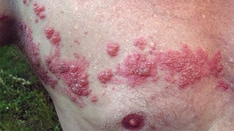
  • A painful vesicular eruption in a dermatomal distribution is typical of HZ.
  • With resolution of the eruption, pain that continues for 3 months or more is defined as PHN.
  • Pain is intense and may be described as burning, stabbing, or gnawing.
  • Herpes zoster can reactivate subclinically with pain in a dermatomal distribution without rash. This condition is known as zoster sine herpete and may be more complicated, affecting multiple levels of the nervous system and causing multiple cranial neuropathies, polyneuritis, myelitis, or aseptic meningitis.

Physical

  • Area of previous HZ may show evidence of cutaneous scarring.
  • Sensation may be altered over involved areas, in the form of either hypersensitivity or decreased sensation.

Causes

  • Risk factors for development of PHN include the following:
    • Advancing age
    • Site of HZ involvement
      • Lower risk - Jaw, neck, sacral, and lumbar
      • Moderate risk - Thoracic
      • Highest risk - Trigeminal (especially ophthalmic division), brachial plexus
    • Severe prodromal pain (with HZ)
    • Severe rash


Cavernous Sinus Syndromes
Chronic Paroxysmal Hemicrania
Cluster Headache
Head Injury
Hemifacial Spasm
Migraine Headache
Migraine Headache: Neuro-Ophthalmic Perspective
Migraine Variants
Pathophysiology and Treatment of Migraine and Related Headache
Persistent Idiopathic Facial Pain
Tolosa-Hunt Syndrome
Traumatic Peripheral Nerve Lesions
Trigeminal Neuralgia

Other Problems to be Considered

Brachial plexitis
Diabetic mononeuritis


Lab Studies

  • No laboratory work is usually necessary.
  • Results of cerebrospinal fluid (CSF) evaluation are abnormal in 61%.
    • Pleocytosis is observed in 46%, elevated protein in 26%, and VZV DNA in 22%.
    • These findings are not predictive of the PHN clinical course.
  • Viral culture or immunofluorescent staining may be used to differentiate herpes simplex from herpes zoster in cases that are difficult to distinguish clinically.
  • Antibodies to herpes zoster can be measured. A 4-fold increase has been used to support the diagnosis of subclinical herpes zoster (zoster sine herpete). However, a rising titer secondary to viral exposure rather than reactivation cannot be ruled out.

Imaging Studies

  • A study by Haanpaa et al revealed the following:
    • MRI lesions attributable to HZ were seen in the brain stem and cervical cord in 56% (9/16) of patients.
    • At 3 months after onset of HZ, 56% (5/9) of patients with an abnormal MRI had developed PHN.
    • Of the 7 patients who had no HZ-related lesions on MRI, none had residual pain.

Histologic Findings

Although HZ symptoms may be confined to a few sensory dermatomes, pathological changes may be more widespread. Affected ganglia of the spinal or cranial nerve roots are swollen and inflamed with a primarily lymphocytic reaction. Some ganglion cells are swollen while others are degenerated.

Inflammation extends into the meninges and root entry zone and may be present in the ventral horn and perivascular space of the spinal cord. Pathological changes in the brain stem are similar to those in the spinal root and spinal cord. In the months following infection, fibrosis occurs in the ganglia, peripheral nerve, and nerve root. Degeneration occurs in the ipsilateral posterior column.


Surgical Care

  • Dorsal root entry zone (DREZ) lesions have been used.
    • Efficacy - Improvement rate is 20% in long-term studies.
    • Complications - Gait disturbances are experienced by 12% of treated patients.
  • Miscellaneous treatment
    • Epidural steroids
    • Nerve blocks


The goal of therapy is to reduce morbidity through the use of tricyclic antidepressants, anticonvulsants, anesthetics, analgesics, corticosteroids, and antiviral agents. A recently approved vaccine is also effective for preventing HZ outbreaks and postherpetic neuralgia.

Drug Category: Tricyclic antidepressants

Complex group of drugs that have central and peripheral anticholinergic effects as well as sedative effects. They have central effects on pain transmission. They block the active reuptake of norepinephrine and serotonin.

Drug NameAmitriptyline (Elavil)
DescriptionBy inhibiting reuptake of serotonin and/or norepinephrine by presynaptic neuronal membrane, may increase synaptic concentration in CNS. Useful as analgesic for certain types of chronic and neuropathic pain.
Adult DoseEarly in course of HZ: 25 mg/d PO hs to prevent PHN
After PHN develops: 30-100 mg PO qhs
Pediatric DoseChildren: 0.1 mg/kg/d PO hs and increase, as tolerated, over 2-3 wk to 0.5-2 mg/d hs
Adolescents: 25-50 mg/d PO; increase gradually to 100 mg/d in divided doses
ContraindicationsDocumented hypersensitivity, MAOIs in past 14 d
InteractionsMetabolized by P 450 2D6 system, thus drugs that inhibit this enzyme system (eg, cimetidine, quinidine) may increase tricyclic levels; phenobarbital may increase metabolism, decreasing its effects, and block uptake of guanethidine, thus preventing its hypotensive effects; may interact with thyroid medications, alcohol, CNS depressants, barbiturates, and disulfiram
PregnancyD - Unsafe in pregnancy
PrecautionsUse with caution in patients with cardiac conduction disturbances, cardiac arrhythmias, seizures, glaucoma, urinary retention history, hyperthyroidism, renal or hepatic impairment; Because of pronounced effects in cardiovascular system, best to avoid in elderly persons

Drug NameNortriptyline (Pamelor, Aventyl HCl)
DescriptionHas demonstrated effectiveness in treatment of chronic pain; by inhibiting reuptake of serotonin and/or norepinephrine by presynaptic neuronal membrane, may increase synaptic concentration in CNS; pharmacodynamic effects such as desensitization of adenyl cyclase and down-regulation of beta-adrenergic receptors and serotonin receptors also appear to play role in its mechanisms of action.
Adult Dose25 mg PO tid/qid; not to exceed 150 mg/d
Pediatric Dose<25 kg: Not established
25-35 kg: 10-20 mg/d PO
35-54 kg: 25-35 mg/d PO
>25 kg: Administer as in adults
ContraindicationsDocumented hypersensitivity, narrow-angle glaucoma, MAOIs in past 14 d
InteractionsCimetidine may increase levels; may increase PT in patients stabilized with warfarin
PregnancyD - Unsafe in pregnancy
PrecautionsUse caution in renal or hepatic impairment, cardiac conduction disturbances, or history of hyperthyroidism

Drug Category: Analgesics

Pain control is essential to quality patient care; it ensures patient comfort and promotes pulmonary toilet. Most analgesics have sedating properties, which are beneficial for patients who experience pain.

Drug NameCapsaicin cream (Dolorac, Capsin, Zostrix)
DescriptionNatural chemical derived from plants of Solanaceae family. By depleting and preventing reaccumulation of substance P in peripheral sensory neurons, may render skin and joints insensitive to pain. Substance P thought to be chemomediator of pain transmission from periphery to CNS.
Adult DoseCream: Apply to skin tid/qid for 3-4 consecutive wk and evaluate efficacy; not to exceed 4 applications/d
Pediatric DoseAdminister as in adults
ContraindicationsDocumented hypersensitivity; do not use on areas of broken or irritated skin
InteractionsNone reported
PregnancyC - Safety for use during pregnancy has not been established.
PrecautionsAvoid contact with eyes; do not bandage tightly; if condition worsens or symptoms persist 14-28 d, discontinue use and consult physician; for external use only

Drug Category: Corticosteroids

These agents have anti-inflammatory properties. Glucocorticoids cause profound and varied metabolic effects. In addition, they modify the body's immune response to diverse stimuli.

Drug NameDexamethasone (Decadron, Alba-Dex, Dalalone L.A.)
DescriptionUsed to treat various allergic and inflammatory diseases. Decreases inflammation by suppressing migration of polymorphonuclear leukocytes and by reversing increased capillary permeability.
Adult Dose0.75-9 mg/d PO in divided doses q6-12h
Pediatric Dose0.08-0.3 mg/kg/d PO or 2.5-10 mg/m2/d divided q6-12h
ContraindicationsDocumented hypersensitivity, untreated active infection, fungal disease of eye
InteractionsBarbiturates, phenytoin, and rifampin can decrease effects; decreases effects of salicylates and vaccines used for immunization
PregnancyC - Safety for use during pregnancy has not been established.
PrecautionsMonitor for adrenal insufficiency when tapering drug; because of risk of adverse effects, use cautiously in elderly, in smallest possible dose and for shortest possible time

Drug NamePrednisone (Deltasone, Orasone, Sterapred)
DescriptionDecreases inflammation by suppressing migration of polymorphonuclear leukocytes and by reversing increased capillary permeability.
Adult Dose5-60 mg/d PO qd or divided bid/qid; taper over 2 wk as symptoms resolve
Pediatric Dose4-5 mg/m2/d PO; alternative: 1-2 mg/kg/d PO; taper over 2 wk as symptoms resolve
ContraindicationsDocumented hypersensitivity; viral, fungal, or tubercular skin lesions
InteractionsConcurrent estrogens may decrease clearance; when used concurrently with digoxin, may increase digitalis toxicity secondary to hypokalemia; phenobarbital, phenytoin, and rifampin may increase metabolism (may require dose increase); patients taking diuretics must be monitored for hypokalemia
PregnancyB - Usually safe but benefits must outweigh the risks.
PrecautionsCaution in hyperthyroidism, cirrhosis, nonspecific ulcerative colitis, osteoporosis, peptic ulcer, diabetes, or myasthenia gravis; adrenal crisis may occur if withdrawn abruptly; increased risk for possible complications, including infections, hyperglycemia, edema, osteonecrosis, peptic ulcer disease, hypokalemia, osteoporosis, euphoria, psychosis, growth suppression, myopathy

Drug NameMethylprednisolone (Solu-Medrol, Adlone, Duralone)
DescriptionDecreases inflammation by suppression of migration of polymorphonuclear leukocytes and reversal of increased capillary permeability.
Adult DoseLoading dose: 125-250 mg IV
Maintenance dose: 0.5-1 mg/kg/dose IV q6h for up to 5 d
Pediatric DoseLoading dose: 2 mg/kg IV
Maintenance dose: 0.5-1 mg/kg/dose IV q6h for up to 5 d
ContraindicationsDocumented hypersensitivity; viral, fungal, or tubercular skin lesions
InteractionsConcurrent estrogens may decrease clearance; when used concomitantly with digoxin, may increase digitalis toxicity secondary to hypokalemia
PregnancyC - Safety for use during pregnancy has not been established.
PrecautionsCaution in patients with hyperthyroidism, cirrhosis, nonspecific ulcerative colitis, osteoporosis, peptic ulcer, diabetes, or myasthenia gravis

Drug Category: Antiviral agents

The goal of antivirals is to shorten the clinical course, prevent complications, prevent the development of latency and/or subsequent recurrences, decrease transmission, and eliminate established latency.

Drug NameFamciclovir (Famvir)
DescriptionPro-drug that, when biotransformed into active metabolite penciclovir, may inhibit viral DNA synthesis/replication.
Adult Dose500-700 mg PO tid for 72 h
Pediatric DoseNot established
ContraindicationsDocumented hypersensitivity
InteractionsConcomitant probenecid or cimetidine prolongs half-life and thus increases toxicity; increases Cmax of digoxin
PregnancyB - Usually safe but benefits must outweigh the risks.
PrecautionsCaution in renal failure or with other nephrotoxic drugs

Drug Category: Anesthetics

These agents stabilize the neuronal membrane so the neuron is less permeable to ions. This prevents the initiation and transmission of nerve impulses, thereby producing the local anesthetic action.

Drug NameLidocaine (DermaFlex gel, Lidoderm 5% patch)
DescriptionSeveral recent studies have advocated topical administration of lidocaine as treatment of PHN. Lidocaine gel (5%) in placebo-controlled study showed significant relief in 23 patients studied. Lidocaine tape also decreases severity of pain.
Adult DoseGel (5%): Apply to affected area prn
Patch (5%): Apply to most painful area up to 3 patches per application; patch may remain in place for up to 12 h in any 24 h period
Pediatric DoseAdminister as in adults
ContraindicationsDocumented hypersensitivity
InteractionsNone reported
PregnancyB - Usually safe but benefits must outweigh the risks.
PrecautionsFor external or mucous membrane use only; do not use in eyes

Drug Category: Anticonvulsants

These agents are used to manage severe muscle spasms and provide sedation in neuralgia. They have central effects on pain modulation.

Drug NamePregabalin (Lyrica)
DescriptionApproved by FDA for use in PHN. Freynhagen et al describe a statistically significant reduction in mean pain score and in pain-related sleep interference compared with placebo. Pregabalin binds with high affinity to alpha2-delta subunit of voltage-gaited calcium channels, thereby reducing excitatory neurotransmitters. Has half-life of approximately 6 h and is eliminated by renal excretion. Decrease in creatinine clearance results in decrease elimination and, therefore, increase in plasma concentration. Peak plasma concentration occurs at one and one half hours after oral intake. Bioavailability is 90%. Following repeated dosing, steady state concentration is achieved at 24-48 h. Can be taken with or without food.
Adult Dose75 mg PO bid initially; may increase to 150 mg bid in 1 wk; may increase to 300 mg bid if needed and tolerated
Pediatric DoseNot established
ContraindicationsDocumented hypersensitivity
InteractionsMay cause additive effects on cognitive and gross motor functioning when coadministered with drugs that cause dizziness or somnolence
PregnancyC - Safety for use during pregnancy has not been established.
PrecautionsDiscontinue gradually (over a minimum of 1 wk) to minimize increased seizure frequency in patients with seizure disorders; may cause insomnia, nausea, headache, or diarrhea with abrupt withdrawal; common adverse effects include dizziness, somnolence, blurred vision, weight gain, and peripheral edema; may elevate creatinine kinase level, decrease platelet count, and increase PR interval; doses >300 mg/d associated with higher rate of adverse effects and treatment discontinuation; decrease dose with elderly or renal impairment (ie, CrCl <60 mL/min)

Drug NameGabapentin (Neurontin)
DescriptionThis medication has been approved by the FDA for the treatment of PHN. Has properties common to other anticonvulsants and antineuralgic effects. Exact mechanism of action is not known. Structurally, gabapentin is related to GABA, but it does not interact with GABA receptors. Believed to have a binding site at the alpha 2-delta protein, an auxiliary subunit of voltage-gaited calcium channels. In the rat brain, binding is localized on neuronal dendritic areas. Relevance of these observations to treatment of PHN is not known.
Adult Dose100 mg PO tid; titrate dose prn; recommended dose is 900-1800 mg PO qd; not to exceed 900 mg PO qid
Pediatric Dose<12 years: Not established
>12 years: Administer as in adults
ContraindicationsDocumented hypersensitivity
InteractionsAntacids may significantly reduce bioavailability, should be administered > 2 h following antacid; cimetidine may reduce clearance, but this may not be of clinical significance; may significantly increase norethindrone levels
PregnancyC - Safety for use during pregnancy has not been established.
PrecautionsCaution in severe renal disease

Drug Category: Vaccines

Used for prevention of HZ outbreak.

Drug NameZoster Vaccine, Live (Zostavax )
DescriptionA randomized, double-blind, placebo-controlled trial included 38,560 patients age 60 y and older for 3.1-y median surveillance; 95% completed the trial. HZ development decreased 51.3% (P <.001) and PHN decreased 66.5% (P <.001).
Adult Dose>60 years: 1 mL SC once
Pediatric DoseNot indicated
ContraindicationsDocumented hypersensitivity to gelatin, neomycin, or other component of vaccine; history of primary or acquired immunodeficiency states including leukemia; lymphomas of any type or other malignant neoplasms affecting bone marrow or lymphatic system; diagnosis of AIDS or other clinical manifestations of infection with HIV; immunosuppressive therapy, including high-dose corticosteroids; active untreated tuberculosis; pregnancy or in close contact with someone who may be or become pregnant; previous diagnosis of shingles
InteractionsNone reported
PregnancyC - Safety for use during pregnancy has not been established.
PrecautionsDuration of protection after vaccination unknown


Prognosis

  • The natural history of PHN involves slow resolution of the pain syndrome.
  • In those patients who develop PHN, most will respond to analgesic agents such as the tricyclic antidepressants.
  • A subgroup of patients may develop severe, long-lasting pain that does not respond to medical therapy. Continued research for new agents is necessary.

Patient Education


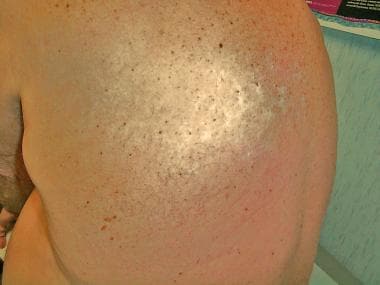
Media file 1:  Hypopigmented rash in thoracic dermatome of postherpetic lesion.

Click to see larger pictureClick to see detailView Full Size Image
Media type:  Photo


  • Baron R, Saguer M. Mechanical allodynia in postherpetic neuralgia: evidence for central mechanisms depending on nociceptive C-fiber degeneration. Neurology. Dec 1995;45(12 Suppl 8):S63-5. [Medline].
  • Bowsher D. The management of postherpetic neuralgia. Postgrad Med J. Oct 1997;73(864):623-9. [Medline].
  • Choo PW, Galil K, Donahue JG, et al. Risk factors for postherpetic neuralgia. Arch Intern Med. Jun 9 1997;157(11):1217-24. [Medline].
  • Freynhagen R, Strojek K, Griesing T, et al. Efficacy of pregabalin in neuropathic pain evaluated in a 12-week, randomised, double-blind, multicentre, placebo-controlled trial of flexible- and fixed-dose regimens. Pain. Jun 2005;115(3):254-63. [Medline].
  • Haanpaa M, Dastidar P, Weinberg A, et al. CSF and MRI findings in patients with acute herpes zoster. Neurology. Nov 1998;51(5):1405-11. [Medline].
  • Helgason S, Petursson G, Gudmundsson S, Sigurdsson JA. Prevalence of postherpetic neuralgia after a first episode of herpes zoster: prospective study with long term follow up. BMJ. Sep 30 2000;321(7264):794-6. [Medline].
  • Johnson RW. Herpes zoster and postherpetic neuralgia. Optimal treatment. Drugs Aging. Feb 1997;10(2):80-94. [Medline].
  • Kotani N, Kushikata T, Hashimoto H, et al. Intrathecal methylprednisolone for intractable postherpetic neuralgia. N Engl J Med. Nov 23 2000;343(21):1514-9. [Medline].
  • Merritt HH. A Textbook of Neurology. 1979;90. [Medline].
  • Nurmikko T. Clinical features and pathophysiologic mechanisms of postherpetic neuralgia. Neurology. Dec 1995;45(12 Suppl 8):S54-5. [Medline].
  • Oxman MN, Levin MJ, Johnson GR, et al. A vaccine to prevent herpes zoster and postherpetic neuralgia in older adults. N Engl J Med. Jun 2 2005;352(22):2271-84. [Medline].
  • Rath SA, Braun V, Soliman N, et al. Results of DREZ coagulations for pain related to plexus lesions, spinal cord injuries and postherpetic neuralgia. Acta Neurochir (Wien). 1996;138(4):364-9. [Medline].
  • Rowbotham M, Harden N, Stacey B, et al. Gabapentin for the treatment of postherpetic neuralgia: a randomized controlled trial. JAMA. Dec 2 1998;280(21):1837-42. [Medline].
  • Rowbotham MC, Davies PS, Fields HL. Topical lidocaine gel relieves postherpetic neuralgia. Ann Neurol. Feb 1995;37(2):246-53. [Medline].
  • Tyring S, Barbarash RA, Nahlik JE, et al. Famciclovir for the treatment of acute herpes zoster: effects on acute disease and postherpetic neuralgia. A randomized, double-blind, placebo-controlled trial. Collaborative Famciclovir Herpes Zoster Study Group. Ann Intern Med. Jul 15 1995;123(2):89-96. [Medline].
  • Watson CP. Postherpetic neuralgia. Neurol Clin. May 1989;7(2):231-48. [Medline].
  • Watson CP, Vernich L, Chipman M, Reed K. Nortriptyline versus amitriptyline in postherpetic neuralgia: a randomized trial. Neurology. Oct 1998;51(4):1166-71. [Medline].
  • Watson CPN, Gershon AA. Herpes Zoster and Post Herpetic Neuralgia. Vol 11. 2001:90-93, 108-109.
  • Whitley RJ, Shukla S, Crooks RJ. The identification of risk factors associated with persistent pain following herpes zoster. J Infect Dis. Nov 1998;178 Suppl 1:S71-5. [Medline].

Postherpetic Neuralgia excerpt

Article Last Updated: Oct 2, 2006