Continually Updated Clinical Reference
 
 
  All Sources     eMedicine     Medscape     Drug Reference     MEDLINE
 
eMedicine - Hairy Cell Leukemia : Article by

Quick Find
Authors & Editors
Introduction
Clinical
Differentials
Workup
Treatment
Medication
Follow-up
Multimedia
References

Related Articles
Agnogenic Myeloid Metaplasia With Myelofibrosis

Anemia

Aplastic Anemia

Chronic Lymphocytic Leukemia

Myelodysplastic Syndrome

Myelophthisic Anemia

Myeloproliferative Disease


Patient Education
Blood and Lymphatic System Center

Leukemia Overview

Leukemia Causes

Leukemia Symptoms

Leukemia Treatment


Author: Emmanuel C Besa, MD, Professor, Department of Medicine, Division of Hematologic Malignancies, Kimmel Cancer Center, Thomas Jefferson University

Emmanuel C Besa is a member of the following medical societies: American Association for Cancer Education, American College of Clinical Pharmacology, American Federation for Medical Research, American Society of Clinical Oncology, American Society of Hematology, and New York Academy of Sciences

Coauthor(s): Ulrich Woermann, MD, Consulting Staff, Division of Instructional Media, Institute for Medical Education, University of Bern, Switzerland

Editors: Rodger L Bick, MD, PhD, FACP, Clinical Professor of Medicine, University of Texas Southwestern Medical Center; Director, Dallas & Pacific Thrombosis Hemostasis Vascular Medicine Clinical Center; Francisco Talavera, PharmD, PhD, Senior Pharmacy Editor, eMedicine; Troy H Guthrie, Jr, MD, Director of Cancer Institute, Baptist Medical Center; Rajalaxmi McKenna, MD, FACP, Consulting Staff, Department of Medicine, Southwest Medical Consultants, SC, Good Samaritan Hospital, Advocate Health Systems; Michael E Zevitz, MD, Assistant Professor of Medicine, Finch University of the Health Sciences, The Chicago Medical School; Consulting Staff, Private Practice

Author and Editor Disclosure

Synonyms and related keywords: leukemic reticuloendotheliosis, hairy cell leukemia, HCL, chronic lymphoid leukemia, B-cell disease, clonal B-cell lymphocyte, hairy cell leukemia, pancytopenia, anemia, thrombocytopenia, neutropenia, hepatosplenomegaly

Background

Hairy cell leukemia (HCL) is a chronic lymphoid leukemia that was originally described in 1958 by Borouncle and colleagues. HCL is a B-cell disease, and the abnormal cell has hairlike cytoplasmic projections on its surface. The disease is recognized as a clonal B-cell malignancy as identified by immunoglobulin gene rearrangements resulting in a phenotype B-cell expression of surface antigens, which reflect the differentiation between the immature B-cell of chronic lymphocytic leukemia and the plasma cell of multiple myeloma.

Pathophysiology

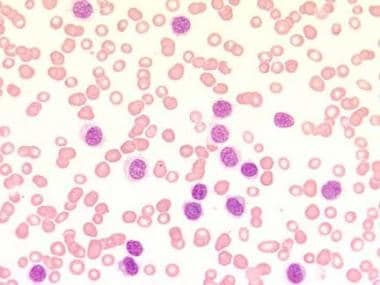
The abnormal cell is a clonal B-cell lymphocyte (see Image 1). This cell infiltrates the patient's reticuloendothelial system and interferes with bone marrow function, resulting in failure or pancytopenia. The HCL cell also infiltrates the liver and spleen, resulting in organomegaly.
The etiology of HCL has not been determined, although some investigators suggest that exposures to benzene, organophosphorus insecticides, or other solvents may be related to disease development. This hypothesis has not been confirmed by other reports. Exposure to radiation, agricultural chemicals, and wood dust, and a previous history of infectious mononucleosis have been suggested as etiologic associations in previous reports.

Overexpression of cyclin D1 protein, an important cell-cycle regulator, has been observed in HCL and may play a role in the molecular pathogenesis of the disease.

Accumulation of HCL cells in the bone marrow, liver, and spleen, with very little lymph node involvement, is characteristic of the disease. This pattern probably results from the expression of the integrin receptor alpha4-beta1 by the hairy cells and the interaction of the receptor with the vascular adhesion molecule-1 (VCAM-1) found in splenic and hepatic endothelia, bone marrow, and splenic stroma.

Frequency

United States

HCL is relatively uncommon and accounts for 2% of all leukemia cases, which is about 600-800 new patients diagnosed a year.

International

Some geographic variations have been observed, such as an extremely low incidence in Japan.

Mortality/Morbidity

  • Symptoms of pancytopenia are related to anemia (fatigue and weakness), thrombocytopenia (bleeding or easy bruising), and neutropenia (infections).
  • Abdominal discomfort is a common symptom, resulting from hepatosplenomegaly. It usually is controlled with new effective drug therapy, although late recurrences may occur. Recurrences usually are responsive to medications.

Race

  • This disease is observed more commonly in whites. It has been reported to occur in Ashkenazi Jewish males, and it is rare in Japan.

Sex

  • HCL is observed mostly in males, with a male-to-female ratio of 5:1.

Age

  • HCL occurs predominantly in middle-aged men, with a median age of 52 years.


History

  • The most common symptoms and presenting complaints are weakness and fatigue due to anemia. Approximately one third of patients have bleeding from thrombocytopenia, and another one third have fever and infections from neutropenia.
  • Symptoms related to organ infiltration of the reticuloendothelial system may occur. Abdominal discomfort from an enlarged spleen is present in one quarter of patients.
  • Some patients may present with weight loss, fever, and night sweats, similar to other lymphoproliferative disorders.
  • Hairy cell leukemia (HCL) is associated with gram-positive and gram-negative bacterial infections as well as atypical mycobacterial and invasive fungal infections. Other opportunistic infections, such as Legionella, toxoplasmosis, and listeriosis, have been reported.
  • HCL is associated with other systemic immunologic disorders including scleroderma, polymyositis, polyarteritis nodosa, erythematous maculopapules, and pyoderma gangrenosum.
  • Other uncommon conditions may be associated with HCL, such as acquired factor VIII antibodies, paraproteinemia, and systemic mast cell disease.

Physical

  • Splenomegaly is the most common physical finding in virtually every patient, and it is massive in more than 80% of patients.
  • Hepatomegaly with mild liver function abnormalities is found in 20% of cases, and lymphadenopathy is found in 10%.
  • A low-grade fever is part of the disease but may be due to an infection from the resulting neutropenia. In more than half the cases, it is from a gram-negative organism. Atypical mycobacterial infections are common. Disseminated fungal infections and Pneumocystis carinii may occur in some cases.
  • Peripheral lymph adenopathy is uncommon, with fewer than 10% of patients presenting with peripheral nodes larger than 2 cm in diameter. However, internal adenopathy may develop after a prolonged disease course and was found in 75% of patients at autopsy.

Causes

HCL is due to proliferation of a clonal malignant B cell that infiltrates the reticuloendothelial cells, particularly the bone marrow, resulting in bone marrow failure.


Agnogenic Myeloid Metaplasia With Myelofibrosis
Anemia
Aplastic Anemia
Chronic Lymphocytic Leukemia
Myelodysplastic Syndrome
Myelophthisic Anemia
Myeloproliferative Disease

Other Problems to be Considered

Pancytopenia and marrow fibrosis
Prolymphocytic leukemia
Chronic lymphocytic leukemia
Low-grade lymphoma
Splenic marginal zone lymphoma
Agnogenic myeloid metaplasia
Myelosclerosis
Systemic mastocytosis


Lab Studies

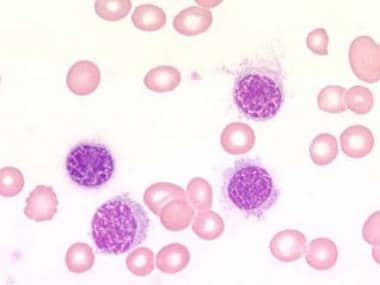
  • The typical hairy cells are named because of their characteristic cytoplasmic projections, which appear as fine (hairlike) microvilli when seen by light microscopy, phase-contrast, and electron microscopy. They are mononuclear cells with eccentric or centrally placed nuclei.
  • Hairy cells have a mature B-cell phenotype and typically express single or multiple immunoglobulin light chains and pan-B-cell antigens, such as CD19, CD20, CD22, and CD79b, but not CD21 (late B-cell marker). The cells typically also express CD103, CD11c, and CD25, but usually not CD5, CD10, or CD23. HCL cells strongly express CD45, seen as a bright signal, with increased forward and side scatter resembling large lymphocytes and monocytes. Immunophenotypic analysis helps distinguish HCL from other low-grade B-cell malignancies.
  • Monoclonal BLy-7 has high sensitivity and specificity for HCL. CD22 stains at higher intensity in HCL than in normal B cells. HCL cells can be identified immunophenotypically in 92% of cases, even when the cells represent less than 1% of circulating lymphocytes.
  • Cytochemical evaluation is important for diagnostic confirmation of the morphologic findings. HCL cells demonstrate strong positivity for tartrate-resistant acid phosphatase (TRAP) staining (see Image 3). A positive TRAP stain in conjunction with a characteristic bone marrow biopsy is essentially diagnostic of HCL.
  • The peripheral blood counts show pancytopenia with decreased cell counts in all 3 cell lines.
    • Anemia usually is severe and normochromic-normocytic in character.
    • Neutropenia and monocytopenia usually are present, but an elevated white count (hairy cells) is found in 20% of cases.
    • Thrombocytopenia is found in more than 80% of patients.
  • The bone marrow aspirate usually is unsuccessful due to a dry tap. Infiltration of the bone marrow by HCL makes aspirating cells through a needle difficult.
    • Core biopsy of the bone marrow shows a pattern of HCL infiltration with a single round or oval nucleus separated by abundant cytoplasm in a fine fibrillar network.
    • The cell appears separated, resulting in the characteristic fried-egg appearance.
  • Clonal cytogenetic abnormalities are present in two thirds of patients, and the involvement of chromosomes 1, 2, 5, 6, 11, 14, 19, and 20 have been described. Chromosome 5 abnormality is most frequent (in 40% of patients) with trisomy 5 and pericentric inversions and interstitial deletions of band 5q13.

Imaging Studies

  • Most patients have massive splenomegaly such that imaging is unnecessary to appreciate its presence.
  • In milder forms, a liver and spleen scan or ultrasound measurement may detect some mild forms of organomegaly missed by abdominal palpation.

Other Tests

  • Difficult cases can be confirmed by using immunophenotypic analysis of the buffy coat cells or by performing electron microscopy on suspected cells.
  • Soluble interleukin-2 receptor levels are elevated in patients with HCL and may provide additional supportive data for the diagnosis.

Histologic Findings

The findings of pancytopenia and splenomegaly in the presence of circulating cells that are TRAP-positive and a dry bone marrow aspirate with biopsy material showing infiltration with a mononuclear cells that have a fried-egg appearance are diagnostic.


Medical Care

Chemotherapeutic approaches

The first-line therapy for hairy cell leukemia (HCL) is 2-chlorodeoxyadenosine (2-CdA) 0.1 mg/kg/d (cladribine, Leustatin) by continuous intravenous infusion for 7 days, which can be performed on an outpatient basis with a pump, using a percutaneous intravenous central catheter (PICC). Growth factors are not routinely given but may be added in patients with febrile neutropenia. The response is usually first observed in the platelet counts (in 2-4 wk) followed by white blood cell counts and neutrophils and, finally, hemoglobin levels. Bone marrow biopsy is repeated in 3 months, but minimal residual disease does not need therapy.

With one course of therapy, 80% of patients obtain a complete remission (CR), and the remainder obtains a partial remission (PR). Several long-term studies have been reported. Chadha et al reported that, although the overall survival rate at 12 years was 87%, the progression-free survival at 12 years was only 54%. In addition, 17% of patients had developed another malignancy during that time.

For increased convenience, some groups have given 2-CdA as a 2-hour infusion (0.14 mg/kg/d) for 5 days. Zinzani et al reported a CR rate of 81% and a PR rate of 19% using this schedule. The 13-year overall and relapse-free survival rates were 96% and 52%, respectively. No randomized study comparing the 24-hour infusional versus the 2-hour infusional schedules is available.

A current trend is the significance of minimal residual disease following treatment with 2-CdA. Ravandi et al administered rituximab to patients with residual disease following 2-CdA. Eleven of 12 patients had eradication of minimal residual disease with this treatment. Whether this will alter the natural history of the disease or prevent relapse is unclear. Currently, the standard therapy for patients with minimal residual disease is observation.

For patients with relapsed HCL who have previously been treated with splenectomy, interferon, or 2-deoxyformycin (2'-DCF), retreatment with 2-CdA in the same manner is indicated, especially if they had previously responded to 2-CdA. In patients previously treated with 2-CdA, response rates of 50% are typical.

Rituximab is a monoclonal antibody against CD20. In patients with relapsed or refractory HCL, response rates of 50% are reported.

  • HCL may behave as a chronic leukemia without causing any symptoms. Approximately 10% of cases, usually in elderly men with moderate splenomegaly and mild decrease in blood counts, never require therapy.
  • The standard criteria for initiating therapy include the following:
    • Symptoms or blood transfusion requirement
    • Significant anemia with hemoglobin of 8-10 g/dL or less
    • Thrombocytopenia with platelet counts of 50,000-100,000/mL or less
    • Neutropenia with an absolute neutrophil count of 500-1000/mL or less
  • Less common indications for therapy include the following:
    • Leukocytosis with a high proportion of hairy cells
    • Repeated life-threatening infections
    • Symptomatic splenomegaly
    • Bulky or painful lymphadenopathy
    • Vasculitis
    • Bony involvement
  • For HCL patients refractory to 2-CdA, or if relapse occurs after 2 cycles of 2-CdA, the authors recommend treatment with 2'-deoxycoformycin (2'DCF, Pentostatin) 4 mg/m2 intravenously every 2 weeks for 3-6 months.
  • Alpha interferon at 2 million U/m2 subcutaneously 3 times a week for 12-18 months can be used to salvage relapsed or refractory HCL patients.

Surgical Care

  • Splenectomy was the first standard treatment modality and was used commonly in the past but has been replaced by the newer agents available. Cytopenia improved rapidly in most patients. Although the procedure does not produce pathologic remissions in the bone marrow, the peripheral blood counts improve in all 3 cell lines in approximately 40-70% of patients. This response usually lasts for a median of 20 months in approximately two thirds of patients with an overall survival rate of 70% in 5 years.
  • Splenic size does not predict response to splenectomy.
  • Effective medical therapy has replaced splenectomy as the first-line treatment.
  • Splenectomy is currently reserved for patients whose conditions fail to respond to systemic therapy or for those with bleeding from thrombocytopenia. Patients undergoing splenectomy require appropriate vaccination.
  • Laparoscopic splenectomy has decreased the morbidity and duration of the postsurgical recovery period.


Systemic therapy has changed rapidly in the past 10 years because of new biologics (eg, interferons) and new purine analogues. Also, the availability of recombinant human hematopoietic growth factors has improved supportive care during life-threatening infections.

Drug Category: Purine analogues

Giblett and coworkers observed that patients with severe combined immunodeficiency were deficient in the purine catabolic enzyme adenosine deaminase. Deficiency causes intracellular accumulation of deoxyadenosine triphosphate and results in lymphocytotoxicity. Purine analogues mimic this condition by irreversibly binding to adenosine deaminase or by fostering resistance to deamination in the purine salvage pathway.

Drug NameCladribine or 2-chlorodeoxyadenosine (Leustatin)
DescriptionSynthetic antineoplastic agent for continuous IV infusion. The enzyme deoxycytidine kinase phosphorylates this compound into active 5'-triphosphate derivative. This, in turn, breaks DNA strands, inhibits DNA synthesis, disrupts cell metabolism, and causes death to resting and dividing cells.
Most active among purine analogues in treatment of HCL. Has 94% overall response and 84% complete response in HCL.
Patients who do not respond to initial regimen likely will not respond to retreatment.
Adult Dose0.1 mg/kg/d IV for 7 d
Pediatric DoseNot established
ContraindicationsDocumented hypersensitivity
InteractionsNone reported
PregnancyD - Unsafe in pregnancy
PrecautionsCaution in patients with history of hematologic or immunologic dysfunction; neurotoxicity may occur; allopurinol can be used prophylactically to prevent hyperuricemia secondary to tumor lysis

Drug NamePentostatin or 2-deoxycoformycin (Nipent)
DescriptionApproved by the FDA for HCL but is less active than 2-CDA for this disease. Treatment results in a 79% overall response rate and a 64% complete response rate in patients with HCL. Response rates (CR + PR) of more than 90% have been reported.
Adult Dose4 mg/mm3 IV bolus weekly for 3-6 mo until complete response achieved
Pediatric DoseNot established
ContraindicationsDocumented hypersensitivity; severely suppressed bone marrow ( <3,000 white blood cells/mm3)
InteractionsVidarabine, allopurinol, and fludarabine may increase toxicity
PregnancyD - Unsafe in pregnancy
PrecautionsCaution in hepatic or renal insufficiency

Drug Category: Interferons

Naturally produced protein with antitumor and immunomodulatory effects.

Drug NameIFN-alfa2a (Roferon) or IFN-alfa2b (Intron A)
DescriptionAlfa interferon is first systemic drug shown to partially eradicate hairy cells from bone marrow, and first approved indication was for this disease. Roferon and Intron A differ from natural product only in amino acid residue at position 23 and achieve similar results in HCL. Response rates are 65% overall, with 10% of patients achieving a complete remission.
Adult Dose2 million U/m2 SC 3 times/wk until maximum response achieved
Pediatric DoseNot established
ContraindicationsDocumented hypersensitivity
InteractionsTheophylline may increase toxicity; cimetidine may increase antitumor effects; zidovudine and vinblastine may increase toxicity
PregnancyC - Safety for use during pregnancy has not been established.
PrecautionsCaution in brain metastases, severe hepatic or renal insufficiencies, seizure disorders, multiple sclerosis, or compromised CNS

Drug Category: Recombinant granulocyte colony-stimulating factors (G-CSFs)

Because treatment of HCL is associated with neutropenia, use of G-CSF may be helpful in reducing toxicity of HCL treatment.

Drug NameFilgrastim or G-CSF (Neupogen)
DescriptionShortens early myelosuppressive effects of alpha interferon and reverses neutropenia in some patients with HCL.
Adult Dose5 mcg/kg/d SC until ANC has reached 10,000/µL
Pediatric DoseNot established
ContraindicationsDocumented hypersensitivity
InteractionsNone reported
PregnancyC - Safety for use during pregnancy has not been established.
PrecautionsDo not use 12-24 h before or 24 h after administering cytotoxic chemotherapy because will increase sensitivity of rapidly dividing myeloid cells to cytotoxic chemotherapy


Further Inpatient Care

  • Hyperuricemia may occur during therapy in patients with leukocytosis and high tumor burden. Add allopurinol at 300 mg per day orally.
  • The risk of second malignancies has been observed in HCL patients either through HCL disease itself or secondary from the immunosuppressive effects of the therapy, including melanoma, prostate cancers, GI malignancies, non-Hodgkin lymphomas, and nonmelanomatous cancers.
  • A 20-year follow-up in 117 patients in British Columbia shows 31% developed a second malignancy, of which 30% were diagnosed before HCL was found. On the other hand, MD Anderson reported no excess of second malignancies among 350 HCL patients treated with interferon, 2'-CdA, or 2'-DCF.

Further Outpatient Care

  • This disease usually is indolent and protracted; late relapses occur.
  • Long-term outpatient follow-up often is necessary in most patients.
  • The overall survival rate with 2'DCF upfront or after alpha interferon failure in 241 patients was 80-85% at 10 years.
  • Evaluation of minimal residual disease (MRD) by posttreatment bone marrow biopsies using anti-CD20 by flow reveals that 13-51% of patients in apparent CR had MRD and appears to predict clinical relapse. Since a majority respond very well to retreatment (92% response) or salvage treatment (80% response), no evidence supports treatment of MRD.
  • Newer therapies, such as anti-CD20 monoclonal antibody rituximab, had been tested in patients with HCL refractory to standard treatment. Several studies with small numbers of patients who received rituximab show an overall response of 64%, with a median duration of response of 14 months, to 100% response and a duration of 73 months indicting that this form of therapy is active against HCL.

Prognosis

  • This disease behaves like a chronic leukemia. With new therapies, most patients achieve clinical remissions and, sometimes, long-term cures.
  • Although relapses are known to occur after 5-10 years, they usually are responsive to the same treatment.
  • Most of the difficulty is in making the diagnosis.

Patient Education


Media file 1:  Blood film at X400 magnification demonstrating a lymphocytosis and an absence of any other type of blood cell (pancytopenia). The characteristic cytoplasmic projections are already visible. Photographed by U. Woermann, MD, Division of Instructional Media, Institute for Medical Education, University of Bern, Switzerland.

Click to see larger pictureClick to see detailView Full Size Image
Media type:  Photo

Media file 2:  Blood film at X1000 magnification demonstrating lymphocytes with characteristic cytoplasmic projections. Photographed by U. Woermann, MD, Division of Instructional Media, Institute for Medical Education, University of Bern, Switzerland.

Click to see larger pictureClick to see detailView Full Size Image
Media type:  Photo

Media file 3:  Blood film at X1000 magnification demonstrating tartrate-resistant acid phosphatase (TRAP) activity of lymphocytes. Photographed by U. Woermann, MD, Division of Instructional Media, Institute for Medical Education, University of Bern, Switzerland.

Click to see larger pictureClick to see detailView Full Size Image
Media type:  Photo


  • Bouroncle BA, Wiseman BK, Doan CA. Leukemic reticuloendotheliosis. Blood. 1958;13:609.
  • Flinn IW, Kopecky KJ, Foucar MK, et al. Long-term follow-up of remission duration, mortality, and second malignancies in hairy cell leukemia patients treated with pentostatin. Blood. Nov 1 2000;96(9):2981-6.
  • Glaspy JA, Baldwin GC, Robertson PA, et al. Therapy for neutropenia in hairy cell leukemia with recombinant human granulocyte colony-stimulating factor. Ann Intern Med. Nov 15 1988;109(10):789-95. [Medline].
  • Goodman GR, Burian C, Koziol JA, et al. Extended follow-up of patients with hairy cell leukemia after treatment with cladribine. J Clin Oncol. Mar 1 2003;21(5):891-6.
  • Katayama I. Bone marrow in hairy cell leukemia. Hematol Oncol Clin North Am. Dec 1988;2(4):585-602. [Medline].
  • Piro LD, Carrera CJ, Carson DA, et al. Lasting remissions in hairy-cell leukemia induced by a single infusion of 2-chlorodeoxyadenosine. N Engl J Med. Apr 19 1990;322(16):1117-21. [Medline].
  • Ratain MJ, Golomb HM, Vardiman JW, et al. Relapse after interferon alfa-2b therapy for hairy-cell leukemia: analysis of prognostic variables. J Clin Oncol. Nov 1988;6(11):1714-21. [Medline].

Hairy Cell Leukemia excerpt

Article Last Updated: Jul 11, 2006