Continually Updated Clinical Reference
 
 
  All Sources     eMedicine     Medscape     Drug Reference     MEDLINE
 
You are in: eMedicine Specialties > Medicine, Ob/Gyn, Psychiatry, and Surgery > Oncology

Thyroid, Follicular Carcinoma

Last Updated: August 24, 2005
Email to a Colleague
Synonyms and related keywords: follicular thyroid carcinoma, FTC, thyroid cancer, Hürthle cell carcinoma, papillary carcinoma, tumor

  AUTHOR INFORMATION Section 1 of 11    Click here to go to the next section in this topic
Author Information Introduction Clinical Differentials Workup Treatment Medication Follow-up Miscellaneous Pictures Bibliography

Author: Luigi Santacroce, MD, Assistant Professor, Department of Dentistry and Surgery, Section of General Surgery, Medical and Dentistry School, State University at Bari, Italy

Coauthor(s): Tommaso Losacco, MD, Residency Director of Digestive Surgery, Associate Professor, Department of Dentistry and Surgery, Section of General Surgery, Medical and Dentistry School, State University at Bari, Italy; Silvia Gagliardi, MD, Consulting Staff, Department of Surgery, Medical Center Vita, Italy; Lodovico Balducci, MD, Professor of Oncology and Medicine, University of South Florida College of Medicine; Division Chief, Senior Adult Oncology Program, H Lee Moffitt Cancer Center and Research Institute

Editor(s): Philip Schulman, MD, Chief, Medical Oncology, Department of Medicine, Memorial Sloan-Kettering Cancer Center; Clinical Professor, Department of Medicine, New York University School of Medicine; Francisco Talavera, PharmD, PhD, Senior Pharmacy Editor, eMedicine; Benjamin Movsas, MD, Vice-Chairman, Department of Radiation Oncology, Fox Chase Cancer Center; Rajalaxmi McKenna, MD, FACP, Consulting Staff, Department of Medicine, Southwest Medical Consultants, SC, Good Samaritan Hospital, Advocate Health Systems; and John S Macdonald, MD, Professor of Medicine, New York Medical College; Chief, Division of Medical Oncology, St Vincent's Hospital and Medical Center; Medical Director, Saint Vincent's Comprehensive Cancer Center

Disclosure


  INTRODUCTION Section 2 of 11   Click here to go to the previous section in this topic Click here to go to the top of this page Click here to go to the next section in this topic
Author Information Introduction Clinical Differentials Workup Treatment Medication Follow-up Miscellaneous Pictures Bibliography

Background: Follicular thyroid carcinoma (FTC) is a well-differentiated tumor. In fact, FTC resembles the normal microscopic pattern of the thyroid. FTC originates in follicular cells and is the second most common cancer of the thyroid after papillary carcinoma.

Papillary/follicular carcinoma must be considered a variant of papillary thyroid carcinoma (mixed form), and Hürthle cell carcinoma should be considered a variant of FTC.

As with most tumors, the cause of thyroid cancers is unknown; however, thyroid cancers are well known to be found more often in patients with a history of low-dose or high-dose external irradiation (40-50 gray [Gy]). Despite its well-differentiated characteristics, follicular carcinoma may be overtly or minimally invasive. In fact, FTC tumors may spread easily to other organs. Life expectancy of affected patients is related to their age; the prognosis is better for younger patients than for patients who are older than 45 years. Of patients with FTC, 10-15% present with lung and bone metastases. In patients with bone metastases, distinguishing that condition from scurvy, osteoporosis, and primary bone tumors may be difficult.

Frequency:

  • In the US: About 10-15% of all thyroid cancers are follicular.
  • Internationally: Thyroid cancers are quite rare, accounting for only 1.5% of all cancers in adults and 3% in children. The highest incidence of thyroid carcinomas in the world is among female Chinese residents of Hawaii. In Hawaii, incidence of FTC ranges from 10-30 new cases a year among 1,000,000 inhabitants. During the last few years, the frequency of FTC has appeared to increase; however, this increase is related to improvement in diagnostic techniques and a successful campaign of information about this carcinoma. Of all thyroid cancers, 17-20% are follicular. According to world epidemiologic data, follicular carcinoma is the second most common thyroid neoplasm; in some geographic areas, however, FTC is the most common thyroid tumor. Relative incidence of follicular carcinoma is higher in areas of endemic goiter.

Mortality/Morbidity: In contrast to other cancers, thyroid cancer almost always is curable. In fact, most FTCs are slow growing and are associated with a very favorable prognosis. Mean mortality rates are 1.5% in females and 1.4% in males.

  • Mean survival rate after 10 years is 60%. Metastases are still rare and are due to angioinvasion and hematogenous spreading. Lymphatic involvement is even more rare, occurring in fewer than 10% of cases. In some patients, metastases are found at diagnosis.
  • Autopsy reviews show a high incidence of microscopic foci of thyroid carcinoma worldwide.
  • Unlike medullary thyroid carcinoma, FTC is not part of a multiple endocrine neoplasia (MEN) syndrome.

Race: FTC occurs more frequently in whites than in blacks.

Sex: Incidence is higher in women than men by a factor of 2-3 or more. Sexual predilection of the disease is related to age.

  • In patients younger than 19 years, the female-to-male ratio is 4:1.
  • In patients aged 20-45 years, the female-to-male ratio is 3:1.
  • In patients older than 45 years, the female-to-male ratio is 4:1.

Age: Thyroid carcinoma is common in all age groups, with an age range of 15-84 years (mean age, 49 years). In older adults, FTC tends to occur more frequently than papillary carcinoma.


  CLINICAL Section 3 of 11   Click here to go to the previous section in this topic Click here to go to the top of this page Click here to go to the next section in this topic
Author Information Introduction Clinical Differentials Workup Treatment Medication Follow-up Miscellaneous Pictures Bibliography

History:

  • Many cases of FTC are subclinical.
  • The most common presentation of thyroid cancer is an asymptomatic thyroid mass, or a nodule, that can be felt in the neck.
  • Record a thorough medical history to identify any risk factors or symptoms.
    • For any patient with a lump in the thyroid that has appeared recently, focus on obtaining history regarding every prior exposure to ionizing radiation as well as the lifetime and duration of the radiation.
    • Consider family history of thyroid cancer.
  • Some patients have persistent cough, difficulty breathing, or difficulty swallowing.
  • Pain seldom is an early warning sign of thyroid cancer.
  • Other symptoms (eg, pain, stridor, vocal cord paralysis, hemoptysis, rapid enlargement) are rare. These symptoms can be caused by less serious problems.
  • At diagnosis, 10-15% of patients have distant metastases to bone and lung and initially are evaluated for pulmonary or osteoarticular symptoms (eg, pathologic fracture, spontaneous fracture).

Physical:

  • Feel the patient's neck to evaluate the size and firmness of the thyroid and to check for any thyroid nodules. The principal sign of thyroid carcinoma is a palpable, firm, and nontender nodule in the thyroid area. This mass is painless.
  • Some patients have a tight or full feeling in the neck, hoarseness, or signs of tracheal or esophageal compression.
  • With thyroid palpation, a usually solitary nodule that has a hard consistency, an average size of less than 5 cm, and ill-defined borders can be felt. This nodule is fixed in respect to surrounding tissues and moves with the trachea at swallowing.
  • Usually, signs of hyperthyroidism or hypothyroidism are not observed.

Causes:

  • Everyone is susceptible to thyroid cancer; however, the thyroid is particularly sensitive to the effects of ionizing radiation. Exposure to ionizing radiation results in a 30% risk for thyroid cancer.
    • A history of exposure of the head and neck to x-ray beams, especially during childhood, has been recognized as an important contributing factor to the development of thyroid cancer.
    • For example, 7% of the individuals exposed to the atomic bomb in Japan developed thyroid cancers.
    • Therapeutic irradiation of body areas was used to treat tumors and benign conditions, eg, acne, excessive facial hair, tuberculosis in the neck, fungus diseases of the scalp, sore throats, chronic coughs, and enlargement of the thymus, tonsils, and adenoids from the 1920s to the 1960s. About 10% of these individuals who were treated with irradiation developed thyroid cancer after a latency period of 30 years.
    • Patients who need radiotherapy for certain types of cancer of the head and neck area also may have an increased risk of developing thyroid cancer.
  • Exposure to diagnostic x-rays does not increase the risk of developing thyroid cancer.
  • Although follicular cancer is frequently present in goitrous thyroids, the relationship between prolonged elevation of thyroid-stimulating hormone (TSH) and follicular carcinoma is not known.
  • Several reports have shown a relationship between iodine deficiency and the incidence of thyroid carcinoma.
  • Incidence of FTC has decreased in geographic areas of endemic goiter where the iodination of salt was instituted.
  • Some studies demonstrate that mutations of the ras oncogene could be implicated in the neoplastic transformation of thyrocytes in FTC. n-ras and h-ras mutations (in codon 61) should be the first events in the pathogenesis of FTC, followed by several further mutations (ie, deletions on chromosomes 3q, 11, and 13q).
  • Some molecules that physiologically regulate the growth of the thyrocytes, as interleukins (IL-1 and IL-8) or other cytokines (IGF1, TGF-beta, EGF) could play a role in the pathogenesis of the FTC.
  DIFFERENTIALS Section 4 of 11   Click here to go to the previous section in this topic Click here to go to the top of this page Click here to go to the next section in this topic
Author Information Introduction Clinical Differentials Workup Treatment Medication Follow-up Miscellaneous Pictures Bibliography

Goiter
Goiter, Toxic Nodular
Graves Disease
Hurthle Cell Carcinoma
Thyroid Nodule
Thyroid, Anaplastic Carcinoma
Thyroid, Medullary Carcinoma
Thyroid, Papillary Carcinoma


Other Problems to be Considered:

Metastatic cancer
Leukemias

Quick Find
Author Information
Introduction
Clinical
Differentials
Workup
Treatment
Medication
Follow-up
Miscellaneous
Pictures
Bibliography

Click for related images.

Related Articles
Goiter

Goiter, Toxic Nodular

Graves Disease

Hurthle Cell Carcinoma

Thyroid Nodule

Thyroid, Anaplastic Carcinoma

Thyroid, Medullary Carcinoma

Thyroid, Papillary Carcinoma


Patient Education


  WORKUP Section 5 of 11   Click here to go to the previous section in this topic Click here to go to the top of this page Click here to go to the next section in this topic
Author Information Introduction Clinical Differentials Workup Treatment Medication Follow-up Miscellaneous Pictures Bibliography

Lab Studies:

  • Thyroid function: Perform complete assessment of thyroid function in any patient with thyroid lumps. Available studies are not specific for FTC.
    • Levels above the reference range of thyroxine (T4; reference range, 4.5-12.5 mcg/dL), triiodothyronine (T3; reference range, 100-200 ng/dL), and TSH (reference range, 0.2-4.7 mIU/dL) may indicate thyroid cancer.
    • Evaluate serum levels of thyroglobulin, calcium, and calcitonin.
    • Determining serum level of carcinoembryonic antigen (CEA) may be helpful; the reference value is less than 3 ng/dL. However, the implications of CEA elevation are not specific because CEA levels elevate in several cancers, and many healthy people may have small amounts of CEA, especially pregnant women and heavy smokers.
  • TSH suppression test: Cancer is autonomous and does not require TSH for growth, whereas benign lesions do. Therefore, when exogenous thyroid hormone feeds back to the pituitary to decrease the production of TSH, thyroid nodules that continue to enlarge are likely to be malignant. However, consider that 15-20% of malignant nodules are suppressible.
    • Preoperatively, the test is useful for patients with nontoxic solitary benign nodules and for women with repeated inconclusive test results.
    • Postoperatively, the test also is useful in follow-up of FTC cases.

Imaging Studies:

  • Chest radiography, CT scanning, and MRI usually are not used in the initial workup of a thyroid nodule, except in patients with clear metastatic disease at presentation. These tests are second-level diagnostic tools and are useful in preoperative patient assessment.
  • Echography is the first imaging study that must be performed in any patient with suspected thyroid malignancy.
    • Echography is noninvasive and inexpensive, and it represents the most sensitive procedure for identifying thyroid lesions and determining the diameter of a nodule (2-3 mm).
    • Echography also is useful to localize lesions when a nodule is difficult to palpate or is located deeply.
    • Echography can determine whether a lesion is solid or cystic and can detect the presence of calcifications.
    • The rate of accuracy of echography in categorizing nodules as solid, cystic, or mixed is near 90%.
    • Ultrasonography may direct a fine-needle aspiration biopsy (FNAB).
    • Thyroid echography has some disadvantages: it cannot be used to distinguish benign nodules from malignant nodules, and it cannot be used to identify true cystic lesions.
    • Pulsed and power Doppler echography may provide important information about the vascular pattern and the velocimetric parameters. Such information can be useful preoperatively to reach a correct differential diagnosis of malignant or benign thyroid lesion.
  • Prior to FNAB, thyroid scintigraphy (or thyroid scanning) performed with technetium Tc 99m pertechnetate (99mTc) or radioactive iodine (I-131 or I-123) was the initial diagnostic procedure of choice in thyroid evaluation.
    • The procedure is not as sensitive or specific as FNAB in distinguishing benign nodules from malignant nodules.
    • The scintigraphy procedure performed with 99mTc has a high error rate because 99mTc is trapped as is iodide but is not organified in the thyroid. 99mTc has a short half-life and cannot be used to determine functionality of a thyroid nodule.
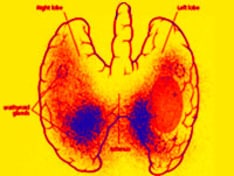
    • Radioactive iodine is trapped and organified in the thyroid and can be used to determine functionality of a thyroid nodule. Iodine-containing compounds and seafood interfere with any tests that use radioactive iodine. Scintigraphic images of the thyroid are acquired 20-40 minutes after IV administration of radionuclide. In more than 90% of cases, clearly benign nodules appear as hot nodules because they are hyperfunctioning and have a high captation rate of radionuclide and, physiologically, of iodine. Malignant nodules usually appear as cold nodules because they are not functioning.
    • Thyroid scanning is helpful and specific in localizing the tumor preoperatively and residual thyroid tissue immediately postoperatively. It also is used to follow-up for tumor recurrence or metastasis. Thyroid scanning could be useful in diagnosing thyroid tumors in patients with benign lesions (by FNAB) or solid lesions (by echography).

Other Tests:

  • Perform indirect or fiberoptic laryngoscopy to evaluate airway and vocal cord mobility and to have preoperative documentation of any unrelated abnormalities.

Procedures:

  • FNAB actually is considered the best first-line diagnostic procedure for a thyroid nodule; it is a safe and minimally invasive test.
    • Local anesthesia is administered at the puncture site, and the aspiration biopsy needle is guided into the mass. The nodule is held with the fingers of the left hand while a needle is introduced through the skin into the nodule with the right hand.
    • After aspiration with a 21G or 23G needle, the material is disposed on a glass slide, fixed with alcohol-acetone, and stained according to the technique of Papanicolaou.
    • Accuracy of FNAB is better than any other test for uninodular lesions. Sensitivity of the procedure is near 80%, specificity is near 100%, and errors can be diminished using ultrasound guidance. False-negative and false-positive results occur less than 6% of the time.
    • A cytologist could experience difficulty in distinguishing some benign cellular adenomas from their malignant counterparts (ie, follicular and Hürthle cell adenomas from carcinomas).
  • Thyroid biopsy could be performed using the classic Tru-Cut or Vim-Silverman needles, but FNAB is preferable. Patients comply best with FNAB.
Histologic Findings: On gross examination, FTC appears encapsulated and solitary and often is found in necrotic and/or hemorrhagic areas (see
Images 1-2). Histologically, the lesion may be encapsulated and may demonstrate well-defined follicles containing colloid, making its distinction from follicular adenoma difficult. Examples of FTC are shown in Images 3-5.

  • Histologic and cellular patterns of endocrine tumors do not allow diagnosis of carcinoma; therefore, this diagnosis is made by finding pseudocapsule and/or blood vessel invasion, not by cellular morphology.

  • High magnification of the abortive follicles may demonstrate atypia of the follicular epithelium and intervening stroma.

  • Thyrocytes are great and show an abnormal nuclear/cytoplasmic ratio with several mitoses.

  • Presence of colloid-rich follicles lined by flattening follicular cells that occasionally are accompanied by several histiocytes is maintained in a benign lesion.

  • Definitive diagnosis often is not possible with samples obtained from FNAB because it cannot distinguish accurately between benign and malignant lesions.

Staging: The staging of well-differentiated thyroid cancers is related to age for the first and second stages but not related for the third and fourth stages.

  • Younger than 45 years
    • Stage I: Any T, any N, M0 (Cancer is in the thyroid only.)
    • Stage II: Any T, any N, M1 (Cancer has spread to distant organs.)
  • Older than 45 years
    • Stage I: T1, N0, M0 (Cancer is in the thyroid only and may be found in one or both lobes.)
    • Stage II: T2, N0, M0 and T3, N0, M0 (Cancer is in the thyroid only and is larger than 1.5 cm.)
    • Stage III: T4, N0, M0 and any T, N1, M0 (Cancer has spread outside the thyroid but not outside of the neck.)
    • Stage IV: Any T, any N, M1 (Cancer has spread to other parts of the body.)
  TREATMENT Section 6 of 11   Click here to go to the previous section in this topic Click here to go to the top of this page Click here to go to the next section in this topic
Author Information Introduction Clinical Differentials Workup Treatment Medication Follow-up Miscellaneous Pictures Bibliography

Medical Care:

  • About 4-6 weeks after surgical thyroid removal, patients must have radioiodine to detect and destroy any metastasis and any residual tissue in the thyroid. Administer therapy until no further radioiodine uptake is noted.

  • Patients will take thyroid replacement therapy (ie, L-thyroxine [L-T4]) for life, especially after total thyroidectomy. This entails taking 2.5-3.5 mcg/kg of L-T4 every day.

  • A number of indications for external beam radiation (RT) apply to the management of FTC.
    • If all gross disease cannot be resected, or if residual disease is not avid for radioactive iodine, external beam RT often is employed for locally advanced disease.
    • Similarly, RT is indicated for unresectable disease extending into adjacent structures, such as the trachea, esophagus, great vessels, mediastinum, and/or connective tissue. In this situation, RT doses of 6000-6500 cGy typically are used.
    • Following RT for unresectable disease, the patient should undergo I-131 scanning. If uptake is detected, a dose of I-131 should be administered.

    • External beam RT also may be used after resection of recurrent FTC that is no longer avid for radioactive iodine.
    • In the postoperative setting, RT doses of 5000-6000 cGy commonly are delivered to the tumor bed to reduce the risk of local-regional recurrence.

    • Careful treatment planning (typically with multiple RT fields) should be employed to minimize the risks of RT complications.

    • Finally, a palliative course of RT is useful to relieve pain from bone metastases.
  • Chemotherapy with cisplatin or doxorubicin has limited efficacy, producing occasional objective responses (generally for short durations). Because of the high toxicity of chemotherapy with cisplatin or doxorubicin, it may be considered in symptomatic patients with recurrent or advancing disease. It could improve quality of life in patients with bone metastases, but no standard protocol exists for chemotherapy of metastatic FTC.

Surgical Care: Surgery is the definitive management of thyroid cancer, and various types of operations may be performed.

  • Lobectomy with isthmectomy
    • This represents the minimal operation for a potentially malignant thyroid nodule.
    • Patients younger than 40 years who have FTC nodules that are less than 1 cm in size, well defined, minimally invasive, and isolated may be treated with hemithyroidectomy and isthmectomy.
  • Subtotal thyroidectomy (near total thyroidectomy)
    • Subtotal thyroidectomy is preferable if it is feasible, since it carries a lower incidence of complications (eg, hypoparathyroidism, superior and/or recurrent laryngeal nerve injury).
    • Moreover, total thyroidectomy does not improve the long-term prognosis.
  • Total thyroidectomy (removal of all thyroid tissue preserving the contralateral parathyroid glands)
    • Approximately 10% of patients who have had total thyroidectomy demonstrate cancer in the contralateral lobe. Therefore, residual thyroid tissue has the potential to dedifferentiate to anaplastic cancer.
    • Perform total thyroidectomy in patients who are older than 40 years with FTC and in any patient with bilateral disease; furthermore, recommend total thyroidectomy to anyone with a thyroid nodule and a history of irradiation.

      • Some studies show lower recurrence rates and increased survival rates in patients who have undergone total thyroidectomy.

      • This surgical procedure also facilitates earlier detection and treatment of recurrent or metastatic carcinoma.

      • This surgical option is mandatory in patients with FTC ascertained by postoperative histologic studies (ie, if a very well-differentiated tumor is discovered) after a one-side lobectomy, with or without isthmectomy.
  • When the primary tumor has spread outside the thyroid and involves adjacent vital organs, eg, larynx, trachea, or esophagus, preserve these organs at the first surgical approach. However, the surrounding soft tissues, including muscles and involved areas of the trachea and/or esophagus, may be sacrificed whenever they are involved directly in the differentiated thyroid carcinoma and their local resection is easily feasible.

Consultations:

  • Schedule elderly patients for cardiologic assessment because of the high risk of subclinical hypothyroidism episodes.
  • Consult an otolaryngologist, especially in patients with thyroid disease who have voice disturbances.

  MEDICATION Section 7 of 11   Click here to go to the previous section in this topic Click here to go to the top of this page Click here to go to the next section in this topic
Author Information Introduction Clinical Differentials Workup Treatment Medication Follow-up Miscellaneous Pictures Bibliography

The most useful drugs for postsurgical treatment of FTC are L-thyroxine (L-T4) and radioiodine. For metastases, antineoplastic drugs, eg, cisplatin and doxorubicin, may be useful for palliation.

Drug Category: Thyroid products -- These agents treat thyroid hormone deficiency.
Drug Name
L-T4, L-thyroxine, levothyroxine (Synthroid) -- Useful for prevention of hypothyroidism and to stop TSH stimulation. In active form, influences growth and maturation of tissues. Involved in normal growth, metabolism, and development.
Adult Dose3-3.5 mcg/kg/d PO for life
Pediatric DoseNeonate to 6 months: 25-50 mcg/d
6-12 months: 50-75 mcg/d
1-5 years: 75-100 mcg/d
6-12 years: 100-150 mcg/d
>12 years: 150 mcg/d
ContraindicationsDocumented hypersensitivity; uncorrected adrenal insufficiency
InteractionsCholestyramine may decrease absorption; estrogens may decrease response in patients with nonfunctioning thyroid glands; increases effects of anticoagulants; on conversion from hypothyroid to euthyroid may decrease activity of some beta-blockers
Pregnancy A - Safe in pregnancy
PrecautionsMaintain TSH between 0.1-0.2 mcIU/mL; menopausal women may develop severe osteoporosis (bone loss); caution in angina pectoris or cardiovascular disease
Drug Category: Antithyroid drug -- These agents reduce serum thyroid hormone levels.
Drug Name
Iodine 131, Radioiodine (131-I) (Sodium iodine 131) -- Radioiodine is taken up by thyroid tissue and cannot be used in metabolic pathways. Emits beta and gamma radiation that causes destruction of thyroid tissue along a diameter of 400-2000 mm. Results in destruction of all residual thyroid tissues, either pathologic or normal.
Adult DoseNonmetastatic disease: 30-100 mCi IV q3wk
Metastatic disease: 150-200 mCi IV q3wk; treatment ends when scintigraphy is not positive
Pediatric DoseNot established
ContraindicationsDocumented hypersensitivity; <35 y
InteractionsUptake is affected by stable iodine, thyroid, antithyroid agents
Pregnancy X - Contraindicated in pregnancy
PrecautionsPay attention during pregnancy and lactation because drug may pass through placenta and is secreted into milk; may cause bone marrow depression, acute leukemia, anemia, blood dyscrasias, leukopenia, thrombocytopenia, radiation sickness, angina, sinus tachycardia, pruritus, skin rash, hives
Drug Category: Antineoplastic drugs -- These agents inhibit cell growth and proliferation.
Drug Name
Cisplatin (Platinol) -- May be helpful in palliating symptoms in patients with progressive disease. Like other antiproliferative drugs, dosage related to body surface area.
Adult Dose20-40 mg/m2/d IV for 3-5 d q3wk
Alternatively: 20-120 mg/m2 IV once q3wk
Pediatric DoseNot established
ContraindicationsDocumented hypersensitivity; preexisting renal insufficiency; myelosuppression; hearing impairment
InteractionsIncreases toxicity of bleomycin and ethacrynic acid
Pregnancy D - Unsafe in pregnancy
PrecautionsDosage must be reduced in patients with renal failure; administer adequate hydration before and 24 h after infusion to reduce risk of nephrotoxicity; myelosuppression, ototoxicity, nausea, and vomiting may occur
Drug Name
Doxorubicin (Adriamycin) -- As reported for cisplatin, may be helpful in palliating symptoms in patients with progressive disease. Dosage related to body surface area.
Adult Dose60-75 mg/m2 IV single dose q3-4wk; total dose not to exceed 550 mg/m2
Pediatric DoseAdminister as in adults
ContraindicationsDocumented hypersensitivity; severe CHF; cardiomyopathy; preexisting myelosuppression; impaired cardiac function; previous treatment with complete cumulative doses of doxorubicin, idarubicin, and/or daunorubicin
InteractionsVerapamil may increase cell toxicity; mercaptopurine worsens toxic effects; streptozocin inhibits metabolism of doxorubicin; cyclophosphamide increases cardiac toxicity; cyclosporine may result in coma and/or seizure; phenobarbital increases elimination; decreases levels of digoxin and phenytoin
Pregnancy D - Unsafe in pregnancy
PrecautionsExtravasation may result in severe tissue necrosis; caution in patients with impaired hepatic function; at short term, nausea and reddish stain of urine (it is not blood in urine) may occur; may cause toxicity to heart, oral mucosa, hair (alopecia), and hematopoietic system
  FOLLOW-UP Section 8 of 11   Click here to go to the previous section in this topic Click here to go to the top of this page Click here to go to the next section in this topic
Author Information Introduction Clinical Differentials Workup Treatment Medication Follow-up Miscellaneous Pictures Bibliography

Further Inpatient Care:

Further Outpatient Care:

Deterrence/Prevention:

Complications:

Prognosis:

Patient Education:

  MISCELLANEOUS Section 9 of 11   Click here to go to the previous section in this topic Click here to go to the top of this page Click here to go to the next section in this topic
Author Information Introduction Clinical Differentials Workup Treatment Medication Follow-up Miscellaneous Pictures Bibliography

Medical/Legal Pitfalls:

  • The main medical and legal problems related to FTC concern vocal cord paralysis due to damage of the recurrent laryngeal nerve, damage of the parathyroid glands that leads to temporary or permanent hypoparathyroidism, and toxic side effects of radioiodine administration. For this reason, always obtain an informed consent to diagnostic procedures and treatment that explains all the procedures and their possible complications.

Special Concerns:

  • Because radioiodine treatment may cause either teratogenesis or spontaneous abortions, patients should delay pregnancy for at least one year after radioiodine treatment.
  PICTURES Section 10 of 11   Click here to go to the previous section in this topic Click here to go to the top of this page Click here to go to the next section in this topic
Author Information Introduction Clinical Differentials Workup Treatment Medication Follow-up Miscellaneous Pictures Bibliography

Caption: Picture 1. Surgical specimen of a large goiter. Total thyroidectomy was performed because of the presence of a solid nodule in the right lobe (note the size of the thyroid lobe at left of the screen).
Click to see larger pictureClick to see detailView Full Size Image
Picture Type: Photo
Caption: Picture 2. This is the same specimen shown in Image 1. The right lobe of the thyroid was sectioned and reveals a large solid nodule with necrotic and hemorrhagic areas. Histologic diagnosis is follicular thyroid carcinoma.
Click to see larger pictureClick to see detailView Full Size Image
Picture Type: Photo
Caption: Picture 3. Histologic pattern of a mildly differentiated follicular thyroid carcinoma (250 X). Image courtesy of Professor Pantaleo Bufo at University of Foggia, Italy.

Click to see larger pictureClick to see detailView Full Size Image
Picture Type: Photo
Caption: Picture 4. Histologic pattern of a rare lymph node metastasis of follicular thyroid carcinoma (140 X). Image courtesy of Professor Pantaleo Bufo at University of Foggia, Italy.
Click to see larger pictureClick to see detailView Full Size Image
Picture Type: Photo
Caption: Picture 5. Histologic pattern of a rare lymph node metastasis of follicular thyroid carcinoma (250 X). Image courtesy of Professor Pantaleo Bufo at University of Foggia, Italy.
Click to see larger pictureClick to see detailView Full Size Image
Picture Type: Photo
  BIBLIOGRAPHY Section 11 of 11   Click here to go to the previous section in this topic Click here to go to the top of this page
Author Information Introduction Clinical Differentials Workup Treatment Medication Follow-up Miscellaneous Pictures Bibliography

  • American Association of Clinical Endocrinologists: AACE Clinical Practice Guidelines for the Management of Thyroid Carcinoma. 1996; Available at: www.aace.com/clin/guidelines/thyroid_carcinoma.pdf[Full Text].
  • Arnaldi LA, Borra RC, Maciel RM, Cerutti JM: Gene expression profiles reveal that DCN, DIO1, and DIO2 are underexpressed in benign and malignant thyroid tumors. Thyroid 2005 Mar; 15(3): 210-21[Medline].
  • Asa SL: My approach to oncocytic tumours of the thyroid. J Clin Pathol 2004 Mar; 57(3): 225-32[Medline][Full Text].
  • Baloch ZW, LiVolsi VA: Fine-needle aspiration of thyroid nodules: past, present, and future. Endocr Pract 2004 May-Jun; 10(3): 234-41[Medline].
  • Castro P, Eknaes M, Teixeira MR, et al: Adenomas and follicular carcinomas of the thyroid display two major patterns of chromosomal changes. J Pathol 2005 Jul; 206(3): 305-11[Medline].
  • Chao TC, Lin JD, Chen MF: Surgical treatment of thyroid cancers with concurrent graves disease. Ann Surg Oncol 2004 Apr; 11(4): 407-12[Medline].
  • Clark JR, Lai P, Hall F, et al: Variables predicting distant metastases in thyroid cancer. Laryngoscope 2005 Apr; 115(4): 661-7[Medline].
  • D'Avanzo A, Treseler P, Ituarte PH, et al: Follicular thyroid carcinoma: histology and prognosis. Cancer 2004 Mar 15; 100(6): 1123-9[Medline].
  • DeGroot LJ, Kaplan EL, Shukla MS, et al: Morbidity and mortality in follicular thyroid cancer. J Clin Endocrinol Metab 1995 Oct; 80(10): 2946-53[Medline].
  • Farahati J, Geling M, Mader U, et al: Changing trends of incidence and prognosis of thyroid carcinoma in lower Franconia, Germany, from 1981-1995. Thyroid 2004 Feb; 14(2): 141-7[Medline].
  • Farid NR, Zou M, Shi Y: Genetics of follicular thyroid cancer. Endocrinol Metab Clin North Am 1995 Dec; 24(4): 865-83[Medline].
  • Fernandes JK, Day TA, Richardson MS, Sharma AK: Overview of the management of differentiated thyroid cancer. Curr Treat Options Oncol 2005 Jan; 6(1): 47-57[Medline].
  • Fraker DL, Skarulis M, Livolsi V: Thyroid tumors. In: DeVita VT Jr, et al, eds. Cancer, Principles and Practice of Oncology. 5th ed. Philadelphia: Lippincott Williams & Wilkins; 1997:1629-1652.
  • Gosnell JE, Sackett WR, Sidhu S, et al: Minimal access thyroid surgery: technique and report of the first 25 cases. ANZ J Surg 2004 May; 74(5): 330-4[Medline].
  • Grebe SK, Hay ID: Thyroid cancer nodal metastases: biologic significance and therapeutic considerations. Surg Oncol Clin N Am 1996; 5(1): 43-63[Medline].
  • Gyory F, Balazs G, Nagy EV: Differentiated thyroid cancer and outcome in iodine deficiency. Eur J Surg Oncol 2004 Apr; 30(3): 325-31[Medline].
  • Jukkola A, Bloigu R, Ebeling T, et al: Prognostic factors in differentiated thyroid carcinomas and their implications for current staging classifications. Endocr Relat Cancer 2004 Sep; 11(3): 571-9[Medline][Full Text].
  • Kebebew E, Clark OH: Differentiated thyroid cancer: "complete" rational approach. World J Surg 2000 Aug; 24(8): 942-51[Medline].
  • Ketiku KK: Thyroid carcinoma in Nigeria: review of management. Eur J Surg Oncol 1990 Oct; 16(5): 443-7[Medline].
  • Koh KB, Chang KW: Carcinoma in multinodular goitre. Br J Surg 1992 Mar; 79(3): 266-7[Medline].
  • Loh KC, Greenspan FS, Gee L, et al: Pathological tumor-node-metastasis (pTNM) staging for papillary and follicular thyroid carcinomas: a retrospective analysis of 700 patients. J Clin Endocrinol Metab 1997 Nov; 82(11): 3553-62[Medline].
  • Mazzaferri EL: Papillary and follicular thyroid cancer: selective therapy. Compr Ther 1981 May; 7(5): 6-14[Medline].
  • Mazzaferri EL, Robbins RJ, Spencer CA, et al: A consensus report of the role of serum thyroglobulin as a monitoring method for low-risk patients with papillary thyroid carcinoma. J Clin Endocrinol Metab 2003 Apr; 88(4): 1433-41[Medline].
  • Merck Manual: The Merck Manual of Diagnosis and Therapy. Thyroid Cancers. Available at: www.merck.com/pubs/mmanual/section2/chapter8/8g.htm[Full Text].
  • Miyakawa M, Onoda N, Etoh M, et al: Diagnosis of thyroid follicular carcinoma by the vascular pattern and velocimetric parameters using high resolution pulsed and power Doppler ultrasonography. Endocr J 2005 Apr; 52(2): 207-12[Medline].
  • Reiners C, Farahati J: 131I therapy of thyroid cancer patients. Q J Nucl Med 1999 Dec; 43(4): 324-35[Medline].
  • Scheumann GF, Seeliger H, Musholt TJ, et al: Completion thyroidectomy in 131 patients with differentiated thyroid carcinoma. Eur J Surg 1996 Sep; 162(9): 677-84[Medline].
  • Short SC, Suovuori A, Cook G, et al: A phase II study using retinoids as redifferentiation agents to increase iodine uptake in metastatic thyroid cancer. Clin Oncol (R Coll Radiol) 2004 Dec; 16(8): 569-74[Medline].
  • Simpson WJ, McKinney SE, Carruthers JS, et al: Papillary and follicular thyroid cancer. Prognostic factors in 1,578 patients. Am J Med 1987 Sep; 83(3): 479-88[Medline].
  • Singer PA, Cooper DS, Daniels GH, et al: Treatment guidelines for patients with thyroid nodules and well-differentiated thyroid cancer. American Thyroid Association. Arch Intern Med 1996 Oct 28; 156(19): 2165-72[Medline].
  • Taylor T, Specker B, Robbins J, et al: Outcome after treatment of high-risk papillary and non-Hurthle-cell follicular thyroid carcinoma. Ann Intern Med 1998 Oct 15; 129(8): 622-7[Medline].
  • Vasko VV, Gaudart J, Allasia C, et al: Thyroid follicular adenomas may display features of follicular carcinoma and follicular variant of papillary carcinoma. Eur J Endocrinol 2004 Dec; 151(6): 779-86[Medline].
  • Wartofsky L, Sherman SI, Gopal J, et al: The use of radioactive iodine in patients with papillary and follicular thyroid cancer. J Clin Endocrinol Metab 1998 Dec; 83(12): 4195-203[Medline].
  • Wasenius VM, Hemmer S, Karjalainen-Lindsberg ML, et al: MET receptor tyrosine kinase sequence alterations in differentiated thyroid carcinoma. Am J Surg Pathol 2005 Apr; 29(4): 544-9[Medline].
  • Williams ED, Abrosimov A, Bogdanova T, et al: Thyroid carcinoma after Chernobyl latent period, morphology and aggressiveness. Br J Cancer 2004 Jun 1; 90(11): 2219-24[Medline].

Thyroid, Follicular Carcinoma excerpt