| Patient Education |
|
Click here for patient education.
|
|
You are in: eMedicine Specialties >
Gastroenterology > Esophagus
Esophageal Lymphoma
Article Last Updated: Jun 13, 2007
AUTHOR AND EDITOR INFORMATION
Section 1 of 10
Author: Rebecca C Dunphy, MD, Consulting Staff, Centers for Gastroenterology
Rebecca C Dunphy is a member of the following medical societies: American College of Gastroenterology and American Gastroenterological Association
Coauthor(s):
Manoop S Bhutani, MD, FACG, FACP, Professor, Department of Medicine, Division of Gastroenterology, Director, Center for Endoscopic Ultrasound, Co-Director, Center for Endoscopic Research, Training and Innovation, University of Texas Medical Branch at Galveston
Editors: Maurice A Cerulli, MD, FACG, Chief, Division of Gastroenterology and Hepatology, Associate Professor of Clinical Medicine, Department of Internal Medicine, Division of Gastroenterology, New York Methodist Hospital, Cornell University; Francisco Talavera, PharmD, PhD, Senior Pharmacy Editor, eMedicine; Simmy Bank, MD, Chair, Professor, Department of Internal Medicine, Division of Gastroenterology, Long Island Jewish Hospital, Albert Einstein College of Medicine; Alex J Mechaber, MD, FACP, Assistant Dean for Medical Curriculum, Associate Professor of Medicine, Division of General Internal Medicine, University of Miami Miller School of Medicine; Julian Katz, MD, Clinical Professor of Medicine, Drexel University College of Medicine; Consulting Staff, Department of Medicine, Section of Gastroenterology and Hepatology, Hospital of the Medical College of Pennsylvania
Author and Editor Disclosure
Synonyms and related keywords:
human immunodeficiency virus, acquired immunodeficiency syndrome, HIV, AIDS, Epstein-Barr virus, EBV, tracheoesophageal fistula, esophageal ulcerations, esophagitis
Background
Primary esophageal lymphoma is a rare occurrence, with fewer than 25 cases reported in the past 25 years. In a series of 1467 cases of GI lymphoma, primary esophageal lymphoma accounted for only 3 cases. In general, involvement of the esophagus is most commonly a result of contiguous spread from the proximal stomach, adjacent mediastinal lymph nodes, or cervical lymph nodes. Persons with the disorder have varying presentations and relatively poor prognoses. Since the advent of HIV infection/AIDS, esophageal lymphoma has become an important, though still rare, part of the differential diagnosis in immunosuppressed patients presenting with symptoms referable to the esophagus.
Pathophysiology
The diagnosis of esophageal lymphoma is divided into 2 categories based upon site of origin. Most lymphomas involving the esophagus are thought to represent secondary involvement by an adjacent site. In most cases, esophageal lymphomas involving the distal esophagus represent extension from the proximal stomach. Lymphomas arising in the middle third of the esophagus may be secondary to mediastinal lymph node enlargement with involvement of the esophagus. A third site of involvement is the proximal esophagus, which may represent extension from adjacent cervical lymph nodes. The etiology of primary esophageal lymphoma is unknown; however, HIV infection is a risk factor for its development. The initial site of lymphomatous involvement in primary esophageal lymphoma is submucosal lymphoid patches, which then extend to involve the mucosa. Additionally, prior exposure to Epstein-Barr virus (EBV) may play some role in the development of esophageal lymphoma. Dawson et al developed the following 5 criteria needed to identify a primary GI lymphoma1:
- No palpable superficial lymph nodes
- Normal chest radiograph findings with no evidence of lymphadenopathy
- Normal WBC count
- Predominant lesion within the GI tract with lymph node involvement confined to the lymph node chain involved in drainage of that specific GI segment
- No involvement of the liver or spleen
Frequency
United States
GI tract lymphoma is fairly common, comprising approximately 10% of all lymphomas. In non-Hodgkin lymphoma, the most common extranodal site is the GI tract, which is involved in 5-20% of patients during life and up to 50% of patients at autopsy. The most common GI sites for lymphoma are the stomach (48-50%), small bowel (30-37%), and ileocecal region (12-13%). The esophagus is the least common site of involvement, with less than 1% of patients with GI lymphoma presenting with esophageal involvement.
Mortality/Morbidity
The data regarding prognosis of GI lymphoma indicate a variable mortality rate. Prognosis depends on the stage of disease at diagnosis and the feasibility of surgery or chemotherapy. Mortality also depends on the underlying health of the patient, as demonstrated by the overall poor prognoses of patients who are infected with HIV. The presence of AIDS, a CD4 count of less than 100/µL, and a low Karnofsky score are associated with a poor prognosis. Better outcomes are associated with a good performance status, an absence of opportunistic infections, and a CD4 count of greater than 100/µL. Additionally, patients with T-cell lymphoma have higher rates of esophageal perforation and poorer overall survival rates as compared with those patients demonstrating a B-cell phenotype.
Sex
Because of the extreme rarity of esophageal lymphoma and the small number of reported cases, a trend cannot be established regarding which sex is most commonly affected. In one series, 12 of 17 patients were men. In another report of patients with HIV-associated esophageal lymphoma, the patients were typically 40-year-old men who were profoundly immunosuppressed. A final series of 6 cases of primary esophageal lymphoma included 5 men and 1 woman.
Age
The age at presentation of esophageal lymphoma is highly variable, with cases reported in patients as young as 17 years and as old as 86 years. One case series that evaluated 763 patients infected with HIV, 22 of whom presented with non-Hodgkin lymphoma, revealed a mean age of 38.8 years ± 7.8 (SD). Half of these patients had GI involvement, and 2 had esophageal involvement. In one series, patients with primary esophageal lymphoma not associated with HIV infection/AIDS tended to be older (mean age, 61 y) than those in the HIV infection/AIDS associated group (mean age, 40 y).
History
Symptoms can include dysphagia (most common), odynophagia, weight loss, chest pain, fever, fatigue, abdominal pain, and hoarseness. Patients may present with a history consistent with secondary achalasia. Patients do not typically present with fever or night sweats (B symptoms).
- Invasion of the esophagus may result in hemorrhage, obstruction, or perforation with a tracheoesophageal fistula.
- Esophagotracheal fistulae most often result in death secondary to aspiration pneumonia. Even when surgically repaired, such fistulae are likely to recur.
- Patients with HIV/AIDS
- In patients with HIV, consider underlying esophageal lymphoma in a clinical presentation consistent with infectious esophagitis not responsive to adequate therapy. This is especially true when esophageal ulcerations are present.
- In patients with HIV, consider underlying esophageal lymphoma in a clinical setting consistent with idiopathic esophageal ulceration not responsive to oral steroid therapy.
- Most patients who are known to have AIDS prior to diagnosis of esophageal lymphoma have a history of opportunistic infections, such as those caused by Pneumocystis carinii (eg, P carinii pneumonia), Candida species, cytomegalovirus, and herpes simplex virus.
Physical
- Physical examination is generally not helpful in diagnosing esophageal lymphoma.
-
- Ten cases of esophageal lymphoma in patients without HIV have been reviewed.
-
- Nine of these 10 patients appeared to have primary esophageal lymphoma.
-
- One of these 9 patients was found to have mild anemia; otherwise, all physical examination findings were reported as normal.
-
- Cervical lymphadenopathy was a prominent finding of the physical examination of the sole patient who appeared to have esophageal involvement of a previously diagnosed non-Hodgkin lymphoma.
-
- Physical examination appears to be most useful in excluding generalized peripheral lymphadenopathy, which, by definition, should not be present in primary esophageal lymphoma.
-
Causes
The etiology of primary GI lymphoma is unknown.
- HIV infection/AIDS: HIV infection has been recognized as a risk factor for the development of primary GI lymphoma; the relative risk of developing non-Hodgkin lymphoma for persons infected with HIV is 104 times that of people who are not infected with the virus.
-
- Epstein-Barr virus
-
- Most of the GI tract lymphomas are of the B-cell type; however, the significance of the EBV as an etiologic factor is controversial.
-
- Although EBV is strongly related to B-cell proliferation in Burkitt lymphoma, its exact role in GI lymphoma is unknown.
-
- Oncogenes: DNA probes have found the proto-oncogene C-myc transcription in 75% of AIDS-associated lymphomas, which suggests a role for the C-myc oncogene.
-
Other Problems to be Considered
Cytomegalovirus esophagitis
Esophageal candidiasis
Esophageal leiomyosarcoma
Herpes simplex esophagitis
Idiopathic esophageal ulceration
Lab Studies
- No specific laboratory blood tests are required for diagnosis of esophageal lymphoma. In primary esophageal lymphoma, the WBC count is, by definition, within the reference range.
- Anemia and thrombocytopenia are common in AIDS patients who present with lymphoma. The CD4 count is usually low. In a series of 22 AIDS patients with non-Hodgkin lymphoma, 2 of whom had esophageal involvement, the mean CD4 cell count was 80.8 ± 119.6/µL.
Imaging Studies
- The radiographic appearance of esophageal lymphoma varies and is somewhat nonspecific; therefore, esophageal lymphoma is a difficult diagnosis to confirm with radiographic studies.
-
- Barium swallow
-
- Esophageal lymphoma has no pathognomonic appearance.
-
- Barium swallow studies of the esophagus may reveal thickened folds with nodular, polypoid, ulcerated, or stenotic features.
-
- A radiographic picture consistent with pseudoachalasia may also be present.
-
- These features cannot help differentiate esophageal lymphoma from other benign or malignant esophageal diseases.
-
- CT scanning is not diagnostic in esophageal lymphoma; instead, it is used in staging of the disease and in evaluating response to therapy.
-
Procedures
- Esophagogastroduodenoscopy
- Esophagogastroduodenoscopy (EGD) is the only way to obtain direct visualization and biopsy of the tumor. The morphological appearance of the tumor may be of little help, especially in patients with AIDS, in whom candidal superinfection is common.
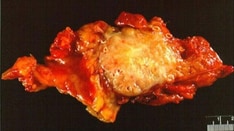
- Endoscopically, the tumor may appear as an ulcerated, polypoid, or submucosal mass.
- Endoscopic biopsies may demonstrate a false-negative rate of greater than 30%. In one series, all patients required repeat endoscopy to confirm the diagnosis.
- Endoscopic mucosal resection of the esophageal lesion may decrease the false-negative rate.
- In one series, 27 patients with lymphomatous involvement of the esophagus were identified. Of these, 3 had primary esophageal lymphoma. EGD confirmed the diagnosis in 81% of patients, although 19% required surgical exploration to establish a diagnosis.
- Endoscopic ultrasonography
- In one case report of primary esophageal lymphoma, the endosonographic features were reported as diffuse, homogenous, hypoechogenic esophageal wall thickening.
- Esophageal lymphomas may demonstrate anechoic areas. Endoscopic ultrasound-guided fine-needle aspiration (EUS-FNA) of suspicious lesions is essential to obtain tissue and to establish a diagnosis. In patients who receive chemotherapy or radiation for primary esophageal lymphoma, EUS may be helpful in evaluating the response to treatment.
Histologic Findings
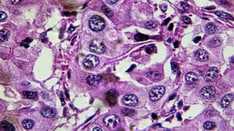
Most reported cases of primary esophageal lymphoma are diffuse large cell lymphomas of the B-cell immunotype. In general, surface markers of the tumor cells reveal positive immunofluorescent staining results for immunoglobulin G and kappa light chain. Mucosa-associated lymphoid tissue (MALT) lymphoma has been found in the esophagus. Unlike MALT lymphoma of the stomach, MALT lymphoma of the esophagus does not appear to be associated with Helicobacter pylori. Gupta et al summarized the histologic findings of 17 patients with primary esophageal lymphoma.2 All but 1 had non-Hodgkin lymphoma, with large cell lymphoma being the most common histologic subtype. If the tumor type is difficult to determine on hematoxylin and eosin staining, using monoclonal antibodies to the leukocyte common antigen may help differentiate hematopoietic from nonhematopoietic malignancies. This may be useful for patients in whom it is difficult to distinguish a poorly differentiated carcinoma or sarcoma from a lymphoma.
Staging
- Initial staging studies include CBC count, bone marrow biopsy, and CT scans of the chest, abdomen, and pelvis.
- Classification of esophageal lymphoma as a primary lesion can only be made once the criteria of Dawson et al are fulfilled.1
Medical Care
Data vary regarding therapy and prognosis in primary esophageal lymphoma. Choice of therapy depends on the histologic grade of the tumor and the extent of esophageal involvement. The initial therapy for primary esophageal lymphoma has included chemotherapy, surgical resection, and radiotherapy. Some authors prefer combined therapy, with local resection plus chemotherapy and/or radiotherapy as the initial therapy. Others prefer chemotherapy alone as the therapeutic modality of choice. Recent studies have indicated that nonsurgical approaches have had equivalent outcomes to that of surgical strategies in patients with GI lymphoma. - Chemotherapy
- The chemotherapy regimen most commonly used is a combination of cyclophosphamide, prednisone, doxorubicin, and vincristine (also referred to as CHOP). Other chemotherapy regimens have been used, but none have demonstrated greater efficacy than CHOP. Recent data indicate that the addition of rituximab, a chimeric anti-CD20 IgG1 monoclonal antibody approved by the US Food and Drug Administration (FDA) for use in various B-cell lymphoma subtypes, results in higher response rates and improved survival rates, although the experience is limited in primary GI lymphoma.
- The regimen can be modified, depending on the patient's performance status and other comorbid conditions.
- Radiotherapy
- Radiotherapy can be used as a single modality, but it is most often used in conjunction with chemotherapy.
- Risks of radiotherapy include development of esophagotracheal or esophago-aortic fistulae.
Surgical Care
- Surgical resection is reportedly curative in some cases of primary GI lymphoma, though surgery is primarily used for diagnosis and treatment of complications.
-
- The role of surgery greatly depends on the stage of disease at the time of diagnosis and on the underlying medical condition of the patient.
-
The primary medical therapy for esophageal lymphoma is chemotherapy, with the most common regimen consisting of cyclophosphamide, prednisone, doxorubicin, and vincristine. Cyclophosphamide, doxorubicin, and vincristine are administered on day 1 of a 5-day cycle. Prednisone is administered on days 1-5 of the 5-day cycle. Cycles are repeated every 21-28 days for a total of 6 or more cycles. Rituximab may be added as an adjunct therapy.
Drug Category: Antineoplastics
Inhibit cell growth and proliferation.
| Drug Name | Cyclophosphamide (Cytoxan) |
| Description | Antineoplastic activity is mediated by its 2 active metabolites. These metabolites are alkylating agents that prevent cell division by cross-linking DNA strands. Absorbed almost completely from the GI tract, making it bioavailable in either PO or IV forms. Excretion is primarily via urine. Because of the rarity of esophageal lymphoma, determine dose on a case-by-case basis. |
| Adult Dose | 2-3 mg/kg/d PO/IV (average dose used in susceptible neoplasms); alternatively, 30 mg/kg as a single dose has been effective in lymphomas |
| Pediatric Dose | Not established |
| Contraindications | Documented hypersensitivity; severely depressed bone marrow function |
| Interactions | Allopurinol may increase risk of bleeding or infection and enhance myelosuppressive effects; may potentiate doxorubicin-induced cardiotoxicity; may reduce digoxin serum levels and antimicrobial effects of quinolones; chloramphenicol may increase half-life while decreasing metabolite concentrations; may increase effect of anticoagulants; coadministration with high doses of phenobarbital may increase rate of metabolism and leukopenic activity; thiazide diuretics may prolong cyclophosphamide-induced leukopenia and neuromuscular blockade by inhibiting cholinesterase activity |
| Pregnancy | D - Unsafe in pregnancy
|
| Precautions | Monitor for hematopoietic suppression (regularly examine hematologic profile, particularly neutrophils and platelets); regularly examine urine for RBCs, which may precede hemorrhagic cystitis; adverse reactions include cardiac toxicity, nausea and vomiting, hemorrhagic cystitis, leukopenia, thrombocytopenia, and alopecia |
| Drug Name | Doxorubicin (Adriamycin) |
| Description | Anthracycline antibiotic that can intercalate with DNA, affecting many of the functions of DNA, including synthesis. Administered intravenously. Distributes widely into bodily tissues, including heart, kidneys, lungs, liver, and spleen. Does not cross the blood-brain barrier and is excreted primarily in bile. |
| Adult Dose | Variable; maximum cumulative dose is 550 mg/m2; in patients who have received chest irradiation, maximum cumulative dose is 450 mg/m2 |
| Pediatric Dose | Not established |
| Contraindications | Documented hypersensitivity; severe CHF; cardiomyopathy; preexisting myelosuppression; impaired cardiac function; complete cumulative doses of daunorubicin, doxorubicin, idarubicin |
| Interactions | Increased toxicity with cyclophosphamide, cyclosporine, mercaptopurine, verapamil, streptozocin, paclitaxel, progesterone; phenobarbital decreases effect; decreased toxicity with digoxin; phenytoin levels are decreased |
| Pregnancy | D - Unsafe in pregnancy
|
| Precautions | May produce severe local toxicity in irradiated tissues even when the 2 therapies are not administered concomitantly; caution in patients who have received radiotherapy; cardiomyopathy is a well-known characteristic of doxorubicin, monitor for drug-induced cardiomyopathy, mortality rate is >50% once cardiomyopathy has developed |
| Drug Name | Vincristine (Oncovin) |
| Description | Vinca alkaloid that is cell cycle–specific (M phase). The mitotic apparatus is arrested in metaphase via disruption of the microtubules. Absorption via the GI tract is variable; therefore, administer intravenously. Metabolized extensively in the liver and excreted primarily via bile. Neurotoxicity is the limiting factor during therapy. Peripheral neuropathy is most common adverse effect at usual doses. |
| Adult Dose | 1.4 mg/m2 IV |
| Pediatric Dose | Not established |
| Contraindications | Documented hypersensitivity; demyelinating form of Charcot-Marie-Tooth disease |
| Interactions | Acute pulmonary reaction may occur when taken concurrently with mitomycin-C; increases the therapeutic effect of methotrexate; decreases digoxin levels; may decrease plasma phenytoin levels |
| Pregnancy | C - Safety for use during pregnancy has not been established.
|
| Precautions | Caution in patients diagnosed with severe cardiopulmonary or hepatic impairment and patients with preexisting neuromuscular disease; necrosis may result from extravasation, monitor closely; monitor for neurotoxicity; dose reduction may decrease neurotoxic effects |
Drug Category: Corticosteroids
Have anti-inflammatory properties and cause profound and varied metabolic effects. Corticosteroids modify the body's immune response to diverse stimuli.
| Drug Name | Prednisone (Deltasone) |
| Description | Glucocorticoid that acts as an immunosuppressant by stimulating the synthesis of enzymes needed to decrease inflammatory response. Also acts as an anti-inflammatory agent by inhibiting the recruitment of leukocytes and monocyte-macrophages into affected areas via inhibition of chemotactic factors and factors that increase capillary permeability. Readily absorbed via the GI tract and is metabolized in the liver. Inactive metabolites of prednisone are excreted via the kidneys. Most of the adverse effects of corticosteroids are dose or duration dependent. |
| Adult Dose | 100 mg PO qd |
| Pediatric Dose | Not established |
| Contraindications | Documented hypersensitivity; viral infection; peptic ulcer disease; hepatic dysfunction; connective-tissue infections; fungal or tubercular skin infections; GI disease |
| Interactions | Coadministration with estrogens may decrease clearance; concurrent use with digoxin may cause digitalis toxicity secondary to hypokalemia; phenobarbital, phenytoin, and rifampin may increase metabolism of glucocorticoids (consider increasing maintenance dose); monitor for hypokalemia with coadministration of diuretics |
| Pregnancy | C - Safety for use during pregnancy has not been established.
|
| Precautions | Abrupt discontinuation of glucocorticoids may cause adrenal crisis; hyperglycemia, edema, osteonecrosis, myopathy, peptic ulcer disease, hypokalemia, osteoporosis, euphoria, psychosis, myasthenia gravis, growth suppression, and infections may occur with glucocorticoid use |
Drug Category: Monoclonal antibodies
Antibodies targeted to specific antigenic determinants. Can be specific to growth factors, cytokines, and cell surface molecules found on tumor cells.
| Drug Name | Rituximab (Rituxan) |
| Description | The rituximab antibody is genetically engineered chimeric mouse/human monoclonal antibody directed against the CD20 antigen found on the surface of normal and neoplastic B lymphocytes. The most common adverse reactions to rituximab were infusion reactions, some of which were fatal. Bowel perforation has been reported with rituximab. Patients reporting abdominal pain during therapy should be evaluated for perforation of the intestinal tract. Reactivation of hepatitis B has been demonstrated. Patients at high risk for hepatitis B should be screened prior to initiation of therapy. No studies have been conducted to determine if dose adjustment is necessary in patients with hepatic or renal dysfunction. |
| Adult Dose | 375 mg/m2 IV qwk for 4-8 wk |
| Pediatric Dose | Not established |
| Contraindications | Documented hypersensitivity; IgE mediated reaction to murine proteins |
| Interactions | Coadministration with cisplatin is known to cause severe renal toxicity, including acute renal failure; may interfere with immune response to live virus vaccine (MMR) and reduce efficacy (do not administer within 3 mo of vaccine) |
| Pregnancy | C - Safety for use during pregnancy has not been established.
|
| Precautions | Caution in patients with dormant infections, such as hepatitis B, hepatitis C, or CMV, because of risk of reactivation; hypotension, bronchospasm, and angioedema may occur; premedication with acetaminophen and diphenhydramine may decrease incidence; discontinue treatment if life-threatening cardiac arrhythmias occur; must administer by slow IV infusion; do not administer IV push or bolus |
Further Outpatient Care
- Carefully monitor adverse effects of chemotherapy or radiotherapy.
-
- Carefully follow the patient's nutritional status. Consider placement of gastric or jejunal feeding tube if the patient cannot maintain his or her nutritional status because of dysphagia or odynophagia.
-
Transfer
- Transfer to a specialized cancer center may be required for further treatment (eg, chemotherapy, radiotherapy, surgical intervention).
-
Complications
- Hemorrhage
-
- Vocal cord paralysis
-
- Esophageal stricture formation
-
- Esophageal obstruction
-
- Perforation with esophagomediastinal or esophago-tracheobronchial fistula
-
- Perforation with mediastinitis or massive hemorrhage due to invasion into the aorta or other large vessels
-
Prognosis
- Patients who are not infected with HIV
- The International Non-Hodgkin's Lymphoma Prognostic Factors Project found that age older than 60 years, tumor stage III or IV (Ann Arbor classification), Eastern Cooperative Oncology Group performance status of 2-4, serum lactate dehydrogenase (LDH) levels greater than normal, and extranodal involvement of more than 1 site are characteristic in higher-risk groups. The 5-year survival rate for patients with 0-1 of these risk factors was 73%; with 2 factors, 51%; with 3 factors, 43%; and with 4 factors, 26%.
- The small number of cases of esophageal lymphoma makes predicting survival difficult. The longest reported period of disease-free survival in a person not infected with HIV is 13 years 5 months in a patient treated with combination chemotherapy and radiotherapy.
- Patients who have HIV/AIDS
- Esophageal lymphoma in patients with HIV/AIDS is commonly high grade, large cell or immunoblastic, aggressive, and poorly responsive to chemotherapy.
- Survival rate averages have been poor (ie, 4-6 mo).
- In HIV-positive patients in a low-risk category, including those with a CD4 count of greater than 100/µL and good performance status, response rates similar to those of HIV-negative patients may be achieved.

Medical/Legal Pitfalls
- Failure to initiate further evaluation of esophagitis unresponsive to adequate therapy in patients with HIV or AIDS is a possible pitfall.
-
- In patients with HIV or AIDS, consider underlying esophageal lymphoma in a clinical presentation consistent with infectious esophagitis that is not responsive to adequate therapy. This is especially true when esophageal ulcerations are present.
-
- Superinfection with Candida albicans is common and may lead to repeated treatment with antifungal medications rather than pursuit of alternative diagnoses for a nonhealing esophageal ulcer.
-
- Failure to pursue further diagnostic workup when endoscopic biopsy findings are negative and suspicion for esophageal lymphoma remains high is a possible pitfall.
-
- Endoscopic biopsies may demonstrate a false-negative rate of 30% or more.
-
- If suspicion for esophageal lymphoma is high, consider other diagnostic modalities (eg, CT scans, surgical biopsy).
-
- Dawson IMP, Cornes JS, Morson BC. Primary malignant lymphoma of the intestinal tract. British Journal of Surgery. 1961;49:80-9.
- Gupta NM, Goenka MK, Jindal A, Behera A, Vaiphei K. Primary lymphoma of the esophagus. J Clin Gastroenterol. Oct 1996;23(3):203-6. [Medline].
- Agha FP, Schnitzer B. Esophageal involvement in lymphoma. Am J Gastroenterol. Jun 1985;80(6):412-6. [Medline].
- Bernal A, del Junco GW. Endoscopic and pathologic features of esophageal lymphoma: a report of four cases in patients with acquired immune deficiency syndrome. Gastrointest Endosc. Apr 1986;32(2):96-9. [Medline].
- Bolondi L, De Giorgio R, Santi V, Paparo GF, Pileri S, Di Febo G, et al. Primary non-Hodgkin's T-cell lymphoma of the esophagus. A case with peculiar endoscopic ultrasonographic pattern. Dig Dis Sci. Nov 1990;35(11):1426-30. [Medline].
- Brady LW, Asbell SO. Malignant lymphoma of the gastrointestinal tract. Erskine Memorial Lecture, 1979. Radiology. Nov 1980;137(2):291-8. [Medline].
- Cappell MS, Botros N. Predominantly gastrointestinal symptoms and signs in 11 consecutive AIDS patients with gastrointestinal lymphoma: a multicenter, multiyear study including 763 HIV-seropositive patients. Am J Gastroenterol. Apr 1994;89(4):545-9. [Medline].
- Chadha KS, Hernandez-Ilizaliturri FJ, Javle M. Primary esophageal lymphoma: case series and review of the literature. Dig Dis Sci. Jan 2006;51(1):77-83. [Medline].
- Chow DC, B1eikh SH, Eickhoff L, Soloway GN, Saul Z. Primary esophageal lymphoma in AIDS presenting as a nonhealing esophageal ulcer. Am J Gastroenterol. Mar 1996;91(3):602-3. [Medline].
- Field SP, Sachar DB, Childs CC, Rubin KP. Steroid-responsive dysphagia: a clue to the diagnosis of esophageal lymphoma. Mt Sinai J Med. Jul-Aug 1984;51(4):451-4. [Medline].
- Finn DG. Lymphoma of the head and neck and acquired immunodeficiency syndrome: clinical investigation and immunohistological study. Laryngoscope. Apr 1995;105(4 Pt 2 Suppl 68):1-18. [Medline].
- Gaskin CM, Low VH, Ho LM. Isolated primary non-hodgkin's lymphoma of the esophagus. AJR Am J Roentgenol. Feb 2001;176(2):551-2. [Medline].
- Gilman AG, Rall TW, Nies AS. The Pharmacological Basis of Therapeutics. 8th ed. New York: McGraw-Hill Inc; 1993.
- Herrmann R, Panahon AM, Barcos MP, Walsh D, Stutzman L. Gastrointestinal involvement in non-Hodgkin's lymphoma. Cancer. Jul 1 1980;46(1):215-22. [Medline].
- Hosaka S, Nakamura N, Akamatsu T, Fujisawa T, Ogiwara Y, Kiyosawa K, et al. A case of primary low grade mucosa associated lymphoid tissue (MALT) lymphoma of the oesophagus. Gut. Aug 2002;51(2):281-4. [Medline].
- Hricak H, Thoeni RF, Margulis AR, Eyler WR, Francis IR. Extension of gastric lymphoma into the esophagus and duodenum. Radiology. May 1980;135(2):309-12. [Medline].
- Kaplan KJ. Primary esophageal lymphoma: a diagnostic challenge. South Med J. Apr 2004;97(4):331-2. [Medline].
- Kirsch HL, Cronin DW, Stein GN, Latour F, Herrera AF. Esophageal perforation. An unusual presentation of esophageal lymphoma. Dig Dis Sci. Apr 1983;28(4):371-4. [Medline].
- Kurtin PJ, Pinkus GS. Leukocyte common antigen--a diagnostic discriminant between hematopoietic and nonhematopoietic neoplasms in paraffin sections using monoclonal antibodies: correlation with immunologic studies and ultrastructural localization. Hum Pathol. Apr 1985;16(4):353-65. [Medline].
- Levine AM. Acquired immunodeficiency syndrome related lymphoma. Blood. 1992;80:8-20.
- Maipang T, Panjapiyakul C, Sriplung H. Primary lymphoma of the esophagus: a case report. J Med Assoc Thai. May 1992;75(5):299-303. [Medline].
- Marnejon T, Scoccia V. The coexistence of primary esophageal lymphoma and Candida glabrata esophagitis presenting as dysphagia and odynophagia in a patient with acquired immunodeficiency syndrome. Am J Gastroenterol. Feb 1997;92(2):354-6. [Medline].
- Matsuura H, Saito R, Nakajima S, Yoshihara W, Enomoto T. Non-Hodgkin's lymphoma of the esophagus. Am J Gastroenterol. Dec 1985;80(12):941-6. [Medline].
- Mengoli M, Marchi M, Rota E, Bertolotti M, Gollini C, Signorelli S. Primary non-Hodgkin's lymphoma of the esophagus. Am J Gastroenterol. Jun 1990;85(6):737-41. [Medline].
- Moses AE, Rahav G, Bloom AI, Okon E, Polliack A, Maayan S, et al. Primary lymphoma of the esophagus in a patient with AIDS. J Clin Gastroenterol. Dec 1995;21(4):327-8. [Medline].
- Moss S, Valentine CB, Carey PB, Hind CR. Dysphagia in an HIV-positive man. Postgrad Med J. Apr 1995;71(834):247-8. [Medline].
- Nagrani M, Lavigne BC, Siskind BN, Knisley RE, Traube M. Primary non-Hodgkin's lymphoma of the esophagus. Arch Intern Med. Jan 1989;149(1):193-5. [Medline].
- Orvidas LJ, McCaffrey TV, Lewis JE, Kurtin PJ, Habermann TM. Lymphoma involving the esophagus. Ann Otol Rhinol Laryngol. Nov 1994;103(11):843-8. [Medline].
- Safai B, Diaz B, Schwartz J. Malignant neoplasms associated with human immunodeficiency virus infection. CA Cancer J Clin. Mar-Apr 1992;42(2):74-95. [Medline].
- Salerno CT, Kreykes NS, Rego A, Maddaus MA. Primary esophageal lymphoma: a diagnostic challenge. Ann Thorac Surg. Oct 1998;66(4):1418-20. [Medline].
- Soon MS, Yen HH, Soon A, Lin OS. Primary esophageal B-cell lymphoma: evaluation by EUS. Gastrointest Endosc. Jun 2005;61(7):901-3. [Medline].
- Weeratunge CN, Bolivar HH, Anstead GM, Lu DH. Primary esophageal lymphoma: a diagnostic challenge in acquired immunodeficiency syndrome--two case reports and review. South Med J. Apr 2004;97(4):383-7. [Medline].
- Wotherspoon AC. Extragastric MALT lymphoma. Gut. Aug 2002;51(2):148-9. [Medline].
Esophageal Lymphoma excerpt Article Last Updated: Jun 13, 2007
|