Continually Updated Clinical Reference
 
 
  All Sources     eMedicine     Medscape     Drug Reference     MEDLINE
 
eMedicine - Adrenal Crisis : Article by

Quick Find
Authors & Editors
Introduction
Clinical
Differentials
Workup
Treatment
Medication
Follow-up
Miscellaneous
Multimedia
References

Related Articles
Septic Shock


Patient Education
Click here for patient education.


Author: Lisa Kirkland, MD, FACP, CNSP, MSHA, Assistant Professor, Department of Internal Medicine, Division of General Internal Medicine, Mayo Clinic; ANW Intensivists, Abbott Northwestern Hospital

Lisa Kirkland is a member of the following medical societies: American College of Physician Executives, American College of Physicians-American Society of Internal Medicine, Medical Society of Virginia, Society of Critical Care Medicine, and Southern Medical Association

Editors: David M Klachko, MBBCh, Professor Emeritus, Department of Internal Medicine, Division of Endocrinology, Diabetes and Metabolism, University of Missouri; Francisco Talavera, PharmD, PhD, Senior Pharmacy Editor, eMedicine; Don S Schalch, MD, Professor Emeritus, Department of Internal Medicine, Division of Endocrinology, University of Wisconsin Hospitals and Clinics; Mark Cooper, MBBS, PhD, FRACP, Head, Diabetes & Metabolism Division, Baker Heart Research Institute, Professor of Medicine, Monash University; George T Griffing, MD, Professor of Medicine, Director of General Internal Medicine, St Louis University

Author and Editor Disclosure

Synonyms and related keywords: acute adrenal crisis, acute adrenocortical insufficiency, acute adrenal insufficiency, addisonian crisis, adrenal apoplexy, cortisol, aldosterone, primary adrenocortical insufficiency, secondary adrenocortical insufficiency, bilateral massive adrenal hemorrhage, BMAH, endocrine disorder

Background

Do not confuse acute adrenal crisis with Addison disease. In 1855, Thomas Addison described a syndrome of long-term adrenal insufficiency that develops over months to years, with weakness, fatigue, anorexia, weight loss, and hyperpigmentation as the primary symptoms. In contrast, an acute adrenal crisis can manifest with vomiting, abdominal pain, and hypovolemic shock.

Pathophysiology

The adrenal cortex produces 3 steroid hormones: glucocorticoids (cortisol), mineralocorticoids (aldosterone, 11-deoxycorticosterone), and androgens (dehydroepiandrosterone). The androgens are relatively unimportant in adults, and 11-deoxycorticosterone is a fairly weak mineralocorticoid in comparison to aldosterone. The primary hormone of importance in acute adrenal crisis is cortisol; adrenal aldosterone production is relatively minor.

Cortisol enhances gluconeogenesis and provides substrate through proteolysis, protein synthesis inhibition, fatty acid mobilization, and enhanced hepatic amino acid uptake. Cortisol indirectly induces insulin secretion to counterbalance hyperglycemia but also decreases insulin sensitivity. Cortisol also has a significant anti-inflammatory effect through stabilizing lysosomes, reducing leukocytic responses, and blocking cytokine production. Phagocytic activity is preserved, but cell-mediated immunity is diminished in situations of cortisol deficiency. Finally, cortisol facilitates free water clearance, enhances appetite, and suppresses adrenocorticotropic hormone (ACTH) synthesis.

Aldosterone is released in response to angiotensin II stimulation via the renin-angiotensin-aldosterone system, hyperkalemia, hyponatremia, and dopamine antagonists. Its effect on its primary target organ, the kidney, is to promote reabsorption of sodium and secretion of potassium and hydrogen. The mechanism of action is unclear; an increase in the sodium- and potassium-activated adenosine triphosphatase (Na+/K+ ATPase) enzyme responsible for sodium transport, as well as increased carbonic anhydrase activity, has been suggested. The net effect is to increase intravascular volume. The renin-angiotensin-aldosterone system is unaffected by exogenous glucocorticoids, and ACTH deficiency has a relatively minor effect on aldosterone levels.

Adrenocortical hormone deficiency results in the reverse of these hormonal effects, producing the clinical findings of adrenal crisis.

Primary adrenocortical insufficiency occurs when the adrenal glands fail to release adequate amounts of these hormones to meet physiologic needs, despite release of ACTH from the pituitary. Infiltrative or autoimmune disorders are the most common cause, but adrenal exhaustion from severe chronic illness also may occur.

Secondary adrenocortical insufficiency occurs when exogenous steroids have suppressed the hypothalamic-pituitary-adrenal (HPA) axis. Too rapid withdrawal of exogenous steroid may precipitate adrenal crisis, or sudden stress may induce cortisol requirements in excess of the adrenal glands' ability to respond immediately. In acute illness, a normal cortisol level may actually reflect adrenal insufficiency because the cortisol level should be quite elevated.

Bilateral massive adrenal hemorrhage (BMAH) occurs under severe physiologic stress (eg, myocardial infarction, septic shock, complicated pregnancy) or with concomitant coagulopathy or thromboembolic disorders.

Frequency

United States

The incidence of primary adrenocortical insufficiency is variable and depends on the defining cortisol level and the method of testing (ie, ACTH stimulation versus single random cortisol level). The underlying disease also is a factor. Studies of critically ill patients with septic shock demonstrate a de novo (excluding patients with known adrenal insufficiency or patients on glucocorticoid therapy) incidence ranging from 19-54%. Secondary adrenal insufficiency has been demonstrated in 31% of patients admitted to a critical care unit.

Annane's landmark 2002 study found a very high rate, ie, 76% of all enrolled patients with septic shock. Of the general perioperative population, in 62,473 anesthetic administrations, only 419 (0.7%) patients required glucocorticoid supplementation and only 3 hypotensive events were thought to be attributable to glucocorticoid deficiency.1 Studies of patients undergoing cardiac or urologic surgery reveal an incidence of 0.01-0.1%. In a study of 2000 consecutive general hospital autopsies, only 22 (1.1%) revealed bilateral adrenal hemorrhage; however, as many as 15% of patients dying in shock have been demonstrated to have BMAH.

No description regarding racial data, sexual predilection, or age is available in the literature.

Mortality/Morbidity

In the absence of bilateral adrenal hemorrhage, the survival rate of patients with acute adrenal crisis that is diagnosed promptly and treated appropriately approaches that of patients without acute adrenal crisis with similar severity of illness. Patients who developed BMAH before the availability of hormonal testing or CT scanning rarely survived. In one series, patients who were diagnosed using CT scanning had an 85% rate of survival. Because the true incidence of adrenal crisis and BMAH are unknown, the actual mortality rate also is unknown.


History

  • Prior steroid use: Use involves at least 20 mg daily of prednisone or its equivalent for at least 5 days within the past 12 months. Patients receiving doses close to normal physiologic levels require only 1 month to recover normal adrenal function.
  • Severe physiologic stress (eg, sepsis, trauma, burns, surgery), organisms associated with adrenal crisis (eg, Haemophilus influenzae, Staphylococcus aureus, Streptococcus pneumonia, fungi), meningococcemia
  • Azotemia
  • Anticoagulants, hemorrhagic diathesis
  • Newborn, complicated pregnancy
  • Adrenocorticotropin therapy, known primary or secondary adrenocortical insufficiency
  • AIDS
  • Invasive or infiltrative disorders
  • Tuberculosis
  • Topical steroids: Risk of adrenal crisis occurs when used over a large surface area for a prolonged duration, using occlusive dressings and a highly potent drug.
  • Inhaled steroids
    • Use of a high dose (>0.8mg/d) over a prolonged duration increases risk.
    • Fluticasone may cause suppression at lower dose.

Physical

  • Unexplained shock, usually refractory to fluid and pressor resuscitation
  • Nausea, vomiting, abdominal or flank pain
  • Hyperthermia or hypothermia

Causes

  • Rapid withdrawal of long-term steroid therapy
  • Ketoconazole
  • Phenytoin
  • Rifampin
  • Mitotane
  • Septic shock


Septic Shock

Other Problems to be Considered

Acute abdomen


Lab Studies

  • Serum chemistry: Abnormalities are present in as many as 56% of patients. Hyponatremia is common (although not diagnostic); hyperkalemia, metabolic acidosis, and hypoglycemia also may be present.
  • Serum cortisol: Less than 20 mcg/dL in severe stress or after ACTH stimulation is indicative of adrenal insufficiency.
  • ACTH test (diagnostic): Determine baseline serum cortisol, then administer ACTH 250 mcg intravenous push (IVP), and then draw serum cortisol 30 and 60 minutes after ACTH administration. An increase of less than 9 mcg/dL is considered diagnostic of adrenal insufficiency.
  • CBC: Anemia (mild and nonspecific), lymphocytosis, and eosinophilia (highly suggestive) may be present.
  • Serum thyroid levels: Assess for autoimmune, infiltrative, or multiple endocrine disorders.
  • Cultures: Perform blood and other cultures as clinically indicated. Infection is a common cause of acute adrenal crisis.

Imaging Studies

  • Chest radiography: Assess for tuberculosis, histoplasmosis, malignant disease, sarcoid, and lymphoma.
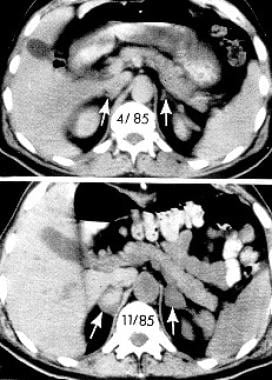
  • Abdominal CT scanning: Visualize adrenal glands for hemorrhage, atrophy, infiltrative disorders, and metastatic disease. Adrenal hemorrhage appears as hyperdense, bilaterally enlarged adrenal glands.

Other Tests

  • Electrocardiography
    • Prolongation of the QT interval can induce ventricular arrhythmias.
    • Deep negative T waves have been described in acute adrenal crisis.

Histologic Findings

Histology depends on the cause of the adrenal failure. In primary adrenocortical failure, histologic evidence of infection, infiltrative disease, or other condition may be demonstrated. Secondary adrenocortical insufficiency may cause atrophy of the adrenals or no histologic evidence at all, especially if due to exogenous steroid ingestion. Appearance of bilateral adrenal hemorrhage may be striking, as if bags of blood are replacing the glands.


Medical Care

  • Administration of glucocorticoids in supraphysiologic or stress doses is the only definitive therapy.
    • Dexamethasone does not interfere with serum cortisol assay and, thus, may be the initial drug of choice. However, because dexamethasone has little mineralocorticoid activity, fluid and electrolyte replacement are essential.
    • A short ACTH stimulation test may be performed during resuscitation. Once complete, hydrocortisone 100 mg IV every 6 hours is the preferred treatment to provide mineralocorticoid support.
    • Delaying glucocorticoid replacement therapy while awaiting the results of the ACTH stimulation test is inappropriate and dangerous.
  • In addition to corticosteroid replacement, aggressive fluid replacement with 5% or 10% intravenous dextrose and saline solutions and treatment of hyperkalemia is mandatory. Fludrocortisone, a mineralocorticoid, may also be given.
  • A thorough search for a precipitating cause and administration of empiric antibiotics is indicated. Reversal of coagulopathy should be attempted with fresh frozen plasma.
  • Pressors (eg, dopamine, norepinephrine) may be necessary to combat hypotension.

Consultations

  • Endocrinologist
  • Infectious disease specialist
  • Critical care physician
  • Cardiologist
  • Surgeon
  • Other consultations as clinically indicated


Corticosteroids are the mainstays of treatment. Other medications, such as pressors (eg, dopamine, norepinephrine) or antibiotics, are administered as clinically indicated.

Drug Category: Corticosteroids

These agents have anti-inflammatory properties and cause profound and varied metabolic effects. They modify the body's immune response to diverse stimuli.

Drug NameDexamethasone (Decadron, Baldex, Dexone)
DescriptionUsed as empiric treatment of shock in suspected adrenal crisis or insufficiency until serum cortisol levels are drawn.
Adult Dose4-8 mg IV, followed by 16-24 mg/d as IV injection q4-6h or as continuous infusion
Pediatric DoseNot established
ContraindicationsDocumented hypersensitivity; active bacterial or fungal infection
InteractionsEffects decrease with coadministration of barbiturates, phenytoin, and rifampin
PregnancyC - Fetal risk revealed in studies in animals but not established or not studied in humans; may use if benefits outweigh risk to fetus
PrecautionsIncreases risk of multiple complications, including severe infections; monitor adrenal insufficiency when tapering drug; abrupt discontinuation of glucocorticoids may cause adrenal crisis; hyperglycemia, edema, osteonecrosis, myopathy, peptic ulcer disease, hypokalemia, osteoporosis, euphoria, psychosis, myasthenia gravis, growth suppression, and infections are possible complications of glucocorticoid use; may prolong coma in cerebral malaria

Drug NameHydrocortisone (Hydrocortone, Hydrocort)
DescriptionDOC because of mineralocorticoid activity and glucocorticoid effects.
Adult DoseSeptic shock: 50-100 mg IV q6h for 7 d, then discontinue or reduce to 50 mg IV q6h for 4 doses then taper by one half qd until discontinued or until prior maintenance dose
Major surgical stress (CABG, esophagogastrectomy): Following usual am dose, give 100 mg IV before induction, 50 mg IV q8h for 24 h, then taper by one half qd to maintenance
Moderate surgical stress (extremity vascular bypass, total joint replacement): Following usual am dose, give 50 mg IV before induction, 25 mg IV q8h for 24 hours, then taper by one half qd to maintenance
Pediatric Dose<12 years: 1-2 mg/kg IV bolus; follow with 25-150 mg/d divided q6-8h
>12 years: 1-2 mg/kg IV bolus; follow with 150-250 mg/d divided q6-8h
ContraindicationsDocumented hypersensitivity; viral, fungal, or tubercular skin infections
InteractionsCorticosteroid clearance may decrease with estrogens
PregnancyC - Fetal risk revealed in studies in animals but not established or not studied in humans; may use if benefits outweigh risk to fetus
PrecautionsCaution in hyperthyroidism, osteoporosis, peptic ulcer, cirrhosis, nonspecific ulcerative colitis, diabetes mellitus, and myasthenia gravis

Drug NameCortisone acetate (Cortone)
DescriptionOral DOC for patients with adrenocortical insufficiency.
Use in patients undergoing moderate stress surgery (eg, vascular bypass, total joint replacement) who can take PO postoperatively.
Adult DoseFollowing intraoperative dose of hydrocortisone 50 mg IV, give 37.5 mg PO q12h for 2 d (as 25 mg PO qam and 12.5 mg PO qpm until stabilized)
Pediatric DoseNot established
ContraindicationsDocumented hypersensitivity; viral, fungal, or tubercular skin lesions
InteractionsEstrogen coadministration may increase corticosteroid levels; cortisone may increase digitalis toxicity secondary to hypokalemia; phenytoin, phenobarbital, rifampin, and ephedrine increase corticosteroid clearance; may inhibit response to coumarin anticoagulants; exacerbation of hypokalemia with potassium-depleting diuretics may occur
PregnancyC - Fetal risk revealed in studies in animals but not established or not studied in humans; may use if benefits outweigh risk to fetus
PrecautionsCaution in hyperthyroidism, cirrhosis, nonspecific ulcerative colitis, osteoporosis, peptic ulcer, diabetes mellitus, and myasthenia gravis; may exacerbate existing emotional instability; may mask signs of GI peritonitis and sepsis; may impair growth and development in children; caution in peptic ulcer disease; caution in infections

Drug NameFludrocortisone (Florinef)
DescriptionActs on renal distal tubules to enhance reabsorption of sodium. Increases urinary excretion of both potassium and hydrogen ions. The consequence of these 3 primary effects, together with similar actions on cation transport in other tissues, appears to account for the spectrum of physiological activities characteristic of mineralocorticoids. Used in adrenal insufficiency. Produces marked sodium retention and increased urinary potassium excretion.
Adult Dose0.1-0.2 mg PO qd
Pediatric Dose0.05-0.1 mg PO qd
ContraindicationsDocumented hypersensitivity; systemic fungal infections
InteractionsAntagonizes effects of anticholinergics; rifampin, hydantoins, and barbiturates decrease effects of fludrocortisone; decreases salicylate levels
PregnancyC - Fetal risk revealed in studies in animals but not established or not studied in humans; may use if benefits outweigh risk to fetus
PrecautionsTaper dose gradually when therapy is discontinued; caution in Addison disease, potassium loss, and sodium and fluid retention

Drug NameMethylprednisolone (Medrol, Solu-Medrol, Depo-Medrol)
DescriptionUsually third-line DOC for adrenal crisis because of lack of mineralocorticoid activity.
Consider use in patients with fluid overload, edema, or hypokalemia.
Adult Dose4 mg IV equals 20 mg IV hydrocortisone
10-20 mg IV q6-8h equals 50-100 mg IV hydrocortisone q6-8h
Pediatric DoseNot established
ContraindicationsDocumented hypersensitivity; viral, fungal, or tubercular skin infections
InteractionsCoadministration with digoxin may increase digitalis toxicity secondary to hypokalemia; estrogens may increase levels of methylprednisolone; phenobarbital, phenytoin, and rifampin may decrease levels of methylprednisolone (adjust dose); monitor patients for hypokalemia when taking medication concurrently with diuretics; grapefruit juice increases prednisolone concentrations; methylprednisolone and cyclosporine mutually inhibit one another, resulting in increased plasma levels of each drug
PregnancyC - Fetal risk revealed in studies in animals but not established or not studied in humans; may use if benefits outweigh risk to fetus
PrecautionsHyperglycemia, edema, osteonecrosis, peptic ulcer disease, hypokalemia, osteoporosis, euphoria, psychosis, growth suppression, myopathy, and infections are possible complications of glucocorticoid use; Depo-Medrol contains benzyl alcohol, which is potentially toxic when administered locally to neural tissue; administration of Depo-Medrol by other than indicated routes, including the epidural route, has been associated with reports of serious medical events including arachnoiditis, meningitis, paraparesis/paraplegia, sensory disturbances, bowel/bladder dysfunction, seizures, visual impairment (including blindness and ocular and periocular inflammation), and residue or slough at injection site

Drug Category: Vasopressors

These agents are potent vasocontrictors, inotropes and chronotropes. They should be used with caution in conjunction with corticosteroids and intravenous fluid support.

Drug NameNorepinephrine (Levophed)
DescriptionFor protracted hypotension following adequate fluid-volume replacement. Stimulates beta1- and alpha-adrenergic receptors, which in turn, increases cardiac muscle contractility and heart rate, as well as vasoconstriction. As a result, systemic blood pressure and coronary blood flow increase. After obtaining a response, the rate of flow should be adjusted and maintained at a low-normal blood pressure, such as 80-100 mm Hg systolic, sufficient to perfuse vital organs.
Adult Dose4-12 mcg/min IV infusion; titrate to desired perfusion status
Pediatric Dose0.1 mcg/kg/min IV; titrate to desired perfusion status
ContraindicationsDocumented hypersensitivity; peripheral or mesenteric vascular thrombosis (ischemia may be increased and the area of the infarct extended)
InteractionsEnhances pressor response of norepinephrine by blocking reflex bradycardia; MAOIs, TCAs, antihistamines, guanethidine, ergot alkaloids, and methyldopa increase effects
PregnancyD - Fetal risk shown in humans; use only if benefits outweigh risk to fetus
PrecautionsCorrect blood volume depletion, if possible, before administering norepinephrine therapy; extravasation may cause severe tissue necrosis and, thus, should be administered into a large vein; caution in occlusive vascular disease; extravasation can cause tissue necrosis

Drug NameDopamine (Intropin)
DescriptionStimulates both adrenergic and dopaminergic receptors. Hemodynamic effect is dependent on the dose.
Adult Dose0.5-20 mcg/kg/min IV infusion; titrate to desired perfusion status
Pediatric DoseAdminister as in adults
ContraindicationsDocumented hypersensitivity; pheochromocytoma; ventricular fibrillation
InteractionsPhenytoin, alpha- and beta-adrenergic blockers, general anesthesia, and MAOIs increase and prolong effects of dopamine
PregnancyC - Fetal risk revealed in studies in animals but not established or not studied in humans; may use if benefits outweigh risk to fetus
PrecautionsMonitor urine flow, cardiac output, pulmonary wedge pressure, and blood pressure closely during the infusion; prior to infusion, correct hypovolemia with either whole blood or plasma because pressure may be helpful in detecting and treating hypovolemia; extravasation can cause tissue necrosis


Further Inpatient Care

  • Admit to ICU as clinically indicated.
    • Perform fluid resuscitation and hemodynamic monitoring as clinically indicated.
    • Monitor serum electrolytes, magnesium, and glucose every 4-6 hours until stable.
    • Search for precipitating cause of crisis (eg, infection, myocardial infarction, unreported exogenous steroid use within 12 mo, autoimmune disorder).

Further Outpatient Care

  • Treat any underlying or precipitating disorder as clinically indicated.
  • Carefully monitor growth and development in pediatric patients.
  • Recommend medical tag or bracelet that alerts emergency personnel to adrenal gland insufficiency.
  • If exposed to chickenpox, prophylaxis with varicella-zoster immune globulin is indicated.
  • If exposed to measles, prophylaxis with immune globulin is indicated.
  • Closely observe for reactivation of tuberculosis in patients with latent disease.

In/Out Patient Meds

  • Taper steroid dose as outlined previously (see Medication).

Complications

  • Immunosuppression
  • Hypertension
  • Salt retention
  • Hypokalemia
  • Weight gain
  • Delayed wound healing
  • Hyperglycemia
  • Metabolic alkalosis

Prognosis

  • Prognosis is the same as for patients without adrenal insufficiency if the condition is diagnosed and treated appropriately.

Patient Education

  • Instruct patients regarding the importance of careful attention to health and fluid intake and to double maintenance doses when ill until medical attention is obtained.
  • Avoid exposure to chickenpox or measles; if exposed, seek medical advice without delay.
  • Notify physician or seek medical attention for persistent nausea and vomiting, fatigue, and abdominal pain.
  • For excellent patient education materials, see eMedicine's Endocrine System Center and patient education article Anatomy of the Endocrine System.


Medical/Legal Pitfalls

  • Failure to obtain a comprehensive history, including medications, may lead to lack of recognition of potentially fatal, yet often preventable, secondary adrenocortical insufficiency.

Special Concerns

  • Management of known or suspected primary or secondary adrenocortical insufficiency during stress includes the following:
    • Acute illness - Hydrocortisone 100 mg IV every 6-8 hours for 4 doses, taper if patient stabilizes
    • Perioperative - See the Table.

      Perioperative Steroid Therapy for Patients with Known Adrenal Insufficiency

      TimingHydrocortisoneHydrocortisoneFludrocortisone
      Routine daily20 mg PO at 8 am
      10 mg PO at 4 pm
      0.1 mg PO at 8 am
      Day of operation10 mg/h continuous infusion
      Postoperative day 15-7.5 mg/h continuous infusion
      Postoperative day 22.5-5 mg/h continuous infusion
      Postoperative day 32.5-5 mg/h continuous infusion or40 mg PO at 8 am
      20 mg PO at 4 pm
      0.1 mg PO at 8 am
      Postoperative day 42.5-5 mg/h continuous infusion or40 mg PO at 8 am
      20 mg PO at 4 pm
      0.1 mg PO at 8 am
      Postoperative day 540 mg PO at 8 am
      20 mg PO at 4 pm
      0.1 mg PO at 8 am
      Postoperative day 620 mg PO at 8 am
      20 mg PO at 4 pm
      0.1 mg PO at 8 am
      Postoperative day 720 mg PO at 8 am
      10 mg PO at 4 pm
      0.1 mg PO at 8 am
  • In pregnancy, anticipated benefits must outweigh risks because no adequate human reproductive studies are available.
  • Corticosteroids appear in breast milk.
  • Corticosteroids can suppress growth and interfere with infant endogenous corticosteroid production.
  • In primary adrenocortical insufficiency, glucocorticoid and mineralocorticoid replacement is required for life.


Media file 1:  Enlarged, dense, suprarenal masses
Click to see larger pictureClick to see detailView Full Size Image
Media type:  Photo


  1. Annane D, Sebille V, Charpentier C, et al. Effect of treatment with low doses of hydrocortisone and fludrocortisone on mortality in patients with septic shock. JAMA. Aug 21 2002;288(7):862-71. [Medline].
  2. Ahlawat SK, Jain S, Kumari S, Varma S, Sharma BK. Pheochromocytoma associated with pregnancy: case report and review of the literature. Obstet Gynecol Surv. Nov 1999;54(11):728-37. [Medline].
  3. Aono J, Mamiya K, Ueda W. Abrupt onset of adrenal crisis during routine preoperative examination in a patient with unknown Addison's disease. Anesthesiology. Jan 1999;90(1):313-4. [Medline].
  4. Arafah BM. Hypothalamic pituitary adrenal function during critical illness: limitations of current assessment methods. J Clin Endocrinol Metab. Oct 2006;91(10):3725-45. [Full Text].
  5. Axelrod L. Perioperative management of patients treated with glucocorticoids. Endocrinol Metab Clin North Am. Jun 2003;32(2):367-83. [Medline].
  6. Chin R. Adrenal crisis. Crit Care Clin. Jan 1991;7(1):23-42. [Medline].
  7. Cronin CC, Callaghan N, Kearney PJ, et al. Addison disease in patients treated with glucocorticoid therapy. Arch Intern Med. Feb 24 1997;157(4):456-8. [Medline].
  8. Iga K, Hori K, Gen H. Deep negative T waves associated with reversible left ventricular dysfunction in acute adrenal crisis. Heart Vessels. 1992;7(2):107-11. [Medline].
  9. Koo DJ, Jackman D, Chaudry IH, Wang P. Adrenal insufficiency during the late stage of polymicrobial sepsis. Crit Care Med. Mar 2001;29(3):618-22. [Medline].
  10. Nicholson G, Burrin JM, Hall GM. Peri-operative steroid supplementation. Anaesthesia. Nov 1998;53(11):1091-104. [Medline].
  11. Obenour RA, Ross S. Adrenal Crisis. Hospital Formulary of the University of Tennessee Medical Center [serial online]. 1999;Available at http://www.cushings-help.com/adrenal-crisis.htm.
  12. Passmore JM Jr. Adrenal Cortex. Clinics in Critical Care Medicine. 1985;97-134.
  13. Rao RH. Bilateral massive adrenal hemorrhage. Med Clin North Am. Jan 1995;79(1):107-29. [Medline].
  14. Schroeder S, Wichers M, Klingmuller D, et al. The hypothalamic-pituitary-adrenal axis of patients with severe sepsis: altered response to corticotropin-releasing hormone. Crit Care Med. Feb 2001;29(2):310-6. [Medline].
  15. Vella A, Nippoldt TB, Morris JC 3rd. Adrenal hemorrhage: a 25-year experience at the Mayo Clinic. Mayo Clin Proc. Feb 2001;76(2):161-8. [Medline].
  16. Williams GH, Dluhy RG. Disease of the Adrenal Cortex. In: Braunwald E, Fauci AS, Kasper DL, eds. Harrison's Principles of Internal Medicine. 13th ed. New York, NY: McGraw-Hill; 1994:1953-76.
  17. Xarli VP, Steele AA, Davis PJ, et al. Adrenal hemorrhage in the adult. Medicine (Baltimore). May 1978;57(3):211-21. [Medline].
  18. Zaloga GP. In: Zaloga G, MacGregor D, eds. The Critical Care Drug Handbook. New York, NY: Mosby Yearbook; 1991.

Adrenal Crisis excerpt

Article Last Updated: Dec 18, 2007