| Patient Education |
|
Click here for patient education.
|
|
You are in: eMedicine Specialties >
Endocrinology > Adrenal Gland
Adrenal Adenoma
Article Last Updated: Sep 11, 2007
AUTHOR AND EDITOR INFORMATION
Section 1 of 11
Author: George T Griffing, MD, Professor of Medicine, Director of General Internal Medicine, St Louis University
George T Griffing is a member of the following medical societies: American Association for the Advancement of Science, American College of Medical Practice Executives, American College of Physician Executives, American College of Physicians, American Diabetes Association, American Federation for Medical Research, American Heart Association, Central Society for Clinical Research, and Endocrine Society
Editors: Stanley Wallach, MD, Executive Director, American College of Nutrition, Clinical Professor, Department of Medicine, New York University School of Medicine; Francisco Talavera, PharmD, PhD, Senior Pharmacy Editor, eMedicine; Don S Schalch, MD, Professor Emeritus, Department of Internal Medicine, Division of Endocrinology, University of Wisconsin Hospitals and Clinics; Mark Cooper, MD, Head, Vascular Division, Baker Medical Research Institute; Professor of Medicine, Monash University; George T Griffing, MD, Professor of Medicine, Director of General Internal Medicine, St Louis University
Author and Editor Disclosure
Synonyms and related keywords:
AA, adrenal incidentaloma, AI, adrenal mass, AM, adrenal tumor, Cushing syndrome, Cushing's syndrome, pheochromocytoma, hyperaldosteronism, primary hyperaldosteronism, adrenal cancer, adrenal carcinoma, adrenal gland cancer, adrenal gland carcinoma
Background
Adrenal masses (AMs) are often discovered incidentally and are then termed adrenal incidentalomas (AIs). They are often discovered after an imaging procedure is performed that is unrelated to the adrenal gland. Usually, the patient has no signs of hormonal excess or obvious underlying malignancy. Incidence has been increasing proportionally to the use of radiographic imaging.
Less commonly, AMs are discovered as part of the clinical workup for suspected adrenal disease (eg, Cushing syndrome). Much of the following discussion is on the clinical conundrum of the incidentally discovered AM. The term adrenal adenoma (AA) is used in the following discussion when nonadrenal sources occupying the adrenal area can be excluded. The term AM is used when a nonadrenal space-occupying structure cannot be excluded.
Pathophysiology
The 2 main concerns with regard to an AI are (1) whether it is hormonally active and (2) whether it is malignant. The treatment for a hormonally active adrenal tumor is surgery. The treatment for a malignancy depends on the cell type, spread, and location of the primary tumor.
Frequency
United States
The autopsy prevalence for AMs is 2-9% (see Table 1). Approximately 1-10% of CT scans and MRIs detect AIs that are 5 mm or larger.
Table 1. Prevalence of AMs
| Author |
Method |
Sample Size |
Prevalence, % |
| Russl (1941) |
Autopsy (>1 cm) |
131/9000 |
1.5 |
| Kokko (1967) |
Autopsy (>5 mm) |
21/1495 |
1.5 |
| Hedeland (1967) |
Autopsy (>2 mm) |
64/739 |
8.7 |
| Glazer (1982) |
CT scan |
16/2200 |
0.7 |
| Abecassis (1985) |
CT scan |
19/1459 |
1.3 |
| Belldegrun (1986) |
CT scan |
88/12000 |
0.7 |
| Herrera (1991) |
CT scan |
259/61054 |
0.4 |
Mortality/Morbidity
- Prognosis varies depending on the underlying disease.
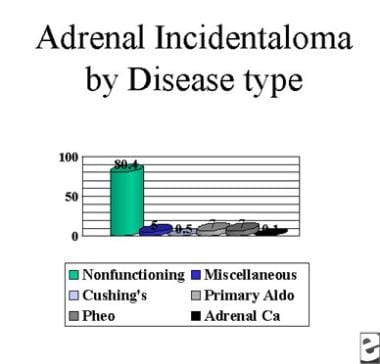
- Approximately 80% of AAs are nonfunctioning and benign.
- Twenty percent of AAs are either functioning or malignant and require further evaluation and treatment to avoid medical complications.
Race
No racial predilection has been reported.
Sex
AIs have a female sex predilection, probably reflecting the sex distribution of imaging procedures. Autopsy studies, however, show no sex preference for AAs.
Age
Prevalence increases with age; the rate is less than 1% for patients younger than 30 years and is 7% for patients 70 years or older.
History
Physical
- Vital signs may include findings of high blood pressure, postural hypotension, and tachycardia.
- A fundi feature is hypertensive retinopathy.
- Skin findings include hirsutism and striae.
- General signs are central obesity and gynecomastia.
- Mass size is an important predictive characteristic.
- Larger tumors are more likely to be malignant.
- The cutoff criterion for suspicion of malignancy ranges from 3-6 cm in diameter.
- The best hope for a surgical cure is a lower cutoff, but this means a greater number of benign tumors will be removed unnecessarily.
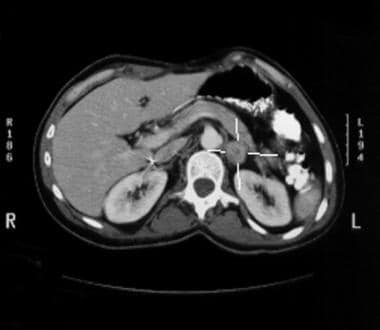
- A 4-cm cutoff is estimated to result in an acceptable ratio of 1 cancerous to 8 benign tumors (see Image 1).
Causes
- The biochemical mechanisms depend on the underlying cell type.
- The cellular mechanisms for primary adrenocortical tumorigenesis are just beginning to be understood.
- Some studies report an association with chromosomal and genetic abnormalities (genes coding for p53 and p57).
- Tumor markers are also present in other syndromes.
- The multiple endocrine neoplasia (MEN1) gene is linked to multiple endocrine neoplasia type 1.
- The aldosynthase/11-beta hydroxylase hybrid gene is associated with glucocorticoid-remediable hyperaldosteronism.
Addison Disease
Adrenal Carcinoma
Adrenal Crisis
Adrenal Hemorrhage
Breast Cancer
Cryptococcosis
Cushing Syndrome
Hyperaldosteronism, Primary
Lung Cancer, Non-Small Cell
Lung Cancer, Oat Cell (Small Cell)
Lymphoma, B-Cell
Lymphoma, Cutaneous T-Cell
Lymphoma, Diffuse Large Cell
Lymphoma, Follicular
Lymphoma, Lymphoblastic
Neuroblastoma
Pheochromocytoma
Teratoma, Cystic
Tuberculosis
Other Problems to be Considered
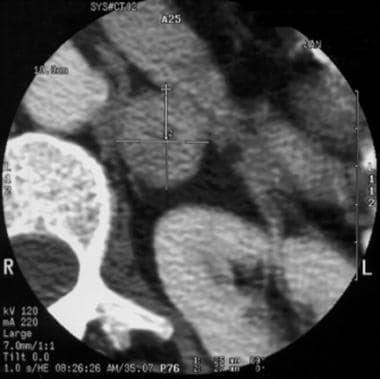
Adjacent structures masquerading as AMs (eg, kidneys, spleen, pancreas, lymph nodes) Adrenal cortical hyperplasia Adrenal cortical neoplasms Infiltrative diseases Hemorrhage Lung cancer, adenocarcinoma Medullary neoplasms Metastatic disease (see Image 2) Teratoma, atypical
Lab Studies
- Because AAs may be hormonally silent, biochemical screening is warranted.
- Most frequently, cortisol produces subclinical Cushing syndrome.
- This occurs when the AA autonomously secretes cortisol at levels high enough to suppress corticotropin but too low to produce Cushing stigmata.
- Patients do not have increased rates of hypertension or diabetes mellitus, but they may have features of metabolic syndrome, including hypertension, dyslipidemia, and impaired glucose tolerance.
- Patients may have reduced bone density and osteoporosis.
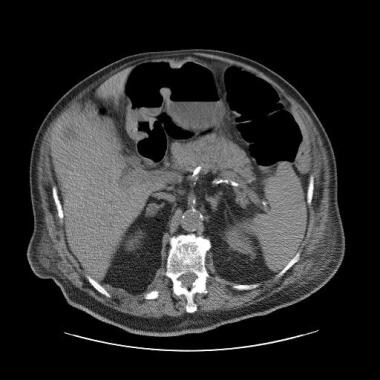
- Patients are prone to adrenal insufficiency once the cortisol-secreting tumor is removed. This postoperative adrenal insufficiency is caused by corticotropin suppression and adrenal cortical atrophy of the contralateral adrenal gland (see Image 3).
- Because urinary free cortisol levels may be within the reference range, a 1-mg overnight dexamethasone suppression test is needed to diagnose subclinical Cushing syndrome.
- The most important hormonally silent AA is pheochromocytoma.
- They are present in approximately 1 in 1000 autopsies.
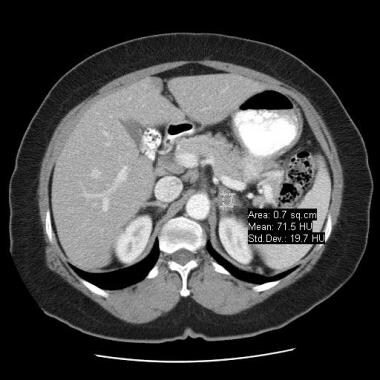
- If the prevalence of AAs is 10-100 in 1000, then 1-10% of AIs are pheochromocytomas (see Image 4).
- Pheochromocytomas should be considered in all AA cases because they are more common than previously thought, the diagnosis is often overlooked, and a failure to recognize them may lead to patient death.
- A 24-hour urine catecholamines and metabolites evaluation remains a good test for the diagnosis of pheochromocytoma, but it is not as sensitive as free metanephrine testing, which is available in laboratories around the United States.
- A 1981 series by Sutton et al reported that less than one quarter of pheochromocytomas found postmortem were diagnosed antemortem. Retrospective analysis found that more than 90% of these patients had characteristic symptoms suggesting the unrecognized tumors were not silent. Many of the patients died of causes possibly related to the pheochromocytoma. Approximately 29% died unexpectedly during surgery, 27% died from cardiovascular causes, and 17% died from cerebrovascular causes.
- Assume all AAs have a pheochromocytoma until proven otherwise, especially when paroxysmal hyperadrenergic symptoms are present.
- Exclude the presence of pheochromocytoma prior to performing a fine-needle aspiration (FNA) biopsy on the AM.
- Primary hyperaldosteronism is a less compelling, but nevertheless important, diagnosis.
- Surgical intervention can cure the hypertension and hypokalemia.
- The test of choice is an upright plasma aldosterone–to–renin ratio. A plasma aldosterone concentration–to–plasma renin activity ratio greater than 30 and a plasma aldosterone concentration of greater than 0.5 nmol/L (18 ng/dL) is suggestive of primary aldosteronism.
- Hyperaldosteronism is usually identified by suppressed upright plasma renin levels and concomitant elevated plasma aldosterone levels.
- Other secreted hormones can include estrogens, androgens, and 17-hydroxyprogesterone.
- They are associated with AAs, carcinomas, and hyperplasia.
- They often manifest clinically and therefore do not require presumptive screening.
Imaging Studies
- CT scanning is preferred because it is more cost-effective than MRI to delineate size, shape, and appearance. A smooth homogeneous lesion smaller than 4 cm with a low attenuation value (Hounsfield units) is usually benign. A larger inhomogeneous lesion with irregular borders and a higher attenuation score should be considered for malignancy.
- MRI is as effective as CT scanning for distinguishing benign from malignant lesions and is superior for detecting pheochromocytomas. A benign adenoma has a T2-weighted intensity similar to liver tissue.
- Plain radiography, tomography, and ultrasonography are less sensitive and are used less frequently since the advent of CT scanning and MRI.
- Other scanning techniques include iodine I 131 metaiodobenzyl guanidine, for pheochromocytoma; iodine I 131-6-b-iodomethylnorcholesterol (NP-59 cholesterol), for adrenocortical lesions; and positron emission tomography; however, these test are not widely available and data on their clinical usefulness is insufficient.
- The following are features of pheochromocytomas:
- They vary in size, consistency, and margins.
- They can be bilateral.
- They are strongly enhanced with contrast.
- They show high signal intensity on T2-weighted images, owing to their vascularity.
- The following are features of adrenal carcinomas:
- Adrenal carcinomas are often larger than 6 cm in diameter, with an irregular margin.
- Adrenal carcinomas demonstrate a soft tissue inhomogeneous density on CT scans, which enhances with contrast.
- Adrenal carcinomas are unilateral, sometimes with local invasion and lymphadenopathy and metastases.
- Adrenal cortical carcinomas have an intermediate increased intensity on T2-weighted MRIs.
- Myelolipomas show characteristic images of fat.
- Hemorrhage shows characteristic images of blood.
- The following are features of Bilateral AMs:
- Bilateral AMs should always raise the possibility of hemorrhage, especially in patients with coagulopathies or those on anticoagulant therapy.
- Clinical symptoms include flank pain, nausea and vomiting, fever, and hypotension.
- Diagnosis can be made with a rapid corticotropin stimulation test demonstrating decreased cortisol reserve.
- Bilateral AMs usually suggest certain systemic diseases that can produce adrenal insufficiency. They should be recognized early.
- Fungal or tuberculosis infection may be present.
- Granulomatous diseases (eg, histoplasmosis, tuberculosis) are characteristically homogeneous and may show calcifications.
- Most metastatic disease to the adrenal gland is unilateral, but lymphoma may be bilateral and can cause adrenal insufficiency.
- A 21-hydroxylase deficiency can produce unilateral AMs, but bilateral AMs are more common. To recognize this, measure the level of corticotropin-stimulated plasma 17-hydroxyprogesterone.
- In a patient with primary hyperaldosteronism, bilateral AIs suggest bilateral adrenal hyperaldosteronism (idiopathic hyperaldosteronism). Confirm this by adrenal venous sampling to demonstrate bilateral plasma aldosterone secretion.
- Long-standing, corticotropin-dependent Cushing syndrome may result in large AMs.
- Another very rare cause of Cushing syndrome is adrenal-dependent macronodular hyperplasia associated with extremely large adrenal glands.
Procedures
- Adrenal FNA helps identify metastatic, systemic, and hemorrhagic disease of the adrenal glands.
- It cannot distinguish between benign and malignant primary adrenal tumors.
- It should be used only when AMs cannot be diagnosed clinically or hormonally.
- Use CT scanning to guide a 23- or 25-gauge needle into the left or right adrenal gland.
- If a metastatic lesion is found, initiate a search for the primary cancer.
- If adrenal tissue is found, consider surgical removal.
- Pheochromocytoma should always be excluded before performing FNA biopsy to avoid the potential for a hypertensive crisis.
Histologic Findings
Findings are based on the AM cell type.
Medical Care
See Image 5 for the proper medical approach.
- Adrenal insufficiency
- Adrenal insufficiency should be the first consideration, especially with bilateral AMs.
- A corticotropin test with 60-minute cortisol levels helps rule out the diagnosis.
- If found, suspect granulomatous disease, hemorrhage, or lymphoma.
- A 21-hydroxylase deficiency can also be diagnosed with a 60-minute post-corticotropin plasma 17-hydroxyprogesterone level.
- Hormonal excess
- Use the 1-mg overnight dexamethasone suppression test, urinary free cortisol test, a urinary metanephrine–to–creatinine ratio, and a renin-to-aldosterone ratio.
- If found, surgical removal is usually indicated.
- Exceptions that do not warrant surgery include bilateral adrenal diseases such as corticotropin-dependent Cushing disease or bilateral hyperaldosteronism.
- If no hormonal excess is found and the corticotropin test results were unremarkable, FNA helps distinguish between adrenal and metastatic disease.
- Metastatic disease is managed according to the type of primary cancer.
- Adrenal disease should be removed if the diameter is greater than 6 cm. Otherwise, follow up with repeat CT scans at periodic intervals.
Surgical Care
- No randomized trials have compared laparotomy versus laparoscopic adrenalectomy; however, abdominal laparotomy is preferred for bilateral disease and pheochromocytoma.
- Fiberoptic laparoscopy is used for visualization, biopsy, and removal.
- A transthoracic approach is faster than fiberoptic laparoscopy but has a longer postoperative recovery period.
- Other experimental approaches, including a laparoscopic robot and augmented-reality visualization of the surgical field, have been described.
Consultations
An endocrinologist should be consulted to review the results of endocrine testing.
Diet
No specific diet recommendations are necessary.
Activity
No activity restrictions are necessary.
No specific medical therapy is required except treating the underlying disease.
Complications
- For patients who do not have an adrenalectomy, follow-up is designed to detect interval changes in tumor size or the development of hormonal overproduction. Most adrenal lesions remain unchanged or decrease in size, whereas, 5-25% enlarge. Repeat CT scanning at 6-12 months is recommended, and, for lesions that do not increase in size, further testing is generally not warranted.
- Hypercortisolism (especially subclinical) is the most likely hormonal disorder to develop in the follow-up period and is subclinical in most cases. Primary hyperaldosteronism or catecholamine excess is rarely observed during follow up.
- Overnight 1-mg dexamethasone suppression testing, a renin-to-aldosterone ratio, and urinary catecholamine and metabolite measurements can be performed yearly or more frequently if clinically indicated. After several years, this testing can probably be discontinued.
- Adrenal insufficiency may occur with bilateral adrenal disease such as lymphoma or hemorrhage. Hypocortisolism may also occur as a result of corticotropin deficiency from a cortisol-secreting adenoma that is causing contralateral adrenal atrophy. The postoperative course for these patients is prolonged physiologic cortisol replacement.
Prognosis
- Generally, the prognosis is excellent, but it depends on the type of underlying adrenal disease. Patients with a previous history of cancer have a clinical course dictated by the primary tumor. Patients with adrenal cortical carcinomas have poor clinical outcomes, usually 2- to 5-year 50% overall survival rate.
Patient Education
- If pertinent, patients should know the signs and symptoms of adrenal insufficiency. Clinical clues include nausea, abdominal pain, fever, and diarrhea.
Medical/Legal Pitfalls
- Pheochromocytomas should be considered in all AA cases because they are more common than previously thought, the diagnosis is often overlooked, and a failure to recognize them may lead to patient death.
| Media file 1:
Characteristics of adrenal masses and their malignant potential. |
 | View Full Size Image | |
Media type: Graph
|
| Media file 3:
Pituitary-adrenal axis and cortisol-secreting adrenal mass. |
 | View Full Size Image | |
Media type:
|
| Media file 7:
Close-up of the left adrenal incidentaloma from Image 6. |
 | View Full Size Image | |
Media type:
|
- Allolio B, Fassnacht M. Clinical review: Adrenocortical carcinoma: clinical update. J Clin Endocrinol Metab. Jun 2006;91(6):2027-37. [Medline].
- Angeli A, Osella G, Alì A, Terzolo M. Adrenal incidentaloma: an overview of clinical and epidemiological data from the National Italian Study Group. Horm Res. 1997;47(4-6):279-83. [Medline].
- Angeli A, Terzolo M. Adrenal incidentaloma--a modern disease with old complications. J Clin Endocrinol Metab. Nov 2002;87(11):4869-71. [Medline].
- Appetecchia M, Chilelli M, Sciarretta F, Anza M. Bilateral symptomatic adrenal myelolipoma. Urol Int. 1999;62(1):37-9. [Medline].
- Arellano RS, Harisinghani MG, Gervais DA, Hahn PF, Mueller PR. Image-guided percutaneous biopsy of the adrenal gland: review of indications, technique, and complications. Curr Probl Diagn Radiol. Jan-Feb 2003;32(1):3-10. [Medline].
- Ballantine DM, Klemm SA, Tunny TJ, et al. PCR-SSCP analysis of the p53 gene in tumours of the adrenal gland. Clin Exp Pharmacol Physiol. Jun-Jul 1996;23(6-7):582-3. [Medline].
- Barzon L, Fallo F, Sonino N, Boscaro M. Development of overt Cushing's syndrome in patients with adrenal incidentaloma. Eur J Endocrinol. Jan 2002;146(1):61-6. [Medline].
- Barzon L, Scaroni C, Sonino N, Fallo F, Paoletta A, Boscaro M. Risk factors and long-term follow-up of adrenal incidentalomas. J Clin Endocrinol Metab. Feb 1999;84(2):520-6. [Medline].
- Bastounis EA, Karayiannakis AJ, Anapliotou ML, et al. Incidentalomas of the adrenal gland: diagnostic and therapeutic implications. Am Surg. Apr 1997;63(4):356-60. [Medline].
- Behrend M, Kaaden S, Von Wasielewski R, Frericks B. Benign retroperitoneal schwannoma mimicking an adrenal mass. Surg Laparosc Endosc Percutan Tech. Apr 2003;13(2):133-8. [Medline].
- Bencsik Z, Szabolcs I, Kovacs Z, et al. Low dehydroepiandrosterone sulfate (DHEA-S) level is not a good predictor of hormonal activity in nonselected patients with incidentally detected adrenal tumors. J Clin Endocrinol Metab. May 1996;81(5):1726-9. [Medline].
- Bertherat J, Mosnier-Pudar H, Bertagna X. Adrenal incidentalomas. Curr Opin Oncol. Jan 2002;14(1):58-63. [Medline].
- Bondanelli M, Campo M, Trasforini G, et al. Evaluation of hormonal function in a series of incidentally discovered adrenal masses. Metabolism. Jan 1997;46(1):107-13. [Medline].
- Bovio S, Cataldi A, Reimondo G, Sperone P, Novello S, Berruti A. Prevalence of adrenal incidentaloma in a contemporary computerized tomography series. J Endocrinol Invest. Apr 2006;29(4):298-302. [Medline].
- Brunaud L, Kebebew E, Sebag F, Zarnegar R, Clark OH, Duh QY. Observation or laparoscopic adrenalectomy for adrenal incidentaloma? A surgical decision analysis. Med Sci Monit. Sep 2006;12(9):CR355-62. [Medline].
- Bülow B, Jansson S, Juhlin C, Steen L, Thorén M, Wahrenberg H. Adrenal incidentaloma - follow-up results from a Swedish prospective study. Eur J Endocrinol. Mar 2006;154(3):419-23. [Medline].
- Casola G, Nicolet V, vanSonnenberg E, Withers C, Bretagnolle M, Saba RM. Unsuspected pheochromocytoma: risk of blood-pressure alterations during percutaneous adrenal biopsy. Radiology. Jun 1986;159(3):733-5. [Medline].
- Chiodini I, Guglielmi G, Battista C, et al. Spinal volumetric bone mineral density and vertebral fractures in female patients with adrenal incidentalomas: the effects of subclinical hypercortisolism and gonadal status. J Clin Endocrinol Metab. May 2004;89(5):2237-41. [Medline].
- Chiodini I, Tauchmanova L, Torlontano M, et al. Bone involvement in eugonadal male patients with adrenal incidentaloma and subclinical hypercortisolism. J Clin Endocrinol Metab. Dec 2002;87(12):5491-4. [Medline].
- D'Annibale A, Fiscon V, Trevisan P, et al. The da Vinci robot in right adrenalectomy: considerations on technique. Surg Laparosc Endosc Percutan Tech. Feb 2004;14(1):38-41. [Medline].
- Duh QY. Adrenal incidentalomas. Br J Surg. Nov 2002;89(11):1347-9. [Medline].
- Dwamena BA, Kloos RT, Fendrick AM, et al. Diagnostic evaluation of the adrenal incidentaloma: decision and cost-effectiveness analyses. J Nucl Med. Apr 1998;39(4):707-12. [Medline].
- Eisenhofer G. Editorial: biochemical diagnosis of pheochromocytoma--is it time to switch to plasma-free metanephrines?. J Clin Endocrinol Metab. Feb 2003;88(2):550-2. [Medline].
- Emral R, Uysal AR, Asik M, Gullu S, Corapcioglu D, Tonyukuk V, et al. Prevalence of subclinical Cushing's syndrome in 70 patients with adrenal incidentaloma: clinical, biochemical and surgical outcomes. Endocr J. 50(4);2003 Aug:399-408. [Medline].
- Erbil Y, Ademoglu E, Ozbey N, Barbaros U, Yanik BT, Salmaslioglu A. Evaluation of the cardiovascular risk in patients with subclinical Cushing syndrome before and after surgery. World J Surg. Sep 2006;30(9):1665-71. [Medline].
- Espiner EA, Ross DG, Yandle TG, et al. Predicting surgically remedial primary aldosteronism: role of adrenal scanning, posture testing, and adrenal vein sampling. J Clin Endocrinol Metab. Aug 2003;88(8):3637-44. [Medline].
- Ferrari P, Shaw SG, Nicod J, et al. Active renin versus plasma renin activity to define aldosterone-to-renin ratio for primary aldosteronism. J Hypertens. Feb 2004;22(2):377-81. [Medline].
- Filipponi S, Guerrieri M, Arnaldi G, et al. Laparoscopic adrenalectomy: a report on 50 operations. Eur J Endocrinol. May 1998;138(5):548-53. [Medline].
- Garrapa GG, Pantanetti P, Arnaldi G, et al. Body composition and metabolic features in women with adrenal incidentaloma or Cushing's syndrome. J Clin Endocrinol Metab. Nov 2001;86(11):5301-6. [Medline].
- Goldstein DS, Eisenhofer G, Flynn JA, et al. Diagnosis and localization of pheochromocytoma. Hypertension. May 2004;43(5):907-10. [Medline].
- Gross MD, Rubello D, Shapiro B. Is there a future for adrenal scintigraphy?. Nucl Med Commun. Mar 2002;23(3):197-202. [Medline].
- Grumbach MM, Biller BM, Braunstein GD, et al. Management of the clinically inapparent adrenal mass ("incidentaloma"). Ann Intern Med. Mar 4 2003;138(5):424-9. [Medline].
- Gufler H, Eichner G, Grossmann A, et al. Differentiation of adrenal adenomas from metastases with unenhanced computed tomography. J Comput Assist Tomogr. Nov-Dec 2004;28(6):818-22. [Medline].
- Görges R, Knappe G, Gerl H, Ventz M, Stahl F. Diagnosis of Cushing's syndrome: re-evaluation of midnight plasma cortisol vs urinary free cortisol and low-dose dexamethasone suppression test in a large patient group. J Endocrinol Invest. Apr 1999;22(4):241-9. [Medline].
- Harisinghani MG, Maher MM, Hahn PF, Gervais DA, Jhaveri K, Varghese J. Predictive value of benign percutaneous adrenal biopsies in oncology patients. Clin Radiol. Oct 2002;57(10):898-901. [Medline].
- Hennings J, Lindhe O, Bergström M, Långström B, Sundin A, Hellman P. [11C]metomidate positron emission tomography of adrenocortical tumors in correlation with histopathological findings. J Clin Endocrinol Metab. Apr 2006;91(4):1410-4. Epub 2006 Jan 10. [Medline].
- Hess KR, Varadhachary GR, Taylor SH, Wei W, Raber MN, Lenzi R, et al. Metastatic patterns in adenocarcinoma. Cancer. Apr 1 2006;106(7):1624-33. [Medline].
- Hussain HK, Korobkin M. MR imaging of the adrenal glands. Magn Reson Imaging Clin N Am. Aug 2004;12(3):515-44, vii. [Medline].
- Ilias I, Pacak K. Current approaches and recommended algorithm for the diagnostic localization of pheochromocytoma. J Clin Endocrinol Metab. Feb 2004;89(2):479-91. [Medline].
- Kasperlik-Zeluska AA, Roslonowska E, Slowinska-Srzednicka J, et al. Incidentally discovered adrenal mass (incidentaloma): investigation and management of 208 patients. Clin Endocrinol (Oxf). Jan 1997;46(1):29-37. [Medline].
- Kim AW, Quiros RM, Maxhimer JB, et al. Outcome of laparoscopic adrenalectomy for pheochromocytomas vs aldosteronomas. Arch Surg. May 2004;139(5):526-9; discussion 529-31. [Medline].
- Kloos RT, Gross MD, Francis IR, Korobkin M, Shapiro B. Incidentally discovered adrenal masses. Endocr Rev. Aug 1995;16(4):460-84. [Medline].
- Korobkin M, Brodeur FJ, Francis IR, Quint LE, Dunnick NR, Londy F. CT time-attenuation washout curves of adrenal adenomas and nonadenomas. AJR Am J Roentgenol. Mar 1998;170(3):747-52. [Medline].
- Kudva YC, Sawka AM, Young WF Jr. Clinical review 164: The laboratory diagnosis of adrenal pheochromocytoma: the Mayo Clinic experience. J Clin Endocrinol Metab. Oct 2003;88(10):4533-9. [Medline].
- Lee JE, Evans DB, Hickey RC, et al. Unknown primary cancer presenting as an adrenal mass: frequency and implications for diagnostic evaluation of adrenal incidentalomas. Surgery. Dec 1998;124(6):1115-22. [Medline].
- Lenders JW, Pacak K, Walther MM, Linehan WM, Mannelli M, Friberg P. Biochemical diagnosis of pheochromocytoma: which test is best?. JAMA. Mar 20 2002;287(11):1427-34. [Medline].
- Lenert JT, Barnett CC Jr, Kudelka AP, Sellin RV, Gagel RF, Prieto VG. Evaluation and surgical resection of adrenal masses in patients with a history of extra-adrenal malignancy. Surgery. Dec 2001;130(6):1060-7. [Medline].
- Libe R, Dall'Asta C, Barbetta L, Baccarelli A, Beck-Peccoz P, Ambrosi B. Long-term follow-up study of patients with adrenal incidentalomas. Eur J Endocrinol. Oct 2002;147(4):489-94. [Medline].
- Mansmann G, Lau J, Balk E, Rothberg M, Miyachi Y, Bornstein SR. The clinically inapparent adrenal mass: update in diagnosis and management. Endocr Rev. Apr 2004;25(2):309-40. [Medline].
- Mantero F, Masini AM, Opocher G, et al. Adrenal incidentaloma: an overview of hormonal data from the National Italian Study Group. Horm Res. 1997;47(4-6):284-9. [Medline].
- Marescaux J, Rubino F, Arenas M, et al. Augmented-reality-assisted laparoscopic adrenalectomy. JAMA. Nov 10 2004;292(18):2214-5. [Medline].
- Maurea S, Klain M, Caraco C, et al. Diagnostic accuracy of radionuclide imaging using 131I nor-cholesterol or meta-iodobenzylguanidine in patients with hypersecreting or non-hypersecreting adrenal tumours. Nucl Med Commun. Oct 2002;23(10):951-60. [Medline].
- McAlister FA, Lewanczuk RZ. Primary hyperaldosteronism and adrenal incidentaloma: an argument for physiologic testing before adrenalectomy. Can J Surg. Aug 1998;41(4):299-305. [Medline].
- McCorkell SJ, Niles NL. Fine-needle aspiration of catecholamine-producing adrenal masses: a possibly fatal mistake. AJR Am J Roentgenol. Jul 1985;145(1):113-4. [Medline].
- McLeod MK, Thompson NW, Gross MD, Bondeson AG, Bondeson L. Sub-clinical Cushing's syndrome in patients with adrenal gland incidentalomas. Pitfalls in diagnosis and management. Am Surg. Jul 1990;56(7):398-403. [Medline].
- Meria P, Kempf BF, Hermieu JF, et al. Laparoscopic management of primary hyperaldosteronism: clinical experience with 212 cases. J Urol. Jan 2003;169(1):32-5. [Medline].
- Meyer A, Behrend M. Presentation and therapy of myelolipoma. Int J Urol. Mar 2005;12(3):239-43. [Medline].
- Montori VM, Young WF Jr. Use of plasma aldosterone concentration-to-plasma renin activity ratio as a screening test for primary aldosteronism. A systematic review of the literature. Endocrinol Metab Clin North Am. Sep 2002;31(3):619-32, xi. [Medline].
- Motta-Ramirez GA, Remer EM, Herts BR, Gill IS, Hamrahian AH. Comparison of CT findings in symptomatic and incidentally discovered pheochromocytomas. AJR Am J Roentgenol. Sep 2005;185(3):684-8. [Medline].
- Mulatero P, Stowasser M, Loh KC, Fardella CE, Gordon RD, Mosso L. Increased diagnosis of primary aldosteronism, including surgically correctable forms, in centers from five continents. J Clin Endocrinol Metab. Mar 2004;89(3):1045-50. [Medline].
- Newell-Price J, Grossman A. Adrenal incidentaloma: subclinical Cushing's syndrome. Postgrad Med J. Apr 1996;72(846):207-10. [Medline].
- Peña CS, Boland GW, Hahn PF, Lee MJ, Mueller PR. Characterization of indeterminate (lipid-poor) adrenal masses: use of washout characteristics at contrast-enhanced CT. Radiology. Dec 2000;217(3):798-802. [Medline].
- Prager G, Heinz-Peer G, Passler C, et al. Applicability of laparoscopic adrenalectomy in a prospective study in 150 consecutive patients. Arch Surg. Jan 2004;139(1):46-9. [Medline].
- Rossi R, Tauchmanova L, Luciano A, Di Martino M, Battista C, Del Viscovo L, et al. Subclinical Cushing's syndrome in patients with adrenal incidentaloma: clinical and biochemical features. J Clin Endocrinol Metab. Apr 2000;85(4):1440-8. [Medline].
- Sawka AM, Gafni A, Thabane L, Young WF Jr. The economic implications of three biochemical screening algorithms for pheochromocytoma. J Clin Endocrinol Metab. Jun 2004;89(6):2859-66. [Medline].
- Sawka AM, Jaeschke R, Singh RJ, Young WF Jr. A comparison of biochemical tests for pheochromocytoma: measurement of fractionated plasma metanephrines compared with the combination of 24-hour urinary metanephrines and catecholamines. J Clin Endocrinol Metab. Feb 2003;88(2):553-8. [Medline].
- Stowasser M, Gordon RD, Gunasekera TG, et al. High rate of detection of primary aldosteronism, including surgically treatable forms, after 'non-selective' screening of hypertensive patients. J Hypertens. Nov 2003;21(11):2149-57. [Medline].
- Sutton MG, Sheps SG, Lie JT. Prevalence of clinically unsuspected pheochromocytoma. Review of a 50-year autopsy series. Mayo Clin Proc. Jun 1981;56(6):354-60. [Medline].
- Szolar DH, Korobkin M, Reittner P, Berghold A, Bauernhofer T, Trummer H, et al. Adrenocortical carcinomas and adrenal pheochromocytomas: mass and enhancement loss evaluation at delayed contrast-enhanced CT. Radiology. Feb 2005;234(2):479-85. [Medline].
- Tauchmanova L, Rossi R, Biondi B, et al. Patients with subclinical Cushing's syndrome due to adrenal adenoma have increased cardiovascular risk. J Clin Endocrinol Metab. Nov 2002;87(11):4872-8. [Medline].
- Terzolo M, Ali A, Osella G, Mazza E. Prevalence of adrenal carcinoma among incidentally discovered adrenal masses. A retrospective study from 1989 to 1994. Gruppo Piemontese Incidentalomi Surrenalici. Arch Surg. Aug 1997;132(8):914-9. [Medline].
- Terzolo M, Osella G, Alì A, et al. Different patterns of steroid secretion in patients with adrenal incidentaloma. J Clin Endocrinol Metab. Feb 1996;81(2):740-4. [Medline].
- Terzolo M, Osella G, Alì A, et al. Subclinical Cushing's syndrome in adrenal incidentaloma. Clin Endocrinol (Oxf). Jan 1998;48(1):89-97. [Medline].
- Terzolo M, Pia A, Alì A, et al. Adrenal incidentaloma: a new cause of the metabolic syndrome?. J Clin Endocrinol Metab. Mar 2002;87(3):998-1003. [Medline].
- Thompson GB, Young WF Jr. Adrenal incidentaloma. Curr Opin Oncol. Jan 2003;15(1):84-90. [Medline].
- Torlontano M, Chiodini I, Pileri M, et al. Altered bone mass and turnover in female patients with adrenal incidentaloma: the effect of subclinical hypercortisolism. J Clin Endocrinol Metab. Jul 1999;84(7):2381-5. [Medline].
- Tsagarakis S, Roboti C, Kokkoris P, Vasiliou V, Alevizaki C, Thalassinos N. Elevated post-dexamethasone suppression cortisol concentrations correlate with hormonal alterations of the hypothalamo-pituitary adrenal axis in patients with adrenal incidentalomas. Clin Endocrinol (Oxf). Aug 1998;49(2):165-71. [Medline].
- Tsagarakis S, Vassiliadi D, Thalassinos N. Endogenous subclinical hypercortisolism: Diagnostic uncertainties and clinical implications. J Endocrinol Invest. May 2006;29(5):471-82. [Medline].
- Tutuncu NB, Gedik O. Adrenal incidentaloma: report of 33 cases. J Surg Oncol. Apr 1999;70(4):247-50. [Medline].
- Welch TJ, Sheedy PF 2nd, Stephens DH, Johnson CM, Swensen SJ. Percutaneous adrenal biopsy: review of a 10-year experience. Radiology. Nov 1994;193(2):341-4. [Medline].
- Weng LJ, Akhurst T. Colon cancer metastasis to the adrenal gland demonstrated with FDG PET/CT. Clin Nucl Med. Jul 2004;29(7):444. [Medline].
- Young WF Jr. Clinical practice. The incidentally discovered adrenal mass. N Engl J Med. Feb 8 2007;356(6):601-10. [Medline].
- Yun M, Kim W, Alnafisi N, Lacorte L, Jang S, Alavi A. 18F-FDG PET in characterizing adrenal lesions detected on CT or MRI. J Nucl Med. Dec 2001;42(12):1795-9. [Medline].
- Zendron L, Fehrenbach J, Taverna C, Krause M. Pitfalls in the diagnosis of phaeochromocytoma. BMJ. Mar 13 2004;328(7440):629-30. [Medline].
Adrenal Adenoma excerpt Article Last Updated: Sep 11, 2007
|