Continually Updated Clinical Reference
 
 
  All Sources     eMedicine     Medscape     Drug Reference     MEDLINE
 
eMedicine - Duodenal Ulcers : Article by

Quick Find
Authors & Editors
Introduction
Clinical
Differentials
Workup
Treatment
Medication
Follow-up
Miscellaneous
Multimedia
References

Related Articles
Acute Mesenteric Ischemia

Angina Pectoris

Biliary Colic

Esophageal Spasm

Gastric Cancer

Gastric Ulcers

Gastrinoma

Gastritis, Acute

Gastritis, Chronic

Gastroesophageal Reflux Disease

Mastocytosis, Systemic

Pancreatitis, Acute

Pancreatitis, Chronic

Upper Gastrointestinal Bleeding

Zollinger-Ellison Syndrome


Patient Education
Esophagus, Stomach, and Intestine Center

Peptic Ulcers Overview

Peptic Ulcers Causes

Peptic Ulcers Symptoms

Peptic Ulcers Treatment


Author: Yvette PY Leung, MD, Fellow in Gastroenterology, Department of Internal Medicine, University of Calgary Medical Clinic

Yvette PY Leung is a member of the following medical societies: Alberta Medical Association, American College of Physicians, American Gastroenterological Association, Canadian Association of Gastroenterology, and Royal College of Physicians and Surgeons of Canada

Coauthor(s): Shane M Devlin, MD, BSc, FRCP(C), Clinical Assistant Professor, Department of Internal Medicine, Peter Lougheed Center, University of Calgary, Canada; Jon Meddings, MD, Head, Department of Medicine, Professor, Department of Internal Medicine, University of Alberta, Canada

Editors: Waqar A Qureshi, MD, Chief of Endoscopy, Associate Professor, Department of Internal Medicine, Division of Gastroenterology, Baylor College of Medicine and VA Medical Center; Francisco Talavera, PharmD, PhD, Senior Pharmacy Editor, eMedicine; BS Anand, MD, Department of Internal Medicine, Division of Gastroenterology, Professor, Baylor University College of Medicine; Alex J Mechaber, MD, FACP, Assistant Dean for Medical Curriculum, Associate Professor of Medicine, Division of General Internal Medicine, University of Miami Miller School of Medicine; Julian Katz, MD, Clinical Professor of Medicine, Drexel University College of Medicine; Consulting Staff, Department of Medicine, Section of Gastroenterology and Hepatology, Hospital of the Medical College of Pennsylvania

Author and Editor Disclosure

Synonyms and related keywords: DU, peptic ulcer disease, dyspepsia, Helicobacter pylori ulcer, H pylori ulcer, nonsteroidal anti-inflammatory drug ulcer, NSAID ulcer, gastric acid, pepsin, histamine2 receptor antagonists, H2RA, proton pump inhibitors, PPI, Zollinger-Ellison syndrome, ZES

Background

Duodenal ulcer is a common condition characterized by the presence of a well-demarcated break in the mucosa that may extend into the muscularis propria of the duodenum. More than 95% of duodenal ulcers are found in the first part of the duodenum; most are less than 1 cm in diameter.

Proper diagnosis of duodenal ulcer is important because prompt initiation of treatment can effectively prevent potentially serious complications.

Pathophysiology

The duodenal mucosa resists damage from the effect of aggressive factors, such as gastric acid and the proteolytic enzyme pepsin, with the help of several protective factors, such as a mucous layer, bicarbonate secretion, and protective prostaglandins.

The epithelial cells of the stomach and duodenum secrete mucus in response to irritation of the epithelial lining and as a result of cholinergic stimulation. A portion of the gastric and duodenal mucus exists in the form of a gel layer, which is impermeable to acid and pepsin. Other gastric and duodenal cells secrete bicarbonate, which aids in buffering acid that lies near the mucosa. Prostaglandins of the E type (PGE) have an important protective role because PGE increases the production of both bicarbonate and the mucous layer.

In the event of acid and pepsin entering the epithelial cells, additional mechanisms are in place to reduce injury. Within the epithelial cells, ion pumps in the basolateral cell membrane help to regulate intracellular pH by removing excess hydrogen ions. Through the process of restitution, healthy cells migrate to the site of injury. Mucosal blood flow removes acid that diffuses through the injured mucosa and provides bicarbonate to the surface epithelial cells.

A duodenal ulcer occurs when an alteration occurs in the aggressive and/or protective factors such that the balance is in favor of gastric acid and pepsin. Any process that increases gastric acidity (eg, individuals with increased maximal and basal acid output), decreases prostaglandin production (eg, nonsteroidal anti-inflammatory drugs [NSAIDs]), or interferes with the mucous layer (eg, Helicobacter pylori infection) can cause such an imbalance and lead to peptic ulcer disease.

Full understanding of the pathophysiology and pathogenesis of duodenal ulcer requires a brief discussion of the 2 major etiologies: NSAID use and H pylori infection. NSAIDs are pathogenic through their inhibition of the cyclooxygenase-1 (COX-1) pathway, which normally produces protective prostaglandins. These prostaglandins are protective because they augment both bicarbonate and mucous production, as mentioned above. However, perhaps more important, they augment mucosal blood flow, and their inhibition leads to impairment of blood flow leaving the mucosa vulnerable to damage. Infection with H pylori is likely pathogenic by means of a variety of indirect mechanisms as the organism does not generally colonize the duodenum. The mechanisms are described below.

  • H pylori infection that follows an antral predominant pattern leads to an inflammatory state in which high levels of tumor necrosis factor-alpha (TNF-alpha) and other cytokines are produced. These stimulate gastric acid production directly by increasing gastrin release from G cells and inhibit somatostatin production by antral D cells. This leads to a net increase in gastric acid secretion, which leads to an increased acid load in the duodenum, overwhelming the mucosal defense.
  • Duodenal acid exposure can lead to gastric metaplasia, whereby the duodenal mucosa can take on characteristics of gastric mucosa. H pylori can then colonize the duodenal mucosa and adhere to cells. This adherence leads to a variety of second-messenger signals, which invoke an immunologic response against those cells causing mucosal damage by host neutrophils and other inflammatory cells.
  • H pylori also affects the gastric and duodenal mucous layer because this organism produces proteases that degrade the protective mucous layer. Moreover, H pylori infection decreases the production of epidermal growth factor, which normally promotes healing of gastric and duodenal mucosa.
  • H pylori organisms produce urease. Urease hydrolyzes urea to ammonia and carbon dioxide. Hydroxide ions produced by equilibration of ammonia with water may damage the gastric and duodenal mucosa. H pylori produces proteins that may serve as chemotactic factors for neutrophils and monocytes, which act as proinflammatory cells. H pylori also affects the gastric and duodenal mucous layer because these organisms produce proteases that degrade the protective mucous layer. H pylori does not lead to the development of gastric and duodenal ulcers through alteration of the bacterial flora.

Frequency

United States

The prevalence of duodenal ulcer is estimated to be 6-15% in the general population. Most individuals do not have clinically significant ulcer disease. The prevalence is linked to the presence of H pylori. Approximately 10% of young men have H pylori, and the proportion of people with the infection increases steadily with age.

Approximately 10% of the US population has evidence of a duodenal ulcer at some time. Of those infected with H pylori, the lifetime prevalence is approximately 20%. Overall, the incidence of duodenal ulcer has been decreasing over the past 3-4 decades.

International

As in the United States, disease prevalence is linked to H pylori infection. The prevalence of H pylori infection varies widely among countries and even in regions within countries.

Mortality/Morbidity

Duodenal ulcer causes significant morbidity, which is mainly related to pain, and hospitalization for complications, such as ulcer hemorrhage, perforation, penetration, and obstruction.

Rates of complications and mortality are generally increased in elderly patients, perhaps because of the high incidence of comorbid diseases in this group and their increased use of NSAIDs.

  • With NSAID-related ulcers, the incidence of perforation and obstruction is approximately 0.3% and 0.1% per patient year, respectively. Combining both duodenal ulcer and gastric ulcer, the rate of any complication in all age groups combined is approximately 1-2% per ulcer per year.
  • Over the last 20 years, the mortality rate in the setting of ulcer hemorrhage had not changed appreciably despite the advent of histamine-2 receptor antagonists (H2RAs) and proton pump inhibitors (PPIs). However, recent evidence from 2 meta-analyses has shown a decreased mortality rate from bleeding peptic ulcers when intravenous PPIs are used after successful endoscopic therapy. In general, if one considers all patients with duodenal ulcer, the mortality rate due to ulcer hemorrhage is approximately 5%.
  • The mortality rate of patients requiring surgical intervention for complications, such as perforation and obstruction, is significantly higher than the general rate and related to the age of the patient. Most deaths in this setting result from postoperative complications.

Race

No specific relationship between race and the occurrence of duodenal ulcer exists. In general, areas with high prevalence of H pylori infection have a high prevalence of duodenal ulcer.

Sex

  • Over the last several years, a trend toward increasing incidence of duodenal ulcer in females and decreasing incidence in males has been observed, especially in younger males, in whom the prevalence of H pylori infection is decreasing.
  • Historically, duodenal ulcer was believed to be more common in men than in women. Today, the prevalence is probably equal in men and women.

Age

The prevalence of duodenal ulcer increases with age. This is probably related to the increased prevalence of H pylori infection in older age groups, coupled with increased use of NSAIDs.


History

Patients with duodenal ulcer have a variety of clinical presentations, ranging from individuals who are completely asymptomatic to those who develop severe complications, such as GI hemorrhage. Some generalizations can be made with respect to common clinical presentations of duodenal ulcer.

  • Some common symptoms in patients with duodenal ulcer are described below.
    • Epigastric pain can be sharp, dull, burning, or penetrating.
    • Many patients experience a feeling of hunger.
    • The pain may radiate into the back.
    • About 20-40% of patients describe bloating, belching, or symptoms suggestive of gastroesophageal reflux.
    • Ulcer-related pain generally occurs 2-3 hours after meals and often awakens the patient at night. This pattern is believed to be the result of increased gastric acid secretion, which occurs after meals and during the late night and early morning hours when circadian stimulation of gastric acid secretion is the highest.
    • About 50-80% of patients with duodenal ulcer experience nightly pain, as opposed to only 30-40% of patients with gastric ulcer and 20-40% of patients with nonulcer dyspepsia (NUD).
    • Pain is often relieved by food, a finding often cited as being specific for duodenal ulcer. However, this symptom is present in only 20-60% of patients and probably not specific for duodenal ulcer.
  • The pain of duodenal ulcer is generally episodic; however, the pain can evolve into a chronic, daily occurrence in some patients.
    • A change in the patient's usual pattern of ulcer pain should be considered serious because it may herald an imminent complication. When food or antacids fail to relieve the pain or when the pain begins to radiate to new anatomical locations, a high index of suspicion is warranted.
    • Concern is especially warranted in the setting of new-onset nausea and vomiting, decreased appetite, and weight loss.
  • GI bleeding is a common complication of duodenal ulcer and can have serious consequences.
    • Patients may present with melena, coffee-ground emesis, or hematemesis.
    • The passage of frank blood in the stool or maroon-colored stool in the presence of a bleeding duodenal ulcer suggests precipitous GI bleeding.
  • Patients who develop gastric outlet obstruction as a result of chronic, untreated duodenal ulcer usually report a history of fullness and bloating associated with nausea and emesis occurring several hours after food intake. A common misconception is that adults with gastric outlet obstruction present with nausea and emesis immediately after a meal.
  • A few individuals are completely asymptomatic.
    • According to one study, typical epigastric pain was rare in patients older than 65 years with peptic ulcer disease (PUD), ie, gastric ulcer and duodenal ulcer.
    • Elderly patients are more likely than younger patients to present in an asymptomatic fashion, which is especially common in the setting of NSAID use.

Physical

No characteristic physical findings are associated with duodenal ulcer. In general, most patients have tenderness over the epigastrium, and tenderness is present less often over the right upper quadrant (RUQ), left upper quadrant (LUQ), or supraumbilical region. Most patients with an uncomplicated duodenal ulcer do not have any other physical findings.

  • In the presence of a complication, such as gastric outlet obstruction, the physician may note upper abdominal distention and hear a succussion splash on auscultation.
  • Perforation usually results in classic findings of diffuse peritonitis with abdominal rigidity, guarding, and rebound tenderness. Bowel sounds may initially be hyperactive but, with time, become absent.
  • The physical examination of a patient with a duodenal ulcer includes a digital rectal examination (DRE) to assess for evidence of GI bleeding. Melena is noted easily on such an examination.

Causes

The understanding of the etiology of duodenal ulcer has changed dramatically in the latter part of the 20th century. Historically, duodenal ulcer was thought to be a disease related to diet and environmental stress alone. Subsequent studies revealed the importance of pepsin and acid secretion in the pathogenesis of duodenal ulcer. The most revolutionary change in the knowledge of duodenal ulcer was the discovery in 1982 that the bacterium H pylori was present in most patients.

  • H pylori bacteria
    • H pylori bacteria are small, microaerophilic, spiral-shaped, gram-negative rods. The presence of H pylori in the stomach and duodenum is probably the most common bacterial infection in the world. Areas with a high prevalence of H pylori infection have a high incidence of duodenal ulcer.
    • H pylori infection is generally regarded as the most important etiologic factor in the development of duodenal ulcer. Most authors regard H pylori as the cause of 85-95% of duodenal ulcers. All evidence supports the assertion that H pylori is the major cause of duodenal ulcer. However, the risk of developing a duodenal ulcer in an individual infected with H pylori is only about 1% per year, and only 10-15% of individuals with H pylori infection develop a duodenal ulcer at any point in life. Therefore, other pathogenic factors must function either independently or in concert with H pylori to produce duodenal ulcers.
    • The bacterium can induce duodenal mucosal damage by means of several mechanisms (see Pathophysiology).
  • Other pathogenic factors
    • In up to one third of patients with duodenal ulcer, basal acid output (BAO) and maximal acid output (MAO) are increased. In one study, increased BAO and MAO were associated with odds ratios of up to 3.5 and 7, respectively, for the development of duodenal ulcer. People at especially high risk are those with BAO greater than 15 mEq/h. The increased BAO may reflect the fact that, in a significant proportion of patients with duodenal ulcer, the parietal cell mass is increased to nearly twice the reference range.
    • In addition to increased gastric and duodenal acidity observed in some patients with duodenal ulcer, accelerated gastric emptying is often present. This acceleration leads to a high acid load delivered to the first part of the duodenum, where 95% of all duodenal ulcers are located. Acidification of the duodenum leads to gastric metaplasia, which indicates replacement of duodenal villous cells with cells that share morphologic and secretory characteristics of gastric epithelium. Gastric metaplasia may create an environment that is well suited to colonization by H pylori.
  • Nonsteroidal anti-inflammatory drugs
    • Long before the discovery of H pylori, NSAIDs were known to be associated with GI toxicity, including the formation of gastric ulcer and duodenal ulcer.
    • As many as 4-10% of patients on daily therapeutic-dose NSAIDs develop a duodenal ulcer within 3 months of initiation of therapy, and up to 1% of these duodenal ulcers are clinically significant.
    • A clear dose-response relationship exists, with high doses associated with increased risk of duodenal mucosal damage. Clinically, NSAID-induced duodenal ulcers are most likely to bleed. In one study, NSAID use was associated with a relative risk for bleeding of 8.4, as opposed to 1.5 for H pylori–associated duodenal ulcers. Patients taking NSAIDs, especially elderly patients, are most likely to present with an asymptomatic bleeding duodenal ulcer.
    • Factors associated with increased risk of duodenal ulcer in the setting of NSAID use are history of previous peptic ulcer disease, advanced age, female sex, high doses or combinations of NSAIDs, long-term NSAID use, concomitant use of anticoagulants, and severe comorbid illnesses. Corticosteroids do not increase the risk of duodenal ulcer by themselves, but the risk of duodenal ulcer is increased when corticosteroids are used in combination with NSAIDs, as compared to NSAID use alone.
    • Although initially controversial, most evidence now supports the assertion that H pylori and NSAIDs are synergistic with respect to the development of PUD. Eradication of H pylori in the setting of chronic NSAID use is associated with a decreased risk of ulcer bleeding (Lai, 2002). A meta-analysis found that H pylori eradication in NSAID-naive users prior to the initiation of NSAIDs was associated with a decrease in peptic ulcers (Vergara, 2005).
    • The potential for decreased GI mucosal injury with newer cyclooxygenase-2 (COX-2) selective inhibitors, celecoxib and rofecoxib, has been emphasized. On September 30, 2004, Merck & Co, Inc, announced a voluntary withdrawal of rofecoxib (Vioxx) from the US and worldwide markets because of its association with an increased rate of cardiovascular events (including heart attacks and strokes) compared with placebo. The newer NSAIDs do not inhibit COX-1 and, therefore, do not have the disadvantage of reducing the synthesis of protective prostaglandins. Overall, selective COX-2 inhibitors are associated with, at best, a modest decrease in the risk of ulcer bleeding. One study showed that the combination of a traditional NSAID with a daily PPI had the same risk of bleeding as that of a COX-2 inhibitor alone (Chan, 2002).
  • H pylori–negative duodenal ulcer
    • Virtually all non–H pylori-related duodenal ulcers were assumed to be secondary to NSAID use. However, these ulcers have received much attention recently, and some studies have shown that the proportion of H pylori–related duodenal ulcers is significantly less than the commonly reported 85-95%. One group examined 2400 endoscopically proven, non–NSAID-related duodenal ulcers and found that only 73% patients were positive for H pylori. However, other studies have produced conflicting results, and one study showed that antibiotic use within 1 month of diagnosis may have resulted in false-negative results.
    • Non–H pylori duodenal ulcers that are not related to NSAID use may be more common than previously appreciated. This observation supports the assertion that the acid hypersecretion and rapid gastric emptying observed in many patients with duodenal ulcer are the most important risk factors.
  • Lifestyle factors
    • Smoking: Evidence that tobacco use is a risk factor for duodenal ulcer is not conclusive. Evidence supporting a pathogenic role for smoking comes from the finding that smoking may accelerate gastric emptying and decrease pancreatic bicarbonate production. However, studies have produced contradictory findings. In one prospective study of more than 47,000 men with duodenal ulcer, smoking did not emerge as a risk factor. However, smoking in the setting of H pylori infection may increase the risk of relapse of PUD (Sonnenberg, 1981).
    • Alcohol use: Ethanol is known to cause gastric mucosal irritation and nonspecific gastritis. Evidence that consumption of alcohol is a risk factor for duodenal ulcer is inconclusive. A prospective study of more than 47,000 men with duodenal ulcer did not find an association between alcohol intake and duodenal ulcer.
    • Caffeine intake: Little evidence suggests that caffeine intake is associated with increased risk of duodenal ulcer.
    • Diet: Historically, diet was considered one of the primary causes of PUD. However, current knowledge indicates that diet probably has little influence on the pathogenesis of duodenal ulcer. Deficiency of certain essential fatty acids necessary for prostaglandin production has been examined as a possible risk factor. Moreover, some physicians hypothesize that regional variability of duodenal ulcer prevalence not directly related to H pylori prevalence may be related to diet. In general, evidence linking diet and duodenal ulcer is weak.
  • Genetics
    • More than 20% of patients have a family history of duodenal ulcer, compared with only 5-10% of control groups. In addition, weak associations have been observed between duodenal ulcer and blood type O. Furthermore, patients who do not secrete ABO antigens in their saliva and gastric juice are known to be at higher risk. The reason for these apparent genetic associations is unclear.
    • A rare genetic association exists between familial hyperpepsinogenemia type I (a genetic phenotype leading to enhanced secretion of pepsin) and duodenal ulcer. However, H pylori can increase pepsin secretion, and a retrospective analysis of the sera of one family studied prior to the discovery of H pylori revealed that their high pepsin levels were more likely related to H pylori infection.
  • Other causes
    • Acid hypersecretory syndromes
      • Gastrinoma (Zollinger-Ellison syndrome [ZES]): First described in 1955, ZES is caused by a tumor of pancreatic islet cells that produces gastrin. It is associated with gastric acid hypersecretion and development of PUD. From 0.1-1% of duodenal ulcers are thought to be secondary to an underlying gastrin-secreting tumor.
      • Systemic mastocytosis: Systemic mastocytosis is a disease associated with diffuse infiltration of the skin, GI tract, bone marrow, spleen, and liver with mastocytes. Gastric acid hypersecretion occurs in response to histamine production by mastocytes.
      • Basophilia: In the setting of a myeloproliferative disorder, basophilia can be associated with duodenal ulcer secondary to histamine production, as is systemic mastocytosis. This tends to occur more frequently after chemotherapy-induced cell lysis causing increased release of histamine from cells.
    • Other factors
      • Infection: Some evidence suggests that herpes simplex virus-1 (HSV-1) and cytomegalovirus (CMV) may be associated with duodenal ulcer and gastric ulcer in a minority of patients.
      • Chemotherapy: Chemotherapeutic agents, such as 5-fluorouracil, methotrexate, and cyclophosphamide, have been associated with development of duodenal ulcer.
      • Radiation: Local radiation can result in mucosal damage, which may lead to the development of duodenal ulcer.
      • Crack cocaine: Use of crack cocaine causes localized vasoconstriction, and the reduced blood flow may lead to mucosal damage.


Acute Mesenteric Ischemia
Angina Pectoris
Biliary Colic
Esophageal Spasm
Gastric Cancer
Gastric Ulcers
Gastrinoma
Gastritis, Acute
Gastritis, Chronic
Gastroesophageal Reflux Disease
Mastocytosis, Systemic
Pancreatitis, Acute
Pancreatitis, Chronic
Upper Gastrointestinal Bleeding
Zollinger-Ellison Syndrome


Lab Studies

  • In general, laboratory studies are of little help in evaluating a patient with suspected duodenal ulcer, but such tests as CBC, amylase and lipase determinations, and liver function tests (LFTs) may be useful in excluding other causes of upper abdominal pain.
  • Several noninvasive laboratory tests are available to aid in the diagnosis of H pylori infection.
    • Urea breath test: The patient ingests radiolabeled urea, which, in the presence of urease produced by H pylori, is metabolized to carbon dioxide and ammonia. A laboratory assay is then used to detect the radiolabeled carbon dioxide. This test has a sensitivity of 90-95%. It can be used to diagnose infection, but it is more often used to evaluate the success of treatment of H pylori infection.
    • Serology: Enzyme-linked immunoassay (ELISA) can detect both immunoglobulin G (IgG) and immunoglobulin A (IgA) antibodies directed against H pylori. The sensitivity of most serologic tests is approximately 95%.
    • Fecal antigen test: The detection of H pylori in feces is emerging as a noninvasive method of detection. This test has mainly been used in pediatric settings.

Imaging Studies

  • Several investigative techniques can be used to diagnose duodenal ulcer.
  • Single-contrast barium radiography can detect 70-80% of duodenal ulcers. The sensitivity increases to greater than 90% when double contrast radiography is performed and evaluated by an experienced radiologist.
  • The disadvantage of radiographic studies is that biopsy specimens of the lesion, either to test for H pylori infection or to evaluate for the presence of malignancy, cannot be obtained.

Other Tests

  • Other tests used to help diagnose H pylori infection include the rapid urease test, tissue culture, and histology.
    • The rapid urease test requires an endoscopically acquired biopsy specimen that is inserted into a receptacle containing a urea substrate and a pH indicator. In the presence of H pylori, the urea is metabolized and the color-sensitive pH indicator demonstrates a positive result.
    • Culture of tissue for the presence of H pylori is not a rapid or practical test and is available only in research settings.
    • As with culture, the presence of the organism can be detected histologically, but the expertise of a trained pathologist is required. Other tests are faster and more cost effective.

Procedures

  • Endoscopy
    • Although not as sensitive as autopsy or visual inspection during surgery, esophagogastroduodenoscopy (EGD) is the most sensitive test available to detect duodenal ulcer. It has a sensitivity of greater than 95%.
    • With EGD, the ulcer can be visualized, a biopsy specimen can be obtained, and, if required, bleeding ulcers can be treated directly. EGD is a more invasive test and requires conscious sedation in many patients.


Medical Care

Treatment of duodenal ulcer varies depending on the etiology and clinical presentation. The initial management of a stable patient with dyspepsia differs from management of an unstable patient with upper GI hemorrhage. In the latter scenario, failure of medical management not uncommonly leads to surgical intervention.

Although the therapeutic principles of these distinct clinical scenarios share some similarities, they differ sufficiently to warrant separate discussions. The principles of management of bleeding peptic ulcers outlined below are equally applicable to both gastric ulcer and duodenal ulcer.

  • Medical management of bleeding duodenal ulcer
    • Urgent EGD is the treatment of choice in the setting of bleeding duodenal ulcer for diagnostic and therapeutic reasons. Endoscopy provides an opportunity to visualize the ulcer, to determine the degree of active bleeding, and to attempt hemostasis by direct measures. See Surgical Care for a full discussion of endoscopic therapy. Medical management usually serves as an adjunct to direct endoscopic therapy.
    • Acid suppression is the general pharmacologic principle of medical management of acute bleeding from a peptic ulcer. Reducing gastric acidity is believed to improve hemostasis primarily through the decreased activity of pepsin in the presence of a more alkaline environment. Pepsin is believed to antagonize the hemostatic process by degrading fibrin clots. By suppressing acid production and maintaining a pH above 6, pepsin becomes markedly less active.
    • Two classes of acid-suppressing medications currently in use are H2RAs and PPIs. Both classes are available in intravenous or oral preparations. Examples of H2RAs include ranitidine, cimetidine, famotidine, and nizatidine. Examples of PPIs include omeprazole, pantoprazole, lansoprazole, and rabeprazole.
    • H2RAs are an older class of medications, and their use in the setting of an actively bleeding duodenal ulcer has been largely superseded by the use of PPIs. Many gastroenterologists assert that intravenous PPI therapy maintains hemostasis more effectively than intravenous H2RA. Intravenous H2RA no longer has a role in the management of bleeding peptic ulcers (Barkun, 2003).
    • Parenteral PPI is indicated after successful endoscopic therapy for ulcers with high-risk signs, such as active bleeding, visible vessels, and adherent clots. Parenteral PPI use before endoscopy is common practice, and evidence from a recent Canadian database (RUGBE) indicates some benefit in decreasing rebleed rates (Barkun, 2003). However, no randomized control trial has provided evidence to support its use in this setting.
    • When indicated, intravenous pantoprazole or omeprazole is administered as an 80-mg bolus followed by a continuous 8-mg/h infusion for 72 hours. This treatment is changed to oral PPI therapy after 72 hours if no rebleeding occurs.
    • Whether acid suppression improves therapeutic outcomes of peptic ulcers compared with placebo may be more important than the issues raised above. Many researchers have compared parenteral PPI therapy to placebo. Overall, the results demonstrate shorter bleeding and decreased incidence of rebleeding with PPI therapy. Some studies have demonstrated decreased need for emergency surgery and transfusion; however, evidence that parenteral PPI reduces mortality from ulcer bleeding is relatively recent (Bardou, 2003).
    • Concomitant H pylori infection in the setting of bleeding peptic ulcers should be eradicated, as this lowers the rate of rebleeding (Kikkawa, 2005).
  • Medical management of stable duodenal ulcer: Treatment of duodenal ulcer depends on the cause. Because the 2 most common causes are H pylori infection and NSAID use, the focus of this section is specific strategies aimed at treating duodenal ulcer in these settings.
    • H pylori infection: In general, patients with documented duodenal ulcer who have H pylori infection should receive eradication therapy (Ford, 2006). Several studies have evaluated different regimens for H pylori eradication. In 1998, the American College of Gastroenterology (ACG) published practice guidelines for the management of H pylori infection. The ACG guidelines recommend the following treatments:
      • Lansoprazole 30 mg PO bid or omeprazole 20 mg PO bid, plus amoxicillin 1000 mg PO bid and clarithromycin 500 mg PO bid for 14 days (Other PPIs may also be substituted.)
      • Lansoprazole 30 mg PO bid or omeprazole 20 mg PO bid, plus metronidazole 500 mg PO bid and clarithromycin 500 mg PO bid for 14 days
      • Ranitidine bismuth citrate 400 mg PO bid, plus clarithromycin 500 mg PO bid and amoxicillin 1000 mg PO bid or metronidazole 500 mg PO bid or tetracycline 500 mg PO bid for 14 days
      • Bismuth subsalicylate 525 mg PO qid, plus metronidazole 500 mg PO tid and tetracycline 500 mg PO qid and a PPI (eg, lansoprazole 30 mg PO [optimal dose] or omeprazole 20 mg PO [optimal dose]) for 14 days
      • Bismuth subsalicylate 525 mg PO qid, plus metronidazole 250 mg PO qid and tetracycline 500 mg PO qid and any H2RA for 14 days
      • New evidence shows that 7-day treatment is adequate in those patients who have not failed prior attempts at eradication (Gisbert, 2005).
    • Medical management of NSAID ulcers
      • Discontinuation of NSAIDs is paramount if it is clinically feasible.
      • Treat H pylori infection if present. For patients who must continue with their NSAIDs, PPI maintenance is recommended to prevent recurrences even after eradication of H pylori (Lai, 2002; Lai, 2003).
      • If NSAIDs must be continued, changing to a COX-2 selective inhibitor is an option. However, use of a traditional NSAID and once-daily PPI is comparable to a selective COX-2 inhibitor with respect to ulcer bleeding in patients with a history of PUD (Chan, 2002).
      • In general, 6-8 weeks of therapy with a PPI is required for complete healing of a duodenal ulcer.

Surgical Care

Endoscopic intervention is the primary mode of treating bleeding ulcers. Surgical management of duodenal ulcers is generally reserved for refractory ulcers and bleeding ulcers that fail to respond to medical management.

  • Endoscopic therapy
    • Endoscopic therapeutic intervention is indicated for bleeding duodenal ulcers with high-risk signs (eg, active bleeding, visible vessels, adherent clots).
    • Several tools are available to the endoscopist to achieve hemostasis; these tools include bipolar cautery, use of a heater probe or hemoclips, argon plasma coagulation, and local injection of epinephrine and other agents.
      • Bipolar cautery and use of a heater probe both apply heat to the ulcer and cauterize the bleeding vessel. Hemoclip placement is a promising therapy but requires a skilled endoscopist and a lesion amenable to clip placement.
      • Injection with epinephrine achieves hemostasis through the vasoconstrictive effect of epinephrine. However, some physicians argue that it is effective mainly through the tamponade effect of local fluid injection. This is supported by the fact that injection of saline achieves comparable hemostasis.
      • Argon plasma coagulation uses heat to achieve hemostasis. One group compared argon plasma coagulation with heater probe and found no difference in incidence of rebleeding or the need for surgical intervention.
    • In ulcers with high-risk signs, endoscopic combination therapy with epinephrine injection and hemoclip placement is superior to injection alone (Lo, 2006).
  • Urgent surgical management
    • The indications for urgent surgery include the following: (1) failure to achieve hemostasis endoscopically, (2) recurrent bleeding despite endoscopic attempts at achieving hemostasis (many advocate surgery after 2 failed endoscopic attempts), and (3) perforation.
    • In general, 5% of bleeding ulcers eventually require operative management. Most emergent surgical procedures involve simple oversewing of the ulcer to achieve hemostasis.
  • Elective surgical management
    • The indications for elective surgical management include the following: (1) refractoriness to medical treatment, (2) intolerance to medications, and (3) noncompliance with medications.
    • With the advent of improved antisecretory therapy and with the discovery of H pylori, elective surgical management of duodenal ulcer has become much less common in areas where such treatment is readily available.
  • Elective surgical approaches
    • Vagotomy
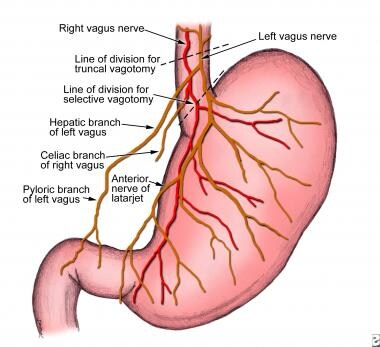
      • Vagotomy involves resection of the vagus nerve, which eliminates the autonomic stimulation of the parietal cells. Historically, a truncal vagotomy was performed; however, this led to gastric atony and subsequent stasis in as many as 20% of patients. Currently, selective vagotomies are the procedures of choice.
      • Selective vagotomy preserves the celiac and hepatic branches of the vagus nerve, thus decreasing the incidence of gastric atony. However, a gastric drainage procedure (eg, pyloroplasty) remains an essential component of this surgical approach. Highly selective vagotomy results in denervation of the parietal cells but preserves nerves supplying the pyloroantral region.
      • The Billroth I and Billroth II are the 2 types of truncal vagotomy and antrectomy. These surgical approaches carry a mortality rate of approximately 1% and are currently performed much less frequently.

Consultations

Surgical consultation is recommended for all patients with bleeding ulcers, especially those patients who are at high risk of significant bleeding. Such ulcers include those that are causing hemodynamic instability, those that are actively bleeding, and those that are showing a visible vessel on endoscopy.

Diet

A special diet is not indicated in patients with duodenal ulcer.


The goals of pharmacotherapy are to eradicate H pylori infection, to reduce morbidity, and to prevent complications.

Drug Category: Proton pump inhibitors

Inhibitors of the gastric H+/K+-ATPase (proton pump) enzyme system, which catalyzes the exchange of H+ and K+.

Drug NameOmeprazole (Prilosec)
DescriptionSuppresses gastric acid secretion by specifically inhibiting H+/K+-ATPase system at secretory surface of gastric parietal cells. Administer 30 min before sucralfate to prevent reduction in bioavailability.
Adult DoseH pylori eradication: 20 mg PO bid
Uncomplicated duodenal ulcer: 20 mg PO qd
Refractory duodenal ulcer: 40 mg PO qd
Pediatric DoseNot established
ContraindicationsDocumented hypersensitivity
InteractionsMay decrease effectiveness of itraconazole and ketoconazole; may increase toxicity of warfarin (increased plasma levels of warfarin observed only with high doses)
PregnancyC - Safety for use during pregnancy has not been established.
PrecautionsBioavailability may increase in elderly patients; adjust dose in hepatic impairment, half-life can increase up to 4-fold

Drug NamePantoprazole (Protonix, Pantoloc)
DescriptionSuppresses gastric acid secretion by specifically inhibiting H+/K+-ATPase system at secretory surface of gastric parietal cells. Indicated for <8-wk treatment of erosive esophagitis associated with GERD. May consider additional 8-wk course if ulcer does not heal. Safety and efficacy for maintenance therapy (eg, >16 wk) not established.
Adult Dose40 mg PO qd
Pediatric DoseNot established
ContraindicationsDocumented hypersensitivity
InteractionsMay decrease the effects of ketoconazole and iron salts
PregnancyB - Usually safe but benefits must outweigh the risks.
PrecautionsDecrease dose in hepatic impairment, half-life can increase 7- to 9-fold; no dose adjustment required in renal impairment

Drug NameLansoprazole (Prevacid)
DescriptionSuppresses gastric acid secretion by specifically inhibiting H+/K+-ATPase system at the secretory surface of gastric parietal cells. Used for <4 wk to treat and relieve symptoms of active duodenal ulcer.
Adult DoseH pylori eradication: 30 mg PO qd
Maintenance: 15 mg PO qd
Pediatric DoseNot established
ContraindicationsDocumented hypersensitivity
InteractionsMay decrease the effectiveness of ketoconazole and itraconazole; may increase theophylline clearance
PregnancyB - Usually safe but benefits must outweigh the risks.
PrecautionsNot to exceed 30 mg/d in liver impairment

Drug NameEsomeprazole magnesium (Nexium)
DescriptionInhibits gastric acid secretion by inhibiting H+/K+-ATPase system at secretory surface of gastric parietal cells.
Adult Dose20-40 mg PO qd for 4-8 wk
Pediatric DoseNot established
ContraindicationsDocumented hypersensitivity
InteractionsNone reported
PregnancyB - Usually safe but benefits must outweigh the risks.
PrecautionsSymptomatic relief with PPIs may mask symptoms of gastric malignancy

Drug Category: Antihistamine, H2 blocker

These agents are used in the short-term treatment of an active duodenal ulcer and long-term as prophylaxis.

Drug NameFamotidine (Pepcid AC, Pepcid)
DescriptionCompetitively inhibits histamine at H2 receptor of gastric parietal cells, reducing gastric acid secretion, gastric secretory volume, and hydrogen concentration.
Adult DoseInitial: 40 mg PO hs
Maintenance: 20 mg PO hs
Pediatric DoseNot established
ContraindicationsDocumented hypersensitivity
InteractionsMay decrease the effectiveness of ketoconazole and itraconazole
PregnancyB - Usually safe but benefits must outweigh the risks.
PrecautionsConsider adjusting dose or discontinuing treatment if renal function changes

Drug NameNizatidine (Axid)
DescriptionCompetitively inhibits histamine at H2 receptor of the gastric parietal cells, reducing gastric acid secretion, gastric secretory volume, and hydrogen concentration.
Adult DoseInitial: 300 mg PO hs or 150 mg bid
Maintenance: 150 mg PO qhs
Pediatric DoseNot established
ContraindicationsDocumented hypersensitivity
InteractionsNone reported
PregnancyB - Usually safe but benefits must outweigh the risks.
PrecautionsAdminister half dose if CrCl is 20-50 mL/min; administer 150 mg PO qod if CrCl is <20 mL/min

Drug NameRanitidine (Zantac)
DescriptionInhibits histamine stimulation of H2 receptor in gastric parietal cells, reducing gastric acid secretion, gastric secretory volume, and hydrogen concentration.
Administer 30 min before sucralfate to prevent decrease in bioavailability.
Adult Dose300 mg PO qhs or 150 mg PO bid
Pediatric Dose<8 years: Not established
>8 years: 150 mg PO bid
ContraindicationsDocumented hypersensitivity
InteractionsMay decrease the effectiveness of ketoconazole and itraconazole; may alter serum levels of ferrous sulfate, diazepam, nondepolarizing muscle relaxants, and oxaprozin
PregnancyB - Usually safe but benefits must outweigh the risks.
PrecautionsCaution in renal or liver impairment; administer half dose if CrCl is <10 mL/min

Drug NameRanitidine bismuth citrate (Tritec, Pylorid)
DescriptionCombination of ranitidine and bismuth citrate, compound with bactericidal effects against H pylori. Used in with clarithromycin because drugs act synergistically against H pylori.
Adult Dose400 mg PO bid for 14 d for H pylori eradication; coadminister with clarithromycin 500 mg PO for 14 d
Pediatric DoseNot established
ContraindicationsDocumented hypersensitivity; porphyria
InteractionsMay decrease effectiveness of ketoconazole and itraconazole; may alter serum levels of ferrous sulfate, diazepam, nondepolarizing muscle relaxants, and oxaprozin; coadministration with anticoagulants may increase risk of bleeding; may increase toxicity of aspirin and hypoglycemics; decreases effect of tetracyclines and uricosurics
PregnancyC - Safety for use during pregnancy has not been established.
PrecautionsDarkening stool reported in 19% of patients; caution in renal or liver impairment; not recommended if CrCl <25 mL/min

Drug NameCimetidine (Tagamet, Peptol)
DescriptionInhibits histamine at H2 receptors of gastric parietal cells, reducing gastric acid secretion, gastric secretory volume, and hydrogen concentration.
Adult Dose800 mg PO hs or 600 mg PO bid or 300 mg PO qid; not to exceed 1200 mg/d
Pediatric DoseNeonate: 5-10 mg/kg/d PO/IV/IM divided q8-12h
Infant: 10-20 mg/kg/d PO/IV/IM divided q6-12h
>1 year: 20 mg/kg/d PO divided q4-6h
1-12 years: 20-25 mg/kg/d PO divided q4-6h
ContraindicationsDocumented hypersensitivity
InteractionsMay increase blood levels of theophylline, warfarin, tricyclic antidepressants, triamterene, phenytoin, quinidine, propranolol, metronidazole, procainamide, and lidocaine
PregnancyB - Usually safe but benefits must outweigh the risks.
PrecautionsConfusional states in elderly patients; may cause impotence and gynecomastia in young men; may increase levels of many drugs; adjust dose or discontinue if renal function changes

Drug Category: Antimicrobials

These drugs exert an antibacterial effect on H pylori.

Drug NameAmoxicillin (Amoxil, Trimox)
DescriptionSemisynthetic penicillin antibiotic; interferes with synthesis of cell wall mucopeptides during active multiplication, resulting in bactericidal activity against susceptible bacteria.
Adult Dose1000 mg PO bid for H pylori eradication
Pediatric Dose<20 kg: 20 mg/kg/d PO q8h
>20 kg: 50 mg/kg/d PO q8h
ContraindicationsDocumented hypersensitivity
InteractionsMay increase serum levels with probenecid; reduces efficacy of oral contraceptives
PregnancyB - Usually safe but benefits must outweigh the risks.
PrecautionsAdjust dose in renal impairment; increase interval from q8h to q12h if CrCl is 10-50 mL/min; increase interval to q12-24h if CrCl is <10 mL/min

Drug NameMetronidazole (Flagyl)
DescriptionImidazole ring-based antibiotic active against anaerobic bacteria and protozoa. Used in combination with other antimicrobial agents.
Adult Dose500 mg PO bid for H pylori eradication
Pediatric DoseNot established
ContraindicationsDocumented hypersensitivity
InteractionsCimetidine may increase toxicity; may increase effects of anticoagulants; may increase toxicity of lithium and phenytoin; disulfiramlike reaction may occur with orally ingested ethanol
PregnancyB - Usually safe but benefits must outweigh the risks.
PrecautionsDecrease dose in hepatic disease; monitor for seizures and peripheral neuropathy; transient eosinophilia and leukopenia observed

Drug NameTetracycline (Sumycin)
DescriptionSemisynthetic antibacterial agent derived from Streptomyces cultures. Effective against gram-positive and gram-negative organisms, as well as mycoplasmal, chlamydial, and rickettsial infections. Inhibits bacterial protein synthesis by binding with 30S and, possibly, 50S ribosomal subunit(s).
Adult Dose500 mg PO divided bid/qid
Pediatric Dose<8 years: Not recommended
>8 years: 25 mg/kg/d PO divided bid/qid
ContraindicationsDocumented hypersensitivity; severe renal or hepatic dysfunction
InteractionsBioavailability decreases with antacids containing aluminum, calcium, magnesium, iron, or bismuth subsalicylate; can decrease effects of oral contraceptives, causing breakthrough bleeding and increased risk of pregnancy; can increase effects of anticoagulants
PregnancyD - Unsafe in pregnancy
PrecautionsPhotosensitivity may occur with prolonged exposure to sunlight or tanning equipment; reduce dose in renal impairment; consider serum determinations of drug levels during prolonged therapy; use during tooth development (last half of pregnancy through age 8 y) can cause permanent discoloration of teeth; Fanconilike syndrome (ie, nausea, vomiting, polyuria, hypophosphatemia, glycosuria, hypokalemia, acidosis) may occur with outdated tetracyclines; oral tablets may cause esophagitis

Drug NameClarithromycin (Biaxin)
DescriptionMacrolide antibiotic that inhibits bacterial growth, possibly by blocking dissociation of peptidyl tRNA from ribosomes, arresting RNA-dependent protein synthesis.
Adult Dose500 mg PO bid for 14 d for H pylori eradication
Pediatric DoseNot established
ContraindicationsDocumented hypersensitivity
InteractionsToxicity increases with coadministration of fluconazole, astemizole, and pimozide; effects may decrease and GI adverse effects may increase with coadministration of rifabutin or rifampin; may increase toxicity of anticoagulants, cyclosporine, tacrolimus, digoxin, omeprazole, carbamazepine, ergot alkaloids, triazolam, and HMG CoA-reductase inhibitors; cardiac arrhythmias may occur with coadministration of cisapride; plasma levels of certain benzodiazepines may increase, prolonging CNS depression; arrhythmias and increase in QTc intervals occur with disopyramide; coadministration with omeprazole may increase plasma levels of both agents; concurrent administration with astemizole (recalled from US market), terfenadine (recalled from US market), cisapride, or pimozide has been associated with prolonged QT intervals and predisposition to developing VT
PregnancyC - Safety for use during pregnancy has not been established.
PrecautionsCoadministration with ranitidine or bismuth citrate is not recommended with CrCl <25 mL/min; administer half dose or increase dosing interval if CrCl <30 mL/min; diarrhea may be sign of pseudomembranous colitis; superinfections may occur with prolonged or repeated antibiotic therapies

Drug Category: Antidiarrheal agents

The agents may have antisecretory and antimicrobial action.

Drug NameBismuth subsalicylate (Pepto-Bismol, Pink Bismuth, Bismatrol, Devrom)
DescriptionUsed in combination with antibiotics and H2RAs or PPIs to treat active duodenal ulcers associated with H pylori.
Adult Dose525 mg PO qid
Pediatric DoseNot established
ContraindicationsDocumented hypersensitivity
InteractionsCoadministration with anticoagulants may increase risk of bleeding; may increase toxicity of aspirin and hypoglycemics; decreases effects of tetracyclines and uricosurics
PregnancyC - Safety for use during pregnancy has not been established.
PrecautionsCategory D in 3rd trimester of pregnancy; may cause temporary and harmless darkening of tongue and/or black stool; alcohol consumption may cause abdominal cramps, nausea, and vomiting


Further Inpatient Care

  • In treatment of bleeding duodenal ulcer with intravenous PPI therapy, the treatment is generally continued for 72 hours unless persistent bleeding requires longer duration of therapy. If this occurs, a second endoscopy is indicated and continued bleeding would mandate surgical intervention.
  • If a patient is infected with H pylori, initiate eradication therapy early.

Further Outpatient Care

  • Follow-up endoscopy to assess healing is generally not indicated in the setting of a duodenal ulcer.

In/Out Patient Meds

  • Patients with healing duodenal ulcer generally require maintenance PPI therapy for as long 6-8 weeks.
  • Patients with refractory ulcers may continue receiving once-daily PPI therapy indefinitely. In this setting, if H pylori is absent, consider a secondary cause of duodenal ulcer, such as ZES.

Deterrence/Prevention

  • The most important preventive measure is complete avoidance of NSAIDs. If NSAIDs are required, use of a COX-2 selective inhibitor may help prevent gastric and duodenal mucosal ulceration. An alternate approach is use of a traditional NSAID with a once-daily PPI.
  • In certain high-risk patients, such as those taking NSAIDs and steroids or receiving chemotherapy, prophylactic use of PPIs may help prevent ulcer formation.

Complications

  • Obstruction
  • Perforation
  • Penetration
  • Hemorrhage

Prognosis

  • Patients with a duodenal ulcer have an excellent prognosis, provided that proper management is initiated.
  • Accepted H pylori eradication regimens generally result in cure of the infection in more than 85% of cases.
  • Uncomplicated ulcers generally heal completely with adequate acid suppression.

Patient Education

  • Patient education involves discussion regarding the avoidance of NSAIDs if possible. Moreover, avoidance of any food items that seem to trigger symptoms is advisable.
  • Increase patient awareness of the significance and appearance of melena stool. Patients should be instructed to alert their physicians immediately if melena is noted.
  • Although the evidence that smoking is linked to duodenal ulcer is weak, abstinence from tobacco products should be recommended to patients.
  • For excellent patient education resources, visit eMedicine's Esophagus, Stomach, and Intestine Center. Also, see eMedicine's patient education article Peptic Ulcers.


Medical/Legal Pitfalls

  • Failure to discuss risks of endoscopy and to obtain proper informed consent
  • Failure to assess the presence of H pylori with an accepted diagnostic test in a patient with known duodenal ulcer
  • Failure to advise against NSAID use in a patient with duodenal ulcer


Media file 1:  Duodenal ulcer. An elderly patient presents with melena and hypotension.
Click to see larger pictureClick to see detailView Full Size Image
Media type:  Photo

Media file 2:  Duodenal ulcer. A 35-year-old woman presents with tarry stools and a hemoglobin level of 75 g/L.
Click to see larger pictureClick to see detailView Full Size Image
Media type:  Photo

Media file 3:  Duodenal ulcer. A 65-year-old man with osteoarthritis presents with hematemesis and melena stools. The patient takes naproxen on a daily basis.
Click to see larger pictureClick to see detailView Full Size Image
Media type:  Photo


  • Aldoori WH, Giovannucci EL, Stampfer MJ, et al. A prospective study of alcohol, smoking, caffeine, and the risk of duodenal ulcer in men. Epidemiology. Jul 1997;8(4):420-4. [Medline].
  • Bardou M, Youssef M, Toubouti Y. New endoscopic therapies decrease both re-bleeding and mortality in high risk patients with acute peptic ulcer bleeding: a series of meta-analyses. Gastroenterology. 2003;123:A239.
  • Bardou M, Toubouti Y, Benhaberou-Brun D. High dose proton pump inhibition decreases both re-bleeding and mortality in high risk patients with acute peptic ulcer bleeding. A series of meta-analyses. Gastroenterology. 2003;123:A675.
  • Barkun A, Bardou M, Marshall JK, et al. Consensus recommendations for managing patients with nonvariceal upper gastrointestinal bleeding. Ann Intern Med. Nov 18 2003;139(10):843-57. [Medline].
  • Berstad A, Holm HA, Kittang E. Experience with antipeptic agents. Scand J Gastroenterol Suppl. 1979;55:121-3. [Medline].
  • Berstad A. Does profound acid inhibition improve haemostasis in peptic ulcer bleeding?. Scand J Gastroenterol. Apr 1997;32(4):396-8. [Medline].
  • Brunner G, Luna P, Hartmann M, Wurst W. Optimizing the intragastric pH as a supportive therapy in upper GI bleeding. Yale J Biol Med. May-Jun 1996;69(3):225-31. [Medline].
  • Chan FK, Hung LC, Suen BY, et al. Celecoxib versus diclofenac and omeprazole in reducing the risk of recurrent ulcer bleeding in patients with arthritis. N Engl J Med. Dec 26 2002;347(26):2104-10. [Medline].
  • Choudari CP, Elton RA, Palmer KR. Age-related mortality in patients treated endoscopically for bleeding peptic ulcer. Gastrointest Endosc. Jun 1995;41(6):557-60. [Medline].
  • Ciociola AA, McSorley DJ, Turner K. Helicobacter pylori infection rates in duodenal ulcer patients in the United States may be lower than previously estimated. Am J Gastroenterol. Jul 1999;94(7):1834-40.
  • Cipolletta L, Bianco MA, Rotondano G, et al. Prospective comparison of argon plasma coagulator and heater probe in the endoscopic treatment of major peptic ulcer bleeding. Gastrointest Endosc. Aug 1998;48(2):191-5. [Medline].
  • Ford AC, Delaney BC, Forman D. Eradication therapy for peptic ulcer disease in Helicobacter pylori positive patients. Cochrane Database Syst Rev. 2006;CD003840.
  • Friedman L, Peterson W. Peptic ulcer and related disorders. In: Braunwald E, Fauci AS, Kasper DL, eds. Harrison's Principles of Internal Medicine. 14th ed. New York: McGraw-Hill;. 1998: 1596-616.
  • Gisbert JP, Blanco M, Mateos JM, et al. H. pylori-negative duodenal ulcer prevalence and causes in 774 patients. Dig Dis Sci. Nov 1999;44(11):2295-302. [Medline].
  • Gisbert JP, Pajares JM. Systematic review and meta-analysis: is 1-week proton pump inhibitor-based triple therapy sufficient to heal peptic ulcer?. Aliment Pharmacol Ther. Apr 1 2005;21(7):795-804. [Medline].
  • Hawkey C, Laine L, Simon T, et al. Comparison of the effect of rofecoxib (a cyclooxygenase 2 inhibitor), ibuprofen, and placebo on the gastroduodenal mucosa of patients with osteoarthritis: a randomized, double-blind, placebo-controlled trial. The Rofecoxib Osteoarthritis Endoscopy Multin. Arthritis Rheum. Feb 2000;43(2):370-7. [Medline].
  • Hawkey C, Laine L, Simon T. Comparison of the effect of rofecoxib (a cyclooxygenase 2 inhibitor), ibuprofen, and placebo on the gastroduodenal mucosa of patients with osteoarthritis: a randomized, double-blind, placebo-controlled trial. Rofecoxib Osteoarthritis Endoscopy Multinational Study Group. Arthritis Rheum. Feb 2000;43(2):370-7. [Medline].
  • Howden CW, Hunt RH. Guidelines for the management of Helicobacter pylori infection. Ad Hoc Committee on Practice Parameters of the American College of Gastroenterology. Am J Gastroenterol. Dec 1998;93(12):2330-8. [Medline].
  • Kemppainen H, Raiha I, Sourander L. Clinical presentation of peptic ulcer in the elderly. Gerontology. 1997;43(5):283-8. [Medline].
  • Kikkawa A, Iwakiri R, Ootani H. Prevention of the rehaemorrhage of bleeding peptic ulcers: effects of Helicobacter pylori eradication and acid suppression. Aliment Pharmacol Ther. Jun 2005;21 Suppl 2:79-84.
  • Kuyvenhoven JP, Veenendaal RA, Vandenbroucke JP. Peptic ulcer bleeding: interaction between non-steroidal anti-inflammatory drugs, Helicobacter pylori infection, and the ABO blood group system. Scand J Gastroenterol. Nov 1999;34(11):1082-6. [Medline].
  • Lai KC, Lam SK, Chu KM, et al. Lansoprazole reduces ulcer relapse after eradication of Helicobacter pylori in nonsteroidal anti-inflammatory drug users--a randomized trial. Aliment Pharmacol Ther. Oct 15 2003;18(8):829-36.
  • Lai KC, Lam SK, Chu KM, et al. Lansoprazole for the prevention of recurrences of ulcer complications from long-term low-dose aspirin use. N Engl J Med. Jun 27 2002;346(26):2033-8. [Medline].
  • Lau JY, Sung JJ, Lee KK, et al. Effect of intravenous omeprazole on recurrent bleeding after endoscopic treatment of bleeding peptic ulcers. N Engl J Med. Aug 3 2000;343(5):310-6. [Medline].
  • Leoci C, Ierardi E, Chiloiro M, et al. Incidence and risk factors of duodenal ulcer. A retrospective cohort study. J Clin Gastroenterol. Mar 1995;20(2):104-9. [Medline].
  • Levenstein S, Kaplan GA, Smith M. Sociodemographic characteristics, life stressors, and peptic ulcer. A prospective study. J Clin Gastroenterol. Oct 1995;21(3):185-92. [Medline].
  • Lin HJ, Lo WC, Lee FY, et al. A prospective randomized comparative trial showing that omeprazole prevents rebleeding in patients with bleeding peptic ulcer after successful endoscopic therapy. Arch Intern Med. Jan 12 1998;158(1):54-8. [Medline].
  • Lo CC, Hsu PI, Lo GH, et al. Comparison of hemostatic efficacy for epinephrine injection alone and injection combined with hemoclip therapy in treating high-risk bleeding ulcers. Gastrointest Endosc. May 2006;63(6):767-73.
  • Maiden LP, Harris AW. Lansoprazole for the prevention of recurrences of ulcer complications from long-term low-dose aspirin. N Engl J Med. Nov 14 2002;347(20):1623-4; author reply 1623-4.
  • Merki HS, Wilder-Smith CH. Do continuous infusions of omeprazole and ranitidine retain their effect with prolonged dosing?. Gastroenterology. Jan 1994;106(1):60-4. [Medline].
  • Metz DC, Pratha V, Martin P, et al. Oral and intravenous dosage forms of pantoprazole are equivalent in their ability to suppress gastric acid secretion in patients with gastroesophageal reflux disease. Am J Gastroenterol. Mar 2000;95(3):626-33. [Medline].
  • Moshal MG, Spitaels JM, Khan F, et al. Factors affecting duodenal ulcer healing. Four double-blind trials in 193 patients. S Afr Med J. Feb 6 1982;61(6):202-6. [Medline].
  • Netzer P, Gaia C, Sandoz M, et al. Effect of repeated injection and continuous infusion of omeprazole and ranitidine on intragastric pH over 72 hours. Am J Gastroenterol. Feb 1999;94(2):351-7. [Medline].
  • Schaffalitzky de Muckadell OB, Havelund T, Harling H, et al. Effect of omeprazole on the outcome of endoscopically treated bleeding peptic ulcers. Randomized double-blind placebo-controlled multicentre study. Scand J Gastroenterol. Apr 1997;32(4):320-7. [Medline]