Practice Essentials
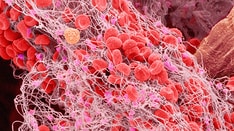
Disseminated intravascular coagulation (DIC) is characterized by systemic activation of blood coagulation, which results in generation and deposition of fibrin, leading to microvascular thrombi in various organs and contributing to multiple organ dysfunction syndrome (MODS). [1, 2] Consumption of clotting factors and platelets in DIC can result in life-threatening hemorrhage. [3]
Derangement of the fibrinolytic system further contributes to intravascular clot formation, but in some cases, accelerated fibrinolysis may cause severe bleeding. Hence, a patient with DIC can present with a simultaneously occurring thrombotic and bleeding problem, which obviously complicates the proper treatment.
The subcommittee on DIC of the International Society on Thrombosis and Haemostasis has suggested the following definition for DIC: “An acquired syndrome characterized by the intravascular activation of coagulation with loss of localization arising from different causes. It can originate from and cause damage to the microvasculature, which if sufficiently severe, can produce organ dysfunction.” [4]
DIC is estimated to be present in as many as 1% of hospitalized patients. [5] DIC is not itself a specific illness; rather, it is a complication or an effect of the progression of other illnesses. It is always secondary to an underlying disorder and is associated with a number of clinical conditions, generally involving activation of systemic inflammation. Such conditions include the following [6] :
-
Trauma (neurotrauma)
-
Organ destruction (eg, pancreatitis)
-
Malignancy (solid and lymphoproliferative/myeloproliferative malignancies)
-
Severe transfusion reactions
-
Obstetric complications – Amniotic fluid embolism; abruptio placentae; hemolysis, elevated liver enzymes, low platelets (HELLP) syndrome; eclampsia
-
Retained dead fetus syndrome
-
Vascular abnormalities - Kasabach-Merritt syndrome and large vascular aneurysms
-
Severe hepatic failure
-
Severe toxic reactions - Envenomations, transfusion reactions, and transplant rejection
-
Heat stroke and hyperthermia
-
Catastrophic antiphospholipid syndrome (rare) [11]
DIC is most commonly observed in severe sepsis and septic shock. Indeed, the development and severity of DIC correlate with mortality in severe sepsis. [12, 13] Although bacteremia, including both gram-positive and gram-negative organisms, is most commonly associated with DIC, other organisms (eg, viruses, fungi, and parasites) may also cause DIC.
Trauma, especially neurotrauma, is also frequently associated with DIC. DIC is more frequently observed in trauma patients with the systemic inflammatory response syndrome (SIRS). [14] Evidence indicates that inflammatory cytokines play a central role in DIC in both trauma patients and septic patients. In fact, the systemic cytokine profiles in septic patients and trauma patients are nearly identical. [15]
The symptoms of DIC are often those of the underlying inciting condition (see Etiology). In addition, symptoms of thrombosis, embolism, organ dysfunction, or bleeding may be present.
Pre-DIC
The presence of hemostatic abnormalities before the onset of full-blown DIC is termed pre-DIC. Although there are no established diagnostic criteria for this state, Chornenki et al found that in septic patients, the combination of an increased international normalized ratio (INR) and decreased levels of protein C and antithrombin may identify pre-DIC. [16] Early identification of pre-DIC and treatment with heparin may reduce mortality and duration of hospitalization, as heparin has combined antithrombin and anti-inflammatory effects. [17]
Acute versus chronic DIC
DIC exists in both acute and chronic forms. Acute DIC develops when sudden exposure of blood to procoagulants (eg, tissue factor [TF], or tissue thromboplastin) generates intravascular coagulation. Compensatory hemostatic mechanisms are quickly overwhelmed, and, as a consequence, a severe consumptive coagulopathy leading to hemorrhage develops. Abnormalities of blood coagulation parameters are readily identified, and organ failure frequently results.
In contrast, chronic DIC reflects a compensated state that develops when blood is continuously or intermittently exposed to small amounts of TF. Compensatory mechanisms in the liver and bone marrow are not overwhelmed, and there may be little obvious clinical or laboratory indication of the presence of DIC. Chronic DIC is more frequently observed in patients with solid tumors and in those with large aortic aneurysms. [18]

Pathophysiology
The hematologic derangements seen in DIC result from the following 4 simultaneously occurring mechanisms [19, 20] :
-
Tissue factor (TF)–mediated thrombin generation
-
Dysfunctional physiologic anticoagulant mechanisms (eg, depression of antithrombin and protein C system), which cannot adequately balance this thrombin generation
-
Impaired fibrin removal due to depression of the fibrinolytic system – This is mainly caused by high circulating levels of plasminogen activator inhibitor type 1 (PAI-1); however, in exceptional forms of DIC, fibrinolytic activity may be increased and contribute to bleeding
-
Inflammatory activation
Thrombin generation and tissue factor
Thrombin generation is detectable at 3-5 hours after the occurrence of bacteremia or endotoxemia. Ample evidence exists for a pivotal role of the TF/factor VIIa system in the initiation of thrombin generation. [21, 22, 23]
Exposure to TF in the circulation occurs via endothelial disruption, tissue damage, or inflammatory or tumor cell expression of procoagulant molecules (including TF). TF activates coagulation via the extrinsic pathway involving factor VIIa. The TF-VIIa complex activates thrombin, which cleaves fibrinogen to fibrin while simultaneously causing platelet aggregation. The intrinsic (or contact) pathway may also be activated in DIC, though contributing more to hemodynamic instability and hypotension than to activation of clotting. [24]
Thrombin produced by the TF/factor VII pathway amplifies both clotting and inflammation through the following activities [25] :
-
Platelet activation, enhancing aggregation and augmenting platelet functions in coagulation
-
Activation of factors VIII, V, and XI, yielding further thrombin generation
-
Enhanced activation of proinflammatory factors via protease-activated receptors (PARs)
-
Activation of factor XIII to factor XIIIa, which augments production of fibrin clots from fibrinogen
-
Activation of thrombin-activatable fibrinolysis inhibitor (TAFI), making clots resistant to fibrinolysis; and
-
Enhanced expression of adhesion molecules (eg, L-selectin), thereby promoting the inflammatory effects of white blood cells (WBCs)
Factor VIIa has been implicated as the central mediator of intravascular coagulation in sepsis. Blocking the factor VIIa pathway in sepsis has been shown to prevent the development of DIC, whereas interrupting alternative pathways did not demonstrate any effect on clotting. [26, 27]
Abrogation of the TF/factor VII(a) pathway by monoclonal antibodies specifically directed against TF or factor VIIa activity completely inhibited of thrombin generation in endotoxin-challenged chimpanzees and prevented the occurrence of DIC and mortality in baboons that were infused with Escherichia coli. Indeed, in most DIC patients, TF antigen is detectable in plasma. Hence, activation of coagulation in DIC is primarily TF-driven; the intrinsic pathway of coagulation appears not to play an important role.
The actual source of the TF has not been established with certainty. TF may be expressed on mononuclear cells in vitro, and its expression on circulating monocytes of patients with severe infection has been demonstrated. In addition, it may be expressed on endothelial cells. Injured endothelial cells express TF, whereas healthy ones do not. However, the importance of endothelial cell TF expression in vivo and its role in the pathogenesis of DIC remain to be determined.
Another source of TF may be polymorphonuclear leukocytes (PMNs) and other similar cell types, though it is unlikely that these cells actually synthesize TF in substantial quantities. On the basis of the observation that TF has been transferred from leukocytes to activated platelets on a collagen surface in an ex-vivo perfusion system, it is hypothesized that this “bloodborne” TF is transferred between cells through microparticles derived from activated mononuclear cells.
Impaired coagulation inhibitor systems
Thrombin generation is usually tightly regulated by multiple hemostatic mechanisms. However, once intravascular coagulation commences, compensatory mechanisms are overwhelmed or incapacitated. Impaired functioning of various natural regulating pathways of coagulation activation may amplify further thrombin generation and contribute to fibrin formation.
Plasma levels of the most important inhibitor of thrombin, antithrombin, are usually markedly reduced in patients with DIC. This reduction is caused by the following:
-
Antithrombin is continuously consumed by ongoing activation of coagulation
-
Elastase produced by activated neutrophils degrades antithrombin as well as other proteins
-
Further antithrombin is lost to capillary leakage
Low antithrombin levels in DIC are associated with increased mortality, particularly in patients with sepsis. [23] That low levels of antithrombin precede the clinical manifestation of sepsis in prospective studies suggests that antithrombin is indeed involved in the pathogenesis of this disease and associated organ dysfunction. [29]
In addition to the decrease in antithrombin, significant depression of the protein C system may occur. Protein C, along with protein S, also serves as a major anticoagulant compensatory mechanism. Under normal conditions, protein C is activated by thrombin when complexed on the endothelial cell surface with thrombomodulin. [18] Activated protein C combats coagulation via proteolytic cleavage of factors Va and VIIIa and proteolyzes PAR1 when bound to the endothelial cell protein C receptor (EPCR).
Impaired functioning of the protein C pathway is mainly due to down-regulation of thrombomodulin expression or its inactivation by cellular reactive oxygen species on endothelial cells by proinflammatory cytokines such as tumor necrosis factor-alpha (TNF-α) and interleukin (IL)–1b. [30] This downregulation has been confirmed in studies in patients with meningococcal sepsis.
In combination with low levels of zymogen protein C (due to mechanisms similar to those described for antithrombin), this process results in diminished protein C activation, which will enhance the procoagulant state. Protein C levels are further reduced via consumption, extravascular leakage, renal loss, and reduced hepatic production and by a reduction in circulating free protein S. The availability of protein S to serve as a cofactor for activated protein C is regulated by the degree it is bound to the complement protein C4B-binding protein.
Animal experiments involving severe inflammation-induced coagulation activation convincingly show that compromising the protein C system results in increased morbidity and mortality, whereas restoring adequate functioning of activated protein C improves survival and organ failure. Experiments show that mice with a 1-allele targeted deletion of the protein C gene (resulting in heterozygous protein C deficiency) have more severe DIC and organ dysfunction and a higher mortality than wild-type littermates.
Besides being implicated in the physiologic regulation of thrombin formation, activated protein C probably also has important inflammation-modulating effects, which may be of relevance in the pathogenesis of DIC.
TF pathway inhibitor (TFPI) is another anticoagulant mechanism that is disabled in DIC. TFPI reversibly inhibits factor Xa and thrombin (indirectly) and has the ability to inhibit the TF-VIIa complex. Although levels of TFPI are normal in patients with sepsis, a relative insufficiency in DIC is evident. TFPI depletion in animal models predisposes to DIC, and TFPI blocks the procoagulant effect of endotoxin in humans. [31] The role of TFPI in the pathogenesis of DIC has not been fully clarified.
The experimental finding that administration of recombinant TFPI blocks inflammation-induced thrombin generation in humans, along with the observation that pharmacologic doses of TFPI are capable of preventing mortality during systemic infection and inflammation, suggests that high concentrations of TFPI are capable of modulating TF-mediated coagulation. Presumably, however, the endogenous concentration of TFPI is insufficiently capable of regulating coagulation activation and the downstream consequences during systemic inflammation.
Defective fibrinolysis
The intravascular fibrin produced by thrombin is normally eliminated via a process termed fibrinolysis. Experimental models indicate that at the time of maximal activation of coagulation, the fibrinolytic system is largely shut off.
Experimental bacteremia and endotoxemia result in a rapid increase in fibrinolytic activity, most probably caused by release of plasminogen activators from endothelial cells. However, this profibrinolytic response is almost immediately followed by suppression of fibrinolytic activity due to a sustained increase in plasma levels of PAI-1 [32] ; these effects are mediated by TNF-2 and IL-1. [33] High PAI-1 levels precede DIC and predict poor outcomes. [34]
Notably, strategies that can block endotoxin-induced thrombin generation completely, such as anti-TF antibodies or recombinant hirudin (r-hirudin), have no significant effect on activation and subsequent inhibition of fibrinolysis, which suggests that these 2 processes are independently regulated.
In a study of 69 DIC patients (31 with multiorgan failure), higher levels of tissue plasminogen activator (t-PA) antigen and PAI-1 with depressed levels of α2 -antiplasmin were observed in patients with DIC and multiorgan failure than in DIC patients without multiorgan failure. [35] This finding supports the conclusion that fibrinolysis is a mechanism vital to the prevention of multiorgan failure.
Playing a key role in the process of coagulation and hemostasis is the vascular endothelium, which is responsible for the production of von Willebrand factor (vWF). vWF mediates the adhesion between the platelet surface receptors and the vessel wall and is increased in cases of thrombotic microangiopathy related to DIC. Impaired control of endothelial cell thrombomodulin expression may result in facilitated thrombin generation, which subsequently results in increased platelet activation and the conversion of fibrinogen to fibrin. [36]
Rare cases of DIC are characterized by a severe hyperfibrinolytic state on top of an activated coagulation system. Examples of such situations are the DIC that occurs as a complication of acute myeloid leukemia M-3 (in the French-American-British [FAB] classification) or the DIC that may occur secondary to some forms of adenocarcinoma. Although hyperfibrinolysis predominates in this situation, disseminated thrombosis is still found in a considerable number of patients at autopsy. Clinically, however, these patients suffer from severe bleeding.
In general, patients with DIC should not be treated with antifibrinolytic agents, because this may increase the fibrinolytic deficit and may result in increased thrombosis.
Inflammatory activation
Inflammatory and coagulation pathways interact in substantial ways. It is clear that there is cross-communication between the 2 systems, whereby inflammation gives rise to activation of the clotting cascade and the resultant coagulation stimulates more vigorous inflammatory activity. There are a number of different triggers that can cause a hemostatic imbalance, giving rise to a hypercoagulable state.
Many of the activated coagulation factors produced in DIC contribute to the propagation of inflammation by stimulating endothelial cell release of proinflammatory cytokines. [37] Factor Xa, thrombin, and the TF-VIIa complex have each been demonstrated to elicit proinflammatory action. Furthermore, given the anti-inflammatory action of activated protein C and antithrombin, depression of these anticoagulants in DIC contributes to further dysregulation of inflammation. [6, 38, 39]
Etiology
Several disease states may lead to the development of DIC (see Tables 1 and 2 below), generally via one of the following two pathways:
-
A systemic inflammatory response, leading to activation of the cytokine network and subsequent activation of coagulation (eg, in sepsis or major trauma)
-
Release or exposure of procoagulant material into the bloodstream (eg, in cancer, crush brain injury, or in obstetric cases)
In some situations (eg, major trauma or severe necrotizing pancreatitis), both pathways may be present.
Table 1. Causes of Acute (Hemorrhagic) Disseminated Intravascular Coagulation (Open Table in a new window)
Type |
Cause |
Infectious |
Bacterial (eg, gram-negative sepsis, gram-positive infections, rickettsial) Viral (eg, HIV, cytomegalovirus [CMV], varicella-zoster virus [VZV], and hepatitis virus) Fungal (eg, Histoplasma) Parasitic (eg, malaria) |
Malignancy |
Hematologic (eg, acute myelocytic leukemia) Metastatic (eg, mucin-secreting adenocarcinoma) |
Obstetric |
Amniotic fluid embolism Abruptio placentae Acute peripartum hemorrhage Preeclampsia/eclampsia/hemolysis, elevated liver enzymes, and low platelet count (HELLP) syndrome Retained stillbirth Septic abortion and intrauterine infection Acute fatty liver of pregnancy [40] |
Trauma |
Burns Motor vehicle accidents Snake envenomation |
Transfusion |
Hemolytic reactions Transfusion |
Other |
Liver disease/acute hepatic failure* Prosthetic devices Shunts (Denver or LeVeen) Ventricular assist devices |
*Some do not classify this as DIC; rather, it is liver disease with reduced blood coagulation factor synthesis and reduced clearance of activate products of coagulation. |
|
Table 2. Causes of Chronic Disseminated Intravascular Coagulation (Open Table in a new window)
Type |
Cause |
Malignancies |
Solid tumors Leukemia |
Obstetric |
Retained dead fetus syndrome Retained products of conception |
Hematologic |
Myeloproliferative syndromes |
Vascular |
Rheumatoid arthritis Raynaud disease |
Cardiovascular |
Myocardial infarction |
Inflammatory |
Ulcerative colitis Crohn disease Sarcoidosis |
Localized DIC |
Aortic aneurysms Giant hemangioma (Kasabach-Merritt syndrome) Acute renal allograft rejection |
Bacterial infection (in particular, bloodstream infection [BSI]) is commonly associated with DIC. There is no difference in the incidence of DIC between patients with gram-negative sepsis and those with gram-positive sepsis. Systemic infections with other microorganisms, such as viruses and parasites, may lead to DIC as well.
Factors involved in the development of DIC in patients with infections may be specific cell membrane components of the microorganism (lipopolysaccharide or endotoxin) or bacterial exotoxins (eg, staphylococcal alpha toxin). These components cause a generalized inflammatory response, characterized by the systemic occurrence of proinflammatory cytokines.
Severe trauma is another clinical condition frequently associated with DIC. A combination of mechanisms—including release of tissue material (eg, tissue factor [thromboplastin], fat or phospholipids) into the circulation, hemolysis, and endothelial damage—may contribute to systemic activation of coagulation. In addition, solid evidence indicates that cytokines also play a pivotal role in the occurrence of DIC in trauma patients. In fact, systemic cytokine patterns have been shown to be virtually identical in trauma patients and septic patients.
Both solid tumors and hematologic malignancies may be complicated by DIC. The mechanism by which coagulation is deranged in this situation is poorly understood. Solid tumor cells can express different procoagulant molecules, including TF and a cancer procoagulant. Cancer procoagulant is found in extracts of neoplastic cells and in the plasma of patients with solid tumors. As noted, some tumors are associated with a form of DIC that is characterized by severe hyperfibrinolysis on top of an activated coagulation system.
Acute DIC occurs in obstetric calamities such as placental abruption (abruptio placentae) and amniotic fluid emboli. Amniotic fluid has been shown to be able to activate coagulation in vitro, and the degree of placental separation correlates with the extent of the DIC, suggesting that leakage of thromboplastinlike material from the placental system is responsible for the occurrence of DIC.
Although the coagulation system may be activated in patients with preeclampsia and HELLP (hemolysis, elevated liver enzymes, and low platelet count) syndrome, clinically significant DIC occurs in only a small percentage of patients, usually in association with secondary complications.
Vascular disorders, such as large aortic aneurysms or giant hemangiomas (Kasabach-Merritt syndrome), may result in local activation of coagulation. Activated coagulation factors can ultimately “overflow” to the systemic circulation and cause DIC, but systemic depletion of coagulation factors and platelets as a result of local consumption is a more common scenario.
DIC is a possible adverse effect of quinine administered as an antimalarial medication. A case of DIC following ingestion of large quantities of tonic water containing quinine has also been reported. [41]
Epidemiology and Prognosis
DIC may occur in 30-50% of patients with sepsis, [42] and it develops in an estimated 1% of all hospitalized patients. [5] DIC occurs at all ages and in all races, and no particular sex predisposition has been noted.
The prognosis of patients with DIC depends on the severity of the coagulopathy and on the underlying condition that led to DIC. Assigning numerical figures to DIC-specific morbidity and mortality is difficult. The following are examples of mortality figures for diseases complicated by DIC:
-
Idiopathic purpura fulminans associated with DIC has a mortality of 18%
-
Septic abortion with clostridial infection and shock associated with severe DIC has a mortality of 50%
A retrospective single-center Korean study of women with primary post-partum hemorrhage who presented to the emergency department found that 57 (22.4%) of the 255 patients had overt DIC. Of patients with DIC, 96.5% experienced major adverse events. [43]
DIC criteria based on the Japanese Association for Acute Medicine DIC criteria with the addition of the hemostatic endothelial molecular markers protein C activity and plasminogen activator inhibitor 1 had a sensitivity of 84.6% and a specificity of 80.3% for predicting mortality in a study of 79 patients with severe sepsis or septic shock. Using these criteria, DIC-positive patients also had significantly higher disease severity, [44]
In general, if the underlying condition is self-limited or can be appropriately handled, DIC will disappear, and the coagulation status will normalize. A patient with acute hemorrhagic DIC that is associated with metastatic gastric carcinoma likely has a lethal condition that does not alter patient demise, regardless of treatment. On the other hand, a patient with acute DIC associated with abruptio placentae needs quick recognition and obstetric treatment; the DIC will resolve with the treatment of the obstetric catastrophe.
Obviously, the clinical importance of a severe depletion of platelets and coagulation factors in patients with diffuse, widespread bleeding or in patients who need to undergo an invasive procedure is clear. In addition, the intravascular deposition of fibrin, as a result of the systemic activation of coagulation, contributes to organ failure and mortality. [45]
Histologic studies in patients with DIC show the presence of ischemia and necrosis due to fibrin deposition in small and medium-sized vessels of various organs. The presence of these intravascular thrombi appears to be clearly and specifically related to the clinical dysfunction of the organ. Specific thrombotic complications that are sometimes seen in the framework of DIC are acral cyanosis, hemorrhagic skin infarctions, and limb ischemia.
In addition, experimental animal studies of DIC show fibrin deposition in various organs. Amelioration of DIC by various interventions appears to improve organ failure and, in some but not all cases, mortality.
Finally, DIC has been shown to be an independent predictor of mortality in patients with sepsis and severe trauma. [46, 47, 48, 49] The presence of DIC may increase the risk of death by a factor of 1.5 to 2.0 in various studies. An increasing severity of DIC is directly related to an increased mortality.
A study utilizing the Japanese Association for Acute Medicine (JAAM) diagnostic criteria for DIC showed that septic patients with DIC had a higher mortality than trauma patients with DIC did (34.7% vs 10.5%). [50]
Complications
Complications of DIC include the following:
-
Acute kidney injury
-
Change in mental status
-
Respiratory dysfunction
-
Hepatic dysfunction
-
Life-threatening thrombosis and hemorrhage (in patients with moderately severe–to–severe DIC)
-
Cardiac tamponade
-
Hemothorax
-
Intracerebral hematoma
-
Gangrene and loss of digits
-
Shock
-
Death
-
Diagnostic algorithm for the diagnosis of overt disseminated intravascular coagulation.
-
Coagulation pathway.
Tables
- Table 1. Causes of Acute (Hemorrhagic) Disseminated Intravascular Coagulation
- Table 2. Causes of Chronic Disseminated Intravascular Coagulation
- Table 3. Main Features of Disseminated Intravascular Coagulation in Series of 118 Patients
- Table 4. Japanese Association for Acute Medicine (JAAM) Scoring System for DIC
- Table 5. Japanese Society on Thrombosis and Hemostasis (JSTH) Diagnostic Criteria for DIC
Type |
Cause |
Infectious |
Bacterial (eg, gram-negative sepsis, gram-positive infections, rickettsial) Viral (eg, HIV, cytomegalovirus [CMV], varicella-zoster virus [VZV], and hepatitis virus) Fungal (eg, Histoplasma) Parasitic (eg, malaria) |
Malignancy |
Hematologic (eg, acute myelocytic leukemia) Metastatic (eg, mucin-secreting adenocarcinoma) |
Obstetric |
Amniotic fluid embolism Abruptio placentae Acute peripartum hemorrhage Preeclampsia/eclampsia/hemolysis, elevated liver enzymes, and low platelet count (HELLP) syndrome Retained stillbirth Septic abortion and intrauterine infection Acute fatty liver of pregnancy [40] |
Trauma |
Burns Motor vehicle accidents Snake envenomation |
Transfusion |
Hemolytic reactions Transfusion |
Other |
Liver disease/acute hepatic failure* Prosthetic devices Shunts (Denver or LeVeen) Ventricular assist devices |
*Some do not classify this as DIC; rather, it is liver disease with reduced blood coagulation factor synthesis and reduced clearance of activate products of coagulation. |
|
Type |
Cause |
Malignancies |
Solid tumors Leukemia |
Obstetric |
Retained dead fetus syndrome Retained products of conception |
Hematologic |
Myeloproliferative syndromes |
Vascular |
Rheumatoid arthritis Raynaud disease |
Cardiovascular |
Myocardial infarction |
Inflammatory |
Ulcerative colitis Crohn disease Sarcoidosis |
Localized DIC |
Aortic aneurysms Giant hemangioma (Kasabach-Merritt syndrome) Acute renal allograft rejection |
Features |
Affected Patients, % |
Bleeding |
64% |
Renal dysfunction |
25% |
Hepatic dysfunction |
19% |
Respiratory dysfunction |
16% |
Shock |
14% |
Central nervous system dysfunction |
2% |
Clinical conditions that should be ruled out |
|
Thrombocytopenia Dilution and abnormal distribution Massive blood loss, massive infusion ITP, TTP-HUS, HIT, HELLP syndrome Disorders of hematopoiesis Liver disease Hypothermia Spurious laboratory results |
|
Diagnostic algorithm for SIRS |
|
Temperature >38°C or < 36°C Heart rate >90 beats/min Respiratory rate >20 breaths/min or PaCO2< 32 mm Hg (< 4.3 kPa) WBC count >12,000 cells/µL, < 4000 cells/ µL, or 10% immature (band) forms |
|
Diagnostic algorithm SIRS criteria |
Score |
>3 |
1 |
0-2 |
0 |
Platelet count (× 109/L) |
|
< 80 or >50 % decrease within 24 hours |
3 |
>80 and < 120 or >30% decrease within 24 hours |
1 |
>120 |
0 |
Prothrombin time (value of patient/normal value) |
|
>1.2 |
1 |
< 1.2 |
0 |
Fibrin/FDPs (mg/L) |
|
>25 |
3 |
>10 and < 25 |
1 |
< 10 |
0 |
Diagnosis 4 points or more |
DIC |
DIC = disseminated intravascular coagulation; FDP = fibrin degradation product; HELLP = hemolysis, elevated liver enzymes, low platelet count; HIT = heparin-induced thrombocytopenia; HUS = hemolytic uremic syndrome; ITP = idiopathic thrombocytopenic purpura; PaCO2 = partial pressure of carbon dioxide in arterial blood; SIRS = systemic inflammatory response syndrome; TTP = thrombotic thrombocytopenic purpura; WBC = white blood cell. |
|
Test Results |
Points |
|
Platelet count (×103/μl)* |
80-120 |
1 |
51-80 |
2 |
|
≤50 |
3 |
|
Fibrin degradation products (FDP; μg/ml)** |
10-19 |
1 |
20-39 |
2 |
|
≥40 |
3 |
|
Fibrinogen (mg/dl) |
101-150 |
1 |
≤100 |
2 |
|
Prothrombin time ratio |
1.25-1.66 |
1 |
≥1.67 |
2 |
|
Antithrombin (%) |
≤70 |
1 |
TAT, SF, or F1+2 |
≥2-fold upper limit of normal |
1 |
Liver failure |
Acute: Prothrombin time activity 40% or International Normalized Ratio ≥1.5) Chronic: Cirrhosis with Child-Pugh B or C (≥7 points) |
-3 |
F1+2= prothrombin fragment 1 + 2; SF=soluble fibrin; TAT=thrombin-antithrombin complex *For a platelet count of >50 × 103/μL, add 1 point if the count decreases ≥30% within 24 h. The maximum score for the platelet count is 3 points. **For institutions that do not measure FDP, a D-dimer increase of ≥2-fold the upper limit of normal scores 1 point. |
||