Continually Updated Clinical Reference
 
 
  All Sources     eMedicine     Medscape     Drug Reference     MEDLINE
 
You are in: eMedicine Specialties > Medicine, Ob/Gyn, Psychiatry, and Surgery > Vascular Surgery

Diabetic Ulcers

Last Updated: December 11, 2006
Email to a Colleague
Synonyms and related keywords: diabetic ulcers, diabetic dermal ulcer, diabetic dermal wound, diabetic foot wound, diabetic neuropathic ulceration, intractable plantar wound, neuropathic ulceration, neuropathic wound, silver dressings, mal perforans ulcer

  AUTHOR INFORMATION Section 1 of 11    Click here to go to the next section in this topic
Author Information Introduction Clinical Differentials Workup Treatment Medication Follow-up Miscellaneous Pictures Bibliography

Author: Richard M Stillman, MD, FACS, Chief of Staff, Medical Director, Wound Healing Center, Department of Surgery, Northwest Medical Center

Richard M Stillman, MD, FACS, is a member of the following medical societies: American College of Angiology, American College of Surgeons, American Medical Association, Association for Academic Surgery, Florida Medical Association, and Society of University Surgeons

Editor(s): Jeffrey Lawrence Kaufman, MD, Associate Professor, Department of Surgery, Division of Vascular Surgery, Tufts University School of Medicine; Francisco Talavera, PharmD, PhD, Senior Pharmacy Editor, eMedicine; Vincent Lopez Rowe, MD, Assistant Professor of Surgery, Department of Surgery, Division of Vascular Surgery, University of Southern California Medical Center; Paolo Zamboni, MD, Professor of Surgery, Chief of Day Surgery Unit, Chair of Vascular Diseases Center, University of Ferrara, Italy; and John Geibel, MD, DSc, MA, Professor, Department of Surgery, Section of Gastrointestinal Medicine, and Department of Cellular and Molecular Physiology, Yale University School of Medicine; Director of Surgical Research, Department of Surgery, Yale-New Haven Hospital

Disclosure


  INTRODUCTION Section 2 of 11   Click here to go to the previous section in this topic Click here to go to the top of this page Click here to go to the next section in this topic
Author Information Introduction Clinical Differentials Workup Treatment Medication Follow-up Miscellaneous Pictures Bibliography

Background: Diabetic foot ulcers occur as a result of various factors. Such factors include mechanical changes in conformation of the bony architecture of the foot, peripheral neuropathy, and atherosclerotic peripheral arterial disease, all of which occur with higher frequency and intensity in the diabetic population. Nonenzymatic glycosylation predisposes ligaments to stiffness. Neuropathy causes loss of protective sensation and loss of coordination of muscle groups in the foot and leg, both of which increase mechanical stresses during ambulation.

Pathophysiology: Diabetic persons, like people who are not diabetic, may develop atherosclerotic disease of large-sized and medium-sized arteries, such as aortoiliac and femoropopliteal atherosclerosis. However, significant atherosclerotic disease of the infrapopliteal segments is particularly common in the diabetic population. Underlying digital artery disease, when compounded by an infected ulcer in close proximity, may result in complete loss of digital collaterals and precipitate gangrene. The reason for the prevalence of this form of arterial disease in diabetic persons is thought to result from a number of metabolic abnormalities, including high low-density lipoprotein (LDL) and very-low-density lipoprotein (VLDL) levels, elevated plasma von Willebrand factor, inhibition of prostacyclin synthesis, elevated plasma fibrinogen levels, and increased platelet adhesiveness.

Overall, people with diabetes have a higher incidence of atherosclerosis, thickening of capillary basement membranes, arteriolar hyalinosis, and endothelial proliferation. Calcification and thickening of the arterial media (Mönckeberg sclerosis) also are noted with higher frequency in the diabetic population, although whether these factors have any impact on the circulatory status is unclear.

The pathophysiology of diabetic peripheral neuropathy is multifactorial and is thought to result from vascular disease occluding the vasa nervorum; deficiency of myoinositol-altering myelin synthesis and diminishing sodium-potassium adenine triphosphatase (ATPase) activity; chronic hyperosmolarity, causing edema of nerve trunks; and effects of increased sorbitol and fructose. The result of loss of sensation in the foot is repetitive stress; unnoticed injuries and fractures; structural foot deformity, such as hammertoes, bunions, metatarsal deformities, or Charcot foot; further stress; and eventual tissue breakdown. Unnoticed excessive heat or cold, pressure from a poorly fitting shoe, or damage from a blunt or sharp object inadvertently left in the shoe may cause blistering and ulceration. These factors, combined with poor arterial inflow, confer a high risk of limb loss on the patient with diabetes.

Frequency:

  • In the US: According to The National Institute of Diabetes and Digestive and Kidney Diseases "an estimated 16 million Americans are known to have diabetes, and millions more are considered to be at risk for developing the disease." Diabetic foot lesions are responsible for more hospitalizations than any other complication of diabetes. Among patients with diabetes, 15% develop a foot ulcer, and 12-24% of individuals with a foot ulcer require amputation. Indeed, diabetes is the leading cause of nontraumatic lower extremity amputations in the United States. "In fact, every year approximately 5% of diabetics develop foot ulcers and 1% require amputation.” Diabetic peripheral neuropathy, present in 60% of diabetic persons and 80% of diabetic persons with foot ulcers, confers the greatest risk of foot ulceration; microvascular disease and suboptimal glycemic control contribute.

    Even after successful management resulting in ulcer healing, the recurrence rate in that patient population is 66% and the amputation rate rises to 12%. Half of all nontraumatic amputations are a result of diabetic foot complications, and the 5-year risk of needing a contralateral amputation is 50%.

Mortality/Morbidity:

  • Limb loss: Unfortunately, limb loss is a significant risk in patients with diabetic foot ulcers, particularly if treatment has been delayed.
  • Charcot foot: Sensory neuropathy involving the feet may lead to unrecognized episodes of trauma due to ill-fitting shoes. Motor neuropathy, causing intrinsic muscle weakness and splaying of the foot on weight bearing, compounds this trauma. The result is a convex foot with a rocker-bottom appearance. Multiple fractures are unnoticed until bone and joint deformities become marked. This is termed a Charcot foot (neuropathic osteoarthropathy) and most commonly is observed in diabetes mellitus, affecting about 2% of diabetic persons. If neglected, ulceration may occur at pressure points, particularly the medial aspect of the navicular bone and the inferior aspect of the cuboid bone. Sinus tracts progress from the ulcerations into the deeper planes of the foot and into the bone. Charcot change also can affect the ankle, causing displacement of the ankle mortise and ulceration, which can lead to the need for amputation.
  • Mortality: Mortality in people with diabetes and foot ulcers often is the result of associated large vessel arteriosclerotic disease involving the coronary or renal arteries.

Race: The issue of diabetic foot disease is of particular concern in the Latino communities of the Eastern United States and in Native Americans, who tend to have the highest prevalence of diabetes in the world.

Age: Diabetes occurs in 3-6% of Americans. Of these, 10% have type 1 diabetes and usually are diagnosed when they are younger than 40 years. Among Medicare-aged adults, the prevalence of diabetes is about 10% (of these, 90% have type 2 diabetes). Diabetic neuropathy tends to occur about 10 years after the onset of diabetes, and, therefore, diabetic foot deformity and ulceration occur sometime thereafter.


  CLINICAL Section 3 of 11   Click here to go to the previous section in this topic Click here to go to the top of this page Click here to go to the next section in this topic
Author Information Introduction Clinical Differentials Workup Treatment Medication Follow-up Miscellaneous Pictures Bibliography

History:

  • Peripheral neuropathy: The symptoms of peripheral neuropathy include the following:
    • Hypesthesia
    • Hyperesthesia
    • Paresthesia
    • Dysesthesia
    • Radicular pain
    • Anhydrosis
  • Peripheral arterial insufficiency
    • Most people harboring atherosclerotic disease of the lower extremities are asymptomatic; others develop ischemic symptoms. Some patients attribute ambulatory difficulties to old age and are unaware of the existence of a potentially correctible problem.
    • Patients who are symptomatic may present with intermittent claudication, ischemic pain at rest, nonhealing ulceration of the foot, or frank ischemia of the foot.
    • Cramping or fatigue of major muscle groups in one or both lower extremities that is reproducible upon walking a specific distance suggests intermittent claudication. This symptom increases with ambulation until walking is no longer possible, and it is relieved by resting for several minutes. The onset of claudication may occur sooner with more rapid walking or walking uphill or up stairs. The claudication of infrainguinal occlusive disease typically involves the calf muscles, while symptoms that occur in the buttocks or thighs suggest aortoiliac occlusive disease.
    • Discomfort, cramping, or weakness in the calves or feet is particularly common in the diabetic population because they tend to have tibioperoneal atherosclerotic occlusions. Calf muscle atrophy also may occur. Rest pain is less common in the diabetic population. In some cases, a fissure, ulcer, or other break in the integrity of the skin envelope is the first sign that loss of perfusion has occurred. When a diabetic patient presents with gangrene it often is the result of infection.

Physical: Physical examination of the extremity having a diabetic ulcer can be divided into 3 broad categories—(1) examination of the ulcer and general condition of the extremity, (2) assessment of the possibility of vascular insufficiency, and (3) assessment for the possibility of peripheral neuropathy. Remember that diabetes is a systemic disease. Hence, a comprehensive physical examination of the entire patient also is vital.

Extremity examination

  • Diabetic ulcers tend to occur in the following areas:
    • Areas most subjected to weight bearing, such as the heel, plantar metatarsal head areas, the tips of the most prominent toes (usually the first or second), and the tips of hammer toes (Ulcers also occur over the malleoli because these areas commonly are subjected to trauma.)
    • Areas most subjected to stress, such as the dorsal portion of hammer toes
  • Other physical findings include
    • Hypertrophic calluses
    • Brittle nails
    • Hammer toes
    • Fissures

Peripheral arterial insufficiency

  • Physical examination discloses absent or diminished peripheral pulses below a certain level.
  • Although diminished common femoral artery pulsation is characteristic of aortoiliac disease, infrainguinal disease alone is characterized by normal femoral pulses at the level of the inguinal ligament and diminished or absent pulses distally.
  • Specifically, loss of the femoral pulse just below the inguinal ligament occurs with a proximal superficial femoral artery occlusion. Loss of the popliteal artery pulse suggests superficial femoral artery occlusion, typically in the adductor canal. Loss of pedal pulses is characteristic of disease of the distal popliteal artery or its trifurcation.
  • However, be aware that absence of the dorsalis pedis pulse may be a normal anatomic variant that is noted in about 10% of the pediatric population. On the other hand, the posterior tibial pulse is present in 99.8% of persons aged 0-19 years. Hence, absence of both pedal pulses is a more specific indicator of peripheral arterial disease.
  • Other findings suggestive of atherosclerotic disease include a bruit heard overlying the iliac or femoral arteries, skin atrophy, loss of pedal hair growth, cyanosis of the toes, ulceration or ischemic necrosis, and pallor of the involved foot followed by dependent rubor after 1-2 minutes of elevation above heart level.
Peripheral neuropathy
  • Signs of peripheral neuropathy include loss of vibratory and position sense, loss of deep tendon reflexes (especially loss of the ankle jerk), trophic ulceration, foot drop, muscle atrophy, and excessive callous formation, especially overlying pressure points such as the heel.
  • The nylon monofilament test helps diagnose the presence of sensory neuropathy. A 10-gauge monofilament nylon is pressed against each specific site of the foot just enough to bend the wire. If the patient does not feel the wire at 4 or more of these 10 sites, the test is positive for neuropathy. General use filaments can be obtained from the National Institute of Diabetes and Digestive and Kidney Diseases (NIDDK), or the clinician can use the professional Semmes-Weinstein filaments described here.

Causes: The etiologies of diabetic ulceration include neuropathy, arterial disease, and foot deformity.
  DIFFERENTIALS Section 4 of 11   Click here to go to the previous section in this topic Click here to go to the top of this page Click here to go to the next section in this topic
Author Information Introduction Clinical Differentials Workup Treatment Medication Follow-up Miscellaneous Pictures Bibliography

Atherosclerosis
Chronic Venous Insufficiency
Diabetic Foot Infections


Other Problems to be Considered:

The classic diabetic trophic ulcer must be distinguished from various other problems that tend to occur in persons with diabetes, such as diabetic dermopathy, bullosis diabeticorum, eruptive xanthoma, necrobiosis lipoidica, and granuloma annulare.

The leg pain of peripheral arterial disease must be distinguished from other causes of leg pain, such as arthritis, muscle pain, radicular pain, spinal cord compression, thrombophlebitis, anemia, and myxedema.

Diabetic neuropathy should be distinguished from other forms of neuropathy, including vasculitic neuropathies, metabolic neuropathies, autonomic neuropathy, radiculopathy, and many others.


Diabetes Resource Center

View all Diabetes Articles

Diabetes Multimedia Library


Quick Find
Author Information
Introduction
Clinical
Differentials
Workup
Treatment
Medication
Follow-up
Miscellaneous
Pictures
Bibliography

Click for related images.

Related Articles
Atherosclerosis

Chronic Venous Insufficiency

Diabetic Foot Infections


Patient Education


  WORKUP Section 5 of 11   Click here to go to the previous section in this topic Click here to go to the top of this page Click here to go to the next section in this topic
Author Information Introduction Clinical Differentials Workup Treatment Medication Follow-up Miscellaneous Pictures Bibliography

Lab Studies:

  • CBC count: Leukocytosis may signal plantar abscess or other associated infection. Wound healing is impaired by anemia. In the face of underlying arterial insufficiency, anemia may precipitate rest pain.
  • Metabolic profile and glycohemoglobin: Assessment of serum glucose, glycohemoglobin, and creatinine levels helps to determine the adequacy of acute and chronic glycemic control and the status of renal function.
  • Noninvasive vascular laboratory study: Pulse-volume recording (PVR), or plethysmography, uses pneumatic cuffs encircling the thighs, calves, ankles, feet, and, occasionally, toes to sense segmental volume changes with each pulse beat. The resulting tracings provide useful information about the hemodynamic effects of the arterial disease at each level. In severe disease, tracings at the transmetatarsal level may become nearly flat. In mild disease, particularly involving the aortoiliac segment, PVR tracings may appear normal at rest and become abnormal only after the patient walks until symptoms occur. PVR is noninvasive and rapid and, therefore, may be repeated frequently to help assess the overall hemodynamic response to medical or surgical treatment. Ordinarily, if pedal pulses are satisfactory, arterial evaluation PVR provides no useful information.
  • The ankle-brachial blood pressure index is potentially unreliable because of arterial calcification.

Imaging Studies:

  • Duplex scanning can provide images of arterial segments that help localize the extent of disease, and simultaneous Doppler measurement of flow velocity can help estimate the degree of stenosis. Duplex scanning is quite useful in visualizing aneurysms, particularly of the aorta or popliteal segments. Use of this technique probably is best left to the discretion of the vascular specialist.
  • Plain x-ray studies of the diabetic foot may demonstrate demineralization and Charcot joint and occasionally may suggest the presence of osteomyelitis. Note that plain x-ray studies have no role in the evaluation of arterial disease. This is because arterial calcification observed on plain x-rays is not a specific indicator of severe atherosclerotic disease. Calcification of the arterial media is not diagnostic of atherosclerosis, and even calcification of the arterial intima, which is diagnostic of atherosclerotic disease, does not necessarily imply hemodynamically significant stenosis.
  • CT scan and MRI: Although an experienced clinician usually can diagnose a plantar abscess by physical examination alone, CT scan or MRI is indicated if a plantar abscess is suspected but not clear on physical examination.
  • Bone scans are of questionable utility because of a sizable percentage of false-positive and false-negative results. A recent study suggests 99mTc-labeled ciprofloxacin as a somewhat useful marker for osteomyelitis (Dutta, 2006).
  • Contrast angiography is indicated if hemodynamically significant vascular disease precludes healing of the ulcer or is causing intractable pain at rest. Angiography is best ordered by the vascular or endovascular surgeon (not the generalist) to ensure that the study performed actually visualizes the entire segment of the arterial tree apropos to the potential vascular procedure.
  • Alternatives to contrast angiography
    • For patients with renal insufficiency, carbon dioxide angiography is an alternative. However, it is not widely available and requires some iodinated contrast material in addition to the carbon dioxide gas to provide meaningful films.
    • Magnetic resonance angiography (MRA) is an alternative for patients with renal compromise and patients who are allergic to contrast materials. MRA requires no iodinated contrast material but is contraindicated by hardware such as a hip prosthesis or a pacemaker, and the resolution often is inadequate for the vascular surgeon in planning reconstructive procedures, particularly in the smaller infrapopliteal arteries.

Other Tests:

  • A hand-held Doppler scanner may be used to assess arterial signals, to localize arteries to facilitate palpation of pulses, or to determine the loss of Doppler signal as a proximal blood pressure cuff is inflated. The latter pressure divided by the upper extremity systolic pressure is called the ankle-brachial index (ABI) and is an indication of severity of arterial compromise. Normal ABI averages 1.0. An ABI less than 0.9 suggests atherosclerotic disease, with a sensitivity of approximately 95%. In general, an ABI below 0.3 suggests a poor chance for healing of distal ischemic ulcerations. Unfortunately, ABI often is falsely elevated if the underlying arteries are heavily calcified, a finding common in diabetic persons.
  • Transcutaneous tissue oxygen studies are reserved for borderline situations in which the advisability of arterial bypass surgery may be unclear.
  • Laser Doppler studies also have been used but may not be reliable.
Staging: Stage diabetic foot wounds based on the depth of soft tissue and osseous involvement. Any ulcer that seems to track into or is deep to the subcutaneous tissues should be probed gently, and, if bone is encountered, osteomyelitis is likely.
  TREATMENT Section 6 of 11   Click here to go to the previous section in this topic Click here to go to the top of this page Click here to go to the next section in this topic
Author Information Introduction Clinical Differentials Workup Treatment Medication Follow-up Miscellaneous Pictures Bibliography

Medical Care:

  • Treatment of foot ulcers includes treatment of the diabetes itself.
    • Management of contributing systemic factors, such as hypertension, hyperlipidemia, atherosclerotic heart disease, obesity, or renal insufficiency, is crucial.

    • Management of arterial insufficiency, treatment of infection with appropriate antibiotics, offloading the area of the ulcer, and wound care are also essential.

    • In the presence of an intractable wound and associated noncorrectible ischemic arterial disease, hyperbaric oxygen therapy may be beneficial (in selected cases).
  • The management of diabetic foot ulcers requires appropriate therapeutic footwear, daily saline or similar dressings to provide a moist wound environment, debridement when necessary, antibiotic therapy if osteomyelitis or cellulitis is present, optimal control of blood glucose, and evaluation and correction of peripheral arterial insufficiency.
  • Wound coverage by cultured human cells or heterogeneic dressings/grafts, application of recombinant growth factors, and hyperbaric oxygen treatments also may be beneficial at times.
  • Intractable, infected, cavity wounds sometimes improve with hydrotherapy using saline pulse lavage under pressure (PulsEvac).

  • Clean but nonhealing deep cavity wounds may respond to repeated treatments by application of negative pressure under an occlusive wound dressing (vacuum-assisted closure [VAC]).

  • Hyperbaric oxygen therapy is used rarely and certainly is not a substitute for revascularization.
  • Charcot foot is treated initially with immobilization using special shoes or braces but eventually may require podiatric surgery such as ostectomy and arthrodesis. If neglected, ulceration may occur at pressure points, particularly the medial aspect of the navicular bone and the inferior aspect of the cuboid bone.

Characteristics and Uses of Wound Dressing Materials

CategoryExamplesDescriptionApplications
AlginateAlgiSite
Comfeel
Curasorb
Kaltogel
Kaltostat
Sorbsan
Tegagel
This seaweed extract contains guluronic and mannuronic acids that provide tensile strength and calcium and sodium alginates, which confer an absorptive capacity. Some of these can leave fibers in the wound if they are not thoroughly irrigated. These are secured with secondary coverage.These are highly absorbent and useful for wounds having copious exudate. Alginate rope is particularly useful to pack exudative wound cavities or sinus tracts.
HydrofiberAquacel
Aquacel-Ag
Versiva
An absorptive textile fiber pad, also available as a ribbon for packing of deep wounds. This material is covered with a secondary dressing. The hydrofiber combines with wound exudate to produce a hydrophilic gel. Aquacel-Ag contains 1.2% ionic silver that has strong antimicrobial properties against many organisms, including methicillin-resistant Staphylococcus aureus and vancomycin-resistant Enterococcus. These are absorbent dressings used for exudative wounds.
Debriding agentsHypergel (hypertonic saline gel)
Santyl (collagenase)
Accuzyme (papain urea)
Various products provide some degree of chemical or enzymatic debridement. These are useful for necrotic wounds as an adjunct to surgical debridement.
FoamLYOfoam
Spyrosorb
Allevyn
Polyurethane foam has some absorptive capacity.These are useful for cleaning granulating wounds having minimal exudate.
HydrocolloidAquacel
CombiDERM
Comfeel
Duoderm CGF Extra Thin
Granuflex
Tegasorb
These are made of microgranular suspension of natural or synthetic polymers, such as gelatin or pectin, in an adhesive matrix. The granules change from a semihydrated state to a gel as the wound exudate is absorbed.They are useful for dry necrotic wounds, wounds having minimal exudate, and clean granulating wounds.
HydrogelAquasorb
Duoderm
IntraSite Gel
Granugel
Normlgel
Nu-Gel
Purilon Gel
(KY jelly)
These are water-based or glycerin-based semipermeable hydrophilic polymers; cooling properties may decrease wound pain. These gels can lose or absorb water depending upon the state of hydration of the wound. They are secured with secondary covering.These are useful for dry, sloughy, necrotic wounds (eschar).
Low-adherence dressingMepore
Skintact
Release
These are various materials designed to remove easily without damaging underlying skin.These are useful for acute minor wounds, such as skin tears, or as a final dressing for chronic wounds that have nearly healed.
Transparent filmOpSite
Skintact
Release
Tegaderm
Bioclusive
These are highly conformable acrylic adhesive film having no absorptive capacity and little hydrating ability, and they may be vapor permeable or perforated.These are useful for clean dry wounds having minimal exudate, and they also are used to secure an underlying absorptive material. They are used for protection of high-friction areas and areas that are difficult to bandage such as heels (also used to secure IV catheters).

Surgical Care: All patients harboring diabetic foot ulcers should be evaluated by a qualified vascular surgeon and/or podiatric surgeon who will consider debridement, revisional surgery on bony architecture, vascular reconstruction, and options for soft tissue coverage.

  • Debridement: Surgical management is indicated for debridement of nonviable and infected tissue from the ulceration, removal of excess callous, curettage of underlying osteomyelitic bone, skin grafting, and revascularization. The wound usually requires an initial surgical debridement and probing to determine the depth and involvement of bone or joint structures. Visible or palpable bone implies an 85% chance of osteomyelitis.
  • Revisional surgery: Revisional surgery for bony architecture may be required to remove pressure points. Such intervention includes resection of metatarsal heads or ostectomy.
  • Vascular surgery: In general, the indications for vascular surgery in the presence of a reconstructible arterial lesion include intractable pain at rest or at night, intractable foot ulcers, and impending or existing gangrene. Intermittent claudication alone only infrequently is disabling and intractable enough to warrant bypass surgery.
  • Options for soft tissue coverage of the clean but nonhealing wound: Once a wound has reached a steady clean state, a decision has to be made about allowing healing by natural processes or expediting healing by a surgical procedure. Clinical experience and observation of the healing progress in each case dictate the appropriate management. Surgical options include skin grafting, application of bioengineered skin substitutes, and flap closures.
    • The autologous skin graft is the criterion standard for viable coverage of the partial thickness wound. The graft can be harvested under local anesthesia as an outpatient procedure. Meshing the graft allows wider coverage and promotes drainage of serum and blood.
    • A cadaveric skin allograft is a useful covering for relatively deep wounds following surgical excision when the wound bed does not appear appropriate for application of an autologous skin graft. The allograft is, of course, only a temporary solution.
    • Tissue-cultured skin substitutes

      • Dermagraft (Smith & Nephew) is a cryopreserved human fibroblast–derived dermal substitute produced by seeding neonatal foreskin fibroblasts onto a bioabsorbable polyglactin mesh scaffold. Dermagraft is useful for managing full-thickness chronic diabetic foot ulcers. It is not appropriate for infected ulcers, those that involve bone or tendon, or those that have sinus tracts. A multicenter study of 314 patients demonstrated significantly better 12-week healing rates with Dermagraft (30%) versus controls (17%). Allergic reactions to its bovine protein component have been reported.

      • Apligraf (Organogenesis) is a living, bilayered human skin substitute. It is not appropriate for infected ulcers, those that involve tendon or bone, or those that have sinus tracts. Allergic reactions to the agarose shipping medium or its bovine collagen component have been reported.

      • The use of bioengineered skin substitutes has been questioned because the mechanism of action is not clear, the efficacy is questionable, and the cost is high.
    • Xenograft: Oasis (Healthpoint, Ltd) is a xenogeneic, acellular collagen matrix derived from porcine small intestinal submucosa in a way that allows an extracellular matrix and natural growth factors to remain intact. This provides a scaffold for inducing wound healing. Do not use this for patients with allergies to porcine materials.
    • Surgical wound closure: Delayed primary closure of a chronic wound requires well-vascularized clean tissues and tension-free apposition; it usually requires undermining and mobilization of adjacent tissue planes by creation of skin flaps or myocutaneous flaps.

Consultations: Any of the following evaluations may prove productive:

  • Endocrinologist

  • Cardiologist

  • Nephrologist

  • Infectious diseases specialist

  • Vascular surgeon
  • Podiatrist
  • Orthopedic specialist
  • Plastic surgeon
  • Wound care specialist
  • Nutritionist

Diet: Diet is diabetic and low in saturated fat.

Activity: Offloading of the ulcerated area is imperative. This may require bed rest acutely. Custom footwear or custom clamshell orthosis (for severe deformities) or total contact casting (a fiberglass shell with a walking bar on the bottom) are required for patients who are ambulatory.
  MEDICATION Section 7 of 11   Click here to go to the previous section in this topic Click here to go to the top of this page Click here to go to the next section in this topic
Author Information Introduction Clinical Differentials Workup Treatment Medication Follow-up Miscellaneous Pictures Bibliography

The basic principle of topical wound management is to provide a moist, but not wet, wound bed. After debridement, apply a moist sodium chloride dressing or isotonic sodium chloride gel (eg, Normlgel, IntraSite gel) or a hydroactive paste (eg, Duoderm). Optimal wound coverage requires wet-to-damp dressings, which support autolytic debridement, absorb exudate, and protect surrounding healthy skin. A polyvinyl film dressing (eg, OpSite, Tegaderm) that is semipermeable to oxygen and moisture and impermeable to bacteria is a good choice for wounds that are neither very dry nor highly exudative. Wound coverage recommendations for some other wound conditions are as follows (see the Table):

  • Dry wounds: Hydrocolloid dressings, such as Duoderm or IntraSite Hydrocolloid, are impermeable to oxygen, moisture, and bacteria; maintain a moist environment; and support autolytic debridement. They are a good choice for relatively desiccated wounds.

  • Exudative wounds: Absorptive dressings, such as calcium alginates (eg, Kaltostat, Curasorb), are highly absorptive and are appropriate for exudative wounds. Alginates are available in a rope form, which is useful for packing deep wounds.

  • Very exudative wounds: Impregnated gauze dressings (eg, Mesalt) or hydrofiber dressings (eg, Aquacel, Aquacel-Ag) are useful for extremely exudative wounds. In these cases, twice-daily dressing changes may be needed.

  • Infected wounds: For infected superficial wounds, use Silvadene (silver sulfadiazine) if the patient is not allergic to sulfa drugs. If a sulfa allergy exists, either bacitracin-zinc or Neosporin ointment is a good alternative. Where heavy bacterial contamination of deeper wounds exists, irrigation using one-fourth strength Dakin solution and 0.25% acetic acid may be useful for a brief period of time. A hydrofiber-silver dressing (Aquacel-Ag) can help control wounds that are both exudative and potentially colonized.

  • Wounds covered by dry eschar: In this case, simply protecting the wound until the eschar dries and separates may be the best management. Occasionally, painting the eschar with povidone iodine (Betadine) is beneficial to maintain sterility while eschar separation occurs. An uninfected dry heel ulcer in a well-perfused foot is perhaps best managed in this fashion.

  • Areas that are difficult to bandage: Bandaging a challenging anatomical area, such as around a heel ulcer, requires a highly conformable dressing, such as an extra thin hydrocolloid. Securing a dressing in a highly moist challenging site, such as around a sacrococcygeal ulcer, requires a conformable and highly adherent dressing, such as a wafer hydrocolloid.

  • Fragile periwound skin: Hydrogel sheets and nonadhesive forms are useful for securing a wound dressing when the surrounding skin is fragile.

Other topical preparations that occasionally may be useful in the management of diabetic foot ulcers are as follows:

  • Platelet-derived growth factors (PDGF): Topically applied PDGF has a modestly beneficial effect in promoting wound healing. Becaplermin gel 0.01% (Regranex), a recombinant human PDGF that is produced through genetic engineering is approved by the Food and Drug Administration (FDA) to promote healing of diabetic foot ulcers. Regranex is meant for a healthy, granulating wound, not one with a necrotic wound base. Regranex contraindicated with known skin cancers at the site of application.

  • Enzymatic debridement: Collagen comprises a significant fraction of the necrotic soft tissues in chronic wounds. The enzyme collagenase, derived from fermentation of Clostridium histolyticum, helps remove nonviable tissue from the surface of wounds. However, it is not a substitute for an initial surgical excision of a grossly necrotic wound.

  • Miscellaneous topical agents: Various other topical agents that have been used for wound management include sugar, antacids, and vitamin A and D ointment.

Topical agents to avoid: Avoid cytotoxic agents, such as hydrogen peroxide, povidone iodine, acetic acid, and Dakin solution (sodium hypochlorite), except as noted above under infected wounds.

Drug Category: Hemorheologic agents -- Many medications may have a role in the treatment of diabetes and the complications of diabetes. Pentoxifylline (Trental) improves intermittent claudication in approximately 60% of patients after 3 months. Cilostazol (Pletal) is an alternative hemorheologic agent for patients who cannot tolerate pentoxifylline. However, no conclusive evidence of any direct beneficial effect of either pentoxifylline or cilostazol on the healing of diabetic foot ulcers exists. Antiplatelet therapy with aspirin or clopidogrel (Plavix) may be warranted in some cases for the prevention of the complications of atherosclerosis, although neither has a direct benefit in healing diabetic foot ulcers.
Drug Name
Pentoxifylline (Trental) -- Indicated to treat intermittent claudication. May alter rheology of red blood cells, which in turn reduces blood viscosity.
From 2-8 wk of therapy may be required before symptomatic improvement occurs, and only about 60% of patients respond to this drug.
Adult Dose400 mg PO tid with meals; if digestive or CNS adverse effects develop, decrease dose to 400 mg PO bid or discontinue
Pediatric DoseNot established
ContraindicationsDocumented hypersensitivity; cerebral and/or retinal hemorrhage
InteractionsCoadministration with cimetidine or theophylline increases effect/toxic potential; pentoxifylline increases effect of antihypertensives
Pregnancy C - Safety for use during pregnancy has not been established.
PrecautionsCaution in renal impairment; do not administer this drug without thoroughly reading complete prescribing information
Drug Name
Cilostazol (Pletal) -- Indicated for the reduction of symptoms of intermittent claudication, as indicated by an increased walking distance. Affects vascular beds and cardiovascular function. Produces nonhomogenous dilation of vascular beds, with greater dilation in femoral beds than in vertebral, carotid, or superior mesenteric arteries. Renal arteries were not responsive to its effects. Mechanism involves inhibition of PDE, especially PDE III, and reversible inhibition of platelet aggregation. Patients may respond as early as 2-4 wk after initiation of therapy, but treatment for as many as 12 wk may be needed before a beneficial effect is experienced.
Adult Dose100 mg PO bid taken at least 0.5 h before or 2 h after breakfast and dinner; consider 50 mg bid if coadministering with inhibitors of CYP3A4, such as ketoconazole, itraconazole, erythromycin, and diltiazem, or with inhibitors of CYP2C19 such as omeprazole
Pediatric DoseNot established
ContraindicationsDocumented hypersensitivity; CHF; coadministration with grapefruit juice
InteractionsDiltiazem, erythromycin, grapefruit juice, itraconazole, ketoconazole, macrolide antibiotics, and omeprazole may increase levels
Pregnancy C - Safety for use during pregnancy has not been established.
PrecautionsCaution in renal impairment; do not prescribe or administer without thoroughly reading complete prescribing information
Drug Category: Antiplatelet agents -- Inhibit platelet function by blocking cyclooxygenase and subsequent platelet aggregation.
Drug Name
Clopidogrel (Plavix) -- Selectively inhibits ADP binding to platelet receptor and subsequent ADP-mediated activation of glycoprotein GPIIb/IIIa complex, thereby inhibiting platelet aggregation. Indicated as antiplatelet therapy in some patients with atherosclerotic disease.
Adult Dose75 mg PO qd
Pediatric DoseNot established
ContraindicationsDocumented hypersensitivity; active pathological bleeding, such as peptic ulcer or intracranial hemorrhage
InteractionsCoadministration with naproxen is associated with increased occult GI blood loss; clopidogrel prolongs bleeding time; safety of coadministration with warfarin not established
Pregnancy C - Safety for use during pregnancy has not been established.
PrecautionsCaution in patients at increased risk of bleeding from trauma, surgery, or other pathological conditions; caution in patients with lesions with propensity to bleed (eg, ulcers); do not administer this drug without thoroughly reading complete prescribing information
Drug Name
Aspirin (Bayer, Anacin, Empirin) -- Inhibits prostaglandin synthesis, preventing formation of platelet-aggregating thromboxane A2. May be used in low dose to inhibit platelet aggregation and improve complications of venous stases and thrombosis. The recommended dose varies with indication, and, often, the literature is unclear on the optimal dosing.
Adult Dose75-325 mg PO qd
Pediatric DoseNot established
ContraindicationsDocumented hypersensitivity; liver damage; hypoprothrombinemia; vitamin K deficiency; bleeding disorders; asthma; due to association of aspirin with Reye syndrome, do not use in children (<16 y) with flu
InteractionsEffects may decrease with antacids and urinary alkalinizers; corticosteroids decrease salicylate serum levels; additive hypoprothrombinemic effects and increased bleeding time may occur with coadministration of anticoagulants; may antagonize uricosuric effects of probenecid and increase toxicity of phenytoin and valproic acid; doses >2 g/d may potentiate glucose-lowering effect of sulfonylurea drugs
Pregnancy D - Unsafe in pregnancy
PrecautionsMay cause transient decrease in renal function and aggravate chronic kidney disease; caution in patients with severe anemia, with history of blood coagulation defects, or taking anticoagulants; do not administer this drug without thoroughly reading complete prescribing information
  FOLLOW-UP Section 8 of 11   Click here to go to the previous section in this topic Click here to go to the top of this page Click here to go to the next section in this topic
Author Information Introduction Clinical Differentials Workup Treatment Medication Follow-up Miscellaneous Pictures Bibliography

Further Inpatient Care:

Further Outpatient Care:

In/Out Patient Meds:

Deterrence/Prevention:

Prognosis:

Patient Education:

  MISCELLANEOUS Section 9 of 11   Click here to go to the previous section in this topic Click here to go to the top of this page Click here to go to the next section in this topic
Author Information Introduction Clinical Differentials Workup Treatment Medication Follow-up Miscellaneous Pictures Bibliography

Medical/Legal Pitfalls:

  • Physicians of diabetic patients with ulcers must decide between the sometimes conflicting options of (1) performing invasive procedures (eg, angiography, bypass surgery) for limb salvage and (2) avoiding the risks of unnecessarily aggressive management in these patients, who may have significant cardiac risk. In general, the greatest legal risks are associated with delay in diagnosis of ischemia associated with diabetic ulceration, failure to aggressively debride and treat infection, and failure to treat the wound carefully. If a patient presents with a new diabetic foot ulcer, he or she should receive care from physicians, surgeons, podiatrists, and pedorthotists who have an active interest in this complex problem.
  PICTURES Section 10 of 11   Click here to go to the previous section in this topic Click here to go to the top of this page Click here to go to the next section in this topic
Author Information Introduction Clinical Differentials Workup Treatment Medication Follow-up Miscellaneous Pictures Bibliography

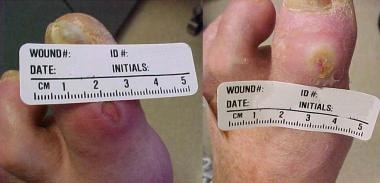
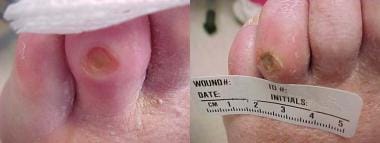
Caption: Picture 1. Diabetic ulcer of the medial aspect of left first toe before and after appropriate wound care.
Click to see larger pictureClick to see detailView Full Size Image
Picture Type: Photo
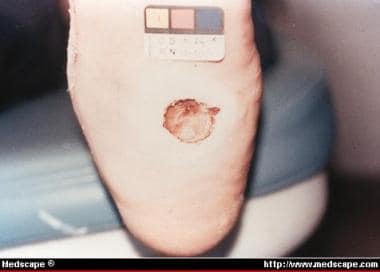
Caption: Picture 2. Diabetic ulcer of left fourth toe associated with mild cellulitis.
Click to see larger pictureClick to see detailView Full Size Image
Picture Type: Photo
  BIBLIOGRAPHY Section 11 of 11   Click here to go to the previous section in this topic Click here to go to the top of this page
Author Information Introduction Clinical Differentials Workup Treatment Medication Follow-up Miscellaneous Pictures Bibliography

  • Arora S, Pomposelli F, LoGerfo FW: Cutaneous microcirculation in the neuropathic diabetic foot improves significantly but not completely after successful lower extremity revascularization. J Vasc Surg 2002 Mar; 35(3): 501-5[Medline].
  • Beckert S, Witte M, Wicke C: A new wound-based severity score for diabetic foot ulcers: A prospective analysis of 1,000 patients. Diabetes Care 2006 May; 29(5): 988-92[Medline].
  • Bello YM, Phillips TJ: Recent advances in wound healing. JAMA 2000 Feb 9; 283(6): 716-8[Medline].
  • Bennett SP, Griffiths GD, Schor AM: Growth factors in the treatment of diabetic foot ulcers. Br J Surg 2003 Feb; 90(2): 133-46[Medline].
  • Boulton AJ, Kirsner RS, Vileikyte L: Clinical practice. Neuropathic diabetic foot ulcers. N Engl J Med 2004 Jul 1; 351(1): 48-55[Medline].
  • Boulton AJ: Pressure and the diabetic foot: clinical science and offloading techniques. Am J Surg 2004 May; 187(5A): 17S-24S[Medline].
  • Brem H, Balledux J, Bloom T: Healing of diabetic foot ulcers and pressure ulcers with human skin equivalent: a new paradigm in wound healing. Arch Surg 2000 Jun; 135(6): 627-34[Medline].
  • Brem H, Sheehan P, Rosenberg HJ: Evidence-based protocol for diabetic foot ulcers. Plast Reconstr Surg 2006 Jun; 117(7 Suppl): 193S-209S; discussion 210S-211S[Medline].
  • Dutta P, Bhansali A, Mittal BR: Instant 99mTc-ciprofloxacin scintigraphy for the diagnosis of osteomyelitis in the diabetic foot. Foot Ankle Int 2006 Sep; 27(9): 716-22[Medline].
  • Edmonds M, Foster A: The use of antibiotics in the diabetic foot. Am J Surg 2004 May; 187(5A): 25S-28S[Medline].
  • Edmonds M: Diabetic foot ulcers: practical treatment recommendations. Drugs 2006; 66(7): 913-29[Medline].
  • Ehrenreich M, Ruszczak Z: Update on tissue-engineered biological dressings. Tissue Eng 2006 Sep; 12(9): 2407-24[Medline].
  • Evans D, Land L: Topical negative pressure for treating chronic wounds: a systematic review. Br J Plast Surg 2001 Apr; 54(3): 238-42[Medline].
  • Faries PL, Teodorescu VJ, Morrissey NJ: The role of surgical revascularization in the management of diabetic foot wounds. Am J Surg 2004 May; 187(5A): 34S-37S[Medline].
  • Frykberg RG, Armstrong DG, Giurini J: Diabetic foot disorders. A clinical practice guideline. For the American College of Foot and Ankle Surgeons and the American College of Foot and Ankle Orthopedics and Medicine. J Foot Ankle Surg 2000; Suppl: 1-60[Medline].
  • Galkowska H, Olszewski WL, Wojewodzka U: Neurogenic factors in the impaired healing of diabetic foot ulcers. J Surg Res 2006 Aug; 134(2): 252-8[Medline].
  • Gentile AT, Berman SS, Reinke KR: A regional pedal ischemia scoring system for decision analysis in patients with heel ulceration. Am J Surg 1998 Aug; 176(2): 109-14[Medline].
  • Guzman-Gardearzabal E, Leyva-Bohorquez G, Salas-Colin S: Treatment of chronic ulcers in the lower extremities with topical becaplermin gel .01%: a multicenter open-label study. Adv Ther 2000 Jul-Aug; 17(4): 184-9[Medline].
  • Hilton JR, Williams DT, Beuker B: Wound dressings in diabetic foot disease. Clin Infect Dis 2004 Aug 1; 39 Suppl 2: S100-3[Medline].
  • Jeffcoate WJ, Harding KG: Diabetic foot ulcers. Lancet 2003 May 3; 361(9368): 1545-51[Medline].
  • Jirkovska A, Boucek P, Woskova V: Identification of patients at risk for diabetic foot: a comparison of standardized noninvasive testing with routine practice at community diabetes clinics. J Diabetes Complications 2001 Mar-Apr; 15(2): 63-8[Medline].
  • Lipsky BA, Berendt AR, Deery HG: Diagnosis and treatment of diabetic foot infections. Plast Reconstr Surg 2006 Jun; 117(7 Suppl): 212S-238S[Medline].
  • Margolis DJ, Kantor J, Santanna J: Effectiveness of platelet releasate for the treatment of diabetic neuropathic foot ulcers. Diabetes Care 2001 Mar; 24(3): 483-8[Medline].
  • Margolis DJ, Kantor J, Santanna J: Risk factors for delayed healing of neuropathic diabetic foot ulcers: a pooled analysis. Arch Dermatol 2000 Dec; 136(12): 1531-5[Medline].
  • Marston WA, Davies SW, Armstrong B: Natural history of limbs with arterial insufficiency and chronic ulceration treated without revascularization. J Vasc Surg 2006 Jul; 44(1): 108-114[Medline].
  • Mayfield JA, Sugarman JR: The use of the Semmes-Weinstein monofilament and other threshold tests for preventing foot ulceration and amputation in persons with diabetes. J Fam Pract 2000 Nov; 49(11 Suppl): S17-29[Medline].
  • Med Lett Drugs Ther: Platelet-derived growth factor for diabetic ulcers. Med Lett Drugs Ther 1998 Jul 17; 40(1031): 73-4[Medline].
  • Muha J: Local wound care in diabetic foot complications. Aggressive risk management and ulcer treatment to avoid amputation. Postgrad Med 1999 Jul; 106(1): 97-102[Medline].
  • O'Meara SM, Cullum NA, Majid M: Systematic review of antimicrobial agents used for chronic wounds. Br J Surg 2001 Jan; 88(1): 4-21[Medline].
  • Oyibo SO, Jude EB, Tarawneh I: A comparison of two diabetic foot ulcer classification systems: the Wagner and the University of Texas wound classification systems. Diabetes Care 2001 Jan; 24(1): 84-8[Medline].
  • Pinzur MS, Slovenkai MP, Trepman E: Guidelines for diabetic foot care: recommendations endorsed by the Diabetes Committee of the American Orthopaedic Foot and Ankle Society. Foot Ankle Int 2005 Jan; 26(1): 113-9[Medline].
  • Ramsey SD, Newton K, Blough D: Incidence, outcomes, and cost of foot ulcers in patients with diabetes. Diabetes Care 1999 Mar; 22(3): 382-7[Medline].
  • Reiber GE, Lipsky BA, Gibbons GW: The burden of diabetic foot ulcers. Am J Surg 1998 Aug; 176(2A Suppl): 5S-10S[Medline].
  • Robson MC, Hill DP, Woodske ME: Wound healing trajectories as predictors of effectiveness of therapeutic agents. Arch Surg 2000 Jul; 135(7): 773-7[Medline].
  • Roeckl-Wiedmann I, Bennett M, Kranke P: Systematic review of hyperbaric oxygen in the management of chronic wounds. Br J Surg 2005 Jan; 92(1): 24-32[Medline].
  • Singh N, Armstrong DG, Lipsky BA: Preventing foot ulcers in patients with diabetes. JAMA 2005 Jan 12; 293(2): 217-28[Medline].
  • Strauss MB: Hyperbaric oxygen as an intervention for managing wound hypoxia: its role and usefulness in diabetic foot wounds. Foot Ankle Int 2005 Jan; 26(1): 15-8[Medline].
  • Streit M, Braathen LR: Apligraf--a living human skin equivalent for the treatment of chronic wounds. Int J Artif Organs 2000 Dec; 23(12): 831-3[Medline].
  • Teodorescu VJ, Chen C, Morrissey N: Detailed protocol of ischemia and the use of noninvasive vascular laboratory testing in diabetic foot ulcers. Am J Surg 2004 May; 187(5A): 75S-80S[Medline].
  • Tomic-Canic M, Brem H: Gene array technology and pathogenesis of chronic wounds. Am J Surg 2004 Jul; 188(1A Suppl): 67-72[Medline].
  • Veves A, Falanga V, Armstrong DG: Graftskin, a human skin equivalent, is effective in the management of noninfected neuropathic diabetic foot ulcers: a prospective randomized multicenter clinical trial. Diabetes Care 2001 Feb; 24(2): 290-5[Medline].
  • Wieman TJ, Mercke YK, Cerrito PB: Resection of the metatarsal head for diabetic foot ulcers. Am J Surg 1998 Nov; 176(5): 436-41[Medline].

Diabetic Ulcers excerpt