Continually Updated Clinical Reference
 
 
  All Sources     eMedicine     Medscape     Drug Reference     MEDLINE
 
eMedicine - Cystinuria : Article by

Quick Find
Authors & Editors
Introduction
Clinical
Differentials
Workup
Treatment
Medication
Follow-up
Miscellaneous
Multimedia
References

Related Articles
Wilson Disease


Patient Education
Click here for patient education.


Author: Chandra Shekhar Biyani, MBBS, MS, DUrol, FRCS(Urol), FEBU, Consulting Urologist, Department of Urology, Pinderfields General Hospital, UK

Chandra Shekhar Biyani is a member of the following medical societies: British Medical Association and International College of Surgeons

Coauthor(s): Jon Cartledge, MD, FRCS (Urol), Consulting Urologist, Pyrah Department of Urology, St James's University Hospital, UK

Editors: Bradley Fields Schwartz, DO, FACS, Associate Professor of Urology, Director, Center for Laparoscopy and Endourology, Department of Surgery, Southern Illinois University School of Medicine; Francisco Talavera, PharmD, PhD, Senior Pharmacy Editor, eMedicine; Eleanor Lederer, MD, Consulting Staff, Louisville VA Hospital; Professor of Medicine, Director of Nephrology Training Program, Kidney Disease Program, University of Louisville School of Medicine; Director, Metabolic Stone Clinic; J Stuart Wolf, Jr, MD, FACS, David A Bloom Professor of Urology, Director, Division of Minimally Invasive Urology, Department of Urology, University of Michigan Medical Center; Stephen W Leslie, MD, FACS, Founder and Medical Director of the Lorain Kidney Stone Research Center, Clinical Assistant Professor, Department of Urology, Medical College of Ohio

Author and Editor Disclosure

Synonyms and related keywords: cystinuria, urolithiasis, cystine urolithiasis, urinary calculi, stone formation, amino acids, cystine, cysteine, SLC3A1, SLC7A9, rBAT, urinary alkalinization, hydration, D-penicillamine, tiopronin, Thiola, captopril, extracorporeal shockwave lithotripsy, ESWL, extracorporeal shock wave lithotripsy, retrograde endoscopic lithotripsy, percutaneous nephrolithotomy, PCNL, stone removal, urinary tract stone, kidney stone, recurrent stone formation, stone recurrence, urinary calculus, cystic oxide, cystine stones, cystine stone formers, ornithine, arginine, lysine

Background

Cystinuria is an autosomal recessive defect in reabsorptive transport of cystine and the dibasic amino acids ornithine, arginine, and lysine from the luminal fluid of the renal proximal tubule and small intestine. The only phenotypic manifestation of cystinuria is cystine urolithiasis, which often recurs throughout a patient's lifetime. Surgical intervention is necessary, but the cornerstones of treatment are dietary and medical prevention of recurrent stone formation.

In 1810, Wollaston first described a different type of urinary calculi from the urinary bladder and coined the term cystic oxide. Berzelius recognized that the compound was not an oxide, and he named it cystine because the material originated from the bladder. In 1908, Sir Archibald Garrod identified cystinuria as one of the original "inborn errors of metabolism." Yeh et al and Dent and Rose showed abnormal excretion of the dibasic amino acids lysine, arginine, and ornithine in persons with cystinuria. In 1955, Harris et al reported the complex autosomal recessive pattern of inheritance of cystinuria. In 1961, Milne et al demonstrated reduced intestinal absorption of dibasic amino acids in persons with cystinuria.

In 1954, while studying skin sensitivity to penicillin and its derivatives, Tabachnick et al noted that one of the degradation products of penicillin, penicillamine, reacted with cystine to form a mixed disulfide, penicillamine cysteine. In 1963, Crawhall et al first used penicillamine to treat patients with cystinuria.

In recent years, understanding of the genetic and molecular components of cystinuria has advanced. In 1993, Lee et al cloned a human cDNA (rBAT [renal basic amino acid transporter]) in chromosome 2, encoding a transport protein for cystine and dibasic amino acids. In 1997, Bisceglia et al identified type III cystinuria on band 19q13.1.

Pathophysiology

Renal transport of cystine

Amino acids are readily filtered by the glomerulus and undergo nearly complete reabsorption by proximal tubular cells. Only 0.4% of the filtered cystine appears in the urine. Various authors have studied amino acid transport in cell membranes obtained from the proximal renal tubule of humans, rats, and rabbits. At least 2 transport systems are responsible for cystine reabsorption, as follows:

  • High-affinity system: This system is affected in persons with cystinuria. The high-affinity system mediates uptake of 10% of L-cystine and the dibasic amino acids at the apical membrane of the straight third segment (S3) of the proximal tubule.
  • Low-affinity system: This system is present in the S1-S2 part of the proximal tubule and is responsible for 90% of L-cystine reabsorption. The low-affinity process augments the high-affinity process. After absorption, each molecule of cystine is intracellularly converted to 2 molecules of cysteine. Cysteine exits at the basolateral membrane.

Genetic studies of DNA from families with cystinuria reveal a defective gene located on chromosome 2. The gene that codes for the cystine transporter, initially termed rBAT, is now known as SLC3A1 (SLC for solute carrier) in the international Genome Database. A second cystinuria gene on chromosome 19 is called SLC7A9. The normal SLC7A9 gene encodes a subunit of the cystine transporter called b 0,+ AT (amino acid transporter). The process of cystine uptake is activated by the SLC3A1 and SLC7A9 gene products. Transport of L-cystine in the brush-border membrane vesicle is sodium-independent and electrogenic. In persons with cystinuria, the movement of cystine or cysteine from the tubular cells into the blood is not affected.

Intestinal transport of cystine

The high-affinity transporter is present in the apical brush-border membrane of the jejunum and is responsible for absorption of cystine and dibasic amino acids. Most patients with cystinuria have impaired absorption of cystine; however, cystine deficiency is not clinically significant because absorption of short-chain amino acids is not affected.

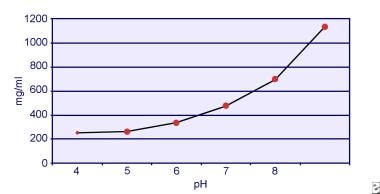
Normally, cystine and the other dibasic amino acids (ie, ornithine, lysine, arginine) are filtered at the glomerulus and reabsorbed in the proximal convoluted tubule by a high-affinity luminal transmembrane channel. Defects in this channel cause elevated levels of dibasic amino acid secretion in the urine. Whereas ornithine, lysine, and arginine are completely soluble, cystine is relatively insoluble at physiologic urine pH levels of 5-7, with a pKa level of 8.3. At a urine pH level of 7.8 and 8, the respective solubility of cystine is nearly doubled and tripled.

Dent and Senior demonstrated that the solubility of cystine is pH-dependent. The solubility of cystine in urine is approximately 250 mg/L (1 mmol/L) up to a pH level of 7, but solubility increases with a higher pH level by up to 500 mg/L (2 mmol/L) or more above a pH level of 7.5 (see Image 1). Measurements in urine have clearly shown that cystine solubility increases linearly with increased ionic strength. Pak and colleagues showed that approximately 70 mg of additional cystine can be dissolved in each liter of solution, with an increase in ionic strength from 0.005-0.3. In addition, at the same ionic strength and pH, cystine solubility varies depending on the particular type of electrolyte present.

In vitro experiments by Pak and Fuller in 1983 revealed that the highest solubility is accomplished in the presence of calcium chloride, followed by magnesium and sodium chloride. Furthermore, cystine solubility is also affected by urinary macromolecules. The presence of colloid in normal urine has been shown to increase cystine solubility; however, the mechanism of this action is not clear. Because nothing inhibits cystine crystallization, the main determinant is urinary supersaturation. Heterogeneous nucleation of calcium oxalate, brushite, or hydroxyapatite does not occur in patients with cystinuria.

Risk factors for cystine crystallization include (1) low pH level (2) reduced ion strength, (3) the presence of cystine crystals, and (4) low levels of urinary macromolecules.

Cystine is a disulfide-linked homodimer of cysteine and has the following structure:

COOH-CHNH2-CH2 –S-S-CH2-CHNH2- COOH Cystine
COOH-CHNH2-CH2 –SH Cysteine

Cystine is absorbed in the small intestine in a manner similar to that of the kidneys. In persons with cystinuria, intestinal absorption of cystine is also impaired to varying degrees. Metabolism of methionine is another source of serum cystine. Two type II membrane glycoproteins domains have been implicated in amino acid transport via the plasma membrane. The first is rBAT, and the second is 4F2HC (the heavy chain of the 4F2 antigen)

Two thirds of persons with cystinuria who form stones make pure cystine calculi, and one third have a mixture of cystine and calcium oxalate calculi. In 2002, Martins et al reported that calcium oxalate precipitation occurs by a salting-out process, ie, the reduction in solubility of a substance due to the addition of another substance to the system, rather than by the process of heterogenous nucleation. Hypocitraturia, hypercalciuria, and hyperuricosuria are also frequently associated with cystinuria. Given their relatively uniform crystalline structure without lamellated cleavage planes, pure cystine calculi are among the hardest on Dretler's stone fragility index.

Cystinuria is an autosomal recessive disease divided into 3 subtypes: Rosenberg I, II, and III. Cystinuria type I is the most common variant and has been mapped to band 2p16.3. Type I heterozygotes show normal aminoaciduria. Classic cystinuria, types II and III, were thought to be allelic variants, but recent linkage analyses reveal type III to be a defect of an uncharacterized gene (SLC7A9) on band 19q13.1. Heterozygotes of types II and III often manifest cystinuria without cystine calculi and may be at increased risk for other types of urolithiasis. Type I heterozygotes are distinguished by normal levels of urinary cystine.

Unlike type I and type II homozygotes, type III homozygotes show an increase in plasma cystine concentration after oral cystine administration. Harris et al reported the complex nature of the genetics of cystinuria by measuring the level of urinary cystine excretion in the parents (obligate heterozygotes) of cystinuria probands and found fully recessive alleles (both parents excreted cystine in the reference range) and dominant alleles (both parents excreted cystine at high levels).

To classify cystinuria clinically, urinary cystine can be measured in each parent of a proband as phenotype I (recessive, urinary cystine level <100 µmol/g of creatinine), phenotype II (dominant, urinary cystine level >1000 µmol/g of creatinine), and phenotype III (partially dominant, urinary cystine level 100-1000 µmol/g of creatinine). Cystinuria can also be classified based on the age at which symptoms first appear (ie, infantile, juvenile, adolescent).

In healthy individuals, the upper limit for cystine excretion is 20 mg/g of creatinine (<10 µmol/mmol of creatinine). Homozygotes excrete more than 400 mg/d (1.7 mmol/d), and cystine excretion in homozygous patients is usually 600-1400 mg/d (2.5-5.8 mmol/d). Heterozygotes with type I and III cystinuria excrete less than 200 mg/d (0.8 mmol/d) and do not form stones. Type II heterozygotes excrete up to 200-400 mg/d, but these patients may form stones. The incidence of stone formation increases when urinary cystine concentration exceeds 700 µmol/L (170 mg/L).

Genetics

In recent years, with the advancements in molecular biology, new insights have accumulated regarding the pathophysiology of cystinuria. In 1992, several investigators reported the expression cloning of a 2.3-kilobase renal cDNA (D2H or rBAT) that induced sodium-independent uptake of cystine and the dibasic amino acids in cRNA-injected Xenopus laevis oocytes. The rBAT gene was mapped to chromosome 2 (band 2p21) between D2S119 and D2S288. This gene is now named SLC3A1 in the Genome Database.

Immunohistochemical and in situ hybridization studies revealed that rBAT is expressed in cells of the S3 (pars recta) segment of the proximal tubule and small intestine at the luminal brush-border membrane. In 1995, Gasparini et al reported that mutations in SLC3A1 occurred in patients with type I cystinuria and not in patients with type II or III disease. To date, more than 60 different mutations have been described, including both small and large deletions of DNA base pairs from the gene. One of the most common genetic alterations in SLC3A1 is called M467T, and most mutations tend to be population-specific. The M467T mutation is fairly common in Mediterranean populations. Interestingly, it accounted for 40% of mutations in a Spanish cohort of families and was rare in patients studied in Quebec, Canada.

In 1999, the SLC7A9 (BAT1) gene was isolated. The gene encodes a 487–amino acid protein and was mapped to chromosome 19 (band 19q13) between D19S414 and D19S220. The BAT1 product appears to be a membrane protein with 12 membrane-spanning regions. Mutations in the BAT1 gene probably cause non–type I cystinuria (Rosenberg type II and III). Mutations at the 19q locus are especially common among Libyan Jews, and the risk of urolithiasis in patients who inherit 2 such 19q locus mutations is roughly comparable to that in patients who inherit 2 rBAT mutations.

A number of mutations in this gene have been reported. The most common mutation in Libyan Jews resulted in a methionine replacing the valine amino acid residue (V170M) in the protein. In heterozygotes with the V170M mutation, urinary cystine concentrations range from 86-1238 µmol/g of creatinine. Thus, some of the values in V170M heterozygotes are consistent with type III disease and others with type II disease.

An apparent distinguishing feature between type II and type III cystinuria is the lack of intestinal cystine absorption in type II homozygotes. In 2000, Pras suggested a new classification on the basis of molecular analysis. Recently, Dello Strologo et al have proposed a new genetic classification, as follows:

  • Type A, mutation of both alleles of SLC3A1: Heterozygotes show a normal amino acid urinary pattern.
  • Type B, mutation of both alleles of SLC7A9: Heterozygotes usually show an increase of cystine and dibasic amino acid urinary excretion.
  • Type AB, cystinuria caused by 1 mutation in SLC3A1 and 1 mutation in SLC7A9: Mixed-type cystinuria may be caused by the interaction of 2 distinct mutant genes, and the protein encoded by the 19q gene directly interacts with rBAT in the S3 segment of the proximal tubule (see the Table).

Classification of Cystinuria

Rosenberg et alType IType IIType III
MolecularType INon–Type I
Responsible geneSLC3A1SLC7A9
Band2p2119q13.1
No. of mutations>6039
Most common mutationM467V170M
Population affectedMediterranean Spanish persons, 40%Libyan Jews
Deletion rate54%25%
ProteinrBATBAT1
Amino acid transport system
Localization in proximal converted tubuleS3S1, S2
Transporter characteristicHigh affinity, low capacityLow affinity, high capacity
Clinical features
HomozygotesSymptomaticapproximately 90% symptomatic
HeterozygotesAsymptomaticapproximately 10-13% symptomatic
Urinary cystine levelsNormalElevated +++++Elevated +
Plasma cystine levels after an oral load testSameSame or slight riseIncreased
Intestinal transportAbsent (no transport of cystine, lysine, or arginine)AbsentReduced

Recent evidence suggests that the 4F2HC/4F2LC complex accounts for the Y+L amino acid transport system at the basolateral surface of intestinal and renal proximal tubular cells and that the mutations of the 4F2LC gene (SLC7A7) on band 14q11-13 cause the rare recessive disease called lysine-protein intolerance.

Summary

  • rBAT, a 90-kd type II glycoprotein, is a high-affinity, sodium-independent transporter for dibasic amino acids in the proximal convoluted renal tubules in rodents.
  • The human rBAT gene has been localized on band 2p21. Interestingly, linkage analysis suggests that this is the same region to which a cystinuric locus, SLC3A1, has been identified.
  • More than 60 mutations at the rBAT/SLC3A1 locus have been identified in patients with cystinuria worldwide.
  • Type III and II cystinuria (non–type I) have been linked to band 19p13.1 (SLC7A9); however, further studies are needed to determine the exact role of the SLC7A9 gene.
  • Approximately 50% of children with 2 SLC3A1 mutations (classic homozygous type I cystinuria) develop at least 1 stone within the first decade of life.

Frequency

United States

Cystine accounts for 1% of adult and 6-8% of pediatric urinary calculi. The prevalence of heterozygosity is approximately 1 case per 20-200 persons. Homozygous cystinuria affects 1 person per 15,000 population.

International

Worldwide, the overall prevalence is 1 person per 7000 population. Prevalences of cystinuria are 1 case in 18,000 in Japan, 1 case in 2500 in Israel, 1 case in 2000 in Great Britain, 1 case in 4000 in Australia, 1 case in 1900 in Spain, 1 case in 2500 in Libyan Jews, and 1 case in 100,000 in Sweden. The Quebec Genetic Network Neonatal Screening Program reported the incidence of persistent cystinuria as 562 cases per million infants, a rate 7 times higher than for clinically manifested cystinuria in the adult population of Quebec. This suggests that many cystinuric individuals do not form stones.

Mortality/Morbidity

Barbey et al reported one new stone formation per patient per year and an average of one surgical procedure every 3 years, with 7 surgical procedures for nephrolithiasis by middle age. Urinary calculi are generally the only manifestation of cystinuria, although 10% of cases are complicated by hypertension and one study found a weak association with short stature. Patients with cystinuria who form stones are at higher risk for anatomical renal loss (nephrectomy) compared with those who form calcium oxalate stones. The risk of renal impairment is high; up to 70% of patients may be affected depending on the length of follow-up and medical therapy. However, according to Lindell et al, end-stage renal disease occurs in less than 5% of patients with cystinuria. In 1998, Chow and Streem reported that the probability of a recurrence-free survival at 1-year and 5-year follow-up is 0.73 and 0.27, respectively.

Race

Cystinuria is more common in white persons. Up to 1 in 2500 Jews of Libyan extraction are affected.

Sex

Incidence is equal between the sexes, but men are more severely affected.

Age

Cystine stones are common in the second or third decade of life. The peak age of first renal calculus is 22 years, although up to 22% of these patients develop calculi in childhood.


History

Patients with cystinuria usually present with renal colic. Uncommon presentations include hematuria, chronic backache, and urinary tract infection. Twenty-five percent of symptomatic patients report their first stone in the first decade of life, and another 30-40% have their first experience as teenagers. According to Sakhaee et al, approximately 20-40% of the stones in persons with cystinuria are mixed: hypercalciuria (19%), hypocitraturia (44%), and hyperuricosuria (22%).

Infrequent association with retinitis pigmentosa, hemophilia, muscular dystrophy, mongolism, and hereditary pancreatitis has been reported.

  • Homozygous cystinuria is characterized by lifelong, recurrent urolithiasis that is difficult to manage, either surgically or medically.
  • In general, more than 50% of asymptomatic homozygotes develop kidney stones.
  • Seventy-five percent of these patients present with bilateral calculi.
  • Recurrence rates after surgical intervention approach 45% at 3 months without medical management. The recurrence rate with medical management improves to approximately 25% at 3 years after surgery but is still inferior compared with rates for other types of calculi.
  • Typical age of onset is in the second or third decade of life.
  • Presentation is similar to that of other types of renal calculi and includes renal colic, chronic urinary tract infections in a young person with a family history of kidney stones, passage of stones or gravel, hematuria, and dysuria. The clinical symptoms usually develop within the first 2 decades of life.
  • Complications of the disease include hypertension, renal insufficiency, recurrent urinary tract infections, and even end-stage renal disease.

Physical

Examination findings of fever (with urinary tract infection) and costovertebral angle tenderness are identical to those of other types of calculi.

Causes

Cystinuria is an autosomal recessive disease. The genetic defect impairs intestinal absorption and renal reabsorption of cystine, causing elevated urinary levels of cystine and subsequent crystallization and stone formation.


Wilson Disease

Other Problems to be Considered

Renal tubular immaturity in infants, Wilson disease, and Fanconi syndrome are other causes of elevated urinary cystine levels.


Lab Studies

  • Urinalysis
    • Cystine is one of the sulfur-containing amino acids; therefore, the urine may have the characteristic odor of rotten eggs.

    • Urinalysis may show typical hexagonal or benzene crystals, which are essentially pathognomonic of cystinuria. Microscopic crystalluria is present in 26-83% of patients.

    • Disappearance of cystine crystals in the first morning urine is a good index of treatment efficacy.

    • Daudon et al calculated the cystine crystal volume (Vcys) from microscopic analysis of early-morning urine to predict stone recurrence.

      • Patients who formed stones recurrently had an average Vcys of 8173 µ3/mm3 versus 233 µ3/mm3 in those who did not form stones. The absence of cystine crystals or a Vcys of less than 3000 µ3/mm3 was associated with the absence of cystine stone formation. The presence of multiple crystals (>20/mm3) and a Vcys of more than 3000 µ3/mm3 was predictive of stone recurrence.

      • The measurement of Vcys is helpful in assessing the effect of any treatment schedule. Daudon et al reported an average Vcys of 12,000 µ3/mm3 in untreated patients, 2600 µ3/mm3 associated with conservative therapy, 1141 µ3/mm3 in patients with high fluid intake receiving mercaptopropionyl-glycine therapy, and 791 µ3/mm3 in patients with high fluid intake receiving penicillamine therapy.

    • Measurement of urine cystine capacity: Assessments of cystine excretion or solubility in the presence of cystine-binding thiol drugs are difficult. Coe et al (2001) have developed an assay for determining cystine capacity, a measure of the ability of urine either to take up additional cystine from a preformed solid phase (undersaturation, or positive cystine capacity) or to give it up to the solid phase (supersaturation, or negative cystine capacity). Cystine capacity can be used to monitor the response to the drug therapy and can help the clinician to prescribe minimal effective dose (Dolin et al 2005).
  • Sodium cyanide–nitroprusside test
    • This is a rapid, simple, and qualitative determination of cystine concentrations.

    • Cyanide converts cystine to cysteine. Nitroprusside then binds, causing a purple hue in 2-10 minutes.

    • The test detects cystine levels of higher than 75 mg/g of creatinine.

    • False-positive test results occur in some individuals with homocystinuria or acetonuria and in people taking sulfa drugs, ampicillin, or N-acetylcysteine. In persons with Fanconi syndrome, a false-positive test result can occur secondary to generalized aminoaciduria.

    • For individuals with positive cyanide-nitroprusside test findings, perform ion-exchange chromatographic quantitative analysis of a 24-hour collected urine sample.

      • The normal excretion rate is 40-80 mg/d (0.166-0.333 mmol/d).

      • Heterozygotes excrete 200-400 mg/d (0.8-1.7 mmol/d).

      • Homozygotes always excrete 600-1400 mg/d (2.5-5.8 mmol/d).
  • Twenty-four–hour urine collection for other metabolic abnormalities
    • Results indicate the presence of hypercalciuria, hypocitraturia, and hyperuricosuria.

    • Results may help define a subgroup of patients at risk for failure of medical therapy due to the formation of noncystine or mixed calculi.
  • Routine monitoring of renal function: Patients can self-monitor urine pH with Nitrazine paper.
  • Proton nuclear magnetic resonance spectroscopy of urine
    • Urine proton nuclear magnetic resonance spectroscopy is a very powerful technique that allows multicomponent analysis useful in both diagnosis and follow-up.
    • As reported by Pontoni et al in 2000, the relevant amino acids can be detected in the urine of patients with cystinuria. The most abundant amino acid in these patients is lysine (>5 mmol), whose typical signals become very high. Cystine, arginine, and ornithine are usually detectable, although pathologic concentrations are lower (<2 mmol).
    • The nuclear magnetic resonance spectroscopy technique is also suitable in the follow-up of therapy with alpha-mercaptopropionylglycine (alpha-MPG) because it provides quantitation of cystine, citrates, and creatinine, thus allowing better monitoring.
    • Heterozygotes show a high level of lysine, and spectroscopy provides a very easy preliminary identification of this group.

Imaging Studies

  • Calculi are frequently multiple and bilateral, and they often form staghorns.
  • Plain radiographs of the abdomen and pelvis and intravenous pyelograms
    • Images from these studies may show faintly radiopaque calculi that become radiolucent with intravenous contrast materials.
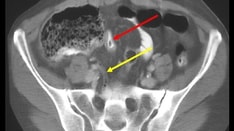
    • Cystine stones have a homogeneous or ground-glass appearance on radiographs (see Images 3-5). Although radiopaque, they are often less dense than calcium-containing stones.
    • Intravenous pyelograms are essential for defining calyceal anatomy prior to extracorporeal shockwave lithotripsy (ESWL).
  • Helical CT scan without intravenous contrast
    • The stone burden, including calculi, is difficult to accurately visualize and assess on plain radiographs.
    • Helical CT scans are ideal for patients with contrast allergy or renal insufficiency.
  • Renal ultrasonography
    • This study is more economical than CT scan for monitoring the growth of renal calculi (see Image 6).
    • The lack of radiation exposure makes this test ideal for children and patients with frequent recurrences, who would otherwise accumulate relatively large radiation doses over a lifetime.

Other Tests

  • Stone analysis
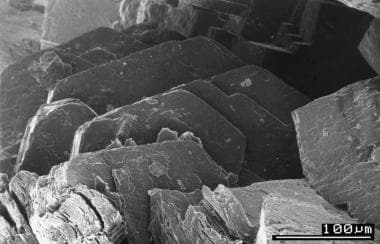
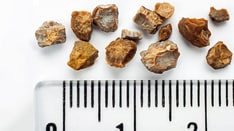
    • Cystine stones are pale yellow. Electron microscopic evaluation coupled with x-ray diffraction crystallography has been useful in identifying stone components and specific spatial relationships of stone components (see Image 2). Pure cystine stones are observed in 60-80% of cases.
    • Two subtypes of cystine calculi have been identified by electron microscopic evaluation of stones removed from persons with cystinuria, rough and smooth. Smooth calculi have an irregular, interlacing crystal structure, making them more resistant to ESWL fragmentation than the more homogenous hexagonal crystal structure of the rough subtype. Unfortunately, clinically differentiating the 2 types before ESWL is not possible.

  • Of patients, 20-40% have cystine mixed with calcium oxalate, calcium phosphate, or magnesium ammonium calcium phosphate.

Procedures

  • Jejunal biopsy was once used to distinguish among 3 subtypes of cystinuria. This procedure is not recommended as part of routine workup and is primarily a research tool.


Medical Care

The foundation of cystine stone prevention is adequate hydration and urinary alkalinization. When this conservative therapy fails, the addition of thiol drugs, such as D-penicillamine, alpha-MPG, and captopril, are added to the regimen. Disappointingly few advances in the medical treatment of cystinuria have occurred over the last 10-15 years. No therapy currently addresses the underlying derangement of dibasic amino acid transport.

  • Management algorithm
    • Overall, for a patient with cystinuria who does not have a stone, first-line therapy in most cases is a conservative approach, including large-volume fluid intake (urine output >2.5 L/d), regular urine pH monitoring (urine pH level of 7.5 and <8), dietary restrictions, and urinary alkalization with potassium citrate.
    • If this standard therapy fails to achieve the urinary cystine concentration of 300 mg/L, then medical therapy with D-penicillamine, alpha-MPG, or captopril must be added.
    • Treat patients with stone disease according to the location of the stone. The expertise of a urologist and a radiologist is important for decision-making processes, and stone site and size also influence further management (see Image 7).
  • Hydration
    • The average homozygous patient with cystinuria excretes 600-1400 mg of cystine per day. The solubility of cystine at a pH level of 7 is 250-300 mg/L. Therefore, one of the oldest and most effective cystine stone–prevention techniques is hyperdiuresis to decrease urinary cystine concentration. Early studies by Dent et al in the 1960s showed that hydration alone could prevent stone recurrence in up to a third of patients. This finding has been corroborated by more recent studies.
    • The goals of hydration therapy are urine volumes in excess of 3 L/d. This goal may require ingesting 4-4.5 L of water per day. Patients should drink 240 mL of water every hour during the day and 480 mL before retiring and at least once during the night.
    • Alkalizing beverages, such as mineral water, rich in bicarbonate and low in sodium (1500 mg HCO3/L, maximum 500 mg sodium/L), and citrus juices are preferred.
    • Patients should monitor the specific gravity of their urine using Nitrazine dipsticks, with a goal of achieving a value less than 1.010.
  • Alkalinization
    • Alkaline urine can prevent the precipitation of cystine calculi and can even aid in dissolution. Urine pH level must be more than 7.5 for stone dissolution to occur.
    • Paradoxically, a urine pH level of more than 7.5 can cause a predisposition to the formation of calcium phosphate calculi, so urine must be monitored with dipsticks to maintain a pH level of 7-7.5 for stone prevention.
    • Currently, Nitrazine paper and standard pH dipsticks have no clear color differentiations in the pH level range of 6-7.5. UriDynamics, a small company in Indianapolis, Ind, has developed a new test strip called StoneGuard II. This strip includes an additional color block at a pH level of 7.5. The colors produced are yellow-orange (pH level of 5), yellow-green (pH level of 6), green-yellow (pH level of 6.5), light green (pH level of 7), green with blue cast (pH level of 7.5), and greenish blue (pH level of 8). No interference from common medications, nutritional supplements, or blood has been observed. It also has a pad to measure specific gravity over a range of 1.000-1.030.
    • Sodium bicarbonate was used in the past but is no longer recommended as a first-line agent. The sodium ion may actually increase the amount of cystine excreted.
    • Potassium citrate is the first-line alkalinizing drug. The typical adult dose is 60-80 mEq/d divided into 3-4 doses (15-20 mL/d), titrating the dose as needed to maintain a urine pH level within the target range of 7-7.5.
    • Acetazolamide inhibits the brush-border carbonic anhydrase of the proximal convoluted tubule, thereby increasing urinary bicarbonate excretion. Acetazolamide is not widely used as a first-line drug and is of questionable efficacy.
    • With any alkalinization therapy, monitoring of urinary pH is essential.
  • Chelating agents
    • Cystine-binding and cystine-reducing agents share the ability to dissociate the cystine molecule into disulfide moieties with much higher solubilities than the parent molecule. These drugs are thiol derivatives. The treatment goal is excretion of less than 200 mg/d of urinary cystine, and this must be monitored yearly.
    • Start these agents when hydration, dietary, and alkalinization therapies fail.
    • Cystine-binding agents can dissolve cystine calculi, but this feat usually takes many months to years. They are best suited for stone prevention after surgical debulking of the stone burden, and they possibly help soften cystine stones in preparation for ESWL.
  • Penicillamine
    • Penicillamine is a first-generation chelating agent that combines with cystine to form a soluble disulfide complex (50 times more soluble than cystine), thus preventing stone formation and possibly even dissolving existing cystine stones. Three types of isomers of penicillamine are known and include D, L, and DL. Only the D form should be used clinically.
    • The effect of the drug is dose-dependent. A 250-mg/d increase in dose decreases the urinary cystine level by 75-100 mg/d. Doses of 1-2 g/d are effective in reducing the urinary cystine level to 200 mg/g of creatinine.
    • The prevalence rate of adverse reactions is approximately 50%; therefore, routine use is limited. Adverse effects include rash, arthralgia, leukopenia, gastrointestinal intolerance, and nephritic syndrome.
    • Long-term therapy may lead to vitamin B-6 (pyridoxine) deficiency; thus, vitamin B-6 supplementation (50 mg/d) is needed.
  • Alpha-mercaptopropionylglycine
    • This second-generation chelating agent is a mercaptan agent with a chemical structure and mechanism of action similar to that of D-penicillamine. It was approved by the US Food and Drug Administration in 1988.
    • Alpha-MPG has a 30% higher dissolution capacity for cystine than penicillamine.
    • The mechanism of action is based on a thiol disulfide exchange reaction similar to that of D-penicillamine.
    • The drug is not excreted in the urine, so the cyanide-nitroprusside test is an effective qualitative screening method for monitoring the control of cystinuria. A positive test result indicates the need for an increased dosage.
    • The main advantage of thiol is its lower toxicity profile. In a multicenter trial by Pak et al in 1986, 69% of subjects discontinued D-penicillamine because of adverse reactions, compared with 31% for alpha-MPG.
  • Captopril
    • In 1987, Sloand and Izzo reported the effectiveness of captopril in the treatment of patients with cystinuria.
    • Captopril is a thiol first-generation ACE inhibitor and has been shown to form a thiol-cysteine mixed disulfide. This complex is 200 times more soluble than cystine.
    • Newer thiol compounds, such as thiophosphate and meso-2-3-dimercaptosuccinic acid, have been used both in vitro and in a few clinical trials.
    • Captopril at doses of 75-100 mg was used in 2 patients, and cystine excretion decreased 70% and 93%. However, as reported by Sloand and Izzo, various follow-up studies have reported conflicting results.
    • Captopril can be used to treat patients whose conditions fail to respond to standard treatment and to treat patients with cystinuria who are hypertensive.
  • Bucillamine
    • Bucillamine (Rimatil), a dithiol compound, was reported by Koide et al in 1992 and is a third-generation chelating agent available only in Japan and South Korea.
    • Incubation of L-cystine with a specific amount of bucillamine and tiopronin (Thiola) in vitro studies showed a substantially lower amount of L-cystine in the presence of bucillamine compared with tiopronin.
    • Use of bucillamine in persons with rheumatoid arthritis showed a low toxicity profile; therefore, it is probably well tolerated by patients with cystinuria.

Surgical Care

Indications for surgery are large calculi that are unlikely to dissolve and obstructing or otherwise symptomatic calculi. Smaller stones can be monitored as part of an aggressive medical treatment plan with the hope of dissolution and/or spontaneous passage. The ultimate goal of surgery is to make the patient free of stones. While the risk of recurrence is unchanged, the time to recurrence is significantly lengthened.

Surgical options can be broadly classified into 6 modalities, including (1) ESWL, (2) retrograde endoscopic lithotripsy and extraction, (3) percutaneous nephrolithotomy, (4) multimodal therapy, (5), percutaneous nephrostomy for chemical dissolution, and (6) open surgery (urethra, bladder, ureter, kidneys).

  • Extracorporeal shockwave lithotripsy
    • ESWL is especially effective for cystine stones smaller than 1.5 cm in diameter, although overall stone-free rates are lower compared with rates for stones of other composition.

    • Because of their hardness and homogenous amino acid composition, most cystine stones require 2-3 times the usual number of shocks to adequately fragment the stone. Multiple treatments are often necessary to achieve acceptable stone-free rates.

    • When considering candidates for ESWL, some authors suggest an upper limit of 1.5 cm for upper ureteral or renal cystine calculi. As reported by Kachel et al in 1991, these authors prefer to limit ESWL to renal calculi smaller than 1 cm in diameter.

    • ESWL is appropriate in the treatment of ureteral cystine calculi. Stones not visualized after fluoroscopy can still be opacified by either retrograde or intravenous contrast administration to allow for lithotripsy.

    • Patients taking thiol derivatives may have cystine calculi that are more fragile because the cystine is replaced by apatite in approximately 30% of cases. These calculi may be easier to treat with ESWL.
  • Retrograde endoscopic lithotripsy and extraction
    • Historically, retrograde endoscopic treatment of cystine calculi was associated with complications and a low success rate compared with stones of other composition of equal size and location in the urinary tract. This was largely due to technical limitations in scope design and the failure of electrohydraulic lithotripsy to adequately fragment stones.

    • Currently, a retrograde approach is suitable for mid-to-distal ureteral cystine calculi when using high-energy modalities such as holmium:YAG laser or pneumatic shock devices (eg, Lithoclast). Smaller proximal ureteral calculi may also be treated in a retrograde fashion.

    • The role of retrograde treatment of renal calculi and large proximal stones is less clear, although ESWL and percutaneous surgery are generally preferred for larger stones. However, one study reports 5 of 6 patients with renal calculi 1.5-3 cm in diameter who were successfully treated via a retrograde approach with intracorporeal electrohydraulic lithotripsy.
  • Percutaneous nephrolithotomy
    • Percutaneous nephrolithotomy is the criterion standard for cystine renal calculi larger than 1-1.5 cm in diameter and for calculi for which ESWL or retrograde surgery has failed.

    • Ultrasonic lithotripsy readily fragments most cystine stones, although re-treatment rates are still approximately 50% compared with approximately 15% for other calculi.

    • Stone-free rates after multiple treatments range from 40-86%, although recurrence rates are high, approaching 50-70% at 5-year follow-up despite postoperative medical management.
  • Multimodal therapy
    • For large cystine stone burdens, such as occurs with full staghorn calculi, multimodal therapy may help achieve better stone-free rates.

    • So-called sandwich therapy involves initial percutaneous ultrasonic lithotripsy followed by ESWL and then repeat ultrasonic lithotripsy or flexible nephroscopy and laser lithotripsy.
  • Percutaneous nephrostomy for chemical dissolution
    • Direct irrigation of renal calculi with chemodissolution agents through a percutaneous nephrostomy tube was successful in treating a limited number of patients in the late 1970s and early 1980s.

    • The 2 most commonly used agents were acetylcysteine (Mucomyst) and tromethamine-E (THAM-E). Acetylcysteine creates soluble disulfide complexes with cystine, similar to the action of D-penicillamine. In addition, percutaneous administration of alkalinizing agents can create a pronounced alkaline milieu. A solution containing 60 mL of a 20% solution of N-acetylcysteine and 300 mEq of sodium bicarbonate per liter of saline is recommended. Tromethamine-E is an organic amine buffer with a pH level of 10.2.

    • Treatment times range from weeks to months. Given the extended treatment times, relatively low success rates, and success of ESWL and percutaneous nephrolithotomy, this modality is rarely used today. Some urologists may still use chemodissolution to help achieve stone-free status in patients with fragments remaining after percutaneous nephrolithotomy or ESWL or for patients unable to tolerate surgery.

  • Open surgery

    • Given the success of percutaneous nephrolithotomy, ESWL, and endoscopic retrograde approaches, open surgery is not indicated as first-line therapy for cystine calculi anywhere in the kidneys or ureter, with rare exceptions. Large bladder calculi may be amenable to open surgery, but these stones can also be treated with laser or electrohydraulic lithotripsy.

    • Ureteral substitution with small intestine has been reported in highly select cases.

Consultations

Treatment of the patient with cystinuria requires close cooperation between the urologist and the nephrologist. Maintaining high diuresis of at least 3 L/d, regularly distributed throughout the night and day, even when sulfhydryl compounds are given, appears to be the major factor predictive of therapeutic success. Regular clinical, radiological, and biochemical surveillance appears to be of primary importance to maintain good long-term compliance with medical treatment.

Diet

Cystine is formed during the metabolism of methionine; therefore, a diet low in methionine is effective. To be effective, dietary methionine must be reduced to 1 g/d. Unfortunately, a primarily vegetarian diet is generally not accepted by patients. Thus, a well-balanced mixed diet with relatively low-protein content (0.8 g protein/kg body weight/d) is recommended. Dietary restriction of methionine found in animal proteins such as milk, eggs, cheese, and fish may be helpful.

Cystine excretion increases with high-sodium intake. Processed foods contain large amounts of sodium chloride and are best avoided.

  • Methionine: Instruct patients to avoid foods with very high methionine content, including stockfish and eggs, and to reduce their consumption of meat, fish, poultry, and cheese. One study reported decreased cystine production (by approximately 500 µmol/d) with reduced methionine intake.

  • Low-sodium diet: Reducing sodium intake from 300 mmol/d to 50 mmol/d can decrease cystine excretion by 650 µmol/d (156 mg/d).

  • Glutamine: A series from 1979 reported by Miyagi et al indicated reduced cystine excretion with oral or intravenous glutamine. However, this effect has not been duplicated in other studies.

  • Dietary guidelines for patients
    • Eat only small amounts of protein-rich foods such as meat, fish, sausages, eggs, cheese, and soybeans.
    • Consume foods with a low-protein content, such as fruits, vegetables, salads, and cereals.
    • Limit additional salt during meals; limit canned foods, smoked foods, and pickled foods.
    • Increase dietary fiber intake.


Without medical therapy, patients with cystinuria are certain to develop new calculi. Strategies for stone prevention and dissolution include adequate urine output, urinary alkalinization, and use of thiol derivatives.

The goal for urine output is 3 L/d. In the past, sodium bicarbonate was used for alkalinization, but potassium citrate is preferred today to help limit dietary sodium intake. Thiol derivatives are used when calculi recur despite adequate hydration and alkalinization. These agents dissociate the cystine homodimer and create a new disulfide molecule that is more soluble in urine.

D-penicillamine has been used the longest in cystine stone prevention but is the least well-tolerated. More than 50-70% of patients stop taking the drug because of its adverse effects. Alpha-MPG acts in a manner similar to that of D-penicillamine, but its adverse effects are less severe and patient compliance approaches 70%. Captopril is another thiol derivative that decreases urinary excretion of cystine. Although well tolerated, the clinical efficacy of captopril for preventing new stones is still being evaluated.

Drug Category: Urinary alkalinization agents

Potassium citrate is metabolized to bicarbonates, which increase urinary pH levels by increasing the excretion of free bicarbonate ions without producing systemic alkalosis when administered in recommended doses. A rise in urinary pH levels increases the solubility of cystine in the urine. Raise the urine pH level to 7-7.5 to make cystine more soluble.

Drug NamePotassium citrate (Bicitra, Citrolith, Oracit, Polycitra Syrup, Polycitra-K)
DescriptionMaintains urine pH level of 7-7.6.
Adult Dose15-20 mL PO qid
Pediatric DoseNot established
ContraindicationsCaution in patients with renal impairment and hypertension
InteractionsNone known
PregnancyC - Safety for use during pregnancy has not been established.
PrecautionsGastric irritation may occur; tabs should always be well diluted with water; gastric effects may be minimized by taking with or after meals; hyperkalemia

Drug NamePotassium bicarbonate (Sando-K, Kloref, Kloref-S)
DescriptionBecause solubility of cystine increases with pH level of >7.5, urinary alkalization is successful. One gram of potassium bicarbonate provides 10 mEq of potassium.
Adult Dose1-2 mEq/kg/d PO
Pediatric DoseAppropriate studies on the relationship of age to the effects of citrates have not been performed in pediatric populations; however, no pediatric-specific problems have been documented to date
ContraindicationsDocumented hypersensitivity, hyperkalemia or conditions predisposing to hyperkalemia; serum potassium > 5 mmol/L; hypochloremia
InteractionsACE inhibitors, cyclosporin, and potassium-sparing diuretics cause increased risk of hyperkalemia
PregnancyC - Safety for use during pregnancy has not been established.
PrecautionsDiarrhea, prolonged or severe, resulting in severe dehydration (loss of fluid in combination with use of potassium supplements may cause renal toxicity, which may increase risk of hyperkalemia; if potassium supplements are given in presence of diarrhea, serum potassium levels should be monitored); esophageal compression or gastric emptying, delayed or intestinal obstruction or stricture, or peptic ulcer (delayed passage of potassium supplements through the gastrointestinal tract may cause or worsen gastrointestinal irritation, especially with solid dosage forms); renal impairment; cardiac disease

Drug NameSodium bicarbonate (Neut)
DescriptionSodium bicarbonate is effective but is associated with a sodium load, which may not be desired in patients with associated medical conditions such as hypertension and cardiac failure. In addition, sodium has the adverse effect of promoting cystine excretion.
Adult Dose4 g PO initially, then 1-2 g q4h
Pediatric Dose1-10 mEq (23-230 mg)/kg/d PO; adjust dose prn
ContraindicationsAlkalosis, metabolic or respiratory (may be exacerbated); chloride loss due to vomiting or continuous gastrointestinal suction (increased risk of severe alkalosis); hypocalcemia (increased risk of alkalosis producing tetany)
InteractionsAnticholinergics or other medications with anticholinergic action (concurrent use with sodium bicarbonate may decrease absorption, reducing effectiveness of the anticholinergic); ciprofloxacin, norfloxacin, or ofloxacin (alkalinization of urine may reduce solubility of ciprofloxacin, norfloxacin, or ofloxacin in urine; patients should be observed for signs of crystalluria and nephrotoxicity); lithium (sodium bicarbonate enhances lithium excretion, possibly resulting in decreased efficacy; this may be partly due to sodium content)
PregnancyB - Usually safe but benefits must outweigh the risks.
PrecautionspH determinations, urinary (monitoring is recommended for dosage adjustment when sodium bicarbonate is used as a urinary alkalizer) and renal function determinations (recommended at periodic intervals with long-term use of frequent, repeated dosage); adverse effects include swelling of feet or lower legs, increased thirst, and stomach cramps

Drug Category: Chelating agents

Thiol compounds combine chemically with cystine to form a soluble disulfide complex that prevents stone formation and may even dissolve existing stones.

Drug NameD-penicillamine (Distamine, Cuprimine, Depen)
DescriptionPenicillamine combines chemically with cystine (cysteine–cysteine disulfide) to form penicillamine–cysteine disulfide, which is more soluble than cystine and is readily excreted. As a result, urinary cystine concentrations are lowered and the formation of cystine calculi is prevented. With prolonged treatment, existing cystine calculi may be gradually dissolved.
Adult Dose500 mg PO qid
Dissolution of cystine stones: 1-3 g PO qd in divided doses 30 min ac
Prevention of cystine stones: 500 mg-1 g PO qd; some patients may require as much as 4 g qd; maintain urinary level of <300 mg/L
Pediatric DoseDose is based on body weight; at first, 7.5 mg/kg (3.5 mg/lb) PO; no dose range established, but urinary cystine levels must be kept <200 mg/L; administer minimum dose required to achieve this level
ContraindicationsDocumented hypersensitivity; penicillamine-related agranulocytosis or aplastic anemia; lupus erythematosus
InteractionsAntacids, iron, and zinc associated with reduced absorption
PregnancyC - Safety for use during pregnancy has not been established.
PrecautionsAdverse effects include allergic reactions (fever, joint pain, skin rash, hives, and/or itching, swelling of lymph glands), fever, pemphigus foliaceus or vulgaris (lesions on the face, neck, scalp, and/or trunk), and stomatitis (ulcers, sores, or white spots on lips or in mouth)
Less frequent adverse effects include agranulocytosis (sore throat and fever with or without chills, sores, ulcers, or white spots on lips or in mouth), aplastic anemia (dyspnea, troubled breathing, tightness in chest, and/or wheezing, sores, ulcers, or white spots on lips or in mouth, swollen and/or painful glands, unusual bleeding or bruising, unusual tiredness or weakness), and glomerulopathy (bloody or cloudy urine; swelling of face, feet, or lower legs; weight gain)
Glomerulopathy may progress to nephrotic syndrome, hemolytic anemia (troubled breathing, exertional, unusual tiredness or weakness), leukopenia (usually asymptomatic, fever or chills, cough or hoarseness, lower back or side pain, painful or difficult urination) or, rarely, thrombocytopenia (usually asymptomatic; rarely, unusual bleeding or bruising; black, tarry stools; blood in urine or stools; pinpoint red spots on skin)
Penicillamine may cause anemia or peripheral neuritis by acting as a pyridoxine antagonist or increasing renal excretion of pyridoxine; requirements for pyridoxine may be increased during penicillamine therapy
Patient monitoring includes blood cell counts, (WBCs and differential), hemoglobin determinations, platelet counts, and direct urinalyses (especially for protein and cells); recommended at least every 2 wk during the first 6 mo of therapy, then monthly thereafter during therapy; however, more frequent testing of blood cell count and urinalyses may be advisable during the first 6 wk of therapy and for several weeks following an increase in maintenance dosage

Drug Category: Antiurolithic agents

Tiopronin is an active reducing agent that undergoes thiol-disulfide exchange with cystine (cysteine-cysteine disulfide) to form tiopronin-cystine disulfide, which is more water-soluble than cystine and is readily excreted. As a result, urinary cystine calculi are prevented.

Drug NameTiopronin (Thiola)
DescriptionUp to 48% of a dose appears in urine during first 4 h and 78% by 72 h. Onset of action is rapid, and duration of action is very short; effect is shown to disappear within 8-10 h after administration. Elimination is renal.
Adult Dose800 mg/d PO in 3 divided doses
Pediatric DoseInitial: 15 mg/kg (6.8 mg/lb)/d PO
ContraindicationsAgranulocytosis, aplastic anemia, or thrombocytopenia; patients with history of hypersensitivity to any component of tiopronin
InteractionsBone marrow depressants (concurrent use of these medications with tiopronin may increase leukopenic and/or thrombocytopenic effects; if concurrent use is required, closely observe for toxic effects); hepatotoxic medications (concurrent use with tiopronin may increase hepatotoxic effects of either medication); nephrotoxic medications (concurrent use with tiopronin may increase nephrotoxic effects of either medication)
PregnancyC - Safety for use during pregnancy has not been established.
PrecautionsAdverse dermatologic effects, allergic reactions, hematologic abnormalities, jaundice, renal effects, Goodpasture syndrome, myasthenia gravis syndrome, pulmonary effects, and SLE-like syndrome
Patient monitoring includes CBC counts, including WBC and platelet counts (therapy should be discontinued when peripheral WBC count is <3500 µL and platelet count is <100,000 µL); hepatic function determinations (recommended at 2, 4, and 6 wk of therapy); routine urinalysis (recommended every 3-6 mo during treatment; proteinuria may develop from membranous glomerulopathy and may be severe enough to cause nephrotic syndrome)

Drug Category: Reducing agents

These are active reducing agents that undergo thiol-disulfide exchange with cystine.

Drug NameAlpha-mercaptopropionylglycine
DescriptionAn active reducing agent that undergoes thiol-disulfide exchange with cystine. Twenty-five percent of the orally administered dose appears in urine to participate in thiol-disulfide exchange with cystine, thereby reducing renal excretion of sparingly soluble cystine.
Adult Dose250 mg/d PO; increase up to 1-2 g/d according to cystine excretion
Pediatric Dose10-15 mg/kg/d PO
ContraindicationsDocumented hypersensitivity, agranulocytosis, aplastic anemia
InteractionsBone marrow depressants and hepatotoxic and nephrotoxic drugs may interact with this medication
PregnancyC - Safety for use during pregnancy has not been established.
PrecautionsGastritis, dermatosis, nephritic syndrome

Drug Category: ACE inhibitors

These are agents that can compete with the disulfide bond in cystine and result in the formation of a cystine complex.

Drug NameCaptopril (Capoten)
DescriptionMechanism of action is similar to that of thiols. Contains a free sulfhydryl group that can compete with the disulfide bond in cystine and result in formation of a cystine-captopril complex that is 200 times more soluble than cystine. Has been studied for treatment of cystinuria; however, data are insufficient to establish efficacy and further studies, especially randomized controlled studies, are warranted. May be useful in hypertensive patients with cystinuria who require antihypertensive medications or in patients in whom standard treatment for cystinuria fails.
Rapidly and at least 75% absorbed from gastrointestinal tract. Absorption is reduced by 30-55% in the presence of food. Protein binding is low (25-30%), primarily because of albumin; biotransformation is hepatic. Onset of action is 15-60 min, and duration of action is approximately 6-12 h and dose-related. Elimination is renal (>95%; 40-50% unchanged; may be less in patients with congestive heart failure), remainder as metabolites.
Adult Dose75-150 mg/d PO
Pediatric DoseAppropriate studies on ACE inhibitors in cystinuria have not been performed in pediatric population
ContraindicationsDocumented hypersensitivity; hereditary/idiopathic angioneurotic edema
InteractionsPotassium-sparing diuretics may lead to significant increase in serum potassium level; lithium causes reversible increase in serum lithium concentration; allopurinol causes increased risk of leukopenia; antidiabetics can potentiate blood-reducing effects
PregnancyD - Unsafe in pregnancy
PrecautionsAdverse effects include hypotension, skin rash (with or without itching, fever, or joint pain), angioedema, chest pain, hyperkalemia, neutropenia or agranulocytosis, and pancreatitis; monitor blood pressure, leukocyte counts (total and differential), potassium, serum, renal function, and urinary protein (by means of dipstick on first morning urine)


Further Outpatient Care

  • Regular follow-up
    • Follow-up care is mandatory because of the relentless tendency of cystine stones to recur. Patients should have frequent clinical, radiological, and laboratory surveillance.

    • Patients should be taught to use Nitrazine paper to check their pH level and to try to titrate the medication and diet on their own.
  • Initial follow-up
    • Ensure that patients are following a diet low in protein and sodium chloride.

    • Determine urinary pH level, and check first-morning urine for cystine crystals.

    • Repeat 24-hour urinary cystine measurements until the cystinuric state is well controlled and stable.

    • Renal function should be regularly checked. RBC counts, WBC counts, and platelet counts should be monitored for patients on D-penicillamine and tiopronin.

    • Abdominal radiography and renal ultrasonography should be routine.
  • Surveillance
    • Maintain close follow-up for severe forms of cystinuria. Annually perform 24-hour urine testing and imaging for patients with stable disease.
    • A multidisciplinary approach to care, including involvement from nephrologists, renal dietitians, and nurses, should be initiated early in the disease, with close patient follow-up.

Deterrence/Prevention

  • Family screening helps identify patients with a genetic predisposition for cystinuria.
  • Hydration sufficient to maintain 3 L or more of urine output per day is a well-accepted stone-prevention measure.
  • Dietary restrictions must be instituted and followed.
  • Urinary alkalization (goal, urine pH level >7.5) is necessary.

Complications

  • Recurrence: One study reported 1.22 stone episodes per year.
  • Chronic pyelonephritis - 19%
  • Renal impairment - Approximately 70%
  • Risk for nephrectomy - 10-20%
  • End-stage renal failure - 5%
  • Hypertension - 10%
  • Mental illness and mental retardation

Prognosis

  • The probability of a recurrence-free survival at 1- and 5-year follow-up is 0.73 and 0.27, respectively.

Patient Education

  • Cystinuria is an inherited metabolic disorder; therefore, patient education is extremely important. The children of parents who both have cystinuria have a 100% chance of becoming cystinuric. If one parent is fully cystinuric and the other is a carrier, the chance of each child becoming fully cystinuric is 50%. If both parents are carriers, the chance of each child becoming cystinuric is 25%. If one parent is cystinuric and the other is neither cystinuric nor a carrier, the chance of each child becoming cystinuric is nil.
  • To help prevent recurrence, counsel and educate patients in whom recurrence was caused by medication noncompliance regarding the importance of proper diet and the necessity of medication compliance.
  • Further information about cystinuria is available on the following Web sites:
  • For excellent patient education resources, visit eMedicine's Kidneys and Urinary Systems Center. Also, see eMedicine's patient education article Kidney Stones.


Medical/Legal Pitfalls

  • Regular medical treatment is mandatory because of the relentless tendency of cystine stones to recur.
  • Patients must be cautioned that a urinary pH level of more than 7.8 causes a predisposition to calcium phosphate stone formation.
  • Because patients with cystinuria in whom stones are forming are at risk for renal loss, follow-up care with regular monitoring is mandatory.
  • Prescribing a treatment regimen that is considered the standard of care is mandatory.

Special Concerns

  • New insights into the genetic basis of cystinuria may provide new targets for improved pharmacotherapy or genetic therapy for this disease.
  • Further studies are necessary to elucidate the influence of other contributing factors such as hypocitraturia, hyperuricemia, hyperuricosuria, and hypercalciuria.


Media file 1:  Cystine solubility in urine.
Click to see larger pictureClick to see detailView Full Size Image
Media type:  Graph

Media file 2:  Electron microscopic picture showing cystine crystals.
Click to see larger pictureClick to see detailView Full Size Image
Media type:  Photo

Media file 3:  Plain radiograph of the abdomen showing cystine staghorn stones.
Click to see larger pictureClick to see detailView Full Size Image
Media type:  X-RAY

Media file 4:  Faintly opaque (ground-glass appearance) left lower ureteric stone.
Click to see larger pictureClick to see detailView Full Size Image
Media type:  X-RAY

Media file 5:  Intravenous urogram showing left ureterohydronephrosis.
Click to see larger pictureClick to see detailView Full Size Image
Media type:  X-RAY

Media file 6:  Renal sonogram demonstrating renal calculi in the lower pole.
Click to see larger pictureClick to see detailView Full Size Image
Media type:  X-RAY

Media file 7:  Treatment algorithm for cystinuria.
Click to see larger pictureClick to see detailView Full Size Image
Media type:  Graph


  • Akakura K, Egoshi K, Ueda T, et al. The long-term outcome of cystinuria in Japan. Urol Int. 1998;61(2):86-9. [Medline].
  • Assimos DG, Leslie SW, Ng C, et al. The impact of cystinuria on renal function. J Urol. Jul 2002;168(1):27-30. [Medline].
  • Barbey F, Joly D, Rieu P, et al. Medical treatment of cystinuria: critical reappraisal of long-term results. J Urol. May 2000;163(5):1419-23.