You are in: eMedicine Specialties > Medicine, Ob/Gyn, Psychiatry, and Surgery > Infectious Diseases
|
Coxsackieviruses Last Updated: August 11, 2006 |
|
| Synonyms and related keywords: coxsackievirus A, hand-foot-and-mouth disease, hand-foot-mouth disease, HFM disease, vesicular stomatitis with exanthem, coxsackievirus B, Bamle disease, Bornholm disease, Daae disease, Sylvest disease, benign dry pleurisy, epidemic pleurodynia, devil's grip, devil's grippe, diaphragmatic pleurisy, epidemic benign dry pleurisy, epidemic diaphragmatic pleurisy, epidemic myalgia, epidemic myositis, myositis epidemica acuta, epidemic transient diaphragmatic spasm
|
|   |
AUTHOR INFORMATION
| Section 1 of 10  |
|
| Author: Michael Rajnik, MD, Assistant Professor, Department of Pediatrics, Acting Program Director, Pediatric Infectious Disease Fellowship Program, Uniformed Services University of the Health Sciences Coauthor(s): Nhat M Doan, MD, Fellow, Department of Internal Medicine, Division of Infectious Diseases, Washington Hospital Center |
| Michael Rajnik, MD, is a member of the following medical societies:
American Academy of Pediatrics,
Armed Forces Infectious Disease Society,
Infectious Diseases Society of America, and
Pediatric Infectious Disease Society |
| Editor(s): Maria D Mileno, MD, Assistant Professor, Department of Internal Medicine, Division of Infectious Diseases, Brown University; Francisco Talavera, PharmD, PhD, Senior Pharmacy Editor, eMedicine;
John W King, MD, Professor, Department of Internal Medicine, Section of Infectious Diseases, Louisiana State University Health Sciences Center at Shreveport;
Eleftherios Mylonakis, MD, PhD, Assistant Professor of Medicine, Harvard Medical School, Assistant in Medicine, Division of Infectious Disease, Massachusetts General Hospital;
and Burke A Cunha, MD, MACP, Professor of Medicine, State University of New York School of Medicine at Stony Brook; Chief, Infectious Disease Division, Winthrop-University Hospital |
Disclosure
|   |
INTRODUCTION
| Section 2 of 10  |
|
Background: Coxsackieviruses belong to the family Picornaviridae and the genus Enterovirus, which also includes poliovirus and echovirus. Enteroviruses are among the most common and important human pathogens. Coxsackieviruses share many characteristics with poliovirus. With control of poliovirus infections in much of the world, more attention has been focused on understanding the nonpolio enteroviruses such as coxsackievirus.
Coxsackieviruses are nonenveloped viruses with linear single-stranded RNA. Coxsackieviruses are divided into group A and group B viruses based on early observations of their pathogenicity in mice. Group A coxsackieviruses were noted to cause a flaccid paralysis, which was caused by generalized myositis, in contrast to group B coxsackieviruses, which caused a spastic paralysis from focal muscle injury as well as degeneration of neuronal tissue. At least 23 serotypes (1-22, 24) of group A and 6 serotypes (1-6) of group B are recognized.
In general, group A coxsackieviruses tend to infect the skin and mucous membranes, causing herpangina, acute hemorrhagic conjunctivitis (AHC), and hand-foot-and-mouth (HFM) disease. Group B coxsackieviruses tend to infect the heart, pleura, pancreas, and liver, causing pleurodynia, myocarditis, pericarditis, and hepatitis. Both group A and group B coxsackieviruses can cause nonspecific febrile illnesses, rashes, upper respiratory tract disease, and aseptic meningitis. Pathophysiology: Coxsackieviruses are transmitted primarily via the fecal-oral route and respiratory aerosols, although transmission via fomites is possible. The viruses initially replicate in the upper respiratory tract and the distal small bowel. They have been found in the respiratory tract up to 3 weeks after initial infection and in feces up to 8 weeks after initial infection. The viruses have been found to replicate in the submucosal lymph tissue and disseminate to the reticuloendothelial system. Further dissemination to target organs occurs following a secondary viremia. Frequency:
- In the US: Approximately 10 million symptomatic cases due to enterovirus are estimated to occur annually in the United States. From 2002-2004, an estimated 16.4-24.3% of these illnesses were attributed to coxsackievirus serotypes. For 2 of the 3 years, coxsackievirus B1 was the predominant serotype.
- Internationally: Coxsackievirus infections have worldwide distribution. They can be isolated year-round in tropical climates, with a decreasing incidence of disease and seasonality in areas of higher latitude.
Mortality/Morbidity: Mortality due to coxsackievirus infection is uncommon. Neonates and immunocompromised individuals are at most risk for complications secondary to all enteroviral infections.
Sex: During the first decade, enteroviral infections are more common in males, with a male-to-female ratio of 2:1. The reason for this increased incidence is not well known.
Age: Coxsackievirus infection occurs in all age groups but is more common in young children and infants. Children are at higher risk of infection during the first year of life. The rate of illness decreases greatly following the first decade of life.
|   |
CLINICAL
| Section 3 of 10  |
|
History: 90% of infections by coxsackieviruses are asymptomatic or cause nonspecific febrile illnesses. In neonates, they account for the most common cause of febrile illnesses during the summer and fall months. 13% of newborns with fevers in the first month of life were noted to have an enteroviral infection. In addition to nonspecific illnesses, a variety of well described illnesses have been associated with coxsackievirus infections.- Patients may have rapid or gradual onset of fever and chills, nausea and vomiting, malaise, headaches, neck pain, light sensitivity, and upper respiratory symptoms. Infants younger than 12 months have been noted to have the greatest incidence of meningitis. These infants often present with only a febrile illness characterized by irritability and anorexia. Meningismus only occurs in approximately 50% of infants with enteroviral meningitis.
- Coxsackievirus B infection is more likely than coxsackievirus A to be associated with meningitis.
- Seizures, lethargy, and movement disorders have been implied in 5-10% of patients with enteroviral meningitis. No long-term neurologic deficits appear to exist in infants with aseptic meningitis.
- Encephalitis is an unusual manifestation of CNS infection, although it is sometimes observed in association with aseptic meningitis. It accounts for approximately 5% of all cases of encephalitis. In rare cases, it can mimic encephalitis secondary to herpes simplex virus.
- Rarely, coxsackieviruses have been implicated to cause a few additional neurologic diseases. Coxsackievirus A7 has been noted to cause sporadic motor neuron paralysis that closely mimics poliovirus. Additionally, cases of Guillain-Barré have been described.
- Myopericarditis may present in patients of any age.
- Patients may present with severity of symptoms ranging from an asymptomatic presentation to heart failure and death. Between the two extremes, most patients report dyspnea, chest pain, fever, and malaise.
- Symptoms may be preceded by a history of an upper respiratory infection within the last 7-14 days.
- Presenting signs include pericardial friction rub, gallop rhythm, and cardiomegaly and/or pericardial effusion on chest radiograph.
ECG abnormalities may range from S-T segment elevations to heart block. Echocardiography may show diminished ejection fractions and left ventricular wall abnormalities.
- A male-to-female ratio of 2:1 exists. The mortality rate is low, the prognosis in children is believed to be better than that than adults. Complications include pericardial effusion, arrhythmia, heart block, valvular dysfunction, and dilated cardiomyopathy.
- Data suggest that type-1 insulin-dependent diabetes may result from group B coxsackievirus infections. Epidemiologic data note that clustering of newly onset diabetes mellitus occurs 1-3 months following infection with the virus. Similarly, animal models noted infection of pancreatic islet cells.
- Exanthems: Two of the more distinctive exanthems caused by coxsackievirus are as follows:
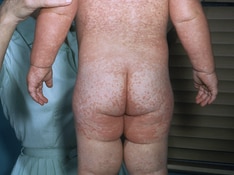
- Hand-foot-and-mouth (HFM) disease often affects children and spreads easily to other family members. Patients present with a sore throat and mouth. Vesicles that coalesce, form bullae, and then ulcerate form on the buccal mucosa and tongue. Seventy-five percent of patients have peripheral cutaneous lesions at approximately the same time. Biopsy reveals intracytoplasmic viral particles. The most common virus isolated is coxsackievirus A16.
- Herpangina is a vesicular enanthem of the posterior oropharynx with fever, sore throat, occasional throat exudate, odynophagia, and dysphagia, which is observed more often in children than in adults. Prompt recovery is typical, with almost all patients recovering completely.
- Epidemic pleurodynia
- This is a disease of muscles, and viral invasion of muscles causing inflammation is suspected; however, direct histologic evidence is lacking. Epidemic pleurodynia is usually associated with outbreaks of group B coxsackieviruses.
- Patients present with fever and sharp, paroxysmal, spasmodic pain in the chest and upper abdomen.
- All patients recover completely within 1 week.
- Acute hemorrhagic conjunctivitis
- Pain and edema of the eyelids and subconjunctival hemorrhage are present.
- Patients may also report photophobia, foreign body sensation, fever, malaise, and headache. These symptoms usually resolve spontaneously within 1 week.
- Rare complications include keratitis and motor paralysis.
- This condition is highly contagious and has resulted in epidemics and pandemics.
Physical: - Aseptic meningitis: On examination, patients may have signs of nuchal rigidity and other evidence of meningeal irritation, photophobia, pharyngitis, and rash.
- Encephalitis: In contrast to patients with aseptic meningitis, whose brain function is normal, patients with encephalitis may present with cerebral dysfunction manifested by altered mental status, personality changes, and neurologic deficits (eg, motor, sensory, speech impairment). An EEG may be helpful in localizing and characterizing the seizure focus.
- Presentation in patients with myopericarditis runs the gamut from asymptomatic to critical illness secondary to severe heart failure. Most patients report fever, malaise, upper respiratory tract symptoms, dyspnea, and chest pain. Chest pain is worse when lying down and better when sitting up and leaning forward.
- On examination, the point of maximal pulse (PMI) may be displaced, pericardial friction rub may be heard, and signs of heart failure (eg, S3 gallop, pulmonary edema) may be present.
- HFM: Physical examination is notable for vesicular lesions that may appear on the tongue or buccal mucosa, as well as the hands and feet, including the palms and soles. Uncommonly, the buttocks and genitalia may be involved. The vesicles are tender and may ulcerate. However, the vesicles are usually not pruritic, which helps to distinguish them from chickenpox lesions.
- Epidemic pleurodynia: On physical examination, edema of the involved muscles and tenderness to palpation may occur.
- AHC: Physical examination is notable for subconjunctival hemorrhage. Eye pain, edema of the eyelids, photophobia, and a serous discharge may be present. Slit lamp examination may reveal keratitis.
Causes: - Aseptic meningitis: Coxsackievirus B (serotypes 2-5) and echoviruses account for more than 90% of viral causes of aseptic meningitis.
- Exanthems: Coxsackieviruses cause many different types of rashes. Whether the viruses directly cause the rashes or immunologic mechanisms are responsible for the rashes is not known. An exception is HFM, in which viruses were isolated directly from the lesions. HFM is predominantly caused by coxsackievirus A16. In most other instances, rashes can be attributed to coxsackieviruses only if findings on concurrent polymerase chain reaction (PCR) or serology are positive.
- AHC: Coxsackievirus serotype A24 generally causes AHC. Transmission usually occurs by contact of contaminated fingers or fomites with the eyes. To prevent further transmission, strict handwashing should be encouraged and sharing of towels should be avoided.
|   |
DIFFERENTIALS
| Section 4 of 10  |
|
Ependymoma
Other Problems to be Considered:
Aseptic meningitis - Noninfectious
- Systemic lupus erythematosus (SLE)
- Sarcoidosis
- Nonsteroidal anti-inflammatory drug (NSAID) use
- Intravenous immunoglobulin (IVIG) use
- Infectious
- Partially treated bacterial meningitis
- Viruses (eg, HIV, lymphocytic choriomeningitis virus, adenovirus)
- Tuberculosis
- Leptospirosis
- Lyme borreliosis
Encephalitis
- Arboviruses
- Herpes simplex virus (HSV)
- Lymphocytic choriomeningitis virus
Myopericarditis
- Adenovirus
- Influenza A virus
- Mumps virus
- Vaccinia virus
- Respiratory syncytial virus (RSV)
- Epstein-Barr virus (EBV)
- Varicella-zoster virus (VZV)
- Measles
Exanthems
- HFM disease
- Herpes simplex: Patients are more ill, have higher fever and cervical adenopathy, and have no lesions on extremities.
- VZV: Patients are also more ill, rarely have oral lesions, and the palms of the hands and soles of the feet are rarely affected.
- Herpangina
- Other viral causes of pharyngitis and bacterial tonsillitis: These do not produce vesicular lesions.
- Primary herpetic gingivostomatitis: Gingivitis is prominent, and systemic toxicity and cervical lymphadenitis are present; scrapings of lesions do not reveal giant cells or intranuclear inclusions.
- HFM disease: These lesions also occur on extremities.
- Aphthous stomatitis: Lesions tend to be larger and occur in older children and adults.
Epidemic pleurodynia
- Pneumonia
- Pulmonary infarct
- Myocardial infarction
- Early zoster infection
- Acute abdomen
Acute hemorrhagic conjunctivitis
- Adenovirus causing keratoconjunctivitis: The incubation period is 1-3 weeks, whereas the incubation period is 1 day with AHC. In addition, subconjunctival hemorrhage is usually not observed with keratoconjunctivitis.
- Bacterial or chlamydial conjunctivitis must be considered, but these conditions usually do not cause an extensive outbreak.
|
|
Patient Education
|
|
Click here for patient education.
|
|
|
|
|
|   |
WORKUP
| Section 5 of 10  |
|
Lab Studies:
- Definitive diagnosis can be made based on isolation of the virus in cell culture. Cytopathic effect can usually be seen within 2-6 days. Samples are normally taken from the stool or rectal swabs but may be isolated from the oropharynx early in the disease course. False-positive culture results are possible, as excretion can occur for up to 8 weeks after initial infection. Serology can be difficult to interpret. Traditionally, enteroviral infections have been noted after a rise in neutralizing antibodies titer (at least a 4-fold rise in titer between acute and convalescent phase). PCR is also available, with a sensitivity of 66-90%.
- Aseptic meningitis: The workup needs to rule out bacterial meningitis, and appropriate antibiotics should be administered until the workup is complete. Diagnosis requires cerebrospinal fluid (CSF) evaluation, which tends to show a lymphocytic predominance, normal-to-decreased glucose levels, and normal-to-slightly elevated protein levels. The virus can be isolated via cell culture (sensitivity 30-35%) or PCR (sensitivity 66-90%).
- Encephalitis: Diagnostic workup requires CSF evaluation, which produces findings similar to aseptic meningitis.
- Myopericarditis: Diagnosis is generally circumstantial, with evidence of infection from the oropharynx, feces, or on serology.
- AHC: Diagnosis requires conjunctival swabs or scrapings, which are 90% successful. A rising antibody titer can be demonstrated.
Imaging Studies:
- A noncontrast head CT scan may be obtained upon initial presentation of patients with meningitis and/or encephalitis to rule out hemorrhage, increased intracranial pressure, or mass lesions.
- An echocardiogram can be used to evaluate overall cardiac function and valvular disease in patients with myopericarditis and heart failure.
Other Tests:
- Obtain a throat culture to rule out streptococcal pharyngitis and/or tonsillitis.
- HIV testing is always appropriate in patients presenting with nonspecific febrile illness or rashes.
- An EEG can be used to detect the presence of and localize seizure activity.
- ECG changes in myopericarditis include ST-segment elevations or nonspecific ST segment, T wave abnormalities, arrhythmia, and heart block.
Procedures:
- Lumbar puncture is crucial in the evaluation of meningitis and/or encephalitis.
- Skin biopsy may be helpful in the evaluation of nonspecific exanthems.
- Obtain a Tzank smear to rule out herpes virus infection.
Histologic Findings: Intracytoplasmic viral particles may be observed, especially with skin lesions and/or rashes of HFM.
|   |
TREATMENT
| Section 6 of 10  |
|
Medical Care: Medical care is generally supportive and can be offered on an outpatient basis. More severe symptoms may require inpatient admission for further workup and intervention. - Treatment is mainly supportive.
- Pleconaril, an enteroviral capsid-stabilizing drug, appears to reduce symptoms in a randomized double-blind study (N = 33), but it has not been licensed by the Food and Drug Administration (FDA).
- Not all patients require hospitalization, but consider admission for patients with changes in mental status or neurologic deficits.
- Myopericarditis: IVIG has been of anecdotal benefit, but no randomized trials have been conducted. A large prospective trial of prednisone with cyclosporine or azathioprine showed no difference compared to supportive treatment alone.
- Epidemic pleurodynia: Analgesics, narcotics, and heating pads are the mainstays of therapy. All patients recover completely within 1 week.
- AHC: Treatment is symptomatic, and no antimicrobial agent is necessary unless bacterial superinfection is present.
- Immunodeficient: Both IVIG and pleconaril have been used in immunocompromised patients with enteroviral infections (neonates and B-cell immunodeficient) with varying success.
Surgical Care: No surgical intervention is necessary unless patients develop complications such as meningitis and/or encephalitis with increased intracranial pressure, which requires ventriculostomy, or heart failure, which requires valve repair or cardiac transplant. Consultations: Consultants play an important role in cases with complex presentations. - A neurologist may help with evaluation of patients presenting with abnormal neurologic symptoms or with the management of the rare complications associated with meningitis.
- A neurosurgeon may be needed to assist with obtaining brain biopsies or placing a ventriculostomy tube because of increased intracranial pressure.
- A cardiologist helps with diagnosis and management of arrhythmia, heart failure, and heart block associated with myocarditis.
Diet: Diet is as tolerated. Activity: Bedrest is indicated for some patients.
|   |
MEDICATION
| Section 7 of 10  |
|
No FDA-approved therapy exists for the treatment of enteroviral infections. IVIG and pleconaril have been used in severe illness. Supportive use of analgesics and antipyretics are usually necessary.
|   |
FOLLOW-UP
| Section 8 of 10  |
|
Further Inpatient Care:
- Severe aseptic meningitis and/or encephalitis, seizures, myopericarditis, and heart failure require admission for workup and treatment. Antibiotics may be used until bacterial meningitis is ruled out. Supportive inpatient or intensive care may be necessary for severe cases.
Further Outpatient Care:
- No outpatient care, other than usual follow-up care, is required for patients with mild symptoms.
In/Out Patient Meds:
- Inpatient medications are based on the patient's presentation at admission (eg, phenytoin for seizure prophylaxis and/or suppression in patients with aseptic meningitis/encephalitis, digoxin in patients with heart failure).
- Antipyretics (eg, acetaminophen) for fever and NSAIDs for pain should be adequate for patients with mild symptoms who do not require hospital admission.
Transfer:
- Transfer to a tertiary facility may be necessary for specialized consultations or surgeries.
Deterrence/Prevention:
- Minimize respiratory contact with the infected patient if possible.
- To prevent further transmission, strict handwashing should be encouraged and sharing of towels should be avoided.
Complications:
- See History and Physical, which discuss the many presentations of coxsackievirus infections.
- Complications of aseptic meningitis include lethargy, seizures, coma, and movement disorders (5-10%).
- Complications of myopericarditis include pericardial effusion, arrhythmia, heart block, valvular dysfunction, and dilated cardiomyopathy.
- Rare complications of AHC include keratitis and motor paralysis.
Prognosis:
- In general, the prognosis is very good, with 90% of patients having no symptoms or experiencing mild, self-limited, nonspecific febrile illnesses or rashes.
Patient Education:
- Patients should be aware of the need for good hygiene practices to avoid transmission.
- Patients need to be reassured that they have a self-limited viral illness that does not require any antibiotics for treatment.
|   |
MISCELLANEOUS
| Section 9 of 10  |
|
Medical/Legal Pitfalls:
- Failure to diagnose bacterial meningitis may result in a poor outcome. All patients who have symptoms or CSF profiles suggestive of bacterial meningitis (WBC count >1000 cells, neutrophil predominance, hypoglycorrhachia, elevated protein levels) should be managed with antibiotics until cultures are negative for bacteria. Patients with severe courses and encephalitis should be evaluated for alternative causes of encephalitis (herpes simplex virus, arboviruses) that may be treatable.
- Failure to diagnose myocarditis promptly may result in cardiovascular complications. (eg, severe heart failure)
- Failure to obtain appropriate consultations early (eg, neurologist, neurosurgeon, cardiologist, cardiothoracic surgeon) could lead to delays in definitive management.
Special Concerns:
- In addition to fecal-oral and respiratory transmission, be aware that spread of coxsackieviruses via fomites is possible; therefore, appropriate actions should be taken. Careful handwashing and disposal of contaminated objects should decrease the spread of enteroviruses.
|   |
BIBLIOGRAPHY
| Section 10 of 10 |
|
-
Bergman I, Painter MJ, Wald ER, et al: Outcome in children with enteroviral meningitis during the first year of life. J Pediatr 1987 May; 110(5): 705-9[Medline].
-
Berlin LE, Rorabaugh ML, Heldrich F, et al: Aseptic meningitis in infants < 2 years of age: diagnosis and etiology. J Infect Dis 1993 Oct; 168(4): 888-92[Medline].
-
Centers for Disease Control and Prevention (CDC): Enterovirus surveillance--United States, 2002-2004. MMWR Morb Mortal Wkly Rep 2006 Feb 17; 55(6): 153-6[Medline].
-
Dagan R, Jenista JA, Menegus MA: Association of clinical presentation, laboratory findings, and virus serotypes with the presence of meningitis in hospitalized infants with enterovirus infection. J Pediatr 1988 Dec; 113(6): 975-8[Medline].
-
Dagan R, Menegus MA: A combination of four cell types for rapid detection of enteroviruses in clinical specimens. J Med Virol 1986 Jul; 19(3): 219-28[Medline].
-
Dulbecco R, Ginsberg H: Virology. 2nd ed. 1988: 207-209.
-
Jenista JA, Powell KR, Menegus MA: Epidemiology of neonatal enterovirus infection. J Pediatr 1984 May; 104(5): 685-90[Medline].
-
Levinson W, Jawetz E: Medical Microbiology & Immunology: Examination & Board Review. 6th ed. New York, NY: McGraw Hill Text; 2000: 238-239.
-
Modlin JF: Coxsackieviruses, echoviruses, and newer enteroviruses. In: Mandell, Douglas, and Bennett's Principles and Practice of Infectious Diseases. 5th ed. Philadelphia, Pa: Churchill-Livingstone; 2000: 1904-1919.
-
Moore M: Centers for Disease Control. Enteroviral disease in the United States, 1970-1979. J Infect Dis 1982 Jul; 146(1): 103-8[Medline].
-
Morens DM, Pallansch MA: Epidemiology. Human Enterovirus Infections 1995; 1.
-
Pallansch MA, Anderson LJ: Coxsackievirus, echovirus, and other enteroviruses. In: Gorbach SL, ed. Infectious Diseases. 2nd ed. Philadelphia, Pa: WB Saunders Co; 1998: 2164-2170.
-
Rantala H, Uhari M: Occurrence of childhood encephalitis: a population-based study. Pediatr Infect Dis J 1989 Jul; 8(7): 426-30[Medline].
-
Rorabaugh ML, Berlin LE, Heldrich F, et al: Aseptic meningitis in infants younger than 2 years of age: acute illness and neurologic complications. Pediatrics 1993 Aug; 92(2): 206-11[Medline].
-
Rotbart HA, Ahmed A, Hickey S: Diagnosis of enterovirus infection by polymerase chain reaction of multiple specimen types. Pediatr Infect Dis J 1997 Apr; 16(4): 409-11[Medline].
-
Rotbart HA, McCracken GH Jr, Whitley RJ: Clinical significance of enteroviruses in serious summer febrile illnesses of children. Pediatr Infect Dis J 1999 Oct; 18(10): 869-74[Medline].
-
Rotbart HA: Pleconaril therapy of potentially life-threatening enterovirus infections. 36th Annual Meeting of the Infectious Disease Society of America 1998.
-
Rotbart HA: Pleconaril treatment of enterovirus and rhinovirus infections. Infect Med 2000; 17: 488.
-
Rotbart HA: Treatment of picornavirus infections. Antiviral Res 2002 Feb; 53(2): 83-98[Medline].
-
Rotbart HA, Webster AD: Treatment of potentially life-threatening enterovirus infections with pleconaril. Clin Infect Dis 2001 Jan 15; 32(2): 228-35[Medline].
-
Sawyer MH, Holland D, Aintablian N, et al: Diagnosis of enteroviral central nervous system infection by polymerase chain reaction during a large community outbreak. Pediatr Infect Dis J 1994 Mar; 13(3): 177-82[Medline].
-
Schiff GM, Sherwood JR: Clinical activity of pleconaril in an experimentally induced coxsackievirus A21 respiratory infection. J Infect Dis 2000 Jan; 181(1): 20-6[Medline].
-
Voroshilova MK, Chumakov MP: Poliomyelitis-like properties of AB-IV Coxsackie A7 group of viruses. Prog Med Virol 1959; 2: 106.
-
Weller TH, Enders JF, Buckingham M, Finn JJ Jr: The etiology of epidemic pleurodynia: a study of two viruses isolated from a typical outbreak. J Immunol 1950 Sep; 65(3): 337-46[Medline].
Coxsackieviruses excerpt |