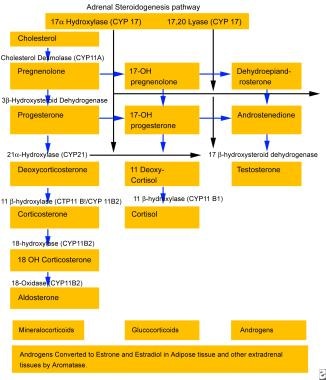
You are in: eMedicine Specialties > Endocrinology > Adrenal Gland C-17 Hydroxylase DeficiencyArticle Last Updated: May 12, 2006AUTHOR AND EDITOR INFORMATIONAuthor: Gabriel I Uwaifo, MBBS, Clinical and Research Attending, MedStar Clinical Research Center, Assistant Professor of Medicine and Endocrinology, The MedStar Research Institute and the Washington Hospital Center Gabriel I Uwaifo is a member of the following medical societies: American Association of Clinical Endocrinologists, American College of Physicians-American Society of Internal Medicine, American Diabetes Association, American Medical Association, American Society of Hypertension, and Endocrine Society Coauthor(s): Deborah P Merke, MD, Chief of Pediatric Services, Pediatric and Reproductive Endocrinology Branch, Warren Grant Magnuson Clinical Center; Clinical Investigator, National Institute of Child Health and Human Development Editors: Ghassem Pourmotabbed, MD †, Division of Endocrinology and Metabolism, Former Associate Professor, Department of Internal Medicine, University of Tennessee School of Medicine and Health Science Center; Francisco Talavera, PharmD, PhD, Senior Pharmacy Editor, eMedicine; Arthur B Chausmer, MD, PhD, FACP, FACE, FACN, CNS, Affiliate Research Professor, School of Computational Sciences; Principal, Bioinformatics and Computational Biology Program, C/A Informatics, LLC; Mark Cooper, MD, Head, Vascular Division, Baker Medical Research Institute; Professor of Medicine, Monash University; George T Griffing, MD, Professor of Medicine, Director of General Internal Medicine, St Louis University Author and Editor Disclosure Synonyms and related keywords: 17-alpha hydroxylase deficiency, congenital adrenal hyperplasia, CAH, sexual infantilism, hypertension, deoxycorticosterone, DOC, CYP17, gonadal steroidogenesis INTRODUCTIONBackgroundThe rare variant of congenital adrenal hyperplasia (CAH) known as 17-hydroxylase deficiency was first described in the 1960s in patients with sexual infantilism and hypertension. It has also been described to present in the setting of male pseudohermaphroditism. Patients with 17-hydroxylase deficiency have alterations in their CYP17 gene that encodes the P450C17 enzyme. This enzyme plays a central role in steroidogenesis (see Image 1). It is essential for the production of cortisol and sex steroids. Thus, patients with 17-hydroxylase deficiency have reduced secretion of cortisol, androgen, and estrogen, with both adrenal and gonadal steroidogenesis impairment. Although patients with 17-hydroxylase deficiency have decreased cortisol production, they do not have signs or symptoms of adrenal insufficiency due to elevations of corticosterone and glucocorticoids. CAH due to 17-hydroxylase deficiency is associated with hypertension and an excess of deoxycorticosterone (DOC), which is the second most common naturally occurring mineralocorticoid after aldosterone. DOC excess typically is associated with hypertension, hypokalemia, and renin and aldosterone suppression. Among the conditions associated with DOC excess are Cushing syndrome (particularly the ectopic adrenocorticotropic hormone [ACTH] variants and in the setting of adrenocortical carcinomas), adrenal tumors, CAH due to 11-hydroxylase deficiency, and primary cortisol resistance. PathophysiologyIn the zona fasciculata, the typical end-product of the steroid biosynthetic pathway is cortisol (see Image 1), and cortisol regulates pituitary ACTH production through negative feedback inhibition. Loss of 17-hydroxylase activity in the adrenal gland blocks the synthesis of cortisol and results in an increase in ACTH production. Aldosterone is the main mineralocorticoid produced by the adrenal zona glomerulosa, and its production is regulated by the renin-angiotensin-system. A 17-hydroxy pathway similar to the active pathway in the zona glomerulosa occurs in the zona fasciculata; however, the final product is corticosterone rather than aldosterone. Corticosterone is hydroxylated and oxidized at the 18 position to produce aldosterone in the glomerulosa, but not in the fasciculata. The adrenal fasciculata production of corticosterone, a weak glucocorticoid, and DOC, a potent mineralocorticoid, is minimal and relatively unimportant in healthy normal individuals, but it is important in patients with 17-hydroxylase deficiency. Patients with 17-hydroxylase deficiency do not manifest symptoms of adrenal insufficiency because of increased production of corticosterone, a glucocorticoid. Because corticosterone is a weaker glucocorticoid than cortisol, very high levels of corticosterone are necessary before feedback inhibition on pituitary ACTH production occurs. As a result, a new steady state is established, with dramatically elevated levels of steroid intermediates such as progesterone, DOC, and corticosterone. As the biosynthetic pathway diagram shows (see Image 1), 17-hydroxylase is not required for aldosterone synthesis. However, the elevated DOC levels from the zona fasciculata result in salt retention, volume expansion, hypertension, hypokalemia, and downregulation of the renin-angiotensin axis. This secondarily inhibits aldosterone production, which is typically virtually absent in affected patients. The persistently elevated ACTH levels continue to drive overproduction of the preceding precursors, especially progesterone, DOC, and corticosterone. In these patients, DOC is principally under the control of ACTH rather than angiotensin, and it is predominantly secreted by the zona fasciculata rather than the glomerulosa. DOC is metabolized in the liver to tetrahydro-DOC, which is then conjugated to glucuronic acid and excreted in the urine. DOC can be further hydroxylated to 19-Nor-DOC, which also is a potent mineralocorticoid. Thus, 19-Nor-DOC levels also are elevated in patients with this syndrome. In all variants of 17-hydroxylase deficiency, the production of sex steroids is absent, resulting in a compensatory increase in follicle-stimulating hormone and luteinizing hormone, comparable to menopausal levels. In humans, the gene product for 17-alpha hydroxylase (P450C17) is expressed in the adrenal cortex, testis, and ovaries but not the placenta. The adrenals produce glucocorticoids, mineralocorticoids, and C-19 steroids. The gonads, on the other hand, predominantly produce the C-19 steroids and sex hormones. Thus, in patients with 17-hydroxylase deficiency, both adrenal and gonadal steroidogenesis are impaired. P450C17 performs multiple biochemical transformations. It 17-hydroxylates pregnenolone and progesterone and also is responsible for 17,20-lyase activity. Lin and colleagues described the differential regulation of the 2 principal activities of P450C17. Also, Zhang and associates described the developmentally regulated expression of P450C17. They suggest that P450C17 may play an important role in adrenarche, an event in children that is characterized by a dramatic rise in adrenal dehydroepiandrosterone (DHEA) production. Patients with 17-hydroxylase deficiency typically have impairments of both 17-alpha-hydroxylase and 17,20-lyase activity. Recently, cases of isolated 17,20-lyase deficiency have been described, and CYP17 gene mutations have been confirmed by molecular genetic studies. Similarly, cases of isolated 17-alpha-hydroxylase deficiency have also been described. FrequencyUnited StatesThe disorder reportedly is very rare. It comprises less than 1% of all patients with CAH. At least 14 cases of isolated 17,20 lyase deficiency have been reported in the presence of normal 17-alpha-hydroxylase activity. InternationalA deficiency of 21-hydroxylase is by far the most common variant of CAH (95% of all cases), but the exact prevalence of 17-hydroxylase deficiency is unknown. Most authorities indicate that it is rare and certainly less common than 11-beta-hydroxylase deficiency. More than 120 cases of C-17 hydroxylase deficiency have been reported in the world medical literature. Prevalence may be more common in Brazil where there appears to be a founder effect with more than 80% of the gene mutations identified being due to two specific mutations. In Japan, several cases of 17-alpha hydroxylase deficiency have been reported associated with elevated aldosterone levels. The exact pathophysiologic mechanism for this enigmatic situation is unclear. Mortality/Morbidity
Race
Sex
Age
CLINICALHistoryThis syndrome typically is first recognized in puberty, with the discovery of hypertension, hypokalemia, and hypogonadism. Patients present as phenotypic females with sexual infantilism and primary amenorrhea. Genetic male (XY) patients typically present with complete male pseudohermaphroditism characterized by female external genitalia, a blind ending vagina but no uterus or fallopian tubes. These patients tend to have intra-abdominal testicles. Less severely affected XY patients may present earlier in life with ambiguous genitalia due to underproduction of androgens. Typically, male patients have been raised as females, and the condition is only identified during puberty when the expected pubertal changes do not occur and then in-depth investigation is carried out.
PhysicalIn the classic variants, both 46,XY and 46,XX patients present as phenotypic females.
Causes
DIFFERENTIALSAdrenal Adenoma Amenorrhea, Primary C-11 Hydroxylase Deficiency Conn Syndrome Cushing Syndrome Encephalopathy, Hypertensive Hyperaldosteronism, Primary Hypokalemia Hypomagnesemia Hyporeninemic Hypoaldosteronism Infertility Infertility, Male Metabolic Alkalosis Osteoporosis Ovarian Failure
|
| Drug Name | Dexamethasone (Decadron, AK-Dex, Alba-Dex) |
|---|---|
| Description | Synthetic adrenocortical steroid. White, odorless, and crystalline powder that is stable in air and practically insoluble in water. Lacks virtually any mineralocorticoid activity. |
| Adult Dose | 0.25-0.5 mg/d PO qd or divided bid |
| Pediatric Dose | Not established |
| Contraindications | Documented hypersensitivity; appropriate caution in active bacterial or fungal infections |
| Interactions | Phenytoin, phenobarbital, ephedrine, and rifampin may enhance metabolic clearance of corticosteroids, resulting in decreased blood levels and lessened physiologic activity, thus requiring adjustment in corticosteroid dosage Prothrombin time should be checked frequently in patients who are receiving corticosteroids and coumarin anticoagulants at the same time because of reports that corticosteroids have altered the response to these anticoagulants; studies have shown that the usual effect produced by adding corticosteroids is inhibition of response to coumarins, although some conflicting reports of potentiation exist that are not substantiated by studies When corticosteroids are administered concomitantly with potassium-depleting diuretics, patients should be observed closely for development of hypokalemia |
| Pregnancy | C - Safety for use during pregnancy has not been established. |
| Precautions | In patients on corticosteroid therapy subjected to unusual stress, increased dosage of rapidly acting corticosteroids before, during, and after the stressful situation is indicated; drug-induced secondary adrenocortical insufficiency may result from too rapid withdrawal of corticosteroids and may be minimized by gradual reduction of dosage; this type of relative insufficiency may persist for months after discontinuation of therapy; therefore, in any situation of stress occurring during that period, hormone therapy should be reinstituted; if the patient is receiving steroids already, dosage may have to be increased Corticosteroids may mask some signs of infection, and new infections may appear during their use, particularly when used in high doses Following prolonged therapy, withdrawal of corticosteroids may result in symptoms of corticosteroid withdrawal syndrome, including fever, myalgia, arthralgia, and malaise; this may occur in patients even without evidence of adrenal insufficiency Effect of corticosteroids is enhanced in patients with hypothyroidism and in those with cirrhosis Corticosteroids should be used cautiously in patients with ocular herpes simplex because of possible corneal perforation Lowest possible dose of corticosteroids should be used to control the condition under treatment, and when reduction in dosage is possible, the reduction should be gradual Psychic derangements may appear when corticosteroids are used, ranging from euphoria, insomnia, mood swings, personality changes, and severe depression to frank psychotic manifestations; existing emotional instability or psychotic tendencies may be aggravated Steroids should be used with caution in nonspecific ulcerative colitis if probability of impending perforation, abscess, or other pyogenic infection, diverticulitis, fresh intestinal anastomoses, active or latent peptic ulcer, renal insufficiency, hypertension, osteoporosis, and myasthenia gravis; signs of peritoneal irritation following gastrointestinal perforation in patients receiving large doses of corticosteroids may be minimal or absent; fat embolism has been reported as a possible complication of hypercortisolism When large doses are given, some authorities advise that corticosteroids be taken with meals and that antacids taken between meals to help to prevent peptic ulcer Steroids may increase or decrease motility and number of spermatozoa in some patients |
| Drug Name | Hydrocortisone (Hydrocortone, HydroTex, Hydrocort) |
|---|---|
| Description | Principal hormone secreted by the adrenal cortex. White, odorless, crystalline powder largely insoluble in water. Readily absorbed from the GI tract. |
| Adult Dose | Maintenance: 15-30 mg/d PO divided bid/tid Surgery: 100 mg/m2 IV q6h for 24 h |
| Pediatric Dose | 12-25 mg/m2/d PO divided bid/tid |
| Contraindications | Documented hypersensitivity; use with caution in active viral, fungal, or tubercular skin infections |
| Interactions | Corticosteroid clearance may decrease with estrogens; glucocorticoids may increase digitalis toxicity secondary to hypokalemia; phenobarbital, phenytoin, and rifampin may increase metabolism of glucocorticoids (consider increasing maintenance dose) |
| Pregnancy | B - Usually safe but benefits must outweigh the risks. |
| Precautions | Increase dosages before, during, and after stressful situations Carefully observe infants born to mothers who have received substantial doses of corticosteroids (particularly dexamethasone) during pregnancy for signs of hypoadrenalism; corticosteroids appear in breast milk and could suppress growth or interfere with dosing in the infant Following prolonged high-dose therapy, lower doses may result in symptoms of corticosteroid withdrawal syndrome, including fever, myalgias, arthralgia, and malaise (may occur in patients even without evidence of adrenal insufficiency) Enhanced effect occurs in patients with hypothyroidism or cirrhosis Carefully monitor growth and development of pediatric patients on prolonged therapy Potential adverse effects of high doses include sodium or fluid retention, congestive heart failure, potassium loss, hypokalemic alkalosis, hypertension, muscle weakness, steroid myopathy, loss of muscle mass, osteoporosis, vertebral compression fractures, aseptic necrosis of femoral and humeral heads, pathologic fracture of long bones, tendon rupture, peptic ulcer, impaired wound healing, thin and fragile skin, petechiae and ecchymoses, convulsions, increased intracranial pressure with papilledema (pseudotumor cerebri) usually after treatment Other adverse reactions may include psychic disturbances (including frank psychosis or euphoria), menstrual irregularities, development of cushingoid state, growth suppression in children, secondary adrenocortical and pituitary unresponsiveness (particularly in times of stress, trauma, surgery, or illness), decreased carbohydrate tolerance, manifestations of latent diabetes mellitus, increased requirements for insulin or oral hypoglycemic agents in patients with diabetes, hirsutism, cataracts, or glaucoma |
| Drug Name | Prednisone (Deltasone, Orasone) |
|---|---|
| Description | Recommended for use in older patients because it is longer-acting than hydrocortisone. |
| Adult Dose | 5-7.5 mg/d PO divided bid |
| Pediatric Dose | Not established |
| Contraindications | Documented hypersensitivity |
| Interactions | Coadministration with estrogens may decrease prednisone clearance; concurrent use with digoxin may cause digitalis toxicity secondary to hypokalemia; phenobarbital, phenytoin, and rifampin may increase metabolism of glucocorticoids (consider increasing maintenance dose); monitor for hypokalemia with coadministration of diuretics |
| Pregnancy | C - Safety for use during pregnancy has not been established. |
| Precautions | Abrupt discontinuation of glucocorticoids may cause adrenal crisis; hyperglycemia, edema, osteonecrosis, myopathy, peptic ulcer disease, hypokalemia, osteoporosis, euphoria, psychosis, myasthenia gravis, growth suppression, and infections may occur with glucocorticoid use |
For the purpose of hormone replacement and induction of puberty. Treatment of moderate to severe vasomotor symptoms associated with menopause and vulval and vaginal atrophy. Hypoestrogenism due to hypogonadism, castration, primary ovarian failure, prevention of osteoporosis. No adequate evidence supports that estrogens are effective for nervous symptoms or depression that might occur during menopause, and they should not be used to treat these conditions.
| Drug Name | Estradiol-17B (Estrace, Climara) |
|---|---|
| Description | White crystalline solid, chemically described as estra-1,3,5(10)-triene-3,17(beta)-diol. Estrogen drug products act by regulating transcription of a limited number of genes. Estrogens diffuse through cell membranes, distribute themselves throughout the cell, and bind to and activate the nuclear estrogen receptor, a DNA-binding protein found in estrogen-responsive tissues. The activated estrogen receptor binds to specific DNA sequences or hormone-response elements, which enhances transcription of adjacent genes and, in turn, leads to the observed effects. Estrogen receptors have been identified in tissues of the reproductive tract, breast, pituitary, hypothalamus, liver, and bone of women. Estrogens are important in the development and maintenance of the female reproductive system and secondary sex characteristics. By a direct action, they cause growth and development of the uterus, fallopian tubes, and vagina. With other hormones, such as pituitary hormones and progesterone, they cause enlargement of the breasts through promotion of ductal growth, stromal development, and the accretion of fat. Estrogens are intricately involved with other hormones, especially progesterone, in the processes of ovulatory menstrual cycle and pregnancy and affect release of pituitary gonadotropins. They also contribute to shaping of the skeleton, maintenance of tone and elasticity of urogenital structures, changes in epiphyses of long bones that allow for the pubertal growth spurt and its termination, and pigmentation of nipples and genitals. Estrogens occur naturally in several forms. The primary source of estrogen in normally cycling adult women is the ovarian follicle, which secretes 70-500 mcg of estradiol daily, depending on phase of the menstrual cycle. This is converted primarily to estrone, which circulates in roughly equal proportion to estradiol, and to small amounts of estriol. After menopause, most endogenous estrogen is produced by conversion of androstenedione, secreted by the adrenal cortex, to estrone by peripheral tissues. Thus, estrone, especially in its sulfate ester form, is the most abundant circulating estrogen in postmenopausal women. Although circulating estrogens exist in a dynamic equilibrium of metabolic interconversions, estradiol is the principal intracellular human estrogen and is substantially more potent than estrone or estriol at the receptor. Estrogens used in therapy are well absorbed through the skin, mucous membranes, and gastrointestinal tract. When applied for a local action, absorption usually is sufficient to cause systemic effects. When conjugated with aryl and alkyl groups for parenteral administration, the rate of absorption of oily preparations is slowed, with a prolonged duration of action such that a single IM injection of estradiol valerate or estradiol cypionate is absorbed over several wk. Administered estrogens and their esters are handled essentially the same as the endogenous hormones within the body. Metabolic conversion of estrogens occurs primarily in the liver (first pass effect) but also at local target tissue sites. Complex metabolic processes result in a dynamic equilibrium of circulating conjugated and unconjugated estrogenic forms that are continually interconverted, especially between estrone and estradiol, and between esterified and nonesterified forms. Although naturally occurring estrogens circulate in the blood largely bound to sex hormone-binding globulin and albumin, only unbound estrogens enter target tissue cells. A significant proportion of the circulating estrogen exists as sulfate conjugates, especially estrone sulfate, which serves as a circulating reservoir for the formation of more active estrogenic species. A certain proportion of the estrogen is excreted into the bile and then reabsorbed from the intestine. During this enterohepatic recirculation, estrogens are desulfated and resulfated and undergo degradation through conversion to less active estrogens (estriol and other estrogens), oxidation to nonestrogenic substances (catechol-estrogens, which interact with catecholamine metabolism, especially in the CNS), and conjugation with glucuronic acids (which are then rapidly excreted in the urine). When given PO, naturally occurring estrogens and their esters are extensively metabolized (first pass effect) and circulate primarily as estrone sulfate, with smaller amounts of other conjugated and unconjugated estrogenic species. This results in limited oral potency. In contrast, synthetic estrogens, such as ethinyl estradiol and the nonsteroidal estrogens, are degraded very slowly in the liver and other tissues, which results in their high intrinsic potency. Estrogen drug products administered by nonoral routes are not subject to first-pass metabolism but also undergo significant hepatic uptake, metabolism, and enterohepatic recycling. Transdermal estrogen preparations provide systemic estrogen replacement therapy by delivering estradiol, the major estrogenic hormone secreted by the human ovary, through the area of intact skin covered by the system. Circulating estrogen concentration modulates the pituitary secretion of the gonadotrophins LH and FSH through a negative feedback mechanism, and estrogen replacement therapy acts to reduce the elevated levels of these hormones seen in postmenopausal women. Therapy with Estrace (estradiol tabs, USP) should be initiated as soon as possible after menopause to prevent postmenopausal bone loss. Induction of puberty may be individualized and adjusted according to patient's needs. |
| Adult Dose | 1-2 mg PO qd Menopause: 0.5 mg qd administered cyclically (23 d on, 5 d off); dosage may be adjusted if necessary to control concurrent menopausal symptoms 0.05-0.1 mg twice weekly for transdermal replacement therapy (Alora) and 0.05-0.1 mg qwk |
| Pediatric Dose | 0.3 mg conjugated estrogens or 5 mcg ethinyl estradiol qd PO for 6-12 months, followed by cyclic therapy to achieve breast development and uterine growth |
| Contraindications | Documented hypersensitivity; known or suspected pregnancy (may cause fetal harm when administered to pregnant women); undiagnosed abnormal genital bleeding; known or suspected breast cancer, except in appropriately selected patients being treated for metastatic disease; known or suspected estrogen-dependent neoplasia; active thrombophlebitis or thromboembolic disorders |
| Interactions | May reduce hypoprothrombinemic effects of anticoagulants; estrogen levels may be reduced with coadministration of barbiturates, rifampin, and other agents that induce hepatic microsomal enzymes; an increase in corticosteroid levels may occur when administered concurrently with ethinyl estradiol; use of ethinyl estradiol with hydantoins may cause spotting, breakthrough bleeding, and pregnancy; increase in fluid retention caused by estrogen intake may reduce seizure control |
| Pregnancy | X - Contraindicated in pregnancy |
| Precautions | Reported to increase risk of endometrial carcinoma in postmenopausal women Because estrogen administration is associated with risk, selection of patients ideally should be based on prospective identification of risk factors for developing osteoporosis; use care in patients with significant family history of breast cancer and gallbladder disease Occasional blood pressure increases during estrogen replacement therapy have been attributed to idiosyncratic reactions to estrogens; blood pressure should be monitored at regular intervals with estrogen use Administration of estrogens may lead to severe hypercalcemia in patients with breast cancer and bone metastases; if this occurs, the drug should be stopped and appropriate measures taken to reduce the serum calcium level Possible risks that may be associated with the use of progestins in estrogen replacement include adverse effects on lipoprotein metabolism (lowering HDL and raising LDL), which could diminish the purported cardioprotective effect of estrogen therapy; impairment of glucose tolerance; and possible enhancement of mitotic activity in breast epithelial tissue, changes in vaginal bleeding pattern, and abnormal withdrawal bleeding or flow Breakthrough bleeding and spotting, increase in size of uterine leiomyomata and vaginal candidiasis change in amount of cervical secretion, breast tenderness and/or enlargement, nausea, and vomiting may occur Abdominal cramps, bloating, cholestatic jaundice, increased incidence of gallbladder disease, chloasma or melasma that may persist when drug is discontinued, erythema multiforme, erythema nodosum, hemorrhagic eruption, loss of scalp hair, hirsutism, intolerance to contact lenses, headache, migraine, dizziness, mental depression, chorea, increase or decrease in weight, reduced carbohydrate tolerance, aggravation of porphyria, edema, and changes in libido may occur |
Used for secondary amenorrhea; abnormal uterine bleeding due to hormonal imbalance in the absence of organic pathology (eg, fibroids or uterine cancer) and as part of combination hormone replacement therapy in premenopausal and postmenopausal XX adult patients.
| Drug Name | Medroxyprogesterone acetate (Cycrin, Provera, Amen) |
|---|---|
| Description | Administered orally or parenterally in the recommended doses to women with adequate endogenous estrogen, transforms proliferative into secretory endometrium. Androgenic and anabolic effects have been noted, but the drug is apparently devoid of significant estrogenic activity. While parenterally administered medroxyprogesterone acetate inhibits gonadotropin production, which, in turn, prevents follicular maturation and ovulation, available data indicate that this does not occur when the usual recommended oral dosage is given as a single daily dose. Progestational agents have been used beginning with the first trimester of pregnancy in an attempt to prevent habitual abortion. No adequate evidence suggests that such use is effective when such drugs are given during the first 4 mo of pregnancy. Furthermore, in the vast majority of women, the cause of abortion is a defective ovum, which progestational agents could not be expected to influence. In addition, the use of progestational agents, with their uterine-relaxant properties, in patients with fertilized defective ova may cause a delay in spontaneous abortion. Therefore, the use of such drugs during the first 4 mo of pregnancy is not recommended. Dose is variable depending on progestogen type being used. |
| Adult Dose | PO formulations from the 10th through 21st day of menstrual cycle |
| Pediatric Dose | Children: Not established Adolescents: Administer as in adults |
| Contraindications | Documented hypersensitivity; thrombophlebitis, thromboembolic disorders, cerebral apoplexy, or patients with a past history of these conditions; liver dysfunction or disease; known or suspected malignancy of breast or genital organs; undiagnosed vaginal bleeding, missed abortion |
| Interactions | May decrease effects of aminoglutethimide |
| Pregnancy | X - Contraindicated in pregnancy |
| Precautions | Physician should be alert to earliest manifestations of thrombotic disorders (thrombophlebitis, cerebrovascular disorders, pulmonary embolism, and retinal thrombosis) and discontinue drug if signs occur Discontinue medication pending examination if sudden partial or complete loss of vision occurs or if a sudden onset of proptosis, diplopia, or migraine occurs; if examination reveals papilledema or retinal vascular lesions, medication should be withdrawn Detectable amounts of progestin have been identified in the milk of mothers receiving the drug; pretreatment physical examination should include special reference to breast and pelvic organs and Papanicolaou smear Because progestogens may cause some degree of fluid retention, conditions that might be influenced by this factor (eg, epilepsy, migraine, asthma, cardiac or renal dysfunction) require careful observation In cases of breakthrough bleeding, as in all cases of irregular bleeding per vaginam, nonfunctional causes should be borne in mind; in cases of undiagnosed vaginal bleeding, adequate diagnostic measures are indicated Patients who have a history of psychic depression should be carefully observed and the drug discontinued if depression recurs to a serious degree Patients with diabetes should be carefully observed while receiving progestin therapy The age of the patient constitutes no absolute limiting factor, although treatment with progestins may mask the onset of the climacteric Because of the occasional occurrence of thrombotic disorders (thrombophlebitis, pulmonary embolism, retinal thrombosis, cerebrovascular disorders), the physician should be alert to the earliest manifestation of these disorders; potential risks include adverse effects on carbohydrate and lipid metabolism Skin sensitivity reactions consisting of urticaria, pruritus, edema, and generalized rash have occasionally occur Acne, alopecia, and hirsutism have been reported in a few cases Thromboembolic phenomena including thrombophlebitis and pulmonary embolism may occur Adverse reactions include breakthrough bleeding, spotting, change in menstrual flow, amenorrhea, edema, change in weight (increase or decrease), changes in cervical erosion and cervical secretions, cholestatic jaundice, anaphylactoid reactions and anaphylaxis rash (allergic) with and without pruritus, mental depression, pyrexia, insomnia, nausea, and somnolence |
These are used for hormone replacement therapy in male patients with significant hypogonadism and to assist with induction of puberty in patients with absent or delayed onset of puberty.
| Drug Name | Testosterone (Andro-LA, Delatest, Androderm) |
|---|---|
| Description | Indicated for testosterone replacement therapy in men for conditions associated with a deficiency or absence of endogenous testosterone. These include primary hypogonadism (congenital or acquired); testicular failure due to cryptorchidism, bilateral torsion, orchitis, vanishing testis syndrome, or orchidectomy; Klinefelter syndrome; chemotherapy; or toxic damage from alcohol or heavy metals. These men usually have low serum testosterone concentrations accompanied by gonadotropins (FSH, LH) above the normal range. Other conditions include secondary, ie, hypogonadotropic hypogonadism (congenital or acquired); idiopathic gonadotropin or luteinizing hormone-releasing hormone (LHRH) deficiency; or pituitary-hypothalamic injury from tumors, trauma, or radiation. These men have low serum testosterone concentrations without associated elevation in gonadotropins. Appropriate adrenal cortical and thyroid hormone replacement therapy may be necessary in patients with multiple pituitary or hypothalamic abnormalities. Transdermal systems deliver physiologic amounts of testosterone, producing circulating testosterone concentrations that approximate the normal circadian rhythm of healthy young men. The other major replacement method is using IM injections given every 1-2 wk. In Europe particularly and far less so in the US, testosterone also is repleted by SC testosterone pellet implantation that is done every 5-6 mo. Androderm (testosterone transdermal system) delivers testosterone, the primary androgenic hormone. Testosterone is responsible for the normal growth and development of the male sex organs and for maintenance of secondary sex characteristics. These effects include the growth and maturation of the prostate, seminal vesicles, penis, and scrotum; development of male hair distribution, such as facial, pubic, chest, and axillary hair; laryngeal enlargement; vocal cord thickening; and alterations in body musculature and fat distribution. Male hypogonadism results from insufficient secretion of testosterone and is characterized by low serum testosterone concentrations. Symptoms associated with male hypogonadism include impotence and decreased sexual desire, fatigue and loss of energy, mood depression, and regression of secondary sexual characteristics. Androgens promote retention of nitrogen, sodium, potassium, and phosphorus, and decreased urinary excretion of calcium. Androgens have been reported to increase protein anabolism and decrease protein catabolism. Nitrogen balance is improved only when sufficient intake of calories and protein occurs. Androgens also are responsible for the growth spurt of adolescence and for the eventual termination of linear growth that is brought about by the fusion of the epiphyseal growth centers. In children, exogenous androgens accelerate linear growth rates but may cause disproportionate advancement in bone maturation. Long-term use may result in fusion of the epiphyseal growth centers and termination of the growth process. Androgens have been reported to stimulate the production of red blood cells by enhancing erythropoietin production. During exogenous administration of androgens, endogenous testosterone release is inhibited through feedback inhibition of pituitary LH secretion. With large doses of exogenous androgens, spermatogenesis also may be suppressed through feedback inhibition of pituitary follicle-stimulating hormone (FSH) secretion. Substantial evidence indicating that androgens are effective in accelerating fracture healing or in shortening postsurgical convalescence is lacking. |
| Adult Dose | 50-200 mg IM q2-4wk (usually as testosterone enanthate) 2.5-7.5 mg TD qd |
| Pediatric Dose | Microphallus in neonates: 25-50 mg testosterone enanthate IM monthly times 3 doses Development of male secondary sexual characteristics: 50 mg IM testosterone enanthate monthly; increase gradually over 2-4 y to adult dose; pace of pubertal development may be individualized and adjusted according to patient needs |
| Contraindications | Documented hypersensitivity; men with breast carcinoma or known or suspected prostate carcinoma; patients with known hypersensitivity to components used in its constitution for IM, transdermal, or pellet preparations |
| Interactions | May decrease anticoagulant requirements of patients receiving oral anticoagulants; patients receiving oral anticoagulants require close monitoring, especially when androgens are started or stopped; concurrent administration with oxyphenbutazone may result in elevated serum levels of oxyphenbutazone; in patients with diabetes, metabolic effects of androgens may decrease blood glucose and, therefore, insulin requirements |
| Pregnancy | X - Contraindicated in pregnancy |
| Precautions | Prolonged use of high doses of orally active 17-alpha-alkyl androgens (eg, methyltestosterone) associated with the development of peliosis hepatis, cholestatic jaundice, and hepatic neoplasms, including hepatocellular carcinoma; peliosis hepatis can be a life-threatening or fatal complication; testosterone is not known to produce these adverse effects Elderly patients treated with androgens may be at increased risk prostatic hyperplasia Elderly patients and other patients with clinical or demographic characteristics that are recognized to be associated with an increased risk of prostate cancer should be evaluated for the presence of subclinical or clinical prostate cancer prior to initiation of testosterone replacement therapy because therapy may promote growth of existing subclinical foci of prostate cancer; in men receiving testosterone replacement therapy, surveillance for prostate cancer should be consistent with current practices for agonadal men Edema, with or without congestive heart failure, may be a serious complication of androgen treatment in patients with preexisting cardiac, renal, or hepatic disease (in addition to discontinuation of the drug, diuretic therapy may be required) Gynecomastia frequently develops and occasionally persists in patients being treated for hypogonadism; physician should instruct patients to report any of the following adverse effects: too frequent or persistent erections of the penis, nausea, vomiting, jaundice, or ankle swelling Virilization of female sexual partners has been reported with male use of a topical testosterone solution; topically applied creams leave as much as 90 mg residual testosterone on the skin; the occlusive backing film on Androderm (testosterone transdermal system) prevents the partner from coming in contact with the active material in the system (transfer of the system to the partner is unlikely); changes in body hair distribution, significant increase in acne, or other signs of virilization of the female partner should be brought to the attention of a physician In patients with hypogonadism on testosterone replacement, significant mood and behavioral changes may occur, including increased aggressiveness and or violent tendencies Hemoglobin and hematocrit should be checked periodically to detect polycythemia in patients who are receiving androgen therapy; liver function, prostate specific antigen, total cholesterol and HDL cholesterol should be checked periodically Major adverse reactions associated with testosterone include hirsutism; male pattern of baldness; seborrhea; acne; gynecomastia; excessive frequency and duration of penile erections; oligospermia (may occur at high dosages); retention of sodium, chloride, water, potassium, calcium, and inorganic phosphates; nausea; cholestatic jaundice; and alterations in liver function tests Rare instances of hepatocellular neoplasms and peliosis hepatis have occurred Other adverse reactions include suppression of clotting factors II, V, VII, and X; bleeding in patients on concomitant anticoagulant therapy and polycythemia; increased or decreased libido, headache, anxiety, depression, and generalized paresthesia; increased serum cholesterol; and, rarely, anaphylactoid reactions Local irritant effects from the transdermal patches may manifest as itching or local dermatitis Testosterone therapy has not been evaluated systematically in women and must not be used in women (except in the setting of IRB-approved research protocols); may cause fetal harm |
| Drug Name | Dehydroepiandrosterone, prasterone (Aslera, GL701, Vitamist DHEA-M for men) |
|---|---|
| Description | Use of adrenal androgen replacement therapy is controversial and not FDA-approved. However, the fact that DHEA constitutes a major component of circulating androgens in healthy women suggests some utility for its replacement in women with adrenal insufficiency. Although available over the counter as a "health supplement" and widely popular in the lay public, few well-conducted studies have fully investigated the utility of DHEA. The major potential area of indication that seems to be appearing is in hormone replacement (androgen replacement) for women with adrenal insufficiency. Recent studies by Callies and associates suggest that, although DHEA oral replacement at 50 mg/d is not associated with significant changes in BMI or parameters of body composition in this group of women, it seems to be associated with significant improvement in well being and sexuality. DHEA is a C-19 steroid also known as 5-androsten-3 beta-ol-17-one. DHEA and DHEAS (an active sulfated form of DHEA) are endogenous hormones secreted by the adrenal cortex in humans, other primates, and a few nonprimate species in response to ACTH. DHEA is a steroid precursor of both androgens and estrogens. Endogenous DHEA is thought to be important in several endocrine processes, but current medical use of DHEA is limited to controlled clinical trials. In 1984, the FDA banned the nonprescription (OTC) sale of exogenous DHEA due to concern over hepatotoxicity noted in animal studies. The FDA formally relegated DHEA to a category II OTC ingredient at that time (ie, not generally recognized as safe and effective). However, in 1994, the passage of the US Dietary Supplement Health and Education Act (DSHEA) allowed DHEA to be marketed as a nutritional supplement, which is the means by which it is accessed presently by most people. Endogenous DHEA is synthesized by the conversion of cholesterol via CYP11A1 to pregnenolone, followed by CYP17 conversion to DHEA, and then to DHEAS via dehydroepiandrosterone sulfatransferase. The synthesis of DHEA occurs exclusively in the adrenal cortex in women, while in men, 10-25% of DHEA is synthesized by the testes and roughly 80% of the DHEA comes from the adrenal glands. DHEA is converted via hydrosteroid dehydrogenases and aromatase into androstenedione, androstenediol, testosterone, and estradiol by peripheral tissues. The administration of DHEA supplements results in different hormonal concentration changes in males and females; the actions are dependent on the dose, formulation, route of administration, and age of the person receiving the DHEA. DHEA has been administered via IV, SC, percutaneous, vaginal, topical, or PO routes in clinical trials. As a nutritional supplement, DHEA is most commonly administered PO. Many DHEA products available as nutritional supplements contain varied amounts of DHEA and do not appear to be manufactured according to good manufacturing processes. Using HPLC techniques, one study found that only 7 of 16 assayed products contained DHEA within a 10% variation of the labeled content. Some products contained no detectable DHEA. |
| Adult Dose | 50 mg qd/bid |
| Pediatric Dose | Not established |
| Contraindications | Documented hypersensitivity; underlying hepatic disease and/or hepatic impairment; bipolar disorder, breast cancer, breastfeeding, children, diabetes mellitus, endometrial cancer, endometrial hyperplasia, erectile dysfunction, G6PD deficiency, hepatocellular cancer, infertility, ovarian cancer, porphyria, pregnancy, prostate cancer, prostatic hypertrophy, soya lecithin hypersensitivity, uterine cancer, vaginal bleeding, vaginal cancer |
| Interactions | Actions of DHEA on other exogenous hormonal regimens (eg, androgens, estrogens, oral contraceptives, or progestins) are unclear; either additive or antagonistic effects potentially can occur |
| Pregnancy | C - Safety for use during pregnancy has not been established. |
| Precautions | Elderly patients treated with androgens may be at increased risk for prostatic hyperplasia; elderly patients and other patients with clinical or demographic characteristics that are recognized to be associated with an increased risk of prostate cancer should be evaluated for the presence of subclinical or clinical prostate cancer prior to initiation of testosterone replacement therapy because testosterone therapy may promote growth of existing subclinical foci of prostate cancer; in men receiving testosterone replacement therapy, surveillance for prostate cancer should be consistent with current practices for agonadal men Edema, with or without congestive heart failure, may be a serious complication of androgen treatment in patients with preexisting cardiac, renal, or hepatic disease (in addition to discontinuation of the drug, diuretic therapy may be required) Gynecomastia frequently develops and occasionally persists in patients being treated for hypogonadism; physician should instruct patients to report any of the following adverse effects; too frequent or persistent erections of the penis, nausea, vomiting, jaundice, or ankle swelling Virilization of female sexual partners has been reported with male use of a topical testosterone solution; topically applied creams leave as much as 90 mg residual testosterone on the skin; the occlusive backing film on Androderm (testosterone transdermal system) prevents the partner from coming in contact with the active material in the system (transfer of the system to the partner is unlikely); changes in body hair distribution, significant increase in acne, or other signs of virilization of the female partner should be brought to the attention of a physician |
Particularly useful for the treatment of hypertension associated with 17-hydroxylase deficiency and 11-beta-hydroxylase deficiency.
| Drug Name | Spironolactone (Aldactone) |
|---|---|
| Description | Specific pharmacologic antagonist of aldosterone that acts primarily through competitive binding of receptors at the aldosterone-dependent sodium-potassium exchange site in the distal convoluted renal tubule. |
| Adult Dose | 25-200 mg PO qd |
| Pediatric Dose | 1-3 mg/kg/d PO divided bid/qid |
| Contraindications | Documented hypersensitivity; anuria, renal failure, hyperkalemia |
| Interactions | Excessive potassium intake may cause hyperkalemia in patients receiving spironolactone (should not be administered concurrently with other potassium-sparing diuretics); use with ACE inhibitors or indomethacin, even in presence of a diuretic, has been associated with severe hyperkalemia (use caution when administered concomitantly) Caution in impaired hepatic function because minor alterations of fluid and electrolyte balance may precipitate a hepatic coma Lithium generally should not be administered with diuretics Alcohol, barbiturates, or narcotics may cause orthostatic hypotension Corticosteroids may be associated with intensified electrolyte depletion (hypokalemia may occur) Has been shown to increase half-life of digoxin; may result in increased serum digoxin levels and subsequent digitalis toxicity |
| Pregnancy | C - Safety for use during pregnancy has not been established. |
| Precautions | Shown to be tumorigenic in chronic toxicity studies in rats (use only in indicated circumstances); observe all patients receiving diuretic therapy for evidence of fluid or electrolyte imbalance (hypomagnesemia, hyponatremia, hypochloremic alkalosis, and hyperkalemia) |
| Drug Name | Eplerenone (INSPRA) |
|---|---|
| Description | Selectively blocks aldosterone at the mineralocorticoid receptors in epithelial (eg, kidney) and nonepithelial (eg, heart, blood vessels, brain) tissues, thus decreasing blood pressure and sodium reabsorption. |
| Adult Dose | 50 mg PO qd; may increase dose after 4 wk, not to exceed 100 mg/d |
| Pediatric Dose | Not established |
| Contraindications | Documented hypersensitivity; hyperkalemia or coadministration with drugs causing increased potassium; type 2 diabetes with microalbuminuria; moderate-to-severe renal insufficiency (ie, CrCl <50 mL/min or serum creatinine >2 mg/dL [males] or >1.8 mg/dL [females]) |
| Interactions | CYP450 3A4 substrate; potent CYP3A4 inhibitors (eg, ketoconazole) increase serum levels about 5-fold, less potent CYP3A4 inhibitors (eg, erythromycin, saquinavir, verapamil, fluconazole) increase serum levels about 2-fold; grapefruit juice increases serum levels about 25%; coadministration with potassium supplements, salt substitutes, or drugs known to increase serum potassium (eg, amiloride, spironolactone, triamterene, ACE inhibitors, angiotensin II inhibitors) increases risk of hyperkalemia |
| Pregnancy | B - Usually safe but benefits must outweigh the risks. |
| Precautions | May cause hyperkalemia, headache, or dizziness; caution with hepatic insufficiency |
One DOC to treat hypertension associated with 17-hydroxylase deficiency.
| Drug Name | Amiloride (Midamor) |
|---|---|
| Description | Antikaliuretic diuretic agent. A pyrazine-carbonyl-guanidine that is chemically unrelated to other known antikaliuretic or diuretic agents. Potassium-conserving (antikaliuretic) drug that possesses weak (compared with thiazide diuretics) natriuretic, diuretic, and antihypertensive activity. In some clinical studies, its activity increased effects of thiazide diuretics. Amiloride is not an aldosterone antagonist, and its effects are observed even in the absence of aldosterone. Exerts potassium-sparing effect through inhibition of sodium reabsorption at distal convoluted tubule, cortical collecting tubule, and collecting duct. This decreases the net negative potential of the tubular lumen and reduces both potassium and hydrogen secretion and their subsequent excretion. |
| Adult Dose | 5-20 mg PO qd |
| Pediatric Dose | 6-20 kg: 0.625 mg/kg/d PO Adolescents: Administer as in adults |
| Contraindications | Documented hypersensitivity; elevated serum potassium levels (>5.5 mEq/L); impaired renal function; acute or chronic renal insufficiency; evidence of diabetic nephropathy; monitor electrolytes closely in renal functional impairment (BUN >30 mg/100 mL or serum creatinine levels >1.5 mg/100 mL) |
| Interactions | Concomitant therapy with potassium supplementation may increase serum potassium levels; if concomitant use of these agents is indicated because of demonstrated hypokalemia, use caution and monitor serum potassium frequently Lithium generally should not be administered with diuretics because it may reduce renal clearance and add a high risk of lithium toxicity NSAIDs can reduce diuretic, natriuretic, and antihypertensive effects of loop, potassium-sparing, and thiazide diuretics when used concomitantly (observe patient closely to determine if desired effect of diuretic is obtained) Indomethacin and potassium-sparing diuretics, including amiloride, may be associated with increased serum potassium levels, consider potential effects on potassium kinetics and renal function |
| Pregnancy | B - Usually safe but benefits must outweigh the risks. |
| Precautions | Acidosis; electrolyte abnormalities; hepatic impairment; major adverse effects are headaches, GI upset, weakness, fatigue, muscle cramps, dizziness, and impotence |
This and other calcium channel blockers (both dihydropyridine and nondihydropyridine) have particular utility in the management of hypertension related to mineralocorticoid excess. They are among the most efficacious antihypertensives used in hypertension associated with CAH, such as occurs in 17-hydroxylase deficiency and 11-beta-hydroxylase deficiency.
| Drug Name | Nifedipine (Adalat, Procardia) |
|---|---|
| Description | Calcium ion influx inhibitor (slow-channel blocker or calcium ion antagonist) that selectively inhibits transmembrane influx of calcium ions into cardiac muscle and vascular smooth muscle without changing serum calcium concentrations. The mechanism by which nifedipine reduces arterial blood pressure involves peripheral arterial vasodilatation by direct effects and resulting reduction in peripheral vascular resistance. |
| Adult Dose | 30-120 mg ER PO qd 20-30 mg short-acting formula PO tid/qid |
| Pediatric Dose | 0.25-0.5 mg/kg/dose PO q4-6h; not to exceed 10 mg/dose or 3 mg/kg/24h |
| Contraindications | Documented hypersensitivity |
| Interactions | Concomitant administration of nifedipine and beta-blocking agents usually is well tolerated (from noncomparative clinical trial with 1400 patients on Procardia capsules), but occasional literature reports suggest the combination may increase the likelihood of congestive heart failure, severe hypotension, or exacerbation of angina Nifedipine may be coadministered with nitrates safely, but no controlled studies evaluate the antianginal effectiveness of this combination Administration of nifedipine with digoxin increases digoxin levels by approximately 45% Rare reports of increased PT in patients who were administered nifedipine while taking coumarin anticoagulants (relationship to nifedipine therapy is uncertain Nifedipine plasma levels increase when taken concomitantly with large doses of cimetidine; ranitidine produces smaller nonsignificant increases (effect may be mediated by the known inhibition of cimetidine on hepatic cytochrome P-450, the enzyme system probably responsible for the first-pass metabolism of nifedipine) |
| Pregnancy | C - Safety for use during pregnancy has not been established. |
| Precautions | Taper beta-blockers if possible, rather than stopping them abruptly before beginning nifedipine, to avoid excessive hypotension; rarely, patients (usually receiving a beta-blocker) have developed heart failure after beginning nifedipine; mild-to-moderate peripheral edema occurs in a dose-dependent manner, with an incidence ranging from approximately 10-30%; rare reports of obstructive symptoms in patients with known strictures in association with ingestion of Procardia XL Nifedipine was administered PO to rats for 2 y and was not shown to be carcinogenic When administered to rats prior to mating, nifedipine caused reduced fertility at a dose approximately 30 times the maximum recommended human dose; no clear human studies replicating these findings have been noted, but reports associate nifedipine with male impotence |