You are in: eMedicine Specialties >
Hematology > Stem Cells and Disorders
Chronic Lymphocytic Leukemia
Article Last Updated: Oct 10, 2008
AUTHOR AND EDITOR INFORMATION
Section 1 of 11
Author: Delong Liu, MD, PhD, Associate Professor of Medicine, Division of Oncology/Hematology, New York Medical College; Chief of Hematology, Phelps Memorial Hospital Center; Director of Non-ablative Allogeneic Stem Cell Transplantation Program, Westchester Medical Center; Editor-in-Chief, Journal of Hematology and Oncology
Delong Liu is a member of the following medical societies: American Society of Clinical Oncology and American Society of Hematology
Coauthor(s):
Samir C Patel, MD, Fellow, Department of Hematology and Medical Oncology, Metropolitan Hospital, New York Medical College;
Michael Perry, MD, MS, MACP, Nellie B Smith Chair of Oncology, Professor, Department of Internal Medicine, Division of Hematology and Oncology, University of Missouri at Columbia/Ellis Fischel Cancer Center;
Haleem J Rasool, MD, FACP, Hematologist Oncologist, Department of Oncology, Franciscan Skemp Healthcare
Editors: Clarence Sarkodee-Adoo, MD, Consulting Staff, Department of Bone Marrow Transplantation, City of Hope Samaritan BMT Program; Francisco Talavera, PharmD, PhD, Senior Pharmacy Editor, eMedicine; Troy H Guthrie, Jr, MD, Director of Cancer Institute, Baptist Medical Center; Rajalaxmi McKenna, MD, FACP, Consulting Staff, Department of Medicine, Southwest Medical Consultants, SC, Good Samaritan Hospital, Advocate Health Systems; Emmanuel C Besa, MD, Professor, Department of Medicine, Division of Hematologic Malignancies, Kimmel Cancer Center, Thomas Jefferson University
Author and Editor Disclosure
Synonyms and related keywords:
chronic lymphocytic leukemia, CLL, chronic leukemia, lymphocytic leukemia, chronic lymphoid leukemia, monoclonal disorders, well-differentiated lymphoma, small lymphocytic lymphoma, prolymphocytic leukemia, lymphoid leukemia, chronic B-cell Leukemia, small-cell lymphoma, weight loss, extreme fatigue, night sweats, progressive marrow failure, autoimmune anemia, thrombocytopenia, progressive splenomegaly, massive lymphadenopathy, progressive lymphocytosis
Background
Chronic lymphocytic leukemia (chronic lymphoid leukemia, CLL) is a monoclonal disorder characterized by a progressive accumulation of functionally incompetent lymphocytes. It is the most common form of leukemia found in adults in Western countries.1
For excellent patient education resources, visit eMedicine's Blood and Lymphatic System Center and Cancer and Tumors Center. Also, see eMedicine's patient education articles Leukemia and Lymphoma.
Related eMedicine topics: Leukemias Lymphoma, B-Cell Lymphoma, Mantle Cell
Related Medscape topics: CME Current and Novel Therapies for Mantle Cell Lymphoma CME/CMLE Flow Cytometry and Molecular Genetics for Hematologic Neoplasms Preventing and Managing Infections in Patients With Cancer: An Expert Interview With Dr. Brahm H. Segal Study Reports 6 Low-Risk Variants Conferring Risk for Chronic Lymphocytic Leukemia Trifunctional Bispecific Antibody Kills B-Cell Lymphoma Cells
Pathophysiology
The cells of origin in the majority of patients with chronic lymphocytic leukemia (chronic lymphoid leukemia, CLL) are clonal B cells arrested in the B-cell differentiation pathway, intermediate between pre-B cells and mature B cells. Morphologically in the peripheral blood, these cells resemble mature lymphocytes.
B-cell chronic lymphocytic leukemia (chronic lymphoid leukemia, CLL) lymphocytes typically show B-cell surface antigens, as demonstrated by CD19, CD20, CD21, and CD23 monoclonal antibodies. In addition, they express CD5, which is more typically found on T cells. Because normal CD5+ B cells are present in the mantle zone (MZ) of lymphoid follicles, B-cell chronic lymphocytic leukemia (chronic lymphoid leukemia, CLL) is most likely a malignancy of an MZ-based subpopulation of anergic self-reactive cells devoted to the production of polyreactive natural autoantibodies. B-cell chronic lymphocytic leukemia (chronic lymphoid leukemia, CLL) cells express extremely low levels of surface membrane immunoglobulin, most often immunoglobulin M (IgM) or IgM/IgD and IgD. Additionally, they also express extremely low levels of a single immunoglobulin light chain (kappa or lambda). An abnormal karyotype is observed in the majority of patients with chronic lymphocytic leukemia (chronic lymphoid leukemia, CLL). The most common abnormality is deletion of 13q, which occurs in more than 50% of patients. Individuals showing 13q14 abnormalities have a relatively benign disease that usually manifests as stable or slowly progressive isolated lymphocytosis.
The presence of trisomy 12, which is observed in 15% of patients, is associated with atypical morphology and progressive disease. Deletion in the short arm of chromosome 17 has been associated with rapid progression, short remission, and decreased overall survival in chronic lymphocytic leukemia (chronic lymphoid leukemia, CLL). 17p13 deletions are associated with loss of function of the tumor suppressor gene p53. Deletions of bands 11q22-q23, observed in 19% of patients, are associated with extensive lymph node involvement, aggressive disease, and shorter survival.
More sensitive techniques have demonstrated abnormalities of chromosome 12. Forty to 50% of patients demonstrate no chromosomal abnormalities on conventional cytogenetic studies. However, 80% of patients will have abnormalities detectable by fluorescence in situ hybridization (FISH). Approximately 2-5% of patients with chronic lymphocytic leukemia (chronic lymphoid leukemia, CLL) exhibit a T-cell phenotype. Studies have demonstrated that the protooncogene bcl2 is overexpressed in B-cell chronic lymphocytic leukemia (chronic lymphoid leukemia, CLL). The protooncogene bcl2 is a known suppressor of apoptosis (programmed cell death), resulting in a long life for the involved cells. Despite the frequent overexpression of bcl-2 protein, genetic translocations that are known to result in the overexpression of bcl2, such as t(14;18), are not found in patients with chronic lymphocytic leukemia (chronic lymphoid leukemia, CLL).
Studies have shown that this upregulation in bcl2 is related to deletions of band 13q14. Two genes, named miRNA15a and miRNA16-1, are located at 13q14 and have been shown to encode not for proteins, but rather for a regulatory RNA called microRNA (miRNA).2 These miRNA genes belong to a family of highly conserved noncoding genes throughout the genome whose transcripts inhibit gene expression by causing degradation of mRNA or by blocking transcription of mRNA. Deletions of miRNA15a and miRNA16-1 lead to overexpression of bcl2 through loss of downregulating miRNAs. Genetic analyses have demonstrated deletion or downregulation of these miRNA genes in 70% of cases of chronic lymphocytic leukemia (chronic lymphoid leukemia, CLL). Investigations have also identified a number of high-risk genetic features and markers that include germline immunoglobulin variable heavy chain (IgVH), IgVH V3-21 gene usage, increased CD38 expression, increased Zap70 expression, elevated serum beta-2-microglobulin levels, increased serum thymidine kinase activity, short lymphocyte doubling time (<6 mo), and increased serum levels of soluble CD23. These features have been associated with rapid progression, short remission, resistance to treatment, and shortened overall survival in patients with chronic lymphocytic leukemia (chronic lymphoid leukemia, CLL). Germline IgVH has been shown to indicate a poor prognosis. Studies have shown that these patients also have earlier progression of chronic lymphocytic leukemia (chronic lymphoid leukemia, CLL) after treatment with chemotherapy. The use of certain IgVH genes, V3-21, have also been associated with poor prognosis regardless of IgVH mutational status. Zeta-associated peptide of 70 kilodaltons (Zap70) is a cytoplasmic tyrosine kinase whose expression has been associated with a poor prognosis. Cells with germline IgVH often have an increased expression of Zap70; however, studies have shown discordance rates of 10-20% between IgVH mutational status and Zap70 expression levels. Elevated levels of Zap70 are believed to decrease the threshold for signaling through bcl2, thereby facilitating the antiapoptotic effects of bcl2. Zap70 function also appears to be dependent on heat shock protein 90 (hsp90), whose inhibition may provide a future therapeutic option. Chronic lymphocytic leukemia (chronic lymphoid leukemia, CLL) should also be distinguished from prolymphocytic leukemia, in which more than 65% of the cells are morphologically less mature prolymphocytes.
Frequency
United States
More than 17,000 new cases of chronic lymphocytic leukemia (chronic lymphoid leukemia, CLL) are reported every year. The true incidence in the US is unknown and is likely higher, as estimates of chronic lymphocytic leukemia (chronic lymphoid leukemia, CLL) incidence come from tumor registries, and many cases are not reported. One case series had the actual incidence at 38% higher than estimated from tumor registries.
International
Unlike the incidence of chronic lymphocytic leukemia (chronic lymphoid leukemia, CLL) in Western countries, which is similar to that of the United States, chronic lymphocytic leukemia (chronic lymphoid leukemia, CLL) is extremely rare in Asian countries (ie, China, Japan), where it is estimated to comprise only 10% of all leukemias. However, underreporting and incomplete registry may significantly underestimate the true incidence of chronic lymphocytic leukemia (chronic lymphoid leukemia, CLL) in these countries.
Mortality/Morbidity
- The natural history of chronic lymphocytic leukemia (chronic lymphoid leukemia, CLL) is heterogeneous.
- Some patients die rapidly, within 2-3 years of diagnosis, because of complications from chronic lymphocytic leukemia (chronic lymphoid leukemia, CLL).
- The majority of patients live 5-10 years, with an initial course that is relatively benign but followed by a terminal, progressive, and resistant phase lasting 1-2 years. During the later phase, morbidity is considerable, both from the disease and from complications of therapy.3
Race
The incidence of chronic lymphocytic leukemia (chronic lymphoid leukemia, CLL) is higher among whites compared with blacks.
Sex
The incidence of chronic lymphocytic leukemia (chronic lymphoid leukemia, CLL) is higher in males than in females, with a male-to-female ratio of 1.7:1.
Age
- Chronic lymphocytic leukemia (chronic lymphoid leukemia, CLL) is a disease that primarily affects elderly individuals, with the majority of cases reported in individuals older than 55 years. The incidence continues to rise in those older than 55 years.
- However, there are reports that individuals aged 35 years or younger are being diagnosed with chronic lymphocytic leukemia (chronic lymphoid leukemia, CLL) more frequently.
History
Patients with chronic lymphocytic leukemia (chronic lymphoid leukemia, CLL) present with a wide range of symptoms and signs at presentation. Onset is insidious, and it is not unusual for chronic lymphocytic leukemia (chronic lymphoid leukemia, CLL) to be discovered incidentally after a blood cell count is performed for another reason; 25-50% of patients will be asymptomatic at time of presentation.
Symptoms and signs of chronic lymphocytic leukemia (chronic lymphoid leukemia, CLL) may include the following:
- A predisposition to repeated infections such as pneumonia, herpes simplex labialis, and herpes zoster may be noted.
- Enlarged lymph nodes are the most common presenting symptom, seen in 87% of patients symptomatic at time of diagnosis.
- Early satiety and/or abdominal discomfort may be related to an enlarged spleen.
- Mucocutaneous bleeding and/or petechiae may be due to thrombocytopenia.
- Tiredness and fatigue may be present secondary to anemia.
- Fevers, chills, and night sweats and weight loss constitute B symptoms seen in chronic lymphocytic leukemia (chronic lymphoid leukemia, CLL).
- Ten percent of patients with chronic lymphocytic leukemia (chronic lymphoid leukemia, CLL) will present with an autoimmune hemolytic anemia.
Physical
- Localized or generalized lymphadenopathy (80-90% of cases)
- Splenomegaly (30-54% of cases)
- Hepatomegaly (10-20% of cases)
- Petechiae
- Pallor
Causes
- As in the case of most malignancies, the exact cause of chronic lymphocytic leukemia (chronic lymphoid leukemia, CLL) is uncertain.
- The protooncogene bcl2 is known to be overexpressed, which leads to suppression of apoptosis (programmed cell death) in the affected lymphoid cells. In the majority of cases, this appears to be secondary to alterations in the expression of the miRNAs MIRN15a and MIRN16-1.
- Chronic lymphocytic leukemia (chronic lymphoid leukemia, CLL) is an acquired disorder, and reports of truly familial cases are exceedingly rare.
Related Medscape topic: Resource Center Genomic Medicine
Acute Lymphoblastic Leukemia
Acute Myelogenous Leukemia
Chronic Myelogenous Leukemia
Hairy Cell Leukemia
Lymphoma, Diffuse Large Cell
Lymphoma, Follicular
Lymphoma, Lymphoblastic
Lymphoma, Mantle Cell
Lymphoma, Non-Hodgkin
Myelodysplastic Syndrome
Myeloproliferative Disease
Other Problems to Be Considered
Hyperreactive malaria splenomegaly Prolymphocytic leukemia Splenic lymphoma with villous lymphocytes
Lab Studies
- In patients with chronic lymphocytic leukemia (chronic lymphoid leukemia, CLL), the complete blood cell (CBC) counts with differentials show absolute lymphocytosis with more than 5000 B-lymphocytes/µL for longer than 3 months. Clonality must be confirmed by flow cytometry. The presence of a cytopenia caused by clonal bone marrow involvement makes the diagnosis of chronic lymphocytic leukemia (chronic lymphoid leukemia, CLL) regardless of the peripheral B-lymphocyte count.
- Patients with less than 5000 B-lymphocytes/µL with lymphadenopathy and without cytopenias more likely have small lymphocytic lymphoma (SLL), although diagnosis should be confirmed by lymph node biopsy.
- Patients with a clonal B-cell population less than 5000/µL without lymphadenopathy or organomegaly, cytopenia, or other disease-related symptoms have monoclonal B-lymphocytosis (MBL). MBL will progress to chronic lymphocytic leukemia (chronic lymphoid leukemia, CLL). at a rate of 1-2% per year.
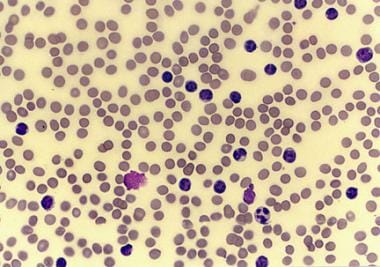
- Microscopic examination of the peripheral blood smear is indicated to confirm lymphocytosis. It usually shows the presence of smudge cells, which are artifacts due to damaged lymphocytes during the slide preparation (see Image 2). Large atypical cells, cleaved cells, and prolymphocytes are also often seen on the peripheral smear and may account for up to 55% of peripheral lymphocytes. If this percentage is exceeded, prolymphocytic leukemia (B-cell PLL) is a more likely diagnosis.
- Peripheral blood flow cytometry is the most valuable test to confirm a diagnosis of chronic lymphocytic leukemia (chronic lymphoid leukemia, CLL). It confirms the presence of circulating clonal B-lymphocytes expressing CD5, CD19, CD20(dim), CD 23, and an absence of FMC-7 staining.
- Consider obtaining serum quantitative immunoglobulin levels in patients developing repeated infections, because monthly intravenous immunoglobulin administration in patients with low levels of immunoglobulin G (IgG) (<500 mg) may be beneficial in reducing the frequency of infectious episodes.
- The differential diagnosis (see Differentials and Other Problems to Be Considered) of chronic lymphocytic leukemia (chronic lymphoid leukemia, CLL) includes several other entities, such as hairy cell leukemia, which is moderately positive for surface membrane immunoglobulins of multiple heavy-chain classes and is typically negative for CD5 and CD21.
Prolymphocytic leukemia has a typical phenotype that is positive for CD19, CD20, and surface membrane immunoglobulin; one half will be negative for CD5. Large granular lymphocytic leukemia has a natural killer (NK) cell phenotype (CD2, CD16, and CD56) or a T-cell immunotype (CD2, CD3, and CD8). The pattern of positivity for CD19, CD20, and the T-cell antigen CD5 is shared only by mantle cell lymphoma; these cells generally do not express CD23. Splenic lymphoma with villous lymphocytes is strongly positive for surface immunoglobulin, and positive for FMC-7, CD22, CD79b, and DBA-44. Follicular lymphoma is also strongly positive for surface immunoglobulin, positive for FMC-7, CD22, CD10, CD79b, and weak CD23.
Related Medscape topics: Specialty Site Hematology-Oncology Specialty Site Pathology & Lab Medicine
Imaging Studies
- Liver/spleen ultrasonographic studies may demonstrate splenomegaly in those with chronic lymphocytic leukemia (chronic lymphoid leukemia, CLL).
- Computed tomography scanning of the chest, abdomen, or pelvis is generally not required for staging purposes in chronic lymphocytic leukemia (chronic lymphoid leukemia, CLL). However, be careful to not miss lesions such as obstructive uropathy or airway obstruction that are caused by lymph node compression on organs or internal structures.
Related Medscape topics: Specialty Site Pulmonary Medicine Specialty Site Radiology Specialty Site Urology
Other Tests
Although not necessary for the diagnosis or staging of chronic lymphocytic leukemia (chronic lymphoid leukemia, CLL), additional molecular testing now exists that may help predict prognosis or clinical course.4, 5, 6, 7 At present, these tests are not recommended for routine use, although this may change with further research.
- Chromosomal evaluation using FISH can identify certain chromosomal abnormalities of chronic lymphocytic leukemia (chronic lymphoid leukemia, CLL) with prognostic significance. Patients with a deletion in the short arm of chromosome 17 (del(17p)) tend to have a worse prognosis, as well as resistance to therapy with alkylating agents and purine analogues. Patients with deletions in the long arm of chromosome 11 (del(11q)) also have a worse prognosis. The poor prognosis seen with del(17p) and del (11q) are independent of the patient's stage at presentation. Patients with these abnormalities may benefit from treatment with the monoclonal antibody alemtuzumab.8, 9, 10
- IgVH status has shown potential as a prognostic marker for chronic lymphocytic leukemia (chronic lymphoid leukemia, CLL) as well. ZAP-70 and CD38 expression tend to correlate with unmutated IgVH and a better prognosis; however, these associations are not absolute. Further clinical information is necessary to determine the role that testing for these markers should play in the management of chronic lymphocytic leukemia (chronic lymphoid leukemia, CLL).
Procedures
- Bone marrow aspiration and biopsy with flow cytometry is not required in all cases of chronic lymphocytic leukemia (chronic lymphoid leukemia, CLL), but it may be necessary in selected cases to establish the diagnosis and to assess other complicating features such as anemia and thrombocytopenia. For example, bone marrow examination may be necessary to distinguish between thrombocytopenia of peripheral destruction (in the spleen) and that due to marrow infiltration.
- Consider a lymph node biopsy if lymph node(s) begin to enlarge rapidly in a patient with known chronic lymphocytic leukemia (chronic lymphoid leukemia, CLL) to assess the possibility of transformation to a high-grade lymphoma. When such transformation is accompanied by fever, weight loss, and pain, it is termed Richter syndrome.
Staging
Two staging systems are in common use for chronic lymphocytic leukemia (chronic lymphoid leukemia, CLL), the modified Rai staging in the United States and the Binet staging in Europe. Neither is completely satisfactory, and both have often been modified. Because of its historical precedent and wide use, the Rai-Sawitsky system is described first, followed by the Binet. These chronic lymphocytic leukemia (chronic lymphoid leukemia, CLL) staging systems have been unable to provide information regarding the disease progression due to its heterogeneity. This lack may change in the future with better understanding of the genetic markers discussed above. Some studies have validated these molecular markers in stratifying patients into different risk groups. - The original 5-stage Rai-Sawitsky staging system11 was revised in 1987 to a simpler 3-stage system. The revised Rai staging system divides patients into low-, intermediate-, and high-risk groups.
- Low risk (formerly stage 0) – Lymphocytosis in the blood and marrow only
- Intermediate risk (formerly stages I and II) – Lymphocytosis with enlarged nodes in any site or splenomegaly or hepatomegaly
- High risk (formerly stages III and IV) – Lymphocytosis with disease-related anemia (hemoglobin <11 g/dL) or thrombocytopenia (platelets <100 x 109/L)
- The Binet staging system uses 3 stages—A, B, and C—based on the areas of involvement and anemia/thrombocytopenia. Areas of involvement are: head and neck lymph nodes (multiple sites counts as 1 area), axillary lymph nodes (bilateral counts as 1 area), inguinal lymph nodes (bilateral counts as 1 area), splenomegaly, and hepatomegaly.
- Stage A – Hemoglobin greater than or equal to 10 g/dL, platelets greater than or equal to 100 X 109/L, and fewer than 3 lymph node areas involved.
- Stage B – Hemoglobin and platelet levels as in stage A and 3 or more lymph node areas involved.
- Stage C – Hemoglobin less than 10 g/dL or platelets less than 100 X 109/L, or both.
Medical Care
At the time of diagnosis, most patients with chronic lymphocytic leukemia (chronic lymphoid leukemia, CLL) do not need to be treated with chemotherapy until the patient is symptomatic, or there is evidence of rapid progression of disease characterized by:
- Weight loss of more than 10% over 6 months
- Extreme fatigue
- Fever related to leukemia for longer than 2 weeks
- Night sweats for longer than 1 month
- Progressive marrow failure (anemia or thrombocytopenia)
- Autoimmune anemia or thrombocytopenia not responding to glucocorticoids
- Progressive or symptomatic splenomegaly
- Massive or symptomatic lymphadenopathy
- Progressive lymphocytosis, as defined by an increase of greater than 50% in 2 months or a doubling time of less than 6 months.
Patients with low risk or Binet A disease whose chronic lymphocytic leukemia (chronic lymphoid leukemia, CLL) is stable require only periodic follow-up. In multiple studies and meta-analysis, early initiation of chemotherapy has failed to show benefit, and it may increase mortality in patients with chronic lymphocytic leukemia (chronic lymphoid leukemia, CLL).12, 13 As such, early therapy should only be considered in the setting of a clinical trial. The many molecular markers identified earlier have now made it possible to identify patients that are more likely to have more rapid progression of chronic lymphocytic leukemia (chronic lymphoid leukemia, CLL). Studies are under way to help determine what and when the best management of these patients will be. Relatively recent data show that patients with high risk factors are more likely to progress after chemotherapy.14 Other studies are in progress to determine if high-risk patients should be treated before becoming symptomatic. For this reason patients who are identified even at an early stage should be referred for consideration in clinical trials if possible. - Nucleoside analogues (ie, fludarabine, cladribine, and pentostatin) include a new group of drugs with major activity against indolent lymphoid malignancies, including chronic lymphocytic leukemia (chronic lymphoid leukemia, CLL).1
- Studies have shown fludarabine to be superior to chlorambucil in chronic lymphocytic leukemia (chronic lymphoid leukemia, CLL) with higher clinical response rates, superior time to treatment failure, and better tolerance in patients over age 65 years. Fludarabine is the most extensively studied of these nucleoside analogues and is currently the most commonly used first-line therapy in chronic lymphocytic leukemia (chronic lymphoid leukemia, CLL).
- Responses to treatment with chlorambucil and prednisone are observed in 38-47% of patients.
- Patients treated with fludarabine have much higher rates (80%) of overall responses and a 37% complete remission rate.
- Studies using purine analogues, especially fludarabine, relative to alkylator-based therapies have shown that the response rates are superior and the progression-free interval is longer, but evidence to show prolonged overall survival is premature.
- The combination of fludarabine and cyclophosphamide (FC) has shown higher response rates, but direct comparative trials of fludarabine and cyclophosphamide to fludarabine alone are lacking.
- The combination of fludarabine and chlorambucil has been shown to result in more infections than either single agent alone.
- Various combination regimens have shown improved response rates in several randomized trials but also have failed to show any survival advantage. Common combination regimens include fludarabine, cyclophosphamide, and rituximab (FCR); pentostatin, cyclophosphamide, and rituximab (PCR); fludarabine, cyclophosphamide, mitoxantrone (FCM); cyclophosphamide, vincristine, and prednisone (CVP); and cyclophosphamide, doxorubicin, vincristine, and prednisone (CHOP).
- Therapy with monoclonal antibodies has been evaluated in patients with chronic lymphocytic leukemia (chronic lymphoid leukemia, CLL).
- Alemtuzumab is a monoclonal antibody directed at CD52 that is approved for use in chronic lymphocytic leukemia (chronic lymphoid leukemia, CLL) as both a first-line agent and for salvage in patients with fludarabine-refractory disease. Alemtuzumab has also been shown to be effective in treating chronic lymphocytic leukemia (chronic lymphoid leukemia, CLL) with p53 mutations (del(17p13.1)). This is in contrast to rituximab, which is not effective in p53 mutation–bearing chronic lymphocytic leukemia (chronic lymphoid leukemia, CLL). Although very effective in clearing the bone marrow of disease, alemtuzumab has shown only limited activity in clearing bulky lymphadenopathy.
- Alemtuzumab appears to have a role in consolidation therapy for the elimination of minimal residual disease (MRD).9, 10 In one study, 38% of patients treated with alemtuzumab consolidation after induction chemotherapy had molecular disease remission. Of note, 3 patients in this study developed Epstein-Barr virus–positive large B-cell lymphoma, 2 of which resolved spontaneously, and the third responded to cidofovir and immunoglobulin.
The German CLL Study Group prematurely closed a phase III trial involving alemtuzumab consolidation due to severe infections in the alemtuzumab arm; however, this has not been seen in other studies to date. Other studies looking at consolidation therapy with alemtuzumab after chemotherapy have shown rates of MRD negativity from 83% to 38%, using varying induction and consolidation regimens. At present, alemtuzumab consolidation should be performed only in the setting of a clinical trial. - Antiviral prophylaxis and prophylactic antibiotics for Pneumocystis carinii are recommended for use in patients receiving alemtuzumab during and for 2-4 months after treatment, or until their CD4 count is >250x109 cells. Cytomegalovirus (CMV) polymerase chain reaction (PCR) is also recommended to monitor for CMV reactivation. If CMV is detected, alemtuzumab should be discontinued, and appropriate treatment initiated until CMV becomes undetectable.
- Other monoclonal antibodies in development that are undergoing study in chronic lymphocytic leukemia (chronic lymphoid leukemia, CLL) include rituximab, hLL1, epratuzumab, and lumiliximab. Rituximab as a single agent has only shown partial responses of short duration; thus, its main role is in combination chemotherapy.
- Relatively recent trials have investigated the combination of monoclonal antibodies with chemotherapeutic agents.
- Rituximab has been used extensively in combination with chemotherapy. Fludarabine has been shown to downregulate CD55 and CD59, proteins involved in complement resistance, whose loss enhances the action of rituximab. Fludarabine combined with rituximab has been shown to have higher clinical remission rates than fludarabine alone in clinical trials.
Fludarabine and cyclophosphamide and rituximab (FCR) has shown clinical response rates of 76% in trials, better than either fludarabine or FC in salvage therapy for patients with chronic lymphocytic leukemia (chronic lymphoid leukemia, CLL) that have been previously treated. Cyclophosphamide, fludarabine, alemtuzumab, and rituximab (CFAR) is currently under study in clinical trials. - Alemtuzumab is undergoing study in combination with fludarabine, rituximab, and the FCR regimen. A phase III study is under way in Europe that compares fludarabine with and without alemtuzumab. Alemtuzumab with rituximab appears to be well tolerated and have a high response rate; however, a short time to progression indicates that perhaps the dosing schedule needs further refinement. Phase II studies are under way investigating alemtuzumab in combination with the FCR regimen.
- Lenalidomide is an immunomodulatory drug (IMiD) currently approved for use in multiple myeloma and myelodysplastic syndrome with deletion of chromosome 5q. Studies have utilized this medication in treatment of patients with relapsed and refractory chronic lymphocytic leukemia (chronic lymphoid leukemia, CLL). Response rates of 47-38% with complete response rates of 9% and elimination of MRD have also been reported.
- Bone marrow transplantation has been investigated in the therapy of chronic lymphocytic leukemia (chronic lymphoid leukemia, CLL). Allogenic stem cell transplantation is the only known curative therapy. The optimal timing of transplantation is still being investigated; however, it is know that delay of transplantation until development of refractory disease results in worse outcomes.
The effectiveness of nonmyeloablative transplantation has shown that there is a graft versus leukemia effect in chronic lymphocytic leukemia (chronic lymphoid leukemia, CLL). Autologous transplantation after high-dose conditioning has not been shown to provide a survival advantage and is not recommended outside the setting of a clinical trial. Alemtuzumab is being investigated for use in hematopoietic stem cell transplantation (HSCT). This agent may play an important role in the elimination of MRD in patients undergoing autologous transplantation, while, at the same time, the lack of CD52 on hematopoietic stem cells prevents interference with stem cell collection. The addition of alemtuzumab to nonmyeloablative conditioning regimens for allogenic HSCT appears to decrease the incidence of graft versus host disease (GVHD), but it may be associated with increased rates of CMV reactivation. - Patients with chronic lymphocytic leukemia (chronic lymphoid leukemia, CLL) demonstrate autoimmune anemia and or thrombocytopenia up to 25% of the time, and, at the same time, immune incompetence is present, characterized by a progressive profound hypogammaglobulinemia.
- This hypogammaglobulinemia eventually develops in almost all patients, predisposing them to a number of infections, the most common being bacterial pneumonias.
- Patients showing frequent bacterial infections associated with hypogammaglobulinemia are likely to benefit from monthly infusions of intravenous immunoglobulins. In a randomized, double-blind study, intravenous immunoglobulin, 400 mg/kg, or placebo was administered every 3 weeks for 1 year in 84 patients. The study showed significant reductions in the bacterial infections in the group treated with immunoglobulins, but no statistically significant difference was observed in the number of life-threatening infections requiring parenteral antibiotics.
- Prednisone alone, usually in a dose of 20-60 mg daily initially, with subsequent gradual dose reduction, may be useful in patients with autoimmune manifestations of the disease.
- Rituximab alone or in combination regimen can be very effective in eliminating the B-cell clone inducing autoimmune disorders, particularly for patients with autoimmune thrombocytopenia.
- The autoimmunity in B-cell chronic lymphocytic leukemia (chronic lymphoid leukemia, CLL) is observed much more commonly in patients treated with fludarabine, which is known to suppress the circulating CD4+ T cells.
- Extremely high white blood cell counts (>300,000/µL) may produce a hyperviscosity syndrome with altered central nervous system function and/or respiratory insufficiency. Leukocytapheresis and urgent therapy with prednisone and chemotherapy may be required. Virtually all patients requiring therapy should also be given allopurinol to prevent uric acid nephropathy.
Minimal Residual DiseaseMRD can be defined as disease that is detectable with the most sensitive testing available. The concept of eradication of MRD has been seen to be beneficial in patients with other hematologic malignancies, and is now coming into play in chronic lymphocytic leukemia (chronic lymphoid leukemia, CLL). Eradication of MRD has been shown to result in improved overall and treatment-free survival. Techniques for assessing MRD Unlike other hematologic malignancies, chronic lymphocytic leukemia (chronic lymphoid leukemia, CLL) lacks a specific chromosomal abnormality that can be used for monitoring MRD. Instead, flow cytometry and PCR have been developed to assess MRD. Allele-specific oligonucleotide PCR can be used to identify the immunoglobulin heavy chain gene rearrangement that is unique to a patient’s chronic lymphocytic leukemia (chronic lymphoid leukemia, CLL) clone. Although this method is able to detect up to 1 in 1,000,000 cells, it is technically difficult, time consuming, expensive, and not readily available. Multiparameter flow cytometry (using 4-12 markers) has become the mainstay of MRD assessment in chronic lymphocytic leukemia (chronic lymphoid leukemia, CLL), as this technique yields rapid results that are available in the majority of laboratories. Note: Care must be taken in selection of markers, especially after exposure to monoclonal antibodies like rituximab or alemtuzumab. Multiparameter flow is able to detect 1 in 10,000-100,000 cells. The 2008 Guidelines for the Diagnosis and Treatment of Chronic Lymphocytic Leukemia that updates the National Cancer Institute-Working Group (NCI-WG) 1996 guidelines defines the absence of MRD as less than 1 in 10,000 cells, making both methods acceptable for assessing MRD in chronic lymphocytic leukemia (chronic lymphoid leukemia, CLL).4 Eradication of MRD There are studies that have begun assessing for the presence of MRD. Moreton et al showed improved overall survival and treatment-free survival in patients with chronic lymphocytic leukemia (chronic lymphoid leukemia, CLL) after treatment with alemtuzumab.10 Ninety-one patients who had failed to respond to or relapsed after therapy were treated with an average of 9 weeks of alemtuzumab. Twenty percent of patients had eradication of MRD, and median survival was not reached at 60 months, whereas patients with complete remission but were MRD positive had a median overall survival of 41 months. This is the first trial demonstrating benefit to elimination of MRD in patients with chronic lymphocytic leukemia (chronic lymphoid leukemia, CLL). Various regimens are now being studied for eradication of MRD. Bosch et al studied the FCM regimen as first-line therapy in an attempt to eradicate MRD.12 Of 69 patients, 26% had MRD-negative complete response, and these patients demonstrated improved overall survival and longer response duration. Other studies have been able to achieve MRD negativity in 38-83% of patients using various regimens. Although the best regimen for eradication of MRD has not yet been identified, combination chemo-immunotherapy with consolidation appears to be a promising route to the eradication of MRD in patients with chronic lymphocytic leukemia (chronic lymphoid leukemia, CLL).
Surgical Care
- Refractory splenomegaly and pancytopenia is a common problem in patients with advanced chronic lymphocytic leukemia (chronic lymphoid leukemia, CLL) that occasionally necessitates splenectomy.
- Substantial improvements in hemoglobin and platelet counts are observed in up to 90% of patients undergoing splenectomy.
- All patients with chronic lymphocytic leukemia (chronic lymphoid leukemia, CLL) who are to undergo splenectomy should be immunized at least 1 week in advance with Pneumovax and Haemophilus and Neisseria meningitidis vaccines.
Chlorambucil (alkylating agent) and fludarabine (antimetabolite) are commonly used in the treatment of chronic lymphocytic leukemia (chronic lymphoid leukemia, CLL). Purine analogues and, in particular, fludarabine are very active against chronic lymphocytic leukemia (chronic lymphoid leukemia, CLL).
Fludarabine produces remissions in a significant proportion of patients. It appears to induce apoptosis in malignant lymphocytes upon exposure. Fludarabine in combination with cyclophosphamide (FC) has shown improved response rates over fludarabine alone, and combinations with rituximab and alemtuzumab may prove even more effective. Trials are ongoing. The role of alemtuzumab in the eradication of MRD is also under investigation.
Drug Category: Antineoplastic Agents
Antineoplastic agents act by inhibiting the key factors responsible for neoplastic transformation of cells.
| Drug Name | Pentostatin (Nipent) |
| Description | Inhibits adenosine deaminase, resulting in deoxyadenosine and deoxyadenosine 5+-triphosphate accumulation that may inhibit DNA or RNA synthesis causing cell death. |
| Adult Dose | 4 mg/m2 IV q other wk |
| Pediatric Dose | Not established |
| Contraindications | Documented hypersensitivity; severely suppressed bone marrow (<3,000 white blood cells/m3) |
| Interactions | Vidarabine, allopurinol, and fludarabine may increase the toxicity of pentostatin. |
| Pregnancy | D - Fetal risk shown in humans; use only if benefits outweigh risk to fetus
|
| Precautions | Caution in the presence of hepatic or renal insufficiency. |
| Drug Name | Chlorambucil (Leukeran) |
| Description | Nitrogen mustard derivative with bifunctional alkylating activity, forms intrastrand crosslinks, interfering with DNA replication and RNA transcription and translation. |
| Adult Dose | 0.1-0.2 mg/kg/d PO or 3-6 mg/m2/d PO for 3-6 wk; adjust the dose based on blood counts |
| Pediatric Dose | 0.4 mg/kg/dose PO q2wk initially; increase dose by 0.1 mg/kg q2wk until response occurs and/or myelosuppression occurs
Alternatively, 0.4 mg/kg/dose PO; increase dose by 0.2 mg/kg q4wk until response occurs and/or myelosuppression occurs |
| Contraindications | Documented hypersensitivity; demonstrated resistance; bone marrow suppression; breastfeeding; infection; neutropenia; thrombocytopenia |
| Interactions | None reported |
| Pregnancy | D - Fetal risk shown in humans; use only if benefits outweigh risk to fetus
|
| Precautions | Reduce the dose if started <4 wk after a full course of radiation therapy or another chemotherapy because of potential damage to the bone marrow.
Slow progressive leukopenia that is reversible when therapy is terminated.
Dose-dependent neutropenia appears after 3 wk of therapy and continues 10 d after termination of therapy; there's a risk of irreversible bone marrow damage if therapy is continued when neutropenia occurs. |
| Drug Name | Fludarabine (Fludara) |
| Description | Nucleotide analogue of vidarabine converted to 2-fluoro-ara-A that enters the cell and is phosphorylated to form active metabolite 2-fluoro-ara-ATP, which inhibits DNA synthesis. |
| Adult Dose | 25 mg/m2/d IV over 30 min qd for 5 d; repeat 5-d course q28d
Adjust the dose based on hematologic or nonhematologic toxicity. |
| Pediatric Dose | Not established |
| Contraindications | Documented hypersensitivity; breastfeeding; bone marrow suppression |
| Interactions | Combination of fludarabine with other purine analogues (eg, pentostatin) is contraindicated, because the risk of pulmonary toxicity occurring when they are used together is unacceptably high. |
| Pregnancy | D - Fetal risk shown in humans; use only if benefits outweigh risk to fetus
|
| Precautions | Perform frequent peripheral blood counts to detect the development of anemia, thrombocytopenia, and neutropenia; monitor for tumor lysis syndrome.
Adjust the dose for renal impairment, severe bone marrow suppression, severe neurologic effects, or life-threatening and fatal autoimmune hemolytic anemia.
Treatment with nucleotide analogues may make stem cell collection difficult if transplantation is considered for future therapy. |
| Drug Name | Alemtuzumab (Campath) |
| Description | Humanized monoclonal antibody against CD52, an antigen found on B-cells, T-cells, and almost all CLL cells. Binds to the CD52 receptor of the lymphocytes, which slows the proliferation of leukocytes. |
| Adult Dose | 3-10 mg IV over 2 h initially; titrate slowly to 30 mg and administer 3 times/wk for up to 12 wk if no adverse effects.
SC administration is tolerated better than IV administration with equal efficacy. |
| Pediatric Dose | Not established |
| Contraindications | Documented hypersensitivity; active systemic infections; underlying immunodeficiency (eg, AIDS) |
| Interactions | May increase the virulence of live viral vaccine |
| Pregnancy | C - Fetal risk revealed in studies in animals but not established or not studied in humans; may use if benefits outweigh risk to fetus
|
| Precautions | Serious infusion reactions are the most commonly reported adverse events, as well as rigors, fever, nausea, vomiting, rash, dyspnea, and hypotension; the intensity and frequency tends to decrease with repeated exposure; premedication with acetaminophen, diphenhydramine, hydrocortisone, and dose titration have been shown to reduce infusion reactions; infusional events are significantly reduced when the drug is given SC rather than IV (local skin reactions [edema/erythema] may occur with SC administration); the majority of patients will have transient cytopenias, particularly in patients with preexisting cytopenias; autoimmune hemolytic anemia has been reported; infectious complications include fatal bacterial, viral, fungal, and protozoan infections; CMV reactivation is the most commonly reported opportunistic infection; prophylaxis with valganciclovir has been shown to be effective; antiviral prophylaxis is effective in preventing HSV and VZV reactivation and is recommended in all patients; PCP prophylaxis is also recommended; posttransplant lymphoproliferative disorders have been reported; possible cardiotoxicity in the form of arrhythmia and CHF has been reported; there is a potential impact on spermatozoa in vitro, but no in vivo reproductive complications have been reported (may be due to advanced age of patients; drug does not appear to achieve significant concentrations in seminal fluid). |
| Drug Name | Rituximab (Rituxan) |
| Description | Humanized murine monoclonal antibody against CD20, antigen found on B-cells; CLL cells are typically CD20(dim). Due to low levels of CD20 expression, increased doses of rituximab may be necessary. Binds CD20 on lymphocytes and induces apoptosis as well as initiating complement-mediated killing of bound cells. |
| Adult Dose | Used in clinical trials alone or in combination with fludarabine, with or without cyclophosphamide 375 mg/m2 IV q 28 d as part of FCR combination therapy |
| Pediatric Dose | Not established |
| Contraindications | Documented hypersensitivity; active systemic infections |
| Interactions | May increase the virulence of live viral vaccine; increased risk of infection with natalizumab; increased nephrotoxicity in combination with cisplatin |
| Pregnancy | C - Fetal risk revealed in studies in animals but not established or not studied in humans; may use if benefits outweigh risk to fetus
|
| Precautions | Anaphylactic/anaphylactoid reactions can occur; hypotension, bronchospasm, angioedema, pulmonary infiltrates, and ARDS may occur; MI or life-threatening cardiac arrhythmias can occur; fatal infusion-related reactions have occurred within up to 24 h of dose administration; Stevens-Johnson syndrome and toxic epidermal necrolysis have been reported; reactivation of hepatitis B has been reported; neutropenia, anemia, thrombocytopenia may occur. |
Further Inpatient Care
- Chemotherapy for (chronic lymphoid leukemia, CLL) is typically given in an outpatient setting.
- Some patients with (chronic lymphoid leukemia, CLL) require admission if they develop febrile neutropenia.
- This is treated in the usual fashion by giving broad-spectrum intravenous antibiotics after obtaining blood cultures.
- The antibiotics commonly used on empiric grounds are ceftazidime, cefepime, or imipenem. Aztreonam can be used in penicillin-allergic patients.
- If patients have indwelling central venous access devices and appear septic, consider adding vancomycin.
Further Outpatient Care
- Following chemotherapy, patients with chronic lymphocytic leukemia (chronic lymphoid leukemia, CLL) are prescribed antiemetics such as Compazine for use, as needed. Patients are advised to inform their hematologist/oncologist if they develop fever.
- Growth factors may be used in order to decrease the length of neutropenia following chemotherapy in patients with (chronic lymphoid leukemia, CLL).
Complications
- The hypogammaglobinemia and impaired T-cell function associated with chronic lymphocytic leukemia (chronic lymphoid leukemia, CLL) predispose patients to potentially serious infections. Patients who demonstrate a pattern of repeated infections, such as pneumonia and septicemia, should be treated monthly with prophylactic parenteral gamma globulin.
- Anemia secondary to bone marrow involvement with chronic lymphocytic leukemia (chronic lymphoid leukemia, CLL), splenic sequestration of red blood cells, and autoimmune hemolytic anemia associated with a positive Coombs test are included in the differential diagnosis of a patient with anemia who has chronic lymphocytic leukemia (chronic lymphoid leukemia, CLL) (see Differentials and Other Problems to Be Considered).
- Thrombocytopenia: The causes of low platelets in patients with chronic lymphocytic leukemia (chronic lymphoid leukemia, CLL) are very similar to the causes of anemia in patients with chronic lymphocytic leukemia (chronic lymphoid leukemia, CLL) and include bone marrow involvement, splenic sequestration, and immune thrombocytopenia.
- Richter syndrome or Richter transformation refers to the transformation of chronic lymphocytic leukemia (chronic lymphoid leukemia, CLL) into an aggressive large B-cell lymphoma and is seen in ~3-10% of cases. Patients will often present with symptoms of weight loss, fevers, night sweats, muscle wasting, and increasing hepatosplenomegaly and lymphadenopathy. Lymph node biopsy is necessary for the diagnosis. Epstein-Barr virus (EBV) may play a role in transformation. Immunosuppression has also been implicated.
Prognosis
The prognosis of those with chronic lymphocytic leukemia (chronic lymphoid leukemia, CLL) varies widely at diagnosis, depending on the stage at diagnosis as well as the presence or absence of high risk markers at time of diagnosis. Median survival once treatment is initiated is ~4.5 years; however, this number is in constant flux, as new therapeutic regimens are being developed for chronic lymphocytic leukemia (chronic lymphoid leukemia, CLL).
Medical/Legal Pitfalls
- Mantle cell lymphoma can have a clinical presentation very similar to chronic lymphocytic leukemia (chronic lymphoid leukemia, CLL), but the prognosis is much poorer. The duration of response to treatment can be shorter, and the clinical course of mantle cell lymphoma tends to be more aggressive. Mantle cell lymphoma can be distinguished from chronic lymphocytic leukemia (chronic lymphoid leukemia, CLL) expressing CD5 and CD19 but not CD23 antigen, which is expressed in chronic lymphocytic leukemia (chronic lymphoid leukemia, CLL). Mantle cell lymphoma typically expresses FMC-7. Importantly, mantle cell lymphoma expression of CD20 is bright, whereas it is dim in chronic lymphocytic leukemia (chronic lymphoid leukemia, CLL).
Related Medscape topics: Resource Center Genomic Medicine Resource Center Medical Malpractice and Legal Issues Specialty Site Hematology-Oncology
Special Concerns
- Patients with CLL are prone to usual and unusual infections. Pneumococcal and flu vaccines are recommended.
| Media file 1:
Peripheral smear from a patient with chronic lymphocytic leukemia, small lymphocytic variety. |
 | View Full Size Image | |
Media type: Histology
|
| Media file 2:
Peripheral smear from a patient with chronic lymphocytic leukemia, large lymphocytic variety. Smudge cells are also observed; smudge cells are the artifacts produced by the lymphocytes damaged during the slide preparation. |
 | View Full Size Image | |
Media type: Histology
|
- Elter T, Hallek M, Engert A. Fludarabine in chronic lymphocytic leukaemia. Expert Opin Pharmacother. Aug 2006;7(12):1641-51. [Medline].
- Nicoloso MS, Kipps TJ, Croce CM, Calin GA. MicroRNAs in the pathogeny of chronic lymphocytic leukaemia. Br J Haematol. Dec 2007;139(5):709-16. [Medline]. [Full Text].
- Rai KR, Keating HJ. Chronic lymphocytic leukemia. In: Holland JF, Bast RC, Morton DL, et al, eds. Cancer Medicine. Vol II. 4th ed. Baltimore, Md: Williams and Wilkins; 1997:2697-728.
- Hallek M, Cheson BD, Catovsky D, et al. Guidelines for the diagnosis and treatment of chronic lymphocytic leukemia: a report from the International Workshop on Chronic Lymphocytic Leukemia updating the National Cancer Institute-Working Group 1996 guidelines. Blood. Jun 15 2008;111(12):5446-56. [Medline].
- Bouley J, Deriano L, Delic J, Merle-Béral H. New molecular markers in resistant B-CLL. Leuk Lymphoma. May 2006;47(5):791-801. [Medline].
- Abbott BL. Chronic lymphocytic leukemia: recent advances in diagnosis and treatment. Oncologist. Jan 2006;11(1):21-30. [Medline]. [Full Text].
- Zwiebel JA, Cheson BD. Chronic lymphocytic leukemia: staging and prognostic factors. Semin Oncol. Feb 1998;25(1):42-59. [Medline].
- Hillmen P, Skotnicki AB, Robak T, et al. Alemtuzumab compared with chlorambucil as first-line therapy for chronic lymphocytic leukemia. J Clin Oncol. Dec 10 2007;25(35):5616-23. [Medline].
- Montillo M, Tedeschi A, Miqueleiz S, et al. Alemtuzumab as consolidation after a response to fludarabine is effective in purging residual disease in patients with chronic lymphocytic leukemia. J Clin Oncol. May 20 2006;24(15):2337-42. [Medline]. [Full Text].
- Moreton P, Kennedy B, Lucas G, et al. Eradication of minimal residual disease in B-cell chronic lymphocytic leukemia after alemtuzumab therapy is associated with prolonged survival. J Clin Oncol. May 1 2005;23(13):2971-9. [Medline]. [Full Text].
- Rai KR, Sawitsky A, Cronkite EP, et al. Clinical staging of chronic lymphocytic leukemia. Blood. Aug 1975;46(2):219-34. [Medline]. [Full Text].
- Bosch F, Ferrer A, Villamor N, et al. Fludarabine, cyclophosphamide, and mitoxantrone as initial therapy of chronic lymphocytic leukemia: high response rate and disease eradication. Clin Cancer Res. Jan 1 2008;14(1):155-61. [Medline].
- Byrd JC, Gribben JG, Peterson BL, et al. Select high-risk genetic features predict earlier progression following chemoimmunotherapy with fludarabine and rituximab in chronic lymphocytic leukemia: justification for risk-adapted therapy. J Clin Oncol. Jan 20 2006;24(3):437-43. [Medline].
- Byrd JC, Lin TS, Grever MR. Treatment of relapsed chronic lymphocytic leukemia: old and new therapies. Semin Oncol. Apr 2006;33(2):210-9. [Medline].
- Byrd JC, Stilgenbauer S, Flinn IW. Chronic lymphocytic leukemia. Hematology Am Soc Hematol Educ Program. 2004;163-83. [Medline]. [Full Text].
- Caligaris-Cappio F. New insights into the biology of B-chronic lymphocytic leukemia. Hematology Am Soc Hematol Educ Program. 1999;249-54.
- Cheson BD. Monoclonal antibody therapy for B-cell malignancies. Semin Oncol. Apr 2006;33(2 suppl 5):S2-14. [Medline].
- Dighiero G, Travade P, Chevret S, et al, and the French Cooperative Group on CLL. B-cell chronic lymphocytic leukemia: present status and future directions. Blood. Oct 15 1991;78(8):1901-14. [Medline]. [Full Text].
- Keating MJ. Improving the complete remission rate in chronic lymphocytic leukemia. Hematology Am Soc Hematol Educ Program. 1999;262-9.
- Kipps TJ, Harmut D, Croce CM, Keating MJ. Advances in the biology and management of chronic lymphocytic leukemia. Am Soc Clin Oncol Ed Book. Spring 2006;398-408.
- Molica S. Immunomodulatory drugs in chronic lymphocytic leukemia: a new treatment paradigm. Leuk Lymphoma. May 2007;48(5):866-9. [Medline].
- Nabhan C, Coutré S, Hillmen P. Minimal residual disease in chronic lymphocytic leukaemia: is it ready for primetime?. Br J Haematol. Feb 2007;136(3):379-92. [Medline].
- Sayala HA, Rawstron AC, Hillmen P. Minimal residual disease assessment in chronic lymphocytic leukaemia. Best Pract Res Clin Haematol. Sep 2007;20(3):499-512. [Medline].
- Wierda WG, O'Brien SM. Initial therapy for patients with chronic lymphocytic leukemia. Semin Oncol. Apr 2006;33(2):202-9. [Medline].
- Yee KW, O'Brien SM. Chronic lymphocytic leukemia: diagnosis and treatment. Mayo Clin Proc. Aug 2006;81(8):1105-29. [Medline].
Chronic Lymphocytic Leukemia excerpt Article Last Updated: Oct 10, 2008
|