Continually Updated Clinical Reference
 
 
  All Sources     eMedicine     Medscape     Drug Reference     MEDLINE
 
eMedicine - Upper Gastrointestinal Bleeding : Article by

Quick Find
Authors & Editors
Introduction
Clinical
Differentials
Workup
Treatment
Medication
Follow-up
Miscellaneous
Multimedia
References

Related Articles
Abdominal Aortic Aneurysm

Angiodysplasia of the Colon

Barrett Esophagus and Barrett Ulcer

Benign Gastric Tumors

Boerhaave Syndrome

Cardiac Cirrhosis

Celiac Sprue

Cholecystitis

Cirrhosis

Dengue Fever

Disseminated Intravascular Coagulation

Duodenal Ulcers

Esophageal Cancer

Esophageal Varices

Esophagitis

Esophagogastroduodenoscopy

Gastric Cancer

Gastric Outlet Obstruction

Gastric Ulcers

Gastrinoma

Gastritis, Acute

Strongyloidiasis

Syncope

Upper Gastrointestinal Bleeding: Surgical Perspective

von Willebrand Disease

Zollinger-Ellison Syndrome


Patient Education
Esophagus, Stomach, and Intestine Center

Heartburn/GERD/Reflux Center

Liver, Gallbladder, and Pancreas Center

Gastrointestinal Bleeding Overview

Gastrointestinal Bleeding Causes

Gastrointestinal Bleeding Symptoms

Gastrointestinal Bleeding Treatment


Author: Maurice A Cerulli, MD, FACG, Chief, Division of Gastroenterology and Hepatology, Associate Professor of Clinical Medicine, Department of Internal Medicine, Division of Gastroenterology, New York Methodist Hospital, Cornell University

Maurice A Cerulli is a member of the following medical societies: American College of Gastroenterology, American Gastroenterological Association, American Medical Association, and American Society for Gastrointestinal Endoscopy

Coauthor(s): Shahzad Iqbal, MD, Fellow in Gastroenterology, New York Methodist Hospital

Editors: Alex Jacocks, MD, Program Director, Professor, Department of Surgery, University of Oklahoma School of Medicine; Francisco Talavera, PharmD, PhD, Senior Pharmacy Editor, eMedicine; Douglas M Heuman, MD, FACP, Director of Hepatology, McGuire Veterans Affairs Medical Center, Professor, Department of Internal Medicine, Division of Gastroenterology, Virginia Commonwealth University School of Medicine; Paolo Zamboni, MD, Professor of Surgery, Chief of Day Surgery Unit, Chair of Vascular Diseases Center, University of Ferrara, Italy; John Geibel, MD, DSc, MA, Professor, Department of Surgery, Section of Gastrointestinal Medicine and Department of Cellular and Molecular Physiology, Yale University School of Medicine; Director of Surgical Research, Department of Surgery, Yale-New Haven Hospital

Author and Editor Disclosure

Synonyms and related keywords: UGIB, nonvariceal upper gastrointestinal hemorrhage, upper GI bleeding, GI hemorrhage, duodenal ulcer disease, Helicobacter pylori infection, H pylori infection, duodenal ulcer hemorrhage, gastric ulcer hemorrhage, Mallory-Weiss tear, erosive gastritis, erosive esophagitis, Dieulafoy lesion, gastric cancer, ulcerated gastric leiomyoma, aortoenteric fistula, gastric antral vascular ectasia, GAVE, Osler-Weber-Rendu syndrome

Background

The diagnosis and therapy for nonvariceal upper gastrointestinal bleeding (UGIB) has evolved over the past 3 decades from passive diagnostic esophagogastroduodenoscopy with medical therapy until surgical intervention was needed to active intervention with endoscopic techniques followed by angiographic and surgical approaches if endoscopic therapy failed. Variceal hemorrhage is not discussed in this article because the underlying mechanisms of bleeding are different and require different therapies. The underlying mechanisms of nonvariceal bleeding involve either arterial hemorrhage, such as in ulcer disease and mucosal deep tears, or low-pressure venous hemorrhage, as in telangiectasias and angioectasias. In variceal hemorrhage, the underlying pathophysiology is due to elevated portal pressure transmitted to esophageal and gastric varices and resulting in portal gastropathy.

The patient presents with an ulcer that has bled or is actively bleeding. Approximately 80% of ulcers stop bleeding. The overall mortality rate is approximately 10%. This patient population has become progressively older, with significant comorbidities that increase mortality. Rebleeding or continued bleeding is associated with increased mortality; therefore, differentiating the patient with a low probability of rebleeding and little comorbidity from the patient at high risk for rebleeding with serious comorbidities is imperative.

In the early history of endoscopy for UGIB, multiple published studies questioned the cost-effectiveness of endoscopy in this setting because it was unclear whether the outcome was changed. In a setting in which 80% of patients respond to conservative medical management, studies were hampered by type 2 errors because of the large number of patients needed to demonstrate statistical significance. Much debate also focused on the significance of the nonbleeding visible vessel (ie, color, size, diagnostic characteristics, risk of rebleeding) in ulcer hemorrhage. These matters became clarified after the characteristics and the significance of the visible vessel in the ulcer crater were defined and the evidence for endoscopic therapy was established, demonstrating that patients requiring therapy to control bleeding or rebleeding could be diagnosed and treated at the time of the upper endoscopy.

In 1989, a National Institutes of Health consensus conference on UGIB concluded that effective therapy was needed in the presence of active bleeding or a visible vessel. The consensus conference affirmed that the treatment, when performed by an experienced endoscopist using 1 of 4 techniques (ie, injection of epinephrine or sclerosants, heater-probe coagulation, bipolar electrode coagulation, laser coagulation), was proven effective by the published evidence. Three other techniques have since been developed: (1) endoscopic application of clips, (2) use of banding devices, and (3) argon plasma coagulation.

Emergency surgery typically entails oversewing the bleeding vessel in the stomach or duodenum (usually preoperatively identified by endoscopy), vagotomy with pyloroplasty, or partial gastrectomy. Angiographic obliteration of the bleeding vessel is considered in patients with poor prognoses.

Other causes of gastrointestinal bleeding include mucosal tears in the esophagus or upper stomach due to vomiting (Mallory-Weiss tears), venous blebs, or vascular ectasias. These lesions can be treated with endoscopic coagulation. The bleeding from gastric cancers and ulcers in leiomyomas does not usually respond to endoscopic therapy; surgical or radiologic intervention is needed.

Pathophysiology

Duodenal ulcer disease is strongly associated with Helicobacter pylori infection. The organism causes disruption of the mucous barrier and has a direct inflammatory effect on gastric and duodenal mucosa. Eradication of H pylori has been demonstrated to reduce the risk of recurrent ulcers and, thus, recurrent ulcer hemorrhage.

Nonsteroidal anti-inflammatory drugs (NSAIDs) are the second major etiology of ulcer hemorrhage because of their effect on cyclooxygenase-1, which leads to impaired mucosal defense to acid. The use of cyclooxygenase-2 inhibitors has been shown to reduce the risk of ulcer hemorrhage, although only when not combined with aspirin therapy. Concerns have been raised about an increase in myocardial infarction and stroke in patients taking selective cyclooxygenase-2 inhibitors. As demonstrated in the study by al-Assi et al, the combination of H pylori infection and NSAID use may increase the risk of ulcer hemorrhage; however, the treatment of H pylori in patients who are taking NSAIDs remains controversial.1

As the ulcer burrows deeper into the gastroduodenal mucosa, the process causes weakening and necrosis of the arterial wall, leading to the development of a pseudoaneurysm. The weakened wall ruptures, producing hemorrhage. The flow through the vessel varies with the fourth power of the radius; thus, small increases in vessel size can mean much larger amounts of blood flow and bleeding. Visible vessels usually range from 0.3-1.8 mm.

Exsanguinating hemorrhage has been reported from larger vessels. The larger vessels are located deeper in the gastric and duodenal submucosa and serosa. Larger branches of the left gastric artery are found high on the lesser curvature, while the pancreatoduodenal artery and its major branches are located posteroinferiorly in the duodenal bulb. The size of the vessel is important in the prognosis in that larger vessels cause faster blood loss, with more severe hypotension and more complications, especially in older patients.

During vomiting, the lower esophagus and upper stomach are forcibly inverted. Vomiting attributable to any cause can lead to a mucosal tear of the lower esophagus or upper stomach. The depth of the tear determines the severity of the bleeding. Rarely, vomiting can result in esophageal rupture (Boerhaave syndrome), leading to bleeding, mediastinal air entry, left pleural effusion (salivary amylase can be present) or left pulmonary infiltrate, and subcutaneous emphysema.

Gastric cancer is an uncommon cause of hemorrhage in the United States, but it remains a major problem in non-Western countries; worldwide, it is the leading cause of digestive cancer deaths. Patients with chronic liver disease and portal hypertension are at increased risk for variceal hemorrhage and portal gastropathy in addition to ulcer hemorrhage.

Frequency

United States

UGIB is a common medical condition that results in high patient mortality and medical care costs. Annually, approximately 100,000 patients are admitted to US hospitals for therapy for UGIB. Peptic ulcer disease is the most common cause of UGIB. However, the proportion of cases caused by peptic ulcer disease has declined.2 The decrease is believed to be due to the use of proton pump inhibitors (PPIs) and H pylori therapy.

International

UGIB is a common occurrence throughout the world. In France, a report concludes that the mortality from UGIB has decreased from about 11% to 7%; however, a similar report from Greece finds no decrease in mortality. In a nationwide study from Spain, UGIB was 6 times more common than lower GI bleeding.3

Mortality/Morbidity

Patients typically present with an ulcer that has bled or is actively bleeding, but approximately 80% of ulcers stop bleeding. The overall mortality rate is approximately 10%. In a retrospective chart review by Yavorski RT et al, 73.2% of deaths occurred in patients older than 60 years.4 In patients with UGIB, comorbid illness and not actual bleeding is the major cause of death. Comorbid illness was noted in 50.9% of patients, with similar occurrence in males (48.7%) and females (55.4%). One or more comorbid illnesses were noted in 98.3% of patients who died, and, in 72.3% of patients, comorbid illnesses were the primary cause of death.4 

According to the American Society for Gastrointestinal Endoscopy (ASGE), the following risk factors are associated with increased mortality, recurrent bleeding, the need for endoscopic hemostasis, or surgery: age older than 60 years, severe comorbidity, active bleeding (eg, witnessed hematemesis, red blood per nasogastric tube, fresh blood per rectum), hypotension, red blood cell transfusion greater than or equal to 6 units, inpatient at time of bleed, and severe coagulopathy.5

An increasing amount of evidence in the literature states that therapy with high-dose PPIs (IV bolus followed by continuous infusion) may decrease the rate of rebleeding after endoscopic therapy. By increasing the gastric pH above 6, the clot is stabilized.

Sex

The incidence of UGIB is 2-fold greater in males than in females, in all age groups; however, the death rate is similar in both sexes.4

Age

This patient population has become progressively older, with significant comorbidities that increase mortality. As mentioned above, the mortality increases with older age (>60 y) in both males and females.


History

  • The patient history findings include weakness, dizziness, syncope associated with hematemesis (coffee ground vomitus), melena (black stools with a rotten odor), and hematochezia (red or maroon stool).
  • Patients may have a history of previous dyspepsia (especially nocturnal symptoms), ulcer disease, early satiety, and nonsteroidal anti-inflammatory drug or aspirin use. Many patients with UGIB who are taking nonsteroidal anti-inflammatory drugs present without dyspepsia but with hematemesis or melena as their first symptom. Low-dose aspirin (81 mg) has been associated with UGIB with or without the addition of NSAID therapy. Patients with a prior history of ulcers are at an especially increased risk for UGIB when placed on aspirin or NSAID therapy and should receive continuous acid suppression with a PPI.
  • Because recurrence of ulcer disease is common, history findings are relevant.
    • Patients may present in a more subacute phase with a history of dyspepsia and occult intestinal bleeding manifesting as a positive fecal occult blood test result or as iron deficiency anemia.
    • A history of recent aspirin ingestion suggests that the patient may have nonsteroidal anti-inflammatory drug gastropathy with an enhanced bleeding diathesis from poor platelet adhesiveness.
    • A history of chronic alcohol use of more than 50 g/d or chronic hepatitis (B or C) increases the risk of variceal hemorrhage, gastric antral vascular ectasia (GAVE), or portal gastropathy.
    • The presence of postural hypotension indicates more rapid and severe blood loss.

Physical

  • The goal of the patient's physical examination is to evaluate for shock and blood loss.
    • Pulse and blood pressure should be checked with the patient in supine and upright positions to note the effect of blood loss. Significant changes in vital signs with postural changes indicate an acute blood loss of approximately 20% or more.
    • Other signs of shock include cool extremities, oliguria, chest pain, presyncope, confusion, and delirium.
    • Hematemesis and melena should be noted. The redder the stool, the more rapid the transit, which suggests a large upper tract hemorrhage.
  • Signs of chronic liver disease should be noted, including spider angiomata, gynecomastia, increased luneals, splenomegaly, ascites, pedal edema, and asterixis.
  • Signs of tumor are uncommon but portend a poor prognosis. Signs include a nodular liver, abdominal mass, and enlarged and firm lymph nodes.
  • The finding of subcutaneous emphysema with a history of vomiting is suggestive of Boerhaave syndrome (esophageal perforation) and requires prompt consideration of surgical therapy.
  • The finding of telangiectasias may indicate the rare case of Osler-Weber-Rendu syndrome.

Causes

  • The major causes of UGIB are duodenal ulcer hemorrhage (25%), gastric ulcer hemorrhage (20%), mucosal tears of the esophagus or fundus (Mallory-Weiss tear), esophageal varices, erosive gastritis, erosive esophagitis, Dieulafoy lesion, gastric varices, gastric cancer, and ulcerated gastric leiomyoma.
  • Rare causes of UGIB include aortoenteric fistula, gastric antral vascular ectasia, angiectasias, and Osler-Weber-Rendu syndrome.
  • The proportion of UGIB cases caused by peptic ulcer disease has declined.2 This decline is believed to be due to the use of PPIs and H pylori therapy.
  • Patients should be considered for upper endoscopy if blood loss from the upper gastrointestinal tract is suspected. A high level of suspicion of UGIB should exist when the patient has a history of intake of aspirin or NSAID, even if no history of hematemesis or melena exists. The color of stool containing blood depends on the transit time; rapid transit from the upper gastrointestinal tract can result in red or maroon stools. Melena results from more than 100 mL of blood with moderate transit time. Slow transit of blood from the lower intestine can result in melena in the presence of obstruction.
  • Urgent endoscopy is indicated when patients present with hematemesis, melena, or postural changes in blood pressure. Cooper et al have demonstrated a lower rate of rebleeding and shorter length of stay when endoscopy is performed within 24 hours of admission.6
  • Primary surgical intervention should be considered in patients with a perforated viscus (eg, from perforated duodenal ulcer, perforated gastric ulcer, or Boerhaave syndrome). In patients who are poor operative candidates, conservative treatment with nasogastric suction and broad-spectrum antibiotics can be instituted. Endoscopic clipping or sewing techniques have also been used in such patients.


Abdominal Aortic Aneurysm
Angiodysplasia of the Colon
Barrett Esophagus and Barrett Ulcer
Benign Gastric Tumors
Boerhaave Syndrome
Cardiac Cirrhosis
Celiac Sprue
Cholecystitis
Cirrhosis
Dengue Fever
Disseminated Intravascular Coagulation
Duodenal Ulcers
Esophageal Cancer
Esophageal Varices
Esophagitis
Esophagogastroduodenoscopy
Gastric Cancer
Gastric Outlet Obstruction
Gastric Ulcers
Gastrinoma
Gastritis, Acute
Strongyloidiasis
Syncope
Upper Gastrointestinal Bleeding: Surgical Perspective
von Willebrand Disease
Zollinger-Ellison Syndrome


Lab Studies

  • CBC with platelet count and differential: CBC is necessary to assess the level of blood loss. Where possible, having the patient's previous results is useful to gauge the level of blood loss. CBC should be checked frequently (q4-6h) during the first day.
  • Basic metabolic profile (BMP): The BMP is useful to evaluate for renal comorbidity; however, blood in the upper intestine can elevate the BUN level as well. Measurement of coagulation parameters is necessary to assess for continued bleeding. Abnormalities should be corrected rapidly.
  • Prothrombin time/activated partial thromboplastin time
  • Liver profile: The liver profile can identify hepatic comorbidity and suggest underlying liver disease.
  • Calcium level: A calcium level is useful to identify the patient with hyperparathyroidism as well as to monitor calcium in patients receiving multiple transfusions of citrated blood.
  • Gastrin level: A gastrin level can identify the rare patient with gastrinoma as the cause of UGIB and multiple ulcers.

Imaging Studies

  • Chest radiographs should be ordered to exclude aspiration pneumonia, effusion, and esophageal perforation; abdominal scout and upright films should be ordered to exclude perforated viscus and ileus.
  • Barium contrast studies are not usually helpful and can make endoscopic procedures more difficult (ie, white barium obscuring the view) and dangerous (ie, risk of aspiration).
  • CT scan and ultrasonography may be indicated to evaluate liver disease with cirrhosis, cholecystitis with hemorrhage, pancreatitis with pseudocyst and hemorrhage, aortoenteric fistula, and other unusual causes of upper gastrointestinal hemorrhage.
  • Nuclear medicine scans may be useful to determine the area of active hemorrhage.
  • Angiography may be useful if bleeding persists and endoscopy fails to identify a bleeding site. As salvage therapy, embolization of the bleeding vessel can be as successful as emergent surgery in patients who have failed a second attempt of endoscopic therapy.

Other Tests

  • An ECG should be ordered to exclude arrhythmia and cardiac disease, especially acute myocardial infarction due to hypotension.
  • Esophagogastroduodenoscopy may increase the risk of arrhythmias.
  • Performing a troponin test may be useful to identify patients with severe coronary ischemia or atypical myocardial infarction.

Procedures

  • Nasogastric lavage
    • This procedure may confirm recent bleeding (coffee ground appearance), possible active bleeding (red blood in the aspirate that does not clear), or a lack of blood in the stomach (active bleeding less likely but does not exclude an upper gastrointestinal lesion).
    • A nasogastric tube is an important diagnostic tool, and tube placement can reduce the patient's need to vomit. Placement for diagnostic purposes is not contraindicated in patients with possible esophageal varices.
    • The characteristics of the nasogastric lavage fluid (eg, red, coffee grounds, clear) and the stool (eg, red, black, brown) can indicate the severity of the hemorrhage. Red blood with red stool is associated with an increased mortality rate from more active bleeding compared with negative aspirate findings with brown stool.

Histologic Findings

The bleeding vessel lies in the deepest layer of the ulcer. Fibrinoid necrosis is observed at the site of perforation of the vessel. Pseudoaneurysmal dilation of the vessel may be present at the site of perforation. Biopsy samples should be taken from the edge of a gastric ulcer to rule out carcinoma. The characteristic lesion of H pylori is chronic active gastritis with the organisms observed after routine staining. The lesion of gastric antral vascular ectasia is capillary dilation with fibrin clots and fibromuscular hyperplasia.


Medical Care

  • Stabilize the patient with intravenous fluids (usually normal saline, except in patients with severe liver disease, ascites, or heart failure) and transfuse to maintain a hemoglobin level of 8-10 g. Promptly correct any abnormalities in coagulation. Baradarian et al demonstrated that early, aggressive resuscitation can reduce mortality in acute UGIB.7
  • The goal of medical therapy is to correct shock and coagulation abnormalities and to stabilize the patient so that further evaluation and treatment can proceed. The primary problem is a perforated arterial (high pressure) vessel with a potential to rebleed; therefore, pharmacologic therapy should be used only after endoscopic therapy.
  • The use of H2-receptor antagonists has not been shown to be effective in altering the course of UGIB. A meta-analysis concluded that there was a possible minor benefit with intravenous H2 antagonists in bleeding gastric ulcers but no benefit in duodenal ulcers.8
  • The relative efficacy of the PPIs may be due to their superior ability to maintain a gastric pH at a level above 6.0 and, thus, protect an ulcer clot from fibrinolysis.9 Considering the available data, the ideal pharmacologic therapy for patients with acute ulcer bleeding appears to be an intravenous PPI. Pantoprazole, lansoprazole, and esomeprazole are the only PPIs available as an intravenous formulation in the United States; intravenous omeprazole is used in other countries. The suggested dose of intravenous pantoprazole is 80-mg bolus followed by 8-mg/h infusion. The infusion is continued for 48-72 hours. This therapy has been shown to be cost-effective by Barkun et al.10 
  • A meta-analysis of 24 randomized controlled trials that evaluated PPIs for bleeding ulcers (with or without endoscopic therapy) found a significant reduction in the risk of rebleeding, the need for repeat endoscopic hemostasis, and surgery. An improvement in mortality was also seen in Asian trials and in patients with active bleeding or nonbleeding visible vessels.11
  • High-dose oral PPIs may be used in patients who do not have active bleeding or other high-risk stigmata for recurrent bleeding (eg, a visible vessel, adherent clots); in such patients, the risk of recurrent bleeding is low. The goal of treatment in these patients (following resuscitation) should be directed at healing the ulcers and at eliminating precipitating factors (eg, H pylori, NSAIDs). A combined analysis of 5 studies that evaluated oral dosing (with or without endoscopic therapy) found a significant reduction in the risk of rebleeding and surgery.12

Surgical Care

  • Specific characteristics at endoscopy can predict rebleeding.
    • Rebleeding occurs in 55% of patients who have active bleeding (pulsatile, oozing), in 43% who have a nonbleeding visible vessel, in 22% who have an ulcer with an adherent clot, and in 0-5% who have an ulcer with a clean base.
    • At endoscopy, the prevalence rate for a clean base is 42%, for a flat spot is 20%, for an adherent clot is 17%, for a visible vessel is 17%, and for active bleeding is 18%.
    • Freeman et al have described a pale visible vessel that appears to have a very high risk for rebleeding.13 This must be differentiated from the presence of a clean ulcer base. Good visualization is important. The uncleared fundal pool may obscure an ulcer, mucosal tear, gastric varices, portal gastropathy, or tumor (eg, leiomyoma, adenocarcinoma, lymphoma). Endoscopic therapy is recommended for ulcers at increased risk for rebleeding.
  • Contraindications to upper endoscopy include an uncooperative or obtunded patient, severe cardiac decompensation, acute myocardial infarction (unless active, life-threatening hemorrhage is present), and perforated viscus (eg, esophagus, stomach, intestine).
  • Contraindications to emergency surgery include impaired cardiopulmonary status and bleeding diathesis.
  • Esophagogastroduodenoscopy may be more difficult or impossible if the patient has had previous oropharyngeal surgery or radiation therapy to the oropharynx.
    • The presence of a Zenker diverticulum can make intubation of the esophagus more difficult.
    • Patients with Down syndrome are more sensitive to conscious sedation and should receive much less sedation, or they should be monitored by an anesthesiologist and/or intubated prophylactically prior to the procedure.
    • Hypotension may be exacerbated by sedation; therefore, patients who are unstable should be given less sedation.
    • Patients with massive bleeding should be considered for intubation to reduce the increased risk of aspiration. Such patients should be treated in an intensive care setting.
    • Ideally, the patient should be stabilized prior to endoscopy and abnormalities in coagulation should be corrected. When this is not possible, the judgment of an experienced endoscopist is vital.
    • The patient should undergo upper endoscopy prior to any operative intervention in order to diagnose and localize the bleeding site. Most patients (85-90%) respond to endoscopic therapy.
  • During the endoscopy, the patient is monitored according to analgesia and sedation guidelines formulated by the American Society of Anesthesiology. The characteristics of the bleeding lesion are noted, and appropriate therapy is applied when necessary for high-risk lesions or active bleeding.
  • The techniques used are heater probe coaptive coagulation, bipolar probe coaptive coagulation, sclerosant or epinephrine injection, laser therapy, and hemostatic clip placement.
    • A combination of therapies has become more common. Injection therapy is applied first to better clarify the bleeding site, especially in the actively bleeding patient; then, heater probe or bipolar (gold) probe coagulation is applied. Injection therapy can also be performed prior to endoscopic placement of hemoclips. Injection therapy is useful prior to laser therapy to reduce the heat sink effect of rapidly flowing blood prior to laser coagulation.
    • Reports have been published on the use of argon plasma coagulation for ulcer hemorrhage; however, there are significant theoretical and experimental considerations from animal models about the use of a noncontact monopolar cautery in this situation. In the animal model, obliterative closure is effective only for vessels less than 1 mm in diameter and causes deeper tissue damage.
    • The heater probe consists of a resistor electrode enveloped by a titanium capsule and covered by Teflon to reduce sticking to the mucosa. The probe temperature rises to 250°C (482°F).
    • The bipolar probe consists of alternating bands of electrodes producing an electrical field that heats the mucosa and the vessel. The electrodes are coated with gold to reduce adhesiveness. The probes are stiff to allow adequate pressure to the vessel to appose the walls and thus produce coaptive coagulation when the energy is transmitted (heat energy by the heater probe, electrical-field energy by the bipolar probe). Careful technique is required to heat-seal the perforated vessel.
    • Alternatively, epinephrine (1:10,000, 1:20,000) can be injected in 0.5-mL aliquots around the base of the vessel. This causes coagulation by compression, with perhaps some additive effect of activation of platelet factor 3 or vasoconstriction. Other solutions that have been used for injection are ethanol (more necrosis), hypertonic saline, sterile water, and cyanoacrylate (not available in the United States). Epinephrine injection is often used to reduce the volume of bleeding so that the lesion can be better localized and then treated with a coaptive technique (ie, heater probe, gold probe). Such combination therapy has become more frequent and has evolved into the standard technique.
    • Laser therapy is rarely used. To perform laser coagulation, the area near the vessel is first injected with epinephrine to reduce blood flow (reducing the heat-sink effect); then, the laser is applied around the vessel (producing a wall of edema). Caution must be observed to avoid drilling into the vessel with the laser, causing increased bleeding.
    • Hemostatic clips are available in the United States.
      • Modification of the delivery system has made clip placement much easier than with the original model. With careful placement of the clip, closing the defect in the vessel is possible. Usually, multiple clips are applied. They vary in the size and the strength of the clip. Four models of hemoclips are available: QuickClip2, which is rotatable; Resolution Clip, which can be reopened after closure; TriClip, which has 3 prongs; and InScope, which is a multiclip applier with 4 endoclips.
      • Considering the available data, the hemoclips have similar efficacy as thermal coagulation methods. One report of 113 patients with major stigmata of ulcer hemorrhage found no difference in hemostasis, 30-day mortality, or the need for emergency surgery.14 Patients randomized to the endoclip group had significantly lower rebleeding rates (2% vs 21%). However, only 60% of active bleeders were successfully treated with the heater probe, a rate much lower than in previous reports.
      • Another study of 80 patients found a higher rate of control of initial bleeding with the heater probe compared with the Olympus endoclip (100% vs 85%).15 Rebleeding rates were not significantly different. No significant differences in procedure duration, initial hemostasis, or rebleeding rates in a study of 47 patients comparing combination therapy with epinephrine injection plus monopolar electrocoagulation versus hemoclips.16 
      • There are some clinical settings in which endoclips may be preferred to other hemostatic methods: (1) treatment of ulcers in patients who are coagulopathic or who require ongoing anticoagulation; in such patients, electrocoagulation will increase the size, depth, and healing time of treated lesions; and (2) retreatment of lesions that rebleed after initial thermal hemostasis.
      • Animal studies support reduced injury after ulcer hemostasis with hemoclips versus thermal coagulation.17 However, ulcers on the lesser curvature, the posterior duodenum, or the cardia increase the difficulty of deployment and clip failure rates. Larger endoclips have advantages over smaller hemoclips for hemostasis of chronic ulcers and closure of larger lesions.
    • Argon plasma coagulation is a technique in which a stream of electrons flows along a stream of argon gas. The coagulation is similar to monopolar cautery with the current flow going from a point of high current density, the point of contact of the gas with the mucosa, to an area of low current density, the conductive pad on the patient's body. The current flows through the body in an erratic path to the pad. This monopolar cautery technique is similar to the laser technique in that energy is delivered to the vessel for coagulation with apposition of the vessel walls. This technique was not effective for visible vessels larger than 1 mm. No animal models have been used for ulcer hemorrhage to validate this technique.
  • The choice of treatment modality is influenced by the size of the vessel. Animal studies have demonstrated that the heater probe and bipolar probe are effective for vessels as large as 2 mm in diameter. Other techniques (eg, clips, band ligation) or a combination of techniques is needed for larger vessels or vessels not approachable by the heater probe or bipolar probe. Surgical intervention should be considered when dealing with vessels larger than 2 mm in diameter (discounting the enlargement due to the development of pseudoaneurysm). Angiographic embolization is an option in the patient at high risk for surgical intervention.
  • In the patient who has an ulcer with an overlying clot, attempting to remove the clot by target washing is critical. Endoscopic removal of the clot by washing or cold snare has been demonstrated to be effective in reducing the recurrence of bleeding.18
    • The findings under the clot (eg, bleeding vessel, visible vessel, flat spot, clean base) help determine the therapy needed and improve efficacy by allowing treatment to be applied directly to the vessel.
    • If the clot cannot be removed by washing, then cutting away the clot using a cold snare can be considered by experienced endoscopists.
    • Vigorous washing of the clot formed after therapy is useful to determine the adequacy of coagulation. A combination of injection with heater probe or bipolar coaptive coagulation is often used and has been shown to be more effective in patients with active bleeding.
  • In an effort to improve the teaching of these techniques, an in vitro pig stomach model has been developed by Hochberger.19 This model has been used with first-year fellows in gastroenterology in New York and Germany.19
  • The patient is monitored under the protocol for conscious sedation, also called analgesia and sedation (ie, per American Society of Anesthesiologists and American Society for Gastrointestinal Endoscopy guidelines).
  • Rebleeding occurs in 10-30% of endoscopically treated patients. A second attempt at endoscopic control is warranted. Some authorities have concerns about the perils of a second esophagogastroduodenoscopy, which may result in delayed surgery, perforation, and increased morbidity and mortality rates. This approach has been validated in a large, randomized controlled trial that showed decreased morbidity and mortality rates.
  • Using a combination of techniques is prudent when re-treating the ulcer site because the first therapy produced necrosis and weakening of the intestinal wall. Ulcers on the anterior surface of the stomach and duodenum are at increased risk for perforation. Using injection as the first step increases the thickness of the submucosal layer, thus providing an extra margin of safety.
  • Even operative techniques can have a significant rebleeding rate with significant mortality, as noted in the study of Poxon et al in which the rebleeding rate was 10% (80% mortality for rebleeders) in patients who underwent a conservative surgical technique in which the ulcer base was undersewn.20 This more conservative approach was compared with the standard surgical technique (ie, vagotomy and pyloroplasty or partial gastrectomy). The comparison of the conservative approach with a standard gastrectomy resulted in similar mortality rates, ie, 26% versus 19%, respectively, with no rebleeding after partial gastrectomy.
  • Blind total gastrectomy has been studied by Primrose et al as a last resort when the UGIB site cannot be determined in a patient who continues to bleed.21
  • Bouillot et al report the use of a combined endoscopic and laparoscopic approach in a patient with a bleeding Dieulafoy lesion unresponsive to endoscopic therapy.22 Intraoperative endoscopy located the small bleeding lesion, which was removed by a limited resection.
  • Postoperatively, the patient is monitored for recovery from conscious sedation after endoscopy and from general anesthesia after abdominal surgery. Monitor the patient's mental status, vital signs, chest, cardiac, and abdominal findings to ascertain that the patient's clinical status has stabilized and that no complications (eg, aspiration, perforation, recurrent bleeding, myocardial infarction due to hypotension) have occurred. Monitor the hemoglobin level.

Consultations

Consultation with a surgeon should be considered for all patients with gastrointestinal hemorrhage.


The goals of pharmacotherapy are to reduce morbidity and mortality and to prevent complications. Rebleeding is associated with increased morbidity and mortality; therefore, this is the major goal of therapy.

Drug Category: Proton pump inhibitors

Inhibit gastric acid secretion by inhibition of the H+/K+/ATPase enzyme system in the gastric parietal cells. Used in patients not responding to H2-antagonist therapy. IV therapy may be useful adjunct by stabilizing the clot by increasing intragastric pH.

Drug NamePantoprazole (Protonix intravenous formulation)
DescriptionSuppresses gastric acid secretion by specifically inhibiting H+/K+/ATPase enzyme system at the secretory surface of gastric parietal cells. Use of the IV preparation has only been studied for short-term use (ie, 7-10 d).
IV dosing has been approved by FDA for treatment of GERD that cannot be managed by oral medication.
Dosing has not been approved by FDA for treatment of UGIB at present but suggested in literature.
IV use should be limited to 2 settings: (1) when patient is NPO, and (2) after endoscopic therapy to maintain the gastric pH above 6 for clot stability.
Adult Dose80 mg IV bolus followed by 8 mg/h
Pediatric DoseNot established
ContraindicationsDocumented hypersensitivity
InteractionsMay decrease effects of ketoconazole and iron salts
PregnancyB - Fetal risk not confirmed in studies in humans but has been shown in some studies in animals
PrecautionsDecrease dose in hepatic impairment, half-life can increase 7- to 9-fold; no dose adjustment required in patients with renal impairment

Drug NameEsomeprazole magnesium (Nexium intravenous formulation)
DescriptionSuppresses gastric acid secretion by specifically inhibiting H+/K+/ATPase enzyme system at the secretory surface of gastric parietal cells. Use of the IV preparation has only been studied for short-term use (ie, 7-10 d).
IV dosing has been approved by FDA for treatment of GERD that cannot be managed by oral medication.
Dosing has not been approved by FDA for treatment of UGIB at present but suggested in literature.
IV use should be limited to 2 settings: (1) when patient is NPO, and (2) after endoscopic therapy to maintain the gastric pH above 6 for clot stability.
Adult Dose80 mg IV bolus followed by 8 mg/h
Pediatric DoseNot established
ContraindicationsDocumented hypersensitivity
InteractionsAmoxicillin or clarithromycin may increase plasma levels of esomeprazole when used concurrently; may reduce absorption of dapsone; may increase levels of diazepam and GI absorption of digoxin; may decrease absorption of iron, ketoconazole, and itraconazole
PregnancyB - Fetal risk not confirmed in studies in humans but has been shown in some studies in animals
PrecautionsSymptomatic relief with PPIs may mask symptoms of gastric malignancy


Further Inpatient Care

  • In the subsequent 48-72 hours after endoscopic therapy, the patient should receive acid-suppressive therapy to maintain a high gastric pH (above 6). A high gastric pH can be achieved by a continuous infusion of high-dose intravenous PPI therapy. In patients who do not require endoscopic therapy, oral PPI therapy is adequate. Oral PPI therapy can be achieved with any of the oral PPI preparations. Aspirin and NSAID therapies should be held in view of their adverse effect on platelet aggregation and ulcer healing. Patients who do not require endoscopic therapy and do not have other comorbidities should be considered for discharge. H pylori therapy should be instituted after the patient has been discharged and is in stable condition.
    • Tachyphylaxis may develop within 24 hours if H2-receptor antagonists are administered.
    • Data on acid suppression via oral PPI therapy in order to produce a reduction in rebleeding are limited. High-dose intravenous PPI therapy appears to reduce rebleeding, but it is not currently approved by the FDA for such therapy.
    • Patients who did not require endoscopic therapy should receive routine dosing of a PPI, ie, daily dosing prior to breakfast. Whether high-dose intravenous PPI therapy is advantageous remains controversial in this setting.
    • The patient may be fed after recovery from local and intravenous anesthesia.
    • Some patients may require further endoscopic therapy. If repeat endoscopic therapy is needed, the stomach will empty liquids without residue within 3 hours.
    • If the patient remains stable, the patient can then be started on therapy for ulcer healing.
    • If the patient is positive for H pylori, an appropriate medication regimen should be prescribed, which can be started after discharge from the hospital.

Further Outpatient Care

  • The patient should continue oral therapy for ulcer disease noted on endoscopy or for ulcers caused by cautery techniques during endoscopic therapy. The greatest risk for perforation is usually within the first 48 hours after endoscopic therapy.
  • Patients should be tested for H pylori either by histology of gastric biopsy specimens taken on initial upper endoscopy or by serological tests. If positive, therapy for H pylori infection should be completed (on an outpatient basis). Moreover, H pylori eradication should be confirmed 4-6 weeks later in patients with UGIB.
  • Repeat endoscopy should be done in a few weeks in patients with gastric ulcers to document ulcer healing and to exclude cancer.23
  • Long-term acid suppression therapy should be offered with either full-dose H2-receptor antagonists or low-dose PPIs to prevent ulcer recurrence or its complications.24
  • NSAIDs should be avoided. If patients must remain on NSAIDs or low-dose aspirin, secondary prophylaxis against NSAID-induced ulcers should be given. Only lansoprazole (15 mg or 30 mg daily),25 esomeprazole (20-40 mg daily), and misoprostol (200 µg 4 times daily)26 are approved by the FDA for prophylaxis against NSAID-induced ulcers. 
  • The patient's hemoglobin value should be monitored to assess the efficacy of iron therapy as an outpatient; further improvement should be noted. Erythropoietin analogues have been shown to be effective in increasing the rate of hemoglobin production after ulcer hemorrhage.

Deterrence/Prevention

  • Antibiotic therapy should be given if H pylori is present in the setting of any history of ulcer disease.
  • NSAIDs should be avoided. If not possible, they should be used at the lowest dose and duration.
  • PPI or misoprostol cotherapy should be used along with NSAIDs.
  • The use of cyclooxygenase-2 inhibitors has been shown to reduce the risk of ulcer hemorrhage, although only when not combined with aspirin therapy. Concerns have been raised about an increase in myocardial infarction and stroke in patients taking selective cyclooxygenase-2 inhibitors.
  • As demonstrated in the study by al-Assi et al, the combination of H pylori infection and NSAID use may increase the risk of ulcer hemorrhage; however, the treatment of H pylori in patients who are taking NSAIDs remains controversial.1

Complications

  • Complications of endoscopic therapy include aspiration pneumonia and perforation (1% for the first endoscopic therapy, 3% for the second). Bleeding can be caused by drilling into the vessel with the laser, by perforating the vessel with an injection, or by removing the clot with failure to coagulate the vessel.
  • Complications from emergency abdominal surgery include ileus, sepsis, poor wound healing, and myocardial infarction.
  • Salvage surgery is associated with a high mortality rate, reflecting the comorbidities of patients who rebleed or continue to bleed.

Prognosis

  • Rebleeding increases the mortality rate. Certain patient characteristics are associated with increased mortality and rebleeding rates, ie, coagulopathy, poor nutritional status, comorbidities (eg, cardiac, pulmonary, renal, diabetic), and poor cooperation during the procedure.
    • Troublesome lesions include larger vessels (eg, larger, deeper ulcers), especially ulcers located high on the lesser curvature of the stomach or posteriorly in the duodenal bulb.
    • Dieulafoy lesions (bare artery with a small ulcer) tend to be larger vessels and are more challenging to coagulate, requiring the use of clips or banding devices.
    • Gastric cancer causing hemorrhage responds poorly to endoscopic techniques, as does an ulcerated leiomyoma.

Patient Education


Medical/Legal Pitfalls

  • Failure to institute endoscopic therapy in the acute care of the patient: this may open the endoscopist to a liability issue. For patient care as well as for liability, attempting to control active bleeding using the recommended techniques with the appropriate equipment or instituting appropriate therapy for a high-risk lesion is important. The large channel therapeutic endoscope should be used so that the 10-French probe can be used for adequate coaptation. The endoscopist should use the technique with the most familiarity. The endoscopy should not be started unless the endoscopist is equipped for any potential lesions (eg, ulcer, varix, telangiectasia, tear). The patient should be monitored for recurrent bleeding and retreated a second time if appropriate. A surgical consultation should be considered for all patients with gastrointestinal hemorrhage.

Special Concerns

  • Controversies
    • Various methodologies have been proposed to quantitate rebleeding risk (eg, Rockall score, Baylor score). These remain somewhat controversial in their application.
    • Use of combined modalities (injection and heater probe or bipolar probe) is increasing, especially in patients with more severe disease.
    • Cutting away the adherent clot is somewhat controversial but recommended based on study results from experienced centers.
    • Repeat endoscopy for patients who have rebleeding has been validated in controlled studies of endoscopy and surgery.
  • Future directions: The use of Doppler or ultrasound probes to locate the submucosal vessel and to verify complete coagulation has been studied and may provide reliable information in the future.


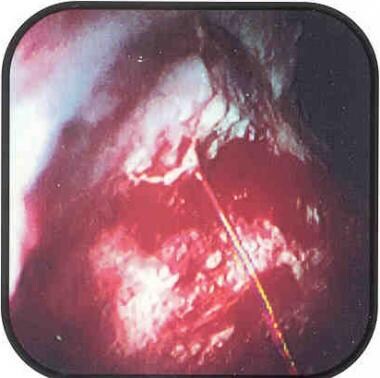
Media file 1:  Upper gastrointestinal bleeding. Ulcer with a clean base.
Click to see larger pictureClick to see detailView Full Size Image
Media type:  Image

Media file 2:  Upper gastrointestinal bleeding. Diagram of a ulcer with a clean base.
Click to see larger pictureClick to see detailView Full Size Image
Media type:  Image

Media file 3:  Upper gastrointestinal bleeding. Ulcer with a black spot.
Click to see larger pictureClick to see detailView Full Size Image
Media type:  Image

Media file 4:  Upper gastrointestinal bleeding. Ulcer with an overlying clot.
Click to see larger pictureClick to see detailView Full Size Image
Media type:  Image

Media file 5:  Upper gastrointestinal bleeding. Ulcer with a visible vessel.
Click to see larger pictureClick to see detailView Full Size Image
Media type:  Image

Media file 6:  Upper gastrointestinal bleeding. Diagram of an ulcer with a visible vessel.
Click to see larger pictureClick to see detailView Full Size Image
Media type:  Image

Media file 7:  Upper gastrointestinal bleeding. Ulcer with active bleeding.
Click to see larger pictureClick to see detailView Full Size Image
Media type:  Image


  1. al-Assi MT, Genta RM, Karttunen TJ, Graham DY. Ulcer site and complications: relation to Helicobacter pylori infection and NSAID use. Endoscopy. Feb 1996;28(2):229-33. [Medline].
  2. Boonpongmanee S, Fleischer DE, Pezzullo JC, Collier K, Mayoral W, Al-Kawas F, et al. The frequency of peptic ulcer as a cause of upper-GI bleeding is exaggerated. Gastrointest Endosc. Jun 2004;59(7):788-94. [Medline].
  3. Lanas A, Perez-Aisa MA, Feu F, Ponce J, Saperas E, Santolaria S, et al. A nationwide study of mortality associated with hospital admission due to severe gastrointestinal events and those associated with nonsteroidal antiinflammatory drug use. Am J Gastroenterol. Aug 2005;100(8):1685-93. [Medline].
  4. Yavorski RT, Wong RK, Maydonovitch C, Battin LS, Furnia A, Amundson DE. Analysis of 3,294 cases of upper gastrointestinal bleeding in military medical facilities. Am J Gastroenterol. Apr 1995;90(4):568-73. [Medline].
  5. Adler DG, Leighton JA, Davila RE, Hirota WK, Jacobson BC, Qureshi WA, et al. ASGE guideline: The role of endoscopy in acute non-variceal upper-GI hemorrhage. Gastrointest Endosc. Oct 2004;60(4):497-504. [Medline].
  6. Cooper GS, Chak A, Way LE, Hammar PJ, Harper DL, Rosenthal GE. Early endoscopy in upper gastrointestinal hemorrhage: associations with recurrent bleeding, surgery, and length of hospital stay. Gastrointest Endosc. Feb 1999;49(2):145-52. [Medline].
  7. Baradarian R, Ramdhaney S, Chapalamadugu R, Skoczylas L, Wang K, Rivilis S, et al. Early intensive resuscitation of patients with upper gastrointestinal bleeding decreases mortality. Am J Gastroenterol. Apr 2004;99(4):619-22. [Medline].
  8. Levine JE, Leontiadis GI, Sharma VK, Howden CW. Meta-analysis: the efficacy of intravenous H2-receptor antagonists in bleeding peptic ulcer. Aliment Pharmacol Ther. Jun 2002;16(6):1137-42. [Medline].
  9. Green FW Jr, Kaplan MM, Curtis LE, Levine PH. Effect of acid and pepsin on blood coagulation and platelet aggregation. A possible contributor prolonged gastroduodenal mucosal hemorrhage. Gastroenterology. Jan 1978;74(1):38-43. [Medline].
  10. Barkun AN, Herba K, Adam V, Kennedy W, Fallone CA, Bardou M. High-dose intravenous proton pump inhibition following endoscopic therapy in the acute management of patients with bleeding peptic ulcers in the USA and Canada: a cost-effectiveness analysis. Aliment Pharmacol Ther. Mar 1 2004;19(5):591-600. [Medline].
  11. Leontiadis GI, Sharma VK, Howden CW. Proton pump inhibitor therapy for peptic ulcer bleeding: Cochrane collaboration meta-analysis of randomized controlled trials. Mayo Clin Proc. Mar 2007;82(3):286-96. [Medline].
  12. Leontiadis GI, Sharma VK, Howden CW. Systematic review and meta-analysis of proton pump inhibitor therapy in peptic ulcer bleeding. BMJ. Mar 12 2005;330(7491):568. [Medline].
  13. Freeman ML, Cass OW, Peine CJ, Onstad GR. The non-bleeding visible vessel versus the sentinel clot: natural history and risk of rebleeding. Gastrointest Endosc. May-Jun 1993;39(3):359-66. [Medline].
  14. Cipolletta L, Bianco MA, Marmo R, Rotondano G, Piscopo R, Vingiani AM, et al. Endoclips versus heater probe in preventing early recurrent bleeding from peptic ulcer: a prospective and randomized trial. Gastrointest Endosc. Feb 2001;53(2):147-51. [Medline].
  15. Lin HJ, Hsieh YH, Tseng GY, Perng CL, Chang FY, Lee SD. A prospective, randomized trial of endoscopic hemoclip versus heater probe thermocoagulation for peptic ulcer bleeding. Am J Gastroenterol. Sep 2002;97(9):2250-4. [Medline].
  16. Saltzman JR, Strate LL, Di Sena V, Huang C, Merrifield B, Ookubo R, et al. Prospective trial of endoscopic clips versus combination therapy in upper GI bleeding (PROTECCT--UGI bleeding). Am J Gastroenterol. Jul 2005;100(7):1503-8. [Medline].
  17. Jensen DM, Machicado GA, Hirabayashi K. Randomized controlled study of 3 different types of hemoclips for hemostasis of bleeding canine acute gastric ulcers. Gastrointest Endosc. Nov 2006;64(5):768-73. [Medline].
  18. Bini EJ, Cohen J. Endoscopic treatment compared with medical therapy for the prevention of recurrent ulcer hemorrhage in patients with adherent clots. Gastrointest Endosc. Nov 2003;58(5):707-14. [Medline].
  19. Hochberger J, Euler K, Naegel A, Hahn EG, Maiss J. The compact Erlangen Active Simulator for Interventional Endoscopy: a prospective comparison in structured team-training courses on "endoscopic hemostasis" for doctors and nurses to the "Endo-Trainer" model. Scand J Gastroenterol. Sep 2004;39(9):895-902. [Medline].
  20. Poxon VA, Keighley MR, Dykes PW, Heppinstall K, Jaderberg M. Comparison of minimal and conventional surgery in patients with bleeding peptic ulcer: a multicentre trial. Br J Surg. Nov 1991;78(11):1344-5. [Medline].
  21. Primrose JN, Gledhill T, Quirke P, Johnston D. Blind total gastrectomy for massive bleeding from the stomach. Br J Surg. Nov 1986;73(11):920-2. [Medline].
  22. Bouillot JL, Aubertin JM, Fornes P, Petite JP, Alexandre JH. Dieulafoy's ulcer: combined endoscopic and laparoscopic treatment. Endoscopy. May 1996;28(4):394-5. [Medline].
  23. Podolsky I, Storms PR, Richardson CT, Peterson WL, Fordtran JS. Gastric adenocarcinoma masquerading endoscopically as benign gastric ulcer. A five-year experience. Dig Dis Sci. Sep 1988;33(9):1057-63. [Medline].
  24. Penston JG, Wormsley KG. Review article: maintenance treatment with H2-receptor antagonists for peptic ulcer disease. Aliment Pharmacol Ther. Feb 1992;6(1):3-29. [Medline].
  25. Lai KC, Lam SK, Chu KM, Wong BC, Hui WM, Hu WH, et al. Lansoprazole for the prevention of recurrences of ulcer complications from long-term low-dose aspirin use. N Engl J Med. Jun 27 2002;346(26):2033-8. [Medline].
  26. Raskin JB, White RH, Jackson JE, Weaver AL, Tindall EA, Lies RB, et al. Misoprostol dosage in the prevention of nonsteroidal anti-inflammatory drug-induced gastric and duodenal ulcers: a comparison of three regimens. Ann Intern Med. Sep 1 1995;123(5):344-50. [Medline].
  27. Bleau BL, Gostout CJ, Sherman KE, Shaw MJ, Harford WV, Keate RF, et al. Recurrent bleeding from peptic ulcer associated with adherent clot: a randomized study comparing endoscopic treatment with medical therapy. Gastrointest Endosc. Jul 2002;56(1):1-6. [Medline].
  28. Calam J. Clinical science of Helicobacter pylori infection: ulcers and NSAIDs. Br Med Bull. 1998;54(1):55-62. [Medline].
  29. Chung SS, Lau JY, Sung JJ, Chan AC, Lai CW, Ng EK, et al. Randomised comparison between adrenaline injection alone and adrenaline injection plus heat probe treatment for actively bleeding ulcers. BMJ. May 3 1997;314(7090):1307-11. [Medline].
  30. Cook DJ, Guyatt GH, Salena BJ, Laine LA. Endoscopic therapy for acute nonvariceal upper gastrointestinal hemorrhage: a meta-analysis. Gastroenterology. Jan 1992;102(1):139-48. [Medline].
  31. Gilbert DA, Silverstein FE, Tedesco FJ, Buenger NK, Persing J. The national ASGE survey on upper gastrointestinal bleeding. III. Endoscopy in upper gastrointestinal bleeding. Gastrointest Endosc. May 1981;27(2):94-102. [Medline].
  32. Gralnek IM, Jensen DM, Kovacs TO, Jutabha R, Jensen ME, Cheng S, et al. An economic analysis of patients with active arterial peptic ulcer hemorrhage treated with endoscopic heater probe, injection sclerosis, or surgery in a prospective, randomized trial. Gastrointest Endosc. Aug 1997;46(2):105-12. [Medline].
  33. Gupta PK, Fleischer D. Endoscopic hemostasis in nonvariceal bleeding. Endoscopy. Jan 1994;26(1):48-54. [Medline].
  34. Jensen DM. Endoscopic control of non-variceal upper gastrointestinal hemorrhage. In: Yamada T, Alpers D, Laine L, et al. Textbook of Gastroenterology. 3rd ed. Philadelphia, Pa: JB Lippincott; 1999:2857-79.
  35. Kapetanakis AM, Kyprizlis EP, Tsikrikas TS. Efficacy of repeated therapeutic endoscopy in patients with bleeding ulcer. Hepatogastroenterology. Jan-Feb 1997;44(13):288-93. [Medline].
  36. Laine L, Peterson WL. Bleeding peptic ulcer. N Engl J Med. Sep 15 1994;331(11):717-27. [Medline].
  37. Laine L, Stein C, Sharma V. A prospective outcome study of patients with clot in an ulcer and the effect of irrigation. Gastrointest Endosc. Feb 1996;43(2 Pt 1):107-10. [Medline].
  38. Lau JY, Sung JJ, Lam YH, Chan AC, Ng EK, Lee DW, et al. Endoscopic retreatment compared with surgery in patients with recurrent bleeding after initial endoscopic control of bleeding ulcers. N Engl J Med. Mar 11 1999;340(10):751-6. [Medline].
  39. Longstreth GF. Epidemiology of hospitalization for acute upper gastrointestinal hemorrhage: a population-based study. Am J Gastroenterol. Feb 1995;90(2):206-10. [Medline].
  40. Longstreth GF, Feitelberg SP. Successful outpatient management of acute upper gastrointestinal hemorrhage: use of practice guidelines in a large patient series. Gastrointest Endosc. Mar 1998;47(3):219-22. [Medline].
  41. National Institutes of Health. Consensus conference: Therapeutic endoscopy and bleeding ulcers. JAMA. Sep 8 1989;262(10):1369-72. [Medline].
  42. Saeed ZA. Second thoughts about second-look endoscopy for ulcer bleeding?. Endoscopy. Sep 1998;30(7):650-2. [Medline].
  43. Saeed ZA, Cole RA, Ramirez FC, Schneider FE, Hepps KS, Graham DY. Endoscopic retreatment after successful initial hemostasis prevents ulcer rebleeding: a prospective randomized trial. Endoscopy. Mar 1996;28(3):288-94. [Medline].
  44. Saeed ZA, Winchester CB, Michaletz PA, Woods KL, Graham DY. A scoring system to predict rebleeding after endoscopic therapy of nonvariceal upper gastrointestinal hemorrhage, with a comparison of heat probe and ethanol injection. Am J Gastroenterol. Nov 1993;88(11):1842-9. [Medline].
  45. Santander C, Gravalos RG, Gomez-Cedenilla A, Cantero J, Pajares JM. Antimicrobial therapy for Helicobacter pylori infection versus long-term maintenance antisecretion treatment in the prevention of recurrent hemorrhage from peptic ulcer: prospective nonrandomized trial on 125 patients. Am J Gastroenterol. Aug 1996;91(8):1549-52. [Medline].
  46. Stollman NH, Putcha RV, Neustater BR, Tagle M, Raskin JB, Rogers AI. The uncleared fundal pool in acute upper gastrointestinal bleeding: implications and outcomes. Gastrointest Endosc. Oct 1997;46(4):324-7. [Medline].
  47. Swain CP, Storey DW, Bown SG, Heath J, Mills TN, Salmon PR, et al. Nature of the bleeding vessel in recurrently bleeding gastric ulcers. Gastroenterology. Mar 1986;90(3):595-608. [Medline].

Upper Gastrointestinal Bleeding excerpt

Article Last Updated: Feb 12, 2008