| Patient Education |
|
Click here for patient education.
|
|
You are in: eMedicine Specialties >
Hematology > Plasma Cell Disorders
Amyloidosis, Immunoglobulin-Related
Article Last Updated: Jun 4, 2007
AUTHOR AND EDITOR INFORMATION
Section 1 of 11
Author: Slavomir Urbancek, MD, PhD, Head, Department of Dermatology, FD Roosevelt Hospital, Slovakia
Slavomir Urbancek is a member of the following medical societies: European Academy of Dermatology and Venereology
Coauthor(s):
Pere Gascon, MD, PhD, Professor and Director, Division of Medical Oncology, Institute of Hematology and Medical Oncology, IDIBAPS, University of Barcelona Faculty of Medicine, Spain;
Robert A Schwartz, MD, MPH, Professor and Head of Dermatology, Professor of Medicine, Professor of Pediatrics, Professor of Pathology, Professor of Preventive Medicine and Community Health, UMDNJ-New Jersey Medical School;
Daniel R Jacobson, MD, Associate Professor, Department of Medicine, Division of Hematology, New York University School of Medicine;
Joel Buxbaum, MD, Professor, Department of Molecular and Experimental Medicine, The Scripps Research Institute;
Carol A Bogdan, MD, Consulting Staff, Coastal Cancer Center, Myrtle Beach, SC
Editors: Robert E Wolf, MD, PhD, Professor Emeritus, Department of Medicine, Louisiana State University Health Sciences Center at Shreveport; Chief, Rheumatology Section, Medical Service, Overton Brooks Veterans Administration Medical Center of Shreveport; Francisco Talavera, PharmD, PhD, Senior Pharmacy Editor, eMedicine; Lawrence H Brent, MD, Associate Professor of Medicine, Thomas Jefferson University; Chair, Program Director, Department of Medicine, Division of Rheumatology, Albert Einstein Medical Center; Rajalaxmi McKenna, MD, FACP, Consulting Staff, Department of Medicine, Southwest Medical Consultants, SC, Good Samaritan Hospital, Advocate Health Systems; Emmanuel C Besa, MD, Professor, Department of Medicine, Division of Hematologic Malignancies, Kimmel Cancer Center, Thomas Jefferson University
Author and Editor Disclosure
Synonyms and related keywords:
AL, light chain amyloidosis, primary amyloidosis, primary systemic amyloidosis, myeloma-associated amyloidosis, Ig-related amyloidosis, immunoglobulin-related amyloidosis, monoclonal plasma cell dyscrasias, monoclonal plasma cell disorder, amyloid deposits, amyloid L chain type, multiple myeloma, monoclonal gammopathy of undetermined significance, MGUS, nonamyloid monoclonal immunoglobulin deposition disease, MIDD
Background
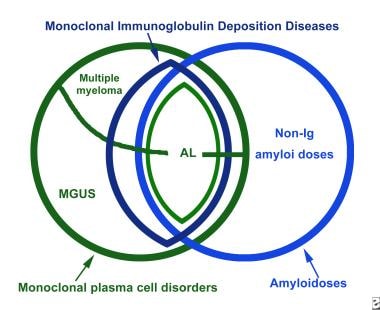
Immunoglobulin-related amyloidosis is a monoclonal plasma cell disorder in which the secreted monoclonal immunoglobulin protein forms insoluble fibrillar deposits in 1 or more organs. In nearly all cases, the deposits contain immunoglobulin light (L) chains or L-chain fragments, termed amyloid L-chain type (AL). In a few reported patients, the amyloid deposits have contained immunoglobulin heavy (H) chains; these are termed amyloid H-chain type (AH). Prior to the discovery that the major fibril component in these patients was an immunoglobulin fragment, patients with amyloid light chain type were described as having primary (in the sense of idiopathic) amyloidosis or, when the burden of monoclonal plasma cells was large, myeloma-associated amyloidosis. Immunoglobulin L and H chains are 2 of 20 different fibril proteins that have been described in human amyloidosis. For a general discussion of the human amyloidoses, the types of human amyloidosis, and an approach to the diagnosis of amyloidosis, see Amyloidosis, Overview. AL is related to both multiple myeloma and monoclonal gammopathy of undetermined significance (MGUS). These monoclonal plasma cell disorders can be categorized according to the total body burden of monoclonal plasma cells. When this burden is large, the diagnostic criteria for multiple myeloma are fulfilled; when this burden is lower, MGUS is diagnosed. Multiple myeloma and MGUS fall on a continuum, with 20% of patients with MGUS progressing to multiple myeloma within 10 years. In most patients with a monoclonal plasma cell disorder, whether multiple myeloma or MGUS, the monoclonal L chain secreted by the clone remains soluble in the bloodstream. However, in some patients, the physicochemical characteristics of the immunoglobulin L chain or L-chain fragment lead to its deposition as amyloid. Thus, some patients with amyloid L-chain type meet the diagnostic criteria of multiple myeloma, whereas other patients can be considered as having MGUS in which the clonal immunoglobulin product is amyloidogenic. In addition to cases of monoclonal gammopathy in which the secreted clonal immunoglobulin remains in solution and those in which secreted clonal immunoglobulin forms amyloid deposits, a third group consists of cases in which the monoclonal proteins accumulate in various organs, but the deposits do not form fibrils. Patients with this form are described as having nonamyloid monoclonal immunoglobulin deposition disease (MIDD). The relationship among the plasma cell dyscrasias and the amyloidoses is depicted in Image 1.
Pathophysiology
The most common amyloid L-chain type precursor proteins are L chains of the lambda (l) class. Lambda amyloid L-chain type is approximately twice as prevalent as kappa (k) amyloid L-chain type, and L chains of the Vl6 class are the most amyloidogenic. Clonal plasma cell proliferative diseases in which the Vl6 gene is expressed are always associated with amyloid deposition. Among Vk genes, the Vk1 subgroup is overrepresented among amyloid-forming L chains. Within the V region families, certain amino acid residues occurring at particular positions in the L-chain sequence render those chains more amyloidogenic, with a combination of such residues increasing the chances of a particular L-chain protein being associated with tissue amyloid deposition. Another structural feature that appears to predispose to amyloid L-chain type deposition is enzymatic glycosylation of the L chain. While 15% of human L chains bear sugar residues, almost one third of amyloidogenic L chains are glycosylated. Why certain amino acid and glycosylation characteristics in L chains predispose to amyloid formation remains unknown. Amyloid L-chain type deposits contain intact L chains, L-chain fragments, or both (most patients). The fragments always include the amino terminus of the chain and range in mass from 5000-16,000 d. In 90% of patients, the deposited peptides include at least some constant region sequence; therefore, the peptides react with commercially available anti–L chain sera, which are specific for constant region determinants. These observations explain why 10% of deposits do not bind either commercial anti-k or anti-l antisera. Amyloid L-chain type deposits can develop in any organ system. The most common organs involved are the kidneys, the heart, the gastrointestinal (GI) tract, the peripheral nerves, and the liver. In most cases, the deposits affect multiple organ systems. Factors leading to the specific pattern of organ involvement in a particular patient are not understood. In a minority of cases, localized amyloid deposits, including amyloid masses (amyloidomas), may be found in various sites, even in the absence of systemic disease. The pathogenesis of localized amyloid L-chain type is not well understood, but a small, localized clone of plasma cells apparently produces immunoglobulin, which forms deposits near the site of synthesis. In some patients, plasma cells have been demonstrated histologically, accompanying the localized amyloid deposits. In one patient, DNA sequencing revealed that local plasma cells were producing the locally deposited L chains.
Frequency
United States
Annually, 1-5 cases per 100,000 people occur. The best available direct data on amyloid L-chain type prevalence in the United States come from Olmstead County, Minn, where the annual prevalence of amyloid L-chain type was calculated to be approximately 1 case per 100,000 people. The population in this location is primarily of northern European ancestry. Whether this prevalence applies to different populations is not known. Based on indirect calculations, the prevalence may be higher. The annual incidence of multiple myeloma is approximately 5 cases per 100,000 people, and the prevalence of amyloid L-chain type in patients with myeloma is approximately 20-35%, producing an overall incidence of combined amyloid L-chain type and myeloma of 1-1.5 cases per 100,000 people. Only 1 in 5 patients with amyloid L-chain type has frank myeloma; therefore, the total number of patients with amyloid L-chain type is 5 times the number of patients with amyloid L-chain type and myeloma or at least 5 cases per 100,000 people.
International
The prevalence of amyloid L-chain type appears to be the same in all populations. The only population-based direct measurement comes from the United States.
Mortality/Morbidity
Symptoms reflect the organs containing amyloid deposits. Factors that cause deposits in different organs in different patients are unknown. Cardiac deposition is the most severe consequence of systemic amyloid L-chain type, eventually occurring in most patients. Cardiac amyloid L-chain type is the cause of death in most patients with systemic amyloid L-chain type.
Race
Amyloid L-chain type affects people of all racial and ethnic groups. No data are available comparing the incidence of disease in different groups.
Sex
The male-to-female ratio of amyloid L-chain type is 2:1.
Age
The median age at diagnosis in the largest published series (from the Mayo Clinic) was 64 years.
History
The most common presenting symptoms, including weakness and weight loss followed by purpura, particularly in loose facial tissue, are nonspecific. Other symptoms and physical findings vary widely, depending on which organs contain deposits. Amyloid deposition in a particular organ leads to similar clinical consequences and, therefore, similar complaints, regardless of the type of amyloid deposited. For example, cardiac amyloid L-chain type and cardiac transthyretin (TTR) amyloidosis cause similar symptoms. Clinical features and management outcome were evaluated in a series of 24 patients with periocular and orbital amyloidosis.1 Signs and symptoms included a visible or palpable periocular mass or tissue infiltration (95.8%), ptosis (54.2%), periocular discomfort or pain (25%), proptosis or globe displacement (21%), limitations in ocular motility (16.7%), recurrent periocular subcutaneous hemorrhages (12.5%), and diplopia (8.3%). Seven patients had B cells or plasma cells producing monoclonal immunoglobulin chains that were deposited as amyloid light chains.
- Renal involvement
- The kidneys are the most frequent sites of deposition, with nephrotic syndrome being common; therefore, complaints of peripheral edema are common.
- Patients can present with renal failure.
- Cardiovascular involvement
- Involvement of the heart and the peripheral vasculature often leads to postural hypotension, with patients complaining of lightheadedness.
- Patients also develop weakness, palpitations, dyspnea, and peripheral edema due to congestive heart failure and arrhythmias.
- Occasionally, deposits in the coronary arteries (usually the smaller intracardiac arterioles) may cause anginal symptoms similar to those typical of atherosclerotic coronary artery disease.
- Peripheral neuropathy
- Patients whose disease involves the peripheral nerves often report dysesthesia, decreased sensation, and decreased strength.
- Symptoms usually affect the lower extremities more severely than the upper extremities.
- GI involvement:
- Most patients with amyloid L-chain type have histologic evidence of infiltration of the gut, particularly in the blood vessels. However, deposition is symptomatic in only a minority of patients.
- The most common GI symptoms are constipation or alternating constipation and diarrhea. Gastric amyloid L-chain type can cause hematemesis, nausea, and vomiting. Intestinal amyloid L-chain type can impair motility and cause hemorrhage, obstruction, constipation, and diarrhea or alternating constipation and diarrhea.
- Myeloma associated amyloidosis may rarely be first evident as subacute liver failure.2
- Carpal tunnel syndrome: Approximately 20% of patients with amyloid L-chain type initially report weakness and paresthesia of one or both hands, suggesting carpal ligament involvement.
Physical
- General features
- The most common initial physical findings include peripheral edema, hepatomegaly, purpura, orthostatic hypotension, peripheral neuropathy, carpal tunnel syndrome, and macroglossia.
- Peripheral edema and hypotension result from congestive heart failure and nephrotic syndrome.
- Purpura results from vascular fragility produced by amyloid deposition in the subendothelium of the small blood vessels.
- Cardiac involvement
- Cardiac amyloidosis typically causes diastolic dysfunction; congestive heart failure; and arrhythmias, including heart block, premature ventricular contractions, and various tachyarrhythmias.
- Physical findings observed are not specific for cardiac amyloidosis.
- Ecchymosis
- Bleeding may be a severe manifestation of amyloid L-chain type or of any of the systemic amyloidoses.
- Subendothelial deposition leads to capillary fragility and mucocutaneous bleeding.
- A deficiency in coagulation factor X, resulting from its binding to amyloid L-chain type amyloid fibrils, can exacerbate bleeding.
- Neuropathy
- In approximately 20% of people with amyloid L-chain type, deposition occurs in the peripheral nerves, causing sensorimotor peripheral neuropathy. Nerve deposition leads to symmetric sensory impairment and weakness, accompanied at times by painless ulcers similar to those of diabetic neuropathy. Cranial neuropathy is occasionally observed. Autonomic neuropathy may cause severe orthostatic hypotension, diarrhea, or impotence.
- Patients with familial TTR amyloidosis commonly present with a combination of severe peripheral and autonomic neuropathy. Consider the alternative diagnosis of TTR amyloidosis in a young patient with severe amyloid neuropathy but no other severe organ involvement (see Amyloidosis, Transthyretin-Related and Amyloidosis, Overview).
- Orthostatic hypotension
- Amyloid L-chain type and other systemic amyloidoses can lead to severe orthostatic hypotension to the point of producing syncope and preventing normal activity.
- Poor cardiac contractility resulting from myocardial deposition, autonomic neuropathy resulting from amyloid deposits in the peripheral nerves, and impaired arteriolar responsiveness resulting from endothelial deposition may contribute to orthostatic hypotension.
- Treating heart failure or the nephrotic syndrome with diuretics may exacerbate hypotension.
- Hepatosplenomegaly
- Hepatic and splenic depositions causing hepatomegaly and/or splenomegaly are common and usually asymptomatic.
- Rarely, spontaneous rupture of the liver or the spleen may present as a surgical emergency.
- Macroglossia
- Macroglossia is present less frequently at diagnosis than was reported in earlier series, probably because of earlier diagnosis.
- When present, macroglossia can become severe enough to interfere with swallowing and breathing.
- When it occurs, macroglossia highly suggests amyloidosis of the amyloid L-chain type because this physical finding has apparently been described only in amyloid L-chain type and occasionally in b2-microglobulin (B2M) amyloidosis.
- Musculoskeletal system
- Amyloid L-chain type deposits in the joints resembling seronegative rheumatoid arthritis may lead to a clinical examination.
- Deposits in the glenohumeral articulation may cause localized pain and swelling ("shoulder pad" sign), while deposits in skeletal muscle may produce pseudohypertrophy.
- Localized amyloid L-chain type
- For unknown reasons, localized amyloid L-chain type most commonly occurs in the respiratory tract.
- Localized pulmonary amyloid L-chain type often remains localized (ie, does not progress to systemic disease).
- Localized amyloid L-chain type may involve the ureter or the urinary bladder, causing hematuria.
- Amyloidomas are often found in the soft tissues, including the mediastinum and the retroperitoneum.
- Skin involvement can manifest as plaques and nodules.
Causes
No cause is known for any of the monoclonal plasma cell dyscrasias. Some evidence supports an etiologic role for human herpesvirus 8 (HHV-8), but this proposed etiology remains controversial.
Amyloidosis, AA (Inflammatory)
Amyloidosis, Beta2M (Dialysis-Related)
Amyloidosis, Familial Renal
Amyloidosis, Transthyretin-Related
Monoclonal Gammopathies of Uncertain Origin
Multiple Myeloma
Lab Studies
- Blood and urine tests: Once the diagnosis of amyloid L-chain type is established (see Procedures), perform laboratory studies to observe for abnormalities, such as abnormal renal function or coagulation, commonly found in amyloid L-chain type and to evaluate for possible multiple myeloma.
- Monoclonal immunoglobulin (serum protein electrophoresis, urine protein electrophoresis, serum and urine protein immunoelectrophoresis)
- Monoclonal immunoglobulin L chain, the cardinal laboratory finding in amyloid L-chain type, is detected on routine clinical laboratory testing in the serum or the urine of 80-90% of patients. This percentage reflects the limit to the sensitivity of routine laboratory testing rather than the biology of amyloid L-chain type. Because plasma cells in bone marrow (or occasionally in other sites) synthesize immunoglobulin L chains, which are deposited in various organs, the L chains must travel through the bloodstream. Thus, in theory, if a sufficiently sensitive assay were used, monoclonal serum L chains or L-chain fragments would be detected in all patients.
- The concentration of normal immunoglobulin is often decreased, such as in multiple myeloma. The combination of hypogammaglobulinemia and proteinuria should suggest a diagnosis of amyloid L-chain type or MIDD. In contrast, renal amyloid of the amyloid A type is usually associated with hypergammaglobulinemia related to persistent inflammation and interleukin 6 production.
- Recent study showed that the absolute value of immunoglobulin free light chain (FLC) as a precursor protein of amyloid are prognostic in patients with primary systemic amyloidosis undergoing peripheral blood stem cell transplantation. There was a significantly higher risk of death in patients with higher baseline FLC and normalization of FLC level after PBSCT predicted for both organ response and complete hematologic response.
- Blood counts: The CBC is usually unremarkable. Functional asplenism may occur, leading to mild thrombocytosis and Howell-Jolly bodies in the peripheral blood.
- Absolute lymphocyte count recovery at day 15 after autologous stem cell transplantation (ALC-15) seems to be a powerful prognostic indicator for overall survival and progression-free survival. ALC-15 of 500 or greater is associated with significantly improved clinical outcomes.
- Prothrombin time and activated partial thromboplastin time
- Many clotting system abnormalities have been described in amyloid L-chain type. Occasionally, coagulopathy and prolongation of the prothrombin time (PT) or activated partial thromboplastin time (aPTT) arise because of the binding of a clotting factor (most often factor X) to the amyloid deposits.
- Acquired factor X deficiency is difficult to correct because infused factor X is cleared quickly from the circulation. Elevation in tissue and urine plasminogen activators and a decrease in tissue plasminogen activator inhibitor, leading to hyperfibrinolytic states, have also been reported.
- Urinary protein: When amyloid L-chain type involves the kidneys, proteinuria is invariably present. One third to one half of patients excrete at least a gram of protein per day in the urine, predominantly albumin. The 24-hour urinary protein level can be monitored serially to evaluate the response to chemotherapy. Improvement in response to treatment may be associated with a decrease in protein excretion.
- Liver function studies: Liver function abnormalities are rare, even in cases with massive deposition. Rarely, extensive liver involvement can lead to decreased levels of vitamin K-dependent clotting factors.
- Renal function studies: Severe azotemia is a late manifestation of renal amyloid L-chain type and is less common than proteinuria, although mild elevation of the serum creatinine level (at least 2 mg/dL) is often present.
- Bone marrow examination: Approximately 40% of patients have more than 10% plasma cells in the bone marrow. L-chain immunophenotyping of the marrow, even in the absence of increased numbers of plasma cells, usually exhibits the distortion in the k:l ratio, reflecting the L-chain type of the amyloid precursor.
Imaging Studies
- Cardiac imaging: Cardiac deposition is the most serious complication of amyloid L-chain type. Cardiac involvement should be assessed and monitored by means of imaging studies. No noninvasive test is sufficiently sensitive or specific to definitively diagnose cardiac amyloidosis, although 2-dimensional echocardiography and ECG, particularly when combined, can strongly suggest cardiac amyloidosis.
- Echocardiography
- The most useful noninvasive diagnostic test for cardiac amyloidosis is echocardiography, which enables the visualization of increased ventricular wall thickness, increased septal thickness, and an appearance of granular "sparkling." This finding is neither sensitive nor specific enough to be diagnostic but is highly suggestive when present.
- Amyloid L-chain type deposits in the heart occur in the ventricular interstitium, leading to thickening of the ventricular walls and intraventricular septum without an increase in intracardiac volume. Evaluation of diastolic function by using Doppler echocardiography reveals impaired ventricular relaxation early in the course of disease, which progresses to short deceleration. The ejection fraction is preserved until late in the disease course. Other echocardiographic findings include valvular thickening and insufficiency and atrial enlargement. Atrial thrombosis has also been described. Combining ECG and echocardiography appears to provide the most diagnostic value.
- Radiolabeled pentagonal (P) component scanning: This test, available only in Great Britain and France as of 2000, is a useful means of evaluating the total body burden of amyloid and is a sensitive, noninvasive means of diagnosing amyloid in most organs. Serial studies are useful for monitoring response to therapy. P component scanning is not useful for diagnosing or monitoring cardiac amyloid because the concentration of label in the intracardiac blood pool obscures the weaker signal from the labeled molecule bound to myocardial amyloid.
- Other cardiac imaging studies: CT scanning and nuclear scintigraphy are of less value than ECG and echocardiography.
- Bone imaging: As in any patient with a plasma cell dyscrasia, patients with amyloid L-chain type should have a skeletal survey that includes the skull, the entire spine, and the pelvis. Any bony pain that develops can result from plasma cell infiltration; therefore, obtain radiographs of any area where pain develops.
- Chest radiography: Systemic amyloid L-chain type may deposit in any part of the respiratory tree, from the nasopharynx to the pulmonary alveoli. Involvement is often asymptomatic, although alveolar or diffuse interstitial involvement can cause dyspnea. Chest radiographs reveal a reticular nodular pattern or interstitial infiltration.
Other Tests
- ECG: The classic ECG finding is a low-voltage QRS complex in the limb leads, resulting from replacement of normal cardiac tissue by nonconducting amyloid material. In some cases, loss of anterior forces suggests anteroseptal infarction that is not confirmed at autopsy. A variety of arrhythmias are observed and can be life threatening.
-
Procedures
- Biopsy with Congo red staining and immunostaining
- Amyloidosis of all types is definitively diagnosed by exhibiting Congo red binding material in a biopsy specimen. For many years, a biopsy of the rectum was the procedure of choice. Now, capillaries in subcutaneous fat are known to be frequently involved. These capillaries can provide sufficient tissue for diagnosis of amyloid, immunostaining, and, in some cases, amino acid sequence analysis. Aspiration of subcutaneous abdominal fat is a simple and fast method for detecting systemic amyloidosis with sensitivity of 80% associated with use of a routine approach. If the results of fat tissue aspiration are negative, the additional value of a subsequent biopsy of the rectum is negligible. Thus, obtaining a biopsy from the organ with the most severe clinical involvement is not always necessary. However, a biopsy from an organ with impaired function, such as a kidney or the heart, definitively establishes a cause-and-effect relationship between the organ dysfunction and the amyloid deposition.
- Amyloid L-chain type deposition in the peripheral nerves leads to axonal degeneration of the small nerve fibers, leading to polyneuropathy. Diagnosis can often be made through findings from a biopsy of a sural nerve, although the deposits may be proximal to the sural nerve and, therefore, not found in the biopsy sample.
- Obtaining a renal biopsy sample is rarely necessary, but findings exhibit deposits in the glomerular mesangium and, later, along the basement membrane.
- Other potential biopsy sites include the salivary glands, the stomach, and the bone marrow.
- Avoid obtaining a percutaneous liver biopsy. Such biopsies are contraindicated in the presence of coagulopathy. Severe and even fatal bleeding has occurred in this setting.
- After Congo red staining is used to establish a diagnosis of amyloidosis, determine the specific type of amyloidosis by immunostaining a biopsy specimen using commercially available specific antisera against k and l chains.
- Do not assume that amyloid is of the amyloid L-chain type based on indirect tests, such as serum or urine protein electrophoresis or immunofixation, because monoclonal proteins are common in the elderly population and may be present as incidental findings in patients with other types of amyloidosis.
- Distinguishing between amyloid L-chain type and TTR cardiac amyloidosis on clinical grounds alone is particularly difficult. Without immunologic identification of the deposited protein, an incorrect presumptive diagnosis of amyloid L-chain type could lead to ineffective and perhaps harmful treatment.
Histologic Findings
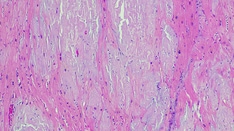
Obtaining a biopsy sample of an affected organ followed by routine hematoxylin and eosin staining reveals homogeneous, interstitial, eosinophilic material. Amyloid material stained with Congo red and viewed under polarized light appears bright green. Specific staining with antibodies against k and l L chains proves the diagnosis of amyloid L-chain type (as opposed to other types of amyloidosis, which have a similar appearance after hematoxylin and eosin or Congo red staining). See Amyloidosis, Overview. In MIDD, the immunoglobulin deposits do not bind Congo red stain, they do not contain P component or other components of amyloid fibrils, and (unlike in amyloidosis) they are not fibrillar. MIDD occurs most frequently in the kidneys and the heart. Nodular glomerulosclerosis observed on routine histologic examination in the absence of diabetes mellitus suggests MIDD. The pathologic diagnosis of nonamyloid MIDD depends on the identification of immunoglobulin deposits in tissues via immunostaining. MIDD may be underdiagnosed because immunostaining is not routinely performed. The clinical pathological feature and diagnostic criteria of tongue amyloidosis is important. Twenty-five patients were pathologically diagnosed as tongue amyloidosis, although none had an enlarged tongue.3 Hematoxylin and eosin (HE) and immunohistochemical staining were employed to detect the amyloid deposition on the tongue, with amyloid depositions in basement membrane, muscle cell, vessel wall, and nerve fiber. Immunohistochemical study demonstrated kappa light-chain deposition in 64% of cases, and lambda light-chain deposition in 36% of them. Thus, biopsy is an important means for the diagnosis of early tongue amyloid L-chain type, and the wide variety of amyloid light chain is helpful in the differential diagnosis.
Medical Care
Standard treatment of amyloid L-chain type aims to reduce production of the monoclonal immunoglobulin precursor via chemotherapy or occasionally via radiation therapy or surgery of a localized amyloidogenic plasmacytoma. Experimental drugs that bind to amyloid fibrils, leading to their resorption, are also being studied. Supportive therapy to maintain organ function is equally important.
- Chemotherapy: Chemotherapy is based on the principle that, as in myeloma, proliferation of a plasma cell clone causes amyloid L-chain type. Regimens most likely to benefit patients with amyloid L-chain type are the same as those that are useful for myeloma (ie, melphalan, prednisone).
- Many more studies have been published on the treatment of myeloma than of amyloid L-chain type because myeloma is more common, and the response to therapy can be more easily monitored. In myeloma, the level of serum or urine monoclonal protein usually serves as a quantitative marker of tumor burden. In amyloid L-chain type, determining the response to therapy is difficult and requires indirect measurements of end-organ damage, serial biopsies, or serial P component scans when available.
- After melphalan and prednisone were demonstrated to be useful for myeloma, the regimen was tried for amyloid L-chain type. The first 2 randomized studies of melphalan and prednisone versus placebo or colchicine suggested a value to chemotherapy but did not reach statistical significance for improved survival.
- In the mid 1990s, 2 randomized placebo-controlled trials demonstrated a statistically significant survival benefit of melphalan and prednisone compared to colchicine. The colchicine arm in these trials essentially served as placebo because colchicine is now known to be ineffective for amyloid L-chain type and is no longer used.
- Patients in one trial were randomized to 1 of 3 arms (melphalan and prednisone; melphalan, prednisone, and colchicine; or colchicine alone). The median survival rate was greater in the melphalan, prednisone, and colchicine arm (18 mo) and the melphalan and prednisone (17 mo) arm than in the colchicine-alone arm (8.5 mo).
- In the other trial, 100 patients were randomized to receive either oral melphalan, prednisone, and colchicine or colchicine alone. The overall survival rate for the melphalan, prednisone, and colchicine group was 12.2 months compared with 6.7 months for the colchicine-alone group. This difference did not quite reach statistical significance (P = .087), reflecting the small sample size and several early deaths of patients with severe disease in both treatment groups. In addition, several patients did not receive the intended chemotherapy or were crossed over to chemotherapy by their physicians (analysis was performed on an intent-to-treat basis). Taken together, these studies demonstrate a survival benefit of melphalan and prednisone compared with placebo in amyloid L-chain type.
- Patients most likely to respond to chemotherapy with objective improvement in end-organ damage are those with renal involvement and nephrotic syndrome. Approximately 25% of this group has at least a 50% decrease in proteinuria, with most of these patients experiencing complete resolution of proteinuria. Improvement can occur in nearly any organ, but improvement in amyloid L-chain type neuropathy is rare.
- Other chemotherapeutic regimens used for multiple myeloma are also expected to benefit patients with amyloid L-chain type and are reasonable therapeutic options for amyloid L-chain type. In one randomized study, melphalan and prednisone use was compared to a 5-drug myeloma regimen (vincristine, carmustine, melphalan, cyclophosphamide, prednisone). Response rates and survival did not differ between the 2 groups. In a phase II trial, high-dose dexamethasone also produced occasional objective organ responses, including responses in some patients who had received previous chemotherapy. Many experts consider melphalan plus prednisone to be standard therapy for amyloid L-chain type for patients not enrolled in a clinical trial, and it is the only regimen that has been shown to prolong survival compared with no chemotherapy. No regimen has been shown in a randomized trial to be superior to melphalan plus prednisone.
- Duration of initial chemotherapy and potential adverse effects are as follows:
- No data indicate the optimal treatment duration in patients whose conditions respond. In patients in whom a response occurs with objective improvement in organ function and in whom toxicity does not develop, chemotherapy is usually continued for 1-2 years.
- When disease initially responds and then progresses off treatment, chemotherapy, whether the same or a different regimen, can be resumed. Little information exists regarding whether any maintenance therapy, such as alpha interferon, is useful, again mirroring the situation in myeloma.
- When contemplating the duration of therapy, keep in mind the leukemogenic potential of melphalan. The actuarial risk of acute myelogenous leukemia (AML) in 1 study of patients with myeloma treated with melphalan was 17% at 50 months. In 2 studies of patients with amyloid L-chain type treated with melphalan-containing regimens, 5% of patients developed myelodysplasia within 3 years of treatment. Some patients' conditions progressed to acute myelogenous leukemia.
- High-dose chemotherapy followed by stem cell or autologous bone marrow rescue is as follows:
- In both amyloid L-chain type and myeloma, standard dose regimens rarely, if ever, completely eradicate the plasma cell clone. Therefore, high-dose chemotherapy followed by autologous bone marrow or peripheral blood stem cell rescue has been studied in selected patients. Similar to standard dose regimens, studies of high-dose therapy for myeloma predate similar studies for amyloid L-chain type, and more data are available on myeloma.
- In myeloma, several phase II trials of high-dose therapy in selected patients have demonstrated favorable responses and survival rates compared with historical controls. One phase III trial randomized patients younger than 65 years to either a standard dose 6-drug regimen or high-dose therapy (4-6 cycles of the same 6-drug regimen followed by 140 mg/m2 of melphalan and total body irradiation) with autologous bone marrow transplantation. This trial found a 5-year survival benefit for high-dose therapy. However, even in myeloma, indications for high-dose therapy remain controversial; no consensus exists about which patients should be offered high-dose therapy with rescue.
- In amyloid L-chain type, the indication for high-dose therapy is even less established. Several centers have reported phase II trials of high-dose chemotherapy followed by rescue with autologous bone marrow or peripheral blood stem cells. In one highly selected group of patients (median age of 48 y and exclusion of patients with severely impaired cardiac, pulmonary, or renal function), 11 (65%) of 17 patients exhibited a response as assessed by objective improvement in end-organ function. Based on these data, high-dose chemotherapy regimens have become the recommended therapy in some centers for patients deemed able to tolerate the conditioning regimen.
- In early studies of high-dose therapy with peripheral blood stem cell rescue, patients with severe cardiac involvement experienced very high early mortality. This complication is attributed to intolerance of fluid shifts that occur with peripheral blood stem cell harvesting. Therefore, patients with severe cardiac involvement are now generally deemed ineligible for high-dose therapy. Another concern with high-dose therapy followed by stem cell rescue is that autologous stem cells collected for reinfusion generally contain clonal cells producing the amyloidogenic L chain.
- Diseases in which high-dose therapy has the most significant impact are those in which the malignant cell population is dividing rapidly. This criterion does not apply to amyloid L-chain type. Until standard-dose chemotherapy is compared with high-dose chemotherapy with rescue in a phase III randomized trial, deciding which therapy to use in individual patients will remain difficult and controversial.
- Pharmacologic therapy to solubilize amyloid fibrils
- An anthracycline analogue of doxorubicin, 4-iododoxorubicin (Idox), is the first small molecule found with in vivo activity to solubilize amyloid L-chain type deposits. The antiamyloid activity of Idox was discovered fortuitously when the analog was being studied as chemotherapy in multiple myeloma. A patient with myeloma and amyloid L-chain type excreted L chains into the urine and improved symptomatically within days. Idox was then demonstrated to bind to amyloid fibrils, although the parent compound, doxorubicin, does not.
- The ideal use of small molecule amyloid inhibitors, such as Idox, likely lies in combination with cytotoxic chemotherapy, both to decrease clonal L-chain production and to mobilize deposited L chains. Other small molecules that bind to amyloid fibrils of the amyloid L-chain type and other types of amyloidosis are under investigation.
- Treatment of localized amyloid L-chain type
- Treatment of localized amyloid L-chain type (most often found in the pulmonary tract or the genitourinary tract) has not been studied systematically. Because progression to systemic disease does not occur often, treatment with chemotherapy is not indicated.
- Localized radiation therapy aimed at destroying the local collection of plasma cells producing the amyloid L-chain type can be administered when a plasma cell collection can be identified.
- Local collections of amyloid L-chain type in the genitourinary tract, even in the absence of an identified clonal plasma cell collection, can cause hematuria. In these patients, surgical resection of amyloidomas may be required to control the bleeding.
- Supportive care
- Treatment of cardiac involvement is as follows:
- Diuretics are the mainstay of therapy for amyloid L-chain type-related congestive heart failure. The optimal degree of diuresis is often difficult to judge. When edema is troubling and symptomatic postural hypotension is not present, fluid can be removed with careful diuresis. Conversely, hypotension resulting from a low ejection fraction, autonomic neuropathy, or both may limit diuretic use.
- Digoxin and calcium channel blockers are contraindicated in cardiac amyloidosis because they bind to amyloid fibrils, which may worsen heart failure and produce arrhythmias. Pacemakers are of use in some patients with symptomatic bradycardia.
- Treatment of renal involvement is as follows:
- Hemodialysis and peritoneal dialysis can stabilize the course of patients with extensive kidney involvement.
- Hemodialysis should be offered to patients developing renal failure.
Surgical Care
- Carpal tunnel release
- Involvement of the carpal ligament is observed not only in amyloid L-chain type but also in B2M amyloidosis in patients undergoing dialysis and in patients with TTR amyloidosis (see Amyloidosis, Overview and Amyloidosis, Transthyretin-Related).
- Treatment is surgical. At the time of carpal tunnel release, perform a biopsy if a definitive diagnosis has not been established so that both Congo red staining and immunostaining can be performed. Why the carpal ligament is a favored location for amyloid deposition remains unknown.
- Organ transplantation: No randomized trials about organ transplantation in amyloid L-chain type are available to guide the decision-making process, but patients have received heart or kidney transplants.
- Cardiac transplantation
- A few patients with amyloid L-chain type have received heart transplants. This therapy may be lifesaving for patients with severe disease, but, in the absence of effective systemic therapy to eliminate production of the amyloidogenic L chain, amyloids can recur in the transplanted organ.
- For young patients with severe cardiac involvement, cardiac transplantation followed by high-dose chemotherapy and autologous stem cell or autologous bone marrow reinfusion has occasionally been considered.
- Renal transplantation
- Renal transplantation has been reported often in patients with amyloidosis, but most patients have not been of the amyloid L-chain type.
- Because amyloid L-chain type is generally a systemic disease and hemodialysis is generally effective and available, renal transplantation is rarely indicated in amyloid L-chain type, except perhaps in the occasional patient who has had particularly good responses to chemotherapy and in whom long-term survival may be expected.
Consultations
A hematologist and/or an oncologist, a cardiologist, a nephrologist, or other subspecialty consultations may be indicated depending on organ involvement.
Diet
No known diet changes affect amyloid L-chain type directly. Patients with nephrotic syndrome, renal failure, or congestive heart failure arising from amyloid L-chain type should receive appropriate dietary treatment of those conditions.
Melphalan plus prednisone is considered standard therapy for amyloid L-chain type, with any myeloma regimen offering a reasonable choice. An anthracycline analogue of doxorubicin, 4-iododoxorubicin (Idox), is the first small molecule found with in vivo activity to solubilize amyloid L-chain type deposits. The antiamyloid activity of Idox was discovered fortuitously when it was being studied as chemotherapy in multiple myeloma. A patient with myeloma and amyloid L-chain type excreted L chains into the urine and improved symptomatically within days. Idox was then demonstrated to bind to amyloid fibrils, although the parent compound, doxorubicin, does not. Five of 8 patients in the first pilot trial of Idox responded with clinical improvement unrelated to any cytotoxic effect on the plasma cell clone. From 1995-1997, Idox was administered to another 42 patients in Europe. Of the 42 patients, 13 had disease responses and 15 demonstrated stabilized disease. Responses were transient, and disease typically progressed after a period of months. From 1999-2000, Idox was studied for treatment of amyloid L-chain type in a phase II trial at 2 US centers. Results from this trial are not yet available. The ideal use of small molecule amyloid inhibitors, such as Idox, likely lies in combination with cytotoxic chemotherapy, both to decrease clonal L-chain production and to mobilize deposited L chains. Other small molecules that bind to amyloid fibrils of the amyloid L-chain type and other types are under investigation. Diuretics are the mainstay of therapy for amyloid L-chain type-related congestive heart failure. The optimal degree of diuresis is often difficult to judge. When edema is troubling and symptomatic postural hypotension is not present, fluid can be removed with careful diuresis. Conversely, hypotension resulting from a low ejection fraction and/or autonomic neuropathy may limit diuretic use. Digoxin and calcium channel blockers are contraindicated in cardiac amyloidosis because they bind to amyloid fibrils, which may worsen heart failure and produce arrhythmias.
Drug Category: Immunosuppressive agents
Two slightly different regimens of melphalan and prednisone have been used in 2 large studies. Either regimen can be used to treat this condition.
| Drug Name | Melphalan (Alkeran) and prednisone (Deltasone, Orasone, Meticorten) |
| Description | Melphalan reduces clonal plasma cell population. Inhibits mitosis by cross-linking DNA strands. Individual tolerance to melphalan varies. Adjust dosage after first cycle based on degree of cytopenia in previous cycles. Nadir counts appear 2-3 wk following administration. Should be taken on an empty stomach. Prednisone reduces clonal plasma cell population. |
| Adult Dose | 2 regimens have been studied: Regimen 1 (Mayo Clinic): 0.15 mg/kg melphalan PO plus 0.8 mg/kg prednisone PO qd for 7 d; increase melphalan dose by 2 mg in each 6-wk cycle until midcycle leukopenia or thrombocytopenia develops; repeat cycle q6wk for 2 y or until serious toxicity develops Regimen 2 (Boston University): 0.15 mg/kg melphalan PO plus 1.5 mg/kg prednisone PO qd for 4 d; repeat cycle q6wk for 1 y; increase melphalan dose by 2 mg in each 6-wk cycle until leukopenia or thrombocytopenia develops (not to exceed 0.25 mg/kg/dose); limit total melphalan dose over entire treatment regimen to 600 mg |
| Pediatric Dose | Not established |
| Contraindications | Documented hypersensitivity; severe bone marrow depression; viral, fungal, connective tissue, or tubercular skin infections; peptic ulcer disease; hepatic dysfunction; GI disease |
| Interactions | Concurrent administration of melphalan with cyclosporine increases nephrotoxicity; cimetidine and H2 antagonists increase gastric pH, decreasing effects of melphalan; coadministration of prednisone with estrogens may decrease prednisone clearance; concurrent use of prednisone with digoxin may cause digitalis toxicity secondary to hypokalemia; phenobarbital, phenytoin, and rifampin may increase metabolism of glucocorticoids (consider increasing maintenance dose); monitor for hypokalemia with coadministration of diuretics |
| Pregnancy | D - Unsafe in pregnancy
|
| Precautions | Amenorrhea may occur; caution in previously diagnosed myelosuppression; perform CBC before each treatment course and 2-3 wk after beginning treatment in first cycle and selected cycles thereafter to monitor nadir counts; if severe thrombocytopenia or leukopenia develops, delay the next cycle or reduce dose; abrupt discontinuation of glucocorticoids may cause adrenal crisis; hyperglycemia, edema, osteonecrosis, myopathy, peptic ulcer disease, hypokalemia, osteoporosis, euphoria, psychosis, growth suppression, and infections may occur with glucocorticoid use |
Further Outpatient Care
- A hematologist with experience in administering chemotherapy should care for patients with amyloid L-chain type on an ongoing basis.
Complications
- Complications reflect the organ systems involved.
- The most severe complication of systemic amyloid L-chain type is extensive cardiac deposition, with consequent congestive heart failure, arrhythmias, or both.
- Cardiac involvement eventually occurs in most patients and appears to be the cause of death in more than one half of patients with amyloid L-chain type.
Prognosis
- The prognosis for patients depends largely on the specificity of tissue deposition. Any organ can be involved, with symptoms and physical findings reflecting the pattern of anatomical compromise.
- Patients with clinical cardiac involvement have the worst prognosis, with a median survival rate of 6 months. Patients with involvement limited to the peripheral nerves have the longest survival. Other favorable prognostic features include a small number of clonal plasma cells in the bone marrow and normal renal function.
- In the absence of chemotherapy, systemic amyloid L-chain type is always progressive. A subgroup of patients respond to chemotherapy with temporary resorption of amyloid fibrils and improvement of end-organ function.
Medical/Legal Pitfalls
- The physician must be certain that the type of amyloidosis has been determined definitively. Patients with other types of amyloidosis can present with symptoms similar to amyloid L-chain type. They should not receive chemotherapy. This is discussed fully in Amyloidosis, Overview.
| Media file 1:
Amyloidosis, immunoglobulin related. The relationship among amyloidosis light chain type (AL), the other monoclonal plasma cell disorders, and the other amyloidoses. |
 | View Full Size Image | |
Media type: Graph
|
- Leibovitch I, Selva D, Goldberg RA, Sullivan TJ, Saeed P, Davis G. Periocular and orbital amyloidosis: clinical characteristics, management, and outcome. Ophthalmology. Sep 2006;113(9):1657-64. [Medline].
- Cross TJ, Wendon JA, Quaglia A. Myeloma associated amyloidosis presenting as subacute liver failure. Postgrad Med J. Jul 2006;82(969):e13.
- Pan WH, Li NP. Clinical pathological feature of early tongue amyloidosis. Chin Med Sci J. Jun 2006;21(2):104-6. [Medline].
- Browning MJ, Banks RA, Tribe CR, Hollingworth P, Kingswood C, Mackenzie JC. Ten years' experience of an amyloid clinic--a clinicopathological survey. Q J Med. Mar 1985;54(215):213-27. [Medline].
- Buxbaum J, Gallo G. Nonamyloidotic monoclonal immunoglobulin deposition disease. Light-chain, heavy-chain, and light- and heavy-chain deposition diseases. Hematol Oncol Clin North Am. Dec 1999;13(6):1235-48. [Medline].
- Camoriano JK, Greipp PR, Bayer GK, Bowie EJ. Resolution of acquired factor X deficiency and amyloidosis with melphalan and prednisone therapy. N Engl J Med. Apr 30 1987;316(18):1133-5. [Medline].
- Dispenzieri A, Lacy MQ, Katzmann JA, Rajkumar SV, Abraham RS, Hayman SR. Absolute values of immunoglobulin free light chains are prognostic in patients with primary systemic amyloidosis undergoing peripheral blood stem cell transplantation. Blood. Apr 15 2006;107(8):3378-83. [Medline].
- Gertz MA, Kyle RA, Greipp PR. Response rates and survival in primary systemic amyloidosis. Blood. Jan 15 1991;77(2):257-62. [Medline].
- Gertz MA, Lacy MQ, Lust JA, et al. Prospective randomized trial of melphalan and prednisone versus vincristine, carmustine, melphalan, cyclophosphamide, and prednisone in the treatment of primary systemic amyloidosis. J Clin Oncol. Jan 1999;17(1):262-7. [Medline].
- Gianni L, Bellotti V, Gianni AM, Merlini G. New drug therapy of amyloidoses: resorption of AL-type deposits with 4'- iodo-4'-deoxydoxorubicin. Blood. Aug 1 1995;86(3):855-61. [Medline].
- Kyle RA. High-dose therapy in multiple myeloma and primary amyloidosis: an overview. Semin Oncol. Feb 1999;26(1):74-83. [Medline].
- Kyle RA, Gertz MA. Primary systemic amyloidosis: clinical and laboratory features in 474 cases. Semin Hematol. Jan 1995;32(1):45-59. [Medline].
- Kyle RA, Gertz MA, Greipp PR, et al. A trial of three regimens for primary amyloidosis: colchicine alone, melphalan and prednisone, and melphalan, prednisone, and colchicine. N Engl J Med. Apr 24 1997;336(17):1202-7. [Medline].
- Pelosi F, Capehart J, Roberts WC. Effectiveness of cardiac transplantation for primary (AL) cardiac amyloidosis. Am J Cardiol. Feb 15 1997;79(4):532-5. [Medline].
- Porrata LF, Gertz MA, Litzow MR, Lacy MQ, Dispenzieri A, Inwards DJ. Early lymphocyte recovery predicts superior survival after autologous hematopoietic stem cell transplantation for patients with primary systemic amyloidosis. Clin Cancer Res. Feb 1 2005;11(3):1210-8. [Medline].
- Rubinow A, Skinner M, Cohen AS. Digoxin sensitivity in amyloid cardiomyopathy. Circulation. Jun 1981;63(6):1285-8. [Medline].
- Simons M, Isner JM. Assessment of relative sensitivities of noninvasive tests for cardiac amyloidosis in documented cardiac amyloidosis. Am J Cardiol. Feb 1 1992;69(4):425-7. [Medline].
- Skinner M, Anderson J, Simms R, et al. Treatment of 100 patients with primary amyloidosis: a randomized trial of melphalan, prednisone, and colchicine versus colchicine only. Am J Med. Mar 1996;100(3):290-8. [Medline].
- Solomon A, Weiss DT, Murphy C. Primary amyloidosis associated with a novel heavy-chain fragment (AH amyloidosis). Am J Hematol. Feb 1994;45(2):171-6. [Medline].
- van Gameren II, Hazenberg BP, Bijzet J. Diagnostic accuracy of subcutaneous abdominal fat tissue aspiration for detecting systemic amyloidosis and its utility in clinical practice. Arthritis Rheum. Jun 2006;54(6):2015-21.
- Yood RA, Skinner M, Rubinow A, et al. Bleeding manifestations in 100 patients with amyloidosis. JAMA. Mar 11 1983;249(10):1322-4. [Medline].
Amyloidosis, Immunoglobulin-Related excerpt Article Last Updated: Jun 4, 2007
|