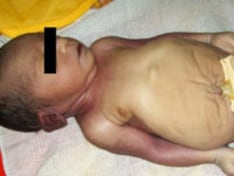
Practice Essentials
The diaphragm is the major muscle of respiration and the second most important muscle within the body, after the heart. Because the body relies so much on the diaphragm for respiratory function, understanding how many different diseases processes ultimately result in dysfunction of the diaphragm is vitally important.
When a decrease in diaphragmatic function occurs, a concomitant respiratory dysfunction occurs. The body has many mechanisms in place to compensate for decreased diaphragmatic function. However, no compensatory mechanisms are in place to prevent respiratory compromise in the setting of decreased diaphragmatic excursion.
Diaphragmatic hernias can be divided into two broad categories: congenital and acquired. [1] A congenital diaphragmatic hernia (CDH) occurs through embryologic defects in the diaphragm, and most patients present early in life rather than later. However, a subset of adults may present with a smaller CDH that was undetected during childhood. [2]
CDH was first described in 1679 by Riverius, who incidentally noted a CDH during a postmortem examination of a 24-year-old person. [3] In 1701, Holt described the classical clinical and postmortem findings of an infant with CDH. In 1761, Morgagni described the classical anterior diaphragmatic hernia, which today bears his name—Morgagni hernia. In 1848, Bochdalek described both right and left posterolateral CDH. To this day, these CDHs are commonly referred to as Bochdalek hernias.
In 1828, Laënnec described the numerous causes of diaphragmatic hernias, as well as an auscultatory mechanism by which to diagnose them; he also discussed the potential for surgical repair of a diaphragmatic hernia. In 1888, Nauman proposed a two-cavity approach to repair diaphragmatic hernias. In 1889, O'Dwyer attempted the first reported repair of a CDH in an infant. At that time, O'Dwyer discovered the loss of "right of domain" commonly encountered during attempts to repair CDH. In 1929, the first successful CDH repair was performed in an infant, a 3.5-month-old girl.
In 1977, extracorporeal membrane oxygenation (ECMO) was introduced as a treatment for neonates with respiratory failure refractory to conventional care, [4] and its application to CDH increased the survival rate of infants born with CDH from around 20% to 55-75%. ECMO provides a modality by which blood can be withdrawn, oxygenated, and finally returned to the body for circulation. With ECMO, infants are medically stabilized before surgery; surgical intervention after stabilization produces better outcomes.
Since the time of the first successful repair, great strides have been made in the field of CDH. However, until 1982, when ECMO was first used in the treatment of CDH, mortality remained extremely high for infants born with CDH and severe pulmonary hypoplasia. The field of CDH continues to grow as knowledge of the disease entity increases and progress is made with newer treatment modalities.

Anatomy
The diaphragm is a modified half-dome of musculofibrous tissue that separates the thorax from the abdomen. Four embryologic components make up the formation of the diaphragm, as follows:
-
Septum transversum
-
Two pleuroperitoneal folds
-
Cervical myotomes
-
Dorsal mesentery
Development begins during week 3 of gestation and is completed by week 8. Failure of the development of the pleuroperitoneal folds and subsequent muscle migration results in congenital defects.
The muscular origin of the diaphragm is from the lower six ribs bilaterally, the posterior xiphoid process, and from the external and internal arcuate ligaments. A number of different structures traverse the diaphragm, including three distinct apertures that allow the passage of the aorta, the esophagus, and the vena cava.
The aortic aperture is the lowest and most posterior of the openings, lying at the level of T12. The aortic opening also transmits the thoracic duct and sometimes the azygos and hemiazygos veins. The esophageal aperture is surrounded by diaphragmatic muscle and lies at the level of T10. The vena caval aperture is the highest of the three openings and lies level with the disc space between T8 and T9.
Arterial supply to the diaphragm comes from the right and left phrenic arteries, the intercostal arteries, and the musculophrenic branches of the internal thoracic arteries. Some arterial blood is provided from small branches of the pericardiophrenic arteries that run with the phrenic nerve mainly where the nerves penetrate the diaphragm. Venous drainage is via the inferior vena cava and the azygos vein on the right and the adrenal/renal and hemiazygos veins on the left.
The diaphragm receives its sole muscular neurologic impulse from the phrenic nerve, which originates primarily from the fourth cervical ramus but also has contributions from the third and fifth rami. [5] Originating around the level of the scalenus anterior, the phrenic nerve courses inferiorly through the neck and thorax before reaching its terminus, the diaphragm. Because the phrenic nerve has such a long course before reaching its final destination, any processes that disrupt the transmission of neurologic impulse through it directly affect the diaphragm.
Etiology
CDH occurs when the muscular entities of the diaphragm fail to develop normally, resulting in displacement of abdominal components into the thorax. The genetic component is not yet fully understood. [6, 7]
Bochdalek hernia
Bochdalek hernias [8] make up the majority of cases of CDH. The major problems in these hernias are posterolateral defects of the diaphragm, which result in either failure in the development of the pleuroperitoneal folds or improper or absent migration of the diaphragmatic musculature.
As many as 90% of patients with CDH present in the neonatal period or within the first year of life. These cases have a mortality of 45-50%. Most of the morbidity and mortality of CDH relates to hypoplasia of the lung and pulmonary hypertension on the affected side. Thus, timely diagnosis and proper management remain the keys to survival.
Morgagni hernia
Morgagni hernia [9, 10, 11] is a less common entity, accounting for only 5-10% of CDH cases. The foramen of a Morgagni hernia occurs in the anterior midline through the sternocostal hiatus of the diaphragm, with 90% of cases occurring on the right side.
Epidemiology
Estimates of the frequency of CDH are in the range of 2.3-5/10,000. [6, 12, 13] Mortality and morbidity are due to the amount of pulmonary hypoplasia (PH), the response on artificial ventilation, and the presence of therapy-resistant pulmonary hypertension. The survival rate is 55-65%. [12]
International data are available from the registry maintained by the Congenital Diaphragmatic Hernia Study Group (CDHSG), a consortium that includes 90 centers from 18 countries and that has amassed data on more than 12,000 children with CDH to date. [14]
Prognosis
With the development of newer treatment techniques (see Treatment), including high-frequency oscillatory ventilation (HFOV) and more sophisticated extracorporeal oxygenation equipment, the mortality associated with CDH has continually decreased. [15, 16, 17, 18] However, long-term morbidity includes such entities as gastroesophageal reflux disease (GERD), [19] neurologic and developmental disorders, [20] and musculoskeletal disorders. [21]
Partridge et al analyzed outcomes in right-side CDH as compared with left-side CDH and found that whereas the former did not have a higher mortality, it was associated with increased need for pulmonary vasodilatory therapy and need for tracheostomy. [22]
Collin et al found that patients with right-side CDH required patch repair more often than those with left-side CDH did. [23] The only morbidity that was significantly more frequent in the former was the rate of recurrent herniation. There were no significant differences in neurodevelopmental outcome between the two groups: Both groups exhibited normal median Griffiths general quotient scores at the age of 1 year.
Okamoto et al found that neonates with right-side CDH required more intensive treatments than those with left-side CDH but that survival rates did not differe significantly between the two groups. [24]
A systematic review and meta-analysis by Prasad et al found that early ventricular dysfunction as determined by echocardiography was a promising predictor of survival and ECMO requirement in neonates with CDH, though the overall certainty of the evidence was not high (to a large extent because of inconsistent reporting of echocardiographic measurements and lack of adjustment for confounding factors). [25] Standardized echocardiographic measurement reporting and high-quality studies would be needed to further elucidate the prognostic significance of early ventricular dysfunction in this setting.
-
Anteroposterior view of chest in patient with congenital diaphragmatic hernia shows herniation of bowel loops into left hemithorax, with right shift of heart and mediastinum.