Continually Updated Clinical Reference
 
 
  All Sources     eMedicine     Medscape     Drug Reference     MEDLINE
 
eMedicine - Atrioventricular Nodal Reentry Tachycardia (AVNRT) : Article by

Quick Find
Authors & Editors
Introduction
Clinical
Differentials
Workup
Treatment
Medication
Follow-up
Miscellaneous
Multimedia
References

Related Articles
Atrial Fibrillation

Atrial Flutter

Atrial Tachycardia

Multifocal Atrial Tachycardia

Paroxysmal Supraventricular Tachycardia

Wolff-Parkinson-White Syndrome


Patient Education
Heart Center

Supraventricular Tachycardia Overview

Supraventricular Tachycardia Causes

Supraventricular Tachycardia Symptoms

Supraventricular Tachycardia Treatment


Author: Brian Olshansky, MD, Professor of Medicine, Department of Internal Medicine, University of Iowa College of Medicine

Brian Olshansky is a member of the following medical societies: American Autonomic Society, American College of Cardiology, American College of Chest Physicians, American College of Physicians, American College of Sports Medicine, American Federation for Clinical Research, American Heart Association, Cardiac Electrophysiology Society, Heart Rhythm Society, and New York Academy of Sciences

Coauthor(s): Chirag M Sandesara, MD, Fellow, Department of Internal Medicine, Division of Cardiovascular Diseases, University of Iowa Hospitals and Clinics; Mukesh Garg, MD, MRCP, Assistant Professor, Department of Internal Medicine, Section of Cardiology, Truman Medical Center, University of Missouri at Kansas City; Annette Quick, MD, Medical Director, Cardiovascular Care Unit, Associate Professor, Department of Medicine, University of Missouri at Kansas City; Marina Hannen, MD, Clinical Assistant Professor, Department of Cardiology, Section of Cardiovascular Diseases, University of Kansas Medical Center; Consulting Staff, Mid-American Cardiology Associates; Marco A Barzallo, MD, Consulting Staff, HeartCare Midwest, SC; Shamila Garg, MD

Editors: Russell F Kelly, MD, Program Director, Assistant Professor, Department of Internal Medicine, Division of Cardiology, Cook County Hospital, Rush Medical College; Francisco Talavera, PharmD, PhD, Senior Pharmacy Editor, eMedicine; Marschall S Runge, MD, PhD, Marion Covington Distinguished Professor of Medicine, Vice Dean for Clinical Affairs, Chairman, Department of Medicine, University of North Carolina at Chapel Hill School of Medicine; Amer Suleman, MD, Consultant in Electrophysiology and Cardiovascular Medicine, Department of Internal Medicine, Division of Cardiology, Medical City Dallas Hospital; Leonard Ganz, MD, Associate Professor of Medicine, Temple University School of Medicine; Cardiac Electrophysiologist, Children's Hospital of Pittsburgh, University of Pittsburgh Medical Cent, West Penn Hospital

Author and Editor Disclosure

Synonyms and related keywords: atrioventricular nodal reentry tachycardia, AVNRT, AV junctional tachycardia, reentrant supraventricular tachycardia, paroxysmal supraventricular tachycardia, tachyarrhythmia, arrhythmia, chronic heart disease, rhythm disorder, atrioventricular nodal reentry, AV nodal reentry, premature ventricular stimulation

Background

Atrioventricular nodal reentry tachycardia (AVNRT) is the most common type of reentrant supraventricular tachycardia (SVT). Because of the abrupt onset and termination of the reentrant SVT, the nonspecific term paroxysmal SVT has been used to describe these tachyarrhythmias. With improved knowledge of the electrophysiology of reentrant SVT, more specific nomenclature based on the mechanism of reentry helps in better quantifying these arrhythmias and thus helps in choosing appropriate therapies.

Pathophysiology

The substrate for AVNRT may be functional rather than anatomic. These arrhythmias occur in young, healthy patients and in those with chronic heart disease.

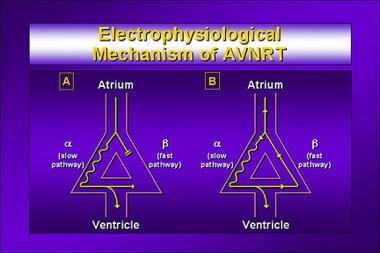
In patients with atrioventricular (AV) nodal reentry, the AV node is functionally divided into 2 longitudinal pathways that form the reentrant circuit. In the majority of patients, during AVNRT, antegrade conduction occurs to the ventricle over the slow (alpha) pathway and retrograde conduction occurs over the fast (beta) pathway (see Image 1). The tachycardia is initiated when an appropriately timed atrial premature complex is blocked in the fast pathway (longer refractory period) and conducts in the slow pathway (shorter refractory period) (see Image 1). While the impulse conducts to the ventricle in the slow pathway (antegrade conduction), the fast pathway recovers so that the impulse can conduct retrograde up the fast pathway to the atrium and the atrial end of the slow pathway (retrograde conduction).

This sets up the reentrant circuit. In approximately one third of patients, AVNRT is induced by premature ventricular stimulation. In addition to the typical mechanism of AV nodal reentry described above, atypical AV nodal reentry can occur in the opposite direction, with antegrade conduction in the fast pathway and retrograde conduction in the slow pathway. Less commonly, the reentrant circuit can be over 2 slow pathways, the so-called slow-slow AV node reentry.

Frequency

United States

AVNRT occurs in 60% of patients (with a female predominance) presenting with paroxysmal SVT. The prevalence of SVT in the general population is likely several cases per thousand persons.

International

Frequency is similar to that in the United States.

Mortality/Morbidity

AVNRT is usually well tolerated; it often occurs in patients with no structural heart disease. In patients with coronary artery disease, AVNRT may cause angina or myocardial infarction. Prognosis for patients without heart disease is usually good.

Sex

More women than men have AVNRT.

Age

AVNRT may occur in persons of any age. It is common in young adults.


History

  • AVNRT is characterized by an abrupt onset and termination of episodes.
  • Episodes may last from seconds to minutes to days.
  • In the absence of structural heart disease, it is usually well tolerated.
  • Common symptoms include palpitations, nervousness, anxiety, lightheadedness, neck and chest discomfort, and dyspnea. Polyuria can occur after termination of the episode (due to the release of atrial natriuretic factor).
  • AVNRT may cause or worsen heart failure in patients with poor left ventricular function.
  • It may cause angina or myocardial infarction in patients with coronary artery disease.
  • Syncope may occur in patients with a rapid ventricular rate or prolonged tachycardia due to poor ventricular filling, decreased cardiac output, hypotension, and reduced cerebral circulation. Syncope may also occur because of transient asystole when the tachycardia terminates, owing to tachycardia-induced depression of the sinus node.

Physical

  • The heart rate is usually rapid, ranging from 150-250 beats per minute (bpm). It is usually 180-200 bpm in adults and, in children, may exceed 250 bpm.
  • Hypotension may occur initially or with rapid ventricular rates and prolonged episodes.
  • Sometimes, initial hypotension evokes a sympathetic response that increases blood pressure and may terminate the tachycardia by an increase in vagal tone.
  • Signs of left heart failure may develop or worsen in patients with poor left ventricular function.

Causes

  • The substrate for AVNRT is the presence of dual AV nodal pathways. Age of onset varies from childhood to the teenage years or adulthood. Some patients do not present until their seventh or eighth decade or older.


Atrial Fibrillation
Atrial Flutter
Atrial Tachycardia
Multifocal Atrial Tachycardia
Paroxysmal Supraventricular Tachycardia
Wolff-Parkinson-White Syndrome

Other Problems to be Considered

  • Automatic atrial tachycardia: This occurs in acutely ill patients (eg, myocardial ischemia, chronic lung disease, electrolyte disturbance, digoxin toxicity). The warm-up phenomenon is demonstrated, ie, the rate accelerates after initiation. It cannot be induced or terminated with pacing.
  • Multifocal atrial tachycardia: This is an irregular heartbeat, usually due to digoxin toxicity.
  • Bypass tract–mediated macroreentrant tachycardia: ECG findings may show evidence of preexcitation.
  • Sinus node reentrant tachycardia: Normal P waves precede the QRS (electrocardiographic) complex.
  • Intra-atrial reentry tachycardia: Abnormal P waves precede each QRS complex.
  • Atrial fibrillation: This is an irregular rhythm.
  • Atrial flutter: Flutter waves are present. The ventricular rate is usually approximately 150 bpm (with 2:1 AV block).


Imaging Studies

  • Echocardiogram - To evaluate for the presence of structural heart disease
  • Electrophysiology study - To induce and map the reentrant circuit; usually performed if ablation of the reentrant circuit is planned

Other Tests

  • ECG or ambulatory monitoring
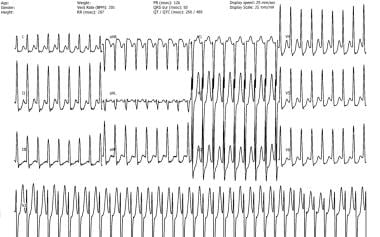
    • Evaluation usually reveals a supraventricular origin of QRS complexes at rates of 150-250 bpm and a regular rhythm.
    • The QRS complex usually narrows unless a conduction abnormality is present or is functionally induced from the rapid heart rate.
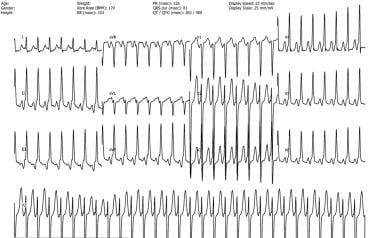
    • P waves are not usually seen because they are buried within the QRS complex. A pseudo R prime may be seen in V1, or pseudo S waves may be seen in leads II, III, or aVF. The onset is abrupt with an atrial premature complex, which conducts with a prolonged PR interval.
    • The PR interval may shorten over the first few beats at onset, or it may lengthen during last few beats preceding termination of the tachycardia.
    • Abrupt termination occurs with a retrograde P wave, sometimes followed by a brief period of asystole or bradycardia.


Medical Care

Management of an acute attack depends on the symptoms, the presence of underlying heart disease, and the natural history of previous episodes.

  • Rest, reassurance, and sedation may terminate the attack.
  • To terminate the tachycardia, try vagal maneuvers (eg, carotid sinus massage, exposure of the face to ice water, Valsalva maneuver) before initiating drug treatment. These maneuvers could also be tried after each pharmacological approach. Vagal maneuvers are unlikely to work and should not be tried if hypotension is present. Sometimes, putting the patient in the Trendelenburg position facilitates termination with a vagal maneuver.
  • Drugs that can be used to terminate an attack include adenosine, calcium channel blockers (eg, diltiazem, verapamil), short-acting beta-blockers (eg, esmolol), and digitalis.
  • Direct current (DC) synchronized cardioversion is used to terminate an attack if the patient has hemodynamic compromise or if drug conversion fails and the patient continues to be symptomatic. DC cardioversion is rarely necessary for AVNRT.
  • Competitive atrial or ventricular pacing may be used if DC cardioversion is contraindicated (eg, if high doses of digitalis have been administered).
  • Preventive therapy is needed for frequent, prolonged, or highly symptomatic episodes that do not terminate spontaneously or those that cannot be easily terminated by the patient. Drugs that are used for prevention of recurrence include long-acting beta-blockers, calcium channel blockers, and digitalis. Radiofrequency catheter ablation (RFCA) of the reentrant circuit should be considered in patients with frequent symptomatic episodes who do not want drug therapy, who cannot tolerate the drugs, or in whom drug therapy fails.

Surgical Care

RFCA is associated with cure rates of up to 95% for patients with AVNRT. This procedure is frequently performed in an outpatient setting.

Consultations

  • Cardiologist
  • Electrophysiologist

Diet

  • No specific recommendations are necessary, but some patients' episodes are exacerbated by caffeine, theophylline, or theobromine in selected foods. Alcohol may also be a trigger.
  • No specific restrictions are necessary.

Activity

  • Advise the patient to rest during tachycardia, preferably in a supine position.


Drugs used to terminate an acute episode are given intravenously and include adenosine, calcium channel blockers (eg, diltiazem, verapamil), short-acting beta-blockers (eg, esmolol, propranolol, metoprolol, atenolol), and digitalis.

Drugs used to prevent recurrences are given orally and include calcium channel blockers, long-acting beta-blockers, and digitalis.

Drug Category: Antiarrhythmics

Alter the electrophysiologic mechanisms responsible for arrhythmia. Most commonly used agents work by slowing conduction at the AV node.

Drug NameAdenosine (Adenocard)
DescriptionSlows conduction time through AV node. Can interrupt reentry pathways through AV node and restore normal sinus rhythm in paroxysmal SVT, including PSVT associated with WPW syndrome. Has a short half-life.
Adult DoseInitial dose: 6 mg rapid IV bolus over 1-2 s, followed by a fluid bolus through a widely patent IV site; if no response within 1-2 min, administer 12 mg rapid IV bolus; repeat 12-mg dose a second time prn
Doses >12 mg are not generally recommended
Pediatric DoseNot established
ContraindicationsDocumented hypersensitivity, second- or third-degree AV block or sick sinus syndrome (except in patients with functioning artificial pacemaker), atrial flutter, atrial fibrillation, and ventricular tachycardia; prolonged asystole may ensue in heart transplant patients
InteractionsCoadministration with carbamazepine may produce higher degrees of heart block; dipyridamole may potentiate effects; methylxanthines may antagonize effects; coadministration with digitalis or verapamil may be associated with ventricular fibrillation
PregnancyC - Safety for use during pregnancy has not been established.
PrecautionsAdenosine-induced bronchoconstriction may occur in patients with asthma; asystole may occur with heart transplants

Drug Category: Cardiac glycosides

These agents are used for AV nodal blockade.

Drug NameDigoxin (Lanoxin)
DescriptionCardiac glycosides have direct and indirect inotropic effects on the cardiovascular system. Acts directly on cardiac muscle, increasing myocardial systolic contractions. Indirect actions result in increased vagal activity for any given increase in mean arterial pressure. Administered IV to terminate an acute attack (but delayed onset of action and less effective than other therapies) and PO to prevent recurrence.
Adult DoseIV: 0.5-1 mg IV over 10-15 min, followed by 0.25 mg q2-4h; not to exceed 1.5 mg/d
PO: 1-1.5 mg PO initially, followed by 0.25-0.5 mg q6h for a total dose of 2-3 mg; follow by maintenance dose of 0.125-0.5 mg PO qd
Pediatric DoseNot established
ContraindicationsDocumented hypersensitivity, beriberi heart disease, idiopathic hypertrophic subaortic stenosis, ventricular fibrillation, constrictive pericarditis, WPW syndrome with atrial fibrillation, and carotid sinus syndrome
InteractionsMedications that may increase levels include alprazolam, benzodiazepines, bepridil, captopril, cyclosporine, propafenone, propantheline, quinidine, diltiazem, aminoglycosides, oral amiodarone, anticholinergics, diphenoxylate, erythromycin, felodipine, flecainide, hydroxychloroquine, itraconazole, nifedipine, omeprazole, quinine, ibuprofen, indomethacin, esmolol, tetracycline, tolbutamide, and verapamil
Medications that may decrease serum levels include aminoglutethimide, antihistamines, cholestyramine, neomycin, penicillamine, aminoglycosides, oral colestipol, hydantoins, hypoglycemic agents, antineoplastic treatment combinations (including carmustine, bleomycin, methotrexate, cytarabine, doxorubicin, cyclophosphamide, vincristine, and procarbazine), aluminum or magnesium antacids, rifampin, sucralfate, sulfasalazine, barbiturates, kaolin/pectin, and aminosalicylic acid
PregnancyC - Safety for use during pregnancy has not been established.
PrecautionsHypokalemia may reduce positive inotropic effect and increase risk of toxic arrhythmias; IV calcium may produce arrhythmias in digitalized patients; hypercalcemia predisposes patient to digitalis toxicity, and hypocalcemia can make digoxin ineffective until serum calcium levels are normal; magnesium replacement therapy must be instituted in patients with hypomagnesemia to prevent digitalis toxicity; patients diagnosed with second-degree AV block may progress to complete block when treated with digoxin; caution in hypothyroidism, hypoxia, neonates, premature infants, breastfeeding, hypermetabolic states, and acute myocarditis; reduce dose in renal dysfunction

Drug Category: Calcium channel blockers (nondihydropyridine)

These agents are used for AV nodal blockade.

Drug NameDiltiazem (Dilacor, Tiamate, Cardizem)
DescriptionDuring depolarization, inhibits calcium ions from entering slow channels and voltage-sensitive areas of vascular smooth muscle and myocardium. Administered IV to terminate an acute attack and PO to prevent recurrence.
Adult DoseInitial dose: 0.25 mg/kg IV over 2 min (20-mg dose is reasonable for average patient); if tachycardia not terminated, repeat dose of 0.35 mg/kg IV over 2 min
Alternatively, 120-360 mg PO qd in divided doses
Pediatric DoseNot established
ContraindicationsDocumented hypersensitivity; severe CHF, sick sinus syndrome, second- or third-degree AV block, and hypotension (<90 mm Hg systolic)
InteractionsMay increase carbamazepine, digoxin, cyclosporine, and theophylline levels; when administered with amiodarone, may cause bradycardia and a decrease in cardiac output; when given with beta-blockers, may increase cardiac depression; cimetidine may increase levels
PregnancyC - Safety for use during pregnancy has not been established.
PrecautionsCaution in impaired renal or hepatic function; may increase LFT levels, and hepatic injury may occur

Drug NameVerapamil (Calan, Covera-HS, Verelan)
DescriptionBy interrupting reentry at AV node, can restore normal sinus rhythm in patients with paroxysmal SVTs. This is the second-line treatment for AVNRT after emergent adenosine. Causes fewer adverse effects, is less expensive, and lasts longer, but action is not as rapid and hypotension, bradycardia, and a negative inotropic effect may occur; good to use in lieu of adenosine if AVNRT recurs after termination
Adult Dose5-10 mg IV slowly, followed by a second dose 15-30 min later if patient does not satisfactorily respond to initial dose
Pediatric DoseNot established
ContraindicationsDocumented hypersensitivity, severe CHF, sick sinus syndrome or second- or third-degree AV block, and hypotension (<90 mm Hg systolic)
InteractionsMay increase carbamazepine, digoxin, and cyclosporine levels; coadministration with amiodarone can cause bradycardia and a decrease in cardiac output; when administered concurrently with beta-blockers, may increase cardiac depression; cimetidine may increase levels; may increase theophylline levels
PregnancyB - Usually safe but benefits must outweigh the risks.
PrecautionsHepatocellular injury may occur; transient elevations of transaminases, with and without concomitant elevations in alkaline phosphatase and bilirubin, have occurred (elevations have been transient and may disappear with continued verapamil treatment); monitor liver function periodically

Drug Category: Beta-adrenergic blockers

These agents are used for AV nodal blockade.

Drug NameEsmolol (Brevibloc)
DescriptionExcellent for use in patients at risk for experiencing complications from beta-blockade (particularly those with reactive airway disease, mild-to-moderate LV dysfunction, and/or peripheral vascular disease). Short half-life of 8 min allows for titration to desired effect and quick discontinuation if needed.
Adult DoseLoading dose: 250-500 mcg/kg/min IV for 1 min, followed by a 4-min maintenance infusion of 50 mcg/kg/min
If adequate therapeutic effect not observed within 5 min, repeat loading dose and follow with maintenance infusion using increments of 50 mcg/kg/min (for 4 min); sequence may be repeated up to 4 times if needed
As desired heart rate is approached, omit loading infusion and reduce incremental dose of maintenance infusion from 50 mcg/kg/min IV to 25 mcg/kg/min IV or lower; interval between titration steps may be increased from 5-10 min if needed
Pediatric DoseNot established
ContraindicationsDocumented hypersensitivity, uncompensated congestive heart failure, bradycardia, cardiogenic shock, and AV conduction abnormalities
InteractionsAluminum salts, barbiturates, NSAIDs, penicillins, calcium salts, cholestyramine, and rifampin may decrease bioavailability and plasma levels, possibly resulting in decreased pharmacologic effect; cardiotoxicity may increase when administered concurrently with sparfloxacin, astemizole, calcium channel blockers, quinidine, flecainide, and contraceptives; toxicity increases when administered concurrently with digoxin, flecainide, acetaminophen, clonidine, epinephrine, nifedipine, prazosin, haloperidol, phenothiazines, and catecholamine-depleting agents
PregnancyC - Safety for use during pregnancy has not been established.
PrecautionsBeta-adrenergic blockers may mask signs and symptoms of acute hypoglycemia and clinical signs of hyperthyroidism; symptoms of hyperthyroidism, including thyroid storm, may worsen when medication is abruptly withdrawn; withdraw drug slowly and monitor patient closely


Further Inpatient Care

  • The need for further inpatient care depends on the frequency of episodes, the severity of symptoms, and the ease of termination.
    • If episodes are infrequent, well tolerated, and easily terminated by the patient, no prophylactic therapy is needed.
    • If the episodes are significantly symptomatic, frequent, and/or last long enough to necessitate therapy, RFCA or drugs may be necessary to prevent episodes (see Medical Care).
    • RFCA should be considered early in the treatment of patients with symptomatic recurrent episodes, patients intolerant to drugs, patients who opt to not undergo a curative procedure, or in patients in whom drugs are ineffective.

Further Outpatient Care

In/Out Patient Meds

Transfer

  • Transfer to facility with electrophysiology and radiofrequency ablation may be needed for indications described in Further Inpatient Care.

Deterrence/Prevention

Complications

  • Complications include hemodynamic compromise, congestive heart failure, syncope, tachycardia-induced cardiomyopathy, and myocardial ischemia and/or infarction.

Prognosis

  • The prognosis is usually good in the absence of structural heart disease. Most patients respond to medications to prevent recurrence or to radiofrequency ablation, which is approximately 95% curative and has a low risk of complications. It is the preferred method of treatment for most patients.

Patient Education

  • Patients should be educated about vagal maneuvers to try to terminate the episode.
  • Patients with hemodynamic compromise or syncope should be educated about avoiding activities that could be dangerous to them or to others (eg, driving, swimming) while the risk of an episode remains. Ablation obviates the need for any long-term restriction.
  • For excellent patient education resources, visit eMedicine's Heart Center. Also, see eMedicine's patient education article Supraventricular Tachycardia.


Medical/Legal Pitfalls

  • In the presence of a wide complex tachycardia, the institution of therapy should always follow a careful review of the patient's prior cardiac history, including left ventricular function and previous electrocardiograms, which are helpful tools for defining the origin of the arrhythmia (ie, supraventricular vs ventricular).
  • The use of calcium channel blockers is contraindicated in patients with tachycardias of ventricular origin and may cause hemodynamic compromise and death.

Special Concerns

  • Although AVNRT is usually a short RP interval tachycardia (with the P wave buried in the QRS complex), rarely, retrograde conduction can occur in the slow pathway, producing a long RP tachycardia, which is indistinguishable from automatic atrial tachycardia. This is important to recognize because AVNRT is usually fairly easily to cure with catheter ablation, while automatic atrial tachycardia may be more difficult to cure.


Media file 1:  Electrophysiological mechanism of atrioventricular nodal reentry tachycardia.
Click to see larger pictureClick to see detailView Full Size Image
Media type:  Photo

Media file 2:  A 12-lead ECG in a patient with typical atrioventricular nodal reentry tachycardia. The retrograde P waves are visible only as subtle deflections at the end of the QRS complexes, called pseudo S waves in the inferior leads and pseudo R' waves in leads aVR and V1.
Click to see larger pictureClick to see detailView Full Size Image
Media type:  ECG


  • Braunwald E, ed. Heart Disease: A Textbook of Cardiovascular Medicine. 5th ed. Philadelphia. Pa: WB Saunders; 1997.
  • Fogoros RN. Electrophysiologic Testing (Practical Cardiac Diagnosis). 3rd ed. London, UK: Blackwell Science; 1999.
  • Gursoy S, Steurer G, Brugada J, et al. Brief report: the hemodynamic mechanism of pounding in the neck in atrioventricular nodal reentrant tachycardia. N Engl J Med. Sep 10 1992;327(11):772-4. [Medline].
  • Jackman WM, Beckman KJ, McClelland JH, et al. Treatment of supraventricular tachycardia due to atrioventricular nodal reentry, by radiofrequency catheter ablation of slow-pathway conduction. N Engl J Med. Jul 30 1992;327(5):313-8. [Medline].
  • Janse MJ, Anderson RH, McGuire MA, Ho SY. "AV nodal" reentry: Part I: "AV nodal" reentry revisited. J Cardiovasc Electrophysiol. Oct 1993;4(5):561-72. [Medline].

Atrioventricular Nodal Reentry Tachycardia (AVNRT) excerpt

Article Last Updated: Aug 9, 2006