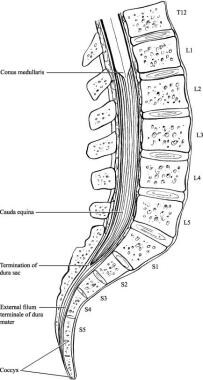
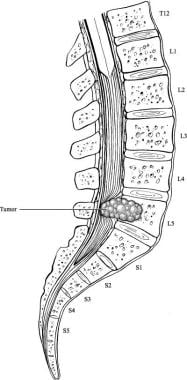
You are in: eMedicine Specialties > Neurosurgery > MEDICAL TOPICS Cauda EquinaArticle Last Updated: Jul 24, 2007AUTHOR AND EDITOR INFORMATIONAuthor: Nazer H Qureshi, MD, Staff Physician, Department of Neurosurgery, University of Arkansas for Medical Sciences Nazer H Qureshi is a member of the following medical societies: American Association of Neurological Surgeons, Congress of Neurological Surgeons, and World Society for Stereotactic and Functional Neurosurgery Coauthor(s): T Glenn Pait, MD, FACS, Associate Professor, Department of Neurosurgery, Department of Orthopaedic Surgery, Jackson T Stephens Chair, Spine Surgery, University of Arkansas for Medical Sciences; Director, Jackson T Stephens Spine and Neurosciences Institute; Emad Soliman, MD, MSc, Consulting Staff, Department of Neurology, St John's Riverside Hospital Editors: Duc Hoang Duong, MD, Director of Neuroscience Physician Assistant Program, Associate Professor, Departments of Neurological Surgery and Neuroscience, Epilepsy Center, Charles R Drew University; Francisco Talavera, PharmD, PhD, Senior Pharmacy Editor, eMedicine; Ryszard M Pluta, MD, PhD, Associate Professor, Neurosurgical Department Medical Research Center, Polish Academy of Sciences at Warsaw, Poland; Senior Researcher, Surgical Neurology Branch, National Institute of Neurological Disorders and Stroke, NIH; Herbert H Engelhard III, MD, PhD, Director, UIC Neuro-Oncology Program, Chief, Division of Neuro-Oncology, Associate Professor, Department of Neurosurgery, University of Illinois at Chicago; Allen R Wyler, MD, Medical Director, Northstar Neuroscience, Inc Author and Editor Disclosure Synonyms and related keywords: CE, cauda equina syndrome, CES, low back pain, steroid, epidural, conus medullaris syndrome, spinal stenosis, nerve root, sciatica, lumbar laminectomy, multiple myeloma, metastatic spinal disease, arthritis, degenerative arthritic lumbar stenosis INTRODUCTIONThe cauda equina (CE) is a collection of intradural nerve roots at the end of the spinal cord. Cauda is Latin for tail, and equina is Latin for horse, ie, the "horse's tail." The spinal cord is the downward continuation of medulla that starts just below the foramen magnum and ends at the intervertebral disc between the first and second lumbar vertebrae as a tapered structure called the conus medullaris, consisting of sacral spinal cord segments. It provides sensory innervation to the saddle area, motor innervation to the sphincters, and parasympathetic innervation to the bladder and lower bowel, ie, from the left splenic flexure to the rectum. The nerves in the CE region include lower lumbar and all of the sacral nerve roots. The pelvic splanchnic nerves carry preganglionic parasympathetic fibers from S2-S4 to innervate the detrusor muscle of urinary bladder. Conversely, somatic lower motoneurons from S2-S4 innervate the voluntary muscles of the external anal sphincter and the urethral sphincter via the inferior rectal and the perineal branches of the pudendal nerve, respectively. Hence, the nerve roots in the CE region carry sensations from the lower extremities, perineal dermatomes, and outgoing motor fibers to the lower extremity myotomes. A thin threadlike continuation of the conus, the filum terminale, is a nonneural element in the CE region that extends down to the coccyx. CE syndrome (CES) is caused by the loss of functions of 2 or more of the 18 nerve roots that constitute the CE. It is defined as a complex of symptoms that include lower back pain, unilateral or more typically bilateral sciatica, saddle sensory disturbances, and variable lower extremity motor and sensory loss, along with bladder, bowel, and erectile dysfunction. The onset of CES symptoms may be acute or somewhat chronic. The motor loss varies from weakness to flaccid paralysis over time with no upper motor neuron signs. Similarly, sensory symptoms include saddle anesthesia and a variable sensory loss in lower extremities from L3 to coccygeal-1 nerves, inclusively. History Of The ProcedureThe French anatomist Andreas Lazarius coined the term cauda equina in 1600.1 Other French physicians referred to CES early in the 20th century.2, 3 FrequencyIn the EtiologyNumerous causes of CES have been reported, including disc herniation, intradural disc rupture, spinal stenosis secondary to other spinal conditions, traumatic injury, primary tumors such as ependymomas and schwannomas, metastatic tumors, infectious conditions, arteriovenous malformation or hemorrhage, and iatrogenic causes. Herniated disc The reported incidence of CES due to herniated lumbar disc varies from 1-6%.5, 6, 7 CES secondary to disc herniation involves either a large central disc or an extruded disc fragment that compromises a significant amount of the spinal canal diameter.8 The presentation may be acute or that of a more protracted course, with the latter bearing a better prognosis.6 Intradural disc ruptureIntradural disc rupture has been responsible for causing CES.9 Myelography in these instances typically demonstrates a complete block of the contrast material. If an intradural disc fragment is identified, transdural removal of the extruded disc fragment may be helpful to prevent further stretching of the already compromised nerve root. Spinal stenosis and other spinal disordersAlthough unusual, spinal stenosis secondary to other spinal disorders such as ankylosing spondylitis, spondylosis, and spondylolisthesis have all been reported with CES.10, 11, 12, 13, 14, 15, 16 Trauma CES secondary to fractures and spondylolytic spondylolisthesis due to major trauma has been reported (Harrop, 2004; Fisher, 1988; Schizas, 2003; Thongtrangan, 2004). Injuries that cause CES are usually unstable and require internal fixation. Acute and delayed presentations of CES due to hematomas and arachnoid cysts have also been reported (Kebaish, 2004; Chen, 2001; Zuccarello; 1987). Neoplasms Both primary and metastatic spinal neoplasms have caused CES. Among the primary tumors able to cause CES include myxopapillary ependymoma of filum terminale, schwannomas of the conus, and paraganglioma of the filum terminale. Myxopapillary ependymoma is the most common tumor of the filum. Recovery of the function after surgery depends on the duration of symptoms and the presence or absence of sphincter dysfunction17 Paraganglioma of the filum, when present, needs to be differentiated from other tumors of this region. The incidence rate of metastatic lesions of the spine is increasing because of earlier diagnosis, better imaging, and more effective treatment modalities. Spinal metastases are most commonly seen in patients with lung cancer (40-85%), followed by those with breast cancer (11%), renal cell carcinoma (4%), lymphatic (3%), and colorectal cancer (3%).20 Although lung cancer is the most common of the spine metastases, in one study, only 0.7% of the lung cancer metastases to the spine produced CES because most of the metastatic lesions were not at the level of the CE.20 The CE region is also a favored site for drop metastases from intracranial ependymoma, germinoma, and other tumors.21 Other unusual metastatic spread from genitourinary and gynecologic cancer have also been reported at the conus region, causing neurological compromise.22 Infectious conditions Infectious causes for CES may be pyogenic or nonpyogenic. Pyogenic abscesses are generally found in an immunocompromised or poorly nourished host. Staphylococcus aureus causes epidural abscesses in 25-60% of cases, but, recently, an increasing incidence of infections with methicillin-resistant S aureus, Pseudomonas species, and Escherichia coli have been recorded. A high index of suspicion is helpful in correct diagnosis and management23 Nonpyogenic causes for abscess are rare and include tuberculosis. Resurgence of tuberculosis secondary to immunocompromise in individuals with HIV requires a high index of suspicion in the indolent course of CES development.24 Other uncommon organisms, such as Nocardia asteroides and Streptococcus milleri, have also been reported as a cause of abscess that leads to the development of CES.25, 26 Iatrogenic causes Medical and surgical situations such as bone screw fixation, fat grafts, lumbar arthrodesis for spondylolisthesis, lumbar discectomy, intradiscal therapy, lumbar puncture forming an epidural hematoma, chiropractic manipulation, and a bolus injection of anesthetic during spinal anesthesia have been related to the development of CES-like syndromes.6, 27, 28, 29, 30, 31 PathophysiologyCES may result from any lesion that compresses the nerve roots of the CE, which are particularly susceptible to injury because of the poorly developed epineurium. When well developed, as in the peripheral nerves, the epineurium provides some protection against compressive and tensile stresses. In addition, the proximal portion of the nerve roots is a region of relative hypovascularity. Increased vascular permeability and subsequent diffusion from the surrounding cerebrospinal fluid (CSF) supplement the nutritional supply to the nerve roots in this region. This property of increased permeability may result in edema of the damaged nerve roots, further compounding the initial injury, which may seem mild at first. Several studies of different animal models have assessed the pathophysiology of CES.32, 33 Olmarker et al, using a graded balloon pressure method in a porcine model of CES, reported that the venules in the CE region begin to compress at a pressure as low as 5 mm Hg and the arterioles begin to occlude as the balloon pressure surpasses the mean arterial pressure.34, 35, 36, 37, 38 Despite this, even a pressure as high as 200 mm Hg failed to completely shut off nutritional supply to the CE. These studies showed that not only the magnitude but also the length and the speed of obstruction were also important in afflicting the damage to the CE region. Similar results were reported in other studies. Takahashi et al reported a reduction in blood flow to the intermediate nerve segment when 2 pressure points were applied along the path of the nerve in the CE39. Others have studied compound action potentials in afferent and efferent segments of nerves in the CE region after application of balloon compression.40, 41, 42 These studies reported that 0-50 mm Hg of pressure did not affect the action potentials (the threshold for disturbances in action potentials was 50-75 mm Hg), and significant deficits were observed when pressure rose to 100-200 mm Hg. ClinicalRadicular pain is a common presentation in patients with CES, usually in association with radicular sensory loss (saddle anesthesia), asymmetric paraplegia with loss of tendon reflexes, muscle atrophy, and bladder dysfunction. The presentation is somewhat similar to and is often confused with conus and epiconus lesions. In CES, the peripheral nerve fibers from the sacral segments of the cord, as well as various lumbar dorsal and ventral nerve roots, may also be involved. This results in an asymmetric and higher distribution of motor and sensory symptoms and signs in the lower extremities. Incontinence of bowel and bladder is not severe and develops late for the same reason. In conus and epiconus lesions, the sacral region neurons are destroyed. The destruction of these (S2-S4) neurons leads to an early and more severe involvement of bowel, urinary bladder, and sexual dysfunction than seen in those with CES. However, in contrast, for the same reason, the motor and sensory symptoms in the lower extremities are often not very severe and only the distal parts of the limb musculature are involved. The anatomical proximity of the conus medullaris, the epiconus, and the CE can lead to 2 of these anatomical structures being involved via a single lesion, resulting in an overlap of symptomatology. The salient features and findings of these 2 different entities are listed in the table below. Cauda Equina Versus Conus Medullaris Syndrome
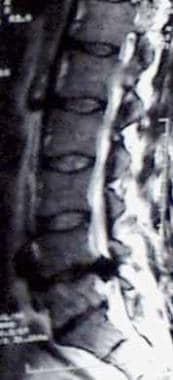
RELEVANT ANATOMYThe spinal cord is the downward continuation of the medulla, starting at the foramen magnum. It descends to about the level of the second lumbar vertebra, tapering to a structure called the conus medullaris. A thin, threadlike continuation of the conus, the filum terminale, extends as far as the coccyx and is composed of nonnervous tissue. The cord serves as a conduit for the ascending and descending fiber tracts that connect the peripheral and spinal nerves to the brain. The cord projects 31 pairs of spinal nerves on either side (8 cervical, 12 thoracic, 5 lumbar, 5 sacral, 1 coccygeal) that are connected to the peripheral nerves. A cross-section of the spinal cord reveals butterfly-shaped gray matter in the middle, surrounded by white matter. As in the cerebrum, the gray matter is composed of cell bodies. The white matter consists of various ascending and descending tracts of myelinated axon fibers, each with specific functions. WORKUPLab StudiesIn general, laboratory tests are not required for diagnosing cauda equina syndrome (CES) but may help in prognosticating a particular etiology. For example, a high erythrocyte sedimentation rate (ESR) and C-reactive protein level should prompt consideration of infection as a probable cause of CES. Imaging StudiesIn addition to a complete history, physical examination, neurological evaluation, and baseline laboratory analyses, the diagnostic workup for a cauda equina (CE) disorder is radiological. Radiography Plain radiographs should be obtained to search for destructive changes, disc-space narrowing, or loss of spinal alignment. Lumbar myelography Myelography is no longer routinely performed because of the availability of MRI. However, they may be preferred in certain situations in which MRI is contraindicated (eg, a patient with a cardiac pacemaker). Obstruction of the flow of contrast dye over an area of compression helps to confirm the level of the suspected pathologic condition. CT scan with or without contrast MRI MRI is the most helpful modality for the diagnosis of spinal disorders. MRI delineates the soft tissues, including neuronal structures and the offending pathologic condition. It is less helpful than a CT scan in evaluating bone architecture and spinal stability. Radionuclide scanning This is a helpful modality when dealing with osteomyelitis and infection of the spine in the setting of CES. Positron emission tomography scan Positron emission tomography (PET) in association with CT scanning has been touted as a useful modality in patients with CES and malignancies of the spine.43 Other TestsPostvoid residual catheterization: Catheterization for residual urine volume may reveal urinary retention, suggesting a neurogenic bladder. More than 100 mL of urine should elicit consideration of CES. TREATMENTMedical therapyTherapy is directed at the underlying cause of cauda equina syndrome (CES). The effective role of medical treatment in CES depends on the etiology. In patients with infection, antibiotics may be an imporant therapeutic avenue. In patients with certain kinds of tumor growths within the spinal canal, steroids, antichemotherapeutic agents, and radiation therapy may be important therapeutic avenues. Surgical therapyThe role of surgery is to relieve pressure from the nerves in the cauda equina (CE) region and to remove the offending elements. After spinal surgery, internal stabilization with fixation devices may be needed in the same operative setting or at a later date. The timing of surgical decompression is controversial, with immediate, early, and late surgical decompression showing varying results. This concept is further discussed in Outcome and Prognosis. Preoperative detailsRoutine preoperative care is recommended. The only purpose of preoperative care is to make sure that the patient gets to the operating room in the recommended time frame to maximize chances of a complete recovery. Intraoperative DetailsThe intraoperative use of somatosensory and motor-evoked potentials (SSEPs) may be helpful in monitoring the patient. Postoperative detailsRoutine postoperative care is necessary for all patients. The recovery time depends on the duration and the extent of symptoms of CES and a multitude of other factors, including the etiology. Postoperative physical and occupational therapies are often beneficial to the patient’s progress. Some patients may require inpatient or outpatient rehabilitation; therefore, a physical medicine and rehabilitation consultation should be considered early in the course of management. Follow-upIf therapy is delayed, potential problems include residual weakness, incontinence, impotence, and sensory abnormalities. These problems may persist even with prompt decompression. Follow-up depends on the needs of the patient and recovery potential. COMPLICATIONSEver-present adverse events of any spinal surgery include paralysis, along with urinary bladder, bowel, and sexual dysfunction. The specific risks of surgical complications for widely varied procedures and equally varied etiologies are beyond the scope of this article. OUTCOME AND PROGNOSISCauda equina syndrome (CES) is not fatal. Morbidity from CES varies and depends on the etiology of the syndrome and when the symptoms began. The recovery of function generally starts with the relief of pain, followed by an improvement in sensory and motor functions. Bowel, bladder, and sexual functions are the least likely to return fully and take the longest time to show any sign of recovery This is because of the anterior wallerian degeneration of the sacral parasympathetic neurons and the relative sensitivity of unmyelinated parasympathetic fibers to compression compared with myelinated sensory and motor nerves. FUTURE AND CONTROVERSIESAll forms of cauda equina syndrome (CES) require a multidisciplinary team approach, including physicians, radiologists, surgeons, physiatrists, and nurses, to provide the best possible outcome for patients. Unless the degree of suspicion is high, especially in indolent and incomplete cases, diagnosis and treatment could be delayed.4, 44 REFERENCES
Article Last Updated: Jul 24, 2007 |