Background
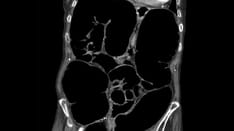
The term intestinal pseudo-obstruction denotes a syndrome characterized by a clinical picture suggestive of mechanical obstruction in the absence of any demonstrable evidence of such an obstruction in the intestine. [1] On the basis of the clinical presentation, pseudo-obstruction syndromes can be divided into acute and chronic forms. In acute colonic pseudo-obstruction (ACPO [2] ; also referred to as Ogilvie syndrome [3] ), the colon may become massively dilated; if it is not decompressed, the patient risks perforation, peritonitis, and death. The mortality rate can be as high as 40% when perforation occurs.
Every effort should be made to prevent ACPO in hospitalized and postoperative patients with serious concurrent medical and surgical conditions. Earlier mobilization and positioning of hospitalized patients has become an important preventive strategy in this regard. Furthermore, prevention of colonic distention through more aggressive use of bowel regimens for the prevention of obstipation is critically important in hospitalized patients, who are particularly susceptible to this clinical condition.
The development of new and effective pharmacologic agents for the treatment of ACPO would substantially reduce the need for surgical intervention, which is associated with considerable morbidity and mortality. It is to be hoped that such agents will become available in the future.
Because ACPO can recur, patients and families should be offered counseling about this disease process. They should be educated regarding the signs and symptoms of recurrent pseudo-obstruction and should be informed that recurrent abdominal distention warrants prompt medical attention.
Chronic colonic pseudo-obstruction (CCPO) also exists and should be distinguished from patients with ACPO. Criteria for CCPO include symptoms of recurrent bowel obstruction in the last 6 months, abdominal bloating and/or pain in the previous 3 months, evidence of bowel obstruction on radiographic imaging, and no evidence of anatomic/structural abnormality. [4]

Anatomy
The large intestine may be divided into the following parts:
-
Cecum
-
Ascending colon
-
Hepatic flexure
-
Transverse colon
-
Splenic flexure
-
Descending colon
-
Sigmoid colon
-
Rectum
The cecum is located in the right iliac fossa. In comparison with the descending colon, sigmoid colon, and rectum, the cecum and ascending colon are saccular, are larger in diameter, and have thinner walls.
The largest dilatations in ACPO patients usually develop in the cecum. According to Laplace’s law, the intraluminal pressure needed to stretch the wall of a hollow tube is inversely proportional to its diameter. Accordingly, the cecum, with its larger diameter, requires less pressure to increase in size and in wall tension. As the wall tension of the colon increases, ischemia with longitudinal splitting of the serosa, herniation of the mucosa, and perforation (including iatrogenic perforation during open or laparoscopic procedures) can occur.
The vagus nerve supplies the parasympathetic tone from the upper gastrointestinal (GI) tract to the splenic flexure, and the sacral parasympathetic nerves (S2 to S5) supply the left colon, sigmoid, and rectum. Sympathetic stimuli result in the inhibition of bowel motility and the contraction of sphincters. The lower 6 thoracic segments supply the sympathetic tone to the right colon, whereas lumbar segments 1-3 supply the left colon. [5, 6]
Pathophysiology
The exact pathophysiology of intestinal pseudo-obstruction remains to be elucidated. [7] Current theories continue to suggest the idea of an imbalance in the autonomic nervous system. These theories focus on the increased sympathetic tone, the decreased parasympathetic tone, or a combination of both as the cause of intestinal pseudo-obstruction. [8, 9]
One theory, examined in a 1988 study by Lee et al, is that increased sympathetic tone to the colon results in the inhibition of colonic motility. [10] By using epidural anesthesia to block the splanchnic sympathetics, the authors successfully treated several patients whose ACPO did not respond to conservative management. [11] A subsequent report on the use of spinal anesthesia for the treatment of Ogilvie syndrome supported this hypothesis. [12]
Another theory regarding the etiology of intestinal pseudo-obstruction focuses on parasympathetic tone. According to this theory, the nature of the parasympathetic distribution (see Etiology) suggests that disruption of the sacral innervation may leave the distal colon atonic, thus resulting in a functional obstruction. [8, 11, 13, 14] This hypothesis is consistent with studies showing a transition between a dilated and collapsed bowel that is often at or near the splenic flexure. [15, 16]
Other investigators believe that the disorder is a result of a combination of increased sympathetic tone and decreased parasympathetic tone. In 1992, Hutchinson et al reported successfully treating 8 of 11 patients with colonic pseudo-obstruction by using the sympathetic adrenergic blocker guanethidine, followed by the cholinesterase inhibitor neostigmine. [17]
The pathophysiology of ACPO has been studied in Sprague-Dawley male rats. [18] Partial colonic obstruction was created by placing a medical-grade silicon ring that was 3 mm wide and 1-2 mm longer than the outer circumference of the rat colon. The sham control rats underwent the same procedure with immediate removal of the ring at the completion of the procedure. Accumulation of stool pellets created the partial colonic pseudo-obstruction in rats with silicon rings.
The investigators examined 3-cm long colonic segments that included both obstructed and nonobstructed portions and found that the expression of cyclooxygenase (COX)-2 mRNA was drastically increased in only the obstructed and distended colonic portions. [18] (Mechanical stretch in obstruction induces the marked expression of COX-2, and COX-2 plays an important role in suppression of smooth muscle contractility.) The upregulation of COX-2 started at 12 hours after the pseudo-obstruction and lasted about 7 days.
A more recent proposal regarding the mechanism underlying symptomatic chronic intestinal pseudo-obstruction (CIPO) suggests involvement of the transition zone (TZ) between the dilated and nondilated bowel loops, leading to proximal distention and smooth muscle hypertrophy. [7] Deficiency in myenteric ganglia and neuronal nitric oxide synthase positive cells, particularly affecting the TZ, could be an important contributing factor. [7]
Etiology
The causes of ACPO are multifactorial. The 3 most common associations are the following:
-
Trauma (especially retroperitoneal)
-
Serious infection
-
Cardiac disease (especially myocardial infarction and congestive heart failure)
Other conditions commonly associated with colonic pseudo-obstruction are as follows:
-
Recent surgery (abdominal, urologic, gynecologic, orthopedic, cardiac, or neurologic)
-
Spinal cord injury
-
Old age
-
Neurologic disorders
-
Hypothyroidism
-
Electrolyte imbalances (hyponatremia ,hypokalemia ,hypocalcemia ,hypercalcemia , orhypomagnesemia )
-
Respiratory disorders
-
Renal insufficiency
-
Medications (eg, narcotics, tricyclic antidepressants, phenothiazines, antiparkinsonian drugs, and anesthetic agents)
-
Severe constipation [19]
The condition may also observed in patients with the following:
-
Intestinal hypoperistalsis syndrome
-
Megacystis megacolon
-
Amyloidosis
-
GI carcinoma
-
Guillain-Barré syndrome
-
Multiple myeloma
-
Alcohol abuse
-
Systemic sclerosis (rare) [23]
Epidemiology
United States statistics
In studies involving more than 13,000 orthopedic and burn patients, the prevalence of ACPO was 0.29%. [24, 25] The frequency in patients undergoing major orthopedic surgery may be higher, with reported rates of 0.65-1.3%. [26] The true incidence of this disorder remains largely unknown because of the possibility of spontaneous resolution.
ACPO generally develops in hospitalized patients and is associated with a variety of medical and surgical conditions. Studies have documented that as many as 95% of cases of ACPO are associated with medical or surgical conditions, with the rest being classified as idiopathic. [2, 27, 28] The most commonly associated conditions include trauma; pregnancy; cesarean delivery; severe infections; and cardiothoracic, pelvic, or orthopedic surgery. [29, 30, 31, 32]
International statistics
Because ACPO is a rare clinical condition internationally, it is difficult to gather solid epidemiologic studies, particularly in regard to frequency.
Age-related demographics
Although intestinal pseudo-obstruction may occur in younger patients, particularly those with underlying spinal cord disorders, it is generally a disease of elderly patients. In fact, the mean age of patients with ACPO appears to be increasing.
In 1986, Vanek et al reviewed more than 400 cases of colonic pseudo-obstruction occurring between 1970 and 1985 and reported a mean patient age of 56.5 years for females and 59.9 years for males. [16] In the late 1980s, other reports also found mean ages to fall into the sixth decade. [33, 34] Since then, several reports have documented a rise in the mean age of ACPO patients, with most now finding the mean age to fall into the seventh and eighth decades of life. [25, 32, 35, 36]
Sex- and race-related demographics
Unlike the age distribution, the male-to-female ratio has apparently remained constant over the years. In the view of some, no convincing data suggest that frequency differs significantly according to sex; however, some researchers suggest that intestinal pseudo-obstruction may have a male predominance, possibly in a ratio of 1.5:1 (or even as high as 4:1). [16, 33, 37, 38]
No data suggest that frequency differs according to race.
Prognosis
Generally, the overall medical status of patients with ACPO is poor. The prognosis in patients successfully treated for this disorder is directly related to the severity of the underlying medical or surgical conditions that placed the patient at risk for colonic pseudo-obstruction to begin with.
Because of these associated conditions, morbidity and mortality remain high. In 1993, Datta et al documented an annual death rate of 200 patients (most of them elderly and bedridden) in the United Kingdom. [39] Mortality has been documented to be 14% in medically treated patients and 30% in surgically treated patients. [16] However, with increased awareness, better diagnostic tools, and prompt management of this disorder, mortality is decreasing.
Intestinal pseudo-obstruction is a rare gastrointestinal complication in patients with systemic sclerosis, but it is associated with high inpatient mortality relative to other patients with systemic sclerosis and those with intestinal pseudo-obstruction from other causes. [23]
The most serious complication of colonic pseudo-obstruction is perforation of the cecum. The reported incidence of cecal perforation is 3-40%, and the associated mortality is 40-50%. [2, 14, 35] A cecal diameter greater than 14 cm, a delay in colonic decompression, and advanced age are all predictors of colonic perforation.
Neostigmine should be administered only in patients without any mechanical colonic obstruction. Colonic distention can recur and may necessitate multiple administrations of neostigmine. A single dose of neostigmine is effective for 1-2 hours. Neostigmine is effective in treating 85-90% of cases of ACPO. Recurrent or persistent colonic distention may cause ischemia and perforation. [40]
-
Abdominal radiographs confirm acute colonic pseudo-obstruction after hip surgery. Note extensive, diffuse colonic dilation with no evidence of transition point.
-
Treatment algorithm for intestinal pseudo-obstruction.
-
Ogilvie syndrome.