Practice Essentials
Bulimia nervosa (BN) is an eating disorder with 5 key characteristics as noted by the Diagnostic and Statistical Manual of Mental Disorders, Fifth Edition, Text Revision (DSM-5-TR). [1]
Recurrent episodes of binge eating, which is (1) eating in a discrete period of time (eg, within any 2-hour period) an amount of food that is definitely larger than what most individuals would eat in a similar period of time under similar circumstances, together with (2) a sense of lack of control over eating during the episode.
Recurrent inappropriate compensatory behaviors in order to prevent weight gain, such as self-induced vomiting; misuse of laxatives, diuretics, or other medications; fasting; or excessive exercise.
The binge eating and inappropriate compensatory behaviors both occur, on average, at least once a week for 3 months.
Self-evaluation is unduly influenced by body shape and weight.
The disturbance does not occur exclusively during episodes of anorexia nervosa.
Severity can be mild with 1–3 episodes, moderate with 4–7 episodes, severe with 8–13 episodes, or extreme with 14 or more episodes per week.
Signs and symptoms
Patients with BN may experience symptoms in the following areas: [2, 3, 4] Specific symtpoms are discussed in Presentation.
-
Cardiovascular
-
Pulmonary
-
Metabolic
-
Gastrointestinal
-
Genitourinary
-
Reproductive
-
Skeletal
-
Oropharyngeal
-
Dermatological
-
Dental
Diagnosis
The diagnosis is usually made by assessment of reported behavior, but laboratory studies are helpful to support the diagnosis and, importantly, assess severity of the condition and determine level of care.
Lab studies that may be used for diagnosis include: [7]
-
Serum electrolytes
-
Lipid panel
-
Serum glucose
-
Liver function and associated tests
-
Renal function tests
-
Urinalysis
-
Serum gonadotropins and sex hormones
-
Thyroid hormone testing
-
Bone densitometry (DXA scan)
-
Dental radiography (if indicated)
-
Urine toxicology (if indicated)
Electrocardiography
Because of the potential for arrhythmias and cardiomyopathy as possible complications of BN, an electrocardiogram (ECG) should be performed in patients who are very thin, complaining of palpitations, or have other signs or symptoms of cardiovascular concern. [6]
DEXA
Because of the potential for osteoporosis, a dual-energy radiographic absorptiometry (DEXA) scan may be useful, particularly for patients with irregular menses, who have a history of anorexia nervosa, who have mood disorders, and/or who smoke cigarettes.
See Workup for more detail.
Imaging
Imaging studies are not routinely indicated or ordered for uncomplicated or typical cases of BN. Nonetheless, there has been growing interest in the use of neuroimaging techniques to explore the structural and functional brain changes that take place in those with eating disorders, mostly focusing on patients with anorexia nervosa, but now starting in BN.
See Workup for more detail.
Management
Patients with BN are typically treated in an outpatient setting. However, at times there is indication for medical or psychiatric inpatient stabilization. See Treatment for more detail.

Background
Bulimia nervosa (BN) is an eating disorder delineated in the Diagnostic and Statistical Manual of Mental Disorders, Fifth Edition, Text Revision (DSM-5-TR). [1]
BN includes regularly occurring compensatory behaviors that are intended to rid the body of the excess calories consumed during eating binges. BN is distinguished from the recently established binge eating disorder (BED), in which no regular or consistent compensatory behavior accompanies the binging episodes. Although the DSM-5-TR describes that compensatory behaviors may include purging and/or non-purging behaviors (see below), in contrast to earlier DSM editions, DSM-5-TR no longer maintains specific purging and non-purging subtypes.
In contrast to individuals with uncomplicated BED who tend to be obese, people with BN are usually within the normal weight range. Binge eating and compensatory behaviors can also occur in anorexia nervosa (AN), but the distinguishing characteristic is that individuals with AN are underweight. The natural history of eating disorders is such that individuals may pass through several diagnoses over time with some degree of diagnostic crossover, with about 27% of individuals with BN developing AN and 35% with AN developing BN at various time points. [141]
Binge eating
BN is characterized by frequent episodes of binge eating associated with emotional distress and a sense of loss of control.
Binge eating is eating, in a discrete period of time (eg, 2 hours) an amount of food that is significantly larger than is typical for most people during the same defined period. This behavior is associated with a perceived loss of control of eating during this time.
Binge eating episodes have to be distinguished from overeating episodes (consumption of an unusually large amount of food in a defined period, without concomitant perception of loss of control) or subjective bulimic episodes (consumption of objectively normal or minimal amounts of food in a defined period with a perception of loss of control).
Compensatory behaviors
Compensatory behaviors used by individuals with BN include self-induced vomiting, laxative abuse, excessive exercise generally experienced as being joyless and/or compulsive, episodes of fasting or strict dieting, diuretic abuse, use of appetite suppressants, failure to use insulin in those with type I diabetes, and/or the use of medications intended to speed up metabolism (eg, thyroid hormone, stimulants).
DSM-5-TR diagnostic criteria require that the binge eating and inappropriate compensatory behaviors both occur, on average, at least once a week for three months.
Self-evaluation
Individuals with BN are dissatisfied with their body shape, weight, or both and usually show some degree of body image distortion (believing one looks much fatter than is actually the case). These are accompanied by associated abnormalities in mood and in perceptions of hunger and satiety. Self-esteem is frequently most prominently determined by self-perceived shape and weight.
Case study
A 21-year-old woman is brought into an outpatient clinic by her mother, who complains that her daughter has been demonstrating unusual eating patterns since she moved back home 6 months ago. Her mother observes her to eat large amounts of food, such as desserts, when she is alone, often finding food wrappers hidden in her daughter’s room. She is worried that her daughter may be engaging in vomiting after these episodes of heavy eating. She often isolates herself in the bathroom for 10–20 minutes after a large meal. This case will be discussed in the Clinical History section.
Other problems to be considered
Binge eating disorder (BED)
BED is characterized by frequent and recurrent binge eating episodes without consistent compensatory behaviors. It is the most common eating disorder overall, with a lifetime prevalence of 2.8%. [10] BED is known to have several comorbidities with other psychiatric disorders, and is strongly associated with obesity. [142] Lifetime prevalence estimates of BED are 3.5% among women and 2.0% among men.
Other specified feeding or eating disorders
Those syndromes include:
-
Night eating syndrome (NES): recurrent episodes of night eating, as manifested by eating after awakening from sleep or by excessive food consumption after the evening meal
-
Bulimia nervosa of low frequency and/or limited duration: all of the criteria for BN are met, except that the binge eating and inappropriate compensatory behaviors occur, on average, less than once a week and/or for less than 3 months. [1]
Pathophysiology
The pathophysiology of bulimia nervosa (BN) remains unclear. Abnormal laboratory values typically normalize with regulation of eating behaviors and cessation of binge eating and purging behaviors.
There are no animal models for BN but more broadly for binge eating behaviors, indicating acute elevations in dopamine neurotransmission but decreases in striatal dopamine receptor distribution after prolonged binge eating and anxiety when deprived of binge eating. [152, 153, 154] Animal models have suggested a change in the balance of dopamine D1 and D2 receptor neurotransmission with disordered eating, affecting midbrain serotonin neurotransmission and indicating state-dependent inter-relationships between neurotransmitter systems. [155] Sex hormones and neuroactive peptides are also frequently altered during the ill state of eating disorders and affect brain neurotransmission, [156] as do the fat-cell-derived hormones leptin or ghrelin from the gastric mucosa that may stimulate or dampen brain dopamine response and alter food approach in eating disorders. [157, 158] In summary, animal studies suggest distinct changes, especially in serotonin and dopamine neurotransmission, associated with food restriction or binge eating in eating disorders.
Human neurotransmitter receptor studies using positron emission tomography (PET) showed higher serotonin 1A-receptor binding in AN and BN when ill and after recovery, suggesting state-independent alterations. Ill BN also showed no dopamine D2-receptor binding differences versus controls, but lower striatal dopamine release was associated with higher binge-eating frequency. [159] Recently, higher glutamate receptor binding across several regions that was related to maturity fears characterized BN compared to controls. [160] However, studies on GABA or glutamate using MRI spectroscopy in the ED population have yielded inconclusive results. [161]
Altogether, while the literature is limited, the studies indicate that, in particular, serotonin receptor availability is altered in AN and BN, making those receptors potential drug intervention targets. However, those neuroreceptor studies did not inform on the functionality of those receptors.
Task-based fMRI studies
Task-based functional magnetic resonance imaging (fMRI) studies measure brain activation during tasks that test specific behaviors and allow to associate behavior with regional brain response. Those studies typically do not directly involve neurotransmitters, but regional activation and task specificity can allow inference on neurotransmitter circuits triggered.
Salience network
One of the brain circuits that have been most reliably associated with neurotransmitter function is the reward or salience network. Food is a natural salient stimulus, and reward pathways similar to substances of abuse are activated when we desire, approach, or eat food, but also when we try to avoid salient stimuli. [162, 163] Important regions in this circuitry include the ventral striatum (receives midbrain dopaminergic input, processes motivational salience), orbitofrontal cortex (stimulus valuation), and anterior cingulate (error monitoring, reward expectation). [164] The primary neurotransmitters involved are dopamine for stimulus approach and avoidance and opioids for processing hedonic experiences. [164, 165] A paradigm closely associated with brain dopamine response is the prediction error model, a Pavlovian conditioning paradigm where individuals learn to associate unconditioned taste or monetary with conditioned visual stimuli. [166] This paradigm tests the brain reward valence (processes whether expectations are violated) and motivational salience networks (processes stimuli that propel an individual's behavior towards or away from a particular object, perceived event, or outcome). [167] A large transdiagnostic study indicated a strong inverse relationship between the dopamine-anchored prediction error response and body mass index (BMI) across AN, BN, and BED groups. Furthermore, that study indicated a positive relationship between the prediction error signal and activation of the food control circuitry, suggesting that responsiveness of dopamine circuits is associated in AN with higher, but in BN and BED, lower food control circuit function. [168] This hypothesis was supported by a study that paired a monetary reward (incentive delay) task during fMRI with a catecholamine depletion paradigm suggesting desensitized dopamine function in BN. [169] Increased ED symptoms during catecholamine depletion in BN after recovery further suggested dopamine or noradrenaline as vulnerability factors.
In BN, negative affect correlated positively with striatal brain response during milkshake receipt. [170] Low mood may enhance the reward value of food stimuli in BN and trigger binge eating. Others showed lower frontal cortical, ventral striatal, and hippocampal activation in BN that correlated with binge/purge frequency in a task that provided monetary reward when navigating through a maze. [171, 172] It was hypothesized that altered learning, executive control, and reward response could interact and be effects of both abnormal brain development and consequences of illness behavior.
In summary, the reward or salience network, including pharmacological interventions, is a prime target for ED research. The transdiagnostic association of dopamine-related brain response with BMI and with food control circuits makes this circuitry an excellent target to manipulate or modulate using medication.
Cognition, anxiety, and stress
Individuals with BN showed worse cognitive performance when stressed, but showed improved cognitive performance in response to positive emotions and associated with altered striatal activation compared to controls. [173, 174] Individuals with EDs tend to be anxious, with anxious traits as potential risk factors for EDs, suggesting interactions between serotonin (mood, anxiety) and dopamine (cognitive flexibility, salient stimulus-response) pathways. [175, 176, 177, 178] We hypothesize that extremes of food restriction or overeating alter dopamine-related brain response, and anxious conditioning to food intake, recruits those circuits to engage in fearful avoidance as opposed to food approach. [179, 180]
Epidemiology
A literature review of the prevalence of eating disorders worldwide in young people suggests that bulimia nervosa (BN) has a lifetime prevalence of between 0.8% and 2.6% in women and between 0.1% and 0.2% in men. [143] Most estimates of the prevalence of BN and other eating disorders come from Australia, Western Europe, and North America. However, smaller-scale epidemiological estimates suggest a similar prevalence of BN in many other regions and countries around the world, including Malaysia and Russia. [144, 145] Older estimates found lifetime prevalence estimates of BN (DSM-IV) to be 1.5% among women and 0.5% among men. Retrospective age-of-onset reports suggested that risk of BN increased with successive birth cohorts and that BN was significantly comorbid with many psychiatric disorders. [142]
BN was found to be more common among those whose occupation or hobbies require gaining and/or losing weight rapidly, such as wrestlers and competitive bodybuilders. [13] Athletes in certain sports (eg, runners and gymnasts) are particularly prone to eating disorders. [14] Athletes' most frequent hindering factors were negative emotions/cognitions, sport pressures, and hurtful modeling, while non-athletes reported negative emotions/cognitions, lack of support, and hurtful modeling. The female athlete triad of eating disorders, hypothalamic amenorrhea, and osteoporosis is now well recognized and is particularly common in sports where slimness and body shape are of great importance, such as gymnastics, long-distance running, diving, and figure skating. However, the presence of the female athlete triad should suggest a diagnosis of anorexia, either typical or atypical. Eating disorders are also being recognized as a problem in predominantly male sports such as cycling, weight lifting, and wrestling. Certain vocations such as acting, modeling, and ballet dancing [15] also appear to be associated with higher risk for these disorders.
Race
BN is a cosmopolitan disorder that has been described in all ethnic, racial, and socioeconomic groups. The literature is mixed regarding ethnic differences in eating disorders. No clear consensus exists about the relative prevalence of eating disorders and associated symptoms across ethnicities. Clinicians should thoroughly evaluate all patients, regardless of race or ethnic background, who are presenting with signs and symptoms suggestive of an eating disorder. [18, 19]
Sex
In the US National Comorbidity Survey Replication, lifetime prevalence was consistently 1¾ to 3 times as high among women as men for the BN as in other eating disorders. [142] Clinicians should remain aware that men also develop BN and other eating disorders, but that males with BN are often not diagnosed or treated for long periods of time. [149] The psychopathology and attitudes of males with eating disorders appear on the whole to be similar to those of females with eating disorders; both are significantly associated with family histories of these disorders. Although few data are available, evidence suggests that men and women also share significant similarities in clinical course, complications, and response to treatment. [150]
Age
The median age of onset of BN is 18 years, similar to the median age of onset for AN. [151] BN has also been reported in the elderly. [20]
Mortality/Morbidity
A meta-analysis of 36 studies by Arcelus et al suggested that individuals with eating disorders have significantly elevated mortality rates, with standard mortality rates (SMR) about 2 times higher in bulimia nervosa (BN) patients than in controls. [17] However, another study looking at registry of all deaths among eating disorder patients in the University of Minnesota healthcare system found that mortality rates were around 4% for BN and comparable to those for anorexia nervosa (AN). [146] Patients with eating disorders overall have about 50% higher healthcare costs per year compared to age-matched controls. [147] A cohort study from Quebec, Canada suggests that increased risk of sudden cardiac death and cardiovascular events may account for a large proportion of the increased mortality in persons with BN. This cohort study found that BN was found to be associated with ischemic heart disease (HR, 6.63; 95% CI, 3.34–13.13), atherosclerosis (HR, 6.94; 95% CI, 3.08–15.66), and cardiac conduction defects (HR, 2.99; 95% CI, 1.57–5.71). BN was also associated with 21.93 (95%CI, 9.29-51.74) times the risk of myocardial infarction at 2 years of follow-up and 14.13 (95% CI, 6.02–33.18) times the risk at 5 years of follow-up. [148]
Prognosis
Research to date suggests a variable prognosis for bulimia nervosa (BN). The illness may pursue a long-term, fluctuating course over many years, or may be more episodic, associated with stressful life events and crises. The diagnosis may not be stable over time. [22] In the shorter term, some reports suggest a 50% improvement in binge eating and purging behavior among patients who are able to engage in treatment. In a 12-year outcome study that looked at BN, purging type, 28.2% of the individuals maintained the diagnosis of BN. Psychiatric comorbidities predicted poor outcome, specifically self-injurious behaviors. [23]
In 2008, a 10-year follow-up study was published that looked at parental psychopathology as a source of predicted outcome. The paper found that substance abuse in fathers and depression in mothers was associated with poor outcome. Obesity in mothers was associated with a better long-term outcome. [24]
In another study that examined temporal patterns of recovery in BN, 10% of those with BN met recovery criteria at 10 years. At 15 years, 25% met recovery criteria. The patients had 3 times the rate of recovery at 10–14 years than matched patients with anorexia nervosa (AN). [10] In a 5-year longitudinal study, patients with BN had a remission rate of approximately 74% and a relapse rate of approximately 47%. The natural course did not appear to be influenced by personality disorder psychopathology. [26]
Consistent predictors of outcome have not yet been identified. However, the severity of the purging sequelae, negative self-image, [27] childhood maltreatment, [28] childhood obesity/overeating, [29] individual/family eating patterns during childhood/early adolescence, [30] and ADHD [31] may be important indicators of worse prognosis. Interestingly, a longitudinal cohort of patients with AN-R, AN-BP, and BN over 22 years did not find that depression was a statistically significant predictor of either recovery or not recovering from bulimia. [182] Electrolyte imbalances, esophagitis, and hyperamylasemia reflect more severe purging and may predict a poorer outcome, due to higher risk of dying.
A cohort study that assessed women with AN and BN 9 years and then 22 years after the initial diagnosis found an unchanged majority of the women with BN (68.2% at both timepoints) did recover. This cohort study found that early recovery was not predictive of long-term prognosis in women with BN. [182] In this same 9-year and 22-year cohort 9-year longitudinal study, when compared to women with BN who have no history of AN, patients diagnosed with BN and with a history of AN were more likely to cross back into AN and were less likely to achieve full recovery at 9 years. [32] Therefore, lifetime history of AN may be an important indicator of worse prognosis, at least earlier on in the disease course, in patients with BN. Importantly, the 22-year followup of this cohort showed almost identical rates of recovery for AN and BN, with about two-thirds of both groups having recovered at that timepoint. [182]
Patient Education
Cognitive behavioral therapy (CBT) remains the therapeutic method of choice for bulimia nervosa (BN), and various modifications of this technique are actively under investigation. Most of these interventions include the premise that education about BN in a nonthreatening environment has a therapeutic effect. These types of therapy are conducted in either individual or group settings. Educational components of treatment address the following issues:
-
The multifactorial etiology of eating disorders with biologic, genetic, psychological, familial, and sociocultural factors
-
Medical complications related to vomiting, laxative, and diuretic abuse
-
The set-point theory of weight regulation and the potential consequences of weight cycling and cyclic dieting
-
Basic nutritional information
-
Sociocultural and body image issues
-
Cognitive and behavioral strategies
-
Relapse prevention and management of occasional binge eating "slips"
More than 70% of published management studies of BN involve some form of psychoeducational program. Although no “unbundling” studies have been conducted that exclude psychoeducation to assess the relative contribution of this specific strategy to overall treatment outcomes, anecdotal reports and the personal experiences of many practitioners suggest that for at least some patients the educational information helps significantly.
Family members can provide perspectives on factors contributing to the onset of the disorder and issues that may help or hamper recovery efforts, and their involvement is often critical to sustained recovery. In addition to empathically listening to family members, clinicians should educate and advise them on the nature of the disorder and their interactions with the patient. When indicated, and with the patient’s consent, families should be involved in treatment. Such involvement may contribute to the likelihood of better outcomes. [8]
For further information, see the following websites:
Following is a list of workbooks and books for BN:
-
Sandoz E, Wilson K, Dufrene T: The Mindfulness and Acceptance Workbook for Bulimia: A Guide to Breaking Free from Bulimia using Acceptance and Commitment Therapy. Oakland, CA, New Harbinger Publications, Inc, 2011
-
Astrachan-Fletcher E, Maslar M: The Dialectical Behavior Therapy Skills Workbook for Bulimia: Using DBT to Break the Cycle and Regain Control of Your Life. Oakland, CA, New Harbinger Publications, Inc, 2009
-
Miller C: My Name Is Caroline, second edition. New York, Cogent Publishing, 2014
-
Miller C: Positively Caroline. New York, Cogent Publishing, 2013
-
Feigenbaum N: Maintaining Recovery From Eating Disorders: Avoiding Relapse and Recovering Life. London, UK, Jessica Kingsley Publishers, 2012
-
DeSole L: Eating Disorders and Mindfulness: Exploring Alternative Approaches to Treatment. New York, Routledge, 2014
-
Fairburn C: Overcoming Binge Eating, second edition. New York, Guilford, 2013
-
Schmidt U, Treasure J: Getting Better Bit(e) by Bit(e): second edition, A Survival Kit for Sufferers of Bulimia Nervosa and Binge Eating Disorder. East Sussex, UK, Psychology Press, 2015
Other books reported to be helpful by patients/families include the following:
-
Bulik CM, Taylor N: Runaway Eating: The 8-Point Plan to Conquer Adult Food and Weight Obsessions. New York, Rodale Books, 2005
-
Lock J, le Grange D: Help Your Teenager Beat an Eating Disorder. New York, Guilford, 2005
-
Walsh BT, Cameron VL: If Your Child Has an Eating Disorder: An Essential Resource for Parents. New York, Guilford, 2005
Diagnostic Criteria
Diagnostic and Statistical Manual of Mental Disorders, Fifth Edition, Text Revision (DMS-5-TR) diagnostic criteria for bulimia nervosa (BN) are as follows: [1]
-
Recurrent episodes of binge eating: An episode of binge eating is characterized by both (1) eating, in a discrete period of time (eg, within any 2-hour period), an amount of food that is definitely larger than what most individuals would eat in a similar period of time under similar circumstances and (2) a sense of lack of control over eating during the episode (eg, a feeling that one cannot stop eating or control what or how much one is eating)
-
Recurrent inappropriate compensatory behaviors in order to prevent weight gain, such as self-induced vomiting; misuse of laxatives, diuretics, or other medications; fasting; or excessive exercise
-
The binge eating and inappropriate compensatory behaviors both occur, on average, at least once a week for 3 months
-
Self-evaluation is unduly influenced by body shape and weight
-
The disturbance does not occur exclusively during episodes of anorexia nervosa (AN)
Specify if either of the following applies:
-
In partial remission: After full criteria for bulimia nervosa were previously met, some, but not all, of the criteria have been met for a sustained period of time
-
In full remission: After full criteria for BN were previously met, none of the criteria has been met for a sustained period of time
Specify current severity. The minimum level of severity is based on the frequency of inappropriate compensatory behaviors. The level of severity may be increased to reflect other symptoms and the degree of functional disability. Specify current severity as follows:
-
Mild: An average of 1–3 episodes of inappropriate compensatory behaviors per week
-
Moderate: An average of 4–7 episodes of inappropriate compensatory behaviors per week
-
Severe: An average of 8–13 episodes of inappropriate compensatory behaviors per week
-
Extreme: An average of 14 or more episodes of inappropriate compensatory behaviors per week
-
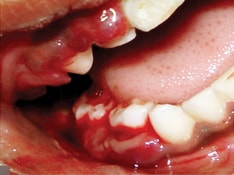
Parotid hypertrophy. Reprinted with permission [Mandel L, Siamak A. Diagnosing bulimia nervosa with parotid gland swelling. J Am Dent Assoc. 2004 May;135 (5):613-16.]
-
Dental caries. Reprinted with permission [Wolcott RB, Yager J, Gordon G. Dental sequelae to the binge-purge syndrome (bulimia): report of cases. J Am Dent Assoc. 1984 Nov;109(5):723-25.].
-
Russell sign. Reprinted with permission [Glorio R, Allevato M, De Pablo A, et al. Prevalence of cutaneous manifestations in 200 patients with eating disorders. Int J Derm. 2001 Dec;39(5):348-53.].
-
This chest radiograph demonstrates pneumomediastinum, which can occur in association with esophageal rupture from forceful vomiting.
-
Water-soluble contrast esophagram from a patient with esophageal perforation after esophageal dilation shows contrast leak (arrowheads) and normal esophageal lumen (arrows).
-
Mallory-Weiss tear. Typical longitudinal mucosal tear with overlying fibrinous exudate extending from the distal esophagus to the gastric cardia. Courtesy of Christopher J Gostout, MD.
Tables
Anorexia Nervosa |
AN and BN |
Bulimia Nervosa |
|---|---|---|
Restriction of energy intake relative to requirement, leading to significantly low body weight in the context of age, sex, developmental trajectory, and physical health |
Recurrent episodes of binge eating: a) eating in a discrete period of time, within a 2-hour period, an amount that is definitely larger than what most would eat in that time period; b) a sense of lack of control over eating |
|
Intense fear of gaining weight or of becoming fat, or persistent behavior that interferes with weight gain, even though at a significantly low weight |
Recurrent inappropriate compensatory behaviors in order to prevent weight gain, such as self-induced vomiting; misuse of laxatives, diuretics, or other medications; fasting; or excessive exercise |
|
Disturbance in which one's body weight or shape is experienced, undue influence of body weight or shape on self-evaluation, or persistent lack of recognition of the seriousness of the current low body weight |
The binge eating and inappropriate compensatory behaviors both occur, on average, at least once a week for 3 months |
|
Two types: Restrictive and Purge/Binge-Eating type |
The disturbance does not occur exclusively during episodes of AN |
|
Body Dysmorphic Disorder |
BDD and BN |
BN |
Preoccupation with one or more perceived defects or flaws in physical appearance that are not observable or appear slight to others |
Disturbance in which one's body weight or shape is experienced, undue influence of body weight or shape on self-evaluation |
Recurrent episodes of binge eating: a) eating in a discrete period of time, within a 2-hour period, an amount that is definitely larger than what most would eat in that time period; b) a sense of lack of control over eating |
At some point during the course of the disorder, the individual has performed repetitive behaviors or mental acts in response to the appearance concerns |
The preoccupation causes significant distress or impairment in social, occupational, or other important areas of functioning |
Recurrent inappropriate compensatory behaviors in order to prevent weight gain, such as self-induced vomiting; misuse of laxatives, diuretics, or other medications; fasting; or excessive exercise |
The appearance preoccupation is not better explained by concerns with body fat or weight in an individual whose symptoms meet diagnostic criteria for an eating disorder |
The binge eating and inappropriate compensatory behaviors both occur, on average, at least once a week for 3 months |
|
Differential Diagnosis of Bulimia Nervosa [1] |
||