Continually Updated Clinical Reference
 
 
  All Sources     eMedicine     Medscape     Drug Reference     MEDLINE
 
eMedicine - Wilson Disease : Article by

Quick Find
Authors & Editors
Introduction
Clinical
Differentials
Workup
Treatment
Medication
Follow-up
Miscellaneous
References

Related Articles
Acute Liver Failure

Anemia

Arthritis as a Manifestation of Systemic Disease

Hemochromatosis

Hepatitis A

Hepatitis B

Hepatitis C

Hepatitis D

Hepatitis E

Hepatitis, Viral

Hepatocellular Adenoma

Schizophrenia


Patient Education
Liver, Gallbladder, and Pancreas Center

Hepatitis Center

Cirrhosis Overview

Cirrhosis Causes

Cirrhosis Symptoms

Cirrhosis Treatment


Author: Rahil Shah, MD, Consulting Staff, Department of Gastroenterology, University Medical Center

Rahil Shah is a member of the following medical societies: American College of Gastroenterology and American Society for Gastrointestinal Endoscopy

Coauthor(s): Michael H Piper, MD, FACG, FACP, Clinical Assistant Professor, Department of Internal Medicine, Division of Gastroenterology, Wayne State University School of Medicine; Consulting Staff, Digestive Health Associates PLC

Editors: Robert J Fingerote, MD, MSc, BSc, FRCPC, Consultant, Clinical Evaluation Division, Biologic and Gene Therapies, Directorate Health Canada; Consulting Staff, Department of Medicine, Division of Gastroenterology, York Central Hospital, Richmond Hill, Ontario; Francisco Talavera, PharmD, PhD, Senior Pharmacy Editor, eMedicine; Noel Williams, MD, Professor Emeritus, Department of Medicine, Dalhousie University, Halifax, Nova Scotia, Canada; Professor, Department of Internal Medicine, Division of Gastroenterology, University of Alberta, Edmonton, Alberta, Canada; Alex J Mechaber, MD, FACP, Assistant Dean for Medical Curriculum, Associate Professor of Medicine, Division of General Internal Medicine, University of Miami Miller School of Medicine; Julian Katz, MD, Clinical Professor of Medicine, Drexel University College of Medicine; Consulting Staff, Department of Medicine, Section of Gastroenterology and Hepatology, Hospital of the Medical College of Pennsylvania

Author and Editor Disclosure

Synonyms and related keywords: Wilson's disease, hepatolenticular degeneration, copper metabolism, ATP7B, cirrhosis, fulminant hepatic failure, chronic liver disease, hepatitis, hepatic dysfunction, basal ganglia degeneration, Kayser-Fleischer ring, chelation therapy, transjugular intrahepatic shunting, TIPS, orthotopic liver transplantation

Background

Wilson disease is a rare autosomal recessive inherited disorder of copper metabolism. The condition is characterized by excessive deposition of copper in the liver, brain, and other tissues. The major physiologic aberration is excessive absorption of copper from the small intestine and decreased excretion of copper by the liver. The genetic defect, localized to chromosome arm 13q, has been shown to affect the copper-transporting adenosine triphosphatase (ATPase) gene (ATP7B) in the liver. Patients with Wilson disease usually present with liver disease during the first decade of life or with neuropsychiatric illness during the third decade. The diagnosis is confirmed by measurement of serum ceruloplasmin, urinary copper excretion, and hepatic copper content, as well as the detection of Kayser-Fleischer rings.

Pathophysiology

The estimated total body copper content is 50-100 mg, with an average daily intake of 1-2 mg. Copper is an important component of several metabolic enzymes, including lysyl oxidase, cytochrome c oxidase, superoxide dismutase, and dopamine beta-hydroxylase. Intestinal copper absorption and transport into hepatocytes is intact in Wilson disease. After copper reaches the hepatocyte, it is incorporated into copper-containing enzymes, including ceruloplasmin. Excess copper may be rendered nontoxic by forming complexes with apo-metallothionein to produce copper-metallothionein, or it may be excreted into bile.

In Wilson disease, the processes of incorporation of copper into ceruloplasmin and excretion of excess copper into bile are impaired. The transport of copper by the copper-transporting P-type ATPase is defective in Wilson disease secondary to one of several mutations in the ATP7B gene. By genetic linkage studies, Bowcock and colleagues narrowed the assignment of the Wilson disease locus to 13q14-q21.1 The excess copper acts as a promoter of free radical formation and causes oxidation of lipids and proteins. In the earliest stages of hepatocellular injury, ultrastructural abnormalities involving the endoplasmic reticulum, mitochondria, peroxisomes, and nuclei have been identified. Initially, the excess copper is stored in the liver and causes damage to the hepatocytes. Eventually, as liver copper levels increase, it is released into the circulation and deposited in other organs.

Frequency

International

The worldwide incidence rate is 10-30 million cases, with increased rates in areas of consanguinity. The heterozygote carrier rate is 1 case per 100 persons, corresponding to a gene frequency varying between 0.3-0.7%. The frequency ranges worldwide from 1 case per 30,000 population in Japan to 1 case per 100,000 population in Australia. The increased frequency in certain countries is due to high rates of consanguinity.

Mortality/Morbidity

Fulminant Wilson disease leads to rapidly progressive liver failure, encephalopathy, coagulopathy, and, eventually, death if emergent liver transplantation is not performed.

Sex

The fulminant presentation of Wilson disease is more common in females than in males (4:1).

Age

Wilson disease manifests as liver disease in children and adolescents, peaking at ages 10-13 years, and as neuropsychiatric illness in young adults aged 19-20 years.

Thomas and colleagues reviewed the mutations found in the ATP7B gene. Their findings suggest a wide age span in the onset of Wilson disease, perhaps wider than previously considered typical. Mutations that completely disrupt the gene can produce liver disease in early childhood at a time when Wilson disease may not be considered in the differential diagnosis.


History

Consider hepatic Wilson disease in the differential diagnosis of any unexplained chronic liver disease, especially in individuals younger than 40 years. The condition may also manifest as acute hepatitis. Hepatic dysfunction is the presenting feature in more than half of patients. The 3 major patterns of hepatic involvement are as follows: (1) chronic active hepatitis, (2) cirrhosis, and (3) fulminant hepatic failure. The most common initial presentation is cirrhosis.

  • Neuropsychiatric

    • Most patients who present with neuropsychiatric manifestations have cirrhosis. The most common presenting neurologic feature is asymmetric tremor, occurring in approximately half of individuals with Wilson disease. The character of the tremor is variable and may be predominantly resting, postural, or kinetic.

    • Frequent early symptoms include difficulty speaking, excessive salivation, ataxia, masklike facies, clumsiness with the hands, and personality changes.

    • Late manifestations (now rare because of earlier diagnosis and treatment) include dystonia, spasticity, grand mal seizures, rigidity, and flexion contractures.

    • One study describes 4 distinct diagnostic categories based on patients' major neurologic findings.10
      • The patients in the parkinsonian group (45%) were distinguished by paucity of expression and movement.

      • The patients in the pseudosclerotic group (24%) had tremor resembling multiple sclerosis.

      • The patients in the dystonic group (15%) were characterized by hypertonicity associated with abnormal limb movements.

      • The patients in the choreic group (11%) were predominantly characterized by choreoathetoid abnormal movements associated with dystonia.

    • Psychiatric features include emotional lability, impulsiveness, disinhibition, and self-injurious behavior. The reported percentage of patients with psychiatric symptoms as the presenting clinical feature is 10-20%. The range of psychiatric abnormalities associated with Wilson disease has been divided into 4 basic categories, as follows:
      • Behavioral

      • Affective

      • Schizophreniclike

      • Cognitive

  • Ophthalmologic
    • Kayser-Fleischer rings are formed by the deposition of copper in the Descemet membrane in the limbus of the cornea. The color may range from greenish gold to brown; when well developed, rings may be readily visible to the naked eye or with an ophthalmoscope set at +40. When not visible to the unaided eye, the rings may be identified using slit-lamp examination or gonioscopy.

    • Kayser-Fleischer rings are observed in up to 90% of individuals with symptomatic Wilson disease and are almost invariably present in those with neurologic manifestations.

    • Although Kayser-Fleischer rings are a useful diagnostic sign, they are no longer considered pathognomonic of Wilson disease unless accompanied by neurologic manifestations. They may also be observed in patients with chronic cholestatic disorders, such as partial biliary atresia, primary biliary cirrhosis, primary sclerosing cholangitis, and cryptogenic cirrhosis.

    • Kayser-Fleischer rings consist of electron-dense granules rich in copper and sulfur. The rings form bilaterally, initially appearing at the superior pole of the cornea, then the inferior pole, and, ultimately, circumferentially.

  • Musculoskeletal
    • Skeletal involvement is a common feature of Wilson disease, with more than half of patients exhibiting osteopenia on conventional radiologic examination.

    • The arthropathy of Wilson disease is a degenerative process that resembles premature osteoarthritis. Symptomatic joint disease, which occurs in 20-50% of patients, usually arises late in the course of the disease, frequently after age 20 years. The arthropathy generally involves the spine and large appendicular joints, such as knees, wrists, and hips. Osteochondritis dissecans, chondromalacia patellae, and chondrocalcinosis have also been described.

  • Hematologic
    • Hemolytic anemia is a recognized but rare (10-15%) complication of the disease.

    • Coombs-negative acute intravascular hemolysis most often occurs as a consequence of oxidative damage to the erythrocytes by the higher copper concentration.

  • Renal

    • The Wilson disease gene is expressed in kidney tissue; therefore, any renal manifestations may be primary or secondary to release of copper from the liver.

    • Clinically, patients may resemble those with Fanconi syndrome, demonstrating defective renal acidification and excess renal losses of amino acids, glucose, fructose, galactose, pentose, uric acid, phosphate, and calcium. The frequency of renal manifestations is variable.

    • Urolithiasis, found in up to 16% of patients with Wilson disease, may be the result of hypercalciuria or poor acidification.

    • Hematuria and nephrocalcinosis are reported, and proteinuria and peptiduria can occur both before treatment as part of the disease process and after therapy as adverse effects of D-penicillamine.

Physical

Physical findings are consistent with liver disease, to include jaundice, varices, spider angiomas, and palmar erythema.

Causes

Initially, Wilson postulated that the familial incidence of hepatolenticular degeneration was attributable to environmental factors rather than genetic factors. Nearly a decade later, Hall reported that Wilson disease was more frequent in siblings. In 1953, Bearn discovered an autosomal recessive mode of inheritance confirmed by extended genetic analysis of 30 families. Frydman et al localized the Wilson disease (WD) gene to chromosome 13.

The WD gene product is a 1411 amino acid protein with highest levels of expression in the liver, kidneys, and placenta. The WD gene codes for P-type copper-transporting ATPase, now characterized as ATP7B. Many of the gene defects for ATP7B are small deletions, insertions, or missense mutations. Most patients carry different mutations on each of their 2 chromosomes. More than 40 different mutations have been identified, the most common of which is a change from a histidine to a glutamine (H1069Q).


Acute Liver Failure
Anemia
Arthritis as a Manifestation of Systemic Disease
Hemochromatosis
Hepatitis A
Hepatitis B
Hepatitis C
Hepatitis D
Hepatitis E
Hepatitis, Viral
Hepatocellular Adenoma
Schizophrenia


Lab Studies

  • The presence of Kayser-Fleischer rings and ceruloplasmin levels of less than 20 mg/dL in a patient with neurologic signs or symptoms suggest the diagnosis of Wilson disease. If a patient is asymptomatic, exhibits isolated liver disease, and lacks corneal rings, the coexistence of a hepatic copper concentration of more than 250 mg/g of dry weight and a low serum ceruloplasmin level is sufficient to establish a diagnosis.

  • Serum ceruloplasmin
    • Serum ceruloplasmin levels are low in newborns and gradually rise within the first 2 years of life. Approximately 90% of all patients with Wilson disease have ceruloplasmin levels of less than 20 mg/dL (reference range, 20-40 mg/dL).

    • Ceruloplasmin is an acute phase reactant and may be increased in response to hepatic inflammation, pregnancy, estrogen use, or infection.

    • Falsely low ceruloplasmin levels may be observed in any protein deficiency state, including nephrotic syndrome, malabsorption, protein-losing enteropathy, and malnutrition. Ceruloplasmin levels may also be decreased in 10-20% of WD gene heterozygotes, who do not develop Wilson disease and do not require treatment.

  • Urinary copper excretion
    • The urinary copper excretion rate is greater than 100 mg/d (reference range, <40 mg/d) in most patients with symptomatic Wilson disease. The rate may also be elevated in other cholestatic liver diseases.

    • Both the sensitivity and the specificity of this test are suboptimal for use as a screening test; however, it may be useful to confirm the diagnosis and to evaluate the response to chelation therapy.

  • Hepatic copper concentration
    • This test is regarded as the criterion standard for diagnosis of Wilson disease.

    • A liver biopsy with sufficient tissue reveals levels of more than 250 mcg/g of dry weight even in asymptomatic patients. Special collection vials are available to help avoid contamination.

    • A normal hepatic copper concentration (reference range, 15-55 mcg/g) effectively excludes the diagnosis of untreated Wilson disease. An elevated hepatic copper concentration may be found in other chronic hepatic (mostly cholestatic) disorders.

  • Radiolabeled copper
    • Radiolabeled copper testing directly assays hepatic copper metabolism. Blood is collected at 1, 2, 4, 24, and 48 hours after oral ingestion of radiolabeled copper (64Cu or 67Cu) for radioactivity in serum. In all individuals, radioactivity promptly appears after absorption, followed by hepatic clearance. In healthy people, reappearance of the radioactivity in serum occurs as the labeled copper is incorporated into newly synthesized ceruloplasmin and released into the circulation.

    • Heterozygotes exhibit a slow lower-level reappearance of radioactivity rather than the continued fall in radioactivity in those with Wilson disease, but there may be considerable overlap between the two. Patients with Wilson disease, even those with normal ceruloplasmin levels, do not exhibit the secondary rise in radioactivity.

  • Genetic diagnosis: Linkage analysis has been used in family studies for presymptomatic testing; however, the multiplicity of mutations (>200 mutations of ATP7B have been identified) that require screening in individuals without affected family members is large, making such analysis impractical. Therefore, the use of molecular testing is currently limited to screening of family members for an identified mutation detected in the index patient.

Imaging Studies

  • Cranial CT scan
    • The cranial lesions observed on CT scan are typically bilateral and are classified into 2 general categories, as follows: (1) well-defined, slitlike, low-attenuation foci involving the basal ganglia, particularly the putamen, and (2) larger regions of low attenuation in the basal ganglia, thalamus, or dentate nucleus.

    • Widening of the frontal horns of the lateral ventricles and diffuse cerebral and cerebellar atrophy, which correlate histologically with widespread neuronal loss, have also been described.

  • Brain MRI
    • MRI of the brain appears to be more sensitive than CT scanning in detecting early lesions of Wilson disease.

    • MRI studies have identified focal abnormalities in the white matter, pons, and deep cerebellar nuclei. These lesions, measuring 3-15 mm in diameter, are typically bilateral, appearing with low signal intensity on T1-weighted images and with high signal intensity on T2-weighted images, representing cell loss and gliosis. Other studies describe decreased signal intensity in the putamen and other parts of the basal ganglia, which may represent either copper or iron ferritin deposition.

    • A characteristic "face of the giant panda" sign has been described, formed by high signal intensity in the tegmentum (except for the red nucleus), preserved signal intensity of the lateral portion of the pars reticulata of the substantia nigra, and hypointensity of the superior colliculus.

  • Positron emission tomography scan
    • Positron emission tomography (PET) scan reveals a significantly reduced regional cerebral metabolic rate of glucose consumption in the cerebellum, striatum, and, to a lesser extent, in the cortex and thalamus.

    • PET analyses of patients with Wilson disease have also demonstrated a marked reduction in the activity of dopa-decarboxylase, indicative of impaired function of the nigrostriatal dopaminergic pathway.

    • These abnormalities improve with chelation therapy, indicating a reversible component of striatal neuron injury.

  • Abdominal imaging: CT scan, MRI, ultrasound, and nuclear medicine studies of the liver have been uninformative, with findings neither specific nor sensitive for Wilson disease.

  • Electron microscopy
    • Electron microscopic studies on ultrathin sections reveal numerous electron-dense lysosomes and residual bodies.

    • The elemental analysis in transmission electron microscopy with electron energy loss spectroscopy, and in scanning electron microscopy with energy dispersive x-ray analysis, shows copper-specific signals of electron-dense accumulations inside these dark lysosomes and residual bodies.

    • The electron microscopic detection of copper-containing hepatocytic lysosomes is helpful for the diagnosis of early stages of Wilson disease in addition to the quantification of hepatic copper by atomic absorption spectrophotometry.

Other Tests

  • Resting ECG abnormalities include left ventricular or biventricular hypertrophy, early repolarization, ST segment depression, T-wave inversion, and various arrhythmias.

Procedures

  • In the absence of Kayser-Fleischer rings or neurologic abnormalities, a liver biopsy for quantitative copper determination is essential to establish the diagnosis of Wilson disease (see Lab Studies for description of hepatic copper measurement).

Histologic Findings

  • Hepatic

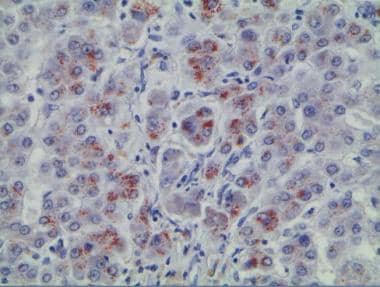
    • The earliest changes detectable with light microscopy include glycogen deposition in the nuclei of periportal hepatocytes and moderate fatty infiltration. The lipid droplets, which are composed of triglycerides, progressively increase in number and size, sometimes resembling the steatosis induced by ethanol. Hepatocyte mitochondria typically exhibit heterogeneity in size and shape, with increased matrix density, separation of the normally apposed inner and outer mitochondrial membranes, widened intercristal spaces, and an array of vacuolated and crystalline inclusions within the matrix. With progression of disease, copper protein is sequestered in lysosomes and is visible as electron-dense pericanalicular granules.

    • Despite consistently elevated hepatic copper levels in patients with Wilson disease, histochemical staining of liver biopsy specimens for copper is of little diagnostic value. Early in the disease, copper distribution is primarily cytoplasmic and is not readily apparent with rhodamine or rubeanic acid staining.

    • The rate of progression of the liver histology from fatty infiltration to cirrhosis is variable, although it tends to occur by one of two general processes, either with or without hepatic inflammation. The histologic picture may be histologically indistinguishable from that of chronic active hepatitis. Pathologic features include mononuclear cell infiltrates, which consist mainly of lymphocytes and plasma cells, piecemeal necrosis extending beyond the limiting plate, parenchymal collapse, bridging hepatic necrosis, and fibrosis. The histologic pattern is one of a macronodular or mixed micro-macronodular cirrhosis, with fibrous septa (containing predominantly types I and III collagen), bile ductule proliferation, and variable septal round cell infiltration. Hepatocytes at the periphery of the nodules frequently contain Mallory hyalin.

    • One proposed mechanism implicates copper as the inducer of fibrogenesis. Interestingly, hepatocellular carcinoma is exceedingly rare in patients with Wilson disease compared to patients with hemochromatosis. This may be attributable to the significantly shortened life expectancy in untreated patients, which does not allow time for carcinoma to develop. An increasing number of case reports suggest that the incidence will likely increase with improved survival. It has been proposed that the diminished cancer risk is due to the relatively low inflammatory component in the pathogenesis of Wilson disease.

  • Neurologic

    • Observed gross anatomical changes include degeneration and cavitation, primarily involving the putamen, globus pallidus, caudate nucleus, and thalamus.

    • Little correlation has been observed between the degree of neurologic impairment and the neuropathologic findings. The affected areas of the brain do not possess higher copper concentrations than the unaffected portions.

Staging

The natural history of the disease may be considered in 4 stages, as follows:

  • Stage I - The initial period of accumulation of copper by hepatic binding sites
  • Stage II - The acute redistribution of copper within the liver and its release into the circulation
  • Stage III - The chronic accumulation of copper in the brain and other extrahepatic tissue, with progressive and eventually fatal disease
  • Stage IV - The achievement of copper balance with chronic chelation therapy


Medical Care

The mainstay of therapy for Wilson disease is pharmacologic treatment with chelating agents.

Surgical Care

  • The use of surgical decompression or transjugular intrahepatic shunting (TIPS) in the treatment of portal hypertension is reserved for individuals with recurrent or uncontrolled variceal bleeding that is unresponsive to standard conservative measures.
  • Orthotopic liver transplantation is a potentially curative treatment of Wilson disease.
    • Transplantation is primarily reserved for treatment of patients with fulminant liver failure or end-stage liver cirrhosis, which progresses despite chelation therapy.
    • The selection of patients for transplantation may be facilitated by determination of a prognostic index, which is based on the degree of abnormality of serum aspartate aminotransferase, bilirubin, and prothrombin time and appears to accurately predict a fatal or nonfatal outcome.
    • In the absence of severe hepatic disease, liver transplantation is generally not recommended for treatment of refractory extrahepatic manifestations.

Consultations

  • Consider consultation with gastroenterologists with specialty training in hepatology for any patient with Wilson disease, especially when evidence of hepatic insufficiency is present.
  • Consultation with surgeons may be sought for liver transplantation when deemed necessary.

Diet

Patients should generally avoid eating foods with a high copper content, such as liver, chocolate, nuts, mushrooms, legumes, and shellfish (especially lobster). Drinking water from atypical sources (eg, well water) should be analyzed for copper content and replaced with purified water if the copper content is greater than 0.2 parts per million.


The mainstay of therapy for Wilson disease is the use of chelating agents and medications that block copper absorption from the GI tract.

Drug Category: Chelating agents

Bind excess copper. Ammonium tetrathiomolybdate is being used under the investigational new drug approval of the US Food and Drug Administration at the University of Michigan as an initial treatment for those who present with neurologic or psychiatric manifestations. This drug works as both a chelating agent and an inhibitor of copper absorption from the GI tract.

Drug NamePenicillamine (Cuprimine, Depen)
DescriptionForms soluble complexes with metals excreted in urine. DOC before newer regimens were available. Because of extensive toxicities, alternative agents are used. Must be administered with pyridoxine 25 mg PO qd.
Adult DoseInitial: 1.5-2 g PO qd
Maintenance: 750 mg to 1 g/d PO qid 30 min ac
Pediatric Dose25 mg/kg PO qd
ContraindicationsDocumented hypersensitivity; renal insufficiency; previous penicillamine-related aplastic anemia
InteractionsIncreases effects of immunosuppressants, phenylbutazone, and antimalarials; decreases digoxin effects; effects may decrease with coadministration of zinc salts, sucralfate, antacids, and iron; probenecid may increase adverse effects
PregnancyD - Unsafe in pregnancy
PrecautionsThrombocytopenia, agranulocytosis, and aplastic anemia may occur

Drug NameTrientine (Syprine)
DescriptionEffective oral chelator used to induce cupriuresis. Useful for patients who cannot tolerate penicillamine. Indicated in Wilson disease if initial presentation is hepatic. Should be administered with zinc.
Adult Dose250-500 mg PO tid ac
Pediatric DoseNot established
ContraindicationsDocumented hypersensitivity; biliary cirrhosis; rheumatoid arthritis; cystinuria
InteractionsEffects decrease with iron or other mineral supplements
PregnancyC - Safety for use during pregnancy has not been established.
PrecautionsCan cause bone marrow suppression and proteinuria; perform weekly CBC counts at initiation of therapy

Drug Category: Nutrients

Essential to normal growth and development. Play a role in many metabolic processes.

Drug NameZinc (Verazinc, Orazinc, Zincate)
DescriptionCofactor for >70 types of enzymes. Approved for patients initially treated with a chelating agent. Should be used for maintenance after initial therapy. DOC in presymptomatic, pregnant, and pediatric populations. Second DOC if initial presentation is neurologic.
Adult Dose150-300 mg PO qd
Pediatric DoseNot established
ContraindicationsDocumented hypersensitivity
InteractionsMay reduce penicillamine and tetracycline effects
PregnancyC - Safety for use during pregnancy has not been established.
PrecautionsCaution in patients with renal impairment

Drug NamePyridoxine (Nestrex)
DescriptionInvolved in synthesis of GABA within the CNS.
Adult Dose25 mg PO qd
Pediatric DoseNot established
ContraindicationsDocumented hypersensitivity
InteractionsMay decrease levodopa, phenytoin, and phenobarbital serum levels
PregnancyC - Safety for use during pregnancy has not been established.
Precautions>200 mg/d may precipitate withdrawal effects when medication is discontinued

Drug NameDimercaprol (BAL in Oil)
DescriptionFor refractory cases of Wilson disease not responding to first- or second-line treatment.
Adult Dose3-5 mg/kg IM q4h
Pediatric DoseAdminister as in adults
ContraindicationsDocumented hypersensitivity; G-6-PD deficiency; concurrent iron supplementation therapy
InteractionsToxicity may increase when coadministered with selenium, uranium, iron, or cadmium
PregnancyC - Safety for use during pregnancy has not been established.
PrecautionsMay be nephrotoxic and may cause hypertension; caution when administering to patients with oliguria or G-6-PD deficiency; may induce hemolysis in patients with G-6-PD deficiency


Further Outpatient Care

  • Perform a physical examination, 24-hour urinary copper excretion assay, CBC count, urinalysis, serum free copper measurement, and renal and liver function tests on a weekly basis for the first 4-6 weeks following initiation of chelation therapy. Monitor efficacy as follows:

    • The best way to monitor efficacy is to measure serum nonceruloplasmin-bound copper. This is measured by the following formula: Total serum copper (mcg/dL) - 3[ceruloplasmin (mg/dL)]. The reference range is <15 mcg/dL.

    • An adjunctive way to monitor efficacy is to measure urinary copper excretion. Urinary chelator levels usually measure 200-500 mcg/day. Urinary zinc levels usually measure <75 mcg/day.
  • Bimonthly evaluations are recommended through the first year, followed by yearly examinations thereafter.
  • In patients with Kayser-Fleischer rings, a yearly slit-lamp examination should document fading or disappearance if patients are being adequately "decoppered."
  • Lifelong, uninterrupted chelation therapy is necessary in all patients with Wilson disease.
  • Frequent follow-up with patients is necessary, secondary to patient decompensation due to noncompliance. This is one of the major causes of fulminant liver failure.
  • Patients must avoid most alcohol consumption and potential hepatotoxic drug therapy.

In/Out Patient Meds

  • Zinc and penicillamine are lifelong medications for patients with Wilson disease. Dosages vary with severity of disease.

Complications

  • The major complications in patients with untreated Wilson disease are those associated with liver failure and a chronic, relentless course to cirrhosis, which is characterized by a progressive lassitude, fatigue, anorexia, jaundice, spider angiomas, splenomegaly, and ascites. Bleeding from varices, hepatic encephalopathy, hepatorenal syndrome, and coagulation abnormalities occur as liver failure ensues.

Prognosis

  • Prognostic Index in Fulminant Wilsonian Hepatitis

    Score

    0

    1

    2

    3

    4

    Serum bilirubin (reference range, 3-20 mmol/L)

    <100

    100-150

    151-200

    201-300

    >300

    Serum aspartate transaminase (reference range, 7-40 IU/L)

    <100

    100-150

    151-200

    201-300

    >300

    Prothrombin time prolongation (seconds)

    <4

    4-8

    9-12

    13-20

    >30

  • Patients with a prognostic index (ie, score) of 7 or greater should be considered for liver transplantation. All patients who exceeded this score died within 2 months of diagnosis despite the institution of appropriate medical therapy.
  • Prognosis after liver transplantation is relatively good. In a study involving 55 patients with Wilson disease who underwent hepatic transplantation, the 1-year survival rate was 79% and the overall survival rate was 72% at 3 months to 20 years.

Patient Education


Medical/Legal Pitfalls

  • Failure to consider Wilson disease in the differential diagnosis of any unexplained chronic liver disease or an abnormal liver enzyme profile, especially in individuals younger than 40 years, is a potential medicolegal pitfall. The typical age for hepatic presentation is 10-13 years, whereas that for neuropsychiatric presentation is 20 years.

  • In female patients with Wilson disease, it should be explained that very few women can become pregnant once cirrhosis develops.

  • First-degree relatives of any patient newly diagnosed with Wilson disease must be screened for the condition. Assessment should include history and physical examination, serum aminotransferase determinations, biochemical tests of hepatic synthetic function, CBC count, and ceruloplasmin testing. Kayser-Fleischer rings should be sought by slit-lamp examination. The basal 24-hour urinary copper excretion rate should be measured. Genotype or haplotype studies based on findings in the proband should be performed.

Special Concerns

  • Pregnancy
    • Excessive intrauterine copper concentrations may be responsible for the high rate of spontaneous abortions in patients with Wilson disease. D-penicillamine (0.75-1.5 g/d) appears to pose no major risk to the fetus and should be continued throughout the pregnancy.
    • While pregnancy per se does not appear to have a deleterious effect on the course of treated patients, the risk of ascites or bleeding from gastroesophageal varices in pregnancy is increased for any individual with cirrhosis, regardless of the underlying etiology.
  • Pediatric
    • Pediatricians should consider Wilson disease in any child with hepatic abnormalities.
    • The initial tests should be performed, and further workup by a pediatric gastroenterologist may be necessary if suspicion remains high.
  • Geriatric
    • Almost all patients have significant hepatic and neuropsychiatric symptoms before reaching the geriatric age group.
    • Patients with Wilson disease who are untreated will most likely present with fulminant hepatic failure or with signs and symptoms of cirrhosis in the geriatric population. Consideration for liver transplantation is less likely with advancing age.


  1. Bowcock AM, Farrer LA, Hebert JM, Agger M, Sternlieb I, Scheinberg IH, et al. Eight closely linked loci place the Wilson disease locus within 13q14-q21. Am J Hum Genet. Nov 1988;43(5):664-74. [Medline].
  2. Brewer GJ. Recognition, diagnosis, and management of Wilson's disease. Proc Soc Exp Biol Med. Jan 2000;223(1):39-46. [Medline].
  3. Cuthbert JA. Wilson's disease. Update of a systemic disorder with protean manifestations. Gastroenterol Clin North Am. Sep 1998;27(3):655-81, vi-vii. [Medline].
  4. Gitlin N. Wilson's disease: the scourge of copper. J Hepatol. Apr 1998;28(4):734-9. [Medline].
  5. Huster D, Kuhn HJ, Mossner J. Wilson disease. Internist (Berl). Jul 2005;46(7):731-2, 734-6, 738-40. [Medline].
  6. Perri RE, Hahn SH, Ferber MJ. Wilson Disease--keeping the bar for diagnosis raised. Hepatology. Oct 2005;42(4):974. [Medline].
  7. Pfeil SA, Lynn DJ. Wilson's disease: copper unfettered. J Clin Gastroenterol. Jul 1999;29(1):22-31. [Medline].
  8. Schilsky ML. Wilson disease: new insights into pathogenesis, diagnosis, and future therapy. Curr Gastroenterol Rep. Feb 2005;7(1):26-31. [Medline].
  9. Thomas GR, Forbes JR, Roberts EA, Walshe JM, Cox DW. The Wilson disease gene: spectrum of mutations and their consequences. Nat Genet. Feb 1995;9(2):210-7. [Medline].
  10. Walshe JM. Copper: its role in the pathogenesis of liver disease. Semin Liver Dis. Aug 1984;4(3):252-63. [Medline].

Wilson Disease excerpt

Article Last Updated: May 4, 2007