| Patient Education |
|
Click here for patient education.
|
|
You are in: eMedicine Specialties >
Rheumatology > Systemic Rheumatic Disease
Scleroderma
Article Last Updated: Aug 15, 2007
AUTHOR AND EDITOR INFORMATION
Section 1 of 11
Author: Sergio A Jimenez, MD, Dorrance H Hamilton Professor, Department of Medicine, Director, Division of Rheumatology, Thomas Jefferson University
Sergio Jimenez is a member of the following medical societies: American College of Physicians, American College of Rheumatology, and Society for Investigative Dermatology
Coauthor(s):
Patrick M Cronin, DO, FACR, Clinical Associate Professsor of Medicine, Department of Medicine, Division of Rheumatology, University of Pennsylvania Health System, Pennsylvania Hospital;
Andrew Koenig;
Marie Spevak O'Brien, DO, Fellow in Rheumatology, Thomas Jefferson University
Editors: John Varga, MD, Professor, Department of Internal Medicine, Division of Rheumatology, Northwestern University; Francisco Talavera, PharmD, PhD, Senior Pharmacy Editor, eMedicine; Elliot Goldberg, MD, Dean of the Western Pennsylvania Clinical Campus, Professor, Department of Medicine, Temple University School of Medicine; Alex J Mechaber, MD, FACP, Assistant Dean for Medical Curriculum, Associate Professor of Medicine, Division of General Internal Medicine, University of Miami Miller School of Medicine; Herbert S Diamond, MD, Professor of Medicine, Temple University School of Medicine; Chairman Emeritus, Department of Internal Medicine, Western Pennsylvania Hospital
Author and Editor Disclosure
Synonyms and related keywords:
scleroderma, systemic sclerosis, progressive systemic sclerosis, hard skin, skin tightening, skin tightness, proximal scleroderma, sclerodactyly, bibasilar pulmonary fibrosis, diffuse cutaneous scleroderma, limited cutaneous scleroderma, Raynaud phenomenon, Raynaud's phenomenon, pulmonary hypertension, calcinosis, esophageal dysmotility, telangiectasias, CREST, diffuse systemic scleroderma, endothelial cell injury, fibroblast activation, immunologic derangement, silica exposure, solvent exposure
Background
Scleroderma is derived from the Greek words skleros (hard or indurated) and derma (skin). Hippocrates first described this condition as thickened skin. Carlo Curzio (1752) offered the first detailed description of this condition when a patient presented with hard skin, which he described as woodlike or containing a dry hide. In 1836, Giovambattista Fantonetti applied the term scleroderma to a patient's condition. He applied the term to describe a patient with dark, leatherlike skin who exhibited a loss of range of joint motion that resulted from skin tightening. Robert H. Goetz first described in detail the concept of scleroderma as a systemic disease in 1945; he introduced the term progressive systemic sclerosis to emphasize the systemic and often progressive nature of the disease. Definition The term systemic sclerosis is used to describe a systemic disease characterized by skin induration and thickening accompanied by various degrees of tissue fibrosis and chronic inflammatory infiltration in numerous visceral organs, prominent fibroproliferative vasculopathy, and humoral and cellular immune alterations. The American College of Rheumatology (ACR) criteria for the classification of systemic sclerosis require one major criterion or two minor criteria, as follows:
- Major criterion: Proximal scleroderma is characterized by symmetric thickening, tightening, and induration of the skin of the fingers and the skin that is proximal to the metacarpophalangeal or metatarsophalangeal joints. These changes may affect the entire extremity, face, neck, and trunk (thorax and abdomen; see Images 1-2).
- Minor criteria
- Sclerodactyly includes the above major criterion characteristics but is limited to only the fingers.
- Digital pitting scars or a loss of substance from the finger pad: As a result of ischemia, depressed areas of the fingertips or a loss of digital pad tissue occurs.
- Bibasilar pulmonary fibrosis includes a bilateral reticular pattern of linear or lineonodular densities most pronounced in basilar portions of the lungs on standard chest roentgenograms. These densities may assume the appearance of diffuse mottling or a honeycomb lung and are not attributable to primary lung disease.
Pathophysiology
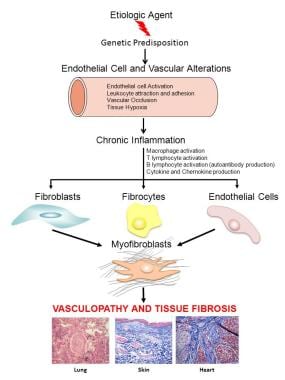
Systemic sclerosis is a systemic disease that affects many organ systems. It is most obvious in the skin; however, the GI tract; the respiratory, renal, cardiovascular, and genitourinary systems; and numerous vascular structures are frequently involved. The symptoms result from inflammation and progressive tissue fibrosis and occlusion of the microvasculature by excessive production and deposition of types I and III collagens. The levels of other macromolecules found in the connective tissue (eg, glycosaminoglycans, tenascin, fibronectin) are also increased.
The vascular alterations show a predilection for affecting the small arteries and arterioles. Vascular dysfunction is one of the earliest alterations of systemic sclerosis and may represent the initiating event in its pathogenesis. Severe alterations in small blood vessels of skin and internal organs, including fibrosis and perivascular cellular infiltration with activated T cells, are almost always present in systemic sclerosis.
Frequency
United States
The estimated incidence of systemic sclerosis is 19 cases per million population, and the prevalence of systemic sclerosis has been estimated at 240 cases per million population, although reported prevalence has ranged from 138 to 286 cases per million population. The prevalence has increased because of earlier detection through better diagnosis and an increased survival rate. Obtaining an exact estimate of prevalence is difficult because the disease is frequently misdiagnosed. Juvenile-onset systemic sclerosis is uncommon and usually presents as an overlap syndrome with myositis. In the United States, the prevalence of systemic sclerosis has been reported to be as high as 400 cases per million women aged 35-65 years.
International
Systemic sclerosis is found worldwide.
Mortality/Morbidity
Pulmonary hypertension and scleroderma renal crisis are the most frequent causes of mortality. Survival averages 12 years from diagnosis and correlates best with the clinical disease subtype (diffuse cutaneous vs limited cutaneous) and extent of organ involvement.
- The limited cutaneous subset carries a 10-year survival rate of 71%.
- The diffuse cutaneous subset carries a 10-year survival rate of 21%.
- Pulmonary hypertension is a major prognostic factor for survival.
Race
Systemic sclerosis affects individuals of all races.
- The risk of systemic sclerosis in blacks is slightly higher than in whites; in young black women, the risk is 10 times higher.
- Incidence rates among ethnically related groups who are geographically separate show some discrepancy. The incidence of systemic sclerosis is lower in Native Nigerians than in African Americans. Oklahoma Choctaw Indians have an incidence of 472 cases per million population, which is higher than that of the Missouri Choctaw Indians. These differences may be due to environmental exposures or differences in genetic predisposition.
Sex
The risk of systemic sclerosis is 3-9 times higher in women than in men.
Age
The peak onset occurs in individuals aged 30-50 years.
History
- Skin (see Images 1-3)
- Diffuse pruritus
- Skin tightness and induration (see Images 1-2)
- Skin pigmentary changes (hyperpigmentation or hypopigmentation; see Image 3)
- Vascular system
- Raynaud phenomenon (70% of patients initially present with this symptom; 95% eventually develop it during the course of their disease)
- Healed pitting ulcers in fingertips
- Cutaneous and mucosal telangiectasis
- Gastrointestinal system
- Gastroesophageal reflux caused by lower esophageal sphincter (LES) incompetence and decreased or absent peristalsis in the lower two thirds of the esophagus (may lead to hoarseness, aspiration pneumonia, and dysphagia)
- Dyspepsia, bloating, and early satiety
- Constipation alternating with diarrhea (may lead to malabsorption)
- Respiratory system
- Progressive dyspnea
- Chest pain (precordial) due to pulmonary artery hypertension
- Dry persistent cough due to restrictive lung disease
- Musculoskeletal system
- Arthralgia
- Myalgia
- Loss in joint range of motion
- Symptoms of carpal tunnel syndrome
- Muscle weakness
- Cardiovascular system
- Dyspnea due to pericardial effusion, congestive heart failure, or myocardial fibrosis
- Palpitations, irregular heart beats, and syncope due to conduction abnormalities
- Congestive heart failure
- Genitourinary system
- Erectile dysfunction
- Dyspareunia (if introitus is affected)
- Ears, nose, and throat
- Sicca syndrome
- Poor dentition due to sicca syndrome
- Loosening of dentition due to alteration in the tooth suspensory ligament and thickening of the periodontal membrane
- Hoarseness due to acid reflux or vocal cord fibrosis
- Endocrine system - Hypothyroidism
- Renal system
- Hypertension
- Renal crisis
- Chronic renal insufficiency
- Neurologic
- Facial pain and hand paresthesias due to sensory peripheral entrapment neuropathy
- Headache and stroke during hypertensive renal crisis
- Constitutional
Physical
- Skin
- Skin pigmentary changes include a salt-and-pepper appearance, with areas of hyperpigmentation alternating with hypopigmentation, or an overall appearance of tanned skin that persists long after sun exposure (see Image 3).
- Telangiectasias are dilated vessels located just beneath the dermis on any skin area, but they are most obvious in the face (perioral area), hands, and anterior chest.
- The skin of the hands may be edematous or indurated early in the disease, and the patient may initially report this as puffy changes. This edematous stage precedes the sclerotic stage; longer time to progression to the sclerotic phase indicates a better prognosis. A rapid progression of sclerosis is associated with a worse prognosis and, often, more extensive and aggressive visceral organ involvement with an increased risk of renal crisis development.
- In the sclerotic phase, the skin may appear tight and shiny, with a characteristic loss of hair, decreased sweating, and loss of the ability to make a skin fold. This process of thickening generally begins distally on the fingers. Structures such as skin creases and dorsal veins begin to fade. The skin induration usually progresses proximally in a continuous symmetrical fashion.
- Calcinosis may develop on the fingers and extremities, usually the extensor side of the forearms and the prepatellar areas; however, any area can be affected (see Image 4).
- Limited cutaneous systemic sclerosis involves areas distal to the elbow and knee but may involve the face and neck. CREST (calcinosis, Raynaud phenomenon, esophageal dysmotility, sclerodactyly, and telangiectasias [not all are needed to be called CREST]) syndrome is an older term used to describe this subset of limited cutaneous systemic sclerosis.
- Diffuse cutaneous systemic sclerosis refers to skin thickening on the trunk and proximal aspects of the extremities in addition to the face.
- Reduced oral aperture (microstomia) due to perioral involvement (measure incisor-to-incisor distance) may develop.
- Edema may be the result of hydrophilic glycosaminoglycan deposits in the dermis. These changes (edema) may also reflect vascular changes, inflammation, and hydrostatic changes. The mechanism by which the edema resolves is not clear. Possibly, the edema does not resolve but becomes clinically less apparent because of dermal thickening. The edema usually does not improve with the use of diuretic therapy.
- Ears, nose, and throat
- Salivary production may be decreased and spontaneous sublingual pooling of saliva may be absent.
- Xerostomia and xerophthalmia may be part of the examination findings. A confirmatory minor salivary gland biopsy may show fibrosis without the pronounced lymphocytic aggregates that would be expected with primary Sjögren syndrome. In addition, patients with systemic sclerosis typically do not harbor anti-Ro and anti-La antibodies.
- Oropharyngeal and esophageal cancers are more common in persons with diffuse systemic sclerosis.
- Vascular changes
- Raynaud phenomenon results in characteristic color changes of pallor, cyanosis, and then redness (white, blue, red), which are accompanied by numbness, tingling, or pain. These events may be triggered by cold, smoking, or emotional stress. Subintimal hyperplasia, typically present in systemic sclerosis vessels, can reduce the luminal diameter by more than 75%, limiting blood flow. This baseline reduction, in addition to the natural response to cold, accounts for the exaggerated response.
- Raynaud phenomenon occurs in 5-15% of the general population. The female-to-male ratio is 4:1, with onset occurring during the teenaged years.
- Raynaud phenomenon may precede obvious systemic sclerosis features by months or even years. Symptoms may last longer than 2 years. If this occurs without the development of characteristic connective-tissue diseases, a benign primary Raynaud phenomenon is generally indicated, with an excellent prognosis. However, 5-10% of this population may eventually develop systemic sclerosis.
- Infarction and dry gangrene may be due to severe vasospasm. This process usually involves the digits but can also involve the lips, nose, and ears.
- Nail fold capillary microscopy demonstrates fewer capillaries than normal (ie, capillary loop drop [see Image 5]) and numerous dilated capillary loops.
- Musculoskeletal system
- Patients may present with generalized arthralgias and morning stiffness that may mimic other systemic autoimmune diseases. Clinically apparent synovitis is uncommon. Hand and joint function may decline over time because of skin tightening rather than arthropathy. Tendon friction rubs may be detected as the tendon is moved actively or passively, and friction rubs may precede joint involvement.
- The following palpable tendon friction rubs may be found:
- Shoulder - Scapula
- Elbow - Olecranon
- Knee - Patella
- Wrists - Flexor or extensor
- Fingers - Flexor or extensor (rare)
- Ankle - Anterior tibia, posterior tibia, peroneal, Achilles
- Myositis may cause weakness and muscle wasting. Levels of serum creatine kinase (CK) and aldolase are elevated.
- Acroosteolysis (ie, resorption or dissolution of the distal end of the phalanx) may occur.
- Flexion contractures of any affected joint may occur.
- Respiratory system
- Dry rales may be the only physical examination finding that suggests pulmonary involvement in systemic sclerosis.
- An accentuated pulmonic secondary heart sound (P2) or right ventricular heave may indicate the presence of pulmonary artery hypertension.
- Transthoracic echocardiography is a noninvasive study for assessing pulmonary artery pressure. A systolic pulmonary artery pressure of greater than 35 mm Hg is considered to represent pulmonary artery hypertension. However, right-sided heart catheterization provides the most accurate pulmonary artery pressure (see Imaging Studies).
- Pulmonary function testing is important in all patients with systemic sclerosis, although lung volumes can correlate poorly with extent of interstitial lung disease. Results of pulmonary function testing are ultimately abnormal in 80% of the patients. Carbon monoxide diffusion capacity (DLCO) is very sensitive and helps establish organ involvement at an earlier stage. Pulmonary function tests may demonstrate a decreased forced vital capacity and total lung capacity and a low DLCO. These changes reflect fibrotic infiltration in the lung (see Images 6-7). An isolated reduction of DLCO indicates pulmonary vascular fibrosis and vascular obliteration that leads to pulmonary hypertension.
- A high-resolution CT scan (HRCT) is highly sensitive for revealing pulmonary involvement (see Imaging Studies). It may demonstrate a ground-glass appearance in areas of active alveolitis or septal fibrosis and honeycombing in areas of interstitial fibrosis. Patients with normal initial HRCT findings have a good long-term prognosis.
- Patients are at risk for aspiration pneumonia due to lower esophageal sphincter incompetence.
- Gastrointestinal system
- Reflux due to decreased lower esophageal sphincter pressure
- Severe esophagitis
- Barrett metaplasia (can lead to cancer)
- Candida esophagitis
- Esophageal strictures
- Gastric vascular antral ectasia (dilated submucosal capillaries), also known as watermelon stomach
- Primary biliary cirrhosis (PBC) associated with antimitochondrial antibodies (Studies have shown that liver dysfunction in patients with PBC and systemic sclerosis may progress more slowly than in patients with PBC alone.)
- Wide-mouth colonic diverticula
- Malabsorption
- Atrophy of smooth muscle and fibrotic changes leading to decreased peristalsis throughout the GI tract (gastroesophageal reflux disease [GERD], gastroparesis, constipation, pseudo-obstruction; see Image 8)
- Anal sphincter incompetence
- Renal system
- Patients with diffuse, rapid skin involvement have the highest risk (approximately 20-25%) of developing scleroderma renal crisis. Renal crisis occurs in about 10% of all patients with systemic sclerosis.
- Renal crisis presents as accelerated hypertension, oliguria, headache, dyspnea, edema, and rapidly rising serum creatinine levels.
- Approximately 10% of renal crisis cases occur in the absence of an elevated blood pressure.
- Renal crisis is observed within 4 years of diagnosis in about 75% of patients but may develop as late as 20 years after diagnosis. Renal crises are slightly more common in black than in whites, and men have a greater risk than women.
- Sclerodermal renal crisis that is not treated aggressively invariably leads to renal failure, requiring dialysis or renal transplantation, or even death.
- Preventing renal crisis is critical. Check blood pressure, perform funduscopic examination, monitor serum creatinine, and start angiotensin-converting enzyme (ACE) inhibitors early in at-risk patients.
- Avoid high doses of corticosteroids since this is a significant risk factor for renal crisis.
- Cardiovascular system
- Cardiac involvement indicates a worse prognosis. Pericardial effusion is usually asymptomatic and may develop in up to one third of patients with systemic sclerosis. Clinically significant pericarditis is rare.
- Cor pulmonale may develop secondary to long-standing pulmonary fibrosis or pulmonary artery hypertension.
- Conduction abnormalities, including complete A-V block, may be revealed with routine ECG or, more frequently, with 24-hour Holter monitor or echocardiography.
- Infiltrative cardiomyopathy with replacement of cardiac muscle by fibrous tissue can lead to arrhythmias, heart failure, or both.
- Contraction band necrosis results from global ischemia and reperfusion. Patients may have recurrent episodes of vasospasm that are caused by the same mechanism involved in Raynaud phenomenon. This process can lead to cardiomyopathy and heart failure.
- Neurological system: Trigeminal neuralgia (uncommon) and carpal tunnel symptoms may result from peripheral entrapment neuropathies. Although rare, sensory neuropathies unrelated to entrapment may be present.
- Obstetrics and gynecology
- Women may experience vaginal dryness, dyspareunia, and menstrual irregularities.
- Pregnancy in women with systemic sclerosis is considered a high risk because of a higher risk of pregnancy loss and higher complication rates, but a diagnosis of systemic sclerosis is not an absolute contraindication for pregnancy. A study of 50 patients (67 pregnancies) showed that 18% miscarried, 26% delivered preterm, and 55% delivered at full term. Pregnancy risk is greatest in those who have had the disease for less than 4 years and who also have diffuse cutaneous involvement.
- Some symptoms may increase during pregnancy (eg, edema, arthralgias, gastroesophageal reflux disease [GERD]). Skin manifestations are not reported to worsen, but the data on this matter are incomplete. Raynaud symptoms may improve during pregnancy, only to worsen after delivery.
- Certain medications, such as D-penicillamine, cytotoxic agents, and ACE inhibitors, should be discontinued prior to pregnancy.
Causes
- The exact etiology of systemic sclerosis is unclear; however, the following pathogenic mechanisms are always present:
- Endothelial cell injury
- Fibroblast activation
- Immunologic derangement
- Environmental factors (eg, triggers or accelerators) for the development of systemic sclerosis include the following:
- Silica exposure
- Solvent exposure (vinyl chloride, trichloroethylene, epoxy resins, benzene, carbon tetrachloride) may be a factor.
- Radiation exposure or radiotherapy
- Human cytomegalovirus and human herpes virus 5 have been proposed as viral accelerating factors, but evidence of their involvement is inconclusive.
- Drugs: Bleomycin and pentazocine may be involved in the development of systemic sclerosis.
Eosinophilia
Eosinophilia-Myalgia Syndrome
Eosinophilic Fasciitis
Graft Versus Host Disease
Mycosis Fungoides
Primary Biliary Cirrhosis
Pulmonary Hypertension, Primary
Reflex Sympathetic Dystrophy
Scleroderma
Other Problems to be Considered
Bleomycin-induced scleroderma
Toxic oil syndrome (adulterated rape seed oil)
Porphyria cutanea tarda
Digital sclerosis of diabetes mellitus
Morphea
Linear scleroderma
Vibration disease
Radiation exposure
Scleroderma sine scleroderma
Intestinal obstruction
Infiltrative cardiomyopathy
Nephrogenic fibrosing dermopathy (nephrogenic systemic fibrosis)
Amyloidosis
Scleromyxedema (generalized lichen myxedematosus)
Scleredema adultorum of Buschke
Scleredema diabeticorum
Lab Studies
- The role of the immune system in the pathogenesis of systemic sclerosis remains unclear; however, patients have specific humoral and cell-mediated immunity abnormalities.
- Antinuclear antibodies are present in about 95% of the patients, usually with a speckled or homogenous pattern. A nucleolar pattern, although less common, is more specific for systemic sclerosis.
- Cell-mediated abnormalities involve lymphocytes, mononuclear phagocytes, and mast cells.
- Topoisomerase I antibodies (formerly Scl-70) are present in approximately 30% of patients with diffuse disease (absent in limited disease) and are associated with pulmonary fibrosis.
- Anticentromere antibodies are present in about 60-90% of patients with limited disease and are rare in patients with diffuse disease.
- Fibrillarin antibodies and antibodies to U3 ribonucleoprotein (RNP) may be present. Anti-U3RNP is present mostly in patients with diffuse disease with overlap syndromes. In addition, these antibodies are more common in patients with skeletal muscle involvement and pulmonary disease.
- Anti-ThRNP is present mostly in limited disease and is associated with more extensive visceral disease.
- Anti-PM-Scl is present in limited and overlap states and is associated with myositis and renal involvement.
- A microangiopathic hematologic picture may precede renal crisis.
- Current studies report new autoantibodies in systemic sclerosis that may play a role in its pathogenesis; these autoantibodies include antiendothelial cell (AECA), anti-fibrillin (FBN1), anti–matrix metalloproteinase (MMP)–1 and anti–MMP-3, and anti–platelet-derived growth factor receptor (PDGFr).
Imaging Studies
- CT scan: HRCT scan is required to evaluate pulmonary fibrosis. Imaging may reveal a ground-glass appearance, possibly indicating active alveolitis. Ground-glass appearance on HRCT scan is the first abnormality observed during the development of lung fibrosis and is subsequently replaced by honeycombing and traction bronchiectasis or bronchiolectasis. HRCT scanning should be performed every 6 months if active alveolitis or interstitial pulmonary fibrosis is present and every year if these abnormalities are not present.
- Radiography: Chest radiography is a very insensitive imaging procedure that shows only late findings of pulmonary fibrosis, such as increased interstitial markings. Extremity radiography should be performed to reveal calcinosis and resorption of the distal tufts of the digits.
- Echocardiography: Conduct this test to evaluate the patient's pulmonary artery pressure and to assess septal fibrosis or pericardial effusions. Roughly 30% of patients have asymptomatic pericardial effusions (see Image 6).
- Right-heart catheterization: This remains the standard criterion for diagnosing pulmonary hypertension and is performed after an elevated pulmonary artery pressure is found on echocardiographic screening.
- Esophagraphy: Perform this test to document esophageal dysmotility and incompetent LES.
Other Tests
- Pulmonary function testing (every 6 months)
- Conduct this test to evaluate the DLCO, forced vital capacity (FVC) and total lung capacity (TLC). A FVC/DLCO of greater than 1.6 increases the likelihood of pulmonary hypertension.
- This is a very sensitive technique for detecting early fibrotic changes, alveolitis, and pulmonary hypertension.
- An isolated reduction in the DLCO is the best predictor of pulmonary hypertension.
- Serum N-terminal pro-brain natriuretic peptide (NT-proBNP): Elevation of NT-proBNP levels may correlate with early pulmonary hypertension.
- Cardiac rhythm monitoring: Perform 24-hour ambulatory Holter monitoring to evaluate arrhythmias and serious conduction defects.
- Esophagogastroduodenoscopy, esophageal manometry, and pH monitoring studies: Conduct these studies to survey and evaluate the upper GI system.
Procedures
- Nail fold capillary microscopy
- Bronchoscopy with bronchoalveolar lavage to assess active lung inflammation
Histologic Findings
Systemic sclerosis is characterized by excessive fibrosis in the skin and other affected organs (see Images 9-10). The skin and lungs also show prominent T-lymphocyte infiltration. A severe fibroproliferative vasculopathy that affects small arteries and arterioles is universally present in affected organs. Platelet microthrombi are often found in the lumen of the narrowed vessels.
Medical Care
- Skin thickening can be treated with D-penicillamine and other experimental drugs or interventions (interferon-gamma, mycophenolate mofetil, cyclophosphamide, photopheresis, allogeneic bone marrow transplantation). However, the US Food and Drug Administration (FDA) has not approved any therapies for systemic sclerosis. No placebo-controlled studies have demonstrated superiority, although some large uncontrolled series suggest beneficial effect from D-penicillamine. Interferon-gamma is effective, but its use is limited because it activates inflammatory and endothelial cells.
- Pruritus can be treated with moisturizers, histamine 1 (H1) and histamine 2 (H2) blockers, tricyclic antidepressants, and trazodone.
- Raynaud phenomenon can be treated with calcium channel blockers (to tolerance), prazosin, prostaglandin derivatives such as prostaglandin E1, dipyridamole, aspirin, and topical nitrates. In the event of thrombosis and vascular flow compromise, a tissue plasminogen activator, heparin, and urokinase may be necessary. In very severe cases, patients may benefit from a pharmacologic cervical sympathectomy or from surgical digital sympathectomy. Bosentan, a dual endothelin receptor antagonist, is under investigation and may decrease new digital ulcer formation. Sildenafil has also been shown to be effective and tolerated in patients with primary Raynaud and is currently approved to treat pulmonary hypertension.
- GI symptoms may be treated with antacids, H2 blockers, reflux and aspiration precautions, proton pump inhibitors, prokinetic agents, octreotide, smaller meals, and laxatives.
- Pulmonary fibrosing alveolitis may be treated with cyclophosphamide, either orally or in intravenous pulses. Pulmonary hypertension may require supplemental oxygen. Bosentan is effective in treating primary (idiopathic) pulmonary hypertension, as well as pulmonary hypertension associated with systemic sclerosis, and has demonstrated substantial clinical and hemodynamic improvement in patients with systemic sclerosis–associated pulmonary hypertension. Numerous newer agents are available to treat pulmonary hypertension or are currently being tested in open and randomized controlled trials. These newer agents include other endothelin receptor antagonists such as sitaxsentan and ambrisentan; prostaglandin derivatives such as epoprostenol, treprostinil, beraprost and iloprost; and phosphodiesterase type 5 (PDE-5) inhibitors such as sildenafil. Preliminary nonrandomized studies have also shown benefit from mycophenolate mofetil.
- Renal crisis episodes are best prevented and treated with the aggressive use of ACE inhibitors at the earliest signs of hypertension.
- Myositis may be treated cautiously with steroids (first choice), methotrexate, and azathioprine. Doses of prednisone greater than 40 mg/d are associated with a higher incidence of sclerodermal renal crisis.
- Arthralgias can be treated with acetaminophen and nonsteroidal anti-inflammatory drugs (NSAIDs).
- Proteinuria is not uncommon in patients with scleroderma who are receiving D-penicillamine.
Surgical Care
Digital sympathectomy may be used in patients with severe Raynaud phenomenon who have an unrelenting acute attack and who are threatened by digital loss. Debridement or amputation may be required in severe ischemic or infected digital lesions. Hand surgery may be performed to correct severe flexion contractures. Removal of severely painful or draining of infected calcinotic deposits is occasionally required.
Consultations
Ensure that all patients with systemic sclerosis are treated in conjunction with an experienced rheumatologist who has a full understanding of the disease, the complications of the therapies, and the frequently serious adverse effects.
Diet
Instruct the patient to avoid large does of vitamin C (>1000 mg/d) because it stimulates collagen formation and may enhance its deposition.
Activity
- Ensure that the patient maintains a core body temperature to try to minimize the Raynaud phenomenon.
- Assist the patient in avoiding contamination of any skin wound caused by ischemic lesions or calcinosis.
- Digital ulcers must be kept clean and dry.
- Instruct the patient to perform continuous physical and occupational therapy to maintain range of motion and to minimize or delay contractures.
The goals of pharmacotherapy are to reduce morbidity and to prevent complications. Primary drug treatment aims at inhibiting tissue fibrosis and vascular and immune system alterations, which may be primarily responsible for the wide variety of systemic morbidity.
Drug Category: Glucocorticosteroids
These agents are used to treat inflammatory complications (eg, myositis, pneumonitis).
| Drug Name | Prednisone (Deltasone, Orasone, Meticorten) |
| Description | Immunosuppressant for treatment of autoimmune disorders. May decrease inflammation by reversing increased capillary permeability and suppressing PMN activity. Prednisone is inactive and must be metabolized to prednisolone. Metabolism may be impaired in patients with liver disease. |
| Adult Dose | 2.5-5 mg PO qam initially, titrate upward prn to control symptoms, gradually decrease to maintain at lowest possible dose; doses >40 mg/d can increase risk of adrenal crisis |
| Pediatric Dose | Administer as in adults |
| Contraindications | Documented hypersensitivity; viral connective-tissue, fungal, or tubercular skin infections; GI disease; hepatic dysfunction |
| Interactions | Coadministration with estrogens may decrease prednisone clearance; concurrent use with digoxin may cause digitalis toxicity secondary to hypokalemia; phenobarbital, phenytoin, and rifampin may increase metabolism of glucocorticoids (consider increasing maintenance dose); monitor for hypokalemia with coadministration of diuretics |
| Pregnancy | B - Fetal risk not confirmed in studies in humans but has been shown in some studies in animals
|
| Precautions | Abrupt discontinuation of glucocorticoids may cause adrenal crisis; hyperglycemia, edema, osteonecrosis, myopathy, peptic ulcer disease, hypokalemia, osteoporosis, euphoria, psychosis, myasthenia gravis, growth suppression, and infections may occur with glucocorticoid use |
Drug Category: Immunosuppressive agents
These agents inhibit key steps in immune reactions.
| Drug Name | Azathioprine (Imuran) |
| Description | Antagonizes purine metabolism and inhibits synthesis of DNA, RNA, and proteins. May decrease proliferation of immune cells, which results in lower autoimmune activity. |
| Adult Dose | 50-150 mg/d PO qam |
| Pediatric Dose | Not established |
| Contraindications | Documented hypersensitivity |
| Interactions | Toxicity increases with allopurinol; concurrent use with ACE inhibitors may induce severe leukopenia; may increase levels of methotrexate metabolites and decrease effects of anticoagulants, neuromuscular blockers, and cyclosporine |
| Pregnancy | D - Fetal risk shown in humans; use only if benefits outweigh risk to fetus
|
| Precautions | Loss of appetite, nausea, vomiting, skin rash, bone marrow suppression, infection, malignancy, and pancreatitis; kidney and liver disease require decreasing the dose by two thirds; increased risk of neoplasms following prior immunosuppressant treatment |
| Drug Name | Methotrexate (Folex PFS, Rheumatrex) |
| Description | Antimetabolite that inhibits DNA synthesis and cell reproduction in malignant cells. May suppress immune system. Satisfactory response observed in 3-6 wk following administration. |
| Adult Dose | 7.5-25 mg/wk PO/IV/IM/SC; adjust dose gradually to attain satisfactory response |
| Pediatric Dose | 5-15 mg/m2/wk PO/IM/SC as single dose or divided into 3 doses q12h |
| Contraindications | Documented hypersensitivity; alcoholism; hepatic insufficiency; documented immunodeficiency syndromes; active infection; preexisting blood dyscrasias (eg, bone marrow hypoplasia, leukopenia, thrombocytopenia, significant anemia) |
| Interactions | Charcoal lowers levels; coadministration with etretinate may increase hepatotoxicity; folic acid or its derivatives contained in some vitamins may decrease effect; coadministration with NSAIDs may be fatal; indomethacin and phenylbutazone can increase methotrexate plasma levels; may decrease phenytoin serum levels; probenecid, salicylates, procarbazine, and sulfonamides, including TMP-SMZ, may increase methotrexate effects and toxicity; may increase plasma levels of thiopurines |
| Pregnancy | D - Fetal risk shown in humans; use only if benefits outweigh risk to fetus
|
| Precautions | Cough, diarrhea, hair loss, loss of appetite, bleeding or bruising, fever, pneumonitis, infection, and stomatitis may occur; monitor CBC counts monthly and liver and renal function q1-3mo during therapy (monitor more frequently during initial dosing, dose adjustments, or when risk of elevated levels, eg, dehydration); may cause hematologic, renal, GI, pulmonary, and neurologic toxicity; discontinue if significant drop in blood counts occurs; folate deficiency may occur (supplement with folic acid) |
| Drug Name | Cyclophosphamide (Cytoxan, Neosar) |
| Description | Chemically related to nitrogen mustards. As an alkylating agent, the mechanism of action of the active metabolites may involve cross-linking of DNA, which may interfere with growth of normal and neoplastic cells. |
| Adult Dose | 50-150 mg/d PO single am dose; fluid intake is important (2-3 L/d); empty bladder hs |
| Pediatric Dose | Not established |
| Contraindications | Documented hypersensitivity; severely depressed bone marrow function; kidney or liver disease; active infection; pregnancy |
| Interactions | Allopurinol may increase risk of bleeding or infection and enhance myelosuppressive effects; may potentiate doxorubicin-induced cardiotoxicity; may reduce digoxin serum levels and quinolones effects; chloramphenicol may increase half-life while decreasing metabolite concentrations; may increase effect of anticoagulants; coadministration with high-dose phenobarbital may increase metabolism and leukopenic activity; thiazide diuretics may prolong cyclophosphamide-induced leukopenia and neuromuscular blockade by inhibiting cholinesterase activity |
| Pregnancy | D - Fetal risk shown in humans; use only if benefits outweigh risk to fetus
|
| Precautions | May cause infertility in men and women, loss of appetite, bone marrow suppression, infection, hemorrhagic cystitis, and malignancy; regularly examine hematologic profile (particularly neutrophils and platelets) to monitor for hematopoietic suppression; regularly examine urine for RBCs, which may precede hemorrhagic cystitis |
| Drug Name | Mycophenolate Mofetil (CellCept) |
| Description | Used to help limit collagen formation. Potent selective, noncompetitive, and reversible inhibitor of purine synthesis. Has cytostatic effects on lymphocytes. |
| Adult Dose | 1-1.5 g PO bid |
| Pediatric Dose | Not established |
| Contraindications | Documented hypersensitivity |
| Interactions | Live vaccines are contraindicated; avoid use with alefacept, azathioprine, oral contraceptives, NSAIDs (increased risk of GI bleeding, nephrotoxicity, hypertension), and natalizumab |
| Pregnancy | C - Fetal risk revealed in studies in animals but not established or not studies in humans; may use if benefits outweigh risk to fetus
|
| Precautions | Constipation; nausea; vomiting; diarrhea; headache; hypertension; GI hemorrhage; myelosuppression; increases risk of infections, malignant lymphoma (0.4-1%), confusion, tremor, and frequency of cough |
Drug Category: Chelating agents
These agents may improve certain aspects of the disease.
| Drug Name | Penicillamine (Cuprimine, Depen) |
| Description | Mechanisms responsible for the formation of collagen are unknown. |
| Adult Dose | 250-1500 mg/d PO on empty stomach divided bid/tid |
| Pediatric Dose | 5 mg/kg/d PO; may increase to 10 mg/kg/d prn |
| Contraindications | Documented hypersensitivity; renal insufficiency; previous penicillamine-related aplastic anemia; agranulocytosis |
| Interactions | Increases effects of immunosuppressants, phenylbutazone, and antimalarials; decreases digoxin effects; effects may decrease with coadministration of zinc salts, antacids, and iron |
| Pregnancy | D - Fetal risk shown in humans; use only if benefits outweigh risk to fetus
|
| Precautions | May cause diarrhea, joint pain, loss of taste or appetite, fever, hives, pruritus, nausea, vomiting, lymphadenopathy, bone marrow suppression, leukemia, taste abnormalities, nephrotoxicity, and weakness |
Drug Category: Endothelin Receptor Antagonist
These agents bind to endothelin receptor present in endothelium and vascular smooth muscle. The effect can result in vasodilation.
| Drug Name | Bosentan (Tracleer) |
| Description | Dual endothelin A and B receptor antagonist for treatment of pulmonary arterial hypertension. Decreases both pulmonary and systemic vascular resistance and increases cardiac output without increasing heart rate. |
| Adult Dose | 62.5 mg PO bid for 4 wk, then increase to 125 mg PO bid |
| Pediatric Dose | Not established |
| Contraindications | Documented hypersensitivity; pregnancy; concomitant administration with cyclosporin A or glyburide |
| Interactions | Toxicity may increase when administered concomitantly with inhibitors of isoenzymes CYP450 2C9 and CYP450 3A4 (eg, ketoconazole, erythromycin, fluoxetine, sertraline, amiodarone, and cyclosporine A); induces isoenzymes CYP450 2C9 and CYP450 3A4, causing decrease in plasma concentrations of drugs metabolized by these enzymes, including glyburide and other hypoglycemics, cyclosporin A, hormonal contraceptives, warfarin, simvastatin, and possibly other statins; hepatotoxicity increases with concomitant administration of glyburide; coadministration with sildenafil increases bosentan levels by 50% and reduces sildenafil levels by 63% |
| Pregnancy | X - Contraindicated; benefit does not outweigh risk
|
| Precautions | May cause or exacerbate congestive heart failure, anemia, liver impairment (LFTs must be checked at baseline and thereafter monthly), pulmonary veno-occlusive disease harmful to fetus |
| Drug Name | Ambrisentan (Letairis) |
| Description | Endothelin receptor antagonist indicated for pulmonary arterial hypertension in patients with WHO class II or III symptoms. Improves exercise ability and decreases progression of clinical symptoms. Inhibits vessel constriction and elevation of blood pressure by competitively binding to endothelin-1 receptors ETA and ETB in endothelium and vascular smooth muscle. This leads to significant increase in cardiac index associated with significant reduction in pulmonary artery pressure, pulmonary vascular resistance, and mean right atrial pressure. Because of the risks of hepatic injury and teratogenic potential, only available through the Letairis Education and Access Program (LEAP). Prescribers and pharmacies must register with LEAP in order to prescribe and dispense. For more information, see http://www.letairis.com or call (866) 664-LEAP (5327). |
| Adult Dose | 5 mg PO qd initially; may increase to 10 mg PO qd if 5 mg/d tolerated; do not chew, crush, or split tab |
| Pediatric Dose | Not established |
| Contraindications | Pregnancy |
| Interactions | Glycoprotein-P, OATP, UGTs (ie, 1A9S, 2B7S, 1A3S), CYP2C19, and CYP3A substrate; coadministration with CYP3A (eg, cyclosporine, atazanavir, clarithromycin, indinavir, itraconazole, ketoconazole, nefazodone, nelfinavir, ritonavir, saquinavir, telithromycin) or 2C19 inhibitors (eg, omeprazole) may decrease elimination and therefore increase serum levels; CYP3A and 2C19 inducers (eg, rifampin) may increase metabolism and therefore decrease serum levels |
| Pregnancy | X - Contraindicated; benefit does not outweigh risk
|
| Precautions | Common adverse effects include peripheral edema, nasal congestion, sinusitis, and facial flushing; caution with mild hepatic impairment or history of moderate-to-severe hepatic impairment; hepatic injury may occur (monitor bilirubin, ALT, and AST values at baseline and then monthly); may use in women of childbearing potential only after negative pregnancy test result and must use 2 reliable methods of contraception (unless tubal sterilization or Copper T 380A or LNg 20 IUD inserted); may decrease hemoglobin and hematocrit values (monitor at baseline, 1 mo, and then periodically) |
Drug Category: Phosphodiesterase Type 5 Inhibitor, Peripheral Vasodilator
These agents may increase vasodilation in the pulmonary vascular bed.
| Drug Name | Sildenafil (Revatio) |
| Description | Promotes selective smooth muscle relaxation in lung vasculature possibly by inhibiting PDE-5. This results in subsequent reduction of blood pressure in pulmonary arteries and increase in cardiac output. |
| Adult Dose | 20 mg PO tid; adjust dose in liver or renal failure |
| Pediatric Dose | Not established |
| Contraindications | Documented hypersensitivity, concomitant nitrate use |
| Interactions | Potentiates vasodilatory effect of NO, resulting in potentially fatal drop in blood pressure; coadministration with ketoconazole, erythromycin, or cimetidine increases plasma sildenafil concentrations; coadministration with rifampin decreases plasma levels of sildenafil; coadministration with bosentan increases bosentan levels by 50% and reduces sildenafil levels by 63% |
| Pregnancy | B - Fetal risk not confirmed in studies in humans but has been shown in some studies in animals
|
| Precautions | Headache; flushing; pyrexia; myalgias; insomnia; diarrhea; dyspepsia; gastritis; paresthesias; visual disturbances; MI; stroke; arrhythmias; hypotension; cerebrovascular, pulmonary, retinal, or subarachnoid hemorrhage; anterior ischemic optic neuropathy |
Further Inpatient Care
- Patients may need to be treated by other subspecialists depending on their symptoms (eg, cardiologist, pulmonologist, gastroenterologist, nephrologist, hand surgeon).
- The value of serology testing is for initial diagnosis and assessment of associated conditions, but it is of little use for monitoring disease activity.
- Instruct the patient to maintain a core body temperature to minimize the risk of Raynaud phenomenon flare.
- Renal and lung transplantation are performed in specialized centers for patients with end-stage renal or lung involvement.
- Current studies of autologous stem cell transplantation are ongoing and may lead to disease remission.
Further Outpatient Care
- Instruct the patient to avoid digital or skin trauma, cold exposure to the skin, and smoking and follow up for other complications.
- Evaluate the patient every 3-6 months, depending on the disease activity and progression. Serial skin scoring (also known as modified Rodnan skin score) is useful for monitoring skin changes over time. New techniques such as durometry, a technique for objectively measuring skin involvement, are currently being studied.
Deterrence/Prevention
- Instruct the patient to stop smoking, to avoid cold exposure, and to treat skin ulcerations prior to tissue breakdown.
Complications
- Digital infarctions
- Pulmonary hypertension
- Myositis
- Renal failure
- Wound infections
Prognosis
- For patients with limited involvement, 10-year survival rates are roughly 60-70%. For patients with diffuse disease, 10-year survival rates are 20%.
- Factors that imply a more severe prognosis are as follows:
- Youth
- African descent
- Rapid progression of skin symptoms
- Extent of skin involvement
- Anemia
- Elevated erythrocyte sedimentation rate (ESR)
- Pulmonary and renal involvement
Medical/Legal Pitfalls
- Systemic sclerosis may be subtle or may be obvious and still be missed by the practitioner. The suspicion must be addressed by an experienced practitioner to avoid potentially fatal pulmonary, vascular, or renal complications.
| Media file 1:
Tightening of the skin in the face, with a characteristic beaklike facies and paucity of wrinkles. |
 | View Full Size Image | |
Media type: Photo
|
| Media file 2:
Sclerodactyly with digital ulceration, loss of skin creases, joint contractures, and sparse hair. |
 | View Full Size Image | |
Media type: Photo
|
| Media file 3:
Anterior chest demonstrating salt-and-pepper hypopigmentation and diffuse hyperpigmentation in a white woman. |
 | View Full Size Image | |
Media type: Photo
|
| Media file 4:
A radiograph of the distal digits demonstrating calcinosis and distal phalanx reabsorption (acral osteolysis). |
 | View Full Size Image | |
Media type: X-RAY
|
| Media file 5:
Fingernail capillary bed demonstrating capillary dropout with large dilated vessels. |
 | View Full Size Image | |
Media type: Photo
|
| Media file 6:
Lung biopsy demonstrating severe interstitial fibrosis and medial fibrosis and smooth muscle hyperplasia of a pulmonary arteriole compatible with pulmonary hypertension. |
 | View Full Size Image | |
Media type: Photo
|
| Media file 7:
Lung biopsy demonstrating expansion of the interstitium of the lung by fibrous tissue along with chronic inflammatory cells. |
 | View Full Size Image | |
Media type: Photo
|
| Media file 8:
Barium swallow demonstrating reflux into the distal esophagus, as well as an accordion appearance in the duodenum. |
 | View Full Size Image | |
Media type: X-RAY
|
| Media file 9:
Skin biopsy showing extensive fibrosis. The biopsy has a square morphology, which reflects the rigidity of the tissue biopsy specimen due to striking pan-dermal sclerosis. In addition, the fibrosing reaction extends into the panniculus. The number of adnexal structures is reduced, another characteristic feature of scleroderma. A significant inflammatory cell infiltrate is not observed. This is in contradistinction to morphea, in which a prominent inflammatory cell infiltrate is present. |
 | View Full Size Image | |
Media type: Photo
|
| Media file 10:
Skin biopsy showing severe fibrosis. The fibrosis reflects a widening of collagen bundles in concert with an increase in the number of collagen fibers. Note the superimposed deposition of the newly synthesized delicate collagen bundles interposed between the preexisting collagen bundles, the latter appearing wide and manifesting a hyalinized morphology. |
 | View Full Size Image | |
Media type: Photo
|
- Allanore Y, Borderie D, Meune C, et al. N-terminal pro-brain natriuretic peptide as a diagnostic marker of early pulmonary artery hypertension in patients with systemic sclerosis and effects of calcium-channel blockers. Arthritis Rheum. Dec 2003;48(12):3503-8. [Medline].
- American Rheumatism Association Diagnostic and Therapeutic Criteria Committee. Preliminary criteria for the classification of systemic sclerosis (scleroderma). Subcommittee for scleroderma criteria of the American Rheumatism Association Diagnostic and Therapeutic Criteria Committee. Arthritis Rheum. May 1980;23(5):581-90. [Medline].
- Arnett FC. Is scleroderma an autoantibody mediated disease?. Curr Opin Rheumatol. Nov 2006;18(6):579-81. [Medline].
- Barnett AJ, Miller MH, Littlejohn GO. A survival study of patients with scleroderma diagnosed over 30 years (1953-1983): the value of a simple cutaneous classification in the early stages of the disease. J Rheumatol. Feb 1988;15(2):276-83. [Medline].
- Baroni SS, Santillo M, Bevilacqua F, Luchetti M, Spadoni T, Mancini M. Stimulatory autoantibodies to the PDGF receptor in systemic sclerosis. N Engl J Med. Jun 22 2006;354(25):2667-76. [Medline].
- Bogoch ER, Gross DK. Surgery of the hand in patients with systemic sclerosis: outcomes and considerations. J Rheumatol. Apr 2005;32(4):642-8. [Medline].
- Cepeda EJ, Reveille JD. Autoantibodies in systemic sclerosis and fibrosing syndromes: clinical indications and relevance. Curr Opin Rheumatol. Nov 2004;16(6):723-32. [Medline].
- David M. A case of scleroderma mentioned by Hippocrates in his aphorisms. Korot. 1981;8(1-2):61-3. [Medline].
- Denton CP, Black CM. Pulmonary hypertension in systemic sclerosis. Rheum Dis Clin North Am. May 2003;29(2):335-49, vii. [Medline].
- Derk CT, Rasheed M, Spiegel JR, Jimenez SA. Increased incidence of carcinoma of the tongue in patients with systemic sclerosis. J Rheumatol. Apr 2005;32(4):637-41. [Medline].
- Derk CT, Rasheed M, Artlett CM, Jimenez SA. A cohort study of cancer incidence in systemic sclerosis. J Rheumatol. Jun 2006;33(6):1113-6. [Medline].
- Derk CT, Jimenez SA. Systemic sclerosis: current views of its pathogenesis. Autoimmun Rev. Jun 2003;2(4):181-91. [Medline].
- Deswal A, Follansbee WP. Cardiac involvement in scleroderma. Rheum Dis Clin North Am. Nov 1996;22(4)(4):841-60. [Medline].
- Distler O, Behrens F, Huscher D, Foeldvari I, Zink A, Nash P. Need for improved outcome measures in pulmonary arterial hypertension related to systemic sclerosis. Rheumatology (Oxford). Dec 2006;45(12):1455-7. [Medline].
- Fantonetti G. Case of general induration of the skin. Dublin J Med Sci. 1838;13:158-9.
- Fries R, Shariat K, von Wilmowsky H, Böhm M. Sildenafil in the treatment of Raynaud's phenomenon resistant to vasodilatory therapy. Circulation. Nov 8 2005;112(19):2980-5. [Medline].
- Gerbracht DD, Steen VD, Ziegler GL, Medsger TA Jr, Rodnan GP. Evolution of primary Raynaud's phenomenon (Raynaud's disease) to connective tissue disease. Arthritis Rheum. Jan 1985;28(1):87-92. [Medline].
- Hachulla E, Coghlan JG. A new era in the management of pulmonary arterial hypertension related to scleroderma: endothelin receptor antagonism. Ann Rheum Dis. Sep 2004;63(9):1009-14. [Medline].
- Herrick AL. Pathogenesis of Raynaud's phenomenon. Rheumatology (Oxford). May 2005;44(5):587-96. [Medline].
- Hoyles RK, Ellis RW, Wellsbury J, Lees B, Newlands P, Goh NS. A multicenter, prospective, randomized, double-blind, placebo-controlled trial of corticosteroids and intravenous cyclophosphamide followed by oral azathioprine for the treatment of pulmonary fibrosis in scleroderma. Arthritis Rheum. Dec 2006;54(12):3962-70. [Medline].
- Jaovisidha K, Csuka ME, Almagro UA, Soergel KH. Severe gastrointestinal involvement in systemic sclerosis: report of five cases and review of the literature. Semin Arthritis Rheum. Feb 2005;34(4):689-702. [Medline].
- Jimenez SA, Derk CT. Following the molecular pathways toward an understanding of the pathogenesis of systemic sclerosis. Ann Intern Med. Jan 6 2004;140(1):37-50. [Medline].
- Kissin EY, Schiller AM, Gelbard RB, Anderson JJ, Falanga V, Simms RW. Durometry for the assessment of skin disease in systemic sclerosis. Arthritis Rheum. Aug 15 2006;55(4):603-9. [Medline].
- Launay D, Remy-Jardin M, Michon-Pasturel U, Mastora I, Hachulla E, Lambert M. High resolution computed tomography in fibrosing alveolitis associated with systemic sclerosis. J Rheumatol. Sep 2006;33(9):1789-801. [Medline].
- Lawrence RC, Helmick CG, Arnett FC. Estimates of the prevalence of arthritis and selected musculoskeletal disorders in the United States. Arthritis Rheum. May 1998;41(5):778-99. [Medline].
- Liossis SN, Bounas A, Andonopoulos AP. Mycophenolate mofetil as first-line treatment improves clinically evident early scleroderma lung disease. Rheumatology (Oxford). Aug 2006;45(8):1005-8. [Medline].
- Mayes MD. Scleroderma epidemiology. Rheum Dis Clin North Am. May 2003;29(2):239-54. [Medline].
- Medsger TA. Natural history of systemic sclerosis and the assessment of disease activity, severity, functional status, and psychologic well-being. Rheum Dis Clin North Am. May 2003;29(2):255-73, vi. [Medline].
- Medsger TA Jr, Masi AT. Survival with scleroderma. II. A life-table analysis of clinical and demographic factors in 358 male U.S. veteran patients. J Chronic Dis. Oct 1973;26(10):647-60. [Medline].
- Nash RA, McSweeney PA, Nelson JL, Wener M, Georges GE, Langston AA. Allogeneic marrow transplantation in patients with severe systemic sclerosis: resolution of dermal fibrosis. Arthritis Rheum. Jun 2006;54(6):1982-6. [Medline].
- Nietert PJ, Sutherland SE, Silver RM, et al. Is occupational organic solvent exposure a risk factor for scleroderma? [published erratum appears in Arthritis Rheum 1998 Aug;41(8):1512]. Arthritis Rheum. Jun 1998;41(6):1111-8. [Medline].
- Oldfield V, Lyseng-Williamson KA. Bosentan: a review of its use in pulmonary arterial hypertension and systemic sclerosis. Am J Cardiovasc Drugs. 2006;6(3):189-208. [Medline].
- Poncelet AN, Connolly MK. Peripheral neuropathy in scleroderma. Muscle Nerve. Sep 2003;28(3):330-5. [Medline].
- Pope JE. Musculoskeletal involvement in scleroderma. Rheum Dis Clin North Am. May 2003;29(2):391-408. [Medline].
- Rigamonti C, Shand LM, Feudjo M, Bunn CC, Black CM, Denton CP. Clinical features and prognosis of primary biliary cirrhosis associated with systemic sclerosis. Gut. Mar 2006;55(3):388-94. [Medline].
- Rodnan GP, Benedek TG. An historical account of the study of progressive systemic sclerosis (diffuse scleroderma). Ann Intern Med. Aug 1962;57:305-19. [Medline].
- Rose RF, Goodfield MJ. Combining PUVA therapy with systemic immunosuppression to treat progressive diffuse morphoea. Clin Exp Dermatol. May 2005;30(3):226-8. [Medline].
- Scalapino K, Arkachaisri T, Lucas M, Fertig N, Helfrich DJ, Londino AV Jr. Childhood onset systemic sclerosis: classification, clinical and serologic features, and survival in comparison with adult onset disease. J Rheumatol. May 2006;33(5):1004-13. [Medline].
- Schachna L, Medsger TA Jr, Dauber JH, Wigley FM, Braunstein NA, White B. Lung transplantation in scleroderma compared with idiopathic pulmonary fibrosis and idiopathic pulmonary arterial hypertension. Arthritis Rheum. Dec 2006;54(12):3954-61. [Medline].
- Schwarzer AC, Derby R, Aprill CN. The value of the provocation response in lumbar zygapophyseal joint injections. Clin J Pain. Dec 1994;10(4):309-13. [Medline].
- Sitbon O, Badesch DB, Channick RN, et al. Effects of the dual endothelin receptor antagonist bosentan in patients with pulmonary arterial hypertension: a 1-year follow-up study. Chest. Jul 2003;124(1):247-54. [Medline].
- Steen V. Predictors of end stage lung disease in systemic sclerosis. Ann Rheum Dis. Feb 2003;62(2):97-9. [Medline].
- Steen VD, Brodeur M, Conte C. Prospective pregnancy (PG) study in women with systemic sclerosis (SSc). Arthr Rheum. 1996;39:5151.
- Steen VD. Scleroderma and pregnancy. Rheum Dis Clin North Am. Feb 1997;23(1):133-47. [Medline].
- Steen VD. Scleroderma renal crisis. Rheum Dis Clin North Am. May 2003;29(2):315-33. [Medline].
- Steen VD, Syzd A, Johnson JP, et al. Kidney disease other t
|