Overview
Riboflavin, or vitamin B-2, was initially isolated from milk and its origin can be traced to English chemist Alexander Wynter Blyth in 1872 [1] ; it was originally called lactochrome or lactoflavin. Riboflavin is important for energy production, enzyme function, and normal fatty acid and amino acid synthesis. In addition to producing energy for the body, riboflavin works as an antioxidant and is necessary for the reproduction of glutathione, a free radical scavenger. Additionally, it is essential for normal development, growth, reproduction, lactation, physical performance, and well-being.
Riboflavin is water soluble and heat stable. Its chemical nomenclature is 7,8-dimethyl-10 (1'-D-ribityl) isoalloxazine.
Riboflavin is an essential component of coenzymes involved in multiple cellular metabolic pathways, including the energy-producing respiratory pathways. Flavoproteins are catalysts in a number of mitochondrial oxidative and reductive reactions and function as electron transporters. [2] Riboflavin functions in several different enzyme systems. Two derivatives, riboflavin 5' phosphate (flavin mononucleotide [FMN]) and riboflavin 5' adenosine diphosphate (flavin adenine dinucleotide [FAD]), are the coenzymes that unite with specific apoenzyme proteins to form flavoprotein enzymes. Most of the flavin coenzyme systems help regulate cellular metabolism, whereas others are specifically involved in carbohydrate or amino acid metabolism systems. Riboflavin also appears to have a role in fat metabolism. [3, 4]
Riboflavin is not stored in large amounts; minute reserves are stored in the liver, kidneys, and heart. Riboflavin deficiency is usually associated with other vitamin B complex deficiencies; isolated riboflavin deficiency is rare. [5] Riboflavin deficiency is generally considered to be uncommon in the United States because of fortification of many foods, including grains and cereals.
Riboflavin in the diet
Milk and other dairy products make the greatest contributions of riboflavin in western diets. Other common dietary sources include the following:
-
Almonds
-
Organ meats
-
Whole grain
-
Wild rice
-
Mushrooms
-
Soybeans
-
Yogurt
-
Eggs
-
Broccoli
-
Brussels sprouts
-
Spinach
Riboflavin deficiency can occur with a diet deficient in these riboflavin-rich foods. Additionally, glass milk containers promote degradation of the vitamin from exposure to light. Daily consumption of breakfast cereal and milk would be expected to provide an adequate intake of riboflavin.
The condition is more commonly seen in persons with such risk factors as pregnancy, [6] lactation, phototherapy for hyperbilirubinemia (in premature infants), advanced age, [7, 8] low income, and/or depression. [9, 10, 11, 12, 13]
Most dietary riboflavin is ingested as food protein. [14] In the stomach, gastric acidity cleaves most of the coenzyme forms of riboflavin (FAD and FMN) from the protein. The coenzymes are then hydrolyzed to riboflavin by pyrophosphatases and phosphatases in the upper intestine. [15] Primary absorption of riboflavin occurs in the proximal small intestine via a rapid, active and saturable transport system. The rate of absorption is proportional to intake, and it increases when riboflavin is ingested along with other foods and in the presence of bile salts. A small amount of riboflavin circulates via the enterohepatic system. [15] Malabsorption from conditions such as celiac disease, malignancies, and alcoholism can promote deficiency of riboflavin.
Riboflavin is absorbed in the small intestine by the human riboflavin transporters RFVT1 and RFVT3. A third riboflavin transporter (RFVT2) is expressed in the brain. Mutations in the riboflavin transporter genes SLC52A2 (coding for RFVT2) and SLC52A3 (coding for RFVT3) cause riboflavin transporter deficiency, a neurodegenerative disorder formerly known as Brown-Vialetto-Van Laere (BVVL) syndrome. The only report of riboflavin deficiency caused by the RFVT1 transporter was in an infant of a mother with one mutation in the RFVT1 gene. [16]

Riboflavin Requirements
The recommended nutrient intake (RNI) of riboflavin is 0.6 mg/5000 kJ daily. The daily RNI ranges are as follows:
-
1.3 mg for men
-
1.1 mg for women
Oral riboflavin doses of 1-4 mg daily are usually considered sufficient as a nutritional supplement in patients with normal GI absorption. These doses should be present in the normal diet.
Recommended increased requirements for pregnant and lactating women are as follows:
-
Additional 0.1 mg/day in the first trimester
-
Additional 0.3 mg/day in the second and third trimesters
-
Additional 0.4 mg/day during lactation
Clinical Features of Deficiency (Ariboflavinosis)
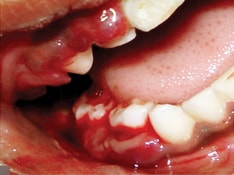
Dermatologic manifestations of riboflavin deficiency include cheilosis, or chapping and fissuring of the lips (see the image below); a sore, red tongue; and oily, scaly skin rashes on the scrotum, vulva, and philtrum. [17]
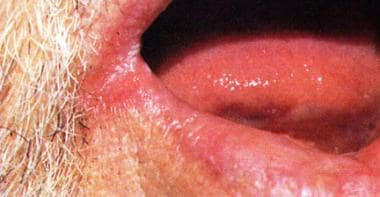 Riboflavin Deficiency. Riboflavin deficiency is often associated with cheilosis (chapping and fissuring of the lips).
See Cutaneous and Mucosal Clues to Nutritional Deficiencies, a Critical Images slideshow, to help identify clues to conditions associated with malnutrition.
Manifestations of riboflavin deficiency may also include the following:
-
Red, itchy eyes
-
Night blindness [18]
-
Cataracts
-
Migraines
-
Peripheral neuropathy
-
Anemia (secondary to interference with iron absorption)
-
Fatigue
-
Malignancy (esophageal and cervical dysplasia)
Deficiency can be associated with developmental abnormalities, such as the following:
-
Cleft lip and palate deformities (see the image below)
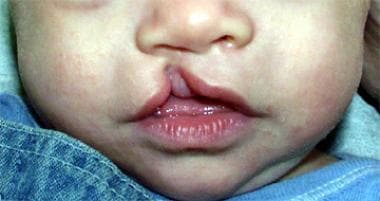 Riboflavin Deficiency. Riboflavin deficiency can be associated with various developmental abnormalities, including cleft lip.
-
Growth retardation in infants and children: Results from the National Birth Defects Prevention Study, which included an investigation of 324 infants with transverse limb deficiency (TLD), indicated that low maternal dietary intake of riboflavin is a risk factor for TLD [19]
-
Congenital heart defects: A study from the Netherlands indicated that a maternal diet that is high in saturated fats and low in riboflavin and nicotinamide may increase the risk for congenital heart defects [20]

Riboflavin transporter deficiency
Riboflavin transporter deficiency (Brown-Vialetto-Van Laere syndrome) is a rare autosomal recessive neurological disorder characterized by axial and appendicular weakness, sensory neuronopathy, gait ataxia, respiratory difficulties, bulbar palsy, hearing loss, optic atrophy, and facial weakness. If untreated, it can be fatal. [17]
Onset is usually in infancy or in childhood before age 8 years; however, on occasion individuals present in the third decade. [21] In the majority of affected individuals, the initial finding is hearing loss, which is usually progressive and severe. Other presenting symptoms included, weakness of limbs and neck, bulbar weakness leading to feeding difficulties, balance and gait problems, and respiratory complaints such as dyspnea or stridor. Visual and speech problems are reported less frequently. [21, 22, 23]
Genetic testing and counseling
At conception, each sibling of an affected individual has a 25% chance of being affected, a 50% chance of being an asymptomatic carrier, and a 25% chance of being unaffected. Genetic testing for at-risk relatives and prenatal testing for pregnancies at increased risk are possible if the SLC52A2 or SLC52A3 pathogenic variants in the family are known. [24]
Diagnosis
Measurement of red blood cell glutathione reductase activity may help in the detection of riboflavin deficiency. [25] An increase in the stimulation of this enzymatic reaction confirms a low level of riboflavin.
Riboflavin can cause false elevations of urinary catecholamines and false-positive urine urobilinogen reactions (Ehrlich test).
The diagnosis of riboflavin transporter deficiency is based on clinical, neurophysiologic, neuroimaging, and laboratory findings as well as the identification of pathogenic variants in either SLC52A2 or SLC52A3 on molecular genetic testing. [24]
Riboflavin Replenishment
Treatment of riboflavin deficiency consists of riboflavin replenishment, with care taken not to overlook coexisting B-complex deficiencies. Multivitamins have no documented role, because the physician must establish the presence of individual vitamin deficiencies and correct them appropriately. This prevents toxicities and masking of the clinical picture. [16, 26]
Except in malabsorption syndromes, riboflavin is readily absorbed from the upper GI tract. The extent of GI absorption is increased when the drug is administered with food and is decreased in patients with hepatitis, cirrhosis, and biliary obstruction.
Riboflavin is a water-soluble vitamin, is considered nontoxic, and has no known adverse effects. Riboflavin should be taken with food, because only about 15% is absorbed when taken alone on an empty stomach; excess riboflavin is excreted in urine, giving the urine a fluorescent yellow-green tint. [27]
Dosages of riboflavin for deficiency treatment are as follows:
-
Age < 3 years: not established
-
Age 3-12 years: 3-10 mg PO divided daily
-
Age >12 years: Administer as in adults (see below)
-
Adult dose: 6-30 mg PO divided daily for replacement when deficiency is suspected
The biologic half-life of riboflavin is about 66-84 minutes following oral or intramuscular administration of a single large dose in healthy individuals. Only about 9% of the drug is excreted unchanged. Excretion appears to involve renal tubular secretion as well as glomerular filtration. Amounts in excess of the body's needs are excreted in urine.
As a photosynthesizing agent, riboflavin is destroyed by light. A combination of light, oxygen, and riboflavin can lead to formation of free radicals and, consequently, cataracts; patients with cataracts are advised to take no more than 10 mg of riboflavin daily.
Females who have riboflavin transporter deficiency or are carriers of a pathogenic variant in SLC52A2 or SLC52A3 should have riboflavin supplements before and during pregnancy and when breast feeding to avoid inducing riboflavin deficiency in the baby. [24]
For patients with riboflavin transporter deficiency, high-dose oral supplementation of riboflavin between 10 mg and 50 mg/kg/day improves symptoms, objective testing (vital capacity, brain stem evoked potentials, nerve conduction studies), and normalizes acylcarnitine levels. The optimal dose is as yet unknown. Although some patients show improvement within days of riboflavin supplementation, others with more severe symptoms have a more gradual recovery over months. Because oral riboflavin supplementation has been shown to decrease mortality, it should begin as soon as a riboflavin transporter deficiency is suspected and be continued even in the absence of initial treatment response. [22]
Riboflavin treatment has been used extensively in the field of inborn errors of metabolism. It is an established therapy in multiple acyl-CoA dehydrogenation deficiency and riboflavin transporter deficiencies, with significant clinical improvement or stabilization in a majority of patients. [2] Numerous inborn errors of flavin metabolism and flavoenzyme function have been described, and supplementation with riboflavin has in many cases been shown to be lifesaving or to mitigate symptoms. [2]
Supportive care includes the following [24] :
-
Respiratory support
-
Physiotherapy to avoid contractures
-
Occupational therapy to support activities of daily living
-
Orthotics for limb and trunk bracing
-
Speech and language therapy to avoid choking and respiratory problems
-
Wheel chair as needed
-
Low vision aids as needed
-
Routine management of scoliosis to avoid long-term respiratory problems
-
Routine management of depression
At 3 months and 6 months after initiation of riboflavin supplementation, follow-up physical and neurologic examinations, and measurement of blood riboflavin/FAD/FMN and acylcarnitine analysis should be conducted. Thereafter, follow up should be biannual in older individuals and more frequent in younger children. [24]
-
Riboflavin Deficiency. Riboflavin deficiency is often associated with cheilosis (chapping and fissuring of the lips).
-
Riboflavin Deficiency. Riboflavin deficiency can be associated with various developmental abnormalities, including cleft lip.