Continually Updated Clinical Reference
 
 
  All Sources     eMedicine     Medscape     Drug Reference     MEDLINE
 
You are in: eMedicine Specialties > Medicine, Ob/Gyn, Psychiatry, and Surgery > Infectious Diseases

Babesiosis

Last Updated: August 14, 2006
Email to a Colleague
Synonyms and related keywords: babesiosis, tickborne infection, tick-borne infection, tick disease, tickborne illness, tick-borne illness, tick infection, malaria, Lyme disease, protozoan infection, Ixodidae, Babesia, Babesia microti, B microti, Babesia divergens, B divergens, Ixodes, Ixodes scapularis, I scapularis, Ixodes dammini, I dammini

  AUTHOR INFORMATION Section 1 of 11    Click here to go to the next section in this topic
Author Information Introduction Clinical Differentials Workup Treatment Medication Follow-up Miscellaneous Pictures Bibliography

Author: Burke A Cunha, MD, MACP, Professor of Medicine, State University of New York School of Medicine at Stony Brook; Chief, Infectious Disease Division, Winthrop-University Hospital

Coauthor(s): Barbara Barnett, MD, Associate Program Director, Assistant Professor, Departments of Internal Medicine and Emergency Medicine, Albert Einstein College of Medicine

Burke A Cunha, MD, MACP, is a member of the following medical societies: American College of Chest Physicians, American College of Physicians, and Infectious Diseases Society of America

Editor(s): Sat Sharma, MD, FRCPC, FACP, FCCP, DABSM, Program Director, Associate Professor, Department of Internal Medicine, Divisions of Pulmonary and Critical Care Medicine, University of Manitoba; Site Director of Respiratory Medicine, St Boniface General Hospital; Francisco Talavera, PharmD, PhD, Senior Pharmacy Editor, eMedicine; Om Prakash Sharma, MD, Professor, Department of Medicine, Division of Pulmonary and Critical Care Medicine, University of Southern California; Eleftherios Mylonakis, MD, PhD, Assistant Professor of Medicine, Harvard Medical School, Assistant in Medicine, Division of Infectious Disease, Massachusetts General Hospital; and Michael E Zevitz, MD, Assistant Professor of Medicine, Finch University of the Health Sciences, The Chicago Medical School; Consulting Staff, Private Practice

Disclosure


  INTRODUCTION Section 2 of 11   Click here to go to the previous section in this topic Click here to go to the top of this page Click here to go to the next section in this topic
Author Information Introduction Clinical Differentials Workup Treatment Medication Follow-up Miscellaneous Pictures Bibliography

Background: Babesiosis is a tick-borne malarialike illness caused by species of the intraerythrocytic protozoan Babesia. Humans are opportunistic hosts for Babesia when bitten by nymph or adult ticks. Babesiosis is named for Victor Babes, who first identified the RBC protozoan in 1888. Babes noticed intraerythrocytic protozoa in cattle with febrile hemoglobinuria. In 1893, Smith and Kilbourne discovered that the protozoa was transmitted by ticks and was the cause of Texas cattle fever. In 1957, the first human case of babesiosis, in a Yugoslavian cattle farmer, was described. In the United States, the first case was reported from Nantucket, Massachusetts in 1969.

Currently, Babesia infection transmitted by various tick vectors occurs in Europe, Asia, and the northwestern and northeastern United States.

The primary Babesia species infecting cattle are Babesia divergens, Babesia bigemina, Babesia bovis, and Babesia major. In horses, the main species of Babesia is Babesia equi. Babesia canis is the primary species in dogs, and Babesia felis is the main species in cats. Babesia microti is the species found in mice.

Pathophysiology: The clinical signs and symptoms of babesiosis are related to the parasitism of RBCs by Babesia. Fever, hemolytic anemia, and hemoglobinuria may result from Babesia infection. As with malaria, capillary blockage/microvascular stasis may occur as a result of RBC fragments, which explains liver, splenic, renal, and central nervous system (CNS) involvement. With malaria, cells of the reticuloendothelial system (RES) in the spleen remove damaged RBC fragments from the circulation. RBC destruction results in hemolytic anemia.

Babesiosis elicits a B-lymphocyte response and a T-lymphocyte response. As with malaria, a T-cell–mediated cellular immunity is the primary immune response, and a secondary reactive polyclonal hypergammaglobulinemia occurs because of excessive B-lymphocyte reactivity.

Frequency:

  • In the US: Babesiosis is frequent in endemic areas of the northeastern and northwestern United States, particularly Long Island, New York, and Nantucket and Martha's Vineyard, Massachusetts.
  • Internationally: Babesiosis occurs in areas of Europe and Asia, where the tick vector and vertebrate host reside.

Mortality/Morbidity:

  • Babesiosis in otherwise healthy hosts produces an acute infectious disease resembling malaria. Fatalities are uncommon in patients with normal splenic function.
  • Patients who are asplenic have a more fulminant and prolonged clinical course and may have overwhelming infection and a fatal outcome.

Race:

  • No race predilection exists.

Sex:

  • No sex predilection exists.

Age:

  • Persons of any age can be affected.


  CLINICAL Section 3 of 11   Click here to go to the previous section in this topic Click here to go to the top of this page Click here to go to the next section in this topic
Author Information Introduction Clinical Differentials Workup Treatment Medication Follow-up Miscellaneous Pictures Bibliography

History: History is that of fever and chills. Patients with babesiosis have symptoms similar to those of malaria. Symptoms are related to the degree of RBC parasitemia.

Physical: Most patients with babesiosis have few, if any, physical findings. A minority of patients have jaundice and splenomegaly.

Causes:

  • Babesia may be transmitted in utero.
  • Those who are in contact with nymphs or adult Ixodidae ticks are at risk for acquiring babesiosis.
  • Large populations of field mice and white-tailed deer are likely to support a large Ixodidae tick population, which perpetuates areas endemic for babesiosis.
  • Babesiosis is caused by Babesia, and the main species in the United States is B microti. B divergens is the main species in Europe.
  • Other Babesia species, B divergens and B bovis, occasionally may cause diseases in humans. B divergens and B bovis are the Babesia species in cattle. Another strain, WA-1, has been implicated in human babesiosis on the west coast of the United States.
  • Babesiosis is a zoonosis that requires Babesia to be present in vertebrate vectors in white-tailed deer, white-footed mouse, and Ixodes ticks.
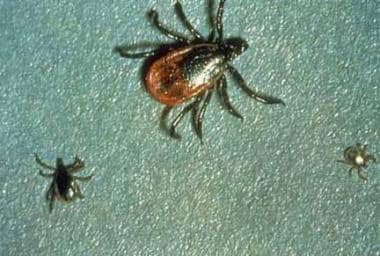
    • The main tick vector of babesiosis is Ixodes scapularis or Ixodes dammini. Ixodes ticks are small and differ from the large Dermacentor ticks that transmit Rocky Mountain spotted fever (RMSF) and ehrlichiosis.
    • The white-footed mouse is the primary enzootic reservoir. After feeding on infected white-footed mice, the tick larvae become infected with B microti. The tick larvae are maintained as the tick develops from the larval phase to the nymphal phase. Nymphs infected with B microti may transmit the Babesia organisms to other mice or rodents or to a human host.
    • Adult Ixodes tick populations are maintained in white-tailed deer. Larvae, nymphs, and adult ticks all may infect humans, but the nymph is the primary vector of B microti infection in humans.
    • The I scapularis life cycle requires 2 years for completion, beginning from egg deposition in the spring. Larvae take 1 year, until the next spring, to develop to the nymph stage. Nymphs feed for 3-4 days on white-footed mice or rodents and develop into adults the following fall. Adults mate and feed on white-tailed deer during the spring; the adults then deposit their eggs and die. The white-footed mouse is necessary to perpetuate the Babesia organisms, and the deer is needed to perpetuate the Ixodes tick population.
    • Humans acquire babesiosis when in close proximity to large populations of white-footed mice infected with Babesia and white-tailed deer infested with I scapularis or I dammini ticks.
  • Babesiosis may also be transmitted via blood transfusions.
  DIFFERENTIALS Section 4 of 11   Click here to go to the previous section in this topic Click here to go to the top of this page Click here to go to the next section in this topic
Author Information Introduction Clinical Differentials Workup Treatment Medication Follow-up Miscellaneous Pictures Bibliography

Ehrlichiosis
Lyme Disease
Malaria
Rocky Mountain Spotted Fever
Typhoid Fever


Other Problems to be Considered:

Patients with babesiosis usually present with an undifferentiated acute febrile illness that resembles malaria. Patients who previously had non–Plasmodium falciparum malaria may be experiencing a relapse of their previous malarial infection. A relapse of their malaria may be diagnosed based on prior exposure or infection as many as 40 years previously with a nonfalciparum malaria. Diagnosis is based on demonstrated plasmodia in properly prepared Giemsa-stained or Wright-stained thick or thin blood smears. Patients with recrudescent malaria may have low levels of parasitemia and usually have increased malaria immunoglobulin G (IgG) malaria titers.

Patients presenting with a malarialike illness always should be questioned regarding potential for previous exposure to malaria.

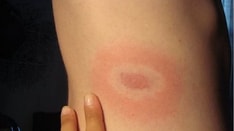
Patients also should be questioned about a previous history of Lyme disease. Although the signs and symptoms of Lyme disease are different from those of babesiosis, the Ixodidae tick vector of Lyme disease also may transmit Babesia organisms. Co-infections of Lyme disease and babesiosis are uncommon but can occur.

Ehrlichiosis (ie, "spotless" RMSF) also presents as an acute febrile infection that resembles RMSF. Because of different tick vectors, patients with ehrlichiosis are unlikely to be co-infected with either Lyme disease or babesiosis.

Increased Ehrlichia titers with an IgG antibody titer equal to or greater than 1:64 or a 4-fold or greater change in antibody titers by immunofluorescent antibody (IFA) testing is diagnostic of ehrlichiosis.

Patients with ehrlichiosis often have leukopenia, anemia, and thrombocytopenia. The erythrocyte sedimentation rate (ESR) is minimally elevated in ehrlichiosis. Serum transaminases may be mildly increased in ehrlichiosis, as with babesiosis, typhoid fever, or RMSF.

Typhoid fever, RMSF, and Lyme disease may be differentiated from babesiosis, ehrlichiosis, and malaria based on the presence or absence of hemolytic anemia. Hemolytic anemia is not a feature of typhoid fever, RMSF, or Lyme disease.

Except for Lyme disease and typhoid fever, all of these infectious diseases present with thrombocytopenia. Leukopenia is a common finding in typhoid fever, RMSF, babesiosis, and ehrlichiosis but is not a characteristic finding in Lyme disease.

Splenomegaly may be present in patients with typhoid fever, malaria, babesiosis, ehrlichiosis, and RMSF but is not a feature of Lyme disease.

Arthropod-borne viral infections may be confused with babesiosis. However, arboviral illnesses are characterized by the extreme rapidity of onset and clinical severity, which is not the case in babesiosis unless the spleen is absent.

Relative bradycardia is a cardinal finding in many infectious diseases. Many arboviral infections (eg, yellow fever, dengue fever, African hemorrhagic fever [Ebola]) are characterized by relative bradycardia. Relative bradycardia is a common finding in patients with malaria, RMSF, and babesiosis. Relative bradycardia is not a feature of Lyme disease.

Rarely, typhoidal Epstein-Barr virus (EBV) infections, mononucleosis, or typhoidal tularemia may be confused with babesiosis. EBV-specific antibody testing and tube agglutination testing for tularemia help exclude these diagnostic possibilities if they are considered in the differential diagnosis.

Typhoid fever is suggested by a severe headache and apathetic faces with few, if any, localizing signs. Splenomegaly may be present later in the course of the illness. A normal or slightly decreased peripheral WBC count is the characteristic hematologic finding in typhoid fever. The presence of eosinophilia or thrombocytopenia suggests an alternate diagnosis. Typhoid fever may be diagnosed by staining or culturing the organism in RES tissues or body fluid, ie, blood, urine, or feces.

Typhoid fever may resemble babesiosis and its clinical presentation. As with babesiosis, no physical signs usually are present in patients with typhoid fever. Patients with typhoid fever often present with constipation rather than diarrhea, which may be helpful because neither constipation nor diarrhea is a feature of babesiosis.

Headache is a prominent feature of malaria and typhoid fever but is less prominent with babesiosis and ehrlichiosis and is mild if present in Lyme disease.

Human monocytic ehrlichiosis (HME), human granulocytic anaplasmosis (HGA), and human granulocytic ehrlichiosis (HGE) may be diagnosed serologically in patients with a nonspecific febrile illness in endemic areas. The diagnosis may also be made based on Wright stain on peripheral blood smears or buffy-coat preparations that demonstrate regularly stained cytoplasmic inclusions in monocytes or, less commonly, lymphocytes, which are mulberry-shaped and are called morulae. Morulae are seen more frequently in HME than in HGE.

Babesiosis rarely affects the lungs. However, patients with babesiosis may develop noncardiogenic pulmonary edema, which may resemble pneumonia on chest radiograph.

Quick Find
Author Information
Introduction
Clinical
Differentials
Workup
Treatment
Medication
Follow-up
Miscellaneous
Pictures
Bibliography

Click for related images.

Related Articles
Ehrlichiosis

Lyme Disease

Malaria

Rocky Mountain Spotted Fever

Typhoid Fever


Patient Education


  WORKUP Section 5 of 11   Click here to go to the previous section in this topic Click here to go to the top of this page Click here to go to the next section in this topic
Author Information Introduction Clinical Differentials Workup Treatment Medication Follow-up Miscellaneous Pictures Bibliography

Lab Studies:

  • Patients from areas endemic for babesiosis who present with a malarialike illness should have a workup for babesiosis with the following direct and indirect tests.
  • Lactate dehydrogenase (LDH) and a properly stained peripheral blood smear offer results that are that most important for suspecting babesiosis in a patient with a malarialike illness. Quantitatively stained buffy-coat smears concentrate WBCs and increase the likelihood of demonstrating Babesia in the peripheral blood. As with malaria, multiple peripheral-stained thin smears or stained buffy-coat preparations may be necessary to detect low levels of Babesia parasitemia.
    • Wright or Giemsa stain on thin blood smears reveals the ring forms of babesiosis. The ability to identify babesiosis depends on the expertise and experience of the microbiologist or physician and the degree of parasitemia.
    • Most patients with intact splenic function who are mildly to moderately ill with babesiosis have 10% or less of parasitemia in their peripheral blood.
    • Patients with asplenia usually have greater degrees of parasitemia.
    • Patients with Babesia infection, in addition to having intraerythrocytic ring forms, also may demonstrate merozoites arranged in a tetrad configuration that resembles a Maltese cross.
    • Tetrad forms are pathognomonic of babesiosis. Babesiosis may be differentiated from malaria by the absence of pigment hemozoin, which is not present in babesiosis.
  • Complete blood cell count and erythrocyte sedimentation rate
    • A CBC count should be obtained to look for the presence of hemolytic anemia, Howell-Jolly bodies indicative of splenic dysfunction, leukopenia, lymphopenia, thrombocytopenia, and an elevated erythrocyte sedimentation rate.
    • Hemolytic anemia, lymphopenia, and thrombocytopenia are the typical findings in babesiosis.
    • Atypical lymphocytes may be present, as they are in malaria, and the number of atypical lymphocytes is not related to the degree of parasitemia or the severity of illness.

    • As with malaria, the diagnosis of babesiosis should be questioned if the serum LDH level is not increased. Increased LDH levels reflect the degree of parasitemia/severity of Babesia.
  • Serum protein electrophoresis (SPEP): This test should be obtained, and results usually show a polyclonal gammopathy indicative of B-lymphocyte hyperreactivity SPEP (polyclonal gammopathy) in response to T-lymphocyte suppression by Babesia.
  • Liver function tests
    • LFTs should be obtained to look for elevated transaminase levels, an elevated alkaline phosphatase level, hyperbilirubinemia, and a decreased haptoglobin level. These abnormalities are variably present in patients with babesiosis.
    • Obviously, the total bilirubin and haptoglobin values are reflective of the intensity of the infection. Increased serum transaminase levels usually are mildly and transiently elevated. A decreased haptoglobin level suggests a significant degree of intravascular hemolysis.
  • Urinalysis
    • Urinalysis should be obtained to check for hemoglobinuria.

    • The degree of hemoglobinuria is related to the intensity of the Babesia infection.
  • Serology
    • Immunoglobulin M (IgM) or IgG IFA B microti titers may be ordered in patients thought to have babesiosis who have negative findings on peripheral smears, eg, low levels of parasitemia.

    • A single IgM IFA titer of 1:64 or greater is diagnostic of babesiosis. Increased IgG IFA Babesia titers indicate past exposure rather than current infection.

    • Serum creatinine measurements should be obtained to assess potential renal insufficiency. Care must be taken to consider other causes of an increased serum creatinine before ascribing these changes to Babesia infection.
  • Polymerase chain reaction: This test may be used to help diagnose recrudescent Babesia infection in patients who have previously had babesiosis or in those whose treatment is of questionable effectiveness.
  TREATMENT Section 6 of 11   Click here to go to the previous section in this topic Click here to go to the top of this page Click here to go to the next section in this topic
Author Information Introduction Clinical Differentials Workup Treatment Medication Follow-up Miscellaneous Pictures Bibliography

Medical Care: Patients with severe babesiosis need to be hospitalized. In addition to receiving anti-Babesia treatment, they may require supportive care.

Consultations:

  • Anyone with a zoonotic infectious disease or malarialike illness should have the benefit of a consultation with an infectious disease specialist.
  • Consultation with a nephrologist is advisable in patients with renal insufficiency due to babesiosis or renal insufficiency superimposed on preexisting renal disease.
  • Consultation with a hematologist should be obtained in patients with severe hemolysis.

  MEDICATION Section 7 of 11   Click here to go to the previous section in this topic Click here to go to the top of this page Click here to go to the next section in this topic
Author Information Introduction Clinical Differentials Workup Treatment Medication Follow-up Miscellaneous Pictures Bibliography

The goals of pharmacotherapy are to reduce morbidity, prevent complications, and eradicate the infection.

Drug Category: Antibiotics -- Empiric antimicrobial therapy must be comprehensive and should cover all likely pathogens in the context of the clinical setting.
Drug Name
Clindamycin (Cleocin) plus quinine (Formula Q) -- Anti-Babesia agents. Quinine inhibits growth of parasite by increasing the pH within intracellular organelles and possibly by intercalating into DNA of the parasites. Quinine alone is ineffective, and clindamycin must be used in conjunction.
Clindamycin is a lincosamide for treatment of serious skin and soft-tissue staphylococcal infections. Also effective against aerobic and anaerobic streptococci (except enterococci). Inhibits bacterial growth, possibly by blocking dissociation of peptidyl t-RNA from ribosomes, causing RNA-dependent protein synthesis to arrest.
Adult DoseClindamycin: 600 mg PO q8h for 7 d
Quinine: 650 mg PO q8h for 7 d
Pediatric DoseClindamycin: 20 mg/kg/d PO divided tid for 7 d
Quinine: 25 mg/kg/d PO divided tid for 7 d
ContraindicationsDocumented hypersensitivity; optic neuritis, tinnitus, black water fever; regional enteritis, ulcerative colitis, hepatic impairment, antibiotic-associated colitis
InteractionsAluminum-containing antacids may delay or decrease quinine bioavailability when administered concurrently; cimetidine increases quinine blood levels and creates potential for toxicity; rifamycins decrease quinine concentrations by increasing hepatic clearance of quinine (effect can persist for several days after discontinuing rifamycins); concurrent administration of acetazolamide or sodium bicarbonate may increase toxicity by increasing quinine blood levels; quinine may enhance action of warfarin and other oral anticoagulants by decreasing synthesis of vitamin K–dependent clotting factors; digoxin serum concentrations may increase when digoxin administered concurrently with quinine; important to monitor digoxin levels periodically; quinidine may decrease plasma cholinesterase activity, causing a decrease in the metabolism of succinylcholine
Clindamycin increases duration of neuromuscular blockade induced by tubocurarine and pancuronium; erythromycin may antagonize effects of clindamycin; antidiarrheals may delay absorption of clindamycin
Pregnancy X - Contraindicated in pregnancy
PrecautionsCaution in G-6-PD deficiency and tendency to develop granulocytopenia; prolonged treatment or overdosing with quinine may cause cinchonism; quinine has quinidinelike activity and, thus, can cause cardiac arrhythmias; adjust dose in severe hepatic dysfunction; no adjustment necessary in renal insufficiency; associated with severe and possibly fatal colitis
Drug Name
Atovaquone (Mepron) plus azithromycin (Zithromax) -- Preferred regimens for severe babesiosis. Exchange transfusion may be considered in severe cases of babesiosis not responding to any Babesia therapy.
Atovaquone may inhibit metabolic enzymes, which, in turn, inhibits growth of microorganisms. Atovaquone should not be used alone. Resistance may develop; always use in conjunction with another anti-Babesia agent, preferably azithromycin.
Adult DoseAtovaquone: 750 mg PO suspension q12h
Azithromycin: 500 mg/d PO day 1, then 250 mg/d days 2-5
Pediatric DoseAtovaquone
11-20 kg: 250 mg PO q12h
21-30 kg: 500 mg PO q12h
31-40 kg: 750 mg PO q12h
>40 kg: 1 g PO q12h
Azithromycin: 10 mg/kg PO on day 1, then 5 mg/kg on days 2-5
ContraindicationsDocumented hypersensitivity
InteractionsAtovaquone may increase zidovudine serum levels; coadministration with rifamycin and TMP-SMZ may decrease atovaquone levels; 40% decrease in plasma concentration of atovaquone when coadministered with tetracycline; metoclopramide decreases serum concentration of atovaquone
Azithromycin may increase toxicity of theophylline, warfarin, and digoxin; effects are reduced with coadministration of aluminum and/or magnesium antacids; nephrotoxicity and neurotoxicity may occur when coadministered with cyclosporine; not to be administered with pimozide
Pregnancy C - Safety for use during pregnancy has not been established.
PrecautionsCaution in elderly persons and persons with hepatic and renal impairment; may increase hepatic enzymes and cholestatic jaundice; site reactions can occur with IV azithromycin route; bacterial or fungal overgrowth may result with prolonged antibiotic use; caution with prolonged QT interval, pneumonia, or patients who are hospitalized, elderly, or debilitated
Drug Name
Azithromycin (Zithromax) -- Inhibits bacterial growth, possibly by blocking dissociation of peptidyl t-RNA from ribosomes, causing RNA-dependent protein synthesis to arrest.
Adult Dose500 mg/d IV, at least 2 d
Pediatric Dose10 mg/kg
PO day 1; 5 mg/kg days 2-5
ContraindicationsDocumented hypersensitivity; hepatic impairment; administration with pimozide
InteractionsMay cause QT prolongation with itraconazole, sparfloxacin, and other medications (probably very rare); may increase toxicity of theophylline, warfarin, and digoxin; effects are reduced with coadministration of aluminum and/or magnesium antacids; nephrotoxicity and neurotoxicity may occur when coadministered with cyclosporine
Pregnancy B - Usually safe but benefits must outweigh the risks.
PrecautionsSite reactions can occur with IV route; bacterial or fungal overgrowth may result with prolonged antibiotic use; may increase hepatic enzymes and cholestatic jaundice; caution in patients with impaired hepatic function or prolonged QT intervals; caution in patients who are hospitalized, elderly, or debilitated
  FOLLOW-UP Section 8 of 11   Click here to go to the previous section in this topic Click here to go to the top of this page Click here to go to the next section in this topic
Author Information Introduction Clinical Differentials Workup Treatment Medication Follow-up Miscellaneous Pictures Bibliography

Further Inpatient Care:

Further Outpatient Care:

In/Out Patient Meds:

Deterrence/Prevention:

Complications:

Prognosis:

Patient Education:

  MISCELLANEOUS Section 9 of 11   Click here to go to the previous section in this topic Click here to go to the top of this page Click here to go to the next section in this topic
Author Information Introduction Clinical Differentials Workup Treatment Medication Follow-up Miscellaneous Pictures Bibliography

Medical/Legal Pitfalls:

  • Lyme disease occasionally may co-infect patients with babesiosis because both are transmitted by the I scapularis or I dammini tick.
  • Co-infection with RMSF or ehrlichiosis is rare because these zoonoses are transmitted by the large Dermacentor ticks rather than by the small Ixodes ticks.
  • While babesiosis should be considered in patients with a malarialike illness in endemic areas, babesiosis is a difficult infectious disease to diagnose. Although the index of suspicion should be high in areas endemic for Babesia, patients with babesiosis have few, if any, localizing signs to suggest the disease. Confirmation of the diagnosis depends on the degree of parasitemia and the expertise and experience of the laboratory personnel. All of the findings in babesiosis are nonspecific, and only the demonstration of Babesia in the peripheral smear can rapidly confirm the diagnosis.

Special Concerns:

  • Patients with asplenia should take particular care to avoid tick-infested areas.
  • Patients with congenital or acquired asplenia should be expected to have severe/fulminant babesiosis.
  PICTURES Section 10 of 11   Click here to go to the previous section in this topic Click here to go to the top of this page Click here to go to the next section in this topic
Author Information Introduction Clinical Differentials Workup Treatment Medication Follow-up Miscellaneous Pictures Bibliography

Caption: Picture 1. Peripheral smear showing babesiosis.
Click to see larger pictureClick to see detailView Full Size Image
Picture Type: Photo
  BIBLIOGRAPHY Section 11 of 11   Click here to go to the previous section in this topic Click here to go to the top of this page
Author Information Introduction Clinical Differentials Workup Treatment Medication Follow-up Miscellaneous Pictures Bibliography

  • Bakken JS, Dumler JS: Ehrlichiosis. In: Cunha BA, ed. Tickborne Infectious Diseases. New York, NY: Marcel Dekker; 2000: 139-68.
  • Benach JL, Habicht GS, Hamburger MI: Immunoresponsiveness in acute babesiosis in humans. J Infect Dis 1982 Sep; 146(3): 369-80[Medline].
  • Bonoan JT, Cunha BA: Babesiosis. Emerg Med 1997; 26: 104.
  • Bonoan JT, Johnson DH, Cunha BA: Life-threatening babesiosis in an asplenic patient treated with exchange transfusion, azithromycin, and atovaquone. Heart Lung 1998 Nov-Dec; 27(6): 424-8[Medline].
  • Boustani MR, Gelfand JA: Babesiosis. Clin Infect Dis 1996 Apr; 22(4): 611-5[Medline].
  • Boustani MR, Lepore TJ, Gelfand JA, Lazarus DS: Acute respiratory failure in patients treated for babesiosis. Am J Respir Crit Care Med 1994 Jun; 149(6): 1689-91[Medline].
  • Boustani MR, Lepore TJ, Gelfand JA: Acute respiratory failure in patients treated for babesiosis. Am J Respir Crit Care Med 1994 Jun; 149(6): 1689-91[Medline].
  • Byrd RP Jr, Vasquez J, Roy TM: Respiratory manifestations of tick-borne diseases in the Southeastern United States. South Med J 1997 Jan; 90(1): 1-4[Medline].
  • Cunha BA: Antibiotic Essentials. Royal Oak, Mich: Physicians Press; 2006.
  • Dobroszycki J, Herwaldt BL, Boctor F: A cluster of transfusion-associated babesiosis cases traced to a single asymptomatic donor. JAMA 1999 Mar 10; 281(10): 927-30[Medline].
  • Falagas ME, Klempner MS: Babesiosis in patients with AIDS: a chronic infection presenting as fever of unknown origin. Clin Infect Dis 1996 May; 22(5): 809-12[Medline].
  • Feldman RM, Singer C: Noncardiogenic pulmonary edema and pulmonary fibrosis in falciparum malaria. Rev Infect Dis 1987 Jan-Feb; 9(1): 134-9[Medline].
  • Gerber MA, Shapiro ED, Krause PJ: The risk of acquiring Lyme disease or babesiosis from a blood transfusion. J Infect Dis 1994 Jul; 170(1): 231-4[Medline].
  • Gordon S, Cordon RA, Mazdzer EJ: Adult respiratory distress syndrome in babesiosis. Chest 1984 Oct; 86(4): 633-4[Medline].
  • Gorenflot A, Moubri K, Precigout E: Human babesiosis. Ann Trop Med Parasitol 1998 Jun; 92(4): 489-501[Medline].
  • Healy GR, Ruebush TK 2d: Morphology of Babesia microti in human blood smears. Am J Clin Pathol 1980 Jan; 73(1): 107-9[Medline].
  • Horowitz ML, Coletta F, Fein AM: Delayed onset adult respiratory distress syndrome in babesiosis. Chest 1994 Oct; 106(4): 1299-301[Medline].
  • Hughes WT, Oz HS: Successful prevention and treatment of babesiosis with atovaquone. J Infect Dis 1995 Oct; 172(4): 1042-6[Medline].
  • Jacoby GA, Hunt JV, Kosinski KS: Treatment of transfusion-transmitted babesiosis by exchange transfusion. N Engl J Med 1980 Nov 6; 303(19): 1098-100[Medline].
  • Kim N, Rosenbaum GS, Cunha BA: Relative bradycardia and lymphopenia in patients with babesiosis. Clin Infect Dis 1998 May; 26(5): 1218-9[Medline].
  • Krause PJ, Ryan R, Telford S 3rd: Efficacy of immunoglobulin M serodiagnostic test for rapid diagnosis of acute babesiosis. J Clin Microbiol 1996 Aug; 34(8): 2014-6[Medline].
  • Krause PJ, Telford SR 3rd, Ryan R: Diagnosis of babesiosis: evaluation of a serologic test for the detection of Babesia microti antibody. J Infect Dis 1994 Apr; 169(4): 923-6[Medline].
  • Leiby DA: Babesiosis and blood transfusion: flying under the radar. Vox Sang 2006 Apr; 90(3): 157-65[Medline].
  • Lermi A, Cunha BA: Babesiosis. Infect Dis Pract 1998; 22: 12-4.
  • Loa CC, Adelson ME, Mordechai E, et al: Serological diagnosis of human babesiosis by IgG enzyme-linked immunosorbent assay. Curr Microbiol 2004 Dec; 49(6): 385-9[Medline].
  • Mattia AR, Waldron MA, Sierra LS: Use of the Quantitative Buffy Coat system for detection of parasitemia in patients with babesiosis. J Clin Microbiol 1993 Oct; 31(10): 2816-8[Medline].
  • Mintz ED, Anderson JF, Cable RG: Transfusion-transmitted babesiosis: a case report from a new endemic area. Transfusion 1991 May; 31(4): 365-8[Medline].
  • Parola P, Raoult D: Ticks and tickborne bacterial diseases in humans: an emerging infectious threat. Clin Infect Dis 2001 Mar 15; 32(6): 897-928[Medline].
  • Persing DH, Mathiesen D, Marshall WF: Detection of Babesia microti by polymerase chain reaction. J Clin Microbiol 1992 Aug; 30(8): 2097-103[Medline].
  • Poirel L, Marque S, Heritier C, et al: OXA-58, a novel class D {beta}-lactamase involved in resistance to carbapenems in Acinetobacter baumannii. Antimicrob Agents Chemother 2005 Jan; 49(1): 202-8[Medline].
  • Raoult D, Soulayrol L, Toga B: Babesiosis, pentamidine, and cotrimoxazole. Ann Intern Med 1987 Dec; 107(6): 944[Medline].
  • Rosenbaum GS, Johnson DH, Cunha BA: Atypical lymphocytosis in babesiosis. Clin Infect Dis 1995 Jan; 20(1): 203-4[Medline].
  • Shaio MF, Yang KD: Response of babesiosis to a combined regimen of quinine and azithromycin. Trans R Soc Trop Med Hyg 1997 Mar-Apr; 91(2): 214-5[Medline].
  • Sharan KP, Krause PJ: Babesiosis. In: Cunha BA, ed. Tickborne Infectious Diseases. New York, NY: Marcel Dekker; 2000: 111-20.
  • Shih CM, Wang CC: Ability of azithromycin in combination with quinine for the elimination of babesial infection in humans. Am J Trop Med Hyg 1998 Oct; 59(4): 509-12[Medline].
  • Sun T, Chess Q, Tanenbaum B: Morphologic criteria for the identification of Pneumocystis carinii in Papanicolaou-stained preparations. Acta Cytol 1986 Jan-Feb; 30(1): 80-2[Medline].
  • Wittner M, Rowin KS, Tanowitz HB: Successful chemotherapy of transfusion babesiosis. Ann Intern Med 1982 May; 96(5): 601-4[Medline].

Babesiosis excerpt