Continually Updated Clinical Reference
 
 
  All Sources     eMedicine     Medscape     Drug Reference     MEDLINE
 
eMedicine - Prostate Hyperplasia, Benign : Article by

Quick Find
Authors & Editors
Introduction
Clinical
Differentials
Workup
Treatment
Medication
Follow-up
Miscellaneous
Multimedia
References

Related Articles
Bladder Cancer

Bladder Stones

Bladder Trauma

Chronic Pelvic Pain

Interstitial Cystitis

Neurogenic Bladder

Prostatitis, Bacterial

Prostatitis, Tuberculous

Radiation Cystitis

Urethral Strictures

Urinary Tract Infection, Males


Patient Education
Prostate Health Center

Kidneys and Urinary System Center

Enlarged Prostate Overview

Enlarged Prostate Causes

Enlarged Prostate Symptoms

Enlarged Prostate Treatment

Bladder Control Problems Overview


Author: Raymond J Leveillee, MD, Associate Professor, Department of Urology, University of Miami, Miller School of Medicine; Chief, Division of Endourology/Laparoscopy and Minimally Invasive Surgery, Department of Urology, Jackson Memorial Hospital

Raymond J Leveillee is a member of the following medical societies: American Urological Association, Endourological Society, Sigma Xi, and Society of Laparoendoscopic Surgeons

Coauthor(s): Vipul R Patel, MD, Associate Professor of Urology, Director of Minimally Invasive Surgery Robotics, Department of Surgery, The Ohio State University/St Vincent's Hospital; Vincent G Bird, MD, Assistant Professor of Clinical Urology, University of Miami, Miller School of Medicine; Consulting Staff, Department of Urology, Division of Endourology/Laparoscopy and Minimally Invasive Surgery, University of Miami Miller School of Medicine/Jackson Memorial Hospital

Editors: Edward David Kim, MD, FACS, Professor of Surgery, Division of Urology, University of Tennessee Graduate School of Medicine; Consulting Staff, University of Tennessee Medical Center; Francisco Talavera, PharmD, PhD, Senior Pharmacy Editor, eMedicine; Martin I Resnick, MD †, Former Lester Persky Professor and Chair, Department of Urology, Former Professor, Department of Oncology, Case Western Reserve University School of Medicine; J Stuart Wolf, Jr, MD, FACS, David A Bloom Professor of Urology, Director, Division of Minimally Invasive Urology, Department of Urology, University of Michigan Medical Center; Stephen W Leslie, MD, FACS, Founder and Medical Director of the Lorain Kidney Stone Research Center, Clinical Assistant Professor, Department of Urology, Medical College of Ohio

Author and Editor Disclosure

Synonyms and related keywords: benign prostatic hyperplasia, BPH, prostatism, prostatic hypertrophy, enlarged prostate, bladder outlet obstruction, BOO, testosterone, dihydrotestosterone, DHT, obstruction-induced bladder dysfunction, acute urinary retention, AUR, frequent urination, nocturia, nycturia, lower urinary tract symptoms, LUTS, prostatectomy, transurethral resection of the prostate, TURP, transurethral incision of the prostate, TUIP, transurethral microwave therapy, TUMT, transurethral needle ablation of the prostate, TUNA, water-induced thermotherapy, WIT, digital rectal examination, DRE, prostate-specific antigen, PSA

Background

Benign prostatic hyperplasia (BPH) is a noncancerous enlargement of the prostate gland that may restrict the flow of urine from the bladder.

BPH is a proliferative process of the cellular elements of the prostate (ie, an enlarged prostate). Cellular accumulation and gland enlargement may be due to epithelial and stromal proliferation, impaired preprogrammed cell death (apoptosis), or both. More recently, the voiding dysfunction that ensues from prostate gland enlargement and bladder outlet obstruction (BOO) has been generically termed lower urinary tract symptoms (LUTS). It has also been commonly referred to as prostatism, although this term has decreased in popularity. These entities overlap; not all men with BPH have LUTS, and, likewise, not all men with LUTS have BPH. The same can be said for BOO.

BPH involves both the stromal and epithelial elements of the prostate arising in the periurethral and transition zones of the gland; the condition is considered a normal part of the aging process in men and is hormonally dependent on testosterone and dihydrotestosterone (DHT) production. An estimated 50% of men demonstrate histopathologic BPH by age 60 years. This number increases to 90% by age 85 years; thus, increasing gland size is considered a normal part of the aging process.

Approximately half of those diagnosed with histopathologic BPH demonstrate moderate-to-severe LUTS. Clinical manifestations of LUTS include urinary frequency, urgency, nocturia (getting up at night during sleep to urinate), decreased or intermittent force of stream, or a sensation of incomplete emptying. Complications occur less commonly but may include acute urinary retention, impaired bladder emptying, or the need for surgery.

Prostate volume may increase over time in men with BPH. In addition, peak urinary flow, voided volume, and symptoms may worsen over time in men with untreated BPH. The risk of acute urinary retention and the likelihood that BPH-related surgery is necessary increase with age.

Pathophysiology

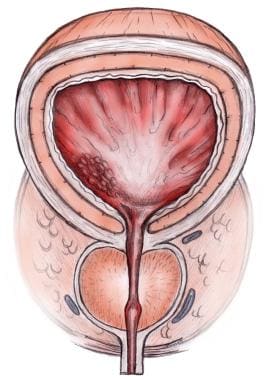
The prostate is a walnut-sized gland that forms part of the male reproductive system. The gland is composed of several regions or lobes that are enclosed by an outer layer of tissue (capsule). The different zones include the peripheral, central, anterior fibromuscular stroma, and transition. BPH originates in the transition zone, which surrounds the urethra. Microscopically, BPH is characterized as a hyperplastic process. The number of cells in the gland increases with age. As the gland enlarges, it may cause increased resistance to urine flow through the urethra over time, resulting in clinical manifestations of BPH. The prostate enlarges with age in a hormonally dependent manner. Castrated males do not develop BPH.

The prostate is located in front of the rectum and just below the urinary bladder. It can be examined or felt by inserting a gloved finger into the rectum. Only the posterior superficial surface of the gland can be examined this way. For a short distance, the prostate surrounds the urethra, the tube that carries urine from the bladder to the outside of the body.

Its main function is primarily secretory; it produces alkaline fluid that comprises approximately 70% of the seminal volume. It is a conduit for semen to pass, and it prevents retrograde ejaculation (ejaculation resulting in semen being forced backwards into the bladder) by closing off the bladder neck during sexual climax. The fluid (semen) helps to neutralize the acidic vaginal environment and provides carbohydrates and nutrients for the sperm. Ejaculation involves a coordinated contraction of many different components, including the smooth muscles of the seminal vesicles, vasa deferentia, ejaculatory ducts, and the ischiocavernosus and bulbocavernosus muscles.

The traditional theory is that as the prostate enlarges, the surrounding capsule prevents it from readily expanding, and this subsequently results in urethral compression. The notion that clinical symptoms are simply due to mass-related increases in urethral resistance is too simplistic. Current thinking holds that obstruction-induced bladder dysfunction contributes significantly to symptoms. The bladder wall becomes thickened, trabeculated, and irritable when it is forced to hypertrophy and increase its own contractile force. This increased sensitivity (detrusor instability), even with small volumes of urine in the bladder, is believed to cause ensuing urinary frequency and LUTS. The bladder may gradually weaken and lose the ability to empty completely, thus leading to increased residual urine volume and, sometimes, acute or chronic urinary retention.

Frequency

United States

As many as 14 million men in the United States have symptoms related to this benign enlargement.

International

Worldwide, approximately 30 million men have symptoms related to this benign enlargement.

Mortality/Morbidity

In the past, chronic end-stage BOO often led to renal failure and uremia. While this complication is much less common now, chronic BOO secondary to BPH may lead to urinary retention, renal insufficiency, recurrent urinary tract infections, gross hematuria, and bladder calculi.

Age

BPH is a common problem that affects the quality of life (QOL) in approximately one third of men older than 50 years. BPH is histologically evident in up to 90% of men by age 85 years.


History

As with many disease states, the diagnosis can often be suggested based on history findings alone. Special attention to the onset and duration of symptoms, general health issues (including sexual history), fitness for any possible surgical intervention, severity of symptoms and how they are affecting QOL, medications, and previously attempted treatments is essential to making the correct diagnosis.

Symptoms often attributed to benign prostatic hyperplasia (BPH) can be caused by neurogenic bladder, carcinoma in situ of the bladder, foreign bodies in the bladder (stones or retained stents), urethral stricture from trauma or sexually transmitted disease, cystitis, and prostatitis. Excluding these entities based on findings from a thorough history and appropriately directed diagnostic studies is essential.

The prostate is a chestnut- or walnut-sized gland that produces lubrication and nutrition for sperm. It also adds alkaline fluid to the ejaculate, resulting in liquefaction. The prostate rests just below the bladder, as a collar around the urethra. When the prostate enlarges, it may act similar to a clamp on a hose, constricting the flow of urine. Nerves within the prostate also may have a role in causing the following common symptoms:

  • Urinary frequency
    • The need to urinate frequently during the day or night (nocturia), usually voiding only small amounts of urine with each episode
    • Interrupted sleep to urinate at night
  • Urinary urgency
    • The sudden urgent need to urinate quickly
    • The sensation of imminent loss of urine without control
  • Hesitancy
    • Hesitant, interrupted, weak urinary stream
    • Difficulty initiating the urinary stream
    • Having to stand at or sit on the toilet for some time prior to producing a urinary stream
  • Incomplete bladder emptying
    • The sensation of incomplete evacuation of urine from the bladder
    • The feeling of persistent residual urine regardless of the frequency of urination
  • Straining - The need strain or push (Valsalva maneuver) to initiate and maintain urination in order to more fully evacuate the bladder
  • Decreased force of stream - The subjective loss of force of the urinary stream over time
  • Dribbling or dripping - The loss of small amounts of urine due to a poor urinary stream

Physical

  • Conduct a focused physical examination to assess the suprapubic area for signs of bladder distention and a cursory neurological examination for overall sensory and motor deficits.
  • The digital rectal examination (DRE) is an integral part of the evaluation for men with presumed BPH.
    • During this portion of the examination, prostate size and contour can be assessed, nodules can be evaluated, and areas suggestive of malignancy can be detected. The normal prostate volume in a young adult is approximately 20 g.
    • A more precise volumetric determination can be made using transrectal ultrasonography (TRUS).
    • In general, an estimation of the number of index finger pads that one can sweep over the rectal surface of the prostate during a DRE is a useful way for nonurologist examiners to communicate estimated gland size. Anecdotally, each fingerbreadth correlates to approximately 15-20 g of tissue. For example, one can report the prostate size as "2-3 fingerbreadths wide" when charting in the medical record or communicating with a colleague. Most asymptomatic men have glands less than or equal to 2 fingerbreadths.
    • In addition, pelvic floor tone, the presence or absence of fluctuance (ie, prostate abscess), and pain sensitivity of the gland (prostatodynia) can be assessed.
    • The prostate is examined using the index finger of the dominant hand. The finger is placed through the anus after relaxation of the anal sphincter, and the prostate is palpated circumferentially (analogous to a windshield wiper movement).


Bladder Cancer
Bladder Stones
Bladder Trauma
Chronic Pelvic Pain
Interstitial Cystitis
Neurogenic Bladder
Prostatitis, Bacterial
Prostatitis, Tuberculous
Radiation Cystitis
Urethral Strictures
Urinary Tract Infection, Males

Other Problems to be Considered

The differential diagnosis of benign prostatic hyperplasia (BPH), in which bladder outlet obstruction (BOO) must be differentiated from lower urinary tract symptoms (LUTS), includes prostate cancer, prostatic abscess, acute and chronic prostatitis, pelvic floor dysfunction, detrusor hyperreflexia, and detrusor sphincter dyssynergia.


Lab Studies

  • Urinalysis: Examine the urine using dipstick methods and/or via centrifuged sediment evaluation to assess for the presence of blood, leukocytes, bacteria, protein, or glucose.
  • Prostate-specific antigen (PSA): Although benign prostatic hyperplasia (BPH) does not cause prostate cancer, men in the age range for BPH are at risk for cancer and should be screened accordingly. Men with larger prostates may have slightly higher PSA levels. Discuss the risks and benefits of screening PSA levels with the patient.
  • Urine culture: This may be useful to exclude infectious causes of irritative voiding and is usually performed if the initial urinalysis findings indicate an abnormality.
  • Electrolytes, BUN, and creatinine: These evaluations are useful screening tools for chronic renal insufficiency if patients have high postvoid residual urine volumes. A routine serum creatinine measurement is not indicated in the initial evaluation of men with lower urinary tract symptoms (LUTS) secondary to BPH.

Imaging Studies

  • Ultrasonography (abdominal, renal, transrectal) and intravenous urography are useful for helping determine bladder and prostate size and the degree of hydronephrosis (if any) in patients with urinary retention or signs of renal insufficiency. Generally, they are not indicated for the initial evaluation of a patient with uncomplicated LUTS.
  • Imaging of the prostate using TRUS is recommended in selected patients. The success of certain minimally invasive treatments (see Surgical Care) may depend on the anatomical characteristics of the gland.
    • For patients with elevated PSA levels, a TRUS-guided biopsy may be indicated.
    • Imaging of the upper tracts is indicated if patients present with concomitant hematuria, history of urolithiasis, elevated creatinine level, high postvoid residual volume, or history of upper urinary tract infection.
  • Other diagnostic studies, such as CT scanning or MRI, have no role in the evaluation and treatment of patients with uncomplicated BPH.

Other Tests

  • A consensus panel (ie, the International Consultation on Benign Prostatic Hyperplasia, in conjunction with the World Health Organization and the International Union Against Cancer) has convened in Paris every 3 years since 1991 to make uniform recommendations that can be used worldwide. In 2003, The American Urological Association Practice Guidelines Committee also recently elected to update the 1994 evidence-based guidelines for the diagnosis and treatment of BPH originally created under the auspices of the United States Department of Health and Human Services Agency for Health Care Policy and Research.1 These panels have established the following categories to classify diagnostic tests and studies. A recommended test is one that should be performed on every patient, whereas an optional test is of proven value in selected patients.
  • The following tests are recommended:
    • Medical history: A medical history should be taken to qualify and quantify voiding dysfunction. This is the mainstay of evaluation. Identification of other medical comorbidities is essential to properly assess the condition and to determine conditions that may complicate treatment.
    • Physical examination: This consists of a focused physical examination and a neurologic examination. The physical examination includes a DRE to assess the presence of locally advanced prostate cancer and to determine gross prostate size. The neurological examination is geared toward lower-extremity neurologic and muscular function, as well as anal sphincter tone. Examination of the phallus and foreskin occasionally reveals meatal stenosis, unretractable foreskin, penile ulcers, or foreign bodies such as warts.
    • International Prostate Symptom Score (IPSS)/American Urological Association Symptom Index (AUA-SI) for BPH and the IPSS disease-specific QOL question: Developed to quantitate and validate responses to the questions asked, this set of 7 questions has been adopted worldwide and yields reproducible and quantifiable information regarding symptoms and response to treatment.

      Each question allows the patient to chose 1 of 6 answers indicating increasing severity of symptoms on a scale of 0-5; the total score ranges from 0-35. Questions concern incomplete emptying, frequency, intermittency, urgency, weak stream, straining, and nocturia. The eighth question is known as the bother score and pertains to the patient's perceived QOL. Scores can range from 0 (delighted) to 6 (terrible). After calculating the total score for all 8 eight questions, patients are classified as 0-7 (mildly symptomatic), 8-19 (moderately symptomatic), or 20-35 (severely symptomatic). Specific IPSS/AUA-SI questions are as follows (adapted from the recommendations of the International Scientific Committee, 2000, and the AUA Guideline, 2003):
      1. Incomplete emptying: Over the past month, how often have you had the sensation of not emptying your bladder completely after you have finished urinating? (Not at all = 0, less than 1 time in 5 = 1, less than half the time = 2, about half the time = 3, more than half the time = 4, almost always = 5)
      2. Frequency: Over the past month, how often have you had to urinate again less than 2 hours after you finished urinating? (Not at all = 0, less than 1 time in 5 = 1, less than half the time = 2, about half the time = 3, more than half the time = 4, almost always = 5)
      3. Intermittency: Over the past month, how often have you stopped and started again several times when urinating? (Not at all = 0, less than 1 time in 5 = 1, less than half the time = 2, about half the time = 3, more than half the time = 4, almost always = 5)
      4. Urgency: Over the past month, how often have you found it difficult to postpone urination? (Not at all = 0, less than 1 time in 5 = 1, less than half the time = 2, about half the time = 3, more than half the time = 4, almost always = 5)
      5. Weak stream: Over the past month, how often have you had a weak urinary stream? (Not at all = 0, less than 1 time in 5 = 1, less than half the time = 2, about half the time = 3, more than half the time = 4, almost always = 5)
      6. Straining: Over the past month, how often have you had to push or strain to begin urination? (Never = 0, once = 1, twice = 2, thrice = 3, 4 times or more = 4, 5 times or more = 5)
      7. Nocturia: Over the past month, how many times did you most typically get up to urinate from the time you went to bed until the time you got up in the morning? (Not at all = 0, less than 1 time in 5 = 1, less than half the time = 2, about half the time = 3, more than half the time = 4, almost always = 5)
    • Bother score: The IPSS uses the same 7 questions as the AUA-SI, with the addition of the following disease-specific QOL question: How would you feel if you were to spend the rest of your life with your urinary condition just the way it is now? (Delighted = 0, pleased = 1, mostly satisfied = 2, mixed = 3, mostly dissatisfied = 4, unhappy = 5, terrible = 6.) This helps assess perceived QOL due to urinary symptoms, and the score ranges from 0 (delighted) to 6 (terrible).
    • Voiding diary (frequency voiding chart): When these are filled out for several 24-hour periods, the information helps quantify the degree of frequency and volume output. The information also may help identify patients with polyuria and or distinguish these patients from those with polydipsia.
  • The following tests are optional:
    • Flow rate
      • Flow rate is useful in the initial assessment and to help determine the response to treatment. It should be performed prior to embarking on any active treatments, including medical treatment.
      • A maximal flow rate (Qmax) is the single best measurement, but a low Qmax does not help differentiate between obstruction and poor bladder contractility. For more detailed analysis, a pressure flow study is required. A Qmax value of greater than 15 mL/s is considered by many to be normal. A value of less than 7 mL/s is widely accepted as low.
      • The results of flow rate measurements are somewhat effort- and volume-dependent; therefore, the best plan to make a reasonable determination of significance is to obtain at least 2 tracings with at least 150 mL of voided volume each time.
    • Postvoid residual (PVR) urine
      • Obtain this value as soon after voiding as possible to gauge the severity of bladder decompensation.
      • It can be obtained invasively with a catheter but is best determined noninvasively with a transabdominal ultrasonic scanner.
      • A high PVR (eg, 350 mL) may indicate bladder dysfunction and may predict a negative response to treatment
    • Pressure flow studies
      • Although these tests are somewhat invasive, requiring catheterization of the urethra and placement of a transrectal pressure transducer, the findings are invaluable for determining the presence of bladder outlet obstruction (BOO), especially prior to any invasive therapy.
      • Urodynamic studies are the only way to help distinguish patients with poor bladder contraction ability (detrusor underactivity) from those with outlet obstruction.
      • BOO is characterized by high intravesical voiding pressures (>60 cm water) accompanied by low urine flow rates (Qmax <15 mL/s).
    • Urine cytology: Cytologic examination of the urine may be considered in patients with predominantly irritative voiding symptoms. Risk factors for bladder cancer (smoking, previous bladder cancer) should alert the physician to consider this noninvasive test.

Procedures

  • Endoscopy of the lower urinary tract (cystoscopy)
    • Reserve this invasive test for patients scheduled for invasive treatment or in whom a foreign body or malignancy is suspected.
    • Conversely, endoscopy may be indicated for patients with a history of sexually transmitted disease (eg, gonococcal urethritis), prolonged catheterization, or trauma; findings may suggest urethral stricture as the cause of BOO, instead of BPH.
    • Flexible cystoscopy can be easily performed in several minutes in an office-based setting using topical gel-based intraurethral anesthesia without sedation.

Histologic Findings

With regard to the prostate, BPH is characterized by a varying combination of epithelial and stromal hyperplasia. Some patients demonstrate an almost pure smooth muscle proliferation, although most demonstrate a fibroadenomyomatous pattern of hyperplasia. Prostatic enlargement depends on the potent androgen 5-alpha DHT. In the prostate gland, type II 5-alpha reductase metabolizes circulating testosterone into DHT (works locally, not systemically). DHT binds to androgen receptors in the cell nuclei; this can result in BPH. In vitro studies have shown that large numbers of alpha-1 adrenergic receptors are located in the smooth muscle of the stroma and capsule of the prostate, as well as in the bladder neck. Stimulation of these receptors causes an increase in smooth muscle tone, which can worsen LUTS. Conversely, blockade of these receptors (see Treatment) can reversibly relax these muscle, with subsequent relief of LUTS.

With regard to the bladder, obstruction leads to smooth muscle cell hypertrophy. Biopsy specimens of trabeculated bladders demonstrate evidence of scarce smooth muscle fibers with an increase in collagen. The collagen fibers limit compliance, leading to higher bladder pressures with filling. In addition, their presence limits shortening of adjacent smooth muscle cells, leading to impaired emptying and the development of residual urine.


Medical Care

Patients with mild symptoms of benign prostatic hyperplasia (BPH) (IPSS/AUA-SI score <7) or moderate-to-severe symptoms (IPSS/AUA-SI score >8) who are not bothered by their symptoms and are not manifesting secondary signs of complications of BPH should be managed with a strategy of watchful waiting. In these situations, because patients are not bothered, medical therapy is not likely to improve their symptoms. In addition, the risks of treatment usually outweigh any benefits in this situation. Patients managed expectantly with watchful waiting are usually re-examined annually.

Transurethral resection of the prostate (TURP) has long been accepted as the criterion standard for relieving bladder outlet obstruction (BOO) secondary to BPH. The indications for surgical intervention include acute urinary retention, failed voiding trials, recurrent gross hematuria, urinary tract infection, and renal insufficiency secondary to obstruction. In addition, failure of medical therapy, a desire to terminate medical therapy, and/or financial constraints associated with medical therapy may be indications to proceed with a surgical intervention. However, TURP carries a significant risk of morbidity (18%) and mortality (0.23%). In current clinical practice, most patients do not present with obvious surgical indications; instead, they often have milder lower urinary tract symptoms (LUTS) and, therefore, are initially treated with medical therapy.

The era of medical therapy dawned in the mid 1970s with the use of nonselective alpha-blockers such as phenoxybenzamine. The medical therapeutic options for BPH have evolved significantly over the last 3 decades, giving rise to the receptor-specific alpha-blockers that comprise the first line of therapy.

The Proscar (finasteride) Long-Term Efficacy and Safety Study (PLESS) evaluated clinical data of randomized controlled trials using alpha adrenergic receptor blockers and/or 5 alpha-reductase inhibitors. This was a multicenter, 4-year, double-blind, placebo-controlled study of 3,040 men. Men with PSA levels of more than 10 ng/mL and those with prostate cancer were excluded. In the PLESS study, patients were randomized to receive placebo versus finasteride (5 mg/d) for 4 years. Results showed that patients treated with finasteride had a significantly lower risk of developing acute urinary retention or needing surgery.2

The Medical Therapy of Prostatic Symptoms (MTOPS) trial was a multicenter, 4- to 6-year, double-blind, randomized, placebo-controlled trial of 3,047 men with symptomatic BPH. The men were separated into 4 treatment groups to receive placebo, doxazosin, finasteride, or a combination of doxazosin and finasteride. Combination therapy was superior to placebo and monotherapy in reducing the risk of primary endpoints of the study (reduction in AUA-SI score, acute urinary retention, recurrent infections, renal insufficiency, incontinence, changes in flow, and PSA level and a lower rate of invasive treatments) and was well tolerated.3

Hormonally inspired medical management emerged from the discovery of a congenital form of pseudohermaphroditism secondary to DHT deficiency (due to a lack of 5-alpha reductase activity). This deficiency produced a hypoplastic prostate. Type II 5-alpha reductase is an enzyme responsible for the conversion of testosterone to DHT. DHT promotes growth of prostatic tissue. The 5-alpha reductase inhibitors block the conversion of testosterone to DHT, causing lower intraprostatic levels of DHT. This leads to inhibition of prostatic growth, apoptosis, and involution.

Rationale for alpha1-receptor blockade in BPH

A significant component of the BPH complex and its associated symptoms is believed to be related to the smooth muscle tension in the prostate stroma, urethra, and bladder neck. The smooth muscle tension in these areas is mediated by the alpha1-adrenergic receptors; therefore, alpha-adrenergic receptor-blocking agents should theoretically decrease resistance along the bladder neck, prostate, and urethra by relaxing the smooth muscle and allowing passage of urine.

BPH is predominantly a stromal proliferative process, and a significant component of prostatic enlargement is due to smooth muscle proliferation. The stromal-to-epithelial ratio is significantly greater in males with symptomatic BPH relative to those with asymptomatic BPH.

The 3 subtypes of the alpha-1 receptor are 1a, 1b, and 1c. Of these, the alpha-1a receptor is most specifically concentrated in the bladder neck and prostate. Provided that the alpha-1a subtype is predominant in the prostate, bladder neck, and urethra, but not in other tissues, drugs that are selective for this receptor (eg, tamsulosin) may have a potential therapeutic advantage. Tamsulosin is considered the most pharmacologically "uroselective" of the commercially available agents because of its highest relative affinity for the alpha1a-receptor subtype. Efficacy is dose dependent for the titratable alpha-blockers doxazosin and terazosin (Hytrin). Maximum tolerable doses have not been defined for any alpha-blocker; however, the higher the dose, the more likely the adverse events (orthostatic hypotension, dizziness, fatigue, ejaculation disorder, nasal congestion). An approximately 4- to 6-point improvement is expected in IPSS/AUA-SI scores when alpha-blockers are used.

  • Alpha-adrenergic receptor blockers
    • The alpha-blocking agents administered in BPH studies can be subgrouped according to receptor subtype selectivity and the duration of serum elimination half-lives.
    • Nonselective alpha-blockers include phenoxybenzamine.
    • Selective short-acting alpha-1 blockers include prazosin, alfuzosin, and indoramin.
    • Selective long-acting alpha-1 blockers include terazosin and doxazosin.
    • Partially subtype (alpha-1a)–selective agents include tamsulosin.
  • Nonselective alpha-blockers
    • Phenoxybenzamine was the first alpha-blocker studied for BPH. Its nonselective nature causes it to antagonize both the alpha1- and alpha2-adrenergic receptors, resulting in a higher incidence of adverse effects.
    • Because of the availability of more alpha1-receptor–specific agents, it currently is not often used for the treatment of BPH.
  • 5-alpha reductase inhibitors
    • Prostatic enlargement depends on the potent androgen 5-alpha DHT. In the prostate gland, type II 5-alpha reductase metabolizes circulating testosterone into DHT (works locally, not systemically). DHT binds to androgen receptors in the cell nuclei; this can result in BPH.
    • The inhibition of type II 5-alpha reductase selectively blocks androgen action in tissues whose function depends on continuing production of DHT, including prostate and hair follicles.
    • Finasteride (Proscar), a 4-aza-steroid, has demonstrated type II 5-alpha blocking activity, which results in the inhibition of DHT-receptor complex formation. This effect causes a profound decrease in the concentration of DHT in plasma, resulting in a consistent decrease in prostate size. One third of men treated with this agent exhibit improvements in urine flow and symptomatology.
    • Dutasteride (Avodart) has an affinity for both type I and type II 5-alpha reductase receptors. The significance of blockage of type I receptors is not currently known.
    • Both agents actively reduce serum DHT levels by more than 80%, improve symptoms, reduce the incidence of urinary retention, and decrease the likelihood of surgery for BPH. These agents may not work in all men and may take several months before activity is noted. However, the effect may be profound.
    • Side effects are primarily sexual in nature (decreased libido, erectile dysfunction, ejaculation disorder).
    • Both agents may reduce serum PSA values by as much as 50%.
    • Because these drugs interfere with testosterone metabolism, they are contraindicated in children and pregnant females. In addition, package inserts warn that pregnant females or those who are considering conception should not handle crushed or broken tablets because of the potential for absorption and subsequent potential risk to a male fetus.
    • In patients with LUTS and demonstrable BPH, 5-alpha reductase inhibitors are felt to be appropriate and effective treatment.
  • Phytotherapeutic agents and dietary supplements (currently considered emerging therapy by AUA Guidelines panel and are not recommended for the treatment of BPH because of the lack of evidence at this time)
    • Pharmaceuticals derived from plant extracts are widely used throughout the world for the treatment of various medical ailments. In 1998, Americans spent a total of $3.65 billion on all herbal remedies. In France and Germany, plant extracts have a market share of up to 50% of all drugs prescribed for symptomatic BPH. In the United States, these agents are also popular and readily available.
    • The attraction to phytotherapeutic agents appears to be related to the perception of therapeutic healing powers of natural herbs, the ready availability, and the lack of adverse effects.
    • Most of the phytotherapeutic agents used in the treatment of LUTS secondary to BPH are extracted from the roots, seeds, bark, or fruits of plants listed below. Some suggested active components include phytosterols, fatty acids, lectins, flavonoids, plant oils, and polysaccharides. Some preparations derive from a single plant; others contain extracts from 2 or more sources.
    • Each agent has one or more proposed modes of action. The following modes of action are suggested:
      • Antiandrogenic effect
      • Antiestrogenic effect
      • Inhibition of 5-alpha reductase
      • Blockage of alpha receptors
      • Antiedematous effect
      • Anti-inflammatory effect
      • Inhibition of prostatic cell proliferation
      • Interference with prostaglandin metabolism
      • Protection and strengthening of detrusor
    • The origins of phytotherapeutic agents are as follows:
      • Saw palmetto, ie, American dwarf palm (Serenoa repens, Sabal serrulata) fruit
      • South African star grass (Hypoxis rooperi) roots
      • African plum tree (Pygeum africanum) bark
      • Stinging nettle (Urtica dioica) roots
      • Rye (Secale cereale) pollen
      • Pumpkin (Cucurbita pepo) seeds
    • The mechanisms of action of some selected phytotherapeutic agents are as follows:
      • Saw palmetto (American dwarf palm): Extracts of the berries are the most popular botanical products for BPH. The active components are believed to be a mixture of fatty acids, phytosterols, and alcohols. The proposed mechanisms of action are antiandrogenic effects, 5alpha-reductase inhibition, and anti-inflammatory effects. The recommended dosage is 160 mg orally twice daily. Studies show significant subjective improvement in symptomatology without objective improvements in urodynamic parameters. Minimal adverse effects include occasional GI discomfort.
      • African plum tree (P africanum): Suggested mechanisms of action include inhibition of fibroblast proliferation and anti-inflammatory and antiestrogenic effects. This extract is not well studied.
      • Rye (S cereale): This extract is made from pollen taken from rye plants growing in southern Sweden. Suggested mechanisms of action involve alpha-blockade, prostatic zinc level increase, and 5alpha-reductase activity inhibition. Significant symptomatic improvement versus placebo has been reported.

Surgical Care

  • Transurethral resection of the prostate
    • Transurethral resection of the prostate (TURP) has long been accepted as the criterion standard for relieving BOO secondary to BPH. The indications for surgical intervention include acute urinary retention, failed voiding trials, recurrent gross hematuria, urinary tract infection, and renal insufficiency secondary to obstruction. In addition, failure of medical therapy, a desire to terminate medical therapy, and/or financial constraints associated with medical therapy may be indications to proceed with a surgical intervention. However, TURP carries a significant risk of morbidity (18%) and mortality (0.23%). In current clinical practice, most patients do not present with obvious surgical indications; instead, they often have milder LUTS and, therefore, are initially treated with medical therapy.
    • TURP has long been the most common method by which obstructing prostate tissue is removed through the urethra. This procedure is performed with regional or general anesthesia and involves the placement of a working sheath in the urethra through which a hand-held device with an attached wire loop is placed.
    • High-energy electrical cutting current is run through the loop so that the loop can be used to shave away prostate tissue.
    • The entire device is usually attached to a video camera to provide vision for the surgeon.
    • Although TURP is often successful, it has significant drawbacks.
      • When prostate tissue is cut away, significant bleeding may occur, which may result in termination of the procedure, blood transfusion, and a prolonged hospital stay.
      • Irrigating fluid may also be absorbed in significant quantities through veins that are cut open, with possible serious sequelae termed transurethral resection syndrome (ie, TUR syndrome). A urinary catheter must be left in place until the bleeding has mostly cleared.
      • The large working sheath combined with the use of electrical energy may also result in stricturing of the urethra.
      • The cutting of the prostate also results in a partial resection of the urinary sphincteric mechanism, causing the muscle along the bladder outlet to become weak or incompetent. As a result, when the individual ejaculates, this sphincteric mechanism cannot keep the bladder adequately closed. The ejaculate consequently goes backwards into the bladder (ie, retrograde ejaculation), rather than from the end of the penis.
      • TURP usually requires hospitalization.
      • Also, the nerves associated with erection run along the outer rim of the prostate, and the high-energy current and/or heat generated by such may damage these nerves, resulting in impotence.
  • Open prostatectomy
    • This procedure is now reserved for patients with very large prostates (>75 g), patients with concomitant bladder stones or bladder diverticula, and patients who cannot be positioned for transurethral surgery.
    • The procedure requires hospitalization and involves the use of general/regional anesthesia and a lower abdominal incision. The inner core of the prostate (adenoma), which represents the transition zone, is shelled out, thus leaving the peripheral zone behind. It may involve significant blood loss resulting in transfusion. Open prostatectomy usually has an excellent outcome in terms of improvement of urinary flow and urinary symptoms.
    • More recently, laparoscopic simple prostatectomy has been performed at a number of institutions and appears to be feasible. However, prostatectomy performed in this fashion still appears to be associated with risk for significant blood loss. Experience to date with this procedure is limited.4
  • Minimally invasive treatment for BPH
    • Urologists have been trying to develop other therapies to decrease the amount of obstructing prostate tissue while avoiding the above-mentioned adverse effects associated with TURP. These therapies are collectively called minimally invasive therapies.
    • Most minimally invasive therapies rely on heat to cause destruction of prostatic tissue; however, this heat is delivered in a limited and controlled fashion with the hope that the complications associated with TURP may be avoided. They also allow for the use of milder forms of anesthesia, which translates into less anesthetic risk for the patient.
    • Heat may be delivered in the form of laser energy, microwaves, radiofrequency energy, high-intensity ultrasound waves, and high-voltage electrical energy. Delivery devices are usually similarly passed through a working sheath placed in the urethra, although they are usually of a smaller size than that needed for TURP. Devices may also simply be attached or incorporated into a urinary catheter or passed through the rectum, from which the prostate may also be accessed.
    • Keep in mind that many of these minimally invasive therapies are undergoing constant improvements and refinements resulting in increased efficacy and safety. Ask urologists about the specifics of the minimally invasive therapies that they use and what results they have experienced.
    • Transurethral incision of the prostate (TUIP) has actually been in use for many years and, for a long time, was the only alternative to TURP. It may be performed with local anesthesia and sedation.
      • TUIP is suitable for patients with small prostates and for patients unlikely to tolerate TURP well because of other medical conditions.
      • TUIP is associated with less bleeding and fluid absorption compared to TURP. It is also associated with a lower incidence of retrograde ejaculation and impotence compared to TURP.
    • Lasers deliver heat to the prostate in a variety of ways. Lasers heat prostate tissue, causing tissue death by coagulative necrosis, with subsequent tissue contraction; however, laser coagulation of the prostate in this specific sense has met with limited results. Lasers have also been used to directly evaporate, or to melt away, prostate tissue, which is more effective than laser coagulation. Photoselective vaporization of the prostate produces a beam that does not directly come into contact with the prostate; rather, it delivers heat energy into the prostate, resulting in destruction/removal of the prostate tissue. Both potassium-titanyl-phosphate (KTP) laser vaporization and holmium laser enucleation of the prostate are used to cut or enucleate the prostate, similar to the TURP technique. These are widely used laser techniques.
      • Transurethral near-contact vaporization with the KTP laser can be performed with general or spinal anesthesia and can be performed in an outpatient setting. Catheter time usually lasts less than 24 hours. Recent studies suggest that photoselective vaporization of the prostate can significantly improve and sustain symptomatic and urodynamic outcomes. This procedure has been quite useful for patients who require anticoagulation (blood thinning) for various medical conditions, since anticoagulation does not need to be interrupted for this procedure, thus further decreasing patient risk.5
      • Lasers may be used in a knifelike fashion to directly cut away prostate tissue (ie, holmium laser enucleation of the prostate), similar to a TURP procedure. The holmium laser allows for simultaneous cutting and coagulation, making it quite useful for prostate resection. Recent studies demonstrate that laser enucleation of the prostate is a safe and effective procedure for treatment of symptomatic BPH, regardless of prostate size, with low morbidity and short hospital stay.6
      • Laser treatment usually results in decreased bleeding, fluid absorption, length of hospital stay, and decreased incidence of impotence and retrograde ejaculation when compared with standard TURP. Additionally, because treating tissue with a laser involves a time interval during which dead cells slough and healing follows, patients may experience urinary urgency or an irritation, resulting in frequent or uncomfortable urination for a few weeks.
      • The results of laser therapy vary from one another because not all wavelengths yield the same tissue effects. For example, interstitial lasers (eg, indigo lasers) are designed to heat tissue within the confines of the prostate gland and spread radiant energy at relatively low energy levels. They do not directly involve the urethral portion; thus, irritative symptoms following the procedure are potentially reduced. Contact lasers such as KTP or holmium, on the other hand, are designed to cut and vaporize at extremely high temperatures They usually bring about more relief of urinary symptoms than treatment with medicines, but not always as much as is provided with a TURP procedure. However, KTP laser vaporization and holmium laser enucleation have results that rival those of TURP.
    • The use of microwave energy, termed transurethral microwave therapy (TUMT), delivers heat to the prostate via a urethral catheter or a transrectal route.
      • The surface closest to the probe (the rectal or urethral surface) is cooled to prevent injury. The heat causes cell death, with subsequent tissue contraction, thereby decreasing prostatic volume.
      • TUMT can be performed in the outpatient setting with local anesthesia.
      • Microwave treatment appears to be associated with significant prostatic swelling; a considerable number of patients require replacement of a urinary catheter until the swelling somewhat subsides. In terms of efficacy, TUMT places between medical therapy and TURP.
    • Transurethral needle ablation of the prostate (TUNA) involves using high-frequency radio waves to produce heat, resulting in a similar process of thermal injury to the prostate as previously described. A specially designed transurethral device with needles is used to deliver the energy.
      • TUNA can be performed under local anesthesia, allowing the patient to go home the same day.
      • Similar to microwave treatment, radiofrequency treatment is quite popular, and a number of urologists have experience with its use.
      • Radiofrequency treatment appears to reliably result in significant relief of symptoms and better urine flow, although not quite to the extent achieved with TURP.
    • High-intensity ultrasound energy therapy delivers heat to prostate tissue, with the subsequent process of thermal injury.
      • High-intensity ultrasound waves may be delivered rectally or extracorporeally and can be used with the patient on intravenous sedation.
      • Urinary retention appears to be common with its use.
      • High-intensity ultrasound energy also produces moderate results in terms of improvement of the urinary flow rate and urinary symptoms, although its use is now relatively limited compared to the more popular TUNA and TUMT.
    • Water-induced thermotherapy (WIT) is a relatively new procedure in which heated water is circulated through a balloon in the prostatic urethra, thus initiating a process of thermal destruction of prostate tissue.
      • Only local anesthesia is needed.
      • Further analysis of outcomes of patients treated with this procedure is needed before an assessment of its efficacy and its place in the treatment of BPH can be determined. Optimal results may not be apparent for 3-4 months after the procedure.
    • Mechanical approaches are used less commonly and are usually reserved for patients who cannot have a formal surgical procedure. Mechanical approaches do not involve the use of energy to treat the prostate.
      • Prostatic stents are flexible devices that can expand when put in place to improve the flow of urine past the prostate. Their use has been associated with encrustation, pain, incontinence, and overgrowth of tissue through the stent, possibly making their removal quite difficult. To date, their full role and long-term effects are not fully known.
      • Balloon dilation involves transurethral placement of a balloon, which is then inflated with the intent of expanding the prostatic urethra by "cracking" the prostatic capsule. Balloon dilation has largely been abandoned. Efficacy has not been demonstrated with this procedure.


The goals of pharmacotherapy are to reduce morbidity and to prevent complications.

Drug Category: Alpha-adrenergic blockers

Block effects of postganglionic synapses at the smooth muscle and exocrine glands.

Drug NamePhenoxybenzamine (Dibenzyline)
DescriptionNonselective alpha-adrenergic receptor blocker that antagonizes both alpha-1 and alpha-2 receptors. The nonselectivity leads to higher incidence of adverse effects, causing a decrease in use in clinical settings. Induces subjective improvement in urinary flow rates when compared to placebo. May improve daytime and nighttime urinary frequency. Improves symptoms in 75% of patients.
Adult Dose10 mg PO bid
Pediatric DoseNot established
ContraindicationsDocumented hypersensitivity; patients in whom a fall in blood pressure would be undesirable
InteractionsUsed concurrently, alpha-adrenergic agonists decrease effects; beta-blockers increase toxicity
PregnancyC - Fetal risk revealed in studies in animals but not established or not studied in humans; may use if benefits outweigh risk to fetus
PrecautionsCaution in cerebral or coronary arteriosclerosis and renal impairment; can worsen symptoms of respiratory tract infections; fatigue, dizziness, impaired ejaculation, nasal stuffiness, and difficulty with visual accommodation may occur

Drug NamePrazosin (Minipress)
DescriptionTreats prostatic hypertrophy. Improves urine flow rates by relaxing smooth muscle. Relaxation is produced by blocking alpha-1 adrenoreceptors in the bladder neck and prostate. Advantage over nonselective alpha-adrenergic blockers includes lower incidence of adverse effects. Because of availability of longer-acting, once-daily selective agents, clinical utility for benign prostatic hyperplasia (BPH) has been reduced. Improves urinary flow rate and frequency of micturition. Subjective improvement observed in 82% of patients treated. When increasing dosages, administer first dose of each increment at bedtime to reduce syncopal episodes. Although doses >20 mg/d do not usually increase efficacy, some patients may benefit from up to 40 mg/d.
Adult Dose2 mg PO bid
Pediatric DoseNot established
ContraindicationsDocumented hypersensitivity
InteractionsAcute postural hypotensive reaction from beta-blockers may worsen; indomethacin may decrease antihypertensive activity; verapamil may increase serum levels and may increase patients' sensitivity to prazosin-induced postural hypotension; may decrease antihypertensive effects of clonidine
PregnancyC - Fetal risk revealed in studies in animals but not established or not studied in humans; may use if benefits outweigh risk to fetus
PrecautionsCaution in renal insufficiency; adverse effects include dizziness, asthenia, peripheral edema, hypotension, reflex tachycardia, miosis, sedation, nasal stuffiness, and erectile dysfunction

Drug NameAlfuzosin (UroXatral)
DescriptionAlpha-1 blocker of adrenoreceptors in prostate. Blockade of adrenoreceptors may cause smooth muscles in bladder neck and prostate to relax, resulting in improvement in urine flow rate and reduction in symptoms of BPH.
Adult Dose2.5 mg PO tid
Pediatric DoseNot established
ContraindicationsDocumented hypersensitivity
InteractionsEffects may increase with coadministration of diuretics and antihypertensive medications
PregnancyB - Fetal risk not confirmed in studies in humans but has been shown in some studies in animals
PrecautionsDizziness, fatigue, and headache may occur; patients should avoid situations in which injury could result if syncope occurs; exclude presence of carcinoma of prostate before beginning therapy

Drug NameIndoramin
DescriptionNot available in the United States. Helps treat prostatic hypertrophy. Improves urine flow rates by relaxing smooth muscle. Relaxation produced by blocking alpha-1 adrenoreceptors in the bladder neck and prostate. Advantage over nonselective alpha-adrenergic blockers includes lower incidence of adverse effects. Because of availability of longer-acting, once-daily selective agents, clinical utility for BPH has been reduced. Improves urinary flow rate and frequency of micturition.
Adult Dose20 mg PO bid
Pediatric DoseNot established
ContraindicationsDocumented hypersensitivity
InteractionsAcute postural hypotensive reaction from beta-blockers may worsen; indomethacin may decrease antihypertensive activity; verapamil may increase serum levels and may increase patients' sensitivity to indoramin-induced postural hypotension; may decrease antihypertensive effects of clonidine
PregnancyC - Fetal risk revealed in studies in animals but not established or not studied in humans; may use if benefits outweigh risk to fetus
PrecautionsCaution in renal insufficiency; adverse effects include dizziness, asthenia, peripheral edema, hypotension, reflex tachycardia, miosis, sedation, nasal stuffiness, and erectile dysfunction

Drug NameTerazosin (Hytrin)
DescriptionQuinazoline compound that counteracts alpha1-induced adrenergic contractions of bladder neck, facilitating urinary flow in presence of BPH. Effect on voiding symptoms and flow rates is dose-dependent. Improves irritative and obstructive voiding symptoms. Improvement in flow rate is objective. Hytrin starter pack available for easy dosing progression to 5 mg.
Adult Dose1-5 mg PO qhs; may titrate to maximal dose of 10 mg based on tolerability and symptomatic improvement
Pediatric DoseNot established
ContraindicationsDocumented hypersensitivity
InteractionsEffects decrease with coadministration of NSAIDs; effects increase with coadministration of diuretics and antihypertensive medications
PregnancyB - Fetal risk not confirmed in studies in humans but has been shown in some studies in animals
PrecautionsCaution in renal impairment; may cause marked hypotension following first dose and coadministration with beta-blockers; adverse effects include dizziness, headache, asthenia, peripheral edema, hypotension, reflex tachycardia, miosis, sedation, nasal stuffiness, and erectile dysfunction; incidence of erectile dysfunction is lower compared to other antihypertensive agents

Drug NameDoxazosin (Cardura)
DescriptionInhibits postsynaptic alpha-adrenergic receptors, resulting in vasodilation of veins and arterioles and decrease in total peripheral resistance and blood pressure. Long-acting alpha1-blocking agent with similar profile to terazosin. Improves irritative and obstructive voiding symptoms.
Adult Dose1 mg PO qhs; may titrate to maximal dose of 8 mg based on tolerability and symptomatic improvement
Pediatric DoseNot established
ContraindicationsDocumented hypersensitivity
InteractionsEffects decrease with coadministration of NSAIDs; effects increase with coadministration of diuretics and antihypertensive medications
PregnancyB - Fetal risk not confirmed in studies in humans but has been shown in some studies in animals
PrecautionsCaution in renal impairment; may cause marked hypotension following first dose and with coadministration of beta-blockers; adverse effects include dizziness, headache, asthenia, peripheral edema, hypotension, reflex tachycardia, miosis, sedation, nasal stuffiness, and erectile dysfunction; incidence of erectile dysfunction is lower compared to other antihypertensive agents

Drug NameTamsulosin (Flomax)
DescriptionAlpha-adrenergic blocker specifically targeted to alpha-1 receptors. Has advantage of relatively less orthostatic hypotension and requires no gradual up-titration from initial introductory dosage. Inhibits postsynaptic alpha-adrenergic receptors, resulting in vasodilation of veins and arterioles and decrease in total peripheral resistance and blood pressure. Improves irritative and obstructive voiding symptoms.
Adult Dose0.4 mg PO qd initially; may increase to 0.8 mg PO qd; no dose titration needed
Pediatric DoseNot established
ContraindicationsDocumented hypersensitivity
InteractionsCimetidine may significantly increase plasma concentrations; may increase toxicity of warfarin
PregnancyB - Fetal risk not confirmed in studies in humans but has been shown in some studies in animals
PrecautionsNot for use as antihypertensive drug; may cause orthostasis; avoid situations that may result in injuries if syncope occurs; exclude presence of carcinoma or cancer before initiating treatment; adverse effects include increased rate of retrograde ejaculation and rhinitis

Drug Category: 5Alpha-reductase inhibitors

Inhibit the conversion of testosterone to DHT, causing DHT levels to drop, which, in turn, may decrease prostate size.

Drug NameFinasteride (Proscar)
DescriptionInhibits conversion of testosterone to DHT, causing serum DHT levels to decrease. Beneficial in men with prostates >40 g. Improves symptoms and reduces prostatic size by 20-30%. Reduction in prostate size sustained 5 y following treatment. Improves urinary flow rate by 2 mL/s.
Adult Dose5 mg PO qd; minimum of 6 mo treatment necessary to determine response
Pediatric DoseNot established
ContraindicationsDocumented hypersensitivity; lactation, children
InteractionsNone reported
PregnancyX - Contraindicated; benefit does not outweigh risk
PrecautionsCaution in liver function abnormalities; monitor patients with severely diminished urinary flow for obstructive uropathy (may not be candidates for this therapy); generally well tolerated with few adverse effects; rare headache, loss of libido, and impotence may occur; lowers serum PSA level by 50% after 6 mo of therapy

Drug NameDutasteride (Avodart)
DescriptionUsed to treat symptomatic BPH in men with an enlarged prostate. Improves symptoms, reduces urinary retention, and may decrease need for BPH-related surgery. Inhibits 5alpha-reductase isoenzymes types I and II. Suppresses >95% conversion of testosterone to DHT, causing serum DHT levels to decrease.
Adult Dose0.5 mg PO qd
Pediatric DoseContraindicated
ContraindicationsDocumented hypersensitivity; pregnancy or lactation; women or children
InteractionsCYP450 3A4 substrate; data limited, caution with potent CYP450 3A4 inhibitors (eg, ketoconazole, ritonavir, erythromycin) or inducers (eg, rifampin, phenytoin)
PregnancyX - Contraindicated; benefit does not outweigh risk
PrecautionsUnknown whether excreted in breast milk; caution with hepatic disease; establish new baseline PSA level 3 mo after therapy initiation


Further Outpatient Care

  • Patients with benign prostatic hyperplasia (BPH) who have symptoms significant enough to be placed on medication should be evaluated during biannual (at least) office visits to discuss the efficacy of the medication and potential dose adjustment.
  • Patients should receive a DRE and PSA test at least annually.

Complications

  • Complications related to bladder outlet obstruction (BOO) secondary to BPH
    • Urinary retention
    • Renal insufficiency
    • Recurrent urinary tract infections
    • Gross hematuria
    • Bladder calculi
    • Renal failure or uremia (rare in current practice)

Patient Education


Medical/Legal Pitfalls

  • Failure to pay special attention to the onset and duration of symptoms, general health issues (including sexual history), fitness for any possible surgical intervention, severity of symptoms and how they are affecting QOL, medications, and previously attempted treatments could lead to medicolegal liability.
  • Symptoms often attributed to benign prostatic hyperplasia (BPH) can be caused by neurogenic bladder, carcinoma in situ of the bladder, urethral stricture from trauma or sexually transmitted disease, cystitis, and prostatitis. Failure to exclude these entities based on findings from a thorough history and appropriately directed diagnostic studies could lead to medicolegal liability.


Media file 1:  Benign prostatic hyperplasia. The prostate is located at the apex of the bladder and surrounds the proximal urethra.
Click to see larger pictureClick to see detailView Full Size Image
Media type:  Image

Media file 2:  Benign prostatic hyperplasia (BPH) diagnosis and treatment algorithm
Click to see larger pictureClick to see detailView Full Size Image
Media type:  Image


  1. McConnell JD, Barry MJ, Bruskewitz RC, et al. Benign Prostatic Hyperplasia: Diagnosis and Treatment. Clinical Practice Guideline. No. 8, AHCPR Publication No. 94-0582. Rockville, Md: Agency for Healthcare Policy and Research,. Public Health Service, US Department of Health and Human Services, 1994.
  2. McConnell JD, Bruskewitz R, Walsh P, et al. The effect of finasteride on the risk of acute urinary retention and the need for surgical treatment among men with benign prostatic hyperplasia. Finasteride Long-Term Efficacy and Safety Study Group. N Engl J Med. Feb 26 1998;338(9):557-63. [Medline].
  3. McConnell JD, Roehrborn CG, Bautista OM, Andriole GL Jr, Dixon CM, Kusek JW. The long-term effect of doxazosin, finasteride, and combination therapy on the clinical progression of benign prostatic hyperplasia. N Engl J Med. Dec 18 2003;349(25):2387-98. [Medline].
  4. Sotelo R, Spaliviero M, Garcia-Segui A, et al. Laparoscopic retropubic simple prostatectomy. J Urol. Mar 2005;173(3):757-60. [Medline].
  5. Malek RS, Kuntzman RS, Barrett DM. Photoselective potassium-titanyl-phosphate laser vaporization of the benign obstructive prostate: observations on long-term outcomes. J Urol. Oct 2005;174(4 Pt 1):1344-8. [Medline].
  6. Elzayat EA, Habib EI, Elhilali MM. Holmium laser enucleation of the prostate: a size-independent new "gold standard". Urology. Nov 2005;66(5 Suppl):108-13. [Medline].
  7. Arai Y, Fukuzawa S, Terai A, Yoshida O. Transurethral microwave thermotherapy for benign prostatic hyperplasia: relation between clinical response and prostate histology. Prostate. Feb 1996;28(2):84-8. [Medline].
  8. AUA Practice Guidelines Committee. AUA guideline on management of benign prostatic hyperplasia (2003). Chapter 1: Diagnosis and treatment recommendations. J Urol. Aug 2003;170(2 Pt 1):530-47. [Medline].
  9. Barry MJ, Cockett AT, Holtgrewe HL, et al. Relationship of symptoms of prostatism to commonly used physiological and anatomical measures of the severity of benign prostatic hyperplasia. J Urol. Aug 1993;150(2 Pt 1):351-8. [Medline].
  10. Barry MJ, Fowler FJ Jr, O'Leary MP, Bruskewitz RC, Holtgrewe HL, Mebust WK. The American Urological Association symptom index for benign prostatic hyperplasia. The Measurement Committee of the American Urological Association. J Urol. Nov 1992;148(5):1549-57; discussion 1564. [Medline].
  11. Barry MJ, O'Leary MP. Advances in benign prostatic hyperplasia. The developmental and clinical utility of symptom scores. Urol Clin North Am. May 1995;22(2):299-307. [Medline].
  12. Berry SJ, Coffey DS, Walsh PC, Ewing LL. The development of human benign prostatic hyperplasia with age. J Urol. Sep 1984;132(3):474-9. [Medline].
  13. Bihrle R, Foster RS, Sanghvi NT, et al. High intensity focused ultrasound for the treatment of benign prostatic hyperplasia: early United States clinical experience. J Urol. May 1994;151(5):1271-5. [Medline].
  14. Bolmsjo M, Wagrell L, Hallin A, et al. The heat is on--but how? A comparison of TUMT devices. Br J Urol. Oct 1996;78(4):564-72. [Medline].
  15. Bruskewitz R, Girman CJ, Fowler J, Rigby OF, Sullivan M, Bracken RB. Effect of finasteride on bother and other health-related quality of life aspects associated with benign prostatic hyperplasia. PLESS Study Group. Proscar Long-term Efficacy and Safety Study. Urology. Oct 1999;54(4):670-8. [Medline].
  16. Cohen MS, Steiner MS. Interstitial laser coagulation techniques: local anesthesia techniques. World J Urol. Apr 2000;18 Suppl 1:S18-21. [Medline].
  17. Danielli L, Kaver I, Fintsi Y, et al. Water induced thermotherapy (WIT) for benign prostatic hypertrophy (BPH), one year clinical experience and histopathological studies. Eur Urol. 1996;30(S2):222.
  18. Girman CJ, Epstein RS, Jacobsen SJ, et al. Natural history of prostatism: impact of urinary symptoms on quality of life in 2115 randomly selected community men. Urology. Dec 1994;44(6):825-31. [Medline].
  19. Girman CJ, Jacobsen SJ, Guess HA, et al. Natural history of prostatism: relationship among symptoms, prostate volume and peak urinary flow rate. J Urol. May 1995;153(5):1510-5. [Medline].
  20. International Scientific Committee. The evaluation and treatment of lower urinary tract symptoms (LUTS) in older men. Proceedings of the 5th International Consultation on BPH; Paris, France;. 2000;519-32.
  21. Issa MM. Transurethral needle ablation of the prostate: report of initial United States clinical trial. J Urol. Aug 1996;156(2 Pt 1):413-9. [Medline].
  22. Jacobsen SJ, Jacobson DJ, Girman CJ, et al. Natural history of prostatism: risk factors for acute urinary retention. J Urol. Aug 1997;158(2):481-7. [Medline].
  23. Kaplan SA, Chiou RK, Morton WJ, Katz PG. Long-term experience utilizing a new balloon expandable prostatic endoprosthesis: the Titan stent. North American Titan Stent Study Group. Urology. Feb 1995;45(2):234-40. [Medline].
  24. Le Duc A, Gilling PJ. Holmium laser resection of the prostate. Eur Urol. Feb 1999;35(2):155-60.