You are in: eMedicine Specialties >
Pulmonology > Pleural Disorders
Pleural Effusion
Article Last Updated: Jun 5, 2008
AUTHOR AND EDITOR INFORMATION
Section 1 of 10
Author: Jeffrey Rubins, MD, Director of Clinical Operations, Professor, Department of Internal Medicine, Division of Pulmonary Medicine, Minneapolis Veterans Affairs Medical Center, University of Minnesota-Twin Cities
Jeffrey Rubins is a member of the following medical societies: American College of Chest Physicians
Editors: Stephen P Peters, MD, PhD, Professor, Department of Medicine, Wake Forest University; Francisco Talavera, PharmD, PhD, Senior Pharmacy Editor, eMedicine; Harold L Manning, MD, Associate Professor, Departments of Medicine, Anesthesiology and Physiology, Section of Pulmonary and Critical Care Medicine, Dartmouth Medical School; Timothy D Rice, MD, Associate Professor, Departments of Internal Medicine and Pediatrics and Adolescent Medicine, Saint Louis University School of Medicine; Zab Mosenifar, MD, Director, Division of Pulmonary and Critical Care Medicine, Director, Women's Guild Pulmonary Disease Institute, Executive Vice Chair, Department of Medicine, Cedars Sinai Medical Center; Professor of Medicine, David Geffen School of Medicine at UCLA
Author and Editor Disclosure
Synonyms and related keywords:
pleural effusion, pleuritis, pleurisy, serous pleurisy, wet pleurisy, congestive heart failure, lung malignancy, lung infections, pulmonary infection, pulmonary emboli, pulmonary embolus, lung emboli, lung embolus, esophageal rupture, pneumothorax, thoracentesis
Background
Approximately 1 million pleural effusions are diagnosed in the United States each year. The clinical importance of pleural effusions ranges from incidental manifestations of cardiopulmonary diseases to symptomatic inflammatory or malignant diseases requiring urgent evaluation and treatment. Other eMedicine articles on pleural effusion include the following: A Medscape CME course involving pleural effusion is A Pulmonary Mass Caused by Rhodococcus equi Infection in a Renal Transplant Recipient
Pathophysiology
The normal pleural space contains approximately 1 mL of fluid, representing the balance between (1) hydrostatic and oncotic forces in the visceral and parietal pleural vessels and (2) extensive lymphatic drainage. Pleural effusions result from disruption of this balance.
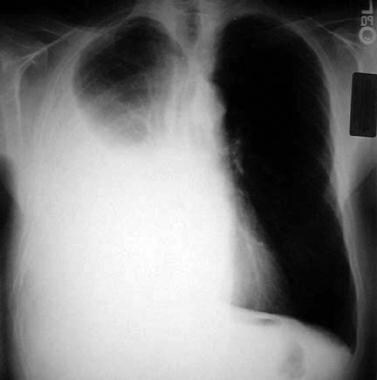
 Large, malignant, right-sided pleural effusion.
Frequency
United States
The estimated incidence is 1 million cases per year, with most effusions caused by congestive heart failure, malignancy, infections, and pulmonary emboli.
International
The estimated prevalence is 320 cases per 100,000 people in industrialized countries, with a distribution of etiologies related to the prevalence of underlying diseases.
History
Dyspnea is the most common symptom associated with pleural effusion and is related more to distortion of the diaphragm and chest wall during respiration than to hypoxemia. In many patients, drainage of pleural fluid alleviates symptoms despite limited improvement in gas exchange. Underlying intrinsic lung or heart disease, obstructing endobronchial lesions, or diaphragmatic paralysis can also cause dyspnea, especially after coronary artery bypass surgery. Drainage of pleural fluid may partially relieve symptoms but also may allow the underlying disease to be recognized on repeat chest radiographs. Less common symptoms of pleural effusions include mild, nonproductive cough or chest pain. Other symptoms may suggest the etiology of the pleural effusion. More severe cough or production of purulent or bloody sputum suggests an underlying pneumonia or endobronchial lesion. Constant chest wall pain may reflect chest wall invasion by bronchogenic carcinoma or malignant mesothelioma. Pleuritic chest pain suggests either pulmonary embolism or an inflammatory pleural process. Systemic toxicity evidenced by fever, weight loss, and inanition suggests empyema.
Physical
Physical findings, which do not usually manifest until pleural effusions exceed 300 mL, include the following: - Decreased breath sounds
- Dullness to percussion
- Decreased tactile fremitus
- Egophony (E-to-A change)
- Pleural friction rub
- Mediastinal shift away from the effusion: This is observed with effusions of greater than 1000 mL. Displacement of the trachea and mediastinum toward the side of the effusion is an important clue to obstruction of a lobar bronchus by an endobronchial lesion, which can be due to malignancy or, less commonly, a nonmalignant cause such as a foreign body.
Causes
Transudates are usually ultrafiltrates of plasma in the pleura due to disequilibrium in hydrostatic and oncotic forces in the chest. However, they can also be caused by the movement of fluid from peritoneal spaces or by iatrogenic infusion from migrated central venous catheters. Transudates are caused by a small, defined group of etiologies, including the following:
- Congestive heart failure
- Cirrhosis (hepatic hydrothorax)
- Atelectasis (which may be due to malignancy or pulmonary embolism)
- Hypoalbuminemia
- Nephrotic syndrome
- Peritoneal dialysis
- Myxedema
- Constrictive pericarditis
In contrast, exudates are produced by a variety of inflammatory conditions and often require more extensive evaluation and treatment. Exudates arise from pleural or lung inflammation, from impaired lymphatic drainage of the pleural space, and from transdiaphragmatic movement of inflammatory fluid from the peritoneal space. The more common causes of exudates include the following: - Parapneumonic causes
- Malignancy (carcinoma, lymphoma, mesothelioma)
- Pulmonary embolism
- Collagen-vascular conditions (rheumatoid arthritis, lupus)
- Tuberculous
- Asbestos exposure
- Pancreatitis
- Trauma
- Postcardiac injury syndrome
- Esophageal perforation
- Radiation pleuritis
- Drug use
- Chylothorax
- Meigs syndrome
- Sarcoidosis
- Yellow nail syndrome
Other Problems to be Considered
Chronic pleural thickening Malignant mesothelioma (see Mesothelioma)
Lab Studies
Thoracentesis should be performed for new and unexplained pleural effusions when sufficient fluid is present to allow a safe procedure. Observation of pleural effusion(s) is reasonable in the setting of overt congestive heart failure, viral pleurisy, or recent thoracic or abdominal surgery. Laboratory testing helps distinguish pleural fluid transudates from exudates; however, certain types of exudative pleural effusions might be suspected simply by observing the quality of the fluid obtained during thoracentesis. - Frankly purulent fluid indicates an empyema.
- A putrid odor suggests an anaerobic empyema.
- A milky, opalescent fluid suggests a chylothorax, resulting most often from lymphatic obstruction by malignancy or thoracic duct injury by trauma or surgical procedures.
- Grossly bloody fluid indicates the need for a spun hematocrit test of the sample. A pleural fluid hematocrit level of more than 50% of the peripheral hematocrit level defines a hemothorax, which often requires tube thoracostomy.
The initial diagnostic consideration is distinguishing transudates from exudates. Although a number of chemical tests have been proposed to differentiate pleural fluid transudates from exudates, the tests first proposed by Light et al have become the criterion standards.1 - The fluid is considered an exudate if any of the following apply:
- Ratio of pleural fluid to serum protein greater than 0.5
- Ratio of pleural fluid to serum lactate dehydrogenase (LDH) greater than 0.6
- Pleural fluid LDH greater than two thirds of the upper limits of normal serum value
- These criteria require simultaneous measurement of pleural fluid and serum protein and LDH. However, a meta-analysis of 1448 patients suggested that the following combined pleural fluid measurements might have sensitivity and specificity comparable to the criteria from Light et al for distinguishing transudates from exudates2:
- Pleural fluid LDH value greater than 0.45 of the upper limit of normal serum values
- Pleural fluid cholesterol level greater than 45 mg/dL
- Pleural fluid protein level greater than 2.9 g/dL
- Clinical judgment is required when pleural fluid test results fall near the cutoff points.
Pleural effusions in patients on long-term diuretic therapy for congestive heart failure may be incorrectly classified as exudates when using these criteria because of the concentration of protein and LDH within the pleural space due to diuresis. - Using the criterion of serum minus pleural protein concentration level of less than 3.1 g/dL, rather than a serum/pleural fluid ratio of greater than 0.5, more correctly identifies exudates in these patients.
- Although pleural fluid albumin is not typically measured, a gradient of pleural fluid to serum albumin greater than 1.2 g/dL also identifies a transudate in such patients.
- In addition, studies suggest that pleural fluid levels of N-terminal pro-brain natriuretic peptide (NT-proBNP) are elevated in effusions due to congestive heart failure.3 Thus, at institutions where this test is available, high pleural levels of NT-proBNP (ie, >4000 ng/L) may help to confirm heart failure as the cause of a chronic effusion in which diuresis has increased pleural fluid protein and LDH levels into the exudative range.
Pleural fluid LDH levels greater than 1000 IU/L suggest empyema, malignant effusion, rheumatoid effusion, or pleural paragonimiasis. In addition to these tests, glucose and pleural fluid pH should be measured during the initial thoracentesis in most situations. - A very low pleural glucose concentration (ie, <30 mg/dL) indicates rheumatoid pleurisy or empyema, and a low pleural glucose concentration (30-50 mg/dL) suggests malignant effusion, tuberculous pleuritis, esophageal rupture, or lupus pleuritis.
- Handle pleural fluid samples as carefully as arterial samples for pH measurements, with fluid collected in heparinized syringes and ideally transported on ice for measurement within 6 hours. However, studies have shown that when collected in heparinized syringes, pleural fluid pH does not change significantly even at room temperature over several hours. Consequently, if appropriately collected samples can be processed quickly, pH measurements should not be canceled simply because the sample was not transported on ice.
- Pleural fluid pH is highly correlated with pleural fluid glucose levels. Pleural fluid pH less than 7.30 with a normal arterial blood pH level is caused by the same diagnoses as listed above for low pleural fluid glucose. However, for parapneumonic effusions, a low pleural fluid pH level is more predictive of complicated effusions than is a low pleural fluid glucose level.
- In parapneumonic effusions, pleural fluid pH less than 7.1-7.2 indicates the need for urgent drainage of the effusion, and pleural fluid pH more than 7.3 suggests that the effusion may be managed with systemic antibiotics alone.
- In malignant effusions, pleural fluid pH less than 7.3 has been associated in some reports with more extensive pleural involvement, higher yield on cytology, decreased success of pleurodesis, and shorter survival times.
If an exudate is suggested clinically or is confirmed by chemistry tests, send the pleural fluid for total and differential cell counts, Gram stain, culture, and cytology. - Pleural fluid lymphocytosis, with lymphocyte values greater than 85% of the total nucleated cells, suggests tuberculosis (TB), lymphoma, sarcoidosis, chronic rheumatoid pleurisy, yellow nail syndrome, or chylothorax. Pleural lymphocyte values of 50-70% of the nucleated cells suggest malignancy.
- Pleural fluid eosinophilia (PFE), with eosinophil values greater than 10% of nucleated cells, is seen in approximately 10% of pleural effusions and is not correlated with peripheral blood eosinophilia. PFE is most often caused by air or blood in the pleural space. Blood in the pleural space causing PFE may be the result of pulmonary embolism with infarction or benign asbestos pleural effusion. PFE may be associated with other nonmalignant diseases, including parasitic disease (especially paragonimiasis), fungal infection (coccidioidomycosis, cryptococcosis, histoplasmosis), and a variety of medications. The presence of PFE does not exclude a malignant effusion, especially in patient populations with a high prevalence of malignancy. The presence of PFE makes tuberculous pleurisy unlikely and makes the progression of a parapneumonic effusion to an empyema unlikely.
- Mesothelial cells are found in variable numbers in most effusions, but their presence at greater than 5% of total nucleated cells makes a diagnosis of TB unlikely.
- Markedly increased numbers of mesothelial cells, especially in bloody or eosinophilic effusions, suggests pulmonary embolism as the cause.
Culture of infected pleural fluid yields positive results in approximately 60% of cases, although less often for anaerobic organisms. Diagnostic yields may be increased by directly culturing pleural fluid into anaerobic blood culture bottles. Malignancy is suspected in patients with known cancer or with lymphocytic, exudative effusions, especially when bloody. Direct tumor involvement of the pleura is diagnosed most easily by performing pleural fluid cytology. - Heparinize samples (1 mL of 1:1000 heparin per 50 mL of pleural fluid) if bloody, and refrigerate if not processed within 1 hour.
- The reported diagnostic yields of cytology vary from 60-90%, depending on the extent of pleural involvement and the type of primary malignancy.
- The sensitivity of cytology is not related to the volume of pleural fluid tested; sending more than 50 mL of pleural fluid for cytology does not increase the yield.
- Cytology findings are positive in 58% of effusions related to mesothelioma.
- Tumor markers, such as carcinoembryonic antigen, Leu-1, and mucin, are suggestive of malignant effusions (especially adenocarcinoma) when pleural fluid values are very high; however, because of low sensitivity, they are not helpful if values are normal or only modestly increased.
Suspect TB pleuritis in patients with a history of exposure or a positive purified protein derivative (PPD) finding and in patients with lymphocytic exudative effusions, especially if less than 5% mesothelial cells are detected on differential blood cell counts. - Because most tuberculous pleural effusions probably result from a hypersensitivity reaction to the Mycobacterium rather than from microbial invasion of the pleura, acid-fast bacillus stains of pleural fluid are rarely diagnostic (<10% of cases), and pleural fluid cultures grow Mycobacterium tuberculosis in less than 65% of cases.
- In contrast, the combination of histology and culture of pleural tissue obtained by pleural biopsy increases the diagnostic yield to 90%.
- Adenosine deaminase (ADA) activity of greater than 43 U/mL in pleural fluid supports the diagnosis of TB pleuritis. However, the test has a sensitivity of only 78%; therefore, pleural ADA values less than 43 U/mL do not exclude the diagnosis of TB pleuritis.
- Interferon-gamma concentrations in pleural fluid greater than 140 pg/mL also support the diagnosis of TB pleuritis, but this test is not routinely available.
Additional specialized tests are warranted when specific etiologies are suspected. - Measure pleural fluid amylase levels if a pancreatic origin or ruptured esophagus is suspected or if a unilateral left-sided pleural effusion remains undiagnosed after initial testing. An additional assay of amylase isoenzymes can help distinguish a pancreatic source from other etiologies.
- Measure triglyceride and cholesterol levels in milky pleural fluids when chylothorax or pseudochylothorax is suspected.
- Consider immunologic studies, including pleural fluid antinuclear antibody and rheumatoid factor, when collagen-vascular diseases are suspected.
Despite primary evaluation with serial thoracenteses with cytology, approximately 20% of exudative effusions remain undiagnosed. Clues to the diagnosis that may have been overlooked include (1) occupational exposure to asbestos 10-20 years earlier, which may suggest benign asbestos effusion; (2) medication exposure to nitrofurantoin, amiodarone, or medications associated with a drug-induced lupus syndrome; and (3) hepatic hydrothorax unrecognized in a patient with minimal or undetectable ascites. Chest CT scanning with contrast should be performed in all patients with an undiagnosed pleural effusion, if not previously performed, to detect thickened pleura or signs of invasion of underlying or adjacent structures. The 2 diagnostic imperatives in this situation are pulmonary embolism and tuberculous pleuritis. In both cases, the pleural effusion is a harbinger of subsequent morbidity if undiagnosed. In contrast, a short delay in diagnosing metastatic malignancy to the pleural space has less clinical significance. - CT angiography should be ordered if pulmonary embolism is strongly suggested.
- Pleural biopsy should be considered, especially if TB or malignancy is suggested. Medical thoracoscopy with the patient under conscious sedation and local anesthesia has emerged as a diagnostic tool to directly visualize and take a biopsy specimen from the parietal pleura in cases of undiagnosed exudative effusions. Closed-needle pleural biopsy is a blind technique but can be performed at the patient's bedside.
Medical thoracoscopy has a higher diagnostic yield for malignancy; closed-needle pleural biopsy findings aid in diagnosis of only 7-12% of malignant effusions when cytology findings alone are negative. However, the yield of closed-needle pleural biopsy (histology plus culture) is as high as thoracoscopy for TB and is a useful alternative procedure for this diagnosis when available.Among patients with undiagnosed pleural effusions after the primary evaluation, predict a benign course for those who meet all 6 of the following clinical parameters. No further evaluation is necessary. Patients are clinically stable. Patients do not have weight loss. The results of the PPD test are negative and the pleural ADA value is less than 43 U/mL. The patient does not have a fever. The pleural fluid differential blood cell count has less than 95% lymphocytes. The effusion occupies less than 50% of the hemithorax.For other patients with undiagnosed exudative effusions, approximately 20% have a specific etiology determined, including malignancy. For such patients, weigh the benefits and risks of pursuing a diagnosis using progressively more invasive procedures, given the low likelihood of finding a curable etiology. - Consider bronchoscopy only if a patient has parenchymal abnormalities or hemoptysis.
- Surgical approaches to the diagnosis of pleural effusions include thoracoscopy (pleuroscopy) and open thoracotomy, which reveal an etiology in 92% of effusions that remain undiagnosed after a medical evaluation.
- Where available, medical thoracoscopy may be both diagnostic and therapeutic; talc sclerosis can be performed at the time of the procedure.
- Note that in most medical centers, surgical exploration using thoracoscopy or thoracotomy entails the risks of general anesthesia and is probably warranted only in patients who are symptomatic and anxious for a diagnosis.
Imaging Studies
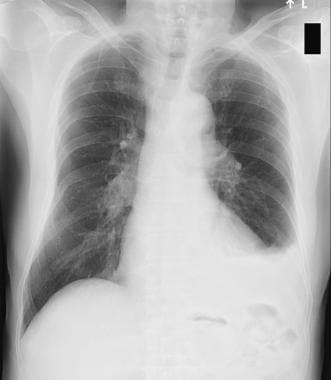
Chest radiograph Effusions of more than 175 mL are usually apparent as blunting of the costophrenic angle on upright posteroanterior chest radiographs. On supine chest radiographs, which are commonly used in the intensive care setting, moderate-to-large pleural effusions may appear as a homogenous increase in density over the lower lung fields on a supine chest radiograph. Apparent elevation of the hemidiaphragm, lateral displacement of the dome of the diaphragm, or increased distance between the apparent left hemidiaphragm and the gastric air bubble suggests subpulmonic effusions. Lateral decubitus films more reliably detect smaller pleural effusions. Layering of an effusion on lateral decubitus films defines a freely flowing effusion and, if the layering fluid is 1 cm thick, indicates an effusion of greater than 200 mL that is amenable to thoracentesis. Failure of an effusion to layer on lateral decubitus films indicates loculated pleural fluid or some other etiology causing the increased pleural density.
 Chest radiograph showing left-sided pleural effusion.
 Left lateral decubitus film showing freely layering pleural effusion.
Procedures
Diagnostic thoracentesis Perform diagnostic thoracentesis if the etiology of the effusion is unclear or if the presumed cause of the effusion does not respond to therapy as expected. Pleural effusions do not require thoracentesis if they are too small to safely aspirate or, in clinically stable patients, if their presence can be explained by underlying congestive heart failure (especially bilateral effusions) or by recent thoracic or abdominal surgery. Relative contraindications to diagnostic thoracentesis include a small volume of fluid (<1 cm thickness on a lateral decubitus film), bleeding diathesis or systemic anticoagulation, mechanical ventilation, and cutaneous disease over the proposed puncture site. Mechanical ventilation with positive end-expiratory pressure does not increase the risk of pneumothorax after thoracentesis, but it increases the likelihood of a tension pneumothorax or persistent bronchopleural fistula if the lung is punctured. Complications of diagnostic thoracentesis include pain at the puncture site, cutaneous or internal bleeding, pneumothorax, empyema, and spleen/liver puncture. Pneumothorax complicates approximately 12-30% of thoracenteses but requires treatment with a chest tube in less than 5% of cases. Use of needles larger than 20 gauge increases the risk of a pneumothorax complicating the thoracentesis. In addition, significant chronic obstructive or fibrotic lung disease increases the risk of a symptomatic pneumothorax complicating the thoracentesis. In patients with large, freely flowing effusions and no relative contraindications to thoracentesis, diagnostic thoracentesis can usually be performed safely, with the puncture site initially chosen based on the chest radiograph and located at 1-2 rib interspaces below the level of dullness to percussion determined during the physical examination. Once the site is disinfected with chlorhexidine and/or povidone/iodine solution and sterile drapes are placed, anesthetize the skin, periosteum, and parietal pleura with 1% lidocaine through a 25-gauge needle. If pleural fluid is not obtained with the shorter 25-gauge needle, continue anesthetizing with a 1.5-inch, 22-gauge needle; for patients with larger amounts of subcutaneous tissue, a 3.5-inch, 22-gauge spinal needle with inner stylet removed can be used to find the effusion. Confirm the correct location for thoracentesis by aspirating pleural fluid through the 25- or 22-gauge needle before introducing larger-bore thoracentesis needles or catheters. When possible, patients should sit upright for thoracentesis. Patients should not lean forward because this causes pleural fluid to move to the anterior costophrenic space and increases the risk of puncture of the liver or spleen. For debilitated and ventilated patients who cannot sit upright, obtain pleural fluid by puncturing over the eighth rib at the mid-to-posterior axillary line. Supplemental oxygen is often administered during thoracentesis, both to offset hypoxemia produced by changes in ventilation-perfusion relationships as fluid is removed and to facilitate reabsorption of pleural air if pneumothorax complicates the procedure. The frequency of complications from thoracentesis is lower when a more experienced clinician performs the procedure. Consequently, a skilled and experienced clinician should perform thoracentesis in patients who have a higher risk of complications or relative contraindications for thoracentesis or those who cannot sit upright. Postprocedure chest radiographs to exclude pneumothorax are not needed in asymptomatic patients after uncomplicated procedures (single needle pass without aspiration of air). Therapeutic thoracentesis Therapeutic thoracentesis to remove larger amounts of pleural fluid is used to alleviate dyspnea and to prevent ongoing inflammation and fibrosis in parapneumonic effusions. In addition to the precautions listed for diagnostic thoracentesis at the beginning of Procedures, note 3 additional considerations when performing therapeutic thoracentesis. - To avoid producing a pneumothorax during the removal of large quantities of fluid, perform therapeutic thoracentesis with a catheter rather than a sharp needle. Various specially designed thoracentesis trays are available for introducing small catheters into the pleural space. Alternatively, newer systems using spring-loaded, blunt-tip needles that avoid lung puncture are also available.
- Monitor oxygenation closely during and after thoracentesis because arterial oxygen tension paradoxically might worsen after pleural fluid drainage. Patients should receive supplemental oxygen during the procedure.
- Only remove moderate amounts of pleural fluid to avoid reexpansion pulmonary edema and to avoid causing a pneumothorax.
- A mediastinal position on the chest radiograph may predict whether a patient is likely to benefit from the procedure. A mediastinal shift away from the pleural effusion indicates a positive pleural pressure and compression of the underlying lung that can be relieved by thoracentesis. In contrast, a mediastinal shift towards the side of the effusion indicates lung entrapment by extensive pleural involvement or endobronchial obstruction that prevents reexpansion of the lung when the pleural fluid is removed.
- Removal of 400-500 mL of pleural fluid might be enough to alleviate symptoms. The recommended limit is 1000-1500 mL in a single thoracentesis procedure.
- Larger amounts of pleural fluid can be removed if pleural pressure is monitored by pleural manometry and maintained above -20 cm water.
- The onset of chest pressure or pain during the removal of fluid indicates trapped lung physiology, and the procedure should be stopped.
Tube thoracostomy Although small, freely flowing parapneumonic effusions can be drained by therapeutic thoracentesis, most larger effusions and complicated parapneumonic effusions or empyemas require drainage by tube thoracostomy (see Treatment). Traditionally, large-bore chest tubes (20-36F) have been used to drain thick pleural fluid and to break up loculations in empyemas. However, such tubes are not always well tolerated by patients and are difficult to direct correctly into the pleural space. More recently, small-bore tubes (8-14F) inserted at the bedside or under radiographic guidance have been shown to provide adequate drainage, even when empyema is present. These tubes cause less discomfort and are more likely to be placed successfully within a pocket of pleural fluid. Using 20-cm water suction and flushing the tube with normal saline every 6-8 hours may prevent occlusion of small-bore catheters. Insertion of additional pleural catheters, usually under radiographic guidance, or instilling fibrinolytics (eg, streptokinase, urokinase, or alteplase) through the pleural catheter can help drain multiloculated pleural effusions. Pleurodesis or pleural sclerosis Pleurodesis or pleural sclerosis is most often used for recurrent malignant effusions, such as in patients with lung cancer or metastatic breast or ovarian cancer. Given the limited life expectancy of these patients, the goal of therapy is to palliate symptoms while minimizing patient discomfort, hospital length of stay, and overall costs. Patients with poor performance status (Karnofsky score <70) and life expectancy of less than 3 months can be treated with repeated outpatient thoracentesis as needed to palliate symptoms. Unfortunately, pleural effusions can reaccumulate rapidly, and the risk of complications increases with repeated drainage. Alternatively, the best treatment for effusions in such patients may be insertion of an indwelling tunneled catheter, which allows patients to remove pleural fluid as needed at home.4
Various agents, including talc, doxycycline, bleomycin sulfate (Blenoxane), zinc sulfate, and quinacrine hydrochloride can sclerose the pleural space and effectively prevent recurrence of the malignant pleural effusion. - Talc is the most effective sclerosing agent and can be administered as slurry through chest tubes or pleural catheters. Although a systematic review suggested that direct insufflation of talc via thoracoscopy was more effective than talc slurry, both were equally effective in a 2005 prospective trial of malignant effusions.5
- Doxycycline and bleomycin are also effective in most patients and can be administered more easily through small-bore catheters, although they are somewhat less effective and substantially more expensive than talc.
- All sclerosing agents can produce fever, chest pain, and nausea.
- Talc rarely causes more serious adverse effects such as empyema and acute lung injury. The latter appears to be related to the particle size and amount of talc injected for pleurodesis.
- Injection of 50 mL of 1% lidocaine hydrochloride prior to instillation of the sclerosing agent might help alleviate pain. Additional analgesia might be required in some cases.
- Clamp chest tubes for approximately 2 hours after instillation of the sclerosing agent.
- A 2006 systematic review confirms that rotating the patient through different positions does not appear necessary to ensure distribution of soluble sclerosing agents throughout the pleural space. In addition, neither protracted drainage after instillation of sclerotics nor use of larger bore chest tubes increased the effectiveness of pleurodesis.6
- Pleural sclerosis is likely to be successful only if the pleural space is drained completely before pleurodesis and if the lung is fully reexpanded to appose the visceral and parietal pleura after sclerosis. Animal studies suggest that systemic corticosteroids can reduce inflammation during sclerosis and can cause pleurodesis failures.
Medical Care
Transudative effusions are usually managed by treating the underlying medical disorder. However, whether transudates or exudates, drain large pleural effusions if they are causing severe respiratory symptoms, even if the cause is understood and disease-specific treatment is available. The management of exudative effusions depends on the underlying etiology of the effusion. Pneumonia, malignancy, or TB causes most exudative pleural effusions, or effusions are deemed idiopathic. Drain complicated parapneumonic effusions and empyemas to avoid fibrosing pleuritis. Malignant effusions are usually drained to palliate symptoms and may require pleurodesis to prevent recurrence. Although medications cause only a small proportion of all pleural effusions, they are associated with exudative pleural effusions. - Implicated drugs include medications that cause drug-induced lupus syndrome (eg, procainamide, hydralazine, quinidine), nitrofurantoin, dantrolene, methysergide, procarbazine, and methotrexate.
- Recognition of these iatrogenic causes of pleural effusion avoids unnecessary additional diagnostic procedures and leads to definitive therapy, which is discontinuation of the medication.
Of the common causes for exudative pleural effusions, parapneumonic effusions have the highest diagnostic priority. Even in the face of antibiotic therapy, infected pleural effusions can rapidly coagulate and organize to form fibrous peels that might require surgical decortication. Therefore, quickly assess pleural fluid characteristics predictive of a complicated course to identify parapneumonic effusions that require urgent tube drainage, which are observed more commonly in indolent anaerobic pneumonias than in typical community-acquired pneumonia. - Indications for urgent drainage of parapneumonic effusions include (1) frankly purulent fluid, (2) pleural fluid pH less than 7.2, (3) loculated effusions, and (4) bacteria on Gram stain or culture.
- Patients with parapneumonic effusions who do not meet criteria for immediate tube drainage should improve clinically within 1 week with appropriate antibiotic treatment.
- Radiographically reassess patients with parapneumonic effusions who do not improve or who deteriorate clinically.
Malignant pleural effusions usually signify incurable disease with considerable morbidity and a dismal mean survival of less than 1 year. Drainage of large malignant effusions might relieve dyspnea caused by distortion of the diaphragm and chest wall produced by the effusion. Pleural sclerosis also might be necessary to prevent recurrence of symptomatic effusions.
TB pleuritis typically is self-limited. However, because 65% of patients with primary TB pleuritis reactivate their disease within 5 years, empiric anti-TB treatment is usually begun pending culture results when sufficient clinical suspicion is present, such as an unexplained exudative or lymphocytic effusion in a patient with a positive PPD finding. Chylous effusions are usually managed by dietary and surgical modalities discussed below. However, studies suggest that somatostatin analogues also may help in reducing efflux of chyle into the pleural space.
Surgical Care
Surgical intervention is most often required for parapneumonic effusions that cannot be drained adequately by needle or small-bore catheters, and surgery might be required for diagnosis and sclerosis of exudative effusions. - Video-assisted thoracoscopy with the patient under local or general anesthesia allows direct visualization and biopsy of the pleura for diagnosis of exudative effusions.
- Pleural sclerosis by insufflating talc directly onto the pleural surface using video-assisted thoracoscopy is an alternative to using talc slurries.
- Decortication is usually needed to remove a thick, inelastic pleural peel that restricts ventilation and produces progressive or refractory dyspnea. In patients with chronic, organizing parapneumonic pleural effusions, technically demanding operations might be required to drain loculated pleural fluid and to obliterate the pleural space.
- Surgically implanted pleuroperitoneal shunts are another treatment option for recurrent symptomatic effusions, most often in the setting of malignancy, but they are also used for management of chylous effusions. However, the shunts are prone to malfunction over time and can require surgical revision.
- In unusual cases, surgery might be required to close diaphragmatic defects (thereby preventing recurrent accumulation of pleural effusions in patients with ascites) and to ligate the thoracic duct to prevent reaccumulation of chylous effusions.
Consultations
A pulmonologist can be consulted for assistance with high-risk diagnostic thoracentesis, depending on the experience of the clinician. Drainage of complicated effusions usually requires consultation with a pulmonologist, interventional radiologist, or thoracic surgeon, depending on the location of the effusion and the clinical situation.
Diet
Restrictions of fat intake might help in the management of chylous effusions, although management remains controversial. Ongoing drainage of these effusions can rapidly deplete patients of fat and protein stores. Limiting oral fat intake might slow the accumulation of chylous effusions in some patients. Hyperalimentation or total parenteral nutrition can preserve nutritional stores and limit accumulation of the chylous effusion but probably should be restricted to patients in whom definitive therapy for the underlying cause of the chylous effusion is possible.
Further Inpatient Care
Monitoring pleural drainage - Record the amount and quality of fluid drained and monitor for an air leak (bubbling through the water seal) each shift.
- Repeat the chest radiographs when drainage decreases to less than 100 mL/d to evaluate whether the effusion has been fully drained. If a large effusion persists radiographically, reevaluate the position of the chest catheter. If the catheter is positioned appropriately, consider injecting lytics through the chest tube to break up clots that may be obstructing drainage.
- Large air leaks (steady streams of air throughout the respiratory cycle) may be indications of loose connectors or of a drainage port on the catheter that has migrated out to the skin. Alternatively, they may indicate large bronchopleural fistulae. Consequently, dressings should be taken down and the position of the catheter inspected at the puncture site. Clamping the catheter at the skin helps determine whether the air leak is emanating from within the pleural cavity (in which case it stops when the tube is clamped) or from outside the chest (in which case the leak persists).
Prognosis
Prognosis varies in accordance with the underlying etiology.
- Malignant effusions convey a very poor prognosis, with survival typically measured in months.7
- Parapneumonic effusions, when recognized and treated promptly, typically resolve without significant sequelae. However, untreated or inappropriately treated parapneumonic effusions may lead to constrictive fibrosis.
Patient Education
For excellent patient education resources, visit eMedicine's Lung and Airway Center. Also, see eMedicine's patient education article Pleurisy.
Medical/Legal Pitfalls
- Failure to recognize potentially lethal underlying conditions producing pleural effusions, including pulmonary embolus and esophageal rupture
- Discharge or transfer of a patient with an unrecognized pneumothorax following thoracentesis
- Failure to prevent constrictive pleuritis from untreated parapneumonic effusions or hemothorax
- Unnecessary attempts to perform thoracentesis
| Media file 1:
Large, malignant, right-sided pleural effusion. |
 | View Full Size Image | |
Media type: X-RAY
|
| Media file 2a:
Chest radiograph showing left-sided pleural effusion. |
 | View Full Size Image | |
Media type: Radiograph
|
| Media file 2b:
Left lateral decubitus film showing freely layering pleural effusion. |
 | View Full Size Image | |
Media type: Radiograph
|
- Light RW, Macgregor MI, Luchsinger PC, Ball WC Jr. Pleural effusions: the diagnostic separation of transudates and exudates. Ann Intern Med. Oct 1972;77(4):507-13. [Medline].
- Heffner JE, Brown LK, Barbieri CA. Diagnostic value of tests that discriminate between exudative and transudative pleural effusions. Primary Study Investigators. Chest. Apr 1997;111(4):970-80. [Medline].
- Kolditz M, Halank M, Schiemanck CS, Schmeisser A, Höffken G. High diagnostic accuracy of NT-proBNP for cardiac origin of pleural effusions. Eur Respir J. Jul 2006;28(1):144-50. [Medline].
- Putnam JB Jr, Walsh GL, Swisher SG, Roth JA, Suell DM, Vaporciyan AA, et al. Outpatient management of malignant pleural effusion by a chronic indwelling pleural catheter. Ann Thorac Surg. Feb 2000;69(2):369-75. [Medline].
- Dresler CM, Olak J, Herndon JE 2nd, Richards WG, Scalzetti E, Fleishman SB. Phase III intergroup study of talc poudrage vs talc slurry sclerosis for malignant pleural effusion. Chest. Mar 2005;127(3):909-15. [Medline].
- Tan C, Sedrakyan A, Browne J, Swift S, Treasure T. The evidence on the effectiveness of management for malignant pleural effusion: a systematic review. Eur J Cardiothorac Surg. May 2006;29(5):829-38. [Medline].
- Burrows CM, Mathews WC, Colt HG. Predicting survival in patients with recurrent symptomatic malignant pleural effusions: an assessment of the prognostic values of physiologic, morphologic, and quality of life measures of extent of disease. Chest. Jan 2000;117(1):73-8. [Medline].
- Bartter T, Santarelli R, Akers SM, Pratter MR. The evaluation of pleural effusion. Chest. Oct 1994;106(4):1209-14. [Medline].
- Chapman SJ, Davies RJ. Recent advances in parapneumonic effusion and empyema. Curr Opin Pulm Med. Jul 2004;10(4):299-304. [Medline].
- Eibenberger KL, Dock WI, Ammann ME, Dorffner R, Hörmann MF, Grabenwöger F. Quantification of pleural effusions: sonography versus radiography. Radiology. Jun 1994;191(3):681-4. [Medline].
- Estenne M, Yernault JC, De Troyer A. Mechanism of relief of dyspnea after thoracocentesis in patients with large pleural effusions. Am J Med. May 1983;74(5):813-9. [Medline].
- Ferrer JS, Muñoz XG, Orriols RM, Light RW, Morell FB. Evolution of idiopathic pleural effusion: a prospective, long-term follow-up study. Chest. Jun 1996;109(6):1508-13. [Medline].
- Good JT Jr, Taryle DA, Maulitz RM, Kaplan RL, Sahn SA. The diagnostic value of pleural fluid pH. Chest. Jul 1980;78(1):55-9. [Medline].
- Grogan DR, Irwin RS, Channick R, Raptopoulos V, Curley FJ, Bartter T, et al. Complications associated with thoracentesis. A prospective, randomized study comparing three different methods. Arch Intern Med. Apr 1990;150(4):873-7. [Medline].
- Heffner JE, Brown LK, Barbieri C, DeLeo JM. Pleural fluid chemical analysis in parapneumonic effusions. A meta-analysis. Am J Respir Crit Care Med. Jun 1995;151(6):1700-8. [Medline].
- Light RW. Clinical practice. Pleural effusion. N Engl J Med. Jun 20 2002;346(25):1971-7. [Medline].
- Light RW, ed. Pleural Diseases. 5th ed. Baltimore, Md: Lippincott Williams & Wilkins; 2007.
- Light RW, Jenkinson SG, Minh VD, George RB. Observations on pleural fluid pressures as fluid is withdrawn during thoracentesis. Am Rev Respir Dis. May 1980;121(5):799-804. [Medline].
- Marchi E, Teixeira LR, Vargas FS. Management of malignancy-associated pleural effusion: current and future treatment strategies. Am J Respir Med. 2003;2(3):261-73. [Medline].
- Romero Candeira S, Hernández Blasco L, Soler MJ, Muñoz A, Aranda I. Biochemical and cytologic characteristics of pleural effusions secondary to pulmonary embolism. Chest. Feb 2002;121(2):465-9. [Medline].
- Sahn SA. Management of complicated parapneumonic effusions. Am Rev Respir Dis. Sep 1993;148(3):813-17. [Medline].
- Sahn SA. State of the art. The pleura. Am Rev Respir Dis. Jul 1988;138(1):184-234. [Medline].
- Sahn SA, Good JT Jr. Pleural fluid pH in malignant effusions. Diagnostic, prognostic, and therapeutic implications. Ann Intern Med. Mar 1988;108(3):345-9. [Medline].
- Sallach SM, Sallach JA, Vasquez E, Schultz L, Kvale P. Volume of pleural fluid required for diagnosis of pleural malignancy. Chest. Dec 2002;122(6):1913-7. [Medline].
- Seibert AF, Haynes J Jr, Middleton R, Bass JB Jr. Tuberculous pleural effusion. Twenty-year experience. Chest. Apr 1991;99(4):883-6. [Medline].
- Shaw P, Agarwal R. Pleurodesis for malignant pleural effusions. Cochrane Database Syst Rev. 2004;CD002916. [Medline].
- Stark P. The pleura. In: Taveras JM, Ferrucci JT, eds. Radiology: Diagnosis/Imaging/Intervention. Philadelphia, Pa: Lippincott-Raven; 2000:1-29.
- Walker-Renard PB, Vaughan LM, Sahn SA. Chemical pleurodesis for malignant pleural effusions. Ann Intern Med. Jan 1 1994;120(1):56-64. [Medline].
- West SD, Davies RJ, Lee YC. Pleurodesis for malignant pleural effusions: current controversies and variations in practices. Curr Opin Pulm Med. Jul 2004;10(4):305-10. [Medline].
Pleural Effusion excerpt Article Last Updated: Jun 5, 2008
|