Continually Updated Clinical Reference
 
 
  All Sources     eMedicine     Medscape     Drug Reference     MEDLINE
 
eMedicine - Onchocerciasis : Article by

Quick Find
Authors & Editors
Introduction
Clinical
Differentials
Workup
Treatment
Medication
Follow-up
Acknowledgments
Multimedia
References

Related Articles
Food Allergies

Hypersensitivity Reactions, Delayed

Leprosy

Pinta

Syphilis

Treponematosis (Endemic Syphilis)

Vitamin A Deficiency

Yaws


Patient Education
Click here for patient education.


Author: Smeeta Sinha, MD, Staff Physician, Department of Dermatology, UMDNJ-New Jersey Medical School

Smeeta Sinha is a member of the following medical societies: Alpha Omega Alpha, Phi Beta Kappa, and Sigma Xi

Coauthor(s): Robert A Schwartz, MD, MPH, Professor and Head of Dermatology, Professor of Medicine, Professor of Pediatrics, Professor of Pathology, Professor of Preventive Medicine and Community Health, UMDNJ-New Jersey Medical School; Rajendra Kapila, MD, MBBS, Associate Professor, Department of Medicine, UMDNJ, New Jersey Medical School

Editors: Daniel R Lucey, MD, MPH, Chief, Fellowship Program Director, Department of Internal Medicine, Division of Infectious Diseases, Washington Hospital Center; Professor, Department of Internal Medicine, Uniformed Services University of the Health Sciences; Francisco Talavera, PharmD, PhD, Senior Pharmacy Editor, eMedicine; John W King, MD, Professor of Medicine, Section of Infectious Diseases, Louisiana State University Health Sciences Center; Director, Viral Therapeutics Clinics for Hepatitis; Consulting Staff, Department of Infectious Diseases, Overton Brook Veterans Affairs Medical Center; Eleftherios Mylonakis, MD, Clinical and Research Fellow, Department of Internal Medicine, Division of Infectious Diseases, Massachusetts General Hospital; Burke A Cunha, MD, Professor of Medicine, State University of New York School of Medicine at Stony Brook; Chief, Infectious Disease Division, Winthrop-University Hospital

Author and Editor Disclosure

Synonyms and related keywords: onchocercosis, river blindness, blinding disease, volvulosis, craw-craw, Robles disease, Onchocerca volvulus, O volvulus, Simulium damnosum, S damnosum, papular dermatitis, depigmentation, leopard skin, black fly, black flies, sowda, Nakalaga syndrome

Background

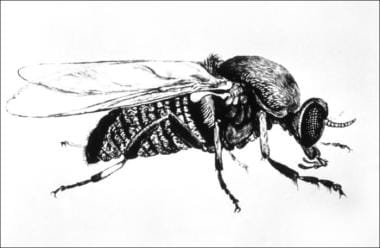
Onchocerciasis is a chronic parasitic disease caused by the filarial nematode Onchocerca volvulus. Infection affects multiple organ systems, but the greatest morbidity is due to cutaneous and ophthalmologic complications. The disease is often called river blindness because infective microfilariae are acquired at the breeding site of the Simulium damnosum black fly vector.

Onchocerciasis occurs in 38 countries worldwide, including areas of Africa, South America, and the Middle East. More than 123 million people live in endemic areas, and an estimated 18 million people are currently infected. Of those infected, about 270,000 are blind, and an additional 500,000 have severe visual impairment.

In 1875, O'Neill first associated the microfilariae of O volvulus with an irritating papular dermatitis called craw-craw in Ghana. Eighteen years later, Leuckhart first described the adult worm of onchocerciasis in subcutaneous nodules. In 1917, Robles published findings on a new disease from Guatemala with associated subcutaneous nodules, anterior ocular lesions, dermatitis, and microfilariae. In Sierra Leone in 1923, Blacklock identified the black fly, Simulium damnosum, as the disease vector.

Pathophysiology

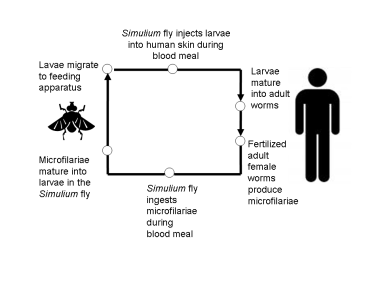
O volvulus has a 5-stage life cycle, and humans are the only definitive hosts. Simulium black flies are obligate intermediate hosts and release infective-stage larvae during a blood meal. In the human host, the larvae molt twice to become male and female adult worms. This process occurs in subcutaneous nodules known as onchocercomata, and a mature female can produce microfilariae after 6-12 months.

Female worm length ranges from 30-80 cm, and more than 1 worm may be coiled in a subcutaneous nodule. Male adult worms are usually 3-5 cm in length and migrate between various subcutaneous nodules to inseminate females. Over a life span of up to 14 years, the female worms produce 700-1900 microfilariae daily.

Microfilariae are usually 220-360 µm in length. When released from the female, microfilariae can migrate throughout the subcutaneous tissues and skin; they have a particular affinity for ocular tissues. When microfilariae are ingested in the blood meal of the black fly, they pass through 2 molts in a 2- to 3-week period to become infective-stage larvae.

Microfilariae live for 6-30 months; most die without completing their life cycle. Symptoms of onchocerciasis are caused by localized host inflammatory responses to the dead or dying microfilariae. In persons with heavy infection, as many as 100,000 microfilariae die each day. The predominant immune response is production of antibodies, but cellular responses, particularly those of eosinophils, are important.

Frequency

United States

Sporadic cases are observed in immigrants or travelers from endemic areas.

International

Onchocerciasis predominantly occurs in 30 countries of West and sub-Saharan Africa. In Africa, hyperendemic villages can have infection rates of 100%; 10% of the entire village may be blind, including up to 50% of those aged 40 years and older. Enlarging foci of infection are located in Central and South America, particularly in Guatemala, Ecuador, Mexico, Brazil, Venezuela, and Colombia. The Middle Eastern countries of Saudi Arabia and Yemen are also endemic for onchocerciasis.

Mortality/Morbidity

Onchocerciasis does not directly cause death, but social and economic consequences can be devastating.

  • Onchodermatitis is the leading cause of morbidity in endemic areas. Disfigurement resulting from skin lesions and intense pruritus can cause devastating psychosocial consequences and isolation.
  • Vision loss occurs in many areas of Africa and South America. Persons blinded by onchocerciasis have a life expectancy of 10 years after onset of blindness. Overall life expectancy of an infected individual in endemic areas is one-third that of an uninfected individual.
  • In Africa, blindness is more commonly reported in the savanna and woodland areas, whereas depigmented skin disorders are more frequent in the forests.

Race

All persons in regions of endemicity, regardless of race, are at risk for infection.

Sex

Onchocerciasis is associated with no known sex predilection.

Age

  • Greater morbidity with age is the result of cumulative exposure in endemic areas.
  • Blindness tends to occur in adulthood after many years of infection.
  • Transplacental infection can occur with microfilariae, but transmission of infective larvae from the black fly is required for the disease to progress.


History

Onchocerciasis is a chronic infection with clinical manifestations that develop years after initial infection.

  • The initial bite of the black fly tends to go unnoticed. A 1- to 2-year latent period is typical as the infective larvae migrate and develop into adult worms.
  • Pruritus is the most common early symptom of infection. Itching and scratching ranges from mild to severe and from intermittent to unremitting. The term craw-craw is used in West Africa to describe chronic onchodermatitis and its associated scratch-induced excoriations, ulcerations, and secondary infection.
  • Lymphadenopathy tends to occur in the inguinal and femoral regions.
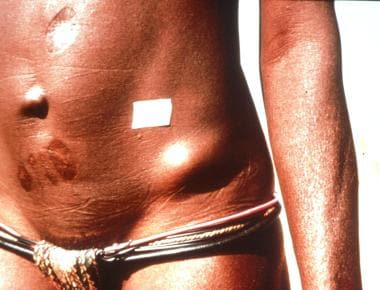
  • Subcutaneous nodules (onchocercomata) usually develop over bony prominences. African Simulium species tend to bite the ribs, hips, iliac crests and lower limbs, whereas South American Simulium species prefer the scalp and upper body.
  • VisualVisual symptoms range from itching, redness, photophobia, and blurred vision in early disease to variable degrees of vision loss and frank blindness later on.
  • Weight loss may also occur.

Physical

  • Physical findings are diverse and range from early mild inflammatory lesions to chronic debilitating cutaneous and ophthalmic lesions.
  • Onchodermatitis refers to the various cutaneous findings in infected individuals, and it has been classified into 6 diseases, as follows:
    • Acute papular dermatitis involves numerous small pruritic papules that may progress to vesicles or pustules. Papules tend to develop on limbs, shoulders, face, and trunk.
    • Chronic papular dermatitis is indicated by larger, pruritic, flat-topped papules distributed symmetrically over the buttocks, waist, and shoulders. Affected individuals may also demonstrate hyperpigmented papules and hyperkeratosis. Sowda is a localized form of chronic papular dermatitis that is usually confined to one extremity; characteristic findings also include hyperpigmented papules, regional lymphadenopathy, and edema.
  • Lichenified dermatitis is an intensely pruritic dermatitis with excoriations and hyperpigmented and hyperkeratotic papules and plaques.
  • Atrophy includes degeneration of elastic fibers and other structural elements of the skin due to chronic infection. The skin appears wrinkled and thin, and atrophic changes are most often noted over the buttocks and limbs.
  • Depigmentation is a common finding in advanced onchocerciasis. The patchy lesions resemble vitiligo and are commonly found on the shins (also known as leopard skin).
  • Lizard skin refers to the chronic ichthyoticlike changes that occur with longstanding infection.
  • Soft tissue disease manifests as the following:
    • Subcutaneous nodules (onchocercomata), which contain adult worms and are generally found over bony prominences.
    • Lymphadenopathy: "Hanging groin" refers to inguinal lymphadenopathy accompanied by atrophy of the skin.
  • Ocular findings
    • Microfilariae enter the eye by direct invasion from the conjunctiva into the sclera or cornea. They may be identified in ocular tissues early in the disease.
    • Ophthalmologic disease is caused by inflammatory responses to microfilariae as they migrate through the eye. The inflammatory reaction intensifies when microfilariae die. This intense host immune reaction can cause the following ocular findings, which are typically bilateral:
      • Punctate keratitis is the initial lesion and is caused by an immune response to dead microfilariae. It tends to resolve as inflammation wanes.
      • Sclerosing keratitis results from years of heavy prolonged infection; corneal opacities accumulate, causing irreversible visual impairment or blindness.
      • Anterior uveitis is caused by microfilariae invading the iris and ciliary body, which results in both granulomatous and nongranulomatous inflammation. This can lead to iris atrophy, inflammatory glaucoma, and cataracts.
      • Posterior segment lesions are also due to inflammatory responses to microfilarial death. This causes disturbances of the retinal pigment epithelium and can lead to chorioretinitis, chorioretinal atrophy, and subretinal fibrosis. Only 5% of patients have active retinitis.
      • Active optic neuritis may be due to infection or may develop after systemic treatment. Both optic neuritis and optic atrophy can cause blindness in up to 10% of some populations with onchocerciasis.

Causes

  • Onchocerciasis is transmitted by the bite of black flies of the genus Simulium. Black flies breed in well-oxygenated water found in fast-moving streams and rivers. Females require a blood meal for ovulation, and they can transmit infective-stage larvae as well as receive microfilariae during the blood meal. The black fly tends to stay within 2 km of its breeding site.
  • During the blood meal, the black fly can transmit infective-stage larvae to the host. Fly saliva acts as a chemoattractant for microfilariae in the surrounding subcutaneous tissues. Large quantities of microfilariae may be ingested during the blood meal. Microfilariae then migrate to the fly's flight muscles, where they emerge as infective-stage larvae after 6-18 days and travel to the proboscis.


Food Allergies
Hypersensitivity Reactions, Delayed
Leprosy
Pinta
Syphilis
Treponematosis (Endemic Syphilis)
Vitamin A Deficiency
Yaws

Other Problems to be Considered

Atopic dermatitis
Contact dermatitis
Insect bites
Scabies
Chronic eczema
Malnutrition
Streptocerciasis
Superficial mycoses
Glaucoma
Trachoma
Vitiligo


Lab Studies

  • Persons living in or traveling to endemic areas are at risk, which increases with the time of exposure to the black fly vector. If the diagnosis is suspected because of travel history, a presumptive diagnosis can be made based on physical examination findings of dermatitis, subcutaneous nodules, or ocular lesions.
  • Although several modalities are available, the criterion standards for diagnosing onchocerciasis are documentation of microfilariae on skin biopsy samples (skin snips) and demonstration of the adult worm from subcutaneous nodules (see Procedures).
  • Slit-lamp examination may reveal free-floating microfilariae in the anterior chamber of the eye.
  • Blood examination
    • In contrast with other filarial diseases, O volvulus microfilariae circulate in subcutaneous tissues rather than in the blood. Nevertheless, a correctly timed and processed blood smear examination is often necessary to detect other filarial parasites that occur in areas endemic for onchocerciasis; identification of concomitant infection has treatment implications, as discussed below.
    • Eosinophilia may be noted, although up to 30% of patients have unremarkable eosinophil counts.
  • Examination of other body fluids
    • Microfilariae have been found in the urine and cerebrospinal fluid (CSF) of some infected individuals in hyperendemic areas.
    • Pretreatment with a small test dose of diethylcarbamazine (DEC) mobilizes microfilariae into the urine. Microfilariae may then be observed on microscopic examination. Examination of the urine is not a diagnostic substitute for skin snips.
    • In high-level parasitemia, microfilariae may be detected in the CSF.
  • Immunodiagnosis
    • Current serological tests use blots of finger-prick blood collected on filter paper. These tests rely on enzyme-linked immunosorbent assay (ELISA) to detect antibodies to O volvulus antigens. Multiple antigens are used in a single assay. The reported sensitivity of ELISA testing is 70-80%, and the specificity is 96-100%.
    • Rapid antibody cards have been developed that detect IgG4 to Ov-16, a recombinant antigen of O volvulus.
    • Serological diagnosis does not reliably distinguish past infection from current infection.
  • Nucleic acid amplification tests
    • Polymerase chain reaction (PCR) assays are used to amplify DNA sequences of O volvulus present in skin snips. This technique is highly sensitive and specific for diagnosing onchocerciasis, but cost and technical issues keep this modality from routine field use.
    • PCR-based assays may also be used to detect infection in black fly vectors.

Imaging Studies

  • Ultrasound may be useful in detecting nonpalpable nodules. Ultrasound of an adult worm in a nodule reveals a homogeneous echogenic area containing echo-dense particles with a lateral acoustic shadow.

Other Tests

  • Mazzotti test
    • This test is infrequently performed, but may be of use when infection is suspected and skin snip test results are negative.
    • The patient is administered 6 mg of DEC and is then observed for development of pruritus with or without erythema over involved areas (a positive result), indicating the death of microfilariae in the skin. The reaction may occur from 15 minutes to 24 hours after DEC administration. Severe reactions may occur in both the skin and the eyes, and other adverse effects include vomiting, conjunctivitis, hypotension, and sudden death.
    • This test must not be performed unless a thorough search for evidence of infection has been conducted (including skin snips).
  • DEC patch test
    • A mixture of 10% DEC and Nivea cream is applied under an occlusive dressing; the occurrence of a localized inflammatory response indicates a positive test result. This test is a safer alternative to the Mazzotti test.
    • Reported sensitivity is 30-80% and is mainly attributed to varying geographical distribution.
    • This test is being reevaluated for use in children.

Procedures

  • Skin snip
    • Definitive diagnosis depends on parasitologic demonstration of microfilariae from skin snips, except in research settings. The skin snip is a biopsy of a 1- to 2-mg sample down to the level of the dermal papillae without drawing blood. In a bloody biopsy, other filarial pathogens may contaminate the specimen.
    • When performed for diagnosis, 6 samples are usually obtained: 1 from each scapula, iliac crest, and lateral calf. Specimens are placed in saline wells; within an hour, microfilariae may be observed under low-power microscopy. Negative skin snip results should be reevaluated several times in the next 24 hours. In heavy infection, as many as 100 microfilariae may be found in 1 mg of skin.
    • A positive skin snip biopsy result is 100% specific for onchocerciasis. In early or latent disease, however, low microfilarial loads produce false-negative results, thus decreasing sensitivity of the test.
  • Subcutaneous nodulectomy
    • Diagnosis may be confirmed by demonstration of the adult worm from an excised nodule.
    • Many subcutaneous nodules can be located with palpation; deeper nodules, particularly of the pelvic region, are more difficult to access.

Histologic Findings

Microscopic examination of excised onchocercomata reveals cross-sections of adult worms and a collection of eosinophils and lymphocytes at the periphery of the nodule.


Medical Care

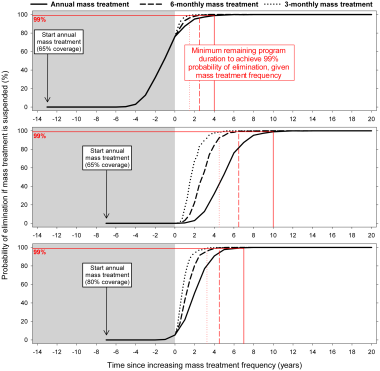
  • The current mainstay of treatment is ivermectin. Mass treatment campaigns are being run through the World Health Organization. Merck has made their drug (Mectizan) available without charge for use in the Onchocerciasis Control Programme (OCP). In 1997, more than 18 million people in endemic areas received treatment with ivermectin.
    • Because ivermectin is a microfilaricide and does not kill adult worms, the treatment does not cure the disease. Rather, it significantly reduces microfilarial burden, which affects several facets of the disease. Ivermectin treatment decreases transmission and reduces the prevalence of onchodermatitis, sclerosing keratitis, and blindness.
    • The optimal duration of treatment with ivermectin is not currently known. In hyperendemic areas, the drug should be administered every 6 or 12 months for the life span of the adult worm.
  • Newer therapeutic strategies target bacteria of the Wolbachia species, known endosymbionts in O volvulus. Doxycycline 100 mg/d administered for 6-8 weeks has demonstrated efficacy in reducing microfilarial loads, sterilizing adult worms, and decreasing adult worm viability. However, the efficiency of using doxycycline in mass treatment campaigns has been questioned.

Surgical Care

Removal of all subcutaneous nodules can be curative; however, many nodules are difficult to find.

Consultations

Immigrants from endemic areas, expatriates, and travelers with significant exposure may benefit from consultation with an ophthalmologist and/or an infectious disease physician.


Treatment involves microfilaricidal or macrofilaricidal agents. No known nontoxic macrofilaricidal agent is available to kill adult worms.

Drug Category: Antiparasitics

Inhibit growth and proliferation of parasites.

Drug NameIvermectin (Mectizan, Stromectol)
DescriptionSelectively binds glutamate-gated chloride ion channels in invertebrate nerve and muscle cells, causing cell death. Half-life is 16 h. Metabolized in the liver. DOC for treating onchocerciasis.
Adult Dose150 mcg/kg/d PO as single dose q6-12mo
Pediatric Dose<5 years: Not established
>5 years: Administer as in adults
ContraindicationsDocumented hypersensitivity.
InteractionsMay interact with other ligand-gated chloride channels, such as those gated by GABA
PregnancyC - Safety for use during pregnancy has not been established.
PrecautionsCaution in pregnancy, breastfeeding women with infants <3 mo, and in elderly persons with serious medical problems; immunocompromised patients may require repeated courses of therapy; adverse effects typically occur within first 48 h after first dose and include edema, pruritus, arthralgias, and postural hypotension; may be associated with nausea, vomiting, mild CNS depression, and drowsiness; caution in regions where onchocerciasis and Loa Loa (another filarial disease) are both endemic; patients with high microfilarial loads of Loa Loa are susceptible to encephalopathy upon treatment with ivermectin

Drug NameSuramin (Metaret)
DescriptionOnly available macrofilaricidal agent. Extremely toxic; each dose requires several days of hospitalization. WHO only recommends use in selected individuals in nonendemic areas for curative treatment of severe hyperreactive onchodermatitis uncontrolled by repeated ivermectin treatment. Granted orphan drug status and available from the CDC under brand names Antrypol, Bayer 205, Belganyl, Fourneau 309, Germanin, Moranyl, and Naphuride.
Adult Dose<60 kg: Not established

Parenteral/IV:>60 kg: 0.2 g week 1; 0.4 g week 2; 0.6 g week 3; 0.8 g week 4; 1 g week 5 and 6; total dose 4 g

Pediatric DoseNot established
ContraindicationsDocumented hypersensitivity
InteractionsNone reported
PregnancyX - Contraindicated in pregnancy
PrecautionsConsult WHO prior to treatment; contraindicated in pregnant women with onchocerciasis, but may be used in African trypanosomiasis; may cause vision loss

Drug NameDiethylcarbamazine (Hetrazan)
DescriptionPiperazine derivative microfilaricidal agent that can cause frequent unacceptable reactions ranging from urticaria and angioedema to death. Only used for Mazzotti test and not for treatment.
Adult Dose6 mg PO once (Mazzotti test)
Pediatric DoseNot established
ContraindicationsDocumented hypersensitivity
InteractionsNone reported
PregnancyC - Safety for use during pregnancy has not been established.
PrecautionsContact a physician if itching and facial swelling (especially eyes), skin rash, fever, and painful or tender glands (armpits, groin, neck) occur; not known to cause birth defects, but do not treat during pregnancy; safety in breastfeeding unknown; prolonged use is associated with vision loss, night blindness, and tunnel vision


In/Out Patient Meds:

  • Ivermectin 150 mcg/kg PO once every 6-12 months

Deterrence/Prevention:

  • No effective vaccines or chemoprophylactic drugs currently exist. Prevention requires vector avoidance through the use of insect repellants and protective clothing. In endemic areas, the focus of control is reducing the microfilarial burden in the population by mass treatment with ivermectin.
  • Prevention in endemic areas occurs in the following 3 ways:
    • Vector control involves larvicides to reduce the black fly population. This method of control has been effective in an area of West Africa but is expensive and difficult to administer over remote areas.
    • Mass treatment with ivermectin is employed in areas of high endemicity and has successfully reduced the morbidity associated with onchocerciasis in treated populations by reducing the microfilarial burden.
    • Education of people in endemic areas is a crucial aspect of lowering the transmission rate.

Complications:

  • Chronic dermatitis
  • Skin atrophy and depigmentation
  • Lymphadenitis
  • Blindness
  • Chorioretinitis
  • Glaucoma
  • Nakalanga dwarfism from pituitary involvement
  • Epilepsy (associated, but not a proven complication)
  • Posttreatment arthritis and tenosynovitis

Prognosis:

  • Patients undergoing ivermectin treatment every 6-12 months for the lifetime of the adult worm (approximately 12 y) have resolution of most eye findings and most dermatitis.
  • Patients with chorioretinitis, blindness, skin atrophy, and depigmentation do not improve with treatment. Patients who are blind have an increased mortality rate, with an average life expectancy of 10 years.

Patient Education:

  • People in endemic areas should be educated about the disease, vector, life cycle, and personal protective measures, and they should be enrolled in a mass treatment campaign.
  • Travelers to endemic areas should be aware of onchocerciasis and personal protective measures prior to travel.


The authors and editors of eMedicine gratefully acknowledge the contributions of previous coauthor Michael A Forgione, Jr, MD, to the development and writing of this article.


Media file 1:  Excision of a subcutaneous nodule (onchocercoma).
Click to see larger pictureClick to see detailView Full Size Image
Media type:  Photo

Media file 2:  Removed subcutaneous nodule (onchocercoma).
Click to see larger pictureClick to see detailView Full Size Image
Media type:  Photo


  • Boatin BA, Toe L, Alley ES. Diagnostics in onchocerciasis: future challenges. Ann Trop Med Parasitol. Apr 1998;92 Suppl 1:S41-5. [Medline].
  • Bryceson AD. What happens when microfilariae die?. Trans R Soc Trop Med Hyg. 1977;70(5-6):397-401. [Medline].
  • Burnham G. Onchocerciasis. Lancet. May 2 1998;351(9112):1341-6. [Medline].
  • Cupp EW, Cupp MS. Black fly (Diptera:Simuliidae) salivary secretions: importance in vector competence and disease. J Med Entomol. Mar 1997;34(2):87-94. [Medline].
  • Dadzie KY, Remme J, Rolland A. Ocular onchocerciasis and intensity of infection in the community. II. West African rainforest foci of the vector Simulium yahense. Trop Med Parasitol. Sep 1989;40(3):348-54. [Medline].
  • Enk CD. Onchocerciasis-river blindness. Clin Dermatol. May-Jun 2006;24(3):176-80.
  • Hall LR, Pearlman E. Pathogenesis of onchocercal keratitis (River blindness). Clin Microbiol Rev. Jul 1999;12(3):445-53. [Medline].
  • Hoerauf A, Volkmann L, Hamelmann C. Endosymbiotic bacteria in worms as targets for a novel chemotherapy in filariasis. Lancet. Apr 8 2000;355(9211):1242-3.
  • Hoerauf A, BĂĽttner DW, Adjei O. Onchocerciasis. BMJ. Jan 25 2003;326(7382):207-10.
  • Kabore JK, Cabore JW, Melaku Z. Epilepsy in a focus of onchocerciasis in Burkina Faso. Lancet. Mar 23 1996;347(9004):836. [Medline].
  • Kale OO. Onchocerciasis: the burden of disease. Ann Trop Med Parasitol. Apr 1998;92 Suppl 1:S101-15. [Medline].
  • Kilian HD. The use of a topical Mazzotti test in the diagnosis of onchocerciasis. Trop Med Parasitol. Sep 1988;39(3):235-8. [Medline].
  • Lustigman S, James ER, Tawe W. Towards a recombinant antigen vaccine against Onchocerca volvulus. Trends Parasitol. Mar 2002;18(3):135-41.
  • Malatt AE, Taylor HR. Onchocerciasis. Infect Dis Clin North Am. Dec 1992;6(4):963-77. [Medline].
  • Maso MJ, Kapila R, Schwartz RA. Cutaneous onchocerciasis. Int J Dermatol. Nov 1987;26(9):593-6. [Medline].
  • Murdoch ME, Hay RJ, Mackenzie CD. A clinical classification and grading system of the cutaneous changes in onchocerciasis. Br J Dermatol. Sep 1993;129(3):260-9. [Medline].
  • Nelson GS. Human onchocerciasis: notes on the history, the parasite and the life cycle. Ann Trop Med Parasitol. Feb 1991;85(1):83-95. [Medline].
  • Nguyen JC, Murphy ME, Nutman TB. Cutaneous onchocerciasis in an American traveler. Int J Dermatol. Feb 2005;44(2):125-8. [Medline].
  • Okulicz JF, Stibich AS, Elston DM. Cutaneous onchocercoma. Int J Dermatol. Mar 2004;43(3):170-2.
  • Ottesen EA. Immune responsiveness and the pathogenesis of human onchocerciasis. J Infect Dis. Mar 1995;171(3):659-71. [Medline].
  • Remme J, Dadzie KY, Rolland A. Ocular onchocerciasis and intensity of infection in the community. I. West African savanna. Trop Med Parasitol. Sep 1989;40(3):340-7. [Medline].
  • Rowe SG, Durand M. Blackflies and whitewater: onchocerciasis and the eye. Int Ophthalmol Clin. Winter 1998;38(1):231-40. [Medline].
  • Taylor HR, Munoz B, Keyvan-Larijani E. Reliability of detection of microfilariae in skin snips in the diagnosis of onchocerciasis. Am J Trop Med Hyg. Oct 1989;41(4):467-71. [Medline].
  • Van Laethem Y, Lopes C. Treatment of onchocerciasis. Drugs. Dec 1996;52(6):861-9. [Medline].
  • Wanji S, Tendongfor N, Esum M, et al. Combined Utilisation of Rapid Assessment Procedures for Loiasis (RAPLOA) and Onchocerciasis (REA) in Rain forest Villages of Cameroon. Filaria J. Apr 7 2005;4(1):2.
  • World Health Organization. Onchocerciasis (river blindness). Report from the Fourteenth InterAmerican Conference on Onchocerciasis, Atlanta, Georgia, United States. Wkly Epidemiol Rec. Jul 29 2005;80(30):257-60.

Onchocerciasis excerpt

Article Last Updated: Jun 30, 2006