You are in: eMedicine Specialties >
Cardiology > Valvular Heart Disease
Aortic Stenosis
Article Last Updated: Jun 28, 2007
AUTHOR AND EDITOR INFORMATION
Section 1 of 11
Author: James V Talano, MD, MBA, MM, FACC, FAHA, Director of Cardiovascular Medicine, SWICFT Institute
James V Talano is a member of the following medical societies: American College of Cardiology, American College of Chest Physicians, American College of Physician Executives, American College of Physicians, American Heart Association, American Society of Echocardiography, American Society of Nuclear Cardiology, Heart Failure Society of America, and Society of Geriatric Cardiology
Coauthor(s):
Bekir Hasan Melek, MD, Assistant Professor of Clinical Medicine, Department of Medicine, Section of Cardiology, Tulane University School of Medicine
Editors: Alan D Forker, MD, Professor of Medicine, Program Director of Cardiovascular Fellowship, MidAmerica Heart Institute, University of Missouri at Kansas City School of Medicine; Director, Outpatient Lipid Diabetes Research Center, MidAmerica Heart Institute of Saint Luke's Hospital; Francisco Talavera, PharmD, PhD, Senior Pharmacy Editor, eMedicine; Steven J Compton, MD, FACC, FACP, Director of Cardiac Electrophysiology, Alaska Heart Institute, Providence and Alaska Regional Hospitals; Amer Suleman, MD, Consultant in Electrophysiology and Cardiovascular Medicine, Department of Internal Medicine, Division of Cardiology, Medical City Dallas Hospital; Richard A Lange, MD, E Cowles Andrus Professor of Cardiology, Professor of Medicine, Johns Hopkins University School of Medicine
Author and Editor Disclosure
Synonyms and related keywords:
aortic stenosis, AS, valvular aortic stenosis, valvular AS, aorta stenosis, aortic valve surgery, heart failure, syncope, angina pectoris, pulsus parvus et tardus, heart valve obstruction, aortic obstruction, aortic valve obstruction, aortic valve replacement, AVR, sudden cardiac death, SCD, calcific embolization, infective endocarditis
Background
With the aging of the United States population, diseases in the elderly are a major interest among health care professionals. Valvular aortic stenosis (AS) is no exception; senile degenerative AS is now the leading indication for aortic valve replacement (AVR). The favorable long-term outcome following aortic valve (AV) surgery and the relatively low operative risk emphasize the importance of an accurate and timely diagnosis.
Pathophysiology
The pathophysiologic mechanisms responsible for symptoms in patients with AS include an increase in afterload, progressive hypertrophy of the left ventricle, and a decrease in systemic and coronary flow as consequences of valve obstruction. In infants and children with congenital AS, the increase in obstruction occurs gradually because the valve orifice changes little as the child grows. Similarly, in adults with AS, left ventricular (LV) obstruction usually develops and increases gradually over a long period of time. The progressive LV outflow obstruction results in increased LV mass by parallel replication of sarcomeres producing concentric hypertrophy at the expense of cavity size. This increase in wall thickness is a compensatory mechanism to normalize LV wall stress. Indeed, wall thickness appears to be a critical determinant of ventricular performance in patients with AS; an inverse relationship exists between LV wall stress and ejection fraction (EF). Inadequate development of hypertrophy, depression of myocardial contractility, or a combination of these factors usually leads to impairment of ventricular performance (so-called afterload mismatch). LV systolic function is usually well preserved, and cardiac output (CO) is maintained for many years despite a large pressure gradient across the AV. During this time, the patient does not experience a reduction in resting CO, LV dilatation, or development of symptoms. Although the CO at rest is normal in most patients with severe AS, it often fails to rise significantly during exercise. If afterload mismatch occurs, the CO, stroke volume, and the left ventricle and aorta pressure gradient all decline. Another consequence to the pathophysiologic response to AS, LV diastolic function, is commonly abnormal, resulting in elevated LV filling pressures, which is reflected onto the pulmonary circulation. Diastolic dysfunction occurs as a consequence of both impaired LV relaxation and decreased LV compliance that is caused by increased afterload, a thick noncompliant LV, and relative myocardial ischemia. Chamber stiffness can revert toward normal as LV hypertrophy regresses following relief of valvular obstruction, and in some patients, muscle stiffness also may revert to normal. Extensive myocardial fibrosis develops with long-standing hypertrophy, which may not disappear despite regression of hypertrophy. In patients with severe AS, the left atrial (LA) pressure waveform usually demonstrates a large a wave because of a combination of vigorous contraction of a hypertrophic left atrium and reduced LV compliance. Atrial contraction plays a particularly important role in mitral valve conductance and filling of the left ventricle in AS. It raises LVEDP while preventing a concomitant elevation of mean LA pressure. This prevents pulmonary venous and capillary pressures from rising to levels that would normally produce pulmonary congestion, while at the same time elevating LVEDP sufficiently to ensure effective LV contraction. Therefore, development of atrial fibrillation in AS is often catastrophic to the maintenance of normal forward stroke volume. AS intensifies the severity of existing mitral regurgitation (MR) by increasing the ventricular pressure gradient responsible for driving blood from the left ventricle to the left atrium. Additionally, functional MR as a consequence of LV dilatation in late stages of AS may superimpose the hemodynamic changes associated with this lesion on those produced by AS. Coronary blood flow at rest is increased in absolute terms but is normal when corrected for LV mass. However, myocardial blood flow reserve is often reduced. Increased LV mass, increased LV systolic pressure, and prolongation of the systolic ejection phase all elevate the myocardial oxygen requirement, especially in the subendocardial region. Myocardial perfusion is also compromised by the relative decline in myocardial capillary density and by a reduced diastolic transmyocardial (coronary) perfusion gradient due to elevated LVEDP. Therefore, the subendocardium is susceptible to low nutrient flow, and this underperfusion results in myocardial ischemia.
Frequency
United States
Aortic sclerosis (considered a precursor of calcific degenerative AS) increases with age and is present in 29% of individuals older than 65 years and in 37% of individuals older than 75 years. In elderly persons, the prevalence of AS is between 2% and 9%.
Mortality/Morbidity
The natural history of AS is well known. Patients with severe AS may be asymptomatic for many years despite the presence of severe left ventricular outflow tract (LVOT) obstruction. The peak AV systolic pressure gradient can exceed 150 mm Hg, and peak LV pressure can reach 300 mm Hg with normal end-diastolic volume (EDV) and end-systolic volume (ESV). In one series, 40% of patients with severe AS treated medically survived 5 years, whereas the 10-year survival rate was 20%. In another series of patients with significant AS treated medically, the 5-year survival rate was 64%. With the appearance of symptoms, a rapidly progressive downhill course is observed. Onset of angina is associated with an average survival of 5 years, the onset of syncope is associated with an average survival of 2-3 years, whereas the onset of congestive heart failure (CHF) is associated with an average survival of 1.5-2 years.
- Among symptomatic patients with moderate-to-severe AS treated medically, mortality rates from the onset of symptoms were approximately 25% at 1 year and 50% at 2 years. More than 50% of deaths were sudden. Death in general, including sudden death, occurs primarily in symptomatic patients.
- Asymptomatic patients, even with critical AS, have an excellent prognosis regarding survival, with an expected death rate of less than 1% per year; only 4% of sudden cardiac deaths in severe AS occur in asymptomatic patients.
- Although the obstruction tends to progress more rapidly in patients with degenerative calcific AV disease than in those with congenital or rheumatic disease, predicting the rate of progression in individual patients is not possible. Therefore, careful clinical follow-up is mandatory in all patients with moderate-to-severe AS. Catheterization and echocardiographic studies suggest that the valve area may decline 0.1-0.3 cm2 per year; the systolic pressure gradient across the valve can increase by as much as 10-15 mm Hg per year. A higher rate of progression is observed in elderly patients with coronary artery disease (CAD) and chronic renal insufficiency.
Race
No racial predilection is associated with congenital or acquired AS.
Age
See Causes.
History
In AS of adults, a long latent period exists during which the LV outflow obstruction and the pressure load on the myocardium gradually increase while patients remain asymptomatic.
- The classic symptom triad of AS includes angina pectoris, syncope, and heart failure, which most commonly manifest after the sixth decade of life.
- In patients in whom the AV obstruction remains unrelieved, the onset of these symptoms predicts a poor outcome. The approximate time interval from the onset of symptoms to death is 2 years for heart failure, 3 years for syncope, and 5 years for angina.
- Exertional dyspnea is the most common initial complaint, even with normal LV systolic function, and it relates to abnormal LV diastolic function.
- Angina pectoris occurs in approximately two thirds of patients with critical AS, of which 50% have significant CAD. Because angina commonly is precipitated by exertion and relieved by rest, it often simulates symptoms of CAD. Angina results from a concomitant increased oxygen requirement by the hypertrophic myocardium and diminished oxygen delivery secondary to the excessive compression of coronary vessels and relative subendocardial myocardial ischemia. Of course, angina also can result from coexistent CAD.
- The cause of syncope is multifactorial. It often occurs upon exertion when the arterial systolic blood pressure drops because of systemic vasodilatation in the presence of a fixed forward stroke volume. Exertional hypotension also may manifest as blackout spells, lightheadedness, or dizziness upon effort. It also may be caused by atrial or ventricular tachyarrhythmias, commonly with premonitory symptoms.
- Syncope at rest may be due to transient ventricular tachycardia from which the patient recovers spontaneously. Episodes of atrial fibrillation with precipitous decline in CO or transient AV block due to extension of the calcification of the valve into the conduction system also can be culprits. Another cause of syncope is abnormal vasodepressor reflexes caused by increased LV intracavitary pressure (vasodepressor syncope), which is probably a common mechanism in patients with severe AS.
- Paroxysmal nocturnal dyspnea, orthopnea, and pulmonary edema usually are late-occurring symptoms of heart failure.
- Gastrointestinal bleeding, idiopathic or due to small bowel angiodysplasia or other vascular malformations, is present at a higher than expected frequency in patients with calcific AS; it usually resolves following AV surgery.
- Risk of infective endocarditis is higher in younger patients with mild valvular deformity than in older patients with degenerated calcified AVs, but it can occur in both. It can occur frequently at any age with hospital-acquired Staphylococcus aureus bacteremia, which frequently results in aortic valve replacement.
- Calcific AS may cause emboli of calcium in various organs, including the heart, kidney, and brain.
- Because resting CO is usually well maintained for many years in patients with severe AS, marked fatigability, debilitation, peripheral hypoperfusion, and other manifestations of a low CO are usually not prominent until quite late in the natural history of the disease.
- Atrial fibrillation, pulmonary hypertension, and systemic venous hypertension in patients with isolated AS are preterminal findings.
- Sudden cardiac death is rare and usually occurs in symptomatic patients.
Physical
In severe AS, the carotid arterial pulse is small and rises slowly (pulsus parvus et tardus); however, in elderly individuals, this may not be present despite severe stenosis because of more rigid aorta and carotid vessels. A lag time may be present between the apical impulse and the carotid impulse. Systolic hypertension can coexist with AS, but a systolic blood pressure higher than 200 mm Hg is rare in patients with critical AS. In advanced-stage AS, both systolic blood pressure and pulse pressure are decreased. - Pulsus alternans can occur with the onset of LV dysfunction. The jugular venous pulse may show prominent a waves reflecting reduced RV compliance consequent to hypertrophy of the interventricular septum.
- At the apex, a precordial a wave often is visible and palpable. A hyperdynamic LV is unusual and suggests concomitant aortic regurgitation (AR) or MR. A systolic "thrill" may be present at the second right intercostal space or at the suprasternal notch and usually indicates a mean AV gradient higher than 50 mm Hg. The thrill is best felt while the patient is leaning forward. On occasion, it can be transmitted to the carotids.
- Rarely, RV failure with systemic venous congestion, hepatomegaly, and edema precede LV failure. This probably is due to the bulging of the interventricular septum into the right ventricle, with impedance in filling, elevated jugular venous pressure, and a prominent a wave (Bernheim effect).
- S1 is usually normal or soft. The aortic component of the second heart sound, A2, is usually diminished or absent because the AV is calcified and immobile and/or aortic ejection is prolonged or buried in the prolonged systolic ejection murmur. The presence of a normal or A2 speaks against the presence of severe AS. Paradoxical splitting of the S2 also occurs because of late closure of A2. P2 may also be accentuated when LV failure leads to secondary pulmonary hypertension.
- The presence of an ejection sound (eg, ejection click) is dependent on the mobility of the valve cusps and disappears when they become immobile and severely calcified. Thus, it is common in children and young adults with congenital AS but rare in elderly individuals with acquired calcific AS with rigid valves. This sound occurs approximately 40-60 milliseconds after the onset of S1 and is frequently heard best with the diaphragm of the stethoscope along the mid-lower left sternal border; it is often well transmitted to the apex and may be confused with a split S1. In contrast to a pulmonic ejection sound, the aortic ejection sound usually does not vary with respiration.
- A prominent S4 is usually present due to forceful atrial contraction into a hypertrophied left ventricle. The presence of an S4 in a young patient with AS indicates significant AS, but with AS in an elderly person, this is not necessarily true.
- The classic crescendo-decrescendo systolic murmur of AS is best heard at the second intercostal space in the right upper sternal border; it is harsh at the base and radiates to both carotid arteries. However, it may be more prominent at the apex in elderly persons with calcific AS due to radiation of the high-frequency components of the murmur to the apex (Gallavardin phenomenon) leading to its misinterpretation as a murmur of MR. Accentuation of the AS murmur following a long R-R interval (as in atrial fibrillation or following a premature beat) distinguishes it from the MR murmur, which usually does not change. Nevertheless, coexistent MR can be present, due to progressive LV dilatation, CAD, or mitral annular calcification. A high-pitched decrescendo diastolic murmur secondary to aortic regurgitation is common in many patients with dominant AS.
- The intensity of the systolic murmur does not correspond to the severity of AS, rather, the timing of the peak and the length or duration of the murmur corresponds to the severity of AS. The more severe the stenosis, the longer the duration of the murmur and the more likely it peaks at mid-to-late systole.
- The murmur of valvular AS is augmented by the inhalation of amyl nitrite upon squatting or in a postpremature beat; the murmur intensity is reduced during Valsalva strain, which is contrary to what occurs with hypertrophic obstructive cardiomyopathy where a Valsalva maneuver increases the intensity of the murmur.
- When the left ventricle fails and cardiac output falls, the AS murmur becomes softer and may be barely perceptible. Atrial fibrillation with short R-R intervals can also decrease the murmur intensity or make it appear absent. In an elderly person with symptoms of CHF and a soft systolic ejection murmur, noninvasive evaluation for AS is needed because occult AS may be a cause of intractable heart failure. Embolization from a calcified or infected AV that results in unilateral vision loss, focal neurologic signs, and myocardial infarction can be the first signs of AV pathology.
Causes
Most cases of AS are due to the obstruction at the valvular level. Common causes are summarized in Table 1. Valvular AS can be either congenital or acquired.
Mitral Regurgitation
Mitral Valve Prolapse
Other Problems to be Considered
Supravalvular aortic stenosis
Congenital subvalvular aortic stenosis
Hypertrophic obstructive cardiomyopathy
Imaging Studies
- Echocardiography
- Radionuclide ventriculography may provide information on LV function, including LV ejection fraction, ESV, and EDV.
- Multislice computed tomography: Three-dimensional volume quantification of AV calcification using this method demonstrated a close nonlinear relationship to echocardiographic parameters of severity of AS. This method is not yet clinically validated.
- Cardiac magnetic resonance imaging: Comparison of the AV TVI and AVA measurements via echocardiography/Doppler and cardiac magnetic resonance imaging has shown excellent correlation. This method is not yet clinically validated.
Other Tests
- Electrocardiogram
- Although the ECG findings may be entirely normal, the principal finding is left ventricular hypertrophy (LVH), which is found in 85% of patients with severe AS; however, its absence does not preclude critical AS. The correlation between absolute voltages in precordial leads and the severity of obstruction, unlike in children with congenital AS, is poor in adults.
- T-wave inversion and ST-segment depression in leads with predominantly positive QRS complexes are common. ST depression exceeding 0.3 mV in patients with AS indicates LV strain and suggests that severe LVH is present. Occasionally, a septal pseudoinfarct pattern can be seen. LA enlargement with preterminal negative p wave in V1 is noted in 80% of severe isolated cases of AS. The QRS vector may be directed posteriorly and superiorly in the left sagittal plane, and counterclockwise rotation with major forces being in the left posterior quadrant may be present in the transverse plane.
- The rhythm usually is normal sinus. Atrial fibrillation is uncommon and can be seen at late stages or as a consequence of coexistent MV disease or hyperthyroidism.
- Extension of calcification into the conduction system can cause atrioventricular or intraventricular block in 5% of cases. Approximately 10% of all cases of left anterior fascicular block are secondary to calcified AV disease. Ambulatory ECG monitoring frequently shows complex ventricular arrhythmias, particularly in cases with myocardial dysfunction.
- Chest roentgenogram
- The cardiac size often is normal, with rounding of the LV border and apex despite significant AS. Poststenotic dilatation of the ascending aorta is common.
- On lateral view, AV calcification is found in almost all adults with hemodynamically significant AS. Although its absence on fluoroscopy in individuals older than 35 years rules out severe valvular AS, its presence does not prove severe obstruction in individuals older than 60 years.
- Cardiomegaly is a late feature of severe isolated AS. The left atrium may be slightly enhanced, and pulmonary venous hypertension may be seen.
- Exercise stress testing is usually not needed in patients with severe AS. It may precipitate ventricular tachyarrhythmias, including ventricular fibrillation. However, closely monitored exercise stress testing may be of value to assess exercise capacity in asymptomatic patients. Abnormal results may prove greater disability than the patient could admit.
- Ambulatory ECG recordings may be necessary in the occasional patients in whom tachyarrhythmia or silent ischemia is suspected.
- Provocative testing is used in cases when the severity of the AS is uncertain or in the presence of heart failure because of a small stroke volume (SV) and a small mean AV gradient (low-gradient AS).
- The AVA is determined to be small even using Doppler echocardiography.
- Infusion of an inotropic agent such as dobutamine, which results in an increase in SV and heart rate, usually is helpful in establishing the correct diagnosis.
- Measuring CO and LV and aortic pressures simultaneously both before and during dobutamine infusion is important.
- The measured AVA does not change and the mean pressure gradient increases significantly with an intravenous dobutamine infusion in patients with an initially low-pressure gradient but severe AS. In contrast, a marked increase in both the SV and the measured AVA usually occurs in patients who have a low CO due to concomitant myocardial dysfunction rather than due to severe AS alone.
Procedures
Medical Care
The primary management of symptomatic patients with valvular AS is interventional. Medical treatment essentially is reserved for patients who have complications of AS such as heart failure, infective endocarditis, or arrhythmias.
- Digitalis can be used as an inotropic agent and also to control the ventricular rate in cases with atrial fibrillation. Diuretics may be used for pulmonary congestive symptoms, and vasodilators may be used for heart failure and for hypertension. Both classes of agents should be used with caution to avoid critically reducing preload in a patient with significant AS and a hypertrophic noncompliant LV. The same precaution also is valid for beta-blockers and calcium channel blockers.
- Endocarditis prophylaxis is recommended in all patients regardless of the etiology or the patient's age and surgical status. The risk of valve-ring abscess is highest of all of the valve lesions.
- Recently, several small observational studies suggested that HMG-CoA reductase inhibitor use can reduce AV leaflet calcification and delay the progression of AS severity. However, prospective, randomized, placebo-controlled trials have not shown statins to be beneficial. Some believe that statin therapy was not initiated early enough in the process to delay the progression of AS in these studies, so ongoing studies are attempting to address this issue.
- In similar observational studies, use of ACE inhibitors was associated with slower calcium accumulation in AV; however, no hemodynamic benefit was seen during the same period. A recent randomized clinical trial of atorvastatin versus placebo showed no difference in AVA or pressure gradients.
Surgical Care
The primary management of symptomatic patients with valvular AS is interventional. The timing of intervention is determined by the severity of the stenosis, the age of the patient, and the presence of symptoms. In asymptomatic patients with severe AS, follow-up is needed every 6 months. The natural history suggests that patients with a mean gradient of less than 25 mm Hg have a 20% chance of requiring intervention in 15 years. Overall, 40% of those in the medically treated group require intervention in 15 years, although in certain cases, progression to severe AS may be faster. The age of patients undergoing AVR is rising steadily because the incidence of calcific AS increases as the age of the population increases. Early detection and close follow-up of patients with AS improves the duration and quality of life. Once symptoms develop, intervention is needed.
- Percutaneous balloon valvuloplasty was introduced approximately 10 years ago. Generally, it is used as a palliative measure in critically ill patients who are not surgical candidates or as a bridge in critically ill patients before they undergo AVR.
- In cases of congenital AS without calcified unicuspid or bicuspid AV in children, adolescents, and young adults, percutaneous balloon valvuloplasty is an accepted alternative to surgical valvotomy and carries a risk of 1%, but its value is limited in adults with calcific AS. The high rate of restenosis and the absence of a mortality benefit preclude its use as a definitive treatment method in these cases.
- The best results from valvuloplasty are obtained in patients with congenital commissural bicuspid AVs, where a 60-70% reduction in gradient and a 60% increase in AVA can be expected. It is recommended for patients with gradients higher than 50-60 mm Hg and/or a valve area of less than 0.5 cm2/m2, even in asymptomatic patients, because of the low risk associated with balloon valvuloplasty, the high desire for unrestricted or minimally limited lifestyle in younger populations, and the incidence of certain rare cases of sudden cardiac death. The risk rate of causing significant AR is 10%.
- Restenosis is common, particularly in patients with unicuspid valves or with valves affected by severe dysplasia (>60% at 6 mo, virtually 100% at 2 y). More than mild AR poses a contraindication for this procedure.
- Valvuloplasty also can be performed in patients with severe CHF or cardiogenic shock (1) as a bridge to valve replacement as a palliative measure, (2) for patients with other comorbid conditions with a very short life expectancy, (3) for those who refuse surgery, (4) for those with heart failure who need an urgent major noncardiac surgical procedure, or (5) in pregnant patients with critical AS.
- In critically ill patients, the mortality rate associated with the procedure is 3-7%. Another 6% develop serious complications including perforation, myocardial infarction, and severe AR.
- Aortic valve replacement
Activity
Patients with mild AS can lead a normal life. In cases of moderate AS, moderate-to-severe physical exertion and competitive sports should be avoided.
Treatment of valvular AS is interventional. When intervention is not an option, signs of heart failure must be treated with inotropic therapy, diuretics, and nitrates. Drug therapy essentially is reserved for bacterial endocarditis prophylaxis.
Drug Category: Antibiotics
For endocarditis prophylaxis during dental/oral/respiratory tract and gastrointestinal/gastrourinary (GI/GU) procedures.
| Drug Name | Amoxicillin (Amoxil, Trimox) |
| Description | Interferes with synthesis of cell wall mucopeptides during active multiplication, resulting in bactericidal activity against susceptible bacteria. Used as prophylaxis in minor procedures. |
| Adult Dose | 2 g PO 1 h before the procedure; alternatively, 3 g PO 1 h before procedure followed by 1.5 g 6 h after initial dose |
| Pediatric Dose | 50 mg/kg PO 1 h before procedure |
| Contraindications | Documented hypersensitivity |
| Interactions | Reduces efficacy of oral contraceptives |
| Pregnancy | B - Fetal risk not confirmed in studies in humans but has been shown in some studies in animals
|
| Precautions | Adjust dose in renal impairment; may enhance chance of candidiasis |
| Drug Name | Ampicillin (Marcillin, Omnipen) |
| Description | For prophylaxis in patients undergoing surgical procedures. Coadministered with gentamicin for prophylaxis. |
| Adult Dose | 2 g PO/IV/IM 30 min prior to procedure and 1 g 6 h after first dose |
| Pediatric Dose | 50 mg/kg IV/IM 30 min prior to procedure |
| Contraindications | Documented hypersensitivity |
| Interactions | Probenecid and disulfiram elevate levels; allopurinol decreases effects and has additive effects on ampicillin rash; may decrease effects of oral contraceptives |
| Pregnancy | B - Fetal risk not confirmed in studies in humans but has been shown in some studies in animals
|
| Precautions | Adjust dose in renal failure; evaluate rash and differentiate from hypersensitivity reaction |
| Drug Name | Clindamycin (Cleocin) |
| Description | Useful in patients allergic to penicillin who require antibiotic prophylaxis prior surgical procedures. |
| Adult Dose | 600 mg PO/IV 1 h prior to procedure and 150 mg PO/IV 6 h after first dose |
| Pediatric Dose | Not established |
| Contraindications | Documented hypersensitivity; regional enteritis, ulcerative colitis, hepatic impairment, antibiotic-associated colitis |
| Interactions | Increases duration of neuromuscular blockade induced by tubocurarine and pancuronium; erythromycin may antagonize effects; antidiarrheals may delay absorption |
| Pregnancy | B - Fetal risk not confirmed in studies in humans but has been shown in some studies in animals
|
| Precautions | Adjust dose in severe hepatic dysfunction; no adjustment necessary in renal insufficiency; associated with severe and possibly fatal colitis by allowing overgrowth of Clostridium difficile |
| Drug Name | Vancomycin (Vancocin) |
| Description | Potent antibiotic directed against gram-positive organisms and active against Enterococcus species. Useful to treat septicemia and skin structure infections. Indicated for patients who cannot receive or have failed to respond to penicillins and cephalosporins or have infections with resistant staphylococci. Use creatinine clearance to adjust dose in patients diagnosed with renal impairment. Used in conjunction with gentamicin for prophylaxis in penicillin-allergic patients undergoing surgical procedures. |
| Adult Dose | Surgical procedures: 1 g IV, infused over 1 h, one hour prior to the procedure, plus 1.5 mg/kg gentamicin infused over 1 h, one hour prior to surgery |
| Pediatric Dose | Surgical procedures: 20 mg/kg IV 1 h prior to procedure, alternatively, 20 mg/kg plus 2 mg/kg 1 h prior to surgery |
| Contraindications | Documented hypersensitivity |
| Interactions | Erythema, histaminelike flushing, and anaphylactic reactions may occur when administered with anesthetic agents; taken concurrently with aminoglycosides, risk of nephrotoxicity may increase above that with aminoglycoside monotherapy; effects in neuromuscular blockade may be enhanced when coadministered with nondepolarizing muscle relaxants |
| Pregnancy | C - Fetal risk revealed in studies in animals but not established or not studied in humans; may use if benefits outweigh risk to fetus
|
| Precautions | Caution in renal failure and neutropenia; red man syndrome is caused by an IV infusion that is too rapid (dose given over a few minutes) but rarely happens when dose given as 2-h administration or as PO or IP administration; red man syndrome is not an allergic reaction |
| Drug Name | Gentamicin (Garamycin) |
| Description | Aminoglycoside antibiotic for gram-negative coverage. Used in combination with both an agent against gram-positive organisms and one that covers anaerobes. Used in conjunction with ampicillin or vancomycin for prophylaxis in surgical procedures. |
| Adult Dose | 1.5 mg/kg IV with 1-2 g ampicillin 30 min prior to procedure; not to exceed 80 mg |
| Pediatric Dose | 2 mg/kg IV with ampicillin (50 mg/kg) 30 min prior to procedure |
| Contraindications | Documented hypersensitivity; non–dialysis-dependent renal insufficiency |
| Interactions | Coadministration with other aminoglycosides, cephalosporins, penicillins, and amphotericin B may increase nephrotoxicity; aminoglycosides enhance effects of neuromuscular blocking agents, thus, prolonged respiratory depression may occur; coadministration with loop diuretics may increase auditory toxicity of aminoglycosides; possible irreversible hearing loss of varying degrees may occur (monitor regularly) |
| Pregnancy | C - Fetal risk revealed in studies in animals but not established or not studied in humans; may use if benefits outweigh risk to fetus
|
| Precautions | Narrow therapeutic index (not intended for long-term therapy); caution in renal failure (not on dialysis), myasthenia gravis, hypocalcemia, and conditions that depress neuromuscular transmission; adjust dose in renal impairment |
| Drug Name | Erythromycin (EES, E-Mycin, Eryc) |
| Description | Used for prophylaxis in penicillin-allergic patients undergoing surgical procedures. |
| Adult Dose | 1 g PO 1-2 h before procedure, followed by 500 mg 6 h after initial dose |
| Pediatric Dose | 20 mg/kg PO 2 h prior to procedure, followed by 10 mg/kg 6 h after initial dose |
| Contraindications | Documented hypersensitivity; hepatic impairment |
| Interactions | Coadministration may increase toxicity of theophylline, digoxin, carbamazepine, and cyclosporine; may potentiate anticoagulant effects of warfarin; coadministration with lovastatin and simvastatin increases risk of rhabdomyolysis |
| Pregnancy | B - Fetal risk not confirmed in studies in humans but has been shown in some studies in animals
|
| Precautions | Caution in liver disease; estolate formulation may cause cholestatic jaundice; adverse GI effects are common (give doses pc); discontinue use if nausea, vomiting, malaise, abdominal colic, or fever occur |
| Drug Name | Cefazolin (Ancef) |
| Description | First-generation semisynthetic cephalosporin that arrests bacterial cell wall synthesis, inhibiting bacterial growth. Primarily active against skin flora, including S aureus. |
| Adult Dose | 1 g IV/IM within 30 min of procedure |
| Pediatric Dose | 25 mg/kg IV/IM within 30 min of procedure |
| Contraindications | Documented hypersensitivity |
| Interactions | Probenecid prolongs effect; coadministration with aminoglycosides may increase renal toxicity; may yield false-positive results for urine-dip test for glucose |
| Pregnancy | B - Fetal risk not confirmed in studies in humans but has been shown in some studies in animals
|
| Precautions | Adjust dose in renal impairment; superinfections and promotion of nonsusceptible organisms may occur with prolonged use or repeated therapy |
| Drug Name | Cephalexin (Keflex) |
| Description | First-generation cephalosporin that arrests bacterial growth by inhibiting bacterial cell wall synthesis. Bactericidal activity against rapidly growing organisms. Primary activity against skin flora; used for skin infections or prophylaxis in minor procedures. |
| Adult Dose | 2 g PO 1 h before procedure |
| Pediatric Dose | 50 mg/kg PO 1 h before procedure |
| Contraindications | Documented hypersensitivity |
| Interactions | Coadministration with aminoglycosides increases nephrotoxic potential |
| Pregnancy | B - Fetal risk not confirmed in studies in humans but has been shown in some studies in animals
|
| Precautions | Adjust dose in renal impairment |
| Drug Name | Cefadroxil (Duricef) |
| Description | First-generation cephalosporin that arrests bacterial growth by inhibiting bacterial cell wall synthesis. Bactericidal activity against rapidly growing organisms. Primary activity against skin flora; used for skin infections or prophylaxis in minor procedures. |
| Adult Dose | 2 g PO 1 h before procedure |
| Pediatric Dose | 50 mg/kg PO 1 h before procedure |
| Contraindications | Documented hypersensitivity |
| Interactions | Coadministration with furosemide or aminoglycosides may increase nephrotoxicity; probenecid prolongs effects |
| Pregnancy | B - Fetal risk not confirmed in studies in humans but has been shown in some studies in animals
|
| Precautions | Adjust dose in renal impairment; superinfections and promotion of nonsusceptible organisms may occur with prolonged use or repeated therapy |
| Drug Name | Azithromycin (Zithromax) |
| Description | Inhibits bacterial growth, possibly by blocking dissociation of peptidyl t-RNA from ribosomes, causing RNA-dependent protein synthesis to arrest. |
| Adult Dose | 500 mg PO 1 h before procedure |
| Pediatric Dose | 15 mg/kg PO 1 h before procedure |
| Contraindications | Documented hypersensitivity; hepatic impairment; do not administer with pimozide |
| Interactions | May increase toxicity of theophylline, warfarin, and digoxin; effects are reduced with coadministration of aluminum and/or magnesium antacids; nephrotoxicity and neurotoxicity may occur when coadministered with cyclosporine |
| Pregnancy | B - Fetal risk not confirmed in studies in humans but has been shown in some studies in animals
|
| Precautions | Bacterial or fungal overgrowth may result with prolonged antibiotic use; may increase hepatic enzymes and cholestatic jaundice; caution in patients with impaired hepatic function, prolonged QT intervals, or pneumonia; caution in hospitalized, elderly, or debilitated patients |
| Drug Name | Clarithromycin (Biaxin) |
| Description | Inhibits bacterial growth, possibly by blocking dissociation of peptidyl t-RNA from ribosomes, causing RNA-dependent protein synthesis to arrest. |
| Adult Dose | 500 mg PO 1 h before procedure |
| Pediatric Dose | 15 mg/kg PO 1 h before procedure |
| Contraindications | Documented hypersensitivity; coadministration of pimozide |
| Interactions | Toxicity increases with coadministration of fluconazole, astemizole, and pimozide; clarithromycin effects decrease and adverse GI effects may increase with coadministration of rifabutin or rifampin; may increase toxicity of anticoagulants, cyclosporine, tacrolimus, digoxin, omeprazole, carbamazepine, ergot alkaloids, triazolam, and HMG CoA-reductase inhibitors; cardiac arrhythmias may occur with coadministration of cisapride; plasma levels of certain benzodiazepines may increase, prolonging CNS depression; arrhythmias and increase in QTc intervals occur with disopyramide; coadministration with omeprazole may increase plasma levels of both agents |
| Pregnancy | C - Fetal risk revealed in studies in animals but not established or not studied in humans; may use if benefits outweigh risk to fetus
|
| Precautions | Coadministration with ranitidine or bismuth citrate is not recommended with CrCl <25 mL/min; give half dose or increase dosing interval if CrCl <30 mL/min; diarrhea may be sign of pseudomembranous colitis; superinfections may occur with prolonged or repeated antibiotic therapies |
Further Outpatient Care
- Follow-up of asymptomatic patients
- The frequency of the follow-up visits in asymptomatic patients is determined by the severity of AS and by the presence of comorbid conditions.
- In patients with mild AS, yearly history and physical examination and echocardiograms every 5 years are appropriate.
- Patients with moderate or severe AS should be examined twice yearly and whenever they develop symptoms attributable to AS.
- In patients with moderate AS, echocardiograms should be performed every 2 years, whereas in asymptomatic patients with severe AS, yearly echocardiograms are recommended.
- Follow-up of symptomatic patients
- The medical treatment options are limited in symptomatic patients who are not candidates for surgical intervention. In cases of pulmonary congestion, digitalis, diuretics, and ACE inhibitors might be used cautiously, whereas beta-blockers might be used if the predominant symptom is angina. In any case, excessive decrease in preload should be avoided. Onset of atrial fibrillation often requires prompt cardioversion.
- Following AV replacement, every patient should undergo echocardiographic examination after recovery. Thereafter, an examination is recommended whenever new symptoms develop that are attributable to a potential valvular dysfunction.
- Patients with mechanical valves should receive lifelong anticoagulation with warfarin and should undergo periodic screening of their anticoagulation status.
In/Out Patient Meds
- All patients with AS require antibiotic prophylaxis against infective endocarditis and also against recurrent rheumatic carditis if the valve lesion has a rheumatic etiology.
Complications
Prognosis
Patient Education
Medical/Legal Pitfalls
- Patients with severe valvular AS should receive appropriate counseling regarding their conditions, including restriction of physical activity and the need for surgery, if appropriate. Physicians should document these points in patients' records.
- In cases where the patient refuses AV replacement surgery, the patient needs to have a full understanding of the potential implications (including sudden cardiac death) of his or her decision.
- If, on the other hand, the patient does agree with surgery, again the patient needs to understand its possible consequences, including perioperative death, the need for lifelong anticoagulation depending on the type of prosthesis, the need for bacterial endocarditis prophylaxis, and the risk of prosthesis malfunction with potential need for reoperation at a higher operative risk.
- Discussion and careful documentation of these issues not only would help patients become familiar with their condition and therapeutic options, but also would help to avoid misunderstandings and potential litigation.
| Media file 1:
Calcific aortic stenosis (parasternal long-axis and short-axis views). |
 | View Full Size Image | |
Media type: Image
|
| Media file 2:
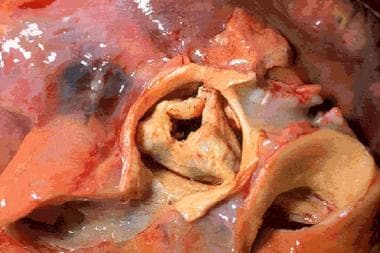
Stenotic aortic valve (macroscopic appearance). |
 | View Full Size Image | |
Media type: Photo
|
- Agarwal A, Kini AS, Attanti S, et al. Results of repeat balloon valvuloplasty for treatment of aortic stenosis in patients aged 59 to 104 years. Am J Cardiol. Jan 1 2005;95(1):43-7. [Medline].
- Bauer F, Eltchaninoff H, Tron C, et al. Acute improvement in global and regional left ventricular systolic function after percutaneous heart valve implantation in patients with symptomatic aortic stenosis. Circulation. Sep 14 2004;110(11):1473-6. [Medline].
- Bonow RO, Carabello B, de Leon AC, et al. Guidelines for the management of patients with valvular heart disease: executive summary. A report of the American College of Cardiology/American Heart Association Task Force on Practice Guidelines. Circulation. Nov 3 1998;98(18):1949-84. [Medline].
- Braunwald E. Heart disease: a textbook of cardiovascular medicine. In: Braunwald E, ed. Aortic Stenosis. 4th ed. Philadelphia, Pa: WB Saunders; 1992:1035-43.
- Connolly HM, Oh JK, Orszulak TA, et al. Aortic valve replacement for aortic stenosis with severe left ventricular dysfunction. Prognostic indicators. Circulation. May 20 1997;95(10):2395-400. [Medline].
- Cribier A, Eltchaninoff H, Bash A, et al. Percutaneous transcatheter implantation of an aortic valve prosthesis for calcific aortic stenosis: first human case description. Circulation. Dec 10 2002;106(24):3006-8. [Medline].
- Frank S, Johnson A, Ross J Jr. Natural history of valvular aortic stenosis. Br Heart J. Jan 1973;35(1):41-6. [Medline].
- Hanzel GS, Harrity PJ, Schreiber TL, O'Neill WW. Retrograde percutaneous aortic valve implantation for critical aortic stenosis. Catheter Cardiovasc Interv. Mar 2005;64(3):322-6. [Medline].
- Hughes BR, Chahoud G, Mehta JL. Aortic stenosis: is it simply a degenerative process or an active atherosclerotic process?. Clin Cardiol. Mar 2005;28(3):111-4. [Medline].
- Messika-Zeitoun D, Aubry MC, Detaint D, et al. Evaluation and clinical implications of aortic valve calcification measured by electron-beam computed tomography. Circulation. Jul 20 2004;110(3):356-62. [Medline].
- Novaro GM. Electron beam computed tomography: the latest "stethoscope" for calcific aortic valve disease. Mayo Clin Proc. Oct 2004;79(10):1239-41. [Medline].
- O'Rourke RA. Aortic valve stenosis: a common clinical entity. Curr Probl Cardiol. Aug 1998;23(8):434-71. [Medline].
- Otto CM, Burwash IG, Legget ME, et al. Prospective study of asymptomatic valvular aortic stenosis. Clinical, echocardiographic, and exercise predictors of outcome. Circulation. May 6 1997;95(9):2262-70. [Medline].
- Otto CM. Aortic stenosis and hyperlipidemia: establishing a cause-effect relationship. Am Heart J. May 2004;147(5):761-3. [Medline].
- Passik CS, Ackermann DM, Pluth JR, Edwards WD. Temporal changes in the causes of aortic stenosis: a surgical pathologic study of 646 cases. Mayo Clin Proc. Feb 1987;62(2):119-23. [Medline].
- Pellikka PA, Nishimura RA, Bailey KR, Tajik AJ. The natural history of adults with asymptomatic, hemodynamically significant aortic stenosis. J Am Coll Cardiol. Apr 1990;15(5):1012-7. [Medline].
- Prasad Y, Bhalodkar NC. Aortic sclerosis--a marker of coronary atherosclerosis. Clin Cardiol. Dec 2004;27(12):671-3. [Medline].
- Rahimtoola SH. The year in valvular heart disease. J Am Coll Cardiol. Jan 4 2005;45(1):111-22. [Medline].
- Rajamannan NM, Otto CM. Targeted therapy to prevent progression of calcific aortic stenosis. Circulation. Sep 7 2004;110(10):1180-2. [Medline].
- Rosenhek R, Rader F, Loho N, et al. Statins but not angiotensin-converting enzyme inhibitors delay progression of a
|