AUTHOR AND EDITOR INFORMATION
Section 1 of 10
Author: Melanie L Richards, MD, Associate Professor, Department of Surgery, Mayo Clinic
Melanie L Richards is a member of the following medical societies: American Association of Endocrine Surgeons, American College of Surgeons, International Association of Endocrine Surgeons, Southwestern Surgical Congress, and Western Surgical Association
Coauthor(s):
Suzanne M Carter, MS, Senior Genetic Counselor, Associate, Department of Obstetrics and Gynecology, Division of Reproductive Genetics, Montefiore Medical Center, Albert Einstein College of Medicine;
Susan J Gross, MD, FRCS(C), FACOG, FACMG, Codirector, Division of Reproduction Genetics, Associate Professor, Department of Obstetrics and Gynecology, Albert Einstein College of Medicine;
Ruth Freeman, MD, Director of Menopause Research and Treatment Center, Professor, Departments of Medicine and Obstetrics and Gynecology, Montefiore Medical Center, Albert Einstein College of Medicine
Editors: Ghassem Pourmotabbed, MD †, Former Associate Professor, Department of Internal Medicine, Division of Endocrinology and Metabolism, University of Tennessee School of Medicine and Health Science Center; Francisco Talavera, PharmD, PhD, Senior Pharmacy Editor, eMedicine; Romesh Khardori, MD, Chief, Division of Endocrinology, Metabolism and Molecular Medicine, Professor, Department of Internal Medicine, Southern Illinois University School of Medicine; Mark Cooper, MBBS, PhD, FRACP, Head, Diabetes & Metabolism Division, Baker Heart Research Institute, Professor of Medicine, Monash University; George T Griffing, MD, Professor of Medicine, St Louis University School of Medicine
Author and Editor Disclosure
Synonyms and related keywords:
Sipple syndrome, MEN 2, MEN2, MEN II, MENII, thyroid cancer, pheochromocytomas, benign tumors of the adrenal medulla, stromal amyloid, parathyroid hyperplasia, mucosal neuromas, marfanoid habitus, familial cancer syndromes, autosomal dominant disorders, familial medullary thyroid carcinoma-only, FMTC-only, primary hyperparathyroidism, thyroidectomy, adrenalectomy, cutaneous lichen amyloidosis, RET proto-oncogene
Background
Sipple first described an association between thyroid cancer and pheochromocytoma (benign tumor of the adrenal medulla) in 1961. The thyroid cancer found with pheochromocytoma was discovered to be a medullary carcinoma characterized by stromal amyloid in 1965. This familial constellation of pathology in conjunction with parathyroid hyperplasia was recognized as multiple endocrine neoplasia, type 2 (MEN 2) in 1968. Although patients with mucosal neuromas were identified at this time, the distinction between MEN 2A and MEN 2B was not made until 1975.
- MEN 2A patients do not have the phenotypic abnormalities of mucosal neuromas and marfanoid habitus found in MEN 2B patients.
- MEN 2A patients also have a less virulent form of medullary thyroid carcinoma (MTC) than MEN 2B patients.
- MEN 2A patients may also have parathyroid hyperplasia, which is exceedingly rare in MEN 2B patients.
Pathophysiology
MEN 2 is a rare familial cancer syndrome caused by mutations in the RET proto-oncogene. Inherited as an autosomal dominant disorder, MEN 2 has 3 distinct subtypes, including MEN 2A, MEN 2B, and familial medullary thyroid carcinoma-only (FMTC-only). The subtypes are defined by the combination of tissues affected. Developmental abnormalities may also be present. By age 70 years, the penetrance rate is 70%. Genetic testing and clinical surveillance beginning in childhood provide the opportunity to treat the devastating and sometimes fatal complications of this disorder.1 The RET proto-oncogene is 80 kilobase (kb) long and encodes a putative tyrosine kinase receptor. Its endogenous ligand may be the glial cell line–derived neurotrophic factor (GDNF), which appears to play a critical role in the normal function of pathways involved in enteric nervous system neurogenesis and renal organogenesis. Recent data suggest that an overrepresentation of mutant RET as an undefined second hit undefined event might trigger tumorigenesis. However, alterations in other genes might contribute to this overrepresentation of RET or impact on MEN 2-related tumor development through completely different mechanisms and pathways.
Glandular hyperplasia begins with an increase of C cells located in the thyroid gland follicles and can progress to malignancy. Although they are benign, pheochromocytomas can cause a life-threatening hypertensive episode or arrhythmia. Virtually all MEN 2A patients develop medullary thyroid carcinoma. This is often the first expressed abnormality and usually occurs in the second or third decade of life. The medullary thyroid carcinoma in MEN 2A patients is typically bilateral and multicentric, in contrast to sporadic medullary thyroid carcinoma, which is unilateral. Pheochromocytomas are present in approximately half of MEN 2A patients. They are bilateral in 60-80% of patients, compared with 10% of patients with sporadic pheochromocytomas. Pheochromocytomas tend to be diagnosed at the same time as the medullary thyroid carcinoma or several years later (both primarily occurring in the second or third decade). The pheochromocytomas of MEN 2A patients are nearly all benign. Parathyroid hyperplasias are present in nearly half of patients but are less common than pheochromocytomas. In many patients, such hyperplasias can be clinically silent. However, as in other cases of hyperparathyroidism, symptoms can often be elucidated following comprehensive questioning.
Frequency
United States
The overall frequency is 1 case per 30,000-50,000 persons. In decreasing order of frequency, MEN occurs as follows: MEN 2A, FMTC-only, and MEN 2B.
Mortality/Morbidity
MEN 2A, MEN 2B, and FMTC-only elicit overlapping and distinct abnormalities. The characteristic tumor of MEN 2 MTC is present in all subtypes. Pheochromocytomas appear in both MEN 2A and MEN 2B patients. Primary hyperparathyroidism frequently develops in MEN 2A patients but rarely in those with MEN 2B. Gastrointestinal, skeletal, and dermatological abnormalities only occur in MEN 2B patients.
- Medullary thyroid carcinoma: The prognosis of medullary thyroid carcinoma is associated with the disease stage at the time of diagnosis. Because the penetrance of medullary thyroid carcinoma is nearly 100%, perform prophylactic thyroidectomy by age 5 years in children with an identifiable RET mutation.2, 3 For patients who are at risk but who have not had genetic screening, perform annual biochemical screening.
- Pheochromocytoma: These benign tumors of the adrenal medulla occur in 50% of MEN 2 patients by the time they are in their late 30s; however, prevalence varies in different families. Pheochromocytomas develop in more than 50% of MEN 2B patients and can appear during early childhood. The earliest possible detection of these tumors can prevent a hypertensive crisis. Do not consider surgical removal until the patient is symptomatic. Subtotal adrenalectomy remains controversial.4, 5
- Hyperparathyroidism: Extremely uncommon in MEN 2B patients, parathyroid hyperplasia affects 20-30% of MEN 2A patients. Patients may present with hypercalcemia and other vague symptoms.
Age
In MEN 2A patients, 50% of those with RET gene mutations develop the disease by age 50 years, and 70% develop the disease by age 70 years. Medullary thyroid carcinoma has been detected shortly after birth.
History
The most important questions to ask relate to a family history of multiple endocrine neoplasms. Patients may present with symptoms related to medullary thyroid carcinoma, hyperparathyroidism, or pheochromocytoma. Clinical presentation is also related to the patient's age. A young patient with an identified RET proto-oncogene mutation will probably be asymptomatic. These patients generally have thyroid C-cell hyperplasia without progression to medullary carcinoma. If a patient has thyroid medullary carcinoma, he or she may have a history of diarrhea from extensive disease. This may be related to elevated prostaglandin or calcitonin levels. Virtually all index patients have medullary thyroid carcinoma at the time of diagnosis, although their clinical presentation may be consistent with pheochromocytoma or hyperparathyroidism. Symptoms can include hypertension, episodic sweating, diarrhea, scaly skin rash, or compressive symptoms from a neck mass. Patients with hypercalcemia may present with constipation, polyuria, polydipsia, memory problems, depression, nephrolithiasis, glucose intolerance, gastroesophageal reflux, and fatigue, or they may have no symptoms. They may also lose bone density.
- Hypertension: If pheochromocytomas develop, an increase in blood pressure and heart rate may be the only signs. These increases can be chronic or episodic. Some patients have episodes of sweating and headaches.
- Chronic constipation: This constant finding in MEN 2B patients results from hyperplasia of the intrinsic autonomic ganglia in the intestinal wall. Infants may fail to thrive.
- Scaly skin rash: Cutaneous lichen amyloidosis in MEN 2A patients manifests as multiple pruritic scaly skin lesions in the scapular area of the back.6 They are caused by deposition of keratinlike peptides rather than calcitoninlike peptides.
Physical
The physical signs of MEN 2 are extremely variable and often subtle.
- A neck mass or dominant thyroid nodule is discovered. Anterior neck lymph nodes are nontender, arise insidiously with progressive enlargement, and may signify regional metastasis.
- Blood pressure and heart rate may be elevated if a pheochromocytoma is present.
- Marfanoid habitus of high-arched palate, pectus excavatum, bilateral pes cavus, and scoliosis is observed in MEN 2B patients. Neuromas on the eyelids, conjunctiva, nasal and laryngeal mucosa, tongue, and lips are frequent findings. Patients also have prominent hypertrophied lips leading to a characteristic facies.
- Localized pruritus appears over the upper back in MEN 2B patients.
Causes
Mutations in the RET proto-oncogene, which have been localized to 10q11.2, are responsible for MEN 2. Although its function is still unknown, the protein produced is critical during embryonic development of the enteric nervous system and kidneys. This transmembrane oncogene consists of 3 domains, including a cysteine-rich extracellular receptor domain, a hydrophobic transmembrane domain, and an intracellular tyrosine kinase catalytic domain. Point mutations associated with MEN 2A and FMTC-only were identified in exons 10 and 11. Evidence of genotype/phenotype correlation exists. Almost all individuals with MEN 2B have an identical mutation in codon 918 of exon 16. Inheritance is autosomal dominant with variable penetrance and expressivity.
Substantiation of the genotype-phenotype correlation of inherited medullary thyroid carcinoma might lead to development of an individual approach to risk management in childhood genotype carriers and research into potential modifying factors should take place. Early total thyroidectomy remains effective in preventing the development of medullary thyroid carcinoma in the long-term.
Other Problems to be Considered
Hereditary pheochromocytomas may occur with the following conditions:
Hereditary hyperparathyroidism may occur with the following conditions:
- MEN 1
- Familial hyperparathyroidism
- Familial hypocalciuric hypercalcemia
Lab Studies
- Perform genetic screening for RET mutations in all index patients. If a mutation is identified, also screen family members who are at risk.
- For individuals identified with a mutation or for individuals who are at risk, biochemical screening consists of baseline calcitonin levels, urine collection for catecholamines, vanillylmandelic acid and metanephrine concentrations, serum calcium level, and parathyroid hormone (PTH) level. If a patient's calcitonin level is within reference ranges, a pentagastrin and/or Ca++ stimulation test may be used to guide the necessity of a central compartment or modified neck dissection.
- Screening for medullary thyroid carcinoma is done with the pentagastrin stimulation test, measuring serum calcitonin at baseline and at 2, 5, and 10 minutes. False-positive and false-negative results have been reported.
- Urinary catecholamines, vanillylmandelic acid, and metanephrines screen for pheochromocytomas. (If elevated, imaging studies of the adrenals are recommended.)
- Serum calcium level and PTH levels screen for hyperparathyroidism. An inappropriately elevated PTH level in relation to the serum calcium is consistent with primary hyperparathyroidism. If the 24-hour urine calcium level is low, the patient should be considered for familial hypocalciuric hypercalcemic syndrome.
Imaging Studies
- Perform CT scanning or MRI for imaging of the adrenals. A metaiodobenzylguanidine (MIBG) scan is useful for localizing pheochromocytomas.
- If calcitonin levels are elevated at either baseline or with provocative testing, evaluate the chest and abdomen for metastatic disease. Available modalities include CT scanning, MRI, octreotide scanning, and, in some instances, laparoscopy.
Other Tests
- Radionuclide scanning: This modality may reveal the extent of metastasis.
- OctreoScan: Provides a whole-body examination and is used to examine the spread of medullary thyroid carcinoma. The somatostatin analogue octreotide, which is used for treatment of hormone-related symptoms, is labeled with the isotope indium In 111 and injected intravenously. The next day, the patient is examined with a gamma camera, which can detect accumulation of radioactivity.
Procedures
- Fine-needle aspiration: Avoid the removal of cells from thyroid masses for cytology in MEN 2 patients who have had their diagnosis previously confirmed by either genetic analysis or elevated calcitonin levels. These patients have an established diagnosis, and a biopsy increases the possibility of tumor spread. A fine-needle aspiration biopsy is primarily used in an index patient who presents with a thyroid nodule when the clinician considers medullary thyroid carcinoma unlikely.
Histologic Findings
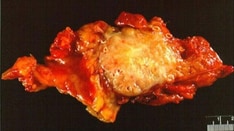
In medullary thyroid carcinoma, the tumor is well demarcated, firm, and gray-white. Polygonal cells are uniform, with finely granular eosinophilic cytoplasm with central nuclei. Amyloid formed from calcitonin molecules is often found. C-cell hyperplasia is frequently found and is a precursor in the malignant transformation to medullary thyroid carcinoma. Pheochromocytomas are benign tumors, often bilateral and multifocal, that arise from diffuse hyperplasia of the adrenal medulla. In parathyroid hyperplasia, overgrowth is the most common finding, though adenomatous changes occur in a small percentage of cases.
Staging
The TNM classification is used for postoperative staging. (T = the size of the primary lesion; N = the presence or absence of regional lymph node metastatic involvement; M = the presence or absence of distant metastatic lesions.)
- Stage 1 is T1 (tumor d1 cm in greatest dimension, limited to the thyroid) at any age. No evidence of lymph node or distant metastases exists.
- Stage II is T2-T4 (2 = tumor >1 cm but <4 cm and not invading beyond the thyroid capsule; 3 = tumor >4 cm; 4 = extrathyroid extension or invasion through the thyroid capsule). No evidence of lymph node or distant metastases exists.
- Stage III is any T and N1.
- N1 means regional lymph node metastasis.
- N1a means metastasis in ipsilateral cervical lymph node(s).
- N1b means metastasis in bilateral, midline, or contralateral cervical or mediastinal lymph node(s).
- Stage IV is any T, any N, and M1 (presence of distant metastatic lesions).
Medical Care
MEN 2A is treated with surgery. Preoperative medical treatment may consist of prostaglandin inhibitors to alleviate diarrhea that may be associated with medullary thyroid cancer. Preoperatively, prepare patients with pheochromocytomas by treating them with an alpha-blocker for at least 2 weeks, after which consider administration of a beta-blocker. Reports of successful management using a calcium channel blocker rather than an alpha-blocker have been noted. Many practitioners routinely treat patients with a beta-blocker, while others selectively treat patients based on blood pressure control and tachycardia. Patients presenting with severe hypercalcemia should first be hydrated, after which they should be treated with furosemide. If they remain severely hypercalcemic, consider treatment with calcitonin, mithramycin, glucocorticoids, or bisphosphonates such as pamidronate. These patients need urgent parathyroidectomy when calcium levels have been lowered, ideally below 14 mg/dL. Evaluation for pheochromocytomas is important because these should be removed before other surgical interventions. This can be performed before parathyroidectomy or thyroidectomy under a single general anesthetic if the patient is stable.
- Evaluation includes screening for mutations in the RET gene.
- Thyroid hormone supplementation is necessary following total thyroidectomy in carriers of RET mutations or following a diagnosis of medullary thyroid carcinoma. Patients who have been diagnosed with medullary thyroid carcinoma require serial calcitonin (+/- provocative testing) and carcinoembryonic antigen (CEA) testing to assess for persistent or recurrent disease.
- Start annual 24-hour urine collections for catecholamine concentrations to detect pheochromocytoma at the earliest age possible.
- Begin annual testing of serum calcium and PTH levels at age 10 years.
Surgical Care
- Medullary thyroid carcinoma
- The advent of genetic analysis has negated the need for pentagastrin stimulation testing to identify patients with hereditary medullary thyroid carcinoma. Carefully screen patients without a family history for pheochromocytoma and hyperparathyroidism because almost 19% of sporadic cases of medullary thyroid carcinoma are index MEN 2A cases.
- Calcitonin and CEA determinations remain useful serologic tests to identify recurrent disease. With nearly 100% penetrance of medullary thyroid carcinoma in MEN 2A patients, surgical intervention is recommended in all patients who are identified to carry the MEN2A gene. With genetic analysis available, these patients are often found to have an earlier stage of disease, with many patients having only parafollicular C-cell hyperplasia.
- Total thyroidectomy has been recommended for patients as young as age 5 years for MEN 2A if they contain the genetic mutation. In patients with the RET genetic mutation for MEN 2B, total thyroidectomy is recommended in infancy because medullary thyroid carcinoma behaves more aggressively in these patients.
- In contrast to patients who have sporadic cases of medullary thyroid carcinoma with solitary tumors, patients with MEN 2A have bilateral and multifocal disease.
- The extent of surgery is controversial. Total thyroidectomy with central neck dissection is recommended for all patients with proven or probable medullary thyroid carcinoma. The need for either a unilateral or a bilateral modified neck dissection is controversial. The inclusion of a modified neck dissection has been recommended for patients with palpable jugular chain lymphadenopathy. Some surgeons advocate a routine modified neck dissection. Others sample the jugular chain at operation with frozen section, proceeding with dissection only with histologic evidence of metastatic disease.
- Children often do not require a node dissection because their disease is at the hyperplasia stage and has not reached metastatic potential.
- The treatment of persistent or recurrent elevations of calcitonin with random testing or following pentagastrin stimulation has been a clinical dilemma. Some investigators have found calcitonin levels to remain stable for approximately 5 years and have recommended surgical excision only for clinically apparent disease. Others have found that 66% of patients with node-positive disease died secondary to medullary thyroid carcinoma and advocate a more aggressive approach to follow-up care and surgery.
- Patients undergoing prophylactic thyroidectomy do not require lymphadenectomy.
- Parathyroid disease
- Hyperparathyroidism is the least common manifestation of MEN 2A. It usually manifests in patients older than 30 years. Histologically, the parathyroid glands in MEN 2A patients consist of a chief-cell hyperplasia. This hyperplasia is asymmetrical in terms of parathyroid size. To reduce the risk of postoperative hypocalcemia, remove only grossly abnormal parathyroid glands. If all parathyroid glands are enlarged, a subtotal parathyroidectomy is advocated, leaving an approximately 60-mg remnant. Perform a cervical thymectomy because of the increased risk of supernumerary parathyroid glands.
- Persistent or recurrent hyperparathyroidism is unusual and less likely to occur in MEN 2A patients than in MEN 1 patients.
- Pheochromocytoma
- Screen all MEN 2A patients for pheochromocytomas. This screening should consist of a 24-hour urine collection for catecholamines, and metanephrine. Localization studies are not necessary unless biochemical evidence is consistent with pheochromocytoma.
- While all MEN 2A patients may have bilateral adrenal medullary hyperplasia, the tumors may or may not be present bilaterally at the time of initial operation. In this situation, a unilateral adrenalectomy avoids the risk of Addisonian crisis and improves the quality of life by not requiring replacement therapy. Some investigators have advocated bilateral adrenalectomy in all patients. These proponents argue for the risk of malignancy (rare) and the operative complications from subsequent surgeries. The advent of laparoscopic adrenalectomy has substantially decreased the morbidity of adrenalectomy. A subtotal adrenalectomy can be performed to preserve adrenal cortical function, but the risk for recurrence may be increased.
- Remember that one fourth of patients with apparently sporadic pheochromocytoma may be carriers of mutations characteristic of syndromes associated with pheochromocytomas.
Consultations
- Geneticists
- Endocrinologists
- Oncologists
Patients require hormone replacement following total thyroidectomy and bilateral adrenalectomy or when they have postoperative hypoparathyroidism.
Drug Category: Thyroid hormones
For supplemental therapy in hypothyroidism.
| Drug Name | Levothyroxine sodium (Synthroid, Levoxyl, Thyrox) |
| Description | The goal of therapy for primary hypothyroidism is to achieve and maintain a clinical and biochemical euthyroid state. In active form, thyroid hormones influence growth and maturation of tissues. Involved in normal growth, metabolism, and development. |
| Adult Dose | 1.6 mcg/kg PO qd |
| Pediatric Dose | <3 months: 10-15 mcg/kg PO qd 3-6 months: 8-10 mcg/kg PO qd 6-12 months: 6-8 mcg/kg PO qd 1-5 years: 5-6 mcg/kg PO qd 6-12 years: 4-5 mcg/kg PO qd >12 years: 2-3 mcg/kg PO qd After growth and puberty completed: Administer as in adults |
| Contraindications | Documented hypersensitivity; uncorrected adrenal insufficiency |
| Interactions | Cholestyramine may decrease liothyronine absorption; estrogens may decrease response to thyroid hormone therapy in patients with nonfunctioning thyroid glands; effect of anticoagulants is increased when administered with liothyronine; activity of some beta-blockers may decrease when hypothyroid patient is converted to a euthyroid state |
| Pregnancy | A - Fetal risk not revealed in controlled studies in humans
|
| Precautions | Caution in angina pectoris or cardiovascular disease; periodically monitor thyroid status; must be increased during pregnancy |
Drug Category: Vitamin D supplements
May increase serum calcium levels by improving calcium absorption.
| Drug Name | Calcitriol (Rocaltrol) |
| Description | May be required in the management of hypocalcemia and its clinical manifestations in patients with postsurgical hypoparathyroidism. Is important in maintaining calcium balance and in the regulation of PTH. Patients are advised to have a dietary intake of calcium at a minimum of 1000 mg/d. |
| Adult Dose | 0.25 mcg PO qam; alternatively, 0.5 mcg IV 3 times/wk Maintenance dose: 0.5-2 mcg PO qd |
| Pediatric Dose | <1 year: .04-.08 mcg/kg PO qd 1-5 years: 0.25-0.75 mcg PO qd >6 years: 0.5-2 mcg PO qd |
| Contraindications | Documented hypersensitivity; hypercalcemia; hypervitaminosis D |
| Interactions | Cholestyramine, colestipol, orlistat, and mineral oil can decrease intestinal absorption of oral calcitriol; phenobarbital, phenytoin, and primidone can increase the metabolism of vitamin D, thereby decreasing its activity; thiazide diuretics can result in hypercalcemia; can affect the actions of the cardiac glycoside and/or lead to cardiac arrhythmias |
| Pregnancy | C - Fetal risk revealed in studies in animals but not established or not studied in humans; may use if benefits outweigh risk to fetus
|
| Precautions | Excessive dosage induces hypercalcemia and, in some instances, hypercalciuria; therefore, early in treatment during dosage adjustment, determine serum calcium twice weekly and monitor for symptoms of hypercalcemia (eg, fatigue, somnolence, headache, anorexia, xerostomia, metallic taste, nausea/vomiting, abdominal cramps, constipation, diarrhea, vertigo, tinnitus, ataxia, exanthema, myalgia, arthralgia, irritability) |
Drug Category: Corticosteroids
Cause profound and varied metabolic effects. Corticosteroids modify the body's immune response to diverse stimuli.
| Drug Name | Cortisone (Cortone) |
| Description | DOC for patients with adrenocortical insufficiency. Used in replacement doses for postsurgical adrenalectomy. |
| Adult Dose | 25-50 mg/d PO/IM divided q12-24h; can be administered as single dose or early morning and afternoon |
| Pediatric Dose | 0.5-0.75 mg/kg/d PO/IM or 20-25 mg/m2/d divided q8h Alternatively, 0.25-0.35 mg/kg/d IM qd or 12.5 mg/m2/d IM |
| Contraindications | Documented hypersensitivity; viral, fungal, or tubercular skin lesions |
| Interactions | Estrogen coadministration may increase corticosteroid levels; cortisone may increase digitalis toxicity secondary to hypokalemia; barbiturates, phenytoin, and rifampin can increase the metabolism of glucocorticoids |
| Pregnancy | C - Fetal risk revealed in studies in animals but not established or not studied in humans; may use if benefits outweigh risk to fetus
|
| Precautions | Patients subjected to stress require increased dosage before, during, and after stressful situations; dosage must be increased during pregnancy |
Drug Category: Mineralocorticoids
Partial replacement therapy for primary and secondary adrenocortical insufficiency.
| Drug Name | Fludrocortisone acetate (Florinef) |
| Description | The combination of fludrocortisone acetate tablets with a glucocorticoid, such as hydrocortisone or cortisone, provides substitution therapy approximating normal adrenal activity with minimal risks of unwanted effects. |
| Adult Dose | 0.05-0.2 mg PO qd, although dosage ranging from 0.1 mg 3 times/wk to 0.2 mg qd has been used |
| Pediatric Dose | 0.05-0.1 mg PO qd |
| Contraindications | Documented hypersensivitiy, systemic fungal infections |
| Interactions | Antagonizes effects of anticholinesterases; rifampin, hydantoins, and barbiturates decrease effects of fludrocortisone; decreases salicylate levels |
| Pregnancy | C - Fetal risk revealed in studies in animals but not established or not studied in humans; may use if benefits outweigh risk to fetus
|
| Precautions | Periodic checking of serum electrolyte levels is advisable during prolonged therapy; dietary salt restriction and potassium supplementation may be necessary |
Further Inpatient Care
- Admit patients for testing and surgical intervention.
- Patients should be monitored on a life-long basis for evidence of recurrent disease. After an initial follow-up visit, patients may be evaluated at 6 months, then yearly if they are asymptomatic. During these evaluations, patients should undergo physical examination, 24-hour urine catecholamine, metanephrine and vanillylmandelic acid, CEA level, calcitonin, and serum calcium testing.
- If recurrent hypercalcemia is suggested, consider patients for repeat cervical exploration.
- If pheochromocytoma is suggested, evaluate patients for surgical resection. This tumor is likely in the remaining contralateral adrenal, although workup should include a CT scan and MIBG scan to evaluate for recurrence in the resected area or an extra-adrenal site. Recurrences in the resected area are more common if a subtotal adrenalectomy had been performed initially. The management of calcitonin/CEA elevations has been controversial. Resect any palpable cervical disease.
- Some practitioners have advocated routine cervical ultrasonography with exploration for any evidence of recurrence. Many patients remain asymptomatic with elevated calcitonin levels for 20 years or longer.
- The 5- and 10-year survival rates in patients with medullary thyroid carcinoma and MEN 2A are approximately 90% and 75%, respectively.
Further Outpatient Care
- Monitor patients for recurrence of medullary thyroid carcinoma with calcitonin, CEA, and +/- provocative calcitonin testing.
- Perform annual screening for hyperparathyroidism with serum calcium and PTH levels in MEN 2A patients.
- Obtain urinary catecholamine levels on an annual basis to assess for pheochromocytoma.
- Carefully monitor medication dosage and adverse effects.
In/Out Patient Meds
- Hormone replacement following total thyroidectomy and bilateral adrenalectomy is necessary. Patients who develop postoperative hypoparathyroidism need supplemental calcium and/or vitamin D.
Transfer
- Transfer patients for surgical intervention if necessary.
Deterrence/Prevention
- Prophylactic thyroidectomy prevents medullary thyroid carcinoma.
Complications
- Hypercalcemia
- Chronic constipation
- Hypertensive episode
- Recurrence of medullary thyroid carcinoma
Prognosis
- Early treatment of medullary thyroid carcinoma can prevent death.
- Careful monitoring for pheochromocytomas can decrease the chance of hypertensive episodes.
Patient Education
- Adhering to a surveillance program lessens disease complications.
- Order genetic counseling to discuss gene testing and reproductive options.
- For excellent patient education resources, visit eMedicine's Endocrine System Center. Also, see eMedicine's patient education article Thyroid Problems.
Medical/Legal Pitfalls
- Failure to offer genetic counseling and screening
- Failure to offer surgical options for pheochromocytoma
- Failure to offer prophylactic thyroidectomy for individuals at risk
Special Concerns
- Medullary thyroid carcinoma can occur shortly after birth in MEN 2B patients.
- Calender A. Genetic testing in multiple endocrine neoplasia and related syndromes. Forum (Genova). Apr-Jun 1998;8(2):146-59. [Medline].
- Lallier M, St-Vil D, Giroux M, et al. Prophylactic thyroidectomy for medullary thyroid carcinoma in gene carriers of MEN2 syndrome. J Pediatr Surg. Jun 1998;33(6):846-8. [Medline].
- van Heurn LW, Schaap C, Sie G, et al. Predictive DNA testing for multiple endocrine neoplasia 2: a therapeutic challenge of prophylactic thyroidectomy in very young children. J Pediatr Surg. Apr 1999;34(4):568-71. [Medline].
- de Graaf JS, Lips CJ, Rutter JE, van Vroonhoven TJ. Subtotal adrenalectomy for phaeochromocytoma in multiple endocrine neoplasia type 2A. Eur J Surg. Jun 1999;165(6):535-8. [Medline].
- Edstrom E, Grondal S, Norstrom F, et al. Long term experience after subtotal adrenalectomy for multiple endocrine neoplasia type IIa. Eur J Surg. May 1999;165(5):431-5. [Medline].
- Gagel RF, Levy ML, Donovan DT, et al. Multiple endocrine neoplasia type 2a associated with cutaneous lichen amyloidosis. Ann Intern Med. Nov 15 1989;111(10):802-6. [Medline].
- Calmettes C, Ponder BA, Fischer JA, Raue F. Early diagnosis of the multiple endocrine neoplasia type 2 syndrome: consensus statement. European Community Concerted Action: Medullary Thyroid Carcinoma. Eur J Clin Invest. Nov 1992;22(11):755-60. [Medline].
- Carling T. Multiple endocrine neoplasia syndrome: genetic basis for clinical management. Curr Opin Oncol. Jan 2005;17(1):7-12. [Medline].
- Chi DD, Moley JF. Medullary thyroid carcinoma: genetic advances, treatment recommendations, and the approach to the patient with persistent hypercalcitoninemia. Surg Oncol Clin N Am. Oct 1998;7(4):681-706. [Medline].
- Evans DB, Fleming JB, Lee JE, et al. The surgical treatment of medullary thyroid carcinoma. Semin Surg Oncol. Jan-Feb 1999;16(1):50-63. [Medline].
- Frank-Raue K, Rondot S, Hoeppner W, Goretzki P, Raue F, Meng W. Coincidence of multiple endocrine neoplasia types 1 and 2: mutations in the RET protooncogene and MEN1 tumor suppressor gene in a family presenting with recurrent primary hyperparathyroidism. J Clin Endocrinol Metab. Jul 2005;90(7):4063-7. [Medline].
- Gagel RF, Tashjian AH Jr, Cummings T, et al. The clinical outcome of prospective screening for multiple endocrine neoplasia type 2a. An 18-year experience. N Engl J Med. Feb 25 1988;318(8):478-84. [Medline].
- Goretzki PE, Hoppner W, Dotzenrath C, et al. Genetic and biochemical screening for endocrine disease. World J Surg. Dec 1998;22(12):1202-7. [Medline].
- Iler MA, King DR, Ginn-Pease ME, et al. Multiple endocrine neoplasia type 2A: a 25-year review. J Pediatr Surg. Jan 1999;34(1):92-6; discussion 96-7. [Medline].
- Johnston LB, Chew SL, Trainer PJ, et al. Screening children at risk of developing inherited endocrine neoplasia syndromes. Clin Endocrinol (Oxf). Feb 2000;52(2):127-36. [Medline].
- Koch CA. Molecular pathogenesis of MEN2-associated tumors. Fam Cancer. 2005;4(1):3-7. [Medline].
- Lips CJ. Clinical management of the multiple endocrine neoplasia syndromes: results of a computerized opinion poll at the Sixth International Workshop on Multiple Endocrine Neoplasia and von Hippel-Lindau disease. J Intern Med. Jun 1998;243(6):589-94. [Medline].
- Moore SW, Appfelstaedt J, Zaahl MG. Familial medullary carcinoma prevention, risk evaluation, and RET in children of families with MEN2. J Pediatr Surg. 2007;42:326-32. [Medline].
- Neumann HP, Bausch B, McWhinney SR. Germ-line mutations in nonsyndromic pheochromocytoma. N Engl J Med. May 9 2002;346(19):1459-66. [Medline].
- Romeo G, Ceccherini I, Celli J, et al. Association of multiple endocrine neoplasia type 2 and Hirschsprung disease. J Intern Med. Jun 1998;243(6):515-20. [Medline].
- Wick MJ. Clinical and molecular aspects of multiple endocrine neoplasia. Clin Lab Med. Mar 1997;17(1):39-57. [Medline].
Multiple Endocrine Neoplasia, Type 2 excerpt Article Last Updated: Feb 8, 2008
|