You are in: eMedicine Specialties > Medicine, Ob/Gyn, Psychiatry, and Surgery > Oncology
|
Mesothelioma Last Updated: February 9, 2007 |
|
| Synonyms and related keywords: mesothelioma, asbestos-related cancer, cancer of the pleura, asbestos exposure, plural cancer, malignant mesothelioma, mesothelioma malignancy, pleural malignant mesothelioma, lung cancer, lung tumor, pulmonary cancer, pulmonary tumor, pulmonary malignancy, sarcomatous mesothelioma, epithelial mesothelioma, mixed mesothelioma, pleural mesothelioma
|
|   |
AUTHOR INFORMATION
| Section 1 of 10  |
|
| Author: Winston W Tan, MD, Assistant Professor of Medicine, Mayo Medical School; Consulting Staff, Mayo Group Practices Coauthor(s): Geoffrey Weiss, MD, Chief Hematology/Oncology, South Texas Veterans Health Care System; Professor, Department of Medicine, University of Virginia ( Charlottesville) |
| Winston W Tan, MD, is a member of the following medical societies:
American College of Physicians,
American Society of Clinical Oncology,
American Society of Hematology,
Philippine Medical Association, and
Texas Medical Association |
| Editor(s): Michael Perry, MD, Professor, Department of Internal Medicine, Nellie B Smith Chair of Oncology, Director, Division of Hematology and Oncology, University of Missouri at Columbia/Ellis Fischel Cancer Center; Francisco Talavera, PharmD, PhD, Senior Pharmacy Editor, eMedicine;
Benjamin Movsas, MD, Vice-Chairman, Department of Radiation Oncology, Fox Chase Cancer Center;
Rajalaxmi McKenna, MD, FACP, Consulting Staff, Department of Medicine, Southwest Medical Consultants, SC, Good Samaritan Hospital, Advocate Health Systems;
and John S Macdonald, MD, Professor of Medicine, New York Medical College; Chief, Division of Medical Oncology, St Vincent's Hospital and Medical Center; Medical Director, Saint Vincent's Comprehensive Cancer Center |
Disclosure
|   |
INTRODUCTION
| Section 2 of 10  |
|
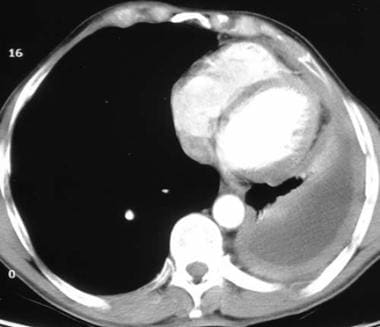
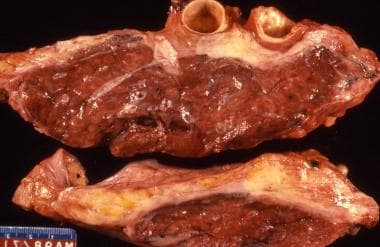
Background: Mesothelial cells normally line the body cavities, including the pleura, peritoneum, pericardium, and testis. Malignancies involving mesothelial cells in these body cavities are known as malignant mesothelioma, which may be localized or diffuse. Diagnosis is difficult because the results from fluid analysis of the effusion from the tumor are not usually diagnostic. Most, but not all, pleural malignant mesothelioma is associated with asbestos exposure. Of patients with pleural malignant mesothelioma, 77% have been exposed to asbestos in the past. Mesothelioma is more common in males than in females and it occurs in the fifth and seventh decade of life. Most of malignant mesothelioma occur in the pleura (90% of the time). Pathophysiology: The 3 major histological types of mesothelioma are sarcomatous, epithelial, and mixed. Pleural mesothelioma usually begins as discrete plaques and nodules that coalesce to produce a sheetlike neoplasm. Tumor growth usually begins at the lower part of the chest. The tumor may invade the diaphragm and encase the surface of the lung and interlobar fissures.
The tumor may also grow along drainage and thoracotomy tracts. As the disease progresses, it often extends into the pulmonary parenchyma, chest wall, and mediastinum. Pleural mesothelioma may extend into the esophagus, ribs, vertebra, brachial plexus, and superior vena cava.
Asbestos is the principal carcinogen implicated in the pathogenesis. The industries associated with asbestos exposure include ship building, construction, ceramics, paper mill, auto parts, railroad and insulation.
Most malignant mesotheliomas have complex karyotypes, with extensive aneuploidy and rearrangement of many chromosomes. A loss of a single copy on chromosome 22 is the most common abnormality. Frequency:
- In the US: Approximately 2500-3000 cases are diagnosed per year.
- Internationally: Frequency is 0.9 cases per 100,000 persons.
Mortality/Morbidity:
- Median survival for patients with malignant mesothelioma is 11 months. It is almost always fatal. Median survival based on histologic type is 9.4 months for sarcomatous, 12.5 months for epithelial, and 11 months for mixed. Approximately 15% of patients have an indolent course.
- Asbestos exposure is linked to at least 50% of patients developing malignant mesothelioma. Approximately 8 million people in the United States have been exposed to asbestos in the workplace. Family members are also exposed to asbestos embedded in the worker's clothing. The combination of tobacco and asbestos exposure greatly increases the risk of developing pleural mesothelioma.
Race:
- Mesothelioma has no racial predilection. Asbestos exposure is the most important factor. Race is not a factor.
Sex:
- Malignant mesothelioma is more common in men, with a male-to-female ratio of 3:1. It can also occur in children; however, these cases are not thought to be associated with asbestos exposure.
- With regard to women with mesothelioma, a 1996 case series by Ascoli et al showed 86% of tumors arising from the pleura, of which most were the epithelial type. Of the patients in this series, 75% had a history of exposure to asbestos and more than half developed the malignancy secondary to household contact with a worker exposed to asbestos.
- With regard to men with mesothelioma, the same case series demonstrated 45.5% with a history of exposure to asbestos and 53% with occupational exposure to asbestos. Most who were involved were construction workers, railroad workers, naval mechanics, bakers, explosive workers, and automobile mechanics.
Age:
- Malignant mesothelioma has a peak incidence 35-45 years after asbestos exposure. It commonly develops in the fifth to seventh decade of life.
|   |
CLINICAL
| Section 3 of 10  |
|
History: - Dyspnea and nonpleuritic chest wall pains are the most common presenting symptom.
- Chest radiographs show obliteration of the diaphragm, nodular thickening of the pleura, decreased size of the involved chest, radiolucent sheetlike encasement of the pleura, or a combination of these.
- A loculated effusion is present in more than 50% of patients, and a major portion of the pleura is opacified by the effusion.
- Chest discomfort, pleuritic pain, easy fatigability, fever, sweats, and weight loss are the other common accompanying symptoms. Patients may also be asymptomatic, with evidence of a pleural effusion noted incidentally on physical examination or by chest radiograph. Metastatic disease is uncommon at presentation and contralateral pleural abnormalities are usually secondary to asbestos-related pleural disease rather than metastatic disease.
- Approximately 60-90% of patients may have symptoms of chest pain or dyspnea.
Physical: - Physical findings of pleural effusion are usually noted upon percussion and auscultation.
- In rare cases, malignant mesothelioma manifests as cord compression, brachial plexopathy, Horner syndrome, or superior vena cava syndrome. Death is usually due to infection or respiratory failure from the progression of mesothelioma.
- Primary sites include the pleura (87%), the peritoneum (5.1%), the pericardium (0.4%), and the right side of the thorax (more so than the left side, by a right-to-left ratio of 1.6:1).
Causes: - A substantial proportion of patients were exposed to asbestos in asbestos mills, shipping yards, mines, or their homes.
- The crocidolite in asbestos is associated with mesothelioma in miners, manufacturers (using asbestos), and heating and construction workers. The rod-shaped amphiboles are more carcinogenic than the chrysotile.
- Malignant mesothelioma has also been linked to therapeutic radiation using thorium dioxide and zeolite, a silicate in the soil.
- An etiological role for simian virus 40 in malignant mesothelioma has also been suggested. Asbestos exposure alone was associated with malignant mesothelioma, but SV 40 alone was not. Thus giving some epidemiological evidence that SV 40 is a possible cocarcinogen. Its direct role at this point is still controversial.
- Interleukin 8 has direct growth-potentiating activity in mesothelial cell lines.
- Loss of one copy of chromosome 22 is the single most common karyotypic change in malignant mesothelioma. Other chromosomal changes commonly observed include 1p, 3p, 9p, and 6q. Several changes in the tumor suppressor gene p16 (CDKN2A) and p14 (ARF) and loss of function of neurofibromin 2 (NF2) or merlin are altered.
|   |
DIFFERENTIALS
| Section 4 of 10  |
|
Lung Cancer, Non-Small Cell Lung Cancer, Oat Cell (Small Cell)
Other Problems to be Considered:
Drug-induced pulmonary reactions
Mesothelial hyperplasia
Other primary lung neoplasms or metastatic disease
Pulmonary fibrosis
Pulmonary infection
Reactive airway disease
|
|
Patient Education
|
|
Click here for patient education.
|
|
|
|
|
|   |
WORKUP
| Section 5 of 10  |
|
Lab Studies:
- Pleural fluid findings in patients with mesothelioma typically are not diagnostic. The specific gravity of the pleural fluid is nondiagnostic.
- Typically, patients have less than 1000 leukocytes/mL, few erythrocytes, elevated protein levels, and normal lactate dehydrogenase levels.
- Results of cytologic examination are occasionally positive for malignant mesothelial cells; however, most often the plural fluid cytology results are not diagnostic.
- Diagnosis is made based on the following:
- More than 90% of patients present with pleural effusion that decreases after thoracentesis. Cytologic examination findings are diagnostic in only 32% of patients and are suggestive in 56% of patients. Thoracoscopically guided biopsy should be performed if mesothelioma is suggested, and results are diagnostic in 98% of cases.
- Careful scrutiny of routinely stained biopsy preparations is the most valuable diagnostic tool for making a diagnosis. A battery of commercial immunohistochemistry stains (eg, for cytokeratins, vimentin, human milk fat globulin 2, anti-Leu M1, BerEP4, and carcinoembryonic antigen) can be used.
- Diagnostic features distinguishing malignant mesothelioma from adenocarcinoma include negative test results for periodic acid-Schiff stain, mucicarmine stain, carcinoembryonic antigen, and Leu M1 and positive test results for calretinin, vimentin and cytokeratin. Electron microscopy reveals that cells have long microvilli, in contrast to adenocarcinomas, which have short microvilli. One of the new most intriguing markers is serum mesothelin-related protein (SMRP) measured in fluid or serum. The circulating SMRP level was reported to be elevated in 84% of patients with malignant mesothelioma and in 2% of patients with lung cancer.
- Recently, 4 new mesothelioma cell lines have been characterized based on ultrastructural and immunophenotypic analysis. Cell lines express vimentin, cytokeratins 8 and 18, and mesothelial antigen recognized by HBME-1 monoclonal antibody. Surface HLA class I and intercellular adhesion molecule I are present in all lines.
- While HLA class II and CD 86 are undetectable, HLA class II is present after interferon gamma stimulation. All cell lines display abnormal karyotypes with chromosome 6 abnormalities. The persistence of large T antigen with HLA class I and intercellular adhesion molecule I suggests large T antigen as a target for cytotoxic-based immunotherapy.
Imaging Studies:
- Imaging studies may include a chest radiograph, CT scan of the chest, MRI of the chest, and positron emission tomography scan. The latter is still considered investigational for helping differentiate between benign and malignant mesothelioma. The value of fluorodeoxyglucose positron emission tomography (FDG-PET) was evaluated in 17 patients. The survival distribution in the group with high FDG uptake showed shorter survival compared with the low FDG group.
- The optimal preoperative staging procedures are debatable. In 1996, Sugarbaker et al recommend MRI as a standard part of staging. Others argue that laparoscopic thoracoscopy is the best way to determine the extent of the disease. Some argue that positron emission tomography scans may be helpful, but their role in staging needs to be defined. MRI performed with different pulse sequences and gadolinium-based contrast material can improve detection of tumor extension, especially to the chest wall and diaphragm. Positron emission tomography scans can provide metabolic and anatomic information, especially for those with extrathoracic or mediastinal metastasis. The appropriate role of PET scans in the management of this disease is still undefined.
- Determining the extent of disease by performing a laparoscopy or MRI and a cardiopulmonary evaluation is important, if the patient is amenable.
Other Tests:
- Measuring the diffusion capacity of the lung preoperatively is important because most patients have poor pulmonary reserve secondary to interstitial lung disease.
- A cardiopulmonary stress test with pharmacologic agents is a reasonable choice to eliminate the possibility of evidence of silent myocardial ischemia.
Procedures:
- Thoracoscopy or pleuroscopy should be performed to confirm the diagnosis.
- Laparoscopy is important for staging but is still investigational to evaluate for transdiaphragmatic involvement.
Histologic Findings: See Lab Studies. Gross pathology reveals that the pleural surfaces are seeded with malignant mesothelioma cells, which form grouped nodules. As the disease progresses, it covers the entire pleural space and invades the chest wall, mediastinum, and diaphragm. Microscopically, the 3 histologic types are epithelial, sarcomatous, and mixed. The epithelial type correlates with a better prognosis.Staging: Six staging categories have been proposed. In 1996, Sugarbaker and associates proposed the Brigham staging system based on tumor resectability and nodal status, a system validated in a clinical trial. To date, the accepted system is the TNM classification accepted by the International Mesothelioma Interest Group (IMIG). - Stage I - Completely resected within the capsule of the parietal pleura without adenopathy (ie, ipsilateral pleura, lung, pericardium, diaphragm, or chest wall disease limited to previous biopsy sites)
- Stage II - All stage I characteristics, with positive resection margins, intrapleural adenopathy, or a combination
- Stage III - Local extension of disease into the chest wall or mediastinum, into the heart, through the diaphragm or peritoneum, or extrapleurally to involve the lymph nodes
- Stage IV - Distant metastatic disease
- Based on many clinical factors, 2 separate groups, the Cancer and Leukemia Group B and the European Organization for Research and Treatment of Cancer, had identified the following poor prognostic factors:
- Performance status of 2 or greater
- Male sex
- High platelet count
- Lactate dehydrogenase greater than 500 IU/L
- Low hemoglobin
- High white count
- Weight loss
|   |
TREATMENT
| Section 6 of 10  |
|
Medical Care: Treatment options for the management of malignant mesothelioma include surgery, chemotherapy, radiation, and multimodality treatment. Surgery in patients with disease confined to the pleural space is reasonable. - Chemotherapy
- Currently, cisplatin as a single drug has been used as the standard drug for phase III clinical trials. None of the standard treatment options has improved survival. The most active agents are anthracycline, platinum, and alkylating agents; each produces a response rate of 10-20%.
- Vogelzang et al presented the results of a phase III study of pemetrexed in combination with cisplatin versus cisplatin alone. Pemetrexed (500 mg/m2/d) and cisplatin (75 mg/m2/d) or cisplatin (75 mg/m2/d) was given on day 1. Both arms were given every 21 days. The median time to survival in the cisplatin/pemetrexed arm was 12.1 months versus 9.3 months for cisplatin alone. The response rate was 41.3% for the cisplatin/pemetrexed arm and 16.7% for the cisplatin arm. Folic acid and vitamin B-12 were given routinely to prevent the adverse effects of pemetrexed. This trial established the regimen as the standard choice for this disease.
- A 1999 phase II study by Byrne et al using cisplatin (100 mg/m2) on day 1 and gemcitabine (1000 mg/m2) administered intravenously on days 1, 8, and 15 of a 28-day cycle for 6 cycles showed response rates of 47.6% (complete and partial response), 42.8% (stable disease), and 9.5% (progressive disease). The median response duration was 25 weeks, progression-free survival was 25 weeks, and the overall survival was 41 weeks. Toxicity was mainly gastroenterologic and hematologic in nature.
- Several other combinations have been found to be active, including cisplatin/doxorubicin (Adriamycin)/mitomycin C, bleomycin/intrapleural hyaluronidase, cisplatin/doxorubicin (Adriamycin), carboplatin/gemcitabine, and cisplatin/vinblastine/mitomycin C. The cisplatin/gemcitabine combination has yielded the best results.
- Ranpirnase (Onconase) is a novel cytotoxic ribonuclease. It is a nonmyelossuppresive agent with minimal apparent toxicity to vital organs. It binds to the cell surface and penetrates the cell's interior through the energy-dependent endocytotic process. In the cytosol, it degrades tRNA and this damage constitute a signal for apoptosis and contributes to inhibition of cell growth and proliferation.
- The dose-limiting toxicity was renal manifested by proteinuria, azotemia, peripheral edema, flushing, myalgia, dizziness and decreased appetite.
- In a Phase II study by Miluski et al of 105 patients with 0-2 performance status were treated with ranpirnase. Median survival times was 6 months for the intent to treat and 8.3 months for the treatment target group. Among the 81 patients assessable for tumor response, 4 had partial response, 2 had minor regressions and 35 experienced stabilization of previously progressive disease.
- With the isolation of mesothelial cell lines, several chemotherapeutic agents are being tested actively to assess their efficacy. One explanation for the poor response to chemotherapy is the low apoptotic rate, as evidenced by low BCL2 and BAX expression. These data suggest that apoptosis is not a key phenomenon in mesothelioma development and histologic differentiation.
- Numerous trials of chemotherapeutic agents have been performed; however, until recently, the studies were small, the staging systems used were different, and the measurements of disease were inaccurate.
- Radiation
- Results with radiation therapy are also disappointing.
- Radiation has no effect on survival, but it has caused significant palliation in 50% of patients treated for chest pain and chest wall metastasis.
- Trimodality therapy
- This involves a combination of all 3 standard strategies (ie, surgery, chemotherapy, radiation).
- One trimodality approach involved extrapleural pneumonectomy followed by combination chemotherapy and radiotherapy. Overall survival rates were 45% at 2 years and 22% at 5 years.
- Lymph node involvement was a significant negative prognostic factor. The epithelial type had a better survival rate compared with the sarcomatous or mixed type (65% vs 20% at 2 y and 27% vs 0% at 5 y).
- Survival based on the Brigham staging system was 22 months for stage I, 17 months for stage II, and 11 months for stage III.
- Overall median survival was 17 months, yielding a 2-year survival rate of 36% and a 5-year survival rate of 14%. Epithelial cell type survival was better, with a 2-year survival rate of 68% and 5-year survival rate of 46%.
- Different chemotherapeutic regimens found to be useful in the trimodality treatment include cyclophosphamide/doxorubicin (Adriamycin)/cisplatin, carboplatin/paclitaxel, and cisplatin/methotrexate/vinblastine. External beam radiotherapy is delivered in a standard fractionation over 5.5-6 weeks.
Surgical Care: Surgical resection has been relied upon because radiation and chemotherapy have been ineffective primary treatments. The 2 surgical procedures used are pleurectomy with decortication and extrapleural pneumonectomy. - Pleurectomy with decortication is a more limited procedure and requires less cardiorespiratory reserve. It involves dissection of the parietal pleura, incision of the parietal pleura, and decortication of the visceral pleura followed by reconstruction. It has a morbidity rate of 25% and a mortality rate of 2%. It is a difficult procedure because the tumor encases the whole pleura; the local recurrence rate is high.
- Extrapleural pneumonectomy is a more extensive procedure and has a higher mortality rate. Recently, the mortality rate has been lowered to 3.8%. It involves dissection of the parietal pleura; division of the pulmonary vessels; and en bloc resection of the lung, pleura, pericardium, and diaphragm followed by reconstruction. It provides the best local control because it removes the entire pleural sac along with the lung parenchyma.
- With surgery alone, the recurrence rate is very high and most patients die after a few months. At least half the patients who have local control with surgery have distant metastasis upon autopsy.
Consultations: - If an infection is suggested initially, consultation with a pulmonary specialist is essential if the infection does not resolve within 2 weeks with adequate antibiotic treatment.
- Chest radiographs are mandatory for follow-up if the infection has resolved. If the patient has diffuse calcification of the pleura and a history of weight loss with chronic cough, a full evaluation by a pulmonary specialist and oncologist is necessary.
- A referral for thoracoscopy is warranted if the diagnosis is considered and the initial workup is not diagnostic.
- Occupational history is important, and family members with exposure to asbestos should also be evaluated.
Diet: - Patients are usually cachetic after surgery, chemotherapy, and radiation. Good supportive care and a regular nutritional status assessment are warranted. Patients should be referred to a nutritionist.
Activity: - Beginning physical activity as soon as possible is important to prevent postoperative complications.
- Pulmonary physiotherapy is very helpful because of the extensive lung resection in such patients.
|   |
MEDICATION
| Section 7 of 10  |
|
Treatment options for the management of malignant mesothelioma include surgery, chemotherapy, radiation, and multimodality treatment. Currently, no therapy is considered standard. The standard methods of surgery, radiation, or chemotherapy alone have not improved survival (see Treatment).
Pemetrexed disodium was recently approved by the US Food and Drug Administration to treat patients with malignant pleural mesothelioma in unresectable disease and those who are not candidates for curative surgery. Several trials from a combination drug to therapy with pemetrexed have been performed. Hughes et al showed a 32% response rate using pemetrexed 500 mg/m2 and carboplatin (AUC-5) on an every 21-day schedule. An interesting combination of drugs, including raltitrexed and oxaliplatin, has shown a response rate of 20% in previously treated patients.
Drug Category: Antineoplastic agents -- Interfere with cell reproduction. Some agents are cell-cycle specific, while others (eg, alkylating agents, anthracyclines, cisplatin) are not phase-specific. Cellular apoptosis (ie, programmed cell death) is also a potential mechanism of many antineoplastic agents. Drug Name
| Pemetrexed disodium (Alimta) -- Disrupts folate-dependent metabolic processes essential for cell replication. Specifically inhibits thymidylate synthase (TS), dihydrofolate reductase (DHFR), and glycinamide ribonucleotide formyltransferase (GARFT), which are folate-dependent enzymes involved in de novo biosynthesis of thymidine and purine nucleotides. Indicated in combination with cisplatin to treat patients with malignant pleural mesothelioma in unresectable disease and those who are not candidates for curative surgery. |
|---|
| Adult Dose | 500 mg/m2 IV infused over 10 min on day 1 of 21-d cycle; administer cisplatin 75 mg/m2 IV infused over 2 h beginning 30 min after pemetrexed disodium infusion completed |
|---|
| Pediatric Dose | Not established |
|---|
| Contraindications | Documented hypersensitivity |
|---|
| Interactions | Coadministration with drugs that compete for renal tubular excretion (eg, probenecid) may decrease clearance; do not administer NSAIDs in cases of mild to moderate renal impairment (ie, CrCl, 45-79 mL/min), NSAIDs with short elimination half-life should not be administered for 2 d before administration and 2 d after; avoid NSAIDs with longer half-life 5 d before administration and 2 d after |
|---|
| Pregnancy |
D - Unsafe in pregnancy
|
|---|
| Precautions | Eliminated unchanged, primarily by renal excretion; insufficient data available with CrCl <45 mL/min; suppresses bone marrow function, dose-limiting toxicity is myelosuppression; common adverse effects include hematologic effects, fever, infection, stomatitis, pharyngitis, rash, and desquamation; pretreatment required with folate and vitamin B-12 supplementation (decreases hematologic and GI toxicity) and corticosteroids (decreases rash incidence); aggressive hydration required before and/or after cisplatin administration |
|---|
Drug Name
| Cisplatin (Platinol) -- Platinum-based alkylating agent. Inhibits DNA synthesis and, thus, cell proliferation by causing DNA crosslinks and denaturation of double helix. Indicated in combination with cisplatin to treat patients with malignant pleural mesothelioma in unresectable disease and those who are not candidates for curative surgery. |
|---|
| Adult Dose | 75 mg/m2 IV infused over 2 h beginning 30 min after pemetrexed disodium infusion completed |
|---|
| Pediatric Dose | Not established |
|---|
| Contraindications | Documented hypersensitivity; preexisting renal insufficiency; myelosuppression; hearing impairment |
|---|
| Interactions | Increases toxicity of bleomycin and ethacrynic acid |
|---|
| Pregnancy |
D - Unsafe in pregnancy
|
|---|
| Precautions | Administer adequate hydration before and 24 h after cisplatin dosing to reduce risk of nephrotoxicity; myelosuppression, ototoxicity, nausea, and vomiting may occur |
|---|
Drug Name
| Ranpirnase (Onconase) -- Designated orphan drug to treat malignant mesothelioma. Shown in vitro and in vivo to target tumor cells while sparing normal cells. Internalized by endocytosis and released into cancerous cell cytosol, where selective rRNA degradation occurs. Results in protein synthesis inhibition, cell cycle proliferation cessation, and apoptosis induction. Administered in conjunction with doxorubicin. |
|---|
| Adult Dose | 480 mcg/m2 IV qwk initially; infuse over 30 min; modify dose based on tolerability |
|---|
| Pediatric Dose | Not established |
|---|
| Contraindications | Documented hypersensitivity; severe renal impairment; severe congestive heart failure |
|---|
| Interactions | Data limited; none reported |
|---|
| Pregnancy |
D - Unsafe in pregnancy
|
|---|
| Precautions | Nephrotoxicity is predominant adverse effect at doses higher than recommended; caution with mild or moderate renal impairment, liver disease (may decrease clearance), hypoalbuminemia, asthma, mild heart failure, hypertension, or other cardiovascular disease or conditions that peripheral edema would exacerbate; hydration recommended before infusion |
|---|
|   |
FOLLOW-UP
| Section 8 of 10  |
|
Further Outpatient Care:
- Regular follow-up visits with an internist, pulmonary specialist, medical oncologist, and radiation oncologist are recommended.
Complications:
- The tumor recurrence rate is 50% for those treated with surgery.
- The mortality rate secondary to surgery has improved. Even with extensive surgery, the mortality rate as reported by Huncharek et al and by Sugerbaker et al in 1996 was 3.8%.
Prognosis:
- Without treatment, mesothelioma is fatal within 4-8 months.
- With trimodality treatment, some patients have survived 16-19 months. A few have survived as long as 5 years, with rates of 14% for all types and 46% for the epithelial type. However, numbers are small.
|   |
MISCELLANEOUS
| Section 9 of 10  |
|
Medical/Legal Pitfalls:
- This is a difficult diagnosis so warn the pathologist if the index of suspicion is high. The diagnosis could be work-related, and a thorough discussion with the patient is warranted.
- The legal implications are tremendous, primary prevention is important, and employers should limit the amount of asbestos exposure to the lowest levels possible. Having work standards in place is important.
- A good working relationship among the occupational medicine specialist, the environmental hazard team, and the community at large is important.
Special Concerns:
- Other modalities of treatment being studied include gene therapy, cytokine-targeted therapy, and photodynamic therapy.
- Gene therapy: Phase I clinical trials have shown the safety of intratumoral gene transfer of recombinant adenovirus containing herpes simplex virus thymidine kinase, followed by ganciclovir treatment. Gene therapy trials are focusing on immunostimulation and using suicide gene therapy as a tumor vaccine. Studies are developing vaccines against simian virus 40, which is thought to be carcinogenic. Gene delivery of CD 40 ligand has shown promise in murine models of malignant mesothelioma.
- Cytokine-targeted therapy: This includes several agents, such as interleukin 2, interferon alfa, and tumor necrosis factor. Interleukin 2 in stages I and II produces an overall survival rate of 16 months. Interferon gamma has produced a partial response rate of 19%.
- Photodynamic therapy has been tried but has not produced improvement in survival.
|   |
BIBLIOGRAPHY
| Section 10 of 10 |
|
-
Ascoli V, Scalzo CC, Facciolo F, et al: Malignant mesothelioma in Rome, Italy 1980-1995. A retrospective study of 79 patients. Tumori 1996 Nov-Dec; 82(6): 526-32[Medline].
-
Baas P, Murrer L, Zoetmulder FA, et al: Photodynamic therapy as adjuvant therapy in surgically treated pleural malignancies. Br J Cancer 1997; 76(6): 819-26[Medline].
-
Benard F, Sterman D, Smith RJ, et al: Prognostic value of FDG PET imaging in malignant pleural mesothelioma. J Nucl Med 1999 Aug; 40(8): 1241-5[Medline].
-
Betta PG, Andrion A, Donna A, et al: Malignant mesothelioma of the pleura. The reproducibility of the immunohistological diagnosis. Pathol Res Pract 1997; 193(11-12): 759-65[Medline].
-
Betta PG, Bottero G, Pavesi M: Apoptosis and Related Proteins BCL-2
and BAX in Malignant Mesothelioma of the Pleura. Presented at: American Society of Clinical Oncology 35th Annual Meeting. Vol 18. Atlanta, Ga: 1999.
-
Boutin C, Schlesser M, Frenay C, Germain S: [Malignant mesothelioma. Diagnosis and treatment]. Rev Prat 1997 Jun 15; 47(12): 1333-9[Medline].
-
Boutin C, Schlesser M, Frenay C, Astoul P: Malignant pleural mesothelioma. Eur Respir J 1998 Oct; 12(4): 972-81[Medline].
-
Byrne MJ, Davidson JA, Musk AW, et al: Cisplatin and gemcitabine treatment for malignant mesothelioma: a phase II study. J Clin Oncol 1999 Jan; 17(1): 25-30[Medline].
-
Chahinian AP, Pajak TF, Holland JF, et al: Diffuse malignant mesothelioma. Prospective evaluation of 69 patients. Ann Intern Med 1982 Jun; 96(6 Pt 1): 746-55[Medline].
-
Curran D, Sahmoud T, Therasse P: Prognostic factors in patients with pleural mesothelioma: the European Organization for Research and Treatment of Cancer experience. J Clin Oncol 1998 Jan; 16(1): 145-52[Medline].
-
Davidson JA, Musk AW, Wood BR, et al: Intralesional cytokine therapy in cancer: a pilot study of GM-CSF infusion in mesothelioma. J Immunother 1998 Sep; 21(5): 389-98[Medline].
-
de Graaf-Strukowska L, van der Zee J, van Putten W, Senan S: Factors influencing the outcome of radiotherapy in malignant mesothelioma of the pleura--a single-institution experience with 189 patients. Int J Radiat Oncol Biol Phys 1999 Feb 1; 43(3): 511-6[Medline].
-
Favaretto AG, Aversa SM, Paccagnella A, et al: Gemcitabine combined with carboplatin in patients with malignant pleural mesothelioma: a multicentric phase II study. Cancer 2003 Jun 1; 97(11): 2791-7[Medline].
-
Friedlander PL, Delaune CL, Abadie JM, et al: Efficacy of CD40 ligand gene therapy in malignant mesothelioma. Am J Respir Cell Mol Biol 2003 Sep; 29(3 Pt 1): 321-30[Medline].
-
Gadgeel SM, Pass HP: Malignant Mesothelioma. Community Oncology 2006; 3: 215-224.
-
Govindan R, Kratzke RA, Herndon JE, et al: Gefitinib in patients with malignant mesothelioma: a phase II study by the Cancer and Leukemia Group B. Clin Cancer Res 2005 Mar 15; 11(6): 2300-4[Medline].
-
Herndon JE, Green MR, Chahinian AP, et al: Factors predictive of survival among 337 patients with mesothelioma treated between 1984 and 1994 by the Cancer and Leukemia Group B. Chest 1998 Mar; 113(3): 723-31[Medline].
-
Hodgson JT, Darnton A: The quantitative risks of mesothelioma and lung cancer in relation to asbestos exposure. Ann Occup Hyg 2000 Dec; 44(8): 565-601[Medline].
-
Hughes A, Calvert P, Azzabi A, et al: Phase I clinical and pharmacokinetic study of pemetrexed and carboplatin in patients with malignant pleural mesothelioma. J Clin Oncol 2002 Aug 15; 20(16): 3533-44[Medline].
-
Huncharek M, Kelsey K, Mark EJ, et al: Treatment and survival in diffuse malignant pleural mesothelioma; a study of 83 cases from the Massachusetts General Hospital. Anticancer Res 1996 May-Jun; 16(3A): 1265-8[Medline].
-
Kaiser LR: New therapies in the treatment of malignant pleural mesothelioma. Semin Thorac Cardiovasc Surg 1997 Oct; 9(4): 383-90[Medline].
-
Kasseyet S, Astoul P, Boutin C: Results of a phase II trial of combined chemotherapy for patients with diffuse malignant mesothelioma of the pleura. Cancer 1999 Apr 15; 85(8): 1740-9[Medline].
-
Manfredi JJ, Dong J, Liu WJ, et al: Evidence against a role for SV40 in human mesothelioma. Cancer Res 2005 Apr 1; 65(7): 2602-9[Medline].
-
Mikulski SM, Costanzi JJ, Vogelzang NJ: Phase II Trial of a Single weekly Intravenous Dose of Ranpirnase in Patients with unresectable Malignant Mesothelioma. Journal of Clinical Oncology 2002; 20: 274-281[Medline].
-
Murthy SS, Test JR: Asbestos, chromosomal deletions, and tumor supressor gene alterations in human malignant mesothelioma. J Cell Physiol 1999; 180: 150-7.
-
Murthy SS, Test JR: Asbestos, chromosomal deletions, and tumor supressor gene alterations in human malignant mesothelioma. J Cell Physiol 1999; 180: 150-157.
-
Murthy SS, Test JR: Asbestos, chromosomal deletions, and tumor supressor gene alterations in human malignant mesothelioma. J Cell Physiol 1999; 180: 150-157.
-
Murthy SS, Testa JR: Asbestos, chromosomal deletions, and tumor supressor gene alterations in human malignant mesothelioma. J Cell Phsio 1999; 180: 150-157.
-
Murthy SS, Testa JR: Asbestos, chromosomal deletions, and tumor supressor gene alterations in human malignant mesothelioma. J Cell Phsio 1999; 180: 150-157.
-
Mutti L, Broaddus VC: Malignant mesothelioma as both a challenge and an opportunity. Oncogene 2004 Dec 9; 23(57): 9155-61[Medline].
-
O'Reilly EM, Ilson DH, Saltz LB, et al: A phase II trial of interferon alpha-2a and carboplatin in patients with advanced malignant mesothelioma. Cancer Invest 1999; 17(3): 195-200[Medline].
-
Orengo AM, Spoletini L, Procopio A, et al: Establishment of four new mesothelioma cell lines: characterization by ultrastructural and immunophenotypic analysis. Eur Respir J 1999 Mar; 13(3): 527-34[Medline].
-
Pavlakis N, Vogelznag NJ: Ranpiranase- an antitumor ribonuclease: its potential role in malignant mesothelioma. Expert Opin Biol Ther 2006; 6: 391-9.
-
Pinto M, Melotti B, Piana E, et al: Phase II Study of Mitoxantrone, Methotrexate, and Mitomycin (MMM Regimen) in Malignant Mesothelioma of the Pleura. Presented at: American Society of Clinical Oncology 35th Annual Meeting. Vol 18. Abst 2113; Atlanta, Ga; 1999.
-
Politi E, Kandaraki C, Apostolopoulou C, et al: Immunocytochemical panel for distinguishing between carcinoma and reactive mesothelial cells in body cavity fluids. Diagn Cytopathol 2005 Mar; 32(3): 151-5[Medline].
-
Renshaw AA, Dean BR, Antman KH, et al: The role of cytologic evaluation of pleural fluid in the diagnosis of malignant mesothelioma. Chest 1997 Jan; 111(1): 106-9[Medline].
-
Roggli VL, Oury TD, Moffatt EJ, et al: Malignant mesothelioma in women. Anat Pathol 1997; 2: 147-63[Medline].
-
Ruffie P, Lehmann M, Galateau-Salle F, et al: [Standards, Options, and Recommendations for the management of patients with malignant mesothelioma of the pleura. Federation Nationale des Centres de Lutte Contre le Cancer]. Bull Cancer 1998 Jun; 85(6): 545-61[Medline].
-
Ryan CW, Herndon J, Vogelzang NJ: A review of chemotherapy trials for malignant mesothelioma. Chest 1998 Jan; 113(1 Suppl): 66S-73S[Medline].
-
Sterman DH, Kaiser LR, Albelda SM: Gene therapy for malignant pleural mesothelioma. Hematol Oncol Clin North Am 1998 Jun; 12(3): 553-68[Medline].
-
Sterman DH, Kaiser LR, Albelda SM: Advances in the treatment of malignant pleural mesothelioma. Chest 1999 Aug; 116(2): 504-20[Medline].
-
Sugarbaker DJ, Garcia JP, Richards WG, et al: Extrapleural pneumonectomy in the multimodality therapy of malignant pleural mesothelioma. Results in 120 consecutive patients. Ann Surg 1996 Sep; 224(3): 288-94; discussion 294-6[Medline].
-
Surveillance, Epidemiology, and End Results (SEER) Program: SEER Cancer Statistics Review 1973-1990. Available at www.seer.cancer.gov. Publication 93-2798. National Cancer Institute, DCCPS, Surveillance Research Program, Cancer Statistics.
-
Tan WW: Malignant mesothelioma. Hosp Med 1998; 54-6.
-
Taub RN, Antman KH: Chemotherapy for malignant mesothelioma. Semin Thorac Cardiovasc Surg 1997 Oct; 9(4): 361-6[Medline].
-
Vogelzang NJ, Rusthoven JJ, Symanowski J, et al: Phase III study of pemetrexed in combination with cisplatin versus cisplatin alone in patients with malignant pleural mesothelioma. J Clin Oncol 2003 Jul 15; 21(14): 2636-44[Medline].
-
Wang ZJ, Reddy GP, Gotway MB, et al: Malignant pleural mesothelioma: evaluation with CT, MR imaging, and PET. Radiographics 2004 Jan-Feb; 24(1): 105-19[Medline].
-
Yates DH, Corrin B, Stidolph PN, Browne K: Malignant mesothelioma in south east England: clinicopathological experience of 272 cases. Thorax 1997 Jun; 52(6): 507-12[Medline].
Mesothelioma excerpt |