You are in: eMedicine Specialties > Medicine, Ob/Gyn, Psychiatry, and Surgery > Infectious Diseases
|
Listeria Monocytogenes Last Updated: September 19, 2006 |
|
| Synonyms and related keywords: L monocytogenes, diarrhea, epidemic gastroenteritis, bacteremia, meningitis, CNS infection, meningoencephalitis, endocarditis, septic arthritis, osteomyelitis, pneumonia, corticosteroid therapy
|
|   |
AUTHOR INFORMATION
| Section 1 of 10  |
|
| Author: Karen B Weinstein, MD, FACP, Clinical Assistant Professor, Department of Internal Medicine, Loyola University, Chicago; Instructor, Department of Internal Medicine, Rush Medical College; Associate Program Director, West Suburban Medical Center Coauthor(s): Joanna Ortiz, MD, Infectious Disease Attending Physician, Clinical Instructor, Department of Internal Medicine, West Suburban Medical Center |
| Karen B Weinstein, MD, FACP, is a member of the following medical societies:
Alpha Omega Alpha,
American College of Physicians-American Society of Internal Medicine, and
Illinois State Medical Society |
| Editor(s): Mark Raymond Wallace, MD, Chief, Clinical Professor, Department of Internal Medicine, Division of Infectious Disease, Naval Medical Center at San Diego; Francisco Talavera, PharmD, PhD, Senior Pharmacy Editor, eMedicine;
Joseph F John, Jr, MD, FACP, FIDSA, FSHEA, Professor of Medicine, Molecular Genetics and Microbiology, Medical University of South Carolina, Associate Chief of Staff for Education, Ralph H Johnson Veteran's Administration Medical Center;
Eleftherios Mylonakis, MD, PhD, Assistant Professor of Medicine, Harvard Medical School, Assistant in Medicine, Division of Infectious Disease, Massachusetts General Hospital;
and Burke A Cunha, MD, MACP, Professor of Medicine, State University of New York School of Medicine at Stony Brook; Chief, Infectious Disease Division, Winthrop-University Hospital |
Disclosure
|   |
INTRODUCTION
| Section 2 of 10  |
|
Background: Listeria monocytogenes, although an uncommon cause of illness in the general population, is an important pathogen affecting pregnant patients, neonates, elderly individuals, and immunocompromised individuals. It typically is a food-borne organism. Listeria also is a common veterinary pathogen, being associated with abortion and encephalitis in sheep and cattle. It can be isolated from soil, water, and decaying vegetation.
The most common clinical manifestation is diarrhea. A mild presentation of fever, nausea, vomiting, and diarrhea may resemble a gastrointestinal illness (Ooi, 2005). The microorganism has gained recognition because of its association with epidemic gastroenteritis. In 1997, an outbreak of noninvasive gastroenteritis occurred in 2 schools in northern Italy, involving more than 1500 children and adults (Aureli, 2000).
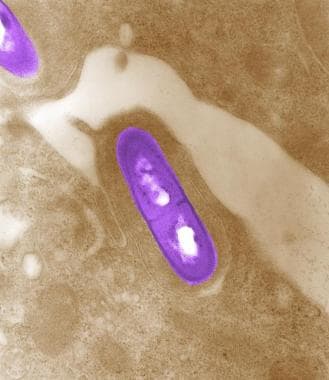
Bacteremia and meningitis are more serious manifestations of disease that can affect individuals at high risk. Unless recognized and treated, Listeria infections can result in significant morbidity and mortality. Pathophysiology: L monocytogenes is a motile, non–spore-forming, gram-positive bacillus that has aerobic and facultatively anaerobic characteristics. It grows best at neutral to slightly alkaline pH and is capable of growth at a wide range of temperatures, from 1-45°C. It is beta-hemolytic and has a blue-green sheen on blood-free agar. It exhibits characteristic tumbling motility when viewed with light microscopy and is difficult to isolate in mixed cultures. It may be mistaken for streptococci or contaminants such as corynebacteria.
Most infections occur after oral ingestion, with access to the systemic circulation after intestinal penetration. Protection against Listeria is mediated via lymphokine activation of T cells on macrophages and by interleukin-18.
CNS infection may manifest as meningitis, meningoencephalitis, or abscess. Endocarditis is another possible presentation. Localized infection may manifest as septic arthritis, osteomyelitis, and, rarely, pneumonia. Frequency:
- In the US: Frequency is 9.7 cases per million population. Annually, 2500 cases are reported, with higher incidence rates during the summer months (Pappas, 2006). Pregnant women account for 27% of all cases, and most occur during the third trimester. Seventy percent of all nonperinatal infections occur in immunocompromised patients. Corticosteroid therapy is the most important predisposing association in patients who are not pregnant.
Mortality/Morbidity:
- The overall mortality rate is 20-30%.
- Of all pregnancy-related cases, 22% resulted in fetal loss or neonatal death, but mothers usually survive.
Sex:
- With the exception of pregnant women, no sex predilection is recognized.
Age:
- Women of childbearing age are commonly affected.
- Neonates and elderly individuals are at risk.
|   |
CLINICAL
| Section 3 of 10  |
|
History: Disease may be a self-limited gastrointestinal tract illness or a more severe CNS infection or bacteremia. Physical: Examination depends on the organ system involved. - Infection in pregnancy (Mylonakis, 2002; Sheffield, 2004)
- Listeria may proliferate in the placenta and cause infection due to impaired cell-mediated immunity during pregnancy.
- CNS infection is very rare during pregnancy, although it is observed frequently in other compromised hosts.
- Fever, myalgias, arthralgias, back pain, and headache are classic symptoms of bacteremia. Symptoms may mimic those of a flulike illness. The infection may be mild and self-limited.
- Listeriosis during pregnancy usually occurs during the third trimester, when cell-mediated immunity is at its lowest.
- Preterm labor and/or delivery is common. Abortion, stillbirth, and intrauterine infection are possible.
- Neonatal infection (granulomatosis infantisepticum): Two forms are described (Mylonakis, 2002).
- Early-onset sepsis, with Listeria acquired in utero via transplacental transmission, results in premature birth. Listeria can be isolated in the placenta, blood, meconium, nose, ears, and throat, among other sites, and will be evident as abscesses and/or granulomas.
- Late-onset meningitis is acquired through vaginal transmission, although it also has been reported with cesarean deliveries.
- CNS infection (Mylonakis, 1998)
- Listeria has a predilection for the brain parenchyma, especially the brain stem, and the meninges.
- Mental status changes are common.
- Seizures, both focal and generalized, occur in at least 25% of patients.
- Cranial nerve deficits may be present.
- Strokelike syndromes with hemiplegia may occur.
- Nuchal rigidity is less common.
- Movement disorders may include tremor, myoclonus, and ataxia.
- Patients may present with encephalitis, especially of the brainstem (Armstrong, 1993).
- Meningitis is possible.
- Ventriculitis, particularly of the fourth ventricle, may develop.
- Cervical myelitis has been reported (Josephson, 2006).
- Brain abscess occurs in 10% of CNS infections, often located in the thalamus, pons, and medulla. This uncommon complication is associated with high mortality (Dee, 1986).
- Febrile gastroenteritis (Ooi, 2005)
- L monocytogenes can produce food-borne diarrheal disease, which typically is noninvasive.
- The median incubation period is 1-2 days, with diarrhea lasting anywhere from 1-3 days.
- The prevalence of diarrheal illness is high in individuals exposed to inocula of Listeria.
- Patients present with fever, myalgias, and diarrhea and recover with supportive care.
Causes: - Most infections are due to food-borne transmission.
- A substantial minority of infections are transmitted by other modes.
- Transmission can occur transplacentally or via an infected birth canal.
- Isolated incidences of cross-infection in neonatal nurseries have been reported.
|   |
DIFFERENTIALS
| Section 4 of 10  |
|
Cryptosporidiosis Gastroenteritis, Bacterial Gastroenteritis, Viral Meningitis Sarcoidosis Streptococcus Group B Infections Toxoplasmosis Wegener Granulomatosis
Other Problems to be Considered:
Meningeal carcinomatosis
Lymphomatous meningitis
Multiple sclerosis
Vasculitis
Viral encephalitis or meningitis
Fungal meningitis
Brain abscess
Bacterial meningitis
Septic abortion
Pyelonephritis in pregnancy |
|
Patient Education
|
|
Click here for patient education.
|
|
|
|
|
|   |
WORKUP
| Section 5 of 10  |
|
Lab Studies:
- Blood cultures should be performed. Blood culture results are positive in 60-75% of patients with CNS infections.
- Listeria demonstrates "tumbling motility" in wet mounts of cerebrospinal fluid (CSF). Listeria organisms are motile in wet mounts of CSF.
- CSF Gram stain results are positive in less than 50% of patients. CSF analysis reveals pleocytosis, and CSF protein levels are moderately elevated. CSF glucose levels may be low, and if so, are associated with a poor prognosis.
- CSF culture findings are positive in nearly 100% of patients.
- Serologic testing is not reliable.
- Stool cultures are neither sensitive nor specific.
Imaging Studies:
- MRI is superior to CT scan for demonstrating CNS disease, especially in the brainstem (Faidas, 1993).
- Transesophageal echocardiography should be performed if endocarditis is suspected.
Procedures:
- Lumbar puncture should be performed if CSF infection is suspected.
|   |
TREATMENT
| Section 6 of 10  |
|
Medical Care: - Starting intravenous antibiotics immediately when the diagnosis is suspected or proven is essential.
- Diagnosis is established by culture of the organism from blood, CSF, or other sterile body fluid.
- Person-to-person transmission does not occur; therefore, isolation precautions are not necessary.
Consultations: Listeriosis may be sporadic or may be part of a larger epidemic. The Table lists some of the most recent epidemics. Consultation with an infectious disease specialist or an epidemiologist is important when epidemic listeriosis is suspected.
Epidemic Listeriosis
| Year | Location | Source | | August 1998 to January 1999 | Multiple states in the United States | Hot dogs, deli meats | | 1997 (Aureli, 2000) | Italy | Corn | | 1997 (Ericsson, 1997) | Sweden | Rainbow trout | | 1995 (Bula, 1995) | Switzerland | Soft cheese | | 1994 (Dalton, 1997) | Illinois | Chocolate milk | | 1992 (Goulet, 1993) | France | Rillettes (pork product) | | 1985 (Linnan, 1988) | California | Mexican-style soft cheese | | 1983 (Schelch, 1983) | New England | Unpasteurized milk | | 1981 (Evans, 1985) | Canada | Coleslaw |
|   |
MEDICATION
| Section 7 of 10  |
|
Antibiotic therapy is the treatment of choice. Bacteremia should be treated for 2 weeks if the patient is immunocompetent. Longer courses may be required in the immunocompromised patient. Meningitis should be treated for 3 weeks; endocarditis, for 4-6 weeks; and brain abscess, for at least 6 weeks. Ampicillin is generally considered the preferred agent, but other agents may be acceptable. Gentamicin is added frequently for synergy, but it may be discontinued after 1 week of clinical improvement in order to decrease the chance of renal toxicity or ototoxicity (Lorber, 1997).
Drug Category: Antibiotics -- Empiric antimicrobial therapy must be comprehensive and should cover all likely pathogens in the context of the clinical setting. Drug Name
| Ampicillin (Omnipen, Marcillin) -- DOC. Interferes with bacterial cell wall synthesis during active multiplication, causing bactericidal activity against susceptible organisms. |
|---|
| Adult Dose | 2 g IV q4h |
|---|
| Pediatric Dose | 200-400 mg/kg/d IV divided q4h |
|---|
| Contraindications | Documented hypersensitivity (also to other penicillins) |
|---|
| Interactions | Probenecid and disulfiram decrease renal excretion of ampicillin, causing an increase in levels
Conversely, allopurinol increases excretion and has an additive effect on ampicillin rash
May decrease effect of oral contraceptives| Pregnancy |
B - Usually safe but benefits must outweigh the risks.
|
|---|
| Precautions | Dose adjustments may be necessary in renal failure; appearance of rash should be carefully evaluated to differentiate a nonallergic ampicillin rash from a hypersensitivity reaction |
|---|
|
|---|
Drug Name
| Trimethoprim-sulfamethoxazole (Bactrim) -- Indicated for patients unable to take penicillin antibiotics. Inhibits bacterial synthesis of dihydrofolic acid by competing with paraaminobenzoic acid, which results in inhibition of bacterial growth. |
|---|
| Adult Dose | 20 mg/kg/d of trimethoprim IV divided q6h |
|---|
| Pediatric Dose | Administer as in adults |
|---|
| Contraindications | Documented hypersensitivity; megaloblastic anemia due to folate deficiency; infants <2 mo |
|---|
| Interactions | May increase prothrombin time of warfarin, monitor coagulation tests and adjust dose prn
Serum levels of dapsone and TMP may increase when administered concomitantly
Incidence of thrombocytopenia purpura may increase when used concurrently with diuretics in elderly patients
Hepatic clearance of phenytoin may be decreased and half-life prolonged when administered concurrently
Sulfonamides can displace methotrexate (MTX) from plasma protein-binding sites, thus increasing free MTX concentrations; this may potentiate MTX effects in bone marrow depression
Hypoglycemic response of sulfonylureas may be increased with concurrent administration of both medications
May decrease renal clearance of zidovudine, causing an increase in zidovudine levels| Pregnancy |
C - Safety for use during pregnancy has not been established.
|
|---|
| Precautions | Discontinue at first appearance of skin rash or sign of adverse reaction
Obtain CBCs frequently; if significant reduction of any formed blood element is noted, discontinue therapy
Goiter production, diuresis, and hypoglycemia may occur
High IV doses or prolonged infusions may cause bone marrow depression manifested as thrombocytopenia, leukopenia, or megaloblastic anemia
Exercise caution in patients with possible folate deficiency (eg, chronic alcoholism, elderly, anticonvulsant therapy, malabsorption syndrome)
Hemolysis may occur in G-6-PD deficiency; if signs of bone marrow depression occur, give leucovorin prn to restore normal hematopoiesis; oral leucovorin (5-15 mg/d) has been recommended
Because of their unique immune dysfunction, patients with AIDS may not tolerate or respond to TMP-SMZ.
Use with caution in renal or hepatic impairment; adequate fluid should be administered to prevent crystalluria and stone formation; perform urinalyses and renal function tests during therapy |
|---|
|
|---|
Drug Name
| Chloramphenicol (Chloromycetin) -- Binds to 50 S bacterial-ribosomal subunits and inhibits bacterial growth by inhibiting protein synthesis. Effective against gram-negative and gram-positive bacteria. |
|---|
| Adult Dose | 50-100 mg/kg/d PO/IV divided q6h for 10 d; not to exceed 4 g/d |
|---|
| Pediatric Dose | 50-75 mg/kg/d PO/IV divided q6h |
|---|
| Contraindications | Documented hypersensitivity |
|---|
| Interactions | Administered concurrently with barbiturates, levels may decrease while barbiturate levels may increase, causing toxicity; manifestations of hypoglycemia may occur with sulfonylureas; rifampin may reduce levels, presumably through hepatic enzyme induction; may increase effects of anticoagulants; may increase serum hydantoin levels, possibly resulting in toxicity |
|---|
| Pregnancy |
C - Safety for use during pregnancy has not been established.
|
|---|
| Precautions | Use only for indicated infections or as prophylaxis for bacterial infections; serious and fatal blood dyscrasias (eg, aplastic anemia, hypoplastic anemia, thrombocytopenia, granulocytopenia) can occur; evaluate baseline and perform periodic blood studies approximately every 2 d while in therapy; discontinue upon appearance of reticulocytopenia, leukopenia, thrombocytopenia, anemia, or findings attributable to chloramphenicol; adjust dose in liver or kidney dysfunction; caution in pregnancy at term or during labor because of potential toxic effects on fetus (gray syndrome) |
|---|
|   |
FOLLOW-UP
| Section 8 of 10  |
|
Deterrence/Prevention:
- Cook all raw food thoroughly.
- Avoid consumption of raw (unpasteurized) milk or milk products.
- Wash hands, knives, and cutting boards after handling uncooked foods.
- For pregnant or immunocompromised patients, avoid soft cheeses (eg, feta, Brie, Camembert, bleu). Cream cheese, yogurt, and cottage cheese are allowed.
- Reheat leftover or ready-to-eat foods (eg, hot dogs) until steaming hot.
- Avoid delicatessen foods unless they are thoroughly reheated.
- Cook food to a safe internal temperature.
|   |
MISCELLANEOUS
| Section 9 of 10  |
|
Medical/Legal Pitfalls:
- US regulatory agencies recommend a recall when L monocytogenes is detected in processed foods that are eaten without cooking.
- New methods of sterilization, including irradiation, have been proposed.
- Systems have not been perfected; therefore, patient education is most effective in prevention.
|   |
BIBLIOGRAPHY
| Section 10 of 10 |
|
-
Armstrong D, Cohen J, eds: Listeria Monocytogenes. In: Infectious Diseases. London, UK: Mosby; 1999. 8.15.1-8.15.20.
-
Armstrong RW, Fung PC: Brainstem encephalitis (rhombencephalitis) due to Listeria monocytogenes: case report and review. Clin Infect Dis 1993 May; 16(5): 689-702[Medline].
-
Aureli P, Fiorucci GC, Caroli D: An outbreak of febrile gastroenteritis associated with corn contaminated by Listeria monocytogenes. N Engl J Med 2000 Apr 27; 342(17): 1236-41[Medline].
-
Berenguer J, Solera J, Diaz MD: Listeriosis in patients infected with human immunodeficiency virus. Rev Infect Dis 1991 Jan-Feb; 13(1): 115-9[Medline].
-
Blatt SP, Zajac RA: Treatment of Listeria bacteremia with vancomycin. Rev Infect Dis 1991 Jan-Feb; 13(1): 181-2[Medline].
-
Broome CV: Listeriosis: Can we prevent it? ASM News 1993; 59: 444-6.
-
Bula CJ, Bille J, Glauser MP: An epidemic of food-borne listeriosis in western Switzerland: description of 57 cases involving adults. Clin Infect Dis 1995 Jan; 20(1): 66-72[Medline].
-
Chang J, Powles R, Mehta J: Listeriosis in bone marrow transplant recipients: incidence, clinical features, and treatment. Clin Infect Dis 1995 Nov; 21(5): 1289-90[Medline].
-
Charpentier E, Gerbaud G, Jacquet C: Incidence of antibiotic resistance in Listeria species. J Infect Dis 1995 Jul; 172(1): 277-81[Medline].
-
Cherubin CE, Appleman MD, Heseltine PN: Epidemiological spectrum and current treatment of listeriosis. Rev Infect Dis 1991 Nov-Dec; 13(6): 1108-14[Medline].
-
Cunha BA: Central nervous system infections in the compromised host: a diagnostic approach. Infect Dis Clin North Am 2001 Jun; 15(2): 567-90[Medline].
-
Dalton CB, Austin CC, Sobel J: An outbreak of gastroenteritis and fever due to Listeria monocytogenes in milk. N Engl J Med 1997 Jan 9; 336(2): 100-5[Medline].
-
Decker CF, Simon GL, DiGioia RA: Listeria monocytogenes infections in patients with AIDS: report of five cases and review. Rev Infect Dis 1991 May-Jun; 13(3): 413-7[Medline].
-
Dee RR, Lorber B: Brain abscess due to Listeria monocytogenes: case report and literature review. Rev Infect Dis 1986 Nov-Dec; 8(6): 968-77[Medline].
-
Ericsson H, Eklow A, Danielsson-Tham ML: An outbreak of listeriosis suspected to have been caused by rainbow trout. J Clin Microbiol 1997 Nov; 35(11): 2904-7[Medline].
-
Evans JR, Allen AC, Stinson DA: Perinatal listeriosis: report of an outbreak. Pediatr Infect Dis 1985 May-Jun; 4(3): 237-41[Medline].
-
Faidas A, Shepard DL, Lim J: Magnetic resonance imaging in listerial brain stem encephalitis. Clin Infect Dis 1993 Jan; 16(1): 186-7[Medline].
-
Farber JM, Peterkin PI: Listeria monocytogenes, a food-borne pathogen. Microbiol Rev 1991 Sep; 55(3): 476-511[Medline].
-
Gellin BG, Broome CV, Bibb WF: The epidemiology of listeriosis in the United States--1986. Listeriosis Study Group. Am J Epidemiol 1991 Feb 15; 133(4): 392-401[Medline].
-
Gorbach SL, Bartlett JB, Blacklow NR, eds: Listeria Monocytogenes. In: Infectious Diseases. 2nd ed. Philadelphia, Pa: WB Saunders; 1998: 1750-5.
-
Goulet V, Rocourt J, Rebiere I: Listeriosis outbreak associated with the consumption of rillettes in France in 1993. J Infect Dis 1998 Jan; 177(1): 155-60[Medline].
-
Gross E, Slauson S: Update on emerging infections: news from the Centers for Disease Control and Prevention. Preliminary FoodNet Data on the incidence of infection with pathogens transmitted commonly through food--selected sites, United States, 2003. Ann Emerg Med 2004 Nov; 44(5): 532-6[Medline].
-
Hof H, Nichterlein T, Kretschmar M: Management of listeriosis. Clin Microbiol Rev 1997 Apr; 10(2): 345-57[Medline].
-
John JF: Listeria Monocytogenes. In: Vinken PJ, Bruyn GW, eds. Handbook of Clinical
Neurology. Vol 8. New York, NY: Elsevier Science; 1988: 89-101.
-
Josephson SA, Pillai DR, Phillips JJ: Neurolisteriosis presenting as cervical myelitis in an immunocompetent patient. Neurology 2006 Apr 11; 66(7): 1122-3[Medline].
-
Linnan MJ, Mascola L, Lou XD: Epidemic listeriosis associated with Mexican-style cheese. N Engl J Med 1988 Sep 29; 319(13): 823-8[Medline].
-
Lorber B: Listeriosis. Clin Infect Dis 1997 Jan; 24(1): 1-9; quiz 10-1[Medline].
-
Lorber B: Listeria Monocytogenes. In: Mandell GL, Bennett GE, Dolin R, eds. Principles and Practices of Infectious Diseases. 6th ed. Pennsylvania, PA: Churchill and Livingstone; 2005:2478.
-
Mylonakis E, Hohmann EL, Calderwood SB: Central nervous system infection with Listeria monocytogenes. 33 years' experience at a general hospital and review of 776 episodes from the literature. Medicine (Baltimore) 1998 Sep; 77(5): 313-36[Medline].
-
Mylonakis E, Paliou M, Hohmann EL: Listeriosis during pregnancy: a case series and review of 222 cases. Medicine (Baltimore) 2002 Jul; 81(4): 260-9[Medline].
-
Ooi ST, Lorber B: Gastroenteritis due to Listeria monocytogenes. Clin Infect Dis 2005 May 1; 40(9): 1327-32[Medline].
-
Pappas G, Panagopoulou P, Christou L: Category B potential bioterrorism agents: bacteria, viruses, toxins, and foodborne and waterborne pathogens. Infect Dis Clin North Am 2006 Jun; 20(2): 395-421, x[Medline].
-
Pigrau C, Almirante B, Pahissa A: Clinical presentation and outcome in cases of listeriosis. Clin Infect Dis 1993 Jul; 17(1): 143-4[Medline].
-
Pinner RW, Schuchat A, Swaminathan B: Role of foods in sporadic listeriosis. II. Microbiologic and epidemiologic investigation. The Listeria Study Group. JAMA 1992 Apr 15; 267(15): 2046-50[Medline].
-
Riedo FX, Pinner RW, Tosca ML: A point-source foodborne listeriosis outbreak: documented incubation period and possible mild illness. J Infect Dis 1994 Sep; 170(3): 693-6[Medline].
-
Schlech WF 3rd, Lavigne PM, Bortolussi RA: Epidemic listeriosis--evidence for transmission by food. N Engl J Med 1983 Jan 27; 308(4): 203-6[Medline].
-
Schneider JI: Rapid infectious killers. Emerg Med Clin North Am 2004 Nov; 22(4): 1099-115[Medline].
-
Schuchat A, Robinson K, Wenger JD: Bacterial meningitis in the United States in 1995. Active Surveillance Team. N Engl J Med 1997 Oct 2; 337(14): 970-6[Medline].
-
Sheffield JS: Sepsis and septic shock in pregnancy. Crit Care Clin 2004 Oct; 20(4): 651-60; viii[Medline].
-
Skogberg K, Syrjanen J, Jahkola M: Clinical presentation and outcome of listeriosis in patients with and without immunosuppressive therapy. Clin Infect Dis 1992 Apr; 14(4): 815-21[Medline].
-
Spitzer PG, Hammer SM, Karchmer AW: Treatment of Listeria monocytogenes infection with trimethoprim- sulfamethoxazole: case report and review of the literature. Rev Infect Dis 1986 May-Jun; 8(3): 427-30[Medline].
-
Swaminathan B, Rocourt J, Bille J: Listeria. In: Murray PR, Baron EJ, Pfaller MA, Tenover FC, Yolken RH, eds. Manual of Clinical Microbiology. 6th ed. Washington, DC: ASM Press; 1995: 341-8.
-
Taege AJ: Listeriosis: recognizing it, treating it, preventing it. Cleve Clin J Med 1999 Jun; 66(6): 375-80[Medline].
-
Tappero JW, Schuchat A, Deaver KA: Reduction in the incidence of human listeriosis in the United States. Effectiveness of prevention efforts? The Listeriosis Study Group. JAMA 1995 Apr 12; 273(14): 1118-22[Medline].
-
Uldry PA, Kuntzer T, Bogousslavsky J: Early symptoms and outcome of Listeria monocytogenes rhombencephalitis: 14 adult cases. J Neurol 1993; 240(4): 235-42[Medline].
Listeria Monocytogenes excerpt |