Continually Updated Clinical Reference
 
 
  All Sources     eMedicine     Medscape     Drug Reference     MEDLINE
 
eMedicine - Kasabach-Merritt Syndrome : Article by

Quick Find
Authors & Editors
Introduction
Clinical
Differentials
Workup
Treatment
Medication
Follow-up
Miscellaneous
Multimedia
References

Related Articles
Angiosarcoma

Arteriovenous Malformations

Hemangioblastoma

Hemangiomas, Hepatic


Patient Education
Click here for patient education.


Author: Bernice R Krafchik, MBChB, FRCPC, Professor Emeritus, Department of Pediatrics, Section of Dermatology, University of Toronto

Bernice R Krafchik is a member of the following medical societies: American Academy of Dermatology, American Dermatological Association, Canadian Medical Association, College of Physicians and Surgeons of Ontario, Royal College of Physicians and Surgeons of Canada, and Society for Pediatric Dermatology

Coauthor(s): Linda K Hendricks, MD, Assistant Professor, Department of Internal Medicine, Section of Hematology and Oncology, Mercer University School of Medicine; Guy B Faguet, MD, Former Professor, Department of Medicine, Section of Hematology and Oncology, Medical College of Georgia; Sejal Kuthiala, MD, Staff Physician, Department of Internal Medicine, Medical College of Georgia

Editors: Michael Paul Kosty, MD, Associate Director, Associate Professor, Department of Internal Medicine, Divisions of Supportive Care Services and Hematology and Oncology, Ida M and Cecil H Green Cancer Center, Scripps Clinic; Francisco Talavera, PharmD, PhD, Senior Pharmacy Editor, eMedicine; Ronald A Sacher, MD, Director of the Hoxworth Blood Center, Professor, Departments of Internal Medicine and Pathology, University of Cincinnati Medical Center; Rajalaxmi McKenna, MD, FACP, Consulting Staff, Department of Medicine, Southwest Medical Consultants, SC, Good Samaritan Hospital, Advocate Health Systems; Emmanuel C Besa, MD, Professor, Department of Medicine, Division of Hematologic Malignancies, Kimmel Cancer Center, Thomas Jefferson University

Author and Editor Disclosure

Synonyms and related keywords: KMS, Kaposi hemangioendothelioma, Kaposi's hemangioendothelioma, kaposiform hemangioendothelioma, consumptive thrombocytopenia, thrombocytopenic purpura, tufted angiomas, vascular lesions, ecchymotic lesions, interferon alfa, Kasabach Merritt syndrome, vascular tumor, mitogen

Background

In 1940, Kasabach and Merritt described a male infant with a discolored, indurated lesion on his left thigh that rapidly grew and affected the entire left leg, scrotum, abdomen, and thorax. In addition, the infant also had consumptive thrombocytopenia. This association has become known as Kasabach-Merritt syndrome (KMS). The original case is now known to have been associated with kaposiform hemangioendothelioma and thrombocytopenia.

Pathophysiology

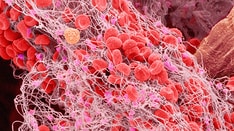
The vascular lesion triggers (1) intravascular coagulation with platelet trapping and activation and (2) consumption of coagulation factors.

Thrombocytopenia is a consumptive process in the vascular tumor that is corrected when the tumor is controlled. The platelets consumed in the process, with the release of platelet-derived growth factor, which is a mitogen. Increased thrombin generation occurs, followed by the development of disseminated intravascular coagulopathy (DIC). Thrombin (also a mitogen) and other cytokines are released with DIC.

Frequency

United States

KMS is uncommon.

Mortality/Morbidity

KMS can be lethal; the estimated overall mortality rate ranges from 10-37%. Morbidity and mortality are associated with visceral involvement (particularly in the retroperitoneum and mediastinum), hemorrhage related to aggressive invasion, profound thrombocytopenia, severe infections, and iatrogenic complications.

Race

No racial or ethnic predilection is known.

Sex

Boys and men may be affected slightly more often than girls and women.

Age

KMS typically occurs in newborns or early infancy, though prenatal cases (diagnosed with the aid of ultrasonography) and rare adult cases have been reported.


History

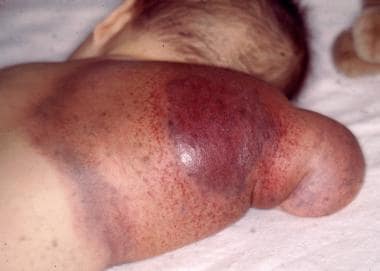
The typical patient with Kasabach-Merritt syndrome (KMS) is an infant, often male, who initially presents with a reddish brown skin lesion that evolves into a violaceous, bulging mass.

The condition is often diagnosed in utero by using fetal ultrasonography. Tenderness is common, and ulceration may occur. Coagulopathy may cause petechiae or ecchymosis in any area, and bleeding may occur.

The natural history of kaposiform hemangioendothelioma is that of slow regression, with the lesion leaving a reddish brown discoloration. Large lesions do not become completely involuted.

Physical

  • Lesions have reddish brown discoloration with induration.
    • As the thrombocytopenia increases, a large violaceous, ecchymotic indurated mass forms.
    • Bruising usually occurs in other areas as well.
  • Kaposi hemangioendothelioma, tufted angiomas, or a mixture of both are the skin lesions associated with KMS.
    • These lesions can occur anywhere on the skin which is the organ most commonly affected.
    • Lesions of the internal organs often cause bruising on the skin.
  • Lesions are usually painful and tender.
  • Aggressive infiltration with ulceration, and infection is rare but can occur.
  • Bleeding from thrombocytopenia and coagulopathy is frequently observed.

Causes

KMS occurs in lesions of kaposiform hemangioendotheliomas and tufted angiomas, but the etiology is unknown.


Angiosarcoma
Arteriovenous Malformations
Hemangioblastoma
Hemangiomas, Hepatic

Other Problems to be Considered

Port-wine stain
Congenital hemangiopericytoma
Kaposiform hemangioendothelioma of infancy and childhood
Teratoma
Tufted angioma or angioblastoma
Lymphatic malformation
Venous malformation
Infantile fibrosarcoma
Infantile myofibromatosis
Lumbar lipomyelomeningocele
Encephalocele
Epithelioid hemangioendothelioma
Thrombocytopenia
Classic capillary hemangioma of infancy - Common infantile vascular anomaly but not associated with KMS; affects girls more than boys and usually regresses spontaneously with age


Lab Studies

  • CBC count - To check for thrombocytopenia in particular
  • Fibrinogen level - To check for decreased fibrinogen levels
  • Fibrin split products - To check for elevation
  • D-dimers - To check for elevation

Imaging Studies

  • MRI or CT scanning reveals a vascular enhancing mass that is difficult to differentiate from a vascular malformation, solid tumor, or proliferative vascular lesion.

Histologic Findings

Enjolras and colleagues characterized the histology of the vascular lesion associated with Kasabach-Merritt syndrome (KMS). The original case report described lobules of the fine capillaries separated by cellular intercapillary tissue consisting of spindle-shaped cells. Tufted angioma and kaposiform hemangioendothelioma of infancy and childhood are the vascular anomalies reported in KMS.

The histologic picture of kaposiform hemangioendothelioma consists of lobules or sheets of tightly packed spindle cells or rounded endothelial cells and pericytes. The cellular areas have an infiltrative pattern in the dermis, subcutaneous fat, and muscles and generally contain few obvious vascular lumina.

A tufted angioma is composed of small tufts or lobules of rounded capillaries with small lumina. The tufts are discrete and evenly distributed in a cannonball pattern and are characterized by peripheral, crescentic, slitlike vessels and an associated fibrosis.

Both kaposiform hemangioendothelioma and tufted angioma contain aggregates of rounded, dilated capillaries lined by attenuated endothelial cells with small, dark nuclei and filled with RBCs. Microthrombi and hemosiderin deposits are often present. Lymphlike vessels are often part of the lesion. Findings of both kaposiform hemangioendothelioma and tufted angioma often appear in the same patient and are thought to be variations of one another.

The histology of classic hemangioma of infancy, which is the most common benign vascular neoplasm in children, is distinct from these proliferations and is not associated with or precedes KMS.


Medical Care

  • Patients with Kasabach-Merritt syndrome (KMS) are often admitted to the hospital with low platelet counts and evidence of coagulopathy. They are treated with drug therapy alone and/or compression or surgery, if feasible.
  • Long-term adverse effects of radiation therapy (eg, angiosarcoma) on survivors have been reported. Therefore, this mode of therapy is no longer favored.

Surgical Care

Surgery is not usually feasible. However, when lesions are small, surgery has resulted in rapid normalization of the platelet count. Endovascular treatment (eg, transfemoral arterial embolization) has been attempted, with good results in a number of cases.

Consultations

  • Hematologist

  • Dermatologist

  • Surgeon

  • Radiation therapy specialist

  • Pediatrician

  • Interventional radiologist


No single modality is favored over others, and many regimens have been investigated, with variable success. Corticosteroids are the drugs most commonly used, though usually with poor results. In addition to high-dose oral steroids, pulsed or intravenous steroids have also been used.

Some success with interferon alfa-2a (3 million U/m2/d or 3 times/wk) has been reported, though the failure rate is high. The subcutaneous injection may result in nausea, fever, and/or neutropenia. Some infants have developed spastic diplegia after receiving interferon alfa.

Case reports have described the administration of vincristine to treat Kasabach-Merritt syndrome (KMS). This treatment is used with increasing frequency.

The hematologic agents epsilon aminocaproic acid, aspirin, dipyridamole or ticlopidine, pentoxifylline, cryoprecipitate, and heparin have all been used with various efficacies.

Radiation therapy has been abandoned because of its lack of success and late sequelae of cancers in the treated area.

Drug Category: Corticosteroids

Systemic corticosteroids are synthetic chemicals that have been used to successfully treat proliferative hemangiomas, though the results with KMS are usually not as good. High-dose oral prednisone 2-4 mg/kg/d can rapidly increase the platelet count, which returns to normal levels in few patients.

Drug NamePrednisone (Deltasone, Orasone, Meticorten)
DescriptionMay increase sensitivity of arterioles and precapillaries to vasoconstrict. May competitively inhibit other hormonal agents.
Adult Dose2-4 mg/kg/d PO qd or divided bid for 6-30 wk
Pediatric DoseNot established; may be given 2-4 mg/kg/d for KMS
ContraindicationsDocumented hypersensitivity; viral infection (chicken pox), peptic ulcer disease, connective-tissue infections, and fungal or tubercular skin infections
InteractionsCoadministration with estrogens may decrease clearance; concurrent use with digoxin may cause digitalis toxicity secondary to hypokalemia; phenobarbital, phenytoin, and rifampin may increase metabolism of glucocorticoids (consider increasing maintenance dose); monitor for hypokalemia with coadministration of diuretics
PregnancyB - Usually safe but benefits must outweigh the risks.
PrecautionsAbrupt discontinuation of glucocorticoids may cause adrenal crisis; hyperglycemia, edema, osteonecrosis (necrosis of femoral neck), myopathy, peptic ulcer disease, hypotension, hypokalemia, osteoporosis, euphoria, psychosis, myasthenia gravis, growth suppression, and infections may occur with glucocorticoid use

Drug NameTriamcinolone (Amcort)
DescriptionFor inflammation responsive to steroids; decreases inflammation by suppressing migration of polymorphonuclear leukocytes and reversing capillary permeability.
Adult Dose10-40 mg (40 mg/mL) injected with or without dexamethasone sodium phosphate 4 mg (mg/mL); has been used in areas such as eye or localized hemangiomas
Pediatric DoseNot established
ContraindicationsDocumented hypersensitivity; fungal, viral, and bacterial skin infections
InteractionsCoadministration with barbiturates, phenytoin, and rifampin decreases effects
PregnancyC - Safety for use during pregnancy has not been established.
PrecautionsMany complications (eg, severe infections, hyperglycemia, edema, osteonecrosis, myopathy, peptic ulcer disease, hypokalemia, osteoporosis, euphoria, psychosis, myasthenia gravis, growth suppression) may occur; abrupt discontinuation of glucocorticoids may cause adrenal crisis

Drug Category: Antineoplastic agents, vesicant

These agents inhibit cell growth and proliferation.

Drug NameVincristine (Oncovin, Vincasar PFS)
DescriptionMechanism of action is uncertain; may involve a decrease in reticuloendothelial cell function or an increase in platelet production.
Adult Dose2 mg IV push
Pediatric Dose1.5 mg/m2 IV push; not to exceed 2 mg/dose
ContraindicationsDocumented hypersensitivity; IT administration may cause death
InteractionsAcute pulmonary reaction may occur when taken concurrently with mitomycin-C; asparaginase, CYP450 3A4 inhibitors (eg, itraconazole, quinupristin/dalfopristin, sertraline, ritonavir), GM-CSF (eg, sargramostim, filgrastim), or nifedipine increase toxicity; CYP450 3A4 inducers (eg, carbamazepine, phenytoin, phenobarbital, rifampin) may decrease effects
PregnancyD - Unsafe in pregnancy
PrecautionsCaution in severe cardiopulmonary disease, hepatic impairment (adjust dose), or pre-existing neuromuscular dysfunction

Drug Category: Interferons

These substances are naturally produced proteins that have antiviral, antitumoral, and immunomodulatory actions. Alpha, beta, and gamma interferons may be administered topically, systemically, or intralesionally.

Drug NameInterferon alfa-2a (Roferon A) and 2b (Intron A)
DescriptionProtein product manufactured by recombinant DNA technology. Mechanism of antitumoral activity not clearly understood; however, direct antiproliferative effects against malignant cells and modulation of host immune response may be important.
Adult Dose1 million U/m2/d or 3 times/wk; increase to 3 million U/m2/d if tolerated
Pediatric DoseNot established
ContraindicationsDocumented hypersensitivity
InteractionsTheophylline may increase toxicity; cimetidine may increase antitumor effects; zidovudine and vinblastine may increase toxicity
PregnancyC - Safety for use during pregnancy has not been established.
PrecautionsCaution in brain metastases, severe hepatic or renal insufficiencies, seizure disorders, multiple sclerosis, or compromised CNS


Further Inpatient Care

  • Patients should be monitored in a hospital when their platelet counts are low.

Further Outpatient Care

  • When the platelet count stabilizes, hematologists and dermatologists should regularly monitor patients, and their medications should be gradually reduced.

Complications

  • Complications associated with Kasabach-Merritt syndrome (KMS) include severe thrombocytopenia; platelet counts may be <5 X 10⁹/L (5000/µL).
  • This may be associated with life-threatening bleeding, local invasion by the vascular lesion into vital organs of surrounding tissues, and the potential for secondary malignancies at the local site in survivors who receive radiation therapy to the local site.
  • Infections due to skin breakdown can lead to sepsis.
  • Iatrogenic complications from procedures, such as arterial ligation, arterial embolization, or surgical excision, can occur.

Prognosis

  • The overall mortality rate is over 20%.
  • The clinical course is unpredictable, and effective treatment depends on control of the invasive tumor before secondary complications occur.


Medical/Legal Pitfalls

  • Failure to make the diagnosis is a potential pitfall. Kasabach-Merritt syndrome (KMS) is a rare disorder that is difficult to diagnosis, and it has no definitive standard of treatment.
  • Failure to recognize a malignant neoplasm that may resemble the lesion observed in KMS is a potential pitfall.


Media file 1:  Leg with a Kaposiform hemangioendothelioma, lesion associated with Kasabach-Merritt Syndrome.

Click to see larger pictureClick to see detailView Full Size Image
Media type:  Photo

Media file 2:  Back of an arm showing the typical bruising associated with Kasabach-Merritt Syndrome.

Click to see larger pictureClick to see detailView Full Size Image
Media type:  Photo


  • Akyuz C, Emir S, Buyukpamukcu M, et al. Successful treatment with interferon alfa in infiltrating angiolipoma: a case presenting with Kasabach-Merritt syndrome. Arch Dis Child. Jan 2003;88(1):67-8. [Medline].
  • Alves JC, Fernal WH, Christo MC, Procopio AM. Giant haemangioma of the thigh (Kasabach-Merritt syndrome): resection with temporary clamping of the common iliac artery. Br J Plast Surg. Jul 1985;38(3):426-8. [Medline].
  • Arnaout MK, Pappo AS. Kaposiform hemangioendothelioma with associated Kasabach-Merritt phenomenon. The Hemophilia Growth and Development Study. J Pediatr. Dec 1998;133(6):788. [Medline].
  • Aylett SE, Williams AF, Bevan DH, Holmes SJ. The Kasabach-Merritt syndrome: treatment with intermittent pneumatic compression. Arch Dis Child. Jul 1990;65(7):790-1. [Medline].
  • Bell AJ, Chisholm M, Hickton M. Reversal of coagulopathy in Kasabach-Merritt syndrome with tranexamic acid. Scand J Haematol. Sep 1986;37(3):248-52. [Medline].
  • Biban P. Kasabach-Merritt syndrome and interferon alpha: still a controversial issue. Arch Dis Child. Jul 2003;88(7):645-6. [Medline].
  • Blei F, Karp N, Rofsky N, et al. Successful multimodal therapy for kaposiform hemangioendothelioma complicated by Kasabach-Merritt phenomenon: case report and review of the literature. Pediatr Hematol Oncol. Jul-Aug 1998;15(4):295-305. [Medline].
  • Boon LM, Enjolras O, Mulliken JB. Congenital hemangioma: evidence of accelerated involution. J Pediatr. Mar 1996;128(3):329-35. [Medline].
  • Brasanac D, Janic D, Boricic I, et al. Retroperitoneal kaposiform hemangioendothelioma with tufted angioma-like features in an infant with Kasabach-Merritt syndrome. Pathol Int. Sep 2003;53(9):627-31. [Medline].
  • Dabashi Y, Eisen RN. Infantile hemangioendothelioma of the pelvis associated with Kasabach-Merritt syndrome. Pediatr Pathol. 1990;10(3):407-15. [Medline].
  • de Terlizzi M, Bonifazi E, Toma MG, et al. Kasabach-Merritt syndrome: successful management of coagulopathy with heparin and cryoprecipitate. Pediatr Hematol Oncol. 1988;5(4):325-8. [Medline].
  • Enjolras O, Mulliken JB, Wassef M, et al. Residual lesions after Kasabach-Merritt phenomenon in 41 patients. J Am Acad Dermatol. Feb 2000;42(2 Pt 1):225-35. [Medline].
  • Enjolras O, Wassef M, Mazoyer E, et al. Infants with Kasabach-Merritt syndrome do not have "true" hemangiomas. J Pediatr. Apr 1997;130(4):631-40. [Medline].
  • Esterly NB. Cutaneous hemangiomas, vascular stains and malformations, and associated syndromes. Curr Probl Pediatr. Jan 1996;26(1):3-39. [Medline].
  • Ettlinger JJ, Fleming PJ, Joffe HS, Kennedy CT. Cavernous haemangioma with Kasabach-Merritt syndrome: treatment with alpha-interferon. J R Soc Med. Jan 1996;89(1):55P-6P. [Medline].
  • Eurvilaichit C, Kraiphibul P, Nontasut S. Kasabach-Merritt syndrome treated by trans arterial embolization and radiotherapy. J Med Assoc Thai. Jul 1987;70(7):431-5. [Medline].
  • Frieden IJ, Eichenfield LF, Esterly NB, et al. Guidelines of care for hemangiomas of infancy. American Academy of Dermatology Guidelines/Outcomes Committee. J Am Acad Dermatol. Oct 1997;37(4):631-7. [Medline].
  • Guillet G, Duboscq MF, Boisseau M, Maleville J. Kasabach-Merritt syndrome in infants: 2 cases [in French]. Ann Dermatol Venereol. 1985;112(5):425-32. [Medline].
  • Hosono S, Ohno T, Kimoto H, et al. Successful transcutaneous arterial embolization of a giant hemangioma associated with high-output cardiac failure and Kasabach-Merritt syndrome in a neonate: a case report. J Perinat Med. 1999;27(5):399-403. [Medline].
  • Hu B, Lachman R, Phillips J, et al. Kasabach-Merritt syndrome-associated kaposiform hemangioendothelioma successfully treated with cyclophosphamide, vincristine, and actinomycin D. J Pediatr Hematol Oncol. Nov-Dec 1998;20(6):567-9. [Medline].
  • Komiyama M, Nakajima H, Kitano S, et al. Endovascular treatment of huge cervicofacial hemangioma complicated by Kasabach-Merritt syndrome. Pediatr Neurosurg. Jul 2000;33(1):26-30. [Medline].
  • Martinez AE, Robinson MJ, Alexis JB. Kaposiform hemangioendothelioma associated with nonimmune fetal hydrops. Arch Pathol Lab Med. Jun 2004;128(6):678-81. [Medline].
  • Mitsuhashi N, Furuta M, Sakurai H, et al. Outcome of radiation therapy for patients with Kasabach-Merritt syndrome. Int J Radiat Oncol Biol Phys. Sep 1 1997;39(2):467-73. [Medline].
  • Molina M, Ortega G, Perez Gracia A, Bermudo J. The Kasabach-Merrit syndrome treated with aminocaproic acid [in Spanish, case report]. Med Clin (Barc). Sep 9 1989;93(6):238. [Medline].
  • Mwanda OW, Wanjohi EW, Cheserem EN. Kasabach Merritt syndrome in an adult female African: case report. East Afr Med J. Mar 1990;67(3):214-20. [Medline].
  • Nako Y, Fukushima N, Igarashi T, et al. Successful interferon therapy in a neonate with life-threatening Kasabach-Merritt syndrome. J Perinatol. May-Jun 1997;17(3):244-7. [Medline].
  • Ortel TL, Onorato JJ, Bedrosian CL, Kaufman RE. Antifibrinolytic therapy in the management of the Kasabach Merritt syndrome. Am J Hematol. Sep 1988;29(1):44-8. [Medline].
  • Ozsoylu S. High-dose intravenous methylprednisolone for Kasabach-Merritt syndrome [case report]. Am J Hematol. Jul 1989;31(3):219-20. [Medline].
  • Qureshi S, Abbasi Z, Qadeer N, Yaqoob N. Kasabach-Merritt syndrome. JPMA J Pak Med Assoc. Jul 1990;40(7):159-61. [Medline].
  • Sadan N, Horowitz I, Choc L, et al. Giant hemangioma with thrombocytopenia and osteolysis successfully treated with prednisone. J Pediatr Orthop. Jul-Aug 1989;9(4):472-5. [Medline].
  • Sadan N, Wolach B. Treatment of hemangiomas of infants with high doses of prednisone. J Pediatr. Jan 1996;128(1):141-6. [Medline].
  • Shulkin BL, Argenta LC, Cho KJ, Castle VP. Kasabach-Merritt syndrome: treatment with epsilon-aminocaproic acid and assessment by indium 111 platelet scintigraphy. J Pediatr. Nov 1990;117(5):746-9. [Medline].
  • Skopec LL, Lakatua DJ. Non-immune fetal hydrops with hepatic hemangioendothelioma and Kasabach-Merritt syndrome: a case report. Pediatr Pathol. 1989;9(1):87-93. [Medline].
  • Spicer MS, Goldberg DJ. Lasers in dermatology. J Am Acad Dermatol. Jan 1996;34(1):1-25; quiz 26-8. [Medline].
  • Stanley P, Gomperts E, Woolley MM. Kasabach-Merritt syndrome treated by therapeutic embolization with polyvinyl alcohol. Am J Pediatr Hematol Oncol. Winter 1986;8(4):308-11. [Medline].
  • Velin P, Dupont D, Golkar A, Valla JS. Neonatal Kasabach-Merritt syndrome healed by complete surgical excision of the angioma. Arch Pediatr. Mar 1998;5(3):295-7. [Medline].
  • Vin-Christian K, McCalmont TH, Frieden IJ. Kaposiform hemangioendothelioma. An aggressive, locally invasive vascular tumor that can mimic hemangioma of infancy. Arch Dermatol. Dec 1997;133(12):1573-8. [Medline].
  • Wananukul S, Nuchprayoon I, Seksarn P. Treatment of Kasabach-Merritt syndrome: a stepwise regimen of prednisolone, dipyridamole, and interferon. Int J Dermatol. Sep 2003;42(9):741-8. [Medline].
  • Warrell RP, Kempin SJ. Treatment of severe coagulopathy in the Kasabach-Merritt syndrome with aminocaproic acid and cryoprecipitate. N Engl J Med. Aug 1 1985;313(5):309-12. [Medline].
  • Watzke HH, Linkesch W, Hay U. Giant hemangioma of the liver (Kasabach-Merritt syndrome): successful suppression of intravascular coagulation permitting surgical removal. J Clin Gastroenterol. Jun 1989;11(3):347-50. [Medline].
  • White CW. Treatment of hemangiomatosis with recombinant interferon alfa. Semin Hematol. Jul 1990;27(3 suppl 4):15-22. [Medline].

Kasabach-Merritt Syndrome excerpt

Article Last Updated: Jun 8, 2007