You are in: eMedicine Specialties >
Endocrinology > Thyroid
Iodine Deficiency
Article Last Updated: Jul 27, 2006
AUTHOR AND EDITOR INFORMATION
Section 1 of 11
Author: Stephanie L Lee, MD, PhD, FACE, Director of Thyroid Disease Center, Department of Medicine, Associate Professor, Boston Medical Center, Boston University School of Medicine
Stephanie L Lee is a member of the following medical societies: American College of Endocrinology, American Thyroid Association, and Endocrine Society
Coauthor(s):
Sonia Ananthakrishnan, MD, Fellow in Endocrinology, Department of Medicine, Section of Endocrinology, Diabetes and Nutrition, Boston Medical Center;
Elizabeth N Pearce, MD, MSc, Assistant Professor of Medicine, Boston Medical Center/Boston University School of Medicine
Editors: Harris C Taylor, MD, Chief, Division of Endocrinology, Department of Internal Medicine, Lutheran Medical Center of Cleveland; Clinical Professor, Case Western University School Of Medicine; Francisco Talavera, PharmD, PhD, Senior Pharmacy Editor, eMedicine; Arthur B Chausmer, MD, PhD, FACP, FACE, FACN, CNS, Affiliate Research Professor, School of Computational Sciences; Principal, Bioinformatics and Computational Biology Program, C/A Informatics, LLC; Mark Cooper, MD, Head, Vascular Division, Baker Medical Research Institute; Professor of Medicine, Monash University; George T Griffing, MD, Professor of Medicine, Director of General Internal Medicine, St Louis University
Author and Editor Disclosure
Synonyms and related keywords:
iodine deficiency disorders, IDD, endemic goiter, cretinism, hypothyroidism, mental retardation, toxic multinodular goiter, thyroid cancer, follicular thyroid carcinoma, thyroid function abnormalities, miscarriage, infant mortality, goitrogens
Background
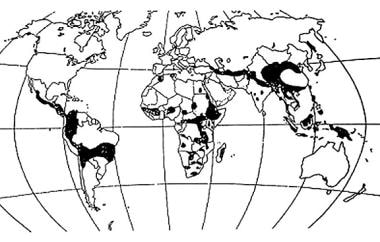
Iodine is a chemical element. It is found in trace amounts in the human body, in which its only known function is in the synthesis of thyroid hormones. Severe iodine deficiency results in impaired thyroid hormone synthesis and/or thyroid enlargement (goiter). Population effects of severe iodine deficiency, termed iodine deficiency disorders (IDDs), include endemic goiter, hypothyroidism, cretinism, decreased fertility rate, increased infant mortality, and mental retardation. Iodine is primarily obtained through the diet but is also a component of some medications, such as radiology contrast agents, iodophor cleansers, and amiodarone. Worldwide, the soil in large geographic areas is deficient in iodine. Twenty-nine percent of the world's population living in approximately 130 countries is estimated to live in areas of deficiency (see Table). This occurs primarily in mountainous regions such as the Himalayas, the European Alps, and the Andes, where iodine has been washed away by glaciation and flooding. Iodine deficiency also occurs in lowland regions far from the oceans, such as central Africa and eastern Europe. Those who consume only locally produced foods in these areas are at risk for IDD. Iodine Deficiency Characteristics
| Iodine Deficiency | None | Mild | Moderate | Severe |
|---|
| Median urine iodine, mcg/L | >100 | 50-99 | 20-49 | <20 | | Goiter prevalence | <5% | 5-20% | 20-30% | >30% | Neonatal thyroid stimulating hormone (TSH), >5 IU/mL whole blood | <3% | 3-20% | 20-40% | >40% | | Cretinism | 0 | 0 | + | + |
Adapted from the World Health Organization (WHO)/United Nations Children's Fund (UNICEF)/International Council for Control of Iodine Deficiency Disorders (ICCIDD). Normal dietary iodine intake is 100-150 mcg/d. The US Institute of Medicine (IOM) recommended dietary allowance (RDA) is 150 mcg/d of iodine for adults and adolescents, 220 mcg/d for pregnant women, 290 mcg/d for lactating women, and 90-120 mcg/d for children aged 1-11 years. The adequate intake for infants is 110-130 mcg/d. In areas where iodine is not added to the water supply or food products meant for humans or domesticated animals, the primary sources of dietary iodine are saltwater fish, seaweed, and trace amounts in grains. The upper limit of safe daily iodine intake is 1100 mcg/d for adults, and it is lower for children. In the United States, iodine has been voluntarily supplemented in table salt (70 mcg/g). Salt was selected as the medium for iodine supplementation because intake is uniform across all socioeconomic strata, intake is uniform across seasons of the year, supplementation is achieved using simple technology, and the program is inexpensive. The estimated annual cost of iodine supplementation of salt in the United States is $0.04 per person. Other major sources of dietary iodine in the United States are egg yolks, milk, and milk products because of iodine supplementation in chicken feed, the treatment of milk cows and cattle with supplemental dietary iodine to prevent hoof rot and increase fertility, and the use of iodophor cleaners by the dairy industry.
In the early 1900s, the Great Lakes, Appalachian, and northwestern regions of the United States were endemic regions for IDD, but since the iodization of salt and other foods in the 1920s, dietary iodine levels generally have been adequate. However, sustaining these iodization programs has become a new concern. The National Health and Nutrition Examination Survey (NHANES), NHANES III, demonstrated that the median US urinary iodine excretion fell from 320 mcg/d to 145 mcg/d between the early 1970s and the early 1990s and that some subsets of the population may be at increased risk for moderate IDD. This reduction in US dietary iodine intake likely was a result of the removal of iodate conditioners in store-bought breads, widely publicized recommendations for reduced salt and egg intake for blood pressure and cholesterol control, and the increasing use of noniodized salt in manufactured or premade convenience foods. The most recent NHANES survey of 2001-2002 showed that US dietary iodine intake has stabilized.
Pathophysiology
Dietary iodine is taken up readily through the gut in the form of iodide. From the circulation, it is concentrated in the thyroid gland by means of an energy-dependent sodium-iodate symporter. In the follicle cells of the thyroid gland, 4 atoms of iodine are incorporated into each molecule of thyroxine (T4) and 3 atoms into each molecule of triiodothyronine (T3). These hormones are essential for neuronal development, sexual development, and growth and for regulating the metabolic rate, body heat, and energy. When dietary iodine intake is inadequate for thyroid hormone synthesis, the serum T4 level initially falls and a number of processes ensue to restore adequate thyroid hormone production. The pituitary gland senses low levels of circulating T4 and releases more TSH. TSH stimulates the growth and metabolic activity of thyroid follicular cells. TSH stimulates each cell to increase iodine uptake and thyroid hormone synthesis and secretion. Increased TSH levels and reduction of iodine stores within the thyroid result in increased T3 production relative to T4 production. T3 is 20-100 times more biologically active than T4 and requires fewer atoms of iodine for biosynthesis. These processes tend to conserve iodine stores and help maintain normal thyroid function. In addition, thyroid hormones are deiodinated in the liver, and the iodine is released back into the circulation for reuptake and reuse by the thyroid gland. Even under these circumstances, iodine is passively lost in the urine, with additional small (10%) losses from biliary secretion into the gut. Therefore, enlargement of the thyroid gland begins as an adaptive process to low iodine intake. Iodine deficiency is the most common cause of goiter in the world. The goiter initially is diffuse but eventually becomes nodular. Some nodules may become autonomous and secrete thyroid hormone regardless of the TSH level. These autonomous nodules have been demonstrated to frequently contain TSH-activating mutations. Initially, thyroid hormone output by the normal thyroid surrounding the autonomous nodules is reduced to maintain euthyroidism. Autonomous nodules may cause hyperthyroidism.
High levels of iodine, such as those found in radiographic contrast dyes or amiodarone, may cause hyperthyroidism in the setting of nodular goiter with “hot” or autonomous nodules or hypothyroidism in the setting of autoimmune thyroid disease. If the total output of thyroid hormone by the autonomous nodules exceeds that of the normal thyroid gland, the patient becomes biochemically hyperthyroid. This condition is known as a toxic multinodular goiter. When iodine deficiency is more severe, thyroid hormone production falls and the patient experiences a hypothyroid condition. Adults have the usual signs and symptoms of hypothyroidism (see Hypothyroidism), while hypothyroidism in the fetus and in young children prevents central nervous system development and maturation, with permanent mental retardation, neurological defects, and growth abnormalities known as cretinism.
Frequency
United States
Early in the 20th century, the Great Lakes, Appalachian, and northwestern regions of the United States were endemic for IDD, but since the iodization of salt and other foods in the 1920s, dietary iodine levels generally has been adequate. National survey data suggest that average US dietary iodine intake fell dramatically from 1971-1990 and then stabilized. Urinary iodine values of less than 50 mcg/L are found in 11.1% of the total population, 7.3% of pregnant women, and 16.8% of reproductive-aged women.
International
Internationally, 2.2 billion people worldwide are at risk for IDD. Of these, 30-70% have goiter and 1-10% have cretinism.
Mortality/Morbidity
Mild-to-moderate IDD can cause thyroid function abnormalities and endemic goiter (see Image 2).
- In areas with severe endemic IDD, rates of miscarriage and infant mortality are increased. Cretinism is rare, but populations in which severe iodine deficiency is prevalent are at risk for reduced intelligence and mental retardation. In fact, iodine deficiency is the leading cause of preventable mental retardation worldwide.
- Whether iodine deficiency causes an increased risk for thyroid cancer is unclear, but a higher proportion of more aggressive thyroid cancers (ie, follicular thyroid carcinoma) and an increased thyroid cancer mortality rate are found in areas where iodine deficiency is endemic.
- The clinical disorders of iodine deficiency tend to be more profound in geographic areas associated with coexisting selenium and vitamin A deficiencies and in regions where goitrogens such as cassava or millet are major staples of the diet.
Race
No racial differences exist; prevalence is affected only by geographic area and diet.
Sex
After age 10 years, the prevalence of goiter is higher in girls than in boys in areas of iodine deficiency. No sex-based difference is observed in the incidence of cretinism.
Age
Patients of any age can be affected by iodine deficiency. The most devastating complications of IDD occur when iodine is deficient during fetal and neonatal growth.
History
Affected patients come from geographic regions where iodine deficiency disorders (IDDs) are endemic (see Image 1).
- Goiter: Patients with IDD most commonly present with goiter. Atypical endemic goiter is shown in Image 2. Children present with diffuse goiters, while adults present with nodular goiters. If a goiter is large enough, patients may complain of compressive symptoms such as hoarseness, shortness of breath, cough, or dysphagia.
- Hypothyroidism: Individuals with severe iodine deficiency may also have hypothyroidism and may complain of fatigue, weight gain, cold intolerance, dry skin, constipation, or depression (see Hypothyroidism).
- Cretinism: Cretinism is the most extreme manifestation of IDD (see Image 3). Cretinism can be divided into neurologic and myxedematous subtypes. These subtypes have considerable clinical overlap. Both conditions can be prevented by adequate maternal and childhood iodine intake.
- Neurologic cretinism is thought to be caused by severe IDD with hypothyroidism in the mother during pregnancy and is characterized by mental retardation, abnormal gait, and deaf-mutism but not by goiter or hypothyroidism in the child.
- Myxedematous cretinism is considered a result of iodine deficiency and hypothyroidism in the fetus during late pregnancy or in the neonatal period, resulting in mental retardation, short stature, goiter, and hypothyroidism (see Image 3).
- Mental retardation: Worldwide, iodine deficiency is the leading cause of preventable mental retardation. This has recently become a renewed concern as the prevalence of moderate iodine deficiency in the United States among women of childbearing age increased from 4% in the 1970s to 15% by the 1990s. Although children of mothers from iodine-deficient regions may have normal thyroid function test results, they are noted to have lower language and memory performance.
- Reduction in IQ has been noted in affected youth from regions of severe and mild iodine deficiency.
- Mental retardation as a result of iodine deficiency can be exaggerated in the setting of concomitant deficiencies of selenium or vitamin A.
- Postnatally, as infants and children are particularly sensitive to fluctuations in iodine intake, this population is at risk for poor mental and psychomotor development (predominantly in language and memory skills). Unlike mental retardation that occurs because of prenatal iodine deficiency, mental retardation from continued postnatal iodine deprivation may be reversible with thyroid hormone replacement.
Physical
The first sign of iodine deficiency is diffuse thyroid enlargement, which becomes multinodular over time (see Image 2). In patients with hypothyroidism due to severe iodine deficiency, one might see signs such as dry skin, periorbital edema, and delayed relaxation phase of the deep tendon reflexes.
Constipation
De Quervain Thyroiditis
Depression
Dysmenorrhea
Erectile Dysfunction
Euthyroid Sick Syndrome
Goiter
Goiter, Lithium-Induced
Goiter, Nontoxic
Goiter, Toxic Nodular
Hurthle Cell Carcinoma
Hypothermia
Hypothyroidism
Infertility
Lymphomas, Endocrine, Mesenchymal, and Other Rare Tumors of the Mediastinum
Pericardial Effusion
Thyroid Nodule
Thyroid, Anaplastic Carcinoma
Thyroid, Follicular Carcinoma
Thyroid, Papillary Carcinoma
Thyroxine-Binding Globulin Deficiency
Other Problems to be Considered
Endemic goiter can be differentiated from sporadic, nontoxic, multinodular goiter only by a history of iodine deficiency. The nodules of an IDD goiter cannot be distinguished from thyroid cancer based on the results from a physical examination. Any patient with a discrete nodule of at least 1-1.5 cm should be referred to an endocrinologist for evaluation with a fine-needle aspiration biopsy. Hypothyroidism secondary to IDD must be distinguished from Hashimoto disease or subacute thyroiditis (see Hashimoto Thyroiditis or Thyroiditis, Subacute).
Lab Studies
- The kidneys excrete approximately 90% of ingested iodine. Therefore, the best diagnostic test to identify IDD in populations is a median 24-hour urine iodine collection. If a 24-hour urine collection is not practical, a random urine iodine-to-creatinine ratio can be used instead. In this case, a median of 50-100 mcg of iodine per liter is consistent with mild iodine deficiency, 20-49 mcg of iodine per liter is consistent with moderate deficiency, and less than 20 mcg of iodine per liter is consistent with severe deficiency. No test that can reliably diagnose iodine deficiency in individual patients is available.
- Population studies have shown that newborns with IDD have elevated TSH levels at birth that normalize when evaluated again several weeks later. The extent of their transient hypothyroidism correlates with the severity of the iodine deficiency (see Table).
- Measurement of a dried whole-blood spot level of thyroglobulin (Tg) can be a useful indicator of the thyroid function in children and may be a more sensitive early measure of iodine repletion than serum TSH or thyroxine (T4). Current limitations of the use of dried blood spot Tg measurements include assay complexity and the unknown utility of measuring antithyroglobulin antibody levels in children.
Imaging Studies
- The 24-hour radioactive iodine uptake value is increased substantially in the presence of IDD because of increased TSH stimulation and reduction in the nonisotopic iodine pool. Therefore, thyroid uptake values in iodine-sufficient areas such as the United States are significantly lower than in areas with iodine deficiency, as in many regions of Europe.
- Thyroid size estimated on ultrasound images has recently been shown to reflect the iodine sufficiency of a population. When goiter appears in more than 5% of a regional population, iodine deficiency should be considered (see Table).
Other Tests
- Results from thyroid function studies are usually within the reference range in the presence of mild iodine insufficiency. However, in patients with euthyroidism and iodine deficiency, serum TSH levels may be normal to increased, T3 levels may be normal or slightly elevated, and T4 levels may be normal or decreased. Only in very extreme iodine deficiency does hypothyroidism develop, accompanied by an elevated serum TSH value and decreased T3 and T4 levels.
Histologic Findings
In young patients, the usual finding is diffuse hyperplasia of the thyroid gland. Histologically, extreme hyperplasia can be seen with little or no colloid (see Image 4). With aging, the diffuse goiter of iodine deficiency becomes more nodular. Histologically, the nodular goiter is caused by areas of hyperplasia separated by areas of degeneration and fibrosis. In older patients, the thyroid gland tends to be extremely heterogenous, containing colloid-containing vesicles, hyperplastic areas, degenerating areas, and fibrosis.
Medical Care
Long-term dietary iodine replacement at levels recommended by the US IOM and WHO may decrease the size of iodine-deficient goiters in very young children and pregnant women and is indicated for all patients with iodine deficiency. Generally, long-standing IDD goiters respond with only small amounts of shrinkage after iodine supplementation, and patients are at risk for developing hyperthyroidism. Patients do not routinely require specific therapy unless the goiter is large enough to cause compressive symptoms (eg, tracheal obstruction, thoracic inlet occlusion, hoarseness).
- Correction of an iodine deficiency
- This should be instituted based on the recommendations of the IOM and the WHO.
- In an adult, 150 mcg/d is sufficient for normal thyroid function. Using highly concentrated pharmaceutical agents such as a saturated solution of potassium iodide (SSKI), ie, 35,000-50,000 mcg/drop, is impractical and potentially dangerous.
- Not all daily or prenatal multiple vitamins contain iodine. Adult multiple vitamins that contain iodine typically contain 150 mcg of iodine per tablet.
- Replacement of iodine is most easily achieved by requesting that the patient use iodized salt in their cooking and at the table. Other alternative food sources include milk, egg yolks, and saltwater fish.
- In developing countries, eradication of iodine deficiency has been accomplished by adding iodine drops to well water or injecting people with iodized oil.
- Treatment of nontoxic goiters caused by iodine deficiency
- Exogenous L-thyroxine (L-T4) can also be used to decrease goiter size but generally is not effective in adults and older children. Supplemental L-T4, when added to the T3 and T4 secretion by the autonomous nodules in the endemic goiter, may cause thyrotoxicosis. Long-term L-T4 therapy that results in the suppression of the TSH level to below-normal levels may have deleterious effects on cardiac and bone health; therefore, L-T4 therapy is no longer routinely administered to patients with goiter. See Thyroiditis, Subacute and Hyperthyroidism for more information.
- Radioactive iodine (I-131) has been used, primarily in Europe, to decrease thyroid volume in patients with euthyroid goiters (40-60% volume reduction). In the United States, I-131 is the most common treatment for toxic multinodular goiters associated with hyperthyroidism.
Surgical Care
Thyroidectomy may be indicated for patients with compressive symptoms of a large goiter (see Goiter, Nontoxic).
Consultations
Consultation with an endocrinologist should be considered when the etiology of thyroid abnormalities is unclear.
Diet
The WHO recommendations for iodine intake are 150 mcg/d for adults and adolescents, 200 mcg/d for pregnant or lactating women, 90-120 mcg/d for children aged 1-11 years, and 50-90 mcg/d for infants younger than 1 year. The IOM recommends 150 mcg/d for adults, 220 mcg/d for pregnant women, and 290 mcg/d for lactating women.
- Data collected in the United States for NHANES I for the years 1971-1974 showed that the median urine iodine was 320 mcg/L, reflecting adequate dietary iodine intake. However, by the time of NHANES III (1988-1994), the median urinary iodine had fallen to 145 mcg/L. The NHANES 2001-2002 demonstrates the current stability of iodine intake in the United States at 167.8 mcg/L.
- In particular, between previous NHANES surveys, the risk for insufficient dietary iodine intake in reproductive-aged women (15-44 y) increased 3.8-fold. This overall decrease in dietary iodine may be a result of reduced intake of eggs and salt, decreased iodine supplementation of cattle feed, decreased iodate conditioners in bread, decreased use of iodized salt in manufactured foods, poor education about the medical necessity of using iodized salt, and reduction in the number of meals made at home.
Activity
No restrictions are needed.
Correction of an individual's iodine deficiency should be instituted at a level recommended by the FDA and the WHO. In an adult, 150 mcg/d is sufficient for normal thyroid function. Using highly concentrated pharmaceutical agents such as SSKI (35,000-50,000 mcg/gtt) is impractical and potentially dangerous. Replacement of iodine is achieved most easily by requesting that the patient use iodized salt (70 mcg/g) in their cooking and at the table. Other alternative food sources include milk, egg yolks, and saltwater fish. In developing countries, eradication of iodine deficiency has been accomplished by adding iodine drops to well water or injecting people with iodized oil. Adult multiple vitamins do not all contain iodine. Those that do contain iodine have 150 mcg per tablet. I-131 has been used in Europe to decrease the size of nontoxic goiters caused by iodine deficiency. This is not the standard of care in the United States. Risks associated with I-131 therapy include permanent hypothyroidism.
Drug Category: Iodides
Iodine deficiency has been treated at a population level by several methods, including voluntary use of iodized salt, iodine supplementation in bread and water, and PO/IM administration of iodized oil. The simplest and least expensive treatment is to have the patient purchase and use iodized salt.
| Drug Name | Potassium iodide (Lugol solution, SSKI, Pima) |
| Description | Option in industrialized counties. Absorption from GI tract is rapid and complete. Skin and lungs also can absorb iodine. Iodine equilibrates in extracellular fluids and is specifically concentrated by thyroid gland. |
| Adult Dose | 150 mcg/d PO 200 mcg/d PO for pregnant and lactating women Potassium iodide: 24,000 mcg/mL Lugol solution: 6300 mcg/gtt SSKI: 35,000 mcg/gtt |
| Pediatric Dose | Infants: 50-90 mcg/d PO 1-11 years: 90-120 mcg/d PO |
| Contraindications | Documented hypersensitivity to large doses (>1000 mcg/d); pulmonary edema, bronchitis, tuberculosis, and hyperkalemia Patient with an iodine deficiency goiter may become thyrotoxic after supplementation with iodine; patients with toxic multinodular goiter should not be treated with excess iodine because this may worsen hyperthyroidism |
| Interactions | Very high intake of iodine (>1000 mcg/d) increases lithium toxicity by producing additive hypothyroid effects |
| Pregnancy | B - Usually safe but benefits must outweigh the risks.
|
| Precautions | Iodine alone is not effective in shrinking adult nodule goiters due to iodine deficiency, iodine will shrink diffuse goiters in children with iodine deficiency; Prolonged intake of high levels of iodine (>1000 mcg/d) may result in fetal and maternal hypothyroidism and goiter; caution in renal failure and GI obstruction; iododerma, coryza, cough, nausea, rhinorrhea, and parotitis may occur; prolonged use at high levels during pregnancy may cause obstructive fetal goiter |
Drug Category: Thyroid hormones
Thyroid hormone, L-thyroxine, may be used to treat iodine deficiency because the chemical content of iodine is ~60% by weight.
| Drug Name | Levothyroxine (Synthroid, Levothroid, Levoxyl) |
| Description | Generally effective in replacing iodine deficiency. Considerably more expensive preparation than other forms of iodine (eg, iodized salt), especially when combined with the added expense of measuring TSH levels to assure that the supplemental L-thyroxine has not resulted in iatrogenic hyperthyroidism. Alternatively, thyroid hormone therapy has been used with caution to shrink the goiter of iodine deficiency. An L-thyroxine dose is chosen that maintains the TSH in the lower part of the reference range. TSH levels should be monitored carefully to avoid thyrotoxicosis due to autonomous nodules in the iodine deficiency goiter. |
| Adult Dose | 12.5-50 mcg/d and increase by 25-50 mcg/d q2-4wk, not to exceed 100-200 mcg/d; adjust dose q8wk based on measured TSH level to maintain TSH in lower part of reference range; once TSH level has stabilized, TSH level should be measured and L-thyroxine dose adjusted every 6 mo to make sure TSH remains at desired target range |
| Pediatric Dose | 6-12 months: 50-75 mcg/d 1-5 years: 75-100 mcg/d 6-12 years: 100-150 mcg/d >12 years: 150 mcg/d Adjust dose q4-6wk to maintain TSH in lower part of reference range |
| Contraindications | Documented hypersensitivity; uncorrected adrenal insufficiency |
| Interactions | Cholestyramine may decrease L-T4 absorption; concomitant administration with calcium or iron supplements may decrease absorption; estrogens may increase daily thyroid hormone requirement in patients with nonfunctioning thyroid glands; effect of anticoagulants increased when administered with liothyronine; activity of some beta-blockers may decrease when hypothyroid patient is converted to a euthyroid state |
| Pregnancy | A - Safe in pregnancy
|
| Precautions | Caution in angina pectoris or cardiovascular disease; monitor thyroid status periodically |
Further Outpatient Care
- In population-based assessments, iodine sufficiency can be determined based on the results of a spot urine test for iodine and creatinine. Supplementation can be achieved by using iodized salt in cooking or a once-daily multiple vitamin containing sodium iodide, 150 mcg/d.
Deterrence/Prevention
- At a population level, IDD can be prevented by the iodination of food products or the water supply. In practice, this is usually achieved by iodination of salt. An alternative in some developing countries has been the periodic injection of iodized oil supplements.
Complications
- The primary complication of iodine therapy for IDD is the development of hyperthyroidism. This may occur, especially in patients older than 45 years, because of the hyperfunctioning areas of autonomy that tend to develop in patients with long-standing iodine-deficient goiters.
Prognosis
- The supplementation of iodine does not reverse cretinism or reduce the size of large nodular goiters. Small diffuse goiters of short duration that occur in infants or during pregnancy appear to be managed effectively with iodine supplementation.
- Recurrence of iodine deficiency can occur if iodine supplementation programs lapse. Recurrence of goiter and new cases of cretinism have been noted in some nations where this occurs. These changes are manifested prominently in school-aged children, who are particularly sensitive to variations in iodine intake. Thyroid volume, prevalence of goiter, and urinary iodine levels may return to pre-iodine supplementation levels 1-2 years following the discontinuation of iodine supplementation.
Patient Education
Importantly, the public must understand the importance of using iodized salt, especially in the United States, where iodization of salt is not mandated by law. Several areas of the world, including the United States, Australia, and the Netherlands, in which iodine deficiency had been eradicated by voluntary methods, have recently shown a significant decrease in iodine intake compared to previous years. Surveillance techniques to monitor iodine sufficiency include assessment of thyroid volume, urinary iodine concentration, dried whole-blood spot Tg levels, and dietary questionnaires; the latter is the least reliable. - Pregnant women and school-aged children are common groups that are observed to monitor iodine sufficiency. These populations are important because they are easily accessible and are particularly vulnerable to the adverse effects caused by iodine deficiency.
- For excellent patient education resources, visit eMedicine's Endocrine System Center and Pregnancy and Reproduction Center. Also, see eMedicine's patient education articles Thyroid Problems and Miscarriage.
Medical/Legal Pitfalls
- Failure to consult with an endocrinologist when the etiology of thyroid abnormalities is unclear is a possible medicolegal pitfall.
Special Concerns
- Iodine stores within the thyroid increase with age in pediatric patients. Therefore, infants and young children tend to have higher I-131 uptake compared to adults. Additionally, newborns and young infants are much more severely affected by iodine deficiency than adults and are more likely to become overtly hypothyroid.
-
- Women with severe iodine deficiency are more likely to experience infertility, and pregnancy in this group is more likely to result in miscarriage or congenital anomalies. Thyroid hormones are essential for fetal brain growth and development, and severe maternal iodine deficiency may lead to mental retardation or cretinism in offspring. Even in areas of borderline iodine intake, as many as 10% of women may develop goiter during pregnancy.
| Media file 1:
Distribution of iodine deficiency in developing countries. |
 | View Full Size Image | |
Media type: Graph
|
| Media file 2:
Typical endemic goiters in 3 women from the Himalayas, an area of severe iodine deficiency. Image courtesy of F. DeLange. |
 | View Full Size Image | |
Media type: Photo
|
| Media file 3:
A man and 3 females (age range, 17-20 y) with myxedematous cretinism from the Republic of the Congo in Africa, a region with severe iodine deficiency. Image courtesy of F. DeLange. |
 | View Full Size Image | |
Media type: Photo
|
| Media file 4:
Histological sections from a normal thyroid and an endemic goiter removed because of compressive symptoms. The normal thyroid (A) contains thyroid cells arranged in a monolayered sheet around a storage form of thyroid hormone, colloid, while the endemic goiter (B) shows intense hyperplasia with no colloid. Histology of endemic goiter. Image courtesy of F. DeLange. |
 | View Full Size Image | |
Media type: Image
|
- Caldwell KL, Jones R, Hollowell JG. Urinary iodine concentration: United States National Health And Nutrition Examination Survey 2001-2002. Thyroid. Jul 2005;15(7):692-9. [Medline].
- Delange F. Optimal iodine nutrition during pregnancy, lactation and neonatal period. Int J Endocrinol Metab. 2004;89:3851.
- DeLange FM. Iodine deficiency. In: Braverman L, Utiger RD, eds. Werner and Ingbar's The Thyroid: A Fundamental and Clinical Text. 8th ed. Philadelphia, Pa: Lippincott Williams & Wilkins; 2000:295-316.
- Dunn JT. IDD Newsletter. International Council for Control of Iodine Deficiency Disorders. 2001.
- Dunn JT, Van der Har F. A practical guide to the correction of iodine deficiency. The Netherlands: International Council for Control of Iodine Deficiency Disorders. 1990.
- Hetzel BS. The Story of Iodine Deficiency: An International Challenge in Nutrition. New York, NY: Oxford University Press; 1989.
- Hetzel BS, DeLange F. The iodine deficiency disorders. Thyroid Disease Manager [serial online]. 2001. Available from: Worchester, Mass: Endocrine Education. Available at http://www.thyroidmanager.org/Chapter20/20-frame.htm.
- Hollowell JG, Staehling NW, Hannon WH, et al. Iodine nutrition in the United States. Trends and public health implications: iodine excretion data from National Health and Nutrition Examination Surveys I and III (1971-1974 and 1988-1994). J Clin Endocrinol Metab. Oct 1998;83(10):3401-8. [Medline].
- Lee K, Bradley R, Dwyer J, Lee SL. Too much versus too little: the implications of current iodine intake in the United States. Nutr Rev. Jun 1999;57(6):177-81. [Medline].
- Santiago-Fernandez P, Torres-Barahona R, Muela-Martinez JA, et al. Intelligence quotient and iodine intake: a cross-sectional study in children. J Clin Endocrinol Metab. Aug 2004;89(8):3851-7. [Medline].
- Zimmermann MB, Aeberli I, Torresani T, Burgi H. Increasing the iodine concentration in the Swiss iodized salt program markedly improved iodine status in pregnant women and children: a 5-y prospective national study. Am J Clin Nutr. Aug 2005;82(2):388-92. [Medline].
- Zimmermann MB, Moretti D, Chaouki N, Torresani T. Development of a dried whole-blood spot thyroglobulin assay and its evaluation as an indicator of thyroid status in goitrous children receiving iodized salt. Am J Clin Nutr. Jun 2003;77(6):1453-8. [Medline].
- Zimmermann MB, Wegmuller R, Zeder C, Torresani T, Chaouki N. Rapid relapse of thyroid dysfunction and goiter in school-age children after discontinuation of salt iodization. Am J Clin Nutr. Apr 2004;79(4):642-5. [Medline].
Iodine Deficiency excerpt Article Last Updated: Jul 27, 2006
|