You are in: eMedicine Specialties > Medicine, Ob/Gyn, Psychiatry, and Surgery > Obstetrics/gynecology
|
Amenorrhea Last Updated: May 17, 2005 |
|
| Synonyms and related keywords: primary amenorrhea, secondary amenorrhea, oligomenorrhea, pregnancy, anatomic defects of the outflow tract, ovarian disorders, pituitary disorders, hypothalamic disorders, intrauterine adhesions, Asherman syndrome, Asherman's syndrome, imperforate hymen, transverse vaginal septum, vaginal aplasia, aplasia of the vagina, cervical aplasia, aplasia of the cervix, uterine aplasia, aplasia of the uterus, complete androgen resistance syndrome, testicular feminization, prodromal premature ovarian failure, overt ovarian insufficiency, Turner syndrome, Turner's syndrome, pure gonadal dysgenesis, autoimmune oophoritis, 17,20-desmolase deficiency, 17-hydroxylase deficiency, radiation, chemotherapy, galactosemia, FSH receptor mutation, follicle-stimulating hormone receptor mutation, prolactinoma, pituitary tumors, Cushing syndrome, Cushing's syndrome, acromegaly, thyroid-stimulating hormone tumor, TSH tumor, postpartum pituitary necrosis,
Sheehan syndrome, Sheehan's syndrome, autoimmune hypophysitis, pituitary
radiation, sarcoidosis, hemachromatosis, craniopharyngioma, teratoma, Kallmann syndrome, Kallmann's syndrome, anorexia nervosa, bulimia
|
|   |
AUTHOR INFORMATION
| Section 1 of 10  |
|
| Author: Lawrence M Nelson, MD, MBA, Head of Gynecologic Endocrinology Unit, Investigator, Section of Women's Health Research, Developmental Endocrinology Branch, National Institutes of Health Coauthor(s): Vladimir Bakalov, MD, Clinical Associate, Developmental Endocrinology Branch, National Institute of Child Health and Human Development, National Institutes of Health; Carmen Pastor, MD, Associate Investigator, Section of Women's Health Research, National Institutes of Health |
| Lawrence M Nelson, MD, MBA, is a member of the following medical societies:
American College of Obstetricians and Gynecologists,
American Society for Reproductive Medicine,
Association of Professors of Gynecology and Obstetrics,
Endocrine Society, and
Society for Experimental Biology and Medicine |
| Editor(s): Thomas Michael Price, MD, Associate Professor of Reproductive Endocrinology, Duke University Medical Center; Francisco Talavera, PharmD, PhD, Senior Pharmacy Editor, eMedicine;
A David Barnes, MD, PhD, Professor, Department of Obstetrics and Gynecology, University of Hawaii, Chubu Hospital;
Frederick B Gaupp, MD, Consulting Staff, Department of Family Practice, Assumption Community Hospital;
and Lee P Shulman, MD, Professor of Obstetrics and Gynecology, Feinberg School of Medicine, Northwestern University; Chief, Division of Reproductive Genetics, Department of Obstetrics and Gynecology, Prentice Women's Hospital, Northwestern Memorial Hospital |
Disclosure
|   |
INTRODUCTION
| Section 2 of 10  |
|
Background: Primary amenorrhea is defined as the failure of menses to occur by age 16 years. Secondary amenorrhea is defined as the cessation of menses once they have begun. Oligomenorrhea is defined as menses occurring at intervals longer than 35 days. No consensus has been reached regarding the point at which oligomenorrhea becomes amenorrhea. Some authors suggest the absence of menses for 6 months constitutes amenorrhea, but the basis for this recommendation is unclear. Practically speaking, a woman aged 20-40 years who experiences loss of an established regular menstrual pattern should have an evaluation to seek the cause.
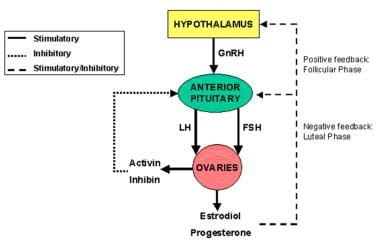
This article addresses the evaluation and treatment of women with amenorrhea who have no evidence of androgen excess. Women with amenorrhea who do have evidence of androgen excess, such as hirsutism, virilization, or sexual ambiguity, should be evaluated differently from women with amenorrhea alone. Pathophysiology: Regular and predictable menstrual cycles occur if the ovarian hormones estradiol and progesterone are secreted in an orderly fashion in response to stimulation by the hypothalamus and pituitary. Circulating estradiol stimulates growth of the endometrium. Progesterone, produced by the corpus luteum formed after ovulation, transforms proliferating endometrium into secretory endometrium. If pregnancy does not occur, this secretory endometrium breaks down and sheds during the ensuing menstrual period.
Amenorrhea occurs if the hypothalamus and pituitary fail to provide appropriate gonadotropin stimulation to the ovary, resulting in inadequate production of estradiol or in failure of ovulation and progesterone production. Amenorrhea can also occur if the ovaries fail to produce adequate amounts of estradiol despite normal and appropriate gonadotropin stimulation by the hypothalamus and pituitary. In some cases, the hypothalamus, pituitary, and ovaries all may be functioning normally, yet amenorrhea occurs because of adhesions in the endometrial cavity or an obstruction to the cervicovaginal outflow tract. Frequency:
- In the US: Each year, approximately 5% of menstruating women experience 3 months of secondary amenorrhea.
- Internationally: No evidence indicates that the prevalence of amenorrhea varies according to national origin or ethnic group. However, local environmental factors related to nutrition and the prevalence of chronic disease undoubtedly have an effect. For instance, the age of the first menses varies by geographic location, as demonstrated by a World Health Organization study comparing 11 countries, which reported a median age of menarche of 13-16 years across centers.
Mortality/Morbidity: The regular occurrence of menses is a sign of good health. It means that the hypothalamic-pituitary-ovarian axis is functioning normally to produce ovarian hormones and support ovulation. The ovary functions as both an endocrine organ and a reproductive organ. When menstrual cycle regularity is lost, this means the ovaries are not functioning normally in either their endocrine role or their reproductive role. Loss of menstrual regularity has been associated with reduced bone density and increased fracture rates. Thus, loss of menstrual regularity has associated morbidity and may contribute to increased mortality.
- Regular menses is a sign that the ovaries are producing normal amounts of estrogen, androgens, and progesterone. These sex hormones play an important role in building and maintaining bone mass. Late menarche has been associated with a 3-fold increase in the risk of wrist fracture. Menstrual cycle duration of longer than 31 days has been associated with a 2-fold increase in wrist fracture. Similar correlations exist for the risk of hip fracture, a potentially fatal occurrence.
- Regular menses is also a sign that the ovaries support ovulation and that they contain a normal store of primordial follicles. Primordial follicles are composed of an oocyte surrounded by a single layer of granulosa cells. The number of primordial follicles in the human ovary peaks during the fifth gestational month at approximately 7 million. After this initial finite pool is in place, no additional primordial follicles are formed. In some cases, loss of menstrual regularity is an early sign of declining fertility and impending premature ovarian failure. Also in some cases, this follicle depletion progresses to cause irreversible infertility. Approximately 10% of women evaluated for amenorrhea in a tertiary center are found to have premature ovarian failure.
Race: No evidence suggests that the incidence of either primary or secondary amenorrhea is related to race.
Sex: Amenorrhea occurs only in women.
Age: A large study by Treolar et al (1967) demonstrated that by age 20 years, women have established remarkably regular and persistent patterns of menstrual cycle length with little variation on an individual basis. Relatively stable and predictable menstrual cycle length then continues until age 40 years.
According to the findings from the Treolar et al study, fewer than 2 menses in a 90-day interval (>95th percentile) in a woman aged 20-40 years is distinctly abnormal. Further, more than 3 menses in a 90-day interval in these women is also distinctly abnormal. Finally, menstrual bleeding for more than 10 days in women in this age group is also distinctly abnormal.
As women age, a remarkably steady decline occurs in mean menstrual cycle length. The shortening cycle length may be physiologically linked in some way to the well-established decline in the number of primordial follicles remaining in the pool as women age.
While the overall median menstrual cycle length is 28 days, cycle length gradually declines from age 20 years to age 40 years. At age 20 years, the median cycle length is 29 days, and by age 40 years, this has declined to 27 days. Further shortening of the menstrual cycle length is a well-recognized early sign of impending menopausal transition.
- In the first year after menarche, the fifth percentile for menstrual cycle length is 23 days and the 95th percentile is 90 days. By the fourth year after menarche, the 95th percentile for cycle length has declined from 90 days to approximately 50 days. Menstrual cycle length is certainly more variable for females in their teens than for women aged 20-40 years. However, by 7 years after menarche, cycles are more stable; the fifth percentile in cycle length is 27 days, and the 95th percentile is 38 days.
- In the year preceding menopause, the fifth percentile for cycle length is 25 days and the 95th percentile is approximately 150 days. Four years before menopause, the fifth percentile for cycle length is 23 days and the 95th percentile for cycle length is significantly more regular, at approximately 40 days. Menstrual cycle length is certainly more variable during the years preceding the menopausal transition than during the age span of 20-40 years.
|   |
CLINICAL
| Section 3 of 10  |
|
History: Loss of menstrual regularity is an indication for a careful review of systems. The menstrual cycle should be viewed as a vital sign. Loss of menstrual regularity may be the first clear symptom heralding the onset of a major illness or systemic disease. Viewing the menstrual cycle as a vital sign may lead to earlier diagnosis of, and intervention for, several potentially life-threatening disorders. An arbitrarily defined duration of amenorrhea need not pass before taking corrective action.
Amenorrhea can be due to pregnancy, anatomic defects of the outflow tract, ovarian disorders, and pituitary or hypothalamic disorders. In some cases, the cause is functional, meaning that the hypothalamic gonadotropin-releasing hormone (GnRH) pulse generator has shut down the reproductive system in its role as an integrator of metabolic and psychogenic stress. Attributing the loss of menstrual regularity to a recent stressful life event is tempting; however, this approach can delay the detection of significant pathology that can have long-term health consequences. One study has shown that one third of control women report a significant stressful life event in the preceding year.
Pregnancy is the most common cause of amenorrhea. Determining whether the patient is sexually active and whether she is using contraceptive methods is important. In some cases, the hormonal contraception itself may be the cause of the amenorrhea.
Often, time constraints do not permit practitioners to obtain a thorough history and review of symptoms on the first visit. Scheduling a repeat visit to permit a more thorough evaluation may be necessary.
Another option is to use standardized history-taking instruments to collect this information in preparation for a return visit. In other cases, patients may be asked to keep a menstrual calendar and return in 3 months for reassessment. The importance of the ovary as an endocrine organ that helps maintain bone density should be stressed to the patient to help ensure her return.
In cases of primary amenorrhea, inquiring about other aspects of growth and pubertal development is important. An absence of any breast development or pubertal growth spurt by age 14 years in girls is distinctly abnormal and requires investigation. Breast development, pubertal growth spurt, and adrenarche are delayed or absent in persons with hypothalamic pituitary failure. A distinguishing factor in the case of isolated ovarian insufficiency or failure is that adrenarche occurs normally, while estrogen-dependent breast development and the pubertal growth spurt are absent or delayed. - Disorders of the outflow tract
- A history of otherwise normal growth and pubertal development in association with primary amenorrhea suggests the possibility of a congenital outflow tract abnormality such as imperforate hymen or agenesis of the vagina, cervix, or uterus. These findings are also compatible with the complete androgen resistance syndrome.
- Prior history of a surgical procedure involving the endometrial cavity, especially if performed in the presence of infection, raises the possibility of uterine synechiae (Asherman syndrome).
- Symptoms of vaginal dryness, hot flashes, night sweats, or disordered sleep may be a sign of ovarian insufficiency or premature ovarian failure. The presence of these symptoms in young women demands timely further evaluation.
- Prior history of chemotherapy or radiation therapy may be associated with ovarian failure.
- A distinguishing factor in the case of isolated ovarian insufficiency or failure and primary amenorrhea is that adrenarche occurs normally while estrogen-dependent breast development and the pubertal growth spurt are absent or delayed.
- Hypothalamic/pituitary disorders
- Associated galactorrhea, headaches, or reduced peripheral vision could be a sign of intracranial tumor. These symptoms require immediate further evaluation.
- A history of hemorrhage after childbirth can lead to failure of regular menses to return. This may be an indication of postpartum pituitary necrosis. Failure of lactation is an even earlier sign. Detecting this condition early is important because of the possible development of associated central adrenal insufficiency, a potentially fatal condition.
- An impaired sense of smell in association with primary amenorrhea and failure of normal pubertal development may be related to isolated gonadotropin deficiency, as is observed in persons with Kallmann syndrome.
- Sarcoidosis can manifest insidiously, with development of mild fatigue, malaise, anorexia, weight loss, and fever. Because 90% of patients with sarcoidosis have pulmonary involvement at some stage of the disorder, cough and dyspnea may be present.
- Hemachromatosis may manifest as weakness, lassitude, weight loss, and a change in skin color.
- Functional impairment of the hypothalamic GnRH pulse generator
- Dieting with excessive restriction of energy intake, especially fat restriction, may lead to loss of menstrual regularity and associated bone loss. In extreme cases, the process may advance to anorexia nervosa, a potentially fatal condition. Associated symptoms are an intense fear of fatness and a body image that is heavier than observed. Eating disorders can be restrictive in nature or can be of a binge-eating/purging type.
- Major psychiatric disorders such as depression, obsessive-compulsive disorder, or schizophrenia may disrupt the menstrual cycle. Symptoms associated with these conditions may be detected upon review of systems.
- Autoimmune adrenal insufficiency, a potentially fatal condition, often manifests as vague and nonspecific symptoms. Loss of menstrual regularity may be the first clear symptom indicating a need for further evaluation to detect this condition.
- Loss of menstrual regularity may herald the onset of other autoimmune endocrine disorders such as hyperthyroidism, hypothyroidism, or autoimmune lymphocytic hypophysitis. The same is true for other endocrine disorders such as Cushing syndrome or pheochromocytoma. A careful review of symptoms may help uncover these disorders.
- Strenuous exercise related to a wide variety of athletic activities can be associated with the development of amenorrhea. Elicit a history regarding the type of exercise activity and its duration per week.
- Abuse of drugs such as cocaine and opioids have central effects that may disrupt the menstrual cycle.
- Malnutrition and cirrhosis associated with alcoholism may cause loss of menstrual regularity.
- AIDS, HIV disease, or other types of immune-deficiency states may induce systemic infection leading to chronic disease and loss of menstrual regularity.
- Occult malignancy with progressive weight loss and a catabolic state may lead to loss of menstrual regularity. A careful review of systems may help uncover such a disorder.
Physical: Physical examination should begin with an overall assessment of nutritional status and general health. Measure height and weight and seek evidence for chronic disease or cachexia.
Hypothermia, bradycardia, hypotension, and reduced subcutaneous fat can be observed in persons with severe anorexia nervosa. In cases of frequent vomiting, look for possible dental erosion, reduced gag reflex, trauma to the palate, subconjunctival hemorrhage, and metacarpophalangeal calluses or bruises. - Examine the skin for evidence of androgen excess, such as hirsutism and acne. Acanthosis nigricans may be present in association with androgen excess related to insulin resistance.
- Skin examination findings can also give clues to other endocrine disorders. Vitiligo or increased pigmentation of the palmar creases may herald primary adrenal insufficiency. Thin, parchmentlike skin, striae, and evidence of easy bruising may be signs of Cushing syndrome. Warm, moist skin radiating excessive heat may be a sign of hyperthyroidism.
- Large pituitary tumors can cause visual-field cuts by impinging on the optic tract. In some cases, these visual-field cuts can be detected by simple confrontational testing.
- Assess the state of breast development. Also examine the breasts for galactorrhea. In some cases, breast discharge can be expressed, yet the condition is not true galactorrhea. If the discharge is indeed milk, this can be confirmed by finding fat globules in the fluid using low-power microscopy.
- Examine for the presence of axillary and pubic hair. These are a marker of adrenal and ovarian androgen secretion. In cases of panhypopituitarism, sources of androgen are low and pubic and axillary hair is sparse. Also, some women develop the combination of autoimmune premature ovarian failure and autoimmune primary adrenal insufficiency. These women are also markedly androgen-deficient and have scant axillary and pubic hair. The same is true for persons with androgen insensitivity syndrome (testicular feminization), 17-hydroxylase deficiency, and 17,20-desmolase deficiency.
- In cases of primary amenorrhea with otherwise normal pubertal development, pelvic examination may help detect imperforate hymen, a transverse vaginal septum, or cervical or uterine aplasia.
- Pelvic examination findings can provide physical evidence indicating the adequacy of estrogen production. Thin and pale vaginal mucosa with absent rugae is evidence of estrogen deficiency. The presence of cervical mucus with spinnbarkeit is good evidence of estrogen effect. However, evidence of estrogen effect detected on physical examination findings can be misleading in some cases because estrogen is being produced as a result of higher than normal follicle-stimulating hormone (FSH) levels (compensated ovarian insufficiency). Women with well-established premature ovarian failure often have intermittent ovarian follicle function that produces enough estrogen to have vaginal and cervical effects.
- Measuring the clitoris is an effective method for determining the degree of androgen effect. The clitoral index can be determined by measuring the glans of clitoris in the anteroposterior and transverse diameter. A clitoral index greater than 35 mm2 is evidence of increased androgen effect. A clitoral index greater than 100 mm2 is evidence of virilization.
- Ovarian enlargement may be found upon pelvic examination in cases of autoimmune oophoritis, 17-hydroxylase deficiency, or 17,20-desmolase deficiency. In these disorders, inadequate negative feedback supplied by the ovary permits excessive gonadotropin stimulation that may cause ovarian enlargement with multiple follicular cysts. In some cases, these disorders manifest with an acute onset of pain related to ovarian torsion.
- A general physical examination may undercover unexpected findings that are indirectly related to the loss of menstrual regularity (eg, discovery of hepatosplenomegaly, which may lead to detection of a chronic systemic disease).
Causes: Amenorrhea can be divided into 2 groups, (1) amenorrhea without evidence of associated androgen excess and (2) amenorrhea with evidence of androgen excess (eg, hirsutism, virilization, sexual ambiguity). For a review of the causes of amenorrhea associated with androgen excess, see Polycystic Ovarian Syndrome.
Causes of amenorrhea without associated androgen excess - Anatomic defects of outflow tract
- Intrauterine adhesions (Asherman syndrome)
- Transverse vaginal septum
- Aplasia of the vagina, cervix, or uterus: Congenital absence of the uterus can be an isolated finding or it can occur in association with the complete androgen resistance syndrome, also known as testicular feminization.
- Prodromal premature ovarian failure: This is a state of ovarian insufficiency in which FSH levels are elevated and menses are irregular but not to the degree required to make a diagnosis of premature ovarian failure. It is also referred to as overt ovarian insufficiency. For a more in-depth discussion, see Ovarian Insufficiency.
- Karyotypically normal spontaneous premature ovarian failure: For an in-depth discussion, see Ovarian Failure.
- Pure gonadal dysgenesis: The term "pure" here refers to the fact that the syndrome seems to have purely affected the gonad. No associated dysmorphic findings exist as are noted in Turner syndrome, which is often referred to as gonadal dysgenesis. Pure gonadal dysgenesis can occur with either a 46,XX or a 46,XY karyotype.
- 17,20-desmolase deficiency or 17-hydroxylase deficiency
- Radiation or chemotherapy
- Other pituitary tumors (Cushing syndrome, acromegaly, thyrotropin)
- Postpartum pituitary necrosis (Sheehan syndrome)
- Autoimmune hypophysitis
- Pituitary radiation
- Sarcoidosis
- Hemachromatosis
- Hypothalamic causes
- Tumors such as craniopharyngioma or teratoma
- Infiltrative disorder such as sarcoidosis
- Kallmann syndrome
- Functional causes
- Anorexia/bulimia
- Chronic disease
- Weight loss
- Malnutrition
- Depression or other psychiatric disorders
- Recreational drug abuse
- Psychotropic drug use
- Excessive exercise
- Idiopathic
|   |
DIFFERENTIALS
| Section 4 of 10  |
|
Adnexal Tumors Adrenal Adenoma Adrenal Carcinoma Androgen Excess Anorexia Nervosa Anovulation Anxiety Disorders Benign Lesions of the Ovaries C-17 Hydroxylase Deficiency
Cushing Syndrome Depression Follicle-Stimulating Hormone Abnormalities Germ Cell Tumors Hydatidiform Mole Hyperthyroidism Hypopituitarism (Panhypopituitarism) Imperforate Hymen Kallmann Syndrome and Idiopathic Hypogonadotropic
Hypogonadism Leydig Cell Tumors Luteinizing Hormone Deficiency [Luteinizing Hormone-Releasing Hormone Deficiency] Menopause Ovarian Failure Ovarian Insufficiency Ovarian Polycystic Disease Pituitary Macroadenomas
Pituitary Microadenomas Polyglandular Autoimmune Syndrome, Type I Polyglandular Autoimmune Syndrome, Type II Polyglandular Autoimmune Syndrome, Type III Pregnancy Diagnosis Prolactinoma Pseudo-Cushing Syndrome
|
|
|   |
WORKUP
| Section 5 of 10  |
|
Lab Studies:
- In most cases, clinical variables alone are not adequate to define the pathophysiologic mechanism disrupting the menstrual cycle. All women who present with 3 months of secondary amenorrhea should have a diagnostic evaluation initiated at that visit. As stated by Speroff et al, "Few problems in gynecologic endocrinology are as challenging or taxing to the clinician as amenorrhea. The clinician must be concerned with an array of potential diseases and disorders involving, in many instances, unfamiliar organ systems, some carrying morbid and even lethal consequences for the patient."
- Perform a pregnancy test. Once pregnancy is excluded, a thorough history, review of symptoms, and physical examination are important. If the history and physical examination findings do not reveal the cause of the amenorrhea, a complete blood cell count, urinalysis, and serum chemistries should be evaluated to help rule out systemic disease. Serum prolactin, FSH, estradiol, and thyrotropin levels should also be measured routinely in the initial evaluation of amenorrhea once pregnancy has been excluded.
- Prolactin levels in excess of 200 ng/mL are not observed except in the case of prolactin-secreting pituitary adenoma (prolactinoma). In general, the serum prolactin level correlates with the size of the tumor.
- Psychotropic drugs, hypothyroidism, stress, and meals can also raise prolactin levels. Repeatedly elevated prolactin levels require further evaluation if the cause is not readily apparent.
- Follicle-stimulating hormone
- An FSH level of approximately 40 mIU/mL is indicative of ovarian insufficiency. However, this is assay dependent and some patients have a lower menopausal level of FSH; check the reference range for the laboratory where the test is performed.
- If a repeat value in 1 month confirms this finding (taking in consideration the above laboratory-dependent caveat) and the patient has experienced at least 4 months of amenorrhea, then the diagnosis of premature ovarian failure is confirmed.
- If the FSH level is 20-40 mIU/mL in a patient with disordered menses, then the diagnosis is overt ovarian insufficiency, also known as prodromal premature ovarian failure.
- Luteinizing hormone: Luteinizing hormone is elevated in cases of 17-20 lyase deficiency, 17-hydroxylase deficiency, and premature ovarian failure.
- Generally, when considering measurement of the estradiol level, concomitantly draw and measure FSH. Serum estradiol levels within the reference range can be found intermittently despite the presence of well-documented ovarian insufficiency. Finding a concomitantly elevated FSH level brings this to light.
- Serum estradiol levels undergo wide fluctuations during the normal menstrual cycle. During the early follicular phase of the menstrual cycle, levels may be lower than 50 pg/mL. During the preovulatory estradiol surge, levels in the range of 400 pg/mL are not uncommon. In healthy menopausal women, estradiol levels are routinely lower than 20 pg/mL.
- Testosterone and dehydroepiandrosterone sulphate: Ordering these tests is not necessary in a woman with no evidence of androgen excess.
- Thyrotropin and free thyroxine (T4)
Imaging Studies:
- Ovarian causes: The information obtained with ovarian ultrasound imaging does not change clinical management in the evaluation of amenorrhea, and ovarian ultrasound should be reserved for investigational use.
- MRI for pituitary or hypothalamic causes
- MRI of the pituitary and hypothalamus is often indicated in the evaluation of amenorrhea.
- Request imaging of the hypothalamic/pituitary area specifically, rather than a study of the entire brain. This achieves higher resolution.
- MRI is indicated in the following circumstances:
- Associated headaches or visual-field cuts
- Profound estrogen deficiency with otherwise unexplained amenorrhea
- Hyperprolactinemia
Other Tests:
- Progesterone withdrawal test
- The development of accurate and reasonably priced hormonal assays has called into question the value of the progesterone challenge test. The authors do not recommend performing the test as part of the diagnostic algorithm for amenorrhea. Relying on the progesterone challenge test results can cause a delay in the diagnosis of potentially serious disorders.
- Prior to the development of readily available assays to measure serum levels of estradiol, the progesterone challenge test was used as a bioassay with which to demonstrate estrogen effect at the level of the endometrium. An intramuscular injection of 100 mg of progesterone in oil has been shown to predictably induce a withdrawal bleed if the circulating serum estradiol level is at least 50 pg/mL. However, the progesterone withdrawal test can provide inappropriately reassuring information that may delay the diagnosis of ovarian insufficiency and, possibly, other conditions.
- A 1990 report by Rebar and Connolly demonstrated that nearly 50% of women with premature ovarian failure have a withdrawal bleed in response to progestin. These patients have intermittent ovarian follicle function with estradiol production despite the presence of extremely elevated FSH and luteinizing hormone levels.
- The progesterone withdrawal test is no substitute for evaluating ovarian health. Demonstrating the presence of normally functioning ovaries requires the concurrent measurement of serum estradiol and FSH.
- Minnesota Nutrition Data Systems evaluation: This can be used to assess dietary intake. This is a 24-hour recall and analysis of total energy, protein, fat, and carbohydrate content.
- Beck Depression Inventory: This can be used to assess the patient's mood.
- Modifiable Activity Questionnaire and Paffenbarger Questionnaire: The Modifiable Activity Questionnaire (Kriska, 1990) and the Paffenbarger Questionnaire (Kohl, 1988) can be used to assess the patient's level of physical activity.
- Multidimensional eating disorder inventory for anorexia and bulimia (Garner, 1983)
- The bulimia test, revised, ie, the BULIT-R (Thelen, 1991)
Procedures:
- Hysterosalpingography and hysteroscopy are indicated in cases of possible Asherman syndrome.
- Surgical repair is indicated in disorders of the outflow tract.
|   |
TREATMENT
| Section 6 of 10  |
|
Medical Care: Medical care needs are defined by the etiology of the menstrual cycle disturbance and the desires of the patient. Ideally, treatment should be directed at correcting the underlying pathology. In the case of outflow tract abnormalities, surgery may be indicated. In other cases, correcting the underlying pathology should restore normal ovarian endocrine function and prevent the development of osteoporosis. Likewise, correcting the underlying pathology should restore ovulation and permit women interested in achieving pregnancy to maintain fertility. - Dopamine agonists are effective in treating hyperprolactinemia. In most cases, this treatment restores normal ovarian endocrine function and ovulation (see Prolactinoma).
- Hormone replacement therapy is required to maintain bone density in patients whose underlying pathology cannot be reversed to restore normal endocrine function.
- Gonadotropin therapy or the use of pulsatile GnRH therapy is required to induce ovulation for patients with infertility whose underlying pathology cannot be reversed.
- Women with evidence of hyperandrogenism and disordered menses have many other medical issues that must be addressed (see Polycystic Ovarian Syndrome).
Surgical Care: Some pituitary and hypothalamic tumors may require surgery and, in some cases, radiation therapy (see Pituitary Macroadenomas). Asherman syndrome requires hysteroscopic lysis of the intrauterine adhesions. The surgical procedure required for other outflow tract abnormalities depends on the specific clinical situation (see Imperforate Hymen). Consultations: The causes of menstrual cycle disturbance leading to the development of amenorrhea are so diverse that in some complex cases, the situation is best addressed by a multidisciplinary team. For example, a patient with complete androgen resistance (testicular feminization) would benefit from the involvement of experts in endocrinology, human genetics, psychiatry, and reproductive surgery. - General internal medicine specialist: In certain cases in which an underlying chronic disease process is present, the insights of an internist may be needed.
- Medical endocrinologist: In cases of pituitary/hypothalamic tumor, other endocrine disorders (eg, central hypothyroidism, central adrenal insufficiency) may be involved. Generally, the expertise of a medical endocrinologist is required to assist in the treatment of patients who require neurosurgery to treat the underlying condition. In cases of hyperthyroidism or Cushing syndrome, the expertise of a medical endocrinologist is required to treat the underlying pathology.
- Geneticist: With hereditary causes of amenorrhea, such as Kallmann syndrome, a geneticist's expertise can be helpful for the extended family and in counseling patients regarding the disorder.
- Psychiatrist: Cases of major depression, anorexia nervosa, bulimia nervosa, or other major psychiatric disorders warrant consultation with a psychiatrist (see Anorexia Nervosa).
- Reproductive surgeon: In some unusual cases, such as with vaginal agenesis, consult with a reproductive surgeon with extensive experience in the specific disorder.
- Nutritionist: In many cases, exercise-induced amenorrhea is due to an imbalance in energy intake and expenditure. Nutritional counseling to increase energy intake without reducing exercise is a means of reversing the underlying pathology. Women who are underweight or who appear to have nutritional deficiencies should receive nutritional counseling and can be referred to a multidisciplinary team specializing in eating disorders.
Diet: Women with findings suggestive of an eating disorder should be evaluated by a multidisciplinary team with special expertise in these disorders. Nutritional counseling alone is inadequate therapy for these women.
In some cases, nutritional deficiencies induced by dieting and exercise can cause amenorrhea even in the absence of a psychiatric disorder. Strict fat restriction often plays a role. Frequently, simply explaining the need to balance energy expenditure with energy intake resolves the problem. In this situation, nutritional counseling may be all that is required. Activity: More than 8 hours of vigorous exercise a week may cause amenorrhea. As noted above, in some cases this resolves with appropriate adjustment of the diet.
|   |
MEDICATION
| Section 7 of 10  |
|
Dopamine agonists are the only medical therapy specifically approved to reverse an underlying pathology that leads amenorrhea. In most cases, dopamine agonists effectively reduce hyperprolactinemia (see Prolactinoma).
Gonadotropin therapy or pulsatile GnRH therapy is indicated in women who desire fertility yet remain anovulatory because of an unresolved hypothalamic/pituitary disorder.
For some women with oligomenorrhea or amenorrhea who do not wish to become pregnant, oral contraceptives are a good choice to restore menstrual cyclicity and provide estrogen replacement. Document the absence of pregnancy before oral contraceptive therapy is begun.
In patients with amenorrhea or oligomenorrhea, induce withdrawal bleeding with an injection of progesterone or the administration of 5-10 mg of medroxyprogesterone for 10 days. Therapy is then begun with an oral contraceptive containing ethinyl estradiol and a progestin, such as norethindrone and levonorgestrel.
Hormone replacement therapy, consisting of an estrogen and a progestin, is needed for women in whom estrogen deficiency remains because ovarian function cannot be restored. The role of androgen replacement is unclear at this time and is the subject of ongoing investigation.
Drug Category: Estrogens -- Administered transdermally, transvaginally, or orally. Appropriate dose for young women with ovarian failure has not been established. The authors recommend full replacement doses for young women. Generally, this is approximately twice as high as doses recommended for hormone replacement therapy in normally postmenopausal women. The authors prefer to administer estradiol by skin patch. This avoids the first-pass effect of oral estrogen on the liver. No controlled studies are available to compare the efficacy and safety of one method over another. Therefore, the choice of therapy should follow consideration of the patient's preferences and the physician's experience. Drug Name
| Estradiol (Alora, Climara, Esclim, Vivelle-dot, Estrace) -- Increases synthesis of DNA, RNA, and many proteins in target tissues. TD patch available as Alora (0.05, 0.075, and 0.1 mg/d, applied twice weekly), Climara (0.025, 0.05, 0.075, and 0.1 mg/d, applied once weekly), Esclim (0.025, 0.0375, 0.05, 0.075, 0.1 mg/d, applied twice weekly), and Vivelle-dot (0.037, 0.05, 0.075, 0.1 mg/d, applied twice weekly). If TD patch not tolerated, PO form may be used. |
|---|
| Adult Dose | 100 mcg/d TD patch or 2 mg/d PO in cyclic regimen of q3wk on and 1 wk off |
|---|
| Pediatric Dose | Not established |
|---|
| Contraindications | Documented hypersensitivity; thrombophlebitis; neuroophthalmologic vascular disease; undiagnosed vaginal bleeding; pregnancy; breast cancer; estrogen-dependent neoplasia; chronic liver disease |
|---|
| Interactions | May reduce hypoprothrombinemic effects of anticoagulants
Levels may be reduced with coadministration of barbiturates, rifampin, and other agents that induce hepatic microsomal enzymes
Possible increase in corticosteroid levels when administered concurrently
Use with hydantoins may cause spotting, breakthrough bleeding, and pregnancy
Increase in fluid retention caused by estrogen intake may reduce seizure control
In isolated cases, may decrease effect of TCAs and therefore cause worsening of previously well-controlled depression (phenomenon seems to be dose-dependent and is reversible with decrease or discontinuation of estrogen)
Thyroid replacement or suppressive therapy may need adjustments because estrogen increases SHBG, thus leaving less free T4 (active hormone) available
Tobacco smoking can have antiestrogenic effect by increasing the C-2 hydroxylation of estradiol molecule| Pregnancy |
X - Contraindicated in pregnancy |
|---|
| Precautions | Reported endometrial cancer risk among those on unopposed estrogen is approximately 2- to 12-fold greater than those who are not; appears dependent on duration of treatment and on estrogen dose; greatest risk appears associated with prolonged use (increased risks of 15- to 24-fold for 5-10 y or more); concurrent progestin therapy may offset this risk but overall health impact in premenopausal women is unknown
Some studies suggest possible increased incidence of breast cancer in women taking estrogen therapy at higher doses or for prolonged periods; these studies have focused on postmenopausal women; conclusions may not be applicable to young women with ovarian failure
Counseling should help young women deficient in estrogen to feel comfortable taking estrogens; estrogen therapy during pregnancy is associated with an increased risk of fetal congenital reproductive tract disorders and possibly other birth defects
Two studies have reported a 2- to 4-fold increase in risk of gallbladder disease requiring surgery in women receiving oral estrogen replacement therapy, similar to the 2-fold increase previously noted in users of oral contraceptives (risk from TD estrogens not established)
Occasional blood pressure increases during therapy have been attributed to idiosyncratic reactions to estrogens; other studies showed slightly lower blood pressure compared with those not on therapy; postmenopausal use does not increase risk of stroke; nonetheless, blood pressure should be monitored at regular intervals
May lead to severe hypercalcemia in patients with breast cancer and bone metastases; if hypercalcemia occurs, discontinue therapy and take appropriate measures to reduce serum calcium level
Addition of a progestin to estrogens may cause adverse effects on lipoprotein metabolism (lowering HDL and raising LDL), which could diminish cardioprotective effect of therapy
Possible enhancement of mitotic activity in breast epithelial tissue, although few epidemiological data are available to address this point; take complete medical and family history before initiation of therapy; as a general rule, should be prescribed for no longer than 1 y without another physical examination
Some studies have shown that women on therapy have hypercoagulability, primarily related to decreased antithrombin activity; effect appears dose- and duration-dependent and is less pronounced than that associated with oral contraceptive use
Insufficient information on hypercoagulability in women with previous thromboembolic disease; may be associated with massive elevations of plasma triglycerides, leading to pancreatitis and other complications in patients with familial defects of lipoprotein metabolism; because may cause some degree of fluid retention, careful observation required when conditions that might be influenced by this factor are present (eg, asthma, epilepsy, migraine, cardiac, renal dysfunction)
Certain patients may develop undesirable manifestations of estrogenic stimulation (eg, abnormal uterine bleeding, mastodynia); may be poorly metabolized in patients with impaired liver function and should be administered with caution; accelerated PT, aPTT, and platelet aggregation time; increased platelet count; increased factors II, VII antigen, VIII antigen, VIII coagulant activity, IX, X, XII, VII-X complex, and beta-thromboglobulin; decreased levels of antifactor Xa and antithrombin III, decreased antithrombin III activity; increased levels of fibrinogen and fibrinogen activity; increased plasminogen antigen and activity
Increased thyroid-binding globulin leading to increased circulating total thyroid hormone, as measured by protein-bound iodine, T4 levels (by column or by radioimmunoassay), or T3 levels by radioimmunoassay; free T4 and free T3 concentrations are unaltered
Other binding proteins may be elevated in serum (eg, corticosteroid-binding globulin and SHBG, leading to increased circulating corticosteroids and sex steroids, respectively); free or biologically active hormone concentrations are unchanged; other plasma proteins may be increased (eg, angiotensinogen/renin substrate, alpha1-antitrypsin, ceruloplasmin); increases plasma HDL and HDL-2 subfraction concentrations, reduces LDL cholesterol concentration, and increases triglyceride levels; reduces response to metapyrone test; reduces serum folate concentration
Long-term continuous administration of natural and synthetic estrogens in certain animal species increases frequency of carcinomas of the breast, uterus, cervix, vagina, testis, and liver
Generally, any drug should be administered to breastfeeding women only when clearly necessary because many drugs are excreted in human milk; administration to breastfeeding women has been shown to decrease quantity and quality of milk |
|---|
|
|---|
Drug Name
| Estrogens, conjugated (Premarin) -- Some cannot tolerate TD patch. Use conjugated equine estrogens to achieve adequate estrogenization of vaginal epithelium in young women and adequately maintain bone density. |
|---|
| Adult Dose | 1.25 mg/d PO |
|---|
| Pediatric Dose | Not established |
|---|
| Contraindications | Documented hypersensitivity; known or possible pregnancy; breast cancer, undiagnosed abnormal genital bleeding, active thrombophlebitis, or thromboembolic disorders; history of thrombophlebitis, thrombosis, or thromboembolic disorders associated with previous estrogen use (except when used in treatment of breast or prostatic malignancy) |
|---|
| Interactions | May reduce hypoprothrombinemic effect of anticoagulants; coadministration of barbiturates, rifampin, and other agents that induce hepatic microsomal enzymes may reduce levels; pharmacologic and toxicologic effects of corticosteroids may occur as a result of estrogen-induced inactivation of hepatic P-450 enzyme; loss of seizure control has been noted when administered concurrently with hydantoins |
|---|
| Pregnancy |
X - Contraindicated in pregnancy |
|---|
| Precautions | Certain patients may develop undesirable manifestations of excessive estrogenic stimulation (eg, abnormal or excessive uterine bleeding or mastodynia); may cause some degree of fluid retention (exercise caution); prolonged unopposed estrogen therapy may increase risk of endometrial hyperplasia |
|---|
Drug Category: Progestins -- Stop endometrial cell proliferation, allowing organized sloughing of cells after withdrawal. No long-term controlled studies compare efficacy of medroxyprogesterone with oral progesterone in protecting the endometrium from neoplasia at the doses of estrogen generally required for replacement in young women. The authors recommend use medroxyprogesterone as first-line therapy because of longer-term clinical experience with this agent.Drug Name
| Medroxyprogesterone (Provera, Cycrin, Depo-Provera, Amen) -- Administer cyclically 12 d/mo to prevent endometrial hyperplasia that unopposed estrogen may cause. In young women, regular withdrawal bleeding is preferable because even young women with premature ovarian failure have a 5-10% chance of spontaneous pregnancy (unlike postmenopausal women). If an expected withdrawal bleeding is absent, perform a pregnancy test (and a timely diagnosis of pregnancy will not be missed). Other causes of amenorrhea may also remit spontaneously and result in an unexpected pregnancy. |
|---|
| Adult Dose | 10 mg PO qd for first 12 d of menstrual cycle |
|---|
| Pediatric Dose | Not established |
|---|
| Contraindications | Documented hypersensitivity; cerebral apoplexy, vaginal bleeding from undiagnosed cause, thrombophlebitis, liver dysfunction, pregnancy, missed abortion, breast or genital malignancies |
|---|
| Interactions | May decrease effects of aminoglutethimide; slightly decreases clearance of digoxin; increases liver enzymes when coadministered with tamoxifen; increases half-life of warfarin |
|---|
| Pregnancy |
X - Contraindicated in pregnancy |
|---|
| Precautions | Be alert to earliest manifestations of thrombotic disorders (eg, thrombophlebitis, cerebrovascular disorders, pulmonary embolism, retinal thrombosis); if these occur or are suspected, discontinue drug immediately
Discontinue medication pending examination with sudden, partial, or complete loss of vision or with sudden onset of proptosis, diplopia, or migraine; if examination reveals papilledema or retinal vascular lesions, withdraw medication
Perform physical examination (including special attention to breast, pelvic organs, and Papanicolaou smear); may cause some degree of fluid retention, and conditions that might be influenced by this (eg, epilepsy, migraine, asthma, cardiac or renal dysfunction) require careful observation
In case of breakthrough bleeding, as in all cases of irregular bleeding per vagina, bear in mind nonfunctional causes; in cases of vaginal bleeding from an unknown cause, adequate diagnostic measures are indicated
Carefully observe patients with history of depression and discontinue drug if depression recurs to serious degree; carefully observe diabetic patients receiving progestin therapy; advise pathologist of progestin therapy when relevant specimens are submitted
Because of occurrence of thrombotic disorders (eg, thrombophlebitis, pulmonary embolism, retinal thrombosis, cerebrovascular disorders) in patients taking estrogen-progestin combinations and because mechanism is obscure, be alert to earliest manifestation of these disorders
Administer any drug to breastfeeding women only when clearly necessary because many drugs are excreted in human milk; detectable amounts of progestin have been identified in milk |
|---|
Drug Name
| Progesterone (Prometrium) -- Used to prevent endometrial hyperplasia |
|---|
| Adult Dose | For women with a uterus receiving estrogen therapy: 200 mg/d PO for 2 d sequentially per 28-d cycle |
|---|
| Pediatric Dose | Not established |
|---|
| Contraindications | Documented hypersensitivity; caps contain peanut oil and should never be used by patients allergic to peanuts; known or suspected pregnancy; thrombophlebitis thromboembolic disorders, cerebral apoplexy, or patient with a history of these conditions; severe liver dysfunction or disease; known or suspected malignancy of breast and genital organs; undiagnosed vaginal bleeding; missed abortion; as a diagnostic test for pregnancy |
|---|
| Interactions | Ketoconazole inhibits metabolism by human liver microsomes (clinical relevance unknown) |
|---|
| Pregnancy |
B - Usually safe but benefits must outweigh the risks.
|
|---|
| Precautions | May cause some degree of fluid retention; thus, conditions that might be influenced by this factor (eg, epilepsy, migraine, asthma, cardiac or renal dysfunction) require careful observation
Patients with history of depression should be carefully observed
Transient dizziness may occur in some patients; caution when driving a motor vehicle or operating machinery; small percentage of women may experience extreme dizziness and/or drowsiness during initial therapy; for these women, bedtime dosing is advised |
|---|
|   |
FOLLOW-UP
| Section 8 of 10  |
|
Further Outpatient Care:
- The need for ongoing care is defined by the mechanism disrupting the menstrual cycle and the patient's desires. See patients with ovarian insufficiency annually to monitor their ovarian hormone replacement and to detect the development of associated conditions that may be related to the original pathogenic mechanism that led to the disruption of the menstrual cycle.
Complications:
- Loss of menstrual regularity has been associated with an increased risk of wrist and hip fractures related to reduced bone density, even without the development of amenorrhea. A later menarche and menstrual cycle intervals longer than 32 days have both been associated with increased fracture rates in later years. Young women with ovarian insufficiency that is unresponsive to therapy require hormone replacement to maintain bone density.
Patient Education:
- For patients with ovarian insufficiency that remains after appropriate evaluation and treatment, careful counseling is warranted to stress the need for ongoing attention to the factors that help maintain bone density. Hormone replacement therapy is important for these patients. Other factors to consider are the need for adequate calcium intake (1200-1500 mg/d of elemental calcium) and the need for 20-30 minutes of weight-bearing exercise each day.
|   |
MISCELLANEOUS
| Section 9 of 10  |
|
Medical/Legal Pitfalls:
- Evidence is mounting that loss of menstrual regularity is a risk factor for later development of osteoporosis and hip fractures. Both patients and clinicians need to view the ovary as an important endocrine organ that helps maintain healthy bones. Excessive delay in the evaluation and treatment of disordered menses can contribute to osteoporosis. At some point, failure to promptly evaluate for the presence of ovarian insufficiency could become a medicolegal pitfall.
Special Concerns:
- Having regular menses is a sign of good health. Blood pressure is recognized as an important vital sign that can lead to earlier detection of a disease process that may be silently advancing. In this sense, the menstrual cycle should also be viewed as a vital sign that can lead to earlier detection of the silent disease process of osteoporosis.
|   |
BIBLIOGRAPHY
| Section 10 of 10 |
|
-
Berga SL, Mortola JF, Girton L, et al: Neuroendocrine aberrations in women with functional hypothalamic amenorrhea. J Clin Endocrinol Metab 1989 Feb; 68(2): 301-8[Medline].
-
Berga SL, Marcus MD, Loucks TL, et al: Recovery of ovarian activity in women with functional hypothalamic amenorrhea who were treated with cognitive behavior therapy. Fertil Steril 2003 Oct; 80(4): 976-81[Medline].
-
Carr BR: Disorders of the ovaries and female reproductive tract. In: Wilson JD, Foster DW, Kronenberg HM, Larsen PR, eds. Williams Textbook of Endocrinology. 9th ed. Philadelphia, Pa: WB Saunders; 1998: 781-99.
-
Cooper GS, Sandler DP: Long-term effects of reproductive-age menstrual cycle patterns on peri- and postmenopausal fracture risk. Am J Epidemiol 1997 May 1; 145(9): 804-9[Medline].
-
Coulam CB, Adamson SC, Annegers JF: Incidence of premature ovarian failure. Obstet Gynecol 1986 Apr; 67(4): 604-6[Medline].
-
Fioroni L, Fava M, Genazzani AD, et al: Life events impact in patients with secondary amenorrhoea. J Psychosom Res 1994 Aug; 38(6): 617-22[Medline].
-
Fries H, Nillius SJ, Pettersson F: Epidemiology of secondary amenorrhea. II. A retrospective evaluation of etiology with special regard to psychogenic factors and weight loss. Am J Obstet Gynecol 1974 Feb 15; 118(4): 473-9[Medline].
-
Garner DM: Eating Disorder Inventory-2 Professional Manual. Odessa, Fla: Psychological Assessment Resources; 1991.
-
Garner DM, Olmsted MP, Polivy J: Development and validation of a multidimensional eating disorder inventory for anorexia nervosa and bulimia. Int J Eating Disorders 1983; 2: 15-34.
-
Garner DM, Olmsted MP, Polivy J: Development and validation of a multidimensional eating disorder inventory for anorexia nervosa and bulimia. Int J Eating Disorders 1983; 2: 15-34.
-
Gibson JH, Mitchell A, Harries MG, Reeve J: Nutritional and exercise-related determinants of bone density in elite female runners. Osteoporos Int 2004 Aug; 15(8): 611-8[Medline].
-
Giles DE, Berga SL: Cognitive and psychiatric correlates of functional hypothalamic amenorrhea: a controlled comparison. Fertil Steril 1993 Sep; 60(3): 486-92[Medline].
-
Grinspoon S, Miller K, Coyle C, et al: Severity of osteopenia in estrogen-deficient women with anorexia nervosa and hypothalamic amenorrhea. J Clin Endocrinol Metab 1999 Jun; 84(6): 2049-55[Medline].
-
Klentrou P, Plyley M: Onset of puberty, menstrual frequency, and body fat in elite rhythmic gymnasts compared with normal controls. Br J Sports Med 2003 Dec; 37(6): 490-4[Medline].
-
Kletzky OA, Davajan V, Nakamura RM, et al: Clinical categorization of patients with secondary amenorrhea using progesterone-induced uterine bleeding and measurement of serum gonadotropin levels. Am J Obstet Gynecol 1975 Mar 1; 121(5): 695-703[Medline].
-
Kriska AM, Knowler WC, LaPorte RE, et al: Development of questionnaire to examine relationship of physical activity and diabetes in Pima Indians. Diabetes Care 1990 Apr; 13(4): 401-11[Medline].
-
Laufer MR, Floor AE, Parsons KE, et al: Hormone testing in women with adult-onset amenorrhea. Gynecol Obstet Invest 1995; 40(3): 200-3[Medline].
-
Laughlin GA, Yen SS: Nutritional and endocrine-metabolic aberrations in amenorrheic athletes. J Clin Endocrinol Metab 1996 Dec; 81(12): 4301-9[Medline].
-
Loucks AB, Verdun M, Heath EM: Low energy availability, not stress of exercise, alters LH pulsatility in exercising women. J Appl Physiol 1998 Jan; 84(1): 37-46[Medline].
-
Marcus MD, Loucks TL, Berga SL: Psychological correlates of functional hypothalamic amenorrhea. Fertil Steril 2001 Aug; 76(2): 310-6[Medline].
-
Mashchak CA, Kletzky OA, Davajan V, Mishell DR Jr: Clinical and laboratory evaluation of patients with primary amenorrhea. Obstet Gynecol 1981 Jun; 57(6): 715-21[Medline].
-
Mishell DR Jr, Stenchever MA, Droegemueller W: Primary and secondary amenorrhea: etiology, diagnostic evaluation, management. In: Mishell DR Jr, Stenchever MA, Droegemueller W, Herbst AL, eds. Comprehensive Gynecology. 3rd ed. St. Louis, Mo: Mosby-Year Book; 1997: 1043-67.
-
Morabia A, Costanza MC: International variability in ages at menarche, first livebirth, and menopause. World Health Organization Collaborative Study of Neoplasia and Steroid Contraceptives. Am J Epidemiol 1998 Dec 15; 148(12): 1195-205[Medline].
-
Nicodemus K, Folsom A, Anderson K: Menstrual history and risk of hip fractures in postmenopausal women the iowa women's health study. Am J Epidemiol 2001 Feb 1; 153(3): 251-5[Medline].
-
Pettersson F, Fries H, Nillius SJ: Epidemiology of secondary amenorrhea. I. Incidence and prevalence rates. Am J Obstet Gynecol 1973 Sep 1; 117(1): 80-6[Medline].
-
Rebar RW, Connolly HV: Clinical features of young women with hypergonadotropic amenorrhea. Fertil Steril 1990 May; 53(5): 804-10[Medline].
-
Reindollar RH, Novak M, Tho SP, McDonough PG: Adult-onset amenorrhea: a study of 262 patients. Am J Obstet Gynecol 1986 Sep; 155(3): 531-43[Medline].
-
Selzer R, Caust J, Hibbert M, et al: The association between secondary amenorrhea and common eating disordered weight control practices in an adolescent population. J Adolesc Health 1996 Jul; 19(1): 56-61[Medline].
-
Sherman BM, Korenman SG: Hormonal characteristics of the human menstrual cycle throughout reproductive life. J Clin Invest 1975 Apr; 55(4): 699-706[Medline].
-
Speroff L, Glass RH, Kase NG: Amenorrhea. In: Speroff L, Glass RH, Kase NG, eds. Clinical Gynecologic Endocrinology and Infertility. 6th ed. Baltimore, Md: Williams & Wilkins; 1999: 422-85.
-
Thelen MH, Farmer J, Wonderlich S, Smith M: A revision of the bulimia test: the BULIT-R. Psychol Assess 1991; 3: 119-24.
-
Treloar AE, Boynton RE, Behn BG, Brown BW: Variation of the human menstrual cycle through reproductive life. Int J Fertil 1970 Jan-Mar; 12(1): 77-126[Medline].
-
Tschugguel W, Berga SL: Treatment of functional hypothalamic amenorrhea with hypnotherapy. Fertil Steril 2003 Oct; 80(4): 982-5[Medline].
-
Warren MP, Stiehl AL: Exercise and female adolescents: effects on the reproductive and skeletal systems. J Am Med Womens Assoc 1999 Summer; 54(3): 115-20, 138[Medline].
-
Warren MP: Clinical review 77: evaluation of secondary amenorrhea. J Clin Endocrinol Metab 1996 Feb; 81(2): 437-42[Medline].
-
Wolf AM, Hunter DJ, Colditz GA, et al: Reproducibility and validity of a self-administered physical activity questionnaire. Int J Epidemiol 1994 Oct; 23(5): 991-9[Medline].
Amenorrhea excerpt |