Overview
Thyroxine-binding globulin (TBG) deficiency is a benign condition that is either acquired or inherited. This disorder is often an epiphenomenon indicative of or a harbinger of an underlying medical condition. The symptoms and signs of TBG deficiency are those resulting from the primary disorders that cause the acquired form of this condition. Complications could also potentially result from erroneously administered treatment if TBG deficiency is misdiagnosed as another disorder.
The thyroid hormones (THs)—thyroxine (T4) and 3,5,3'-triiodothyronine (T3)—circulate in blood by reversibly binding to carrier proteins. Although only 0.3% or less of T3 and T4 circulates unbound, it is this free hormone fraction that is metabolically active at the tissue and cellular level.
The 3 main proteins that carry the majority (>95%) of THs are thyroxine-binding globulin (TBG), transthyretin (TTR, or prealbumin), and albumin. A minor proportion of the THs is bound on serum lipoproteins. Very rarely, and in the context of anti-TH antibodies in autoimmune thyroid disease, immunoglobulins also may bind TH. TH binding to TBG is characterized by low capacity but high avidity; the converse is true, ie, high capacity but low avidity, for TH binding to TTR and albumin.
Inherited or acquired variations in the concentration and/or affinity of these proteins may produce substantial changes in serum total TH levels measured by commercially available assays. [1] Notably, these changes do not result in illness (ie, hypothyroidism or hyperthyroidism), because the concentration of the free TH does not change.
A deficiency in TH-binding proteins is suspected when abnormally low serum total TH concentrations are encountered in clinically euthyroid subjects in the presence of normal serum thyrotropin (ie, thyroid-stimulating hormone [TSH]). More specifically, low TBG is suggested because this protein carries the majority of the serum TH.
Several states of deficiency of this protein have been described that are either inherited or acquired. Thyroid function tests (TFTs) in patients with TBG deficiency show normal TSH and free T4, but low total T4 and, occasionally, low total T3 serum concentrations. The most important clinical aspect of TBG deficiency states is recognition of these disorders and avoidance of unnecessary and potentially harmful TH replacement therapy.
Causes of TBG deficiency
Inherited causes of TBG deficiency include the following:
-
TBG gene defects - Partial deficiency (X linked) and complete deficiency (X linked)
-
Other genetic defects - Carbohydrate-deficient glycoprotein syndrome type 1 (CDG1), which is autosomal recessive
Acquired causes of TBG deficiency include the following:
-
Chronic liver disease
-
Severe systemic illness (but not in human immunodeficiency virus/acquired immunodeficiency syndrome [HIV/AIDS] or acute intermittent porphyria) [3]
-
Malnutrition
-
Cushing syndrome
-
Drugs (eg, androgens, glucocorticoids, L-asparaginase)
Prognosis
TBG deficiency does not lead to phenotypic features and no morbidity or mortality is directly associated with it. As mentioned above, patients with acquired TBG deficiency may have morbidity and mortality secondary to their underlying illness (usually severe). In addition, morbidity may be associated with misinterpretation of the TFTs as representing a hypothyroid state, with resultant unnecessary, potentially harmful treatment.
Patient education
Patients with inherited TBG deficiency should be aware of their condition in order to notify their health-care providers and avoid misdiagnosis.

Molecular Biology of TBG
Thyroxine-binding globulin (TBG) is a 395–amino acid, 54kd polypeptide that is synthesized in the liver and encoded by a single gene copy. [6] The gene locus in humans is on chromosome band Xq22. [7, 8] TBG is a member of the serine protease inhibitor (SERPIN) superfamily, to which cortisol-binding globulin (CBG), antithrombin III, and angiotensinogen also belong. Notably, however, neither TBG nor CBG has intrinsic antiprotease activity. [9, 10]
Cleavage of TBG by a serine protease causes a conformational change that reduces the affinity of TBG for T4. This allows large concentrations of thyroid hormone (TH) to exist at specific sites. Cleavage also may increase the clearance of TBG. TBG is a minor component of the alpha globulins and has a serum half-life of 5 days; it is glycosylated on 4 asparagine residues. [11, 12, 13]
The normal serum concentration of TBG ranges from 1.1-2.1mg/dL in adults. Although TBG concentrations are far lower than those of the other 2 TH-binding proteins (ie, TTR, albumin), it carries approximately 75% of serum T4 and T3. TBG has a 10-fold greater affinity for T4 than for T3, and its molecule has a single TH binding site. In normal serum, TBG usually is only 25% saturated with T4.
Interestingly, TBG also binds numerous T4 and T3 analogues and drugs, such as phenytoin, diclofenac, fenclofenac, meclofenamate, mefenamate, diflunisal, diazepam, salicylates, and milrinone. Because some of these drugs also bind to TTR and may displace TH from the TTR binding site, it is at least theoretically possible that patients with either partial or complete TBG deficiency who are treated with these drugs may show some temporary increase in free TH levels.
A study by Pappa et al reported a new mutation in the TBG gene in 2 unrelated families. A molecule with reduced affinity for T4 was created by the mutation which resulted in low serum T4. [14]
Etiology
Acquired TBG deficiency
Acquired (secondary) thyroxine-binding globulin (TBG) deficiency can result from a lack of protein supply or synthesis, loss of urinary protein, and inducement via drugs. For example, states of protein malnutrition, observed in chronic liver or renal diseases, gastrointestinal malnutrition, anorexia, marasmus, and kwashiorkor, are associated with secondary TBG deficiency. These states also usually are associated with moderate to severe albumin and TTR deficiencies.
In nephrotic syndrome, TBG, like albumin, TTR, and immunoglobulins, is lost through the glomerular filtrate of the kidneys. [2]
Several endocrine conditions, such as Cushing syndrome, acromegaly, and poorly controlled diabetes mellitus, are associated with TBG deficiency. The etiologic basis for this association remains unclear.
Long-term treatment with glucocorticoids and androgenic steroids also can result in TBG deficiency. [15, 16] The cause of the decrease in TBG concentration associated with these drugs is not clear, but it is believed that the effect is transcriptionally mediated. However, cleavage of the protein also may play a role in increasing its clearance.
Inherited TBG deficiency
In most cases, the cause of inherited TBG deficiency (partial or complete) is a mutation in the coding region of the TBG gene, located on the long arm of chromosome X. [8] Rarely, other germline genetic defects lead to a familial absence of or reduction in TBG expression.
Because familial TBG deficiency is X linked, in families with complete TBG deficiency, males have no detectable TBG, while carrier females have half the normal concentration. In families with partial deficiency, males have some measurable TBG concentration, while females tend to have TBG levels that are higher than half the normal concentration. [17]
The genetic basis of TBG deficiency pertains to point mutations resulting in amino acid substitutions in the mature protein or in truncations caused by stop codons. [18, 19, 20, 21]
More rarely, TBG defects are caused by aberrant messenger ribonucleic acid (mRNA) processing due to mutations in the acceptor splice site or by exon skipping, as well as a probable defect in TBG-specific transcription factors. [22] Additionally, in the case of a single pedigree, partial TBG deficiency was found to be caused by a mutation in the signal peptide for that protein (ie, in the absence of mutation within the mature peptide). [23]
Finally, 2 pedigrees have been described in which, in the deoxyribonucleic acid (DNA) of members of the group who had complete TBG deficiency, no mutations were found in either the signal peptide or in the actual coding regions of the gene. In these 2 pedigrees, the deficiency is believed to have been caused by an overactive silencer located a considerable distance from the TBG gene promoter. [24] Research has revealed an increasingly complex variety of genetic mechanisms leading to TBG deficiency.
Inherited TBG deficiency also has been described within the context of the genetic syndrome known as congenital disorder of glycosylation type 1 (CDG1), or Jaeken syndrome. The features of this syndrome are psychomotor retardation, cerebellar ataxia, peripheral sensorimotor neuropathy, skeletal abnormalities, lipodystrophy, and retinitis pigmentosa. [25] CDG1 is caused by mutations in phosphomannomutase 2 and shows autosomal recessive inheritance. [26] The CDG1 gene locus is located on chromosomal band 16p13 in humans.
In addition to quantitative defects in TBG, qualitative defects resulting in lower T4 affinity or increased degradation due to improper intracellular processing have been described.
The Thyroid in TBG Deficiency
Thyroid-binding globulin (TBG) deficiency does not cause thyroid disease. The homeostatic mechanism of equilibrium dynamics between TBG-bound and free TH is as follows:
-
First, any decrease in TBG levels initially increases the concentration of the free hormone
-
Subsequently, the tendency to cause hyperthyroidism is counterbalanced by the tendency to shut off TSH secretion and hence decrease the TH secretory rate from the thyroid gland
-
Finally, the total TH concentration in the serum decreases until the concentration of the free hormone is restored to normal
This equilibrium is achieved extremely rapidly and on a physicochemical level. If chronic, the decreased extrathyroidal pool of TH may lead to small, transient declines in circulating free TH levels, thus resulting in transient TSH stimulation of the thyroid. The latter mechanism may explain the moderate elevation in serum thyroglobulin levels observed in up to one third of patients with TBG deficiency. Because TBG deficiency is not an acute process, a state of resultant hypothyroidism does not occur. Total T4 and T3 may be low in states of TBG deficiency, but the free T4, free T3, and TSH levels remain normal.
Epidemiology
The prevalence of inherited complete thyroxine-binding globulin (TBG) deficiency is approximately 1 case per 15,000 male births, while the prevalence of inherited partial TBG deficiency is 1 case per 4000 newborns. In a study of thyroid hormone–binding protein abnormalities in patients with abnormal TFTs, ie, in a priori select population, the prevalence of complete and partial TBG deficiency was 1 in 2500 and 1 in 200, respectively. [27] The incidence and prevalence of secondary TBG deficiency is unknown.
Race-, sex-, and age-related demographics
Two variant TBGs have been described with high frequency in certain populations. TBG-A, found in Australian Aborigines, presents with moderate TBG deficiency, with an allele frequency of 50%. [28] TBG-S is associated with mild TBG deficiency and has an allele frequency of 4-12% in Black African and Pacific Island populations. [29]
Notably, TBG gene polymorphisms that do not lead to abnormal serum TH levels have been described in the Black populations of Africa and America.
No sex differences in the incidence and prevalence of acquired TBG deficiency have been reported. With regard to the inherited condition, complete TBG deficiency occurs only in males, because the gene for TBG is located on the X chromosome. [30] TBG deficiency occurs in all age groups; the inherited form is identifiable at birth.
History and Physical Examination
History
Patients may have constitutional and non-specific symptoms unrelated to thyroxine-binding globulin (TBG) deficiency (eg, fatigue, weight gain, constipation, drowsiness, somnolence, low energy, dry skin, edema) that prompt them to seek medical advice. These symptoms are fairly common in the general population and usually lead to extensive investigations, including TFTs and the ultimate diagnosis of TBG deficiency.
Most individuals with TBG deficiency are expected to be asymptomatic from a thyroid standpoint but may have symptoms of underlying disease. Others present to their health-care provider because of conflicting findings from a thyroid function screening test (eg, low total thyroid hormone and normal TSH levels).
Identifying medical and nutritional states that may be associated with a secondary deficiency of TBG is very important, because this may indicate important coexisting disease. A family history of TBG deficiency is suggestive of an inherited state.
Physical examination
No specific findings are associated with inherited deficiency of thyroxine-binding globulin (TBG) upon physical examination. In secondary deficiency of TBG, any clinical findings are attributable to the underlying illness.
Diagnostic Considerations
The most important aspect of dealing with thyroxine-binding globulin (TBG) deficiency is to recognize and correctly diagnose this condition in order to avoid unnecessary treatment for a mistaken diagnosis of hypothyroidism. [31]
In patients with inherited TBG deficiency, the disorder is frequently detected during newborn screening for congenital hypothyroidism. [32] Hengeveld et al reported the case of an infant with functional TBG deficiency caused by a novel SERPINA7 variant, who was initially suspected of having congenital hypothyroidism. [33]
A firm diagnosis of secondary TBG deficiency may also be important when it indicates the coexistence of a previously unrecognized or underestimated serious general medical disease. Prompt evaluation of the possible causative condition is mandatory.
In addition to the tests discussed in the next sections, further studies are indicated in cases in which secondary TBG deficiency is suggested. To further define a qualitative abnormality, procedures involving heat stability, isoelectric focusing, and perhaps gene sequencing may be indicated.
Differentials
Differential diagnosis for TBG deficiency includes euthyroid sick syndrome and hypothyroidism .
Laboratory Studies
TSH, free T4, and free T3 levels are normal, but total T4 and total T3 levels are low. Serum thyroglobulin levels are mildly to moderately elevated in one third of patients.
Thyroxine-binding globulin (TBG) levels vary, and can be interpreted, as follows:
-
These levels are decreased in patients with secondary TBG deficiency and incomplete acquired deficiency, but they are undetectable in cases of complete TBG deficiency (males only)
-
The finding of undetectable TBG in female patients denotes laboratory error or the very rare occurrence of homozygosity for TBG gene mutations and TBG mutations in females with Turner syndrome (XO karyotype) [34]
-
In patients with qualitative defects, the TBG concentration may be normal
Imaging Studies
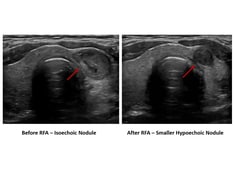
No imaging studies are necessary for the diagnosis of thyroxine-binding globulin (TBG) deficiency. Occasionally, however, imaging studies are inappropriately performed for the investigation of possible thyroid function abnormalities, due to "misleading" laboratory abnormalities. Hence, there is a chance that neck ultrasonography, iodine-123 radioiodine scans and percent-uptake measurements, or other thyroid imaging will be ordered prior to a patient's referral and the establishment of the diagnosis.
Consultations
In cases of secondary thyroxine-binding globulin (TBG) deficiency, referral to consultants should be made as appropriate for the evaluation and treatment of the primary disorder.
A geneticist may be of value for selected cases of inherited TBG deficiency. Occasionally, referral to an endocrinologist is necessary, because concomitant disease (eg, euthyroid sick syndrome, glucocorticoid therapy, concurrent thyroidopathy) may complicate the laboratory test picture in TBG deficiency, rendering the establishment of the diagnosis almost impossible without expert subspecialty input. Follow-up evaluations with the endocrinologist may be necessary until the concurrent illness subsides.