Practice Essentials
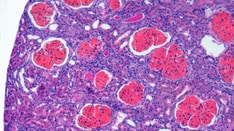
Postinfectious glomerulonephritis (PIGN) may occur in association with bacterial, viral, fungal, protozoal, and helminthic infections. The classic association of glomerulonephritis (GN) with infection is poststreptococcal GN, usually developing after streptococcal pharyngitis (see Poststreptococcal Glomerulonephritis). [1, 2] However, in recent decades the spectrum of postinfectious GN has changed. The incidence of poststreptococcal GN, particularly in its epidemic form, has progressively declined in industrialized countries with early use of effective antibiotics. [3]
Glomerulonephritis associated with methicillin-resistant Staphylococcus aureus (MRSA) infection has become recognized as a more severe manifestation, which is 3 times more common in older patients in developed countries. [4] The majority of patients have diabetes mellitus and present with acute kidney injury, hematuria, and heavy proteinuria. Comorbid diabetes is a predictor of poor outcome; in one series 65% of adults and 55% of older patients with diabetes developed end-stage renal disease (ESRD) after PIGN. [5]
Viral-induced GN manifests in significantly different histologic forms of glomerular injury, depending on the duration of viral activity. For example, a patient with a recent self-limited acute varicella-zoster infection may develop diffuse proliferative glomerulonephritis (DPGN), wherease a subacute Epstein-Barr infection lasting weeks or months may result in collapsing focal segmental glomerulosclerosis (cFSGS) or membranous glomerulopathy (MN). Chronic persistent infections—such as with hepatitis B virus (HBV), hepatitis C virus (HCV), and human immunodeficiency virus (HIV)—result in a wide spectrum of glomerular disorders. [6]
Glomerular diseases have been reported in association with COVID-19. Cases have included antineutrophil cytoplasmic antibody (ANCA)-associated vasculitis, anti-glomerular basement membrane (GBM) disease, pauci-immune crescentic glomerulonephritis, and acute necrotizing GN. [7, 8, 9]
A relationship of GN with occult viral disease has also been reported. Occult HCV infection has been detected in 30%–50% of patients with idiopathic membranous nephropathy, IgA nephropathy, FSGS, antineutrophil cytoplasmic antibody (ANCA)–positive vasculitis, and membranoproliferative GN (MPGN). Occult HBV infection has been described in selected cases of idiopathic membranous nephropathy and IgA nephropathy. There is anecdotal evidence that antiviral therapy has been effective in cases of occult HCV- or HBV-associated GN initially diagnosed idiopathic glomerular disease. [10]
The incidence of glomerulonephritis in malaria is estimated to be around 18% [11] and in schistosomaisis, approximately 15%. [12]
For patient education information, see Hepatitis B, Hepatitis C, and Blood in the Urine as well as the Infections Center and Digestive Disorders Center.

Pathophysiology
Most glomerular diseases associated with infection are mediated by immune complexes. The classic example observed in poststreptococcal GN involves an antigen-antibody reaction, which may occur in the circulation or in the glomerulus. Deposition in the glomerulus results in activation of the complement cascade, which may involve either the classic or alternative pathway. The immune complexes may activate endogenous glomerular cells. The reduction of chemotactic factors results in the accumulation of leukocytes and platelets within the glomerulus and, consequently, the inflammatory response.
The pathogenesis of glomerulonephritis related to staphylococcal infection is not fully understood. Bacterial superantigens may play a key role in the pathological change. A staphylococcal antigen (eg, enterotoxins C and A and toxic shock syndrome toxin [TSST]-1) act as a superantigen and it can bind directly to the major histocompatibility complex (MHC) class II molecules on antigen-presenting cells. This complex then binds to the T-cell receptor without MHC restriction. The interaction results in massive T-cell activation and a subsequent cytokine burst. The cytokines cause polyclonal B-cell activation that induces the production of IgA, IgG, and IgM. These components have a natural specificity for staphylococcal antigens such as those on the cell envelope. [4]
Several possible pathogenic events occur in viral diseases associated with glomerular injury, including the following:
-
Formation of circulating immune complexes involving viral antigens and antibodies
-
Formation of circulating immune complexes induced by the release of antigens following virally induced cellular injury
-
Formation of in situ antigen-antibody reactions or cell-mediated injury
-
Autoimmune reactions to glomerular structures induced by the virus
In protozoal infections, such as malaria, antibodies are formed against malarial antigens. The circulating immune complexes activate complement and macrophages. The complexes are primarily deposited in subendothelial areas. A cell-mediated immune response may also occur.
Etiology
Postinfectious glomerulonephritis (PIGN) may occur in association with bacterial, viral, protozoal, and helminthic or fungal infections. See Table 1. below.
Table 1. Infectious agents associated with PIGN (Open Table in a new window)
| Bacterial | Viral | Protozoal |
|---|---|---|
| Staphyloccoccus aureus, S epidermidis, S albus | Hepatitis (A, B, C, E) | Plasmodium malariae, P falciparum, P vivax |
| Streptococcus pneumoniae, S viridans, S pyogenes | Human immunodeficiency virus | Leishmania donovani |
| Mycobacterium leprae, M tuberculosis | Epstein-Barr virus | Toxoplasma gondii |
| Treponema pallidum | Hantavirus | Trypanosoma cruzi, T bruci |
| Salmonella typhi, S paratyphi, S typhimurium | Coxsackie B | Toxocara canis |
| Leptospira species | Echovirus | Strongyloides stercoralis |
| Yersinia enterocolitica | Cytomegalovirus | |
| Neisseria meningitidis, Neisseria gonorrhoeae | Varicella zoster | Helminthic |
| Corynebacterium diphtheriae | Mumps | Schistosoma mansoni, S japonicum, S haematobium |
| Coxiella burnetti | Rubella | Wuchereria bancrofti |
| Brucella abortus | Influenza | Brugia malayi |
| Listeria monocytogenes | Dengue | Loa loa |
| Parvovirus | Onchocerca volvulus | |
| Syphilis | Trichinella spiralis | |
| SARS-CoV-2 (COVID-19) | ||
| Fungal | ||
| Histoplasma capsulatum | ||
| Candida | ||
| Coccidiodes immitis |
Bacterial endocarditis: PIGN occurs more commonly in subacute rather than acute endocarditis. Currently, S aureus is the most common pathogen recognized. [13] Shunt nephritis may be associated with ventriculovascular, ventriculoperitoneal, peritoneovascular, or vascular shunts. [14]
Epidemiology
The various causes of infection-related GN have different prevalence rates. In endocarditis, associated GN may occur in up to 20% of cases. [15] Staphylococcus aureus has become a more common cause of GN than Streptococcus in developed countries. [4] GN associated with hepatitis C is becoming a far more commonly recognized cause of GN. [16, 17] It is estimated that 35–60% of patients with chronic hepatitis C will develop renal manifestations including type I membranoproliferative glomerulonephritis (MPGN), mesangial glomerulonephritis, and focal and segmental glomerulonephritis. [18]
Although specific incidence statistics are not available, in certain developing areas of the world, hepatitis B, HIV disease, malaria, and schistosomiasis are major causes of glomerulopathy. The incidence of GN in malaria is estimated to be around 18%. [11] GN is present in approximately 15% of patients with schistosomiasis. [12]
In most GNs associated with infection, no racial or sexual predilection exists. However, HIV-associated GN is far more common in males. Although classic postinfectious GN primarily occurs in childhood, it has been documented in all age groups. Glomerulonephritis associated with methicillin-resistant Staphylococcus aureus (MRSA) infection is 3 times more common in older patients in developed countries. [4]
Prognosis
Depending on the etiology, the outcome of GN associated with infection can be quite variable. Complete recovery occurs in most patients, even those patients with crescents observed in kidney biopsy tissue. The outcome depends on the duration of infection before specific antibacterial or other antiinfective therapy is initiated.
The prognosis for shunt nephritis is good with early diagnosis and treatment of the infection. Approximately 30% of ventriculovascular shunts become infected and GN develops in 0.7–2% of the infected shunts. Ventriculoperitoneal shunts are rarely complicated with GN. Staphylococcus epidermidis or S aureus are the most common pathogens. A late diagnosis delays antibiotic therapy and removal of the shunt, resulting in a worse renal prognosis. [3]
In schistosomal infections, progression of renal disease is common, even after treatment.
Age >65 years and comorbid diabetes are independent risk factors of poor prognosis for GN related to staphylococcal infection. [4]
In GN associated with bacterial endocarditis, renal function returns after treatment with antibiotics. The GN usually resolves after the infection has cleared, with renal function beginning to improve within 1-2 weeks, complement levels normalizing within 6 weeks, and hematuria normalizing in approximately 6 months. [15]
The course of GNs associated with viral infection is more variable, although patients with HIV nephropathy commonly progress to end-stage renal disease. [19]
Tables
| Bacterial | Viral | Protozoal |
|---|---|---|
| Staphyloccoccus aureus, S epidermidis, S albus | Hepatitis (A, B, C, E) | Plasmodium malariae, P falciparum, P vivax |
| Streptococcus pneumoniae, S viridans, S pyogenes | Human immunodeficiency virus | Leishmania donovani |
| Mycobacterium leprae, M tuberculosis | Epstein-Barr virus | Toxoplasma gondii |
| Treponema pallidum | Hantavirus | Trypanosoma cruzi, T bruci |
| Salmonella typhi, S paratyphi, S typhimurium | Coxsackie B | Toxocara canis |
| Leptospira species | Echovirus | Strongyloides stercoralis |
| Yersinia enterocolitica | Cytomegalovirus | |
| Neisseria meningitidis, Neisseria gonorrhoeae | Varicella zoster | Helminthic |
| Corynebacterium diphtheriae | Mumps | Schistosoma mansoni, S japonicum, S haematobium |
| Coxiella burnetti | Rubella | Wuchereria bancrofti |
| Brucella abortus | Influenza | Brugia malayi |
| Listeria monocytogenes | Dengue | Loa loa |
| Parvovirus | Onchocerca volvulus | |
| Syphilis | Trichinella spiralis | |
| SARS-CoV-2 (COVID-19) | ||
| Fungal | ||
| Histoplasma capsulatum | ||
| Candida | ||
| Coccidiodes immitis |