Practice Essentials
Aortic coarctation is a narrowing of the aorta most commonly found just distal to the origin of the left subclavian artery. The vascular malformation responsible for coarctation is a defect in the vessel media, giving rise to a prominent posterior infolding (the “posterior shelf”), which may extend around the entire circumference of the aorta.
Signs and symptoms
Symptoms of aortic coarctation may include the following:
-
Early life: Congestive heart failure, severe acidosis, or poor perfusion to the lower body.
-
Beyond infancy: Usually none; however, hypertension, headache, nosebleed, leg cramps, muscle weakness, cold feet, or neurologic changes may be seen
The diagnosis of coarctation generally can be made on the basis of physical examination. Blood pressure differential and pulse delay are pathognomonic. The following physical findings may be noted:
-
Frequently normal physical appearance (except when coarctation compromises the origin of the left subclavian artery or in cases of XO Turner syndrome)
-
Abnormal differences in upper- and lower-extremity arterial pulses and blood pressures; diminished and delayed pulses distal to obstruction
-
Characteristic murmurs and sounds on auscultation (eg, continuous or late systolic murmur posteriorly over the thoracic spine, bilateral collateral arterial murmurs, aortic ejection sound, short midsystolic murmur, or early diastolic murmur of aortic regurgitation)
-
Associated cardiac defects (eg, left-side obstructive or hypoplastic defects and ventricular septal defects, bicuspid aortic valve, aortic arch hypoplasia, and, rarely, various right-side cardiac obstructive lesions)
-
Extracardiac vascular anomalies (eg, aberrant subclavian artery, berry aneurysms of the circle of Willis, development of large upper-to-lower collateral arteries, or hemangiomas)
-
Extracardiac nonvascular anomalies (eg, head and neck, musculoskeletal, gastrointestinal, genitourinary, or respiratory)
See Presentation for more detail.
Diagnosis
No specific laboratory tests are necessary for coarctation of the aorta. Imaging studies that may be helpful include the following:
-
Chest radiography: Findings vary with the clinical presentation of the patient
-
Barium esophagography: Classic “E sign,” representing compression from the dilated left subclavian artery and poststenotic dilatation of the descending aorta
-
Echocardiography (2-dimensional echocardiography, pulsed-wave Doppler, and color flow mapping): In older patients, surface echocardiography may not suffice, and magnetic resonance imaging (MRI), transesophageal echocardiography (TEE), or cardiac catheterization with angiogram may be necessary
-
Fetal echocardiography
-
MRI: This test is sensitive but expensive, time-consuming, and not universally available; it is seldom used as a primary diagnostic tool
Other studies that may be useful are as follows:
-
Cardiac catheterization
-
Electrocardiography
See Workup for more detail.
Management
Medical treatment of neonates with severe aortic coarctation may include the following:
-
Intubation
-
Infusion of prostaglandin E1 (PGE1) to open the ductus arteriosus
-
Correction of acidosis
-
Inotropic support to improve symptoms of congestive heart failure (CHF)
Medical treatment of less severe aortic coarctation beyond the neonatal period may include the following:
-
Administration of digoxin and diuretics for chronically increased afterload and signs of CHF
-
Postponement of intervention (eg, surgery or balloon dilatation) until the patient is hemodynamically stable
At present, the following 3 specific indications exist for intervention:
-
Significant coarctation or recoarctation of the aorta with long-standing hypertension with or without symptoms
-
Hemodynamically significant aortic stenosis
-
Female patient contemplating pregnancy
The following surgical procedures have been performed to treat aortic coarctation:
-
Resection of the coarctation site and end-to-end anastomosis to repair coarctation (still the preferred surgical method)
-
Patch aortoplasty
-
Left subclavian flap angioplasty
-
Bypass graft repair bridging the ascending and descending aorta
Catheter-based intervention is now the preferred therapy for recurrent coarctation when the anatomy permits and necessary skills are available. Its use in native or unoperated coarctation is less well established.
See Treatment and Medication for more detail.

Background
Coarctation of the aorta (CoA), a narrowing of the aorta most commonly found just distal to the origin of the left subclavian artery, is a common condition found in children. Most patients with coarctation have juxtaductal coarctation. Older terms, such as preductal (infantile-type) or postductal (adult-type), are often misleading.
This condition occurs in 40 to 50 of every 100,000 live births and has a male-to-female predominance of 2:1. [1] Aortic coarctation is commonly treated after birth or during childhood.
Coarctation of the aorta is rarely seen in adults [1, 2, 3] However, when affected adults present, they may have a history of a previous coarctation procedure, rupture of an old repair, heart failure, aortic aneurysm, aortic dissection, undersized grafts of previous repairs, intracranial hemorrhage, hypertension with exercise, and infections. [1]
The prognosis for untreated aortic coarctation is poor. About 80% of untreated patients die of aortic dissection or rupture, heart failure, or intracranial hemorrhage. [1] The traditional treatment for coarctation of the aorta is open surgery. A less-invasive treatment option is endovascular balloon dilatation and stent placement. [1]
See the Guidelines section for a summary of guidelines for the management of aortic coarctation in adults.
Pathophysiology
The vascular malformation responsible for aortic coarctation is a defect in the vessel media, giving rise to a prominent posterior infolding (the "posterior shelf"), which may extend around the entire circumference of the aorta. The gross pathology of coarctation varies considerably. The lesion is often discrete but may be long, segmental, or tortuous in nature.
Histology
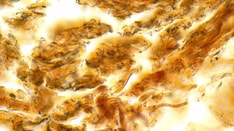
The coarctated aortic segment reveals an intimal and medial lesion consisting of thickened ridges that protrude posteriorly and laterally into the aortic lumen. The ductus (ie, patent embryonic remnant) or ligamentum arteriosus (closed and fibrosed) inserts at the same level anteromedially. Intimal proliferation and disruption of elastic tissue may occur distal to the coarctation. At this site, infective endarteritis, intimal dissections, or aneurysms may occur. Cystic medial necrosis occurs commonly in the aorta adjacent to the coarctation site and acts as a substrate for late aneurysm formation or aortic dissection in some patients.
Embryology
Coarctation is due to an abnormality in development of the embryologic left fourth and sixth aortic arches that can be explained by two theories, the ductus tissue theory and the hemodynamic theory.
In the ductus tissue theory, coarctation develops as the result of migration of ductus smooth muscle cells into the periductal aorta, with subsequent constriction and narrowing of the aortic lumen. Commonly, coarctation becomes clinically evident with closure of the ductus arteriosus. This theory does not explain all cases of coarctation. Clinically, coarctation may occur in the presence of a widely patent ductus arteriosus, and it may occur quite distant from the insertion of the ductus arteriosus, such as in the transverse arch or abdominal aorta.
In the hemodynamic theory, coarctation results from the reduced volume of blood flow through the fetal aortic arch and isthmus. In a normal fetus, the aortic isthmus receives a relatively low volume of blood flow. Most of the flow to the descending aorta is derived from the right ventricle through the ductus arteriosus. The left ventricle supplies blood to the ascending aorta and brachiocephalic arteries, and a small portion goes to the aortic isthmus. The aortic isthmus diameter is 70%-80% of the diameter of the neonatal ascending aorta.
Based on this theory, lesions that diminish the volume of left ventricular outflow in the fetus also decrease flow across the aortic isthmus and promote development of coarctation. This helps to explain the common lesions associated with coarctation, such as ventricular septal defect, bicuspid aortic valve, left ventricular outflow obstruction, and tubular hypoplasia of the transverse aortic arch. However, this theory does not explain isolated coarctation without associated intracardiac lesions.
Etiology
The exact etiology of coarctation of the aorta is not known. Note the following:
-
Genetics: Coarctation is seven times more common in white persons than Asian persons. It has a lower incidence among Native Americans than other population groups in Minnesota.
-
Environment: Environmental variation and seasonal variation have been suggested to influence the development of coarctation. A study showed an increased incidence of coarctation in late fall and winter births. [4]
-
Gridlock mutation: In 1995, Weinstein et al discovered a recessive mutation in zebrafish that causes a focal malformation resembling coarctation in humans. [5] The mutation, named gridlock, results in failure of vascular channel formation at the site where bilaterally paired dorsal aortas join together and continue posteriorly as a dorsal midline channel, the medial dorsal aorta.
Epidemiology
Coarctation of aorta represents 5%-8% of all congenital heart diseases, [6, 7] with the isolated form comprising 4%-6% of all congenital heart diseases. [8] The prevalence of isolated forms is about 3-4 per 10,000 live births, [6, 8] and males are affected more frequently than females. [9]
Race-, sex-, and age-related demographics
Aortic coarctation is seven times more common in white persons than Asian persons. It has a lower incidence among Native Americans than other population groups in Minnesota.
The male-to-female predominance is 1.3-2:1 in most series.
The age at detection of coarctation of the aorta is dependent on the severity of the obstruction and the coexistence of other lesions.
Prognosis
Patients who are not treated for coarctation of the aorta may reach the age of 35 years [10] ; about 25% survive to age 46 years, [10] and fewer than 20% survive to age 50 years. If coarctation is repaired before the age of 14 years, the 20-year survival rate is 91%. If coarctation is repaired after the age of 14 years, the 20-year survival rate is 79%. The 30-year survival rate is almost doubled with surgical repair, with 72%-98% of these patients reaching adulthood. [11]
After repair of coarctation of the aorta, 97%-98% of patients are NYHA class I. Impaired diastolic left ventricular function and persistent hypertrophy due to increased pressure gradient at the coarctation site during exercise may result in myocardial hypertrophy despite successful hemodynamic results. Overall, left ventricular systolic function is normal or hyperdynamic in these patients
Most women reach childbearing age. If maternal coarctation is not repaired, risks to fetus and mother are increased. The maternal mortality rate is approximately 3%-8%. Note the following:
-
Despite repair, women have an increased risk of aortic dissection and rupture of cerebral aneurysm in the third trimester and peripartum period due to hemodynamic and hormonal changes.
-
All pregnant women with a history of coarctation, either native or repaired, should be considered high risk.
-
Significant stenosis—native, residual, or recurrent—is a contraindication to pregnancy.
Complications
Late complications of aortic coarctation include recurrent coarctation, malignant hypertension, left ventricular dysfunction, aortic valve dysfunction, and aneurysm formation with risk of rupture. [11]
Postoperative complications include the following:
-
Hoarseness due to damage to the recurrent laryngeal nerve as it loops around the patent ductus arteriosus or ligamentum.
-
Ipsilateral diaphragmatic paralysis may result from injury to the phrenic nerve.
-
Chylothorax can occur due to damage to the thoracic duct that crosses behind the aortic arch and left subclavian artery.
-
Serious postoperative hemodynamic collapse may result from hemorrhage due to injury to the chest wall collateral vessels.
-
Rebound and paradoxical hypertension is observed frequently and may be related to the baroreceptor-mediated increase in sympathetic activity and reflex vasospasm in the vascular territory distal to the coarctation.
-
Postcoarctectomy syndrome is a unique problem early in the postoperative period. Increases in blood flow and pressure in the mesenteric arteries after repair of coarctation may result in abdominal distention and pain, vomiting, and decreased bowel sounds. This syndrome may be masked because of poorly controlled postoperative hypertension and early enteral feeding. By aggressively controlling postoperative hypertension and delaying enteral feeding for 2 days after surgery, the incidence of postcoarctectomy syndrome may be reduced.
-
Paralysis of the lower body resulting from spinal cord injury is the most serious complication. Because of complex collateral vessel formation, ischemia of the spinal cord is often difficult to predict and, therefore, may be unavoidable.
-
Systemic hypertension is the most common long term complication. This may be accentuated by exercise, creating a need to exclude residual or recurrent obstruction.
Patient Education
Most adults with aortic coarctation have previously undergone repair; however, continued education regarding exercise, endocarditis and endarteritis prevention, and pregnancy issues is necessary.
For the rare adult with uncorrected coarctation, extensive patient education is necessary on issues ranging from pathology and repair to lifestyle modification and follow-up care.
The medical practitioner must understand that coarctation is a complex lifelong condition that may be repaired but is never truly corrected.