Continually Updated Clinical Reference
 
 
  All Sources     eMedicine     Medscape     Drug Reference     MEDLINE
 
eMedicine - Fat Embolism : Article by

Quick Find
Authors & Editors
Introduction
Clinical
Differentials
Workup
Treatment
Medication
Follow-up
Miscellaneous
References

Related Articles
Pulmonary Embolism

Thrombotic Thrombocytopenic Purpura


Patient Education
Click here for patient education.


Author: Lisa Kirkland, MD, FACP, CNSP, MSHA, Assistant Professor, Department of Internal Medicine, Division of General Internal Medicine, Mayo Clinic; ANW Intensivists, Abbott Northwestern Hospital

Lisa Kirkland is a member of the following medical societies: American College of Physician Executives, American College of Physicians-American Society of Internal Medicine, Medical Society of Virginia, Society of Critical Care Medicine, and Southern Medical Association

Editors: Richard M Stillman, MD, FACS, Chief of Staff and Medical Director, Wound Healing Center, Department of Surgery, Northwest Medical Center; Francisco Talavera, PharmD, PhD, Senior Pharmacy Editor, eMedicine; Travis J Phifer, MD, Chief, Division of Vascular Surgery, Professor, Department of Surgery and Radiology, Louisiana State University Health Sciences Center in Shreveport; Paolo Zamboni, MD, Professor of Surgery, Chief of Day Surgery Unit, Chair of Vascular Diseases Center, University of Ferrara, Italy; William H Pearce, MD, Chief, Division of Vascular Surgery, Violet and Charles Baldwin Professor of Vascular Surgery, Department of Surgery, Northwestern University School of Medicine

Author and Editor Disclosure

Synonyms and related keywords: fat embolism syndrome, FES, fat emboli, fat embolus, fat droplet in venous system, blunt trauma, fracture complication, blunt trauma complication, altered mental status

Background

In 1862, Zenker first described this syndrome at autopsy. In 1873, von Bergmann clinically diagnosed fat embolism syndrome for the first time.

Pathophysiology

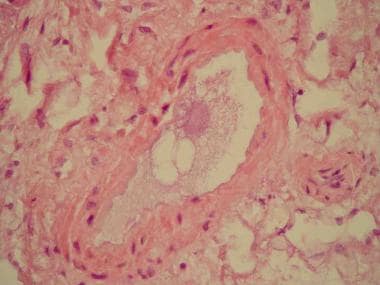
Two theories about the syndrome exist. First, the mechanical theory states that large fat droplets are released into the venous system. These droplets are deposited in the pulmonary capillary beds and travel through arteriovenous shunts to the brain. Microvascular lodging of droplets produces local ischemia and inflammation, with concomitant release of inflammatory mediators, platelet aggregation, and vasoactive amines. Second, the biochemical theory states that hormonal changes caused by trauma and/or sepsis induce systemic release of free fatty acids as chylomicrons. Acute-phase reactants, such as C-reactive proteins, cause chylomicrons to coalesce and create the physiologic reactions described above. The biochemical theory helps explain nontraumatic forms of fat embolism syndrome.

Frequency

United States

Frequency is estimated to be 3-4%. Fat embolism is a clinical diagnosis. Many patients are likely to have a missed diagnosis because of subclinical illness or confounding injury or illness.

Mortality/Morbidity

  • The mortality rate is 10-20%.
  • Patients with increased age, multiple underlying medical problems, and/or decreased physiologic reserves have worse outcomes than other patients.


History

  • Trauma to long bone or pelvis, including orthopedic procedures
  • Parenteral lipid infusion
  • Recent corticosteroid administration

Physical

Respiratory symptoms, signs or radiologic disease; cerebral signs without other etiologies; and petechial rash are the major criteria. A pulse that is over 110 beats/min, fever over 38.5ºC, retinal changes of fat globules or petechiae, renal dysfunction, jaundice, acute drop in hemoglobin and/or platelets, and elevated sedimentation rate are the minor criteria. One major and 4 minor criteria, plus fat microglobulinemia, must be present to formally diagnose fat embolism syndrome.

  • Cardiopulmonary
    • Early persistent tachycardia may herald the onset of the syndrome.
    • Patients become tachypneic, dyspneic, and hypoxic due to ventilation-perfusion abnormalities 12-72 hours after injury.
    • Patients become febrile with high-spiking temperatures.
  • Dermatologic
    • Alert clinicians may notice reddish-brown nonpalpable petechiae developing over the upper body, particularly in the axillae, within 24-36 hours of insult or injury. These petechiae occur in only 20-50% of patients and resolve quickly, but they are virtually diagnostic in the right clinical setting.
    • Subconjunctival and oral hemorrhages and petechiae also appear.
  • Neurologic
    • Central nervous system dysfunction initially manifests as agitated delirium but may progress to stupor, seizures, or coma and frequently is unresponsive to correction of hypoxia.
    • Retinal hemorrhages with intra-arterial fat globules are visible upon funduscopic examination.

Causes

  • Blunt trauma (associated with 90% of all cases)
  • Acute pancreatitis
  • Diabetes mellitus
  • Burns
  • Joint reconstruction
  • Liposuction
  • Cardiopulmonary bypass
  • Decompression sickness
  • Parenteral lipid infusion
  • Sickle cell crisis
  • Pathologic fractures


Pulmonary Embolism
Thrombotic Thrombocytopenic Purpura


Lab Studies

  • Arterial blood gas: An otherwise unexplained increase in pulmonary shunt fraction alveolar-to-arterial oxygen tension difference, especially if it occurs within 24-48 hours of a sentinel event associated with fat embolism syndrome, is strongly suggestive of the syndrome.
  • Hematocrit, platelet count, fibrinogen: Thrombocytopenia, anemia, and hypofibrinogenemia are indicative of fat embolism syndrome; however, they are nonspecific.
  • Urine studies: Urinary fat stains are not felt to be sensitive or specific enough for diagnosing fat embolism or for detecting a risk of it.
    • Fat globules in the urine are common after trauma.
    • Preliminary investigations of the cytology of pulmonary capillary blood obtained from a wedged pulmonary artery catheter revealed fat globules in patients with FES and showed that this method may be beneficial in early detection of patients at risk.
    • In the future, genotyping for polymorphisms associated with increased susceptibility to inflammatory stimuli may help identify those at risk of fat embolism syndrome.
  • Specific antibody therapy targeting inflammatory molecules has not been useful.

Imaging Studies

  • Chest radiography: Serial radiographs reveal increasing diffuse bilateral pulmonary infiltrates within 24-48 hours of onset of clinical findings.
  • Noncontrast head CT: Findings from head CT performed because of alterations in mental status may be normal or may reveal diffuse white-matter petechial hemorrhages consistent with microvascular injury.
  • Nuclear medicine ventilation/perfusion imaging of the lungs: Performed for suspicion of pulmonary embolus, the findings from this scan may be normal or may demonstrate subsegmental perfusion defects.
  • Helical chest CT for pulmonary embolism: As the embolic particles are lodged in the capillary beds, helical CT findings may be normal. Parenchymal changes consistent with lung contusion, acute lung injury, or adult respiratory distress syndrome may be evident. Nodular or ground glass opacities in the setting of trauma suggest fat embolism.
  • MRI: Scant data exist regarding MRI findings in patients with this syndrome; however, in one small patient group, multiple, nonconfluent, hyperintense lesions were seen on proton-density– and T2-weighted images.
  • Transcranial Doppler sonography: In a small case study, 5 patients with trauma were monitored with intracranial Doppler sonography, 2 during intraoperative nailing of long bone fractures.1 Cerebral microembolic signals were detected as long as 4 days after injury.
  • Transesophageal echocardiography (TEE): TEE may be of use in evaluating intraoperative release of marrow contents into the bloodstream during intramedullary reaming and nailing. The density of the echogenic material passing through the right side of the heart correlates with the degree of reduction in arterial oxygen saturation. Repeated showers of emboli have been noted to increase right heart and pulmonary artery pressures. Embolization of marrow contents through patent foramen ovale also has been noted. However, evidence of embolization by means of TEE is not correlated with the actual development of FES.

Procedures

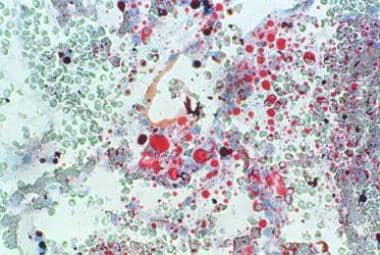
  • Bronchoalveolar lavage (BAL) with staining of alveolar macrophages for fat
    • BAL specimens have been evaluated in trauma patients and sickle cell patients with acute chest syndrome, and the results have been mixed.
    • Lipid inclusions commonly appear in patients with traumatic and nontraumatic respiratory failure; the standard cut-off of 5% fat-containing macrophages in the BAL studies results in a low specificity for the test. Some authors suggest increasing the cut-off to 30% to improve specificity.
    • Presently, using BAL to aid in the diagnosis or to predict the likelihood of fat embolism syndrome is controversial.


Medical Care

Medical care is supportive in nature and includes maintenance of adequate oxygenation and ventilation, stable hemodynamics, blood products as clinically indicated, hydration, prophylaxis of deep venous thrombosis and stress-related gastrointestinal bleeding, and nutrition.

Continuous pulse oximetry monitoring in at-risk patients (ie, those with long-bone fractures), may help in detecting desaturations early, allowing early oxygen therapy and possibly steroids, decreasing the chances of hypoxic insult and possible systemic complications of FES.

Surgical Care

Early stabilization of long bone fractures is recommended to minimize bone marrow embolization into the venous system. Rigid fixation within 24 hours has been shown to reduce the incidence of ARDS fivefold.

  • Surgical technique, particularly of reaming or nailing the marrow, may help reduce the volume of fat embolization. However, a specific technique has not been identified.
  • Prophylactic placement of inferior vena cava filters may help reduce the volume of fat reaching the heart.

Consultations

Depending on the mechanism of injury or insult, the specialists recommended to assist in management include orthopedists, neurologists/neurosurgeons, trauma care specialists, critical care specialists, pulmonologists, hematologists, and nutritionists.


The goals of pharmacotherapy are to reduce morbidity and prevent complications. Corticosteroids may be used in certain cases. Data does not support the use of one corticosteroid over another one. The best dosing protocol for corticosteroids in the treatment of fat embolism has not been established.

Drug Category: Corticosteroids

Have anti-inflammatory properties and cause profound and varied metabolic effects. Corticosteroids modify the body's immune response to diverse stimuli.

Drug NameMethylprednisolone (Depo-Medrol, Medrol, Solu-Medrol)
DescriptionMost often used in fat embolism syndrome. No data to support it over any other steroids.
Adult DoseNot established
Pediatric DoseNot established
ContraindicationsDocumented hypersensitivity; viral, fungal or tubercular skin infections
InteractionsCoadministration with digoxin, may increase digitalis toxicity secondary to hypokalemia; estrogens may increase levels of methylprednisolone; phenobarbital, phenytoin and rifampin may decrease levels of methylprednisolone (adjust dose); monitor patients for hypokalemia when taking medication concurrently with diuretics; grapefruit juice increases prednisolone concentrations; methylprednisolone and cyclosporine mutually inhibit one another resulting in increased plasma levels of each drug
PregnancyC - Fetal risk revealed in studies in animals but not established or not studied in humans; may use if benefits outweigh risk to fetus
PrecautionsHyperglycemia, edema, osteonecrosis, peptic ulcer disease, hypokalemia, osteoporosis, euphoria, psychosis, growth suppression, myopathy, and infections possible complications of glucocorticoid use; Depo-Medrol contains benzyl alcohol (potentially toxic when administered locally to neural tissue); administration of Depo-Medrol by routes other than those indicated (including the epidural) associated with serious medical events, including arachnoiditis, meningitis, paraparesis/paraplegia, sensory disturbances, bowel/bladder dysfunction, seizures, visual impairment including blindness, ocular and periocular inflammation, and residue or slough at injection site


Deterrence/Prevention:

  • Corticosteroids as prophylaxis for fat embolism syndrome
    • Several studies have demonstrated varying results using corticosteroids, usually methylprednisolone, in patients identified as being at high risk for the syndrome.
    • Although the data appear compelling, the optimal timing, duration, and dose of steroids are undetermined.
    • Results of Randomized Controlled Trials of Corticosteroids in the Prevention of Fat Embolism Syndrome

      DoseModelTimingDuration of StudyEffect on Disease Incidence
      30 mg/kgDogPre-event60 minNone
      10 mg/kg q8h for 24 hHuman traumaAt admissionNo dataDeclining
      7.5 mg/kg q6h for 12 h or placeboHuman traumaWithin 12 h2 dDeclining

Prognosis:

  • The duration of FES is difficult to predict because FES is often subclinical or overshadowed by other illnesses or injuries.
    • Increased alveolar-to-arterial oxygen gradient and neurologic deficits, including coma, may last days or weeks.
    • Hematologic aberrations due to FES frequently are indistinguishable from other causes common in these patients.
  • As in adult respiratory distress syndrome (ARDS), pulmonary sequelae usually resolve almost completely within 1 year.
    • Residual subclinical diffusion capacity deficits may exist.
    • Residual neurologic deficits may range from nonexistent to subtle personality changes to memory and cognitive dysfunction to long-term focal deficits.
    • Fat embolism syndrome alone has not yet been reported to cause global anoxic injury, but it may contribute with other cerebral insults.


Medical/Legal Pitfalls

  • Assuming altered mental status, fever, and hypoxia are due to fat embolism, the lack of a search for treatable or life-threatening disorders before making the diagnosis may lead to litigation if such a disorder is discovered later.
    • CT scan of the head is necessary to rule out intracranial pathology.
    • A careful search for infectious agents and possibly the institution of empiric antibiotics are necessary until an infectious source is ruled out.
    • Judicious use of crystalloids, colloids, and diuretics is necessary; volume depletion may precipitate shock and organ dysfunction, but volume overload may worsen the hypoxia.


  1. Forteza AM, Koch S, Romano JG, et al. Transcranial doppler detection of fat emboli. Stroke. Dec 1999;30(12):2687-91. [Medline].
  2. Alho A, Saikku K, Eerola P, Koskinen M, Hämäläinen M. Corticosteroids in patients with a high risk of fat embolism syndrome. Surg Gynecol Obstet. Sep 1978;147(3):358-62. [Medline].
  3. Bilgrami S, Hasson J, Tutschka PJ. Case 23-1998: fat embolism. N Engl J Med. Feb 4 1999;340(5):393-4. [Medline].
  4. Byrick RJ, Mullen JB, Wong PY, Wigglesworth D, Kay JC. Corticosteroids do not inhibit acute pulmonary response to fat embolism. Can J Anaesth. May 1990;37(4 Pt 2):S130. [Medline].
  5. Estebe JP, Malledant Y. Fat embolism after lipid emulsion infusion. Lancet. Mar 16 1991;337(8742):673. [Medline].
  6. Fabian TC. Unravelling the fat embolism syndrome. N Engl J Med. Sep 23 1993;329(13):961-3. [Medline].
  7. Fabian TC, Hoots AV, Stanford DS, Patterson CR, Mangiante EC. Fat embolism syndrome: prospective evaluation in 92 fracture patients. Crit Care Med. Jan 1990;18(1):42-6. [Medline].
  8. Gallardo X, CastanerE, Mata JM. Nodular pattern at Lung Computed Tomography in Fat Embolism Syndrome: A Helpful Finding. J Computer Assisted Tomography. 2006;30:254-7.
  9. Godeau B, Schaeffer A, Bachir D, Fleury-Feith J, Galacteros F, Verra F. Bronchoalveolar lavage in adult sickle cell patients with acute chest syndrome: value for diagnostic assessment of fat embolism. Am J Respir Crit Care Med. May 1996;153(5):1691-6. [Medline].
  10. Habashi NM, Andrews PL. Therapeutic Aspects of Fat Embolism Syndrome. Injury. 2006;37(Supplem 4):S68-73.
  11. Hofmann S, Hopf R, Huemer G, Kratochwill C, Koller-Strametz J, Schlag G. [Modified surgical technique for reduction of bone marrow spilling in cement-free hip endoprosthesis]. Orthopade. Apr 1995;24(2):130-7. [Medline].
  12. Kallenbach J, Lewis M, Zaltzman M, Feldman C, Orford A, Zwi S. 'Low-dose' corticosteroid prophylaxis against fat embolism. J Trauma. Oct 1987;27(10):1173-6. [Medline].
  13. Mimoz O, Edouard A, Beydon L, Quillard J, Verra F, Fleury J. Contribution of bronchoalveolar lavage to the diagnosis of posttraumatic pulmonary fat embolism. Intensive Care Med. Dec 1995;21(12):973-80. [Medline].
  14. Reider E, Sherman Y, Weiss Y, Liebergall M, Pizov R. Alveolar macrophages fat stain in early diagnosis of fat embolism syndrome. Isr J Med Sci. Oct 1997;33(10):654-8. [Medline].
  15. Schnaid E, Lamprey JM, Viljoen MJ, Joffe BI, Seftel HC. The early biochemical and hormonal profile of patients with long bone fractures at risk of fat embolism syndrome. J Trauma. Mar 1987;27(3):309-11. [Medline].
  16. Schonfeld SA, Ploysongsang Y, DiLisio R, Crissman JD, Miller E, Hammerschmidt DE. Fat embolism prophylaxis with corticosteroids. A prospective study in high-risk patients. Ann Intern Med. Oct 1983;99(4):438-43. [Medline].
  17. Scully RE, Mark EJ, McNeely WF. Case records of the Massachusetts General Hospital. Weekly clinicopathological exercises. Case 23-1998. Tachypnea, changed mental status, and pancytopenia in an elderly man with treated lymphoma. N Engl J Med. Jul 23 1998;339(4):254-61. [Medline].
  18. Shapiro MP, Hayes JA. Fat embolism in sickle cell disease. Report of a case with brief review of the literature. Arch Intern Med. Jan 1984;144(1):181-2. [Medline].
  19. Stoeger A, Daniaux M, Felber S, Stockhammer G, Aichner F, zur Nedden D. MRI findings in cerebral fat embolism. Eur Radiol. 1998;8(9):1590-3. [Medline].
  20. Teng QS, Li G, Zhang BX, Zhu XH, Ma CX. Experimental study of early diagnosis and treatment of fat embolism syndrome. J Orthop Trauma. Jun 1995;9(3):183-9. [Medline].
  21. Vedrinne JM, Guillaume C, Gagnieu MC, Gratadour P, Fleuret C, Motin J. Bronchoalveolar lavage in trauma patients for diagnosis of fat embolism syndrome. Chest. Nov 1992;102(5):1323-7. [Medline].
  22. White T, Petrisor BA, Bhandar M. Prevention of Fat Embolism Syndrome. Injury. 2006;37(Supplem 1):S59-67.
  23. Wong MW, Tsui HF, Yung SH, Chan KM, Cheng JC. Continuous pulse oximeter monitoring for inapparent hypoxemia after long bone fractures. J Trauma. Feb 2004;56(2):356-62. [Medline].

Fat Embolism excerpt

Article Last Updated: Nov 9, 2007