Continually Updated Clinical Reference
 
 
  All Sources     eMedicine     Medscape     Drug Reference     MEDLINE
 
eMedicine - Macrosomia : Article by

Quick Find
Authors & Editors
Introduction
Clinical
Differentials
Workup
Treatment
Follow-up
Miscellaneous
References

Related Articles
Diabetes Mellitus and Pregnancy

Obesity

Postterm Pregnancy


Patient Education
Pregnancy and Reproduction Center

Pregnancy Overview

Pregnancy Causes

Pregnancy Symptoms

Pregnancy Treatment


Author: Allahyar Jazayeri, MD, PhD, Medical Director of Perinatal Services, Bellin Health Hospital Center

Allahyar Jazayeri is a member of the following medical societies: American College of Obstetricians and Gynecologists, American Institute of Ultrasound in Medicine, Association of Professors of Gynecology and Obstetrics, Society for Gynecologic Investigation, and Society for Maternal-Fetal Medicine

Coauthor(s): Mary Jazayeri, WHNP; Karen Burr, WHNP

Editors: Gerard S Letterie, DO, Associate Clinical Professor, Medical Director of In-vitro Fertilization Lab, Department of Obstetrics and Gynecology, Virginia Mason Medical Center, University of Washington; Francisco Talavera, PharmD, PhD, Senior Pharmacy Editor, eMedicine; David Chelmow, MD, Professor of Obstetrics and Gynecology, Tufts University School of Medicine; Program Director, Tufts University Affiliated Hospitals OB/GYN Residency Program; Chair, Tufts University Health Sciences Campus Institutional Review Board; Frederick B Gaupp, MD, Consulting Staff, Department of Family Practice, Assumption Community Hospital; David Chelmow, MD, Professor of Obstetrics and Gynecology, Tufts University School of Medicine; Program Director, Tufts University Affiliated Hospitals OB/GYN Residency Program; Chair, Tufts University Health Sciences Campus Institutional Review Board

Author and Editor Disclosure

Synonyms and related keywords: megasomia, macrosomic neonate, macrosomic newborn, large for gestational age, LGA, body mass index, BMI, maternal diabetes, maternal obesity, maternal weight gain, hyperglycemia, shoulder dystocia, birth trauma, birth canal laceration, neonatal morbidity, neonatal injury, maternal injury, cesarean delivery, cesarean section, caesarean delivery, caesarean section, cesarean birth, caesarean birth, advanced gestational age, perineal laceration, vaginal laceration, cervical laceration, still birth, stillborn, multiparity, multi-parity, grand multiparity, diabetic pregnancy, poorly controlled diabetes, diabetes, diabetes mellitus, gestational diabetes, macrosomic pregnancy, excessive maternal weight gain, undiagnosed glucose intolerance

Background

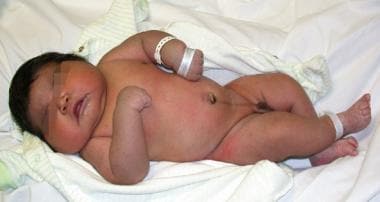
The term macrosomia is used to describe a newborn with an excessive birth weight. A diagnosis of fetal macrosomia can be made only by measuring birth weight after delivery; therefore, the condition is confirmed only retrospectively, ie, after delivery of the neonate. Fetal macrosomia is encountered in up to 10% of deliveries.1

Attempts at perinatal diagnosis of macrosomia have proven difficult and are often inaccurate. This article defines macrosomia and reviews clinical and diagnostic modalities currently used to screen for pregnancies at the greatest risk for macrosomia with some degree of accuracy. Maternal, fetal, and neonatal consequences of macrosomia are also discussed, with specific attention to the potential etiology of macrosomia.

Fetal macrosomia has been defined in several different ways, including birth weight of 4000-4500 g (8 lb 13 oz to 9 lb 15 oz) or greater than 90% for gestational age after correcting for neonatal sex and ethnicity. Based on these definitions, macrosomia affects 1-10% of all pregnancies.

Factors associated with fetal macrosomia include genetics; duration of gestation; presence of gestational diabetes; and class A, B, and C diabetes mellitus. Genetic, racial, and ethnic factors influence birth weight and the risk of macrosomia.2 Male newborns typically weigh more than female newborns and thus comprise a greater proportion of infants with birth weights exceeding 4500 g at any gestational age. The risk of macrosomia also varies with ethnicity. Even when controlled for diabetes, studies have demonstrated that Hispanic women have a higher risk of fetal macrosomia compared with white, African American, or Asian women. Genetic factors, such as parental height and weight, may also play a role in determining newborn birth weight.

Despite the identification and characterization of risk factors, no combination of these risk factors can predict macrosomia accurately enough to be used clinically. Much of the birth weight variation remains unexplained, and most macrosomic infants do not have identifiable risk factors. Finally, macrosomia is reportedly associated with neonatal morbidity, neonatal injury, maternal injury, and cesarean delivery.3

Pathophysiology

The pathophysiology of macrosomia is related to the associated maternal or fetal condition that accounts for its development. In general, poorly controlled diabetes, maternal obesity, and excessive maternal weight gain are all associated with macrosomia and have intermittent periods of hyperglycemia in common. Hyperglycemia in the fetus results in the stimulation of insulin, insulinlike growth factors, growth hormone, and other growth factors, which, in turn, stimulate fetal growth and deposition of fat and glycogen. Advanced gestational age results in a larger birth weight at delivery by allowing the growth process to continue in utero.

Macrosomia may be associated with birth trauma for the neonate and birth canal lacerations, eg, perineal, vaginal, and cervical4, or cesarean delivery for the mother. However, macrosomia in the neonate of a diabetic mother may indicate poor glucose control. These infants are at increased risk of intrauterine death and thus require close monitoring and antepartum fetal testing.5

Frequency

United States

Infants with a birth weight of 4000 g (8 lb 13 oz) or more comprise up to 10% of infants born in the United States, and, in 1998, 1.5% of all neonates had a birth weight equal to or greater than 4500 g (9 lb 15 oz).

International

Variation in the percentage of macrosomia in different ethnic groups has been observed independent of diabetes. In general, Hispanic women have a larger proportion of macrosomic newborns compared with white, African American, or Asian women.

Mortality/Morbidity

Morbidity and mortality associated with macrosomia can be divided into maternal, fetal, and neonatal categories. A recent study investigating the effects of birth weight on fetal mortality shows that higher fetal mortality rates are associated with a birth weight of greater than 4250 g in nondiabetic mothers and a birth weight of 4000 g in diabetic mothers.5

  • Maternal: Macrosomia is associated with a higher incidence of cesarean delivery (double that of control subjects) and with birth canal lacerations associated with vaginal delivery. Mulik et al6 reviewed the outcomes of 8617 deliveries over a period of 11 years. In that population, 666 neonates were born with a birth weight of 4000-4499 g and 97 neonates were larger than 4500 g. In their study, Mulik et al found maternal morbidity to be associated with a birth weight of 4500 g or higher compared with a birth weight of less than 4000 g. Postpartum hemorrhage occurred in 3.1% of mothers with newborns weighing 4500 g or more compared with 1.5% in mothers with newborns weighing less than 4000 g. Blood transfusions occurred in 15.4% of mothers with newborns weighing 4500 g or more compared with 3.1% in mothers with newborns weighing less than 4000 g.
  • Neonatal: Macrosomic neonates are at risk for shoulder dystocia and birth trauma. This risk is directly related to neonatal birth weight and begins to increase substantially when birth weight exceeds 4500 g and particularly when it exceeds 5000 g. Brachial plexus injury is rare, with an incidence of fewer than 2 cases per 1000 vaginal deliveries. This risk is approximately 20 times higher when the birth weight is more than 4500 g.4 Mulik et al reported a higher incidence of NICU admissions for neonates with a birth weight higher than 4500 g compared with newborns with a birth weight of less than 4000 g (9.3% vs 2.7%). Risk of shoulder dystocia was 10 times higher in the larger babies (4.1% vs 0.4%).
  • Fetal: When associated with diabetes, fetal macrosomia indicates poor maternal glucose control, and these infants are at risk of stillbirth. Stillbirth rates in macrosomic infants are twice as high as those in control subjects, irrespective of diabetes. However, for a birth weight of 4500-5000 g, the fetal death rate is fewer than 2 deaths per 1000 births for nondiabetic women and is approximately 8 deaths per 1000 births for diabetic women. For a birth weight of 5000-5500 g, this rate is 5-18 deaths per 1000 births for nondiabetic women and is approximately 40 deaths per 1000 births for diabetic women.5

Race

Macrosomia occurs with higher frequency in newborns of Hispanic origin. Because Hispanic women have a higher incidence of diabetes during pregnancy, part of the preponderance of macrosomia in this ethnic group is due to the higher incidence of diabetes in pregnancy. However, even when corrected for diabetes, Hispanic mothers tend to have larger newborns.

Sex

Male infants are more likely to be macrosomic than female infants.

Age

Macrosomia, as defined by birth weight greater than 4000-4500 g, occurs with higher frequency in prolonged pregnancies that continue beyond the expected delivery date.


History

Fetal macrosomia has been defined in several ways. The definitions include birth weight greater than 4000-4500 g or greater than 90% for the newborn adjusted for race, sex, and gestational age. Based on these definitions, macrosomia occurs in 1-10% of all deliveries. Macrosomia may place the mother and fetus or neonate at risk for adverse outcomes. Antenatal risk factors reportedly predict macrosomia at birth. Identification of these at-risk pregnancies may allow intervention to reduce the risk, to provide appropriate counseling, and to implement appropriate plans for monitoring and follow-up care during pregnancy and after delivery.

  • Maternal diabetes is one of the strongest risk factors associated with giving birth to an infant that is considered large for gestational age. Pregestational and gestational diabetes result in fetal macrosomia in as many as 50% of pregnancies complicated by gestational diabetes and in 40% of those complicated by type 1 diabetes mellitus. Studies of macrosomic infants of diabetic mothers reveal a greater amount of total body fat, thicker upper-extremity skin fold measurements, and smaller ratios of head to abdominal circumference than macrosomic infants of nondiabetic mothers.3
  • Maternal weight prior to pregnancy can affect the weight of the fetus. Women who are obese are more likely to have larger infants.7
  • Excessive weight gain in pregnancy is a risk factor for macrosomia. The risk is greater for women with obesity than for women without obesity.7
  • Gestational age is associated with macrosomia. Birth weight increases as gestational age increases. Prolonged pregnancies (>41 wk) are associated with an increased incidence of macrosomia. Macrosomic infants account for about 1% of term deliveries and 3-10% of postterm deliveries.3
  • Multiparity and grand multiparity increase the risk of macrosomia.8 Parity has been reported to be associated with 100-150 grams of weight gain at birth.9
  • A history of macrosomia can influence future pregnancies. Women who previously delivered a macrosomic fetus are 5-10 times more likely than women without such a history to deliver a baby considered large for gestational age the next time they become pregnant.
  • Fetal sex influences macrosomic potential. Male infants weigh more than female infants at any gestational age. Recent studies have confirmed this association.10
  • Excessive amniotic fluid defined as greater than or equal to 60th percentile for gestational age has recently been associated with macrosomia.11
  • Despite these so-called risk factors for macrosomia, much of the variation in birth weights remains unexplained. Most infants who weigh more than 4500 g have no identifiable risk factors.

Physical

Many physical examination findings help identify a pregnancy at risk for macrosomia.

  • Maternal obesity is associated with fetal macrosomia. Maternal body mass index (BMI) is a good way of diagnosing obesity prior to pregnancy. Calculated based on height in meters and weight in kilograms, BMI is determined using the following formula:

    BMI = (weight [kg])/(height [m])2
    • Body fat percentage can be estimated using the following Deurenberg equation:

      Body fat percentage = 1.2(BMI) + 0.23(age [y]) – 10.8(sex) – 5.4

      Males are coded as 1 and females are coded as 0. This formula has a standard error of 4% and explains approximately 80% of the variation in body fat.
    • The most widely accepted definition for obesity is that based on the World Health Organization criteria, which uses the BMI. Under this convention for adults, grade 1 overweight (commonly and simply called overweight) is a BMI of 25-29.9 kg/m2. Grade 2 overweight (commonly called obesity) is a BMI of 30-39.9 kg/m2. Grade 3 overweight (commonly called severe or morbid obesity) is a BMI greater than or equal to 40 kg/m2.
    • A BMI greater than 30 kg/m2 is associated with larger infants at delivery.
  • The recommendations for weight gain in pregnancy have been based on the Institute of Medicine (IOM) guidelines published in 1990. The suggested weight gain is 11.2–15.9 kg (25–35 lb) for women with a normal BMI, 6.8 –11.2 kg (15–25 lb) for women who are overweight, and 6.8 kg (15 lb) for women who are obese.12 Excessive weight gain in pregnancy, especially in women who are already obese, is a risk factor for macrosomia.
  • Fundal height measurements are an inaccurate way of estimating fetal size. They are influenced by maternal size, the amount of amniotic fluid, the status of the bladder, the presence of pelvic masses (eg, fibroids), fetal position, and many other factors. However, in general, a fundal height that is 3-4 cm larger than the gestational age of the pregnancy in the third trimester necessitates further testing to determine the cause. Excessive fetal growth can be one reason for the discrepancy between the fundal height and the gestational age of the pregnancy.
  • Leopold maneuvers are techniques developed to determine fetal presentation, lie, and size. They are also limited by many factors, as mentioned previously for fundal height measurements. However, these maneuvers provide the clinician with a general appreciation of fetal size and other important information. Prospective studies designed to evaluate Leopold maneuvers with fundal height measurement for the prenatal diagnosis of possible macrosomia report sensitivities of 10-43%, specificities of 99-99.8%, and positive predictive values of 28-53%.13, 14

Causes

Causes for macrosomia include factors that contribute to excessive fetal growth and weight gain.

  • Diabetes that is poorly controlled in pregnancy is the greatest risk factor for fetal macrosomia. This is believed to be partially explained by excessive growth due to elevated maternal plasma glucose levels and resulting elevated insulin and insulinlike growth factor levels, which stimulate glycogen synthesis, fat deposition, and fetal growth.
  • Excessive maternal weight gain and/or prepregnancy weight also play the some role in macrosomia by providing excessive growth in selected cases. Whether this is also due to undiagnosed glucose intolerance in these individuals remains to be studied.
  • Genetic factors also contribute to fetal size. Taller and heavier parents typically produce larger offspring.


Diabetes Mellitus and Pregnancy
Obesity
Postterm Pregnancy

Other Problems to be Considered

Polyhydramnios
Inaccurate gestational age
Multiple gestations
Pelvic masses
Fibroid uterus
Shoulder dystocia


Lab Studies

  • A glucose tolerance test at 24-28 weeks of gestation screens for gestational diabetes.
  • Early glucose screening is necessary for women with risk factors for the development of diabetes (eg, obesity, strong family history of diabetes, prior pregnancy affected by macrosomia or gestational diabetes).
  • In insulin controlled diabetic mothers, serial testing for presumed macrosomic fetuses is indicated with nonstress testing performed biweekly or with contraction stress testing performed weekly.15 The use of a biophysical profile can be substituted for heart rate monitoring, but, in the presence of diabetes, some authors indicate a need for biweekly testing.
  • Neonatal evaluation for hypoglycemia, polycythemia, hyperbilirubinemia, and electrolyte abnormalities is indicated in all macrosomic newborns because maternal hyperglycemia is the most common cause and sometimes this diagnosis is not made in the mother prior to delivery of her child.
  • Long-term follow-up care of these infants is needed because they are at risk for obesity and perhaps diabetes in later life.

Imaging Studies

  • Ultrasonographic measurements to obtain estimated fetal weights are indicated when clinical assessments indicate a uterine size greater than that expected for the gestational age. An examination within 1-2 weeks of delivery showing an abdominal circumference of 35 cm or larger should alert the clinician to anticipate a fetus with a birth weight of 4000 g or more. The definitive diagnosis can only be made after delivery of the neonate.
  • Ultrasonography of the fetus and its size can be useful for identifying macrosomic infants. In 1999, Jazayeri et al showed that abdominal circumference measurements made within 2 weeks of delivery can be predictive of a birth weight greater than 4000 g.16
    • A measurement of 35 cm or more identified more than 90% of newborns with a birth weight greater than 4000 g and occurred in only 18% of the population.
    • An abdominal circumference measurement within 2 weeks of delivery had sensitivity, specificity, and positive and negative predictive values of approximately 90%.
    • Abdominal circumference measurements in patients at risk for macrosomia can provide some clues to the size of the fetus and thus allow appropriate preparations for delivery (see Surgical Care).
  • Ben-Haroush et al17 reported ultrasonography to be an accurate way of estimating birth weight as a screening measure. In suspected macrosomic fetuses, sensitivity was 75% and specificity was 65% resulting in a positive predictive value of 57% and a negative predictive value of 81%. In controls, sensitivity was 32% and specificity was 92% resulting in a positive predictive value of 33% and a negative predictive value of 90%. In the overall population of 298 newborns, sensitivity was 56% and specificity was 88% resulting in a positive predictive value of 48% and a negative predictive value of 91%.


Medical Care

  • Risks associated with macrosomia can be divided into 3 groups: maternal risks, fetal risks, and neonatal risks.
    • Maternal risks include risks associated with the passage of a large fetus through the birth canal. Macrosomic fetuses place the mother at increased risk of birth canal (eg, perineal, vaginal, cervical) lacerations. In addition, the risk of cesarean delivery is higher in pregnancies complicated by macrosomia.3 Cesarean delivery places the mother at risk for problems associated with major abdominal surgery, which include infections, bleeding, and damage to adjacent organs (eg, bladder, uterus, fallopian tubes, ovaries, intestines, ureter). It also places the mother at risk for complications associated with regional and general anesthesia.
    • Fetal risks associated with macrosomia include birth trauma (3-7%), including shoulder dystocia (9.2-24%); brachial plexus injuries (1-4%); and death (0.4%).5
    • Neonatal risks associated with macrosomia include hypoglycemia (50%), hematological disturbances (ie, polycythemia), and electrolyte disturbances (up to 50%).
  • A consensus has not been reached regarding management strategies to reduce the risk of macrosomia. Cesarean delivery to reduce the risk associated with macrosomia places the mother at risk, and subsequent pregnancies are at risk of uterine dehiscence before or during the onset of labor. Not all cases of nerve injuries can be prevented by cesarean delivery because some occur in utero. Estimates indicate that as many as 3700 cesarean deliveries must be performed to prevent a single permanent nerve injury in macrosomic infants.18
  • Induction of labor for probable macrosomia has not been shown to significantly change outcomes. Some studies have shown increased rates of cesarean delivery when labor induction was attempted because of macrosomia.19

Surgical Care

  • The obstetrician involved in the care of a macrosomic infant must be familiar with procedures that release a shoulder dystocia at delivery.
  • Because macrosomic infants are more likely to be born by cesarean delivery because of cephalopelvic disproportion, the obstetrician caring for a mother with risk factors must be capable of performing a cesarean delivery or must have backup help available in case cesarean delivery is necessary.
  • Operative vaginal deliveries (eg, forceps, vacuum) must be performed with caution in infants with risk factors for macrosomia. Midpelvic procedures are associated with a much greater risk of significant shoulder dystocia (50%) in macrosomic infants than nonmacrosomic infants.20 Other than in absolute emergencies, do not perform these types of procedures in a possibly macrosomic infant. Instead, proceed to cesarean delivery.

Consultations

  • In patients with poorly controlled diabetes resulting in macrosomia, consultation with a maternal fetal medicine specialist to obtain better control may be useful.
  • In cases of significant macrosomia (estimated fetal weight >99th percentile), a careful evaluation of the dates and a sonographic evaluation of fetal anatomy can be helpful to investigate potential causes of the macrosomia. Incorrect gestational age is frequently encountered and may result in estimated fetal weights that are greater than the 90th percentile but usually should not result in estimations greater than 4000 or 4500 grams. Intra-abdominal and intracranial masses may result in larger abdomen and head measurements resulting in a large estimated fetal weight. Such causes should be diagnosed prior to delivery if at all possible.

Diet

  • Maternal obesity and maternal weight gain in pregnancy are 2 of the strongest predictors of macrosomia at birth; therefore, a reasonable belief is that appropriate dietary education in pregnancy may help prevent prepregnancy obesity and excessive maternal weight gain in pregnancy. Intuitively, this type of intervention, if successful, may reduce the risks of macrosomia in those women who are obese prior to pregnancy or who may gain excessive weight in pregnancy. However, this has not been tested in clinical trials.
  • No studies have been performed on maternal dietary intervention and the risk of macrosomia in pregnancy in nondiabetic women. In diabetic patients, maternal diet alone, without the use of insulin, did not alter rates of macrosomia.21, 22
  • Excessive maternal weight gain can double the risk of macrosomia; thus, a reasonable suggestion is careful weight control for women who exceed the recommended weight gain in pregnancy.23, 24, 25
  • In diabetic patients, diet control and the addition of insulin therapy has been shown to significantly reduce the incidence of birth weight greater than the 90th percentile for gestational age.
  • Because maternal obesity in pregnancy is associated with fetal macrosomia, gestational diabetes, increased risk of cesarean deliveries, and preeclampsia, appropriate dietary education in pregnancy and preconception should be provided to all patients who are at risk of obesity and excessive weight gain in pregnancy. Such intervention may potentially reduce maternal and neonatal risks. At the present time, clinical trials are lacking support of the effectiveness of such intervention.26


Further Outpatient Care

  • Diabetes is the major risk associated with macrosomia, and this risk is for both the mother and the neonate.
    • Once a mother gives birth to a macrosomic child, early maternal glucose screening should be considered in subsequent pregnancies.
    • The macrosomic infant may be at risk of developing diabetes and obesity later in life and deserves careful long-term follow-up care. This risk of developing a metabolic syndrome in adolescents was recently addressed by Boney et al in a study of appropriate for gestational age (AGA) and large for gestational age (LGA) infants of women with normal glucose tolerance and gestational diabetes mellitus (GDM).27 The metabolic syndrome was defined as 2 or more of the following components being present: obesity, hypertension, glucose intolerance, and dyslipidemia. Children who were LGA at birth had an increased risk of metabolic syndrome (2.19, 95% CI, 1.25–3.82, P=.01) by 11 years of age, as did children of obese women (1.81, 95% CI, 1.03–3.19, P=.04). The presence of maternal GDM was not independently significant, but the risk of metabolic syndrome was significantly different between LGA and AGA children of women with GDM by age 11 (relative risk 3.6).

Deterrence/Prevention

  • Although no intervention has been proven to significantly reduce the risk of macrosomia, several potentially useful strategies may be helpful.
    • In diabetic patients, tight glucose control before pregnancy can reduce the risk of congenital malformation. In both diabetic mothers and in those with gestational diabetes, tight control during pregnancy with the use of diet and insulin can reduce the frequency of macrosomia. The association between postmeal glucose levels and fetal macrosomia was studied and illustrated in 1991.28
    • Prevention of maternal obesity before pregnancy may reduce the frequency of macrosomia. However, no clinical randomized trials have validated this hypothesis. Obesity is also associated with other morbidities in pregnancy, including higher rates of preeclampsia and cesarean delivery.

Patient Education

  • As with obesity, excessive maternal weight gain can be prevented by appropriate education of expecting mothers regarding weight gain in pregnancy. Such interventions may reduce the risk of macrosomia in specific pregnancies that may have been placed at risk because of excessive maternal weight gain. However, although excessive maternal weight or weight gain in pregnancy has been associated with fetal macrosomia, the effectiveness of reducing prepregnancy weight or curtailing excessive weight gain in pregnancy has not been tested to determine whether these measures will reduce rates of fetal macrosomia.
  • For excellent patient education resources, visit eMedicine's Pregnancy and Reproduction Center. Also, see eMedicine's patient education article Pregnancy.


Medical/Legal Pitfalls

  • Delivery of an immature fetus for fear of macrosomia
  • Shoulder dystocia and permanent nerve injury in a macrosomic fetus
  • Surgical complications due to a prophylactic cesarean delivery for fear of macrosomia in a newborn that is of appropriate age for its gestational size
  • Shoulder dystocia in a newborn delivered by operative vaginal delivery found to be macrosomic at birth
  • Failure to diagnose macrosomia and birth injury at delivery
  • Use of incorrect maneuvers for releasing shoulder dystocia in a macrosomic newborn
  • In a large study by Raio et al43, 3356 newborns who weighed more than 4500 g at birth were studied. Shoulder dystocia occurred in 310 of the newborns, and brachial plexus injuries occurred in 94 of the newborns (about 10% and 3%, respectively). In this population, gestational diabetes increased the risk of shoulder dystocia by a factor of 2, while preexisting diabetes increased the risk 4-fold.


  1. Martin JA, Hamilton BE, Sutton PD, Ventura SJ, Menacker F, Kirmeyer S. Births: final data for 2004. Natl Vital Stat Rep. Sep 29 2006;55(1):1-101. [Medline].
  2. Okun N, Verma A, Mitchell BF, Flowerdew G. Relative importance of maternal constitutional factors and glucose intolerance of pregnancy in the development of newborn macrosomia. J Matern Fetal Med. Sep-Oct 1997;6(5):285-90. [Medline].
  3. Spellacy WN, Miller S, Winegar A, Peterson PQ. Macrosomia--maternal characteristics and infant complications. Obstet Gynecol. Aug 1985;66(2):158-61. [Medline].
  4. McFarland LV, Raskin M, Daling JR, Benedetti TJ. Erb/Duchenne's palsy: a consequence of fetal macrosomia and method of delivery. Obstet Gynecol. Dec 1986;68(6):784-8. [Medline].
  5. Mondestin MA, Ananth CV, Smulian JC, Vintzileos AM. Birth weight and fetal death in the United States: the effect of maternal diabetes during pregnancy. Am J Obstet Gynecol. Oct 2002;187(4):922-6. [Medline].
  6. Mulik V, Usha Kiran TS, Bethal J, Bhal PS. The outcome of macrosomic fetuses in a low risk primigravid population. Int J Gynaecol Obstet. Jan 2003;80(1):15-22. [Medline].
  7. Catalano PM. Management of obesity in pregnancy. Obstet Gynecol. Feb 2007;109(2 Pt 1):419-33. [Medline].
  8. GIBSON JR, McKEOWN T. Observations on all births (23, 970) in Birmingham, 1947. VII. Effect of changing family size on infant mortality. Br J Soc Med. Jul 1952;6(3):183-7. [Medline].
  9. Thomson AM, Billewicz WZ, Hytten FE. The assessment of fetal growth. J Obstet Gynaecol Br Commonw. Sep 1968;75(9):903-16. [Medline].
  10. Di Renzo GC, Rosati A, Sarti RD, Cruciani L, Cutuli AM. Does fetal sex affect pregnancy outcome?. Gend Med. Mar 2007;4(1):19-30. [Medline].
  11. Hackmon R, Bornstein E, Ferber A, Horani J, O'Reilly Green CP, Divon MY. Combined analysis with amniotic fluid index and estimated fetal weight for prediction of severe macrosomia at birth. Am J Obstet Gynecol. Apr 2007;196(4):333.e1-4. [Medline].
  12. Institute of Medicine. Nutritional status and weight gain. In: Nutrition During Pregnancy. National Academies Press; 27-233.
  13. Smith GC, Smith MF, McNay MB, Fleming JE. The relation between fetal abdominal circumference and birthweight: findings in 3512 pregnancies. Br J Obstet Gynaecol. Feb 1997;104(2):186-90. [Medline].
  14. Chauhan SP, Hendrix NW, Magann EF, Morrison JC, Kenney SP, Devoe LD. Limitations of clinical and sonographic estimates of birth weight: experience with 1034 parturients. Obstet Gynecol. Jan 1998;91(1):72-7. [Medline].
  15. ACOG Practice Bulletin. Clinical Management Guidelines for Obstetrician-Gynecologists. Number 60, March 2005. Pregestational diabetes mellitus. Obstet Gynecol. Mar 2005;105(3):675-85. [Medline].
  16. Jazayeri A, Heffron JA, Phillips R, Spellacy WN. Macrosomia prediction using ultrasound fetal abdominal circumference of 35 centimeters or more. Obstet Gynecol. Apr 1999;93(4):523-6. [Medline].
  17. Ben-Haroush A, Yogev Y, Bar J, et al. Accuracy of sonographically estimated fetal weight in 840 women with different pregnancy complications prior to induction of labor. Ultrasound Obstet Gynecol. Feb 2004;23(2):172-6. [Medline].
  18. Rouse DJ, Owen J, Goldenberg RL, Cliver SP. The effectiveness and costs of elective cesarean delivery for fetal macrosomia diagnosed by ultrasound. JAMA. Nov 13 1996;276(18):1480-6. [Medline].
  19. Combs CA, Singh NB, Khoury JC. Elective induction versus spontaneous labor after sonographic diagnosis of fetal macrosomia. Obstet Gynecol. Apr 1993;81(4):492-6. [Medline].
  20. Acker DB, Gregory KD, Sachs BP, Friedman EA. Risk factors for Erb-Duchenne palsy. Obstet Gynecol. Mar 1988;71(3 Pt 1):389-92. [Medline].
  21. Buchanan TA, Kjos SL, Montoro MN, et al. Use of fetal ultrasound to select metabolic therapy for pregnancies complicated by mild gestational diabetes. Diabetes Care. Apr 1994;17(4):275-83. [Medline].
  22. Walkinshaw SA. Dietary regulation for 'gestational diabetes'. Cochrane Database Syst Rev. 2000;(2):CD000070. [Medline].
  23. Parker JD, Abrams B. Prenatal weight gain advice: an examination of the recent prenatal weight gain recommendations of the Institute of Medicine. Obstet Gynecol. May 1992;79(5 ( Pt 1)):664-9. [Medline].
  24. Cogswell ME, Serdula MK, Hungerford DW, Yip R. Gestational weight gain among average-weight and overweight women--what is excessive?. Am J Obstet Gynecol. Feb 1995;172(2 Pt 1):705-12. [Medline].
  25. Bianco AT, Smilen SW, Davis Y, et al. Pregnancy outcome and weight gain recommendations for the morbidly obese woman. Obstet Gynecol. Jan 1998;91(1):97-102. [Medline].
  26. ACOG Committee Opinion number 315, September 2005. Obesity in pregnancy. Obstet Gynecol. Sep 2005;106(3):671-5. [Medline].
  27. Boney CM, Verma A, Tucker R, Vohr BR. Metabolic syndrome in childhood: association with birth weight, maternal obesity, and gestational diabetes mellitus. Pediatrics. Mar 2005;115(3):e290-6. [Medline].
  28. Jovanovic-Peterson L, Peterson CM, Reed GF, Metzger BE, Mills JL, Knopp RH. Maternal postprandial glucose levels and infant birth weight: the Diabetes in Early Pregnancy Study. The National Institute of Child Health and Human Development--Diabetes in Early Pregnancy Study. Am J Obstet Gynecol. Jan 1991;164(1 Pt 1):103-11. [Medline].
  29. Alexander GR, Himes JH, Kaufman RB, et al. A United States national reference for fetal growth. Obstet Gynecol. Feb 1996;87(2):163-8. [Medline].
  30. Babinszki A, Kerenyi T, Torok O, et al. Perinatal outcome in grand and great-grand multiparity: effects of parity on obstetric risk factors. Am J Obstet Gynecol. Sep 1999;181(3):669-74. [Medline].
  31. Benedetti TJ, Gabbe SG. Shoulder dystocia. A complication of fetal macrosomia and prolonged second stage of labor with midpelvic delivery. Obstet Gynecol. Nov 1978;52(5):526-9. [Medline].
  32. Deter RL, Hadlock FP. Use of ultrasound in the detection of macrosomia: a review. J Clin Ultrasound. Oct 1985;13(8):519-24. [Medline].
  33. Dooley SL, Metzger BE, Cho NH. Gestational diabetes mellitus. Influence of race on disease prevalence and perinatal outcome in a U.S. population. Diabetes. Dec 1991;40 Suppl 2:25-9. [Medline].
  34. Ecker JL, Greenberg JA, Norwitz ER, et al. Birth weight as a predictor of brachial plexus injury. Obstet Gynecol. May 1997;89(5 Pt 1):643-7. [Medline].
  35. Flamm BL, Goings JR. Vaginal birth after cesarean section: is suspected fetal macrosomia a contraindication?. Obstet Gynecol. Nov 1989;74(5):694-7. [Medline].
  36. Gonen O, Rosen DJ, Dolfin Z, et al. Induction of labor versus expectant management in macrosomia: a randomized study. Obstet Gynecol. Jun 1997;89(6):913-7. [Medline].
  37. Homko CJ, Sivan E, Nyirjesy P, Reece EA. The interrelationship between ethnicity and gestational diabetes in fetal macrosomia. Diabetes Care. Nov 1995;18(11):1442-5. [Medline].
  38. Juntunen K, Kirkinen P, Kauppila A. The clinical outcome in pregnancies of grand grand multiparous women. Acta Obstet Gynecol Scand. Sep 1997;76(8):755-9. [Medline].
  39. Klebanoff MA, Mills JL, Berendes HW. Mother's birth weight as a predictor of macrosomia. Am J Obstet Gynecol. Oct 1 1985;153(3):253-7. [Medline].
  40. Larsen CE, Serdula MK, Sullivan KM. Macrosomia: influence of maternal overweight among a low-income population. Am J Obstet Gynecol. Feb 1990;162(2):490-4. [Medline].
  41. Little RE, Sing CF. Genetic and environmental influences on human birth weight. Am J Hum Genet. Jun 1987;40(6):512-26. [Medline].
  42. McFarland MB, Trylovich CG, Langer O. Anthropometric differences in macrosomic infants of diabetic and nondiabetic mothers. J Matern Fetal Med. Nov-Dec 1998;7(6):292-5. [Medline].
  43. Raio L, Ghezzi F, Di Naro E, et al. Perinatal outcome of fetuses with a birth weight greater than 4500 g: an analysis of 3356 cases. Eur J Obstet Gynecol Reprod Biol. Aug 15 2003;109(2):160-5. [Medline].
  44. Sermer M, Naylor CD, Gare DJ, et al. Impact of increasing carbohydrate intolerance on maternal-fetal outcomes in 3637 women without gestational diabetes. The Toronto Tri-Hospital Gestational Diabetes Project. Am J Obstet Gynecol. Jul 1995;173(1):146-56. [Medline].
  45. Spellacy WN. Shoulder dystocia risks. Am J Obstet Gynecol. Apr 1999;180(4):1047. [Medline].
  46. Toohey JS, Keegan KA, Morgan MA, et al. The "dangerous multipara": fact or fiction?. Am J Obstet Gynecol. Feb 1995;172(2 Pt 1):683-6. [Medline].

Macrosomia excerpt

Article Last Updated: Dec 3, 2007