You are in: eMedicine Specialties >
Pulmonology > Obstructive Airways Diseases
Status Asthmaticus
Article Last Updated: Sep 4, 2008
AUTHOR AND EDITOR INFORMATION
Section 1 of 11
Author: Constantine Saadeh, MD, Chief, Department of Internal Medicine, Northwest Texas Hospital; President, Allergy ARTS, LLP; Clinical Professor, Departments of Internal Medicine, Pediatrics, Microbiology, and Immunology, Texas Tech Health Science Center
Constantine Saadeh is a member of the following medical societies: American Academy of Allergy Asthma and Immunology, American College of Rheumatology, American Medical Association, Southern Medical Association, and Texas Medical Association
Editors: Helen M Hollingsworth, MD, Director, Adult Asthma and Allergy Services, Associate Professor, Department of Internal Medicine, Division of Pulmonary and Critical Care, Boston Medical Center; Francisco Talavera, PharmD, PhD, Senior Pharmacy Editor, eMedicine; Gregg T Anders, DO, Medical Director, Great Plains Regional Medical Command , Brook Army Medical Center; Clinical Associate Professor, Department of Internal Medicine, Division of Pulmonary Disease, University of Texas Health Science Center at San Antonio; Timothy D Rice, MD, Associate Professor, Departments of Internal Medicine and Pediatrics and Adolescent Medicine, Saint Louis University School of Medicine; Zab Mosenifar, MD, Director, Division of Pulmonary and Critical Care Medicine, Director, Women's Guild Pulmonary Disease Institute, Executive Vice Chair, Department of Medicine, Cedars Sinai Medical Center; Professor of Medicine, David Geffen School of Medicine at UCLA
Author and Editor Disclosure
Synonyms and related keywords:
status asthmaticus, asthma, asthma treatment, asthma children, acute asthma, hyperactive airway disease, asthma, asthma emergency, allergen exposure, respiratory tract infection, pollen, mold, animal dander, house dust mites, wheezing, chest tightness, progressive shortness of breath, dry cough, viral respiratory illness, underuse of anti-inflammatory therapy, allergic bronchopulmonary aspergillosis, Churg-Strauss vasculitis, beta-agonists, theophylline, bronchoconstrictive response, broncho-constrictive response, peripheral airway inflammation, bronchodilator therapy
Background
Status asthmaticus is a medical emergency in which asthma symptoms are refractory to initial bronchodilator therapy in the emergency department. Patients report chest tightness, rapidly progressive shortness of breath, dry cough, and wheezing. Typically, patients present a few days after the onset of a viral respiratory illness, following exposure to a potent allergen or irritant, or after exercise in a cold environment. Frequently, patients have underused or have been underprescribed anti-inflammatory therapy. Illicit drug use may play a role in poor adherence to anti-inflammatory therapy. Patients may have increased their beta-agonist intake (either inhaled or nebulized) to as often as every few minutes.
The Medscape Asthma Resource Center may be of interest.
Pathophysiology
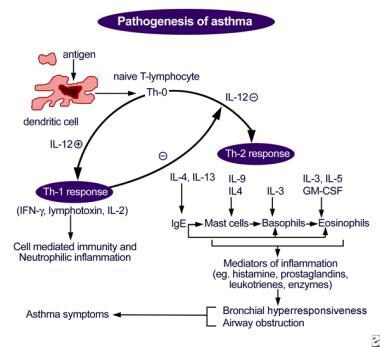
Inflammation in asthma is characterized by an influx of eosinophils during the early-phase reaction and a mixed cellular infiltrate composed of eosinophils, mast cells, lymphocytes, and neutrophils during the late-phase (or chronic) reaction. The simple explanation for allergic inflammation in asthma begins with the development of a predominantly helper T2 lymphocyte–driven, as opposed to helper T1 lymphocyte–driven, immune milieu, perhaps caused by certain types of immune stimulation early in life. This is followed by allergen exposure in a genetically susceptible individual.
Specific allergen exposure (eg, dust mites) under the influence of helper T2 lymphocytes leads to B-lymphocyte elaboration of immunoglobulin E (IgE) antibodies specific to that allergen. The IgE antibody attaches to surface receptors on airway mucosal mast cells. One important question is whether atopic individuals with asthma, in contrast to atopic persons without asthma, have a defect in mucosal integrity that makes them susceptible to penetration of allergens into the mucosa. Subsequent specific allergen exposure leads to cross-bridging of IgE molecules and activation of mast cells, with elaboration and release of a vast array of mediators. These mediators include histamine; leukotrienes C4, D4, and E4; and a host of cytokines. Together, these mediators cause bronchial smooth muscle constriction, vascular leakage, inflammatory cell recruitment (with further mediator release), and mucous gland secretion. These processes lead to airway obstruction by constriction of the smooth muscles, edema of the airways, influx of inflammatory cells, and formation of intraluminal mucus. In addition, ongoing airway inflammation is thought to cause the airway hyperreactivity characteristic of asthma. The more severe the airway obstruction, the more likely ventilation-perfusion mismatching will result in impaired gas exchange and hypoxemia.
Frequency
United States
The prevalence and severity of asthma cases are on the rise (see Asthma). Also increasing are the occurrences of asthma hospitalization and mortality resulting from status asthmaticus. Status asthmaticus is usually more common among persons in low socioeconomic groups, regardless of race, and particularly in people who live alone.
A 2004 study conducted at the Columbia University Medical Center,1 however, noted the number of patients with status asthmaticus requiring intensive care admissions declined over the past 10 years. The trend was toward less advanced presentations. This may reflect improvements in medication compliance, education, or access to medical care.
International
Similar to the US data, asthma mortality rates are increasing.
Mortality/Morbidity
- Patients who delay medical treatment, particularly treatment with systemic steroids, have a greater chance of dying.
- Patients with other preexisting conditions (eg, restrictive lung disease, congestive heart failure, chest deformities) are at particular risk of death from status asthmaticus.
- Patients who smoke regularly have chronic inflammation of the small airways and are at particular risk of death from status asthmaticus.
Race
- A 1997 study by Hanania et al2 noted that although asthma is more common among African American and Hispanic persons, this prevalence may be the result of socioeconomic factors rather than race.
- African American and Hispanic persons in the United States, in association with lower socioeconomic factors, have less access to regular specialist medical care, which leads to an increased risk of status asthmaticus.
- In the United States, particularly in large cities, illiteracy and lower educational competence are more prevalent in African American and Hispanic families, and children in these families have increased morbidity from asthma.
Sex
- Status asthmaticus is slightly more common in males than in females.
Age
- Status asthmaticus can occur in persons of any age group, including infants and geriatric patients. Mortality rates are higher in very young children and elderly adults.
- Children younger than 2 years, and sometimes those older, may have respiratory syncytial virus (RSV) infections that can result in severe attacks of wheezing that mimic status asthmaticus. Also, RSV infections can predispose patients to asthma later in life.
History
- Patients with status asthmaticus have severe dyspnea that has developed over hours to days.
- Frequently, patients have a prior history of endotracheal intubation and mechanical ventilation, frequent emergency department visits, and previous use of systemic corticosteroids.
- Patients usually present with audible wheezing.
Physical
- Patients are usually tachypneic upon examination and, in early stages of status asthmaticus, may have significant wheezing. Initially, wheezing is heard only during expiration, but, later, wheezing occurs during both expiration and inspiration.
- The chest is hyperexpanded, and accessory muscles, particularly the sternocleidomastoid, scalene, and intercostal muscles, are used. Later, as bronchoconstriction worsens, patients' wheezing may disappear, which may indicate severe airflow obstruction.
- Normally, the pulsus paradoxus (ie, the difference in systolic blood pressure between inspiration and expiration) does not exceed 15 mm Hg. In patients with severe asthma, a pulsus paradoxus of greater than 25 mm Hg usually indicates severe airway obstruction.
Causes
- In persons with acute asthma, bronchospasms occur as a result of one or more inciting factors that may include, but are not limited to, a viral upper or lower respiratory tract infection, significant allergic response to an allergen (eg, pollen, mold, animal dander, house dust mites), exposure to an irritant, or vigorous exercise in a cold environment.
- Precipitating factors can include infection, allergen or irritant exposure, poor adherence to the medical regimen, strenuous exercise, and a rapid decrease in long-term oral steroid therapy.
- Inflammation can be the result of infection; lymphocyte, mast cell, eosinophilic, and neutrophilic responses; and airway epithelial damage. In addition, elevated plasma lactate levels were noted in patients with this condition in the first hours of inhaled beta-agonist treatment.3 The presence of a previous hyperadrenergic state may predispose to the development of this condition. This may also correlate with improvements in lung function.
Pulmonary Hypertension, Primary
Other Problems to be Considered
Congestive heart failure
Croup
Stridor
Upper airway obstruction
Orthopnea
Lab Studies
- Obtain a CBC count and differential to evaluate for infectious causes (eg, pneumonia, viral infections such as croup), allergic bronchopulmonary aspergillosis, and Churg-Strauss vasculitis. As noted earlier, when elevated, serum lactate levels (when obtained early at the onset of status asthmaticus) can correlate with improved lung function.
- Obtain an arterial blood gas (ABG) value to assess the severity of the asthma attack and to substantiate the need for more intensive care. ABG determinations are indicated when the peak expiratory flow (PEF) rate or forced expiratory volume in one second (FEV1) is less than or equal to 30% of the predicted value or when the patient shows evidence of fatigue or progressive airway obstruction despite treatment. ABG values are important to help determine the severity of the asthma attack. The 4 stages of blood gas progression in persons with status asthmaticus are as follows:
- The first stage is characterized by hyperventilation with a normal partial pressure of oxygen (PO2).
- The second stage is characterized by hyperventilation accompanied by hypoxemia (ie, a low partial pressure of carbon dioxide [PCO2] and low PO2).
- The third stage is characterized by the presence of a false-normal PCO2; ventilation has decreased from the hyperventilation present in the second stage. This is an extremely serious sign of respiratory muscle fatigue that signals the need for more intensive medical care, such as admission to the ICU and, probably, intubation with mechanical ventilation.
- The last stage is characterized by a low PO2 and a high PCO2, which occurs with respiratory muscle insufficiency. This is an even more serious sign that mandates intubation and ventilatory support.
Imaging Studies
- Obtain a chest radiograph to evaluate for pneumonia, pneumothorax, congestive heart failure, and signs of chronic obstructive pulmonary disease, which would complicate the patient's response to treatment or reduce the patient's baseline spirometry values.
Other Tests
- The most important and readily available test to evaluate the severity of an asthma attack is the measurement of PEF. PEF monitors are commonly available to patients for use at home, and they provide patients with asthma with a guideline for changes in lung function as they relate to changes in symptoms. In most patients with asthma, a decrease in peak flow as a percent of predicted value correlates with changes in spirometry values.
- According to the guidelines of the National Heart, Lung, and Blood Institute/National Asthma Education and Prevention Program, severe asthma exacerbation is usually associated with a PEF rate or FEV1 of less than 50% of the predicted value. Also, hospitalization is generally indicated when the PEF or FEV1 after treatment is greater than 50% of the predicted value but less than 70% of the predicted value. Hospitalization in the ICU is indicated when the PEF value or FEV1 is less than 50% of predicted.
- A drop in the FEV1 to less than 25% of the predicted value indicates a severe airway obstruction.
- A patient with an FEV1 of greater than 60% of the predicted value may be treated in an outpatient setting, depending on the clinical situation. However, if the patient's FEV1 or PEF rate drops to less than 50% of predicted, admission to the hospital is recommended.
- Pulse oximetry and spirometry values should be used to monitor the progression of asthma. As the results indicate improvement, treatment may be adjusted accordingly.
- If a portable spirometry unit is not available, a PEF rate of 20% or less of the predicted value (ie, usually <100 L/min) suggests severe airflow obstruction and impending respiratory failure.
- Spahn et al4 demonstrate that the majority of children with asthma have normal spirometry results. According to Goldman et al5 and Marotta et al,6 the assessment of children with asthma is enhanced by the use of forced oscillation to measure respiratory resistance and reactance. As reported by Ducharme and Davis7, 8 in 1997 and 1998, forced oscillation can be performed in the emergency department, and the results are reproducible.
- According to various articles, impulse oscillometry resistance and reactance magnitudes have been shown to be more sensitive than FEV1 to the daily variability in adolescents with asthma (Goldman et al5), to the response to acute bronchodilation (Marotta et al6 and Skloot et al9), and to the response to exposure to toxic inhalants in persons with reactive airways (Skloot et al9). In patients with reactive airways, Saadeh et al10 report that impulse oscillometry detects false-negative spirometry values and provides a sensitive index of asthma control over the spectrum of mild-to-severe persistent asthma.
Procedures
- With forced oscillation testing using the impulse oscillometry system (IOS), patients are tested for 30-40 seconds during quiet breathing, without forced respiratory efforts. A small loudspeaker pushes "burps" of air into patients and pulls them back from the mouthpiece 5 times each second.
- The measurement of airflow resistance during normal breathing requires no maximal forced expiratory efforts and does not subject patients to bronchoprovocation from forced expiration. Resistance is distributed between large airways and smaller more peripheral airways, with distinct patterns attributable to each.
- Bronchospasms and increased large airway resistance appear as increases in resistance at higher (25-35 cycles/s) components of oscillation frequency. Additionally, a pattern of increased resistance with increasing airflow is typical of a large airway bronchospasm. In such patients, resistance at the beginning and end of both inspiration and expiration is at its minimum, with increased levels during mid inspiration and mid expiration. In such patients, a deep inspiration is often followed by reflex bronchoconstriction and increased resistance for 30 seconds or more, signaling increased airway reactivity.
- Peripheral airway inflammation and obstruction are signaled by increased resistance at low (5 cycles/s) oscillation frequencies that are decreased at higher oscillation frequencies (15 or 20 cycles/s). In association with the fall in resistance from 5 to 15 cycles per second, the magnitude of respiratory reactance in peripheral airway inflammation and obstruction increases.
- Careful attention must be paid to whether patients have their lips fully closed around the mouthpiece. Patients with acute dyspnea may feel constrained breathing through a mouthpiece and may reflexively open their mouths to increase airflow during late inspiration. This is analogous to flaring alae nasi with dyspnea and results in characteristic airflow leak patterns. This causes underestimation of true airflow resistance. IOS tests with such airflow leak patterns must be repeated after reassuring the patient and ensuring closure of the lips around the mouthpiece.
Histologic Findings
Autopsy results from patients who died from status asthmaticus of brief duration (ie, developed within hours) show neutrophilic infiltration of the airways. In contrast, results from patients who developed status asthmaticus over days show eosinophilic infiltration. Autopsy results also show extensive mucus production and severe bronchial smooth muscle hypertrophy. However, the predominant response, based on results from bronchoalveolar lavage studies, is eosinophilic in nature. The eosinophil itself can lead to epithelial destruction through its own degrading products (eg, cationic proteins). This destruction can result in inflammation and, later, a neutrophilic response.
Staging
The 4 stages of status asthmaticus are based on ABG progressions in status asthma. Patients in stage 1 or 2 may be admitted to the hospital, depending on the severity of their dyspnea, their ability to use accessory muscles, and their PEF values or FEV1 after treatment (>50% but <70% of predicted values). Patients with ABG determinations characteristic of stages 3 and 4 require admission to the ICU. The PEF value or FEV1 is less than 50% of the predicted value after treatment.
- Stage 1
- Patients are not hypoxemic, but they are hyperventilating and have a normal PO2.
- Data suggest that to possibly facilitate hospital discharge, these patients may benefit from ipratropium treatment via a handheld nebulizer in the emergency setting as an adjunct to beta-agonists.
- Stage 2
- This stage is similar to stage 1, but patients are hyperventilating and hypoxemic.
- Such patients may still be discharged from the emergency department, depending on their response to bronchodilator treatment, but will require systemic corticosteroids.
- Stage 3
- These patients are generally ill and have a normal PCO2 due to respiratory muscle fatigue. Their PCO2 is considered a false-normal value and is a very serious sign of fatigue that signals a need for expanded care. This is generally an indication for elective intubation and mechanical ventilation, and these patients require admission to the ICU.
- Parenteral corticosteroids are indicated, as is continued aggressive use of an inhaled beta2-adrenergic bronchodilator.
- These patients may benefit from theophylline.
- Stage 4
- This is a very serious stage in which the PO2 is low and the PCO2 is high, signifying respiratory failure.
- These patients have less than 20% lung function or FEV1 and require intubation and mechanical ventilation.
- Patients in stage 4 should be admitted to the ICU. Switching from inhaled beta-2 agonists and anticholinergics to metered-dose inhalers (MDIs) via mechanical ventilator tubing is indicated.
- Parenteral steroids are essential, and theophylline may be added, as with patients in stage 3.
Medical Care
After confirming the diagnosis and assessing the severity of the asthma attack, direct treatment toward controlling bronchoconstriction and inflammation.
- Bronchodilator treatment with beta-2 agonists
- The first line of therapy is bronchodilator treatment with a beta-2 agonist, typically albuterol.
- Handheld nebulizer treatments may be administered either continuously (10-15 mg/h) or by frequent timing (eg, q5-20min), depending on the severity of the bronchospasm.
- The dose of albuterol for intermittent dosing is 0.3-0.5 mL of a 0.5% formulation mixed with 2.5 mL of normal saline. Many of these preparations are available in a premixed form with a concentration of 0.083%.
- Studies have also shown an excellent response to well-supervised use of albuterol via an MDI with a chamber. The dose is 4 puffs, repeated at 15- to 30-minute intervals as needed. Most patients respond within 1 hour of treatment.
- The US Food and Drug Administration has approved the use of the R isomer of albuterol known as levalbuterol, for treating patients with acute asthma. This isomer has fewer effects on the heart rhythm (ie, tachyarrhythmia) and is associated with fewer occurrences of tremors, while having the same or greater clinical bronchodilator effects as racemic albuterol.
- The decreased prevalence of adverse effects with this new medication may allow physicians to use nebulizer therapy in patients with acute asthma more frequently with less concern over the adverse effects of other bronchodilators (eg, albuterol, metaproterenol). The dose of levalbuterol is either a 0.63-mg vial for children or a 1.26-mg vial for adults.
- These drugs, especially albuterol, are safe to use during pregnancy.
- Nonselective beta-2 agonists
- Patients whose bronchoconstriction is resistant to continuous handheld nebulizer treatments with traditional beta-2 agonists may be candidates for nonselective beta-2 agonists (eg, epinephrine [0.3-0.5 mg] or terbutaline [0.25 mg]) administered subcutaneously. However, systemic therapy has no proven advantage over aerosol therapy with selective beta-2 agents.
- Exercise caution in patients with other complicating factors (eg, congestive heart failure, history of cardiac arrhythmia).
- Intravenous isoproterenol is not recommended for the treatment of asthma because of the risk of myocardial toxicity.11
- Ipratropium treatment
- Ipratropium, which comes in premixed vials at 0.2%, can be synergistic with albuterol or other beta-2 agonists.
- Ipratropium is administered every 4-6 hours.
- Because children appear to have more cholinergic receptors, they are more responsive to parasympathetic stimulation than adults.
- Oxygen monitoring
- Monitoring the patient's oxygen saturation is essential during the initial treatment.
- ABG values are usually used to assess hypercapnia during the patient's initial assessment.
- Oxygen saturation is then monitored via pulse oximetry throughout the treatment protocol.
- Oxygen therapy
- Oxygen therapy is essential. It can be administered via a nasal canula or mask, although patients with dyspnea often do not like masks.
- With the advent of pulse oximetry, oxygen therapy can be easily titrated to maintain the patient's oxygen saturation above 92% (>95% in pregnant patients or those with cardiac disease).
- Glucocorticosteroids12
- Steroids are the most important treatment for status asthmaticus.
- The usual dose is oral prednisone at 1-2 mg/kg/d.
- In the authors' experience, methylprednisolone provides excellent efficacy when given intravenously at 1 mg/kg/dose every 6 hours.
- Some authorities report that pulse therapy with steroids at a high dose (eg, 10-30 mg/kg/d as a single dose) is associated with a more rapid response and shorter hospitalization and has similar adverse effects; however, this is not standard therapy. Adverse effects of pulse therapy, in the authors' experiences, are minimal and comparable to the traditional doses of intravenous steroids. The adverse effects may include hyperglycemia, which is usually reversible once steroid therapy is stopped; increased blood pressure; weight gain; increased striae formation; and hypokalemia. Long-term adverse effects depend on the duration of steroid therapy after the patient leaves the hospital.
- Steroid treatment for acute asthma is necessary but has potential adverse effects. The serum glucose value must be monitored, and insulin can be administered on a sliding scale if needed. Monitoring a patient's electrolyte levels, especially potassium, is essential. Hypokalemia can cause muscle weakness, which may worsen respiratory distress and cause cardiac arrhythmias.
- Nebulized steroids
- The use of nebulized steroids for treating status asthmaticus is controversial. Data comparing nebulized budesonide with prednisone in children suggest that the latter therapy is more effective for treating status asthmaticus.
- No good scientific evidence supports using nebulized dexamethasone or triamcinolone via a handheld nebulizer. In fact, in the authors' experiences, more adverse effects, including a cushingoid appearance and irritative bronchospasms, have occurred with these nebulizers.
- Fluid replacement: Intravenous fluids are administered to restore euvolemia.
- Antibiotics
- The routine administration of antibiotics is discouraged.
- Patients are administered antibiotics only when they show evidence of infection (eg, pneumonia, sinusitis).
- Aminophylline13
- Conflicting reports on the efficacy of aminophylline therapy have made it controversial.
- Starting intravenous aminophylline may be reasonable in patients who do not respond to medical treatment with bronchodilators, oxygen, corticosteroids, and intravenous fluids within 24 hours.
- Data suggest that aminophylline may have an anti-inflammatory effect in addition to its bronchodilator properties.
- The loading dose is usually 5-6 mg/kg, followed by a continuous infusion of 0.5-0.9 mg/kg/h.
- Physicians must monitor a patient's theophylline level. Traditionally, the level was targeted to the higher end of the local therapeutic range; however, many authorities suggest that the lower portion of the range (ie, > 5 but <10) may be preferable if the patient can obtain the benefits of the drug in the lower range.
- Adverse effects can include tachyarrhythmia, nausea, seizures, and anxiety.
- New therapy in patients with severe and resistant status asthmaticus despite mechanical ventilation
- Ketamine has been used in the management of status asthmaticus in a prospective trial in patients with respiratory failure who do not respond adequately to mechanical ventilation.14 Ketamine has been shown to improve airway resistance, particularly the lower airways, as well as improve lung compliance. Significant improvement in both oxygenation and hypercarbia has been reported, even after 15 minutes of the administration of ketamine.
- In patients with status asthmaticus, the use of deep anesthesia, such as with halothane or enflurane in combination with propofol or ketamine, may also be effective treatment as potent bronchodilators and in decreasing airway resistance, respectively.15, 16
- Nitric oxide has also been used in a similar fashion in the treatment of status asthmaticus in isolated case reports and has also been effective when mechanical ventilation is not adequate.17, 18
- Additionally, the use of nebulized lidocaine in combination with albuterol or levalbuterol is effective in helping the vocal cord dysfunction that may accompany status asthmaticus. This is an unpublished observation by the author in clinical practice.
- In 2007, Mikkelsen and colleagues19 reported the successful use of extracorporeal life support in patients with status asthmaticus and severe secondary asphyxia in any patient who otherwise was not responsive to aggressive pulmonary support.
- See New Guidelines Issued for Management of Asthma During Pregnancy for further information.
Beta-agonists, steroids, and theophylline are mainstays in the treatment of status asthmaticus. The usual first line of therapy is bronchodilator treatment with a beta-2 agonist, typically albuterol. This therapy may initially include handheld nebulizer treatments, either continuously or at frequent intervals (ie, q5-10min), depending on the severity of the bronchospasm. Most patients respond within 1 hour of treatment. The Food and Drug Administration has approved the use of levalbuterol (ie, the R isomer of albuterol) to treat patients with acute asthma. The advantage of levalbuterol is that it has fewer effects on the patient's heart rhythm (ie, tachyarrhythmia) and is associated with a less frequent occurrence of tremors. Levalbuterol has the same clinical bronchodilator effect as racemic albuterol. Corticosteroids are essential in the treatment of patients with status asthmaticus. The mechanism of action of corticosteroids can include a decrease in mucus production, an improvement in oxygenation, a reduction in beta-agonists or theophylline requirements, and the activation of properties that may prevent late bronchoconstrictive responses to allergies and provocation. Corticosteroids can decrease bronchial hypersensitivity, reduce the recovery of eosinophils and mast cells in bronchioalveolar lavage fluid, and decrease the number of activated lymphocytes. Corticosteroids also help regenerate the bronchial epithelial cells. The exact mode of corticosteroid action is not well understood. Their anti-inflammatory effect depends, at least partially, on inhibiting phospholipase A2, which can lead to prostaglandin inhibition and leukotriene synthesis. Corticosteroid action usually requires at least 4-6 hours from administration because it requires protein synthesis before it initiates anti-inflammatory effects. Because of this, patients with status asthmaticus must depend on other supportive measures (eg, beta-2 agonists, oxygen, adequate ventilation) in their initial treatment while awaiting the action of corticosteroids. Theophylline preparations are also used in patients with status asthmaticus. Usually, theophylline is given parenterally, but it can also be given orally, depending on the severity of the attack and the patient's ability to take medications. This class of drugs can induce tachycardia and decrease the seizure threshold (especially in children); therefore, therapeutic monitoring is mandatory. Typical theophylline levels range from 10-20 mcg/mL; however, adverse effects can occur even with therapeutic levels. A safer range is 10-15 mcg/mL, although seizures have occurred even with levels below 10 mcg/mL. Theophylline also has significant drug interactions with medications such as ciprofloxacin, digoxin, and warfarin (Coumadin). These interactions may decrease the rate of theophylline clearance by interfering with P-450 site metabolism. On the other hand, phenytoin (Dilantin) and cigarette smoking can increase the rate of metabolism of theophylline and, therefore, can decrease the therapeutic level of the drug. Manage the theophylline dose in persons who previously smoked but quit fewer than 6 months ago as if they are still smoking. Patients who smoke or those on phenytoin require higher loading and maintenance doses of theophylline. Other adverse effects can include nausea, vomiting, and palpitations. The usual loading dose of theophylline is 6 mg/kg, followed by maintenance doses of 1 mg/kg/h in the emergent setting. In patients who smoke, the maintenance dose may be higher and the loading dose may be slightly higher. Patients on phenytoin should also receive increased maintenance doses of theophylline. Patients with liver disease or elderly patients may require a maintenance dose as low as 0.25 mg/kg/h. Theophylline can induce bronchodilation, stimulate the central respiratory cycle, reduce diaphragmatic muscle fatigue, and relax vascular smooth muscles. The mechanism of action includes an increased cyclic adenosine monophosphate concentration by the inhibition of phosphodiesterase; however, this usually occurs when the concentration of theophylline is toxic. Therefore, the true mechanism of action of theophylline is still unclear, but a possible explanation for the bronchodilatation may be related to adenosine antagonism. Theophylline is available in multiple preparations, both short- and long-acting. For patients with status asthmaticus, short-acting preparations are preferred; however, parental preparations are even better. The addition of the anticholinergic ipratropium, which comes in premixed vials at 0.2%, sometimes results in additional bronchodilation beyond that achieved with albuterol. Sevoflurane, a potent inhalation agent, has been successful in a single case report where it was used when conventional treatment failed in a 26-year-old woman.20
Drug Category: Beta-adrenergic agonists
Relieve reversible bronchospasm by relaxing smooth muscles of the bronchi.
| Drug Name | Albuterol (Ventolin, Proventil) |
| Description | Use for bronchospasms refractory to epinephrine. Relaxes bronchial smooth muscles by action on beta-2 receptors, with little effect on cardiac muscle contractility. First DOC because it can quickly reverse asthma bronchoconstriction. Available inhaled via MDI or HHN and orally for those too young to use nebulizer. Reserve oral dosing for preventative or longer-acting use. |
| Adult Dose | PO: 2-4 mg PO tid/qid; not to exceed 32 mg/d Inhaler: 1-2 puffs q4-6h; not to exceed 12 puffs/d Nebulizer: Dilute 0.5 mL (2.5 mg) of 0.5% inhalation solution in 1-2.5 mL of NS; administer 2.5-5 mg q4-6h, diluted in 2-5 mL sterile saline or water |
| Pediatric Dose | PO <2 years: Not established 2-5 years: 0.1-0.2 mg/kg tid; not to exceed 12 mg/d 5-12 years: 2 mg tid/qid; not to exceed 24 mg/d >12 years: Administer as in adults Inhaler <12 years: 1-2 puffs qid with tube spacer >12 years: Administer as in adults Nebulizer <5 years: Dilute 0.25-0.5 mL (1.25-2.5 mg) of 0.5% inhalation solution in 1-2.5 mL NS and administer q4-6h in equally divided doses >5 years: Administer as in adults |
| Contraindications | Documented hypersensitivity |
| Interactions | Beta-adrenergic blockers antagonize effects; inhaled ipratropium may increase duration of bronchodilatation; cardiovascular effects may increase with MAOIs, inhaled anesthetics, TCAs, and sympathomimetic agents |
| Pregnancy | C - Fetal risk revealed in studies in animals but not established or not studied in humans; may use if benefits outweigh risk to fetus
|
| Precautions | Caution in hyperthyroidism, diabetes mellitus, and cardiovascular disorders Adverse effects include irritability, particularly in children; tachycardia (patients with baseline cardiac abnormalities have decreased threshold for tachyarrhythmia); and electrolyte abnormalities (eg, hypokalemia) Ventilation of areas that are not well perfused may lead to ventilation-perfusion mismatch, which can be problematic in severe asthma In outpatient setting, inappropriate use (ie, overuse of MDIs) can lead to paradoxical response of increased bronchial obstruction and may induce status asthmaticus |
| Drug Name | Levalbuterol (Xopenex) |
| Description | Moderately selective beta2-receptor agonist. Active enantiomer of racemic albuterol and more potent than racemic mixture. Decreased occurrence of adverse effects may allow use of more frequent nebulizer therapy in patients with acute asthma with less concern over adverse effects of other bronchodilators (eg, albuterol, metaproterenol). |
| Adult Dose | 0.63-1.25 mg nebulized q6-8h; may be given more frequently during emergent situations |
| Pediatric Dose | <12 years: Not established; however, if patient is albuterol intolerant and benefit outweighs risk, 0.63 mg may be used q6-8h >12 years: Administer as in adults
|
| Contraindications | Documented hypersensitivity |
| Interactions | Beta-adrenergic blockers antagonize effects; inhaled ipratropium may increase duration of bronchodilatation; cardiovascular effects may increase with MAOIs, inhaled anesthetics, TCAs, and sympathomimetic agents |
| Pregnancy | C - Fetal risk revealed in studies in animals but not established or not studied in humans; may use if benefits outweigh risk to fetus
|
| Precautions | Caution in hyperthyroidism, diabetes mellitus, and cardiovascular disorders Adverse effects include irritability, particularly in children; tachycardia (patients with baseline cardiac abnormalities have decreased threshold for tachyarrhythmia); and electrolyte abnormalities (eg, hypokalemia) Ventilation of areas that are not well perfused may lead to ventilation-perfusion mismatch, which can be problematic in severe asthma In the outpatient setting, inappropriate use (ie, overuse of MDIs) can lead to paradoxical response of increased bronchial obstruction and may induce status asthmaticus |
Drug Category: Mast cell stabilizers
These agents prevent histamine release from mast cells following stimuli by specific antigens.
| Drug Name | Cromolyn (Intal) |
| Description | Inhibits degranulation of sensitized mast cells following their exposure to specific antigens. |
| Adult Dose | Powder in caps for use with Spinhaler: 20 mg inhaled qid at regular intervals MDI: 2 puffs (800 mcg/puff) qid at regular intervals Nebulizer: 20 mg inhaled qid at regular intervals Once patient is stabilized, use lowest effective dose |
| Pediatric Dose | Powder in caps for use with Spinhaler >5 years: 20 mg inhaled qid at regular intervals MDI <5 years: Not recommended >5 years: 2 puffs (800 mcg/puff) qid at regular intervals Nebulizer <2 years: Not established 2-12 years: 20 mg inhaled qid at regular intervals >12 years: Administer as in adults Once patient is stabilized, use lowest effective dose |
| Contraindications | Documented hypersensitivity; severe renal or hepatic impairment |
| Interactions | None reported |
| Pregnancy | C - Fetal risk revealed in studies in animals but not established or not studied in humans; may use if benefits outweigh risk to fetus
|
| Precautions | Do not use with severe renal or hepatic impairment; exercise caution when withdrawing drug because symptoms may recur |
Drug Category: Corticosteroids
Maintenance medications that decrease inflammatory mediators to limit airway remodeling. Must be taken regularly to be beneficial. Glucocorticoids do not relieve acute bronchospasm, and short-acting bronchodilators must be available. Multiple formulations are available that are not equivalent on a per-dose or per-mcg basis. Inhaled corticosteroids are one of the most important developments in asthma management because they decrease inflammation. These agents are proven to improve lung function (FEV1 and airway hyperactivity) and decrease symptoms, exacerbation frequency, and the need for rescue inhalers.
| Drug Name | Methylprednisolone (Solu-Medrol) |
| Description | For treatment of inflammatory and allergic reactions. By reversing increased capillary permeability and suppressing PMN activity, may decrease inflammation. Other corticosteroids may be used in equivalent dosages. |
| Adult Dose | Loading dose: 125-250 mg IV Maintenance dose: 4 mg/kg/d IV divided q4-6h |
| Pediatric Dose | Loading dose: 2 mg/kg IV Maintenance dose: 4 mg/kg/d IV divided q6h |
| Contraindications | Documented hypersensitivity; viral, fungal, or tubercular skin infections |
| Interactions | Coadministration with digoxin may increase digitalis toxicity secondary to hypokalemia; estrogens may increase levels; phenobarbital, phenytoin, and rifampin may decrease levels (adjust dose); monitor patients for hypokalemia when taking concurrently with diuretics |
| Pregnancy | C - Fetal risk revealed in studies in animals but not established or not studied in humans; may use if benefits outweigh risk to fetus
|
| Precautions | Hyperglycemia, edema, osteonecrosis, peptic ulcer disease, hypokalemia, osteoporosis, euphoria, psychosis, growth suppression, myopathy, and infections are possible complications of glucocorticoid use |
Drug Category: Bronchodilators
Act to decrease muscle tone in both small and large airways in lungs, thereby increasing ventilation.
| Drug Name | Theophylline (Aminophyllin) |
| Description | Potentiates exogenous catecholamines and stimulates endogenous catecholamine release and diaphragmatic muscular relaxation, which, in turn, stimulates bronchodilation. For bronchodilation, near toxic (>20 mg/dL) levels are usually required. |
| Adult Dose | 5.6 mg/kg loading dose (based on aminophylline) IV over 20 min, followed by maintenance infusion of 0.1-1.1 mg/kg/h |
| Pediatric Dose | <6 weeks: Not established 6 weeks to 6 months: 0.5 mg/kg/h loading dose IV in first 12 h (based on aminophylline), followed by maintenance infusion of 12 mg/kg/d thereafter; may administer continuous infusion by dividing total daily dose by 24 h 6 months to 1 year: 0.6-0.7 mg/kg/h IV in first 12 h as loading dose, followed by maintenance infusion of 15 mg/kg/d; may administer as continuous infusion, as above >1 year: Administer as in adults |
| Contraindications | Documented hypersensitivity; uncontrolled arrhythmia, peptic ulcers, hyperthyroidism, uncontrolled seizure disorders |
| Interactions | Aminoglutethimide, barbiturates, carbamazepine, ketoconazole, loop diuretics, charcoal, hydantoins, phenobarbital, phenytoin, rifampin, isoniazid, and sympathomimetics may decrease effects; allopurinol, beta-blockers, ciprofloxacin, corticosteroids, disulfiram, quinolones, thyroid hormones, ephedrine, carbamazepine, cimetidine, erythromycin, macrolides, propranolol, and interferon may increase effects |
| Pregnancy | C - Fetal risk revealed in studies in animals but not established or not studied in humans; may use if benefits outweigh risk to fetus
|
| Precautions | Caution in peptic ulcer, hypertension, tachyarrhythmia, hyperthyroidism, and compromised cardiac function; do not inject IV solution faster than 25 mg/min; patients diagnosed with pulmonary edema or liver dysfunction are at greater risk of toxicity because of reduced drug clearance |
Drug Category: Anticholinergics
Thought to work centrally by suppressing conduction in vestibular cerebellar pathways. May have inhibitory effect on parasympathetic nervous system.
Regarding magnesium sulfate, more studies have not confirmed the effectiveness of intravenous administration of this agent.21, 22 Its use is still controversial. However, inhaled magnesium sulfate has generated some interest in status asthmaticus when combined with beta-agonist use.23, 24
| Drug Name | Ipratropium bromide (Atrovent) |
| Description | Synthetic ammonium compound very structurally similar to atropine. May provide additive benefit to inhaled beta-2 agonists when treating severe acute asthma exacerbations. Also may be alternative bronchodilator for patients unable to tolerate inhaled beta-2 agonists. Children may be more responsive to parasympathetic inhibition than adults because children appear to have more cholinergic receptors. |
| Adult Dose | MDI: 2 puffs (18 mcg/puff) qid Nebulizer: 500 mcg tid/qid |
| Pediatric Dose | MDI 3-14 years: 1-2 puffs (18 mcg/puff) tid/qid >14 years: Administer as in adults Nebulizer <3 years and neonates: 25 mcg/kg/dose tid <14 years: 125-250 mcg tid/qid >14 years: Administer as in adults Very effective in children and usually given combined with beta-agonists |
| Contraindications | Documented hypersensitivity |
| Interactions | Drugs with anticholinergic properties (eg, dronabinol) may increase toxicity; albuterol may increase effects |
| Pregnancy | B - Fetal risk not confirmed in studies in humans but has been shown in some studies in animals
|
| Precautions | Not indicated for emergent episodes of bronchospasm; caution in narrow-angle glaucoma, prostatic hypertrophy, and bladder neck obstruction |
| Drug Name | Magnesium sulfate |
| Description | Magnesium sulfate intravenously has been advocated in the past for the treatment of acute asthma. Usually 1 g or a maximum of 2.5 g during the initiation of therapy may be considered. |
| Adult Dose | 1-2 g IV |
| Pediatric Dose | 75 mg/kg IV, not to exceed 2.5 g; efficacy in children not established |
| Contraindications | Documented hypersensitivity; heart block, Addison disease, myocardial damage, or severe hepatitis |
| Interactions | Concurrent use with nifedipine may cause hypotension and neuromuscular blockade; may increase neuromuscular blockade seen with aminoglycosides and potentiate neuromuscular blockade produced by tubocurarine, vecuronium, and succinylcholine; may increase CNS effects and toxicity of CNS depressants, betamethasone, and cardiotoxicity of ritodrine |
| Pregnancy | A - Fetal risk not revealed in controlled studies in humans
|
| Precautions | Magnesium may alter cardiac conduction leading to heart block in digitalized patients; respiratory rate, deep tendon reflex, and renal function should be monitored when electrolyte is administered parenterally; caution when administering magnesium dose since may produce significant hypotension or asystole; in overdose, calcium gluconate, 10-20 mL IV of 10% solution, can be given as antidote for clinically significant hypermagnesemia |
Further Inpatient Care
- Sedatives
- Patients may benefit from sedatives in very small doses and under controlled, monitored settings. Sedatives should be used judiciously, if at all. For example, lorazepam (0.5 or 1 mg intravenously) could be used for patients who are very anxious and are undergoing appropriate and aggressive bronchodilator therapy.
- More powerful agents (eg, oxybutynin) can be administered to intubated patients to achieve sedative, amnestic, and anxiolytic effects.
- Mechanical ventilation
- Consider mechanical ventilation as a last resort in patients with status asthmaticus.
- Mechanical ventilation in patients with asthma requires careful monitoring because these patients have high end-expiratory pressure and, therefore, are at very high risk for pneumothorax.
- Mechanical ventilation, when used in patients with asthma, is usually required for less than 72 hours; however, in occasional patients with severe bronchospasm, mechanical ventilation can be prolonged. In these situations, consultation with a pulmonologist or another expert in mechanical ventilatory techniques is likely useful.
- Ram et al25 have shown noninvasive positive pressure ventilation to be affected by meta-analysis.
- Ueda et al26 reported using noninvasive positive pressure ventilation to wean a patient with refractory status asthmaticus who also had developed atelectasis.
- Leatherman et al27 reported that prolongation of the expiratory time can decrease dynamic inflation in patients with status asthmaticus and may have a minor positive effect on weaning in these patients.
- Other treatments
- Other treatments have been used, but none is well proven in patients with severe acute asthma.
- A combination of helium and oxygen known as heliox (ie, 30/70 mixture) has been used, but this treatment should only be considered in patients who are able to take deep breaths because the treatment is dependent on inspiratory flow.28
- Intravenous magnesium sulfate can be tried, especially in pregnant women, as an adjunct to beta-2 bronchodilator therapy.
- Nitrate oxide has been tried in a child with refractory asthma. The future role of this therapy remains to be determined.
- Leukotriene modifiers are useful for treating chronic asthma but not acute asthma. This treatment may be beneficial if used via a nebulizer, but it remains experimental.
- Hydration
- Hydration, such as normal saline at a reasonable rate (eg, 150 mL/h), is essential.
- Special attention to the patient's electrolyte status is important.
- Hypokalemia may result from either steroid use or beta-agonist use. Correcting hypokalemia helps wean an intubated patient with asthma. Hypophosphatemia may result from poor oral intake and is also an important consideration when weaning such patients.
- Intravenous antibiotics
- Intravenous antibiotics are important in patients with acute asthma only if they have evidence of an infection (eg, pneumonia, sinusitis).
- In some situations, sinus imaging using CT scanning or plain radiography29, 30 may be essential to help rule out chronic sinusitis.
Further Outpatient Care
- Instruct patients to use of inhalers appropriately, to be compliant with therapy, and to practice stress-avoidance measures. Stress factors (ie, triggers of asthma attacks) include pet dander, house dust, and mold. Strongly discourage patients from smoking; this practice should be avoided at all costs. Finally, appropriate follow-up is important, as is checking the patient's peak flow meter and FEV1 at home or in the office, respectively.
- Children with asthma commonly present with normal FEV1, and, accordingly, more sensitive lung function testing should be undertaken with regular IOS assessments. Medication titration may be usefully guided by IOS resistance and reactance values.
- Identify specific patients who are at risk for asthma exacerbation, such as younger children and adults older than 60 years. A retrospective analysis,31 has shown that the severity of asthma at baseline and the age of the patient are the most important determining factors in the risk for recurrent status asthmaticus and for predicting the severity of the attack. In other words, patients older than 60 years who are also characterized as having either moderate persistent asthma or severe persistent asthma are at higher risk of developing status asthmaticus. Therefore, compliance with the National Institutes of Health (NIH) guidelines for the treatment and management of patients with asthma should theoretically be an effective prophylaxis against the development of status asthmaticus.
Deterrence/Prevention
- Status asthmaticus can be prevented if patients are compliant with their medications and they avoid stress factors; however, it can occur even when patients are compliant and doing well as outpatients. In such situations, search for an occult infection (eg, RSV in children but rarely in adults; occult sinus infection).
- Prevention of status asthmaticus may be aided by monitoring forced oscillation test results rather than spirometry findings. This is particularly true for children younger than 12 years; however, adults with reactive airways may be undertreated if the criterion for stability and normality is a spirometric FEV1 greater than 80% of the predicted value.
Complications
- Pneumothorax may complicate acute asthma, either because of increased airway pressure or as a result of mechanical ventilation. Superimposed infection can also occur in intubated patients. Patients may require a chest tube for pneumothorax or aggressive antibiotic therapy for a superimposed infection.
Prognosis
- In general, unless a complicating illness such as congestive heart failure or chronic obstructive pulmonary disease is present, with appropriate therapy status asthmaticus has a good prognosis. A delay in initiating treatment is probably the worst prognostic factor. Delays can result from poor access to health care on the part of the patient or even delays in using steroids. Patients with acute asthma should use steroids early and aggressively.
Patient Education
- One important aspect of patient education is that asthma is a disease of airway inflammation; it is not simply bronchospasms. Airway inflammation is a continuing process that renders patients with asthma vulnerable to acute bronchospasms. Symptoms are more dependent on bronchospasms than on inflammation; thus, symptoms may become minimal in the presence of continued peripheral airway inflammation. Because patients often wish to discontinue inhaled corticosteroids when they are free of acute bouts of wheezing, educating them regarding the need for controller medications to minimize peripheral airway inflammation is important.
- Patients can be shown the results of forced oscillation testing that occur with peripheral airway inflammation and obstruction. Review the test results with patients and show them the improvement with inhaled corticosteroids and the deterioration when they are not compliant with anti-inflammatory medications. This information may materially enhance patients' awareness of the need for continuing treatment, despite an absence of wheezing.
- For excellent patient education resources, visit eMedicine's Asthma Center. Also, see eMedicine's patient education articles, Asthma, Asthma FAQs, and Understanding Asthma Medications.
Medical/Legal Pitfalls
- Failure to initiate steroid therapy or intubation with mechanical ventilation
- Failure to obtain sinus imaging or to monitor the patient's electrolyte balance
- Failure to admit a wheezing patient with a normal PCO2: Such patients typically have respiratory muscle fatigue and require hospital admission.
- Failure to treat expediently, especially with bronchodilators
- Failure to educate patients upon discharge about the appropriate use of their inhalers, the importance of therapy compliance, and the efficacy of stress-avoidance measures
Special Concerns
- Treat pregnant women with acute asthma in the same aggressive manner as nonpregnant women. Respiratory acidosis can be detrimental to both the fetus and the mother. Use special abdominal shielding during chest radiography or sinus imaging.
- Treat children with acute asthma in manner similar to that for adults, except when children are mechanically ventilated, because their chests are more compliant and require special attention.
The authors and editors of eMedicine gratefully acknowledge the contributions of previous authors, Michael Goldman, MD, and Jan Malacara, PA-C, to the development and writing of this article.
- Han P, Cole RP. Evolving differences in the presentation of severe asthma requiring intensive care unit admission. Respiration. Sep-Oct 2004;71(5):458-62. [Medline].
- Hanania NA, David-Wang A, Kesten S, Chapman KR. Factors associated with emergency department dependence of patients with asthma. Chest. Feb 1997;111(2):290-5. [Medline].
- Rodrigo GJ, Rodrigo C. Elevated plasma lactate level associated with high dose inhaled albuterol therapy in acute severe asthma. Emerg Med J. Jun 2005;22(6):404-8. [Medline].
- Spahn JD, Cherniack R, Paull K, Gelfand EW. Is forced expiratory volume in one second the best measure of severity in childhood asthma?. Am J Respir Crit Care Med. Apr 1 2004;169(7):784-6. [Medline].
- Goldman MD, Carter R, Klein R, Fritz G, Carter B, Pachucki P. Within- and between-day variability of respiratory impedance, using impulse oscillometry in adolescent asthmatics. Pediatr Pulmonol. Oct 2002;34(4):312-9. [Medline].
- Marotta A, Klinnert MD, Price MR, Larsen GL, Liu AH. Impulse oscillometry provides an effective measure of lung dysfunction in 4-year-old children at risk for persistent asthma. J Allergy Clin Immunol. Aug 2003;112(2):317-22. [Medline].
- Ducharme FM, Davis GM. Measurement of respiratory resistance in the emergency department: feasibility in young children with acute asthma. Chest. Jun 1997;111(6):1519-25. [Medline].
- Ducharme FM, Davis GM. Respiratory resistance in the emergency department: a reproducible and responsive measure of asthma severity. Chest. Jun 1998;113(6):1566-72. [Medline].
- Skloot G, Goldman M, Fischler D, Goldman C, Schechter C, Levin S, et al. Respiratory symptoms and physiologic assessment of ironworkers at the World Trade Center disaster site. Chest. Apr 2004;125(4):1248-55. [Medline].
- Saadeh CK, Goldman MD, Gaylor PB. Forced oscillation using impulse oscillometry (IOS) detects false negative spirometry in symptomatic patients with reactive airways. J Allergy Clin Immunol. 2003;111:S136.
- Newman LJ, Richards W, Church JA. Isoetharine-isoproterenol: a comparison of effects in childhood status asthmaticus. Ann Allergy. Apr 1982;48(4):230-2. [Medline].
- Haskell RJ, Wong BM, Hansen JE. A double-blind, randomized clinical trial of methylprednisolone in status asthmaticus. Arch Intern Med. Jul 1983;143(7):1324-7. [Medline].
- Press S, Lipkind RS. A treatment protocol of the acute asthma patient in a pediatric emergency department. Clin Pediatr (Phila). Oct 1991;30(10):573-7. [Medline].
- Heshmati F, Zeinali MB, Noroozinia H, Abbacivash R, Mahoori A. Use of ketamine in severe status asthmaticus in intensive care unit. Iran J Allergy Asthma Immunol. Dec 2003;2(4):175-80. [Medline].
- Elliot S, Berridge JC, Mallick A. Use of the AnaConDa anaesthetic delivery system in ICU. Anaesthesia. Jul 2007;62(7):752-3. [Medline].
- Burburan SM, Xisto DG, Rocco PR. Anaesthetic management in asthma. Minerva Anestesiol. Jun 2007;73(6):357-65. [Medline].
- Rishani R, El-Khatib M, Mroueh S. Treatment of severe status asthmaticus with nitric oxide. Pediatr Pulmonol. Dec 1999;28(6):451-3. [Medline].
- Mroueh S. Inhaled nitric oxide for acute asthma. J Pediatr. Jul 2006;149(1):145; author reply 145. [Medline].
- Mikkelsen ME, Pugh ME, Hansen-Flaschen JH, Woo YJ, Sager JS. Emergency extracorporeal life support for asphyxic status asthmaticus. Respir Care. Nov 2007;52(11):1525-9. [Medline].
- Schultz TE. Sevoflurane administration in status asthmaticus: a case report. AANA J. Feb 2005;73(1):35-6. [Medline].
- Glover ML, Machado C, Totapally BR. Magnesium sulfate administered via continuous intravenous infusion in pediatric patients with refractory wheezing. J Crit Care. Dec 2002;17(4):255-8. [Medline].
- Scarfone RJ, Loiselle JM, Joffe MD, Mull CC, Stiller S, Thompson K, et al. A randomized trial of magnesium in the emergency department treatment of children with asthma. Ann Emerg Med. Dec 2000;36(6):572-8. [Medline].
- Bessmertny O, DiGregorio RV, Cohen H, Becker E, Looney D, Golden J, et al. A randomized clinical trial of nebulized magnesium sulfate in addition to albuterol in the treatment of acute mild-to-moderate asthma exacerbations in adults. Ann Emerg Med. Jun 2002;39(6):585-91. [Medline].
- Blitz M, Blitz S, Beasely R, Diner BM, Hughes R, Knopp JA, et al. Inhaled magnesium sulfate in the treatment of acute asthma. Cochrane Database Syst Rev. Oct 19 2005;CD003898. [Medline].
- Ram FS, Wellington S, Rowe BH, Wedzicha JA. Non-invasive positive pressure ventilation for treatment of respiratory failure due to severe acute exacerbations of asthma. Cochrane Database Syst Rev. Jan 25 2005;CD004360. [Medline].
- Ueda T, Tabuena R, Matsumoto H, Takemura M, Niimi A, Chin K, et al. Successful weaning using noninvasive positive pressure ventilation in a patient with status asthmaticus. Intern Med. Nov 2004;43(11):1060-2. [Medline].
- Leatherman JW, McArthur C, Shapiro RS. Effect of prolongation of expiratory time on dynamic hyperinflation in mechanically ventilated patients with severe asthma. Crit Care Med. Jul 2004;32(7):1542-5. [Medline].
- Shiue ST, Gluck EH. The use of helium-oxygen mixtures in the support of patients with status asthmaticus and respiratory acidosis. J Asthma. 1989;26(3):177-80. [Medline].
- Fuller CG, Schoettler JJ, Gilsanz V, Nelson MD Jr, Church JA, Richards W. Sinusitis in status asthmaticus. Clin Pediatr (Phila). Dec 1994;33(12):712-9. [Medline].
- Sacha RF, Tremblay NF, Jacobs RL. Chronic cough, sinusitis, and hyperreactive airways in children: an often overlooked association. Ann Allergy. Mar 1985;54(3):195-8. [Medline].
- Oguzulgen IK, Turktas H, Mullaoglu S, Ozkan S. What can predict the exacerbation severity in asthma?. Allergy Asthma Proc. May-Jun 2007;28(3):344-7. [Medline].
- Ciccolella DE, Brennan K, Kelsen SG, Criner GJ. Dose-response characteristics of nebulized albuterol in the treatment of acutely ill, hospitalized asthmatics. J Asthma. Sep 1999;36(6):539-46. [Medline].
- Mathison DA. Asthma in Adults, Evaluation and Management. In: Middleton E Jr, Reed CE, Ellis EF, Adkinson NF Jr, Yunginger JW, Busse WW, eds. Allergy Principles & Practice. 5th ed. St. Louis, Mo: Mosby-Year Book; 1998:901-20.
- Patterson R, Grammar LC, Greenberger P, eds. Status Asthmaticus. In: Allergic Diseases: Diagnosis and Management. 5th ed. Philadelphia, Pa: Lippincott-Raven; 1997:529-42.
- Richards W. Hospitalization of children with status asthmaticus: a review. Pediatrics. Jul 1989;84(1):111-8. [Medline].
- Schwartz HJ, Thompson JS, Sher TH, Ross RJ. Occult sinus abnormalities in the asthmatic patient. Arch Intern Med. Dec 1987;147(12):2194-6. [Medline].
- Sthoeger ZM, Eliraz A, Asher I, Berkman N, Elbirt D. The beneficial effects of Xolair (omalizumab) as add-on therapy in patients with severe persistent asthma who are inadequately controlled despite best available treatment (GINA 2002 step IV)--the Israeli arm of the INNOVATE study. Isr Med Assoc J. Jun 2007;9(6):472-5. [Medline].
Status Asthmaticus excerpt Article Last Updated: Sep 4, 2008
|