You are in: eMedicine Specialties >
Infectious Diseases > MEDICAL TOPICS
Sporotrichosis
Article Last Updated: Oct 14, 2008
AUTHOR AND EDITOR INFORMATION
Section 1 of 11
Author: Ronald A Greenfield, MD, Professor, Department of Internal Medicine, Section of Infectious Diseases, University of Oklahoma College of Medicine
Ronald A Greenfield is a member of the following medical societies: American College of Physicians, American Federation for Medical Research, American Society for Microbiology, Central Society for Clinical Research, Infectious Diseases Society of America, Medical Mycology Society of the Americas, Phi Beta Kappa, Southern Society for Clinical Investigation, and Southwestern Association of Clinical Microbiology
Editors: Pranatharthi Haran Chandrasekar, MD, Director of Infectious Disease Fellowship, Professor, Department of Internal Medicine, Harper Hospital, Wayne State University School of Medicine; Francisco Talavera, PharmD, PhD, Senior Pharmacy Editor, eMedicine; Thomas M Kerkering, MD, Chief of Infectious Diseases, Virginia Tech, Carilion School of Medicine, Roanoke, Virginia; Eleftherios Mylonakis, MD, Clinical and Research Fellow, Department of Internal Medicine, Division of Infectious Diseases, Massachusetts General Hospital; Burke A Cunha, MD, Professor of Medicine, State University of New York School of Medicine at Stony Brook; Chief, Infectious Disease Division, Winthrop-University Hospital
Author and Editor Disclosure
Synonyms and related keywords:
sporotrichosis, Sporothrix schenckii, Schenck disease, Schenck’s disease, lymphocutaneous sporotrichosis, osteoarticular sporotrichosis, subacute sporotrichosis, chronic sporotrichosis, cutaneous sporotrichosis, pulmonary sporotrichosis, disseminated sporotrichosis, S schenckii, Sporothrix schenckii infection, S schenckii infection, Beurmann disease, Beurmann's disease, rose gardener's disease, rose thorn disease, peat moss disease, rose gardeners' disease, drunken rose gardener's disease, sporotrichotic meningitis, sporotrichotic arthritis, sporotrichal osteomyelitis
Background
Sporotrichosis is a subacute or chronic infection caused by the soil fungus Sporothrix schenckii. Although only one species of Sporothrix was classically identified, modern phylogenetic studies suggest the geographic distribution of multiple distinct Sporothrix species.1 The characteristic infection involves suppurating subcutaneous nodules that progress proximally along lymphatic channels (lymphocutaneous sporotrichosis). Primary pulmonary infection (pulmonary sporotrichosis) is rare, as is direct inoculation into tendons, bursae, or joints. Osteoarticular sporotrichosis is caused by direct inoculation or hematogenous seeding. In rare cases, disseminated S schenckii infection (disseminated sporotrichosis) occurs, characterized by disseminated cutaneous lesions and involvement of multiple visceral organs; this occurs most commonly in persons with AIDS.
Pathophysiology
Infection with the dimorphic soil fungus S schenckii is usually acquired through cutaneous inoculation.
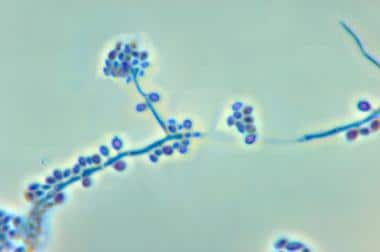
 Photomicrograph that shows the conidiophores and conidia of the fungus Sporothrix schenckii. Photo from CDC Public Health Image Library. The initial reddish, necrotic, nodular papule of cutaneous sporotrichosis generally appears 1-10 weeks after a penetrating skin injury. The lesion is a suppurating granuloma that consists of histiocytes and giant cells, with neutrophils that accumulate in the center and that are surrounded by lymphocytes and plasma cells. The S schenckii infection spreads from the initial lesion along lymphatic channels, forming the chain of indolent nodular and ulcerating lesions typical of lymphocutaneous sporotrichosis. Other tissues are involved by direct extension and, less often, by hematogenous dissemination. The most common extracutaneous infection sites are in the bones, joints, tendon sheaths, and bursae. Hematogenous dissemination—particularly in immunocompromised hosts—results in widely disseminated cutaneous and visceral infection, including meningitis. A rare form of sporotrichosis appears to result from inhalation of the organism. This form is characterized by a chronic cavitary pneumonia that is clinically and radiographically indistinguishable from tuberculosis and histoplasmosis. This form of sporotrichosis is most common in individuals with severe underlying chronic obstructive pulmonary disease (COPD). Sporotrichal infection of the larynx and paranasal sinuses has also been described.
Frequency
United States
The incidence of sporotrichosis is not precisely known but is estimated at 1-2 cases per million population. An estimated 200-250 cases occur per year.
International
Sporotrichosis occurs worldwide, with focal areas of hyperendemicity. The global incidence is unknown. In the highlands of Peru, the incidence of sporotrichosis is approximately 1 case per 1000 people.2
Mortality/Morbidity
- Spontaneous resolution of cutaneous and lymphocutaneous forms of sporotrichosis has been documented.
- The prognosis is excellent for complete recovery after therapy, although the response to therapy may vary.
- Pulmonary sporotrichosis may contribute to declining pulmonary function in patients with COPD.
- Osteoarticular sporotrichosis may result in significant morbidity in the form of chronic osteomyelitis and arthritis with significant loss of joint function and deformity.
- Disseminated sporotrichosis is associated with significant morbidity and, possibly, mortality in immunocompromised hosts.
Race
Sporotrichosis has no known racial predilection.
Sex
Sporotrichosis is slightly more common in males than in females, presumably due to an increased exposure risk rather than to a difference in susceptibility.
Age
In developed nations, sporotrichosis is most common among adults. However, in tropical regions and in areas of hyperendemicity, sporotrichosis may be more common in children and adolescents. For more on pediatric sporotrichosis, see the article Sporotrichosis in eMedicine’s Pediatric: General Medicine volume.
History
- Cutaneous and lymphocutaneous sporotrichosis: The primary lesion develops at the site of cutaneous inoculation, typically in the distal upper extremities. Patients with these forms are typically afebrile and not systemically ill. The lesions usually cause minimal pain. Many affected patients have received one or more courses of antibacterial therapy without benefit.3, 4
- Pulmonary sporotrichosis: Patients with this form of sporotrichosis usually have severe underlying COPD and present with subacute or chronic pneumonia.5 The presenting symptoms of pulmonary sporotrichosis are not specific but typically include increased cough and few constitutional symptoms.
- Osteoarticular sporotrichosis
- Sporotrichosis may present as a chronic arthritis that is often confused with rheumatoid arthritis or other chronic inflammatory arthritis. In many cases, the osteoarticular sporotrichosis persists for 10 or more years until destruction of adjacent bone or the development of draining fistulae encourages efforts to establish the microbial etiology of the chronic osteomyelitis with culture. Cutaneous or lymphocutaneous lesions are not prominent in these patients.
- The process generally begins as a monoarticular arthritis, but other joints may become involved successively. The patient usually has pain upon motion, but not the severe limitation characteristic of bacterial arthritis. Systemic illness is usually absent. Functional impairment due to osteoarticular sporotrichosis may become severe.
- Disseminated sporotrichosis: In rare cases, sporotrichosis involves other organs, including the eye, the prostate, the oral mucosa, the paranasal sinuses, and the larynx. In such patients, the clinical manifestations depend on the organs involved. Central nervous system and meningeal involvement are more common in the AIDS era, but it remains rare. In some cases, the only symptom is subtle changes in mental status. Patients with AIDS who develop disseminated sporotrichosis may present with cutaneous dissemination, which manifests as nodules, ulcers, or both, with or without evidence of visceral involvement and meningitis.
Physical
- Cutaneous or lymphocutaneous sporotrichosis: An initial papule or nodule forms at the site of cutaneous inoculation, usually 1-10 weeks after inoculation. The initial small nodule enlarges, reddens, becomes pustular, and ulcerates. In the lymphocutaneous form, an ascending chain of nodules develops along skin lymphatic channels. Older distal lesions ulcerate and drain, while more proximal lesions appear as nodules and undergo the same evolution.
 Lymphocutaneous sporotrichosis.
 Lymphocutaneous sporotrichosis.
 Lymphocutaneous sporotrichosis. - Pulmonary sporotrichosis: The physical examination findings in patients with pulmonary sporotrichosis are typically dominated by their underlying COPD. No physical findings are specific for pulmonary sporotrichosis.
- Osteoarticular sporotrichosis: Patients typically have a subacute or chronic inflammatory monoarticular arthritis. The involved joint has an effusion, may be warm, and may have overlying erythema. Draining sinus tracts that complicate adjacent osteomyelitis may be apparent.
- Disseminated sporotrichosis: Physical findings vary depending on the site of involvement. Cutaneous dissemination may appear as subcutaneous mass lesions, diffuse purplish papules and nodules, or disseminated ulcerative lesions.
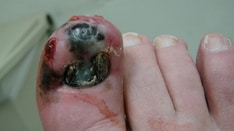
 This photo depicts cutaneous disseminated sporotrichosis in a patient with AIDS before and after therapy. (Courtesy of Leonard N. Slater, MD)
Causes
- Sporotrichosis is caused by infection with S schenckii, a fungus widely distributed in the natural environment. It grows on plant debris in soil and on the bark of trees, shrubs, and garden plants.
- Splinters, thorns, or woody fragments of plants usually provide the penetrating trauma that introduces the fungal conidia into the human host; however, contact with any plant or plant product (eg, sphagnum peat moss, mulch, hay, timber) that causes minor skin trauma may initiate infection.
- Activities associated with the acquisition of sporotrichosis include gardening, landscaping, farming, berry-picking, horticulture, and carpentry.
- Zoonotic transmission can occur from infected animals (eg, cats, horses with extensive skin lesions) to their animal handlers.
- Both pulmonary and disseminated sporotrichosis are more common in persons with a history of alcoholism.
- Immunosuppressing states such as HIV infections and AIDS predispose to disseminated cutaneous sporotrichosis and hematogenously disseminated sporotrichosis, including sporotrichotic meningitis.6 This clinical observation, combined with studies in animal models, indicates the importance of cell-mediated immunity in the host defense against sporotrichosis.
Blastomycosis
Candidiasis
Erythema Nodosum
Histoplasmosis
Leishmaniasis
Leprosy
Mycobacterium Marinum
Nocardiosis
Paracoccidioidomycosis
Pinta
Pneumonia, Bacterial
Pneumonia, Fungal
Rheumatoid Arthritis
Sarcoidosis
Staphylococcal Infections
Syphilis
Tuberculosis
Tularemia
Yaws
Lab Studies
- Cell culture
- Definitive diagnosis of sporotrichosis at any site requires the isolation of S schenckii in a specimen culture from a normally sterile body site.
- The organism can be recovered with fungal culture from sputum, pus, subcutaneous tissue biopsy, synovial fluid, synovial biopsy, bone drainage or biopsy, and cerebrospinal fluid (CSF).
- The concentration of organisms in synovial fluid and, particularly, CSF is often low. Therefore, repeated large-volume cultures may be necessary for diagnosis of sporotrichosis.
- Occasionally, S schenckii (cigar-shaped yeast) can be visualized in biopsied tissue specimens that are stained with periodic acid-Schiff, Gomori methenamine-silver, or immunohistochemical stains.
- Granulomatous inflammation is common; this is occasionally accompanied by the presence of an asteroid body, but this picture is not specifically diagnostic for sporotrichosis.
- Serological techniques
- Antibody measurement techniques are available.
- Such tests demonstrate significant interlaboratory variability in sensitivity and specificity; therefore, they should rarely serve as the sole basis for diagnosis of sporotrichosis.
- They can be useful to raise diagnostic suspicion and to inspire more aggressive attempts to acquire appropriate specimens for culture.
- The ratio of CSF to serum antibody titer may suggest the presence of sporotrichotic meningitis (CSF antibody titer higher than serum antibody titer).
- Polymerase chain reaction (PCR)–based techniques for diagnosis of sporotrichosis have been described but are not available for routine use.
Imaging Studies
- Radiography: Conventional radiographic imaging of the chest (in patients with suspected pulmonary sporotrichosis) and other involved areas (in patients with suspected osteoarticular sporotrichosis) is warranted but does not enable etiologic diagnosis. Chest CT scanning is supportive but not specifically diagnostic of sporotrichosis.
Procedures
- Arthrocentesis
- Patients with subacute or chronic arthritis should undergo diagnostic arthrocentesis.
- Sporotrichotic arthritis causes the general findings of an inflammatory arthritis (leukocytosis), with no crystals or growth on routine bacterial cultures.
- Synovial tissue biopsy: The diagnostic yield of synovial tissue biopsy for histology and culture is better than that of synovial fluid culture alone in patients with suspected sporotrichotic arthritis.
- Bone biopsy: Bone biopsy for histopathology and culture is useful and may be necessary for diagnosis of sporotrichal osteomyelitis.
- Full-thickness skin biopsy: Culture of exuded pus from cutaneous lesions can be diagnostic; however, full-thickness skin biopsy for histology and culture may improve diagnostic yield.
- Bronchoscopy with bronchoalveolar lavage for culture and transbronchial biopsy for histopathology may be required to establish the diagnosis of pulmonary sporotrichosis.
Histologic Findings
Sporotrichosis is characterized histopathologically by granulomatous inflammation with occasional asteroid bodies. The yeast form of the organism can be demonstrated, with considerable difficulty, in biopsy samples.
 Cigar-shaped yeast of Sporothrix schenckii in tissue macrophages in a biopsy specimen.
Medical Care
Antifungal therapy is the mainstay of treatment for all forms of sporotrichosis.
Surgical Care
- Surgical therapy is important in the management of osteoarticular sporotrichosis.
- Principles of surgical care are the same as for other bone and joint infections. Appropriate drainage of infected joints minimizes joint damage. Appropriate debridement of infected bone enhances the likelihood of eradication of infection with antimicrobial therapy.
Activity
Patients may perform routine activity as tolerated.
Cutaneous and lymphocutaneous sporotrichosis have historically been treated with saturated solution of potassium iodide (SSKI). Although relatively inexpensive, SSKI is poorly tolerated by many patients because of frequent adverse effects. The orally available azole antifungals are the drugs of choice for cutaneous or lymphocutaneous sporotrichosis in developed nations. Ketoconazole has been used but is less effective than itraconazole or fluconazole; thus, ketoconazole is no longer indicated. Fluconazole is less effective than itraconazole.7 Itraconazole is the drug of choice for all types of sporotrichosis but CNS and disseminated sporotrichosis.8 Terbinafine has been demonstrated to be effective in the treatment of lymphocutaneous sporotrichosis, but no comparative data with itraconazole therapy exist.9
The following is a summary of recent published guidelines for the medical management of sporotrichosis:10 - Cutaneous and lymphocutaneous sporotrichosis: These are treated with oral itraconazole 200 mg/d until 2-4 weeks after all lesions have resolved, usually for a total of 3-6 months. Patients who do not respond should be given one of the following: (1) oral itraconazole 200 mg twice daily, (2) oral terbinafine 500 mg twice daily, or (3) SSKI initiated at a dose of 5 drops (initially using a standard eye dropper) thrice daily and increasing as tolerated to 40-50 drops thrice daily.
- Osteoarticular sporotrichosis: Oral itraconazole 200 mg twice daily for at least 12 months is recommended. An amphotericin preparation can be used for initial therapy with subsequent switch to oral itraconazole.
- Pulmonary sporotrichosis: For severe or life-threatening pulmonary sporotrichosis, initial therapy should be liposomal amphotericin B 3-5 mg/kg/d; if the patient has a favorable response, therapy can be changed to oral itraconazole 200 mg twice daily for a minimum of 12 months. For less-severe disease, therapy with oral itraconazole 200 mg twice daily for a minimum of 12 months is recommended.
- Meningeal sporotrichosis: Initial therapy should be liposomal amphotericin B 5 mg/kg/d. Upon clinical stabilization, therapy can be changed to oral itraconazole 200 mg twice daily for a minimum of 12 months. In patients with AIDS or other immunosuppressing conditions, life-long suppression with oral itraconazole 200 mg/d should be considered.
- Disseminated sporotrichosis: Initial therapy should be liposomal amphotericin B 5 mg/kg/d. Upon clinical stabilization, therapy can be changed to oral itraconazole 200 mg twice daily for a minimum of 12 months. In patients with AIDS or other immunosuppressing conditions, life-long suppression with oral itraconazole 200 mg/d should be considered.
- Sporotrichosis in pregnant women: Local hyperthermia can be used to treat cutaneous sporotrichosis that does not require urgent therapy. For sporotrichosis that must be treated during pregnancy, liposomal amphotericin B 3-5 mg/kg/d should be used. Azoles should be avoided.
Drug Category: Antifungal agents
These agents have a mechanism of action that may involve an alteration of RNA and DNA metabolism.
| Drug Name | Itraconazole (Sporanox) |
| Description | A DOC for many forms of sporotrichosis. A synthetic triazole antifungal agent that inhibits fungal cell growth by inhibiting the cytochrome P-450–dependent synthesis of ergosterol, a vital component of fungal cell membranes. |
| Adult Dose | 200 mg PO bid for at least 12 mo; see text above for guidelines Patients who receive itraconazole for sporotrichosis therapy should have trough concentration documented at least 0.5 mg/mL 2 wk after initiation of therapy |
| Pediatric Dose | Not established; suggested dose is 100 mg/d PO for systemic fungal infections |
| Contraindications | Documented hypersensitivity; coadministration with cisapride may cause adverse cardiovascular effects that may result in death |
| Interactions | Capsules require gastric acidity for absorption, administer with food; antacids may reduce absorption; administer oral suspension without food; edema may occur when administered concurrently with calcium channel blockers such as amlodipine and nifedipine; hypoglycemia may occur when administered concurrently with sulfonylureas; may elevate tacrolimus plasma concentrations; rhabdomyolysis may occur in renal transplant patients when administered in combination with the HMG-CoA reductase inhibitors lovastatin or simvastatin and cyclosporine; concurrent administration with cisapride can cause cardiac rhythm abnormalities and death; may increase digoxin levels; increased plasma concentrations may result from concurrent administration with oral midazolam or triazolam; phenytoin and rifampin may reduce plasma levels when taken concomitantly; phenytoin metabolism may be altered |
| Pregnancy | C - Fetal risk revealed in studies in animals but not established or not studied in humans; may use if benefits outweigh risk to fetus
|
| Precautions | Caution in patients with hepatic insufficiencies |
| Drug Name | Amphotericin B, liposomal (AmBisome) |
| Description | Novel lipid formulations of amphotericin B that deliver higher concentrations of the drug, with a theoretical increase in therapeutic potential and decreased nephrotoxicity. Produced from a strain of Streptomyces nodosus. Antifungal activity of amphotericin B results from its ability to insert itself into fungal cytoplasmic membrane at sites that contain ergosterol or other sterols. Aggregates of amphotericin B accumulate at sterol sites, resulting in an increase in cytoplasmic membrane permeability to monovalent ions (eg, potassium, sodium). At low concentrations, the main effect is increased intracellular loss of potassium, resulting in reversible fungistatic activity; however, at higher concentrations, pores of 40-105 nm in cytoplasmic membrane are produced, leading to large losses of ions and other molecules. A second effect of amphotericin B is its ability to cause auto-oxidation of the cytoplasmic membrane and release of lethal free radicals. Main fungicidal activity of amphotericin B mayreside in ability to cause auto-oxidation of cell membranes.
|
| Adult Dose | 5 mg/kg/d or more (as tolerated) IV qd infused over at least 2 h |
| Pediatric Dose | Administer as in adults |
| Contraindications | Documented hypersensitivity |
| Interactions | Antineoplastic agents may enhance the potential of amphotericin B for renal toxicity, bronchospasm, and hypotension; corticosteroids, digitalis, and thiazides may potentiate hypokalemia; the risk of renal toxicity is increased with cyclosporine |
| Pregnancy | B - Fetal risk not confirmed in studies in humans but has been shown in some studies in animals
|
| Precautions | Monitor renal function, levels of serum electrolytes such as magnesium and potassium, liver function, CBC count, and hemoglobin concentrations; resume the therapy at the lowest level (eg, 0.25 mg/kg) when the therapy is interrupted for more than 7 d; hypoxemia, acute dyspnea, and interstitial infiltrates may occur in patients with neutropenia who are receiving leukocyte transfusions (separate time of amphotericin infusion from time of leukocyte transfusion); fever and chills are not uncommon after first few administrations of drug; rare acute reactions may include hypotension, bronchospasm, arrhythmias, and shock |
| Drug Name | Fluconazole (Diflucan) |
| Description | Comparative study demonstrates that fluconazole is less effective than itraconazole for treatment of sporotrichosis; nonetheless, may be useful in patients unable to tolerate itraconazole. A synthetic broad-spectrum bistriazole oral antifungal agent that is a highly selective inhibitor of fungal cytochrome P-450 and sterol C-14 alpha-demethylation. |
| Adult Dose | 400 - 800 mg PO qd for lymphocutaneous sporotrichosis or disseminated sporotrichosis |
| Pediatric Dose | 3-6 mg/kg PO qd for 14-28 d or 6-12 mg/kg qd, depending on severity of infection |
| Contraindications | Documented hypersensitivity |
| Interactions | Levels may increase with hydrochlorothiazides; fluconazole levels may decrease with chronic coadministration of rifampin; may increase concentrations of theophylline, phenytoin, tolbutamide, cyclosporine, glyburide, and glipizide; effects of anticoagulants may increase with fluconazole coadministration |
| Pregnancy | C - Fetal risk revealed in studies in animals but not established or not studied in humans; may use if benefits outweigh risk to fetus
|
| Precautions | Closely monitor patients who develop rashes during treatment, discontinue drug if lesions progress; may cause clinical hepatitis, cholestasis, and fulminant hepatic failure (including fatalities), especially when a serious underlying medical condition such as AIDS or a malignancy is present and often with coadministration of multiple medications; not recommended in nursing mothers |
| Drug Name | Saturated solution of potassium iodide (SSKI) |
| Description | Difficult for many patients to tolerate. This remains a useful treatment for cutaneous or lymphocutaneous sporotrichosis. Mechanism of action in sporotrichosis is unknown. |
| Adult Dose | 5 gtt (initial using a standard eye dropper) tid and increasing as tolerated to 40-50 gtt tid; see text above for guidelines |
| Pediatric Dose | Infants: 150-250 mg (3-6 gtt) PO tid Children: Administer as in adults
|
| Contraindications | Documented hypersensitivity; pulmonary edema; bronchitis; tuberculosis; hyperkalemia |
| Interactions | Increases lithium toxicity by producing additive hypothyroid effects |
| Pregnancy | B - Fetal risk not confirmed in studies in humans but has been shown in some studies in animals
|
| Precautions | Prolonged use may result in hypothyroidism; caution in patients with renal failure or GI obstruction |
| Drug Name | Terbinafine (Lamisil) |
| Description | A fungicidal allylamine antifungal agent. An alternative agent for treatment of cutaneous or lymphocutaneous sporotrichosis unresponsive to itraconazole or if itraconazole cannot be tolerated. Blocks ergosterol synthesis by inhibiting squalene epoxidase. Effective against S schenckii and other fungi and fungal infections, including most dermatophytes, Aspergillus species, blastomycosis, histoplasmosis, and Scopulariopsis brevicaulis. Terbinafine is well absorbed PO and has a long half-life. No elixir form is available; 250-mg tab is not scored and cannot be pulverized easily for use in children and is not palatable. |
| Adult Dose | 250 mg PO bid to 500 mg PO bid |
| Pediatric Dose | Not established |
| Contraindications | Documented hypersensitivity |
| Interactions | May decrease cyclosporine effects; toxicity of terbinafine may increase with rifampin and cimetidine |
| Pregnancy | X - Contraindicated; benefit does not outweigh risk
|
| Precautions | Discontinue use if chemical irritation develops with topical use; if hepatobiliary dysfunction, neutropenia, Stevens-Johnson syndrome, or changes in ocular lens or retina develop, discontinue use |
Further Outpatient Care
S schenckii strains that cause cutaneous or lymphocutaneous sporotrichosis grow better at 35°C than at 37°C; therefore, topical heat application to lesions may be of adjunctive benefit.
Deterrence/Prevention
Exercise efforts to minimize cutaneous inoculation of S schenckii. This includes wearing gloves and other protective clothing when gardening. Use of gloves when handling animals with skin lesions also minimizes the risk of zoonotic transmission.
Prognosis
- Cutaneous or lymphocutaneous sporotrichosis: Complete recovery without scarring is the expected outcome with appropriate treatment; however, the therapy required to cure the disease is protracted and expensive.
- Pulmonary sporotrichosis
- Limited data are available on the response to treatment; however, evidence suggests that most cases of pulmonary sporotrichosis respond to itraconazole therapy. Those who do not respond to itraconazole require treatment with amphotericin B.
- Pulmonary sporotrichosis contributes to declined respiratory function in patients with COPD.
- Osteoarticular sporotrichosis: More than 70% of patients with osteoarticular sporotrichosis have a clinical response to itraconazole therapy. Relapse may occur. Severe disability can result from unrecognized chronic osteoarticular sporotrichosis.
- Disseminated sporotrichosis: Most patients respond to initial amphotericin B therapy. In patients with AIDS, life-long suppressive itraconazole therapy following induction therapy with amphotericin B appears to be necessary to control infection.
Patient Education
- Patients with all forms of sporotrichosis must be educated about the need for protracted antifungal therapy.
- Multiple sporotrichosis infections can occur in the same patient, suggesting that protective immunity may not always result from treated infection. Instruct patients with persistent occupational or avocational exposure about methods of prevention.
- For excellent patient education resources, visit eMedicine's Yeast and Fungal Infections Center. Also, see eMedicine's patient education article Sporotrichosis.
Medical/Legal Pitfalls
The principal medicolegal pitfall involves failure to consider sporotrichosis in the differential diagnoses in the appropriate setting.
| Media file 1:
This photo depicts cutaneous disseminated sporotrichosis in a patient with AIDS before and after therapy. (Courtesy of Leonard N. Slater, MD) |
 | View Full Size Image | |
Media type: Photo
|
| Media file 2:
Photomicrograph that shows the conidiophores and conidia of the fungus Sporothrix schenckii. Photo from CDC Public Health Image Library. |
 | View Full Size Image | |
Media type: Micrograph
|
| Media file 6:
Cigar-shaped yeast of Sporothrix schenckii in tissue macrophages in a biopsy specimen. |
 | View Full Size Image | |
Media type: Histology
|
- Marimon R, Gene J, Cano J, et al. Molecular phylogeny of Sporothrix schenckii. J Clin Microbiol. Sep 2006;44(9):3251-6. [Medline].
- Pappas PG, Tellez I, Deep AE, et al. Sporotrichosis in Peru: description of an area of hyperendemicity. Clin Infect Dis. Jan 2000;30(1):65-70. [Medline].
- Kauffman CA. Sporotrichosis. Clin Infect Dis. Aug 1999;29(2):231-6; quiz 237. [Medline].
- Winn RE. A contemporary view of sporotrichosis. Curr Top Med Mycol. 1995;6:73-94. [Medline].
- Ramirez J, Byrd RP, Roy TM. Chronic cavitary pulmonary sporotrichosis: efficacy of oral itraconazole. J Ky Med Assoc. Mar 1998;96(3):103-5. [Medline].
- Silva-Vergara ML, Maneira FR, De Oliveira RM, et al. Multifocal sporotrichosis with meningeal involvement in a patient with AIDS. Med Mycol. Mar 2005;43(2):187-90. [Medline].
- Kauffman CA, Pappas PG, McKinsey DS, et al. Treatment of lymphocutaneous and visceral sporotrichosis with fluconazole. Clin Infect Dis. Jan 1996;22(1):46-50. [Medline].
- Sharkey-Mathis PK, Kauffman CA, Graybill JR, et al. Treatment of sporotrichosis with itraconazole. NIAID Mycoses Study Group. Am J Med. Sep 1993;95(3):279-85. [Medline].
- Chapman SW, Pappas P, Kauffmann C, et al. Comparative evaluation of the efficacy and safety of two doses of terbinafine (500 and 1000 mg day(-1)) in the treatment of cutaneous or lymphocutaneous sporotrichosis. Mycoses. Feb 2004;47(1-2):62-8. [Medline].
- Kauffman CA, Bustamante B, Chapman SW, et al. Clinical practice guidelines for the management of sporotrichosis: 2007 update by the Infectious Diseases Society of America. Clin Infect Dis. Nov 15 2007;45(10):1255-65. [Medline]. [Full Text].
- Lyon GM, Zurita S, Casquero J, et al. Population-based surveillance and a case-control study of risk factors for endemic lymphocutaneous sporotrichosis in Peru. Clin Infect Dis. Jan 1 2003;36(1):34-9. [Medline].
- Prentice AG, Glasmacher A. Making sense of itraconazole pharmacokinetics. J Antimicrob Chemother. Sep 2005;56 Suppl 1:i17-i22. [Medline].
- Smego RA Jr, Castiglia M, Asperilla MO. Lymphocutaneous syndrome. A review of non-sporothrix causes. Medicine (Baltimore). Jan 1999;78(1):38-63. [Medline].
Sporotrichosis excerpt Article Last Updated: Oct 14, 2008
|