Continually Updated Clinical Reference
 
 
  All Sources     eMedicine     Medscape     Drug Reference     MEDLINE
 
eMedicine - Otalgia : Article by

Quick Find
Authors & Editors
Introduction
Clinical
Differentials
Workup
Treatment
Medication
Follow-up
Miscellaneous
Acknowledgments
Multimedia
References

Related Articles
Acute Laryngitis

Adenoidectomy

Allergic Fungal Sinusitis

Allergic Rhinitis

Barosinusitis

Bell Palsy

Chronic Laryngitis, Infectious or Allergic

Complications of Otitis Media

Contact Granulomas

Deep Neck Infections

Eustachian Tube Function

External Ear, Benign Tumors

External Ear, Infections

External Ear, Inflammatory Diseases

External Ear, Malignant External Otitis

Fractures, Mandibular, Alveolar

Fractures, Maxillary, Zygomatic

Malignant Nasopharyngeal Tumors

Malignant Tumors of the Base of Tongue

Malignant Tumors of the Floor of the Mouth

Malignant Tumors of the Nasal Cavity

Malignant Tumors of the Sinuses

Malignant Tumors of the Temporal Bone

Malignant Tumors of the Tonsil

Middle Ear, Acute Otitis Media, Medical Treatment

Middle Ear, Acute Otitis Media, Surgical Treatment

Middle Ear, Eustachian Tube, Inflammation/Infection

Middle Ear, Mastoiditis

Middle Ear, Otitis Media with Effusion

Neck Cancer, Unknown Primary Site

Neck, Cervical Metastases, Detection

Neck, Cervical Metastases, Surgery

Otalgia

Parapharyngeal Space Tumors

Parotitis

Sinusitis, Acute, Medical Treatment

Sinusitis, Chronic, Medical Treatment

Sinusitis, Maxillary, Acute, Surgical Treatment

Sinusitis, Maxillary, Chronic, Surgical Treatment

Sinusitis, Sphenoid, Acute, Surgical Treatment

Skull Base, Petrous Apex, Infection

Skull Base, Petrous Apex, Tumors

Temporal Bone Fractures

Thyroid Cancer

Tonsillectomy

Tonsillitis and Peritonsillar Abscess


Patient Education
Ear, Nose, and Throat Center

Earache Overview

Earache Causes

Earache Symptoms

Earache Treatment

Tinnitus Overview


Author: John C Li, MD, Private Practice in Otology and Neurotology; Medical Director, Balance Center

John C Li is a member of the following medical societies: American Academy of Otolaryngology-Head and Neck Surgery, American College of Surgeons, American Medical Association, American Neurotology Society, American Tinnitus Association, Florida Medical Association, and North American Skull Base Society

Coauthor(s): Jared Brunk, PA-C, Physician Assistant Certified, Office of John Li, MD

Editors: Michael E Hoffer, MD, Director, Spatial Orientation Center, Department of Otolaryngology, Naval Medical Center of San Diego; Francisco Talavera, PharmD, PhD, Senior Pharmacy Editor, eMedicine; Peter S Roland, MD, Professor, Department of Neurological Surgery, Professor and Chairman, Department of Otolaryngology-Head and Neck Surgery, Director of Clinical Center for Auditory, Vestibular and Facial Nerve Disorders, Chief of Pediatric Otology, University of Texas Southwestern Medical Center; Adjunct Professor of Communicative Disorders, School of Human Development; Christopher L Slack, MD, Otolaryngology-Facial Plastic Surgery, Private Practice, Associated Coastal ENT; Medical Director, Treasure Coast Sleep Disorders; Arlen D Meyers, MD, MBA, Professor, Department of Otolaryngology-Head and Neck Surgery, University of Colorado School of Medicine

Author and Editor Disclosure

Synonyms and related keywords: otalgia, chronic otalgia, chronic, otalgia definition, ear pain, earache, primary otalgia, referred otalgia, external otitis, otitis media, mastoiditis, auricular infections, tympanic membrane perforation, ear infections


Background

Otalgia is defined as ear pain. Two separate and distinct types of otalgia exist. Pain that originates within the ear is primary otalgia; pain that originates outside the ear is referred otalgia.

Typical sources of primary otalgia are external otitis, otitis media, mastoiditis, and auricular infections. Most physicians are well trained in the diagnosis of these conditions. When an ear is draining and accompanied by tympanic membrane perforation, simply looking in the ear and noting the pathology can make the diagnosis. When the tympanic membrane appears normal, however, the diagnosis becomes more difficult.

Referred otalgia is a topic unto itself. Although many entities can cause referred otalgia, their relationship to ear pain must be identified. A categorical discussion of the workup, treatment, prognosis, demographics, and other issues is impossible because the various pathologies responsible for creating referred otalgia are so diverse.

Reports document that not all otalgia originates from the ear. Many remote anatomic sites share dual innervation with the ear, and noxious stimuli to these areas may be perceived as otogenic pain. By definition, referred otalgia is the sensation of ear pain originating from a source outside the ear.

To better understand referred otalgia, the physician first must understand the anatomic distribution of nerves associated with the ear. Irritation of these nerves, as well as irritation of distant branches of these nerves, can cause the perception of pain within the ear.

Pathophysiology

The sensory innervation of the ear is served by the auriculotemporal branch of the fifth cranial nerve (CN V), the first and second cervical nerves, the Jacobson branch of the glossopharyngeal nerve, the Arnold branch of the vagus nerve, and the Ramsey Hunt branch of the facial nerve. Neuroanatomically, the sensation of otalgia is thought to center in the spinal tract nucleus of CN V. Not surprisingly, fibers from CNs V, VII, VIV, and X and cervical nerves 1, 2, and 3 have been found to enter this spinal tract nucleus caudally near the medulla. Hence, noxious stimulation of any branch of the aforementioned nerves may be interpreted as otalgia.


History

The algorithm to systematically reduce the vast differential diagnosis for otalgia begins with a thorough history and physical examination. The history should be complete and specifically encompass a review of otologic symptomatology, swallowing disorders, sinus problems, cervicofacial pain syndromes (eg, myalgias, neuralgias, arthritis), recent trauma, and cardiopulmonary background. Patient history can guide the clinician in the selection of subsequent testing.

Physical

The physical examination should include an exhaustive otologic, neuro-otologic, head, and neck examination. Careful rhinoscopy, nasopharyngoscopy, and indirect laryngoscopy are mandatory. Despite the low prevalence of malignant upper aerodigestive tract tumors in the authors' study, a well-known strong association (as high as 19% in some studies) between cancer and otalgia exists, and the results of a missed diagnosis can be devastating. Because of its high relative prevalence, actively seek sinus pathology. Palpation of the neck is important to look for thyroid disease, adenopathy, and musculoskeletal disorders.

Causes

Dental disorders are the most common cause of referred pain to the ear. Of this group of disorders, temporomandibular dysfunctions account for most patients.1 Bruxism, degenerative joint disease, or stress can lead to internal derangements within the joint. The third division of the trigeminal nerve and the auriculotemporal nerve mediate pain, which is often perceived deep within the ear. Other odontogenic causes range from abscessed teeth to poorly fitting dentures.

Within the oral cavity, the sensory innervation becomes quite complex. The tongue receives fibers from the glossopharyngeal nerve, the facial nerve receives fibers from the chorda tympani, and the trigeminal nerve receives fibers from the lingual branch and vagus nerve posteriorly. All these nerves have distributions in the ear as well.

Sinusitis is another very common source of ear pain. The neural pathway is along the second branch of the trigeminal nerve and the auriculotemporal nerve. Because the trigeminal nerve supplies the nasal cavity, patients with inflammatory mucosal contact points and nasal obstruction may develop symptoms in their ears. The proximity of the eustachian tube orifice also contributes to the problem.

Neck problems can also refer pain to the ears. These disorders include cervical osteoarthritis, cervical myofascial pain syndrome, and traumatic injuries.2, 3 The cervical spine is sensitive and well supplied by the cervical nerve roots. Muscular pain from the trapezius or sternocleidomastoid may project postauricularly to the mastoid and occipital area.

Sensory branches of the vagus and glossopharyngeal nerves supply upper aerodigestive tract mucosal areas such as the nasopharynx, oropharynx, hypopharynx, and larynx. The vagus continues caudally and supplies sensory enervation to the bronchus, esophagus, and heart as well. Irritative lesions at any of these sites may mimic stimulation of Arnold and Jacobson nerves.

Tonsillitis and pharyngitis are very common causes of earaches in children. Less commonly, laryngitis, laryngeal tumors, esophagitis, and even angina pectoris may manifest as otalgia. Eagle syndrome, in which the elongated styloid process irritates branches of CN VIV and CN X, is even rarer. This crossing of signals works both ways; thus, stimulation of the ear canal may be felt as a tickle in the throat or may produce the cough reflex.

Sometimes, pain may be from irritation of the nerves themselves without an inciting source. These disorders are termed neuralgias. Neuralgias are typified by lancinating pain in the distribution of the involved nerve. Otologic symptoms of trigeminal neuralgia are referred along its auriculotemporal branch. Geniculate neuralgia is rare but can be observed in Ramsey Hunt syndrome. This neuralgia involves the irritation of facial nerve sensory fibers, which corresponds to the pain sensation felt within the auricle. Sphenopalatine and vidian neuralgias cause similar aural pain via crossing fibers of the greater superficial petrosal nerves and the facial nerves. Glossopharyngeal neuralgia, which causes a phantom tonsillar pain, may also cause otalgia by simulating excitation of the Jacobson nerve.

A number of otologic conditions can produce ear discomfort without altering the external appearance of the auditory canal and tympanic membrane. Ménière disease is associated with a sensation of aural fullness, in addition to vertigo, tinnitus, and fluctuating hearing loss. Tumors of the temporal bone, such as meningiomas, glomus jugulare, and cerebellopontine angle lesions, have been associated with otalgia, possibly by nerve root compression. Bell palsy is often associated (as many as 60% of cases) with otogenic pain thought to emanate from the sensory fibers of the facial nerve.

Eustachian tube dysfunction causing an intermittent inability to equalize middle ear pressures may manifest with such minimal tympanic membrane bulging or retraction that even otomicroscopy does not detect an abnormality. The problem may be as simple as a sensitive ear canal that requires protection from cold winds along with reassurance that nothing is actually wrong.

A few other diagnoses should always be considered when dealing with otalgia. Temporal arteritis, parotid neoplasms, and herpes zoster are all treatable diseases in which early diagnosis may be critical to ensure a favorable outcome.


Acute Laryngitis
Adenoidectomy
Allergic Fungal Sinusitis
Allergic Rhinitis
Barosinusitis
Bell Palsy
Chronic Laryngitis, Infectious or Allergic
Complications of Otitis Media
Contact Granulomas
Deep Neck Infections
Eustachian Tube Function
External Ear, Benign Tumors
External Ear, Infections
External Ear, Inflammatory Diseases
External Ear, Malignant External Otitis
Fractures, Mandibular, Alveolar
Fractures, Maxillary, Zygomatic
Malignant Nasopharyngeal Tumors
Malignant Tumors of the Base of Tongue
Malignant Tumors of the Floor of the Mouth
Malignant Tumors of the Nasal Cavity
Malignant Tumors of the Sinuses
Malignant Tumors of the Temporal Bone
Malignant Tumors of the Tonsil
Middle Ear, Acute Otitis Media, Medical Treatment
Middle Ear, Acute Otitis Media, Surgical Treatment
Middle Ear, Eustachian Tube, Inflammation/Infection
Middle Ear, Mastoiditis
Middle Ear, Otitis Media with Effusion
Neck Cancer, Unknown Primary Site
Neck, Cervical Metastases, Detection
Neck, Cervical Metastases, Surgery
Otalgia
Parapharyngeal Space Tumors
Parotitis
Sinusitis, Acute, Medical Treatment
Sinusitis, Chronic, Medical Treatment
Sinusitis, Maxillary, Acute, Surgical Treatment
Sinusitis, Maxillary, Chronic, Surgical Treatment
Sinusitis, Sphenoid, Acute, Surgical Treatment
Skull Base, Petrous Apex, Infection
Skull Base, Petrous Apex, Tumors
Temporal Bone Fractures
Thyroid Cancer
Tonsillectomy
Tonsillitis and Peritonsillar Abscess


Lab Studies

  • Frequently, the workup suggests that otalgia may be a problem of dental origin.
  • A complete blood cell count may indicate an occult infection.
  • Thyroid function and erythrocyte sedimentation rate (ESR) studies may reveal thyroiditis and temporal arteritis. Chest radiography to seek bronchogenic pathology may be necessary.
  • The perception of aural fullness may be described as ear pain and is observed in conditions associated with endolymphatic hydrops and eustachian tube dysfunction.
  • Ménière disease can be diagnosed by history, audiometrics, and a battery of laboratory tests.
  • In the absence of obvious fluid within the middle ear, aural fullness secondary to eustachian tube dysfunction may manifest with a practically imperceptible bulging or retraction of the tympanic membrane. If autoinsufflation is not effective in relieving this pressure, consider a diagnostic myringotomy.
  • Despite the full battery of testing, a group of patients always remains for whom an etiology is not evident. If not contraindicated, a brief course of nonsteroidal anti-inflammatory agents (NSAIDs) may be helpful.
  • In the authors' study group, 44% of patients without an obvious cause for their ear pain experienced spontaneous resolution. Those in whom symptoms do not resolve must be seen on a regular basis. Follow-up is essential in these cases because of the possibility of discovering a tumor that was initially too small to detect.

Imaging Studies

  • Dental radiography
  • CT scanning: Obtain CT scans of the head or temporal bone, sinuses, and/or neck when no obvious source of the pain can be found. The scan usually includes a brief survey of the sinuses and intracranial contents. CT scanning can reveal significant information about the temporomandibular joint or can be used to diagnose intratemporal lesions.
  • MRI: If indicated by clinical or audiometric suspicion, an MRI may be necessary to define a cerebellopontine angle or other intracranial tumor.
  • Panorex imagery: Panorex imagery is quite useful in diagnosing temporomandibular joint dysfunction, odontogenic pathology, and styloid abnormalities. The high prevalence of dental-related otalgia in the authors' study group underscores the need for an alliance with a person well trained in temporomandibular joint–related disorders. Referral to a competent dentist or oral surgeon may be indicated.
  • PET scanning: As this emerging modality for identifying malignant tumors becomes more readily available, it may be possible to diagnose cancer earlier. PET images fused with CT or MRI adds tremendously detailed information about the location of head and neck neoplasms.

Other Tests

  • Audiography
  • Vestibulocochlear testing
  • Nasal endoscopy
  • Upper aerodigestive tract endoscopy, laryngoscopy
  • Blood tests
    • CBC count
    • WBC count (to look for infection)
    • Sickle cell anemia
    • Thyroid function studies and antibodies for thyroiditis

Procedures

  • When the history and physical examination findings are inconclusive, use of local anesthesia may help localize the problem.
  • The nasal cavity may be sprayed with topical Pontocaine with a vasoconstrictor. After a few minutes of decongestion, some patients with sinus-related pathology experience a relief of headaches, facial pain, and aural fullness.
  • Cetacaine or a 4% lidocaine gargle to anesthetize the oropharynx and larynx can numb pharyngitis or other problem causing referred otalgia.
  • Injectable 1% Xylocaine can be used to identify neuromuscular trigger points and can be useful in the diagnosis of myalgias and neuralgias.
  • Referred signals from the chorda tympani may be numbed via a transcanal or transtympanic injection approach. A few drops of 4% lidocaine or eutectic mixture of local anesthetics 14 (EMLA 14) in the external auditory meatus may help differentiate between a sensitive ear canal and deep temporal pain. Maintain a high index of suspicion for an occult upper respiratory tract tumor, intracranial tumor, intratemporal disease, sinus-related pathology, autoimmune disease, and eustachian tube dysfunction. Consider laboratory evaluation.


Medical Care

Identification of a causative etiology is often necessary to successfully treat referred otalgia. Once determined, most causes of referred otalgia can be readily treated. Use antibiotics in treating various types of infections (eg, tonsillitis, pharyngitis, sinusitis). Use antivirals if the causative agent is suspected to be viral such as in cases associated with herpes zoster or shingles. Antifungals are indicated if the source is caused by a fungus (eg, oral thrush/candidiasis). Antiulcer/antacid medications can be used for esophagitis and gastroesophageal reflux disease. Use NSAIDs when myalgias and neuralgias are suspected. Re-examine the patient after a 2-week trial of NSAIDs. Strong narcotic analgesics are not indicated and should not be used to treat referred otalgia. Narcotics may mask symptoms, making the correct diagnosis difficult to reach.

Perform a detailed search for the underlying diagnosis before initiating treatment. Starting analgesics before reaching a diagnosis increases the difficulty of determining the cause and may possibly obscure a life-threatening condition such as an occult cancer.

Any of the previously mentioned treatments can be implemented when the exact cause of referred otalgia is suspected. If the problem persists after a 2- to 3-week trial, a more advanced algorithm is indicated, as follows:

  • History
    • Otologic history - Tinnitus, hearing, vertigo
    • Sinuses
    • Pulmonary history
    • Cardiac history
    • Dental history - Mastication
    • GI history - Dysphagia, esophagitis, reflux
    • Neurologic history - Neuralgias
    • Musculoskeletal history - Arthritis
    • Cervicofacial history
    • Myalgias
    • Trauma - Cervical spine (C-spine)
    • Infections - Tonsillitis, pharyngitis
  • Physical examination
    • Nasopharyngoscopy
    • Laryngoscopy
  • Preliminary testing (appropriate to symptoms)
    • Audio
    • Barium swallow
    • ECG C-spine radiography
    • Chest radiography
    • Panorex imaging
  • Treat the underlying problem appropriately with trial medications (eg, antibiotics, NSAIDs) and 2-week follow-up or with appropriate consultation (eg, dentist, gastroenterologist, neurologist, rheumatologist, neurosurgeon).
  • If the findings on history, physical examination, and testing are inconclusive, consider local anesthesia to block the source of pain as follows:
    • Nasal cavity pathology: Spray may localize the problem to the sinus or sphenopalatine oral cavity; consider specific nerve blocks.
    • Larynx: Use gargle or transtracheal 4% lidocaine.
    • Ear canal: Use topical agent for sensitive ear canal; consider injection for chorda tympani.
    • Muscular trigger points: Lidocaine injection can be useful in diagnosis.
  • If history and physical examination findings are inconclusive, perform other diagnostic procedures if suspicion still exists for the following conditions:
    • Upper respiratory tract tumor - Panendoscopy, chest radiography, CT scanning, or MRI as needed
    • Sinus disease - Sinus CT scanning
    • Intracranial/intratemporal disease - Audiometric battery and CT scanning or MRI as needed
    • Autoimmune disease - ESR, thyroid function studies (thyroiditis, temporal arteritis)
    • Endolymphatic hydrops - ESR, thyroid function test (TFT), fluorescent treponemal antibody absorption (FTA-Abs) test, fasting glucose, lipid profile
    • Eustachian tube dysfunction - Autoinsufflation (consider myringotomy)
    • Psychiatric disorder - Consider psychiatric consultation.
  • If no diagnosis is reached, consider watchful surveillance for 1-3 months and then re-evaluate.

Consultations

In patients with odontogenic problems, either a dentist or an oral surgeon may be very helpful. Neurologists and pain management specialists (anesthesiologists) may treat neuralgias. Other consultations may be necessary, including a gastroenterologist for persons needing a further evaluation that requires a barium swallow or upper endoscopy or a rheumatology consultation for the evaluation of arthritis and other joint disorders.

Diet

Diet may be relevant if the patient has dental problems. A soft mechanical diet may be necessary to avoid exacerbation of the problem.

Activity

Because of the diversity of the causes of referred otalgia, listing activity restrictions on a general basis is impossible. Activity considerations are case specific. For example, patients with temporomandibular joint dysfunction should consider activities that involve jaw clenching.


Use antibiotics in treating various types of infections (eg, tonsillitis, pharyngitis, sinusitis). Use antivirals if the causative agent is suspected to be viral such as in cases associated with herpes zoster or shingles. Antifungals are indicated if the source is caused by a fungus (eg, oral thrush/candidiasis). Antiulcer/antacid medications can be used for esophagitis or gastroesophageal reflux disease. Use NSAIDs when myalgias and neuralgias are suspected. Reexamine the patient after a 2-week trial of NSAIDs.

Perform a detailed search for the underlying diagnosis before initiating treatment. Starting analgesics before reaching a diagnosis increases the difficulty of determining the cause and may possibly obscure a life-threatening condition such as an occult cancer.

Any of the previously mentioned treatments can be implemented when the exact cause of referred otalgia is suspected. If the problem persists after a 2- to 3-week trial, a more advanced algorithm is indicated.

Drug Category: Antibiotics

Therapy must be comprehensive and cover all likely pathogens in the context of this clinical setting. Resort to empiric antimicrobial therapy only after an exhaustive search for a source of pain has failed.

Drug NameAmoxicillin and clavulanate (Augmentin)
DescriptionTreats bacteria resistant to beta-lactam antibiotics.
Adult Dose875 mg PO bid
Pediatric DoseNot established
ContraindicationsDocumented hypersensitivity
InteractionsCoadministration with warfarin or heparin increases risk of bleeding
PregnancyB - Fetal risk not confirmed in studies in humans but has been shown in some studies in animals
PrecautionsAdminister for a minimum of 10 d to eliminate organism and prevent sequelae (eg, endocarditis, rheumatic fever); following treatment, perform cultures to confirm eradication of streptococci

Drug NameAmoxicillin (Amoxil, Trimox)
DescriptionInterferes with synthesis of cell wall mucopeptides during active multiplication, resulting in bactericidal activity against susceptible bacteria.
Adult Dose500 mg PO tid
Pediatric DoseNot established
ContraindicationsDocumented hypersensitivity
InteractionsReduces efficacy of PO contraceptives
PregnancyB - Fetal risk not confirmed in studies in humans but has been shown in some studies in animals
PrecautionsAdjust dose in renal impairment

Drug NameClarithromycin (Biaxin)
DescriptionInhibits bacterial growth, possibly by blocking dissociation of peptidyl tRNA from ribosomes causing cessation of RNA-dependent protein synthesis.
Adult Dose500 mg PO bid
Pediatric DoseNot established
ContraindicationsDocumented hypersensitivity; coadministration of pimozide or cisapride
InteractionsToxicity increases with coadministration of fluconazole, astemizole, and pimozide; clarithromycin effects decrease and GI adverse effects may increase with coadministration of rifabutin or rifampin; may increase toxicity of anticoagulants, cyclosporine, tacrolimus, digoxin, omeprazole, carbamazepine, ergot alkaloids, triazolam, and HMG CoA-reductase inhibitors; cardiac arrhythmias may occur with coadministration of cisapride; plasma levels of certain benzodiazepines may increase, prolonging CNS depression; arrhythmias and increase in QTc intervals occur with disopyramide; coadministration with omeprazole may increase plasma levels of both agents
PregnancyC - Fetal risk revealed in studies in animals but not established or not studied in humans; may use if benefits outweigh risk to fetus
PrecautionsCoadministration with ranitidine or bismuth citrate is not recommended with CrCl <25 mL/min; administer half dose or increase dosing interval if CrCl <30 mL/min; diarrhea may be sign of pseudomembranous colitis; superinfections may occur with prolonged or repeated antibiotic therapies

Drug NameCiprofloxacin (Cipro)
DescriptionFluoroquinolone with activity against pseudomonads, streptococci, MRSA, Staphylococcus epidermidis, and most gram-negative organisms, but no activity against anaerobes. Inhibits bacterial DNA synthesis, and consequently, growth.
Adult Dose500 mg PO bid
Pediatric Dose<18 years: Not recommended
>18 years: Administer as in adults
ContraindicationsDocumented hypersensitivity
InteractionsAntacids, iron salts, and zinc salts may reduce serum levels; administer antacids 2-4 h before or after taking fluoroquinolones; cimetidine may interfere with metabolism of fluoroquinolones; ciprofloxacin reduces therapeutic effects of phenytoin; probenecid may increase ciprofloxacin serum concentrations; may increase toxicity of theophylline, caffeine, cyclosporine, and digoxin (monitor digoxin levels); may increase effects of anticoagulants (monitor PT)
PregnancyC - Fetal risk revealed in studies in animals but not established or not studied in humans; may use if benefits outweigh risk to fetus
PrecautionsIn prolonged therapy, perform periodic evaluations of organ system functions (eg, renal, hepatic, hematopoietic); adjust dose in renal function impairment; superinfections may occur with prolonged or repeated antibiotic therapy

Drug Category: Antivirals

Nucleoside analogs are initially phosphorylated by viral thymidine kinase to eventually form a nucleoside triphosphate.

Drug NameAcyclovir (Zovirax)
DescriptionHas demonstrated inhibitory activity against both HSV-1 and HSV-2. Selectively incorporated into infected cells.
Adult Dose800 mg PO 5 times/d for 7-10 d
Pediatric DoseNot established
ContraindicationsDocumented hypersensitivity
InteractionsConcomitant use of probenecid or zidovudine prolongs half-life and increases CNS toxicity
PregnancyB - Fetal risk not confirmed in studies in humans but has been shown in some studies in animals
PrecautionsCaution in renal failure or when using nephrotoxic drugs

Drug NameFamciclovir (Famvir)
DescriptionProdrug that when biotransformed into active metabolite, penciclovir, may inhibit viral DNA synthesis/replication.
Adult Dose500 mg PO tid for 7 d
Pediatric DoseNot established
ContraindicationsDocumented hypersensitivity
InteractionsCoadministration of probenecid or cimetidine may increase toxicity; coadministration increases bioavailability of digoxin
PregnancyB - Fetal risk not confirmed in studies in humans but has been shown in some studies in animals
PrecautionsCaution in renal failure or coadministration of nephrotoxic drugs

Drug NameValacyclovir (Valtrex)
DescriptionProdrug rapidly converted to the active drug acyclovir. More expensive but has a more convenient dosing regimen than acyclovir.
Adult Dose1000 mg PO tid for 7 d
Pediatric DoseNot established
ContraindicationsDocumented hypersensitivity
InteractionsProbenecid, zidovudine, or cimetidine coadministration prolongs half-life and increases CNS toxicity
PregnancyB - Fetal risk not confirmed in studies in humans but has been shown in some studies in animals
PrecautionsCaution in renal failure and coadministration of nephrotoxic drugs; associated with onset of hemolytic uremic syndrome

Drug Category: Antifungals

Mechanism of action may involve an alteration of RNA and DNA metabolism or an intracellular accumulation of peroxide that is toxic to the fungal cell.

Drug NameFluconazole (Diflucan)
DescriptionSynthetic PO antifungal (broad-spectrum bistriazole) that selectively inhibits fungal cytochrome P-450 and sterol C-14 alpha-demethylation.
Adult Dose6 mg/kg PO/IV on day 1, then 3 mg/kg PO/IV qod
Pediatric DoseNot established
ContraindicationsDocumented hypersensitivity
InteractionsLevels may increase with hydrochlorothiazide; levels may decrease with chronic coadministration of rifampin; coadministration of fluconazole may decrease phenytoin concentrations; may increase concentrations of theophylline, tolbutamide, glyburide, and glipizide; effects of anticoagulants may increase with fluconazole coadministration; increases in cyclosporine concentrations may occur when administered concurrently
PregnancyC - Fetal risk revealed in studies in animals but not established or not studied in humans; may use if benefits outweigh risk to fetus
PrecautionsMonitor closely if rashes develop and discontinue drug if lesions progress; may cause clinical hepatitis, cholestasis, and fulminant hepatic failure (including death) with underlying medical conditions such as AIDS or a malignancy and while taking multiple concomitant medications; not recommended for breastfeeding women

Drug NameNystatin (Mycostatin)
DescriptionFungicidal and fungistatic antibiotic obtained from Streptomyces noursei. Effective against various yeasts and yeastlike fungi. Changes permeability of fungal cell membrane after binding to cell membrane sterols, causing cellular contents to leak.
Adult Dose4-6 mL PO swish and swallow qid
Pediatric DoseNot established
ContraindicationsDocumented hypersensitivity
InteractionsNone reported
PregnancyC - Fetal risk revealed in studies in animals but not established or not studied in humans; may use if benefits outweigh risk to fetus
PrecautionsDo not use to treat systemic mycoses

Drug Category: Antacids

These agents can be used for esophagitis or gastroesophageal reflux disease.

Drug NameFamotidine (Pepcid)
DescriptionCompetitively inhibits histamine at H2 receptor of gastric parietal cells, resulting in reduced gastric acid secretion, gastric volume, and reduced hydrogen concentrations.
Adult Dose20-40 mg PO qhs
Pediatric DoseNot established
ContraindicationsDocumented hypersensitivity
InteractionsMay decrease effects of ketoconazole and itraconazole
PregnancyB - Fetal risk not confirmed in studies in humans but has been shown in some studies in animals
PrecautionsIf changes in renal function occur during therapy, consider adjusting dose or discontinuing treatment

Drug NameRanitidine (Zantac)
DescriptionInhibits histamine stimulation of the H2 receptor in gastric parietal cells, which reduces gastric acid secretion, gastric volume, and hydrogen concentrations.
Adult Dose150 mg PO bid or 300 mg qhs
Pediatric DoseNot established
ContraindicationsDocumented hypersensitivity
InteractionsMay decrease effects of ketoconazole and itraconazole; may alter serum levels of ferrous sulfate, diazepam, nondepolarizing muscle relaxants, and oxaprozin
PregnancyB - Fetal risk not confirmed in studies in humans but has been shown in some studies in animals
PrecautionsCaution in renal or liver impairment; if changes in renal function occur during therapy, consider adjusting dose or discontinuing treatment

Drug NameLansoprazole (Prevacid)
DescriptionInhibits gastric acid secretion.
Adult Dose15-30 mg PO qd
Pediatric DoseNot established
ContraindicationsDocumented hypersensitivity
InteractionsMay decrease effects of ketoconazole and itraconazole; may increase theophylline clearance
PregnancyB - Fetal risk not confirmed in studies in humans but has been shown in some studies in animals
PrecautionsConsider adjusting dose in liver impairment

Drug NameOmeprazole (Prilosec)
DescriptionInhibit gastric acid secretion by inhibiting H+/K+ ATPase enzyme system at secretory surface of gastric parietal cells.
Adult Dose20-60 mg PO qd
Pediatric DoseNot established
ContraindicationsDocumented hypersensitivity
InteractionsMay decrease absorption of iron, itraconazole, and ketoconazole; may increase toxicity of warfarin, digoxin, and phenytoin
PregnancyC - Fetal risk revealed in studies in animals but not established or not studied in humans; may use if benefits outweigh risk to fetus
PrecautionsBioavailability may increase in elderly patients

Drug NameEsomeprazole magnesium (Nexium)
DescriptionS-isomer of omeprazole. Inhibits gastric acid secretion by inhibiting H+/K+-ATPase enzyme system at secretory surface of gastric parietal cells.

Used in severe cases of and patients not responding to H2 antagonist therapy.

Used for up to 4 wk to treat and relieve symptoms of active duodenal ulcers; may be used up to 8 wk to treat all grades of erosive esophagitis.
Adult Dose20-40 mg PO qd for 4-8 wk
Pediatric DoseNot established
ContraindicationsDocumented hypersensitivity
InteractionsExtensively metabolized by CYP2C19 and CYP3A4, also inhibits CYP2C19; coadministration with CYP2C19 and CYP3A4 inhibitors (eg, voriconazole) may increase esomeprazole levels, but dosage adjustment is not normally required; may decrease atazanavir plasma levels; decreases diazepam clearance by 45%; postmarketing surveillance found coadministration with warfarin may increase INR and prothrombin time; amoxicillin or clarithromycin may increase plasma levels of esomeprazole when used concurrently; may reduce absorption of dapsone; may increase levels of diazepam and GI absorption of digoxin; may decrease absorption of iron, ketoconazole and itraconazole
PregnancyB - Fetal risk not confirmed in studies in humans but has been shown in some studies in animals
PrecautionsSymptomatic relief with proton pump inhibitors may mask symptoms of gastric malignancy; frequently occurring (>1%) adverse effects include headache, diarrhea, nausea, flatulence, abdominal pain, constipation, and xerostomia

Drug Category: Analgesics

Pain control is essential to quality patient care.

Drug NameIbuprofen (Motrin, Advil)
DescriptionDOC for patients with mild to moderate pain. Inhibits inflammatory reactions and pain by decreasing prostaglandin synthesis.
Adult Dose200-800 mg PO tid/qid
Pediatric DoseNot established
ContraindicationsDocumented hypersensitivity; peptic ulcer disease; recent GI bleeding or perforation; renal insufficiency; high risk of bleeding
InteractionsCoadministration with aspirin increases risk of inducing serious NSAID-related adverse effects; probenecid may increase concentrations and, possibly, toxicity of NSAIDs; may decrease effect of hydralazine, captopril, and beta-blockers; may decrease diuretic effects of furosemide and thiazides; monitor PT closely (instruct patients to watch for signs of bleeding); may increase risk of methotrexate toxicity; phenytoin levels may be increased when administered concurrently
PregnancyB - Fetal risk not confirmed in studies in humans but has been shown in some studies in animals
D - Fetal risk shown in humans; use only if benefits outweigh risk to fetus
PrecautionsCaution in congestive heart failure, hypertension, and decreased renal and hepatic function; caution in anticoagulation abnormalities or during anticoagulant therapy

Drug NameHydrocodone and acetaminophen (Lortab, Vicodin)
DescriptionDrug combinations indicated for moderate to severe pain.
Adult Dose1-2 tab or cap PO q4-6h prn pain
Pediatric DoseNot established
ContraindicationsDocumented hypersensitivity
InteractionsPhenothiazines may decrease analgesic effects of this medication; toxicity increases with coadministration of either CNS depressants or TCAs
PregnancyC - Fetal risk revealed in studies in animals but not established or not studied in humans; may use if benefits outweigh risk to fetus
PrecautionsDuration of action may increase in elderly patients; be aware of total daily dose of acetaminophen; not to exceed 4000 mg/d of acetaminophen; higher doses may cause liver toxicity; caution in severe renal or hepatic dysfunction

Drug NameOxycodone and acetaminophen (Percocet)
DescriptionDrug combination indicated for the relief of moderate to severe pain.
Adult Dose1-2 tab or cap PO q4-6h prn pain
Pediatric Dose0.05-0.15 mg/kg/dose oxycodone PO; not to exceed 5 mg/dose of oxycodone q4-6h prn
ContraindicationsDocumented hypersensitivity
InteractionsPhenothiazines may decrease analgesic effects of this medication; toxicity increases with coadministration of either CNS depressants or tricyclic antidepressants
PregnancyC - Fetal risk revealed in studies in animals but not established or not studied in humans; may use if benefits outweigh risk to fetus
PrecautionsDuration of action may increase in the elderly; be aware of total daily dose of acetaminophen patient is receiving; do not exceed 4,000 mg/24h of acetaminophen; higher doses may cause liver toxicity


Patient Education

For excellent patient education resources, visit eMedicine's Ear, Nose, and Throat Center . Also, see eMedicine's patient education articles Earache and Tinnitus.


Medical/Legal Pitfalls

  • One of the most dangerous pitfalls in the workup of referred otalgia is overlooking a carcinoma of the head and neck. Knowledge of pain referral patterns and neural pathways is important.
  • The authors would caution the practitioner to maintain persistence and vigilance in discovering the source of the problem. Prudent use of the fiberoptic nasolaryngoscope is well advised.
  • Do not be overly hesitant in using neuroimaging modalities to make a diagnosis.


The authors and editors of eMedicine gratefully acknowledge the contributions of previous coauthor Thomas Ulrich, PA, to the development and writing of this article.


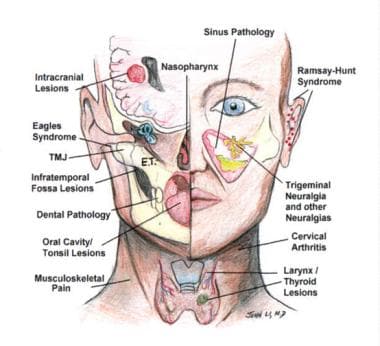
Media file 1:  This picture demonstrates the diversity of pathologies that can be the source of referred otalgia.
Click to see larger pictureClick to see detailView Full Size Image
Media type:  Image


  1. Adour KK. Acute temporomandibular joint pain-dysfunction syndrome: neuro-otologic and electromyographic study. Am J Otolaryngol. May 1981;2(2):114-22. [Medline].
  2. Al-Sheikhli AR. Pain in the ear--with special reference to referred pain. J Laryngol Otol. Dec 1980;94(12):1433-40. [Medline].
  3. Frankel VH. Whiplash injuries to the neck. In: Hirsch C, Zotterman Y, eds. Cervical Pain. New York, NY: Pergamon Press; 1971.
  4. Gibson WS Jr, Cochran W. Otalgia in infants and children--a manifestation of gastroesophageal reflux. Int J Pediatr Otorhinolaryngol. 1994;Jan;28(2-3):213-8.
  5. Goethals PL. Referred otalgia. JFMA. Jun 1972;59(6):26-30. [Medline].
  6. Kreisberg MK, Turner J. Dental causes of referred otalgia. Ear Nose Throat J. Oct 1987;66(10):398-408. [Medline].
  7. Kuttila S, Kuttila M, Le Bell Y. Characteristics of subjects with secondary otalgia. J Orofac Pain. Summer 2004;18(3):226-34.
  8. Malik MK, Sharma JK. Referred otalgia of dental origin. J Indian Dent Assoc. Oct 1975;47(10):413-6. [Medline].
  9. Olsen KD. The many causes of otalgia. Infection, trauma, cancer. Postgrad Med. Nov 1 1986;80(6):50-2, 55-6, 61-3. [Medline].
  10. Sataloff RT, Price DB. Distention of the stylomandibular ligament as a cause of styloid pain syndrome. Ear Nose Throat J. Sep 1984;63(9):412-5. [Medline].
  11. Scarbrough TJ, Day TA, Williams TE. Referred otalgia in head and neck cancer: a unifying schema. Am J Clin Oncol. 2003;Oct;26(5):e157-62.
  12. Shah RK, Blevins NH. Otalgia. Otolaryngol Clin North Am. Dec 2003;36(6):1137-51. [Medline].
  13. Subramaniam S, Majid MD. Eagle's syndrome. Med J Malaysia. Mar 2003;58(1):139-41. [Medline].
  14. Thaller SR, De Silva A. Otalgia with a normal ear. Am Fam Physician. Oct 1987;36(4):129-36. [Medline].
  15. Travell JG, Simons DG. Myofascial pain and dysfunction. In: The Trigger Point Manual. Baltimore, Md: Lippincott Williams & Wilkins; 1983.
  16. Wazen JJ. Referred otalgia. Otolaryngol Clin North Am. Dec 1989;22(6):1205-15. [Medline].
  17. Williamson EH. The interrelationship of internal derangements of the temporomandibular joint, headache, vertigo, and tinnitus: a survey of 25 patients. Facial Orthop Temporomandibular Arthrol. Jan 1986;3(1):13-7. [Medline].
  18. Yules RB. Differential diagnosis of referred otalgia. Eye Ear Nose Throat Mon. May 1967;46(5):587-8. [Medline].

Otalgia excerpt

Article Last Updated: Aug 26, 2008