Continually Updated Clinical Reference
 
 
  All Sources     eMedicine     Medscape     Drug Reference     MEDLINE
 
eMedicine - Central Vertigo : Article by

Quick Find
Authors & Editors
Introduction
Clinical
Differentials
Workup
Treatment
Medication
Follow-up
Miscellaneous
Multimedia
References

Related Articles
Anemia, Acute

Anemia, Chronic

Anxiety

Benign Positional Vertigo

Encephalitis

Headache, Migraine

Herpes Simplex

Herpes Simplex Encephalitis

Labyrinthitis

Mastoiditis

Meniere Disease

Meningitis

Multiple Sclerosis

Neoplasms, Brain

Pediatrics, Meningitis and Encephalitis

Stroke, Hemorrhagic

Stroke, Ischemic

Subarachnoid Hemorrhage

Subdural Hematoma

Thrombolytic Therapy

Toxicity, Carbon Monoxide

Toxicity, Phencyclidine

Vertebrobasilar Atherothrombotic Disease

Vestibular Neuronitis

Wernicke Encephalopathy


Patient Education
Brain and Nervous System Center

Vertigo Overview

Vertigo Causes

Vertigo Symptoms

Vertigo Treatment


Author: Keith A Marill, MD, Faculty, Department of Emergency Medicine, Massachusetts General Hospital

Keith A Marill is a member of the following medical societies: American Academy of Emergency Medicine and Society for Academic Emergency Medicine

Editors: Francis Counselman, MD, Program Director, Chair, Professor, Department of Emergency Medicine, Eastern Virginia Medical School; Francisco Talavera, PharmD, PhD, Senior Pharmacy Editor, eMedicine; J Stephen Huff, MD, Associate Professor of Emergency Medicine and Neurology, Department of Emergency Medicine, University of Virginia Health Sciences Center; John D Halamka, MD, MS, Associate Professor of Medicine, Harvard Medical School, Beth Israel Deaconess Medical Center; Chief Information Officer, CareGroup Healthcare System and Harvard Medical School; Attending Physician, Division of Emergency Medicine, Beth Israel Deaconess Medical Center; Barry E Brenner, MD, PhD, FACEP, Program Director, Department of Emergency Medicine, University Hospitals, Case Medical Center

Author and Editor Disclosure

Synonyms and related keywords: central vertigo, vertigo, central nervous system, CNS, acoustic neuroma, acoustic neurinoma, CNS tumor, cranial nerve VIII, CNS tumors, CNS infection, infection, trauma, multiple sclerosis, peripheral ischemic vertigo, arterial occlusion, ischemic infarction, temporary vertebrobasilar ischemia, migraine syndrome, transient ischemic attacks, TIAs, petechial hemorrhages, cerebellar infarction, imbalance    

Background

Central vertigo is vertigo due to a disease originating from the central nervous system (CNS). In clinical practice, it often includes lesions of cranial nerve VIII as well. Individuals with vertigo experience hallucinations of motion of their surroundings.

Central vertigo may be caused by hemorrhagic or ischemic insults to the cerebellum, the vestibular nuclei, and their connections within the brain stem. Other causes include CNS tumors, infection, trauma, and multiple sclerosis.

Vertigo due to acoustic neuroma is also included in the broader category of central vertigo. An acoustic neuroma develops within the eighth cranial nerve, usually within the course of the internal auditory canal, yet it often expands into the posterior fossa with secondary effects on other cranial nerves and the brain stem.

Pathophysiology

The brain stem, cerebellum, and peripheral labyrinths are all supplied by the vertebrobasilar arterial system. Thus, the central and peripheral ischemic vertigo syndromes overlap.

Vertebrobasilar arterial system

The basilar artery is formed from the 2 vertebral arteries within the cranium at the level of the medulla. The artery has 3 branches on each side that supply the cerebellum. The posterior inferior cerebellar artery branches from the vertebral artery, while the anterior inferior cerebellar artery and the superior cerebellar artery branch from the basilar artery.

All 3 of the cerebellar arteries may have branches that supply brainstem tissue. A labyrinthine artery on each side branches from the basilar artery and supplies the labyrinth and associated structures via the internal auditory canal. In approximately two thirds of people, the basilar artery ends by bifurcating into the posterior cerebral arteries, with small posterior communicating arteries connecting to the internal carotid system in the circle of Willis.

Arterial occlusion and ischemic infarction

Arterial occlusion and ischemic infarction can result from cardioembolism, embolism of plaque from a vertebral artery, or local arterial thrombosis. One or both vertebral arteries, the basilar artery, or any of the smaller branches may be occluded. Even complete occlusion of a large artery may not result in death because of anastomotic retrograde flow via the circle of Willis and posterior communicating arteries.

Temporary vertebrobasilar ischemia may present as migraine syndrome or transient ischemic attacks (TIAs). While less common than cerebellar infarction, spontaneous cerebellar hemorrhage is an important life-threatening cause of vertigo associated with hypertensive vascular disease and anticoagulation.1

Multiple sclerosis

Multiple sclerosis is a demyelinating disease of the CNS. The course generally waxes and wanes, with varying neurologic symptoms and signs. Isolated vertigo may be the initial symptom in approximately 5% of cases. This disease is discussed in detail in the relevant article (see Multiple Sclerosis).

Acoustic neuromas

Acoustic neuromas are Schwann cell tumors that usually originate on the vestibular division of the eighth cranial nerve in the proximal internal auditory canal. Usually unilateral in development, bilateral acoustic neuromas do occur in young adults, although rarely, in association with neurofibromatosis type 2. If untreated, an acoustic neuroma may expand into the cerebellopontine angle and compress facial and other cranial nerves. If it compresses the brain stem, ataxia, gait disturbances, spasticity, and weakness from long-tract effects may result.

Other causes

Isolated vertigo due to CNS infection, such as a microabscess, or temporal lobe seizures is rare and is not discussed in this chapter. Vertigo and dizziness are common complications of head and neck trauma. Traumatic central vertigo may be caused by petechial hemorrhages in the vestibular nuclei of the brain stem. These may result from shearing forces on the brain stem.2

Frequency

United States

Approximately 500,000 people have strokes each year. About 85% of these strokes are ischemic, and 1.5% of ischemic strokes affect primarily the cerebellum. Ratio of ischemic to hemorrhagic cerebellar strokes is 3-5:1.3 Up to 10% of patients with an isolated cerebellar infarction present with only isolated vertigo and imbalance.  Incidence of multiple sclerosis ranges from 10-80/100,000 per year, depending on the latitude. About 3000 cases of acoustic neuroma are diagnosed each year in the US.

Mortality/Morbidity

Vascular injuries and infarcts in the posterior circulation can cause severe permanent debilitating disease. The excellent recovery typical of acute vertigo caused by peripheral disease should not necessarily be expected in central vertigo.

  • In one series, cerebellar infarctions had mortality rates of 7% and 17% when associated with the superior cerebellar artery and posterior inferior cerebellar artery distributions, respectively.4 Infarctions in the latter distribution are associated more commonly with a mass effect and compression of the brain stem and the fourth ventricle. In another series of patients with cerebellar infarction and mass effect, mortality rate was 17% despite aggressive neurosurgical and medical management.5
  • In one series of 94 patients, 20 presented with a Glasgow Coma Scale (GCS) score less than 8, indicating significantly impaired consciousness. Mortality rate in the remaining patients who presented with GCS score higher than 8 was 20%.
  • Acoustic neuroma has a low rate of mortality once diagnosed. The tumor often may be removed with preservation of facial nerve function, but unilateral hearing loss is common.

Sex

Incidence of cerebrovascular disease is slightly higher in men than in women. In one series of patients with cerebellar infarction, the ratio of men to women was about 2:1. Multiple sclerosis is about twice as common in women as in men.

Age

Incidence of stroke increases with age. The mean age of patients with cerebellar infarction in one series was 65 years, with half of the cases occurring in those aged 60-80 years.3 In one series, the mean age of patients with cerebellar hematoma was 70 years.1


History

The clinician first should ascertain the nature of the patient's vertigo or dizziness. Patients who have conditions known to cause central vertigo do not always complain strictly of vertigo.

Vertigo implies an abnormal sensation of movement or rotation of the patient or his or her environment. Some patients with central disease may complain of disequilibrium, imbalance, or difficulty maintaining an upright posture. Other important historical factors include the presence of associated symptoms and their nature; the onset, duration, and positional dependence of symptoms; and medical history.

If associated symptoms are present, they may suggest the nature of the underlying disease.

  • Peripheral vertigo presents with the following:
    • Associated nausea
    • Vomiting
    • Auditory complaints
    • Abrupt onset
  • Central vertigo often produces other neurologic symptoms, although this generalization has many exceptions. The symptoms are characterized as follows:
    • Gradual onset
    • Tend to be much less intense than those associated with peripheral vertigo
  • In assessing the possibility of central vertigo related to cerebrovascular disease, inquire about important risk factors. The following are associated with an increased incidence of cerebrovascular accident (CVA):
    • Hypertension
    • Atrial fibrillation
    • History of prior CVA
    • Advanced age

Physical

A thorough neurologic and cardiologic examination is important to identify patients with central vertigo.

  • Depressed consciousness
    • Evidence of depressed consciousness requires immediate clinical attention.
    • Depressed consciousness may be due to disease such as infarction within the brain stem or external compression.
    • In patients with cerebellar infarction, brainstem compression is found more often in those who have involvement of the posterior inferior cerebellar artery.
    • In one series, the earliest sign of brainstem compression was lethargy, which occurred in 11% of patients a mean of 50 hours after onset of cerebellar infarct.4 Of patients with cerebellar hemorrhage, 46% had deterioration of their mental status an average of 5.5 hours after presentation.1
  • Nystagmus
    • Examination of extraocular movements is critical. Nystagmus, if present, may be an important diagnostic clue.
    • Nystagmus consists of slow eye movement in one direction followed by rapid recovery movement in the opposite direction.
    • Vertigo of peripheral origin generally manifests by horizontal, rotatory, or absent nystagmus, but horizontal nystagmus is not a specific sign of peripheral vertigo. It is the most common type of nystagmus observed in patients with cerebellar infarction.4
    • Vertical nystagmus is considered specific for central vertigo.
    • Nystagmus of central origin characteristically is worsened by fixation of gaze, while peripheral nystagmus may be ameliorated.
    • Central nystagmus may be unidirectional or multidirectional and may change direction with an alteration in the direction of gaze (ie, gaze evoked), while peripheral nystagmus is unidirectional.
  • Eliciting nystagmus and symptoms of vertigo
    • Hallpike (Nylen-Bárány) maneuver consists of having the patient lie back in bed from a sitting position 3 times in succession.
      • First, the positional change is performed with the patient gazing straight ahead.
      • It is then repeated with the head turned 45° to the right and then 45° to the left.
      • The neck preferably is extended slightly when the patient lies back in the supine position.
      • In contrast to that due to central vertigo, nystagmus due to peripheral disease may not develop immediately after the positional change, and, once it develops, may fatigue quickly and last less than 1 minute.
    • Drachman dizziness battery6
      • BP supine and standing
      • Valsalva maneuver
      • Head turn standing with eyes open
      • Sudden turn when walking
      • Three-minute hyperventilation
      • Nylen-Bárány testing
  • Internuclear ophthalmoplegia
    • Internuclear ophthalmoplegia manifests as partial or absent movement of the adducting eye and coarse nystagmus of the abducting eye with attempted lateral gaze.
    • It suggests derangement of the medial longitudinal fasciculus and a diagnosis of multiple sclerosis or other brainstem disease.
  • Cranial nerve deficits
    • Aside from a disturbance in hearing, other neurologic deficits would not be expected in patients with vertigo of peripheral origin.
    • Associated cranial nerve deficits, including facial weakness, absent corneal reflex, lateral gaze palsy, or dysarthria, mandate further evaluation.
  • Neurologic examination of the extremities and coordination is important.
    • Long-tract findings such as weakness, hyperesthesia, or positive Babinski sign are ominous and mandate further workup.
    • Ataxia may be the most important indicator of cerebellar disease. Ataxia of the limbs, as evinced by the finger-to-nose and heel-shin tests, and truncal ataxia, with difficulty walking or even sitting, are salient findings.
  • Cardiac examination
    • Careful cardiac examination may reveal the likely source of an embolic stroke.
    • Check for murmur or irregularly irregular rhythm suggesting atrial fibrillation.
    • Inappropriate bradycardia may suggest an ongoing stroke.

Causes

  • Basilar artery occlusion: In one study of basilar artery occlusion, 4 of 53 (8%) patients had prodromal symptoms consisting only of vertigo and nausea.
  • Positional vertigo and TIAs
    • Abrupt onset of vertigo associated with a change in position suggests benign positional vertigo, a form of peripheral vertigo.
    • Recurrent transient symptoms lasting a few minutes suggest TIAs.
  • Caudal cerebellar infarction: A prospective study of 24 patients aged 50-75 years with isolated vertigo lasting longer than 48 hours found that 6 (25%) of the patients had a caudal cerebellar infarction. Infarcts of the medial branch of the posterior inferior cerebellar artery territory appear to be the most common cerebellar cause of isolated vertigo and imbalance.
  • Ménière disease and acoustic neuroma
    • Chronic high- and low-frequency hearing loss with associated tinnitus, which fluctuates over time, suggests Ménière disease.
    • Associated auditory symptoms suggest that vertigo has a peripheral origin, though exceptions exist.
    • Hearing loss, often with associated tinnitus, is the most common early symptom of acoustic neuroma.
  • Acute cerebellar disease
    • Loss of balance and difficulty maintaining posture, standing, and walking suggest cerebellar disease. These symptoms occur in 50-75% of patients with cerebellar infarction or hemorrhage.
    • Occipital headache and difficulty with speech are also common complaints with acute cerebellar disease.
  • Cranial nerve deficits
    • Symptoms related to derangement of cranial nerves other than the eighth nerve suggest involvement of the brainstem and/or cerebellum.
    • As the cerebellar arteries supply areas of the dorsal brain stem, cerebellar infarcts also may involve the trigeminal, facial, and other cranial nerve nuclei. Mass effect due to edema, acute hemorrhage, or an acoustic neuroma also can cause cranial nerve deficits.
    • Facial nerve dysfunction, most commonly manifested as weakness or twitching in the periorbital area, is seen in 10% of patients with acoustic neuroma.
    • Crossed findings (ie, when the patient has signs on one side of the face and sensory and [less commonly] motor signs on the other side of the body) clearly suggest brainstem involvement.
      • This includes the classic lateral medullary infarction (Wallenberg syndrome) consisting of ipsilateral limb ataxia, Horner syndrome, palatal weakness, facial hypesthesia to pain and temperature, and contralateral hypesthesia to pain and temperature in the limbs and trunk.
      • Crossed findings result from unilateral lesions of the brain stem involving cranial nerve nuclei and long tracts from higher brain centers that have yet to cross to the other side of the CNS.
  • Cerebrovascular disease: A recent history of drop attacks, cranial nerve deficits, or transient vertigo should raise suspicion for cerebrovascular disease of the posterior circulation.
  • Vertebral artery occlusion: Thirty-seven of 85 (44%) patients who presented with either basilar or bilateral distal vertebral artery occlusion had prodromal symptoms that cleared in the 2 months prior to admission.
  • Multiple sclerosis: In younger patients, recent history of neurologic deficits, particularly weakness and/or numbness in one or more limbs (lesions in time and space) or unilateral visual loss, should raise suspicion for multiple sclerosis.
  • Risk factors
    • The risk of stroke in patients with atrial fibrillation is highest in the first year after onset in patients not receiving anticoagulation.
    • Diabetes mellitus, hyperlipidemia, and cigarette smoking are also important risk factors.


Anemia, Acute
Anemia, Chronic
Anxiety
Benign Positional Vertigo
Encephalitis
Headache, Migraine
Herpes Simplex
Herpes Simplex Encephalitis
Labyrinthitis
Mastoiditis
Meniere Disease
Meningitis
Multiple Sclerosis
Neoplasms, Brain
Pediatrics, Meningitis and Encephalitis
Stroke, Hemorrhagic
Stroke, Ischemic
Subarachnoid Hemorrhage
Subdural Hematoma
Thrombolytic Therapy
Toxicity, Carbon Monoxide
Toxicity, Phencyclidine
Vertebrobasilar Atherothrombotic Disease
Vestibular Neuronitis
Wernicke Encephalopathy


Lab Studies

  • Laboratory studies may be useful for patients who do not complain strictly of vertigo.
  • Rule out anemia, pregnancy, and derangement of serum glucose, if relevant, in patients who complain of lightheadedness or disequilibrium.

Imaging Studies

  • Imaging of the posterior fossa is necessary if the clinician suspects a central lesion.
    • Magnetic resonance imaging (MRI) is the preferred modality to detect infarction7, hemorrhage, tumor8, and the white matter lesions of multiple sclerosis.
    • If MRI is unavailable, computed tomography (CT) scan with fine cuts through the posterior fossa may be used. Unfortunately, CT scan is limited by poorer resolution than MRI and bony artifact.
    • Intra-arterial angiography is used traditionally to diagnose occlusions in the vertebrobasilar system. CT angiography (CTA), noninvasive magnetic resonance angiography (MRA), and Doppler ultrasonography are steadily supplanting it. This may be particularly important as early thrombolysis becomes more established as a therapy.

Other Tests

  • Electrocardiography (ECG) is necessary to assess for atrial fibrillation, other dysrhythmias, or evidence of acute myocardial infarction (AMI).
  • AMI, particularly involving the anterior wall of the left ventricle, can lead to a stiffened ventricle with poor wall movement and secondary stasis. This may serve as a cardioembolic source for cerebral thromboembolism.
  • The consulting neurologist may perform caloric testing and electronystagmography (ENG) to help localize the lesion in the vestibular apparatus or vestibular nerve nuclei; audiometry and brainstem auditory evoked potentials (BAER) also may be performed.


Emergency Department Care

First, distinguish true vertigo from disequilibrium and other forms of dizziness. Ascertaining this history from patients sometimes requires patience and persistence. Once the presence of vertigo or disequilibrium has been confirmed, consider a central cause. Evaluate on the basis of a careful history and physical examination and liberal use of imaging studies of the posterior fossa.

  • Therapy usually targets the etiology of the symptoms. However, a variety of medications may be used to reduce symptoms of central vertigo, including antihistamines and benzodiazepines.
  • Regardless of the vertigo's etiology, attempt to alleviate the patient's suffering.
    • Place intravenous lines to rehydrate patients.
    • Allow patients to lie still in bed as desired.
    • Administer parenteral medicines for symptomatic relief.
  • If clinical and radiologic evaluation suggest an acute ischemic stroke, consider thrombolytic therapy after thorough evaluation and consultation.
    • Thrombolytic therapy is administered with an intra-arterial catheter close to the clot9, or intravenously, if within 3 hours of the onset of symptoms and no other contraindications exist.
    • Prior to using thrombolytic therapy, consider several issues, especially the risk of intracerebral bleeding. Emergency physicians should be familiar with contraindications such as major surgery within the previous 10 days, severe hypertension, evidence of acute bleed or edema on CT scan, and rapidly improving symptoms.
    • The decision to administer thrombolytic therapy preferably is made with direct neurologic consultation and only after the patient has received a thorough explanation of the procedure and given informed consent. This therapy is discussed further in other articles (see Stroke, Ischemic and Thrombolytic Therapy).
  • Lethargic patients or those with altered level of consciousness require vigilance and close supervision, including direct visual, ECG, and pulse oximetry monitoring.
  • Do not administer anticoagulant medicine, including aspirin, until intracranial hemorrhage has been ruled out by imaging.
  • Imaging studies should be performed expeditiously, and the patient never should be left unattended by clinical personnel in the imaging suite.
  • Patients with altered consciousness and a deteriorating course in the ED may require emergent interventions to minimize edema and brainstem compression.
    • As the posterior fossa is a relatively small and nonexpandable space, hemorrhage or edema can lead to rapid compression and compromise of vital medullary functions, obstructive hydrocephalus, or herniation of the medullary tonsils.
    • Invasive actions may include endotracheal intubation to protect the airway, control breathing, and allow therapeutic hyperventilation.
    • Consider elevating the head of the bed, performing diuresis with mannitol or furosemide, and administering dexamethasone.
  • Preliminary evidence suggests that recombinant activated factor VII may be useful for acute hemorrhagic stroke when administered within 4 hours of symptom onset. The data supporting the use of this therapy for hemorrhagic cerebellar stroke is too limited thus far to make a therapeutic recommendation, but further results are expected to clarify its utility and adverse effect profile.

Consultations

Obtain neurologic consultation for patients with central vertigo, and consider neurosurgical consultation for all patients with space-occupying lesions or hydrocephalus.

The emergency physician should seek immediate neurosurgical consultation for patients with hemorrhage, brainstem compression, or edema, as surgical decompression via suboccipital craniectomy or ventriculostomy may be lifesaving.


Patients with depressed mental status may have documented or suspected increased intracranial pressure (ICP). Administer diuretics or corticosteroids to decrease pressure while planning more definitive actions. Administer this therapy preferably in consultation with a neurosurgeon.

Drug Category: H1- receptor antagonists

These agents may suppress vestibular responses through an effect in the CNS; however, the mechanism remains unknown. Some investigators believe this action is mediated primarily by central anticholinergic activity.

Drug NameDimenhydrinate (Dramamine, Dimetabs, Dymenate, Triptone)
DescriptionA 1:1 salt of 8-chlorotheophylline and diphenhydramine, thought to be particularly useful in treatment of peripheral vertigo. Diminishes vestibular stimulation and depresses labyrinthine function through central anticholinergic activity.
Adult Dose50-100 mg PO q4-6h; not to exceed 400 mg/d; 50 mg IV in 10 mL NaCl; injection is given over 2 min; not for intra-arterial administration; 50 mg IM prn
Pediatric Dose<2 years: Not established
2-6 years: 12.5-25 mg PO q6-8h, not to exceed 75 mg/d; 1.25 mg/kg or 37.5 mg/m2 IM qid, not to exceed 300 mg/d
6-12 years: 25-50 mg PO q6-8h; not to exceed 150 mg/d
>12 years: Administer as in adults
ContraindicationsDocumented hypersensitivity; do not administer to neonates; IV products may contain benzyl alcohol, which has been associated with fatal "gasping syndrome" in premature infants and low-birth-weight infants
InteractionsAlcohol or other CNS depressants may have additive effect; potentially ototoxic antibiotics may mask ototoxic symptoms, and irreversible damage may result
PregnancyB - Fetal risk not confirmed in studies in humans but has been shown in some studies in animals
PrecautionsDo not treat severe emesis with antiemetic drugs alone; may contain either sulfites or tartrazine, which may cause allergic-type reactions in susceptible persons; may impede diagnosis of conditions such as brain tumors, intestinal obstruction, and appendicitis; may obscure signs of toxicity from overdosage of other drugs

Drug NameDiphenhydramine (Benadryl, Bydramine, Hyrexin)
DescriptionUsed for treatment and prophylaxis of vestibular disorders.
Adult Dose25-50 mg PO q6-8h prn; not to exceed 400 mg/d; 10-50 mg IV/IM q6-8h prn; not to exceed 400 mg/d
Pediatric Dose12.5-25 mg PO tid/qid or 5 mg/kg/d PO or 150 mg/m2/d PO divided tid/qid; not to exceed 300 mg/d
5 mg/kg/d IV/IM or 150 mg/m2/d IV/IM divided qid; not to exceed 300 mg/d
ContraindicationsDocumented hypersensitivity
InteractionsPotentiates effect of CNS depressants; because of alcohol content, do not give syrup dosage form to patient taking medications that can cause disulfiramlike reactions
PregnancyC - Fetal risk revealed in studies in animals but not established or not studied in humans; may use if benefits outweigh risk to fetus
PrecautionsMay exacerbate angle-closure glaucoma, hyperthyroidism, peptic ulcer, and urinary tract obstruction

Drug NamePromethazine hydrochloride (Phenergan)
DescriptionUsed for symptomatic treatment of nausea in vestibular dysfunction.
An antidopaminergic agent effective in treatment of vertigo, blocks postsynaptic mesolimbic dopaminergic receptors in brain and reduces stimuli to brainstem reticular system.
Adult Dose12.5 mg PO/PR tid and 25 mg PO/PR hs; 25 mg IV/IM and repeat prn in 2 h; switch to PO as soon as possible
Pediatric Dose<2 years: Contraindicated
>2 years: 0.25-1 mg/kg PO/IV/IM/PR 4-6 times/d
ContraindicationsDocumented hypersensitivity; administration by SC or IP route; children <2 y (incidences of death due to respiratory depression)
InteractionsMay have additive effects with other CNS depressants or anticonvulsants; coadministration with epinephrine may cause hypotension
PregnancyC - Fetal risk revealed in studies in animals but not established or not studied in humans; may use if benefits outweigh risk to fetus
PrecautionsMust not administer SC or IP, since necrotic lesions may develop; causes sedation and may have adverse anticholinergic effects; caution in cardiovascular disease, impaired liver function, seizures, sleep apnea, and asthma

Drug Category: Benzodiazepines

Centrally, these agents inhibit vestibular responses, presumably by potentiating inhibitory GABA receptors.

Drug NameDiazepam (Valium, Diastat, Diazemuls)
DescriptionProbably most commonly used benzodiazepine to treat vertigo. Highly lipophilic and undergoes rapid redistribution after administration. Duration of effects in CNS relatively short, which may make it relatively less desirable.
Adult Dose5-10 mg PO/IV/IM q3-4h and repeat q2-4h prn; not to exceed 30 mg/8 h
Pediatric Dose0.12-0.8 mg/kg/d PO divided q6-8h; not to exceed 10 mg/dose
0.05-0.3 mg/kg/dose IV/IM over 2-3 min and repeat in 2-4 h prn
ContraindicationsDocumented hypersensitivity; narrow-angle glaucoma
InteractionsPhenothiazines, barbiturates, alcohols, and MAOIs may increase toxicity in CNS
PregnancyD - Fetal risk shown in humans; use only if benefits outweigh risk to fetus
PrecautionsCaution with other CNS depressants, low albumin levels, or hepatic disease (may increase toxicity)

Drug NameLorazepam (Ativan)
DescriptionSedative hypnotic in benzodiazepine class that has short time to onset and relatively long half-life.
Depresses all levels of CNS, including limbic and reticular formation, probably through increased action of GABA, a major inhibitory neurotransmitter.
Adult Dose1.0-10 mg/d PO/IM/IV divided bid/tid
Pediatric Dose0.05 mg/kg/dose PO/IM/IV q4-8h
ContraindicationsDocumented hypersensitivity; preexisting CNS depression; hypotension; narrow-angle glaucoma
InteractionsAlcohol, phenothiazines, barbiturates, and MAOIs may increase toxicity in CNS
PregnancyD - Fetal risk shown in humans; use only if benefits outweigh risk to fetus
PrecautionsCaution in renal or hepatic impairment, myasthenia gravis, organic brain syndrome, or Parkinson disease

Drug Category: Diuretics

Diuretic agents are used as a temporary measure to lower ICP until definitive intervention is performed.

Drug NameMannitol (Osmitrol)
DescriptionNonreabsorbable solute, decreases water reabsorption in water-soluble portions of nephron. Reduces reabsorption of sodium chloride as well. Perhaps more importantly, does not cross blood-brain barrier. Creates osmotic gradient, drawing water from brain into intravascular compartment. Used to lower ICP in variety of conditions.
Initially assess for adequate renal function in adults by administering test dose of 200 mg/kg IV over 3-5 min. Should produce a urine flow of at least 30-50 mL/h over 2-3 h.
In children, assess by administering same test dose and rate. Should produce a urine flow of at least 1 mL/kg/h over 1-3 h.
Adult Dose1 g/kg IV of 20% or 25% solution
Pediatric Dose250-1000 mg/kg/dose IV or alternative as follows
Initial dose: 0.5-1 g/kg IV
Maintenance dose: 0.25–0.5 g/kg IV q4-6h
ContraindicationsCaution in renal or hepatic impairment, myasthenia gravis, organic brain syndrome, or Parkinson disease
InteractionsNone reported
PregnancyC - Fetal risk revealed in studies in animals but not established or not studied in humans; may use if benefits outweigh risk to fetus
PrecautionsCarefully evaluate cardiovascular status before rapid administration of mannitol, since sudden increase in extracellular fluid may lead to fulminating CHF; avoid pseudoagglutination—when blood given simultaneously, add at least 20 mEq of sodium chloride to each liter of mannitol solution; do not give electrolyte-free mannitol solutions with blood

Drug NameFurosemide (Lasix)
DescriptionLoop diuretic that blocks transport of sodium, potassium, and chloride in thick ascending limb of loop of Henle in kidney. May enhance effect of mannitol and produce greater and more sustained decrease in ICP.
Adult Dose20-40 mg/d IV/IM or 0.5-1 mg/kg IV
Pediatric Dose1 mg/kg IV/IM slowly under close supervision; not to exceed 6 mg/kg
ContraindicationsDocumented hypersensitivity; hepatic coma; anuria; severe electrolyte depletion
InteractionsMetformin decreases concentrations; interferes with hypoglycemic effect of antidiabetic agents and antagonizes muscle-relaxing effect of tubocurarine; coadministration of aminoglycosides may increase auditory toxicity (hearing loss of varying degrees may occur); may enhance anticoagulant activity of warfarin; increased plasma levels and toxicity of lithium are possible
PregnancyC - Fetal risk revealed in studies in animals but not established or not studied in humans; may use if benefits outweigh risk to fetus
PrecautionsVolume depletion, hypotension, azotemia, marked hypokalemia, and hypochloremic metabolic alkalosis are all risks of therapy; patient's intravascular volume status and serum electrolytes must be monitored closely; hypocalcemia also possible, particularly in patients with hypoparathyroidism
Transient deafness has been described after rapid IV administration of large doses, particularly when other ototoxic drugs also administered
Perform frequent determinations of serum electrolytes, CO2, glucose, creatinine, uric acid, calcium, and BUN during first few months of therapy and periodically thereafter

Drug Category: Corticosteroids

These agents are used to decrease brain edema associated with intracranial tumors.

Drug NameDexamethasone (Decadron)
DescriptionPreferred corticosteroid for this purpose because it demonstrates high glucocorticoid potency and minimal mineralocorticoid activity.
Adult Dose10 mg IV followed by 4-6 mg IV q6h
Pediatric Dose0.5-1.5 mg/kg IV; then 0.05-0.1 mg/kg IV q6h
ContraindicationsDocumented hypersensitivity; active bacterial or fungal infection
InteractionsBarbiturates, estrogen, isoniazid, ketoconazole, phenytoin, and rifampin may decrease effects; decreases effect of salicylates and vaccines used for immunization
PregnancyC - Fetal risk revealed in studies in animals but not established or not studied in humans; may use if benefits outweigh risk to fetus
PrecautionsIncreases risk of multiple complications, including severe infections; monitor adrenal insufficiency when tapering drug; abrupt discontinuation of glucocorticoids may cause adrenal crisis; hyperglycemia, edema, osteonecrosis, myopathy, peptic ulcer disease, hypokalemia, osteoporosis, euphoria, psychosis, myasthenia gravis, growth suppression, and infections are possible complications


Further Inpatient Care

  • Most patients with proven or suspected central vertigo should be admitted to the hospital for further evaluation and treatment.
  • Patients should be admitted under the care of a neurologist or neurosurgeon.
  • Patients with evidence of acute brainstem or cerebellar disease should be admitted to a monitored bed, preferably in an intensive care unit.

Transfer

  • Transfer may be necessary for patients seen in facilities lacking cranial imaging capability or neurosurgical coverage. Transferred patients require monitoring and the availability of definitive airway management during the transport period.

Deterrence/Prevention

  • The clinician should suspect TIAs in patients with recurrent transient symptoms and risk factors for atherosclerotic or cardioembolic disease.
  • A correct diagnosis of TIA followed by appropriate aspirin or anticoagulant therapy may decrease the risk of a future CVA significantly.

Prognosis

  • Prognosis for patients with central vertigo depends on the underlying disease and is highly variable.
  • Neurosurgical advancements have improved the prognosis for many serious conditions. This magnifies the importance of identifying these patients in the emergency setting.
  • The prognosis of infarction of the basilar or vertebral arteries is poor. In one series, 45% of patients presented in coma. Importantly, half of the patients in this series had prodromal symptoms, including vertigo, which cleared completely in the 6 months prior to the stroke.10
  • The prognosis for patients with spontaneous cerebellar hemorrhage is poor. Neurologic deterioration in these patients is associated independently with a hematoma in the central vermian area of the cerebellum and with secondary hydrocephalus.1

Patient Education

  • Most causes of central vertigo have serious ramifications. Inform the patient of the suspected diagnosis in understandable terms and explain the necessity of hospital admission.
  • For excellent patient education resources, visit eMedicine's Brain and Nervous System Center. Also, see eMedicine's patient education article Vertigo.


Medical/Legal Pitfalls

  • Failure to have a low threshold for obtaining consultation, imaging, and further studies on patients who present with isolated vertigo and who have risk factors for atherosclerotic or other central disease
  • Failure to monitor patients closely for clinical deterioration who have disease involving or compromising the brain stem

Special Concerns

  • Geriatric patients are at particularly high risk for cerebrovascular disease and should be evaluated aggressively.


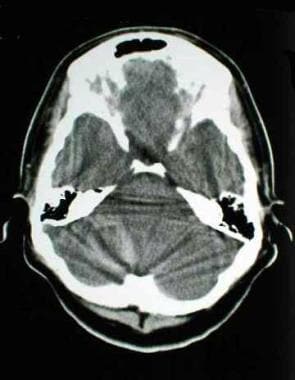
Media file 1:  CT scan of a patient with an acute spontaneous cerebellar hemorrhage. The hemorrhage in the right lobe of the cerebellum is partly obscured by bony artifact.
Click to see larger pictureClick to see detailView Full Size Image
Media type:  CT

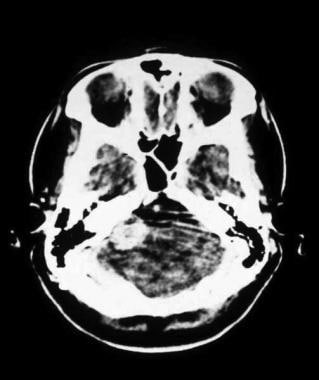
Media file 2:  MRI of a patient with an acute cerebellar hemorrhage less than 24 hours after presentation. MRI allows better resolution than CT scan without bony artifact. MRI is preferred over CT scan for imaging lesions in the posterior fossa.
Click to see larger pictureClick to see detailView Full Size Image
Media type:  MRI

Media file 3:  CT scan of a patient with a large acoustic neuroma on the right side of the brain stem. The scan was performed after injection of intravenous contrast, which is critical for identifying tumors with CT imaging.
Click to see larger pictureClick to see detailView Full Size Image
Media type:  CT

Media file 4:  A CT slice through the brain of a patient with an acoustic neuroma. This slice reveals a level of the brain higher than the acoustic neuroma. The dilated third and lateral ventricles provide gross evidence of obstructive hydrocephalus due to pressure exerted by the tumor on the brain stem. A ventriculostomy, seen as a white circle in the right lateral ventricle, has been placed in an attempt to drain cerebrospinal fluid and relieve the excessive pressure above the brain stem.
Click to see larger pictureClick to see detailView Full Size Image
Media type:  CT


  1. St. Louis EK, Wijdicks EF, Li H. Predicting neurologic deterioration in patients with cerebellar hematomas. Neurology. Nov 1998;51(5):1364-9. [Medline].
  2. Fitzgerald DC. Head trauma: hearing loss and dizziness. J Trauma. Mar 1996;40(3):488-96. [Medline].
  3. Amarenco P. The spectrum of cerebellar infarctions. Neurology. Jul 1991;41(7):973-9. [Medline].
  4. Kase CS, Norrving B, Levine SR. Cerebellar infarction - clinical and anatomic observations in 66 cases. Stroke. 1993;24 (1):76-83. [Medline].
  5. Hornig CR, Rust DS, Busse O, Jauss M, Laun A. Space-occupying cerebellar infarction. Clinical course and prognosis. Stroke. Feb 1994;25(2):372-4. [Medline].
  6. Drachman DA. A 69-year-old man with chronic dizziness. JAMA. Dec 23-30 1998;280(24):2111-8. [Medline].
  7. Simmons Z, Biller J, Adams HP Jr, Dunn V, Jacoby CG. Cerebellar infarction: comparison of computed tomography and magnetic resonance imaging. Ann Neurol. Mar 1986;19(3):291-3. [Medline].
  8. Selesnick SH, Jackler RK, Pitts LW. The changing clinical presentation of acoustic tumors in the MRI era. Laryngoscope. Apr 1993;103(4 Pt 1):431-6. [Medline].
  9. Hacke W, Zeumer H, Ferbert A. Intra-arterial thrombolytic therapy improves outcome in patients with acute vertebrobasilar occlusive disease. Stroke. 1988;19 (10):1216-22. [Medline].
  10. Ferbert A, Bruckmann H, Drummen R. Clinical features of proven basilar artery occlusion. Stroke. Aug 1990;21(8):1135-42. [Medline].
  11. Anagnostou E, Varaki K, Anastasopoulos D. A minute demyelinating lesion causing acute positional vertigo. J Neurol Sci. Mar 15 2008;266(1-2):187-9. [Medline].
  12. Bradley WG. MR of the brain stem: a practical approach. Radiology. May 1991;179(2):319-32. [Medline].
  13. Bruzzone MG, Grisoli M, De Simone T, Regna-Gladin C. Neuroradiological features of vertigo. Neurol Sci. Mar 2004;25 Suppl 1:S20-3. [Medline].
  14. Chen CC, Cheng PW, Tseng HM, Young YH. Posterior cranial fossa tumors in young adults. Laryngoscope. Sep 2006;116(9):1678-81. [Medline].
  15. Delaney KA. Bedside diagnosis of vertigo: value of the history and neurological examination. Acad Emerg Med. Dec 2003;10(12):1388-95. [Medline].
  16. Froehling DA, Silverstein MD, Mohr DN. Does this dizzy patient have a serious form of vertigo?. JAMA. Feb 2 1994;271(5):385-8. [Medline].
  17. Gizzi M, Riley E, Molinari S. The diagnostic value of imaging the patient with dizziness. A Bayesian approach. Arch Neurol. Dec 1996;53(12):1299-304. [Medline].
  18. Herr RD, Zun L, Mathews JJ. A directed approach to the dizzy patient. Ann Emerg Med. Jun 1989;18(6):664-72. [Medline].
  19. Hotson JR, Baloh RW. Acute vestibular syndrome. N Engl J Med. Sep 3 1998;339(10):680-5. [Medline].
  20. Lee H, Sohn SI, Cho YW, Lee SR, Ahn BH, Park BR. Cerebellar infarction presenting isolated vertigo: frequency and vascular topographical patterns. Neurology. Oct 10 2006;67(7):1178-83. [Medline].
  21. Macdonell RA, Kalnins RM, Donnan GA. Cerebellar infarction: natural history, prognosis, and pathology. Stroke. 1987;18 (5):849-55. [Medline].
  22. Mayer SA, Brun NC, Begtrup K. Recombinant activated factor VII for acute intracerebral hemorrhage. N Engl J Med. Feb 2005;352(8):777-85. [Medline].
  23. Norrving B, Magnusson M, Holtas S. Isolated acute vertigo in the elderly; vestibular or vascular disease?. Acta Neurol Scand. Jan 1995;91(1):43-8. [Medline].
  24. Rother J, Wentz KU, Rautenberg W. Magnetic resonance angiography in vertebrobasilar ischemia. Stroke. 1993;24 (9):1310-15. [Medline].
  25. Sacco RL, Freddo L, Bello JA, Odel JG, Onesti ST, Mohr JP. Wallenberg's lateral medullary syndrome. Clinical-magnetic resonance imaging correlations. Arch Neurol. Jun 1993;50(6):609-14. [Medline].
  26. Solomon D. Distinguishing and treating causes of central vertigo. Otolaryngol Clin North Am. Jun 2000;33(3):579-601. [Medline].
  27. The National Institute of Neurological Disorders and Stroke rt-PA Stroke Study. Tissue plasminogen activator for acute ischemic stroke. N Engl J Med. Dec 14 1995;333(24):1581-7. [Medline].

Central Vertigo excerpt

Article Last Updated: Mar 3, 2008