Background
Thrombosis is an important part of the normal hemostatic response that limits hemorrhage caused by microscopic or macroscopic vascular injury. Physiologic thrombosis is counterbalanced by intrinsic antithrombotic properties and fibrinolysis. Under normal conditions, a thrombus is confined to the immediate area of injury and does not obstruct flow to critical areas, unless the blood vessel lumen is already diminished, as it is in atherosclerosis.
Under pathologic conditions, a thrombus can propagate into otherwise normal vessels. A thrombus that has propagated where it is not needed can obstruct flow in critical vessels; it can also obliterate valves and other structures that are essential to normal hemodynamic function. The principal clinical syndromes that result are as follows:
-
Acute myocardial infarction (AMI)
-
Deep vein thrombosis (DVT)
-
Pulmonary embolism (PE)
-
Acute ischemic stroke (AIS)
-
Acute peripheral arterial occlusion
-
Occlusion of indwelling catheters
Pathophysiology of thrombosis
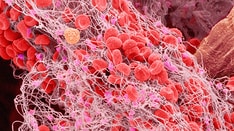
Both hemostasis and thrombosis depend on the coagulation cascade, vascular wall integrity, and platelet response. Several cellular factors are responsible for thrombus formation. When a vascular insult occurs, an immediate local cellular response takes place. Platelets migrate to the area of injury, where they secrete several cellular factors and mediators. These mediators promote clot formation.
The three main components of a blood clot are as follows:
-
Platelets
-
Thrombin
-
Fibrin
Each of these components is a key therapeutic target. During thrombus formation, circulating prothrombin is activated to the active clotting factor, thrombin, by activated platelets. Fibrinogen is activated to fibrin by the newly activated thrombin. Fibrin is then formed into the fibrin matrix. All this takes place while platelets are being adhered and aggregated.
Aspirin, glycoprotein (GP) IIb/IIIa inhibitors, and clopidogrel have an inhibitory effect on platelet activation and aggregation. Plasminogen gathers in the fibrin matrix. Fibrin-bound plasminogen will be converted by thrombolytic drugs to plasmin, the rate-limiting step in thrombolysis.
It should be kept in mind that the thrombolysis process works best on recently formed thrombi. Older thrombi have extensive fibrin polymerization that makes them more resistant to thrombolysis; hence, the importance of time for thrombolytic therapy.
Pathologic thrombosis can occur in any vessel at any location in the body. There are several conditions that predispose to thrombosis, including the following:
-
Atherosclerosis (plaque rupture)
-
Blood flow changes
-
Metabolic disorders (diabetes mellitus and hyperlipidemia)
-
Hypercoagulable states
-
Smoking
-
Trauma and burns
For patient education information, see DVT (Blood Clot in the Leg, Deep Vein Thrombosis).

Thrombolytic Agents
The thrombolytic agents available today are serine proteases that work by converting plasminogen to the natural fibrinolytic agent plasmin. Plasmin lyses clots by breaking down the fibrinogen and fibrin contained in a clot.
The history of thrombolytic therapy began in 1933, when it was discovered that filtrates of broth cultures of certain streptococcal strains (beta-hemolytic streptococci) could dissolve a fibrin clot. [1] Streptokinase found its initial clinical application in combating fibrinous pleural exudates, hemothorax, and tuberculous meningitis. [2] In 1958, streptokinase was first used in patients with acute myocardial infarction (AMI), and this changed the focus of treatment.
Streptokinase infusion initially yielded conflicting results until the Gruppo Italiano per la Sperimentazione della Streptochinasi nell’Infarto Miocardico (GISSI) trial in 1986, which validated streptokinase as an effective therapy and established a fixed protocol for its use in AMI. [2]
The fibrinolytic potential of human urine was first described in 1947, and the active molecule was named urokinase. [1] Unlike streptokinase, urokinase is not antigenic and directly activates plasminogen to form plasmin. The ability of these substances to catalyze the conversion of plasminogen to plasmin is affected only slightly by the presence or absence of local fibrin clot.
Tissue plasminogen activator (tPA) is a naturally occurring fibrinolytic agent found in vascular endothelial cells and is involved in the balance between thrombolysis and thrombogenesis. It exhibits significant fibrin specificity and affinity. At the site of the thrombus, the binding of tPA and plasminogen to the fibrin surface induces a conformational change that facilitates the conversion of plasminogen to plasmin and dissolves the clot. [1]
Fibrinolytic agents, sometimes referred to as plasminogen activators, are divided into the following two categories:
-
Fibrin-specific agents
-
Non–fibrin-specific agents
Fibrin-specific agents, which include alteplase (tPA), reteplase (recombinant plasminogen activator [r-PA]), and tenecteplase, produce limited plasminogen conversion in the absence of fibrin. Non–fibrin-specific agents (eg, streptokinase) catalyze systemic fibrinolysis. Streptokinase is indicated for the treatment of AMI, acute massive pulmonary embolism (PE), deep vein thrombosis (DVT), arterial thrombosis, and occluded arteriovenous cannula. It is not widely used in the United States but is still used elsewhere because of its lower cost.
Fibrinolytic agents can be administered systematically or can be delivered directly into the area of the thrombus. Systemic delivery is used for treatment of AMI, acute ischemic stroke (AIS), and most cases of acute massive PE. Peripheral arterial thrombi and thrombi in the proximal deep veins of the leg are most often treated via a catheter-directed approach. [3]
Alteplase is the only lytic agent currently approved by the US Food and Drug Administration (FDA) for AMI, AIS, massive PE, and occluded central venous access devices (CVADs). Additional agents and different dosing regimens are under constant investigation. The choice of a lytic agent must be based both on the results of ongoing clinical trials and on the clinician’s experience. The most appropriate agent and regimen for each clinical situation will change over time and may differ from patient to patient.
The information presented in this article is based on clinical and investigational experience as reported in the current literature to the authors’ best knowledge, without respect to FDA approval for a particular indication. Where the literature does not suggest an effective dose for a lytic agent in a particular clinical setting, no dose information is presented. Currently available agents include the following:
-
Alteplase
-
Reteplase
-
Tenecteplase
-
Urokinase
-
Prourokinase
-
Anisoylated purified streptokinase activator complex (APSAC; anistreplase)
-
Streptokinase
Alteplase
Alteplase was the first recombinant tissue-type plasminogen activator and is identical to native tPA. In vivo, tissue-type plasminogen activator is synthesized and made available by cells of the vascular endothelium. It is the physiologic thrombolytic agent responsible for most of the body’s natural efforts to prevent excessive thrombus propagation.
Alteplase is fibrin-specific and has a plasma half-life of 4-6 minutes. It is the fibrinolytic agent most familiar to emergency department (ED) physicians, in that it is the lytic agent most often used for treatment of coronary artery thrombosis, PE, and AIS. Alteplase is FDA-approved for treatment of ST-elevation myocardial infarction (STEMI), AIS, acute massive PE, and occluded CVADs. [4, 5] At present, it is the only thrombolytic drug approved for AIS.
In theory, alteplase should be effective only at the surface of fibrin clot. In practice, however, a systemic lytic state is seen, with moderate amounts of circulating fibrin degradation products and a substantial risk of systemic bleeding. Alteplase may be readministered as necessary; it is not antigenic and is almost never associated with any allergic manifestations.
Reteplase
Reteplase is a second-generation recombinant tissue-type plasminogen activator that seems to work more rapidly and to have a lower bleeding risk than the first-generation agent alteplase. It is a synthetic nonglycosylated deletion mutein of tPA that contains 355 of the 527 amino acids of native tPA. The drug is produced in Escherichia coli by means of recombinant DNA techniques. [6]
Because reteplase does not bind fibrin as tightly as native tPA does, it can diffuse more freely through the clot rather than bind only to the surface as tPA does. At high concentrations, reteplase does not compete with plasminogen for fibrin-binding sites, allowing plasminogen at the site of the clot to be transformed into clot-dissolving plasmin. These characteristics help explain why clots resolve faster in patients receiving reteplase than in those receiving alteplase.
The biochemical modifications also resulted in a molecule with a longer half-life (~13-16 minutes), which allows bolus administration. Reteplase is FDA-approved for AMI and is administered as two boluses of 10 U given 30 minutes apart, with each bolus administered over 2 minutes. [6] The result is more convenient administration and faster thrombolysis with reteplase than with alteplase, which is given in a bolus followed by intravenous (IV) infusion.
Like alteplase, reteplase may be readministered as necessary; it is not antigenic and almost never is associated with any allergic manifestations.
Tenecteplase
Tenecteplase was approved by the FDA as a fibrinolytic agent in 2000. It is produced by recombinant DNA technology using Chinese hamster ovary cells. Its mechanism of action is similar to that of alteplase, and it is currently indicated for the management of AMI.
Tenecteplase is a 527-amino-acid glycoprotein (GP) that sustained several modifications in amino acid molecules. These modifications consist of substitution of asparagine for threonine 103 and glutamine for asparagine 117, as well as a tetra-alanine substitution at amino acids 296-299 in the protease domain.
These changes give tenecteplase a longer plasma half-life and greater fibrin specificity. Tenecteplase has a half-life ranging initially from 20-24 minutes to 130 minutes for final clearance, mostly through liver metabolism. [7] In addition, these amino acid modifications allow single-bolus administration and yield decreased bleeding side effects as a consequence of the high fibrin specificity.
The ASSENT-2 trial evaluated the efficacy and safety of tenecteplase compared with alteplase in patients with AMI and found the former to be noninferior to the latter in terms of 30-day mortality. [8] Tenecteplase was associated with fewer bleeding complications, fewer major bleeding events (4.66% vs 5.94%), and less need for blood transfusion (4.25% vs 5.49%). Rates for intracranial hemorrhage were similar (0.93% vs 0.94%). [9] Follow-up study showed that mortality was similar in the two active therapy groups after 1 year. [8]
Several clinical trials have been initiated to assess possible new indications for tenecteplase (eg, in AIS and massive PE).
Urokinase
Urokinase [10] is the fibrinolytic agent that is most familiar to interventional radiologists and that has been used most often for peripheral intravascular thrombus and occluded catheters.
Urokinase is a physiologic thrombolytic agent that is produced in renal parenchymal cells. Unlike streptokinase, urokinase directly cleaves plasminogen to produce plasmin. When it is purified from human urine, approximately 1500 L of urine is needed to yield enough urokinase to treat a single patient. Urokinase is also commercially available in a form produced by tissue culture, and recombinant DNA techniques have been developed for urokinase production in E coli cultures.
Urokinase was withheld from the market for some years because of manufacturer issues with the FDA but has since been reintroduced. The package insert was revised and now carries indications only for massive PE and PE accompanied by unstable hemodynamics. During the period when urokinase was not available, the FDA encouraged the off-label use of reteplase and alteplase for local-regional lysis of venous and arterial thrombus at any location. Currently, urokinase is readily used for this purpose in different clinical and interventional settings.
In plasma, urokinase has a half-life of approximately 20 minutes. Allergic reactions are rare, and the agent can be administered repeatedly without antigenic problems.
Prourokinase
Prourokinase is a newer fibrinolytic agent that is currently undergoing clinical trials for a variety of indications. It is a relatively inactive precursor that must be converted to urokinase before it becomes active in vivo. The need for such conversion has handicapped therapeutic exploitation of the fibrin-specific physiologic properties of prourokinase.
The relative fibrin-specificity of prourokinase is explained by preferential activation of fibrin-bound plasminogen found in a thrombus over the free plasminogen in flowing blood. This agent has been studied in the settings of AMI, AIS, and peripheral arterial occlusion. Researchers have developed a mutant of prourokinase (M5) that has even greater plasma stability and causes faster plasminogen activation and greater fibrin-specific clot lysis than wild-form prourokinase. [11]
Streptokinase
Streptokinase is produced by beta-hemolytic streptococci. By itself, it is not a plasminogen activator, but it binds with free circulating plasminogen (or with plasmin) to form a complex that can convert additional plasminogen to plasmin. Streptokinase activity is not enhanced in the presence of fibrin. Studies using radioactive streptokinase have documented two disappearance rates: a “fast” half-life (~18 minutes) and a “slow” half-life of (~83 minutes). [12]
Because streptokinase is produced from streptococcal bacteria, it often causes febrile reactions and other allergic problems. It can also cause hypotension that appears to be dose-related. Streptokinase usually cannot be administered safely a second time within 6 months, because it is highly antigenic and results in high levels of antistreptococcal antibodies.
Streptokinase is the least expensive fibrinolytic agent, but unfortunately, its antigenicity and its high incidence of untoward reactions limit its usefulness in the clinical setting. Although other fibrinolytic agents are more popular in developed nations such as the United States, streptokinase continues to be widely used in developing nations. [2]
Anisoylated purified streptokinase activator complex
APSAC (anistreplase) is a complex of streptokinase and plasminogen that does not require free circulating plasminogen to be effective. It has many theoretical benefits over streptokinase but suffers antigenic problems similar to those of the parent compound. Like streptokinase, anistreplase does not distinguish between fibrin-bound and circulating plasminogen; consequently, it too produces a systemic lytic state. The half-life of APSAC in plasma is somewhere between 40 and 90 minutes.
Thrombolytic Therapy for Acute Myocardial Infarction
Myocardial infarction (MI) is a leading cause of morbidity and mortality in the United States. The estimated annual incidence of MI in the United States is approximately 550,000 new attacks and 200,000 recurrent attacks. [13] Average age at first MI is 64.9 years for men and 72.3 years for women.
Thrombolytic therapy is indicated in patients with evidence of ST-segment elevation MI (STEMI) or presumably new left bundle-branch block (LBBB) presenting within 12 hours of the onset of symptoms if there are no contraindications to fibrinolysis.
STEMI is defined as new ST elevation at the J point in at least two contiguous leads of 2 mm (0.2 mV) or more in men or 1.5 mm (0.15 mV) in women in leads V2-V3 and/or 1 mm (0.1 mV) or more in other contiguous limb leads. [14]
STEMI equivalents, such as isolated posterior-wall MI, present with ST depression in two or more precordial leads (V1-V4). In left main coronary artery occlusion, Electrocardiography (ECG) reveals multilead ST depression in at least six leads with coexistent ST elevation in lead aVR. [15, 16]
New or presumably new LBBB at presentation occurs infrequently and should not be considered diagnostic of acute MI (AMI) in isolation unless it is clinically unstable. [15, 17] The Sgarbossa criteria are the most validated tool to aid in the diagnosis of STEMI in the presence of LBBB. [18] A meta-analysis [19] found a 98% specificity for the concordance criteria and a positive predicted value for AMI.
Coronary atherosclerosis is a diffuse process characterized by segmental lesions called coronary plaques. The plaque ruptures, exposing the endothelial lining and allowing prothrombotic enzymes and molecular triggers to mix with the blood. Platelets are activated, and the coagulation cascade is amplified, resulting in a thrombus that occludes the vessel and prevents the circulation of oxygenated blood. Irreversible ischemia-induced myocardial necrosis may occur within 20-60 minutes of occlusion.
Patients with STEMI usually have complete occlusion of an epicardial coronary vessel caused by an acute thrombotic obstruction. The earlier the patient presents, and the earlier the artery can be recanalized, the better.
The mainstay of treatment is reperfusion therapy involving either administration of fibrinolytics (pharmacologic reperfusion) or primary percutaneous coronary intervention (PCI; ie, mechanical reperfusion).
PCI performed within 90 minutes of a patient's arrival is superior to fibrinolysis with respect to combined endpoints of death, stroke, and reinfarction. Unfortunately, PCI is not widely available at acute care hospitals: A 2012 study by Concannon et al found that of the nearly 5000 acute care hospitals in the United States, only 1695 (< 36%) were capable of performing PCI. [20] Fewer than 10% of patients who are transferred for primary PCI achieve a first door-to-balloon time of less than 90 minutes. [21]
Although primary PCI is the preferred therapy for STEMI, it has severe logistic restraints: Treatment is delayed by patient transport, emergency department (ED) delay, and preparation of the catheterization laboratory. Furthermore, a skilled intervention team must be available 24 hours a day.
Chakrabarti and colleagues noted that any mortality benefit of primary PCI compared with onsite fibrinolysis was nullified when the time delay to primary PCI was 120 minutes or more. [22]
In the 2013 STEMI Focused Update, the writing committee recommended fibrinolytic therapy when there was an anticipated delay to performing primary PCI within 120 minutes of first medical contact (FMC). FMC was defined as the time at which the EMS provider arrives at the patient’s side. [16]
The benefits of fibrinolytic therapy are well established during the initial 12 hours after symptom onset. Guidelines mention that administration of a fibrinolytic agent should be considered in symptomatic patients presenting more than 12-24 hours after symptom onset with STEMI affecting a large area of myocardium or hemodynamic instability if PCI is not available.
The current guideline recommends that patients arriving to a non-PCI hospital should immediately receive fibrinolysis and then be transferred to a PCI-capable center where angiography and PCI should be performed.
Management of patients after early fibrinolysis has been the subject of several studies. The TRANSFER-AMI [23] and CARESS-in-AMI [24] trials suggested that transfer of patients to a PCI-capable hospital within 6 hours after fibrinolysis was associated with significantly fewer ischemic complications than transfer after 24 hours.
Lack of resolution of ST elevation by at least 50% in the worst lead at 90 minutes should prompt strong consideration of a decision to proceed with immediate coronary angiography and rescue PCI. [16]
The 2013 guidelines recommended transfer for angiography after fibrinolytic therapy for cardiogenic shock or severe acute heart failure irrespective of time delay from MI onset; failed reperfusion or reocclusion, and as part of an invasive strategy in stable patients with PCI between 3 and 24 hours after successful fibrinolysis. [16]
Fibrinolytic therapy is a proven treatment for the management of AMI. It is more universally available to patients without contraindications, can be administered by any properly trained health care provider, and can be given in the prehospital setting. Its efficacy declines as the duration of ischemia increases. The goal is a door-to-needle time of less than 30 minutes, and every effort must be made to minimize the time to therapy. Patients older than 75 years derive significant benefit from fibrinolytic therapy, even though their risk of bleeding is higher.
Fibrinolytic agents are given in conjunction with antithrombin and antiplatelet agents, which help to maintain vessel patency once the clot has been dissolved.
Aspirin inhibits platelets; the recommended dose is 162-325 mg of chewable aspirin.
Clopidogrel also inhibits platelets. For patients aged 75 years or younger, administer an oral loading dose of 300 mg. The COMMIT-CCS-2 and CLARITY-TIMI 28 trials provided evidence for benefit of adding clopidogrel to aspirin in patients undergoing fibrinolytic therapy. [25, 26] In patients older than 75 years, no loading dose is required; administer 75 mg orally. [16]
Heparin (unfractionated heparin [UFH] or low-molecular-weight heparin [LMWH]) inhibits thrombin. For UFH, the recommended dose is an intravenous (IV) bolus of 60 U/kg (maximum, 4000 U) followed by an initial infusion of 12 U/kg/hr (maximum, 1000 U/hr) adjusted to maintain the activated partial thromboplastin time (aPTT) at 1.5-2 times the control value.
LMWH (eg, enoxaparin) is emerging as an alternative to UFH. Enoxaparin may be administered to patients younger than 75 years; the recommendation is a 30 mg IV bolus followed by 1 mg/kg subcutaneously every 12 hours. For patients aged 75 years or older, the IV bolus is eliminated and the subcutaneous dose reduced to 0.75 mg/kg every 12 hours. Regardless of age, if the creatinine clearance is less than 30 mL/min, the subcutaneous dose is 1 mg/kg every 24 hours. [16] Enoxaparin appeared superior to UFH in the EXTRACT-TIMI 25 trial. [27]
Fondaparinux should not be given as the sole anticoagulant to patients referred for PCI and is contraindicated for patients with a creatinine clearance of less than 30 mL/min.
Absolute contraindications for fibrinolytic use in STEMI include the following: [16]
-
Prior intracranial hemorrhage (ICH)
-
Known structural cerebral vascular lesion
-
Known malignant intracranial neoplasm
-
Ischemic stroke within 3 months
-
Suspected aortic dissection
-
Active bleeding or bleeding diathesis (excluding menses)
-
Significant closed head trauma or facial trauma within 3 months
-
Intracranial or intraspinal surgery within 2 months
-
Severe uncontrolled hypertension (unresponsive to emergency therapy)
-
For streptokinase, prior treatment within the previous 6 months
Relative contraindications for fibrinolytic use in STEMI include the following: [16]
-
History of chronic, severe, poorly controlled hypertension
-
Significant hypertension on presentation (systolic blood pressure >180 mm Hg or diastolic blood pressure >110 mm Hg
-
Traumatic or prolonged (>10 minutes) cardiopulmonary resuscitation (CPR) or major surgery less than 3 weeks previously
-
History of prior ischemic stroke not within the last 3 months
-
Dementia
-
Recent (within 2-4 weeks) internal bleeding
-
Noncompressible vascular punctures
-
Pregnancy
-
Active peptic ulcer
-
Current use of an anticoagulant (eg, warfarin sodium) that has produced an elevated international normalized ratio (INR) higher than 1.7 or a prothrombin time (PT) longer than 15 seconds
Thrombolytic regimens
Alteplase
Alteplase can be administered in an accelerated infusion (1.5 hr) using 50-mg and 100-mg vials reconstituted with sterile water to 1 mg/mL. Accelerated infusion of alteplase for AMI consists of a 15-mg IV bolus followed by 0.75 mg/kg (up to 50 mg) IV over 30 minutes and then 0.5 mg/kg (up to 35 mg) IV over 60 minutes. The maximum total dose is 100 mg for patients weighing more than 67 kg. This is the most common alteplase infusion parameter used for AMI.
Reteplase
First, reconstitute two 10-unit vials with sterile water (10 mL) to 1 U/mL. The adult dose of reteplase for AMI consists of two IV boluses of 10 units each; there is no weight adjustment. The first 10-unit IV bolus is given over 2 minutes; 30 minutes later, a second 10-unit IV bolus is given over 2 minutes. Administer normal saline (NS) flush before and after each bolus.
Tenecteplase
To reconstitute tenecteplase, mix the 50-mg vial in 10 mL sterile water (5 mg/mL). Tenecteplase is administered in a 30-50 mg IV bolus over 5 seconds. The dosage is calculated on the basis of the patient’s weight, as follows:
-
< 60 kg - 30 mg (6 mL)
-
60 to 69 kg - 35 mg (7 mL)
-
70 to 79 kg - 40 mg (8 mL)
-
80 to 89 kg - 45 mg (9 mL)
-
≥90 kg - 50 mg (10 mL)
Streptokinase
The adult dose of streptokinase for AMI is 1.5 million U in 50 mL of 5% dextrose in water (D5W) given IV over 60 minutes. Allergic reactions force the termination of many infusions before a therapeutic dose can be administered.
APSAC
The adult dose of APSAC (anistreplase) for AMI is 30 U given IV over 2-5 minutes.
Thrombolytic Therapy for Pulmonary Embolism
Pulmonary embolism (PE) is a common disorder and an important cause of morbidity and mortality. PE occurs in approximately 650,000 patients annually in the United States, of whom approximately 300,000 die. Among patients who are hemodynamically unstable at presentation, in-hospital mortality reaches 30%.
Pulmonary emboli often arise from thrombi originating in the deep venous system of the lower extremities or pelvis. A blood clot dislodges and is swept into the pulmonary circulation and lodges in a pulmonary artery. If the clot is large enough to obstruct large vessels in the lung, it can cause hemodynamic instability, along with right ventricular (RV) failure and possibly death. Currently, thrombolytic therapy for PE is still controversial.
PE ranges in severity from acute massive PE to acute pulmonary infarction to acute embolism without infarction to multiple emboli.
In addition to generalized, nonspecific symptoms, patients with acute massive PE also present with systemic hypotension (systolic blood pressure [BP] below 90 mm Hg or a decrease in systolic arterial pressure of at least 40 mm Hg for at least 15 minutes), persistent profound bradycardia, or cardiogenic shock. [28]
Nevertheless, a subgroup of patients are hemodynamically stable at presentation but have RV dysfunction; these patients have an increased risk of death and thus might benefit from fibrinolytic therapy. [29] Submassive PE is defined as an acute PE without systemic hypotension (systolic blood pressure >90 mm Hg) but with either RV dysfunction or myocardial necrosis.
The ninth edition of the American College of Chest Physicians (ACCP) guidelines for antithrombotic and thrombolytic therapy recommended the use of thrombolytic therapy in patients with acute PE associated with hypotension and in a subgroup of patients who are hemodynamically stable at presentation but are at high risk for hypotension. [30]
Clinical evidence of instability in this subgroup of patients could present as a decrease in systolic BP that remains above 90 mm Hg, tachycardia, poor tissue perfusion, RV dysfunction or enlargement, worsening respiratory insufficiency or major myocardial necrosis.
Only patients with acute massive PE (ie, those at the highest risk of immediate death) and those with submassive PE with RV strain (abnormal echo or biomarkers) are eligible for fibrinolytic therapy if no contraindications are present. Other types are treated with anticoagulants or antithrombotic therapy. [31]
More recent studies (eg, PEITHO study) suggest that fibrinolysis may be associated with a slight reduction in overall mortality in patients with intermediate risk of PE, but this is offset by a significant increased risk of major bleeding. [32] A reduced dose of fibrinolysis may potentially improve hemodynamic status with a low risk of major bleeding. [32]
One study suggested that using low-dose tissue plasminogen activator (tPA; ie, “safe dose” thrombolysis) is safe and effective in the treatment of moderate PE, reducing the risk of bleeding and maintaining its benefits. [33]
Bozbay et al suggested that levels of creatinine kinase isoenzyme-MB (CK-MB) may be used as a prognostic marker for inpatients with PE treated with tPA. [34] In their study of 148 patients with acute PE who received tPA, those with high CK-MB levels at admission (>31.5 U/L) had higher rates of inpatient mortality (37.1%) than those with low CK-MB levels at admission (1.7%). Long-term outcomes were similar for the two groups with regard to recurrent PE, major/minor bleeding, and mortality. [34]
Patients with pulmonary thromboembolism often decompensate suddenly, and once hemodynamic compromise has developed, mortality is extremely high. When the decision is made to use thrombolysis, the fastest-acting available thrombolytic agent with an acceptable safety and efficacy profile should be chosen. Many centers prefer off-label regimens to the slower on-label regimens that have been approved by the US Food and Drug Administration (FDA).
Unfractionated heparin (UFH) should not be given concomitantly with fibrinolytic therapy in acute massive PE. After fibrinolytic therapy, anticoagulation treatment is recommended to prevent recurrent thrombosis. Do not begin heparin until the activated partial thromboplastin time (aPTT) has decreased to less than twice the normal control value.
In the worst clinical scenario, PE can cause cardiac arrest. The most common cardiac arrest initial rhythms documented include pulseless electrical activity and asystole. Cardiac arrest in the event of PE carries a mortality of 66-95%.
Numerous case reports state the use of thrombolytic boluses in cardiac arrest due to PE, with apparent heroic results. According to the British Thoracic Society 2003 recommendations, immediate administration of 50 mg of alteplase may be lifesaving for patients in cardiac arrest believed to be caused by PE. The clinician’s focus should be on preventing the cardiac arrest and identifying patients who are candidates for thrombolytic therapy in the event of a PE.
The three thrombolytic agents currently approved by the FDA for use in patients with acute PE are alteplase, urokinase, and streptokinase. Tenecteplase is currently being studied for use in PE; however, it is not yet approved for this indication. [35]
Thrombolytic regimens
Alteplase
The FDA-approved alteplase regimen for PE is 100 mg as a continuous infusion over 2 hours. A 15-mg bolus is administered first, followed by 85 mg administered over 2 hours. Heparin drip must be discontinued during alteplase infusion.
Some centers prefer to use an accelerated 90-minute regimen that appears to be faster-acting, safer, and more efficacious than the 2-hour infusion. For patients weighing less than 67 kg, the drug is administered as a 15-mg IV bolus followed by 0.75 mg/kg over the next 30 minutes (maximum, 50 mg) and then 0.50 mg/kg over the next 60 minutes (maximum, 35 mg). For patients weighing more than 67 kg, 100 mg is administered as an 15-mg IV bolus followed by 50 mg over the next 30 minutes and then 35 mg over the next 60 minutes.
Urokinase
The FDA-approved urokinase regimen for PE consists of 4400 U/kg as a loading dose given at a rate of 90 mL/hr over a period of 10 minutes, followed by continuous infusion of 4400 U/kg/hr at a rate of 15 mL/hr for 12 hours.
Streptokinase
The FDA-approved streptokinase regimen for PE consists of 250,000 U as a loading dose over 30 minutes, followed by 100,000 U/hr over 12-24 hours.
Reteplase
Reteplase has not been approved by the FDA for any indication except AMI, but it is widely used for acute deep vein thrombosis (DVT) and PE. The dosing used is the same as that approved for patients with AMI: two IV boluses of 10 U each, administered 30 minutes apart.
Thrombolytic Therapy for Deep Vein Thrombosis
Deep vein thrombosis (DVT) occurs when clots form in the extremities. If pieces of these clots break off and travel to the lungs, pulmonary embolism (PE) can occur. The annual incidence of venous thromboembolism (VTE) in the United States is 600,000 cases. Early diagnosis and treatment are crucial for preventing morbidity and mortality. Death from DVT is attributed to massive PE.
The mainstay of initial treatment for DVT is anticoagulation. Nonetheless, anticoagulation therapy does not actually treat DVT by dissolution of thrombus; instead, it prevents the propagation of the existing acute DVT.
In selected patients with extensive acute proximal DVT (eg, those with iliofemoral DVT, upper-extremity DVT, symptoms of less than 14 days’ duration, good functional status, or a life expectancy exceeding 1 year) whose bleeding risk is low, catheter-directed thrombolysis (CDT) may be used to reduce symptoms and postthrombotic morbidity if appropriate resources are available. [30, 31]
CDT is performed under imaging guidance; the procedure delivers the thrombolytic agent directly to the clot through a catheter inserted in the vein. Intraclot injection of the thrombus with a fibrin-specific thrombolytic agent is an alternative to continuous infusion and minimizes the duration of systemic exposure to thrombolytic agents.
A retrospective study that compared the efficacy and safety of urokinase, alteplase, and reteplase in CDT for the treatment of symptomatic DVT concluded that the three thrombolytic agents had similar success and complication rates. [36] In another study, tenecteplase was reported to achieve significant or complete lysis in 83.3% of cases. [37]
Despite the known effectiveness of thrombolysis, widespread use of thrombolytics in the treatment of DVT is limited by the long infusion times required and the substantial risk of hemorrhagic complications associated with large doses of these agents.
These limitations have led to the development of adjunctive endovascular techniques for the treatment of DVT, such as ultrasound (US)-accelerated thrombolysis, which involves simultaneous delivery of low-intensity US and a thrombolytic agent into a thrombosed vessel. A multicenter retrospective study demonstrated that US-accelerated thrombolysis had a considerable advantage over CDT alone for the treatment of DVT, with fewer complications, reduced drug doses, and shorter infusion times. [38, 39]
Systemic thrombolytic therapy is reserved for selected patients with extensive proximal DVT (eg, symptoms of less than 14 days’ duration, good functional status, and life expectancy exceeding 1 year) whose risk of bleeding is low to reduce postthrombotic morbidity if CDT is not available. [30]
Thrombolytic regimens
Alteplase
For lysis of venous thrombus, catheter-directed infusion of alteplase 0.5-1.0 mg/hr for 12-24 hours has been used; regimens may vary, depending on local expertise.
Urokinase
The usual systemic urokinase regimen for DVT consists of 4400 U/kg as an IV bolus followed by a maintenance drip of 4,400 U/kg/hr. The drip is continued for 1-3 days, until clinical or laboratory investigations demonstrate thrombus resolution. When available, intrathrombus delivery of urokinase can avoid a systemic lytic state. Via this route, the drug is given in a loading dose of 250,000 U IV followed by infusion of 500 U/kg/hr. If clot lysis is inadequate, the infusion rate can be gradually increased up to 2000 U/kg/hr.
Streptokinase
The usual streptokinase regimen for DVT consists of an IV bolus of 250,000 U followed by a maintenance drip at 100,000 U/hr. The drip is continued for 1-3 days, until clinical or laboratory investigation shows thrombus resolution.
Reteplase
Reteplase is not approved by the US Food and Drug Administration (FDA) for lysis of venous thrombus in DVT but is often used off label. Catheter-directed infusion of 1 U/hr is maintained for 18-36 hours.
Thrombolytic Therapy for Blocked Catheters
Central venous access devices (CVADs) are an important component of long-term treatments that require ongoing venous access and regular maintenance. They are subject to malfunctions, such as thrombotic occlusion with an incidence range from 2-40%. Risk factors include type of malignancy, type of chemotherapy, type of CVAD, insertion site, and type of catheter tip. Mechanical central venous catheter occlusions call for cause-specific treatment, whereas thrombotic occlusions usually resolve with thrombolytic treatment. [40]
Thrombolytic therapy has reopened occluded catheters in 85-90% of episodes, and removal of the catheter is not usually required. Alteplase, urokinase, and streptokinase have all been used. Streptokinase is not commonly used, because of its antigenic properties and allergic reactions. Urokinase was off the market for a time; it is now available again but is not approved for clearance of occluded catheters.
Newer forms of thrombolytic therapy, such as reteplase and tenecteplase, effectively treat central venous catheter occlusion and require shorter dwell times than alteplase. Further studies are needed to compare alteplase with newer thrombolytic agents to determine optimal management for catheter occlusion. [41]
Thrombolytic regimens
Alteplase
Alteplase is approved by the US Food and Drug Administration (FDA) for clearance of thrombotically occluded CVADs. It is available in a 2 mg/2 mL vial, which suffices to fill most catheter lumens. For patients weighing 30 kg or more, give 2 mg in 2 mL of saline. For those weighing less than 30 kg, fill 100% of the internal lumen volume of the catheter (but do not exceed 2 mg in 2 mL of saline). Leave the agent for 30 minutes to 2 hours, then withdraw it. The dose may be repeated. If this is unsuccessful, 2 mg/50 mL may be infused over 4 hours.
Urokinase
The urokinase dose for catheter clearance is 5000 U in each lumen over 1-2 minutes; this is left in the lumen for 1-4 hours and then aspirated. If 5000 U fails to clear the catheter, the process may be repeated with 10,000 U in each lumen. The volume to be instilled into the catheter is equal to the volume of the catheter. For patients undergoing dialysis, instill 5000 U into each lumen over 1-2 minutes, leave the agent in the lumen for 1-2 days, and then aspirate.
Streptokinase
Slowly instill 250,000 U of streptokinase in 2 mL of solution into each occluded limb of the cannula, and clamp off the cannula limb(s) for 2 hours. After treatment, aspirate the contents from the cannula limb(s), flush with saline, and reconnect the cannula.
Thrombolytic Therapy for Acute Ischemic Stroke
Stroke is the leading cause of long-term disability and the fourth leading cause of death in the United States. Each year, about 795,000 people experience a new or recurrent stroke. Of these, 610,000 are first attacks and 185,000 recurrent attacks. Of all strokes, 87% are ischemic strokes, 10% are intracerebral hemorrhage strokes, and 3% are subarachnoid hemorrhage (SAH) strokes. [13] Among patients with ischemic strokes, 13-15% die within 30 days. [42] Intravenous (IV) thrombolytic therapy for acute ischemic stroke (AIS) is now generally accepted.
Findings from the Third International Stroke Trial indicated that among patients with ischemic stroke who are candidates for thrombolytic treatment, high baseline blood pressure (BP) and a large pressure variability during the first 24 hours may be associated with a poor prognosis, whereas a large reduction in BP and the use of BP-lowering treatment during the first 24 hours may be associated with a favorable prognosis. [43]
The US Food and Drug Administration (FDA) approved the use of IV tissue plasminogen activator (tPA) in 1996, partly on the basis of the results of the National Institute of Neurological Disorders and Stroke (NINDS) trial of IV recombinant tPA (rtPA). Favorable outcomes were achieved in 31-50% of patients treated with rtPA and 20-38% of patients given placebo; the major risk of treatment was symptomatic intracranial hemorrhage (sICH), which occurred in 6.4% of patients treated with rtPA and in 0.6% of patients given placebo. [44]
In a study assessing the use, temporal trends, and outcomes of interhospital transfer after tPA use (drip-and-ship method) to those of conventional (front door) thrombolysis in 44,667 patients with AIS, Sheth et al found that patients treated by the drip-and-ship method had significantly lower National Institutes of Health (NIH) Stroke Scale scores when recorded. [45] Patients treated by the drip-and-ship method also showed slightly higher rates of crude in-hospital mortality (10.9%) and sICH (5.7%), which persisted after risk adjustment.
In a study evaluating the influence of prestroke cognitive impairment (PSCI) on outcomes in 205 stroke patients treated with IV rtPA, Murao et al found that the 62 patients (30.2%) who met criteria for PSCI, though they had more sICH and were less frequently independent after 3 months, did not differ from the others for any endpoint after adjustment for age, baseline NIH Stroke Scale score, and onset-to-needle time. [46] Pooled analysis found no association of PSCI with any endpoint. Their conclusion was that ischemic stroke patients with PSCI should receive rtPA if eligible, but this conclusion cannot be extended to severe cognitive impairment or severe strokes.
Because strokes occur predominantly in the elderly population, decreasing benefit from thrombolysis with age is a concern. However, the International Stroke Trial 3 (IST3) found no direct association between alteplase administration and hemorrhage rate in the elderly patients selected by means of noncontrast computed tomography (CT). [47]
Other IV thrombolytic agents have been considered for treatment of patients with AIS. Clinical trials of streptokinase were halted prematurely because of high rates of hemorrhage; therefore, this agent should not be used. [48] Tenecteplase appears promising as an effective thrombolytic agent, apparently causing fewer bleeding complications.
A prospective, nonrandomized, pilot study evaluated imaging-guided tenecteplase therapy with 0.1 mg/kg IV given 3-6 hours after ischemic stroke onset; control subjects were treated within 3 hours with 0.9 mg/kg IV of alteplase according to the standard selection criteria. [49] The study demonstrated that the former approach may have significant biologic efficacy, but in view of the imaging selection differences, it could not determine whether this approach has an enhanced therapeutic margin compared with the latter approach.
A subsequent randomized phase 2B trial compared the standard dose of alteplase (0.9 mg/kg) with tenecteplase (0.1 mg/kg or 0.25 mg/kg). [50] Patient were selected using CT perfusion imaging and with less than 6 hours after the onset of ischemic stroke. Tenecteplase (0.25 mg/kg) was superior to the lower dose and to alteplase achieving significant reperfusion and neurologic improvement without an increase in intracranial bleeding.
Desmoteplase, a fibrin-specific plasminogen activator, is a genetically engineered version of a clot-dissolving protein from vampire bats. Previous studies suggested that desmoteplase has clinical benefits when given within 3-9 hours of symptom onset, with magnetic resonance imaging (MRI) criteria used to identify those eligible for the trials on the basis of diffusion-perfusion mismatch. [51, 52] The completed phase III Desmoteplase in Acute Stroke Trial-2 (DIAS-2) did not confirm this suggested benefit. [53]
Alteplase
Alteplase is the only drug approved by the FDA for use in AIS with a well-established time of symptom onset (< 3 hours). Patient delays in seeking treatment and the narrow therapeutic time window (0-3 hours) have been major limiting factors in IV alteplase usage.
McKay et al have suggested that adequate initial dosing of antihypertensive therapy has the potential to reduce the time to BP control and possibly time to alteplase therapy for patients with AIS. [54] The optimal antihypertensive regimen for BP control remains to be determined. [54]
The European Cooperative Acute Stroke Study (ECASS III) tested the efficacy and safety of alteplase administered between 3 and 4.5 hours after the onset of stroke symptoms and documented a favorable outcome at 90 days in 52.4% of treated patients and in 45.2% in controls. [55] The study reported sICH in 2.4% of the IV tPA-treated group and 0.2% of the control group.
The inclusion and exclusion criteria for ECASS III were comparable to those of the original NINDS study, except that those with a NIH Stroke Scale score higher than 25, those taking oral anticoagulants (regardless of international normalized ratio [INR]), those with both diabetes mellitus and a previous stroke, and those older than 80 years were excluded. [55]
The FDA has not yet approved IV alteplase for use beyond 3 hours. In 2009, The American Heart Association and the American Stroke Association published a scientific advisory statement recommending its use 3 to 4.5 hours from AIS symptom onset for eligible patients without contraindications. [56]
Ideally, patients should arrive at an institution with a stroke center. The time of symptom onset must be well established (< 4.5 hours), and the patient must be presenting with a measurable neurologic deficit. Stroke severity must be assessed with the NIH stroke scale (maximum score, 42).
Patients with an NIH Stroke Scale score higher than 22 are considered to be at high risk for hemorrhagic conversion because of the probability of a large infarcted area. Patients with a score lower than 4 have only minor neurologic deficits, for which thrombolytic therapy is not indicated. On CT, high-risk patients often have early changes showing a large area of edema or mass effect.
For hospitals with limited access to neurologists or without a stroke center, some small studies indicate that the drip-and-ship approach is efficacious and safe. With the help of video technology or phone consultation with a neurologist at the stroke center, emergency physicians can initiate IV alteplase therapy within the critical therapeutic window, and then transfer patients to another facility for continuation of care. [57]
To provide a national assessment of thrombolytic administration using drip-and-ship treatment paradigm, the authors used data from the Nationwide Inpatient Sample files from October 2008 to December 2009. They found that the drip-and-ship paradigm was associated with higher rates of thrombolytic utilization, supporting the role of this approach as an important strategy to improve the national rate and postadministration care of alteplase use. [58]
Despite the increased risk of hemorrhage in patients with a massive stroke, fibrinolysis remains indicated whenever other exclusion criteria are absent. The potential benefit is tremendous in this population of patients, who almost always will have a dismal outcome if therapy is withheld. Inclusion and exclusion criteria must be reviewed before administration of a thrombolytic agent. Be aware of SAH that presents early without CT findings.
Absolute contraindications for alteplase therapy for AIS include the following:
-
History or evidence of ICH
-
Clinical presentation suggestive of SAH
-
Known arteriovenous malformation
-
Systolic BP exceeding 185 mm Hg or diastolic BP exceeding 110 mm Hg despite repeated measurements and treatment
-
Seizure with postictal residual neurologic impairment
-
Platelet count below 100,000/µL
-
Prothrombin time (PT) above 15 or INR above 1.7
-
Active internal bleeding or acute trauma (fracture)
-
Head trauma or stroke in the previous 3 months
-
Arterial puncture at a noncompressible site within 1 week
Relative contraindications for alteplase therapy for AIS include the following:
-
Pregnancy
-
Rapidly improving stroke symptoms
-
Myocardial infarction (MI) in the previous 3 months
-
Glucose level lower than 50 mg/dL or higher than 400 mg/dL
The eligibility criteria in the extended time period of 3 to 4.5 hours are similar to those for patients treated at earlier time periods. In addition, the following exclusion criteria must be considered: patients older than 80 years, those taking oral anticoagulants regardless of their INR, those with an NIH Stroke Scale score higher than 25, and those with both a history of stroke and diabetes.
Alteplase regimen
If there are no contraindications, start two peripheral IV lines, one for alteplase infusion and the other to manage any complications that may occur. The recommended dose of alteplase for AIS is 0.9 mg/kg (maximum, 90 mg) infused over 60 minutes, with 10% of the total dose administered as an initial IV bolus over 1 minute. [4, 59]
The patient must be admitted to a critical care area so that frequent neurologic assessments, blood pressure and cardiovascular monitoring can be carried out. The clinician must be ready to recognize and manage possible complications. The effectiveness of thrombolytic therapy in stroke is strongly correlated with strict patient selection within the inclusion and exclusion criteria.
No adjunctive therapies should be given along with alteplase for the management of AIS. Anticoagulants and antiplatelet agents may increase the risk of bleeding complications and are not recommended within 24 hours of alteplase administration.
Alteplase is a safe and effective treatment for carefully selected stroke patients presenting within 3 hours of symptom onset, [44, 59, 60] and current evidence shows that it is safe if administered within 4.5 hours of the onset of AIS symptoms. [55, 56]
The benefit is higher if alteplase is given earlier; this enhanced benefit is attributed to rescuing the area of ischemic penumbra. Although risks are associated with its use, these risks, in appropriate patients, do not outweigh the benefits.
Early treatment remains essential. To maximize the benefit, patients should be treated with alteplase as soon as possible, ideally within 60 minutes of arrival in the emergency department (ED).
An alternative to systemic thrombolysis is local intra-arterial thrombolysis using a lower dose. Endovascular techniques have been used for achieving acute revascularization after ischemic stroke within a longer therapeutic window from symptom onset. At present, no drugs are approved by the FDA for intra-arterial treatment of AIS, and such therapy is not standard.
Intra-arterial thrombolysis is an option for treatment of selected patients who can be treated within 3-6 hours after the onset of symptoms due to occlusion of the middle cerebral artery and who are not otherwise candidates for IV tPA. [59, 60, 61]
Thrombolytic Therapy for Peripheral Arterial Disease
Peripheral arterial disease (PAD) is a common manifestation of atherosclerosis and may present as an obstruction of arterial blood flow to an extremity. The clinical manifestation of acute arterial occlusion will vary, depending on the location of the obstruction and the extent of collateral circulation.
Accepted treatments for prompt revascularization consist of catheter-directed thrombolysis (CDT), percutaneous mechanical thrombus extraction with or without thrombolytic therapy, and surgical thrombectomy or bypass.
Primary fibrinolysis is the initial treatment of choice for many patients with acute peripheral arterial occlusions. The ability to perform CDT with subsequent angioplasty and stenting has reduced the need for arterial surgery in many settings.
Patients with limb-threatening ischemia are not candidates for local fibrinolysis, which usually takes between 6 and 72 hours to achieve clot lysis. These patients require emergency embolectomy. CDT is reserved for patients with non–life-threatening limb ischemia due to in-situ thrombosis of less than 14 days’ duration. [62, 63] Consider that patients with thrombosis of more than 30 days’ duration are not likely to respond to local fibrinolysis.
Streptokinase was once the most widely used agent but has since been supplanted by urokinase and alteplase; prourokinase (not currently available), reteplase, and tenecteplase have been studied as well. Reteplase and tenecteplase are as safe and efficacious as tissue plasminogen activator (tPA). [64] The optimal dosages and concentrations of reteplase, alteplase, and tenecteplase are still under investigation. Alfimeprase is also under study, but more clinical studies are needed to show acceptable efficacy. [65]
Thrombolytic regimens
The standard regimen for reteplase in PAD consists of 0.5 U/hr by intra-arterial infusion.
The standard regimen for alteplase consists of 0.05-0.1 mg/kg/hr intra-arterially. The high-dose regimen consists of three doses of 5 mg over 30 minutes followed by 3.5 mg/hr for up to 4 hours.
The regimen for urokinase consists of 4000 U/min intra-arterially until initial recanalization, then 1000-2000 U/min intra-arterially until complete lysis.
The regimen for streptokinase consists of 5000-10,000 U/hr intra-arterially.
Complications of Thrombolytic Therapy
Prior to thrombolytic therapy, risk assessment is mandatory. Particular safety concerns surround the use of thrombolytic therapy to treat anticoagulated and unconscious patients. [66]
Complications of thrombolytic therapy include, but are not necessarily limited to, the following:
-
Hemorrhage
-
Allergic reactions
-
Embolism
-
Stroke
-
Reperfusion arrhythmias
Clinicians must be prepared to handle such complications in a timely manner.
The most feared complication of fibrinolysis is intracranial hemorrhage (ICH), but serious hemorrhagic complications can occur from bleeding at any site in the body. Risk factors for hemorrhagic complications include the following:
-
Increasing age
-
Lower body weight
-
Elevated pulse pressure
-
Uncontrolled hypertension
-
Recent stroke or surgery
-
Presence of a bleeding diathesis
-
Severe congestive heart failure
In a study that used data from the Get With The Guidelines (GWTG)-Stroke program (N=54,334) to evaluate differences in risk-adjusted bleeding rates and mortality in White (n=40,411), Black (n=8243), Hispanic (n=4257), and Asian (n=1523) patients receiving IV tPA for acute ischemic stroke (AIS), Mehta et al found that overall adjusted hemorrhagic complication rates after tPA were higher in Black and Asian patients than in White patients. [67]
In this study, overall adjusted bleeding complications in Hispanics were similar to those of Whites. [67] Increased risk of overall bleeding in Asians was related to higher risk of adjusted symptomatic ICH (sICH); the increased risk in Blacks was related to higher risk of other bleeding. No significant race-related difference was noted in risk of serious or life-threatening bleeding or in overall mortality or death in patients with sICH or any hemorrhagic complications. Research is needed to evaluate whether lower doses of tPA, as used in many Asian countries, could improve the safety while maintaining the efficacy of tPA therapy in Asians in the United States with AIS.
Overdoses of fibrinolytic agents can cause severe hemorrhagic complications. Overdose most often occurs when a full dose of a fibrinolytic agent is given to a small patient with a low body weight.
In patients receiving fibrinolysis for acute myocardial infarction (AMI), the overall incidence of hemorrhagic complications is about 10%, and the incidence of ICH is about 0.8%. In patients receiving fibrinolysis for AIS, the incidence of ICH is higher, approximately 6%.
Patients receiving thrombolytic therapy for AIS must undergo constant neurologic and cardiovascular reevaluation. Blood pressure must be checked every 15 minutes during and after tPA infusion for 2 hours, then every 30 minutes for 6 hours and finally every hour for the next 16 hours after tPA infusion. [59] Strict blood pressure monitoring is essential to prevention of complications. If a patient has signs of neurologic deterioration, stop thrombolytic therapy and obtain emergency computed tomography (CT). Consider immediate expert consultation.
If a patient who was treated with fibrinolytic medications develops serious bleeding complications, the first step is to stop the fibrinolytic agent and any anticoagulants. The next step is to institute supportive therapy, often including volume repletion and transfusion of blood factors. When possible, direct pressure should be used to control bleeding. If the patient has also been receiving heparin, protamine sulfate may be used to reverse the heparin effect. Each 1 mg of protamine sulfate neutralizes approximately 100 U of heparin.
Aminocaproic acid is a specific antidote to fibrinolytic agents. In adults, 4-5 g of aminocaproic acid in 250 mL of diluent is administered by infusion during the first hour of treatment, followed by a continuing infusion at the rate of 4 mL (1 g) per hour in 50 mL of diluent. Infusion is continued for about 8 hours or until the bleeding situation has been controlled. [68] Fresh frozen plasma, cryoprecipitate, or both may be used to replenish fibrin and clotting factors.
Aminocaproic acid should not be given unless hemorrhage is life-threatening, because it inhibits intrinsic fibrinolytic activity and can precipitate runaway thrombosis with end-organ damage at many sites. The drug worsens disseminated intravascular coagulation (DIC), including that associated with heparin-induced thrombocytopenia.
Thrombolytic Therapy in Cardiac Arrest
Several case reports, retrospective analyses, and prospective studies have shown favorable results for the use of thrombolytic therapy in cardiac arrest. [69, 70, 71] In most case reports, acute pulmonary embolism (PE) or acute myocardial infarction (AMI) was the suspected cause.
Active cardiopulmonary resuscitation (CPR) is clearly not a contraindication for thrombolytic therapy. At present, however, there is insufficient evidence to support routine use of thrombolytic drugs during cardiac arrest. Nevertheless, the clinician may consider it on a case-by-case basis.
Out-of-Hospital Thrombolytic Therapy
Currently, prehospital 12-lead electrocardiography (ECG) programs have been recommended for urban and rural emergency medical services (EMS) systems. Medical literature supports this recommendation because of its benefits with respect to early diagnosis and earlier treatment. [72, 16] Several studies have documented the ability of trained prehospital professionals to identify ST-segment elevation myocardial infarction (STEMI) with 12-lead ECGs. [73, 74]
Paramedics can provide advance notification to the receiving facility when they encounter an acute coronary syndrome, and being able to provide a 12-lead ECG of such patients allows the institution to prepare for reperfusion strategies. It is also recommended that EMS personnel start screening for possible thrombolytic therapy in patients who may be having a STEMI in order to further decrease the time for reperfusion.
For some years, there has been controversy regarding the administration of thrombolytic drugs in the prehospital setting. Previously, out-of-hospital fibrinolysis was recommended only when patient transport time was longer than 1 hour. However, several studies and clinical trials have now demonstrated that out-of-hospital fibrinolysis is safe and reasonable. [75, 76] It can be performed by skilled, trained paramedics, nurses, or physicians under strict protocols.
The STREAM trial compared a pharmacoinvasive strategy of prehospital fibrinolysis with primary PCI in patients presenting within 3 hours who could not receive primary PCI within 1 hour of first medical contact. [76]
Patients who could not undergo primary PCI, received a bolus of tenecteplase. This was followed by rescue angioplasty if fibrinolysis failed or angiography 6-24 hours after randomization if fibrinolysis was successful. The tenecteplase dose was halved in patients older than 75 years after the suggestion of excess intracranial hemorrhage (ICH).
The study showed that prehospital phamacoinvasive strategy was equivalent to primary PCI in patients presenting within 3 hours after symptom onset and when a delay in primary PCI was anticipated.
Most EMS systems now use tissue plasminogen activator (tPA; alteplase) or modified forms of tPA (eg, reteplase or tenecteplase). The modified agents offer convenient single- or double-bolus dosing, making them preferable for fibrinolysis in the prehospital setting.
For EMS systems to implement out-of-hospital thrombolytic programs, several quality standards are required. Protocols must include thrombolytic checklists, 12-lead ECG interpretation and transmission, personnel trained in advanced cardiac life support (ACLS), and 24-hour availability of medical direction. These programs should also incorporate an adequate quality evaluation process for evaluation of efficacy and safety.
Venous Thromboembolism Clinical Practice Guidelines (ASH, 2020)
The American Society of Hematology (ASH) released their updated recommendations on the management of venous thromboembolism (VTE) (deep vein thrombosis [DVT] and pulmonary embolism [PE]) in October 2020. [77] Select recommendations are outlined below.
Strong Recommendations
For patients with PE and hemodynamic compromise, it is recommended that thrombolytic therapy followed by anticoagulation be used over anticoagulation alone.
For patients with DVT and/or PE who have completed primary treatment and will continue vitamin K antagonist (VKA) therapy as secondary prevention, it is recommended that an international normalized ratio (INR) range of 2.0 to 3.0 be used over a lower INR range (eg, 1.5-1.9).
For patients with a recurrent unprovoked DVT and/or PE, indefinite antithrombotic therapy is recommended over stopping anticoagulation after completion of primary treatment.
Conditional Recommendations
Initial management
For patients with DVT and/or PE, the ASH guideline panel suggests using direct oral anticoagulants (DOACs) over VKAs. No single DOAC is suggested over another.
In most patients with proximal DVT, anticoagulation therapy alone is suggested over thrombolytic therapy in addition to anticoagulation.
For patients with PE with echocardiography and/or biomarkers that are compatible with right ventricular dysfunction but without hemodynamic compromise (submassive PE), anticoagulation alone is suggested over the routine use of thrombolysis in addition to anticoagulation.
For patients with extensive DVT in whom thrombolysis is considered appropriate, the ASH guideline panel suggests using catheter-directed thrombolysis over systemic thrombolysis.
For patients with PE in whom thrombolysis is considered appropriate, systemic thrombolysis is suggested over catheter-directed thrombolysis.
For patients with proximal DVT and significant preexisting cardiopulmonary disease, as well as for patients with PE and hemodynamic compromise, use of anticoagulation alone is suggested rather than anticoagulation plus insertion of an inferior vena cava (IVC) filter.
Primary treatment
For primary treatment of patients with DVT and/or PE, whether provoked by a transient risk factor or by a chronic risk factor or unprovoked, using a shorter course of anticoagulation for primary treatment (3-6 months) is suggested over a longer course of anticoagulation for primary treatment (6-12 months).
Secondary prevention
To guide the duration of anticoagulation for patients with unprovoked DVT and/or PE, the ASH guideline panel suggests against routine use of prognostic scores, D-dimer testing, or ultrasonography to detect residual vein thrombosis.
Indefinite antithrombotic therapy is suggested over anticoagulation cessation after completion of primary treatment for the following:
-
Patients with DVT and/or PE provoked by a chronic risk factor
-
Patients with unprovoked DVT and/or PE
For patients with DVT and/or PE who have completed primary treatment and will continue to receive secondary prevention, use of anticoagulation is suggested over aspirin.
For patients with DVT and/or PE who have completed primary treatment and will continue with a DOAC for secondary prevention, the ASH guideline panel suggests using a standard-dose DOAC or a lower-dose DOAC.
Recurrent events
For patients with breakthrough DVT and/or PE during therapeutic VKA treatment, the ASH guideline panel suggests using low-molecular-weight heparin (LMWH) over DOAC therapy.
For patients who develop DVT and/or PE provoked by a transient risk factor and have a history of previous unprovoked VTE or VTE provoked by a chronic risk factor, indefinite antithrombotic therapy is suggested over stopping anticoagulation after completing primary treatment.
For patients who develop DVT and/or PE provoked by a transient risk factor and have a history of a previous VTE also provoked by a transient risk factor, anticoagulation cessation after completion of primary treatment is suggested over indefinite antithrombotic therapy.
Other
For patients with DVT and/or PE with stable cardiovascular disease (CVD) who initiate anticoagulation and were previously taking aspirin for cardiovascular risk modification, it is suggested that aspirin be suspended over continuing it for the duration of anticoagulation therapy.
For patients with DVT, with or without an increased risk for postthrombotic syndrome (PTS), the ASH guideline panel suggests against the routine use of compression stockings.
Additional Resources
For more information, please go to Venous Thromboembolism (VTE), Deep Venous Thrombosis (DVT), and Pulmonary Embolism (PE).
For more Clinical Practice Guidelines, please go to Guidelines.
Questions & Answers
Overview
What are the principal clinical syndromes that may require thrombolytic therapy?
What causes thrombus formation?
What are the components of a blood clot targeted by thrombolytic therapy?
What is the role of inhibitors in the pathophysiology of thrombosis?
When is thrombolytic therapy most effective?
What conditions predispose to thrombosis?
What is the mechanism of action of thrombolytic therapy agents?
What is the historical background of thrombolytic therapy?
What is the mechanism of action of tissue plasminogen activator (tPA) for thrombolytic therapy?
Which types of fibrinolytic agents are used in thrombolytic therapy?
Which fibrin-specific agents are used in thrombolytic therapy?
How are fibrinolytic agents administered in thrombolytic therapy?
Which agents are used in thrombolytic therapy?
What is the mechanism of action for alteplase in thrombolytic therapy?
What is the mechanism of action for reteplase in thrombolytic therapy?
What is the mechanism of action for tenecteplase in thrombolytic therapy?
What is the mechanism of action for urokinase in thrombolytic therapy?
What is the mechanism of action for prourokinase in thrombolytic therapy?
What is the mechanism of action for streptokinase in thrombolytic therapy?
What is the prevalence of myocardial infarction (MI)?
When is thrombolytic therapy indicated in the treatment of myocardial infarction (MI)?
Why is thrombolytic therapy indicated in patients with coronary atherosclerosis?
What is the mainstay of thrombolytic therapy for ST-segment elevation MI (STEMI)?
What is the efficacy of percutaneous coronary intervention (PCI) for thrombolytic therapy of STEMI?
What are the benefits of fibrinolytic therapy in the treatment of myocardial infarction (MI)?
What are guidelines for thrombolytic therapy for myocardial infarction (MI)?
How is myocardial infarction (MI) following early fibrinolysis treated?
What is the role of fibrinolytic therapy in the treatment of acute myocardial infarction (AMI)?
What are the thrombolytic therapy options for acute myocardial infarction (AMI)?
What is the frequency of pulmonary embolism (PE)?
What is the pathophysiology of pulmonary embolism (PE)?
What is the presentation of pulmonary embolism (PE)?
What are guidelines for use of thrombolytic therapy for pulmonary embolism (PE)?
What are the thrombolytic therapy options for pulmonary embolism (PE)?
What is the efficacy of thrombolytic therapy for pulmonary embolism (PE)?
Why are fast-acting agents preferred for thrombolytic therapy for pulmonary embolism (PE)?
Which agents are FDA approved for thrombolytic therapy of pulmonary embolism (PE)?
What is deep vein thrombosis (DVT)?
What are the thrombolytic therapy options for deep vein thrombosis (DVT)?
What are limitations of thrombolytic therapy for deep vein thrombosis (DVT)?
What is the role of systemic thrombolytic therapy for deep vein thrombosis (DVT)?
What are the thrombolytic regimens for alteplase in patients with deep vein thrombosis (DVT)?
What are the thrombolytic regimens for urokinase in patients with deep vein thrombosis (DVT)?
What are the thrombolytic regimens for streptokinase in patients with deep vein thrombosis (DVT)?
What are the thrombolytic regimens for reteplase in patients with deep vein thrombosis (DVT)?
What are thrombolytic regimens for alteplase for treatment of central venous catheter occlusion?
What are thrombolytic regimens for urokinase for treatment of central venous catheter occlusion?
What are thrombolytic regimens for streptokinase for treatment of central venous catheter occlusion?
What is the prevalence of stroke?
Which agent is FDA approved for thrombolytic therapy of acute ischemic stroke (AIS)?
What is the efficacy of thrombolytic therapy for acute ischemic stroke (AIS)?
What is the efficacy of thrombolytic therapy in elderly patients with acute ischemic stroke (AIS)?
Which thrombolytic agents have been considered for the treatment of acute ischemic stroke (AIS)?
What are limitations of alteplase as thrombolytic therapy of acute ischemic stroke (AIS)?
What is the efficacy of alteplase for the thrombolytic therapy of acute ischemic stroke (AIS)?
Which patients with acute ischemic stroke (AIS) do not require thrombolytic therapy?
What is the drip-and-ship approach to thrombolytic therapy for acute ischemic stroke (AIS)?
When is thrombolytic therapy indicated in the treatment of acute ischemic stroke (AIS)?
How is alteplase administered in thrombolytic therapy for acute ischemic stroke (AIS)?
What are the benefits of alteplase thrombolytic therapy for acute ischemic stroke (AIS)?
What is the role of intra-arterial thrombolysis in the treatment of acute ischemic stroke (AIS)?
What is the clinical manifestation of peripheral arterial disease (PAD)?
What is the role of thrombolytic therapy in the treatment of peripheral arterial disease (PAD)?
What is the efficacy and safety of thrombolytic therapy for peripheral arterial disease (PAD)?
What are standard regimens for thrombolytic therapy in peripheral arterial disease (PAD)?
What are potential complications of thrombolytic therapy?
What are risk factors of hemorrhagic complications from thrombolytic therapy?
How are serious bleeding complications from thrombolytic therapy managed?
What is the role of aminocaproic acid in the management of complications from thrombolytic therapy?
What is the role of thrombolytic therapy during cardiac arrest?
What is the role of prehospital 12-lead ECG in thrombolytic therapy screening?
What is the role of thrombolytic therapy in pre-hospital treatment settings?
What are best practices for thrombolytic therapy in the out-of-hospital setting?
Tables

What would you like to print?
- Background
- Thrombolytic Agents
- Thrombolytic Therapy for Acute Myocardial Infarction
- Thrombolytic Therapy for Pulmonary Embolism
- Thrombolytic Therapy for Deep Vein Thrombosis
- Thrombolytic Therapy for Blocked Catheters
- Thrombolytic Therapy for Acute Ischemic Stroke
- Thrombolytic Therapy for Peripheral Arterial Disease
- Complications of Thrombolytic Therapy
- Thrombolytic Therapy in Cardiac Arrest
- Out-of-Hospital Thrombolytic Therapy
- Venous Thromboembolism Clinical Practice Guidelines (ASH, 2020)
- Questions & Answers
- Show All
- References