Continually Updated Clinical Reference
 
 
  All Sources     eMedicine     Medscape     Drug Reference     MEDLINE
 
eMedicine - Uterine Prolapse : Article by

Quick Find
Authors & Editors
Introduction
Clinical
Differentials
Workup
Treatment
Medication
Follow-up
Miscellaneous
References

Related Articles
Abortion, Complete

Abortion, Incomplete

Abortion, Inevitable

Abortion, Missed

Abortion, Threatened

Constipation

Dysmenorrhea

Gonorrhea

Hernias

Ovarian Cysts

Pediatrics, Child Sexual Abuse

Pelvic Inflammatory Disease

Pregnancy, Ectopic

Rectal Prolapse

Renal Calculi

Sexual Assault

Trauma, Lower Genitourinary

Trichomoniasis

Urinary Incontinence

Urinary Tract Infection, Female

Vaginitis

Vulvovaginitis


Patient Education
Click here for patient education.


Author: Thomas Mailhot, MD, Staff Physician, Department of Emergency Medicine, University of Southern California, Los Angeles County

Thomas Mailhot is a member of the following medical societies: American Academy of Emergency Medicine, American College of Emergency Physicians, and Emergency Medicine Residents Association

Coauthor(s): Allison J Richard, MD, Instructor of Clinical Emergency Medicine, Keck School of Medicine, University of Southern California; Consulting Staff, Department of Emergency Medicine, LAC-USC Medical Center

Editors: David S Howes, MD, Residency Program Director, Professor of Medicine, Section of Emergency Medicine, University of Chicago/Pritzker School of Medicine; Francisco Talavera, PharmD, PhD, Senior Pharmacy Editor, eMedicine; Mark Zwanger, MD, MBA, Assistant Professor, Department of Emergency Medicine, Thomas Jefferson University; John D Halamka, MD, MS, Associate Professor of Medicine, Harvard Medical School, Beth Israel Deaconess Medical Center; Chief Information Officer, CareGroup Healthcare System and Harvard Medical School; Attending Physician, Division of Emergency Medicine, Beth Israel Deaconess Medical Center; Pamela L Dyne, MD, Associate Professor, Program Director, Department of Medicine, Division of Emergency Medicine, University of California at Los Angeles School of Medicine

Author and Editor Disclosure

Synonyms and related keywords: procidentia, descent of the uterus into the vagina, herniation of the uterus into the vagina, vaginal wall prolapse, weakness of the pelvic support, obstetrical trauma, lacerations during labor, lacerations during delivery, congenital weakness in the pelvic musculature, multiparous women, postmenopausal women, pelvic heaviness, pelvic pressure, protrusion of tissue, pelvic pain, impaired coitus, lower back pain, constipation, difficulty urinating, urinary frequency, urinary urgency, urinary incontinence, obstetrical trauma, congenital weakness of pelvic supports, decreased estrogen, increased intra-abdominal pressure, obesity, chronic lung disease, asthma, pelvic organ prolapse, pelvic floor dysfunction, pelvic relaxation, urogenital prolapse, vaginal vault prolapse

Background

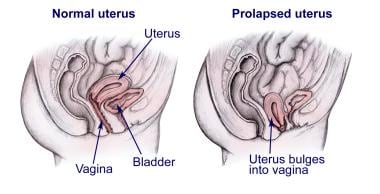
Uterine prolapse is a descent or herniation of the uterus into or beyond the vagina. Uterine prolapse is best considered under the broader heading of "pelvic organ prolapse," which also includes cystocele, urethrocele, enterocele, and rectocele. Anatomically, the vaginal vault has 3 compartments: an anterior compartment (consisting of the anterior vaginal wall), a middle compartment (cervix), and a posterior compartment (posterior vaginal wall). Uterine prolapse involves the middle compartment.

Four stages of uterine prolapse are defined: stage I is defined as descent of the uterus to any point in the vagina above the hymen (or hymenal remnants); stage II, as descent to the hymen; stage III, as descent beyond the hymen; and stage IV, as total eversion or procidentia. Uterine prolapse always is accompanied by some degree of vaginal wall prolapse.

Pathophysiology

Uterine prolapse results from weakness of the pelvic support, including musculature, ligaments, and fascia. In adults, the condition usually results from obstetrical trauma and lacerations sustained during labor and delivery. The process of vaginal childbirth results in stretching of the pelvic floor, and this appears to be the most significant cause of uterine prolapse. Furthermore, through the aging process, as estrogen levels decline, pelvic tissues lose elasticity and strength.

Collagen plays an important role in uterine prolapse, suggested by the increased risk of patients with Marfan syndrome and Ehlers-Danlos syndrome. One recent study noted 30% lower collagen levels in tissue from young women (aged younger than 53 y) with genital prolapse than in age-matched controls. This finding may point to a genetic predisposition to prolapse in certain individuals.

In neonates, uterine prolapse is secondary to congenital weakness in the pelvic musculature or to defects in innervation.

Frequency

United States

Pelvic support defects are relatively common and increase with age and parity. One study of more than 16,000 patients found the rate of uterine prolapse to be 14.2%. The mean age at time of surgery for pelvic organ prolapse was 54.6 years.

Mortality/Morbidity

Significant morbidity can occur, usually secondary to alterations in bowel, bladder, or sexual function.

Race

US studies have found Hispanic race to be correlated with prolapse. By contrast, African Americans had the lowest risk of uterine prolapse. These findings were independent of parity, age, and body habitus, suggesting a genetic component to prolapse.

Sex

Uterine prolapse affects females only.

Age

Uterine prolapse is most common in multiparous (some estimates are >50%) and postmenopausal women. It occasionally occurs in young or nulliparous women (estimates are about 2% for symptomatic prolapse) and rarely occurs in neonates.


History

Symptoms typically are exacerbated by prolonged standing or walking and are relieved by lying down. Accordingly, patients may feel better in the morning, with symptoms worsening throughout the day.

  • Pelvic heaviness or pressure
  • Protrusion of tissue: A patient who reports of a "bulge" has been found to be a valuable screening tool for the detection of pelvic organ prolapse (81% PPV, 76% NPV).
  • Pelvic pain
  • Sexual dysfunction, including dyspareunia, decreased libido, and difficulty achieving orgasm
  • Lower back pain
  • Constipation
  • Difficulty walking
  • Difficulty urinating
  • Urinary frequency
  • Urinary urgency
  • Urinary incontinence
  • Nausea
  • Purulent discharge (rare)
  • Bleeding (rare)
  • Ulceration (rare)

Physical

A complete pelvic examination is required, including a rectovaginal examination to assess sphincter tone.

  • A Sims speculum or a standard bivalve speculum with the anterior blade removed may facilitate diagnosis.
  • Physical findings may be enhanced by having the patient strain during the examination or by having her stand or walk prior to examination. Standing with an empty bladder may result in a 1-2 stage difference in the degree of prolapse noted on examination when compared to a supine position with a full bladder.
  • Mild uterine prolapse may be recognized only when the patient strains during the bimanual examination.
  • Evaluate all patients for estrogen status.
  • Signs of decreased estrogens
    • Loss of rugae in the vaginal mucosa
    • Decreased secretions
    • Thin perineal skin
    • Easy perineal tearing
  • Physical examination should also be directed toward ruling out serious conditions that may rarely be associated with uterine prolapse, such as infection, strangulation with uterine ischemia, urinary outflow obstruction with renal failure, and hemorrhage.
    • If urinary obstruction is present, the patient may exhibit suprapubic tenderness or a tympanitic bladder.
    • If infection is present, purulent cervical discharge may be noted.

Causes

The following conditions are associated with uterine prolapse:

  • Obstetrical trauma (increases with multiparity, size of vaginally delivered infant) due to stretching and subsequent weakening of the pelvic support structure
  • Congenital weakness of pelvic supports (associated with spina bifida in neonates)
  • Decreased estrogen (eg, menopause) resulting in loss of elasticity of pelvic structures
  • Increased intra-abdominal pressure (eg, obesity, chronic lung disease, asthma)
  • Certain anatomical variants are associated with an increased prevalence of uterine prolapse.
    • Women with a wide transverse pelvic inlet appear to be at increased risk of developing pelvic organ prolapse, as do those with a less vertical orientation of the pelvic inlet.
    • A retrograde uterus is more likely to result in uterine prolapse.


Abortion, Complete
Abortion, Incomplete
Abortion, Inevitable
Abortion, Missed
Abortion, Threatened
Constipation
Dysmenorrhea
Gonorrhea
Hernias
Ovarian Cysts
Pediatrics, Child Sexual Abuse
Pelvic Inflammatory Disease
Pregnancy, Ectopic
Rectal Prolapse
Renal Calculi
Sexual Assault
Trauma, Lower Genitourinary
Trichomoniasis
Urinary Incontinence
Urinary Tract Infection, Female
Vaginitis
Vulvovaginitis


Lab Studies

  • From the perspective of an emergency physician, the workup of uterine prolapse consists of identifying the rare but serious complications related to uterine prolapse (infection, urinary obstruction, hemorrhage, strangulation).
  • Laboratory studies are unnecessary in uncomplicated cases.
  • When indicated, order urinalysis, pregnancy testing, and cervical cultures to exclude other conditions in the differential diagnosis.
  • Cervical cultures are indicated for cases complicated by ulceration or purulent discharge.
  • A Papanicolaou test (Pap smear cytology) or biopsy may be indicated in rare cases of suspected carcinoma, although this should be deferred to the primary care physician or gynecologist.
  • If symptoms or physical examination findings suggest urinary obstruction, a BUN and creatinine measurement may be indicated to assess renal function.

Imaging Studies

  • A pelvic ultrasound examination may be useful to distinguish prolapse from other entities when the history and physical examination suggest other processes in the differential diagnosis.
  • Ultrasonography performed by an emergency physician is a bedside test that can be rapidly performed to rule out the presence of hydronephrosis, if this is suspected.
  • MRI has been used to grade pelvic organ prolapse but generally is not indicated as an emergent test.

Other Tests

  • Additional studies (eg, formal urodynamics) are best reserved for use by specialists or consultants and are not indicated in the emergent setting.


Emergency Department Care

  • In neonates, conservative (nonsurgical) care is preferred and produces good long-term results.
    • Uncomplicated complete prolapse may be managed with simple digital reduction.
    • A small pessary may be used to help maintain normal uterine position, but this requires close gynecological follow-up.
  • In adults, surgical repair of weak pelvic supports is the preferred treatment, but it is not indicated emergently. Pessaries may be used to attain temporary relief of symptomatic prolapse but require frequent care and monitoring by a gynecologist.

Consultations

Consult an obstetrician or gynecologist for definitive management of symptomatic prolapse in adults and for long-term follow-up in all children.


Antibiotic therapy is indicated for rare cases complicated by infection. Drug choice is guided by the clinical situation. Consider estrogen replacement for any patient with evidence of decreased estrogen status and no contraindications to replacement. Initiation of estrogen replacement therapy is unnecessary in the emergent setting.

Drug Category: Antibiotics

Empiric antimicrobial therapy must be comprehensive and should cover all likely pathogens in the context of the clinical setting.

In general, clindamycin administered in conjunction with an aminoglycoside is useful as initial treatment for infections resulting from the complications of uterine prolapse. Second- and third-generation cephalosporins are acceptable alternatives.

Drug NameClindamycin (Cleocin HCl, Cleocin Phosphate)
DescriptionLincosamide useful as treatment against serious infections caused by most staphylococci strains. Inhibits bacterial protein synthesis by its action at the bacterial ribosome. Binds preferentially to the 50S ribosomal subunit and affects the process of peptide chain initiation.
Adult Dose600-1200 mg/d IV divided q6-8h depending on degree of infection
Pediatric DoseNot established
ContraindicationsDocumented hypersensitivity; pseudomembranous colitis, hepatic impairment
InteractionsIncreases duration of neuromuscular blockade induced by tubocurarine and pancuronium; erythromycin may antagonize effects; antidiarrheals may delay absorption
PregnancyB - Usually safe but benefits must outweigh the risks.
PrecautionsAdjust dose in severe hepatic dysfunction; no adjustment necessary in renal insufficiency; associated with severe and possibly fatal colitis

Drug NameGentamicin (Garamycin, Gentacidin)
DescriptionAminoglycoside antibiotic used for gram-negative bacterial coverage. Commonly used in combination with an agent against gram-positive organisms and one that covers anaerobes.
Dosing regimens are numerous and are adjusted based on CrCl, changes in volume of distribution, and the body space into which the agent must distribute. May be administered IV/IM.
Adult DoseDosing regimen for serious infections and normal renal function: 3 mg/kg IV/IM q8h
Extended dosing regimen for life-threatening infections: 5 mg/kg/d IV/IM divided q6-8h
1-2.5 mg/kg IV loading dose; 1-1.5 mg/kg IV q8h maintenance dose
Each regimen must be followed by at least a trough level drawn on the third or fourth dose, 0.5 h before dosing; may draw a peak level 0.5 h after the 30-min infusion
Pediatric DoseNot established
ContraindicationsDocumented hypersensitivity; non–dialysis-dependent renal insufficiency
InteractionsCoadministration with other aminoglycosides, cephalosporins, penicillins, and amphotericin B may increase nephrotoxicity; aminoglycosides enhance effects of neuromuscular blocking agents, thus prolonged respiratory depression may occur; coadministration with loop diuretics may increase auditory toxicity of aminoglycosides; possible irreversible hearing loss of varying degrees may occur (monitor regularly)
PregnancyC - Safety for use during pregnancy has not been established.
PrecautionsNarrow therapeutic index (not intended for long-term therapy); caution in renal failure (not on dialysis), myasthenia gravis, hypocalcemia, and conditions that depress neuromuscular transmission; adjust dose in renal impairment

Drug NameCefoxitin (Mefoxin)
DescriptionSecond-generation cephalosporin indicated for gram-positive cocci and gram-negative rod infections. Infections caused by cephalosporin- or penicillin-resistant gram-negative bacteria may respond to cefoxitin.
Adult Dose1-2 g IV q6-8h
Pediatric DoseNot established
ContraindicationsDocumented hypersensitivity
InteractionsProbenecid may decrease elimination and increase effects; concurrent use with aminoglycosides may potentiate aminoglycoside nephrotoxicity; monitor renal function closely
PregnancyB - Usually safe but benefits must outweigh the risks.
PrecautionsBacterial or fungal overgrowth of nonsusceptible organisms may occur with prolonged use or repeated treatment; caution in patients with previously diagnosed colitis

Drug NameCeftriaxone (Rocephin)
DescriptionThird-generation cephalosporin with broad-spectrum, gram-negative activity. Lower efficacy against gram-positive organisms and higher efficacy against resistant organisms. Arrests bacterial growth by binding to one or more penicillin-binding proteins.
Adult Dose1-2 g/d IV/IM or divided bid; not to exceed 4 g/d
Pediatric DoseNot established
ContraindicationsDocumented hypersensitivity
InteractionsProbenecid may increase levels; coadministration with ethacrynic acid, furosemide, and aminoglycosides may increase nephrotoxicity
PregnancyB - Usually safe but benefits must outweigh the risks.
PrecautionsAdjust dose in renal impairment; caution in breastfeeding women and allergy to penicillin


Further Inpatient Care

  • Further inpatient care is indicated only in cases complicated by severe ulceration, infection, or renal failure.

Further Outpatient Care

  • Arrange for follow-up with an obstetrician or gynecologist in 1-2 weeks.
  • Pelvic floor (Kegel) exercises are occasionally helpful.
    • Interrupt urine stream, contract against 2 fingers inserted into the vagina, or contract against vaginal cones.
    • Avoid contraction of gluteal muscles.
    • Repeat 50-200 times per day, 5-10 seconds per repetition.

Deterrence/Prevention

  • Minimize obstetrical trauma during vaginal delivery.

Complications

  • Ulceration
  • Infection/urosepsis (including due to pessary use)
  • Incontinence
  • Constipation
  • Fistula
  • Postrenal failure

Prognosis

  • Objective data on the natural history of uterine prolapse are very limited.
  • Neonatal uterine prolapse is associated with an excellent long-term prognosis with conservative management.
  • Uterine prolapse in adults may be corrected with a variety of surgical procedures, the descriptions of which are beyond the scope of this article. Preservation of fertility is generally possible in younger patients.

Patient Education

  • Pelvic floor (Kegel) exercises
  • Correct lifting techniques
  • Weight reduction and maintenance
  • Constipation and its prevention


Medical/Legal Pitfalls

  • Failure to recognize rare complications
  • Failure to provide follow-up


  • DeLancey JO. Anatomy and biomechanics of genital prolapse. Clin Obstet Gynecol. Dec 1993;36(4):897-909. [Medline].
  • Hagen S, Stark D, Maher C. Conservative management of pelvic organ prolapse in women. Cochrane Database Syst Rev. 2004;CD003882. [Medline].
  • Handa VL, Harris TA, Ostergard DR. Protecting the pelvic floor: obstetric management to prevent incontinence and pelvic organ prolapse. Obstet Gynecol. Sep 1996;88(3):470-8. [Medline].
  • Haylen BT. The retroverted uterus: ignored to date but core to prolapse. Int Urogynecol J Pelvic Floor Dysfunct. Dec 8 2005;1-4. [Medline].
  • Hendrix SL, Clark A, Nygaard I. Pelvic organ prolapse in the Women's Health Initiative: gravity and gravidity. Am J Obstet Gynecol. Jun 2002;186(6):1160-6. [Medline].
  • Loret de Mola JR, Carpenter SE. Management of genital prolapse in neonates and young women. Obstet Gynecol Surv. Apr 1996;51(4):253-60. [Medline].
  • Morley GW. Treatment of uterine and vaginal prolapse. Clin Obstet Gynecol. Dec 1996;39(4):959-69. [Medline].
  • Ozel B, White T, Urwitz-Lane R. The impact of pelvic organ prolapse on sexual function in women with urinary incontinence. Int Urogynecol J Pelvic Floor Dysfunct. Jan 2006;17(1):14-7. [Medline].
  • Rinne KM, Kirkinen PP. What predisposes young women to genital prolapse?. Eur J Obstet Gynecol Reprod Biol. May 1999;84(1):23-5. [Medline].
  • Rush CB, Entman SS. Pelvic organ prolapse and stress urinary incontinence. Med Clin North Am. Nov 1995;79(6):1473-9. [Medline].
  • Sanai T, Yamashiro Y, Nakayama M. End-stage renal failure due to total uterine prolapse. Urology. Mar 2006;67(3):622.e5-7. [Medline].
  • Shaunik A. Pelvic organ myiasis. Obstet Gynecol. Feb 2006;107(2 Pt 2):501-3. [Medline].
  • Silva WA, Kleeman S, Segal J. Effects of a full bladder and patient positioning on pelvic organ prolapse assessment. Obstet Gynecol. Jul 2004;104(1):37-41. [Medline].
  • Soderberg MW, Falconer C, Bystrom B. Young women with genital prolapse have a low collagen concentration. Acta Obstet Gynecol Scand. Dec 2004;83(12):1193-8. [Medline].
  • Swift S, Woodman P, O'Boyle A. Pelvic Organ Support Study (POSST): the distribution, clinical definition, and epidemiologic condition of pelvic organ support defects. Am J Obstet Gynecol. Mar 2005;192(3):795-806. [Medline].
  • Tan JS, Lukacz ES, Menefee SA. Predictive value of prolapse symptoms: a large database study. Int Urogynecol J Pelvic Floor Dysfunct. May-Jun 2005;16(3):203-9; discussion 209. [Medline].
  • Weber AM, Walters MD, Piedmonte MR. Sexual function and vaginal anatomy in women before and after surgery for pelvic organ prolapse and urinary incontinence. Am J Obstet Gynecol. Jun 2000;182(6):1610-5. [Medline].
  • Wheeler LD, Lazarus R, Torkington J. Lesson of the week: perils of pessaries. Age Ageing. Sep 2004;33(5):510-1. [Medline].

Uterine Prolapse excerpt

Article Last Updated: May 24, 2006