Continually Updated Clinical Reference
 
 
  All Sources     eMedicine     Medscape     Drug Reference     MEDLINE
 
eMedicine - Trauma, Peripheral Vascular Injuries : Article by

Quick Find
Authors & Editors
Introduction
Clinical
Differentials
Workup
Treatment
Medication
Follow-up
Miscellaneous
Acknowledgments
References

Related Articles
Abdominal Trauma, Blunt

Dislocations, Elbow

Fractures, Femur

Fractures, Knee

Fractures, Tibia and Fibula

Initial Evaluation of the Trauma Patient

Shock, Hemorrhagic


Patient Education
Click here for patient education.


Author: Eric J Morley, MD, Resident, Department of Emergency Medicine, State University of New York Downstate/Kings County Hospital

Coauthor(s): Christopher I Doty, MD, FAAEM, Assistant Professor of Emergency Medicine, Combined EM/IM Residency Program Director, Department of Emergency Medicine, Kings County Hospital Center, State University of New York Downstate Medical Center

Editors: Peter MC DeBlieux, MD, Professor of Clinical Medicine and Pediatrics, Section of Pulmonary and Critical Care Medicine, Program Director, Department of Emergency Medicine, Louisiana State University Health Sciences Center; Francisco Talavera, PharmD, PhD, Senior Pharmacy Editor, eMedicine; Eric Legome, MD, Residency Director, Assistant Professor of Emergency Medicine, Department of Emergency Medicine New York University, New York University Hospital, Bellevue Hospital Center, Manhattan VA; John Halamka, MD, Chief Information Officer, CareGroup Healthcare System, Assistant Professor of Medicine, Department of Emergency Medicine, Beth Israel Deaconess Medical Center; Assistant Professor of Medicine, Harvard Medical School; Rick Kulkarni, MD, Medical Director, Assistant Professor of Surgery, Section of Emergency Medicine, Yale-New Haven Hospital

Author and Editor Disclosure

Synonyms and related keywords: peripheral vascular injury, vascular trauma, tensile strain, shear strain, vessel rupture, intimal rupture, penetrating trauma, blunt trauma, stab wounds, gunshot wounds


Background

Peripheral vascular injuries may occur through multiple mechanisms. These injuries may be difficult to detect; however, they may also cause serious morbidity and on occasion be life-threatening. Therefore, having a rational approach to the diagnosis and treatment of such patients to prevent a potentially catastrophic outcome is important.

Pathophysiology

Penetrating trauma to the extremities may result in peripheral vascular injury. Stab and gunshot wounds can both result in partial or complete transection of vascular structures via direct contact. In addition, gunshot wounds may indirectly cause vascular trauma. As a consequence of the cavity left behind by a bullet, the tissue recoils back to fill the space, and this motion may cause injury to adjacent vascular structures. The amount of indirect damage done relies on the velocity and mass of the bullet.

Blunt forces may also result in vascular injury. This may occur via shearing forces transmitted to the vessel or direct crushing of the vessel. These injuries may be associated with obvious mechanisms, such as motor vehicle accidents or severe crush injuries, but they should also be suspected in cases of bites from large dogs, electrical injuries, and other instances where large amounts of force may be applied to the tissue surrounding a vascular structure.

Searching for neurologic damage as well as fractures is important in patients with peripheral vascular injuries. Peripheral nerves are usually closely associated with vascular structures in the limbs, and the large forces often involved in vascular injuries may result in fractures.

Frequency

United States

Peripheral vascular injuries comprise approximately 3% of major injuries. Most are caused by penetrating trauma, but blunt trauma and iatrogenic injuries are also important mechanisms.

Mortality/Morbidity

  • Mortality directly relates to other injuries (injury severity score) and to the degree of hemorrhage.
    • Isolated peripheral vascular trauma usually has a low mortality rate.
    • Morbidity increases with prolonged ischemia, which can result in amputation of the affected limb.
    • Morbidity associated with arterial reconstruction includes postrepair edema, infection, arterial compression, and anastomotic thrombosis.
    • Neurologic deficits from peripheral nerve damage may occur.

Sex

Penetrating peripheral vascular injuries secondary to gunshots or stab wounds are more common in males than in females.

Age

Traumatic injury disproportionately affects younger persons and is the leading cause of death in those aged 1-44 years.


History

  • Tetanus status 

  • Timing of wound

  • History of abuse or danger to patient if discharged

  • Paresthesia or loss of function in a limb

  • Information regarding the number of gunshots heard may be helpful. 

  • Knowing the type of weapon used and the velocity or potential path of the missile may help in assessment.  

  • In blunt vascular injury, a detailed mechanism of injury often helps in appreciating subtle injuries.

Physical

Always assess ABCs first. During the primary survey, any extremity hemorrhage should be addressed. The patient can then be examined for potential vascular injury. A thorough examination of all injured extremities should be performed. Particular attention should be paid to assessing pulses, capillary refill, deformities, and neurologic function. Two-point discrimination and strength testing should be included in the neurologic examination. 

Below are clusters of physical examination findings and historical features that aid in the diagnostic and therapeutic approach to patients in whom vascular injury is considered.

  • Hard signs of vascular injury

    • Expanding hematoma
    • Palpable thrill or audible bruit
    • Pulsatile hemorrhage
    • Pain on passive extension of muscle compartment
    • Pallor
    • Paresthesias
    • Pulselessness (palpable pulse does not exclude diagnosis)
    • Prolonged capillary refill
    • Paralysis
  • Soft signs of vascular injury

    • Large hematoma
    • Isolated peripheral nerve deficit
    • Delayed capillary refill
  • High-risk injuries

    • Proximity injuries (within 1 cm of vascular bundles, ie, common femoral, axillary, brachial, and popliteal)
    • Associated fractures or dislocations
    • Bites from large dogs or other animals 
    • Crush injuries 
    • Shotgun injuries

Causes

Most injuries are secondary to acts of violence involving gunshot or stab wounds. Vascular injuries usually are caused by penetrating trauma from knives, bullets, and glass. Motor vehicle accidents, heavy machinery-related injuries, and falls cause a small proportion of blunt vascular injuries secondary to decelerating or crushing forces.

Penetrating injuries cause damage to vascular structures by direct injury (eg, secondary to stab or low-velocity missile wounds) and/or high-velocity injury (eg, cavitation effect by passage of a high-velocity missile through tissue with transfer of large amounts of kinetic energy). Destructive power increases proportionately with missile velocity and mass. These types of injuries can cause severe damage, even in the absence of direct vascular trauma.


Abdominal Trauma, Blunt
Dislocations, Elbow
Fractures, Femur
Fractures, Knee
Fractures, Tibia and Fibula
Initial Evaluation of the Trauma Patient
Shock, Hemorrhagic


Lab Studies

  • Laboratory studies do not help diagnose injury but may assist with management. Obtain the following studies in patients with vascular trauma:

    • Serial hemoglobin measurements
    • Typing and crossmatching of blood
    • BUN and creatinine levels as a measure of baseline renal function in anticipation of a contrast study
    • Baseline measurement of coagulation profile, especially if any associated medical conditions may affect coagulation (eg, alcoholism)
    • Serum lactate or base deficit measurement to assess degree of global ischemia

Imaging Studies

  • Plain radiography  

    • Radiographs help diagnose fractures, foreign bodies, or missiles that may be responsible for neurovascular compromise.
    • Certain fractures more commonly are associated with blunt vascular injury.

      • Humerus and femur supracondylar or neck and shaft fractures

      • Medial clavicle
      • First rib and scapular fractures
    • Certain dislocations more commonly are associated with blunt vascular injury.

      • Elbow 

      • Knee 

      • Shoulder
      • Sternoclavicular
      • Scapulothoracic
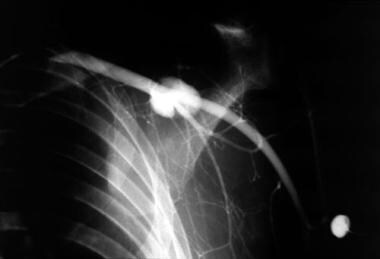
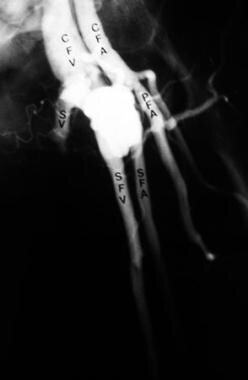
  • Angiography: For patients with high-risk injuries (especially proximity injuries) but no obvious ischemia on physical examination (no hard signs), further testing may be indicated. Indications for angiography or an equivalent test are listed below.

    • Angiography is highly accurate in detecting arterial injuries.
    • Patients with soft signs (especially pulse deficit) should have other testing performed (angiography, CT angiography [CTA], or ultrasonography). 
    • Patients with no hard or soft signs and an ankle brachial index (ABI) ³0.90 should not undergo angiography and may be admitted for observation.
    • Patients with a normal vascular examination and an ABI <0.90 should have angiography or an equivalent test performed.
    • Angiography is indicated only in the stable patient.
    • Any patient with obvious vascular injury (hard signs) mandates immediate surgical exploration with or without intraoperative angiography.
    • Use of angiography for proximity with normal examination findings usually is unnecessary. A normal physical examination evaluating the neurovascular status of the extremity is usually sufficient to warrant observation over angiography. Multiple studies demonstrate a very low likelihood of significant vascular injuries if distal pulses are intact and the ABI is ³0.90. However, strongly consider angiography in patients with a high-velocity gunshot wound or severe blunt trauma. This should be a decision made together with the consulting surgical service.

Other Tests

  • Ankle brachial index  

    • ABI is an excellent screening test when used in conjunction with physical examination for peripheral pulses.
    • Perform ABI by placing a blood pressure (BP) cuff distal to the injury on the affected limb, and record the BP at which the pulse becomes detectable by Doppler ultrasonography. Then, in the unaffected arm, record the brachial BP at which the pulse is detected by Doppler ultrasonography. The ABI = ankle/wrist Doppler systolic pressure in the affected limb/brachial Doppler systolic pressure in the unaffected limb.
  • CT angiography

    • Multiple retrospective and two prospective studies indicate that CTA with helical or multidetector CT scan is highly accurate, with sensitivity and specificity in the high 90s. A decision to use CTA as a screening test should be made with the radiology department at the institution.1, 2, 3, 4 
    • Advantage - Noninvasive
    • Disadvantage - Requires intravenous contrast 
    • Disadvantage - Requires radiologist capable of reading CTA
  • Color-flow duplex ultrasonography

    • Two prospective studies evaluating ultrasonography in the diagnosis of peripheral vascular trauma have been completed.5, 6

    • Sensitivity, 95%; specificity, 99%; with an accuracy of 98% for predicting vascular injury

    • Images the vessel and measures blood flow and velocity 

    • Noninvasive alternative to arteriography in monitoring occult injuries  

    • Disadvantage - Requires skilled technician  

    • Advantage - Noninvasive and can be performed serially at bedside  

    • Ideal first screening test if capable technician is available  
  • Digital subtraction angiography  

    • More sensitive than arteriography in detecting extravasation of contrast material  

    • Sensitive to motion artifact  
  • Emergency center arteriography  

    • Involves manual contrast injection followed by immediate radiography
    • Rapid, accurate, and does not require transportation of an unstable patient to angiography suite
    • Currently used in young children, as formal angiography is difficult to obtain in an uncooperative patient

Procedures

  • Splint fractures and reduce dislocations.  
  • Unstable patients may require central venous access.
  • Doppler limb pressure measurements, documenting decreased pulse pressure in the affected limb, help establish a diagnosis of vascular injury.


Prehospital Care

  • Secure airway as needed.  
  • Fluid resuscitation requires vascular access.
  • Control hemorrhage by external compression.
  • Splint extremity as needed.

Emergency Department Care

  • As with all traumas, maintain ABCs as the first priority.
  • If intravenous access is required, place a large-bore intravenous line in the unaffected limb or place a central line as needed. 
  • Conduct a more detailed secondary evaluation to assess for vascular injury. Include a thorough neurovascular examination, as described in Physical, looking for hard and soft signs of vascular injury.
  • Look for historical or physical findings that indicate a high risk of vascular injury. Proximity wound, bite from a large animal, high-velocity bullet or shotgun wound, severely crushed limb, associated dislocation (especially posterior knee dislocation), and others.
  • Obvious vascular injury with evidence of ischemia indicates emergent surgical exploration once the patient is stabilized.
  • Frequently assess vascular status.

    • Doppler examination for pulses helps in patients with diminished pulses.
    • Measure blood pressure in an injured and uninjured extremity. A 10 mm Hg difference suggests vascular injury, as does an ABI less than 1.0.
  • Control hemorrhage with direct pressure. Do not blindly attempt to clamp a vessel because the potential for damaging accompanying peripheral nerves is high.
  • Generally, extremity tissues tolerate 4-6 hours of ischemia. Carefully monitor popliteal artery injuries because of minimal collateral circulation present in the lower extremity. After 6-8 hours of ischemia, permanent disability of the limb and/or amputation will occur.
  • Anatomic repositioning and splinting may help restore circulation in dislocations or fractures.
  • Monitor the patient closely for development of compartment syndrome.
  • Wounds should be irrigated extensively with normal saline.
  • No clear consensus exists regarding use of antibiotics; however, a first-generation cephalosporin is usually adequate for an uncomplicated injury. If injury is caused by an animal bite or an open fracture is present, treat accordingly.

Consultations

Prompt consultation with the trauma team is routine at most major urban trauma centers. If isolated peripheral vascular injury is present, consult the vascular surgeon as soon as the patient stabilizes to reduce ischemia time.


The goal of therapy is to control pain and infections.

Drug Category: Analgesics

Pain control is essential to quality patient care. It ensures patient comfort, promotes pulmonary toilet, and aids physical therapy regimens. Most analgesics have sedating properties that benefit patients with traumatic injuries.

Use of pain medications in trauma victims is a difficult issue. Narcotics have several drawbacks, including exacerbating hypotension in hemorrhaging patients and mental status changes in patients with head injuries. These agents also may mask pain caused by subtle injuries. Nevertheless, in cases of isolated extremity trauma in stable patients, use pain medications. Use IV administration for more precise titration.

Drug NameFentanyl (Duragesic, Fentanyl Oralet)
DescriptionPotent narcotic analgesic with much shorter half-life than morphine sulfate. DOC for conscious sedation analgesia. Ideal for short-term (30-60 min) analgesic action during anesthesia and immediate postoperative period. Excellent choice for short-term pain management and sedation; easy to titrate. Easily and quickly reversed by naloxone. After initial dose, do not titrate subsequent doses more frequently than q3-6h. When using transdermal dosage form, most patients are controlled with 72-h dosing intervals, although some patients require 48-h dosing intervals.
Adult DoseEmergency: 0.5-2 mcg/kg/dose IV/IM
Analgesia: 0.5-1 mcg/kg/dose IM/IV q30-60min
Transdermal: Apply a 25-mcg/h system q48-72h
Pediatric Dose<2 years: 2-3 mcg/kg/dose IV/IM q30-60min
2-12 years: 1-2 mcg/kg/dose IV/IM q60min
>12 years: Administer as in adults
ContraindicationsDocumented hypersensitivity; hypotension or potentially compromised airway in which it would be difficult to establish rapid airway control
InteractionsPhenothiazines may antagonize analgesic effects of opiate agonists; tricyclic antidepressants may potentiate adverse effects when coadministered
PregnancyC - Safety for use during pregnancy has not been established.
PrecautionsCaution in hypotension, respiratory depression, constipation, nausea, emesis, and urinary retention; an idiosyncratic reaction (chest wall rigidity syndrome) may require neuromuscular blockade to increase ventilation

Drug NameMorphine sulfate (Duramorph, Astramorph, MS Contin)
DescriptionDOC for narcotic analgesia due to reliable and predictable effects, safety profile, and ease of reversibility with naloxone; IV administration may be dosed in a number of ways and commonly is titrated until desired effect is obtained.
Adult DoseStarting dose: 0.1 mg/kg IV/IM/SC
Maintenance dose: 5-20 mg/70 kg IV/IM/SC q2-4h
Relatively hypovolemic patients: Start with 2 mg IV/IM/SC and reassess hemodynamic effects of dose
Pediatric DoseNeonates: 0.05-0.2 mg/kg dose IV/IM/SC prn
Children: 0.1-0.2 mg/kg dose IV/IM/SC q2-4h prn
ContraindicationsDocumented hypersensitivity; hypotension; potentially compromised airway in which establishing rapid airway control would be difficult
InteractionsPhenothiazines may antagonize analgesic effects of opiate agonists; tricyclic antidepressants, MAOIs, and other CNS depressants may potentiate adverse effects of morphine when coadministered
PregnancyC - Safety for use during pregnancy has not been established.
PrecautionsAvoid in hypotension, respiratory depression, nausea, emesis, constipation, and urinary retention; caution in atrial flutter and other supraventricular tachycardias; has vagolytic action and may increase ventricular response rate

Drug Category: Antibiotics

Antibiotics should be used in all high-risk wounds. These include contaminated and devitalized wounds; patients with diabetes, HIV, or other immunocompromising disorder; and wounds caused by animal or human bites.  Patients with underlying fractures should be treated with antibiotics in a similar fashion as anyone with an open fracture.

Drug NameCefazolin (Ancef, Kefzol, Zolicef)
DescriptionFirst-generation semisynthetic cephalosporin that arrests bacterial cell wall synthesis, inhibiting bacterial growth. Primarily active against skin flora, including Staphylococcus aureus. Typically used alone for skin and skin-structure coverage. IV and IM dosing regimens are similar.
Adult Dose250 mg to 2 g IV/IM q6-12h, depending on severity of infection; not to exceed 12 g/d
Pediatric Dose25-100 mg/kg/d IV/IM divided q6-8h, depending on severity of infection; not to exceed 6 g/d
ContraindicationsDocumented hypersensitivity
InteractionsProbenecid decreases renal clearance and prolongs effects; concurrent use with aminoglycosides may increase renal toxicity; administration may yield false-positive urine dip for glucose
PregnancyB - Usually safe but benefits must outweigh the risks.
PrecautionsAdjust dose in renal impairment; prolonged use of antibiotics is associated with superinfections and promotion of nonsusceptible organisms; complications usually are reversible

Drug Category: Tetanus immunization

Tetanus immunization is indicated when 10 years have passed since last booster shot. If immunization status is unclear, tetanus immune globulin is required.

Drug NameTetanus toxoid
DescriptionUsed to induce active immunity against tetanus in selected patients. The immunizing agents of choice for most adults and children >7 y are tetanus and diphtheria toxoids. Necessary to administer booster doses to maintain tetanus immunity throughout life.
Pregnant patients should receive only tetanus toxoid not a diphtheria antigen-containing product.
In children and adults, may administer into deltoid or midlateral thigh muscles. In infants, preferred site of administration is the mid thigh laterally.
Adult DosePrimary immunization: 0.5 mL IM; administer 2 injections 4-8 wk apart and a third dose 6-12 mo after second injection
Booster dose: 0.5 mL IM q10y
Pediatric DoseAdminister as in adults
ContraindicationsDocumented hypersensitivity; history of any type of neurologic symptoms or signs following administration of this product; FDA recommends that elective tetanus immunization be deferred during any outbreak of poliomyelitis because tetanus toxoid injections are an important cause of provocative poliomyelitis
InteractionsPatients receiving immunosuppressants, including corticosteroids or radiation therapy, may remain susceptible despite immunization because of poor immune response; cimetidine may enhance or augment delayed-hypersensitivity responses to skin-test antigens; avoid concurrent use of systemic chloramphenicol, since it may impair amnestic response to tetanus toxoid; concurrent use of tetanus immunoglobulin may delay development of active immunity by several days; this interaction is clinically insignificant and does not preclude concurrent use
PregnancyC - Safety for use during pregnancy has not been established.
PrecautionsNever use to treat actual tetanus infections or for immediate prophylaxis of unimmunized individuals; instead use tetanus antitoxin, preferably human tetanus immunoglobulin; diminished antibody response to active immunization may be seen in patients receiving immunosuppressive therapy; it is better to defer primary diphtheria immunization until immunosuppressive therapy is discontinued; routinely immunize symptomatic and asymptomatic persons who are infected with HIV

Drug NameTetanus immune globulin (Hyper-Tet)
DescriptionUsed for passive immunization of patients with a wound that may be contaminated with tetanus spores.
Adult Dose250-500 U IM in extremity opposite to tetanus toxoid lesion
Pediatric DoseAdminister as in adults
ContraindicationsBecause antibodies in globulin preparation may interfere with immune response to vaccination, do not administer within 3 mo of live-virus immunoglobulin administration; may be necessary to revaccinate patients who received immunoglobulin shortly after live-virus vaccination
InteractionsNone reported
PregnancyC - Safety for use during pregnancy has not been established.
PrecautionsPatients with isolated IgA deficiency may develop antibodies to IgA and may have anaphylactic reactions to subsequent administration of blood products that contain IgA; do not perform skin testing because intradermal injection of concentrated gamma-globulin may cause a localized area of inflammation and can be misinterpreted as a positive allergic reaction rather than a localized chemical tissue irritation; medication mistakenly may be withheld from a nonallergic patient; true allergic responses to human gamma-globulin administered in the prescribed IM manner are extremely rare; do not mix with other medications, as they are usually incompatible


Further Inpatient Care

  • Most patients require surgical consultation and admission.

Further Outpatient Care

  • Patients should have close follow-up because many injuries can be successfully treated if detected early.

Transfer

  • If angiography or surgical consultation is not available at the primary institution, transfer the patient as quickly as possible after stabilization.

Complications

  • Associated nerve damage occurs in a large percentage of vascular injuries, which may result in permanent deficits.
  • Compartment syndrome
  • Venous thrombosis
  • Arterial embolization
  • Wound infection
  • Loss of limb may occur. Restoring blood flow to ischemic tissue within 6 hours is crucial or irreversible damage will occur.
  • Ischemic contracture of affected limb 

Prognosis

  • Blunt vascular injuries have a worse prognosis than those caused by penetrating trauma.
  • The probability of limb loss is higher with blunt injury, greater extent of soft tissue injury (muscle, skin, and major nerves), greater number of associated long bone fractures, pulseless extremity, and need for arterial repair. 
  • Injury severity score correlates with mortality rate.
  • Intraoperative hypotension, arterial intimal injury, bony fracture, and thoracic injury are all predictors of higher postoperative complications.  
  • Amputation rates are now very low. In addition, many patients with vascular injuries experience minimal disability. 


Medical/Legal Pitfalls

  • Failure to promptly diagnose peripheral vascular injury is a pitfall. The legal implications of delayed diagnosis resulting in limb amputation are self-explanatory; however, amputation sometimes is necessary in severe injury. In such instances, do not delay amputation, as this results in increased risk of sepsis and higher morbidity.  
  • Failure to provide a thorough physical examination, prompt consultation, early intravenous antibiotics, and tetanus immunization if indicated also are pitfalls. The goals are stabilization of the patient and minimization of ischemic time.

Special Concerns

  • Pediatrics
    • A thorough neurovascular examination is more difficult in young children.
    • Children have a higher risk of developmental abnormalities secondary to ischemia.
    • Emergency center arteriography may be an alternative to aid rapid diagnosis in young patients.
  • Geriatrics

    • Older patients have a higher mortality rate secondary to comorbid conditions.
    • Aggressive resuscitation is needed prior to operative interventions.


The authors and editors of eMedicine gratefully acknowledge the contributions of previous authors, A Antoine Kazzi, MD, Anupama Singh, MD, and Mazen El-Sayed, MD, to the development and writing of this article.


  1. Busquets AR, Acosta JA, Colon E, Alejandro KV, Rodriguez P. Helical computed tomographic angiography for the diagnosis of traumatic arterial injuries of the extremities. J Trauma. Mar 2004;56(3):635-28. [Medline].
  2. Gonzalez RP and Falimirski ME. The utility of physical examination in proximity penetrating extremity trauma. Am Surg. Aug 1999;65(8):784-9. [Medline].
  3. Prêtre R, Bruschweiler I, Rossier J, Chilcott M, Bednarkiewicz M, Kürsteiner K, et al. Lower limb trauma with injury to the popliteal vessels. J Trauma. Apr 1996;40(4):595-601. [Medline].
  4. Schwartz MR, Weaver FA, Bauer M, Siegel A, Yellin AE. Refining the indications for arteriography in penetrating extremity trauma: a prospective analysis. J Vasc Surg. Jan 1993;17(1):116-22; discussion 122-4. [Medline].
  5. Bynoe RP, MIles WS, Bell RM, et al. Noninvasive diagnosis of vascular trauma by duplex ultrasonography. J Vasc Surg. Sep 1991;14(3):346-52. [Medline].
  6. Kaplan LJ, Kellum JA. Initial pH, base deficit, lactate, anion gap, strong ion difference, and strong ion gap predict outcome from major vascular injury. Crit Care Med. May 2004;32(5):1120-4. [Medline].
  7. American College of Emergency Physicians: Clinical policy for the initial approach to patients presenting with penetrating extremity trauma. Ann Emerg Med. May 1999;33(5):612-36. [Medline].
  8. Asensio JA, Kuncir EJ, Garcia-Nunez LM, Petrone P. Femoral vessel injuries: analysis of factors predictive of outcomes. J Am Coll Surg. Oct 2006;203(4):512-20. Epub 2006 Aug 23. [Medline].
  9. Dennis J, Frykberg E, Henry V, Huffman S, Menawat S. Validation of nonoperative management of occult vascular injuries and accuracy of physical examination alone in penetrating extremity trauma:5- to 10-year follow-up. J Trauma. Feb 1998;44(2):243-52; discussion 242-3. [Medline].
  10. Gahtan V, Bramson RT, Norman J. The role of emergent arteriography in penetrating limb trauma. Am Surg. Feb 1994;60(2):123-7. [Medline].
  11. Ianaba K, Potzman J, Munera F, et al. Multi-slice CT angiography for arterial evaluation in the injured lower extremity. J Trauma. Mar 2006;60(3):502-7; discussion 506-7. [Medline].
  12. Itani KM, Rothenberg SS, Brandt ML, Burch JM, Mattox KL, Harberg FJ, et al. Emergency center arteriography in the evaluation of suspected peripheral vascular injuries in children. J Pediatr Surg. May 1993;28(5):677-80. [Medline].
  13. Johansen K, Lynch K, Paun M, Copass M. Non-invasive vascular tests reliably exclude occult arterial trauma in injured extremities. J Trauma. Apr 1991;31(4):515-9; discussion 519-22. [Medline].
  14. Knudson MM, Lewis FR, Atkinson K, Neuhaus A. The role of duplex ultrasound arterial imaging in patients with penetrating extremity trauma. Arch Surg. Sep 1993;128(9):1033-7; discussion 1037-8. [Medline].
  15. Levy BA, Zlowodzki MP, Graves M, Cole PA. Screening for extremity arterial injury with the arterial pressure index. Am J Emerg Med. Sep 2005;23(5):689-95. [Medline].
  16. Lynch K, Johansen K. Can Doppler pressure measurement replace "exclusion" arteriography in the diagnosis of occult extremity arterial trauma?. Ann Surg. Dec 1991;214(6):737-41. [Medline].
  17. Miranda FE, Dennis JW, Veldenz HC, Dovgan PS, Frykberg ER. Confirmation of the safety and accuracy of physical examination in the evaluation of knee dislocation for injury of the popliteal artery: a prospective study. J Trauma. Feb 2002;52(2):247-51; discussion 251-2. [Medline].
  18. Modrall JG, Weaver FA, Yellin AE. Diagnosis and management of penetrating vascular trauma and the injured extremity. Emerg Med Clin North Am. Feb 1998;16(1):129-44. [Medline].
  19. Moniz MP, Ombrellaro MP, Stevens SL, Freeman MB, Diamond DL, Goldman MH. Concomitant orthopedic and vascular injuries as predictors for limb loss in blunt lower extremity trauma. Am Surg. Jan 1997;63(1):24-8. [Medline].
  20. Mullenix PS, Steele SR, Andersen CA, Starnes BW, Salim A, Martin MJ. Limb salvage and outcomes among patients with popliteal vascular injury: an analysis of the national trauma data bank. J Vasc Surg. Jul 2006;44(1):94-100. [Medline].
  21. Nassoura ZE, Ivatury RR, Simon RJ, Jabbour N, Vinzons A, Stahl W. A reassessment of Doppler pressure indices in the detection of arterial lesions in proximity penetrating injuries of extremities: a prospective study. Am J Emer Med. Mar 1996;14(2):151-6. [Medline].
  22. Newton EJ. Peripheral vascular injury. In: Marx JA, Hockberger RS, Walls RM, et al. Marx:Rosen's Emergency Medicine:Concepts and Clinical Practice. 6th ed. Philadelphia, PA: Mosby Iinc; 2006:536-547.
  23. Poole GV, Agnew SG, Griswold JA, Rhodes RS. The mangled lower extremity: Can salvage be predicted. American Surgeon. Jan 1994;60(1):50-55. [Medline].
  24. Soto JA, Munera F, Morales C, et al. Focal arterial injuries of the proximal extremities: helical CT arteriography as the initial method of diagnosis. Radiology. Jan 2001;218(1):188-94. [Medline].
  25. Soto JA, Múnera F, Cardoso N, Guarín O, Medina S. Diagnostic performance of helical CT angiography in trauma to large arteries of thhe extremities. J Comput Assist Tomogr. Mar-Apr 1999;23(2):188-96. [Medline].
  26. Stain SC, Yellin AE, Weaver FA, Pentecost MJ. Selective management of nonocclusive arterial injuries. Arch Surg. Oct 1989;124(10):1136-40; discussion 1140-1. [Medline].

Trauma, Peripheral Vascular Injuries excerpt

Article Last Updated: Jul 11, 2007